A View from this Wilderness

I have written blogs on A View from this Wilderness for six full years. This week, Volume Six is complete, and in just a few days I will begin Volume Seven. It did not go where I had expected it to, though few things in my life, if anything, have gone where I thought they would.

When I started the blog in January of 2016, my father had just died a few months earlier, I was still senior faculty at a college in Virginia Beach, was still senior faculty at a university on the naval base, my mother still lived in a large condominium and my brother lived in Texas. None of those things are true anymore; or, the truths of those things are in the past, as most realities in our life tend to be, eventually.

I thought this site would be a simple escape into nature, and for a while it was. I wrote about geese, about the river and the bay, about the hawks and eagles here at Aerie, and about the wildlife we discovered here at night while looking at the stars. But as the weeks and months progressed, it became more about the nature of things, including and perhaps most significantly, human nature, particularly my own.

I left the college. I left the university (or the university left us, as it shut down because of Covid and never reopened). I lost touch with people I knew well for a very long time, and spent more time on the river, along the trails of the Chesapeake region. When I started this blog, we didn’t yet believe then candidate djt would win the election, we didn’t understand the animal-like attack on the Fourth Estate, and most certainly we didn’t yet know Covid; we didn’t anticipate quarantine, masks, distancing, and so much illness and death. And as we did, nature became more important, no longer simply a refuge, that escape, but a place to breathe without worry, a place to walk without concern.

Professionally, this blog led to a book, A Third Place: Notes in Nature. Among writers, blogs are somewhat controversial. Some believe it can distract from real writing, absorb your energy from completing more worthy works. I understand the argument. But I’ve always had several layers of writing going on at the same time. There is the serious material I know I want to send to publications, perhaps even in book form, as in the case of Siberia, Africa, and another project just underway; slivers of material from these topics sometimes end up in this blog, but rarely. Then there is the raw material—the stuff I read in bars with the likes of Tim Seibles—stuff we generally don’t expect to be published and which certainly won’t appear here; stuff we prefer you hear when you’ve been drinking and where recording is strictly prohibited.

But there is the middle work, the journaling, the reflections, the prompts, the thoughts, the spewing of anger at politicians, the rants at society for ignorance and negligence, and the confessions to those I know and those I do not know about so many of my shortcomings, failures, and misunderstandings. Many times what I thought would be a work about nature turned out to include my heart on my sleeve; yeah, I’ve exposed much in these six years and as a result some people pulled back, others gathered closer. This has certainly been a cleansing experience.

But in the end this blog is a place I simply am what I am. I do not know if I’m departing this life tomorrow or in thirty years, but when I do, I’m leaving everything I can out there, exposed. This blog has taught me, is teaching me still, to be who I must, something I wish I had learned decades ago.

It started with one reader—me. Last week the unique readership numbered almost 1100 people, averaging just around a grand every week. I’m very pleased by that. But make no mistake: I have no illusions that I am changing people’s minds about anything, including my own. I simply found a place to express myself instead of calling you and doing it. You’re welcome. In the end every single blog posting is from the start to the finish, first for me.

I have written about dear friends who I thought I’d spend my life with, confidants I counted on to be there and to be there for, but they moved on too soon, like Cole and Joe and Trish and Ed and Bobbie and Dave and too many more to count. I’ve written about artists who I’ve known and whose work made me feel like they knew me, even the ones who I was never fortunate enough to meet, like Vincent van Gogh and Dan Fogelberg, John Denver, Harry Chapin, Mozart, Chopin, Marley, Nick Drake and so many more whose music plays while I’m typing. Also, I’ve written here about Cole and Eton and Gosha and Slava and Tim and the other Tim.  

I’ve written about my son. About my dad. But still, mostly about nature both human and natural, from my perspective, never anyone else’s. The advantage of a blog is we’re like street corner preachers standing on a milk carton flapping our sentiments to the wind, and some people hang out and nod, others hang out and get pissed off, but most just walk on by. That’s fine. I’d walk by too.  

And if I haven’t written about some people, it’s because I didn’t want to, don’t want to, and never will want to. If I’ve learned anything at all, it’s reflective of the sentiment of that Long Island philosopher William Joel, to “do what’s good for you, or you’re not good for anybody.” Something else I learned way late in life.

But a few other things I’ve learned in these now 370 posts:

Heron get frightened easily. Geese change course if they see humans. Hawks are hyper-focused on food and if you walk by one while they’re eyeing down a squirrel, they couldn’t give a rat’s ass you’re nearby.

Standing at this river and watching rockets lift from over at Wallops Island raises the hair on the back of my neck, as does standing in the yard and seeing the stars.

Bare trees in winter are as beautiful as the colors of fall and the buds of spring.

I’m stronger than I thought I was but nowhere near as smart as people think I am. My strength is creativity not intelligence, and my true abilities lie in expression, whether through writing, photography, and at one time music.

Some of my posts never made it to publication because they were too honest, too scathing, and not fair. Some never made it to publication because as soon as I finished, I thought they could do better than A View, and they have, including places like the Washington Post. Other entries just sucked so I deleted them.

I learned that people prefer to laugh hard or cry exhaustively over simple education or rants.

I’ve learned that I prefer to be hit over the head by someone about how they feel about things rather than some slow reveal of the truth. And I’ve discovered that time spent with people who make you feel better about yourself is all there is left in life. There is no legacy, there is no endowment more valuable than that—to spend time with people who you love and who love you and who aren’t afraid to be truthful about that, no matter what.

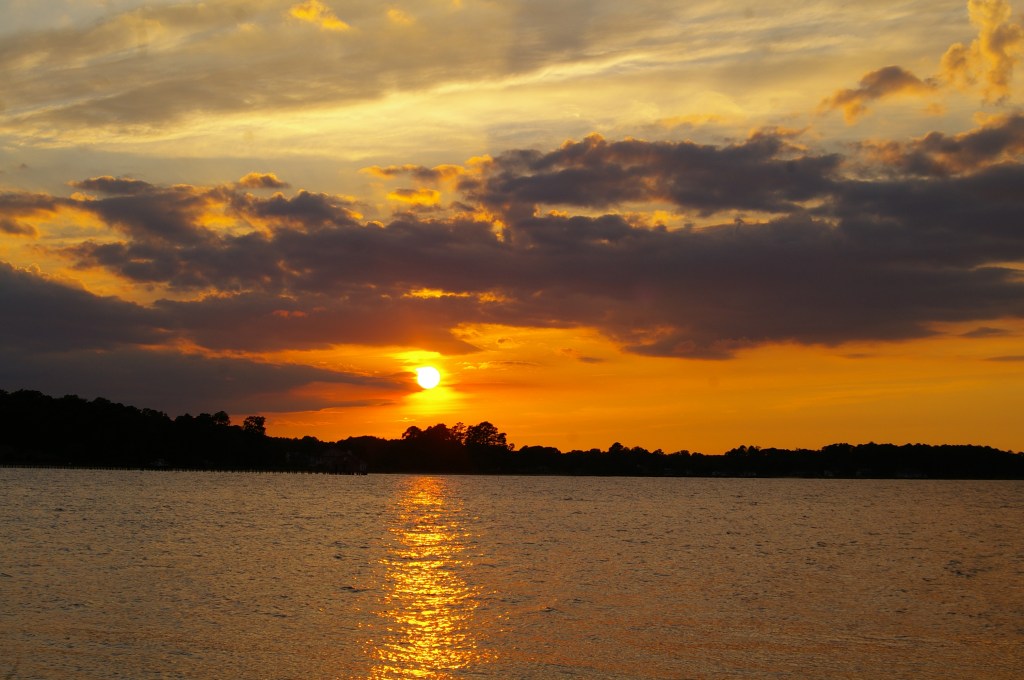
This blog will continue with its bloated pretentiousness and condescending rants, but hopefully, as well, readers will more likely notice the sun on the bottom edge of a cloud, the call of geese or the strong woosh of an egret’s wings. Too, I hope they notice the beauty in human nature, and how swift life is, and how we all know the simple truth is when we leave this world, we’re going to wish we had been more open with others, move loving, more honest with how we feel without concern of hurting or being hurt.

The view from this wilderness is fragile and fast, and beautiful, and it is the same view as those reading in Mumbai, in London, in Brooklyn, Cincinnati, Mexico City, and New South Wales. The View from this Wilderness is not dependent upon coordinates. Everyone has the same view no matter where they are; and if everyone stands in the same spot, every single view is unique. We need to help more people without them asking, and we need to let more people know we love them without worrying about their response. The old Japanese saying remains true: “Just because the message is not received doesn’t mean it is not worth sending.” And we all like to know that people hear and appreciate us, but that’s not why an artist paints or a writer writes.

We write to remind ourselves that we miss too many sunsets, sunrises. We walk by too many flowers just beginning to open, and too many quiet lakes. We pass by too many mornings without opening the curtains and too many evenings without stepping outside.

We move too swiftly through life, worrying more about grace than gratitude, more about lofty ambitions than love.

Those of us here at A View from this Wilderness (that’d be just me) wish everyone a Happy New Year.

“Love when you can

Cry when you have to

Be who you must

That’s a part of the plan.”

–Dan Fogelberg

This Night, This Day

In the east this morning a sliver of light. I stood at the bay and remembered:

More than five decades ago on Christmas morning before our parents were awake (or so we supposed), my siblings and I would gather before we headed down for the beginning of Christmas Day, usually in my sister’s room, to exchange gifts we had bought for each other. It would inevitably still be dark out, and I know the three of us would lay awake waiting to hear each other also awake in the other room. A tap on the door. A “come in.” And we’d sit on the floor and open our presents.

At some point (like clockwork, as much an annual tradition as the turkey or the pies), our mother would wake our father and he would exclaim, “I thought I said no one up before nine am!” and he couldn’t hide his smile to our laughter at the ludicrous suggestion we’d be up any later than five. It was always cold out during those Long Island years, and often snowy, but we weren’t going outside so it just added to the magic. Dad would be in his robe and slippers, and he’d head to the living room as we gathered on the stairs and waited for him to plug in the multi-colored lights on the tree, and those on the rail, bringing to life the otherwise dark room. Mom had, of course, already organized whatever presents we would get into separate piles, and Dad would stand back as she directed us to the right area under the branches, though sometimes it was obvious if an unwrapped toy appeared, clearly already wished for by one of us. Dad would sit on the couch and watch in joy right through the stream of “Wow, thank you Mom!” wishes.

It wouldn’t be long before the aromas of breakfast mixed with the onions and bell seasoning already underway for the stuffing, and eventually we’d need to get dressed, if not for church since we might have attended midnight mass, certainly for the droves of family who would soon fill the rooms. It was a beautiful way to grow up. I do not know the possible stresses, fears, and sacrifices that went on behind the scenes—that’s how good they were at it. Then, much later in the day, after everyone else had left and we had all settled into the routine of looking at our gifts again, Dad would emerge from some closet with his gifts for each of us—books he had personally picked out, bought, and wrapped. It remains one of my favorite memories of all of my memories of my father.

***

It was in the sixties here today along the Chesapeake, and sunny, and to be honest I’m just tired. This is one of those days each year where I’ve been up so long and have done so much that it feels like it should be six hours later than it is. My mother and sister and brother and nieces and nephew and their spouses and offspring are all off in various parts of the country preparing to celebrate their Christmases, all of us with some common traditions, each of us with our individual more recent touches to the holiday. Certainly, in times of such tumultuous anxiety throughout the world, all of us remain fortunate enough to be celebrating Christmas at all, laughing and telling stories, enjoying the food, the drinks, the sounds of football or Christmas music. We are, to be sure, at peace. Anyone with family is engulfed in traditions which help balance our lives; they bring peace to our soul while providing some shared space not only with each other but with memory, the idea of ancestry, the hope for posterity.

My father used to sit to the side for most of the holiday and enjoy being surrounded by his family. He’d carve the turkey, and of course disappear toward evening to get the books to give to us, but these days I picture him most in his chair, watching a game, sipping scotch or wine or a beer, laughing with us, waiting for Mom to call him to duty in the kitchen. He has moved on, and whatever there might be to know after this life of ours, well, he now knows, and that too brings me great peace.

It’s so quiet out tonight. Absolute peace stretched out like canvas in all directions. On the water some buffleheads ease by. Still, there are moments I wish I was somewhere else; or maybe simply some “when” else. I miss the days before society took “nearby” and “not far away” and tossed them to the strong breezes of technology and zoom. In that small house around that small table when I was a child were so many relatives it is crazy to conceive how we pulled it off. But no one cared—we were together. Everyone lived close enough to “drive over,” and by the time the turkey came out of the oven, a small crowd was sitting and standing and outside and in, laughing as well as sharing serious moments, because it was Christmas and we were together, and it was going to be like that forever.

For the day anyway.

The sun is getting low and it’s getting chilly. I’m going inside again. I bought Michael a book at a local nautical shop and I need to wrap it and “surprise” him with it later in the day tomorrow after the lift of Christmas has settled down. And he will be gracious enough to act surprised, just as I did with my father when he would predictably surprise the three of us with books half a century ago.

Geez, fifty years. More.

Hold tight to those around the table tomorrow. And when you have to let go, make sure they know you didn’t want to.

Merry Christmas my friends.

In Dreams Awake

Tonight a fox wandered along the edge of the driveway for a while, and when I went out about half an hour later, an opossum was foraging in the leaves and ran up a tree and played dead on a branch. It was kind of cute, actually, the way he just sat there probably thinking, “He can’t see me. I’m not going to move, and he can’t see me.”

Above him was a three-quarter moon, and Saturn, and Jupiter, and stars whose names I’ll never know. It’s a clear night here, upper thirties, and still, perfectly still. I sat at a table on the porch, cold, yes, but okay, and heard an owl out toward the river, and a dog somewhere. I always loved how sound travels at night, especially near water. Probably more so in an area like here where neighbors are few and far between and horse farms and plowed corn and soybean fields carpet the county from here to the Chesapeake.

One of my favorite movie scenes—in that I can relate to it I suppose—is in Thelma and Louise when they’re driving out west and a variety of shots shows Geena Davis looking at the desert, at the road, at the sun in the distance, and she turns to Susan Sarandon and says, “I’m really awake. Do you feel awake? You know, I don’t think I’ve ever felt so awake in my life.” Of course they just blew up an oil tanker, so there’s that.

But I’ve been fortunate enough to feel that way more than a few times in my life. Awake. It happens here pretty often.

From my porch I really can’t see more than trees until later in winter, but when I look north on a clear night, I can imagine the vast ocean silence stretching from here to Long Island where I picture childhood friends sitting in their living rooms watching television or just talking. Some are gone now, but some still live there, just a few miles from our old neighborhood. I’ll look south and see just over the curve of the earth, in some sort of simultaneous now, friends having drinks in Florida, and others in Georgia at their computers, writing, another near the gulf sitting on his back porch listening to a ballgame.

Mom’s asleep two hours away, my brother’s playing golf just fifty miles southwest of here, my sister five hours north is perhaps babysitting her grandson, all in their pulsating lives, right now.

Brian’s (the PA one) is having wine. Sean (the NY one) is at a movie shoot of some sort. Another Brian (FL) is doing an online reading talking about writing and dealing with loss; Sean (the Syracuse one) is somewhere in the world walking his dog; KL is trying to figure out why she’s not more German than she thought. My son is taking photos of water. The lives in my life are all present, and thinking of them reminds me I am present as well, as if they are proof, just as the geese gliding over right now are proof, or the tightness of my skin from the cool is also proof.

Someone is being born, others are dying, some are getting drunk and about to make a bad decision, someone else in some corner café drinking caffeine is about to have a great idea. Right now.

Awake.

We spend so much of our lives on autopilot. I won’t flood this folly with carpe diem quotes, except to say too many of us learn too late that life is swift, and that there is a difference between “a life” and “alive.”   We drift downstream with the current, caught up in conversations with others about the minutia, the meaningless. This isn’t to imply we shouldn’t have those interactions and focuses; it is simply a matter of balance, and there is no proof that this world is anywhere near in balance.

I’m not daft. I know I’m not pointing out anything anyone hasn’t thought of or doesn’t know. But step outside. Seriously, step away from the phone, the laptop, the television, the kids, the parents, the rest of everything that is and step outside and see what else is, and be present, be quiet.

I stood tonight and thought about where I was standing and how I got there; those times—and there have been more than a few—I thought I’d not make it through the night. Other times I didn’t want the night to end—and, thankfully, there were more than a few of those, too.

This is it. This is what keeps me going. Searching for moments of clarity, that awakeness. It can come on a mountain hike, sculling the river, or sitting quietly on the patio near the firepit on a cold night, sipping red wine, talking about the, well, the minutia, like the stars, the distant sounds, some light from a plane high above headed north, headed somewhere else. Being awake is spending time with someone with whom you don’t have to think about anything. Being awake is spending time alone and you don’t have to worry and anticipate or regret or second-guess. Being awake is akin to air; it is akin to water.

An owl just hooted here at Aerie somewhere behind me. And I can hear the diesel engine on a workboat, this late. On nights like this I swear I can hear clear across to Cape Charles on the Eastern Shore, and up toward Tangier, and up toward Montauk.

Colder weather is coming. It’s clear tonight, but clouds are moving in. Changes, constant turns and spins of expectations and wonder. Whenever I am in this state of mind, I remind myself it will inevitably change; as will the frequent moments of self-doubt. It gives me something to look forward to in moments of weakness, and, moreover, it reminds me to hold tight to the moments of such sharp clarity when I can almost feel like I understand my place among things.

The Five

In my creative writing classes I gave an assignment to exemplify the benefits of immediate experience over memory of a previous encounter, and of allowing all our senses to participate instead of just one.

I sent half the students into their respective bathrooms (without limitations upon identification, of course) with a pad and pen and I asked them to spend ten minutes in there and describe it. The other half of the students stayed in the classroom but did the same thing. The results of this second group were always predictable. Certainly, every one of them had been in the bathrooms multiple times through the semester, but still they almost universally remember the trite—running water, unpleasant odor, writing on the wall, mysterious missing locks on the stalls, paper towels on the floor around the garbage can.

When the first group returned, their notes were a bit more illuminating. Not just unpleasant smells but one of overwhelming cleansers; the low buzz of a fluorescent bulb, the mirrors always slightly too low on the wall, the faucet left on, the urinal still running, the clogged commode.

We experience with five senses, sometimes six if you include that sense of familiarity, of déjà vu, but we tend to remember and often only experience with one—sight. Studies show we rely upon how things “look” to recall them more than eighty percent of the time, yet the number one trigger for recall is smell. “Use ALL the senses,” I tell them. “Perhaps ‘taste’ is not so appropriate in this particular assignment, but sound is essential, obviously smell, and touch for its absence—how can you not include the desire to not touch anything?”

We spend a good deal of our lives living in the singular. One thing at a time; one sense is enough, one path in the woods. One thing problematic in this dip back to Psych 101 is how much we are missing. Sure, sometimes one is enough—but even when we eat, taste is only a fraction of the experience—the aroma draws us in and works with taste for complement, and presentation strikes first, of course. And how many of us are not crazy about a particular food because of its texture (for me, swordfish).

Shift:

This morning I sat on the rocks at the river, trying to mentally juggle too many happenings at once. The new semester starts soon—online for now—and I thought about how I had hoped for more classes but enrollment is way down, so then I thought about the project I’m working on to catalogue as many readings about nature from writers as I can and my attempts to summon interest, then about a new book project I started, kinda—okay, not so much started as stepped in that direction—and about my sharp, intensely sharp spike in anxiety and depression when the news is violent, when the rhetoric is redundant and aggravating and angry, and about a tree which fell and needs to be cut up, and about

and about…

and…

the coffee kicked in and I took a deep breath, exhaled very slowly into the chilly breeze, and reminded myself that I need to warm up to the day in much the same way we would warm up before a class at the health club. Take deep breathes through the nose, out slowly through the mouth, stretch, let all our senses work—and stretch those senses, make them limber, feel and see and touch and taste and hear all at once, not only like we are absorbing the world around us but the world around us is absorbing us.

This doesn’t work well in the city. It doesn’t even work well at home on a mat in a quiet room—we created the room by design and experience. No, nature is safe from subjective influence, it remains absent of judgement and human influence; there’s nothing out there we need to “get to” while looking around. It has a sense of eternal about it.

So I sat on the rocks and did that breathing thing, and the cold tightened the skin on my face the way cold wind does, and I could sense every touch of air across my reddened and tight neck and cheeks. On my tongue and lips that taste of salt I have known since my childhood, the marshy odor, the freshness of the Chesapeake, and the waves ripping against the rocks, lapping on the sand, breaking ten feet out in the river, the call of a gull behind me, the low distant rumble of a workboat diesel.

And then, dominantly, the view, the view which reaches deep into the immediate and blocks out all things social and political and makes us present. The deeply blue water today, the intrusively blue sky, the foam from the cold water on the sand and the white edges on the tips of the breaking waves. The small green strip of interruption that is Parrott Island a mile or so out, and the glint of sun off the window of a truck crossing the Norris Bridge in the west.

I am rarely present these days, distracted by what I hear on the radio, disturbed by the distance between where I am and where I need to be. It happens to us all. The changes in my life over the past two and a half years have been so drastic that sometimes—usually—it is hard to keep up with everything, so I turn to the constant, the familiar, to let my senses recalibrate themselves and make things right.

I like—need—order in my very unorderly life. And stepping into nature is perhaps the most reliable method of getting all my ducks in a row and feeling centered again. There’s something Thoreauvian about that, of course, and Jung is part of this equation, but for me on a much simpler and basic train of thought, it’s the undefinable persistence of beauty that brings me peace. And the innate need of us all to love. Lao Tzu was right when he insisted that “Love is of all passions the strongest, for it attacks simultaneously the head, the heart, and the senses.”

So many changes, so much turmoil, so many medications and sessions and updates and downplays that have distracted us all from what should be elemental in our lives—ourselves, and all of our senses working together. It is the cure for the soul, as Oscar Wilde once noted, as is the soul the cure for the senses.

In this new year I’ve noticed something which at once was subtle but has become too persistent to ignore—I’m stepping further away from that which doesn’t bring peace to my mind. And the one absolute I know is I never had that problem in nature.

It just makes sense.