The Rain that Day

There’s a scene in one of the Hunger Games films where Jennifer Lawrence and Josh Hutcherson are sitting in the doorway to their house. The shot is from deep inside the room and we can see them almost silhouetted on the floor leaning against the door frame looking outside where a heavy, steady rain is falling. It’s summer or fall. The door is open yet and they seem comfortable, and it is raining. 

That image stayed with me. I want to call the director and say, “Well done,” you nailed one of the most comforting images I can recall–inside warm and dry away from the storm but close enough to appreciate it. 

I loved sitting on the patio when I was a child, under the canvas awning when it rained, and I just assumed it was raining everywhere, which at eight years old was probably a three block radius. What did I know of everywhere? But that closeness of rain never left me. In Spain on more than one occasion we donned our raingear and walked out onto the Camino to keep going, a heavy fog sometimes filled the air, and on one day near the village of Cee on the way back from Fisterra to Santiago, we couldn’t even see ten feet forward. But here I am eleven years off the Way and I remember that day as if I just walked in the door from the path and set my walking stick against the fireplace stones. 

What is it about the rain? 

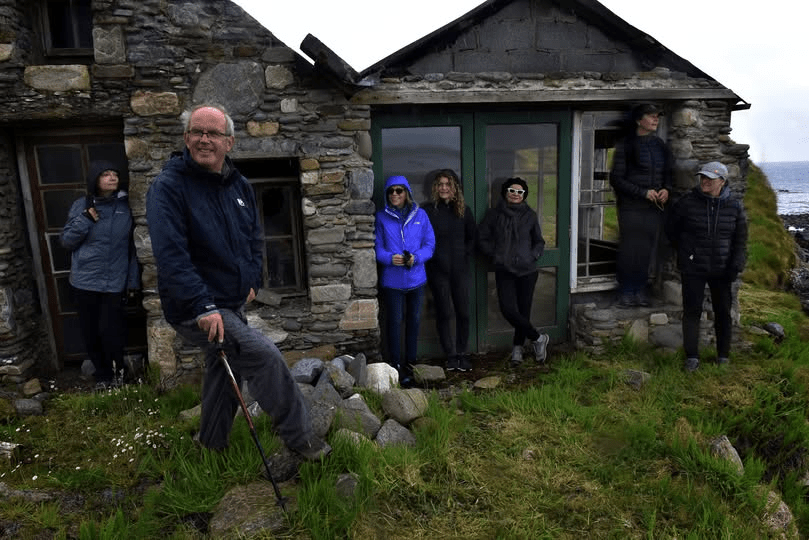
On a trip to Ireland, the only day out of ten it rained was the very day archeologist Michael Gibbons planned to give us a walking tour of the Renvyle Peninsula in Connemara just along the Wild Atlantic Way. We went anyway, along roads and across bogs for a half dozen miles, and sometimes it was only cloudy, but more often a steady Irish rain fell as more of a pleasing accompaniment than any nuisance of weather. In fact, when we walked near an abandoned home we stood under the eaves to wait out a downpour and during the short break we laughed and joked with each other about nonsensical things, but it is the time from the walk we remember most, the moment we all took pictures and realized how stunning the Irish Pete could smell in a rain, and how we didn’t mind, not in the least.

I took a moment just now to look up the history of rain, already knowing the first evidence dates back 4 billion years, and the first mention of it in literature dates back to both Gilgamesh and The Iliad. What I didn’t know until just now is that raindrops are not shaped like teardrops but more like hamburger buns, that one inch of rain over one acre of land weights over 110 tons, that Mawsynram, India, is the wettest place on Earth with more than 450 inches of rain annually, and that rain really does have its own odor, called petrichor, caused by the wetness releasing the oils from plants and soil which then fill the air. 

“The beauty of the rain is how it falls”

–Dar Williams

I love the smell of rain, the feel of it on my back and neck, but my reason has little to do with any enjoyment of being wet, soggy, drenched; it is because I can, because I am here in nature still, well after so many I love have closed the door behind them, all of whom if they could would love to be drenched in the rain with me, and we would laugh at being here, alive, and I’d say how moist I am and we’d laugh even harder. 

I love feeling alive and rain does that, even if I’m just on the patio at an old picnic table sixty years ago and the sound on the canvas above me and the steam off of the sidewalk nearby all kept me present, absorbing the moment before the next one came. How often in life can we be so acutely aware of a moment so that we can hear the nudge of the one that follows? Time is too swift for rain; life is too short for the subtle rise of mist from the pavement. 

“Let the rain kiss you, Let the rain beat upon your head with silver liquid drops, Let the rain sing you a lullaby.” –Langston Hughes

It’s the same with the sun, the feeling-alive thing. The heat and scorch on my neck and back energizes me like nothing else can, and everything around me is hyper-present, like I can feel the molecules, the very atoms of the light, and too of the rain, like the coursing of blood. 

It’s raining now, and I’m going to pour a cup of tea, put on a sweatshirt and go sit on the porch and listen to the rain in the woods and on the porch roof here at Aerie. I’ll let my mind wander and try and remember the last time I heard my father laugh and remember the last time my mother and I talked about nothing at all. I’ll think about Eddie and that time we walked all day in the rain through Heckscher State Park on the Great South Bay, just two fourteen-year-olds who suddenly owned the planet, and we spent all day out there and sang “The Long and Winding Road,” and now when I hear that song I think of rain, and Eddie, and how it always takes me a moment and a shake of my head to understand that day was fifty years ago, forty-five years before he closed the door behind him, and how that rain that day was like a third friend laughing along with us, singing along with us. When it rains now I can have that day again, and I like that. So I walked up here to my desk and settled into this chair and I’ll listen to the rain on the skylight before I turn out the lights. 

“Some people feel the rain. Others just get wet”

–Bob Marley

I Barely Remember When

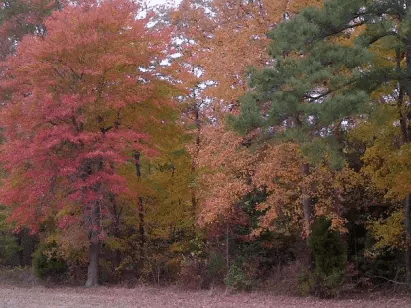
Fall has arrived and the breezes this weekend cleared away most of what was left of summer. Last week at home I walked along the river like I always do this time of year when the water laps at my feet, it is warmer than the air, inviting, deceiving, teasing me into thinking summer will push back on autumn and maybe even win out. I don’t mind the change so much; I’m not bothered by the passing of time as much as how I spend the passing of time.

The leaves are just beginning to change here, and my drive in a few weeks to West Virginia will bring me through every stage of autumn. Sometimes you can see all the changes happen in one day. Crazy. Well, the truth is, some things need to change. Even with resistance, sometimes it is the only way to make room for new growth.

For me even the seasonal change from summer to fall is often troublesome. Again, I don’t mind fall—my days in western New York and Massachusetts are most memorable for this time of year. And obviously I know it is going to happen. I watch the weather, I mark the calendar, I see the leaves letting go. But still it always takes me by surprise. I wake up one day and I need to wear more clothes, or I no longer feel the sun so strong on my shoulders, and I am saddened. The Seasonal Affective Disorder which strikes some of us in February can also have its way in October, though usually not as bad.

This year is different; I’m both tired of change and in desperate need of some right now.

In kindergarten I liked a little red-haired girl, Kathleen.

Stay with me here.

Just like Charlie Brown I was afraid to approach her. At the same time I was thrilled I met someone I would get to grow up with. We were in the same class until third grade when at the end of the school year my family moved much further out on the Island. Instead of saying goodbye to her I made a card that said, “I love you” and threw it at her in the hallway. I think she got it. Now I wish I had just handed it to her politely and said I was sorry I was moving. I never saw her again. I probably didn’t handle that relationship well. The change, however, the move east to what would become where I would forever call “where I am from,” was unexpectedly pleasant despite my resistance at first. The same thing happened when I was fourteen and moved to Virginia Beach, four hundred miles south. I absolutely and definitively did not want to go; I’m so glad we did.

During each major change in life, though, I consistently ignored the advice of my older siblings or from examples set down on television or in school. I simply preferred to assess a situation and have at it on my own terms, even if it meant complete and utter disaster. I was slow to learn as a result, but I gained that small bit of confidence we used to earn out on our own, trying and failing, fantasizing and acting and pretending. You simply never know when those youthful lessons will return to come in handy, see us through an unexpected left-turn, help us through the changes. And it seems these days everything is changing, doesn’t it? It’s as if people in positions of power are scanning the horizon to see what they can disrupt next. Even friends are acting strange, distant, and when the very essence of what we can count on is no longer predictable, we must either adapt or run away. I’m running away.

I thought about those years, my early youth in on Long Island, and how innocent it all was; how we flipped baseball cards and played stickball. We had block parties where the block would be closed to traffic and we all put picnic tables and grills out and walked up and down the street talking to everyone else and sharing food, and riding bikes, and the adults had drinks and the kids had fun. Television went off the air at night, just a fuzzy white noise until the early morning when a black and white flag waved across the screen and some dude said, “We now begin our broadcast day” after the National Anthem.

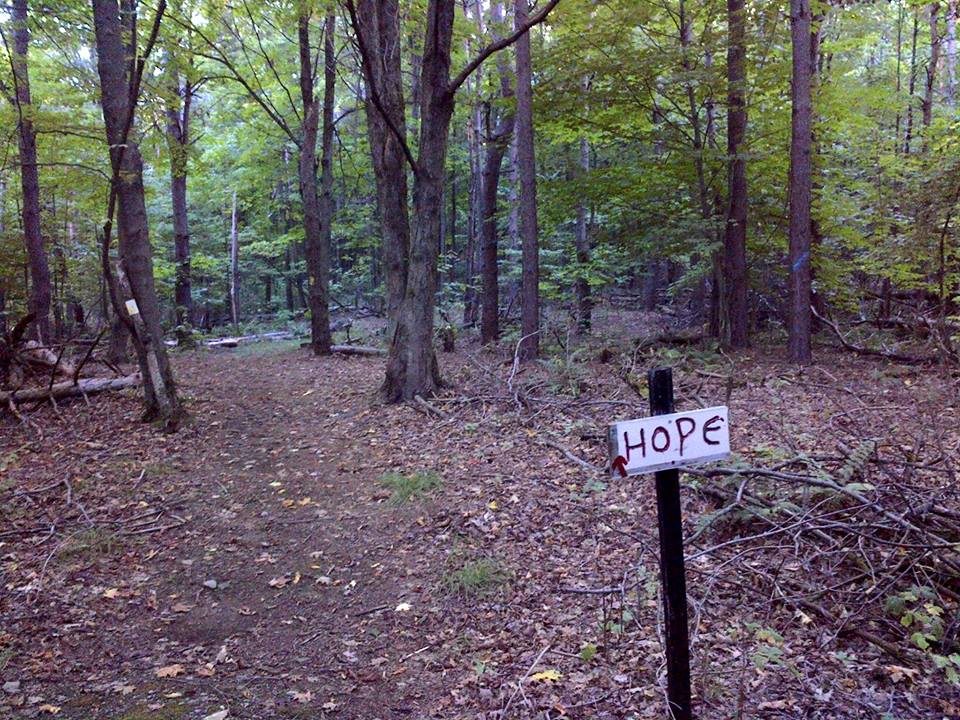
This was the age of my youth. It was innocent and tech-free and filled with hippies and protests and flag-burning and marches and sit-ins and rumbles. The laughable Mets became the champs and we walked on the moon. On the moon, for God’s sake. How can you possibly not understand why at the core of my generation is some semblance of hope, still simmering. Hope is what got us through; the hope of humanity, the hope of leaders, the hope of lovers and friends. We were not a generation of followers staring at our hands; not by any stretch of the imagination. So when the times were a ‘changing, we changed—or we were the ones causing the change to begin with. And as we grew older, those organic traits became part of our DNA.

But hope in everything is fragile now. And the falling leaves are no help; not for me anyway.

It almost seems ridiculous and it is certainly ironic that the best way for me to handle these unexpected and troublesome changes is to, in fact, change. So be it. “To change is to be new. To be new is to be young again.”

“If you do not change direction, you may end up where you are going.”

–Lao Tzu

We now begin our broadcast day.

The Shed

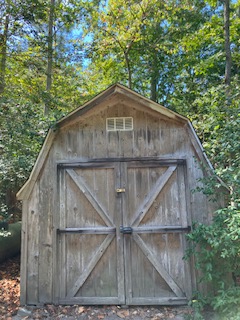
The Shed was twenty-feet deep by eight feet wide, with two windows, two lofts, double doors, and sturdy enough to withstand everything except Hurricane Isabel.

Of course, I bought the shed to hold supplies when I was building the house. Before I started, when I had first cleared the small portion of the property for the home, I had this shed delivered figuring I might need to sleep in during bad weather while up here for three of four days in a row seventy-five miles from the place in Virginia Beach. Michael and I went together to the shed place in Virginia Beach. Some guy paid for it but never picked it up so I bought it brand new for a song and the father and son team I bought it from delivered it seventy-five miles, across the Hampton Roads Bridge Tunnel, across the still-narrow Coleman Bridge, the Piankatank bridge, and down my winding driveway through the woods—for twenty-five dollars. I also bought them lunch.

It didn’t take long, as it tends not to take, to have stories to tell from the shed.

Back in ’99 we had fifteen inches of rain in two days and the water ran from the river side of the property down to the woods beyond the shed. I had the shed leveled off the ground by about eight inches on blocks, so the water rushed toward the door but instead dug crevices under the shed. The shed, miraculously was dry, but impossible to get to.

Isabel didn’t do a thing to the shed, but she knocked down thirty oak trees here at Aerie, and one of them lingered for weeks right above the shed. I knew it had to come down but this was a job I couldn’t pull off myself. Scavengers wanted more than fifteen thousand dollars to clear the fallen trees, so I said I’d do them myself, which I did, but I was afraid to cut the half-fallen tree in fear it would crush the shed. Instead, another storm just a few months later cracked the trunk and it crushed the back half of the shed for me. I remembering thinking, “Hell, I could have done that.”

So in the lemonade tradition, I made the back half into a greenhouse with plastic sheets for the roof, but it didn’t really work, and over time the mold and mildew and various snakes and wood rot got the best of The Shed. It took about twenty-seven years.

One time early when Michael was about five, we played hide and seek as we often did, and I ran in the shed while he was still too far away to follow me right in, but he could see me. I then climbed out the back window and settled behind the back wall. I heard him come in the shed and was quiet for a minute then said, to no one in particular, “Holy Cow, How did he do that? Daddy?”

I remember how we laughed.

We built things with wood and made signs and birdhouses. None of them were well done but they were all perfect. Occasionally we’d take a break and play “Voices.” That is, we’d recreate “Wind in the Willows,” and I was the voice of most of the characters—Badger, Toad, Moley, even the stoats.

And we kept the sporting equipment in there and played frisbee, football, golf, and ring toss, which we still do nearly thirty years later when outside barbequing.

The bikes he kept in the shed got bigger, and the toys were relegated to the loft while more accessible spaces were reserved for tools, chemistry sets, then inflatable kayaks and eventually equipment to hold his art supplies and frames.

When he was little, he would tie me up in a chair with a lasso his uncle sent him from Texas, and he kept lizards and frogs in tanks until he couldn’t feed them anymore and would let them go behind the shed, in the woods.

He kept buckets of fake snakes and lizards in there when he was young, and when the roof collapsed and water raged in, it carried the rubber reptiles out the door and under the shed. The next day I spent an hour reaching under the shed and pulling out the toys, until one reach pulled out amongst the fake snakes a real one with red and yellow and black, and I forgot the rhyme about poisonous snakes so I just threw everything as far as I could.

There were other days like that.

But there’s a hole out there tonight. And Michael is in Ireland, far from the fallen shed. It had to come down. I had to do it now or we’d be still out in the still standing shed telling stories.

I destroyed the last of it a few hours ago, and I rested on the nearby patio remembering the times we shared for his entire life, and the talks we had—so many talks we had safe in the shed, just the two of us, about growing up and traveling and things that frustrated us, and things we were scared of. Out in the country like this along the bay when a father and son go into the shed, usually it is for some form of punishment, “a whooping” as they say. Well I never had a reason to punish Michael; but we did have plans to make, so out to the shed we’d go, and he’d make notes on wood with a nail, and we’d plan adventures like training across Siberia or walking across Spain.

We kept tools in that shed, and mowers, bikes, grills, and more. And memories filled the spaces between everything else. We let a lot of memories occupy that space.

Funny though. I sat out there today when I had finished knocking it down and thought about the next week or so during which I will haul away the remnants, clean up the ground, lay down some field stones and mulch in front of a much smaller, new shed, put a few chairs and a small table there, and I tried to imagine the new way it will be, and it made me a bit sad, of course, but excited for a new place to talk. But lingering a bit in the hot afternoon air was the sound of ten-year-old Michael playing his harmonica and the distant hint of his unchanged voice asking if I want to play hide and seek.

There are some things that shed kept safe for us I’ll never be able to destroy.    

Now:

Next:

Just, before Dawn

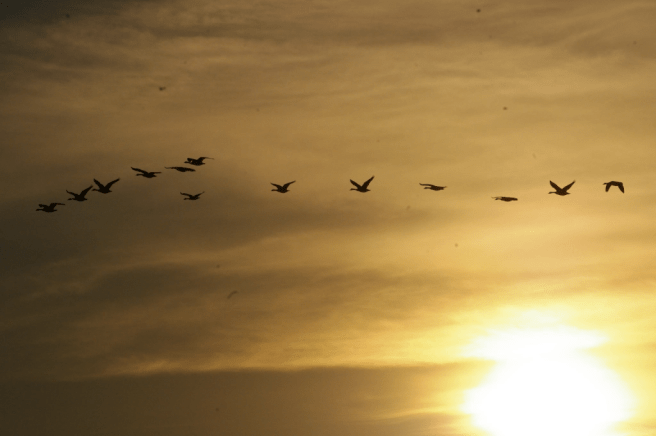
I rose early this morning since I needed to be in Norfolk by 8. That’s okay, though. I am drawn toward the early morning hours of dawn when I feel ahead of the world, and I can sense some small hint of hope. The geese flew by headed to the river, and to hear life around the water in those moments motivates me. Before the sun rises, often just after the first sliver of light reaches up across the bay, I can hear osprey and other sea birds who at that hour never seem to mind my presence.

But earlier, when that glimmer on the eastern horizon is still merely a possibility, I have taken to walks by moonlight, sometimes not even that. In the woods where I live and down along the water, something is going on. There is life out there wide awake and moving through the dark hours like spirits who need to finish their errands before the sun gives them up.

Fox come about the edges of the woods looking for scraps of food or the peels and rinds of bananas and melons. I can stand patiently off the side of the drive and one fox will wander across the yard from the woods behind me to those on the south and stop before disappearing again beyond the laurel, and he will stare at me, relaxed, nosing around the base of a tree where I occasionally put food. Then he’s off—not swiftly or in fear, but nonchalantly, demonstrating that he lives here as well and has decided to stretch his legs. That’s all.

Owls, too—some barred but mostly screech owls, perch in the oaks and elms, sometimes swooping down and moving through branches with precision. But my favorite are the geese which cover the night sky in flocks sometimes so enormous the swoosh of their wings alone creates a breeze, and their call to “Go! Go! Go!” is startling.

Closer to home, out front near the edge of the trees, deer nearly always feed on the dew-soaked grass and often the hostas, and if they sense me sitting on the porch or standing in the clearing, they will look up, briefly, ears turned forward—just for a moment—and then return to their grass, not minding me, aware just the same.

And it is then, when I am well acclimated with the night and my eyes have adjusted, and my soul too has adjusted, that I think of my way in the world, the motivation behind the turns and hesitations, my purpose of this passing in time. Oh, do I ever have an internal monologue underway with long-gone friend now gathered in my nocturnal imagination. There’s Cole nodding his head and insisting I follow my own path. I can hear him clearly when I’m out there, see his small sardonic smile as he says, “Come on Kunzinger. You know how to do this, stop waiting for approval or it’s never going to happen.” And there, too, is another friend whose smile is as wide as dawn pressing his sense of adventure into my spirit with an “all or nothing” carelessness about him which brings me up short yet livens my ambition. In one brief moment I am eased by no longer thinking of them in the past tense, but just as quickly, we all move on; usually just as the sun surfaces.

The sky in the distance across the reach lightens ever so slightly, from dark, almost Navy blue to something slightly more pale, like powder, and I’m alone again—the fox rushing off into the woods, the geese at rest in the harvested field or at the river’s edge, and the murmurs of chickadees and wrens and cardinals chase away what’s left of the stillness, and even my friends bow off, and I have trouble separating memory from imagination. So I get in the car and head south to the city where I simply don’t belong.

It’s as if time offers a small reward for some of us who stay up late or get up early to gather as much out of our moments as we can. Then, just briefly, it eases me back into this new reality I never anticipated. It remains for me the most honest time of day, the most just, when all thoughts have a chance of pushing through the darkness, and the truth about what we are here for is ironically illuminated.

I’ve started to live for the deep hours of the night at the twilight of dawn.

The Higher You Climb

This one’s for me.

When I was out west we hiked uphill (because the West is uphill) to a waterfall. I’m not sure of the elevation but it really doesn’t matter since I live at sea level and the waterfall is not. My home is about 80 feet above sea level and a short stroll down the hill is zero.

A few days before the waterfalls we were at just above eleven thousand feet; June, and still there was snowpack on some of the trails. At night we had a fire going, of course to toast peeps but also to keep us warm. In the cabin we kept the wood burning stove going all night. Back home the ac was running strong. Back at zero elevation. that is.

On the way to the waterfall–it was hot that day–I had to stop more than a few times due to my unconditioned lungs. I had no issue with my heart or legs; no, I felt pretty strong actually. It was just the lungs which in my mind looked like the deflated oxygen masks in planes. I wanted to quit; it was clear I wanted to quit, but it was also clear I just needed to catch my breath and push on. “It’s just a little further” translated to me to those days driving my son long distances and from the back seat I’d hear an impatient, “How much longer, Daddy?” “Not far,” I’d say, as if a two year old could translate “not far” into some sort of calculable distance. Yeah, that was me on the mountain as kids–I’m not kidding, kids!–ran past. I reminded myself they’re closer to the ground and need less air, and “it’s just a little further” to me translated to “move your ass for Buddha’s sake, or we’re going to have to make camp soon.”

I made it. I sat on some rocks and watched the majestic water fall from other rocks, down to a pool, off into a creek, down the mountain past the path we just hiked. I quickly gained my energy back as the issue was my lungs inability to climb at that altitude, not “be” at that altitude. A few days earlier we were at eleven thousand feet and I was fine because there was little steepness about us; it was a casual altitude gain. Plus it was colder. But there I sat outside Ogden, Utah, having climbed what I swear was the Matterhorn and I watched the sky grow bluer, watched the water mist up into the trees, and watched the world below try and make excuses for itself. I can’t recall ever feeling so at peace.

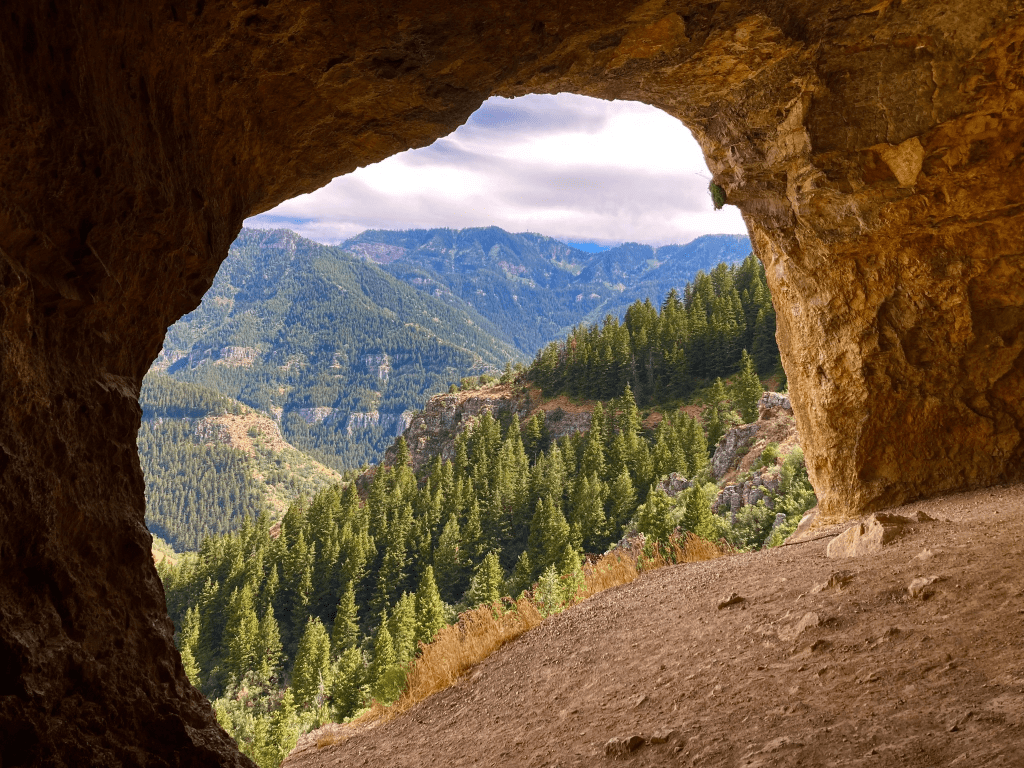
A few years ago we did the same thing not far from there to a place called “Wind Cave” and that was more than just a steep climb, for a flat-earther like myself it was like scaling The Freedom Tower, but we climbed and a few times I wanted to quit–apparently I’m not adept at steepness yet–but I didn’t, and when we came around the top slope and walked back down to the opening of the wind cave, there was nowhere on earth I would have rather been. And so again in the mountains, and then again at the waterfalls.

Fast forward, for that is the theme here: Today I wondered about two distinct things: Why is it so hard for me to do these things when I used to have no issue with them when I was younger? and why did I push myself to finish when I could have so easily stopped without objection?

Let’s get the age bullshit out of the way first. Yes, there are conditions which can slow a person down as we age, and it makes it harder to do what we could do with ease decades earlier, but all things being equal, one can battle a decreased metabolism by eating right and working harder. The list of reasons those antiquated excuses are irrelevant aside, internal motivation has more to do with accomplishment than external excuses. I have some experience in fitness and working with people whose challenges could not be calculated, but who, with the right motivation and persistence, reached their goals. So why is it so hard for us other than absolute and flat out indifference as our minds are occupied by other issues? And two, what changed? Why did I push on despite my better judgement only to find out I was capable of more than I thought? The company? Partly. The kids running past? No. The beauty at the end of the hike? I promise that wasn’t on my mind while dry-heaving into the creek.

No, something different took over.

I wanted to do it for myself.

***

I went to the Y today, again. I’ve been going on and off for some years now, though I took a break during Covid and another break not during Covid. I get bored, or I find something else to do, or…or…or…I lose some weight and I get in shape then I tumble back. This is normal. While my old boss at the fitness club could take an eighty year old and make them feel young and able to accomplish anything–and they often did–it was more normal for a healthy, capable young-something to cave at the first sight of a donut. Enter me.

But I have gained less time, and that is something they and most of the members I trained when I was there did not have at that age back then. It takes a while to understand that all we gain as we age is less time.

Tick tock tick tock tick tock people; times ticking away.

When I did the math this past weekend as the calendar turned on me again, I realized the list of things I plan to do is longer than the remaining time allotted, and that’s if I’m generous with myself. So I went to the Y today just like any other day, but this time I wondered if I could push it a bit, so I increased the incline on the treadmill and turned up the mphs. And again, until my heartrate was safely beyond what I normally do, until I was sweating, which I rarely do, and until I was at the point I never have been to before at the Y–the point where I wanted to quit for a reason other than boredom, so I pushed the dial up a bit more and for ninety minutes I climbed to the wind caves and to the waterfalls, I climbed Mt Wachusett in Massachusetts and to the upper falls of Sabino Canyon near Tucson. It brought me back to those days, first, when I taught classes at the club and I had to push myself because the class wanted to be pushed, and then earlier when playing tennis, and I wasn’t done until I dropped on the court, spent.

Why? Because I want to ride my bike to Coos Bay, Oregon, and I want to go to Seattle and hike Mt. Rainer with my cousin, and I want to make the climb to the waterfall a stroll, a meander. Because I saw the clock. I didn’t want to look; I really didn’t, but I did and I saw it as the large digital numbers clicked over, and I did the math because I’m pretty good at math and the distance from here to 80 is barely enough time to love anymore, barely enough time to dream anymore.

Something was different today. Something clicked. It’s that there are going to be a plethora of things out of my control as I move forward, so I’m going to take control over those aspects of my life I do have some say about. Of course I’m not going to get back to my club weight again, which is fine since I forgot to eat from 1983 to about 1988, but I am going to get to the point I believe I can if I decide to. And that might be all I need during this last push to the summit.

And by the way, we do these things at this point in life for ourselves, no one else, and that’s different too.

This time it’s for me.

Winging It

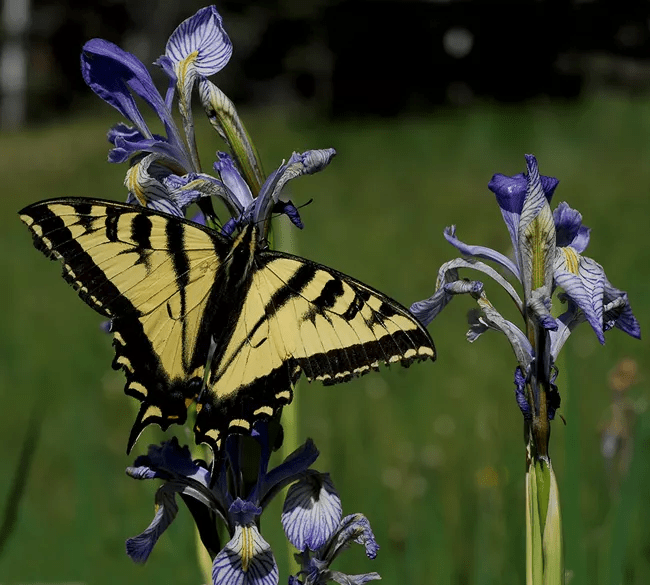
I no longer like butterflies. Those miserable little hyperactive buzzards flutter around like drunk scraps of tracing paper. “Oh they’re beautiful, especially the Monarchs,” everyone says. Why? Because of their colors? Their fragility? We just like things more delicate than we are. As George Carlin famously pointed out, we eat more lobsters than bunnies because bunnies are soft and furry and lobsters look like miniature monsters. No contest. Honestly, I used to love the little beauties, butterflies. I was always intrigued that the average life span is less than a year. I watched documentaries about the monarchs’ migration from northern regions of the states to the mountains of southern Mexico. I couldn’t find my way there with a map and a guide, and these little fuckers do just fine every single year. But lately I have lost interest. They’re as disturbing to me now as the flying monkeys in “The Wizard of Oz.”

I turn sixty-five this week and I’ve been thinking about that trite and necessary Bucket List. I figure I have another good–good being solidly vertical–fifteen years. Hopefully more, of course, but with some adjustment for pace. Still, the first six and a half decades found me mostly pinballing through life. This evening I sat setting up my new Snoopy and Woodstock 3D light and thought about what I might still be able to accomplish.

Here’s my list:

Whatever. It’s all good to me. Just glad to be here, really. A good garden and a small grove of fig trees. Go for walks in various countries, through marketplaces, along coasts, small villages. Nice walks, hikes, talking and laughing. Sit at a café near the ocean with drinks and a soft breeze.

Not what you were expecting, huh? I guess I’ve already done what I wanted to do. The time left is reserved for those I love and as much laughter as possible.

And as for the “The Wizard of Oz, ” the scariest scene is not the flying monkeys, or the balls of fire the Wicked Witch of the West throws down upon the bone-dry scarecrow. It is the hour glass filled with red sand set up in the castle room with Dorothy. Such a small scene in an irritating film still affects me half a century later. “You see that?” the witch cries to the terrified Judy Garland, “That’s how much longer you have to be alive! And it isn’t long, my sweetie. It isn’t long!” This scared the crap out of me. You mean it’s that easy, I thought, to no longer exist? Someone just flips the hourglass and the sands run out? My heart raced every time the camera focused on the depleting red grains dripping through the huge timepiece.

It didn’t help that during those years my mother watched “Days of Our Lives,” and the opening sequence was always, “Like sand through the hourglass, so go the Days of Our Lives.” Whoa! Talk about depressing. I was raised saturated in this daily dose of “you’re going to die soon.” Growing up near the beach probably didn’t help; the shifting patterns of sand symbolized to me the passing of seconds and hours and days and years. And when aunts and uncles exclaimed I had an “old soul” I thought they were ordering last rites.

So some sense of urgency festered in me from quite early on. I started attacking my ambitions like I had just three weeks left before the sand ran out. When I was young, I had an outrageous list of dreams, ambitions, or “fantasies” as most others called them. One of the first brilliant ideas was doomed for failure: My friend Eddie and I had been sending up rockets; the ones with a gun-powder-filled battery shoved up their tails which we bought from a hobby shop. We were getting good at this and our imagination ran away fast. This was around 1973 and I was totally into adventure. Papillon had just come out and my mind was already bent on traveling to faraway lands. Mostly, though, I was obsessed with becoming an astronaut. I knew all their names, and I had memorized every detail I could find about rockets, their speeds, thrust, history and expectations. I had a brown cpo jacket and asked my mother to sew on an American flag and a NASA patch. When we went into stores I liked to pretend people thought I must have something to do with the space program. I played it cool, of course, holding my mom’s car keys like I just got back from the Johnson Space Center. I was twelve.

Even so, Eddie and I had a plan. We were going to take apart the batteries to study how they are made, and then we would make a large one that could carry one of us, me, into the clouds. We knew we would have needed a heat shield to exit the atmosphere and return—we weren’t dumb—so we planned to use a metal garbage can. We only were going to lift a few hundred feet just to show the naysayers we earned our patches. So we slowly filled a coffee can with the gun powder from several dozen batteries bought over several months. But one night Eddie left the coffee can on his patio in the rain. We didn’t have enough money to buy more batteries so we tossed the plan and played baseball. A few years later I moved away and found more pragmatic plans. I am not certain, however, if I was ever so serious or energetic as I was when I thought I was going into the clouds. To me that fantasy was simply reality’s childhood.

Back then I couldn’t possibly know that eventually the most treasured content of my bucket list would be the simplest of thoughts—plans really—like lying on the floor playing Risk and Boggle with my son and sharing a bowl of pretzels while we laughed at the anxious final seconds of each round. Or the one of walking slowly through a mall with my dad, sitting on a bench reminiscing or being quiet, sitting having Scotch on Tuesday nights. I was always excited to be able to sit and watch a baseball game on television with him, neither of us saying a word. That doesn’t sound a bit like a dream for anyone’s bucket list, but it makes it into most of ours at some point. I thought of all those small moments while standing in the doorway to his room during his last days. I’d lean against the wall and stare at the paper butterfly, the universal symbol of comfort care, on the door jam.   It’s crazy how the simple moments like time together get overshadowed by fleeting ideas like skydiving and hot air ballooning.

I’m certain at some point early on in my life while listening to “Days of Our Lives” my mind turned toward adventure. I’m equally sure that my dad had a lot to do with that. Every Christmas he bought us books and for some reason, perhaps intuition, the ones he picked for me all focused on outrageous escapades. Robin Lee Graham’s The Boy Who Sailed Around the World Alone; Peter Jenkin’s A Walk Across AmericaBound for Glory about Woody Guthie, Heart of Darkness by Joseph Conrad, and more. These were obvious influences for me, and growing up a child of the late sixties certainly added to the action. From the moment of Kennedy’s decree to reach the moon to actually reaching the moon occupied exactly my first nine years of life. Many moments in my youth lit a fire under me that still burns. This can be both exhilarating and exasperating.

Still no one ever told me I was wrong. No one ever indicated anything I suggested was a bad idea, only that it was too early, or that I was “too young.” So dreams got pushed aside, never making it to the “did that already” bucket but never really leaving the list. It took me years to realize the dreams we fill our lives with don’t necessarily play out in chronological order. I’m lucky, actually, that some chaotic appearances on my radar don’t coincide with their fruition. I learned quickly that if things don’t play out as planned to just toss them back in the bucket and let them simmer around awhile like a lottery ball.

I have only a little desire left to climb in a garbage can and light a fire under my ass, but since then biking around Ireland made the list. Or maybe I’ll just go back to Spain. And more than a few folks older than me sail the Caribbean well into their sixties. Many many years ago I had hopes of getting to Greece. Maybe I’ll still get there and share a bottle of wine. Sometimes it’s just that we take the long way. I had other bad ideas besides dying in a flaming piece of metal. There was the time my friend Tom and I were going to push a desk from Tucson to Washington, DC to point out corporate waste while people were starving to death. Even philosopher and writer Leo Buscaglia dropped us a line to wish us luck. It took us a while to realize he was being sarcastic. No good Monarch would waste his time on such nonsense, no matter how noble. Butterflies, man. Butterflies are bad examples; they offer false hope.

Whenever my son and I would play that Boggle game, he flipped that damn hourglass with the three-minute timer and tap his finger. Tap. Tap. Tap. My anxiety level increased and my blood pressure peaked. OH, he knew what he was doing. But he couldn’t know he was feeding the trauma of PTSD from some fictional witch. “In good time,” I can hear her saying. It was that threatening decree, “In good time,” that motivated me. Still, she never said “in time”; it was always, “In good time.”

I suppose even a witch, like turning sixty-five, can have some redeeming qualities.

Periods of Long Ago

A few days ago I walked out on the 14th Street Pier in Virginia Beach and stopped in Ocean Eddies. It was the dive I would frequent the summers during college. Back then the bar money was kept in a box and the register was a big brown monster. There was no a/c and the windows had to stay open in the oppressively humid night, but the live bands would wake up guests at the hotel I managed next door, so I had a deal with management: I’d not call the cops on him and he quit the music by 1 am, and I’d get free drinks and a burger. Now, almost fifty years later, there is a  deck around the outside, inside has ac, and the food is better. The tide, however, is still just a few feet below the floorboards.

I was nineteen when I got the job at the Sandcastle Hotel at 14th Street on the beach. The owner, Johnny Vakos, and I got along, and the manager, Jack, had a heart attack about a month after I started, so John made me manager. I stayed that way for four summers, May until August, working all shifts, dealing with every character conceivable. Sometimes at night I’d head out to Eddie’s and swap stories with other locals over margaritas. Sometimes when I worked the overnight shift, come morning I’d head up to the seventies past all the hotels and sleep on the beach, and later in the day friends would show up and we’d waste away an afternoon swimming and listening to music. At night we’d all head to Sondra’s Restaurant or the Jewish Mother or Fantastic Fenwick’s Flying Food Factory to listen to my dear (still) friend Jonmark Stone play guitar. But come the following morning I was back at the beach, working the desk, talking to Niki the bike rental girl, bs-ing with guests about where to eat or about the weather or surf conditions. I only have to think about those days and I can smell the salt air.

Something was different this time, like I really won’t be back this time. It happens.

Still, that part of my life stayed in my blood and every once in a while it passes through my heart and becomes real again. We all have periods of long ago like that. For me it’s probably this place because I’ve almost always lived near the ocean, or maybe it’s because our brains and bodies and this planet are all about seventy percent water and I simply feel the tug of the tide. Perhaps I just like the sound of the surf. But I’ve not come upon many places in my travels which simply don’t change. Old neighborhoods seem smaller, the trees suffocate the once open fields, and old hangouts usually have new crowds, or shut down, weeds pushing through parking lot pavement, some windows broken and boarded near the rusted dumpster. Sometimes it’s simply that people pass away, and the reasons for being somewhere pass away with them.

But the ocean and me, well, we go way back. The rest of nature can show signs of change as well. Forests give way to fires, or new growth simply pushes out old oaks changing the landscape; rivers erode at the banks, and while the mountains can retain their majesty, trails and roads can rip small scars across the land, or some new cabin is built whose windows catch the sun and the glare flickers across the valley.

But I can stand on the sand behind the pier and know what i’m going to see. Certainly some days are rougher than others, and in winter a white foam can gather at the break point, but it is the same as it ever has been. The strength of a wave is like no other natural force on earth. Just to stand in the surf waist deep is a lesson in mobility and resistance no physics class could replicate. At some point you give in and fall back or dive forward, and feel that dark, salty, always slightly cool water sweep across every aspect of your body.

And when you look out across the vastness of nothing but blue water, steel blue, metallic greenish slate blue water, you are looking out at exactly what John Smith saw when he first landed a mile and half up the beach four hundred years ago. It is what Powhatan saw, and whatever wandering seaman or viking or ancient civilization saw, exactly the same. Maybe rougher, maybe in the morning perfectly still like glass. Maybe the tide was higher, or so low they could walk out to the scallop beds and pull them up by the load. But it is the same. Exactly.

I can stand here and it might as well be 1979, or ten years earlier and four hundred miles further north, on the beaches of Long Island. It simply makes sense to me. We all need a place to go that makes sense. It was just ten blocks north of here at my son’s tent for a juried art show in 2017 that my mother walked for the last time without assistance; it was just fourteen blocks south at The Inlet House that my dad lived when he first moved to Virginia Beach before buying the house we would all move into four miles west. They’re all gone now, Mom and Dad, the Art Show moved to October, the Inlet House is a parking lot. But this ocean, well, it’s right there keeping my anxiety at bay.

I read once that we all should discover a “third place.” We have home, which comes with it certain responsibilities and routines. We have work with its predictable patterns of give and take. But we need a third place that is neither, that is ours to claim how we want, and gather with friends, or be alone, and let our stresses and expectations dilute in the deluge of “somewhere else.” For many it is a bar, or a coffee shop, or a park or a gym. For me, back then, I thought it was Ocean Eddies where I learned more about people than I ever cared to know. But it wasn’t; it was outside, on the sand, looking out toward Portugal, toward Spain, and Africa. Looking up the coast toward the Island. It’s lonelier now than it ever has been, and maybe I’ll not be back for some time, or ever. But I like knowing it is here. I like that I can depend upon this. I like that I know it is time to leave.

Bulldozer Leadership (and herons)

This morning a heron—the same one that seems to be there every day all day long—caught a fish in the icy pond at the bottom of the hill. My presence didn’t disturb her as she fished out small crabs and one six inch or so fish. She seriously did not appear to be stressed at all; not even when my phone rang. I left quietly so she could eat in peace.

It’s the morning of January 20, 2025, and here at Aerie along the Rappahannock River and Chesapeake Bay, it’s cold; temperatures won’t rise above 35 degrees Fahrenheit. It’s sunny, which somehow saves the day.

There’s a transfer of power taking place today, fyi.

Strength has two determinants: The ability to overpower if one so desires to do so, and the ability to refrain from such actions simply because one can. The first is the result of many factors including money, relationships, status, and position. The second is the result of character. It is a symptom of intelligence and humility. The vast majority of leaders in history shared the first, but only the truly “great” leaders embodied the latter.

True strength is the ability to overlook, to forgive, to accept without judgement, and to understand without pretense. Any other action is usually a characteristic of those who fear, those with low self-esteem. The need to overpower the weak and degrade the defenseless is the result of an absolute conviction no one but them can possibly lead, so they simply use what can best be described as “bulldozer leadership” by using the mechanisms at their disposal for their own sense of security, albeit a false one.

Strength is the ability to accept criticism and learn, the ability to recognize the truth despite its contradiction to one’s own belief system and accept that truth. A true leader delegates and discerns instead of dictating and determining.

The Reverend Dr. Martin Luther King, Jr. seemed to embody those characteristics. He recognized that the true power was when the people stood up—or in some literal cases, sat down—for what they knew was right, to destroy what was unjust and degrading. He knew such an ideology could mean his death from those without the strength or character to accept that truth. But he also knew that true leadership perhaps above all else means sacrifice for the greater good.

I am spending today at the river, watching the heron feed and the geese fly. The ice on the tide has gathered for more than thirty feet out and that hasn’t happened here in several years. At the Bay the current is strong enough to keep from freezing, but Buffleheads dive and rise continuously, oblivious to the goings-on just 100 miles to the northwest.

I wish things were the way they used to be, when leaders acknowledged, even if only publicly, another’s victories and strengths, when there was hope for inclusion and safety in truth. I really do.

Dr. King said, “A genuine leader is not a searcher of consensus but a molder of consensus.” Where is that leader?

I’m headed back to the heron to watch her eat fish. It’s going to be cold for a while, but I have hope things will change. King also said, “We must accept finite disappointment, but never lose infinite hope.”

Stopping by the River on an Icy Morning

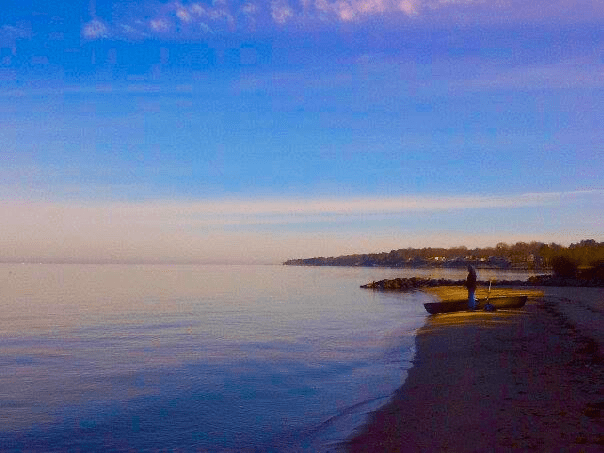
The tide is lower than I’ve seen in some time, mud flats running into the river easily one hundred feet or more. Fiddler crabs scurry about and seagulls land to grab them in the same place they normally would dive from on high into water three or four feet deep. This ebb is unusual.

Where the water does lap at the mud, foam formed from the icy cold winds, with temps in the upper twenties and lower thirties early this morning, and the winds pushing down from the northwest drop those another eight degrees or so. It is cold, and damp, so I feel it in my bones.

I like this. I mean, no, not all the time. But every so often I need some visceral reminder that I am alive now, not tomorrow when I have a laundry list of things to do or yesterday when some punk in my college comp class complained because I didn’t pass his plagiarized paper. Now, I am aware of the cold, the mudflats and panicked crabs, and my skin is tight, my eyes water from the wind, and my breath is frozen. It cleanses my entire world. I move about, which gets my blood flowing, and that not only warms me but awakens my senses even more. My mind, too, is clear, as if the winds and the cold blew off the soot that settled all semester.

Then the obligations seem fleeting, the problems which yesterday boiled my blood from the sheer weight of such minute interruptions, are cooled and dismissed by the ripple of foam running down the beach to Locklies Creek near Rappahannock River Oysters.

Here’s what is important, that I am still here. Alive, but more so, aware that I am alive, here, along this river today, and the cold pulls tight the skin on my face.

I thought of Richard Bach this morning and his work Illusions, in which the protagonist says almost as an aside, “Here’s a test to see if your mission on this earth is complete: If you’re alive, it isn’t.”

Hard to know sometimes, though, what that mission might be, isn’t it? You’d think by my age it would not only be second nature, but nearly complete, but I’m just waking up to the fact I should probably do something with my life. To do that I’m going to have to suppress the cold reality that I’m not young.

Except today, when what could have been some stagnant morning happened to turn kinetic because of the cold. My energy returned like a flood tide, and I stood on the sand wondering how to channel it. I think we do that sometimes; we have ambition, energy, even a wave of hope, but we simply don’t know what to do with it.

And for the first time in a long time, I understood my immediate response:

Nothing. Do nothing.

See the day, walk along the river and watch the eagles find food, and the lingering osprey who has not yet left for points south, dive for his meal. The most essential elements for life go ignored, or worse, aren’t even considered, for our need to be “productive.” But is it any less productive to walk on a leaf-covered path and watch cardinals move from holly tree to the ground and back? Is it any less productive to look east across the bay or the Atlantic and contemplate the waves, their calm and their power, as they approach and recede?

It is the same in summer for me, the blazing heat on my neck and face insist I remain present, the sweat on my forehead somehow similar to the tears from the cold wind, catch me and hold me tight in the moment, and I welcome it because at some point it will no longer be, or, better said, I will no longer be.

But not today. Today a dozen geese came in low across the duck pond and settled on the river just to the west, their honking subsiding, their journey paused for now. It doesn’t end exactly, not yet, but they take a moment and rest before they need to continue their flight.

And maybe they discover their purpose is in these moments, aware of the peace around them when they’re not rushing from one place to another, leading a flock or following the same. For geese, it is when they land and rest that it is impossible to tell who was in charge and who fell behind.

I came home, eventually, made some tea, organized my thoughts, responded to a few inquiries, but I did so with added calm I didn’t have before. I have a sense of peace now, of some sort of presence I can’t quite define, which is good, since I still have more than a little to do in front of me.

Yes, much more to do still in front of me.

Rutting Season

I spent time tonight outside watching Saturn slide west, and the half-moon along with an abundance of stars visible along route 33 east on Virginia’s Middle Peninsula. From my vantage just up the side of an embankment three miles from any town, stars filled the ordinarily black sky.

It gave me pause. Jupiter started to reveal itself just about the time the State Trooper showed up to take pictures of my car and the deer, but once he put out the flares and made sure I was okay before he left, I moved right back up that hill and found what is probably a nebulous, and other than talking to three or four kind people who stopped to make sure I was okay and to see if I needed a ride, I spent the night focused on the distant lights.

A deer hit me. I think we need to dispense with the ridiculous notion that we “hit” deer. Sometimes, perhaps, if we are distracted and a deer happens to be minding her own business in the middle of a road. But usually, and this time in particular, we are moving along fine when from the woods on the right a deer hit me, a beautiful tall, strong buck leaped to clear a small ravine between the road and the hill, and landed on the front of the passenger side of the car, crushing it entirely to the ground. I managed to stop on the shoulder but the deer went spinning through the air another twenty feet in front of me. He never twitched. Never looked back up. Dead on contact, both the deer and the Toyota.

But man, those stars. Just this morning on NPR I heard that a good friend of Galileo, Simon Marious, named the moons of Jupiter. I couldn’t see them with the naked eye, nor the rings of Saturn, but our own moon was perfectly visible. When the State Trooper lit the flares I thought I wouldn’t be able to see as well, but it was fine.

I was trying to remember some song from the seventies about the moon when a pick-up pulled up and a man got out. He asked if I needed help and if everything was okay. His license plate noted Disabled Vet so I asked and he had served two tours in Afghanistan. We walked up the road to the deer, still in perfect shape except for being dead, and the vet asked what I was going to do with it.

I’ll be honest. It never crossed my mind to do anything with it other than pull it off the road. I told him since the police already got pictures and filled out the police report for the insurance, he was welcome to the buck. I helped him load it on the bed of his truck and he was so pleased. “This is a ton of fresh meat” he told me. I wished him a Happy Veterans Day and thanked him for his service, and he drove off. I climbed back up the hill to wait for the tow truck. Almost two hours later he arrived. It was a flatbed since my engine is more or less crumbled beneath the new accordion style hood. I climbed in his cab and after he hauled my car onto the truck, we drove off. The car now sits in a field in the front of my property since he was able to make it around the first bend of the driveway.

I’ll deal with the car tomorrow.

Tonight my mind is on stardust and the million tons of meteor dust that fall every day, some of it fell tonight while I waited, almost bridging the distance between me and the cosmos, uniting us, like a deer and the hood of my car but with more grace.

I can have an anxiety problem on occasion. It hit tonight and it might take a few days to subside, but it will dissipate faster because of the stars, and the sky, and the way it never minded what went on. I kept thinking of my mother who in so many videos I’ve made of her, says, “It is what it is.” Trudat Joanie. Damn straight. I actually thought “It is what it is” as I climbed back up the small embankment and watched the sky, fixed on some bright star not far from Ursa Minor. Maybe Vega.

I have been in need of slowing down, of taking my time, being more present. I have been on the go for far too long cruising in the left lane, and lately I’ve been thinking about that, about walking the Camino in the summer of ’26, about just slowing down in everything I do. Then a deer hit me.

The tow truck driver was like Obi Wan, the way he talked with such exactness, with a kind tone. He said he was glad I was okay, and he put his hand on my shoulder when he saw the car and said, “Brother you are not having a great night, but I’m glad we’re here and talking about it.”

Way to slide the worst of this night immediately behind me.

We drove home and he slid the car off the truck bed onto the grass in the field on the front of the property, where it sits right now in the cold instead of down here near the house under the porch lights, warm and comfortable.

After I emptied it of most of the stuff inside, I stood in the field and looked at it, thinking about the myriad trips to western New York and Maryland, to Florida so many times, and to all the state parks my son and I have hiked in the past five years or so, and I sighed, looked up, and found Vega again, lighting my way, walking me back from the car to the house. Before I went inside I heard something in the woods. Deer bed down around here all the time, and when I heard several I knew that’s what was out there behind the shed. More likely a fox, but that just ruins this story, so I’m going with the deer.

I wanted to apologize. I mean, I can replace the car. But that poor deer is now on his way to some Vets freezer.