Letty

“What do you think happens, Bawb?” Letty asked at coffee one day last year.

“I don’t know, but I know I’ll miss you.” She started to cry.

“Guy said he thinks it’s like closing the door behind me. I like that. I’m just going to close the door behind me.”

“You going to be wearing heels?” We laughed. “Not this time! I think I’ll wear my running shoes and get in one last workout on the way.” Honestly, we made light of everything. “I’ll close the door behind me and keep on running.” We sat quietly a long time. Then we talked about the reality of it all. “I’m sorry I don’t have the strength to walk. The treatments are exhausting.” I said nothing. There was nothing to say. “Oh! Did you figure out our mileage?” For thirty years or more we walked a few times a week about four miles each time, talking, sharing, helping each other through the thirty years or more.

‘Yes I did. We walked six thousand miles. I figured the four miles each time, twice a week, but I only figured thirty weeks a year since we missed some and vacations. And i figured twenty-five years since at the beginning is was more sporadic, but later on it was more miles, so it evens out.’

‘Six thousand miles!”

I didn’t care so much about not walking anymore. The point was to talk and we were doing that anyway.

“What do you want after you shut the door?” I asked.

“You know exactly what I want,” she said. I did, but now that it’s real I had to ask again. “What about you?” she asked.

“I’d like to be cremated and then rolled into joints and have a bunch of writers smoke me while reading all my work that was rejected.”

“You know if I outlived you I would have made that happen.” That made us quiet again. “Let’s go outside and take a picture.

It’s the last one of us.

***

I don’t even know where to start. I was waiting to teach one of my first classes ever at Tidewater Community College in Virginia Beach, and across the hall Letty sat in her office with the door open. We said hi, and after I left class that day we talked all afternoon.

That was 1989 and immediately followed by three plus decades of hour and a half walks three times a week talking about our kids, our hopes and disappointments, the other people in our lives, and endless deep conversations about what we (mostly she) had read that week in The Economist, The Atlantic, Le Monde, The Washington Post, and more. When she was pissed off she’d switch to French, then realize I was staring at her and she’d switch to Spanish. We helped each other through the most significant changes people can face.

Almost thirty-five years of coffee in the morning, afternoons at the Mexican place across from campus, cider at the local pub–way too often–and sharing. I gave her books I thought she’d like; she introduced me to French and Italian writers, we’d walk through the Chrysler Museum in Norfolk and talk about everything except art. We made fun of each other, like the time in the Hermitage Museum in Russia when I told her I’d meet her in the Impressionists so I could see some of Jean Francois Millet’s work. I didn’t pronounce it correctly though and she had no idea who I meant; “Apparently I’m not spitting enough,” I told her. She said, “But you had me all discumboobulated,” and I told her there is no such word in English. We spent our lives making fun of how each other talked, though she won hands down since she could carry on a conversation in a half-dozen languages. I made fun of her heels, she made fun of my flip flops. It was like that.

The week after my son was born she came to my office and sat and we talked for hours about life. We cancelled our classes and talked about kids and grandkids and posterity and ancestry. She told me how every summer when she was a little girl, her father would drive the family to the Mediterranean coast to a town there where they spent a month swimming in the Med. Her father would head back home to work during the week but return on weekends. It was her favorite place. She said maybe someday we could travel there. A few days after my father died, she called me up and asked if we could meet for coffee on the boardwalk. We did, and she talked about Camus, and about Saint-Exupery–one of her absolute favorites. She remembered a day in the mall when we were shopping and ran into my father who was there to walk, and how she would remember forever how thrilled he seemed to see us. She said she missed her dad.

We were each other’s open books, somehow more than friends despite the misconception of that suggestion. She told me once that I knew her better than anyone except Elisabeth and Guy. That night she texted me, “I wasn’t just saying that; I mean it; no one else knows me like you do.” I wrote back, “Really? You mean that’s all you’ve got? I know all of it? How sad you must be.”

We made each other laugh. We were friends in what must be the original intent of the word.

Thirty years of laughing about work, about changes in personal lives. Thirty plus years of lunches and coffee breaks, of drives to the beach. Once, a memorable trip to Russia for eight days where she refused my pleas to lose the high-heel shoes on six mile walks up Nevsky Prospect. “I was born in these and I’ll die in these,” she said.

There’s more, but I am having trouble explaining myself here. It’s like I have no idea how to do this.

Over the last year and a half since the diagnosis, we finished each conversation with “Talk to you in a few days.” On our last conversation recently, she said, “Talk to you in a few days. I love you Bawb.” It was the first time she signed off that way and the last time we talked. But for several years after I left the college, she would go for a walk three or four days a week and use that time to call me. Then when she told me of her prognosis, we spoke every few days; sometimes for ten minutes, often for a few hours. She talked about how Billy was taking such good care of her, she always asked about my mother and how she is doing, we talked about what I was working on. On one call she asked me to read some of my new work to her; she said, “In case it comes out after.” After that last call last month, a few days passed and she didn’t call or answer my texts, then a week, then more, so I knew she had turned that corner.

We saw this coming from the start, though. In October of 2022, she texted me: “I just want to say you are the best friend I ever had and I’ll never be able to tell you how much I care about you.”

An hour later I was out for a walk and thought about her message. She had never expressed herself like that. We specifically didn’t do that on purpose. So I texted back: “What’s wrong?” Part of me expected some laughing emoji and her words saying “Nothing! Just thinking about you!” but a bigger part of me expected a serious response. Unfortunately, I was right. She wrote: “I was rushed to the hospital from the gym; they thought it was a stroke. It wasn’t; they are taking out a brain tumor. I wanted you to hear it from me. I’ll call you when the alien is out of my head.”

The results were heartbreaking.

She called. She said, “I want to tell you something.” I was quiet. “Do you remember that time you walked by my French classroom and I wasn’t there yet, so you went in and said that Madam Stone would be along shortly. You then got to talking, and you taught them some Spanish and told them they were wasting their time taking French, unless they planned to hitchhike across Quebec, but they couldn’t go anywhere without being able to use Spanish. By the time I showed up and walked in, you were all talking in short Spanish sentences.”

I told her I remembered it well. She said she loved that day. She then recalled another time when she was late I brought her entire class across campus to the faculty parking lot and we stood where she normally parked and waited. When she pulled in she was laughing so hard she nearly drove over the curb.

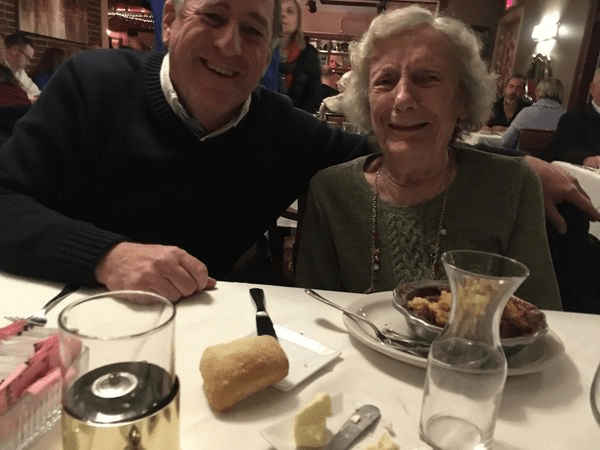
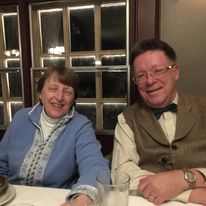
This was how we passed time; three and a half decades of a friend like that is another level of fortunate. She used to say we were Jerry and Elaine, and the comparison completely fits. Not long after her diagnosis and some treatments, we had coffee at the beach and she said she has so many pictures of me but only a few of us and they were from Russia. So we took a picture. I love the shot. I’m just in front of her and she’s leaning against me from behind, looking short that day since she had on running shoes, not high heels. People say how nice the picture is and how affectionate she is in it, but she isn’t being affectionate; I’m holding her up.

But these are personal musings about someone I cared about who left us all too soon. There’s nothing in this writing that could possibly matter to anyone who doesn’t know the two of us, which is the vast majority of readers. I fear this remembrance can too easily be met with an “oh that’s so nice they had such a great relationship” response and not understand that there’s more than that here. It’s about being open, about dying without leaving anything unsaid. We all have lost someone or experienced something that can’t be communicated properly enough to capture the raw and festering emotion, and it frustrates us because we want people to truly get it, but we are shackled by language. The true essence of the love we have for someone we lose is very personal and something we must accept as ours alone and can’t be shared.

I’d give anything to hear her voice one more time, call me, saying, “Oh, hello Bawb” in her heavy accent, but that’s not going to happen. Ever, no matter how much time passes, it simply is part of my past now; memories remain, of course, but the reality of her voice, the way she always held my arm when she said goodbye, the way she smiled. The way after I told people I was leaving campus and my plan was to never return, and their response was one of “of course you will visit,” not knowing me, but Letty’s response was, “It’s about time, Bawb. Take me with you.”

Just over a month ago she told me she was not feeling well. “But I made it to 65!” she added. “Now I need to make it to your birthday! That is my goal!”

“Happy Birthday to me,” I laughed.

“That way you will not forget me!” She was quiet and I could hear her trying to talk normally. “You’re going to write about me, aren’t you?” She wasn’t hoping I would, but predicting I would.

“Yes.”

“Good. I trust you. Will you mention how much I love Billy? And how I wouldn’t have any life at all without Guy and Elisabeth? Oh, and how I’m so glad I lived long enough to see my Sophia, my granddaughter!? And mention the time we went over to Elisabeth’s office at Operation Smile and banged on the window to get her to come to lunch with us! And you have to mention that Jewish Mother reading and the books that night and how your student thought I was your wife, so I said, ‘yes I am’ and sold him five books and for weeks on campus rumors in my French classes kept going, all of them asking if you were going to come by the class again. I liked that.”

“Do you want to write it?”

“Oh sure, this way I can write myself back to life,” she joked, and we were both quiet. “Besides, there’s more to write about.”

“I know. but some things should remain just ours.”

“I’m very glad for that, you know. Etre en paix avec quelqu’un,” she said mostly to herself.

‘Letty, I’m from the United States. Speak Spanish.”

It’s about having a connection with someone. It’s not love, exactly; it’s a sense of peace.

A minute later: “Watch for the birds that come to feed at your porch mon amour et ami. I’ll be among them.”

That image saddened me. “Will you be chirping with an accent so I know which one is you?”

“Yes! I’ll be the Bawbwhite!” We laughed. We laughed, so I knew we should hang up. It was the last time we talked.

Letty reached her goal and died in the overnight hours of my birthday. Her ashes will be spread across the Mediterranean Sea.

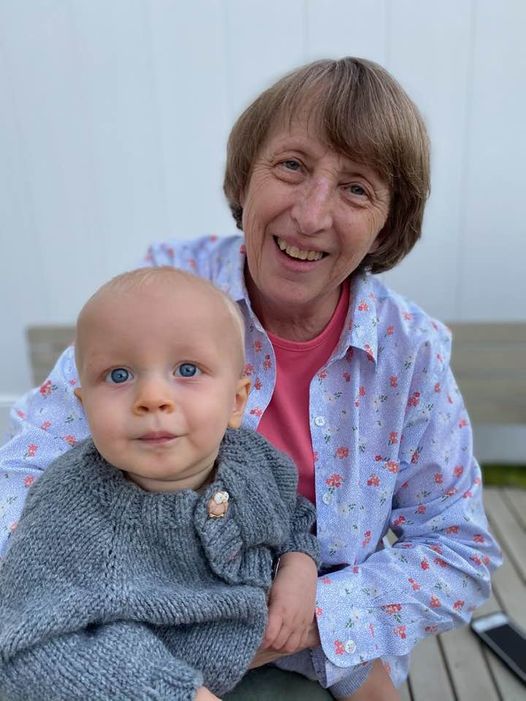
with granddaughter Sophia
Laetitia Sciarrino Stone
March 18, 1959-July 4, 2024

For Those Who Stay Behind

Note: This is a very serious one. Read. Share. Forgive. It’s all we’ve got.

This is for Dave W, Bobbie B, Bud D, Tricia K, and the one’s who live with those unseen wounds which simply won’t heal.

***

A broken limb is obvious. A cast, a sling, a set of crutches or even a knee cart, and people can see the problem, understand the delays and compromises. We move aside or assist in any way we can.

What happens when someone injures their mind, breaks their thought process, when a person cracks their perception of reality and ration? The world is quick to judge the results of some unseen wound festering in their frontal lobe. “They’re lazy,” we say; “They’ve given up,” we say; “They keep asking for help and I’ve had enough,” we say. No one replies to the unfortunate soul with some walker, “No, sorry. I’m not helping you anymore.”

Well, in both cases the likelihood of one asking for help is pretty slim anyway.    

Monsters such as depression, anxiety, and nervous breakdowns can destroy a person’s ability to function. People can’t think as clearly so they lose jobs, they make bad financial decisions and lose money and property. “They could have done something else; they could have sought help from a professional if that was true,” we say.

And when nothing makes sense anymore and the world is too much with them and there is absolutely no meaning in anything—when numbness overtakes the idle sadness, they find a way out.  

The truth is suicide is not always the result of depression; it is not always a person simply giving up. In fact, it is often seen by the psychologically afflicted as the perfect solution. It is not doing harm; it is solving problems. The mind no longer functions the same as others’ minds. If they even want to ask for help, they don’t even know what it looks like to ask for anything in particular, so they seek solutions on their own, like sleep, like cutting off contact, like shutting the brain down for good. It is not life they fear or wish to escape; it is their mind. It is a difficult task to escape one’s own thoughts.

“There is medicine for that,” we say.

Not really. Sure, there is medicine to help someone cover up the wound, like a Band Aid, but the sore doesn’t heal as much as it is buried. The infection will return as soon as

well 

as soon as it rains, or when the next call comes from a creditor because they can’t work enough to keep up, or, worse, when a call doesn’t come any longer from friends and they suddenly remember they were better once, and they won’t be like that again. But even that’s not accurate since they simply are like this now, and apparently always were, and the moment it happened is an allusive memory.

Because while in the movies when someone has a nervous breakdown, they flail their hands and scream, cry, and someone might slap them, tell them to snap out of it, in reality that’s not what happens. The truth doesn’t play well on film. In reality they say nothing. They might drink, of course, or become addicted to some pain reliever, some vice that keeps their brain in the moment like alcohol or other self-defeating measures that keep their mind from dwelling on some past or future attack, but they might just as easily sleep all day, or more likely not sleep at night. They try and work but the ability to focus is gone; not ignored or delayed—the actual part of the brain that helps them do work or see a reason to exist at all has a hole in the middle of it, the circuits are infected and surrounded by puss, but no one can see that, so it can’t possibly be anything other than “a phase,” “laziness.”

Later, afterwards, people say they didn’t know, “They always seemed fine.” “I thought they were going through something.” “They said it was no big deal.”

They say, “I wish they had asked for help.” They say, “I did all I could.”

They say, “What a shame.”

Indeed.

Did Hemingway have another novel, Van Gogh another masterpiece, Robin Williams another routine for the thousands of kids he used to visit in hospitals?

Depression and mental illness often caused by a mental breakdown can cause lives to rip apart, and the only explanation they have when they ask for help again and again is “I’m trying.” And eventually that simply isn’t good enough no matter how much they are loved. They live out on the fringe, they hold signs, they sleep on grates. Likewise, they live in country houses and city apartments. They seem to try, they try to seem to fit in.

Maybe if they wore a cast, had sutures across their forehead. We like to see problems before we help solve them. We don’t offer help to people when we don’t know they’re suffering; how could we? Unless we know them well.

And that’s the problem. No one knows them at all. They’re funny and outgoing. They make light of serious situations. They can work a room. So they either never ask at all or, when they do so too often say “I need help,” it is difficult to see how. “Again?” we reply. “Why now?” we ask. The thing is in a few days they will not even remember they ever asked for help to begin with. This is true; the compromised brain actually blocks that out completely. To us they can either be absolutely silent or seem constantly desperate; but to them it just happened.

Here’s the problem:

How can we find that line between someone who really needs help and someone who just needs a bit more tough love? What do we do if there is no visible “mistake” that needs correcting? What do we say when they say nothing at all, or if we do ask if they need help, they say, “No thank you, it’ll be fine,” more out of a notion of being too embarrassed to say yes. Too ashamed. They’d rather…what?

They’d rather die. To be sure. I remember a phone call early one morning when I just didn’t want to hear it again. I remember a visit from someone who needed more than I could give. I recall calling once and the phone kept ringing. I’ll never forget that one.

Where is the line between knowing whether we helped enough and we could have done more?

Honestly, it runs right down the middle of the rest of our lives, and we walk it aimlessly, hoping we made the right call, that there was nothing we could do. Even if we’d rather be on the side of foolishness, helping people way more than they probably deserve, we can’t ever know.

So we call and talk, stop by, we get them to laugh because apparently we think laughter is the best medicine.

That’s not how a nervous breakdown plays out. Trust me on this one. But there is no Habitat for Humanity that helps people rebuild their minds. So they lose everything: their homes, their families, their purpose. And there’s not a damn thing we can do about it. Well, sure there is, but the place between knowing and not knowing is dark and difficult to navigate.

So. What do we do?

We forgive them for finding a solution the rest of us thinks is foolish. We forgive them for believing that the pleasure found by watching their kids and grandkids grow, watching another sunset with someone, laughing at lunch with friends, still isn’t worth the pain—the constant and debilitating pain—that comes constantly to infect their mind; constantly, day and night. Even their dreams are saturated with pain.

Forgiveness for something we do not understand is a monumental task. But then for some, so is life.

If you need help, Call 988 immediately.

If you know someone who needs help, Call them. You don’t have to know what to say. Say anything.

If you are living with the memory of someone you feel like you could have helped more, it isn’t your fault. It isn’t their fault. Forgive them. Forgive yourself.

Remember what we learned as toddlers: How would we want them to react if it was us? What would we want them to remember if it was us?

Not everyone is fine. It’s that simple.

Bob Kunzinger writes the weekly blog, A View from this Wilderness, which premiered in January 2016, and is the author of eleven books, including the forthcoming Office Hours, as well as hundreds of articles in national and international publications. He lives in Virginia.

Peace. Out.

The Peaceful Priest on the left/the asshole on the right/1980’s

A friend of mine is a Franciscan priest who remains calm no matter what happens.

We are not alike.

He is compassionate, understanding, patient, and saint-like. He is perfect for his job and does it 24/7; that is, he is one of those rare souls that couldn’t be anything but some sort of man of God. If he gets stuck in traffic, for instance, he keeps it all in perspective. If someone cuts him off, his response remains, “They really must be in a hurry. I hope they’re careful.” Or, “Wow, God bless them and watch over them, they really must be anxious about some appointment.” His is a peaceful soul.

This contrasts directly with my “Use a frigging turn signal, butthead!” approach. When entering a tunnel and the traffic decelerates from sixty to forty, the good Father cares: “Oh, thank our Lord they are all being careful going into this tunnel. It really must be frightening to so many people.” I handle it with my own style: “It’s a tunnel. IT IS A TUNNEL! It is not a brick wall! Wilie E. Coyote didn’t paint the f***ing thing! The Road did NOT shrink! It’s a damn TUNNEL!”

We obviously address frustration differently, which makes me wonder how we ended up this way. Would Monastery-Bob and Professor-priest keep their temperaments? If I lived on a mountain in prayer would I be less likely to want to kill the cashier for needing a pen to subtract $5 from $20?

I was like him once, my friend the peaceful priest.

When we met during college we talked a long time about peace and where it comes from. To search for peace in the world is a fruitless act. Even if we find it, it can disappear with war, with stress, with distractions and interruptions. It is like turning to others to find what you want to do with your life; it must come from within. And peace, too, must be a spring, not a shower. I always liked that thought.

I once went to Father’s room and found dozens of people drinking beer and laughing as they told stories about their lives. Afterwards, I said I had a great time and found it strange that I could feel so lost among friends on one day and on another feel so connected and centered. He said, “Bobby—tonight you brought the peace with you.”

Man, he made it sound so simple: Bring the peace with you.

So a few years ago when some dirtbag student of mine called me an asshole in class, I thought of Father, and how it is never the situation but how we handle it. I could picture him with his wide smile and deep laugh and huge hands on my shoulders telling me I’m going to be just fine. I brought the student into the division office and sat the little bastard’s ass in a chair while I filled out a withdrawal form. Before I could finish the paperwork, however, and before he stopped crying, I decided to give this “peace” thing a shot.

“Are you scared?” He looked at me. “College, I mean, the assignments? Are you worried?”

“I suppose,” he said, calming down.

“Why?”

It took him a long time to answer something other than the moronic, I don’t know. “I’m not a good student. I was never good at school.”

“You get confused?”

“Yeah,” he said, nodding, knowing I hit on his fear.

“Yeah,” I said. “A lot of people do. I know I did. What you might try doing is stepping back a bit. Sit to the side and watch everything from a distance for awhile—get some perspective. Instead of calling me an asshole, ask me some questions.”

“Right,” he said, with not just a little indignation.

Bring the peace, Bob. Bring the peace.

“Sometimes we need to see things from a different point of view.”

He was quiet a long time and I believed I got through to him, and I wondered what he pictured as I recalled sitting in Father’s room listening to stories of scared and lost students like myself still trying to get a handle on our place in the world.

“Wow, thanks for your psycho-babble bullshit, Dude,” he said.

I took a breath, thought of Father, and told the little prick to get out of my site; that Hardees is hiring and someone has to clean the toilets.

It’s a gift, really, knowing one’s place in the world.

I headed home thinking about peace and frustration, fear and anxiety. He’s where he should be, this former student of mine. He’s out in the real world where he can seek out only those challenges he knows he can conquer. He is part of the masses that only face what they’re not afraid of. I wondered, though, how often I only face what I know I can conquer.

Bringing peace to an otherwise hostile environment is a difficult task and it gets harder when we watch the world simmering in anything but serenity. Maybe that’s why I, too, often avoid the challenge and instead wander down country roads, watch the water ebb and flow rather than suffer the anxiety hurled at us from the news of Ukraine, of Gaza, of DC, of course. It’s why I don’t drive during rush hour, avoid fast food restaurants and box store checkout lines. Hell, maybe I’ll just start giving everyone A’s so less people will call me bad names.

Yes. Let there be peace and let it begin with me, Bob the Asshole. I’m going for a walk and I’m bringing my peace with me.

Cathy Kunzinger Urwin, Ph.D.

Today my sister turns seventy-years-old.

Let’s start with this: My sister should be dead. Some years ago Cathy was diagnosed with aggressive stage four ovarian cancer. She had to undergo treatments in Philadelphia, knowing the odds of surviving even for just a couple of years were slim. She continued to work daily in Princeton, New Jersey, forty-five minutes from home, and she battled the monster. To the point: If you know anything about my sister, you know that ovarian cancer, even stage four, didn’t stand a chance. That was more than ten years ago, and not only did she defeat the cancer, not long ago she was told she is completely cancer-free and doesn’t need to return.

First picture ever of the three of us with Mom, Point Lookout, NY, 1960

Of course. That’s Cathy. One of my heroes.

I thought about telling “Cathy stories” here, like how she got my copy of the then-brand-new Let it Be album by trading me a Bobby Sherman album. Or how she let me use her guitar all I wanted. Or how she sent me care packages, made me ceramics like a seagull mug and another of a seagull standing on one wing, a beautiful rug she made of a seascape, and a pillow she made of Fozzie the Bear. How she introduced me to the music of John Denver which carried me through some difficult nights as I went out on my own, and how she sent me a plaque she made with the lyrics to John Denver’s “The Eagle and the Hawk.”

Cathy and Fred holding up their chubby brother

She doesn’t recall but I do how during the Watergate fiasco, my history-major sister quizzed me relentlessly in who the primary players were at the hearings. I was thirteen and she was in college, so I didn’t really see her too much after I turned twelve. But I ended up at the same college some years later to discover she had left a mark at our alma mater, graduating seven years before I did, but her former professors knew who I was because of her. I let them know quickly I was not my sister; an always straight A student who excelled in her studies, particularly in history, eventually earning her doctorate at Notre Dame where she met her loving and devoted husband, Greg.

Cathy and Greg

I’m not going to provide details of the myriad times she ended up being the butt of my jokes and those of our brother Fred. I will say she is such a fine cook and baker that her food should be in restaurants, she is an excellent writer of both history and other subjects, authoring the fine and definitive book Agenda for Reform, about Winthrop Rockefeller. I’ll not embarrass my sister with stories of her dancing to the “Hokie Pokey” at a resort in Downingtown, Pennsylvania, or bring up the complete drenching she received on the Roman River Rapids ride at Busch Gardens in Virginia, where she apparently didn’t know she’d get wet, to which her son replied, “Ma! It’s Roman River Rapids! What did you think was going to happen!”

Cathy with Lyra

I’m going to save the story of calling her one August day in 1988 just seconds after she received beautiful news that would change her life; how she became a committed and loving mother; a passionate grandmother, which only deepened her love for her husband and the rest of our family.

Cathy with Henry

There are too many details necessary to explain the time I finished a reading at a major conference and afterwards a woman approached me and asked if I was related to Cathy Kunzinger Urwin. When I told her, she said, “I’m with the Winthrop Rockefeller Center in Arkansas and we’ve been trying to reach her! Her book Agenda for Reform is the best work written about Rockefeller and the work he did, and we want to invite her to a symposium.” I was never so proud of my big sister, and I really don’t remember much about the rest of that three day conference, but I remember that.

The three of us at the World’s Fair, Flushing, NY

And I’m going to keep to myself the history we’ve shared not solely as brother and sister but as friends. And readers do not need to be reminded of what it means to have an older sister; how she is counselor, surrogate mother, teacher, patient audience, how she teaches scared younger brothers how to care about others, how to show compassion, how to think of others first. Few people with an older sister don’t already know she is a security net for the most challenging of emotional events, how she listens, how she is tolerant.

“Life is paper thin,” my friend Toni Wynn once wrote. Sometimes we all take each other for granted, forget to check in, see how life has been treating us. On the one hand we might talk often enough to know our sisters are there if we feel like calling. On the other, we don’t let them know nearly enough, not nearly enough, how much they mean to us.

Happy Birthday Cathy.

Cathy and me, 1988

But I can’t avoid this one, just for old-time’s sake:

For Cathy:

in all of time coming and going

from the forthcoming collection, Wait/Loss, this is “Sentence ’86”:

in all of time coming and going, whatever’s next and long before now, before this millennium, or the last, before the Dark Ages, before Jesus, Christ, even before time, we share these years, you and I, this splinter of nanoseconds as we tumble through space in this brief awareness, together, share these histories, these stories, that pandemic, that eruption, the wars, the towers tumbling, the time we stayed up all night looking at stars, and the time we said goodbye that hot summer day, that was us back then, over there, when somehow we got caught onto each other as the accident of now determined that in all of everything that ever was and might be somehow we should share this present, hooked, for just a while, then not, and billions of others and billions more were, are, and will be, so you have to know that the chances remain incomprehensible that we might ever collide at all, leaving pieces of each other in the other’s pockets to carry on some wayward journey through space, and, then, gone again, evaporated into that eternal foreverness of nevermore, so brief, so tragically beautiful yet sadistically brief is this whirlwind of now, so I must wonder what the odds are in the vastness of this expanding thought, that we’d collide yet again, so that here we are, somehow