It’s been a year since Dave died. A year next week on my birthday since Letty died, a year two weeks later since Richard died and then Fr Dan, then Billy…
There was more to say. But then, of course, there is always more to say, isn’t there?
That’s the lesson, I suppose, if one were to look for a lesson: Say it now.
“These days I seem to think a lot about the things that I forgot to dofor you,
and all the times I had the chance to.”
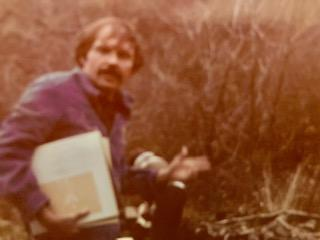
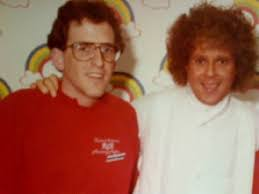
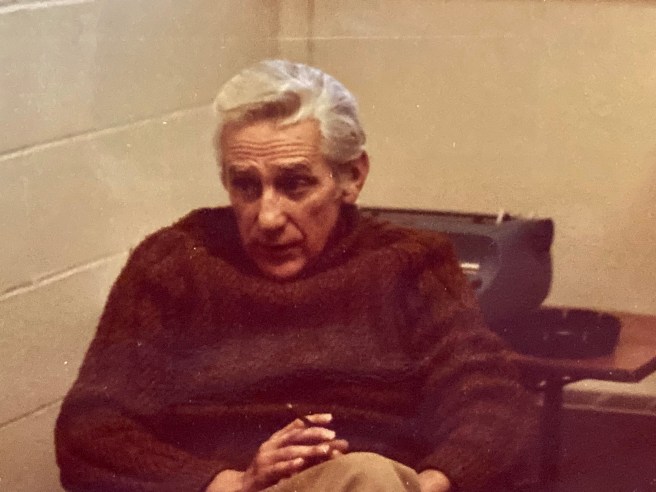
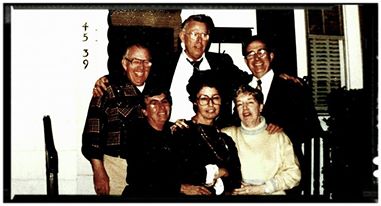
Fr. Dan Riley, ofm
Bobbie Roehren Buckman
Fr. Brennen Fitzgerald, ofm
Mom
Dad
Dave Szymanski
Eddie Radtke
Letty Stone
Fr. Dan Riley, ofm
Richard Simmons
Dad and Mom
Pete Barrecchia
Fr. Dan
Cole Young
Dad and his siblings, Howard, Ed, Audrey, Phyllis, and Joan
Doug Dunn
Rachel Scher
Letty
My cousin Bill (with my cousin JoAnn)
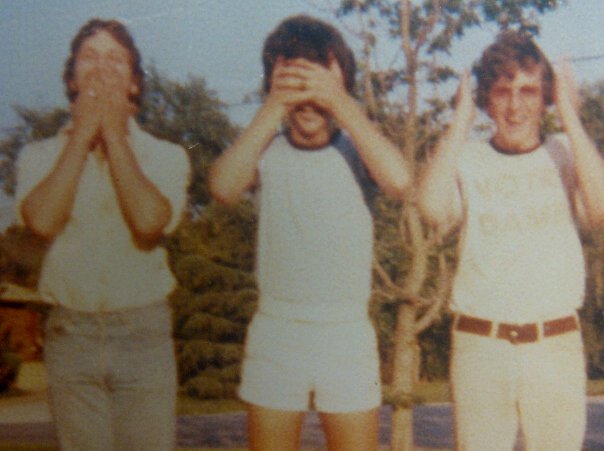
Dave Weir (on left, with Mike Russell)
You’re the color of the sky Reflected in each store-front window pane You’re the whispering and the sighing of my tires in the rain
You’re the hidden cost and the thing that’s lost In everything I do and I’ll never stop looking for you In the sunlight and the shadows
And the faces on the avenue That’s the way love is
I don’t remember losing track of you You were always dancing in and out of view I must’ve thought you’d always be around
This is Part Five of a Five Part Series here at A View.
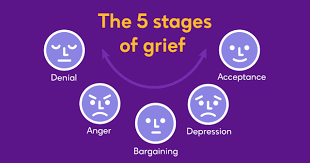
The five stages of grief as outlined in Elizabeth Kubler-Ross’ On Death and Dying are Denial, Anger, Bargaining, Depression, and Acceptance.
To wit:
Denial: A natural reaction to loss, denial can help people slow down the grieving process and avoid feeling overwhelmed. It can also be a way to try to understand what’s happening.
Anger: A common reaction to the frustration of no longer being able to live in denial, anger can feel like an emotional outlet as people adjust to a new reality. It can also provide temporary structure and a connection to the person who died.
Bargaining: People may try to change the circumstances that are causing their grief, such as hoping that things will improve if they take certain actions.
Depression: A stage of grief
Acceptance: A stage of grief where people find control and figure out how to proceed
PART FIVE:
Acceptance:
The truth is I accepted some deaths nearly immediately. Letty is the best example. We saw it coming eighteen months out and we talked about it often, particularly her take on the post-life expectations. She told me to look for the birds feeding on the porch and she’d be among them. She told me she’s just going to close the door behind her. So by the time July rolled around and she slipped away, acceptance of that new reality was already on the table.
Dave was more difficult having not told a soul about his impending death due to cancer. Richard was a shock but his self-isolation from society for several years prior to falling and dying made his death closer to acceptance than any sort of anger or denial.
They’re all different, and Ms. Ross is clear that the stages weave in and out of our consciousness, rising then receding, and just when acceptance seems at hand, depression might pop back on the scene.
The thing is acceptance is about knowing someone you love is gone and finally learning to accept that your new reality is one without them and learning to live that way. The less involved someone has been in your life, the easier acceptance becomes. Dave and Letty and Fr Dan and Dad maintained an absolute presence in my life, so accepting their absence, particularly since with the exception of my father, the rest all checked out at nearly the same time, has been more difficult. Accepting is a sense of no longer being lost when a particular time of the day might have been occupied by conversation or even texting, a long walk to the Farmer’s Market or a slow walk around the mall. The instinct might remain to wish you could do that again, or at the very least to slip into a funk because you can’t do that again. But acceptance is being able to remember those times, smile, appreciate how lucky you were to have at least had them, and continue.
Caution: Just when that happens, depression might snap back. Just saying. These stages are circular.
In any case, when my father died nine years ago, acceptance was easy because of the conditions of those last few years, but to this day I have trouble sometimes understanding that loss of security, even at my age. There’s something about the loss of your father that says, “You’re on your own, Pal,” even if I was an AARP member when it happened.
What I have found interesting is the larger picture here that I’m trying to frame for myself. Accepting the deaths of the primary people in my life from all stages of my life—Eddie from childhood, Dave and Bobbie and Debbie from high school, Joe and Cole and Dave from college, Richard from a time I was learning to live on my own, and through those years and the rest of my years until recently, Dad, Letty, and Fr. Dan, has caused an unexpected twist: the acceptance of my own death. While it has not become something I welcome, it has become something I don’t worry about, as if everyone else on my team went on ahead and is waiting, but that’s not right either.
Maybe it is just that I accept that the world keeps turning without them, and so must I, maybe even by living more, experiencing more, particularly for those who left too soon. Acceptance for me—and this isn’t for everyone—means that death is more a motivator, like a new teammate; we’re working together here, this unusual macabre mentor whispering in my ear through the absence of my friends and family, “Keep going,” or as Virgil noted, Death “twitches my ear and says, ‘Live. I am coming,’”
Acceptance comes quickly when you hope for someone to no longer suffer, but it soon evaporates and is replaced by those other stages, like soccer players on a pitch replacing each other, taking a break so that the entire Grief Team remains strong. Eventually acceptance will return and dominate until it is our turn to put others through those same stages with our own departure, closing that door behind us.
For me there has been one exception, and those who knew Fr. Dan, and more specifically had a relationship with him like I did, as many have had, my “acceptance” of Fr. Dan’s death was nearly immediate. Of course the suddenness of his death, particularly only a day after we talked and hours before we planned to talk again, allowed Denial to dominate, but with Dan it is different. It has to do with his spiritual presence in all he did, his nearly reincarnation of the life of St. Francis and how Dan discussed saints and holiness as if they were brothers and sisters and he was already in and out of the otherworld, and more often than not it felt like he was heavenly from the start and took some time to visit us on occasion. This is difficult to explain, but he was not of this world anyway, so his departure from it seemed right. Letty wanted to stay, as did Dave and all the others. But Fr. always struck me as someone who couldn’t wait to die despite his absolute love of life and nature and all that exists, not in any depressive, suicidal way, but as if he knew something we didn’t, and we’d just have to see for ourselves.
People over the last six months have not missed the chance to remind me “you don’t get over one’s death or grief, but you learn to live with it, live differently.” Yeah, I know, and I do appreciate the sentiment and concern, but while acceptance is the ultimate goal, denial remains my favorite.
The Yankees lost the World Series
(how’s that for a non-sequitur—hang in there)
and while I’m not a fan having pulled for the Mets during the playoffs, once the Mets were out of it, as a native New Yorker I had to pull for the Boys from the Bronx. I know many Yankee fans, including close friends and a handful of misguided cousins, and I could observe the five stages of grief play out over the course of the last twenty-four hours. Denial, of course, that they could make it that far and lose so swiftly, despite the game they kept for themselves. Anger, of course; I mean they left the bases loaded with one out! Come on! That lead to bargaining of what could have been done differently, followed by the harsh reality you could see on the players faces after the Dodgers won, and, of course like all players of all games, eventual acceptance that this one got away but wait until next year. Having been a Bills fan for decades I’m well used to the routine.
So Liz’s efforts to label the stages of grief allow us to stretch beyond just death and find them applicable to many situations. But at the end of it all is death, which for the rest of us is the beginning of life without someone we loved and still love.
When I go for a walk I think of these people, and sometimes simply by having a wandering mind I end up in some pseudo conversation with them, talking to Letty about the floods in Spain, talking to Dad about his putting, talking to Fr. Dan about how hard it is sometimes to keep going.
And in my head he tilts his head back and smiles that wide smile, lets out a small laugh, and says, “I know Bobby, I know. It’s exciting, isn’t it? To not always know what happens next?”
In these days now when this happens, he walks away just then and I watch him move into my neighbor’s cornfield like James Earl Jones, and I turn to see Letty staring at me, saying, “He’s right Bawb. You need to keep going. Just ask him,” and she points behind me where I see Richard bouncing from foot to foot, saying, “She’s right Bob! Move your tooshie!”
and that thought makes me laugh out loud, until depression settles back in, and just as EKR warns, it gets heavier and heavier, and heavier, until I put it down and spin back into denial, wondering what everyone is up to that day, out doing their own thing in the world.
But I know better.
You’re the color of the sky Reflected in each store-front window pane You’re the whispering and the sighing of my tires in the rain
You’re the hidden cost and the thing that’s lost In everything I do Yeah and I’ll never stop looking for you In the sunlight and the shadows
And the faces on the avenue That’s the way love is
This is Part One of a Five Part Series here at A View.
Psychologists teach us there are five stages of grief. Personally, I believe there are a few dozen, but I’m counting overeating, drinking, the gummy-chewing stage, the Marvel Universe binge-watching stage, and several others, but for the sake of brevity, let’s go with Elizabeth Kubler-Ross’ count-em-on-one-hand list of stages, from her book On Death and Dying (so right away we’re not in a good place).
The Fantastic Five: Denial, Anger, Bargaining, Depression, and Acceptance, or DABDA, as I just decided to use for sake of association.
First, here’s an AI generated overview before I slaughter them:
DABDA:
Denial: A natural reaction to loss, denial can help people slow down the grieving process and avoid feeling overwhelmed. It can also be a way to try to understand what’s happening.
Anger: A common reaction to the frustration of no longer being able to live in denial, anger can feel like an emotional outlet as people adjust to a new reality. It can also provide temporary structure and a connection to the person who died.
Bargaining: People may try to change the circumstances that are causing their grief, such as hoping that things will improve if they take certain actions.
Depression: A stage of grief
Acceptance: A stage of grief where people find control and figure out how to proceed
PART ONE:
Denial:
I’m good at this—really in all aspects of life—but given the chance to forget that someone I love is dead, I’m all over it. This is most easily accomplished if you live a great distance from the deceased, or if you have had little contact over the years. Denial is convenient when you have a lot to do and thoughts of someone you love who recently passed or even not so recently slow you down. Kubler-Ross doesn’t disparage denial, but she does suggest it is best to move through it honestly. And I will, eventually. I understand it is simply self-preservation that I assume my father is at home watching golf (this one is hard to do since my mother no longer lives in the same place they did, so I am too aware of his goneness), Letty is visiting family in Italy, Eddie is playing blues in the city, Dave is misunderstanding lyrics at some coffee shop in Tampa, and Fr Dan, well, Fr Dan was already half in heaven to begin with. He’s not gone as much as he now plays the role of advocate. Richard made denial easy by his convenient disappearance from society and media several years ago. In my mind he’s home watching old Jane Fonda exercise videos.
It’s not easy to remain in this stage sometimes; there’s got to be a gummy that aides in denial.
But I see no reason we all can’t just assume those we love are off doing other things and they’ll be back in touch at some point. “It’s not healthy” Liz Kubler-Ross writes. Why? Why is it better to “accept” they are gone and won’t be coming back than it is to “accept” that they’re in Thailand playing Mahjong? It works for me, and I’m able to function properly without facing the reality that for the rest of forever, eternally foreverness, throughout the future of infinite time, I will never see these people again. They were here briefly; now they are gone.
“They’ve gone ahead,” people say.
“They’re in a better place,” people say.
“You’ll see each other again someday,” people say.
My mind holds onto that last one, yes, but not the way they mean it in some ethereal ghosty way. No. We’ll see each other again when they get back from Machu Pichu. I can’t wait to see their pictures.
Listen, I’m not dumb; I know they’re dead. Dave was in denial of death and told no one. Letty wasn’t crazy about it but moved toward it with class. Fr. Dan had no idea; neither did Eddie. Richard fell, so it’s doubtful he knew. Result: they’re not coming back, ever, and as Mr. Croce aptly pointed out: “Photographs and Memories, Christmas cards you sent to me. All that I have are these, to remember you.”
Yes, I know.
But grant that my considerably better mood and more focused work ethic come from an absence of acceptance of such significant losses.
I recently attended a writing seminar about grief, and the moderator—poet Anne Marie Wells from Northern Virginia—asked us to think about synonyms for grief for five minutes and write them down. To do so I had to briefly abandon my denial stage, but it seemed Kubler-Rossy, so I agreed. Anne Marie distributed a poem wherein the poet (not her) had synonyms for “grief” which were more personal than any formal understanding of the emotion.
I took the blank sheet of paper and wrote “SYNONYMS FOR GRIEF” at the top, slowly and neatly, OCDish, taking it slowly in an effort to eat up some of the allotted time. I started with the obvious: sorrow, misery, sadness, anguish, distress, agony, torment.
But I didn’t believe it. I couldn’t feel it in my stomach where true grief exists. I jotted down a few more: sadness, depression, helplessness. They felt empty. Dictionary words. Pointless.
I put down the pen and reread the poem. I looked at the clock and still had three minutes in the exercise. I stared across the library where the seminar was held, and I saw a guy at the computer with headphones on. He looked like my childhood friend, Eddie, who was killed by a car while walking out of work one night. I thought of Harry Chapin—a connection Eddie and I had.
I flipped the page over and tried again:
“Synonyms for Grief.”
Cats in the Cradle. Golf on television on a Sunday afternoon. Brussels in September.
La Vie En Rose (That one rips me apart. Grief incarnate).
Paul Simon songs. Seared tuna. Hard cider.
Wham’s “Wake me up before you Go Go.”
Black and white photographs. Change jingling in a pocket. Coors Light.
French accents.
Okay, so I wrote “French accents” fifteen minutes ago and went for a walk. My chest hurts.
Grief.
Grief sucks. It can be damn near suicidal. I get it Lizzy, I really do. It can also be cleansing; it can make us stronger, and yes, of course I grieve; I just did.
But denial is where it’s at. I’m running up to the post office and see if Letty sent a postcard. I might stop by the club to watch some golf, alone since my son’s traveling and Dad lives too far away. Then I’m going to finish the manuscript that was due last month about a friend of mine who is now living in a village in South America.
I just might be able to denial my way through the rest of my life. But that would piss Elizabeth off, and Anger is Stage Two. Some other time. For now, I prefer having nothing to be angry about.
“What do you think happens, Bawb?” Letty asked at coffee one day last year.
“I don’t know, but I know I’ll miss you.” She started to cry.
“Guy said he thinks it’s like closing the door behind me. I like that. I’m just going to close the door behind me.”
“You going to be wearing heels?” We laughed. “Not this time! I think I’ll wear my running shoes and get in one last workout on the way.” Honestly, we made light of everything. “I’ll close the door behind me and keep on running.” We sat quietly a long time. Then we talked about the reality of it all. “I’m sorry I don’t have the strength to walk. The treatments are exhausting.” I said nothing. There was nothing to say. “Oh! Did you figure out our mileage?” For thirty years or more we walked a few times a week about four miles each time, talking, sharing, helping each other through the thirty years or more.
‘Yes I did. We walked six thousand miles. I figured the four miles each time, twice a week, but I only figured thirty weeks a year since we missed some and vacations. And i figured twenty-five years since at the beginning is was more sporadic, but later on it was more miles, so it evens out.’
‘Six thousand miles!”
I didn’t care so much about not walking anymore. The point was to talk and we were doing that anyway.
“What do you want after you shut the door?” I asked.
“You know exactly what I want,” she said. I did, but now that it’s real I had to ask again. “What about you?” she asked.
“I’d like to be cremated and then rolled into joints and have a bunch of writers smoke me while reading all my work that was rejected.”
“You know if I outlived you I would have made that happen.” That made us quiet again. “Let’s go outside and take a picture.
It’s the last one of us.
***
I don’t even know where to start. I was waiting to teach one of my first classes ever at Tidewater Community College in Virginia Beach, and across the hall Letty sat in her office with the door open. We said hi, and after I left class that day we talked all afternoon.
That was 1989 and immediately followed by three plus decades of hour and a half walks three times a week talking about our kids, our hopes and disappointments, the other people in our lives, and endless deep conversations about what we (mostly she) had read that week in The Economist, The Atlantic, Le Monde, The Washington Post, and more. When she was pissed off she’d switch to French, then realize I was staring at her and she’d switch to Spanish. We helped each other through the most significant changes people can face.
Almost thirty-five years of coffee in the morning, afternoons at the Mexican place across from campus, cider at the local pub–way too often–and sharing. I gave her books I thought she’d like; she introduced me to French and Italian writers, we’d walk through the Chrysler Museum in Norfolk and talk about everything except art. We made fun of each other, like the time in the Hermitage Museum in Russia when I told her I’d meet her in the Impressionists so I could see some of Jean Francois Millet’s work. I didn’t pronounce it correctly though and she had no idea who I meant; “Apparently I’m not spitting enough,” I told her. She said, “But you had me all discumboobulated,” and I told her there is no such word in English. We spent our lives making fun of how each other talked, though she won hands down since she could carry on a conversation in a half-dozen languages. I made fun of her heels, she made fun of my flip flops. It was like that.
The week after my son was born she came to my office and sat and we talked for hours about life. We cancelled our classes and talked about kids and grandkids and posterity and ancestry. She told me how every summer when she was a little girl, her father would drive the family to the Mediterranean coast to a town there where they spent a month swimming in the Med. Her father would head back home to work during the week but return on weekends. It was her favorite place. She said maybe someday we could travel there. A few days after my father died, she called me up and asked if we could meet for coffee on the boardwalk. We did, and she talked about Camus, and about Saint-Exupery–one of her absolute favorites. She remembered a day in the mall when we were shopping and ran into my father who was there to walk, and how she would remember forever how thrilled he seemed to see us. She said she missed her dad.
We were each other’s open books, somehow more than friends despite the misconception of that suggestion. She told me once that I knew her better than anyone except Elisabeth and Guy. That night she texted me, “I wasn’t just saying that; I mean it; no one else knows me like you do.” I wrote back, “Really? You mean that’s all you’ve got? I know all of it? How sad you must be.”
We made each other laugh. We were friends in what must be the original intent of the word.
Thirty years of laughing about work, about changes in personal lives. Thirty plus years of lunches and coffee breaks, of drives to the beach. Once, a memorable trip to Russia for eight days where she refused my pleas to lose the high-heel shoes on six mile walks up Nevsky Prospect. “I was born in these and I’ll die in these,” she said.
There’s more, but I am having trouble explaining myself here. It’s like I have no idea how to do this.
Over the last year and a half since the diagnosis, we finished each conversation with “Talk to you in a few days.” On our last conversation recently, she said, “Talk to you in a few days. I love you Bawb.” It was the first time she signed off that way and the last time we talked. But for several years after I left the college, she would go for a walk three or four days a week and use that time to call me. Then when she told me of her prognosis, we spoke every few days; sometimes for ten minutes, often for a few hours. She talked about how Billy was taking such good care of her, she always asked about my mother and how she is doing, we talked about what I was working on. On one call she asked me to read some of my new work to her; she said, “In case it comes out after.” After that last call last month, a few days passed and she didn’t call or answer my texts, then a week, then more, so I knew she had turned that corner.
We saw this coming from the start, though. In October of 2022, she texted me: “I just want to say you are the best friend I ever had and I’ll never be able to tell you how much I care about you.”
An hour later I was out for a walk and thought about her message. She had never expressed herself like that. We specifically didn’t do that on purpose. So I texted back: “What’s wrong?” Part of me expected some laughing emoji and her words saying “Nothing! Just thinking about you!” but a bigger part of me expected a serious response. Unfortunately, I was right. She wrote: “I was rushed to the hospital from the gym; they thought it was a stroke. It wasn’t; they are taking out a brain tumor. I wanted you to hear it from me. I’ll call you when the alien is out of my head.”
The results were heartbreaking.
She called. She said, “I want to tell you something.” I was quiet. “Do you remember that time you walked by my French classroom and I wasn’t there yet, so you went in and said that Madam Stone would be along shortly. You then got to talking, and you taught them some Spanish and told them they were wasting their time taking French, unless they planned to hitchhike across Quebec, but they couldn’t go anywhere without being able to use Spanish. By the time I showed up and walked in, you were all talking in short Spanish sentences.”
I told her I remembered it well. She said she loved that day. She then recalled another time when she was late I brought her entire class across campus to the faculty parking lot and we stood where she normally parked and waited. When she pulled in she was laughing so hard she nearly drove over the curb.
This was how we passed time; three and a half decades of a friend like that is another level of fortunate. She used to say we were Jerry and Elaine, and the comparison completely fits. Not long after her diagnosis and some treatments, we had coffee at the beach and she said she has so many pictures of me but only a few of us and they were from Russia. So we took a picture. I love the shot. I’m just in front of her and she’s leaning against me from behind, looking short that day since she had on running shoes, not high heels. People say how nice the picture is and how affectionate she is in it, but she isn’t being affectionate; I’m holding her up.
But these are personal musings about someone I cared about who left us all too soon. There’s nothing in this writing that could possibly matter to anyone who doesn’t know the two of us, which is the vast majority of readers. I fear this remembrance can too easily be met with an “oh that’s so nice they had such a great relationship” response and not understand that there’s more than that here. It’s about being open, about dying without leaving anything unsaid. We all have lost someone or experienced something that can’t be communicated properly enough to capture the raw and festering emotion, and it frustrates us because we want people to truly get it, but we are shackled by language. The true essence of the love we have for someone we lose is very personal and something we must accept as ours alone and can’t be shared.
I’d give anything to hear her voice one more time, call me, saying, “Oh, hello Bawb” in her heavy accent, but that’s not going to happen. Ever, no matter how much time passes, it simply is part of my past now; memories remain, of course, but the reality of her voice, the way she always held my arm when she said goodbye, the way she smiled. The way after I told people I was leaving campus and my plan was to never return, and their response was one of “of course you will visit,” not knowing me, but Letty’s response was, “It’s about time, Bawb. Take me with you.”
Just over a month ago she told me she was not feeling well. “But I made it to 65!” she added. “Now I need to make it to your birthday! That is my goal!”
“Happy Birthday to me,” I laughed.
“That way you will not forget me!” She was quiet and I could hear her trying to talk normally. “You’re going to write about me, aren’t you?” She wasn’t hoping I would, but predicting I would.
“Yes.”
“Good. I trust you. Will you mention how much I love Billy? And how I wouldn’t have any life at all without Guy and Elisabeth? Oh, and how I’m so glad I lived long enough to see my Sophia, my granddaughter!? And mention the time we went over to Elisabeth’s office at Operation Smile and banged on the window to get her to come to lunch with us! And you have to mention that Jewish Mother reading and the books that night and how your student thought I was your wife, so I said, ‘yes I am’ and sold him five books and for weeks on campus rumors in my French classes kept going, all of them asking if you were going to come by the class again. I liked that.”
“Do you want to write it?”
“Oh sure, this way I can write myself back to life,” she joked, and we were both quiet. “Besides, there’s more to write about.”
“I know. but some things should remain just ours.”
“I’m very glad for that, you know. Etre en paix avec quelqu’un,” she said mostly to herself.
‘Letty, I’m from the United States. Speak Spanish.”
It’s about having a connection with someone. It’s not love, exactly; it’s a sense of peace.
A minute later: “Watch for the birds that come to feed at your porch mon amour et ami. I’ll be among them.”
That image saddened me. “Will you be chirping with an accent so I know which one is you?”
“Yes! I’ll be the Bawbwhite!” We laughed. We laughed, so I knew we should hang up. It was the last time we talked.
Letty reached her goal and died in the overnight hours of my birthday. Her ashes will be spread across the Mediterranean Sea.
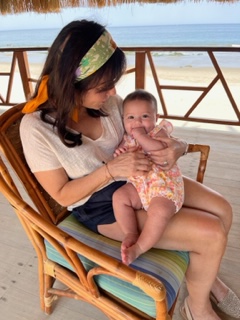
with granddaughter Sophia
Laetitia Sciarrino Stone March 18, 1959-July 4, 2024















 a view from this wilderness