I Barely Remember When

Fall has arrived and the breezes this weekend cleared away most of what was left of summer. Last week at home I walked along the river like I always do this time of year when the water laps at my feet, it is warmer than the air, inviting, deceiving, teasing me into thinking summer will push back on autumn and maybe even win out. I don’t mind the change so much; I’m not bothered by the passing of time as much as how I spend the passing of time.

The leaves are just beginning to change here, and my drive in a few weeks to West Virginia will bring me through every stage of autumn. Sometimes you can see all the changes happen in one day. Crazy. Well, the truth is, some things need to change. Even with resistance, sometimes it is the only way to make room for new growth.

For me even the seasonal change from summer to fall is often troublesome. Again, I don’t mind fall—my days in western New York and Massachusetts are most memorable for this time of year. And obviously I know it is going to happen. I watch the weather, I mark the calendar, I see the leaves letting go. But still it always takes me by surprise. I wake up one day and I need to wear more clothes, or I no longer feel the sun so strong on my shoulders, and I am saddened. The Seasonal Affective Disorder which strikes some of us in February can also have its way in October, though usually not as bad.

This year is different; I’m both tired of change and in desperate need of some right now.

In kindergarten I liked a little red-haired girl, Kathleen.

Stay with me here.

Just like Charlie Brown I was afraid to approach her. At the same time I was thrilled I met someone I would get to grow up with. We were in the same class until third grade when at the end of the school year my family moved much further out on the Island. Instead of saying goodbye to her I made a card that said, “I love you” and threw it at her in the hallway. I think she got it. Now I wish I had just handed it to her politely and said I was sorry I was moving. I never saw her again. I probably didn’t handle that relationship well. The change, however, the move east to what would become where I would forever call “where I am from,” was unexpectedly pleasant despite my resistance at first. The same thing happened when I was fourteen and moved to Virginia Beach, four hundred miles south. I absolutely and definitively did not want to go; I’m so glad we did.

During each major change in life, though, I consistently ignored the advice of my older siblings or from examples set down on television or in school. I simply preferred to assess a situation and have at it on my own terms, even if it meant complete and utter disaster. I was slow to learn as a result, but I gained that small bit of confidence we used to earn out on our own, trying and failing, fantasizing and acting and pretending. You simply never know when those youthful lessons will return to come in handy, see us through an unexpected left-turn, help us through the changes. And it seems these days everything is changing, doesn’t it? It’s as if people in positions of power are scanning the horizon to see what they can disrupt next. Even friends are acting strange, distant, and when the very essence of what we can count on is no longer predictable, we must either adapt or run away. I’m running away.

I thought about those years, my early youth in on Long Island, and how innocent it all was; how we flipped baseball cards and played stickball. We had block parties where the block would be closed to traffic and we all put picnic tables and grills out and walked up and down the street talking to everyone else and sharing food, and riding bikes, and the adults had drinks and the kids had fun. Television went off the air at night, just a fuzzy white noise until the early morning when a black and white flag waved across the screen and some dude said, “We now begin our broadcast day” after the National Anthem.

This was the age of my youth. It was innocent and tech-free and filled with hippies and protests and flag-burning and marches and sit-ins and rumbles. The laughable Mets became the champs and we walked on the moon. On the moon, for God’s sake. How can you possibly not understand why at the core of my generation is some semblance of hope, still simmering. Hope is what got us through; the hope of humanity, the hope of leaders, the hope of lovers and friends. We were not a generation of followers staring at our hands; not by any stretch of the imagination. So when the times were a ‘changing, we changed—or we were the ones causing the change to begin with. And as we grew older, those organic traits became part of our DNA.
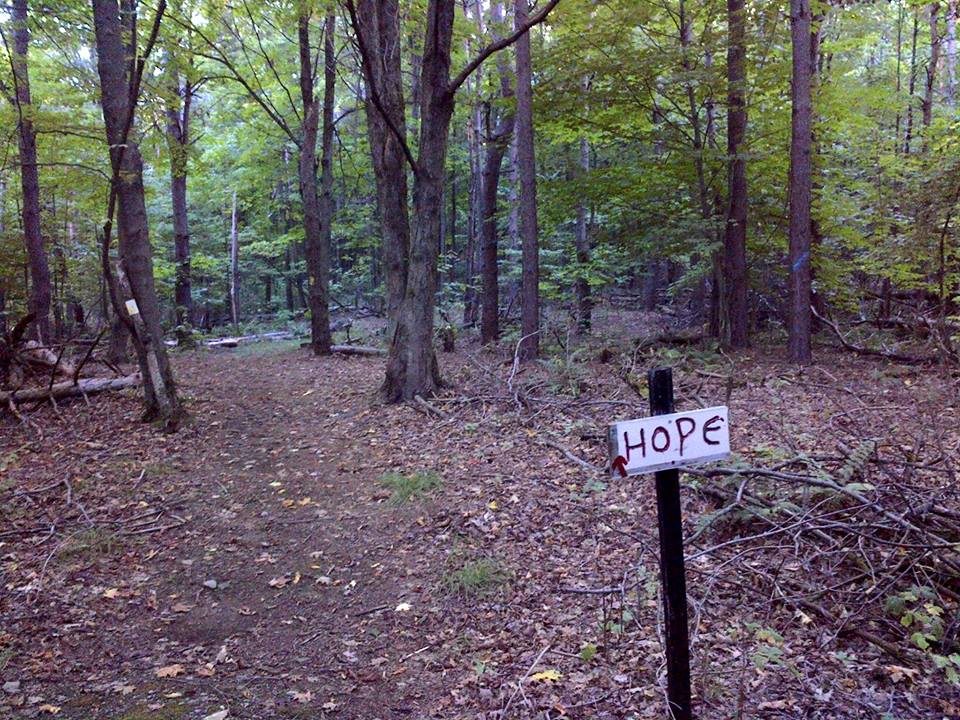
But hope in everything is fragile now. And the falling leaves are no help; not for me anyway.

It almost seems ridiculous and it is certainly ironic that the best way for me to handle these unexpected and troublesome changes is to, in fact, change. So be it. “To change is to be new. To be new is to be young again.”

“If you do not change direction, you may end up where you are going.”

–Lao Tzu

We now begin our broadcast day.

The Rest of Me

I ask my students the same question the first class every semester. I pull a chair into the middle of the front of the room, ask them their names and where they’re from, and we talk about the area, hobbies, majors, quirks, travel favorites, and more. Half the class—I find it a priceless investment in time as they warm up, get to know me and each other, find themselves more able to talk throughout the semester, ask questions, share ideas.

Then I sit quietly for a second and ask them the same question every time:

What are you capable of?

What do you think you are capable of? I don’t mean “What do you hope you can do?” but what tangible proof from previous experiences has convinced you it is worth reaching out a little further than your grasp this time because you know you can do it?

It’s not an easy question to answer because it is difficult to know if we can achieve that which we have not yet attempted, so at best we need to guess. And even the most educated guess is still hypothetical. Yeah, I lose a few at this point, but I usually can reel them back in by jumping that chasm to the goal. “Okay then,” I continue. “What do you wish you were capable of?”

I remind them that unfortunately, every semester the evidence gets worse that freshmen in college are capable of anything other than having technology complete their assignments for them. I insist, then, that one of the finest results of college beyond the degree and the friends and the job prospects is the sense, the absolute pure sense, of accomplishment. To achieve something, to find out we are capable of so much more than we thought, becomes part of one’s bloodstream.

I asked myself that recently, the Capable Question. It was my birthday, sixty-five years to the day after I showed up at the now defunct Shore Road hospital in Brooklyn; one year to the day after Letty “closed the door behind her.” I looked back at what I have done with my life, who is in it and who no longer is, and who is again, and the good news is I’ve been around the block a few times and that’s one thing I always wanted to do. The bad news is as it turns out the block isn’t in my neighborhood.

Sometimes I don’t know where the hell I am. For a person who has traveled as much as I have, I still need direction an awful lot of the time.

So I asked myself, “What are you capable of?” I figure I still have a couple of decades, surprisingly. Maybe more on a good day, maybe just a few weeks when my mind downshifts. But let’s call it twenty years.

I just agreed to a location to perform a one man play in New York. My book Curious Men comes out in just a few months. My book Office Hours comes out in about eighteen months. My fig trees need watering. I’m thinking of getting a new cat or two. Maybe a dog. A goat for sure.

A few months before she died, Letty and I sat in Starbucks at the beach and after a lot of laughing, she said, “I always thought I’d be here past sixty-five, Bawb. I just never thought it would all be over; my life would be completely done at sixty-five.” I nodded. I tended to avoid trying to come up with a response. She didn’t want one. She wanted me to listen, to hear her existence, to be there while she was being alive. After a while she leaned forward and said, “Since I’m not using the rest of me, you can have those years. I trust you to use them well. What will you do with them?”

I thought about it like she had some power to give me twenty more years. “I am going to walk the Camino de Santiago again. I’m going to drive through the northwest for a few weeks. I’m going to take a river cruise in Europe with a friend of mine. I’m going to camp in Havasu Falls.”

“…and?”

The perfect response. “And?”

This is all to bring up a point:

After something I wrote went online about a month ago, several people, some I don’t know, wrote to tell me how good it is that someone my age still thinks I can do something new. They wanted me to know how much they are behind me no matter how outrageous it is that I’d try something besides enjoying retirement.

Two things here: One, I have no idea what they’re talking about. And two, Seriously? I mean, I’m sorry you took a nose dive as soon as you were eligible for Social Security, but I can’t wrap my mind around that mentality. Maybe it’s because retirement is somewhat irrelevant if you never really worked to begin with, but also in the world of arts, in the realm of love, there is no “retirement.” You can’t turn it off, you just can’t. And I want to spend my time with people I care about, seeing things together. I felt the same way when I was in my twenties. Did you guys grow tired of those you know?

“Someone my age” my ass.

I’m not going to republish the litany of accomplishments by people in their seventies and eighties. If you understand then you’re not sitting around lamenting anyway; and if you don’t, you’ll just shake your head.

I have done okay until now, and parts of my life turned out to be riddled with circles, as if Einstein was right—there is no actual “time,” humans have just made it linear so we can comprehend our passage here. Well, I’ve never been good at staying inside the lines anyway.

Honestly, I don’t know what’s going to work and what won’t work from day to day. I just hope for the best for the rest of me.

But, at the risk of being in over my head, here’s my plan: To speak my mind, about love, about hopes, about what is working and what is not. To keep writing as long as I have something to say. To fulfil some plans that I can’t shake.

I’ll retire when I’m dead, and then I’ll close the door behind me. If something should happen to abort those plans, feel free to take the rest of me and see what you’re capable of.

Peace. Out.

The Peaceful Priest on the left/the asshole on the right/1980’s

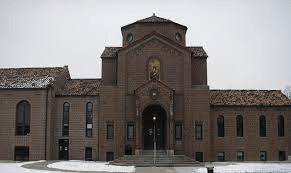
A friend of mine is a Franciscan priest who remains calm no matter what happens.

We are not alike.

He is compassionate, understanding, patient, and saint-like. He is perfect for his job and does it 24/7; that is, he is one of those rare souls that couldn’t be anything but some sort of man of God. If he gets stuck in traffic, for instance, he keeps it all in perspective. If someone cuts him off, his response remains, “They really must be in a hurry. I hope they’re careful.” Or, “Wow, God bless them and watch over them, they really must be anxious about some appointment.” His is a peaceful soul.

This contrasts directly with my “Use a frigging turn signal, butthead!” approach. When entering a tunnel and the traffic decelerates from sixty to forty, the good Father cares: “Oh, thank our Lord they are all being careful going into this tunnel. It really must be frightening to so many people.” I handle it with my own style: “It’s a tunnel. IT IS A TUNNEL! It is not a brick wall! Wilie E. Coyote didn’t paint the f***ing thing! The Road did NOT shrink! It’s a damn TUNNEL!”

We obviously address frustration differently, which makes me wonder how we ended up this way. Would Monastery-Bob and Professor-priest keep their temperaments? If I lived on a mountain in prayer would I be less likely to want to kill the cashier for needing a pen to subtract $5 from $20?

I was like him once, my friend the peaceful priest.

When we met during college we talked a long time about peace and where it comes from. To search for peace in the world is a fruitless act. Even if we find it, it can disappear with war, with stress, with distractions and interruptions. It is like turning to others to find what you want to do with your life; it must come from within. And peace, too, must be a spring, not a shower. I always liked that thought.

I once went to Father’s room and found dozens of people drinking beer and laughing as they told stories about their lives. Afterwards, I said I had a great time and found it strange that I could feel so lost among friends on one day and on another feel so connected and centered. He said, “Bobby—tonight you brought the peace with you.”

Man, he made it sound so simple: Bring the peace with you.

So a few years ago when some dirtbag student of mine called me an asshole in class, I thought of Father, and how it is never the situation but how we handle it. I could picture him with his wide smile and deep laugh and huge hands on my shoulders telling me I’m going to be just fine. I brought the student into the division office and sat the little bastard’s ass in a chair while I filled out a withdrawal form. Before I could finish the paperwork, however, and before he stopped crying, I decided to give this “peace” thing a shot.

“Are you scared?” He looked at me. “College, I mean, the assignments? Are you worried?”

“I suppose,” he said, calming down.

“Why?”

It took him a long time to answer something other than the moronic, I don’t know. “I’m not a good student. I was never good at school.”

“You get confused?”

“Yeah,” he said, nodding, knowing I hit on his fear.

“Yeah,” I said. “A lot of people do. I know I did. What you might try doing is stepping back a bit. Sit to the side and watch everything from a distance for awhile—get some perspective. Instead of calling me an asshole, ask me some questions.”

“Right,” he said, with not just a little indignation.

Bring the peace, Bob. Bring the peace.

“Sometimes we need to see things from a different point of view.”

He was quiet a long time and I believed I got through to him, and I wondered what he pictured as I recalled sitting in Father’s room listening to stories of scared and lost students like myself still trying to get a handle on our place in the world.

“Wow, thanks for your psycho-babble bullshit, Dude,” he said.

I took a breath, thought of Father, and told the little prick to get out of my site; that Hardees is hiring and someone has to clean the toilets.

It’s a gift, really, knowing one’s place in the world.

I headed home thinking about peace and frustration, fear and anxiety. He’s where he should be, this former student of mine. He’s out in the real world where he can seek out only those challenges he knows he can conquer. He is part of the masses that only face what they’re not afraid of. I wondered, though, how often I only face what I know I can conquer.

Bringing peace to an otherwise hostile environment is a difficult task and it gets harder when we watch the world simmering in anything but serenity. Maybe that’s why I, too, often avoid the challenge and instead wander down country roads, watch the water ebb and flow rather than suffer the anxiety hurled at us from the news of Ukraine, of Gaza, of DC, of course. It’s why I don’t drive during rush hour, avoid fast food restaurants and box store checkout lines. Hell, maybe I’ll just start giving everyone A’s so less people will call me bad names.

Yes. Let there be peace and let it begin with me, Bob the Asshole. I’m going for a walk and I’m bringing my peace with me.

Pre/Post

I was three, just a few months older than John-John, when his father President John F. Kennedy was shot. I don’t remember the incident at all, nor am I aware of a difference in temperament before and after that fateful day in November of ’63. But I’m told it was distinct, black and white, an absolute clarity in “before and after” references. I’m told Kennedy came with hope, with promise, with lofty goals like landing a man on the moon and cleaning the earth, the Peace Corps, the hope of peace in general. He was young and so was most of the population as the first wave of baby-boomers came of age. Things were good.

Camelot.

I saw footage of the event only in great retrospect years later. People talked about conspiracy theories, they talked about Vietnam and Civil Rights; and they talked about the subtle differences of expectation and hope before and after November 22nd, 1963. But I only ever understood a post-Dallas world; there will always be something lacking in the narrative for those of us who didn’t experience life back then, in the times before Dallas. There will always be some subtle element we will never be able to grasp.

***

I used to ask my writing students this week every year, what do you remember? How were your parents that day?  Their work covered the spectrum from indifference to passionate recollections of military members who had returned from Afghanistan and Iraq. And, predictably, as the years went by the details became less clear, less “involved,” and more repetitive to what they heard from others, from history class even.

I don’t ask those questions anymore. None of my current college students were yet born September 11th, 2001.

They couldn’t know that before 911 our thought process was different, more hopeful, absent of impending doom. We still had that absolute conviction that whatever happened to us as individuals and as a nation was still pretty much in our hands. They have no idea that before that day we looked forward to what was next, not fearful of what might happen. Our daily vocabulary was absent of phrases involving extremism, terrorism, anthrax, and Fallujah. These concepts were real and among us, but they affected others, were problems for others, were handled by others. Our attitudes of issues concerning Afghanistan and Iraq and terrorism back then are similar to my students at this campus in Virginia worrying about what is happening to students at some college eight thousand miles away. We were peripherally aware of a situation, that’s all.

***

Higher education has once again become more of a world of industrial education, where students expect that the sole purpose of their classes should be to prepare them for employment, where enrollment is plummeting not just because of cost but because of the greater population of teenagers not seeing a point to it, so there is a desperate need for the study of philosophy and art. Am I being too optimistic? Am I tilting at windmills? I suppose.

But In a world which has adjusted to constant violence and invasion, where disease is rampant and the climate is killing us, I can’t think of a better time for educators to emphasize the potential of humanity. But technology is our new curriculum, and students today are convinced it is the sole foundation of whatever they do. But “it has become appallingly obvious,” Einstein said, “that our technology has exceeded our humanity.”

“Intelligence plus character is the goal of a true education,” Martin Luther King, Jr. insisted. Yes, let’s go there. Let’s get back to that pre-911 thought process. It seems we are in dire need of starting over. Now. The earth is dying and the human race is watching it all happen on Instagram and TikTok. In this culture, we cannot teach anyone what “hope” was like in the before times; all we can do is hope. Educators first must be examples. In these times, those of us older than forty are by virtue of memory social historians who can remember a world of possibility and promise. We were there.

According to Plato: “The direction in which education starts a man, will determine his future in life.” Shouldn’t we start with hope? With possibility. We didn’t used to have to teach those ideals, but my students weren’t born when those once innate concepts were foundations instead of today’s cyber security and terrorist activities.

I cannot teach these people what life was like before terrorism terrified our cities. I can perhaps describe what it was like to sit at a table for lunch at Windows on the World completely absent of fear and enjoy the view. I can talk about crossing borders without interrogation, walking family members all the way to the plane for their departure, carrying pretty much anything I wanted on board a flight. I can talk about what wasn’t talked about, places we never heard of.  I can ask them why it isn’t like that anymore and what do we need to do to find our way there again.

Now I ask them to write what they think is humanity’s greatest strength, most encouraging potential. The papers are sparse. Their minds draw a blank; and it isn’t their fault. If the terrorists succeeded in one aspect in affecting American culture, it is this: We used to think about what can go right; now we think about what might go wrong.

That’s as tragic as the difference between pre and post can get.

Spying on Hope

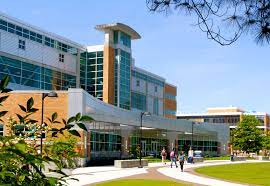
I walked through the library at the college before heading home, and I talked to a few present and former students studying for finals, writing papers, eating bagels. I did not frequent the library when I was in college; I knew where it was though.

This time I sat at a table to read notes sent by an editor for a book project—ironically, about teaching college—and looked up from time to time this last week of classes. A few were on cell phones, but not many. Many were on laptops, but more were reading textbooks, writing, or talking quietly to other students with open textbooks and laptops.

My collegiate muscle memory kicked in and I thought, but it isn’t raining out, or snowing, why are all of these people in here?!

After about ten minutes, a young man, John, who had been a student for a few classes of mine some years ago and for whom I wrote a letter of recommendation for a Study Abroad in Australia, came to my table. We talked about his trip and about how he can’t wait to graduate in May. He sat down and before me was a young man only a few years older than last time I saw him but a world away from who he had been back then. It was his maturity, yes—eighteen to twenty-two is a leap unlike most others in life. But it was more. Experience, of course, travel, and the fact he was always an excellent student.

But it was also anticipation. He is just months from moving away from the bubble of dormitories and fraternity fellowship, and it shows in his eyes, the way when I asked his plans, he sat up, how he talked faster. I rarely get to see this part. I teach predominantly freshman and sophomores here, and they’re still ripe, high school residue still on their shoulders they do not yet wish to brush off, in front of them the camp that can be college when you’re away from home but not really. That’s what I stare at. I’ve been looking at twenty-year-old’s for thirty-three years, and the eyes of someone just a couple of years down the line are different. I never get to look into those eyes.

John’s eyes have that hope, they have appreciation, they have understanding. He said the polite, “I could not have done this without you, Professor,” but I know better. He could have, of course. Some students have an internal motivation that no one could defy if they even wanted to.

I returned to my manuscript written on and off through the years of teaching mostly unmotivated, unenthusiastic, unhopeful twenty-year-old’s, and I knew what I needed to do to sharpen the narrative. Throughout the work I dip into the idea of “possibility,” but sitting in the library looking at the students studying, sharing ideas, working, I noted the one aspect of collegiate life I missed out on in my thirty years of teaching first and second year students—hope. The ones at my previous place of employment as well as many of my freshman and sophomore students here move through the day like they were lucky to drag their asses out of summer break. But later, when what’s next is the next forty years of their lives, these same students will come to life, will discover what they are capable of and if they have the metal to make it beyond the confines of the classroom for the first time in their lives, which already are about a quarter of the way over.

Sitting at that table, pushing aside my own work to watch others, talking to John, talking to a few others I knew as I moved my way from the study area to the Einstein Bagels area, filled me with a sense that whatever might be wrong in the world, these people have what it takes to make it right, and for the first time since I walked by Friedsam Memorial Library at St Bonaventure in 1983 on my way to my life, things felt like they were going to be just fine.