It occurred to me one day on my porch while staring at the surrounding woods, that at some point less than one hundred years ago none of those trees were there. The land has beautiful eighty foot oaks, some maples, tall thin pines and various other hardwoods including black walnut trees, which I am told can provide the ingredient necessary in the liqueur, Wild Spiced Nocino.
The branches protect birds as diverse as red-tailed hawks, downy woodpeckers, and countless chickadees, and they are habitat to other wildlife including one flying squirrel we spotted a few years ago when his tree fell. The squirrel was fine and found a new home in a white oak.
But a hundred years ago this was just land, sandy land, edged by the running Rappahannock River and backed by equally treeless farmland. A century before that these nearby plantations provided food for the region at the expense of slavery, and some slave descendants remain, selling vegetables at food carts out on the main road, or working the bay as watermen, telling stories about how the Chesapeake is just about farmed clean every season by crabbers at the mouth or the headwaters leaving nothing left for those working the midland shoals.
This area hasn’t changed much in one hundred years.
It is like this everywhere, the coming and going of things. In Manhattan a few hundred years before the wild construction on bedrock, coyote and deer were common. It was hilly (Manhattan means land of hills), and where the United Nations stands once stood grand oaks. The Lower West side was a sandy beach, and ecologists say if left to do what it wanted, most of the upper west side would be covered in trees and vines, shrubbery and wildflowers inside twenty years.
I can’t imagine what my house would look like if left untouched. When I don’t mow the lawn for a few weeks it looks like a refuge for timber wolves.
But these trees weren’t here a century ago and I sat on my porch and wondered if there had been other trees or if this land was barren, or was it used by the Powhatans, or was it home to some former slave family, or just a dumping ground. Evidence is scarce, buried beneath the roots of this small forest.
This happens to me everywhere I lived; I like to imagine what was on that spot one hundred, two hundred, a millennium earlier. The house I rented in Pennsylvania was used as a hospital during the civil war. Before that it was a farm. Now it is a Real Estate office. The maples which lined the road and shaded the living room are gone. Someone planted new ones but it will be decades before they mature. My house in Massachusetts was a fish market a century earlier. Purpose moves on with time. Maybe that’s why I’m so mesmerized by the Prague hotel I always stay at. It was the same building seven hundred years ago that it is now. But here on my porch I realize this house is the only place in my life I’ve lived for twenty years, and I was curious if five times that score of years ago I could sit on this spot and see right out on the water, or were there trees then as well, different ones which died or were timbered to make room for crops.
The house is made from western pine forested on land which I assume is either now empty of trees or filled with young pines waiting to become log homes. What will be left a hundred years from now? Will someone sit on this same porch and look right out toward the bay once these oaks have long fallen? I know this house, this land, is a “hotel at best” as Jackson Browne despondently points out. “We’re here as a guest.”
Wow. Wrote myself into some sad corner there. Thanks Jackson.
I know nothing is as permanent as nature, despite the constant changes. It simply isn’t going anywhere. We are. So I like to remember that a century ago farmers sat here and talked about the bounty in the soil, or talked to 19th century watermen about the changing tides. And I like to realize that a hundred years before that the nearby swampland, now home to so many osprey and egrets, was a major route for runaway slaves. They’d have been safe in these woods, if there were woods then.
I like to do that because it reminds me a hundred years from now perhaps I will have left some sort of evidence of my passing through; even if just in the cultivation of language, the farming of words.
So I sit on the porch and listen to the wind through the leaves. It is now; it is right here, now. Sometimes at night we stand in the driveway with the telescope and study Saturn, or contemplate the craters on the moon—both here long before us and in some comforting way, long after we’re gone.
In spring and fall the bay breezes bring music even Vivaldi would envy, and I’ll listen to his Four Seasons, written nearly four hundred years ago, and listen to the wind through the leaves of these majestic, young trees reaching eighty feet high, and be completely, perfectly in the moment.
Despite the warming trends, the extreme tendencies of weather, the fragile ecosystem which sustains life, nature is still the only place I have found that really doesn’t change. It never has. Ice ages and dust bowls will alter it, but eventually some seed will take root.
Portions of this piece originally ran in Ilanot Review as “I Knew Two Men,” and it has subsequently appeared in several journals, including a publication honoring the late Arnost Lustig.
My son is leaving for Prague in a few days and this is on my mind.
Prague Adaptation
Arnost Lustig and I drank pilsner at the Golden Tiger in Prague. A large man in a white smock served our fourth pint when I asked about Hrabal. “You knew him, then,” I said.
***
“Yes, of course. We all knew him. The writers, the musicians, we all knew each other.” Arnost leaned forward. “Prague’s not that big, you know,” he said and laughed.
Arnost was a burly man who wore a leather coat and carried a satchel. We sat one table down from where Bohumil Hrabal, the great Czech writer, once drank. Hrabal came here to enjoy his beer and tell stories which ended up as classic works of European literature, such as I Served the King of England and Too Loud a Solitude.
“He came to Washington and stayed in my flat once,” Arnost added.
After a while I mentioned Hrabal’s death.
“Okay, then, let me ask you,” I leaned into him so the gatherings of Czech men at this mostly hidden pub couldn’t hear. “Do you think he fell out of that window like the nurse reported, or did he jump?”
Arnost leaned back and laughed. “Ah! Such mysteries we can’t answer! How we all love unanswerable questions!”
“She said he was feeding the pigeons. At a hospital? Come on!”
Arnost smiled at me while ignoring my comment and continued to talk while he said hello to some patrons. Everyone knew this man. “So yesterday you went with Jan to Terezin. Tell me about it.”
The day before I had walked about the Terezin Ghetto with Jan Weiner, a colleague of ours. Unlike Arnost, Jan was a stern man with a straight back and fine combed hair. He was calculating. He didn’t turn his head to talk but his entire body instead, like a soldier always at attention. He was very proud of himself, and every conversation somehow reeled back to his accomplishments during the war. To be certain, he deserved the praise, albeit mostly self-inflicted these days.
Arnost shook a stranger’s hand then nodded to me. “Did you sit on the cot?”
We sat on the cot.
Terezin is actually the so-called “town Hitler gave to the Jews,” for its use in successfully teasing the International Red Cross into believing the Nazis had set up the Jews well in small towns of their own. An adjacent eighteenth-century small fortress, used as a political prison for anti-Nazi protesters, is where Jan and I spent the morning, walking about the museum. Arnost knows Terezin well: he spent nearly three years there interned during his teens. He worked the rails that would bring him and his family to Auschwitz where his father was immediately gassed. On a transport to Dachau, the allies bombed the train and Arnost took advantage of the confused guards and escaped into literary history, writing countless bestsellers about the Holocaust and Terezin, all wrapped in the folds of unrequited love and the romance of war, despite its genocide. Diamonds in the Night, Night and Hope, and Darkness Casts No Shadow all remain staples of Holocaust literature.
So Jan and I walked into the women’s quarters at the Small Fortress, a compound really, and he showed me what one of the small cells looks like. We sat on a cot and he said, “Here, my mother was a prisoner. Right here.” He stroked the rusty metal and sat straight, stern, and oddly proud. “They tortured her for several days in every way imaginable before they killed her.” We walked about for an hour or so, and outside the compound he sat on a wall and ate a sandwich.
On the way back to Prague he told me that during the war his family took care of two young girls. Their parents had traveled to Africa as missionaries and were to return for them but the Nazis took over during the interim. “Those girls were gassed,” he said, then explained how soon after this his own father and step-mother killed themselves in their apartment in front of Jan. That’s when instead of giving up he escaped on a train south to Italy where he was imprisoned, only to escape to England. There he joined the Royal Air Force and flew bombing missions that helped turn the war. This was a real hero. Before we got off the bus in Prague we shook hands and he said, “I don’t believe in God.”
“Okay. I get it,” I said.
“No God could exist in a world like this,” he added.
“Okay.”
Arnost smiled and said, “Jan is always trying to convince himself of something. It makes him feel better about life.” He nodded toward a relief of Hrabal on the wall above the next table. “What do you think, Bob? Do you think you know what happened?”
Here’s what I knew:
Hrabal died when he fell from the fifth floor window of the Bulovka Hospital in Prague while leaning out trying to feed pigeons. He also lived on the fifth floor of his apartment building, which itself is uninteresting except for his fascination with fifth-floor suicides. He dreamt of his own death from that height. He would lean out the fifth-floor window of his flat to gaze up at the sky above St. Giles, and he would often walk down to the Maison Oppelt, where Franz Kafka once wanted to jump from the fifth floor.
I knew he sat here, six feet from where I drank my fourth pilsner with Arnost. They spent a weekend together in DC drinking beer and watching Charlie Chaplin films, right after Susan Sontag wrote in the New York Times that Hrabal’s Too Loud a Solitude would be “one of the twenty books that would shape literature in the twentieth century.” I asked Sontag once about Hrabal with whom she had laughed and drunk in New York City, and Susan said to me, sober as can be, that if I could only read the writing of one person let it be Hrabal.
And I knew that his devotion to his wife, whom he called Pipsi, was so complete that after her long, drawn-out death, he wanted to jump from their fifth floor window. “Every room in the apartment hurts,” he wrote, and every time he thought of jumping from that fifth floor he said his guardian angel pulled him back because the angel wanted him to “remain as yet. But I’ve felt like it.” Just like Kafka, Hrabal noted, who had also been “hurt by the world,” he supposed. Kafka didn’t jump from the fifth floor of the Maison Oppelt onto Paris Avenue, as he desired. I knew Hrabal was fascinated that, ironically, Rilke’s Malte Brigge tried to jump from another fifth floor in Paris.
And I supposed it was all too poetic for Hrabal to bear, like his beloved poet Biebl who jumped from a window to die only after asking a painter to create a canvas of a man falling backwards out of a window. So Hrabal’s routine included what he called “morning suicidal, work until midday, lunch, bus ride, back to the pub.”
This pub where one beer after another would fall backwards into his round and grateful stomach, and he’d listen to these very same men in this very same Golden Tiger talk, feeding him what he called “morsels of life,” which he’d store away and use later in his work.
Including Too Loud a Solitude, his very last work before his unfortunate fifth-story pigeon-feeding plunge. Too Loud a Solitude, where at the end the protagonist climbs into the trash compactor he ran for thirty five years beneath the streets of Prague and compacts himself, saying, “I will follow Seneca. I will follow Socrates, and here, in my press, in my cellar, choose my own fall, which is ascension.”
I thought perhaps Hrabal chose his own fall.
That’s what I knew. I stared through Arnost’s large glasses into his engaging eyes, which have witnessed what no human should, but who took those experiences and excised them through his enchanting and haunting prose. Jan never let go of what happened, whereas Arnost took what happened and gave it back to the world in bestsellers, some of which had been made into films. By 2003 he was so respected in Prague that his good friend, playwright and President Vaclav Havel, gave him high honors and an apartment in the Castle, yet his eyes looked the same as they did in the rare pre-war photos of him with his parents and sister.
“What do you think, Bob?”
I listened to the old men who sat at picnic tables which lined the pub walls and wondered if Arnost listened to what they said. Did he store away morsels of life for use in one of his works? What were these men saying that Hrabal might have half listened to and molded into prose the way only he knew how while beers tumbled all afternoon?
This was in 2000. Hrabal fed his pigeons only a few years earlier. These may in fact be the same men.
I nodded at Arnost. “I read once that he could recite whole chapters from books without missing a word,” I said. Arnost laughed and agreed he had heard the same thing and noted Hrabal to be one of the most intelligent men he’d ever known.
I stared at the room full of Czech men. “There’s really no way for someone like that to make a graceful exit, is there?”
Again Arnost laughed. “Nothing poetic enough you don’t think?” He thought for a moment, always searching for a better way to phrase his words. “Maybe nothing more poetic?” he added. “You know sometimes it is best not to know too much, don’t you agree?”
I knew Arnost enough to know that “don’t you agree” was rhetorical.
We didn’t order, but the large man in the white smock brought two more beers, marked them on a white slip of paper on the table, and walked away. After a while we toasted toward the relief of Hrabal on the wall.
“Okay,” I said. “Here’s what I think: He wrote that if God really loved him, he’d just drop dead over a beer at the Golden Tiger.” We laughed hard and Arnost raised his eyebrows, nodded slowly, and finished his drink. “Finish up,” he said. “I have to lecture in thirty minutes or so.”
It was a time of extremes. I drank in every morsel of life from the minds of men who cracked open history and edited the outcome. It was a time to speak of the tragic haunting of dead relatives and the mystical power of words. One man finds romance in the crumbling memories of internment, and the other loses faith in God. Sometimes soldiers, whether fighter pilots or writers, dilute death and inhumanity with beer, while others drink to celebrate what’s left.
Sometimes they spend a weekend watching Chaplin films and talk about home and how it was before before the Nazis and the Communists cared about Prague, the trashing of books, the elimination of a race, the fatal tumblings of souls.
Later that night I left the university alone and went to the hospital on my way back to my apartment. I stopped and stared, counting floors to five, and wondered what Hrabal would have written about next. He was in his early eighties when he died; there was still plenty of time. I left, but turned back briefly and gazed at the façade for a few minutes.
I didn’t see a single pigeon anywhere.
About a week later, I returned to Terezine with Arnost and a friend of his, Academy Award winning filmmaker, Milos Foreman. On that particular day in 2000 Arnost needed to talk to Milos who wanted to make a movie based upon Arnost’s book The Unloved. He made beautiful movies like One Flew Over the Cockoo’s Nest, Man on the Moon, Heartburn, and others including my favorite, Amadeus. At some point on that cool afternoon between conversations about the horrific ghetto museum of Terezin and the prison for anti-Nazi protesters, the Small Fortress, I ended up having a conversation with Milos about adaptation. He discovered that subject matter to be the focus of my lectures at the university. It seems the theme of my entire time in Prague that year was Adaptation.
“So we agree then,” he said to me. He was much younger than Arnost with the same controlling conversational style.
“Yes,” I said, “Of course. It is always frustrating when people say how much more they like the book, or do any form of comparison at all. They are completely separate art forms.”
“Exactly! I can’t film all of a book!”
We talked further about our common concern on the subject of movies based upon a novel or play, and we reiterated the inability of people to see movies and books they are based upon as separate. Yet we also agreed on the difficult task of expecting anything else of the average person at a movie on a Saturday afternoon.
Eventually, of course, the talk turned to his work.
“Yes,” I said. “I’ve taught both “Cockoo’s Nest” as well as Amadeus, and I did read Kesey’s book as well as Shaffer’s play, which I first saw when I was in college.”
“Well?”
“Both times you nailed it. From Kesey’s novel you kept the major themes which worked and consolidated what needed to be. In Amadeus you made music the central theme of the movie instead of the ridiculous “mystery” between Mozart and Salieri. I still enjoy watching both films and teaching them. Oh, and Amadeus has the BEST cut in movies, when Mozart is in bed and Salieri finally hands him the completed “Requiem,” and Mozart says, “Okay, from the beginning,” and we hear an entire orchestra for the first time as his wife’s horse and carriage come into view. Love that scene.”
Milos indicated it was hard to miss with such material and brilliant film editors, but I appealed. He was a great director.
Then he mentioned Ragtime.
When I was young my father bought me E.L Doctorow’s book. I loved it and read if several times. I loved how it swept across decades and included some major historical figures such as Houdini. But I never could picture it as a movie; even if one could save the major themes, it simply is too complicated to pull off as a traditional narrative with the proper conflicts clarified.
Then I saw the movie and I didn’t like it all that much. I even watched it again after I learned a few things about adaptation at Penn State, and it still, for me, didn’t work. I even left behind my memory of the book and focused solely on the new art form, trying the best I could to not include the literature in my analysis.
“What about Ragtime,” Milos said.
I thought about saying, That was really some casting they did for “Cockoo’s Nest,” wasn’t it? But I could tell he was enjoying our conversation. I looked at his Czech copy of The Unloved in his hands. It was bookmarked and folded and noted in dozens of places. He clearly learned the book as if it were his own, like his films each became his own, not Kesey’s or Shaffer’s and definitely not Doctorow’s.
“It seemed too complicated to capture,” I said.
“Yes,” he agreed, reflectively. “It never did convey the themes well. Or at least the way I wanted to.”
“It seemed more of a vehicle for Cagney seeing as it was his last film.” I was feeling ballsy now in the conversation.
“You’re probably right. He got more attention than the film. Will you discuss these films tomorrow in your class?”
“No. I’m moving on to Hrabal’s Closely Watched Trains.” He smiled. Milos was a fan and friend of Hrabal’s. As Arnost said, the Prague art community is not very big.
I told him I was going to talk about how adaptation of one art form into another involves both deciding what essential elements must make the transition and which ones very specifically needed to be left behind.
Arnost returned, always sharp, always ready for what’s next. I stared at this man’s eyes and thought about how much he went through. The Nazi’s disrupted his life, caged him for three years as a workhorse, forced him to build a railroad from Terezin to the mainline on the way to Auschwitz, killed his family, and still he escaped. And still he went on to not only live his life, but live it fully as a writer. He knew what to take with him after the war and he knew what he need not address ever again. His entire life was about what to leave in and what to leave out.
It is not easy, adapting, saving the best of what exists, our strengths, and leaving behind the weaknesses, the parts we wish we could do over given the chance.
“A far-right, authoritarian political ideology emphasizing extreme nationalism, militarism, a strong dictatorial leader, and the subordination of individual rights to the state, often involving forcible suppression of opposition, economic regimentation, and national rebirth through controlled unity and traditionalism. Fascist movements, like Mussolini’s Italy and Hitler’s Germany, use propaganda, cults of personality, and violence to create a unified, powerful nation, often targeting minorities and foreigners as scapegoats for national decline.”
Yeah, that’s not me. Not a fan of Hitler. Not a fan of Stalin. Not a fan of the Father of Fascism, Mussolini. Never have been.
I don’t believe:
In an infallible leader who never makes mistakes
That the democratic ideals of freedom and equality are a threat
in rampant sexism or the need to control mass media or consider it dangerous for telling the truth
in sustaining a false sense of “victimhood” or that the nation is under attack
in questioning reality and verifiable truth while at the same time encouraging myth and false narratives
So, yes, I am anti (“opposed to, against”) fascist (see above). If someone prefers to drop the “scist” from that title, that’s fine. I’ll go with Antifa
as would:
Ronald Reagan, who said that fascism “glorifies the state and denies individual liberties.” He suggested that fascism would be most evident because of liberals, not knowing, of course, that the current president makes Reagan seem like an MSNBC junkie.
Primo Levi, who said that fascism wants everyone to be the same
FDR, who said that fascism was ownership of government by an individual
Henry Wallace, who said “if we define an American fascist as one who in case of conflict puts money and power ahead of human beings, then there are undoubtedly several million fascists in the United States”
Upton Sinclair, who said that fascism is capitalism plus murder
Eric Fromm, who reminded us that. “When Fascism came into power, most people were unprepared, both theoretically and practically. They were unable to believe that man could exhibit such propensities for evil, such lust for power, such disregard for the rights of the weak, or such yearning for submission. Only a few had been aware of the rumbling of the volcano preceding the outbreak”
The desire on the part of some to define “the Antifa movement” as anti-American is ridiculous, uneducated, and blatantly contrary to the very American “values and ideals” those same sound-bite-driven complainers propose they protect. Nearly all of this country’s forefathers were Antifa, which is why they left Europe and why they tossed the tea in the bay, why they said, “no more.”
So, to all of this country’s new accurate-information-deprived streamers, No More. Not only were the antifas like myself here first, this country still exists because of them. To not support anyone who is anti-fascist is to in turn support North Korea, the Soviet ideals of modern-day Russia; it is to be against all Americans who fought in World War One, Two, Korea, and Vietnam. If your instinct is to don a swastika or raise the confederate flag, then, yes, we are enemies and I’m on the right side of history, you’re not. But if you are just repeating the shouts of the ignorant masses and never took the time to think this through, think it through now and then turn and proudly declare, “Of course I’m against Fascism. Duh.”
First, the president of the United States is not the “deal maker” here, we are. We hired him to carry out what we decide needs to be done. Sometimes that power is abused; sometimes we need to reevaluate our own choices; and sometimes it simply goes awry and we hire an immoral, indecent, and perverted asshole, but we’ll decide what needs to be done, not him, and if errors continue we’ll find someone else to take the job who will listen to what we say. When that isn’t done efficiently and with our confidence, most of us regret it. Not everyone, of course, but that’s another problem; some buy into the propaganda hook, line and sound-bite. Not because these sheep believe it so much as the methods employed to communicate such crap is so convincing. Huxley wrote in ’58: “The effectiveness of political and religious propaganda depends upon the methods employed, not upon the doctrines taught. Under favorable conditions, practically everybody can be converted to practically anything.”
Or anyone.
Second, the president often makes executive decisions we don’t like. Our support of US troops, for instance, should not be mistaken for a belief that most American’s think those same troops should be sent to North Korea, Somalia, Venezuela, or anywhere else. Additionally, many Americans understand true Islam is not what the president is mouthing off about, and most Americans know that the environment must be our primary concern. I’m sorry if the president and some people around him leave the impression that Americans stand behind destroying the world either by imminent destruction because of childish and irresponsible hyperbole or by some slow erosion through pollution and overuse of natural resources. We were doing fine until about a year ago. Forgive us. We are embarrassed by the president’s inability to recognize his mistakes and refusal to reverse bad decisions out of some false sense of pride.
But that is not what we need to apologize for, though we’re really sorry for that, too. No, what sits atop this mass of mess we’ve helped make is the greatest of ills for which perhaps no apology will suffice: we’re sorry we are not what we used to be. At one time Americans created a constitution that rewrote how government should be run. The world turned toward us with respect for our progress. We didn’t suddenly succeed at nearly everything we did—military, invention, science, medicine, and engineering—because of our population: we’re not that big. We didn’t surpass the expectations of critics from Czars to Monarchs because all Americans got along—we disagree with each other perhaps more than most citizens in most countries; that happens in an experiment like ours which is why dissent is written into the Constitution. In fact, the constitution encourages it, particularly free speech. With that model, we made good on our word for two centuries, and when we had problems of our own—the Civil War, Slavery, Civil Rights, Women’s Rights, political scandals like Watergate, LGBTQ+ rights—we dealt with it, sometimes aggressively, sometimes diplomatically, and sometimes poorly, but we dealt with it and moved on. No longer. No, now, I’m sorry to say we attempt to bury our faults beneath distraction and fear. We simply are not what we used to be, and that isn’t fair to our future or the future of countries which turn to us as an example.
The truth is, the United States as we knew it is ill. Its heart is filled with fear and unsubstantiated speculation, and when executive decisions are coupled with personal attacks, degrading and racist statements, and absolute ineptitude, a change has to happen. This country does not have the moral strength it did in its youth, and any artificial means of sustaining life will eventually collapse to the reality of this false resuscitation in some pathetic tagline like “Make American Great Again.” Honestly, most of us are too smart for this. Patriotism has always been the backbone of this country; but it had always been a patriotism built on pride—the pride that came from making the right decisions, following the right paths, no matter how hard; it was a patriotism built on the backs of dissidents and soldiers who knew how to fight for our freedoms without compromising them. It was not false; it avoided the trite sound-bite built by committees and marketed to the mob who drive about the country with flags flying from car antennas.
But many here have bought into this new, veneer patriotism. It has a different grain, this national pride which permeates every aspect of American life. It’s a patriotism balanced on fear and propped up by stimulus-response. It has not the historic sense about it the world so respected and tried to emulate in decades past.
It is Lord of the Flies here right now; it is the reactionary leader creating a monster he is set on protecting us against, silencing the dissent of investigations like most dictatorships do, convincing us the one who leads with reason and diplomacy will place everyone in danger; it is Moby Dick, with Ahab determined to commit suicide against an unassuming nemesis solely for revenge and not to advance some greater good. It is the tragedy of the ages, the fall of an empire. It is our own fault, and we’re sorry. No one here is happy about this.
No one here is happy when the president declares he is a deal maker not a diplomat; when he pushes aside world leaders to get in the spotlight; when he ridicules mentally or physically challenged people; when he badmouths journalists—the very soul of a democracy—when he treats women like objects and brags about it; when he lies about his accomplishments; when he makes fun of anyone who disagrees with him, when he destroys national treasures and institutions without permission, when he associates with pedophiles and criminals and lies about it, when he fights the judicial system tooth and nail to keep food aid out of the hands of starving Americans.
This man is an embarrassment no matter how far to the left or the right he might stand. This is about human behavior. We were supposed to be a better example than this. We were supposed to provide proof that humanity had it in its collective power to accept the ways of many people and, based upon a common constitution, work together. Our proclamations promised in writing the rights of liberty and happiness—amazingly, for the first time in recorded history. And it worked for a while. Oh, the democratic principles of our founding fathers remain the cornerstone of any government that hopes to rule without revolution; that aspires to last longer than its military forces allow. We were really good at it, too. But who isn’t embarrassed by the fall of a good example? It is, perhaps, worse than watching some wretched foe attempt to lead you into the abyss; for after proving oneself worthy, after placing oneself in the position of respect and admiration, after followers line up blindly trusting this once-great prototype of human justice, to bend toward being an aggressor, to bring the balance of criticism against the once seemingly-faultless government, is nothing short of deplorable. We preached to the world that our way of life should be emulated and respected; and certainly for some time it was. But we’ve become the spoiled athlete with talent and power who bends rules to benefit himself. Watch closely then because we are truly falling. And it is undoubtedly because of a small group of demented leaders manipulated by the current fascist president.
Talk about inappropriate behavior in the workplace.
We are not on this slippery slope because of some foreign power who takes issue with our self-worth; no, we’ve made it here on our own. We spend more time studying the drinking habits of bad actresses than the decisions made in congress. We propose new governments to foreign lands while our own executive branch is under investigation; cabinet members disagree; both major political parties prefer there were only one party; what the president says is cause for war both domestic and international; race relations are once again in turmoil; the president wants to literally build a wall between us and our neighbors; we spend more on fast food and gourmet coffee than we do on education; we don’t handle natural disasters very well; violent crime is higher here than in most countries on the planet; our jails are saturated, and our waterways are polluted. And all the while we spend a great deal of energy telling other countries how they should act and what is wrong with their leaders and policies. Are we right? Perhaps, but we’ve lost credibility, and many of us would rather our leaders simply keep their mouths shut for awhile and let the world, as Mark Twain said, believe we are stupid than open our mouths and remove all doubt. Please, just for a short time while we straighten this out, could everyone look away?
We are so sorry. We may have earned the position of respect and reverence in the past, but it is not automatically renewable. We should not follow up these successes of domestic and foreign programs fifty years ago with a new foreign policy based upon “gut feelings.” The primary fault and eventual downfall of any great nation is hypocrisy.
We weren’t always this way. When we recognized our own hypocrisy—slavery, for instance—the collective power of this country’s citizens demanded we set it right. Now we call for executive privilege as if we’re ordering a pizza. We refuse to testify like we’re turning down dessert. We’re scattering troops about the world like it’s a Risk board and the only place left to put a few cannons and horses is Kamchatka. We refuse to accept the ideas of other nations no matter how many are unified against us, and we withdraw from treaties set up to protect the globe solely to protect our wallets.
We’re sorry our leadership often acts and speaks less than presidential. Listen, lots of people here make fun of our president. They make fun of his tweets, his verbal sweeping generalizations, his inability to act like a mature adult. Yes, it’s embarrassing– the world has made that clear, but you don’t need to tell us.
Believe me.
Newspapers in countries that once turned to the United States for leadership and guidance mock our president on a regular basis, emphasizing his flaws, using his fallacies as some proof that America is not what it used to be.
And it’s not. And we’re sorry, but the rest of the world needs to understand how this works. When we collectively decide he needs to be fired, we will do so. For now, disagree as we might, our system is set up so that other branches of our government hopefully pull up the slack. This type freedom comes at a price, and we don’t always make the right decisions. But they’re our decisions, and while we deeply apologize for not maintaining our past strength and dignity, that respect was not earned by any one president or any single policy, but by the collective efforts of the American people and supported by the finest constitution in human history which guarantees rights that have made this country work. Rights such as the one that states anyone born here can become president. Anyone.
The Infamous Stray Dog Café where I read with Anna Akhmatova and others (not at the same time or in the same century)I had just given this carnation to the WW2 vet on Victory Day3 am at The Shack, my hang out for years where I met locals and played music in the woods on the beach of the Gulf of Finland
I’ve traveled all over the world with friends and family: To Ireland, Prague, France and Spain, Norway and Amsterdam. But Russia has been on my mind the past few days as it and the war in Ukraine seems to have been drowned out by the noise coming from the Middle East. For quite some time I had quite some time there. I dined in palaces while quartets played for our private group, and I’ve paid off people guarding graveyard gates so we could explore the backstreets of St Petersburg. I’ve brought friends to apartments of artist and writer friends of mine, sat backstage during rehearsals at the Conservatory, had private concerts at the home of Rimsky-Korsakov, and read my work at the famous, dissident occupied Stray Dog Café as well as Dostoevsky’s flat. I know the streets of that city better than any other place in the world, including places I’ve lived. It has something to do with that heightened, acute awareness we experience when we travel. It also has something to do with going back dozens of times.
The city today in this post-Ukraine-invasion world, I fear, more closely resembles the city it was when I first arrived just after the coup. I thought those times were dead and buried, covered by the fresh grass of several new generations who know little else but freedom and capitalism. But it took one sick man to throw it all back thirty-five years.
In 1994, the streets of St Petersburg were dank, a monotone of browns absent of advertising, neon, or anything other than some Soviet style atmosphere. The only placards placed in random spots on Nevsky Prospect—the city’s Fifth Avenue—were Marlboro signs, the only western clothing of note worn by the suddenly displaced masses was Adidas warm-up suits. It appeared a parody of itself as presented in 1970’s and ‘80’s anti-Soviet movies. For seventy-five years the country, and Leningrad, moved in darkness under the Soviet leadership, and for centuries before that under the long reach of the Czars.
When I first arrived to teach American culture to faculty at Baltic State University, the first of what would end up being more than twenty-five trips in thirty years, democracy had found the streets of Leningrad, which had just changed its name back to the Imperial “St. Petersburg,” and Russians struggled to figure it out. The first week there, I stood in line for two hours at a bakery, and when I pointed this out at the college, my colleagues shrugged and said, “Da. Canushna.” Yes, of course. I explained that in the States, a new bakery would open across the street and be faster, charge less, offer discounts. Then I had to explain discounts and why, explain that the cashier who stood outside smoking while twenty people were in line would be fired. This led to a conversation about capitalism, and everyone was suddenly enthralled to hear about businesses and learn how to make money, the advantages of choices, the value of options. The men of the previous generation on through to the college students present when I first taught in the city, simply understood service to their country as paramount; it involved time away from family, but also provided pensions and a chance to protect their living conditions.
But after the coup, and certainly in the few years which followed leading up to 1994, it was a brand-new way of existence, and the long, cold winter of communism had finally ended. Things changed—and this is where it got tricky. At first everything was different overnight, like their currency, living conditions, international relationships, and availability of goods. But then the changes slowed to an immeasurable pace. People couldn’t find jobs or food, or they had to work for some organized crime group. Old folks lined the metro begging for money or selling items—shoes, loose cigarettes, empty bottles. But within a few years they figured it out. One afternoon that first year I went to the market behind a cathedral in the arts district. It was a park area with tables covered in tourist items: matryoshka dolls, the famous Russian wooden bowls known as khokloma, pins, small wooden toys bears. Scarfs, shawls, icons, amber jewelry. The following year the market built small booths in long rows instead of random tables. A year or two later, the booths had roofs over them, then lighting was put in for night shopping, and by the 300th anniversary of the city in 2003, the entire market was covered, gates out front, a veritable mall filled with all the previous items, but also fine art, expensive purses, technology, and food were added to the shelves. The Russians were figuring it all out, and many made more money in a month than they had in a year under the Soviet regime. Organized crime groups took over and took a cut, and the city streets once filled with just Russian-made Ladas were now lined with black SUVs.
A friend of mine in the marketplace, photographer and artist Valentine, remained my source of all things business, and the changes almost became too much for him to handle. In 1995, I went in the Catholic Church nearby to find piles of rubble where an altar used to stand eighty years earlier, and the walls had been painted black, on the floor lay statues without heads. The priest, Fr. Frank Sutman, explained it had been used as a storage facility for motorcycles since the Great Patriotic War, World War Two, but the church took it over for the first time since 1917. By the turn of the millennium, the grandeur of the marble floors and beautiful walls had been restored. Across the street was a small shop. In the early years, I had to point to the item I wanted on the shelf behind a counter or in a glass case, and if I liked it, I took a handwritten receipt to the cashier who figured out the total on an abacus (no kidding), gave me a new receipt which I took back to the first worker to retrieve the items. This is how it was in the few grocers, the pharmacies, the bakeries. Only in the tourist market did one deal directly with one person.
Years pass.
A supermarket opened with cashiers at the end of conveyor belts who rang up your items, bagged them, and you walked out like you just left Walmart. The discovered calculators, paper bags, and the shelves were stocked with European goods. And on the streets, neon signs dominated the avenue: KFC, McDonalds, Pizza Hut, clothing brands, cigarettes, alcohol, appliances, cars. Except for the language I could have been in my native New York. The once empty streets were filled with people, all on their new phones, all taking pictures, all donning expensive jackets and shoes.
These were the years of tourism, of an entire generation and the next growing up without memory of Gorbachev, even of Yeltsin. Today no one under forty-five would remember communism. For thirty-years we went on canal rides and took videos, wandered through neighborhoods and graveyards. I went to Victory Day a dozen times, talked to Vets of the Great Patriotic War, who loved to share their experiences, and I talked to the women—St Petersburg became known as a city of old women since the men mostly died in the war and children starved to death—about the changes, often as they swept the streets with brooms made from birch branches. I played guitar with a gypsy band in the woods and danced on stage with a folk group with no inhibitions at all. I have absolutely successfully embarrassed myself behind the former Iron Curtain.
We went to the Kirov Ballet, the opera, folk shows, and soccer games. We dined in restaurants from Germany, Italy, China, and played music, danced and drink at The Liverpool, a Beatles bar.
Peter the Great’s dream of a city of culture, his “Window to the West” as he called it, had come to fruition. Over those decades I have written three books and dozens of articles about my experiences there, and the experiences of the World War Two veterans.
By 2014, after twenty-years of going to Russia, anyone thirty or thirty-five years old and younger only new this new way of life. By 2025, the Soviet system was foreign to anyone under fifty. The very notion that the government would dictate what they could and could not do was as foreign to them as it is to us in the west. Students graduated from college and set up businesses, tech companies, they traveled freely and often to Portugal, the United States, Hong Kong, Sicily, everywhere. After almost a century of needing to walk everywhere and live with two other families in small communal apartments, they now owned cars and nice apartments. The once common practice of tourists bringing Levis or other western brands to trade for Russian trinkets was not only over, but laughable, with malls opening up with shoe stores, clothing stores, phone, sporting goods, and music stores, all filled with western brands.
Again, it’s crazy to realize that the “old country” of Russia had so modified over the course of just two decades, one had to be in their forties to remember the Soviet system. What the average Russian citizen could not know, of course, was that the modifications made in palaces throughout the country, but in particular St Petersburg, was paid for by organized crime to increase tourism and international trade. The city where I could in those early years buy items for a few dollars, quickly figured it out and charged twenty or thirty dollars for the same items. Restaurants appeared everywhere with prices for those driving the SUVs, not for the Lada crowd.
My friends from Russia adjusted. A tour operator learned business well and built a company that dealt with tourists from all over the world. My artist and writer friends found new freedom in being able to take pictures of anything and anyone they wanted without recourse. They criticized the Yeltsin administration without worry of harm. For seventy-five years, the notion of dissidence, which not only included those who wrote against the government, but those who simply didn’t always write positive things about the government; particularly Stalin, had in just a few shaky years, slipped into history. Going to St Petersburg became simple. There was even talk for a while of dropping all the VISA requirements. I wouldn’t call it democracy, as such, but communism was dead. Gone. Lenin’s statues which had been everywhere in the early ‘90s were much more difficult to find. It became simple for a Russian to leave home and travel to the United States. And the did, gladly, relishing in being a part of the world, finally. This wasn’t simply détente; this was the start of a beautiful relationship.
In 2013, my son and I rode the trans-Siberian railway from St. Petersburg to Vladivostok, across more than six-thousand miles, and seemingly across decades as we retreated into the previous century the further east we traveled. In Yekaterinburg the western influence was still obvious, but in Irkutsk, another few days east, Soviet style practices still appeared common. The one fortunate thread remained the people, all deeply rooted in new democratic, even capitalistic practices. They drove Kias and Toyotas, they wore Levis and Ray-Ban sunglasses, and they spoke of their vacations in Australia, the Canary Islands, Florida. If I had not been already in my fifties, there would be no basis of comparison to the old, Soviet ways I grew up learning about, fearing, hating. Nothing I had learned about these people was true, even in the early nineties. The propaganda machine, practiced just as efficiently in the west, had turned out to be shallow, and that was with a generation of Russians whose experience had only ever been Soviet or Czarist. This new generation, those already well into their careers, families, homeownership, and substantial investments, just two decades old, was the dominant population across the country, and they knew less about living under a fascist regime than I did.
Until Vladimir Putin.
He came in early and soft, almost friendly, certainly acceptable. He was a man with a vision for this new country who followed the floundering Boris Yeltsin, and as Putin’s power and wealth increased, he rebuilt his native St. Petersburg. He saved the former Soviet Union from ruin and the economic disaster of the Yeltsin years, which left a rampant homeless and starving population to fend for themselves. Right after the coup to end communism, the nationalization of all businesses and housing ended, but so did the pensions. Housing privatized and if the residents couldn’t afford the new rent they were kicked out. Hospitals quite literally rolled patients out the door and left them near churches to fend for themselves. Putin moved from the city’s Vice Mayor up the ladder to President on the promise he would “clean up” the homeless problem, “employ” people willing to work for anyone, and made business deals that brought unprecedented wealth to the nation. Russians welcomed him; so did western leaders. And the population which benefited the most were under forty, tech-savvy millennials who worked their way up, drove expensive cars, and lived in large sweeping apartments on Nevsky Prospect with beautiful dachas in the countryside or Ekaterinburg. Tourists who visited St Petersburg discovered open palaces with gourmet dining rooms, clean hotels with five-star service, shops with icons, malachite and amber jewels, and all-things-fashion. Russians, too, became tourists able to see more than the dachas they shared with other families. They traveled to Italy, to Portugal, France, and the United States. Satellite television common in the nineties became fast internet service enabling partnerships and communication with anyone anywhere.
Then Ukraine happened.
Those same students just out of communism and thrust into capitalism are now in their late forties, at least, and their children, raised in nothing but a mostly free-capital society with all the advantages and freedoms we understand here in the States, are being drafted into an army to attack a country they spent their entire lives visiting on vacation. When the news speaks of “Russian military,” this is who they’re talking about; men and women whose only reference and background was freedom of choice, of employment, of wandering, of economic wealth. Their only requirement was the possibility of two years mandatory service before they turned twenty-seven. Piece of cake; their billets ranged from one end of the earth to the other. So while their parents may not have been surprised to have been called to service in Afghanistan in the seventies for the Soviet government, these men and women dreading duty in neighboring Ukraine had anticipated their best-laid plans to pursue personal ambitions, and went to schools which had been teaching them international relations and economics, until the hope they had for life was disturbingly aborted for reasons beyond their comprehension or desire.
Then western sanctions hit and the country shut down, banks stopped all business outside the borders, foreign companies which lined Nevsky Prospect with signs and tables and parties were suddenly gone. The streets once again seemed grey, empty of life. Employment disappeared and no pension waited by to save them, so the army promised to pay their bills, which they did for a short while, and when word spread that the truth is they could barely feed their soldiers, let alone pay them wagers a fraction of what they had been used to, many fled.
Back in the mid-nineties, a friend of mine would write complaining about Yeltsin, about the lack of support from the United States, about the homelessness and difficulties dealing with “Old Russians,” who knew Soviet Ways, and how the “New Russians,” assume they have a right to whatever they can get. The anecdote which circulated then was how a New Russian in a Mercedes SUV waited at a stoplight when an Old Russian in a Lada with no brakes hit him from behind. The Old Russian got out of his car terrified, but the New Russian simply said, “Aren’t you glad I’m here to stop you? Otherwise you would have run out of control and killed yourself.” That was the propaganda which took hold and brought this nation to life; this nation now isolated and quite possibly on life support.
In the last few months, after a year of no word from friends who still live behind this new Putin Curtain, I heard from the friend who twenty years ago spoke openly of the problems in the city, back when the place was starting to shine. This time he speaks only of pleasantries, of how beautiful the weather is, and how he loves his city. No word of Putin; my friend remains uncharacteristically quiet about all things governmental. Another friend in Europe tells me his own family in St. Petersburg reports the lines are back for the purchase of many goods, like before the coup thirty-five years ago, and families are once again forced to move in together to save money, and he cried knowing his family whom he could visit whenever he wanted and who came to see him often, no longer has the ability to travel anywhere, nor the means even if they could leave. And he spoke as if this was the early fifties and Stalin was still in charge, that “to speak negatively about President Putin is to be thrown in jail.” And today come reports that anyone with dual citizenship with the US and Russia who had been contemplating going back to Russia should not do so lest they be detained indefinitely in Russian “holding” areas.
Maintaining control over the population of the Russian Empire after the Civil War following World War One was not difficult; the people had never truly known freedom as we understand it; Czarist Russia ruled for nearly a millennium. Russians appreciated the promises made by the Bolsheviks, and despite many of those promises never coming to fruition, most people abided by the Soviet system, even out of fear. And following the fall of communism in the late eighties and early nineties, Russians welcomed the opportunity to break free of the limitations of their previous government, but when almost a decade passed and things got worse, not better, it was not difficult for someone like Putin to convince them a little more government control, “like it used to be,” was a good thing. For a while, he maintained a perfect balance of top-heavy government—albeit one on the take to the tune of billions of dollars—and the personal freedom to come and go, grow and expand, as one pleased. This lasted until February 24th, 2022, when Russia invaded Ukraine.
But something is different this time. One hundred years ago the people had only known an oppressive government, as was the case thirty-five years ago, so leading them down the path the new leaders desired was not difficult. But now, two generations into a country used to most of the freedoms we have in the west, the population, despite the Russian propaganda to the contrary, is displeased with their government’s bombing of an innocent nation, ending the freedoms of the people of both countries. When the war began, Russia had 360,000 active troops. In the past years, well more than 315,000 of them have been killed or badly wounded, only to be replaced by new “recruits.” According to the UN, that amounts to 87% of their numbers at the start of the war. In the Ukraine since the world changed two years ago, more than 30,000 soldiers and civilians have been killed or wounded. When the communists took over from the Czars, the people only knew submission, but this time they need to be threatened to fight. Things are different indeed. Like Weimar Germany, Russia between Gorbachev and Putin was a fine place to travel, to live, and to have hope. It’s gone, at least until Putin is gone, and the people who remain remember that time of peace and prosperity and can on with their lives.
The Russia I knew is dead. I miss my friends, Valentine, Igor, Sasha the guitar player, and Dima the violin player. I miss the atmosphere, the storied example of perseverance that was the St Petersburg I knew, filled with veterans who miraculously survived the siege of their city for nine hundred days in World War Two; a siege and destruction of people which one of the city’s own, Vladimir Putin, once exclaimed must never be allowed to happen again, until he did just that. The promise and beauty of the Russian artists, the teachers, and the children, are simply gone. And in Ukraine with a history deeper, older, and more beautiful than even Russia’s, a civilization has been annihilated. Historians will not point to a myriad of reasons for this incomprehensible tragedy; studies will not have to be undertaken to better comprehend the causes of the invasion. The brunt of this brutality falls squarely on the shoulders of Vladimir Putin.
Valentine
Valentine loved Ukraine and took many pictures there
The American National Cemetery at Margraten, The Netherlands
When my Uncle Tom Burton died, the service was held at Arlington National Cemetery. He was a war hero, then a sheriff, always a father and a fine man. He lived a long life and it was an honor to be there when a marine knelt in front of my cousin, Audrey, and whispered, “On behalf of the President of the United States…” and guns were fired, and a soldier stood amidst some headstones and saluted the entire time. Nearby a horse-drawn carriage waited.
I walked about the cemetery that day and noted the names and dates, and while many of them did indeed die in combat and were interred at Arlington, many, such as my Uncle, served his time and lived a good, long life–never long enough, of course–and played with his grandchildren before that inevitable day. I wrote about Arlington Cemetery for the Washington Post, and while sadness was a motivating factor in my prose, it was not nearly as present as was pride for the women and men who served.
Staff Sergeant Edward L. Miller of the 309th Infantry, 78th Division, from Pennsylvania, was never buried at Arlington. Killed during the Battle of the Bulge, his final resting place is in the American National Cemetery in Margraten, Netherlands. His is one of more than 8000 soldiers buried there beneath the white crosses with names carved in perfect formation. The grounds of the cemetery–officially American Territory about two hours southeast of Amsterdam–are manicured and, in April, spectacular for the flowering trees and freshly mown lawns. Sergeant Miller’s niece, Kay Miller Debow, with the assistance of the abundantly friendly and respectful staff of the cemetery, made a rubbing of her uncle’s stone. After, she rubbed sand from the beaches of Normandy into the letters of the familiar name, washed the stone, and stood back to note how Edward’s name now stood out from the rest of the whiteness. What an honor it was to be there, to be part of this journey which began across the German border more than eighty years ago, and which continues with relatives who do not want their sacrifice to be forgotten.
In fact, honor was the word most exchanged in Margraten that day. The staff commented several times that it is an honor for them to care for the grave of the men who protected the country from the Nazis and liberated them not long after Edward Miller’s death. Kay commented what an honor it was to meet the people who look after so many fallen American’s, and the family who cares for his grave drove to meet her and brought flowers for her uncle and said it has been their family’s honor to be able to do so since the end of World War Two.
I don’t hear the word honor anymore. It was an emotional day for the obvious reasons, but also for what no longer seems to be so common: honor, respect, sacrifice, gratefulness.
It was a beautiful day; clear blue skies and a soft sixty degrees. I’ve known Kay since we were young, before the world slipped into our lives with all of its competition and anger; before Kay’s own service in the United States Air Force, before the world invented a way to sit at a table, logon, and find fallen soldiers, back when Sergeant Miller had been gone just forty or so years. That was a lifetime ago. Several. And I looked out at the crosses and wondered how many families in the States take the time to come to this remote, country town to pay their respects to someone who never made it home again to see their mom; never returned home again to get back together with an old flame and get on with their lives; never saw the sunsets and distant beauty of a morning mist.
Still, I could not understand why this was so much more emotional than the internment of my own uncle at Arlington. Then it struck me as I watched Kay place her hand on Edward’s headstone while no one was nearby: She never knew him. I knew my uncle; we laughed at parties together, and he showed up at my parents’ anniversary parties and always laughed with us, told stories. He died when my son was already in his twenties, and when my cousin’s kids were adults. Edward Miller died when his brother, Kay’s own father, was still a child.
Eric Van Heugten, the man who brings flowers to the grave and whose family has done so now for eighty years, stood next to me along with our host, Roel Timmermans, as I looked about and said, mostly to myself, “These men were the same exact age as my students.” That is what I couldn’t shake. That’s the difference. When I’m in class and my students are reading their text messages or staring out the windows, I look at them on the front edge of their lives, many of them living away from home for the first time, and they are the same age as the soldiers beneath the soil of Margraten. Eight thousand of them. More. Eight thousand men still teenagers and in their early twenties who never chose a major, never asked anyone out, never got back in touch with an old friend and said, “I’m so glad you’re home.” Because when someone you love goes to war, you simply don’t have a clue if you’ll ever see them again, and it’s terrifying.
And I don’t think my students understand that, or even understand the honor it is to be alive at all. I wish I could bring them all to Margraten, or the American National Cemetery at Normandy, or any of the other thirty-one cemeteries in seventeen nations which forever hold the remains of men who just learned to shave, just learned to drive. Just fell in love.
RIP Sergeant Edward L. Miller. You’d be proud of your niece and all of those who served with her in yet another war, this one in the Gulf.
Vocabulary list for my very-much-alive twenty-year-old students: Honor. Sacrifice. Gratefulness. Loss. Mortality. Love.
The Cup of Blood, a Gift from a Colleague in St Petersburg, Russia
I own a porcelain cup made in Russia in 1896. It is about four inches tall, white porcelain interior with blue and red markings. On the side is the seal of Czar Nicholas II and Alexandra, and “1896,” the date of his coronation. A friend of mine in St. Petersburg gave it to me. The “coronation cups” were made for the occasion to be filled with beer and passed out to the masses of people outside the Kremlin walls so the peasants could celebrate along with the aristocracy. The military training field where half a million people gathered for the souvenirs of cups and various food and clothing items was already a dangerous place to walk for all the trenches and mud pits. But things quickly went south when a rumor spread that each cup had gold in it and there were not nearly enough of them to go around. The stampede left over 1700 people trampled to death. The cup became known as the “cup of sorrow,” so called by Alexandra herself, but it is more often referred to as the “cup of blood,” and the tragedy seemed a bad sign for things to come during the reign of the last Czar. I own one of only five hundred or so made.
As the Raiders of the Lost Arc character, French archeologist Renee Belloch, notes, “We are simply passing through history; this is history.” When I hold the cup in my hands and turn it over I wonder which guard, swarmed by people, handed it out, which peasant held it in her hands. I turn it over and realize the likelihood it was stepped on in the mud, or smuggled away quickly by some young worker who managed to escape the tragedy. It is one thing to listen to a history lecture about the event, and something else entirely to go to the Kremlin and hear the tour guide explain the events as you look out over the parking lots and office buildings on the once barren land, and imagine the droves of Russians pushing for the gates, their comrades crushed just for the cup, this cup.
I am not a history buff by any means, though I have toured many historical sites around the world. My own sister earned a doctorate in history from Notre Dame. Her husband, too, received his Ph.D. from there and is a leading historian at Temple University, author of countless award-winning works about military history, and it isn’t unusual to see his familiar face pop up on the history channel as commentator. Even my father knew so much about history he could have taught it in college, and in school he won a history award.
Me, not so much.
But I am a hands on guy fascinated by items that survived time and war and neglect. I need an object, a talisman of sorts, to bring history to life. When I hold the cup, my mind wonders what they were talking about before the stampede, what music were they listening to, was it an exciting time or, because of the conflicts already underway throughout the empire, was it subdued and the cup distribution simply a brief diversion. Who made the cups? For me, owning one is a way to reach through a rabbit hole and pull out some 19th century reality. Though I suppose it might also be considered moronic to have it in my possession and I should probably sell the damn thing on Ebay.
The irony is I have made so many trips to Russia for the purpose of experiencing culture that I became heavily steeped in history by virtue of immersion. Russians are deeply rooted in their tragic and beautiful past. In Prague it is the same. There, I stay in a building built almost 700 years ago and dine in former bomb shelters as well as a wine cellar used by Charles the IV in the 1300’s. I have no interest in reading about those times. I like to be in the present, walk the same hallways with someone like my brother-in-law to tell me what happened while I half listen and half focus on the immaculate trajectory of time, like an arrow, like a beam of light, like a falling star. Time remains relentless, and I like to hold the cup in Russia or lean against The Hunger Wall in Prague, or sit in a pew in a Spanish chapel prayed in by Charlemagne and contemplate the immediate reality that we are on the same line, standing between them and what’s next, isolating this moment. I am nobody, to be sure, but I am here, part of the conspiracy to keep those ages alive. Time can be like a relay that way. Observers grab the events of the past and pass them along to whoever’s next, and on. But while my sister and her husband are direct descendants of Herodotus, I like to consider myself the descendant of the barkeep who served up some honey mead for the evening gatherers who stood around and told stories and tried to pick up eunuchs.
History would be well served to have a bartender’s version as well as a scholar’s. We could bypass the normal reference material like dates and plans and titles and influences, and keep track of what they really thought, their insecurities, their ambitions. Who wouldn’t want to pour another hekteus of wine and listen to Aristotle rattle on about which Sophocles play bored him to death and which sent him reeling to his corner table after intermission to contemplate the center of the universe? What tender stood by with the bottle of chianti that got Galileo hammered, relegating him to the courtyard at three am on his drunk ass with a dizzy head, and as he lay on his back he looked up at the stars and thought, “Whoa, hang on here.”
I think I’ll let the others write history. Instead, I’m heading to this small oyster shack I know and have a dozen Old Salts and sit in the same place oystermen sat while Teddy Roosevelt was pounding up San Juan Hill, and I’ll talk to some fisherman about changes in the tides, and how some Bay islands used to be so much larger, before the storm of ’33, and before the one in ’03, and if you paddle out to them at low tide and work your way through the mud, you can still find hundred-year-old hand crafted beams, and abandoned hand-made traps. When I was a child on Long Island, we would find arrowheads. The Native American culture on the Island wasn’t solely history lessons in school books; it was lying around in the sand and marshes of the south shore.
If I drink enough at the oyster shack, I might stumble out to the patch of grass on the river and fall on my back and stare up at the stars and think about Galileo and Copernicus and who else lay still in the quiet of night, the faint sound of water lapping the shore nearby, and watched Orion’s belt loosen, or the Pleiades spread out like buck shot. Then I might go back inside and sit a few stools down from the cook sitting alone on the corner stool, and lean toward the tender and ask, “So what’s his story?”
I was nineteen, Dave Szymanski eighteen, and Fr. Dan Riley thirty-six years old. I met Dave because I simply met him; I’m not sure where or when but we were both J majors and worked for both the campus newspaper and radio station, WSBU, 88.3 FM. I met Fr. Dan when just weeks into my freshman year I caught the Russian flu and ended up in the infirmary, and he’d come by every evening and sit bedside and we’d talk; instant friends.
Early that fall we started a radio show. Dave and Fr. Dan were hosts and I was the producer and engineer. “Inscape” aired every Saturday morning for an hour, with open discussion about spiritual matters, a deeper conversation with a new guest each week, and a musical artist for interludes. The guests included Fr. Mathias Doyle, college president, Charles Osgood, CBS newsman and St. Bonaventure favorite, author Fr. Roy Gasnick, an expert on St. Francis of Assisi, and Fr. Irenaeus Herscher, campus librarian and archivist, close friend of the late Thomas Merton, and namesake of what would become Mt. Irenaeus (yes, named after the good priest, not the saint himself).
One fall day in 1979, Fr. Dan and I met early for breakfast at Mary’s in Allegany, and we walked in the chilly air for an hour and talked about hopes and fears, about friendships and families, and we continued that conversation consistently until July 23rd, 2024—two days ago, and the day before he died. We talked, we texted, we emailed, snail mailed, shared writing—he sent copies of my book Penance to a dozen friends of his, I sent copies of his book Franciscan Lectio to a dozen friends of mine. I have piles of letters from Dan spanning four decades. We consulted each other. When Dave died a few months ago, his widow asked me to call Fr. Dan. When he answered the phone before I could speak, he said, “Bobby! I’m glad you called! I don’t like you anymore and I don’t want to be friends with you!” and despite his eighty-one-year-old frailty, he laughed the laugh he is known for by tens of thousands of students across five decades. He added, “Brother Kevin is sitting right here, and I want to tell him something. Kevin, it’s Bob. We don’t like him anymore,” and they both laughed. Then I said, “I’m not calling you for a good reason” and he slipped right into Franciscan-priest mode, his voice going deeper and more serious, and I gave him the news of Dave’s death. For some time we remembered those innocent days in the Fall of ’79.
Jimmy Carter was president, the Iranian hostage crisis (kids, watch Argo to understand) was underway, and Inscape—a Merton term for escaping within—was on the air, and one of our early guests was Fr. Irenaeus, the featured music was from James Taylor. The theme music for the radio show which lasted for two years was by Dan’s fellow Rochester native, Chuck Mangione’s “Hills Where the Lord Hides.” Reference: This was forty-five years ago this fall. Dan, Dave, and I with a dozen others were about to go on a retreat to a place called “Vic’s Cabin,” and it would be the first of many retreats in various mountain areas over the next four years while he looked for a permanent location for spiritual retreats for students.
On that show, the three of them talked about retreats as Fr. Irenaeus spoke softly and with such kindness about how his friend Fr. Louis—Thomas Merton—thought retreats were essential to the human soul, and the same of St. Francis. He said he personally believed a true retreat, however, was about community as well, where people can be alone, yet with others, in silent prayer but in living gospel. Fr. Dan smiled wide, his brown mustache stretching to his ears, him nodding, repeating, “Yes, exactly.” After the show we walked Fr. Irenaeus back to the friary. A few days later he was hospitalized for several months and died not long after that. Fr. Dan and I walked back to the dorm we both lived in and sat in his apartment on the fourth floor and talked about the retreat scheduled for early November.
I graduated. I moved about: Arizona, Massachusetts, Pennsylvania, all the while exchanging letters with Fr. Dan, and in early May of 1989 I drove to what had become Mt. Irenaeus near West Clarksville, New York, to spend the weekend talking to him, helping out around the two-hundred or so acres. Construction on the Holy Peace Chapel had begun, but only the frame was standing at that time, and Dan and I worked on a small stone edging of a path to run through the woods to the chapel entrance. It was in the upper sixties and we laughed and talked for hours, noting the beautiful spring day and the budding trees. On Saturday morning I woke to his bellowing laughter and walked into the small hallway of the original house of peace for the mountain. He walked me to the door and pointed—it had snowed six inches overnight.
Everyone left over the course of the next few hours, but I stayed by his insistence to enjoy the weekend and write—I did, and the journal by my side now is called “These Days: The Weekend Alone at Mt. Irenaeus” but I’ve never published it. Still, I noted many of our conversations from the previous day, including Dan’s fear the Mount would become too big to handle; too popular to remain personal.
No one was there and they had not stocked the pantry yet except for cereal, so I spent the next two days eating Captain Crunch and walking through the pines in snow, surrounded by absolute peace, taking advantage of the chance to inscape.
But everyone who knew him, which was everyone who went to St. Bonaventure University since the mid-seventies, has stories about time with Fr. Dan Riley. The first time I met his family, they kept calling him Billy (Fr. Dan’s birth name is William) and I joked “I’m going to start calling you Fr Billy from now on,” and he quipped—with his dark eyes peering across his glasses at me to demonstrate his seriousness, “No. You’re not.”
When my son had a solo show of his abstract art at the Quick Center for the Arts on campus, Fr. Dan let Michael know his old friend, Tony Bannon, former director of the George Eastman Museum of Photography and the oldest photography museum in the world, thought Michael’s work was one of the best and most unique catalogs of photography he had ever seen. Fr. Dan seemed so proud, and so energetic about all people and the moments we shared. Not long ago on the phone he recalled how he enjoyed telling Michael what Tony had said.
But listen, everyone who knew him has stories. It is what raises Fr. Dan up from the status of “friend” to the realm of mentor, truly, without equal, the seeming recurrence of St. Francis of Assisi himself in virtually every way, for Fr. Dan’s influence on students, community, and faculty of the university helped him almost single-handedly, like Francis, rebuild the church in the hearts and souls of us all.
Late one night a couple of years ago he and I sat in the House of Peace drinking Baileys and he nodded toward a poster on the cabinet entering the kitchen. It says, “Ending World Hunger Starts Here: Please Don’t Waste Food.” “I remember when you had those posters made,” he told me, “and when you started the World Hunger Committee on campus your sophomore year.”
“Yes,” I said. “I told one of the Wintermantels—I think Dan—what I wanted it to look like and we made thirty of them. I’m glad one survived to be here at the mountain.”
“Whenever I look at that or think of the outreach programs for the hungry, I think of you,” he told me, and I realized how far I had strayed from those days. It was then I understood why Dan and the mountain remained a place that I needed to return to from time to time to understand who I am at the core.
***
My mother is very ill as I write this, and a few days ago we learned we would be setting her up with Hospice care, and I texted Fr. Dan. He called me and we talked awhile, laughing of course, and he said he would pray for her, naturally. I told him I had a reading up North the end of September and planned to come by the mountain to visit if he would be there.
He said, “Yes, Bobby, I’ll be here. I’ll always be here for you.” When I hung up, I received this text: “I certainly will be remembering your mother in prayer. Probably Kevin is coming by and I’ll ask him to have the community hold her in prayers as well. Your memory of her certainly will bring you comfort even though eventually when someone you love dies there is great pain. Peace, and all good my dearest friend. Dan.”
Yes, memories bring comfort despite the great pain. I wonder often why we lose our innocence to such a damaging degree that we need to go back to find it. At retreats back then–particularly that first one at Vic’s Cabin, we talked about how to carry that peace with us instead of looking for it out in the world. One night not long later I was depressed for what could have been a dozen reasons, and I wandered to Dan’s room where three of four guys were hanging out talking, and I joined them. Eventually, they left, and I told Fr. Dan how much better I felt just sitting and talking, and I wondered why. Dan smiled and said. “Bobby. You brought the peace with you this time.”
Amen.
I imagine now Dan is off in the hills where the Lord hides.
At Mt. Irenaeus the day we worked on the path to the chapel
At Mt Irenaeus House of Peace the night we drank Baileys and remembered
The poster at Mt Irenaeus, originally hung in the campus ministry in 1980.
In the beginning. That which doesn’t kill us makes us stronger. To be or not to be—that one just six letters. Jesus wept—seven.
It is what it is—six.
I can’t write, my students say; my mother said; my very own demons say when something needs to be said but I’m at a loss for words. The history of English has turned and spun back on itself, argued with endings and double negatives, trampled meaning, treasured nuances, made murderers of us all, and unearthed muses to slipknot a string of letters, tie together thoughts like popcorn for a Christmas tree, individual kernels only able to dangle dutifully due to one common thread.
I do. Rest in Peace. Go to Hell. I quit. I miss you; I love you—7 letters both.
The alphabet was not alphabetical at first, made that way in the 1300’s on Syria’s northern coast. Today, we slaughter its beauty with a cacophony of sounds whose aesthetic value is lost in translation while simultaneously softening hardened hearts with poetry and prose for the ages. For nearly a millennium this alphabet. whose letters lay the way for understanding in multiple languages, has dictated decrees, is uttered by infants one syllable at a time until by age five they’ve mastered the twenty-six consonants and vowels. What circles of wonder are children’s faces when someone’s tongue pushes out “toy” “treat” “your mommy’s here” “your daddy’s home.”
Plato said, “Wise men talk because they have something to say, fools because they have to say something”; Socrates said, “False words are not only evil in themselves, but they infect the soul with evil.” The sins of our fathers forever condemn us to hell but for confession, penance, and absolution.
Forgive me father for I have sinned—14 letters.
Of all the languages on the planet, English has the largest vocabulary at more than 800,000 words, all from those same 26 symbols.
There are roughly forty-five thousand spoken languages in the world, about 4500 written today but almost half of them are spoken by less than a thousand people. English, though, is the most common second language on Earth—translated or original, the Magna Carter, The Declaration, The Bible, the Koran, the Torah, the tablets tossed by Moses and a death certificate all reassembled versions of the twenty-six.
I have a dream—eight letters.
Ask not what your country can do for you; ask what you can do for your country—fourteen.
We the People–seven
Teeter-totter—four.
Mooo—two.
Billowy is one of only a few seven letter words whose six letters remain alphabetical. Spoon-feed is the longest, at nine letters, whose seven letters are reverse-alphabetical.
We can talk, us English. We can spin a yarn, chew the fat, beat the gums, flap the lips. We have the gift of gab, we run off with the mouth, we can spit it out, shoot the breeze, talk someone’s ears off, or just talk shop, talk turkey, talk until we’re blue in the face, be the talk of the town. We can, for certain, at just seven letters, bullshit.
My point (7 letters) is that (3 letters) sometimes, despite our skills (4 letters) with the English language (6 letters), we are often left, at just six letters, speechless.
What are the odds on a planet of nearly eight billion, the vast majority of us would comprehend each other because of twenty-six characters, small symbols.
The first time we meet we say hello (four). And then we love (four). And all too soon later, with the misery of six letters, “Goodbye.”
And because eight characters is simply too much sometimes; sometimes too painful, we knock it down to three with RIP.
This article, the most shared of any I’ve written, originally appeared in the Washington Post, May 29, 2016.
From This Green Hill
by Bob Kunzinger
I was at Arlington National Cemetery and stood near a small wall on a tranquil hillside, and I could see Washington, D.C., the Washington Monument and other memorials to our Founding Fathers.
The unobstructed view looks out upon our nation’s capital, where for almost 250 years some of these souls have challenged the balance of power. A few of our former leaders lie just feet from this unassuming spot: an eternal flame for John F. Kennedy, a small cross for his brother Robert and, for their older brother, Joseph, one of the hauntingly familiar headstones. Across these green fields in all directions stand thousands upon thousands of marble markers, all carefully carved with the names of veterans and spouses, their birth and death dates, battalion or division and rank and conflict, a cross or a star, variations of both. A flag.
From this protected promontory I could see century-old oaks. Magnolias and dogwoods shrouded headstones like commanders keeping their soldiers safe. The Tomb of the Unknowns, mausoleums, small, singular sarcophagi and miniature monolith monuments stood scattered across acres of fields of fallen men and women who once stood as strong as those very stones that mark their last battle.
From this green hill I could see wildlife. I watched brave birds feed at an arm’s length away and then scatter to the safety of a nearby branch. Starlings perched upon headstones, and striking red cardinals gazed from the low branches of a tall maple. It was theirs, once, as were all the battlefields and all the cemeteries from Winchendon, Massachusetts, to the Texas Coastal Bend, before these battles took their toll, and men — boys — were buried in this wilderness.
From this tear-soaked soil I could see Vietnam, its rivers and forests where death kept too close to birth, whose beauty and wilderness taught men to pray and made brothers of them all. I could see the village battles between unknown enemies and blameless boys who should have been home riding bikes and reading books. I could see the more than fifty-thousand Americans never to become authors or professors, scientists or librarians, gathered beneath this field where their legacy is our common charge.
Beyond the Potomac, I could see Korea, the Philippines and New Guinea. The voices of spouses still crying for a husband to come home, women, standing alone too young, holding the small hands of children starting their fatherless flights toward tomorrow. I could see the medals and markers, veterans hugging veterans above a brother’s eternal assignment, saying, “It should have been me.” “He gave it all.” “He saved my life.” “He was too young.”
From this hallowed ground I could see Normandy. I could see the parachutes falling under the cover of night. I could see rows upon rows of men who marched side by side through shallow, blood-filled, mine-laden water toward the only hope left. I could see the hillside and the secured toehold. I could see the American flags on Omaha Beach and Utah Beach. I could see the graves of those forever beneath foreign soil and the ships returning with thousands of heroes. I could hear taps, the prayers of priests, the commanders’ thank-yous, the nation’s solace.
From this sacred spot I could see into France, the sacrificial fields, the trenches that saved the lives of our great-grandfathers. I could see the muddy, barren no-man’s land where brave men crossed only to lie here, now, beneath crosses too many to mention.
From this vantage I could see the heirs of Lexington and Concord. I could see Saratoga and Yorktown. I could see the battle for freedom, the commitment to integrity, the promise to defend. I could see the fight for the greater good. From this spot on a green hill I could see a small group of men standing like stone walls against England and claiming with absolute clarity and without compromise that we will be free. We will stay free. We will not fail.
From that green hill, from that perspective on such honorable sacrifice, I could see what bought our freedom. I could count the crosses, the sum of which cannot be measured, whose cost cannot be calculated.
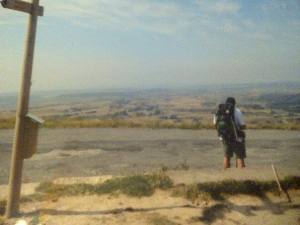
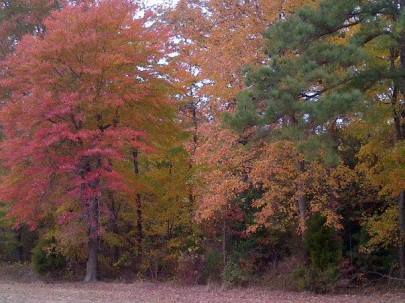
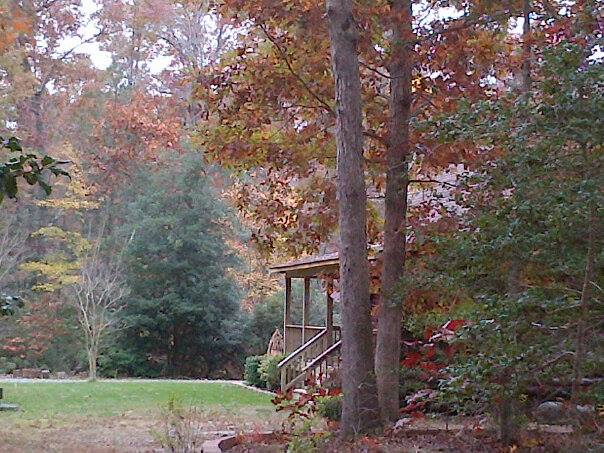
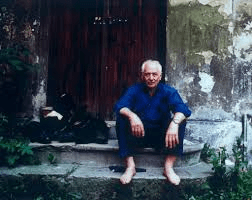
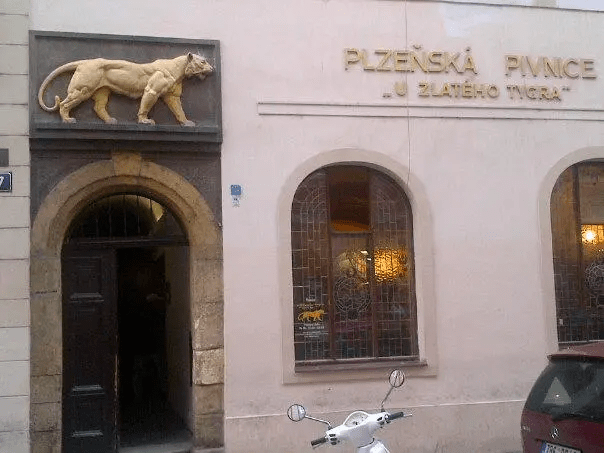
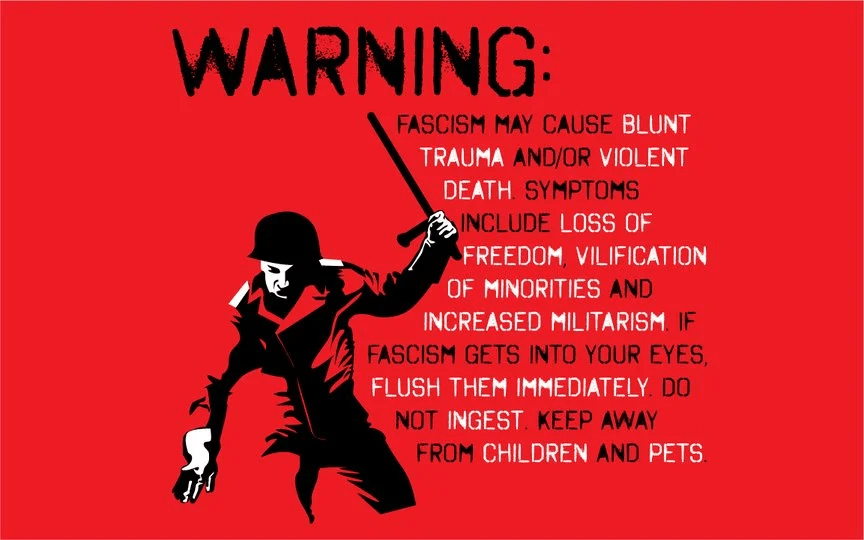


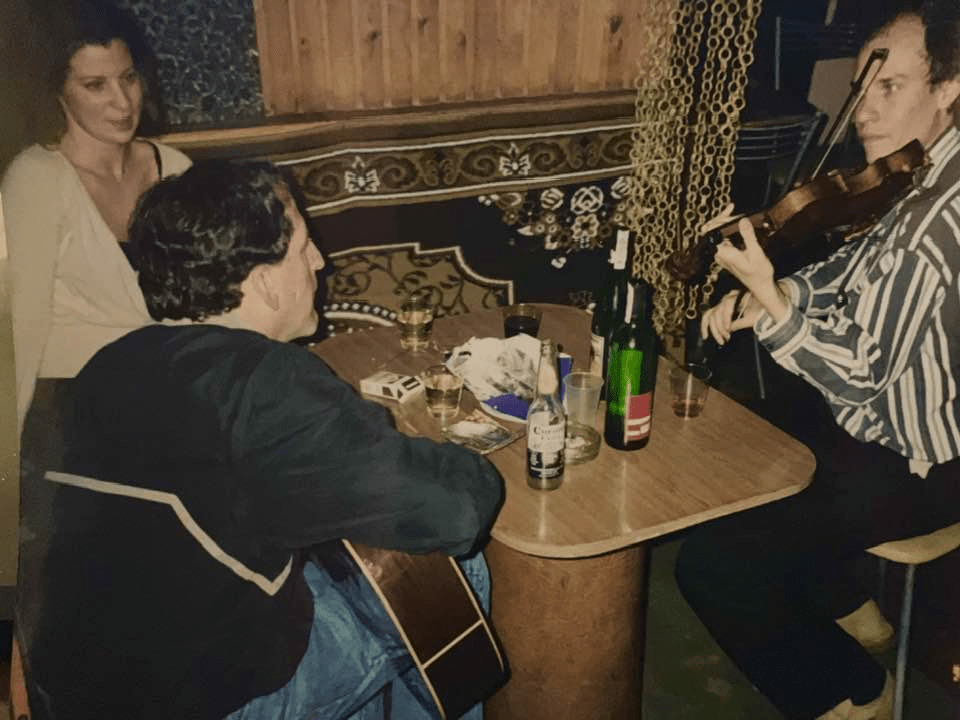
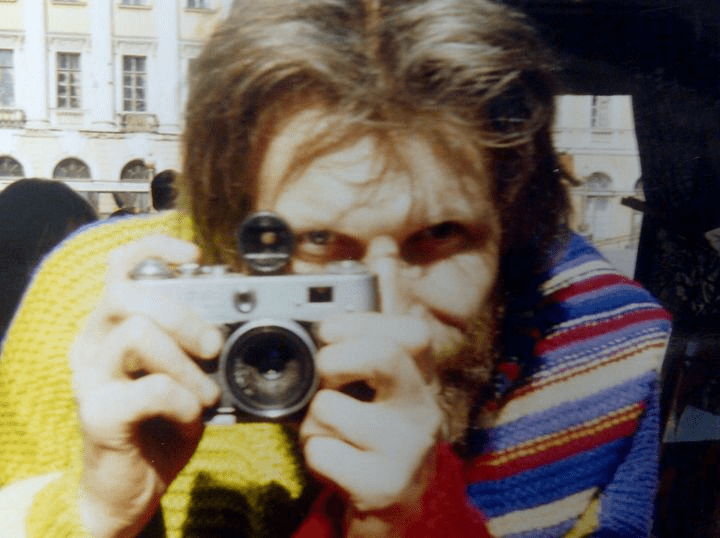


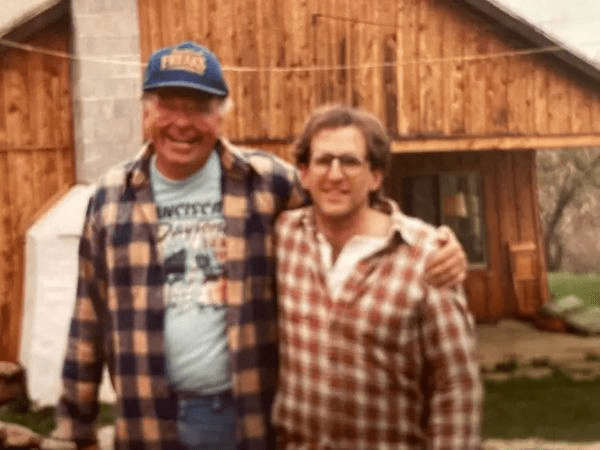


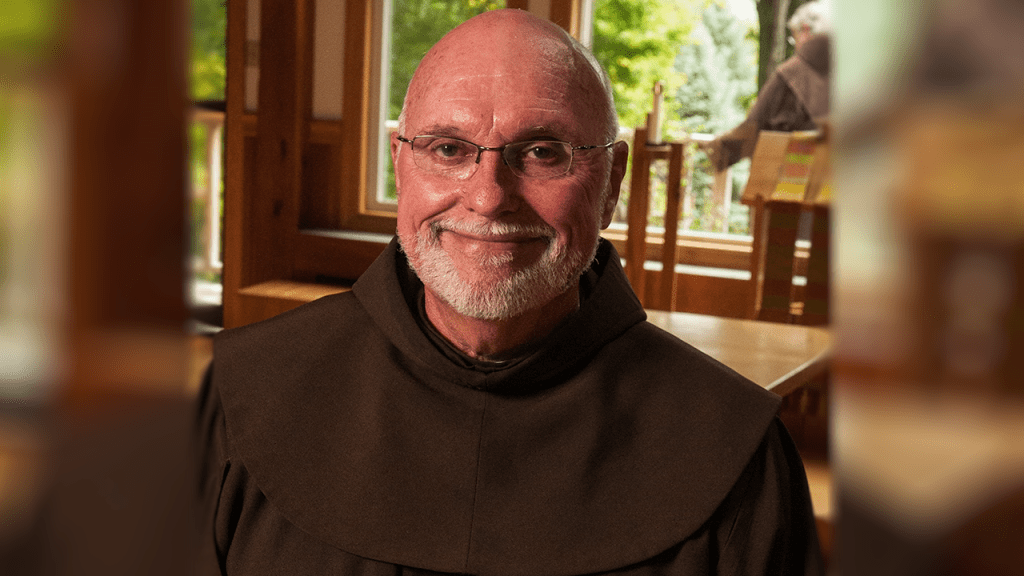


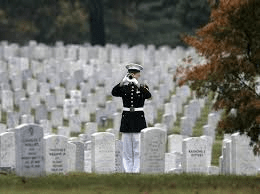
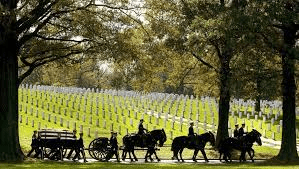
 a view from this wilderness