The Higher You Climb

This one’s for me.

When I was out west we hiked uphill (because the West is uphill) to a waterfall. I’m not sure of the elevation but it really doesn’t matter since I live at sea level and the waterfall is not. My home is about 80 feet above sea level and a short stroll down the hill is zero.

A few days before the waterfalls we were at just above eleven thousand feet; June, and still there was snowpack on some of the trails. At night we had a fire going, of course to toast peeps but also to keep us warm. In the cabin we kept the wood burning stove going all night. Back home the ac was running strong. Back at zero elevation. that is.

On the way to the waterfall–it was hot that day–I had to stop more than a few times due to my unconditioned lungs. I had no issue with my heart or legs; no, I felt pretty strong actually. It was just the lungs which in my mind looked like the deflated oxygen masks in planes. I wanted to quit; it was clear I wanted to quit, but it was also clear I just needed to catch my breath and push on. “It’s just a little further” translated to me to those days driving my son long distances and from the back seat I’d hear an impatient, “How much longer, Daddy?” “Not far,” I’d say, as if a two year old could translate “not far” into some sort of calculable distance. Yeah, that was me on the mountain as kids–I’m not kidding, kids!–ran past. I reminded myself they’re closer to the ground and need less air, and “it’s just a little further” to me translated to “move your ass for Buddha’s sake, or we’re going to have to make camp soon.”

I made it. I sat on some rocks and watched the majestic water fall from other rocks, down to a pool, off into a creek, down the mountain past the path we just hiked. I quickly gained my energy back as the issue was my lungs inability to climb at that altitude, not “be” at that altitude. A few days earlier we were at eleven thousand feet and I was fine because there was little steepness about us; it was a casual altitude gain. Plus it was colder. But there I sat outside Ogden, Utah, having climbed what I swear was the Matterhorn and I watched the sky grow bluer, watched the water mist up into the trees, and watched the world below try and make excuses for itself. I can’t recall ever feeling so at peace.

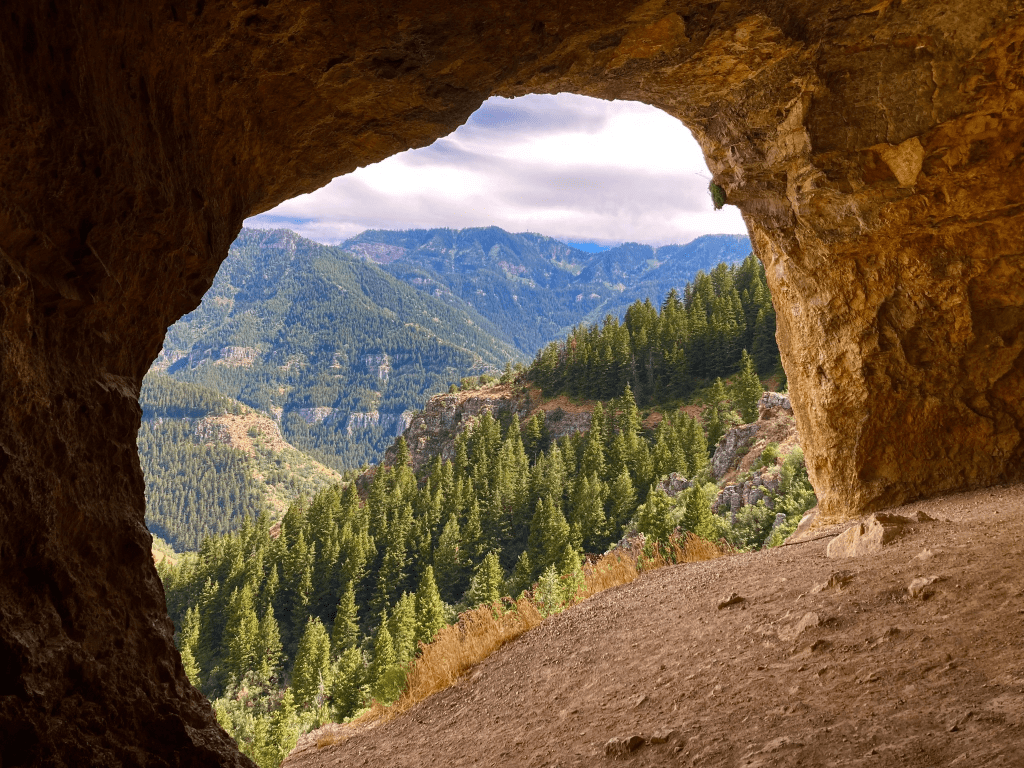
A few years ago we did the same thing not far from there to a place called “Wind Cave” and that was more than just a steep climb, for a flat-earther like myself it was like scaling The Freedom Tower, but we climbed and a few times I wanted to quit–apparently I’m not adept at steepness yet–but I didn’t, and when we came around the top slope and walked back down to the opening of the wind cave, there was nowhere on earth I would have rather been. And so again in the mountains, and then again at the waterfalls.

Fast forward, for that is the theme here: Today I wondered about two distinct things: Why is it so hard for me to do these things when I used to have no issue with them when I was younger? and why did I push myself to finish when I could have so easily stopped without objection?

Let’s get the age bullshit out of the way first. Yes, there are conditions which can slow a person down as we age, and it makes it harder to do what we could do with ease decades earlier, but all things being equal, one can battle a decreased metabolism by eating right and working harder. The list of reasons those antiquated excuses are irrelevant aside, internal motivation has more to do with accomplishment than external excuses. I have some experience in fitness and working with people whose challenges could not be calculated, but who, with the right motivation and persistence, reached their goals. So why is it so hard for us other than absolute and flat out indifference as our minds are occupied by other issues? And two, what changed? Why did I push on despite my better judgement only to find out I was capable of more than I thought? The company? Partly. The kids running past? No. The beauty at the end of the hike? I promise that wasn’t on my mind while dry-heaving into the creek.

No, something different took over.

I wanted to do it for myself.

***

I went to the Y today, again. I’ve been going on and off for some years now, though I took a break during Covid and another break not during Covid. I get bored, or I find something else to do, or…or…or…I lose some weight and I get in shape then I tumble back. This is normal. While my old boss at the fitness club could take an eighty year old and make them feel young and able to accomplish anything–and they often did–it was more normal for a healthy, capable young-something to cave at the first sight of a donut. Enter me.

But I have gained less time, and that is something they and most of the members I trained when I was there did not have at that age back then. It takes a while to understand that all we gain as we age is less time.

Tick tock tick tock tick tock people; times ticking away.

When I did the math this past weekend as the calendar turned on me again, I realized the list of things I plan to do is longer than the remaining time allotted, and that’s if I’m generous with myself. So I went to the Y today just like any other day, but this time I wondered if I could push it a bit, so I increased the incline on the treadmill and turned up the mphs. And again, until my heartrate was safely beyond what I normally do, until I was sweating, which I rarely do, and until I was at the point I never have been to before at the Y–the point where I wanted to quit for a reason other than boredom, so I pushed the dial up a bit more and for ninety minutes I climbed to the wind caves and to the waterfalls, I climbed Mt Wachusett in Massachusetts and to the upper falls of Sabino Canyon near Tucson. It brought me back to those days, first, when I taught classes at the club and I had to push myself because the class wanted to be pushed, and then earlier when playing tennis, and I wasn’t done until I dropped on the court, spent.

Why? Because I want to ride my bike to Coos Bay, Oregon, and I want to go to Seattle and hike Mt. Rainer with my cousin, and I want to make the climb to the waterfall a stroll, a meander. Because I saw the clock. I didn’t want to look; I really didn’t, but I did and I saw it as the large digital numbers clicked over, and I did the math because I’m pretty good at math and the distance from here to 80 is barely enough time to love anymore, barely enough time to dream anymore.

Something was different today. Something clicked. It’s that there are going to be a plethora of things out of my control as I move forward, so I’m going to take control over those aspects of my life I do have some say about. Of course I’m not going to get back to my club weight again, which is fine since I forgot to eat from 1983 to about 1988, but I am going to get to the point I believe I can if I decide to. And that might be all I need during this last push to the summit.

And by the way, we do these things at this point in life for ourselves, no one else, and that’s different too.

This time it’s for me.

Bob Unplugged

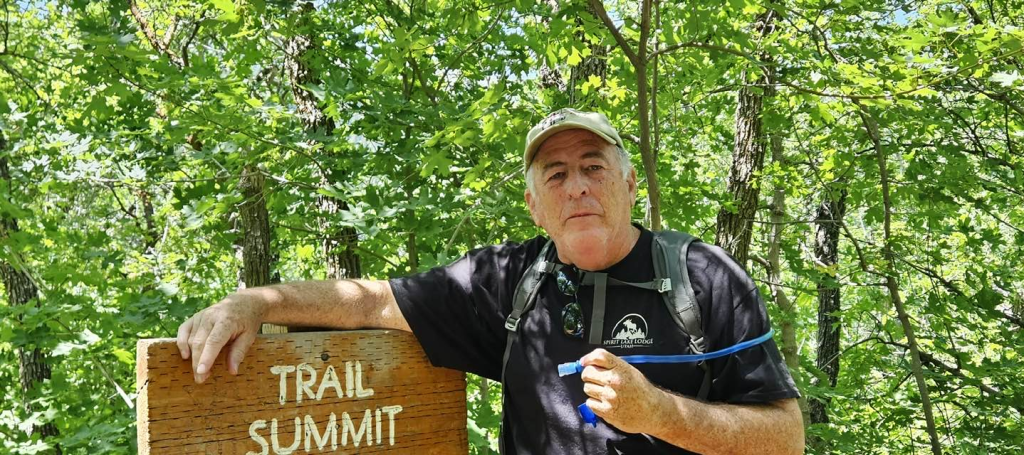
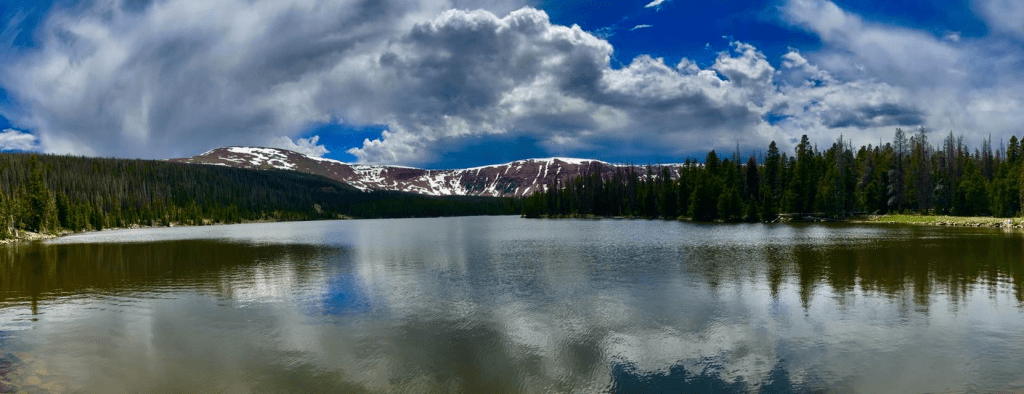
No running water, no electricity, no means of communication. We hiked from our cabin at just over ten thousand feet in the Uinta Mountains to just over eleven thousand feet. Snowpack remained, and while the temperature was pleasant, often even warm, a quick turn into the shade marked the cool dryness. In the evening we kept a fire going in front of the cabin, cooked on a camp stove, drank, went for a walk to watch the moon rise—which didn’t—walked to the dock at Spirit Lake and lay on our backs to watch the abundance of stars. An otter or two swam by, a few moose showed up in the field, chipmunks buzzed about, and the unmistakable peace of absolute silence dominated the days to the point I didn’t even notice. The nights turned cold and we fed the small, nearly 100-year-old cabin’s wood burning stove long enough to make it to morning.

Absent was the news, cellphone reception, communication with anyone else save the lodge owner and his wife, no neighbors in the few other working cabins to chat with, just the indescribable silence and laughter, a lot of laughing.

I worried about grizzlies. “There are no grizzlies here; they’re over in Colorado. Just black or brown bears.” So I worried about black and brown bears.

I worried about snakes. “There are no snakes at this altitude. Too cold.”

Damnit, I needed something to worry about. Habit. What I didn’t worry about was the disconnection with the world; being above the tangled waves of electronics saturating the air just a few thousand feet below. I could breathe; well, except for the air being so thin that I couldn’t breathe. And I could in that brief stretch of days, for the first time in a long time, be unapologetically myself because I knew I could. Sometimes it takes a friend to reveal who you really are. Sometimes it takes a lifetime.

Bob Unplugged.

I’ve been this way before, a long time ago during my sometimes-weeklong jaunts into Mexico before cellphones, or two excursions into Africa, and other places where I was mostly alone, or where the people I was with were equally absent of some umbilical to all things civilized, and all that was left to do was to talk, so we talked. Indeed. We talked about how we missed our moms, we talked about what breaks our hearts, we talked about what we dream of and what we don’t dream of, we talked, as Harry Chapin described, “of the tiny difference between ending and starting to begin.” We talked about how sometimes it takes years to understand the beauty of silence, the value of peace. Remember talking? Not words out loud, but real talking.

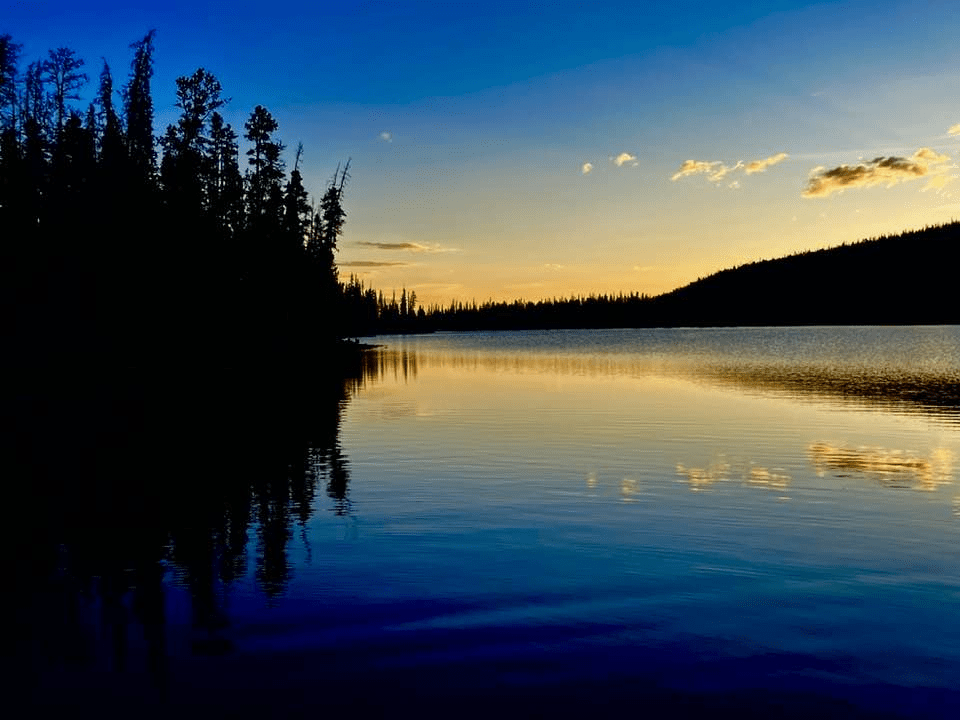
The night before I left Virginia I hit “Send” on the email to my publisher which contains the final draft of a book which talks about, in fact, celebrates, that very sense of disconnect, the abandonment of society, the push into the unknown. Early one morning after wandering to the outhouse and then up to the field to see if the moose had returned, I wandered to the lake and walked out on the dock. A soft orange sky spilled just to the top of the mountains, and the water worked from dark black to its normal greens and blues, and I stood alone before the dawn and my mind dislocated itself from time. This could be 1981, I thought, remembering a solid portion of my just-sent book; or it could be 1984 half a world away. It could be 1986 in Pennsylvania, or a year later waist deep in some equatorial river.

It might be years from now or just as easily the Jurassic or Cretaceous periods when dinosaurs tramped about these very hills. I forgot what day it was, and then I forgot how old I was. And then everything fell apart because that happens, things fall apart, but as it turns out that just makes it easier to rebuild from scratch.

I found myself on the dock completely at peace no longer worried about anything. I lay again on the dock as we had the previous night but this time alone and looked up and felt transported in such realistic ways that to describe it here would be to hack my way through this short reflection, but I was transported not to Pennsylvania 1986, not to Senegal or Allegany or the Congo. My entire presence slipped into Great River, New York, nearly fifty years earlier to the very day, and Eddie Radtke must have been somewhere in the woods looking for firewood, and I stared past what must have been the Great South Bay early one morning which he and I had explored daily for a solid wave of our childhood. That’s where my mind went; it reeled northeast about as far as one can, and slipped into 1975.

It was like being back in 1975 at the start of something but this time knowing how to handle it, knowing what to say right and what not to say at all, this time. I had not yet unearthed tennis courts and guitar shops, not yet swallowed the ocean water of the southeast beaches, not yet changed my mind, not yet learned hesitation and self-doubt that befell me just a decade later.

I turn sixty-five in two weeks. This year that day is tangled up in so many memories and symbolism, but something is different now than just a few weeks ago, pre-disconnect, if you will.

At one point in the book to be published later this year, I had been working in a bar in Harrisburg, Pennsylvania, with no true sense of direction except the absolute conviction that the lack of direction was not working for me. Late one night, early one morning I woke on a bench near a lake in a local State Park with no real recollection as to how I got there. I had not been drinking, no drugs, no overworked exhaustive excuses led me to the familiar shore where I had at one time laughed so hard. No, it was my complete indifference that brought me there. And I sat up and waded into the lake to my waist. When I returned to my home that morning, everything changed; or, better said, I changed everything.

Peace does that. Silence, and the depth of some connection that is difficult to find does that.

I lay on the dock at Spirit Lake and remembered the bench two thousand miles east. I’ve had so many changes this past year, perhaps more than in all my previous years combined, and I thought of Jackson Browne: “Oh God, this is some shape I’m in.” But I recalled not the last twelve months but my long drives into Mexico more than forty years ago when I thought I’d find the answers, or the walk across Spain, or the train across Siberia. All those times I was so at peace, so much in the moment and loving my existence, but I had not been this much at peace with myself and who I am—or, better said, who I need to be—since that morning in the park when I felt some sense of absolute clarity, when on a dime I let everything go, disconnected from absolutely all aspects of thought and commitment and simply let myself be myself as I imagined I was meant to be. And I lay on the dock and thought of Paulo Coelho who wrote, “Maybe it’s about un-becoming everything that isn’t really you, so you can be who you were meant to be in the first place,” and things seemed suddenly obvious.

Thank you clarity.

We packed, we meandered our way four days later though the mountains to the lowlands through a small swatch of Wyoming and back into now, back to suburbia, back to the news—the bombing of Iran, the bombing of Israel, the war in Ukraine, the disarray of Washington, the murder of protestors, the abandonment of morality, the sacrifice of truth—all of it, and I briefly envied those who left—Eddie and Letty, Dan and Dave and Mom and Dad. They have been spared this nonsense.

But, briefly, so was I, by choice. We sat in chairs around the fire and laughed like hell when I accidently burned off the soles of my sneakers, laughed harder when after banging my head several times on the exceptionally low doorframe, returned at one point to find the door jam covered in bubble wrap, laughed at the sudden appearance almost on demand of a family of moose, and laughed at the nature of change, the value of friendship. We too often choose not to step away from it all. Seriously, metaphor warning: If you keep your feet too close to the flames something’s going to burn.

I’m stepping away from the nonsense; life is too short. Six and a half decades down and I’ve already outlived nearly everyone I know, so I suppose it’s “time and time and time again to find another way.”

Present Perfect

1908040_10203813288720133_7224931381547605230_n

I’m thinking about Spain tonight, that time back then, and the lessons I forgot, the moments which were later diluted by misguided responsibilities. The way I fell apart just a few years later and leaned too hard for some time there; the way I still do sometimes. The way everything makes sense when I’m talking to the right person, and how I know it should make sense all the time, and how it doesn’t. That’s on my mind tonight. That, and Spain.

I’m thinking about how I carried home with me that sense of life as it was meant to be, at least for me it was, and how it lasted for a little while back then. And tonight I’m wondering what happened to it. I thought I’d never forget what I apparently forgot. Then more recently after some significant changes, I was sure I’d never again forget to be present, to be aware of life, now.

Then late last night I read a letter –this morning I suppose–in which a small part told me of all the versions of me in thirty-five years, that one, the one right after Spain, was the easiest to love. “Find him again,” it said. “You won’t be at peace until you do.”

Just. Well. Fuck.

Spain.

One evening a decade ago, Michael and I spent the night above a bar in the village of Samos and had pulpo–octopus–for dinner. Later that night a priest invited us to a private party and we stood next to four buffet tables of pintxos and wine, and we ate and stood on the balcony, drank wine and watched swans swim in the lake and hissing at the setting sun behind the cloister. Every single day outdid the previous one. I kept waiting for that golden moment, and they kept coming. Like that following morning when we walked to a nearby field and found a chapel from the 9th century alone in the mist, part of some eternal sacred silence. It was not a five-hundred mile journey; it was one step at a time, one moment at a time, over and over. That might be the most practical lesson of the Camino.

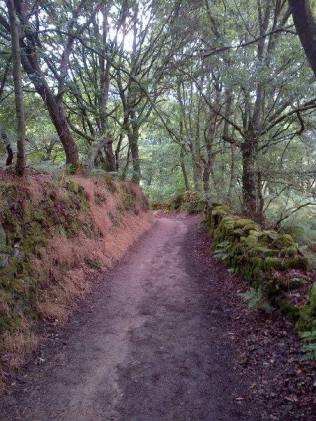
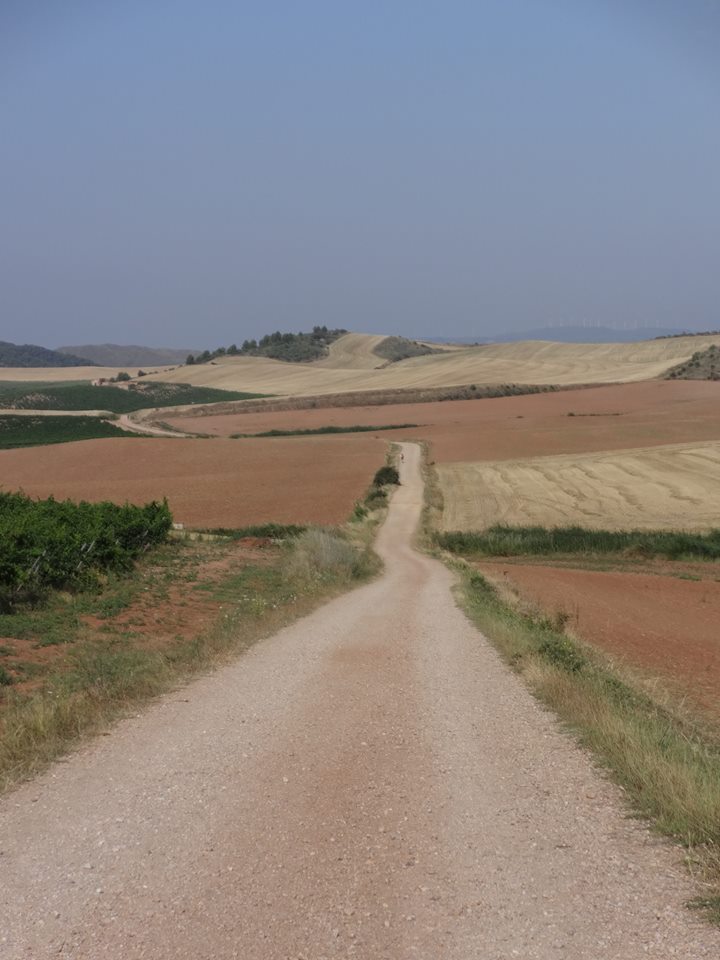
We slept on yoga mats in a hallway of an old church in Logrono, Spain, with seventy other tired souls after we shared dinner and walked through the basement of the five hundred year old building. For two nights we slept in comfort in the same hotel Hemingway stayed while working on The Sun Also Rises. In some small, old chicken village we stayed in a brand new albergue which had no business being open yet. The floors and ceilings weren’t done, it was freezing inside, and the yet-to-be-inspected bathroom was three floors down. The only bar in town was closed so the owner gave us a few beers which made up for the thick dust everywhere. We stayed near Torres del Rio above a bar with fine food and a wading pool out back to soak our blistered and swollen feet. We stayed in an old monastery a hundred yards from a church St Francis of Assisi himself asked to be built. In Portomarin, we stayed up as long as we could because the rooms were all filled. We hung out in a small café until 1am and then walked around the misty, cooling waterfront. Then we settled on the town square with covered walkways running next to a medieval church. Against some storefront we pulled together folding chairs and wrapped ourselves in whatever we could and tried to sleep in rapidly dropping temperatures. A kid on a bike did tricks on the steps of the church until 3 am which anyway kept me amused. At 4:30 we got out our flashlights and headed west. You can see a million stars in Spain at 4:30 in the morning, and the darkness makes the silence almost melodic.

In O’Cebreiro there was no room and we nearly walked out of town to camp when a man waved us toward a back door at an inn and we ended up with a beautiful private room for practically nothing at all and just outside the door were a few tables on a stone patio overlooking valleys that stretched across Galicia. In the morning the fog sat below us in those valleys, and the sun came up like we were looking at the ocean until the clouds dissolved and the sky turned blue and the green hills welcomed us.

A few weeks earlier when we first crossed the Pyrenees into Spain’s small village of Roncesvalles, we stayed next to a chapel Charlemagne used and at night we went to the basement and spent hours drinking gin and tonics and talking to the innkeeper. In the village of Zubiri in Navarra, just before Pamplona, we stayed in a new place on the fourth floor and shared a room with a couple from France. My son took pictures from the Roman Bridge outside our window. A few days later on the eve of the feast of Saint James, patron of this pilgrimage, we stayed in a small inn run by a single mom who made dinner for us, a woman from Madrid, and two men from Germany. We shared a delicious Italian meal and drank clay pitchers of red wine and talked about the distances. We laughed in three languages and despite someone snoring most of the night we slept well enough to leave an hour after everyone else making our journey quieter and more perfect. We didn’t worry about how far we walked or where we might stay. We walked and we would find a place. Like the fly-infested villa with tremendous views, or the albergue with dogs who insisted on sleeping on our laps, or the room above the garage with a killer bar at the street; or the stone building down some slope where we met some girl from Texas and a father and son from Amsterdam. After paying at the restaurant we drank the best hard cider in Spain.

In one neighborhood as close to suburbia as we ever saw, some couple opened an albergue in their house and we got the first two of five beds, the others occupied by a salesman from Madrid, a woman from Barcelona and another from Majorca. We all had dinner on the back porch where all the flies in Spain gathered to join us, as well as a dog named Bruno, and the sun was brilliant and we slept well. Once, we stumbled into some tiny town, another chicken village, looked like a movie set for an old western, and we slept in the bunk room with fifty other people. In the morning we picked up a few supplies at their shed they called a store, but man oh man the lemon chicken was awesome.

Everything we did was deliberate.

Everything we ate was delicious

Everyone we met enriched our lives. It should be this way all the time. At home. Anywhere. We live in a phenomenal world for a disturbingly short period of time. It should always be this way. In fifteen years I’ll be fifteen years older, no matter how I get there. In fifteen years I’ll be almost eighty. Life is too easy to love to give it the cold shoulder.

In Spain every single day for more than a month we remained present, aware, but when we came home after some time we slid quietly into the old routine, stumbled back upon a world where what was and what might be constantly drowns out what is, where few live in the present, where few talk to each other. Where people pass through life quietly.

“Those of us who live,” Vincent van Gogh wrote, “why don’t we live more?” It doesn’t have to be Spain, of course. It could be a week walking city streets, a day spent cleaning the garage, a moment watching the sunset across a salty plain.

And it doesn’t have to be fifteen years. It is, after all, jut one moment at a time, over and over, for fifteen years.

Buen Camino. I’ll be outside. Leave a message.

Forthcoming

Allegheny River

I had an unconventional youth. Specifically, I did not lead the normal life of a nineteen-year-old away at college. While my floormates were drinking heavily and sleeping until noon, I was at classes early to get them out of the way so I could head out to the Allegany River, or up to Niagara, or out to Chautauqua Lake, canoeing, listening to fascinating stories from a friend of mine, helping him plan his return to the Congo River for an adventure I couldn’t possibly contemplate prior to then.

I have two books coming out next year. The first, Office Hours, is a “Sedaris-like story-telling” of thirty-five years of college teaching. The second, Curious Men, is about that time back then in college myself, planning the Congo trip, turning a first semester probation they said was due to grades but I knew was due to complete indifference, into an honor-roll semester due to my sudden acute interest in absolutely everything. A friend of mine used to ask, “You mean that year you were on crack without ever touching a single drug?”

Yes, that year. Nineteen.

Memoir writing is a challenge for the need to engulf yourself in the emotions of a time that was apparently significant enough to warrant a book, yet absent enough of those same emotions so the reader can find the bigger picture of the narrative, the part that must reach up and out of itself into their lives, show them their emotions instead of displaying my own.

I brought this up because I just finished it, the book, Curious Men: Lost in the Congo. As a point of reference, though, and in full disclosure, I started it forty years ago. I’m a slow writer.

But the primary question publishers, publicists, agents, and–what do you call them? Oh yeah, readers–ask is, “What’s it about?”

So that needs to be split into two answers. Most people mean “What happens” when they ask what it is about. And that’s fine and not too difficult to answer: A friend asked me to help him plan a canoe trip—solo—on the Congo River. I did, and he went, and he never returned. Eventually, I went. But I returned—most of me anyway. This might be of interest to readers, particularly those who have enjoyed my writing in the past, or those who like adventure, distant places, rivers. Mysteries, even. Possibly psychology. But that “what happens’ response makes it all seem very 1981ish, and little more.

Which means there must be a second answer for this to work. And that is the true response to “What’s it about?”

In this case, it’s about being nineteen-years-old. It’s about being on my own for the first time, out from under the parental umbrella only to be thrust into a world where countless adults want to know my plans for the rest of my life, my major, my summer internship possibilities, my “declaring” of a focus for my entire career before I’d even taken a single class, all the while living with someone I’d never met on a floor with ninety guys I’d never met who seemed to insist I drink despite my desire not necessarily to not drink, but not to drink because they insisted; and all of us with two bathrooms, one payphone, and honestly little guidance to navigate. This wasn’t the military where some sergeant told us what to do when to do it how to do it but never why. We were paddling out in the deep-end, completely solo. Hence, the drinking and the need to join the pack. Just because I didn’t end up face down in the stairwell every night doesn’t mean I didn’t understand the draw of the need to do so. It’s just that I found my own alcohol of sorts.

I found another outlet, something well outside the box, and in doing so ended up with a working knowledge of a few African languages, an understanding of the fauna of equatorial Africa, a comprehension of diseases, some knowledge on how to temper loneliness, and a taste of a particular lesson I couldn’t find in my mass comm classes: outrageous adventure is simply a matter of deciding to do something and following through. I discovered that I didn’t need to follow some template to be alive. I learned that maybe it was everyone else who didn’t fit in. At least that’s what I told myself at the time as a defense mechanism.

But something changed over the years. You see, I’ve been staring at nineteen-year-olds for thirty-five years now and that alters the narrative some.

In the end, Curious Men is not about Africa, it’s not about the Congo or anyone in particular; it is about being nineteen and scared, and how that has changed in the decades since I ate sun-dried fish while bantering in Lingala, and most importantly, learning how to jump, knowing, absolutely understanding, that once you jump, you’ll either land on your feet or you’ll learn how to fly. Unless you don’t. Then you need the “What’s it about?” to step to the plate. Sure, it takes place in rural western New York and ruraler central Africa, but the narrative and the theme often divert.

Indeed, I’ve been staring at nineteen-year-olds for thirty five years now, and students today are no less timid then then, no less adventurous, no less interested. The difference is they are infinitely more distracted, bending toward convenience and accessibility, seeking and finding adventure on a screen, through gaming and TikTok, and I don’t doubt that if I were nineteen today the rivers I sought out would be virtual from the safety of some Virginia Beach bedroom. Maybe I was born at the right time, back when you sat around some diner eating wings and talking until some spark ignited, and you drew maps and made lists on the back of placemats, and then, most importantly, you followed through.

Curious Men: Lost in the Congo, is, as S.E. Hinton (The Outsiders) wrote, “A story that should be a must read for all teenagers—and adults alike for that matter.”

I’m just deciding now on the dedication. That’s a tough one. In ten books I’ve ever only dedicated one; The Iron Scar: A Father and Son in Siberia is dedicated to my father and my son. I’m not sure yet I am going to do so this time, but I’m leaning toward this, a variation of sorts of something Richard Bach once wrote:

To the nineteen-year-old who lives within us all

The Congo

Just a Good Stretch of the Legs

On the rainy walk on the Renvyle Peninsula

It’s raining at Aerie today, a heavy wet rain which if it wasn’t sixty-five degrees outside would be snow, the kind that weighs down pine branches and snaps the limbs of the smaller trees.

The sound of the rain is relaxing on the skylight above my head, and out the window the woods are foggy with a mist which looks cold but isn’t. It’s a good day to walk. When I was getting ready to do the Camino ten years ago this Spring, I walked in all kinds of weather from the rare snowstorms to the common downpours. Only lightning keeps me at bay; I don’t do lightning. Even inside I prefer to not sit under this skylight during a lightning storm.

But today is okay, with the rain and the warmth and my work for the colleges all caught up. I’m arranging some material for Ireland, figuring out a trip to West Virginia and Ohio, dreaming about Spain. I often dream about Spain. Remembering Ireland.

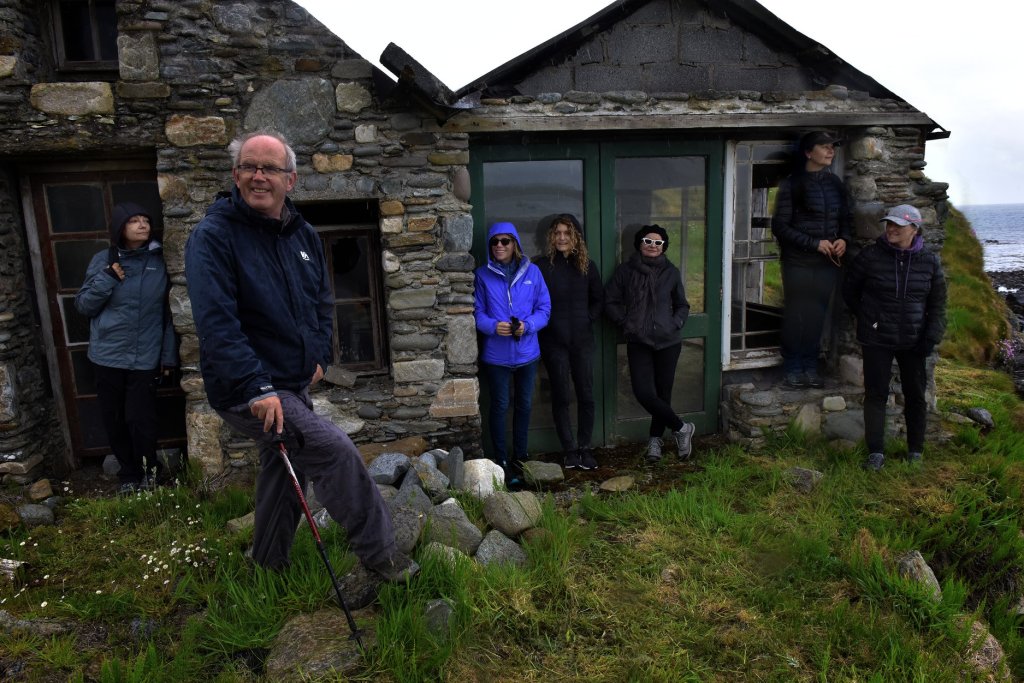
The last time I was in Connemara it rained one day, one out of about eleven days. That was in June that year, and the rest of the days were sunny and pleasant. It just so happened, however, that the one day it rained was a scheduled hike throughout the Renvyle Peninsula with famed archeologist, Michael Gibbons. Of course, being in Ireland, and him being one of the fine personalities of Ireland who jumps into bogs to show how dangerous they are and has a sense of humor which directly lines up with mine, none of us minded the rain. We walked through the crumbling graveyard of the Seven Daughters, took a break from the weather in an abandoned house overlooking the ocean, wandered for miles in the wide “wild west” of Connemara, along roads stretching past ladder farms and peat fields, and stood and listened to Michael talk about Standing Stones standing right in front of us, and dilapidated famine homes, and the Twelve Bens—mountain peaks stretching to the north, and curious customs he told us about with endless hysterical anecdotes. In all of my travels, that day, with Michael and my companions, was one of the most memorable.

With Michael Gibbons (foreground) et al, taking a break from the rain.

But I was going to say before the walk about Connemara came to mind and all the matter-of-factness about the rain, as Frost might have said, that today is fine here along the Rappahannock, and the rain won’t keep me from meandering to the water, listening to the foghorns on the fishing boats coming back from the Bay.

I was talking to someone earlier this week about Ireland, about the Renvyle Peninsula where we go, and he asked if I was from there, my ancestry that is. I was proud to answer yes, that in fact a large swatch of my DNA hails from County Galway, in Connacht, and while everyone who travels there automatically feels right at home, I felt some connection we all sense when returning to a place our forefathers come from. I felt it in Brooklyn, too, the first time I returned as an adult and walked the streets where my father and my grandfather grew up, and my great-grandfather too. It was like that in Ireland, in Connemara. I didn’t know my great-grandfather of Brooklyn any more than my ancestors of Connemara; I am as connected to them all.

Looking toward the start of the Twelve Bens

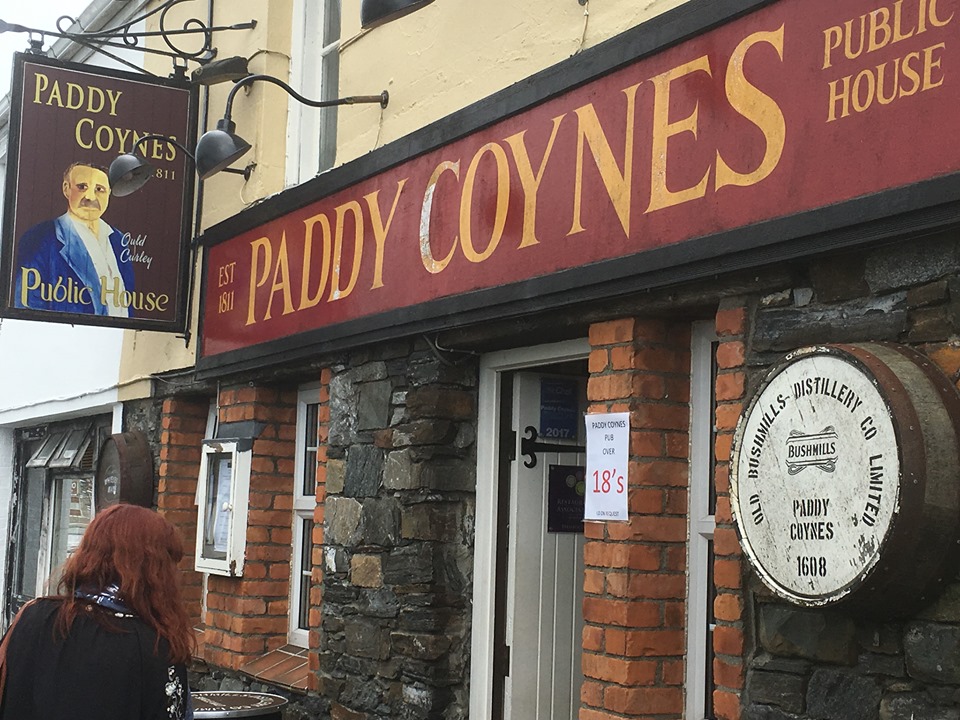
One evening we all went to dinner at Paddy Coynes in Tullycross, about two miles away. It dates back to 1811—new for Ireland—and is one of the popular pubs in western Ireland. We swapped stories, had oysters and lamb, whiskey and beer, Irish coffee, and readied to leave when I told everyone I had decided to walk back. A few protested, particularly Jacki who knows the roads better than anyone and whose roots run deep in the area. The roads are curvy and lined to the edge with high hedges, and traffic flows on the opposite side than what we are used to. Plus, it would be getting dark soon. Will, whose family is from the neighboring county, seemed more pleased than worried.

“It’s only two miles, and besides if it gets dark it is easier as I can see headlights and simply saunter from one side of the road to the other.”

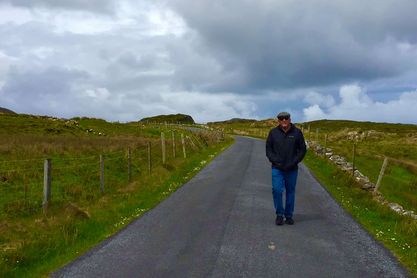
They stood around talking about the meal we had just completed, and I left. The first mile is fine, with a wide road and wide shoulders, knee high walls and fields stretching clear to the east. On the west side of the street, houses sat back from the road behind Irish gates and Irish lawns—green of course.

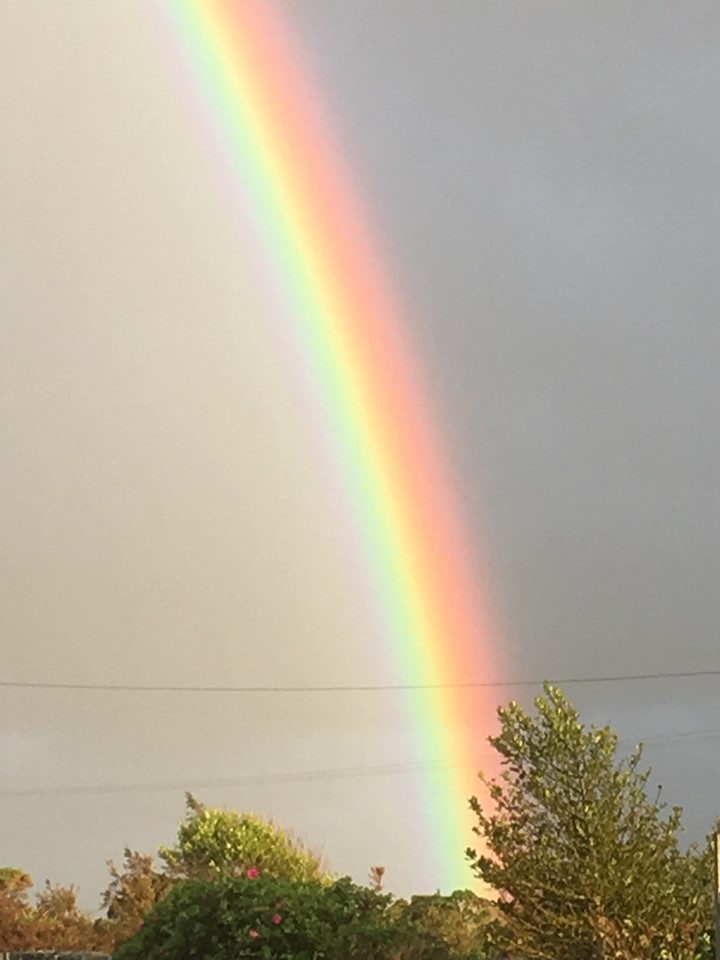
The rainbow over Tullycross

At the one mile mark I came to a crossroads with some houses and a pull-off area. I turned to look for the van, which had yet to pass in the time it took me to walk the mile, when out across the reach was one of the most beautiful rainbows I had ever seen, bold, and welcoming me to the Republic in fine Irish tradition. A car pulled over and the driver got out and took pictures, and then he and I talked a bit about rainbows and Paddy Coynes and Renvyle and America and writing and, finally, Guinness, and we sat on his nearby porch and continued our conversation for an hour, drinking beer and swapping stories. When it was time to leave, I decided to walk the last mile along the beach, this awesome Wild Atlantic Way, which I imagined my ancestors might have walked as well, dreaming perhaps of America.

Here’s what I did not know:

  1. The stretch of beach does not go straight down the coast to Renvyle House, but instead jetties out into the Ocean and then winds back, making the one mile walk about three and a half.
  2. There are cliffs—not high, about twenty feet, along the water, with a rocky beach; rocky like baseball and softball size rocks everywhere.
  3. The tide was coming in.

I was about forty-five minutes into my walk when I realized I could no longer see lights anywhere. I enjoyed the walk though, albeit on wet rocks while I was wearing slick-soled Vans more appropriate for standing on the deck of a boat. A few times the waves crashed close enough to wash up my legs to my thighs, and it was only when I turned a bend and the closest lights I could see down the coast, hoping it was Renvyle, were still well more than a mile away.

I slipped once and landed on my butt in the sand, my pants wet but my phone safe. I checked and had received a text from a friend back at the house: “Where are you? We’re all in the lobby! We didn’t pass you coming back.” I quickly replied. “Walking home now, slowly. I met a local man who invited me for beers on his porch.” Okay, I knew that sounded way more planned and carefree than my impending very possible dragging out to sea by a rogue wave on the rocks of Connemara.

Eventually, I could no longer walk along what was no longer a beach—excuse me, rocky path—and I looked up at the cliff and realized it was easier to climb than I had thought. A sheep looked down at me, almost as if to say, “You know we’ve been watching you this whole time. You’re a moron.” I moved up the sandy and grassy side of the cliff with relative ease as there was plenty to hold onto, and I made it to solid ground, a grassy field spotted with cattle and sheep, and in the dark distance a house, presumably the hand who owns these herds. I walked freely, sheep moving out of the way, me moving around cows, and climbed over several small fences and kept walking another thirty minutes, climbing fences and dodging livestock until I could see the lights of Renvyle just a few hundred yards away.

I made it to the beach near our place, and I walked to the front door and walked in to find most of my friends hanging out, drinks in their hands, listening to music, warm by the peat fire in the large fireplace. Will looked up from his camera to ask how it was. I told him about the beers, and he said it was the perfect Irish experience to have, and he was happy for me. Then I quietly told him I walked down the beach instead of the road, and he said, “Yeah, I figured.”

“I think a sheep called me a moron.”

“I know that sheep,” he said, and we laughed.

the peat fire at Renvyle House

A friend of mine says since I was born in a water sign, it makes sense that I’d be more comfortable along the Atlantic coasts on both sides of the pond than anywhere inland. Sure, part of me buys that, but just as much of me understands I’ve been coasting along sandy beaches since I’m nine years old and feel more comfortable doing so than in any hallway I’ve frequented.

But another part of me, the DNA part, likes to believe I followed some ancient path my great-great forefathers followed when they dreamed of America, wondered if they’d ever get there, wondered if they could simply ride the tide out past the Twelve Bens, past Achill and Inishturk, across the North Atlantic.

Yes, the actual sheep who laughed at me