Mint and White Hawthorn

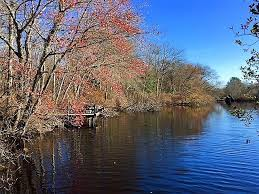
Connetquot River

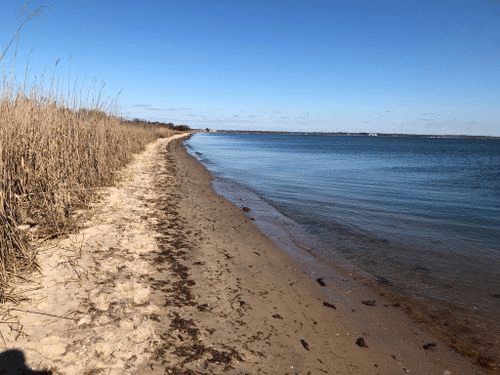
The tide is low this afternoon, and the vapors from the marsh saturate the air along the road all the way up the hill. I know this smell, low tide. I’ve inhaled it since I was nine years old when we moved to a small village on the Island where the Connetquot River meets the Great South Bay. My friend Eddie and I would walk the bay and meander through the marshes along the waters of Heckscher State Park next to the town, and it filled my senses so that when I walk now along the Rappahannock half a century later and the small creeks near Aerie during low waters, I still smell my youth. In so many ways those years seem like I see them just below the surface, sometimes exposed when the water recedes.

But here, now, when the tide rolls in, the refreshing smell of salt water and Atlantic mist overtakes everything, like it did back then too when the fog horns out on the Great South Bay called through the wet and cool mornings.

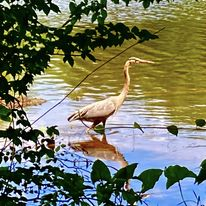
Today the muddy marsh is exposed with reeds and fiddler crabs, small bubbles from submerged frogs, and periwinkles everywhere, hundreds of them; thousands. Herons pull their fragile legs up out of the mud as they walk, and above me several osprey circle and dive for small fish and crabs in the Rapp. Soon they will make their pilgrimage to South America for the winter only to be replaced locally by eagles.

I come here to clarify my confused and often anxiety-ridden mind. Everyone needs a place like this, akin to that “safe home” kids designate during hide and seek—if you touch it before anyone touches you, you’re safe. This is that for me, when I’m here no one can touch me; I cannot be “it” when I’m surrounded by water and salty air, even at low tide. And if I close my eyes this could be the marsh running behind the greens at Timber Point, and boaters might be headed out to Fire Island or just across the river to Oakdale and West Sayville, and sometimes I feel like I’m twelve when my mind would drift during Social Studies at seventh period to the waters of Heckscher and the muddy flats off of Montauk Highway.

Those are familiar names to me, but probably not most others. And those places at that time still belong to me. Just like the aroma of the marsh near Aerie; that’s mine too, and the sound of gulls and osprey and herons, and diesel engines of fishing boats before dawn, and the water lapping on the riprap and sand. Those smells and sounds belong to me; always have. Of course many others know and have absorbed these visceral aspects of life as well, but that’s not what it feels like when you’re alone at a marsh, relishing the peopleless world, and the only sound is the call of gulls, and your sole desire is to roll out with the tide and see what happens; it has the same enticing pull as the comforting tug home up the hill, as strong as the moon’s grip on the tides. We are seventy-percent water, after all, and so is the earth. Being near the ocean or this river and bay helps me keep my balance, like some sort of metronome. It’s always been that way.

Nature has always been my safety net no matter where and when life happens. It is predictable in its controlling and haphazard way. It is non-judgmental; it isn’t distracted. It is as consistent now as it was for the native Americans who hunted on this land, and perhaps some nomads before that, as ancient and consistent as whatever life lived here, died here. Nature asks nothing of me except to be left alone. It’s all I ask of it.

I left the marshes of the Island fifty years ago next June. And even though I’m not there and Eddie is gone, I know the marshes still line the shore of the Connetquot, and out on the Bay the fishing boats cross before dawn. The salty air I’ve always inhaled is in my DNA, and it still hangs out on the reach just below our consciousness. I don’t know how long I might have survived without nature to steady the tides of my moods as they move in and out, pulling me further afar right before I’m trust back ashore. In so many ways my life is one of extremes.

I have been around the block since my days on the Island, and just when I thought I had grown tired and weary of fighting the tides; just when it seems life was more akin to the salt flats out on the Great Salt Lake with a shoreline that will never recover, I notice some sunset beyond the pulsating marsh and it settles me again, moves me right back into the moment where nothing had ever happened and nothing will ever change, for a little while anyway.

It’s like that here, at the river, just down the hill. High tides are exciting and fill me with a sense of awe and possibility, hope, but when the tide pulls back out, that ebb exposes nature for everything it is with its raw and beautifully honest frame filled with nature’s debris. I wish I could see myself with such blatant honesty.

I wish I could always feel so at home, safe and untouchable. How much of our identity can be traced to our youth and those places we chased each other through after school, explored and conquered on summer afternoons? If I lived in the city, miles from any semblance of the salty marshes of the South Shore, would I still feel the tug of the tides? I tell people I found this land here at Aerie by accident. I tell myself that. Sometimes I feel like I should turn around and find Eddie a few steps behind, whispering to himself the lyrics to some Harry Chapin song, asking if we should go swimming in the bay.

September is just days from now, and the August heat, the rise of gnats in the hazy air, the stillness of often stifling walks along the Rappahannock are once again slipping behind me. I believe that like Jay Gatsby I can be melancholic, some strong desire to “reach out and hold it back” overcomes me when the weather turns, and to be honest, Nick’s retort that “there’ll be other summers” is simply not good enough. Not when so many of them fade so fast. Not when the afternoon sun can so easily burn off the mist of our youth.
The Past is in It’s Grave

Heckscher State Park, Great South Bay

I’m cleaning closets and donating clothes and other items I no longer need. Some are just old collectibles in boxes shoved beneath beds and in the attic. If I could fit junk in the crawl space under the house, I probably would. I have too much stuff. Soon, most of it will be gone, but it isn’t easy deciding what to keep. I can easily make a case for retaining every item. Sometimes it is comforting to pull out an old trinket and tell stories about what happened. I have an ashtray from a resort in Palm Springs from when I was fifteen, but I can’t mention it without my mother reminding me how I wandered alone for hours in rattlesnake country in the San Jacinto Mountains. I’m keeping that one. There are postcards and paperweights from family vacations and solo trips out west. Most of it is going. I can remember what happened without a cheap plastic prompt. And if I can’t remember then the item is a waste of space.

But last night I came to what I call the “Long Island Box.”

At almost fifteen years old we moved from my childhood home on the Island to Virginia—that was almost half a century ago; so far in my past I am the same number of years to 100 as I am to leaving the Island. And so much has happened since those days to make those first fourteen years little more than a title page; at best a brief introduction to the rest of my life. In fact, it seems that boy might easily be someone else save one particular item: the baseball my friends signed and gave me when I moved. On the rare days I pick it up it connects us across time and distance. I can look at the ball as proof I actually knew those people, and if I were to go back to Long Island, I’d almost expect to see them in their youth. Memories trick us into thinking of some places as special when, in fact, it is usually a particular time we relish. The truth is, when I hold the ball I don’t want to go back to New York; I want to go back to 1975.

When we were young we played baseball; we listened to music; we hiked the woods of Heckscher State Park; we skated across the Connetquot River and waded well into the Great South Bay. We hopped the fence of the Bayard Cutting Arboretum and camped out and kept secrets; we built forts and fought over stupid things. We came of age during the Vietnam War, and music was part of our blood. Now as if to symbolize all those days, I have the baseball. The names have not faded even while most of the faces have, though I certainly can conjure up the idea of who they all were. Over the years I’ve been back to New York, but never saw those friends again. Still, when I return I say I’m going “back” to New York, not “up,” as if New York will always be a time more than a place.

When those friends gave me the ball that last day, I wanted to stay in that town and finish growing up with Steve and Todd, Eddie and Paul, Janet and Lisa and Essie and Norman and Mike and Camille. So the ball remains my sole possession from life before the fall. I have wondered if my family had stayed, would I have pursued my burning desire to play baseball, or would the music and restlessness that eventually took over my life catch up with me anyway. Smack dab in the middle of my youth, in a small idealistic town, in a time when my friends and I were pushing the limits and planning our exit strategy, I got traded to another existence five states away. I have no regrets at all, but I have the baseball, and it teases me toward the proverbial road not taken. Steve and I were like Chris and Gordie in the film Stand by Me; Eddie and I spent near every single day together hiking through Heckscher, singing, teaching each other guitar. Every. Single. Day. For five years.

They all signed the ball.

Now I’m thinning out my collections of books and art, pawning off possessions and boxing up souvenirs. My emotional connection to many of these things is tied to the people I met along the way. While it is true that the further through life I paddle, the more I’m interested in what I can enjoy at the time, not stow away like pirate booty. How many times do we buy things while traveling, bring them home and display them, and eventually replace them with new souvenirs? Even if I do take the items out and look at them or show people, the significance eventually ebbs. I have stories and memories, and sometimes I have a longing to return, but I quickly realize that an object is not a memory, it is a symbol, a window through which we can watch our youth.

But this box is different. These are the remnants of when a boy literally grew up and tried like hell to hold tight to what he knew he was losing. I can hold the ball and see us in Steve’s backyard, yelling as we ran the bases, and I can still smell the marsh near the river that time we found an old shack for duck hunters and carved our names in the walls. The ball is proof I was there and it all happened. Souvenirs play an important role in moving on. They keep us from carrying the guilt of complete abandonment. Once in a while I pick up the ball and can hear their voices calling across the yard, across the years, Steve holding a sign of luck, Eddie calling for me not to go, please don’t go. And we’d say good night. Not goodbye—a small quirk of ours. Good night! We’d yell, and laugh, oh my living God we would laugh.  

I used to have this crazy dream that we would all meet at a pub, probably on the Island, and hug and laugh and drink and tell stories of then. It would be at the old Great River Inn, which I think is an Italian restaurant now, or across the river in Oakdale, on the water, and we’d get tables on the deck. Eddie and I would have made fun of Todd for the way he used to follow us through the marshes and kept cursing whenever he stepped in the mud. Steve would recall the terrifying afternoon I hit a fly ball right at the sliding glass door on the back of his house. We’ll both remember at the same time how we used to see who could hit the ball over the roof, and then we’d retrieve it from the street and see who could throw the ball the farthest. And right at that moment I’ll pull the ball out of my pocket and show them how bad their signatures were when we were young, and we’ll laugh and pass it around, but in the presence of these people the ball will suddenly seem irrelevant. We’ll break into a chorus of the Zombies “Time of the Season” like we used to while walking to the deli. Then we’ll order more wings and beers and someone will inevitably have to leave early because of family obligations. Todd will have to head home, and Camille will have to get back to the city.

But that will never happen. We lost Eddie a couple of years ago just before Christmas, and since then the desire to go back to that beautiful, timeless, idyllic hamlet has faded away. But we could have met, we should have. We could have convinced the bartender to play some early seventies music like the Beatles “Let it Be” album. And Todd and I would tell everyone how we were sitting in his room listening to the radio when the story came through that The Beatles broke up. It will get quiet and someone, probably Janet, will say she has to leave, so we’ll all stand in the parking lot and shake hands, and hug, and say we must do it again. They will drive off, but I’ll wait, because that’s how I see this going down. I’ll stand there almost five decades after seeing them last and wonder how it is possible to live this long and still remember details. I’ll be glad I went back, but I’ll remind myself I really must move on and simplify my life, so I’ll turn toward the river and wonder just how far I can still throw a ball.

Eddie and I got back in touch about five years ago and talked often. Neither of us changed when talking to each other, and it was clear we would have remained close no matter where life brought us. We didn’t drift apart; we grew up. 1975 is so far ago I can’t conceive it ever happened at all; yet I can make a case it all went down last week, and if I head down Great River Road and make a right at Church Road and follow it all the way up past Woodhaven, and stay right when I get to Leeside Drive, my dad would be outside at the barbeque, and my brother mowing the lawn. My sister would be in her room at the top of the stairs, and me, well, I’d be heading down the road to Eddie’s and we’d be walking out toward the Great South Bay for the day to see what is next.

It’s just a ball. It’s just a damn ball. It will go back in the closet, and my friends will go back to their faraway towns scattered from Long Island to Florida. All of us probably keep neat houses with boxes stowed behind stairs just beyond reach. Even this house I’m organizing and which I built twenty-five years ago is little more than a hotel to occupy as long as possible before I check out and others make themselves at home. Maybe someone will find my baseball behind a cabinet, and the names will be worn off when the kids here take it outside and toss it around. Anyway, it’s a ball; it’s how it is meant to be used.

Goodnight Eddie.

Listen to this…

I don’t usually hear or see geese on the bay this late in spring, but last night they were there. Canada geese fly over my house every night in winter. From late afternoon until after midnight flocks of geese pass or land or take off from the wealth of local waterways. Some settle in small ponds, but most gather in the harvested fields. Usually they commute in groups of fifteen or twenty, but I’ve heard their honking and stepped onto the porch to see upwards of two hundred fly by. One time they were so loud in the field I went out to find thousands of geese settling in before continuing to who-knows-where. Their stay is swift, albeit perennial.

And last night they uncharacteristically crossed the twilight sky. It is that sound, though, the whoosh of wings in a methodical push along with their familiar call, which remains as true and consistent in my life as the sounds of birds in the morning. Here along the Chesapeake some geese nest all year, but it is in winter when migration routes from the St. Lawrence Seaway to all points south steer them into the area after dusk. I have laid in bed well into the evening and listened to them move past in the cold, clear sky. Sometimes I sit on the porch expecting, hoping, knowing they’ll be back.

The migration of geese in and of itself is not what keeps my attention in this narrative, even now in May when they’re more abundant in January. It is their sound and the way it always calls to me, like so many sounds in my life. There is music, yes, of course, but there is more. Some sounds get in my bloodstream, remind me of who I am at the core, which I can use in a world where it is so easy to get lost.

When I was young the foghorns in the early hours called out from the boats on the Great South Bay. I remember waking to their long, singular tone, warning other fishing vessels headed out or coming in across the reach. Foghorns will always remind me of my adolescence and riding bikes out on early spring weekend mornings with my friends, a band of twelve-year-old’s biking it to the bay through the fog and up to the docks. On clear days we could see Fire Island, but some mornings we couldn’t even see each other, and being that close to the water so early meant feeling the booming vibrations from foghorns. I can still smell the marsh on the nearby river and feel the cool wetness of the salty air on my skin.

And I know as long as I find my way to the water in winter I can count on the geese overhead, calling across the river. If I was to head back to the Island and one morning went to the docks at Timber Point, I am certain I’d not recognize the area for how much has changed. There might be more traffic nearby, and the number of leisure boats has most likely increased. But all these decades later I am equally certain the sound of foghorns would drift toward shore in the morning as certain as a flock of geese migrate through these local fields, even now on the front edge of summer.

More than twenty-five years ago I built this house frequented by hawks, the occasional eagle, countless osprey, and on winter evenings, geese. In recent years the number of bald eagles has increased. I have never been complacent watching such majestic birds of prey in flight. One move of her wings and an eagle can glide on a draft clear across the river before turning east across the bay. Still, they make no sounds. Oh, sometimes hawks call out to each other in a very distinct high pitch caw. But mostly they perch in silence. Their lack of sound creates a distance between us like strangers in a waiting room. Once I walked back from the river and saw an adult bald eagle atop the house. But because of the raptor’s silence and blank stare, we lacked connection, some sort of shared space.

Despite my own random migrations, I find comfort in the sound of the familiar. The voices of those I have loved and lost talk to me sometimes when I sit at night on the porch and recall long-ago conversations. There are too many to name, but sometimes I am taken aback by a sound coming off the trees like an old friend calling down the driveway, laughing. It can be very real. Yesterday I listened to a cd my sister made of an interview she did with our parents many years ago. It was the first time I heard my father’s voice in years; it was a profound moment, to find the past brushing against my skin like that, whispering I’m still here if you need me. Some sounds simply defy time itself.

We can be haunted by sound. 

In a world where we often seek silence to escape the noise, it is the sounds which ground us; the laughter of friends and companions that call to us through the fog of daily life and steer us home. Pavlov wasn’t far off, but the bells which I respond to are the sounds of my family gathering and telling stories, a football game on television on Thanksgiving Day with the smell of turkey filling the house, an old western on a rainy summer Saturday afternoon.

I love the daily calls of life, the drifting sounds on a summer evening, the persistence of the ocean waves, the relentless ranting of house wrens in the morning.

Wine glasses. Dice on a game board in the other room. The quiet wisp of golf on television. Steaks on a hot grill. An acoustic guitar. The heavy press of a hiking boot on a snowy trail.

Bacon in a pan in the morning. The bouncing of chains on a swing set.

Children laughing.

Rain.