The Joanie Channel

Joan in the Great River house, circa 1969

On June 22, 2002, my sister sat at our parents’ kitchen table and recorded an audio interview she did with them about their lives, about life during the depression and World War 2. She asked other questions, and just like Terri Gross on Fresh Air, did a great job of bouncing off of their responses. She sent copies to my brother and me about five years ago, and when I sat to listen to them, a few things struck me. One, my father was precise in his responses, and my mother was hysterical in hers. He was 77 at the time, and Mom was 69. But what hit me hardest was hearing our father’s voice for the first time in half a decade. I can hear his voice in my mind, of course, but to actually hear his voice like he was sitting there made him young again. The last few years of his life I was around him all the time and his dementia grew worse and worse. So when I played the cd, I heard not just my father, but my father younger, still alert to everything. It was nice to push past the sound of his weak and confused voice that had filled the corners of my mind and hear him as he had been. Ironically, at the same time it makes it hard to listen.

About two years ago while out to lunch I randomly recorded a video of my mother talking about something. I don’t remember what and the video is gone, but the idea took hold, and for the last two years every couple of weeks when we were at lunch or getting coffee, I’d ask her a specific question, or I’d encourage her to remember a particular time in her life. Note that she is one of the funniest and smartest people I’ve ever known, and understand too that she has had quite the life from the streets of Bushwick, Brooklyn, to Long Island, to Virginia Beach, and now in Williamsburg, Va. There are fifty plus videos here, but I recorded more than a hundred and deleted many. Some were redundant, and some in the past year or so I got rid of when Mom would struggle with a memory, or lose track of what she was talking about.

Still, this is decidedly not about Joan Catherine.

It is about time. This has everything to do with the brief flash of time we have to share with each other. Watch how a person can at once both change so much and still be themselves, who they are in their heart. The truth is at some point as we age we realize that we must set aside our anger and anxiety and arguments, and we seem to do so far too late in life. In the past year I’ve lost a half dozen people I loved very much who were my confidants and companions, and every one of them died relatively young, three of them in their early sixties. At the same time, my mother has nose-dived into a wall, fallen and slammed her head on a porcelain tub, fallen on the floor, faced cancer–again–had a pacemaker put in, battled neuropathy, and moved from her spacious condo where she lived with my dad, to an independent living apartment in Virginia Beach, to an assisted living apartment in Williamsburg, and she just keeps going. Last July she was in the hospital with pneumonia and sleeping eighteen hours a day, and the doctor did not think she would leave the hospital. Yesterday we went to lunch at an Italian restaurant and she woofed down a massive piece of tiramisu. She Just. Keeps. On. Going. And always with a sense of humor. She talks here about her move from Brooklyn to Long Island, from there to Virginia, and about how patient she can be. Or not. She sings the Banana Song, Woody Guthrie, a Shampoo commercial, and in one of my favorites when she had no idea I was taping from the cup holder of my car as we drove along, she sings “New York, New York.”

But this isn’t about Joan. This is about brevity. When we look ahead–when we anticipate–time can slow to a tragically slow pace. But when we look back, when we recall, we can transport our mind instantly to another era, as if it happened two seconds ago. This makes it seem like time goes by so fast. But it is the same now as it was when we were children. That’s the thing about time: it is dependable. Not one fat second will lose an ounce on my account. But the older we get, the more we recall instead of plan, so the clock can be deceptive. In these videos, Mom is full of energy, sitting up and laughing, with immediate recall of incidents an hour earlier as well as two generations ago; at the same time, here Mom is wearing oxygen, sometimes softly gasping for air, and her memory is nearly non-existent.

Time. It is the only measurement that matters. And we are endlessly distracted by the news and entertainment and the stress of finances and politics and health. But all of it slides away when we start to list what is essential. Then, the answer is easy: each other. That’s it. People leave us, sometimes slowly and sometimes with the swiftness of a cool, autumn morning that takes us by surprise. But they do, in fact, leave.

These videos are in no order, so one of Mom recently trying to remember her Uncle’s name might be followed by one of her looking stronger, heavier, talking about her favorite foods. I decided against a strict chronological order so that instead of watching a woman’s slow decline as age takes hold, we can see how life is, in the words of my friend poet Toni Wynn, “Paper thin.” I will add more to her page as time permits. Thanks for enjoying our mother’s beautiful sense of humor and simple take on what matters the most.

Note: There are some videos on the “Video” tab, but most of the videos are on the “Shorts” tab. Please check out both. And “follow” The Joanie Channel.
https://www.youtube.com/@TheJoanieChannel/shorts

The Books

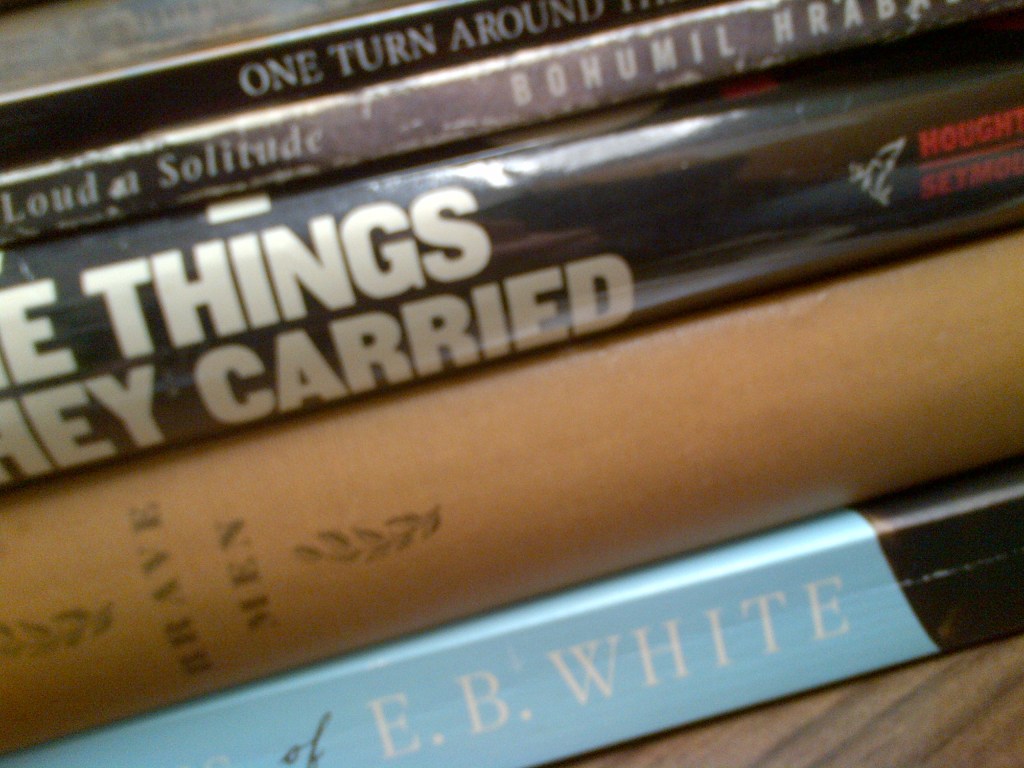
I have a collection of books I received on Christmas nights through the years. All Creatures Great and Small by James Herriott, A Walk Across America by Peter Jenkins, Bound for Glory by Woody Guthrie, Robin Lee Graham’s Dove, and more. Of course, growing up, Christmas morning was filled with the normal toys, candy, clothes, sporting goods, one year a bike, a guitar another, a whirlybird which my Uncles commandeered for the day, and many more memorable gifts. Honest to God, we were very lucky; it was an awesome childhood.

But the books have a different history. While Mom and Dad collaborated in many things, like in most families my mother was Santa when it came to shopping, wrapping, hiding, and organizing the gifts. She went to great lengths to make sure she spent exactly the same amount on each of us. And while I really don’t think we were spoiled, mostly because our parents made sure we appreciated everything, I also don’t remember ever thinking there was something I was expecting but didn’t get; that is, I was never disappointed. Yes, Mom did well. On Christmas morning as we unwrapped our presents, we’d make sure to say, “Wow, thanks Mom!” even on gifts we saw coming. By the end of the morning, though, we’d make sure to also throw in “and Dad” to the thanks, but he didn’t mind when we didn’t, ever.

And like in most families we drifted into that quiet period after opening gifts when we were engaged in our new items, and Mom was getting breakfast ready as well as dinner for the company which inevitably filled the house. Dad would read the paper. But later in the day after everything settled down, Dad would emerge from some quiet place and have a stack of gifts for us, chosen, purchased, and wrapped by him alone.

Books. It was amazing how he seemed to know exactly which ones to choose, and I don’t remember him ever asking what we were interested in. He just observed and took it from there. He’d hand us each a book he had signed inside with a “Merry Christmas, Love, Dad” and the year. I don’t remember when the tradition started but it had to have been early since one that I received was The Boy Who Sailed Around the World Alone, which is the kids’ version of Dove. I wasn’t yet a teen.

As the years went by we came to anticipate the books earlier in the day, though he usually held out. There were some exceptions; like one year when he gave us each money. I bought Illusions by Richard Bach and asked Dad to sign “Merry Christmas, Love, Dad” in the book anyway. Another year he replaced the books with Broadway tickets to see Katherine Hepburn in “West Side Waltz.”

It became my favorite part of the day. It wasn’t just the books, though. While I cherish the memories of Christmas evenings on the couch or stretched out on the floor with our books, it was also a specific moment I got to share with my father and keep up on a shelf . 

I have kept the tradition going since my son was born. When he was younger it was Winnie the Pooh, Curious GeorgeHamlet, anything by Dr. Seuss, Charles Schulz, or Thor Heyerdahl, and more fill his shelves. Today I gave him a beautiful, color guide to trees and leaves. We really do formulate our lives based upon what we’re exposed to growing up. Michael has the kindness of Pooh, the curiosity of George, Schultz’s sense of humor, and Heyerdahl’s sense of adventure. And we have trees. Go figure.

I try and wait until the end of the day, but it doesn’t always work out that way. Now I understand that Dad didn’t just give us books; he gave us his sense of understanding, of knowing, of remembering and anticipating. When I look at the books Dad gave me, they absolutely anticipate my life—music, adventure, the sea. What did he think was going to happen with a list like that? I’m guessing he knew exactly what would happen.

As the years moved on and we all moved out, we started giving him books; he absolutely loved reading. We had to coordinate sometimes so we didn’t get him the same one, and I don’t think we ever did. He received volumes about Brooklyn, about baseball and golf, about history—one of his passions. The last book I gave him was a first edition copy of John Grisham’s first book, A Time to Kill. He loved Grisham’s work. That book is now on my shelf now alongside the books he gave me.

I thought the book exchange between Dad and me would end, but they have not. I can’t give him books anymore, so I write them. My last book had originally been framed as letters to him from a train barreling across Siberia. I ended up changing it to a straight narrative, but he is very present on our journey in those pages, and the work is dedicated to both him and my son. I truly wanted it to be a book he would have bought for me, signed, wrapped, and given to me one Christmas; probably about the time of day I was getting tired and his gift would wake me up and send me on some adventure well into the night.

I would have loved for him to been around when that book came out. I would have given it to him later, after dinner, after football, after the pie and coffee when we were all just sitting around talking, reading. And inside I would have signed it, “Merry Christmas Dad, Love, Robert.”

Departure Signs

Some stories are difficult to write about for a variety of reasons. This falls into that category, but not for the reasons one may conceive, such as “too sad,” or “too morbid,” both of which I write without much trouble.

No, this is about diction and sound. It relies heavily on the reader “hearing” particular words phonetically so one can understand the misunderstanding.

Here’s what happened:

Many years ago I drove my parents to Norfolk International Airport for a flight to Islip, Long Island. It was early, just after six, and nothing was open at the airport food court yet except an “A&W Root Beer” joint serving breakfast biscuits and coffee. Dad was still tired, so he and I sat at a table while Mom went to get two coffees and two breakfast sandwiches for them. I opted out.

I could hear my mother repeating the order several times to the Filipino woman working alone behind the counter, and frustration grew between both of them. After fifteen minutes of Dad wondering where Mom disappeared to, she returned with a brown tray with their order.

“Somethings not right,” she said.

“Why?”

“It came to $27.50.”

“Airport food is very expensive,” my father chimed in, reaching for his bacon, egg, and cheese biscuit.

“That sounds wrong, Mom.”

“I couldn’t understand a word she said.” And at that, Mom grabbed the sandwich out of Dad’s hand, put it back on the tray, and walked to the counter.

“They’re speaking Spanish. No wonder.”

“No Dad, it’s Tagalog.”

“Why don’t you help your mother. You speak Spanish.”

I walked to the counter. The woman looked at me. I simply repeated what my mother had said from the start, that the sandwiches and coffee should have come to just over $8. I swept my hand across the plate and showed her the receipt for $27.50, and she put four more sandwiches on the tray. I took them off and asked if she was the only one there. She walked into the kitchen.

Exasperated, I put my hands on the counter with my head down and said, mostly to myself, but my mother could hear, “We’re not going to get anywhere unless we speak Tagalog.”

My mother stood up as if she had new life breathed into her. “Well! Then let’s speak to Galag. Is he the manager?

The woman returned with an older, Filipino gentlemen, and my mother, very politely, told him, “I’m sorry but we paid almost thirty dollars for sandwiches that only cost about eight, so we’d like to speak to Galag.”

“Mom…” (it was hard for me to speak as I was laughing)

“I think my son here knows him, but we’d like to speak to Galag immediately.”

“I don’t understand!” the man said.

“Is Galag here? We’d like to speak to Galag please.”

“I speak English,” he said to her, and then, just as I was finally calm, added, “I’m sorry but it takes quite a while to speak Tagalog.” I lost it when Mom looked at me and asked when the flight leaves and if we had time to wait for him.

The man, figuring out the problem quickly, refunded all of Mom’s money and gave her new sandwiches for free. On the way back to the table, she turned to me and said, “How do you know Galag?”

Dad had wandered across the hall to Starbucks which had opened by then.

I was at Mom’s this week. We talked about Long Island, and about Dad, who passed away eight years ago on October 21st. I think of him when I’m in airports, or when I see a payphone. He had an 800 number at his desk back when the only way to call home was “long distance,” and it cost a fortune. So throughout my techless twenties, I was able to talk to Dad several times a week. I’d call from the Arizona/Mexico border, from New England, New Orleans, and everywhere in between. He was a quiet man with a deep sense of humor. One of my biggest regrets in life is I am not more like him.

In their later years I brought them to the airport or Amtrak more than a few times. Once, we were on the train and I disembarked just before they left. But it turns out my officemate Tom, who knew them, was on the same ride north and kept them company the entire way. Another time I brought Dad to some flight somewhere, I forget where, but we had a drink at Phillips Seafood Restaurant in the airport and talked about travel and books and plans. When we talked like that I felt close, of course, but also more connected; as if we shared something larger than ourselves. I could always tell when he was thinking about travel, though he rarely went very far. He didn’t miss a chance to talk to his kids about it, though. The signs were there to show me where his mind was; the way he liked to ask where I was going next. The way he listened so closely, responded always with such encouragement.

The first time I flew in my life I was fifteen. Dad had a convention in California, and Mom refused to fly. So Dad and I dropped her off at the Amtrak Station in Norfolk, played golf, and went home. Spent the next day around the house and then we went out to dinner together. The following day we flew to Los Angeles business class—my first ever flight—with dinner menus and a large screen on the wall so all the passengers could watch a movie together. It was Rooster Cogburn with John Wayne. We arrived in LA, rented a car, and drove to the train station and waited for Mom to arrive. We laughed about that for years.

One time we remembered that story when he brought me to the airport to fly back to Buffalo for college. He said he couldn’t stay, so he shook my hand and left. I got something to eat, wandered around, found my gate, waited, boarded, and the plane taxied out to the runway.

It had been about ninety minutes, but when I looked out the window, I saw Dad at the observation parking lot standing near his car, waving.

“My life has been a poor attempt to imitate the man.”

–d fogelberg

Me with Dad at Mahi Mah’s Restaurant in Virginia Beach (photo by Michael Kunzinger)