Somewhere Down the Road

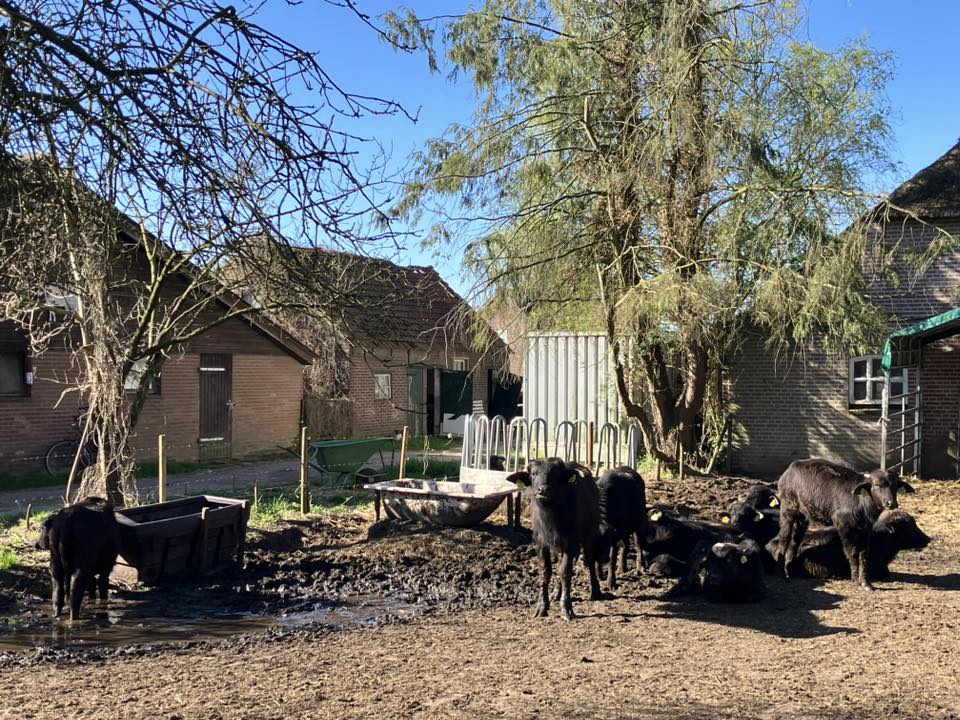
Asian water buffalo of course

Since I’m a child I have wanted to travel the world–I think it was Pippy Longstocking who first turned me on to the idea of exploration and adventure. Certainly Robin Lee Graham and Woody Guthrie and Mark Twain. And I have done just that; more than I imagined. Ironically, for almost thirty years I’ve lived in one house which I built here in the country. My previous homes lasted, from birth, four months, eight years, six years, four years, four years, eight months, three years, three years, three years, two years, two years, and now, well Aerie since my mid-thirties. 

If I had to choose between being always on the go for the rest of my days, or always at home for the same life, I’d choose home. I’d learn to garden and each year expand the crops with more tomatoes and cucumbers, and I’d have a fig farm on the land, perhaps more apple trees, and I’d share the results with neighbors. I’d know the names of the birds, and their migratory dates, and over time I’d have the hummingbird feeder ready for their return every spring. I’d add flowers to the land each year so that the back trail was lined with impatiens and the front with marigolds, and the north side toward the river would have a new trail with hanging baskets of herbs. I’d build by hand and bricks and stone a small guest house, with carvings in the doorframe and a wood-burning stove in the corner on clay tiles I made myself in the kiln I would build in the field. I’d have a dog, some cats of course, and a goat or two. Watermen and farmers would swing by sometimes to chat out front in the gazebo. And I’d walk to the post office to mail my manuscripts; I’d no longer be in a hurry. 

Just as easily I might simply leave, keep going

I’d do the Camino again, perhaps for years, and everyone would come to know the “old American” who is always out there heading toward Santiago. I’d relish the knowledge that no matter what else happens in my life, I have as a foundation to keep going the Way, the pilgrimage trail from France to the west of Spain. I would take Paulo Coelho’s advice and unbecome all the things that I’ve accumulated over the years which were not me at all, until finally I become who I was supposed to be to begin with. 

If I needed a break I’d head up to Connemara in August each year to walk the Sky Road near Clifden. Or I’d head to Prague in May for the music festivals in Old Town and stop and see my friends at the university. I’d have strudel and tell newbies about the time I used to write in the corner of Nerudova 19 when it was a tea room, and I’d write and have a pot of tea and strudel, and I’ll say it is too bad they weren’t around then since now it is an ice cream shop and it isn’t the same. 

Parts of me are already scattered all over the world. Pieces of my twenties are in Mexico and Africa, and large portions of my thirties are in Russia. Some of my forties made it there along with Prague and Amsterdam, and slices of my fifties are sprinkled like diction across this country from St Augustine to Seattle. If I had been able to simply keep moving, I’d have distributed what’s left of me in Spain and Ireland, with a small sampling saved for a state park on Long Island’s Great South Bay where most of the elements in my being come from to begin with. 

Still, I like the idea of spending my life in a small town where I’ve always known everyone, and I leave the doors unlocked, and I have a running tab at a local shack of a pub. Equally I like the notion of having friends all over the world, writers in cities throughout Europe to call up and spend time with on my way through again. I like knowing other cities in other countries as well as I know the trails here at Aerie. 

I wrote a book once about a guy who traveled the world until he settled in a small town and meets a woman who knows everyone and is from there, and they fall in love and the idea of staying grows on him, but she, by meeting him, understands she isn’t stuck in a small town after all and there is a world out there to see and experience, so she leaves. He decides the small town life isn’t the same without someone to share it with, so he leaves too, ironically also traveling the world, always wondering where she went, looking for her in crowds and metro stations, but he never finds her. It was a great idea and a decent manuscript, called An Innocent Season, but I could never figure out how it should end. That and I suck at writing fiction.

Life has a way, doesn’t it?

Last week I pet a water buffalo. This was near Neunen in the Netherlands. He was quite cute, still relatively small, and I scratched his neck and rubbed his face between his eyes, and he kept nudging me to continue, licking my shoes and pushing my hand. Luckily he was an Asian water buffalo who are kind, unlike the mean African ones. We stood at the fence and I pet him and we had just bought water buffalo yogurt and cheese but passed on the water buffalo ice cream. This little guy was loving on my shoes and my hand but I had stepped back and he came closer and his nose hit the electric fence, and we could hear the “zap!” and a small spark shot out and that little guy backtracked to his mother near a muddy area across the pen. He just stared at me with scared eyes as if to say, “Why?!” It wasn’t anger; no sense of “you bastard” in his face. Just a questioning “why did you hurt me like that?” and it made me a bit sad. I ate the yogurt anyway, though, with raspberry jam and some nuts. 

But we do that, we get close and then our perception is thrown off. Something zaps us and we associate that pain with those close to us when they might have had nothing to do with it; it was more than likely just circumstance, timing, the time of day. I wonder now how long will the little guy remember the pain. Will it make him leery to get close to the next guy with Hokas on and a hand stretched out? Or will he just keep getting hurt because the pleasure is worth all the pain? 

I would. In fact, I have more than a few times. Emily Saliers wrote we must “take part in the pain of this passion play” if we must love. The worst pain of course is departure, leaving again, and one comes to realize that eventually you’re best off either to just keep going, following whatever Camino you find yourself on, or agree to stick around awhile and simply accept that the pain is part of it all. 

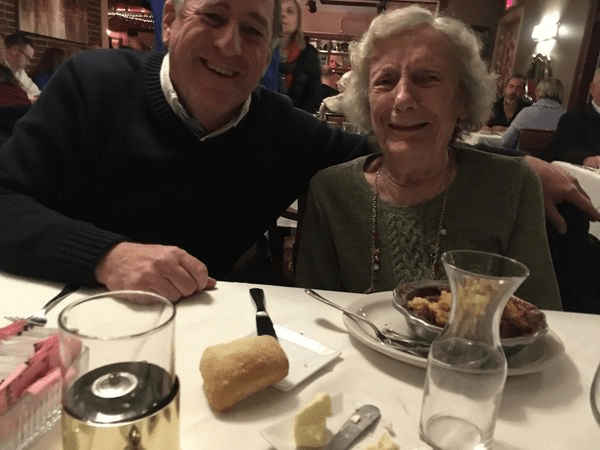
So we ate the yogurt and gave away the cheese and went back to Amsterdam and flew home. Three days later my beautiful mother passed away. I’ve been thinking about my youth, and mostly I remember laughing. My childhood included every emotion possible, but what comes to mind first and strongest is the laughter. I remember going to the supermarket as a kid and pushing the cart and getting a treat. I remember her making food for my class in elementary school and not minding when my friend Eddie and I dragged in mud from the state park. I remember her making lemon meringue pie because I liked it, and I recall perfectly her listening to me attempt to play the guitar for the first time as I butchered John Denver’s “Sunshine on my Shoulders.” I am sure I was zapped more than a few times back then by her voice when I inevitably did something wrong, but I can’t pull those memories up right now; only the good things. Like all the laughter and the music; these two things I inherited from my Irish-Italian mother–laughter and music. 

That and to keep going. Perhaps the finest lesson of all; just keep going.
The Laughter Never Stopped

neither did I

For Those Who Stay Behind

Note: This is a very serious one. Read. Share. Forgive. It’s all we’ve got.

This is for Dave W, Bobbie B, Bud D, Tricia K, and the one’s who live with those unseen wounds which simply won’t heal.

***

A broken limb is obvious. A cast, a sling, a set of crutches or even a knee cart, and people can see the problem, understand the delays and compromises. We move aside or assist in any way we can.

What happens when someone injures their mind, breaks their thought process, when a person cracks their perception of reality and ration? The world is quick to judge the results of some unseen wound festering in their frontal lobe. “They’re lazy,” we say; “They’ve given up,” we say; “They keep asking for help and I’ve had enough,” we say. No one replies to the unfortunate soul with some walker, “No, sorry. I’m not helping you anymore.”

Well, in both cases the likelihood of one asking for help is pretty slim anyway.    

Monsters such as depression, anxiety, and nervous breakdowns can destroy a person’s ability to function. People can’t think as clearly so they lose jobs, they make bad financial decisions and lose money and property. “They could have done something else; they could have sought help from a professional if that was true,” we say.

And when nothing makes sense anymore and the world is too much with them and there is absolutely no meaning in anything—when numbness overtakes the idle sadness, they find a way out.  

The truth is suicide is not always the result of depression; it is not always a person simply giving up. In fact, it is often seen by the psychologically afflicted as the perfect solution. It is not doing harm; it is solving problems. The mind no longer functions the same as others’ minds. If they even want to ask for help, they don’t even know what it looks like to ask for anything in particular, so they seek solutions on their own, like sleep, like cutting off contact, like shutting the brain down for good. It is not life they fear or wish to escape; it is their mind. It is a difficult task to escape one’s own thoughts.

“There is medicine for that,” we say.

Not really. Sure, there is medicine to help someone cover up the wound, like a Band Aid, but the sore doesn’t heal as much as it is buried. The infection will return as soon as

well 

as soon as it rains, or when the next call comes from a creditor because they can’t work enough to keep up, or, worse, when a call doesn’t come any longer from friends and they suddenly remember they were better once, and they won’t be like that again. But even that’s not accurate since they simply are like this now, and apparently always were, and the moment it happened is an allusive memory.

Because while in the movies when someone has a nervous breakdown, they flail their hands and scream, cry, and someone might slap them, tell them to snap out of it, in reality that’s not what happens. The truth doesn’t play well on film. In reality they say nothing. They might drink, of course, or become addicted to some pain reliever, some vice that keeps their brain in the moment like alcohol or other self-defeating measures that keep their mind from dwelling on some past or future attack, but they might just as easily sleep all day, or more likely not sleep at night. They try and work but the ability to focus is gone; not ignored or delayed—the actual part of the brain that helps them do work or see a reason to exist at all has a hole in the middle of it, the circuits are infected and surrounded by puss, but no one can see that, so it can’t possibly be anything other than “a phase,” “laziness.”

Later, afterwards, people say they didn’t know, “They always seemed fine.” “I thought they were going through something.” “They said it was no big deal.”

They say, “I wish they had asked for help.” They say, “I did all I could.”

They say, “What a shame.”

Indeed.

Did Hemingway have another novel, Van Gogh another masterpiece, Robin Williams another routine for the thousands of kids he used to visit in hospitals?

Depression and mental illness often caused by a mental breakdown can cause lives to rip apart, and the only explanation they have when they ask for help again and again is “I’m trying.” And eventually that simply isn’t good enough no matter how much they are loved. They live out on the fringe, they hold signs, they sleep on grates. Likewise, they live in country houses and city apartments. They seem to try, they try to seem to fit in.

Maybe if they wore a cast, had sutures across their forehead. We like to see problems before we help solve them. We don’t offer help to people when we don’t know they’re suffering; how could we? Unless we know them well.

And that’s the problem. No one knows them at all. They’re funny and outgoing. They make light of serious situations. They can work a room. So they either never ask at all or, when they do so too often say “I need help,” it is difficult to see how. “Again?” we reply. “Why now?” we ask. The thing is in a few days they will not even remember they ever asked for help to begin with. This is true; the compromised brain actually blocks that out completely. To us they can either be absolutely silent or seem constantly desperate; but to them it just happened.

Here’s the problem:

How can we find that line between someone who really needs help and someone who just needs a bit more tough love? What do we do if there is no visible “mistake” that needs correcting? What do we say when they say nothing at all, or if we do ask if they need help, they say, “No thank you, it’ll be fine,” more out of a notion of being too embarrassed to say yes. Too ashamed. They’d rather…what?

They’d rather die. To be sure. I remember a phone call early one morning when I just didn’t want to hear it again. I remember a visit from someone who needed more than I could give. I recall calling once and the phone kept ringing. I’ll never forget that one.

Where is the line between knowing whether we helped enough and we could have done more?

Honestly, it runs right down the middle of the rest of our lives, and we walk it aimlessly, hoping we made the right call, that there was nothing we could do. Even if we’d rather be on the side of foolishness, helping people way more than they probably deserve, we can’t ever know.

So we call and talk, stop by, we get them to laugh because apparently we think laughter is the best medicine.

That’s not how a nervous breakdown plays out. Trust me on this one. But there is no Habitat for Humanity that helps people rebuild their minds. So they lose everything: their homes, their families, their purpose. And there’s not a damn thing we can do about it. Well, sure there is, but the place between knowing and not knowing is dark and difficult to navigate.

So. What do we do?

We forgive them for finding a solution the rest of us thinks is foolish. We forgive them for believing that the pleasure found by watching their kids and grandkids grow, watching another sunset with someone, laughing at lunch with friends, still isn’t worth the pain—the constant and debilitating pain—that comes constantly to infect their mind; constantly, day and night. Even their dreams are saturated with pain.

Forgiveness for something we do not understand is a monumental task. But then for some, so is life.

If you need help, Call 988 immediately.

If you know someone who needs help, Call them. You don’t have to know what to say. Say anything.

If you are living with the memory of someone you feel like you could have helped more, it isn’t your fault. It isn’t their fault. Forgive them. Forgive yourself.

Remember what we learned as toddlers: How would we want them to react if it was us? What would we want them to remember if it was us?

Not everyone is fine. It’s that simple.

Bob Kunzinger writes the weekly blog, A View from this Wilderness, which premiered in January 2016, and is the author of eleven books, including the forthcoming Office Hours, as well as hundreds of articles in national and international publications. He lives in Virginia.