I’ve run out of words. Out of ideas. Out of patience and interest and desire. I’ve run out of stories to share and any sense that any of those stories are remotely worth writing about to begin with. I’ve grown tired of getting it right, of editing, of restructuring and developing and trimming down. I’m over the clarity thing, finding the right noun, the more specific verb, eliminating obtuse modifiers, over the placement of pronouns and split infinitives.
I’ve said what I wanted to say.
Except to say this:
Every instance is miraculous to me. Every nuance of life, the breezes and stillness of a summer night, the aroma of honeysuckle, lavender in the air, the yellow of forsythia, the hints of orange and rust low on the horizon. All of it and more of it strikes me speechless and as often as I’ve tried to write about this I couldn’t do it justice. Time and again I ripped up or deleted the prose out of protest to my own lack of focus and ability. I should have been a photographer, bought the equipment and peddled my pictures to magazines and couples on the beach just before dawn–you know the shot, two people in the sand leaning against each other watching the sky lighten in the east. Before cellphones, couples remembered the moment by their presence, but now the moment is ever present because of the picture from the phone, so they no longer know if they recall that moment or simply the endless stream of “love this picture of you two” comments which flood their feed. But what of the shot from behind? The one of the two of them three feet from the water’s edge when the quick ray of dawn hits that small solstice space between their otherwise entangled lives. I could have done that instead of writing about dead relatives and other love songs.
It turns out what I’m best at is simply being present, watching the river run past, a heron searching for minnows and the osprey teaching her young to fly. I have mastered the art of taking it all in and the constant state of miraculous now which engulfs us every moment. But I tried writing instead because I couldn’t make money simply being alive, though I came close; but I could make money writing, teaching about writing, showing people some places I’ve been and what happened along the way, hoping they would sit back and say, “Yes, I know what you mean.”
Instead, I’m out of stories. I am starting to believe my last book took forty years to write not because it was so difficult but because I knew once that story was told I would have nothing left to say.
The story is told and I was right: I have nothing left to say.
Except to say this:
I have been working on a book about teaching. Well, it’s not about teaching, it’s about the best of and worst of what happens when you spend thirty plus years with twenty-year-olds and some of them go on to wonderous things while others die by their own hand, or their ex’s hand, or the random drop of evil. So I’m dealing with a publisher about that manuscript, but my mind is entangled in something that is a bigger deal to me, and that’s the “who gives a damn” factor which plagues writers from time to time, only this time the plague has spread into sentence structure and transitions and now its damned near everywhere. Even the pronouns are complaining; it’s always “I hate” this and “You suck at” that. And I’m also stage-deep in a play, a tragic play about the glory of hope, a one person play which I’m planning to premier in upstate New York but I ran into the “this kind of sucks” part of the writing process and if the book were not out I’d totally use the play as an excuse to avoid the book and most likely would finish the play, but instead the book is out and the play is pointless now. And my book about traveling, about the philosophy of being somewhere for a week or a month and being 100 percent present so that years later we remember every moment—that book, it is out there waiting for me to gather all the words and slap them into the correct order. But not today. It’s rainy and windy and there’s a possibility of tornados today, so maybe next week after coffee one morning.
You see what I mean? It just might be that all the other books and essays and readings and articles I’ve done in the past thirty plus years was a way to avoid finishing the book, and it worked, but now that that the book is done and out, everything else seems to have been a distraction from what I wanted to do originally, before the writing, before the planning and scheming and blind ambitions of a teenager, and that was simply to “live in the world, not inside my head” with thanks to Jackson for the line—to just take it all in at this rest stop as I pass through nature. Wordless. Anonymous. Present.
Maybe I’ll just head back to Spain.
After I get back from Oregon of course.
And Paris.
I feel as if my point—if I ever had one—has been made so I have no reason to go on with these unalphabetically disorganized letters.
Except to say this:
Everything I do seems to be prep work for something that I have not yet figured out. Or, to return to Jackson again, “It seems I’m just a day away from where I ought to be.”
Letty’s birthday would be Wednesday. Dave’s next week. Mom’s and Dad’s in two months, Dan’s a month ago, Cole’s in ten days. I’ve written about all of them. And about Joe, whose birthday was the day my last book, the one about him, kinda sorta, launched. So it can often feel like I’m all out of words, but this time it’s extreme, like the alphabet hasn’t even been invented yet.
But then a hawk flew by my window here at Aerie, and I read something about the Oregon coast, and I saw a clip of Lady Gaga singing “La Vie en Rose,” and I woke up. See, there’s no such thing as writer’s block, there’s only the lack of wind and the empty sails and that sense the doldrums are a permanent state of being. Then, softly at first like a fragment, like a clause, the wind picks up, then more, and suddenly you’re sailing wing on wing through compound sentences and everything, I mean all of it, falls into place and, as Dan notes, “There’s nothing left to say but come on morning.”
Sandy stands at the cash register waiting for Jimmy to finish pumping gas. She knows he will come in and ask for two packs of Marlboro Lights, make some off-color comment, look her up and down, smile his creepy grin, and wink as he leaves, calling, “See you later, Babe.” So she gets the cigarettes ready and is glad for customers getting coffee and picking out food from the grill. She doesn’t need to be nice to him for very long if there’s a line.
Harry is standing at the rack of novelties near the door; trinkets such as lighters that look like fishing poles, key chains with toy turtles, and some stuffed animals on the lower shelves where kids can see them and grab them with slushie-coated hands and the parents will have to pay. Harry reads the headlines in the paper while sipping his coffee which he rests on top of the stack of Gatorade cases, and when it gets crowded, as it does every morning around seven, he carries his coffee and paper to the counter, places down exactly two dollars and eight cents (never in her hand, few people are polite enough to actually hand her the change, she thinks), says, “Thank you Sandy,” and walks out to talk to the younger watermen in the parking lot gathered around Billy Ray’s truck backed up to the pile of bags of logs for sale. It’s like this every morning. If it rains, they sit on the logs under the overhang.
“See you tomorrow, Harry,” Sandy calls back to eighty-something Harry, and is sorry he leaves before sixty-year-old Jimmy comes in since Harry usually engages the creep long enough to distract him so that by the time he turns his attention back to Sandy’s twenty-five-year old body, she’s waiting on other customers.
Jimmy enters and gets to the counter just before another customer, Patty, with her coffee and a small bag of donuts, as usual. Sandy puts the cigarette packs in front of him and rings them up. “Anything else, Jimmy?”
“Oh darling!” he says, a slight sound of drunk in his slur, but it’s just his way. He turns to Patty, “Look at how my girl knows me! No darling, just the cigs today.” He pays and starts to talk when Sandy looks toward Patty, who places her donut bag on the counter in front of Jimmy. “See you later, Babe,” he says and leaves, a chill running down Sandy’s spine.
Every damn day.
Tracy the manager mingles with the customers near the cooler getting their cases of Corona and Bud Light and only once in a while some dark beer worth the money, with her small iPad strapped to her neck like a server’s tray at the old fifties style roller skating drive-in restaurants. She scans sandwiches and bagged pickles and some small cakes. The chips and soft drinks and alcohol are counted when the men who carried those cases in and out deliver them, like the chip guy, Gus, who rolls in six or seven cases of varieties of bagged potato chips in familiar and disgusting flavors. He leans on the boxes waiting for Tracy or Sandy or anyone willing to take a few minutes away from the constant line of customers at the counter so they can count the delivery and he can be on his way. “I’m leaving in three minutes” he might mutter sometimes, but, really, no he’s not. It just makes him sound more in control instead being forced to wait for the old woman at the register holding a twenty-dollar bill who seems to gain gratification by standing over the lottery tickets for far too long, saying, “Sandy, I’ll take a number three. How much is that? Oh, no, no. Maybe instead a number twenty-five. None? Oh okay, well let me see then…” and a line forms, so Sandy will say, “I’ll be right back,” and she counts Gus’s bags, sends him on his way, opens the other register and gets others on their way, sips her Red Bull and moves back to the old woman who still hasn’t landed on a number she likes. Eventually, the woman says, “Oh just give me the number three anyway. I came in for that so I should know what it costs!” and everyone in line lets out a sigh of disgust.
It is eight-thirty am. It should slow a bit now, briefly.
The last customer to check out for now is Casey. A “true gentleman” Sandy always says, both to him and to her coworkers who have a penchant for making fun of every single person who enters the store. “He always buys the same damn thing,” one will say of whoever just left. Or, “He never buys the same thing twice.” “He is such a smoker!” “What an alcoholic!” “Dear God! I wish he’d shower! He smells like fish all the friggin time!” and on and on. Sandy stays silent, most of the time, except for the more than occasional exhales of exasperation when dealing with guys, and the occasional woman, hitting on her.
But there are some, like Casey, who make it worthwhile. He’s always polite and always has a compliment. Today it was, “My Sandy, you really have beautiful eyes, and today they seem more alive. Enjoy your day!” and she smiles. Casey isn’t that old, fifties perhaps, still too old for Sandy. But there’s something about him that makes anyone who hears him know he isn’t trying to pick her up. He is just a nice guy. There are others, too, both men and women, a scattering of fine customers who like it when she works and make it known to Tracy. Part of it is how sharp she is and how she can clearly correct a problem almost instantly, and part of it is her pleasant disposition and even-temper despite those problems and despite the jerks.
There are moments when their rudeness gets the best of her. She might ring something up twice by accident, or, worse, tell someone they are out of something the customer is determined to have, and, of course, it is Sandy’s fault and they’ll let her know what a crappy human she is. Once, when she came in to work late, Brenda, a co-worker, though usually on a different shift, asked if everything was okay at home, knowing it almost always isn’t since Sandy’s boyfriend, Tim, usually rags on her each morning. Sandy said, “Yeah, sure, Tim let me know how lucky we are now that we must wear masks since my face looks gross in the morning. I cried for twenty minutes.”
“Geez,” Brenda said, “you can get that abuse here!” and walked out to head home after her shift, but when it slowed down and Sandy stood sipping her second Red Bull and watched a woman fumble with the gas pump, she thought, No, no. At least here, Casey comes in, or some of the other guys who always say how nice I look. Or that lawyer who comes in sometimes and tells me this job is fine, but I have it in me to do so much more. And even Jimmy, the pig, clearly thinks I’m attractive. There’s some good here, some chance to feel good about myself. Not at home. Luckily, she is usually too busy to think about it since her sharpness and friendliness placed her right on the busiest parts of the day. No, she likes it here. She is needed and appreciated here and it gives her a sense of purpose, which, at twenty-five, can be gratifying, but, as Sandy is beginning to figure out, can be a death sentence. For now, though, she enjoys her job.
Until Ben comes in at noon for his shift, the POS as he’s referenced when he is not in the store. Not because Ben isn’t nice—he calls all the men “Brother” and all the women “Ma’am,” no matter the age—something left over from his military service and subsequent jail time, his early release for good behavior, and his subsequent non-violated probation. But he is known in the convenience-employee crowd both here and at several stores up and down this stretch of highway as the Piece of Shit because, as Brenda likes to point out, “No one, anywhere, ever, knows more than this prick.” How to do inventory, how to check people out faster, how to pick the best lottery tickets (“you really have to watch the news to see what’s going on and find the equivalent reference in the cards”), how to lose weight, how to talk to your boyfriend at home when he is constantly putting you down, or in the case of Brenda, how to raise three boys properly since he raised a teenage girl for at least a couple of the years he was around. He knows it all. What’s more, they will point out, it doesn’t matter how correct one of the employees is about any given subject; he absolutely must outdo. If Brenda tells a customer that the beef and cheese tacos on the grill are fresh, Ben needs to let the customer know not only the same, “Yes, Ma’am, they are absolutely fresh, freshest we’ve had in a while,” but he has to add his imagined contribution to that: “I was just telling Brenda we need to make sure we only serve the freshest ones so she went ahead and made them for me just now,” even though that never happened and he has less seniority than anyone else in the store save Old Peg who comes for four hours every day to make coffee and clean the counters, and has been there since it was a “Dave’s Stop and Go,” back in the sixties when there was nowhere else in town to get anything to eat except the IGA.
Sandy, to the point, does not like working with Ben. It isn’t the work—Ben is efficient and can be left alone to do most anything, and, she likes say, at least he can count, unlike many who have spun through this job. No, she doesn’t look forward to shifts that overlap Ben’s because he both gives her a headache and makes way too many personal comments to her, especially about Tim. Tim may be an asshole, she thinks, but he’s my asshole.
Other than that, they all get along well. Ben has to be there because no one else will hire him, and this is walking distance to his home, albeit a long walk, and he doesn’t drive. He is there because he accepts his fate that this will pay the bills and he has learned to live on what me makes. Brenda is terribly smarter than the job, smarter than this life she’s living with overdue rent and three kids who constantly need things, one of whom is special needs, but she knows that, and has, to her credit most people say, taken it on one hundred percent. She will be manager someday and is already assistant, which means she makes a bit more money than she used to, and is given more responsibilities, like access to the larger bill section of the safe, the ability to check in deliveries and make orders, and even the ability to hire if they need help. Tracy is there because she started there in high school, worked her way up, proved to be efficient, honest, and desperately even-keeled in any situation, and never had ambitions to do more, though managing a corporate convenience store is demanding enough—she loves running the store, gets paid well, and even won Manager of the Year at the annual corporate convention in Orlando, which came with it a generous financial reward. She treats the other workers like offspring, and she is still young enough at fifty to work for many more years. Her and Brenda make a great team.
Then there’s Sandy who simply shouldn’t be there, knows she shouldn’t be there, everyone else except Tim knows she shouldn’t be there, but like so many twenty-somethings in the last twenty-something years, had trouble emotionally moving much past high school, just eight miles away. She has always lived in the small town, knows everyone and everyone knows her, has been with her boyfriend forever, and is respected and appreciated by Brenda, Tracy, and everyone that comes in, and a position like that in a small town on a peninsula far from any city doesn’t always happen. God knows what it might be like down in Richmond or up in DC, she thinks. No, this works. “Someday” is her mantra. Someday. “If Tracy cared about her,” one regular, a lawyer who works over in Richmond, said one day to Harry at the Gatorade cases, “she’d fire Sandy and force her to move on, find her potential.” But Harry has observed far too much for far too long, and since the lawyer has only been in the area for fifteen years, he’s still a come-lately and doesn’t know better. But Harry does, and told him plainly, “Tracy isn’t the problem. Not even Tim’s the problem. Sandy’s the problem.” They both nodded at that cold truth.
Sandy glances at the clock to note her shift ends soon, so she offers to help Tracy do inventory after work for some overtime. Tracy says okay, not because she needs the help or because Sandy is that ambitious, though both of those things are true, but because Tracy understands Sandy simply doesn’t want to go home.
At the coffee counter, Peg wipes down a spill and complains about how messy everyone is these days and it wasn’t like this even during the sixties, and she starts ranting about how much more courteous customers used to be, and an afternoon is dedicated to this subject. Every day it is a different rant—sometimes the way people are dressed or not dressed, sometimes the cursing so common in convenience store lines, and sometimes about how the shelves are left in disarray. Her voice grows louder to outdo the rattling of the drink machines, and Sandy regrets her offer to stay noting a headache coming on. Ben comes over to explain to Peg how to better clean the counter, but Peg, the woman in her eighties who just a few days earlier complained about the cursing, tells Ben to shut the fuck up, and Tracy and Sandy laugh so hard they lean on each other, and suddenly Sandy knows that is exactly why she stayed; the laughter she doesn’t have at home. It takes her mind off of her pointless relationship. But, damnit, she thinks. It’s hard to get motivated when everyone’s fine with where they are now! The watermen are content. The old men and women who come in for coffee and lottery tickets are all content. Her co-workers, her boyfriend, hell, even Jimmy is content. She sees this and knows being surrounded by so many satisfied people is going to destroy her. She needs to quit. For now, though, she counts egg salad sandwiches.
Michael texted from Spain a few days ago. He was boarding a train. I don’t know where he was going, and I’m pretty sure he didn’t either. I don’t know where he gets it from. The empanada doesn’t fall far from the oven.
**
Mark Z is in a hearing and META is being sued by hundreds of parents across many cases because FB and Instagram might be “dangerously addicting,” with bad influence on their tweens, including suicide. Question: Where the hell were the parents when the kids were nose deep in tech? Why aren’t parents of fat kids suing Hershey’s? Why aren’t the parents of wired kids with enlarged hearts suing Red Bull or Monster? Why aren’t the parents reading to their kids when they’re toddlers and teaching them the value of imagination? Why aren’t they instilling in them the value of life and individuality? Oh, that’s right, they’re on Facebook talking about who they saw at their college reunion.
**
Three months ago on Facebook I said Trump is not interested entirely in Venezuela as an endgame, that it was solely a means to and end, that he wants Cuba. Yesterday they announced their support of the current interim president in Venezuela, and it won’t be long before a deal is cut to get their oil at rock bottom prices. Meanwhile, no fuel or food has entered Cuba and they are quite literally dying, with no tourism, not business, no nothing. But wait, “we” can save them. Putin doesn’t care; especially if in exchange djt backs off his barely-there-anyway support of Ukraine. I think djt and the hotel side of his life has been Havana Daydreaming for quite some time.
**
I now have about forty pounds of Hershey’s chocolate. I use the cup holder on the treadmill at the Y to hold the wrappers.
**
Michael is now in Prague. I told him about the strudel; he told me about the Pilsner.
**
Ilia Malinin came in eighth place, falling twice in his free skate. Good. Here’s why: I support the US team, of course, but not his outrageous ego. He is the self-proclaimed “quad God,” and in one interview before the games he wondered not in any joking way why anyone questions his excellence. He dropped to eighth place; hopefully he dropped his ego as well.
**
Conversation a few days ago at Big Johns, a convenience store about twenty miles from here:
Guy eating chicken (I kind of know him so I felt comfortable responding) : “It’s those fucking Antifa’s. They can all fuck themselves.”
Me (I stopped eating all meat, including chicken, but that’s neither here nor there): “Holy Crap! You support Hitler! Stalin!!”
Guy: Fuck no! (laughs) Hell, no I don’t support them!!
Me: But…but…they’re fascists!!
Guy: Damn right they are!
Me: So you’re against them and people like them?!
Guy: Damn right, Bob! What the fuck?
Me: So then you’re against those fascists???
Guy: Yeah (chicken spray).
Me: You’re…you’re Anti Fascist! Antifa!
Guy: Not the same thing! (silent) Is that what Antifa means?
Me: Yes.
Guy: Fuck, I thought it was the name of some radical anti-Trump group!!!
Me: Well, yeah, it is.
**
When the fog starts to lift but is still in the trees and resting above the pond and river, my mind is focused and everything in my life seems clear and obvious. We need nature to clarify that which is muddled by cinderblock and drywall. We need nature to remind us to breathe.
**
The last thing Dave texted to me was “And we’ll all be together again.”
The last thing Fr. Dan said to me was “I’ll call you tomorrow night, Bobby.”
The last thing Letty said to me was “I love you, Bawb. Look for me with the birds on the porch rail.”
The last thing my mom said to me was “I’m so confused.”
The last thing my dad said to me was “What hotel am I in? HA! Hotel! I wish I was at a hotel! What hospital am I in?”
The last thing Eddie said to me was “I’ll call you this weekend.”
The last thing Cole said to me was “I hope your journey on this earth reveals itself to you.”
So now I wonder on a daily basis what the last thing I say to someone is. I’d hate for it to be something negative or down, something benign or flippant. Despite my Roy Kent tendencies, I’m determined to keep Ted Lasso in mind when I’m with others, especially when I leave others.
The last thing I say to most people is “see you soon,” or “talk later.” That’s normal I suppose, and somewhat hopeful and mostly about right.
Portions of this piece originally ran in Ilanot Review as “I Knew Two Men,” and it has subsequently appeared in several journals, including a publication honoring the late Arnost Lustig.
My son is leaving for Prague in a few days and this is on my mind.
Prague Adaptation
Arnost Lustig and I drank pilsner at the Golden Tiger in Prague. A large man in a white smock served our fourth pint when I asked about Hrabal. “You knew him, then,” I said.
***
“Yes, of course. We all knew him. The writers, the musicians, we all knew each other.” Arnost leaned forward. “Prague’s not that big, you know,” he said and laughed.
Arnost was a burly man who wore a leather coat and carried a satchel. We sat one table down from where Bohumil Hrabal, the great Czech writer, once drank. Hrabal came here to enjoy his beer and tell stories which ended up as classic works of European literature, such as I Served the King of England and Too Loud a Solitude.
“He came to Washington and stayed in my flat once,” Arnost added.
After a while I mentioned Hrabal’s death.
“Okay, then, let me ask you,” I leaned into him so the gatherings of Czech men at this mostly hidden pub couldn’t hear. “Do you think he fell out of that window like the nurse reported, or did he jump?”
Arnost leaned back and laughed. “Ah! Such mysteries we can’t answer! How we all love unanswerable questions!”
“She said he was feeding the pigeons. At a hospital? Come on!”
Arnost smiled at me while ignoring my comment and continued to talk while he said hello to some patrons. Everyone knew this man. “So yesterday you went with Jan to Terezin. Tell me about it.”
The day before I had walked about the Terezin Ghetto with Jan Weiner, a colleague of ours. Unlike Arnost, Jan was a stern man with a straight back and fine combed hair. He was calculating. He didn’t turn his head to talk but his entire body instead, like a soldier always at attention. He was very proud of himself, and every conversation somehow reeled back to his accomplishments during the war. To be certain, he deserved the praise, albeit mostly self-inflicted these days.
Arnost shook a stranger’s hand then nodded to me. “Did you sit on the cot?”
We sat on the cot.
Terezin is actually the so-called “town Hitler gave to the Jews,” for its use in successfully teasing the International Red Cross into believing the Nazis had set up the Jews well in small towns of their own. An adjacent eighteenth-century small fortress, used as a political prison for anti-Nazi protesters, is where Jan and I spent the morning, walking about the museum. Arnost knows Terezin well: he spent nearly three years there interned during his teens. He worked the rails that would bring him and his family to Auschwitz where his father was immediately gassed. On a transport to Dachau, the allies bombed the train and Arnost took advantage of the confused guards and escaped into literary history, writing countless bestsellers about the Holocaust and Terezin, all wrapped in the folds of unrequited love and the romance of war, despite its genocide. Diamonds in the Night, Night and Hope, and Darkness Casts No Shadow all remain staples of Holocaust literature.
So Jan and I walked into the women’s quarters at the Small Fortress, a compound really, and he showed me what one of the small cells looks like. We sat on a cot and he said, “Here, my mother was a prisoner. Right here.” He stroked the rusty metal and sat straight, stern, and oddly proud. “They tortured her for several days in every way imaginable before they killed her.” We walked about for an hour or so, and outside the compound he sat on a wall and ate a sandwich.
On the way back to Prague he told me that during the war his family took care of two young girls. Their parents had traveled to Africa as missionaries and were to return for them but the Nazis took over during the interim. “Those girls were gassed,” he said, then explained how soon after this his own father and step-mother killed themselves in their apartment in front of Jan. That’s when instead of giving up he escaped on a train south to Italy where he was imprisoned, only to escape to England. There he joined the Royal Air Force and flew bombing missions that helped turn the war. This was a real hero. Before we got off the bus in Prague we shook hands and he said, “I don’t believe in God.”
“Okay. I get it,” I said.
“No God could exist in a world like this,” he added.
“Okay.”
Arnost smiled and said, “Jan is always trying to convince himself of something. It makes him feel better about life.” He nodded toward a relief of Hrabal on the wall above the next table. “What do you think, Bob? Do you think you know what happened?”
Here’s what I knew:
Hrabal died when he fell from the fifth floor window of the Bulovka Hospital in Prague while leaning out trying to feed pigeons. He also lived on the fifth floor of his apartment building, which itself is uninteresting except for his fascination with fifth-floor suicides. He dreamt of his own death from that height. He would lean out the fifth-floor window of his flat to gaze up at the sky above St. Giles, and he would often walk down to the Maison Oppelt, where Franz Kafka once wanted to jump from the fifth floor.
I knew he sat here, six feet from where I drank my fourth pilsner with Arnost. They spent a weekend together in DC drinking beer and watching Charlie Chaplin films, right after Susan Sontag wrote in the New York Times that Hrabal’s Too Loud a Solitude would be “one of the twenty books that would shape literature in the twentieth century.” I asked Sontag once about Hrabal with whom she had laughed and drunk in New York City, and Susan said to me, sober as can be, that if I could only read the writing of one person let it be Hrabal.
And I knew that his devotion to his wife, whom he called Pipsi, was so complete that after her long, drawn-out death, he wanted to jump from their fifth floor window. “Every room in the apartment hurts,” he wrote, and every time he thought of jumping from that fifth floor he said his guardian angel pulled him back because the angel wanted him to “remain as yet. But I’ve felt like it.” Just like Kafka, Hrabal noted, who had also been “hurt by the world,” he supposed. Kafka didn’t jump from the fifth floor of the Maison Oppelt onto Paris Avenue, as he desired. I knew Hrabal was fascinated that, ironically, Rilke’s Malte Brigge tried to jump from another fifth floor in Paris.
And I supposed it was all too poetic for Hrabal to bear, like his beloved poet Biebl who jumped from a window to die only after asking a painter to create a canvas of a man falling backwards out of a window. So Hrabal’s routine included what he called “morning suicidal, work until midday, lunch, bus ride, back to the pub.”
This pub where one beer after another would fall backwards into his round and grateful stomach, and he’d listen to these very same men in this very same Golden Tiger talk, feeding him what he called “morsels of life,” which he’d store away and use later in his work.
Including Too Loud a Solitude, his very last work before his unfortunate fifth-story pigeon-feeding plunge. Too Loud a Solitude, where at the end the protagonist climbs into the trash compactor he ran for thirty five years beneath the streets of Prague and compacts himself, saying, “I will follow Seneca. I will follow Socrates, and here, in my press, in my cellar, choose my own fall, which is ascension.”
I thought perhaps Hrabal chose his own fall.
That’s what I knew. I stared through Arnost’s large glasses into his engaging eyes, which have witnessed what no human should, but who took those experiences and excised them through his enchanting and haunting prose. Jan never let go of what happened, whereas Arnost took what happened and gave it back to the world in bestsellers, some of which had been made into films. By 2003 he was so respected in Prague that his good friend, playwright and President Vaclav Havel, gave him high honors and an apartment in the Castle, yet his eyes looked the same as they did in the rare pre-war photos of him with his parents and sister.
“What do you think, Bob?”
I listened to the old men who sat at picnic tables which lined the pub walls and wondered if Arnost listened to what they said. Did he store away morsels of life for use in one of his works? What were these men saying that Hrabal might have half listened to and molded into prose the way only he knew how while beers tumbled all afternoon?
This was in 2000. Hrabal fed his pigeons only a few years earlier. These may in fact be the same men.
I nodded at Arnost. “I read once that he could recite whole chapters from books without missing a word,” I said. Arnost laughed and agreed he had heard the same thing and noted Hrabal to be one of the most intelligent men he’d ever known.
I stared at the room full of Czech men. “There’s really no way for someone like that to make a graceful exit, is there?”
Again Arnost laughed. “Nothing poetic enough you don’t think?” He thought for a moment, always searching for a better way to phrase his words. “Maybe nothing more poetic?” he added. “You know sometimes it is best not to know too much, don’t you agree?”
I knew Arnost enough to know that “don’t you agree” was rhetorical.
We didn’t order, but the large man in the white smock brought two more beers, marked them on a white slip of paper on the table, and walked away. After a while we toasted toward the relief of Hrabal on the wall.
“Okay,” I said. “Here’s what I think: He wrote that if God really loved him, he’d just drop dead over a beer at the Golden Tiger.” We laughed hard and Arnost raised his eyebrows, nodded slowly, and finished his drink. “Finish up,” he said. “I have to lecture in thirty minutes or so.”
It was a time of extremes. I drank in every morsel of life from the minds of men who cracked open history and edited the outcome. It was a time to speak of the tragic haunting of dead relatives and the mystical power of words. One man finds romance in the crumbling memories of internment, and the other loses faith in God. Sometimes soldiers, whether fighter pilots or writers, dilute death and inhumanity with beer, while others drink to celebrate what’s left.
Sometimes they spend a weekend watching Chaplin films and talk about home and how it was before before the Nazis and the Communists cared about Prague, the trashing of books, the elimination of a race, the fatal tumblings of souls.
Later that night I left the university alone and went to the hospital on my way back to my apartment. I stopped and stared, counting floors to five, and wondered what Hrabal would have written about next. He was in his early eighties when he died; there was still plenty of time. I left, but turned back briefly and gazed at the façade for a few minutes.
I didn’t see a single pigeon anywhere.
About a week later, I returned to Terezine with Arnost and a friend of his, Academy Award winning filmmaker, Milos Foreman. On that particular day in 2000 Arnost needed to talk to Milos who wanted to make a movie based upon Arnost’s book The Unloved. He made beautiful movies like One Flew Over the Cockoo’s Nest, Man on the Moon, Heartburn, and others including my favorite, Amadeus. At some point on that cool afternoon between conversations about the horrific ghetto museum of Terezin and the prison for anti-Nazi protesters, the Small Fortress, I ended up having a conversation with Milos about adaptation. He discovered that subject matter to be the focus of my lectures at the university. It seems the theme of my entire time in Prague that year was Adaptation.
“So we agree then,” he said to me. He was much younger than Arnost with the same controlling conversational style.
“Yes,” I said, “Of course. It is always frustrating when people say how much more they like the book, or do any form of comparison at all. They are completely separate art forms.”
“Exactly! I can’t film all of a book!”
We talked further about our common concern on the subject of movies based upon a novel or play, and we reiterated the inability of people to see movies and books they are based upon as separate. Yet we also agreed on the difficult task of expecting anything else of the average person at a movie on a Saturday afternoon.
Eventually, of course, the talk turned to his work.
“Yes,” I said. “I’ve taught both “Cockoo’s Nest” as well as Amadeus, and I did read Kesey’s book as well as Shaffer’s play, which I first saw when I was in college.”
“Well?”
“Both times you nailed it. From Kesey’s novel you kept the major themes which worked and consolidated what needed to be. In Amadeus you made music the central theme of the movie instead of the ridiculous “mystery” between Mozart and Salieri. I still enjoy watching both films and teaching them. Oh, and Amadeus has the BEST cut in movies, when Mozart is in bed and Salieri finally hands him the completed “Requiem,” and Mozart says, “Okay, from the beginning,” and we hear an entire orchestra for the first time as his wife’s horse and carriage come into view. Love that scene.”
Milos indicated it was hard to miss with such material and brilliant film editors, but I appealed. He was a great director.
Then he mentioned Ragtime.
When I was young my father bought me E.L Doctorow’s book. I loved it and read if several times. I loved how it swept across decades and included some major historical figures such as Houdini. But I never could picture it as a movie; even if one could save the major themes, it simply is too complicated to pull off as a traditional narrative with the proper conflicts clarified.
Then I saw the movie and I didn’t like it all that much. I even watched it again after I learned a few things about adaptation at Penn State, and it still, for me, didn’t work. I even left behind my memory of the book and focused solely on the new art form, trying the best I could to not include the literature in my analysis.
“What about Ragtime,” Milos said.
I thought about saying, That was really some casting they did for “Cockoo’s Nest,” wasn’t it? But I could tell he was enjoying our conversation. I looked at his Czech copy of The Unloved in his hands. It was bookmarked and folded and noted in dozens of places. He clearly learned the book as if it were his own, like his films each became his own, not Kesey’s or Shaffer’s and definitely not Doctorow’s.
“It seemed too complicated to capture,” I said.
“Yes,” he agreed, reflectively. “It never did convey the themes well. Or at least the way I wanted to.”
“It seemed more of a vehicle for Cagney seeing as it was his last film.” I was feeling ballsy now in the conversation.
“You’re probably right. He got more attention than the film. Will you discuss these films tomorrow in your class?”
“No. I’m moving on to Hrabal’s Closely Watched Trains.” He smiled. Milos was a fan and friend of Hrabal’s. As Arnost said, the Prague art community is not very big.
I told him I was going to talk about how adaptation of one art form into another involves both deciding what essential elements must make the transition and which ones very specifically needed to be left behind.
Arnost returned, always sharp, always ready for what’s next. I stared at this man’s eyes and thought about how much he went through. The Nazi’s disrupted his life, caged him for three years as a workhorse, forced him to build a railroad from Terezin to the mainline on the way to Auschwitz, killed his family, and still he escaped. And still he went on to not only live his life, but live it fully as a writer. He knew what to take with him after the war and he knew what he need not address ever again. His entire life was about what to leave in and what to leave out.
It is not easy, adapting, saving the best of what exists, our strengths, and leaving behind the weaknesses, the parts we wish we could do over given the chance.
Sure, some of you will tune in to watch the Apple Drop in Times Square, if it is, in fact, dropping this year. In fact, throughout New York State, balls drop at midnight. But some of us prefer the big bologna drop in Lebanon, Pennsylvania, while others tune in to the Peach Drop in Atlanta.
But if you prefer to go to sleep early, catch the Lego Drop in Winterhaven, Florida, at 8pm. At Sloppy Joe’s in Key West, a giant conch shell drops to the bar, while in Indianapolis they drop a car. Honestly, a car. In Easton, Maryland they drop a crab while in Havre de Grace, Maryland they drop an eight foot by five foot foam, illuminated duck. In Hagerstown, of course, it’s a donut. In Pensacola, Theresa will be watching the Pelican Drop, while in Bethlehem, Pennsylvania, I fully expect both my friends Barbara and Sean to watch the Peep Drop. It should be pretty quiet.
In Beaufort, North Carolina, they drop a pirate, and in Chagrin Falls, Ohio, much to their…they drop a ball of popcorn. In Dillsburg, Pennsylvania, just ten miles from where I used to live, they drop two pickles, while in the capital of Harrisburg it’s a strawberry. I have no idea why. My cousin Ed said his head will drop on the pillow in Austin just after midnight, whereas Toledo will weigh in when it drops its Cheese Ball. In Boise they’ll drop their new Glowtato–a potato internally illuminated, of course. My favorite, however, is in Las Cruces, New Mexico, where they drop a 19 foot illuminated chrome chili pepper.
The whole notion of dropping the ball in Times Square began in 1907, organized by Adolph Ochs, owner of the New York Times, with nothing dropping at all in 1942 and 1943 due to “dimouts” during the war in case of invasion. Instead, attendees spent a moment in silence for the fallen. This year, the ball which descends at midnight is more than twelve feet in diameter, has a surface of crystal panels made by Waterford, and contains roughly 32,000 LEDs. But this year for the first time ever, there will be two balls (have at it late night hosts). The second, which will begin to fall at 12:04 am, is red, white, and blue to commemorate the 250 anniversary of the country.
It’s definitely a night to drop things. We drop hints about things we want and a few pounds as part of the new resolutions. Plenty of people in the entertainment industry use this significant date to drop their new album, their new book, their new movie, their old boyfriend, and the occasional dime bag.
In the old days neighbors would take it upon themselves to drop in and wish everyone a Happy New Year, while relatives are likely after a few more rounds to drop the charade and tell us how they really feel, and we’ll argue and argue until one of us, finally, says, “let’s just drop it.”
I’ll be outside as well, at the river, watching the nearly full waxing gibbous moon wash over the Chesapeake and it will take my mind off of the passing of time, the coming of the New Year, and the spinning of the earth like a ball, like a top, like a “tiny blue dot.”
In my youth Dad always walked down the small staircase on Christmas morning to plug in the lights while my siblings and I waited. Mom would have stacked our gifts in separate piles under the tree, and after the three of us exchanged our own gifts earlier that morning in my sister’s room, we’d gather on the steps and wait. When the tree lights lit, Dad would call out “Okay, you can come down now,” and we would, each of us steered toward our own third of the presents.
Mom was our Santa back then, waiting in lines for the right gifts, hoping she doesn’t ever again buy my sister the wrong album, trying to get it right, not knowing of course that she couldn’t possibly get it wrong. She’d be in the kitchen as soon as the presents were open so she could make the stuffing and prepare the pies for the relatives coming that day. And then later, after everyone had gone home and the five of us were again alone, Dad would emerge from his closet with books for each of us. This was special as it was common knowledge that Mom did all the shopping, but in the case of the books, Dad shopped himself, wrapped them himself, always picking out the perfect one for each of us, and would “surprise” us with them that night. It is a tradition I continue with my own son. Those days of “Dad’s Books” happened it seems just months ago, and the times that Mom worried she used too much spice in the dressing seems to have occurred weeks ago, but it could not have been. They both made it seem as if we had hundreds of holidays together with just the five of us, but it wasn’t even two dozen. That’s what time does when you’re complaining about the cold or the crowds or the difficulty finding just the right thing to give someone–it passes. Fast.
October 2015
I remember sitting in the uncomfortable recliner next to the hospital window and thinking, “If I’m here a few more days, I might take down the clock; laminate the list of television stations he will never watch; ask to fill in the information on the empty whiteboard I’ve stared at for four days, note the nurse’s name, cross off the faces from frowny to happy to indicate his pain tolerance. If he had more time, I might move his bed closer to the window.” Three times I moved his food trays, trice-daily reminders he hadn’t regained consciousness, into the bathroom. I can still smell the aroma of onion soup he never knew existed.
Most certainly I would move the two boxes of blue latex gloves from the wall inside the door to the wall outside the door. Nothing says “If I touch you, I might die” like blue latex gloves. I would silence the incessant beeping from the health monitor above his head.
I didn’t mind the wait. As sure as I knew his blood pressure, blood oxygen level, and pulse, I will miss the wait, the slim possibility, the sliver of “just maybe.”
The text from my brother read, “He’s gone. Come back over.”
I dismissed class just after 8:30 and left for the hospice center a few miles from the college. I forgot to tell the students it would be a few weeks before I returned. I drove to see my suddenly late father.
We took turns saying goodbye again, this time after the fact. He looked gone—as if he’d been dismissed, like he transferred or simply dropped out. I held his bare arm below the sleeve of the green golf shirt they provided. I wondered if all the patients had the same shirt. The entire building had a sense of oneness, of warm togetherness, like all the nurses should have the same name, and all the patients looked like my dad.
I kissed his withdrawn face. I thought he might feel cold, but his arm felt warm as if from the sun during all those days at the field coaching my brother in Little League, and from sitting all day in the baseball stadium bleachers, buying me hotdogs, letting me keep score as he showed me how to fill in the small boxes.
When I took his folded hand in mine, it felt stiff, but not from some medical transition; no, more like his muscular grip back when he took my infant son in his arms and laughed, his eyes wider than space, his laugh deeper than love, just moving his grandson up and down as they laughed and my son reached for his nose, for his glasses. I reached for those glasses now, unused on the nightstand, and held them.
A week earlier I stopped at the hospital to check on him, expecting another day of quietness after a week of unconsciousness. But I walked in to see his eyes wide open, staring at the ceiling, then at me.
“Well hello,” he said in his baritone voice.
“Hey Dad, how are you?”
“I’ve been here since 4:30 this morning.”
“You’ve been here for four days.”
“Four days! What hotel am I at? Ha! Hotel! I wish I was at a hotel! What hospital?”
He could have been thirty years younger. After a long, slow year-long erosion from dementia, I had not heard Dad so lucid in several seasons.
“You’re near home, Dad. You’re at the hospital right near home.”
“It is serious, then? Tell me.”
“You have pneumonia, Dad.”
“So I probably don’t have much longer, do I?”
And that nurse came in and Dad checked out, turned his head and closed his eyes one last time just days before he died. That night I rode in the transport ambulance to take him to hospice.
If I had more time I might tell him about my failures, my shortcomings. But there is never enough time.
April 2025
We were in a cheese factory shop in Volendam with baskets of cheese wheels to bring home. I held a bag of four wheels and thought about who I can give them to after I separate them. “I’ll give one to Mom,” I said.
Stateside, I stopped at my sister’s home in Pennsylvania when Mom’s nurse called to say she had fallen while rising from her chair at bingo, and she hit her ribs on the chair, bruising the bones around her already-weak lungs. Her nurse, Max, held the phone so Mom could talk. “I’m so confused,” Mom said to my sister and me, and I said I’d be home the next day. A while later another nurse called. “Your mother is transitioning.” She’s becoming a man? I momentarily wondered, not trying to be funny; I truly had never heard anyone reference the stage between being not at all dead and about to die as a “transition,” but I suppose it is as good a euphemism as any. Certainly, “Your Mom is dying,” appears a bit colder, but I still think I’d have preferred such directness over the “I’m so afraid to say what is happening that I’m going to wrap it in obtuse verbs.”
The next night I leaned over her sleeping body and she opened her eyes and they welled up, and I said “I love you, Mom” and she fell quickly back to sleep. Later that night my brother texted.Mom was gone. That was either eight months or eight years ago.
I miss the waiting, especially this time of year when I’d be waiting to give her some gifts—probably flowers and a gift certificate to take her to a nice lunch. She reached the age where those gifts of time spent together were the most valuable.
I miss making videos of Mom, and how for every one video I recorded I deleted four or five because they were too ridiculous to publish. I miss those outtakes now.
I miss seeing Mom in the foyer of her home waiting for me to drive up the circle to pick her up, a wide smile followed by an “Oh, it is so good to get out for a bit! You know?” I knew. She didn’t care if we just drove around. I’d park the car at the market and she’d wait for me as I ran in to get her bananas, fudge stripes, and flowers.
That last time I saw my dad before he entered the hospital he had sank a twenty-two foot putt on the practice green and looked at me with such a proud and excited reaction it’s as if my entire life collapsed into that moment—the golf when my brother and I were young on the Island, that time Dad and I went to see Jaws when it first came out, or when he and I went to Disneyland in California; our lunches every week after he retired but before Mom had. Strangely, I think I felt the loss of my father before he even died because of his ebbing mind and misunderstood timeframe. Loss comes unexpectedly and often out of joint.
The last time I saw my Mom I told her I’d be in Amsterdam and we were going to Keukenhof to see the acres and acres of flowers, and would she like me to bring her some tulips. She stared at me a long time, and I waited, and more time passed, with my phone video playing, and still I waited wondering if I had lost mom right then, until finally she smiled and recited a poem from her youth.
It was worth the wait.
Merry Christmas Mom. I’ll put on some Christmas music for you—some of your beloved Andy Williams. And Merry Christmas to you too Dad. I’ll plug in the lights Christmas morning and later that night I’ll give Michael a book, and I’ll be thinking of you.
Which in reality was a small schoolhouse in central Massachusetts where Mary Elizabeth Sawyer walked each day from her farm, followed by the lamb.
I’ll come back to this.
I worked for some time at a quaint inn in Sterling, Massachusetts. The restaurant with a small lounge and several rooms upstairs sat just near the Wachusett Reservoir, at the bottom of a hill in the village. It was owned by the Roy family, and Al Roy had studied cooking in France. His son, Mark, ran the restaurant and inn, along with his wife Patti. The staff consisted of about ten of us. Dave was a chef, Tom the bartender, Rich—a student at the time at the Culinary Institute of America—assisted Dave, and the wait staff. We were like family and shared each other’s lives.
I’d go hawk watching at the Quabbin Reservoir an hour west with Dave and his wife, and often Cathy and Stacy and others would come to my place—an old yellow house just down the shore of the reservoir a few miles past the cider mill—and sometimes after the dining room closed we’d sit around and have a drink and talk. There were funny times, like when I went out one cold winter night to put the trash out and the only other person left was Cathy who was placing the fine China plates out for the next evening’s guests, but I locked myself out. I went to the back windows of the dining room which faced the wooded hillside, standing two feet deep in snow, and knocked on the window. It scared the crap out of Cathy and the stack of plates sailed out of her arms and crashed to the floor. She screamed. I laughed. It was an accident, truly. Or when a couple from Quebec came to dinner just as the dining room closed and kept just Tom and me there for hours, well past midnight. Dave had closed up the kitchen after their meal and went home, but they still had wine and dessert. At about 1 am they left and when I opened their bill folder to see what kind of tip they left on the $40 tab for keeping us there so late, the credit card receipt showed no tip at all. I cursed loud enough for Tom to laugh and say, “No tip, huh?” and when I picked up the folder, a $100 bill was underneath.
Some tragic times as well, mostly January 28th, 1986, two months to the day after Thanksgiving, and just about a week before I moved to Pennsylvania. Most Americans will never forget this day, but it was particularly poignant for those of us in New England since Christa McAuliffe had lived just across the border in New Hampshire, and on that morning and afternoon, the inn was packed with people—many friends of Christa’s—to watch the Challenger launch on television. I was tapping a keg of Budweiser and looked up as Patti said, “Oh wow, that doesn’t seem right.”
It was completely silent, followed by cries. I can still smell the beer, hear the dishes from the kitchen, Cathy saying, “What’s going on?” and Tom behind the bar quietly repeating, “Holy Shit. Oh wow. Holy Shit.”
But today I remember a happier time there. Thanksgiving Day, 1985. Forty years ago next week. We had a limited menu of Turkey, Scallops, or Prime Rib, and we were booked for all three seatings. The last guests left about 7 that night, and after we cleaned the dining room and the kitchen, we all sat around a bunch of tables pushed together and had a full meal with all three entrees, bottles of wine, pies, and stories, constant and hilarious stories. It was a beautiful time in my life and I loved where I lived, what I did, and the people I spent my time with.
But something had to change; I knew this. I did not know what needed to happen, but something else needed to be next. I had graduated from college, traveled through Mexico, lived in Tucson, managed a health club, and was happy, but stagnant, and this state of being, albeit pleasant, contradicted my very nature. It would not be long before I would turn in my notice and move to Pennsylvania, but on that Thanksgiving where a dozen misfits all sat around the table together laughing and drinking and wishing it could be like that forever but knowing it had to change—and would, for every single one of us—I got up to open another bottle of wine but instead walked out the front door to see that even more snow had accumulated on the couple of feet we already had.
I walked to the center of the village just a half block away and found a statue I’d never seen before. It was of Mary Elizabeth Sawyer’s lamb. Mary is the young girl in Sterling, Massachusetts, who had a small lamb that followed her everywhere, including school. It was a big event in the small school, and the next day a classmate of Mary’s, John Roulstone, a year older than Mary, handed her a poem he had written about the event. The poem had three stanzas—the first of which is at the top of this page.
Some years later, a poet, Sarah Hale who lived not far from there, published a small book of poems which contained a longer version of the poem, but Hale insisted it was original and based upon imaginary events. The controversy lasted for some years, well after both Mary and Hale had died. Until Henry Ford—yes, that one—investigated the incident and not only sided with Sterling’s own Mary, but purchased the schoolhouse from the village of Sterling, moved it to Sudbury, Massachusetts, and then published a book about Mary.
Back to me.
I stood at the small statue watching snow slowly cover the lamb’s wool now truly white as snow, and waited in perfect silence, listening to the quiet of rural Massachusetts. I can feel that moment today, that sense of peace braided with a sense of restlessness. I had to leave. I had to stay. Back then for people my age riding the tail of the Baby Boomer generation, the urge to “change” something usually meant going to the liquor store for boxes, filling them with books I’d never read again, tying them up with string, and moving somewhere else. Boston was out of the question—geez, an hour to the east was too far. Staying meant improving my life where I was—figuring out how to take the best of my situation and improve it, and I stood in front of Mary’s lamb and knew I didn’t know how to begin to do that. I only knew how to pack up and leave; that I was good at.
I went back in and grabbed the wine bottle and while I was opening it, Mark came in the kitchen.
“Where the hell have you been? We’re a bottle a head of you!”
“I was talking to the lamb.”
“What lamb?”
“Mary’s.”
“Ha. Oh. Well…”
“Mark, I think I’m going to have to turn in my notice, but, I don’t know, maybe January, maybe February. I need to find something else to do.”
“Oh wow, well, okay. We can talk about this later. You’re here for the holidays, though?”
“Yes, of course.”
We drank wine. I suddenly felt a little out of place, more like a visiting cousin than immediate family.
At the end of the night, everyone had left, Mark and Patti had retired upstairs, and just Cathy and I were left, she placed the dinner plates out for the next day, and I put out the trash, where I accidently locked myself out.
I moved. Cathy moved. Dave opened his own restaurant. Tom died. And the Sterling Inn fell into disrepair over the next few decades, abandoned, with vines taking over the building, the parking lot cracked and covered with weeds. Someone bought it from the Roy family a few years ago with the intent of restoring it to its full original glory. Same red trim; same black shutters.But some town controversy has kept it from proceeding. I miss the place. I’m glad I moved but I’m sorry I left.
That was forty Thanksgivings ago. Some memories follow us around, waiting for us to notice them.
Some years ago while working at a different college, I wrote this essay loosely ripping off an essay by Tim O’Brien. I’m not ashamed. I found it recently and thought about how I still neglect to complete the very assignment I encouraged my students to complete as often as possible. . Something needs to change.
What Have We Learned
Older students are better than those just out of high school. The big dude with the pierced face and tattooed eyelids is probably a great writer. Many students would rather pull a lower grade than have a professor look at a rough draft. Students who take copious notes don’t always fair as well as students who just listen intently. If it happened before they were born, it really doesn’t have any affect on them and therefore they shouldn’t be required to learn about it.
Hamlet is boring; Oedipus is stupid; statistics is tedious; bio lab is too long; developmental classes are a waste of money; introduction to literature is a waste of time; history is not relevant; philosophy has no practical application; psychology is disturbing and the instructors are disturbed; text messages are read more than text books; face to face communication is obsolete; and the only source of information is the internet.
Here’s the great irony of education: While we should become smarter as time goes by because we’ve been given the answers through the centuries, watched the lessons played out on the battlefields and in seminar rooms, we’re actually ignoring more, learning less, and not really keeping tabs of our decline.
Maybe if I text my lectures they’ll pay attention. Phones go off in class, in the hallways, in their backpacks. They reach in to quickly shut it off because they “forgot it was on,” and spilling out onto the floor are the books they need, a few small notebooks, and various articles of clothing. They carry more in their bags then in their minds.
The science and math books are ten-pounders, and the anthologies aren’t lightweights either. For lab they need their lab equipment, gloves, goggles, special notebooks, dead animals. Rough drafts, final copies, required journals, various books read besides the textbook, art supplies, tape decks, language discs, keys, wallets, games and personal items. Some have staplers, toothbrushes, condoms, aspirin, medicine bottles, and hand soap. Some carry crayons and cookies because their kids come to class sometimes when elementary school is out or cancelled, or when the kid is sick but the Prof told the parent if she missed one more day she’d fail the course. They carry medicine for those kids, bi-polar, attention-deficit, hyperactive. They carry the same for themselves, medicine for their own ADD, ADHD, OCD, diabetes and manic-depression. They carry a lot. They need to remember when papers are due, when tests are scheduled, including their math tests, their physics test, algebra, pregnancy, special needs tests, mammograms, CT scans, and various other tests they’ve got on their mind and written down in their notebooks at the bottom of their parcel.
They carry cell phones with various rings, various friends calling during class, right before class. They have small machines attached to their ear so they can remotely answer the phone without having to move their arms or lift their hands. They have the numbers of everyone they know automatically programmed in. They no longer have to walk to see anyone, walk to find a phone, remember any numbers, lift their arms, or turn their heads.
Once someone’s phone vibrated during class. The vibration on the desk was as loud as a ring, but she politely excused herself. Some professors insist the phones be off during class, and they won’t even allow them to be turned to vibrate. But this student came back in and said she was sorry and that she had to go, that was her babysitter calling and someone from her husband’s command post was at her house waiting for her to come home. A week later I discovered her husband had been blown up at a roadside bombing on the airport road from Baghdad. Another student’s brother was on television. He worked for Blackwater in Baghdad and she watched her brother’s charred body swing from a bridge in Iraq.
One student shot himself in the head because he thought the paper was due and he thought his medicine wasn’t. True story. A colleague of mine listened quietly one day to a near-suicidal student explain why her paper was late and how her daughter was going through depression and they were bringing her to the doctor to see what was wrong, and it weighed so heavily on her mind that she couldn’t really concentrate on the paper and would the professor mind the paper turned in a few days late, and she agreed. Students knew this about her—she would work with anyone. A few days later my colleague hung herself in her kitchen because her medicine was fucked up.
This is the American Community College. These are the trenches, in the city; some of these students come to get ahead, knock off some basic education classes before transferring and paying more at the university. But some come here instead of jail, or to bide their time, or to hang with old friends and maybe hook up with new ones. Some come to keep off the streets; it can get dangerous these days. But some of these students come from real war-torn areas. My student Deng walked across Somalia to Ethiopia twice looking for safety. Before he found it at ten-years-old in a Red Cross camp, he was given an automatic rifle and taught to kill. Now he tries to write about gun control and crime in seven hundred words, making sure the grammar is right. His mother was raped and hacked to death in front of his eyes. His father “disappeared.” He was a Lost Boy. Sometimes he didn’t concentrate. Yeah, okay, sometimes he didn’t pay attention. But when he came to my office we talked about politics and survival. We talked about Africa and faith. We talked about ideas, and he told me Chinua Achebe knows Africa. He told me how Sartre would not be popular in Somalia but Descartes would. He knew the differences, understood the gentle nuances that separate philosophy and politics. I didn’t ask about his scars. He didn’t ask about mine. Deng came here with an education the likes of which we can’t possibly conceive. He told me he as soon as he found the camp he knew he needed to leave. I said I understood. He said it was too much, and he wanted to die so badly and that’s when he knew he just had to get out. I didn’t answer. I had nothing left to say to him.
What I know now is this: all the lectures in all the classrooms from all the professors in the world will not prepare us to be anything of value if we don’t find any value in what we do and how we live our lives.
Of course we would all do things differently; even just a few small moments. I’d never have left Massachusetts. I’d have gone to Monterrey anyway. I would have passed on the Trout in Prague, the oysters in Asheville. When I left Tucson that last time I’d have headed west instead of back east.
We are always in pursuit of ourselves, aren’t we? Even if we don’t consciously consider such notions day to day. In class one morning I asked my students if there was anything they would have done differently in their short but tech-dominated past. They all laughed and had answers that ranged from staying off-line to trying harder in high school to treating a loved one better while she had the chance. They talked for a bit; they got quiet. They thought a while. And I added this: What are you doing now that five years from now you will wish you had done differently?
They looked at me for a moment with just a little confusion and some wonder about their future, and they waited for me to talk.
Dad died ten years ago this Tuesday, the 21st. Words can’t express how I miss him. The following essay first appeared in Kestrel: A Journal of Literature and Art, as well as my collection Fragments, and anthologized in a few other publications. It was the last piece of my writing I am aware my father read.
Instructions for Walking with an Old Man at the Mall
First of all, he’s walking, you’re joining him. Don’t stop if he doesn’t. Don’t keep walking if he doesn’t. You are a shadow, an imitation.
Stand on his side where he can better hear you. If he can’t, repeat yourself as if for the first time, no matter how many times. Never say “never mind.” When he tells you something, you have never heard that story before, even if you can repeat it word for word. When he tells you about the baseball games with his Dad seventy years earlier, they are new stories, and your response must sound genuine. When he tells you about the time he went swimming at camp with his friends, and how when they went to retrieve their clothes from under a boat they found a snake, be amazed again, ask what happened. Laugh again since he will laugh.
When he pauses in front of a store, don’t question it. At that moment, allow his sole purpose in pausing is to look at whatever item is in that display. He might mention how he used to own that tool, those pants. Let him know you remember; do not make a big deal that he remembered. He needs you to know he didn’t stop “to rest”—he stopped to look at the display. When he says he could use that new suit, a new pair of shoes, or a new whatever is new, agree. If he happens to stop in front of Frederick’s of Hollywood, there’s no need to joke; it will only emphasize he couldn’t get past a place he would never stop with his son. This time he simply couldn’t continue. Talk instead about his grandkids. Talk about the rain. Do not talk about old times. There’s no need to recall the time he drove you to the airport for a flight to college and you saw him hours later waving to you onboard the plane. Avoid bringing up the time just the two of you spent the day at Shea Stadium when you were a child. Instead, ask about the Mets and if he happened to catch the game last week. You know he did. Let him tell you about it.
When he seems tired but doesn’t want you to keep stopping, stop to fix your shoe, to read a sign; look for a bench and suggest you sit and talk. He’ll ask about your son; he’ll ask about work. Have something to say other than “fine, Dad.”
Do not look at your watch. Do not check your phone; most definitely do not check your phone. Leave both in the car. Do not indicate in any way he is keeping you from anything. No other time is relevant anymore. But you will grow tired and restless. If he senses this, he will insist you leave. He will say he knows you have a lot going on, and he’ll say he’ll see you later, and he’ll do whatever he can to make you feel he is completely fine with it. Stay anyway. Then sit a bit longer. Do not ask about the doctors; the walk is to forget about the doctors. Do not quiz him on medicine or schedules. He is out for a walk, you joined him, it is something about which he will tell others—that he went for a walk at the mall and his son was there and joined him. Do not let his story end with “but he had to go.”
When he can’t remember where he parked his car, ask if he parked in the usual area. He did. Sit down for a few minutes. It will come to him. There’s no need to ask probing questions like “which stores” or “what street” he was near. Just sit a while. He’ll remember. You’re not in a rush.
When you leave the mall be near him as he steps from the curb, but do not help. He will be fragile and unstable. The step from curb to parking lot is a leap; he used to do it with you on his shoulders and two others running out front. Let him step down on his own but be ready. He bruises easily and a simple scrape is a trip to the doctor. Have the patience he had when your childhood curbs seemed like the cliffs of Dover.
Don’t say “I guess I’d better get going.” Don’t make plans. Don’t make any comment to indicate he did well or that it was a “good walk.” He didn’t do well and it wasn’t a good walk. He’s older now. He’s slower now, but he knows this. Really, once the walk is done, the time spent together always seems to have passed faster than we recall. He knows this as well.
Some of us are masters of self-deception; we can convince ourselves of just about anything and we learn to look for the smallest of clues to justify whatever illusion keeps our delusion alive.
I am certain this all sounds somewhat psychotic, even sinister at times. I know. Yet this mental acuity of delusion and ambition is not only necessary, it’s what separates those of us in lives of quiet desperation from those whose names are synonymous with acts of greatness.
Two truisms:
One, “Insanity is doing the same thing over and over hoping to reach a different result.” Okay.
Two, “The Greater Fool is the one who thinks they can succeed where others before have consistently failed.”
But notice the problem; no advancement in technology, science, the arts, moves forward without a delicate balance of both: Science in particular means doing the same thing over and over to check results, to see if it comes out differently even once, only once in a million trials, to make certain everything is okay or everything just changed. The movie The Right Stuff which begins in California with test pilots does an excellent job of showing how insane those fools were to get into yet another new jet after everyone else had died, only to take flight to another level and eventually out of this world. Certainly the engineers made alterations each time, so it wasn’t the same thing over and over, but with patience and caution.
It is a difficult thing to keep trying to get something right that continually fails. And worse, everyone that cares about you watches and calls you insane for still persisting when nothing positive has happened, and they call you a fool for not listening to the sage advice of intelligent and caring people. But the reality is only we know what we are capable of and so few of us ever try to find out what that is.
Example: Vincent van Gogh kept painting the way he believed was right despite being told to change his ways by the most respected art critics and dealers—including his own brother—of the day. When he failed, they said, “The fool is insane, and he lived off of his brother!” When he succeeded, they said, “His persistence paid off, and he had the undying support of his family.” When he painted “Starry Night” from a room in the asylum, it wasn’t liked at all by others in the art world. Today, some estimates place its value at just about one billion dollars. Can you point out the genius among delusional if pressed to do so? Can we ever know for certain the guy on the corner in St. Augustine I met decades ago who was screaming to passers by that the voices in his head told him the “water is rising my brothers and sisters; the water is rising,” wasn’t talking about Hurricane Mathew? There’s a thin line between genius and delusion; and history has proven it takes an insane person, a fool, to be exalted for their persistence and determination. “How pathetic” they say beforehand; “How original” they say later.
I’m sure that, like me, this all makes you think of the overweight patrons at the health club I managed forty years ago. Some of the members were there to lose well over one hundred pounds, some fifty. I taught an advanced class for the football squad at Holy Cross College as well as a class where the minimum desired weight loss was fifty pounds, and some wanted to shed triple that. They tried everything. Everything, over and over.
One day I walked into class with five, five-pound bags of sugar in a backpack. I sat on the small riser at the front of the room and put the pack on the floor and told everyone to sit down. We talked a bit about weight, about the physicalness of carrying it around, the mental weight we carry with it; the ridicule from others, the spouses telling them they’ll never lose it and to give up, the neighbors calling them fools for going to the club everyday when “you should have thought of that before you gained all that weight,” never understanding, never ever empathizing.
So I asked a woman to come up and pick up the pack. She gasped when she tried, of course, and she barely got it off the ground. So I told her to crouch down and I put the pack on her thighs so that she could wrap her hands around it, and then I told her to stand up, helping her at the elbows. She laughed when she was all the way up, and then I told her to drop the back, which she gladly did, and it made a thud when it hit the gray carpeting so that everyone jumped. She sat back down; I picked up the backpack and put my arms through the straps.
“This is heavy,” I said, and we laughed. When I asked if anyone else wanted to try and pick it up they all shied back, laughing, looking away. I sat again and opened the pack and pulled out the yellow bags of sugar one at a time and lined them up on the riser.
“Sugar! Not-yet-completed cake!” We laughed. “How many people want to lose twenty-five pounds?” Everyone’s hands went up, of course.
“Of course! You have to want to lose fifty just to get in this class. This is just half of that–this is twenty-five pounds that you could not lift without great effort! Should I get another five bags so it meets the minimum of the classes’ desires?”
Everyone was quiet.
“Buy a backpack. Buy ten bags of sugar—granulated sugar of course.” We laughed some more. We had to; we had to laugh to do this at all. “Buy the backpack and fill it with ten five pound bags of sugar, and when someone tells you to give up, when you tell you to give up, when someone calls you a fool or says you’re insane for trying what you’ve already tried before and it clearly isn’t working, hand them the back pack—give your weight to them and tell them to carry it for a while. And then come to another class. Let them know that this time it’s different.”
“Persistent and determined remains crazy and foolish unless you keep going and succeed, but to keep going short of success is insanity. That’s where you come in. You believing in yourself is all that’s necessary for everything to work out. The others are just more grains of sugar you have to carry around.”
Why is it we praise the people who stay within our boundaries of expectation and understanding, but when someone pushes the envelope a bit, heads out toward Mach One on the meter, they’re crazy because they’re doing something we wouldn’t.
“Maybe people laugh at you because they know they do not have the determination and persistence you do to do what you’re doing, and they don’t have the vocabulary to tell you that. Don’t get upset, just keep emptying that backpack one bag of at a time.”
I have felt foolish lately and it has slowed down a project I am working on, and I thought of the members of the club, and I thought of Richard, the club owner who himself at one time needed to lose more than twenty bags of sugar, but he played the role of The Greater Fool, and he persisted to the point of insanity, until he crossed that thin line into “inspirational.”
There’s a thin line between so many things, but most allusive is the one between failure and unprecedented success. The problem is sometimes that line is so far ahead of us giving up seems not only easier, but logical. “No one would blame you if you just strapped the pack on and kept going; it’s easier than trying to empty the damn thing.”
But that’s why when we’re working on something you believe in that no one else does, something which everyone else might consider insane and foolish, it’s important not to look toward the distance for that line, but to look at the next step, then the next step, then the next one after that.
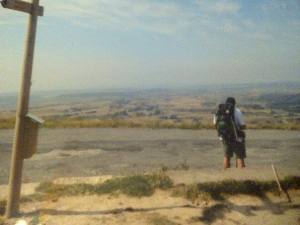



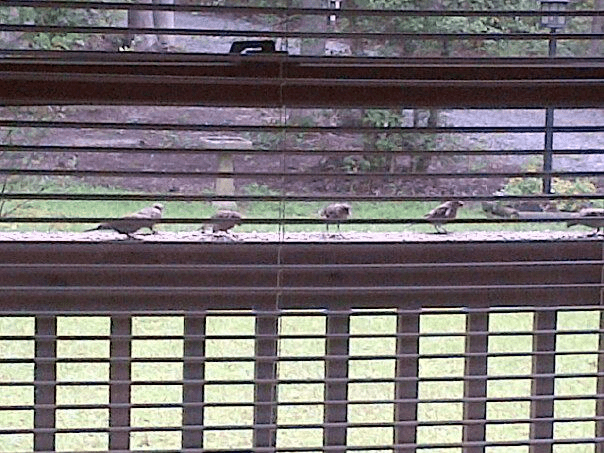

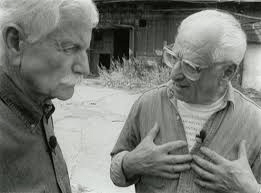

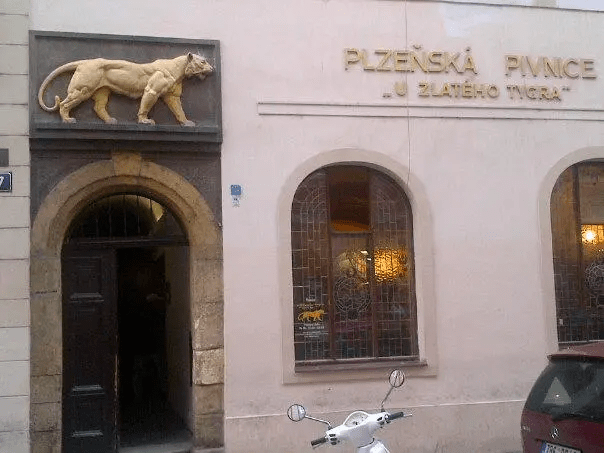

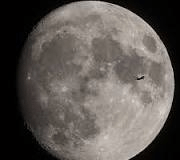
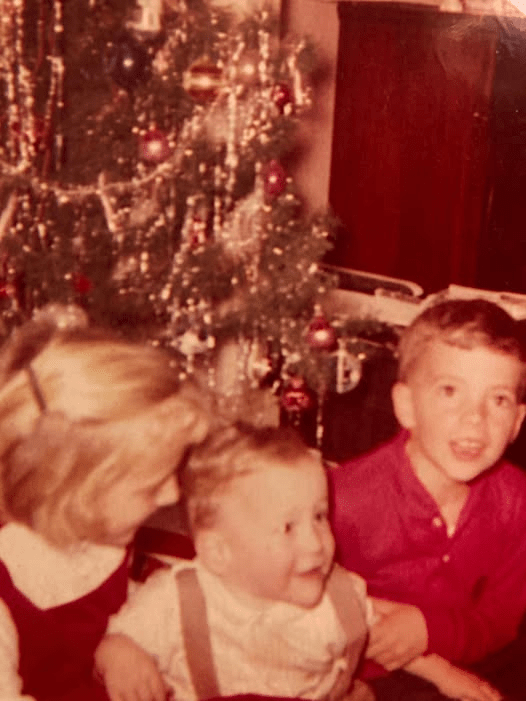
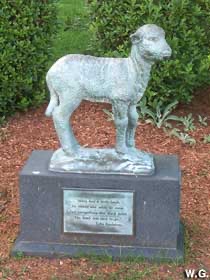




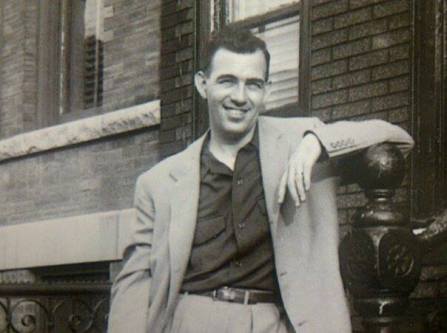


 a view from this wilderness