It’s that time again. When I was born Dwight Eisenhauer was president and Richard Nixon was his vice. The average household income was just over $5000 a year, the average house just about twice that and the average new care just about half.
I appear on the scene just hours after the first fifty-star flag had been revealed noting Hawaii, and a week before the Pulitzer Prize winning Harper Lee book To Kill a Mockingbird is published.
Benin, Niger, Ivory Coast, Ghana, all gain independence, and Aretha Franklin makes her first recording. Cyprus, the Central African Republic, and Chad gain independence. And in August, the Beatles with Pete Best perform for the first time with their new moniker in Hamburg.
Belka and Strelka board Sputnik with forty mice, two rats, and a rabbit and actually make it back to earth alive.
Hurricane Donna rips up the east coast and in my home state of New York, Governor Nelson Rockefeller declares September 19th Grandma Moses Day in honor of her 100th birthday. She was born at the start of the Civil War and died when I was a toddler. Time is deceptively swift.
I’m amazed by the people I shared this space with. First and foremost, birthdays remind us in fine mathematical style that we are alive and are still part of the population which constantly expands like bottle rockets in the deep blue sky. It bends my small mind to think of this reality that I’m certain everyone knows but few contemplate: I shared this planet with every other human who ever breathed the air. Read Carl Sagan’s “Pale Blue Dot” as a brilliant reference.
Just in my lifetime: Mother Theresa. Malcolm X. Neil Armstrong. Jimi Hendrix. Pope Paul the Sixth. Lech Walesa. St. John Paul the Second. Thomas Merton. President General Eisenhower. Elvis. Pablo Picasso. Albert Schweitzer.
Rwandan Tutsis. The Lost Boys of Sudan. Steven Biko. Pol Pot.
I shared time with these people; these saints and sinners brushed my sleeve simply by sharing the earth during my stay. I have a loose connection to miracles and massacres.
This world has some serious issues; always has. It is at best, though, a hotel, and every once in a while I take a look at the register to remind myself who else stayed here. Alexander the Great, Charlemagne, Mohammed, Ivan the Terrible, Ghengas Khan, all guests just over the slope of the horizon, just beyond some small slice of linear time. On the same human trajectory as mine but before is Geronimo, Moses, Jesus, think about the gentle bend of time, the careen of place that separates me from the disciples, the Visigoths, the founding fathers. All here but just before.
Closer to now, when I look inside the lines of my coming and going, I can see the souls who at one time or another shared with me this spinning blue wad. Not short of miraculous, we claim the same particles of stardust, and that’s what keeps me looking around when I walk down some city street; I want to know whoon earth is with me on earth.
Time has ripped past. I was born a month ago. I waded through foreign rivers last month. My son was born last Tuesday. Fleeting. Swift. Impatient. And my thin life falls on the same graph as Richard Wright and Ernest Hemingway.
Carl Jung lectured during my youth, and Ty Cobb watched the same Mets players as me. When I was still cutting new teeth and outgrowing my Keds, I could have headed downtown with my Dad and possibly been on the same train as William Faulkner, ee cummings or Marilyn Monroe. I might have passed them on the street, maybe stood in line at some drug store counter with my mom and behind us because of the blending of circumstance might have been Sylvia Plath or Sam Cooke; Nat King Cole; Otis Redding. We have overlapping lives. On a Venn graph, we share the shaded space.
Judy Garland and I watched the New York Jets in Super Bowl Three. When I was born World War One vets weren’t yet senior citizens and World War Two Vets were in their thirties. Vietnam isn’t history to me; it is my childhood, my early teens. The fall of Saigon was announced over the loud speakers at my high school.
There are empty fields save monuments and markers where soldiers died defending this land against the British, against ourselves, and they stood where I stand and watched the hazy sun rise. Same sun; same beach, same blessed Commonwealth. Don’t mistake history for “back then.” Those people just happened to check out before us. It could have been us. It is us now, watching the orange moon like we do, noticing the calm river, sharing time with loved ones, thinking about others. Getting ready to die since it won’t be long before our lives overlap with the crying call of a newborn Einstein. Did you see that boy running at the park? That girl climbing the tree at her home? Did I just pass by some senator, some Cicero or Socrates, some St Augustine?
Like a couple today buying the same house that young lovers lived in centuries ago, like sour-dough starter. Like a relay race.
My adult son is trying to get a shot of fireworks in front of the moon, but the angle is wrong. When he was just five months old I held him with my hand over his ear, the other ear against my chest, as we watched fireworks out over the Atlantic in Virginia Beach. That was last Friday or so.
What a life. How many times do we reinvent ourselves? How often do we stop in our tracks, get out of the rush and inertia of humanity pushing from behind, and let it all go by, catch the moon over the Chesapeake? Why do we so rarely rest easy in the love of those near and of those still far away when our stay in this world in our time is brief at best.
I love getting older, knowing more people, turning the pages. I miss my mom and dad, I miss Dave and Fr. Dan, and I miss Letty. My parents lived longer than I thought and the others I really didn’t think would check out as soon as they did. Thank Buddha for Ghosts and reincarnation. Just in case I watch the birds on my porch.
Frederick W. Kunzinger: May 23rd, 1925 to October 21st, 2015
Dad had a toll-free number, so for most of my life when I traveled I could call him at his desk for free. I’d be about to enter Mexico through Nogales, Arizona, and I’d find a pay phone and tell him I was going back down for more blankets and some Kahlua. He’d laugh and offer his “Well be careful” in his deep voice, and for some reason I always knew, despite his desk job on Wall Street and in Virginia, his troubled feet which kept him out of the service, I knew he wished he were out there with me. I once called from Massachusetts to tell him I wouldn’t be able to call for a few days because I was going whale watching off of Maine with a friend, and he was truly excited. I wasn’t going whale watching, though; I was flying to Virginia along with his entire extended family to surprise him for his sixtieth birthday. When he came in his house and he saw me among the crowd, he actually looked disappointed that I wasn’t out on some vessel in the Maritime Provinces. That was Dad. Quiet. Proud. And kinder than just about any person I’ve ever known.
Funny how I just assume all dads should be like him. And maybe to each of us in some way our own father is the model. I’m guilty of not emulating him earlier. As much as my memory tells me he worked a lot–leaving the house for the Long Island Railroad at the crack of dawn and returning barely in time for dinner five days a week, and after dinner, coffee, the newspaper, he’d watch television, burned out from another long day on Wall Street, somehow he fit us all in without complaint–ever–as if nothing else mattered but being around family. What an example he set without ever offering one single word of advice. That’s how to Dad.
When my son and I traveled across Siberia by train for a book project which became The Iron Scar: A Father and Son in Siberia, the original writings from the trip, many of which were published while he was still with us, were written in the form of letters from me to him about Michael and me headed through Russia. In those pages I wondered if he was such a good father because he lost his own Dad when I was just five, and perhaps we are never completely fathers or sons when we’re between two living generations. Eventually, the book became a narrative instead of a series of letters, but he is always present in the pages. At the time of the trip and subsequent year or so while working on the book, he was slipping away just as my son was coming of age to head out on his own, so comparison was instinctive, and I could say with complete objectivity that my son turned out to have the same personality–kind, caring, without judgement–as my father. It was somewhere near Irkutsk I understood that my father lives on in the way my siblings and I as well as our kids live our lives.
For a man who worked all the time, though, he was always there: He brought me on my first flight, first class, from Norfolk to LA when I was fifteen. He taught me to drive. He would come by my office after he retired and see if I had time to go to lunch. Mom and us kids were his life; and when family visited our house for holidays or just a Sunday afternoon barbeque, he was in his glory. Nothing mattered to him more than us; that was clear though he never, ever said so. That’s how to do it.
Random thoughts:
I saw him cry twice. The evening of the day my sister told him she was diagnosed with aggressive Stage Four Ovarian Cancer, and the evening of the day she told him she beat it.
The last thing I wrote which he could read, according to my mother, was “Instructions for Walking with an Old Man at the Mall.”
His face always lit up every time my then-toddler son and I would “accidentally” run into him at the stores.
Every Tuesday night we had Scotch. I hated Scotch but I loved Tuesday nights.
Every Super Bowl we sat in his living room and watched while eating wings and shrimp. It is the only time I ever saw him eat chicken wings, on Super Bowl Sunday.
He loved watching baseball and golf. To this day, when I hear golf or baseball on television, I think of Dad and miss him again.
He would go downstairs first on Christmas morning to plug in the tree lights. With a smirk at 5: 30 am he’d quip “I thought I told you no one up before nine!” He would wait until Christmas night when our relatives had left and we were all sitting around to give us each one last gift, books he picked out with each of us in mind.
I never knew my grandfathers. But my son and my father were as much friends as they were anything else. They were together a lot for Michael’s entire life until he was twenty-two, and we’d play golf regularly, especially when my brother came to town, and every month or more the three of us or the four of us would go to lunch at the beach, and sometimes we’d just go to his house while Mom was still working and sit and talk, or go out on the porch and watch the birds out on the river, and when Michael was still a toddler he would take his hand and walk him to the edge of the water to look for wildlife. I could have posted hundreds of photos of the two of them, and perhaps just as many as the two of us since Michael always had a camera with him.
But I see no need. I can hear his voice as clearly as I can hear these keyboard keys, see his face as if he was sitting right here. I’m not in denial about Dad’s passing at ninety-years old, ten years ago this October, but it isn’t unusual still for me to have a conversation with him, or almost pick up the phone to call him about going to lunch. I suppose it will always be that way, and I’m okay with that.
Some days are tough, of course, just as they must have been for him after his dad passed when Dad was just forty-years old. But he never showed it that I recall; he just continued to Dad us, and I am lucky–fortunate, blessed, grateful, honored, humbled–he was my father.
From The Iron Scar: A Father and Son in Siberia:
I guess you have to be a parent to understand what kind of child you were. You need a basis of comparison that goes beyond the parent-child relationships of cousins or friends. It must be later, years later, when you understand what he would have wanted you to ask, what he wished you had shown interest in, how close–or not close–you were. Turns out we were so much closer than I knew, and I could have asked anything, but I never did.
Happy Birthday Dad. I love you.
Canoeing in the Poconos on their honeymoon, 1952 (27 years old)Virginia BeachWith My Siblings and MeWith his first Great Grandson, Kieran With My Son MichaelWith His Brothers Ed and Howardwith my Brother-in-Law Greg and me at The Tides inn on my parents’ 35th AnniversaryWith Michael at a Tides Game in Norfolk, VAThe Normal Choking on My Front Porch With His Brother Howard, 1930’s Behind the House on the Lynnhaven River in Virginia BeachMichael’s Birthday63 years of Marriage His LAST Putt, 22 Feet and it went in At His Parents Home in Point Lookout, Long IslandAugust 23rd, 1952His Passions were Family and Golf, Not Always in that Order With Michael on the Chesapeake BayAn Avid Reader, Especially of Historywith Michael a few months before Dad Died One of our frequent lunch outings On Marion Street, Bushwick, Brooklyn, where Mom grew upFred, Michael Dad and Me at Mahi Mah’s in Virginia BeachDad’s Siblings in 1987With their Grandson Edward With their Granddaughter Barbara and her husband Jean With Michael in Williamsburg 1985 in front of the Bull and Finch Pub, Boston, inspiration for Cheers another of Michael’s Birthdays
I can write volumes about her life which is a true record of life in the twentieth century, or about her ethnicity which rewrote itself in her mid ’80s, or her uncanny ability to make friends with a two by four; I could write about how she’d become friends with the ladies in the bakery or the fish market or the produce section of Farm Fresh. One day I stopped by and Dad was all dressed waiting for Mom. I asked where they were going. “To a wedding,” he said. “Oh? Who’s getting married?” “The daughter of the lady who sells fish at the food store.” Of course.
But before that:
I can recall going to A&S’s with my mom, walking through racks of skirts, pushing aside blouses a few racks away, my face near the metal pole waiting for her to call me out. I made her laugh, but, honestly, everyone could make her laugh; she was light, light as air, and laughed like that too, aware of her deep breath.
I remember her making Irish Soda Bread for Ethnic Food Day in second grade, and she said, “Wouldn’t you rather have German potato salad,” noting to my father how much easier it is to make. “Please Mom?” I pleaded. Of course. Yes, of course. She joked with me not long ago about that day and how if she knew then what she knows now I would have just brought a bowl of spaghetti with marinara sauce.
Mom was always there. I remember in the East Islip Public Library asking the librarian a question and when she answered, I was looking down, and Mom said, “Always look in the eyes of someone talking to you.” I never didn’t again. I remember after that we went to Stanley’s Bakery for black and whites and hard rolls with butter. Non-New Yorker’s need to trust me on that one. To get to Stanley’s Mom would tell guests at our house to “turn right two blocks before you get to the mailbox.” It made sense to her.
We went to the doctor when my lower back hurt shortly after joining the track team at Islip Terrace Junior High. Dr. Wagner said, “I’m afraid he has strained his sacroiliac,” and my mother sat quietly a second and then laughed and said, “Are you making that up? There’s something in him called a sacroiliac?” There is and I did so I dropped off the team and she bought me a tennis racket. She had a subtle way of changing my life that way.
Can anyone truly grasp the lessons we learn from our mom’s who somehow manage to teach us things without doing anything more than practicing unconditional love? That’s it; that’s everything, the secret to parenting. Mom would yell–and she could yell–if I did something stupid, which was not that unusual, and it took me years—years—to understand she was yelling at herself, not at me.
Then life got interesting.
My sister was at St Bonaventure, my brother at Notre Dame, Dad had moved to Virginia to buy the house we would eventually move to, but Mom and I stayed on the Island because it was a recession and it took more than a year to sell the house out in Suffolk County. It was just her and me, driving once a month four hundred miles to Virginia Beach and back. We had fun dinners like pizza and omelets, family over for visits, and I had more freedom than most fourteen year old’s as I’d explore the state park day after day, endlessly. And that winter in the mornings I’d sit in the kitchen before school while she made breakfast, the radio playing a bank commercial. “F. B. L. I. Leaves you more money for living…” and I’d walk to the bus stop with the rising sun. In the evening she’d make spaghetti, or we’d have eggs and fries, or we’d have subs from the deli out on River Road, and once a week I’d get to watch “All in the Family.”
That last day there in the house which I consider to be where I grew up, she had to be at a lawyer’s office to close on the house, so I walked home from school on the last day of ninth grade with my friends Steve and Eddie. My aunt met me in the driveway and we went back to her house where Mom picked me up and we drove the eight hours to Virginia Beach, June 18th, 1975. Life completely changed; everything I had ever known was suddenly an eight hour drive north, and Mom and I adjusted to our new life together.
Time passes.
High School.
Gap Year.
College.
In the Summer of 1983 I decided to move to Tucson, and I packed my small, light blue Monza and she stood at the door early one morning as I backed out of the driveway to head west. She waved once then closed the door. At the time I didn’t know why.
I could add more, of course. Yes, of course. Like how no matter the conversation she could without missing a beat turn one of the lines into a song she remembered from her youth, and she’d sing it. Like the time my siblings and I locked her out on the roof of the house on the Island when she was washing windows, and by the time she was back inside we were all laughing. Or how our German Shepard was so terrified of her that when the dog was in my sister’s room one morning, all my mother did was whisper “Is the dog up here?” and that poor dog didn’t touch a step flying down the stairs and into the safety of the kitchen. Or how when it was time to give my dog Sandy away, a dog which won Mom’s heart, when she dropped him off at the new owner’s house, Sandy jumped up on Mom and put his paws on her shoulders and whined for her not to go, and Mom cried all the way home.
I can clearly recall several years worth of five thirty am talks in her condo kitchen while Dad was still sleeping, and I’d complain about problems at the college and she’d listen so well, and then she’d talk about Dad’s health and small signs she’d notice or which I had noticed the night before, and we’d compare notes. She loved him, honestly she loved that man like a person who should be used as an example of love, for sixty-three years she loved him like that. And no matter how frustrated she got, that always rose to the surface, that love.
Laughter and Love. That was my mom.
She loved light blue.
She loved music.
She always worn a Miraculous Medal.
She had a life I can’t write about properly except to say she took on serious responsibility at a very young age, walked through some serious fires in her life, and always maintained a strength and intelligence and a sense of humor that set an example I can never match. She taught me how to be alive.
But, with apologies to my late beautiful mother, Joan Catherine, she has one blemish, one which scarred me for, well, I’m going to be sixty-five and I still remember it:
In 1974 or 75 I stayed up to watch The Poseidon Adventure on television and with just fifteen minutes left she yelled down for me to go to bed. I said, “Ma! Gene Hackman’s hanging from a pipe!!” “I don’t care it is getting late and you have school!” she called back, and so I went to bed and wouldn’t see Hackman fall into the fiery water for another fifteen years.
Some people think their mom’s are just oh so perfect and easy to love and can tell stories about what amazing women they are and that’s fine, really, that’s fine, and I’ve tried, I really have, and she comes close, but, seriously, the Poseidon Adventure, Hackman, the freaking climax of the movie for God’s sake. Come on. There’s simply no forgiving that.
On June 22, 2002, my sister sat at our parents’ kitchen table and recorded an audio interview she did with them about their lives, about life during the depression and World War 2. She asked other questions, and just like Terri Gross on Fresh Air, did a great job of bouncing off of their responses. She sent copies to my brother and me about five years ago, and when I sat to listen to them, a few things struck me. One, my father was precise in his responses, and my mother was hysterical in hers. He was 77 at the time, and Mom was 69. But what hit me hardest was hearing our father’s voice for the first time in half a decade. I can hear his voice in my mind, of course, but to actually hear his voice like he was sitting there made him young again. The last few years of his life I was around him all the time and his dementia grew worse and worse. So when I played the cd, I heard not just my father, but my father younger, still alert to everything. It was nice to push past the sound of his weak and confused voice that had filled the corners of my mind and hear him as he had been. Ironically, at the same time it makes it hard to listen.
About two years ago while out to lunch I randomly recorded a video of my mother talking about something. I don’t remember what and the video is gone, but the idea took hold, and for the last two years every couple of weeks when we were at lunch or getting coffee, I’d ask her a specific question, or I’d encourage her to remember a particular time in her life. Note that she is one of the funniest and smartest people I’ve ever known, and understand too that she has had quite the life from the streets of Bushwick, Brooklyn, to Long Island, to Virginia Beach, and now in Williamsburg, Va. There are fifty plus videos here, but I recorded more than a hundred and deleted many. Some were redundant, and some in the past year or so I got rid of when Mom would struggle with a memory, or lose track of what she was talking about.
Still, this is decidedly not about Joan Catherine.
It is about time. This has everything to do with the brief flash of time we have to share with each other. Watch how a person can at once both change so much and still be themselves, who they are in their heart. The truth is at some point as we age we realize that we must set aside our anger and anxiety and arguments, and we seem to do so far too late in life. In the past year I’ve lost a half dozen people I loved very much who were my confidants and companions, and every one of them died relatively young, three of them in their early sixties. At the same time, my mother has nose-dived into a wall, fallen and slammed her head on a porcelain tub, fallen on the floor, faced cancer–again–had a pacemaker put in, battled neuropathy, and moved from her spacious condo where she lived with my dad, to an independent living apartment in Virginia Beach, to an assisted living apartment in Williamsburg, and she just keeps going. Last July she was in the hospital with pneumonia and sleeping eighteen hours a day, and the doctor did not think she would leave the hospital. Yesterday we went to lunch at an Italian restaurant and she woofed down a massive piece of tiramisu. She Just. Keeps. On. Going. And always with a sense of humor. She talks here about her move from Brooklyn to Long Island, from there to Virginia, and about how patient she can be. Or not. She sings the Banana Song, Woody Guthrie, a Shampoo commercial, and in one of my favorites when she had no idea I was taping from the cup holder of my car as we drove along, she sings “New York, New York.”
But this isn’t about Joan. This is about brevity. When we look ahead–when we anticipate–time can slow to a tragically slow pace. But when we look back, when we recall, we can transport our mind instantly to another era, as if it happened two seconds ago. This makes it seem like time goes by so fast. But it is the same now as it was when we were children. That’s the thing about time: it is dependable. Not one fat second will lose an ounce on my account. But the older we get, the more we recall instead of plan, so the clock can be deceptive. In these videos, Mom is full of energy, sitting up and laughing, with immediate recall of incidents an hour earlier as well as two generations ago; at the same time, here Mom is wearing oxygen, sometimes softly gasping for air, and her memory is nearly non-existent.
Time. It is the only measurement that matters. And we are endlessly distracted by the news and entertainment and the stress of finances and politics and health. But all of it slides away when we start to list what is essential. Then, the answer is easy: each other. That’s it. People leave us, sometimes slowly and sometimes with the swiftness of a cool, autumn morning that takes us by surprise. But they do, in fact, leave.
These videos are in no order, so one of Mom recently trying to remember her Uncle’s name might be followed by one of her looking stronger, heavier, talking about her favorite foods. I decided against a strict chronological order so that instead of watching a woman’s slow decline as age takes hold, we can see how life is, in the words of my friend poet Toni Wynn, “Paper thin.” I will add more to her page as time permits. Thanks for enjoying our mother’s beautiful sense of humor and simple take on what matters the most.
Note: There are some videos on the “Video” tab, but most of the videos are on the “Shorts” tab. Please check out both. And “follow” The Joanie Channel.
When my brother suggested I watch “Ted Lasso,” I trusted his judgement. He had already nailed it with a few other shows, including “Eureka.” The first time through I enjoyed it immensely, the acting, the writing of course, the timing. It took a few episodes to understand this was not simply a series of set-up/punchline comedy, a method I despise. And it took a few times through the entire three seasons to recognize the primary overall theme at the heart of creator/producer/writer/star Jason Sudeikis’ efforts: This show is all about fathers and sons.
When I struggled with transitioning my book The Iron Scar from the “who gives a shit” stage to the essential-to-be-published “readable and relatable” stage, the answer came while in a writing seminar in Ireland where I had been formulating the final draft of a series of letters from myself to my dad while traveling with my son across Siberia. Writer Elizabeth Rosner, almost as an aside, asked me why the chapters are formulated as letters. “I don’t know,” I told her. “Bad bad answer” she said. I pulled together a response about wanting to have three generations on board, and the reality of my son becoming an adult and moving on in the world the same time my father was approaching his final days. But I still couldn’t answer so I came home from Connemara and chopped my manuscript to small pieces. A few weeks later in a conversation with a friend in Texas, I said, “Tim, I’m losing focus on the theme.” He responded, “I’m not. This is all about fathers and sons. About moving on while trying to hold on. And the metaphor of the train is nothing more than setting.” Between the time my son and I rode the train and the time I wrote the book, my father died. I heard once that the loss of a parent is the greatest loss of security we can face, even at fifty-five years old. Not because we aren’t able to handle the turmoil of life on our own but because that foundation has been rocked.
So I rewrote the entire book as a narrative that takes place on the trans-Siberian railway, with all the characters and unknowns that trip entails, but that’s not what it is about. It’s about relationships, about being between two generations who are about to transition.
Back to Ted.
Sudeikis masterfully weaves every possible father-son relationship into what on the surface is a comedy about an American football coach hired to the helm of a British premier league soccer (football) club.
Right away we have the estranged father as Ted Lasso separates from his wife, and his young son remains with his mother. We also soon learn the powerful impact his own father had on him and the fallout from his father’s suicide when Ted was just sixteen. In England we meet the team, including Jamie Tartt, whose father is physically and verbally abusive, Sam Obisanya, whose father is more of his best friend and mentor, Nathan Shelley, whose Dad is demanding of his son’s talents and seemingly never satisfied, Leslie (male) Higgins who is the proud and dotting father of five boys, Roy Kent, who becomes a surrogate father to his niece, and of course Ted himself, who moves into the father-role to the entire team, the individual players with which he has various degrees of parental conflicts and resolutions.
This is listed as a comedy, but it absolutely fits the bill as a drama as well, placing it in the same vein as shows like MASH which walks that thin line between laughter and tears.
But this isn’t about that. We are in a drama that has become laughable, and the line between what’s funny and what is tragic is a shadow at best.
Both the Mother and Father figures in our lives have served to keep grounded the best efforts of humanity throughout history. We need either to recognize the example or play the part. Almost all aspects of society rely upon those roles to set the strong example with seemingly unconditional love as we push through difficult moments. When hope seems fleeting and one feels “lost in a pathless wood” as Frost proclaims, that Maternal strength or Paternal guidance is almost always enough to help us keep going, knowing that whatever happens we’ll be okay. Even if we lose, we suffer those losses together, and we move on.
There seems to be a lack of parental symbolism in the world, in the nation, in our lives. In fact, more often than not those who should be in those roles these days are appearing more like Jamie Tartt’s abusive and untrustworthy father. It would be perfect if we could always rely upon Sam Obisanya’s Yoda-like dad to turn to, but that’s not the hand we’ve been dealt. In fact, it feels like we’re a player down right now and this time it’s the captain of the team who is absent. That loss of security can be overwhelming.
I do not want to judge. In fact, if we are to do so, I remember Ted’s line, “I hope that either all of us, or none of us, are not judged by our weakest moments, but what we do with it if and when we are given a second chance.” But our foundation has been rocked, and it’s getting harder to find solid ground these days. So we must do what the team does and depend upon each other, pass to each other when we don’t have a clear shot, hold each other up when we’re flailing, and celebrate each other when we work things out.
We will get through this time we are in. We might have to switch our game plan, but we’ve got each other’s backs, and that might be enough.
For the first time in fifty years—1974—I have no reason to go to Virginia Beach other than a Bloody Mary at the Beach Pub or breakfast at Ocean Eddies, and of course to visit my father’s resting place. 1974 was the year my parents purchased a house on the Lynnhaven River, and this year my mother left the Beach for Williamsburg. It’s odd, really, not needing to go to a place I needed to go for five decades. And while I’m the sort that never needs a reason to go somewhere, I’m painfully aware that Virginia Beach has permanently aligned itself with other towns of my past, such as Massapequa Park and Great River. Oakdale and Wellsville.
Forty-five years ago this past September I met two people that would change and influence me for years—Fr. Dan Riley, who would visit me every night late in the infirmary for a few weeks while I had the Russian flu, during which time we bonded and came up with the idea of a radio show—Inscape. And Dave Szymanski, who joined me many mornings every week in the campus radio station as we tried to figure our way through the gives and takes of that freshman year—him pulling news off the wire, me spinning albums, both of us talking, sharing, hoping. Both of them died this year, exactly forty-five years later, and I meet them sometimes in my mind when I need some advice or companionship.
Forty years ago I walked into a hotel room in Worcester, Massachusetts, thinking I was trying out for a part time job as an exercise instructor at some local health club, and walked out that day a member of the management staff of that club, working for Richard Simmons. It was a wild ride for a while, and the fall of ’84 found me moving into a beautiful yellow house near a reservoir, making a ton of money from America’s Favorite Exercise Guru, and having a blast while getting in shape. This year, forty years later, Richard died, reminding us all it doesn’t matter how full of life we are, how much joy we bring others, eventually we too pass all too quickly.
Thirty-five years ago this past summer my car broke down in the parking lot of Tidewater Community College. This was pre-cell phone of course, so I wandered into an office to use a phone to call AAA. While on hold, the dean—Bill DeWeese—said to his assistant—Eleanor Shannon—that he needed someone to teach Humanities on Wednesdays. I hung up and got the job. One week later I stood outside the door of my first class waiting for students and talking to a woman in an office across the hall. She had a heavy French accent and in those first five minutes we laughed more than I had the previous five months. Letty welcomed me to the college, and the next day we went for coffee. Eleanor passed away some years ago, Bill last year, and Letty this past July, nearly thirty-five years to the day after we met.
Thirty years ago this year I made my first of two and a half dozen trips to St. Petersburg Russia. Prior to that initial journey with my colleague and friend Joe Antinarella for a grant with the Commonwealth, it was much more difficult to travel there. But through the years I watched the city move from vacant streets without advertising or western influence, to restaurants and concerts, European clothing lines and shoe stores, American coffeeshops and fast-food joints, and we wandered freely throughout the backstreets of the Window to the West, knowing Peter the Great’s idea of a “New Amsterdam” had finally been fulfilled. And now, thirty years after that first month-long stay, the streets are again vacant of advertising and western influence, and I cannot go back, nor do I plan to go back.
Twenty-five years ago I made my first of many trips to Prague. It was a month-long stay as I taught at Charles University, was befriended by the great Czech writer, Arnost Lustig, and read all the works of one of the more influential writers in my life, Bohumil Hrabal. I also discovered Pilsner and Terezine, the Hunger Wall and 19 Nerudova Tea Room where I wrote an entire manuscript at night over apple strudel and Irish Crème tea in just over three weeks, and some years later published it as Penance. Since then I’ve come to know Prague as well as I know any city, though much there has changed. It seems change tends to happen.
We like round numbers, don’t we? We like even years, silver and golden anniversaries. More people showed up for the fiftieth anniversary of Victory Day in St Petersburg than the forty-ninth. More people observed a moment of silence on September 11th, 2021, than the same day a year earlier or a year later. We count in decades, we measure in leap years. You can buy birthday cards for someone’s 45th or 50th or 60th, but not their 64th, as if there is less reason to celebrate a life until they finish some imaginary five-year plan.
Still, on this fiftieth anniversary, I understand that I have no real reason to return to the Beach anyway, other than see my Dad’s headstone and tell him about the Mets. I remember the city like it was last week, and what a time it was, managing the hotel those summers during college, attending gigs with my oldest friend, musician Jonmark Stone, and lounging on the beach or at Ocean Eddies back when the drinking age was eighteen. I’m not nostalgic—we had our day in the sun; a lot of them, and I’m lucky enough to carry those memories with me. When I talk to Jonmark on the phone we don’t reminisce, we talk about when we can make our next tee time or when I might get out to Indiana. No, looking back is fine, really, as there’s always going to be something there for me, but it’s not nearly as productive as looking ahead. Fr Dan and Letty would agree; Dave maybe not so much but I didn’t love him less because of his instinct to recall our Glory Days at the radio station.
Many of my habits ended this year, some for the better and some absolutely for the worse, but they ended just the same—they aren’t sitting just behind me in some fog. They’re done. No more weekly phone calls or thrice a week walks. No more late-night Bailey’s on Ice at a mountain on New York’s Southern Tier. That’s why I knew as fall slipped away that this New Year’s is going to be an important one; this is not going to be the same old lang syne.
This year I’m traveling again. First stop, the Netherlands. This year two books are slated for release, one about teaching college, Office Hours, and one I started more than forty years ago and which I finally completed, Curious Men, which tied me to the past for four decades, and which ironically enough is about a time in my life I learned to jump first and invent the parachute on the way down.Perhaps I was simply in denial back then, or a little too angry. For certain I was depressed. But if I understand psychology correctly, this is the acceptance part. And just in time, too. It’s nearly New Year’s.
I understand most people live between the two, comfortable in the daily life of here and now, glad for the past, at the same time they have prepared for their future. Their New Year’s Resolutions are practical and fulfilling, and while some are broken, a birthday is an inevitable chance for a reboot.
So this year, borrowing from Fitzgerald’s Jay Gatsby, I have but one resolve. This year, after the loss of three people I spoke to nearly daily, the completion of a manuscript that on a daily basis brought me back to when I was nineteen-years-old, and a nearly complete amputation of a city that shaped my very existence, as my one resolution for 2025 I’ve decided to simply get out of my own way. In the words of John Denver, who has been there for me from the start,
It’s time to make mistakes again
It’s time to change the show
It’s time and time and time again to find another way
It’s time to gather forces and get out of yesterday.
Happy New Year everyone. Thank you for another year of reading my small entries here.
It has been a bad year, a year of great and significant loss, and I realize this evening the only way to approach Christmas this year is with love and much peace.
It is, after everything else departs us and closes the door, all we have left–that peace and such love, leaving us to realize, sometimes too late, it is all we ever had to begin with.
It’s almost Christmas now, and I can see some stars and what must be a planet in the west. Something about a clear sky on Christmas has always mystified me, captivated my attention and imagination, from the simple, fun thoughts of reindeer and sleighs to the philosophical digressive pondering of First Cause and the imaginative world of proof. I love Christmas morning with its tidings and anticipatory pay-off. But even more I love Christmas Eve, alone, when the sky is a narrative, and there remains enough room for us to fit in our own passages as we need to.
In the west the fading light, and I pull my collar up higher and remember so much love.
On Christmas morning before our parents were awake, my siblings and I would gather, usually in my sister’s room, to exchange gifts we had bought for each other, before we headed down for the beginning of Christmas Day. It would inevitably still be dark out, and I know we’d lay awake waiting to hear each other also awake in the other room. A tap on the door. A “come in.” And we’d sit on the floor and open our presents.
At some point, our mother would wake our father and he would exclaim, “I thought I said no one up before nine am!” and he couldn’t hide his smile to our laughter at the ludicrous suggestion we’d be up any later than five. It was always cold out during those Long Island years, and often snowy, but we weren’t going outside so it just added to the magic. Dad would be in his robe and slippers and he’d head to the living room as we gathered on the stairs and waited for him to plug in the multi-colored lights on the tree, and those on the rail, bringing to life the otherwise dark room. Mom had, of course, already organized whatever presents we would get into separate piles, and Dad would stand back and she directed us to the right area under the branches, though sometimes it was obvious if an unwrapped toy appeared, clearly already wished for by one of us. Dad would sit on the couch and watch in joy, even through the stream of “Wow, thank you Mom!” wishes continued.
It wouldn’t be long before the aromas of breakfast mixed with the onions and Bell Seasoning already underway for the stuffing, and eventually we’d need to get dressed, if not for church since we might have attended midnight mass, certainly for the droves of family who would soon fill the rooms. It was a beautiful way to grow up. I do not know the possible stresses, fears, and sacrifices that went on behind the scenes—that’s how good they were at it. Then, much later in the day, after everyone else had left and we had all settled into the routine of looking at our gifts again, Dad would emerge from some closet with his gifts for each of us—books he had personally picked out, bought, and wrapped. It remains one of my favorite memories of all of my memories of my dear father.
It’s in the twenties here tonight along the Chesapeake. This is one of those days each year where I’ve been up so long and have done so much that it feels like it should be six hours later than it is. My sister and brother and nieces and nephew are all off in various parts of the country with their families celebrating their Christmases, all of us with some common traditions, all of us with our individual touches to the holiday. Certainly all of us fortunate enough to be celebrating Christmas at all, laughing and telling stories, enjoying the food, the drinks, the sounds of football or Christmas music. We are, to be sure, at peace today. Anyone with family is engulfed in traditions which bring peace to our soul while providing some shared space not only with each other but with the idea of our ancestry and the hope of our posterity. It is a day like Christmas that helps ease the sense of loss and emptiness some have in their lives on this day when we normally would spend time laughing with others who have left us all too soon. Sometimes it takes a day like Christmas to turn that around and move forward again.
I miss the days before society took “nearby” and “not far away” and tossed them to the strong breezes of technology and One World. In that small house around that small table when I was a child were so many relatives it is crazy to conceive how we pulled it off. But no one cared—we were together. Everyone was close enough to “drive over,” and by the time the turkey came out of the oven, a small crowd was sitting and standing and outside and in, laughing and sharing serious moments, because it was Christmas.
I’m going inside again. I bought Michael a book at a local nautical shop and I need to wrap it. He will be gracious enough to act surprised, just as we did with our father when he would predictably surprise us with books forty and fifty years ago.I won’t be calling as many people this year to tell them Merry Christmas, so those that I can talk to, I will let them know how much they mean to me, how important they are to me in this brief flash of time we share.
I was nineteen, Dave Szymanski eighteen, and Fr. Dan Riley thirty-six years old. I met Dave because I simply met him; I’m not sure where or when but we were both J majors and worked for both the campus newspaper and radio station, WSBU, 88.3 FM. I met Fr. Dan when just weeks into my freshman year I caught the Russian flu and ended up in the infirmary, and he’d come by every evening and sit bedside and we’d talk; instant friends.
Early that fall we started a radio show. Dave and Fr. Dan were hosts and I was the producer and engineer. “Inscape” aired every Saturday morning for an hour, with open discussion about spiritual matters, a deeper conversation with a new guest each week, and a musical artist for interludes. The guests included Fr. Mathias Doyle, college president, Charles Osgood, CBS newsman and St. Bonaventure favorite, author Fr. Roy Gasnick, an expert on St. Francis of Assisi, and Fr. Irenaeus Herscher, campus librarian and archivist, close friend of the late Thomas Merton, and namesake of what would become Mt. Irenaeus (yes, named after the good priest, not the saint himself).
One fall day in 1979, Fr. Dan and I met early for breakfast at Mary’s in Allegany, and we walked in the chilly air for an hour and talked about hopes and fears, about friendships and families, and we continued that conversation consistently until July 23rd, 2024—two days ago, and the day before he died. We talked, we texted, we emailed, snail mailed, shared writing—he sent copies of my book Penance to a dozen friends of his, I sent copies of his book Franciscan Lectio to a dozen friends of mine. I have piles of letters from Dan spanning four decades. We consulted each other. When Dave died a few months ago, his widow asked me to call Fr. Dan. When he answered the phone before I could speak, he said, “Bobby! I’m glad you called! I don’t like you anymore and I don’t want to be friends with you!” and despite his eighty-one-year-old frailty, he laughed the laugh he is known for by tens of thousands of students across five decades. He added, “Brother Kevin is sitting right here, and I want to tell him something. Kevin, it’s Bob. We don’t like him anymore,” and they both laughed. Then I said, “I’m not calling you for a good reason” and he slipped right into Franciscan-priest mode, his voice going deeper and more serious, and I gave him the news of Dave’s death. For some time we remembered those innocent days in the Fall of ’79.
Jimmy Carter was president, the Iranian hostage crisis (kids, watch Argo to understand) was underway, and Inscape—a Merton term for escaping within—was on the air, and one of our early guests was Fr. Irenaeus, the featured music was from James Taylor. The theme music for the radio show which lasted for two years was by Dan’s fellow Rochester native, Chuck Mangione’s “Hills Where the Lord Hides.” Reference: This was forty-five years ago this fall. Dan, Dave, and I with a dozen others were about to go on a retreat to a place called “Vic’s Cabin,” and it would be the first of many retreats in various mountain areas over the next four years while he looked for a permanent location for spiritual retreats for students.
On that show, the three of them talked about retreats as Fr. Irenaeus spoke softly and with such kindness about how his friend Fr. Louis—Thomas Merton—thought retreats were essential to the human soul, and the same of St. Francis. He said he personally believed a true retreat, however, was about community as well, where people can be alone, yet with others, in silent prayer but in living gospel. Fr. Dan smiled wide, his brown mustache stretching to his ears, him nodding, repeating, “Yes, exactly.” After the show we walked Fr. Irenaeus back to the friary. A few days later he was hospitalized for several months and died not long after that. Fr. Dan and I walked back to the dorm we both lived in and sat in his apartment on the fourth floor and talked about the retreat scheduled for early November.
I graduated. I moved about: Arizona, Massachusetts, Pennsylvania, all the while exchanging letters with Fr. Dan, and in early May of 1989 I drove to what had become Mt. Irenaeus near West Clarksville, New York, to spend the weekend talking to him, helping out around the two-hundred or so acres. Construction on the Holy Peace Chapel had begun, but only the frame was standing at that time, and Dan and I worked on a small stone edging of a path to run through the woods to the chapel entrance. It was in the upper sixties and we laughed and talked for hours, noting the beautiful spring day and the budding trees. On Saturday morning I woke to his bellowing laughter and walked into the small hallway of the original house of peace for the mountain. He walked me to the door and pointed—it had snowed six inches overnight.
Everyone left over the course of the next few hours, but I stayed by his insistence to enjoy the weekend and write—I did, and the journal by my side now is called “These Days: The Weekend Alone at Mt. Irenaeus” but I’ve never published it. Still, I noted many of our conversations from the previous day, including Dan’s fear the Mount would become too big to handle; too popular to remain personal.
No one was there and they had not stocked the pantry yet except for cereal, so I spent the next two days eating Captain Crunch and walking through the pines in snow, surrounded by absolute peace, taking advantage of the chance to inscape.
But everyone who knew him, which was everyone who went to St. Bonaventure University since the mid-seventies, has stories about time with Fr. Dan Riley. The first time I met his family, they kept calling him Billy (Fr. Dan’s birth name is William) and I joked “I’m going to start calling you Fr Billy from now on,” and he quipped—with his dark eyes peering across his glasses at me to demonstrate his seriousness, “No. You’re not.”
When my son had a solo show of his abstract art at the Quick Center for the Arts on campus, Fr. Dan let Michael know his old friend, Tony Bannon, former director of the George Eastman Museum of Photography and the oldest photography museum in the world, thought Michael’s work was one of the best and most unique catalogs of photography he had ever seen. Fr. Dan seemed so proud, and so energetic about all people and the moments we shared. Not long ago on the phone he recalled how he enjoyed telling Michael what Tony had said.
But listen, everyone who knew him has stories. It is what raises Fr. Dan up from the status of “friend” to the realm of mentor, truly, without equal, the seeming recurrence of St. Francis of Assisi himself in virtually every way, for Fr. Dan’s influence on students, community, and faculty of the university helped him almost single-handedly, like Francis, rebuild the church in the hearts and souls of us all.
Late one night a couple of years ago he and I sat in the House of Peace drinking Baileys and he nodded toward a poster on the cabinet entering the kitchen. It says, “Ending World Hunger Starts Here: Please Don’t Waste Food.” “I remember when you had those posters made,” he told me, “and when you started the World Hunger Committee on campus your sophomore year.”
“Yes,” I said. “I told one of the Wintermantels—I think Dan—what I wanted it to look like and we made thirty of them. I’m glad one survived to be here at the mountain.”
“Whenever I look at that or think of the outreach programs for the hungry, I think of you,” he told me, and I realized how far I had strayed from those days. It was then I understood why Dan and the mountain remained a place that I needed to return to from time to time to understand who I am at the core.
***
My mother is very ill as I write this, and a few days ago we learned we would be setting her up with Hospice care, and I texted Fr. Dan. He called me and we talked awhile, laughing of course, and he said he would pray for her, naturally. I told him I had a reading up North the end of September and planned to come by the mountain to visit if he would be there.
He said, “Yes, Bobby, I’ll be here. I’ll always be here for you.” When I hung up, I received this text: “I certainly will be remembering your mother in prayer. Probably Kevin is coming by and I’ll ask him to have the community hold her in prayers as well. Your memory of her certainly will bring you comfort even though eventually when someone you love dies there is great pain. Peace, and all good my dearest friend. Dan.”
Yes, memories bring comfort despite the great pain. I wonder often why we lose our innocence to such a damaging degree that we need to go back to find it. At retreats back then–particularly that first one at Vic’s Cabin, we talked about how to carry that peace with us instead of looking for it out in the world. One night not long later I was depressed for what could have been a dozen reasons, and I wandered to Dan’s room where three of four guys were hanging out talking, and I joined them. Eventually, they left, and I told Fr. Dan how much better I felt just sitting and talking, and I wondered why. Dan smiled and said. “Bobby. You brought the peace with you this time.”
Amen.
I imagine now Dan is off in the hills where the Lord hides.
At Mt. Irenaeus the day we worked on the path to the chapel
At Mt Irenaeus House of Peace the night we drank Baileys and remembered
The poster at Mt Irenaeus, originally hung in the campus ministry in 1980.
Note: The following essay was originally titled “Carry That Weight” and published in the collection Borderline Crazy, as well as reproduced in several anthologies. Some years ago I received a call from Richard to whom I had mailed the essay. He loved it, and he bought several hundred copies of Borderline Crazy to give out to everyone at his club in LA, “Slimmons.” Not recorded in this essay is the crazy coincidence of me meeting Richard at St Bonaventure University where I was a senior and ran sound for the college two years before I went to work for him. He came to do a show, and during rehearsals he asked how loud I could get the music. When I said as loud as he wanted, he called me a smartass and walked away. I didn’t think I was, since I really could turn it up; we had equipment used by Springsteen. I cranked the music and the room shook. He gave me a dirty look. When I got to know him well, I recounted the incident and of course he had no recollection. “But I was so arrogant then,” he said. Some lessons we learn too late.
When Richard died today, my oldest friend, Jonmark Stone, gave me the news, and while I was just guessing that he was probably on his way out, it still shocked me. I think because he was so full of life. That always seems the be the case.
For those who know me, the publication here of this essay is absolutely predictable, but I’m happy to say it comes with the imprimatur of Richard himself, may he finally, finally rest in much peace.
Carry That Weight
I managed a health club in Worcester, Massachusetts. Before it opened, we trained at another club in Natick, Massachusetts, thirty minutes away. I went to as many classes as I could, sometimes just to get exercise, and sometimes to lead the session for practice. Once, after the lower body workout, the instructor, Ellen, asked me to do the arm isometrics.
“You want me to work their arms?” I asked, prodding Ellen for an “Oh, never mind.”
“Yes, Bob. Come on.” She looked in the mirror and pulled at the skin under her chin.
“Just do what Richard Simmons would do,” she said and smiled wide. Ellen was in perfect shape, and the break was not to give her a rest but to offer me experience. Ellen swept the hair back behind her ear, not a drop of perspiration on her.
“And what would Richard Simmons do?” I asked, sarcastically.
“Well, okay. But do what you want to keep them going for about eight minutes. Let them rest whenever they want. Smile. Sing. Scream. I don’t care,” she said, and kneeled on the platform behind me, seemingly praying to Our Lady of Vanity.
I swallowed hard and put my arms up in an appropriate crucified position, palms pointed out. I moved them to the beat, slowly gliding about the room trying to get everyone’s arms higher than their hips. Ellen whispered for me to take it easy, but I couldn’t. I moved about and got their arms tottering to Wham and called about the studio for everyone to think of their favorite thing and yell it out:
“Spaghetti! Discount stores! Discount food stores! Malted Milk Shakes and French Fries!”
I laughed and switched to pushing the palms toward the ceiling, walking about to keep them from turning isometrics into jumping jacks.
I needed to keep their minds occupied. “What are you holding?” I screamed.
“A Plate of Spaghetti and French Fries!” “Two Pizzas!”
“Seven Snickers Bars!” called one woman, Betty, and I moved over to her.
A few weeks earlier, the regional supervisor, Niki, had asked me to sign people up at a trailer near the construction site in Webster Square when I wasn’t training or attending classes in Natick. Sure, I thought. More money–I’d be paid per signature. And since the average woman in Worcester wanted to lose weight, this would be easy. Cars pulled up and women came in, signed up. Fourteen dollars down, fourteen a month for the lowest plan. Three hundred sixty five a year for the highest. For that, they got classes from nine till eight, six days a week, exercise bikes, showers, a nursery, and nutritional counseling.
When Betty came to the trailer, she signed for the complete package, and immediately recounted her caloric intake so far that day. I stopped her when she got to the ten Snickers bars. I laughed, thinking she was joking. She got quiet and the silence weighed heavy for a moment. I told her I’d like to see her down to about seven Snickers bars a day by the time the club opened.
She notified her friends and two days later I signed up eighteen people in one hour, setting a record. Oh, some were in fine shape, fine in every way, and probably didn’t need to be there. But winter in Worcester is brutal, and they wanted a fun, indoor setting to work out with friends and meet people. They came with questions: How long will it take to lose 135 pounds? “About two years.” Can I still eat at Papa Gino’s once a week? “Salad, yes, with water, not Diet Pepsi.” Will exercising make my breasts smaller? “Sure.” Or sometimes, “absolutely not,” depending upon who asked. They came with doubts. They came with their defenses high, ready to quit. We built the club and they came. I was quickly designated a manager along with a slender woman named Andrea, and we kept the clients coming. I got my pitch down to a minute before they wrote the check. I hated to leave each day; the money was coming in already and I hadn’t taught a class yet.
And sometimes these new members summoned the nerve to attend classes at the other clubs as well while waiting for the new one to open. Betty found her way to Natick, along with some of her friends, and stood before me, arms stretched out, longingly imagining seven Snickers bars in her palms. We laughed and I slapped her hands as they went up and down, calling for her to keep them going. I heard moans and sighs, grunts and “Oh God” and it was then I knew I’d never see opening day. I had no business being there. I mocked and ridiculed these people in my mind while hypocritically encouraging them. For God’s sake I was only twenty-four and deeply arrogant, mostly from absolute insecurity. I didn’t fit in. I had trouble relating to the women and difficulty justifying a job not remotely close to comfortable for me. At twenty-four I had other plans. I was going to do something with my life. I was going to make a difference, not schlep my time to some small city women wanting to look better.
This all bantered about my brain while Wham slammed against the studio walls. Women toppled fast. And just then, before anyone else could see him, Richard Simmons entered the studio from behind, put his arms out to join into the rhythm, and then, at the top of his red-afro lungs, squealed “Come on! Keep it up!”
Let me back up:
Several years after college I moved to central Massachusetts. I read the papers and the bulletin boards, perusing them for good paying, low effort jobs. I found one advertisement for a job as a sound engineer for a radio station in Winchester, a town toward the New Hampshire border.
Then I saw this:
“Wanted: Exercise Instructors at new health club in Webster Square, Worcester. No experience necessary, will train. $12 an hour per class taught. Tryouts at Quality Inn, Worcester.”
Cool. I was in shape.
About one hundred people showed for fifteen positions. Not many guys were there, maybe six.Most of them were a bit chunky, with waxed hair and wavy voices. They wore leg-warmers outside their neon Adidas suits and hummed dance re-mixes to themselves. One guy weighed about 200 pounds standing five four. He wore tan slacks, a white shirt buttoned past the neck, and brown socks lazy about his sneakers. I peered at the women. They ranged from athletic to asthmatic. Most were in their late teens and early twenties, though a few former Chorus Line looking ladies showed up, late forties, too much make-up, too little sense, sporting matching headbands and leg warmers, car keys on twirly, neon wires about their upper arms. Most of them flocked in front of the one mirror in the room, plucking the skin under their chin trying to shape it.
A woman wearing a red warm-up suit entered carrying a clip board and gave us simple instructions. We were to line up like an exercise class. Then one at a time we had to take turns motivating each other to move; the training would come later. When advanced to the lead, some screamed in faces, micro-managing us into twisted pretzel-like contortions. A few sweet-talked us to bend and fold and tuck and turn, teaching while tugging on their skin. The brown sock guy got up and, during some arm isometrics, yelled for us to “Keep it up! Keep It Up! KEEP IT UP!” and then collapsed, barely breathing, spent. He lay on the floor till all his body parts stopped twitching.
After three days they picked the team: Fourteen girls and me. A few of those chosen were quite rotund, while others had no reading on the fat scale. One small girl, Susan, was transparent. Our instructions were clear: The club would open in seven weeks, during which time we would train seven hours a day, five days a week. We would learn to warm up, work the neck and arms, the waist and thighs. We would know the butt, the abdomen, and the names and purposes of the muscles; how to measure, motivate, choose music, and tender nutritional counseling. We trained in a large hotel room and when not training were told to attend classes at the other clubs. We showed up to the hotel the first Monday at eight to meet the directors. Maureen, or Mo, was the ring leader–the one who got us mobilized during tryouts, and she brought with her some California-type women, carrying mats and hair clips and red sweatshirts.
I almost left. This was not my scene, and I was clearly the focal point from the outset since I was the token male. Clearly, I’d be the one to maintain gender balance, bring in the male population of Worcester. Ferry in the overweight, brown-socked guys.
We gathered and sat cross-legged, ready to embark on the grueling two-month march toward hard-bodies and well-balanced diets. To start though, we briefly met the owner of the club. Turns out this was his sixth club in New England after expanding from L.A.
And in he pranced. Red shorts, stripped tank-top shirt, orange afro and deep tan. He came in calling, “Come on and move those tuschees!” his arms flailing about, his mouth somewhere between a pout and a pucker. With no escape, with no warning I found myself with fourteen female trainees, three female trainers, and Richard Simmons in a sweaty hotel room. I watched him ricochet about in his tight red shorts and tank top.
At the hotel in Massachusetts, we primed from the top down. The neck, bending and rolling it, had to be loose, and the waist and the arms and the legs, thighs, butts, calves, abdomens, again and again, rolling and stretching and challenging them, from the top down until they were limber or taught and firm or loose. For a while I burned, then I ached, then I could not move at all. Finally, I was relaxed and ready, but the club was still a few weeks from completion. They were adding the grey carpet with red stripes, the grey, red and white walls, and the “Richard Simmons Anatomy Asylum” sign. Women waded into the trailer after that sign went up, and membership increased to the thousands.
So at the Natick club, when Richard sprayed into the studio, I prayed it didn’t turn into a rumble. Betty dropped her hands and started to cry. Women wailed. Walls vibrated. Richard slid behind Betty and slapped her hands from behind, calling out, me in front, him behind, and Betty separating us by a good three feet.
“Come on!” he called. “Keep them up!”
“You’re doing great, Betty” I said, with as much gusto as I could gather. She grew pale and distant, her eyes watering.
“Come on Betty! Keep it going!” Richard screamed, and the women flapped their arms again hoping he’d move near them. But he stayed with Betty and me. “Keep it up! Keep It Up! KEEP IT UP!” he kept howling.
“Keep it up, please!” he yelled, and I retreated toward the platform, allowing him the floor. Ellen smiled at me, coming out of her trance.
“You knew that was going to happen, didn’t you?” I whispered to her. Richard sat everyone down and they panted. Some continued to walk about, getting their breath. He sat and crossed his legs, straightening his back and looking at each person, slowly, smiling.
“Do you know why you’re here?” he asked. Some laughed and said “no,” and a few kept panting. “It isn’t to lose weight.” Everyone laughed. Even I laughed, perhaps too loudly.
“You’re here because you want to feel good about yourself again.” He nodded, getting everyone else to nod. Soon the whole room was nodding. Even I nodded. “You want to feel good about yourself again,” he repeated, as if it didn’t make sense the first time. Actually, it didn’t Now, however, people stopped breathing heavily. They stopped walking around. They listened now.
“Just being here shows me that you already are feeling good about yourself. Do you remember how depressed you used to get?!” he asked, laughing at the same time, brilliantly moving their problems immediately to their past. “Do you remember when food was kinder to you than your husbands? When the only thing that calmed you down was eating? Sitting around, watching “General Hospital” and eating?” Everyone clapped, acknowledging the show upon which Richard spent four years early in his career.
“I KNOW girls! I was you!!! I really really really was!” He was. He tipped the scales at weights never revealed but well over the size of anyone in the studio. He grew up in New Orleans, and after overcoming some of his weight problem, he moved to LA where he could not find a single health club for anyone not yet in great shape. It all started then.
“It’s about feeling good, girls! Be proud of who you are and remember you have two choices! Not one! TWO! Say it with me,” and the whole studio chanted with Richard “I’VE GOT TWO CHOICES!”
They grew quiet. “You can let the simplest thing depress you. Or you can let the simplest thing make you laugh, make you say “I am too good to feel bad!”
They cheered and Ellen put on Donna Summer’s “Last Dance” as everyone followed Richard’s cue to start bouncing about the studio.
I left and went to the shower. There was a men’s bath and shower by law, but it might as well have said, “Bob” on the door. I don’t recall having ever seen another male inside.
I sat on the bench in the locker room for awhile, and then showered. When I came out, Richard came into the cramped quarters.
“You had them going beautifully!” he said. “Oh, isn’t it so exciting when they laugh and move around so much! It makes me shake to think about it!” he said, his arms to his chest in a self-hugging hold. His left eye was tearing.
“Yes, very exciting,” I agreed. I sat on the bench staring at the red and grey cinder blocks, counting them.
“Niki tells me you are going to help manage the club!” he said. He hadn’t heard a thing. His grey roots were barely visible past the red strands of live electrical wire flaring from his scalp.
“Yes. Manage, yes.”
“You’ll help them loose weight, sure, but oh how they’re going to love you for making them feel better!” He held my hands. “Do you realize what can happen if they don’t feel better about themselves and don’t lose some of their weight?”
He told me:
Hypertension. Cerebrovascular accidents. Myocardial infarction. Congestive heart failures. Prostate cancer. Colon cancer. Rectum cancer. Gall bladder disease. Gouty arthritis. Osteoarthritis. Sleep apnea. Richard pushed his head forward with each disease, to accentuate the seriousness of it all. “And Pickwickian syndrome.”
Pickwickian syndrome. That can’t be real, I thought. You’re making this up. I’m living in a bad Dicken’s novel, I thought.
But it’s real. Obesity, red face, under-ventilation, and drowsiness. Pickwickian syndrome.
“But we can help them feel good about themselves and then they’ll lose the weight. They’re not heavy simply because they eat too much. They eat too much because they are depressed,” he said. Husbands belittle them; strangers make fun of them. They eat to gain immediate sensory pleasure, which depresses them, which causes them to eat. It is a bloody cycle.
I nodded. “Well,” I said, “I’ll do what I can to change that.”
“Good. I will see you at the opening! Good work today! Keep an eye on Betty!” He took my hands in his. “Really, please keep an eye on her,” he said, and he left, a wave of screams and “Oh Richards” washed into the room as the door gently closed. I stared at the wall and thought of Snickers Bars. I thought of Richard and how he really moved those women. Then I thought of the money, and repeated what had become my mantra: “The money is great and I’m getting in shape…the money is great and I’m getting in shape…the money…”
Money. “You whore,” I thought. Yeah, whatever. I was 24.
On opening day in Worcester, between the classes and autographs with Richard, and pictures and parties, Andrea and I met with women in our cubicles down a short hallway. We left the doors open to the small boxes called our offices.
“I love the smell of new carpet,” she said from her office to mine.
“Uh-huh,” I replied. I picked up papers available at the desk about obesity and depression and had been reading them. “Andrea,” I called across the wall, “check this out.”
“The average American woman weighs 140 and stands 5,4. The average model weighs 115 and stands 5,10. Fashion models are thinner than 98% of American women. 91% of college going women attempt a diet. 22% are always dieting. Between 5-10% of women will have an eating disorder as a result of dieting. That’s between 5-10 million women. Shit. 50,000 of them will die from an eating disorder. 95% of dieters will gain back the weight within one year.”
She walked to the door and leaned against it, listening more closely.
“45% of American women are on a diet at any given time and spend over 50 billion dollars a year on diet-related products.” I looked up. “That’s more than the gross national product for Ethiopia, Somalia, and Mozambique combined! And everyone there is starving to death! Don’t you see the irony? And the money is all being spent on diet related products!”
“Like health clubs,” Andrea said, reminding me of why I was there to begin with: to make some of that money. We walked to the lobby to greet more members.
We met women for sign ups, weigh-ins, and nutritional counseling. Some ate more for breakfast than I would the entire day. Others refused to eat thinking that will be a smart weight-loss program. Some signed just to meet Richard. Some were too embarrassed to come alone. Some hid if they recognized someone else. After teaching one of the advanced classes, I sat recovering in my office, signing up some Pickwickian chick from Auburn, Massachusetts, who left her family at Papa Gino’s pizza place a few doors down and she had to get back before dessert. As she left, Betty walked in, crying.
“Are you hurt? Betty? Are you alright?” I asked. Andrea came in quickly, asking if she should call someone.
Betty looked up. “No, thank you. I’m fine. I just need to talk to Bob.”
Andrea left and closed the door, cutting off the last remaining source of oxygen.
I sat for a moment while Betty amassed herself.
“Bob, I need to quit. I cannot continue,” Betty said. She was serious, staring right at me, confident in her decision.
“What happened, Betty? Was class tough? You hung in alright in Natick. What’s going on?”
“I am fat,” she said. “I will always be fat. Have you looked at those people out there?”
Okay, now, I had this empathy problem. I had no problem sympathizing with these women because that is an intelligently charged reaction. I could think through their problem and understand why they felt bad, depressed, why they felt like quitting. But empathy is an emotionally charged reaction. To empathize is to identify with their situation because I could so easily stand in their shoes. Sympathy is the generalization; that is, it is to understand the big picture and comprehend the difficulties involved. But empathy demands a more specific reaction. It is to target a specific individual, that person’s circumstances, and truly understand.
I really wanted to empathize, but I already knew I didn’t belong.
“I see them Betty, I do. And I somehow can sympathize with you.”
Betty got excited. “But I can never be like them! To be around the thin ones reminds me of what will never be! To be around the fat ones reminds me of who I am, and I don’t like me!” She started to cry again. She opened her purse pulled out a Snickers Bar, looked at my disapproving smile, and put the bar on the desk.
“Bob,” she said, after a long sigh to gather the guts to ask this, “Do you notice how fat I am?”
Wow. How do I answer that one? Yes, and she cries, affirmed of what the world has already grasped; No, and she loses trust in me, who is to counsel her in nutrition, exercise, and motivation. Andrea called out for me to come to her office, and I dismissed myself before I had to answer.
“Would you excuse me for a minute, Betty? Promise you won’t go anywhere, right?”
“I’ll be here. I am not leaving till after everyone else does,” she said.
I moved into Andrea’s office. “Geez, Andrea, she’s suicidal in there.”
“Richard has to go and we are getting our picture taken with him in the nursery,” Andrea said.
When we got to the nursery, Richard was talking to the parents and the kids and other workers. The room was quiet, and he stood perfectly still, rubbing his hands together. Everyone listened while he talked, and he made eye contact with every single person in the room. He touched those close to him. He stared hard at those across the room. When we entered, he waved, but kept on talking. The crowd was enormous. People had come from Worcester to Boston. And they all listened to Richard:
He put his hand on a child’s head, a little girl about eight. “How you feel about yourselves is how they will feel about themselves. How you act is how they will act” He choked up a bit. From this close, however, I noticed something quite revealing: he meant it. Pure empathy. “What you do is what they will do. Love them, but don’t forget to love yourselves. Truly, love yourselves.”
I recalled the fact sheet in my office: More than half of the children in this country only feel good about themselves if they are on a diet. And almost half of first to third graders want to be thinner.
Richard looked across the room and whispered. He whispered because his voice broke when he spoke loud. He whispered so he could get through. His eyes caught those of everyone else’s. “YOU are important! And when YOU believe it, she will believe it!” Then everyone talked and moved about and hugged Richard and each other and hugged the kids. And Richard hugged the kids.
We did the picture thing, fluffy ballooned wallpaper surrounding our heads, Richard between us, smiling, his hair tickling our faces.
“What do you want from working here?” Richard asked Andrea. He held her hands between his.
“To have fun,” she said. “And make money,” she added
I knew it was coming. “To pay my rent,” I returned, smiling.
“Oh but you are going to help people so much!” he said. “Think of all the people you will help!” We moved to a quiet corner, and he asked if we had any questions.
“Richard,” I asked. “How long is it going to take some of these people to lose, say 135 pounds?”
Without hesitation: It doesn’t matter.
“Is it okay to tell them places like Papa Gino’s Pizza are okay to go to?”
For salad, yes, with water, but not Diet Pepsi.
“Will exercising make their breasts smaller?” Andrea took me by the arm and escorted me out of the nursery before I got an answer. We headed for the door and Andrea reminded me Betty was waiting.
“Betty?” Richard asked. “Our Betty?” He stared at my eyes trying to read me, trying to understand me. Completely intense. Completely honest.
I nodded. Our Betty, I thought. I started to feel shallow, and that feeling began to weigh heavy.
“What’s the matter? Is she alright?” He became serious; his hands rubbed each other in a nervous, compulsive manner. I rubbed my face and sighed.
“Richard, she’s doing seven to ten Snicker’s Bars a day, just asked if I notice how fat she is, and wants to quit because the thin people here make her realize she never will be and the…heavy…ones make her feel hopeless. She’s in my office,” I said, finally completely aware of my inability to relate to these people. I could never have the look and intensity Richard had at that moment. I headed back to tell her, yes, she is massive, but it is no big deal, and she should be proud of who she is inside and blah blah blah and yada yada yada, and no there is nothing wrong with that, and we worry too much about the superficial elements instead of the spiritual ones and on and on. Mr. Cliche. Dr. Trite. I turned down the short hallway to my office when Richard caught up, springing up next to me saying he’d like to join me with Betty.
I walked in first and Richard followed, sitting in the chair next to Betty. She screamed and cried. A crowd gathered outside and I closed the door and sat down.
“Betty, this, of course, is Richard Simmons. He asked if he could join us. I hope you don’t mind, but I told him what we were talking about and what you asked, if I thought you looked fat.”
“Oh my God, it is so great to meet you!” she said. They hugged and recounted the Natick club experience for a moment. “Well?” Betty asked, looking at me then to Richard.
Richard sat up, his torso seemingly in perpetual motion. “Can I answer you Betty?” he said, grasping her hands.
“Of course,” she answered. Thank God, I thought.
“Yes, people notice how fat you are. You are, and people will notice.”
“Oh God, I know,” she said, laughing and crying at once at the reality of it all.
“But who cares?” Richard said. “Who cares? Why do you care?”
“I want to be pretty. I want to feel good about myself,” Betty said.
“They are not the same thing, Darling,” he said, shaking his finger at her. Richard picked up the Snickers Bar. “Does this make you feel good, Betty? Or does it make you feel bad?”
“Both,” she said.
“You can’t have it both ways, Betty. Come on. I love you Betty. I know what you are going through. You can not have it both ways. Feel good or feel bad?” Again he held the Snickers Bar, this time unwrapping it some.
“Bad,” Betty said, and Richard put the bar back down.
“Betty. Betty. Betty, Richard kept saying. He hugged her and kept staring into her eyes and hugged her again, holding her hands and then staring into her eyes. I hadn’t eaten since dawn, had taught an advanced workout, and focused on the Snickers Bar.
“Betty, don’t quit. You don’t have to come to the club, but you can’t quit on yourself. God is too great, Betty. You are part of it all. You can’t quit. And quitting is more than just leaving, it is abandoning yourself, inside. Don’t quit. I know it isn’t simple, Betty.”
They sat quietly for a moment, and Richard sat up, wiping some tears from his face.
I decided to give this advice thing a shot. “Betty,” I said, “It is simple. It really is. You going to stop on the way home and pour coke in your car?”
She laughed, “No,” she said.
“No, it won’t run, but we pour that filth in our body and can’t figure out why it won’t run. But we choose to pour it in. We do it to ourselves by choice! Are you going to consciously drive your car into a ditch on route 12 going home?”
Again she laughed. Richard sat nodding, a smile on his tanned face.
“But you’re going to do things that drive your body to its death. Sure you’re depressed, but you are more depressed because you make choices that are wrong. Don’t! Remember what Richard said in Natick–you have two choices!”
He spoke up. “You worry too much about what is superficial. You worry too much about what things look like and what you are looking at in the mirror. A person must seek refuge inside, and then work on the rest. Work on the inside, and then on the outside, okay? You are so beautiful, Betty.”
She nodded, standing with Richard, who took her by the arm and walked down the hallway to “Oh Richards,” and screams and wails. She hugged him. She hugged me. Richard hugged me. Richard hugged her. “Come and let Bob know all the time how you are. Go to classes and just walk around in the back whenever you want. You have a great attitude You will lose the weight someday, but first, weigh yourself inside” he said, touching his heart, tilting his head, tearing up. “Promise you’ll come?”
“I will,” she said, and he embraced her a long time. He turned and waved to everyone, standing on his toes and waving with his arm stretched up and his hand bent down. He blew kisses with both hands and I hedged back into my office and closed the door. “Your choice, Bob,” I said to myself, “I stared at the candy.” Andrea came in, took a bite of the snickers, and leaned against the desk.
“What do you think?” she asked. I shook my head. The club was relatively quiet, everyone moving to the parking lot to wave goodbye to Richard. A class continued in the rear studio, but no one was about the offices.
“This is serious. These people have some serious problems. He can really make these people feel good no matter what they look like. What a difference,” I said. “Shouldn’t we have a shrink on staff?”
“Nah,” Andrea said. “Just a refrigerator.”
“Oh don’t be a smart ass,” I quipped back.
Andrea laughed. “No, we work on the body, not the mind,” she said.I thought of Richard and knew that just wasn’t true. This place had less to do with weight loss than it did therapy. It was all about the mind, all about choices. Andrea handed me the Snickers Bar and left for the lobby. I tossed the candy in the can and walked out and watched Richard’s limo drive off. The women all turned toward the club, toward Andrea and I standing in the window, and I realized the burden we carried.
Afterward: To note Richard’s sincerity. About a month after the incident in this piece, Richard called the club and we talked a bit and then he asked for Betty’s phone number so he could call and check in with her. The woman who went home on Friday before the phone call came in to the club on Monday after the phone call with an entirely new outlook on life. It is safe to say he deeply touched the lives of millions of people, some of which he quite literally saved.
“What do you think happens, Bawb?” Letty asked at coffee one day last year.
“I don’t know, but I know I’ll miss you.” She started to cry.
“Guy said he thinks it’s like closing the door behind me. I like that. I’m just going to close the door behind me.”
“You going to be wearing heels?” We laughed. “Not this time! I think I’ll wear my running shoes and get in one last workout on the way.” Honestly, we made light of everything. “I’ll close the door behind me and keep on running.” We sat quietly a long time. Then we talked about the reality of it all. “I’m sorry I don’t have the strength to walk. The treatments are exhausting.” I said nothing. There was nothing to say. “Oh! Did you figure out our mileage?” For thirty years or more we walked a few times a week about four miles each time, talking, sharing, helping each other through the thirty years or more.
‘Yes I did. We walked six thousand miles. I figured the four miles each time, twice a week, but I only figured thirty weeks a year since we missed some and vacations. And i figured twenty-five years since at the beginning is was more sporadic, but later on it was more miles, so it evens out.’
‘Six thousand miles!”
I didn’t care so much about not walking anymore. The point was to talk and we were doing that anyway.
“What do you want after you shut the door?” I asked.
“You know exactly what I want,” she said. I did, but now that it’s real I had to ask again. “What about you?” she asked.
“I’d like to be cremated and then rolled into joints and have a bunch of writers smoke me while reading all my work that was rejected.”
“You know if I outlived you I would have made that happen.” That made us quiet again. “Let’s go outside and take a picture.
It’s the last one of us.
***
I don’t even know where to start. I was waiting to teach one of my first classes ever at Tidewater Community College in Virginia Beach, and across the hall Letty sat in her office with the door open. We said hi, and after I left class that day we talked all afternoon.
That was 1989 and immediately followed by three plus decades of hour and a half walks three times a week talking about our kids, our hopes and disappointments, the other people in our lives, and endless deep conversations about what we (mostly she) had read that week in The Economist, The Atlantic, Le Monde, The Washington Post, and more. When she was pissed off she’d switch to French, then realize I was staring at her and she’d switch to Spanish. We helped each other through the most significant changes people can face.
Almost thirty-five years of coffee in the morning, afternoons at the Mexican place across from campus, cider at the local pub–way too often–and sharing. I gave her books I thought she’d like; she introduced me to French and Italian writers, we’d walk through the Chrysler Museum in Norfolk and talk about everything except art. We made fun of each other, like the time in the Hermitage Museum in Russia when I told her I’d meet her in the Impressionists so I could see some of Jean Francois Millet’s work. I didn’t pronounce it correctly though and she had no idea who I meant; “Apparently I’m not spitting enough,” I told her. She said, “But you had me all discumboobulated,” and I told her there is no such word in English. We spent our lives making fun of how each other talked, though she won hands down since she could carry on a conversation in a half-dozen languages. I made fun of her heels, she made fun of my flip flops. It was like that.
The week after my son was born she came to my office and sat and we talked for hours about life. We cancelled our classes and talked about kids and grandkids and posterity and ancestry. She told me how every summer when she was a little girl, her father would drive the family to the Mediterranean coast to a town there where they spent a month swimming in the Med. Her father would head back home to work during the week but return on weekends. It was her favorite place. She said maybe someday we could travel there. A few days after my father died, she called me up and asked if we could meet for coffee on the boardwalk. We did, and she talked about Camus, and about Saint-Exupery–one of her absolute favorites. She remembered a day in the mall when we were shopping and ran into my father who was there to walk, and how she would remember forever how thrilled he seemed to see us. She said she missed her dad.
We were each other’s open books, somehow more than friends despite the misconception of that suggestion. She told me once that I knew her better than anyone except Elisabeth and Guy. That night she texted me, “I wasn’t just saying that; I mean it; no one else knows me like you do.” I wrote back, “Really? You mean that’s all you’ve got? I know all of it? How sad you must be.”
We made each other laugh. We were friends in what must be the original intent of the word.
Thirty years of laughing about work, about changes in personal lives. Thirty plus years of lunches and coffee breaks, of drives to the beach. Once, a memorable trip to Russia for eight days where she refused my pleas to lose the high-heel shoes on six mile walks up Nevsky Prospect. “I was born in these and I’ll die in these,” she said.
There’s more, but I am having trouble explaining myself here. It’s like I have no idea how to do this.
Over the last year and a half since the diagnosis, we finished each conversation with “Talk to you in a few days.” On our last conversation recently, she said, “Talk to you in a few days. I love you Bawb.” It was the first time she signed off that way and the last time we talked. But for several years after I left the college, she would go for a walk three or four days a week and use that time to call me. Then when she told me of her prognosis, we spoke every few days; sometimes for ten minutes, often for a few hours. She talked about how Billy was taking such good care of her, she always asked about my mother and how she is doing, we talked about what I was working on. On one call she asked me to read some of my new work to her; she said, “In case it comes out after.” After that last call last month, a few days passed and she didn’t call or answer my texts, then a week, then more, so I knew she had turned that corner.
We saw this coming from the start, though. In October of 2022, she texted me: “I just want to say you are the best friend I ever had and I’ll never be able to tell you how much I care about you.”
An hour later I was out for a walk and thought about her message. She had never expressed herself like that. We specifically didn’t do that on purpose. So I texted back: “What’s wrong?” Part of me expected some laughing emoji and her words saying “Nothing! Just thinking about you!” but a bigger part of me expected a serious response. Unfortunately, I was right. She wrote: “I was rushed to the hospital from the gym; they thought it was a stroke. It wasn’t; they are taking out a brain tumor. I wanted you to hear it from me. I’ll call you when the alien is out of my head.”
The results were heartbreaking.
She called. She said, “I want to tell you something.” I was quiet. “Do you remember that time you walked by my French classroom and I wasn’t there yet, so you went in and said that Madam Stone would be along shortly. You then got to talking, and you taught them some Spanish and told them they were wasting their time taking French, unless they planned to hitchhike across Quebec, but they couldn’t go anywhere without being able to use Spanish. By the time I showed up and walked in, you were all talking in short Spanish sentences.”
I told her I remembered it well. She said she loved that day. She then recalled another time when she was late I brought her entire class across campus to the faculty parking lot and we stood where she normally parked and waited. When she pulled in she was laughing so hard she nearly drove over the curb.
This was how we passed time; three and a half decades of a friend like that is another level of fortunate. She used to say we were Jerry and Elaine, and the comparison completely fits. Not long after her diagnosis and some treatments, we had coffee at the beach and she said she has so many pictures of me but only a few of us and they were from Russia. So we took a picture. I love the shot. I’m just in front of her and she’s leaning against me from behind, looking short that day since she had on running shoes, not high heels. People say how nice the picture is and how affectionate she is in it, but she isn’t being affectionate; I’m holding her up.
But these are personal musings about someone I cared about who left us all too soon. There’s nothing in this writing that could possibly matter to anyone who doesn’t know the two of us, which is the vast majority of readers. I fear this remembrance can too easily be met with an “oh that’s so nice they had such a great relationship” response and not understand that there’s more than that here. It’s about being open, about dying without leaving anything unsaid. We all have lost someone or experienced something that can’t be communicated properly enough to capture the raw and festering emotion, and it frustrates us because we want people to truly get it, but we are shackled by language. The true essence of the love we have for someone we lose is very personal and something we must accept as ours alone and can’t be shared.
I’d give anything to hear her voice one more time, call me, saying, “Oh, hello Bawb” in her heavy accent, but that’s not going to happen. Ever, no matter how much time passes, it simply is part of my past now; memories remain, of course, but the reality of her voice, the way she always held my arm when she said goodbye, the way she smiled. The way after I told people I was leaving campus and my plan was to never return, and their response was one of “of course you will visit,” not knowing me, but Letty’s response was, “It’s about time, Bawb. Take me with you.”
Just over a month ago she told me she was not feeling well. “But I made it to 65!” she added. “Now I need to make it to your birthday! That is my goal!”
“Happy Birthday to me,” I laughed.
“That way you will not forget me!” She was quiet and I could hear her trying to talk normally. “You’re going to write about me, aren’t you?” She wasn’t hoping I would, but predicting I would.
“Yes.”
“Good. I trust you. Will you mention how much I love Billy? And how I wouldn’t have any life at all without Guy and Elisabeth? Oh, and how I’m so glad I lived long enough to see my Sophia, my granddaughter!? And mention the time we went over to Elisabeth’s office at Operation Smile and banged on the window to get her to come to lunch with us! And you have to mention that Jewish Mother reading and the books that night and how your student thought I was your wife, so I said, ‘yes I am’ and sold him five books and for weeks on campus rumors in my French classes kept going, all of them asking if you were going to come by the class again. I liked that.”
“Do you want to write it?”
“Oh sure, this way I can write myself back to life,” she joked, and we were both quiet. “Besides, there’s more to write about.”
“I know. but some things should remain just ours.”
“I’m very glad for that, you know. Etre en paix avec quelqu’un,” she said mostly to herself.
‘Letty, I’m from the United States. Speak Spanish.”
It’s about having a connection with someone. It’s not love, exactly; it’s a sense of peace.
A minute later: “Watch for the birds that come to feed at your porch mon amour et ami. I’ll be among them.”
That image saddened me. “Will you be chirping with an accent so I know which one is you?”
“Yes! I’ll be the Bawbwhite!” We laughed. We laughed, so I knew we should hang up. It was the last time we talked.
Letty reached her goal and died in the overnight hours of my birthday. Her ashes will be spread across the Mediterranean Sea.
with granddaughter Sophia
Laetitia Sciarrino Stone March 18, 1959-July 4, 2024
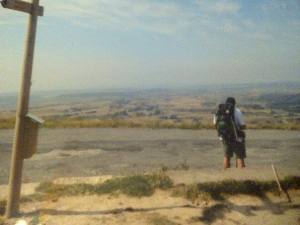


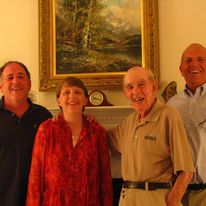


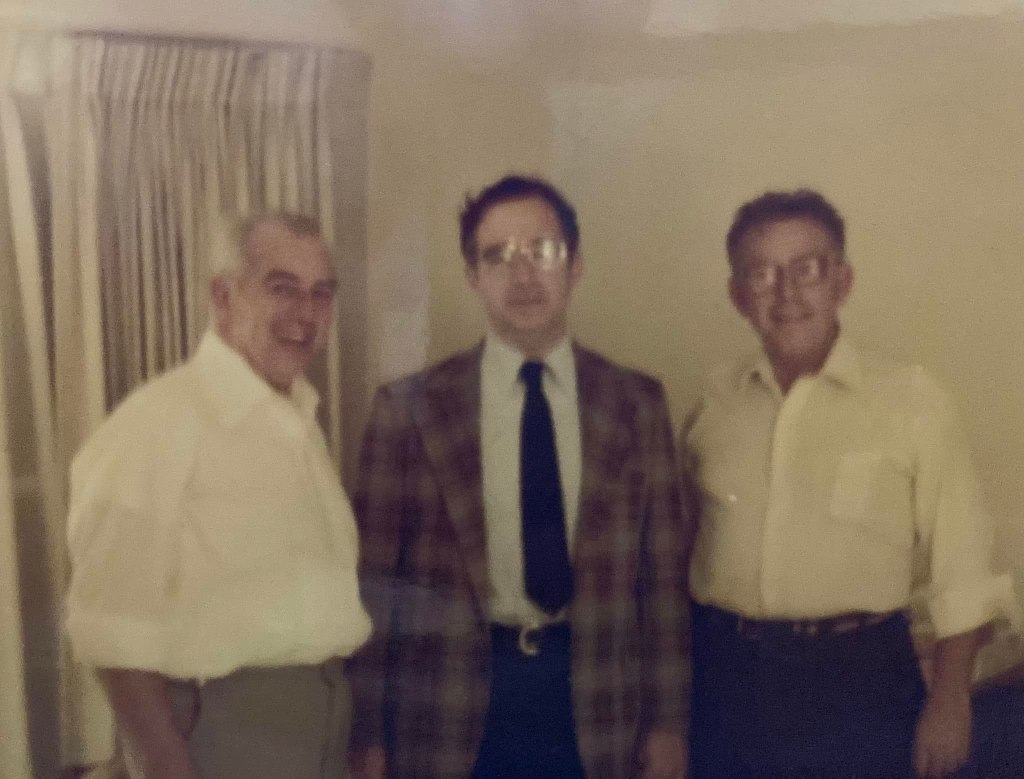


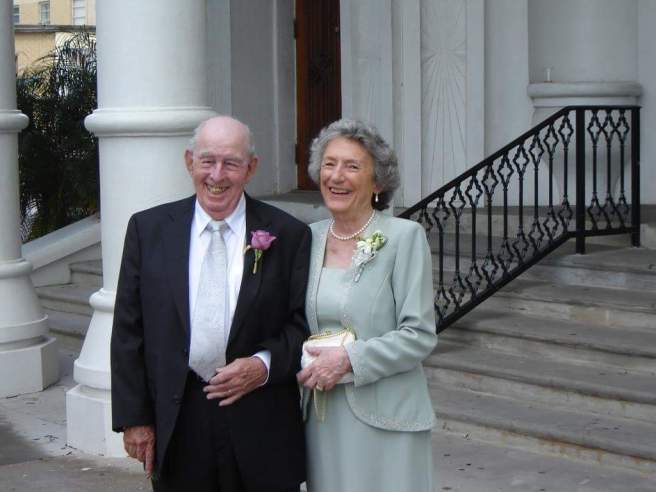


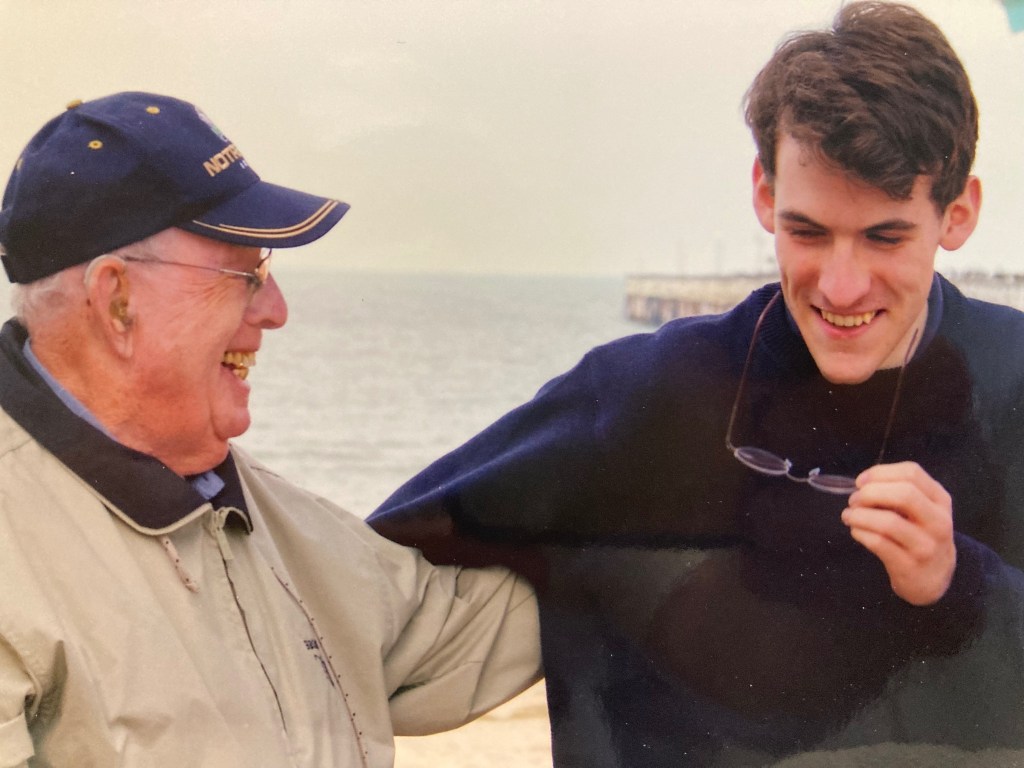
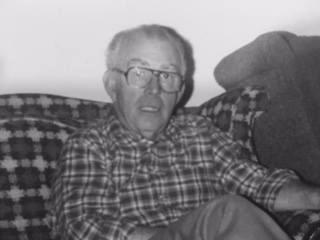
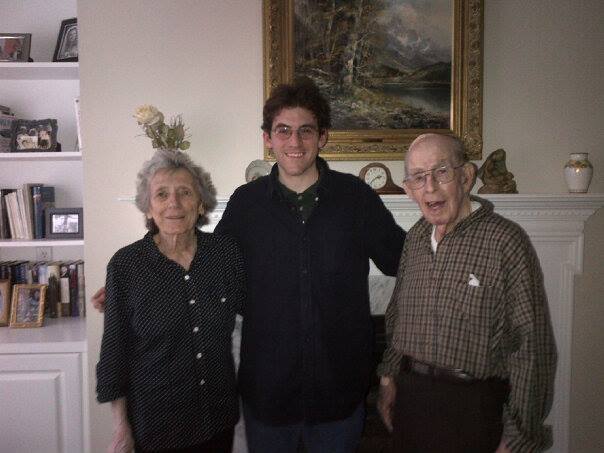
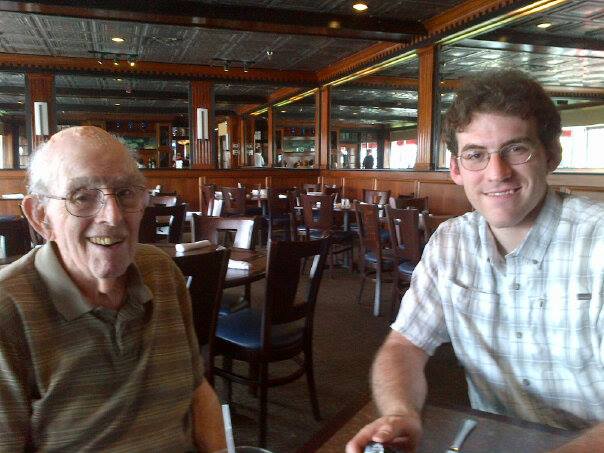


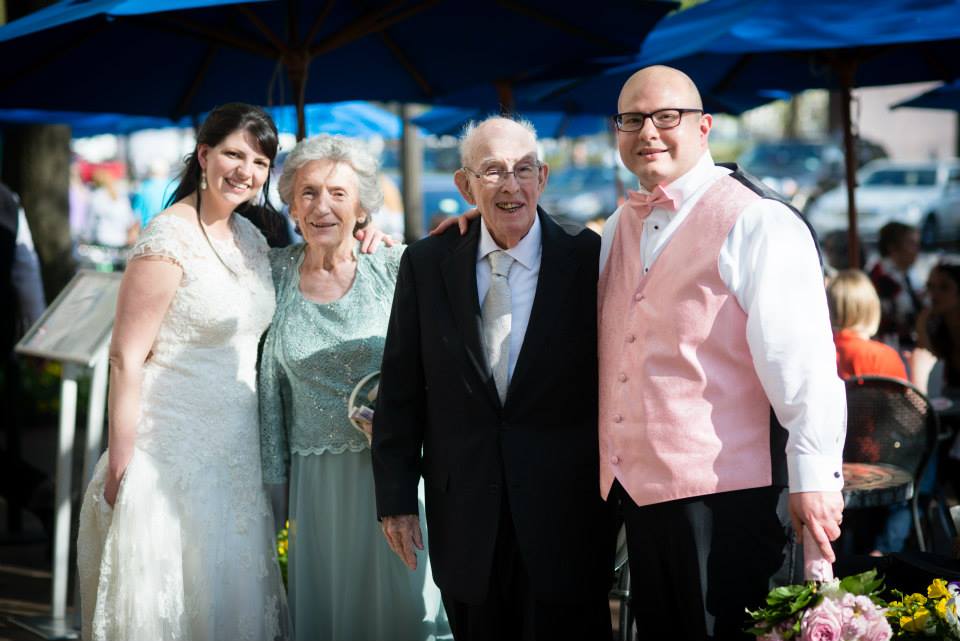


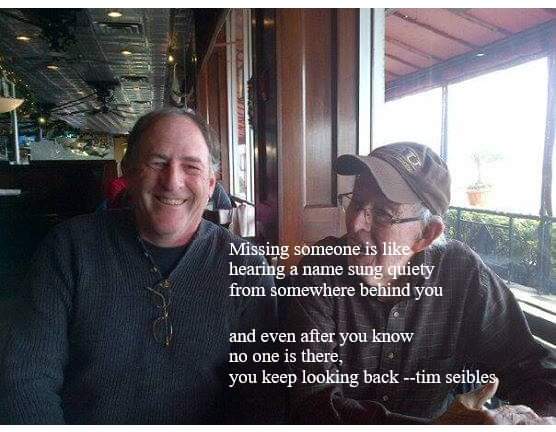
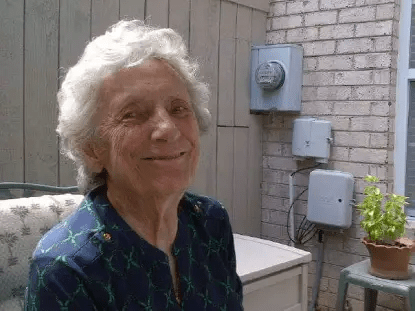











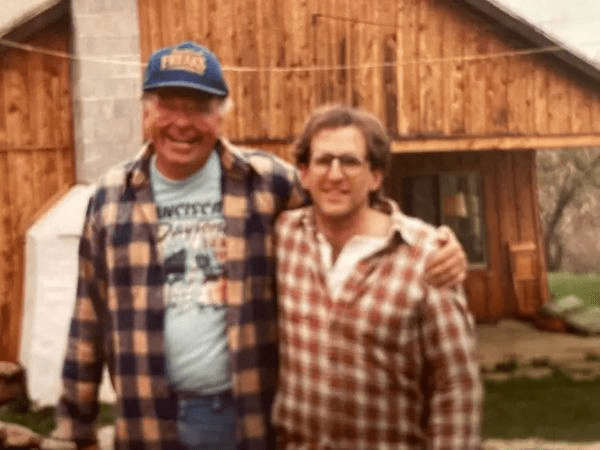


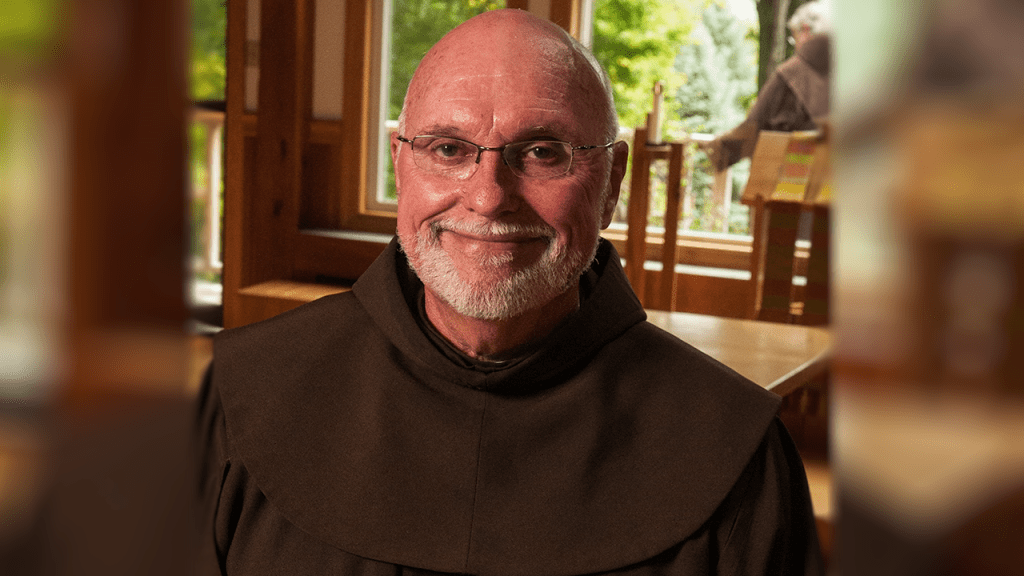





 a view from this wilderness