
Extended Metaphor

I suppose my parents were the original plunger to my pinball life. From the time I was born they slowly pulled back on that spring, maintained that illusion of safety and determination. “We’ll move him to the Island,” they said. “We’ll go out to a quiet village,” they said, “where he can grow up in nature with friends.” I think their hands got sweaty and slipped a bit when they said we’d all move to Virginia, but they recovered just fine.

But then it happened.

Release.

Suddenly I moved about life bouncing from one influence to another, bouncing and tumbling from high scores to near elimination, and all my parents could do was keep their fingers on the flippers so if by chance—and a slight chance it usually was since I mastered the art of bouncing around—I moved anywhere close, they could try and catch me for a moment in metallic suspension, then send me in their chosen direction, or at least back into some middle-ground where I was safe from an early exit.

The thing is, others got their hands on the flippers too. Advisors, sometimes friends, sometimes lovers, holding me out on the end of the bar, deciding which way and how hard to send me on. Too gentle and I’ll tumble right out of the game; too hard and I’ll inevitably come back to haunt. That happened a lot.

The thing is when I was at the height of my ricocheting life, I was in my prime, in my element. I liked not always knowing where I was headed and what might happen. It kept me perilously in the moment, so blatantly aware of the “now” as I kicked off one bad experience and bulleted toward hopefully something better, a tiny cannonball without any ability to steer. Yeah, that was me for a long, beautiful and exciting time.

Then something game-changing occurred: I had a son, and I found myself pulling back on that plunger, looking ahead at the same time wondering if I could help him score the most points by spinning him toward a certain destination of my choosing. I remembered what that was like to not simply be without control, which has its own benefits and limitations, but to be at the mercy of others with their fingers on the flippers. A coach told me I needed more discipline and I could compete at a higher level in tennis, but the parental plunger pulled back a bit more declaring a difference of opinion. I decided not to go to college for a while and I really thought that plunger would let me go in any direction I chose, but no, as a year later I was tucked nicely away in the safety of a university chamber. Truly, my parents weren’t the best in letting this loose cannon follow my own lack of control, but it was to their credit they recognized in me that carelessness. Ironically, life went very well for me because of their foresight, their ability to look ahead, having played the game before. Sure. But it was their game. Not mine. In subsequent years they handled the flippers just fine, often helping me get back on the course I had chosen. So with my son, I wanted so desperately to simply let go and watch that ball of a boy rip out on his own. But I’d been around the block by then, and while I thought I could help by holding the plunger as long as possible, I let go earlier than I wanted, maybe even earlier than he wanted, and he’s found the right bumpers to play off of in his life.

But the point is I’m bored again. Certainly I’m too old to just richochet about hoping to bump into something good, but I’m too young to leave the game. So I looked at some maps and noticed places I want to go and haven’t yet been, and I can’t remember the last time I put myself out there, risked embarrassment in hopes of chance. If I remember correctly, I always got five balls when playing pinball, and when I got to that last one I needed to savor it, and the tendency was to try and manipulate and control those flippers as much as possible, create some illusion I can make this last longer than possible.

But it is in that way that we lose those very years; we slow down, play it safe, find comfort in the flipper that holds us a moment before deciding which way to propel the time that remains.

You know what would be really interesting? Pull the plunger all the way back, and even beyond back, then let it rip. Yes. Maybe go to the Islands, bounce about the South Pacific, perhaps walk the Pacific Coast, maybe train through India or take a river cruise on the Danube. Whatever. But that’s my new plan: I’ll let my imagination control the flippers and see what happens.

Maybe I’ll just go back to Spain

Wait. Loss.

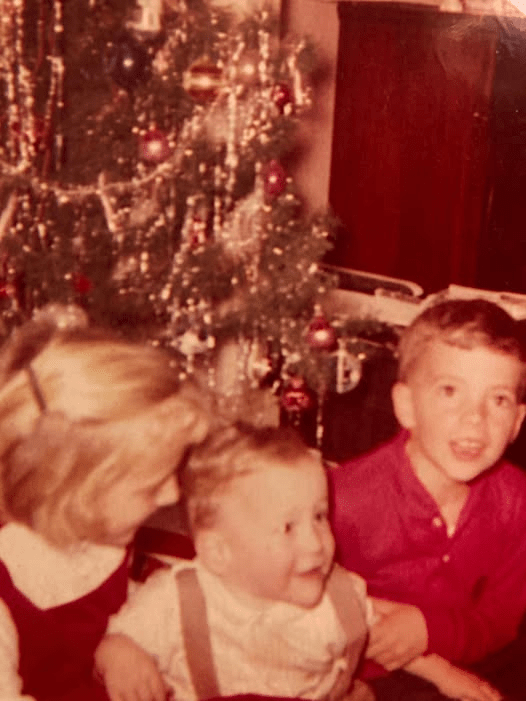
In my youth Dad always walked down the small staircase on Christmas morning to plug in the lights while my siblings and I waited. Mom would have stacked our gifts in separate piles under the tree, and after the three of us exchanged our own gifts earlier that morning in my sister’s room, we’d gather on the steps and wait. When the tree lights lit, Dad would call out “Okay, you can come down now,” and we would, each of us steered toward our own third of the presents.

Mom was our Santa back then, waiting in lines for the right gifts, hoping she doesn’t ever again buy my sister the wrong album, trying to get it right, not knowing of course that she couldn’t possibly get it wrong. She’d be in the kitchen as soon as the presents were open so she could make the stuffing and prepare the pies for the relatives coming that day. And then later, after everyone had gone home and the five of us were again alone, Dad would emerge from his closet with books for each of us. This was special as it was common knowledge that Mom did all the shopping, but in the case of the books, Dad shopped himself, wrapped them himself, always picking out the perfect one for each of us, and would “surprise” us with them that night. It is a tradition I continue with my own son. Those days of “Dad’s Books” happened it seems just months ago, and the times that Mom worried she used too much spice in the dressing seems to have occurred weeks ago, but it could not have been. They both made it seem as if we had hundreds of holidays together with just the five of us, but it wasn’t even two dozen. That’s what time does when you’re complaining about the cold or the crowds or the difficulty finding just the right thing to give someone–it passes. Fast.

October 2015

I remember sitting in the uncomfortable recliner next to the hospital window and thinking, If I’m here a few more days, I might take down the clock; laminate the list of television stations he will never watch; ask to fill in the information on the empty whiteboard I’ve stared at for four days, note the nurse’s name, cross off the faces from frowny to happy to indicate his pain tolerance. If he had more time, I might move his bed closer to the window.” Three times I moved his food trays, trice-daily reminders he hadn’t regained consciousness, into the bathroom. I can still smell the aroma of onion soup he never knew existed.

Most certainly I would move the two boxes of blue latex gloves from the wall inside the door to the wall outside the door. Nothing says “If I touch you, I might die” like blue latex gloves. I would silence the incessant beeping from the health monitor above his head.

I didn’t mind the wait. As sure as I knew his blood pressure, blood oxygen level, and pulse, I will miss the wait, the slim possibility, the sliver of “just maybe.”

The text from my brother read, “He’s gone. Come back over.”

I dismissed class just after 8:30 and left for the hospice center a few miles from the college. I forgot to tell the students it would be a few weeks before I returned. I drove to see my suddenly late father.

We took turns saying goodbye again, this time after the fact. He looked gone—as if he’d been dismissed, like he transferred or simply dropped out. I held his bare arm below the sleeve of the green golf shirt they provided. I wondered if all the patients had the same shirt. The entire building had a sense of oneness, of warm togetherness, like all the nurses should have the same name, and all the patients looked like my dad.

I kissed his withdrawn face. I thought he might feel cold, but his arm felt warm as if from the sun during all those days at the field coaching my brother in Little League, and from sitting all day in the baseball stadium bleachers, buying me hotdogs, letting me keep score as he showed me how to fill in the small boxes.

When I took his folded hand in mine, it felt stiff, but not from some medical transition; no, more like his muscular grip back when he took my infant son in his arms and laughed, his eyes wider than space, his laugh deeper than love, just moving his grandson up and down as they laughed and my son reached for his nose, for his glasses. I reached for those glasses now, unused on the nightstand, and held them.

A week earlier I stopped at the hospital to check on him, expecting another day of quietness after a week of unconsciousness. But I walked in to see his eyes wide open, staring at the ceiling, then at me.

“Well hello,” he said in his baritone voice.

“Hey Dad, how are you?”

“I’ve been here since 4:30 this morning.”

“You’ve been here for four days.”

“Four days! What hotel am I at? Ha! Hotel! I wish I was at a hotel! What hospital?”

He could have been thirty years younger. After a long, slow year-long erosion from dementia, I had not heard Dad so lucid in several seasons.

“You’re near home, Dad. You’re at the hospital right near home.”

“It is serious, then?  Tell me.”

“You have pneumonia, Dad.”

“So I probably don’t have much longer, do I?”

And that nurse came in and Dad checked out, turned his head and closed his eyes one last time just days before he died. That night I rode in the transport ambulance to take him to hospice.

If I had more time I might tell him about my failures, my shortcomings. But there is never enough time.

April 2025

We were in a cheese factory shop in Volendam with baskets of cheese wheels to bring home. I held a bag of four wheels and thought about who I can give them to after I separate them. “I’ll give one to Mom,” I said.

Stateside, I stopped at my sister’s home in Pennsylvania when Mom’s nurse called to say she had fallen while rising from her chair at bingo, and she hit her ribs on the chair, bruising the bones around her already-weak lungs. Her nurse, Max, held the phone so Mom could talk. “I’m so confused,” Mom said to my sister and me, and I said I’d be home the next day. A while later another nurse called. “Your mother is transitioning.” She’s becoming a man? I momentarily wondered, not trying to be funny; I truly had never heard anyone reference the stage between being not at all dead and about to die as a “transition,” but I suppose it is as good a euphemism as any. Certainly, “Your Mom is dying,” appears a bit colder, but I still think I’d have preferred such directness over the “I’m so afraid to say what is happening that I’m going to wrap it in obtuse verbs.”

The next night I leaned over her sleeping body and she opened her eyes and they welled up, and I said “I love you, Mom” and she fell quickly back to sleep. Later that night my brother texted. Mom was gone. That was either eight months or eight years ago.

I miss the waiting, especially this time of year when I’d be waiting to give her some gifts—probably flowers and a gift certificate to take her to a nice lunch. She reached the age where those gifts of time spent together were the most valuable.

I miss making videos of Mom, and how for every one video I recorded I deleted four or five because they were too ridiculous to publish. I miss those outtakes now.

I miss seeing Mom in the foyer of her home waiting for me to drive up the circle to pick her up, a wide smile followed by an “Oh, it is so good to get out for a bit! You know?” I knew. She didn’t care if we just drove around. I’d park the car at the market and she’d wait for me as I ran in to get her bananas, fudge stripes, and flowers.

That last time I saw my dad before he entered the hospital he had sank a twenty-two foot putt on the practice green and looked at me with such a proud and excited reaction it’s as if my entire life collapsed into that moment—the golf when my brother and I were young on the Island, that time Dad and I went to see Jaws when it first came out, or when he and I went to Disneyland in California; our lunches every week after he retired but before Mom had. Strangely, I think I felt the loss of my father before he even died because of his ebbing mind and misunderstood timeframe. Loss comes unexpectedly and often out of joint.

The last time I saw my Mom I told her I’d be in Amsterdam and we were going to Keukenhof to see the acres and acres of flowers, and would she like me to bring her some tulips. She stared at me a long time, and I waited, and more time passed, with my phone video playing, and still I waited wondering if I had lost mom right then, until finally she smiled and recited a poem from her youth.

It was worth the wait.

Merry Christmas Mom. I’ll put on some Christmas music for you—some of your beloved Andy Williams. And Merry Christmas to you too Dad. I’ll plug in the lights Christmas morning and later that night I’ll give Michael a book, and I’ll be thinking of you.

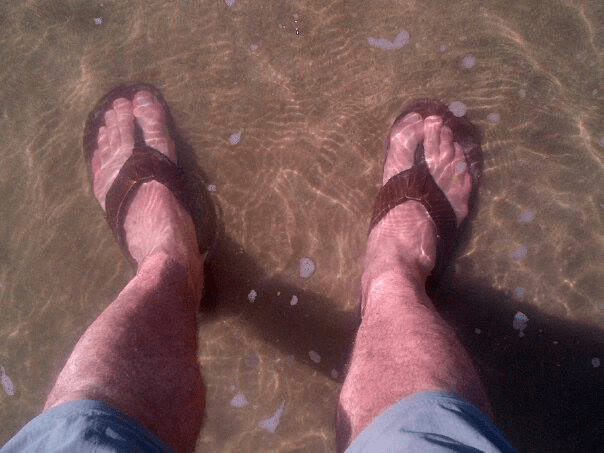
Flip Flops

This work was originally published in “Barely South Review” about twelve years ago. It has since been anthologized and often pops up around 911.

“Death plucks my ear and says, ‘Live. I am coming. Live now.'”

–Virgil

I went to the local hardware in Hartfield and bought a sickle—a huge rake-like piece of
steel only instead of a rake at the end there is a double-edged sharp, wavy blade made to rip
through branches, thick weeds and other bone-like growth. Eighteen dollars.

The front of my property is wooded, and on a few acres toward the river, I spent some
time clearing out brush and unwanted vines. I piled it up to haul away, but before that could
happen, other more tenacious weeds—small trees really—took over the area. Some I pulled out,
some I mowed, but I couldn’t grasp to tug out the tougher ones—so the sickle. One warm
morning while alone I put on shorts and flip flops, grabbed the sickle and walked the six hundred
of so feet through the woods to swing away at a small grove. None would rip out easily, so I
aimed for the fences, came down from my right with major-league force and tore through the
vines like an axe through balsa. I attacked one after another, muscles taught so that sweat came
fast, and I made progress. Then I stepped to swing at what looked like a thick, knotty growth at
the bottom of the stump. It was a Virginia creeper vine. Sometimes these monsters look rooted
but aren’t. But what do I know; I’m from New York. So I swung at it like A-Rod. The blade
passed through as if the weed were nothing more than a figment of my imagination, and with all
my energy plus a good deal of inertia, the metal blade ripped into my left ankle.

I like flip-flops. I grew up on the beaches from Long Island to Virginia, so I’ve been
wearing them since I’m a kid. I actually had one pair for ten years, sometimes rigged with a thick
paperclip to hold them together. My feet from April to October have a thick white stripe across
the tops seen only when my flip flops are off. I teach in them. I walk in them. I even mow the
lawn and chop wood in them. Despite what many have said, they are not the cause of the blade
Tarantino-ing my ankle. I don’t remember my foot slipping. I do remember almost not going out
to cut the underbrush to begin with because I couldn’t find my flip flops. What a different story
this would have been had I not come across them on the back porch.

When it happened, blood exploded like water in a hose that’s been held back by bending
and then released. My ankle, foot and flops looked as if dipped in bright red paint. I hobbled the
six hundred feet to the back of the house to wash off the wound, bandaged it, then went back out
to cut more wood; I was wired from adrenaline, my ankle didn’t hurt too badly, and to be honest
I had a lot to do.

That night I iced it. I kept it clean. I was fine. Really.

A week later my leg was pitting a bit when I pushed my thumb into my shin. Excess fluid
I figured. Prior to the whacking, I had been running up to eight miles a day, prepping for the
Rock and Roll Half, so one evening when I was feeling a bit more hyper than usual, and the
swelling moved to both legs—a feat I could not comprehend from injuring one ankle, but I don’t
have a medical degree—I stopped at Kroger and spotted a blood pressure machine. This can’t be
right, I thought, when the first reading came up 270 over 190. I did it two more times and both
readings came pretty close to the same. At the checkout I let them know the machine was
broken. We all laughed at my numbers—even the bagger laughed and put the laundry detergent
on top of the bread. It was that funny.

The next day, worried about my ankle, I washed off my flip flops and went to the doctor.
He took my blood pressure. Again. Again. He asked why I was stupid enough to wear flip flops
while doing yard work. I pointed out I wacked myself above where any shoe would have come
anyway. He asked if I were doing cocaine, heroin, or any other substance, asked if I had
shortness of breath, dizziness, if I had thrown up, fell down, or otherwise felt corpselike. He took
my blood pressure again. He asked how long I felt hyper. “Years,” I said, and he took my
pressure again. Then he sent me to the emergency room. Average BP—260 over 175.
Tests. IVs. Tests. On and on it went for several hours. Nurses came, two doctors stopped
by, some punk there to visit a friend who had overdosed came by to check out my vitals because
my blood pressure was the talk of the ward. The nurses upped the meds. Finally the doctors said
based upon my blood vessels behind my eyes and various tests, my blood pressure had
apparently been that high for probably some years, and that if it wasn’t for the fact I’m totally
healthy otherwise with excellent results from blood and other tests, I’d have had a major stroke.

I asked the cause. The doctor shrugged. Genetics; in a high stress situation for far too
long; a combination, he said. They brought it down to 190 over 95 and sent me home with meds
to bring it back to normal. They told me to keep exercising and that because of my medicines I
could do the marathon, but to be clear, I’m going to be very weak for awhile until I adjust to a
life where I’m not pumped on triple doses of double shots coursing through my veins.

A few weeks later at a follow up where my pressure was at 110 over 70 the doctor told
me in complete agreement with the cardiologist and another doctor, had I not gone in, I’d have
most likely had a major stroke trying to run the half, and probably would be dead. I asked why I
didn’t have one while doing the eight miles a day prior to the Great Sickle Incident, and he was
quite professional about it: I don’t know, he said. I really don’t know. You should have. Good
thing you wacked your ankle, he said.

Yeah, thank God I wacked my ankle. And I thought how often that happens. Good thing I went back for the keys. Good thing I stopped for coffee. Good thing you kept me on the phone, or I’d have been at that intersection just at that moment.

“Good thing I watched Monday Night football on the 10th and overslept: I work on the
85th floor and I’d have been right there,” the stock broker said in the street to the television crew.
As the towers tumbled, he counted his blessings.

Good thing Larry Silverstein, owner of the lease of the World Trade Centers, has a wife
who made him go to his dermatologist appointment that morning instead of yet another meeting
in the North Tower.

Good thing Chef Michael Lomanoco of “Windows on the World” broke his glasses and
had to stop at Lenscrafters that morning to get them fixed.

Good thing Lara Clarke stopped to talk to her friend, actress Gwyneth Paltrow, in a
chance meeting down in the village that morning making her late for her job on the 77th floor.

Thank God singer Patti Austin, booked on flight 93, had to leave Boston a day early
because her mother had a stroke and she had to get back to San Francisco on the 10th instead. “I
went back and forth all day about when to leave,” she said.Thank God actress Julie Stoffer and her boyfriend had a wailing fight that morning and
she missed Flight 11.

Actor Mark Wahlburg is still haunted by that same Flight 11 to LA, which he missed at
the last minute when an 11th hour invitation to a film festival sent him to Toronto instead. He has
nightmares thinking about who took his place on the flight. He would have been sitting next to
Family Guy creator Seth McFarland who also missed that flight when his manager gave him the
wrong boarding time and he was fifteen minutes late. He, too, still has bad dreams, he says. But
thank God, he says.

It’s chance. It’s the phone call, the caught light, the traffic backup. It’s changing your mind. It’s
sticking to the plan. It’s oversleeping, insomnia, an upset stomach. It’s a few seconds. It’s the
wrong shoes. It’s the stroke of luck.

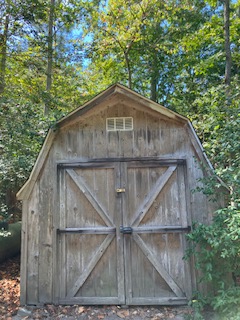
The Shed

The Shed was twenty-feet deep by eight feet wide, with two windows, two lofts, double doors, and sturdy enough to withstand everything except Hurricane Isabel.

Of course, I bought the shed to hold supplies when I was building the house. Before I started, when I had first cleared the small portion of the property for the home, I had this shed delivered figuring I might need to sleep in during bad weather while up here for three of four days in a row seventy-five miles from the place in Virginia Beach. Michael and I went together to the shed place in Virginia Beach. Some guy paid for it but never picked it up so I bought it brand new for a song and the father and son team I bought it from delivered it seventy-five miles, across the Hampton Roads Bridge Tunnel, across the still-narrow Coleman Bridge, the Piankatank bridge, and down my winding driveway through the woods—for twenty-five dollars. I also bought them lunch.

It didn’t take long, as it tends not to take, to have stories to tell from the shed.

Back in ’99 we had fifteen inches of rain in two days and the water ran from the river side of the property down to the woods beyond the shed. I had the shed leveled off the ground by about eight inches on blocks, so the water rushed toward the door but instead dug crevices under the shed. The shed, miraculously was dry, but impossible to get to.

Isabel didn’t do a thing to the shed, but she knocked down thirty oak trees here at Aerie, and one of them lingered for weeks right above the shed. I knew it had to come down but this was a job I couldn’t pull off myself. Scavengers wanted more than fifteen thousand dollars to clear the fallen trees, so I said I’d do them myself, which I did, but I was afraid to cut the half-fallen tree in fear it would crush the shed. Instead, another storm just a few months later cracked the trunk and it crushed the back half of the shed for me. I remembering thinking, “Hell, I could have done that.”

So in the lemonade tradition, I made the back half into a greenhouse with plastic sheets for the roof, but it didn’t really work, and over time the mold and mildew and various snakes and wood rot got the best of The Shed. It took about twenty-seven years.

One time early when Michael was about five, we played hide and seek as we often did, and I ran in the shed while he was still too far away to follow me right in, but he could see me. I then climbed out the back window and settled behind the back wall. I heard him come in the shed and was quiet for a minute then said, to no one in particular, “Holy Cow, How did he do that? Daddy?”

I remember how we laughed.

We built things with wood and made signs and birdhouses. None of them were well done but they were all perfect. Occasionally we’d take a break and play “Voices.” That is, we’d recreate “Wind in the Willows,” and I was the voice of most of the characters—Badger, Toad, Moley, even the stoats.

And we kept the sporting equipment in there and played frisbee, football, golf, and ring toss, which we still do nearly thirty years later when outside barbequing.

The bikes he kept in the shed got bigger, and the toys were relegated to the loft while more accessible spaces were reserved for tools, chemistry sets, then inflatable kayaks and eventually equipment to hold his art supplies and frames.

When he was little, he would tie me up in a chair with a lasso his uncle sent him from Texas, and he kept lizards and frogs in tanks until he couldn’t feed them anymore and would let them go behind the shed, in the woods.

He kept buckets of fake snakes and lizards in there when he was young, and when the roof collapsed and water raged in, it carried the rubber reptiles out the door and under the shed. The next day I spent an hour reaching under the shed and pulling out the toys, until one reach pulled out amongst the fake snakes a real one with red and yellow and black, and I forgot the rhyme about poisonous snakes so I just threw everything as far as I could.

There were other days like that.

But there’s a hole out there tonight. And Michael is in Ireland, far from the fallen shed. It had to come down. I had to do it now or we’d be still out in the still standing shed telling stories.

I destroyed the last of it a few hours ago, and I rested on the nearby patio remembering the times we shared for his entire life, and the talks we had—so many talks we had safe in the shed, just the two of us, about growing up and traveling and things that frustrated us, and things we were scared of. Out in the country like this along the bay when a father and son go into the shed, usually it is for some form of punishment, “a whooping” as they say. Well I never had a reason to punish Michael; but we did have plans to make, so out to the shed we’d go, and he’d make notes on wood with a nail, and we’d plan adventures like training across Siberia or walking across Spain.

We kept tools in that shed, and mowers, bikes, grills, and more. And memories filled the spaces between everything else. We let a lot of memories occupy that space.

Funny though. I sat out there today when I had finished knocking it down and thought about the next week or so during which I will haul away the remnants, clean up the ground, lay down some field stones and mulch in front of a much smaller, new shed, put a few chairs and a small table there, and I tried to imagine the new way it will be, and it made me a bit sad, of course, but excited for a new place to talk. But lingering a bit in the hot afternoon air was the sound of ten-year-old Michael playing his harmonica and the distant hint of his unchanged voice asking if I want to play hide and seek.

There are some things that shed kept safe for us I’ll never be able to destroy.    

Now:

Next:

Let Go

Taxi Driver by Martin Scorsese (1976) | SP Film Journal

It’s the second week of classes and something new and exciting is happening that reminds me of my first days away at college: No one is using their phones. They are actually all in class talking to each other and to me, and listening. I have no idea why.

The first time I went away by myself, other than a few extended trips with a high school friend of mine to Chapel Hill, North Carolina, and camping in the mountains, was my freshman year at college. That was a nine-hour drive from my home, so returning on a weekend was simply out of the question. This was a time when communication by today’s standards was archaic. We had no cell phones, no computers, no answering machines if we even had a regular phone, which I didn’t. Mine was a payphone at the end of the dorm hallway which I shared with ninety, often drunk guys. So even if someone did try to reach me, one of us on the floor would not only have to hear it ring, but we’d have to muster up the energy to walk down the hall and answer it. Doing so then entailed learning who the person was calling for, walking to that person’s door, banging until they answered as you yelled “Bob! Phone!” and then return to bed without letting the caller know if the person was even home. So no “message” would be left.

We wrote letters, on paper, with stamps and envelopes, and walked them to the post office on campus. But with papers to write, parties to attend, basketball games, and hikes along the river, letter-writing was not a priority. Instead, when we went away to school, we went away. Gone, out of their lives. See you in someday.

I arrived that first year in August and returned to Virginia Beach in November, and during that time away, while I often called my father at his office due to his toll-free line, and my mother much less often due to my lack of ability to plug the payphone with quarters, I didn’t talk to a single high school friend in any way for three solid months.

But when I got home. Oh, wow, when I returned home that first Thanksgiving weekend, I headed to my friend Mike’s house, and our friends Dave and Michele and Kathy and Patti all came over, and we sat out back or went to Pizza Hut and we talked. We told stories and talked and laughed so hard I can still picture us sitting there like it happened last week.

We had so much to catch up on. I told them about college, about the hills of western New York, about my roommate and floormates and others I met and became close to. I told them about apple picking in Albion, New York, with a friend, or about how two other friends and I drove to the Billy Joel concert in Buffalo and got lost on the way back. I had an endless bag of stories to share with them, and they caught me up on life there. Dave was married, Michele had her first son, another was still out in Nashville and another in nursing school.

We all looked different than four months earlier. Older somehow, despite the probable lack of change. But nineteen is a time when even just a little bit of maturity comes from the slightest change. We met new people, added new dimensions to our personality and experiences. I was hitchhiking to Niagara Falls, Jonmark was doing well in Nashville, Mike was doing traffic and news for a local television station. We had stories to tell that we would never have had to share if we all stayed a part of each other’s lives on a daily basis. What’s more, other people entered our narrative. When you break off completely and start anew elsewhere, you learn new ways—it truly is that simple. I’m not suggesting that one doesn’t mature and learn and grow without leaving. But one point is indisputable: I had no idea what any of them had been up to, no clue. And they couldn’t possibly conceive of what I’d been doing. And there was no device save the US Postal Service to keep us informed.

So we had to catch up, and I had new friends.

You see, something unexpected happened that I just now tried to tell my students about. When I returned to college, the same thing happened as when I went home that first time. It had only been a week since I left for Thanksgiving, but upon return, I could not wait to see my new friends, those I was literally living with, ate with three meals a day, walked home with at three am, cried with. The few days away from them felt longer than the time away from those friends from high school I’d known for some years. Something was different. All those changes that had scared me to death before leaving for college turned out to be the best thing for me, and that time then would not have been nearly as significant had those changes occurred while still holding the hands of friends through some WIFI umbilical back to the beach.

Fast forward.

During my first few years teaching college in the early nineties, I’d walk down the hallway toward class and could hear the students talking, multiple conversations overlapping about the weekend, about plans, majors, transfers, food, concerts, about life, all of it. New friends mostly, evolving into new relationships, new ways of thinking. I’ve seen strangers become partners become parents. And after a long college break, it took ten minutes to quiet down the room, everyone catching up, seemingly happier to be back then to have gone home to begin with.

But that eroded; slowly at first, and then with discouraging speed. When I approach a room for class these days, it might as well be empty for the silence. It’s easy to think it is, until I turn in the door and see twenty-three students sitting silently, staring at their phone, texting the same friends they’ve been texting since seventh grade, not knowing even the names of those next to them, one of whom might be their significant other, or a friend with similar interests, or someone with familiar plans and hopes. They don’t seem to even care.

They’ve never learned the art of missing someone, the value of silence, the strength that comes from a complete lack of ability to communicate. The time spent in their own thoughts, without music, without social media, without letting go for a period of time without knowing what happens, has slipped away. College students remain knee deep in high school conversations well into their collegiate years, and it leaves them all with a much more provincial perspective.

Today, just now, that seemed to change again, and my students–all away from home for the first time–talked to each other, learned names, made plans. It felt right, like some semblance of humanity has survived the technological advances.

There was a time we were all prodigal children, and those we loved embraced our return from that unreachable place we went to, be it away at school or another state. And we learned how love can survive such incommunicado. I once went twenty-two years without talking to someone and then spent two straight days catching up. And honestly, I don’t think I would have appreciated her half as much had we never lost touch. It helps to let go, to follow different paths and not be tethered by technology, and then find each other again and find out how friendship has little to do with constant communication.

And more, during those times I was somewhere else–Arizona, Massachusetts, abroad, and had no means of reaching someone, I discovered more about myself than I ever would have by holding on. I see my students now using expressions I had thought were long gone:

I hope to see you soon.

Keep in touch.

Drop me a line.

How have you been?

So, what happened?

I have missed you.

These simple phrases have brought me such growth, such love, and such peace, they remind me that the strongest connections come after letting go.

65

It’s that time again. When I was born Dwight Eisenhauer was president and Richard Nixon was his vice. The average household income was just over $5000 a year, the average house just about twice that and the average new care just about half.

I appear on the scene just hours after the first fifty-star flag had been revealed noting Hawaii, and a week before the Pulitzer Prize winning Harper Lee book To Kill a Mockingbird is published.

Benin, Niger, Ivory Coast, Ghana, all gain independence, and Aretha Franklin makes her first recording. Cyprus, the Central African Republic, and Chad gain independence. And in August, the Beatles with Pete Best perform for the first time with their new moniker in Hamburg.

Belka and Strelka board Sputnik with forty mice, two rats, and a rabbit and actually make it back to earth alive.

Hurricane Donna rips up the east coast and in my home state of New York, Governor Nelson Rockefeller declares September 19th Grandma Moses Day in honor of her 100th birthday. She was born at the start of the Civil War and died when I was a toddler. Time is deceptively swift.

I’m amazed by the people I shared this space with. First and foremost, birthdays remind us in fine mathematical style that we are alive and are still part of the population which constantly expands like bottle rockets in the deep blue sky. It bends my small mind to think of this reality that I’m certain everyone knows but few contemplate: I shared this planet with every other human who ever breathed the air. Read Carl Sagan’s “Pale Blue Dot” as a brilliant reference.

Just in my lifetime: Mother Theresa. Malcolm X. Neil Armstrong. Jimi Hendrix. Pope Paul the Sixth. Lech Walesa. St. John Paul the Second. Thomas Merton. President General Eisenhower. Elvis. Pablo Picasso. Albert Schweitzer.

Rwandan Tutsis. The Lost Boys of Sudan. Steven Biko. Pol Pot.

I shared time with these people; these saints and sinners brushed my sleeve simply by sharing the earth during my stay. I have a loose connection to miracles and massacres.

This world has some serious issues; always has. It is at best, though, a hotel, and every once in a while I take a look at the register to remind myself who else stayed here. Alexander the Great, Charlemagne, Mohammed, Ivan the Terrible, Ghengas Khan, all guests just over the slope of the horizon, just beyond some small slice of linear time. On the same human trajectory as mine but before is Geronimo, Moses, Jesus, think about the gentle bend of time, the careen of place that separates me from the disciples, the Visigoths, the founding fathers. All here but just before.

Closer to now, when I look inside the lines of my coming and going, I can see the souls who at one time or another shared with me this spinning blue wad. Not short of miraculous, we claim the same particles of stardust, and that’s what keeps me looking around when I walk down some city street; I want to know who on earth is with me on earth.

Time has ripped past. I was born a month ago. I waded through foreign rivers last month. My son was born last Tuesday. Fleeting. Swift. Impatient. And my thin life falls on the same graph as Richard Wright and Ernest Hemingway.

Carl Jung lectured during my youth, and Ty Cobb watched the same Mets players as me. When I was still cutting new teeth and outgrowing my Keds, I could have headed downtown with my Dad and possibly been on the same train as William Faulkner, ee cummings or Marilyn Monroe. I might have passed them on the street, maybe stood in line at some drug store counter with my mom and behind us because of the blending of circumstance might have been Sylvia Plath or Sam Cooke; Nat King Cole; Otis Redding. We have overlapping lives. On a Venn graph, we share the shaded space.

Judy Garland and I watched the New York Jets in Super Bowl Three. When I was born World War One vets weren’t yet senior citizens and World War Two Vets were in their thirties. Vietnam isn’t history to me; it is my childhood, my early teens. The fall of Saigon was announced over the loud speakers at my high school.

There are empty fields save monuments and markers where soldiers died defending this land against the British, against ourselves, and they stood where I stand and watched the hazy sun rise. Same sun; same beach, same blessed Commonwealth. Don’t mistake history for “back then.” Those people just happened to check out before us. It could have been us. It is us now, watching the orange moon like we do, noticing the calm river, sharing time with loved ones, thinking about others. Getting ready to die since it won’t be long before our lives overlap with the crying call of a newborn Einstein. Did you see that boy running at the park? That girl climbing the tree at her home? Did I just pass by some senator, some Cicero or Socrates, some St Augustine?

Like a couple today buying the same house that young lovers lived in centuries ago, like sour-dough starter. Like a relay race.

My adult son is trying to get a shot of fireworks in front of the moon, but the angle is wrong. When he was just five months old I held him with my hand over his ear, the other ear against my chest, as we watched fireworks out over the Atlantic in Virginia Beach. That was last Friday or so.

What a life. How many times do we reinvent ourselves? How often do we stop in our tracks, get out of the rush and inertia of humanity pushing from behind, and let it all go by, catch the moon over the Chesapeake? Why do we so rarely rest easy in the love of those near and of those still far away when our stay in this world in our time is brief at best.

I love getting older, knowing more people, turning the pages. I miss my mom and dad, I miss Dave and Fr. Dan, and I miss Letty. My parents lived longer than I thought and the others I really didn’t think would check out as soon as they did. Thank Buddha for Ghosts and reincarnation. Just in case I watch the birds on my porch.

Listen, please:

100

Frederick W. Kunzinger: May 23rd, 1925 to October 21st, 2015

Dad had a toll-free number, so for most of my life when I traveled I could call him at his desk for free. I’d be about to enter Mexico through Nogales, Arizona, and I’d find a pay phone and tell him I was going back down for more blankets and some Kahlua. He’d laugh and offer his “Well be careful” in his deep voice, and for some reason I always knew, despite his desk job on Wall Street and in Virginia, his troubled feet which kept him out of the service, I knew he wished he were out there with me. I once called from Massachusetts to tell him I wouldn’t be able to call for a few days because I was going whale watching off of Maine with a friend, and he was truly excited. I wasn’t going whale watching, though; I was flying to Virginia along with his entire extended family to surprise him for his sixtieth birthday. When he came in his house and he saw me among the crowd, he actually looked disappointed that I wasn’t out on some vessel in the Maritime Provinces. That was Dad. Quiet. Proud. And kinder than just about any person I’ve ever known.

Funny how I just assume all dads should be like him. And maybe to each of us in some way our own father is the model. I’m guilty of not emulating him earlier. As much as my memory tells me he worked a lot–leaving the house for the Long Island Railroad at the crack of dawn and returning barely in time for dinner five days a week, and after dinner, coffee, the newspaper, he’d watch television, burned out from another long day on Wall Street, somehow he fit us all in without complaint–ever–as if nothing else mattered but being around family. What an example he set without ever offering one single word of advice. That’s how to Dad.

When my son and I traveled across Siberia by train for a book project which became The Iron Scar: A Father and Son in Siberia, the original writings from the trip, many of which were published while he was still with us, were written in the form of letters from me to him about Michael and me headed through Russia. In those pages I wondered if he was such a good father because he lost his own Dad when I was just five, and perhaps we are never completely fathers or sons when we’re between two living generations. Eventually, the book became a narrative instead of a series of letters, but he is always present in the pages. At the time of the trip and subsequent year or so while working on the book, he was slipping away just as my son was coming of age to head out on his own, so comparison was instinctive, and I could say with complete objectivity that my son turned out to have the same personality–kind, caring, without judgement–as my father. It was somewhere near Irkutsk I understood that my father lives on in the way my siblings and I as well as our kids live our lives.

For a man who worked all the time, though, he was always there: He brought me on my first flight, first class, from Norfolk to LA when I was fifteen. He taught me to drive. He would come by my office after he retired and see if I had time to go to lunch. Mom and us kids were his life; and when family visited our house for holidays or just a Sunday afternoon barbeque, he was in his glory. Nothing mattered to him more than us; that was clear though he never, ever said so. That’s how to do it.

Random thoughts:

I saw him cry twice. The evening of the day my sister told him she was diagnosed with aggressive Stage Four Ovarian Cancer, and the evening of the day she told him she beat it.

The last thing I wrote which he could read, according to my mother, was “Instructions for Walking with an Old Man at the Mall.”

His face always lit up every time my then-toddler son and I would “accidentally” run into him at the stores.

Every Tuesday night we had Scotch. I hated Scotch but I loved Tuesday nights.

Every Super Bowl we sat in his living room and watched while eating wings and shrimp. It is the only time I ever saw him eat chicken wings, on Super Bowl Sunday.

He loved watching baseball and golf. To this day, when I hear golf or baseball on television, I think of Dad and miss him again.

He would go downstairs first on Christmas morning to plug in the tree lights. With a smirk at 5: 30 am he’d quip “I thought I told you no one up before nine!” He would wait until Christmas night when our relatives had left and we were all sitting around to give us each one last gift, books he picked out with each of us in mind.

I never knew my grandfathers. But my son and my father were as much friends as they were anything else. They were together a lot for Michael’s entire life until he was twenty-two, and we’d play golf regularly, especially when my brother came to town, and every month or more the three of us or the four of us would go to lunch at the beach, and sometimes we’d just go to his house while Mom was still working and sit and talk, or go out on the porch and watch the birds out on the river, and when Michael was still a toddler he would take his hand and walk him to the edge of the water to look for wildlife. I could have posted hundreds of photos of the two of them, and perhaps just as many as the two of us since Michael always had a camera with him.

But I see no need. I can hear his voice as clearly as I can hear these keyboard keys, see his face as if he was sitting right here. I’m not in denial about Dad’s passing at ninety-years old, ten years ago this October, but it isn’t unusual still for me to have a conversation with him, or almost pick up the phone to call him about going to lunch. I suppose it will always be that way, and I’m okay with that.

Some days are tough, of course, just as they must have been for him after his dad passed when Dad was just forty-years old. But he never showed it that I recall; he just continued to Dad us, and I am lucky–fortunate, blessed, grateful, honored, humbled–he was my father.

From The Iron Scar: A Father and Son in Siberia:

I guess you have to be a parent to understand what kind of child you were. You need a basis of comparison that goes beyond the parent-child relationships of cousins or friends. It must be later, years later, when you understand what he would have wanted you to ask, what he wished you had shown interest in, how close–or not close–you were. Turns out we were so much closer than I knew, and I could have asked anything, but I never did.

Happy Birthday Dad. I love you.

May 15, 1933

May 15th would have been Mom’s 92nd Birthday.

I can write volumes about her life which is a true record of life in the twentieth century, or about her ethnicity which rewrote itself in her mid ’80s, or her uncanny ability to make friends with a two by four; I could write about how she’d become friends with the ladies in the bakery or the fish market or the produce section of Farm Fresh. One day I stopped by and Dad was all dressed waiting for Mom. I asked where they were going. “To a wedding,” he said. “Oh? Who’s getting married?” “The daughter of the lady who sells fish at the food store.” Of course.

60492314_10217427106297064_3713656275783909376_n

But before that:

I can recall going to A&S’s with my mom, walking through racks of skirts, pushing aside blouses a few racks away, my face near the metal pole waiting for her to call me out. I made her laugh, but, honestly, everyone could make her laugh; she was light, light as air, and laughed like that too, aware of her deep breath.

I remember her making Irish Soda Bread for Ethnic Food Day in second grade, and she said, “Wouldn’t you rather have German potato salad,” noting to my father how much easier it is to make. “Please Mom?” I pleaded. Of course. Yes, of course. She joked with me not long ago about that day and how if she knew then what she knows now I would have just brought a bowl of spaghetti with marinara sauce.

Mom was always there. I remember in the East Islip Public Library asking the librarian a question and when she answered, I was looking down, and Mom said, “Always look in the eyes of someone talking to you.” I never didn’t again. I remember after that we went to Stanley’s Bakery for black and whites and hard rolls with butter. Non-New Yorker’s need to trust me on that one. To get to Stanley’s Mom would tell guests at our house to “turn right two blocks before you get to the mailbox.” It made sense to her.

We went to the doctor when my lower back hurt shortly after joining the track team at Islip Terrace Junior High. Dr. Wagner said, “I’m afraid he has strained his sacroiliac,” and my mother sat quietly a second and then laughed and said, “Are you making that up? There’s something in him called a sacroiliac?” There is and I did so I dropped off the team and she bought me a tennis racket. She had a subtle way of changing my life that way.

Can anyone truly grasp the lessons we learn from our mom’s who somehow manage to teach us things without doing anything more than practicing unconditional love? That’s it; that’s everything, the secret to parenting. Mom would yell–and she could yell–if I did something stupid, which was not that unusual, and it took me years—years—to understand she was yelling at herself, not at me.

Then life got interesting.

My sister was at St Bonaventure, my brother at Notre Dame, Dad had moved to Virginia to buy the house we would eventually move to, but Mom and I stayed on the Island because it was a recession and it took more than a year to sell the house out in Suffolk County. It was just her and me, driving once a month four hundred miles to Virginia Beach and back. We had fun dinners like pizza and omelets, family over for visits, and I had more freedom than most fourteen year old’s as I’d explore the state park day after day, endlessly. And that winter in the mornings I’d sit in the kitchen before school while she made breakfast, the radio playing a bank commercial. “F. B. L. I. Leaves you more money for living…” and I’d walk to the bus stop with the rising sun. In the evening she’d make spaghetti, or we’d have eggs and fries, or we’d have subs from the deli out on River Road, and once a week I’d get to watch “All in the Family.”  

That last day there in the house which I consider to be where I grew up, she had to be at a lawyer’s office to close on the house, so I walked home from school on the last day of ninth grade with my friends Steve and Eddie. My aunt met me in the driveway and we went back to her house where Mom picked me up and we drove the eight hours to Virginia Beach, June 18th, 1975. Life completely changed; everything I had ever known was suddenly an eight hour drive north, and Mom and I adjusted to our new life together.

Time passes.

High School.

Gap Year.

College.

In the Summer of 1983 I decided to move to Tucson, and I packed my small, light blue Monza and she stood at the door early one morning as I backed out of the driveway to head west. She waved once then closed the door. At the time I didn’t know why.

90985029_10221846708906783_1493911370691772416_n
20525210_10213091627061910_3614873885981443811_n
60646290_10217430003889502_4693851135096651776_o
12042929_10208076662904239_7710928146587044887_n
11241235_10206009578145996_746548987303048614_o
35519481_10215783638240507_6545947767364124672_o

I could add more, of course. Yes, of course. Like how no matter the conversation she could without missing a beat turn one of the lines into a song she remembered from her youth, and she’d sing it. Like the time my siblings and I locked her out on the roof of the house on the Island when she was washing windows, and by the time she was back inside we were all laughing. Or how our German Shepard was so terrified of her that when the dog was in my sister’s room one morning, all my mother did was whisper “Is the dog up here?” and that poor dog didn’t touch a step flying down the stairs and into the safety of the kitchen. Or how when it was time to give my dog Sandy away, a dog which won Mom’s heart, when she dropped him off at the new owner’s house, Sandy jumped up on Mom and put his paws on her shoulders and whined for her not to go, and Mom cried all the way home.

I can clearly recall several years worth of five thirty am talks in her condo kitchen while Dad was still sleeping, and I’d complain about problems at the college and she’d listen so well, and then she’d talk about Dad’s health and small signs she’d notice or which I had noticed the night before, and we’d compare notes. She loved him, honestly she loved that man like a person who should be used as an example of love, for sixty-three years she loved him like that. And no matter how frustrated she got, that always rose to the surface, that love.

Laughter and Love. That was my mom.

60331955_10217404363728514_5299847754724409344_o
45543138_1167797236755361_7357009606289129472_n

She loved light blue.

She loved music.

She always worn a Miraculous Medal.

She had a life I can’t write about properly except to say she took on serious responsibility at a very young age, walked through some serious fires in her life, and always maintained a strength and intelligence and a sense of humor that set an example I can never match. She taught me how to be alive. 

But, with apologies to my late beautiful mother, Joan Catherine, she has one blemish, one which scarred me for, well, I’m going to be sixty-five and I still remember it:

In 1974 or 75 I stayed up to watch The Poseidon Adventure on television and with just fifteen minutes left she yelled down for me to go to bed. I said, “Ma! Gene Hackman’s hanging from a pipe!!” “I don’t care it is getting late and you have school!” she called back, and so I went to bed and wouldn’t see Hackman fall into the fiery water for another fifteen years.  

Some people think their mom’s are just oh so perfect and easy to love and can tell stories about what amazing women they are and that’s fine, really, that’s fine, and I’ve tried, I really have, and she comes close, but, seriously, the Poseidon Adventure, Hackman, the freaking climax of the movie for God’s sake. Come on. There’s simply no forgiving that.

96736454_10220734689904587_1902999128665751552_o

The Joanie Channel

Joan in the Great River house, circa 1969

On June 22, 2002, my sister sat at our parents’ kitchen table and recorded an audio interview she did with them about their lives, about life during the depression and World War 2. She asked other questions, and just like Terri Gross on Fresh Air, did a great job of bouncing off of their responses. She sent copies to my brother and me about five years ago, and when I sat to listen to them, a few things struck me. One, my father was precise in his responses, and my mother was hysterical in hers. He was 77 at the time, and Mom was 69. But what hit me hardest was hearing our father’s voice for the first time in half a decade. I can hear his voice in my mind, of course, but to actually hear his voice like he was sitting there made him young again. The last few years of his life I was around him all the time and his dementia grew worse and worse. So when I played the cd, I heard not just my father, but my father younger, still alert to everything. It was nice to push past the sound of his weak and confused voice that had filled the corners of my mind and hear him as he had been. Ironically, at the same time it makes it hard to listen.

About two years ago while out to lunch I randomly recorded a video of my mother talking about something. I don’t remember what and the video is gone, but the idea took hold, and for the last two years every couple of weeks when we were at lunch or getting coffee, I’d ask her a specific question, or I’d encourage her to remember a particular time in her life. Note that she is one of the funniest and smartest people I’ve ever known, and understand too that she has had quite the life from the streets of Bushwick, Brooklyn, to Long Island, to Virginia Beach, and now in Williamsburg, Va. There are fifty plus videos here, but I recorded more than a hundred and deleted many. Some were redundant, and some in the past year or so I got rid of when Mom would struggle with a memory, or lose track of what she was talking about.

Still, this is decidedly not about Joan Catherine.

It is about time. This has everything to do with the brief flash of time we have to share with each other. Watch how a person can at once both change so much and still be themselves, who they are in their heart. The truth is at some point as we age we realize that we must set aside our anger and anxiety and arguments, and we seem to do so far too late in life. In the past year I’ve lost a half dozen people I loved very much who were my confidants and companions, and every one of them died relatively young, three of them in their early sixties. At the same time, my mother has nose-dived into a wall, fallen and slammed her head on a porcelain tub, fallen on the floor, faced cancer–again–had a pacemaker put in, battled neuropathy, and moved from her spacious condo where she lived with my dad, to an independent living apartment in Virginia Beach, to an assisted living apartment in Williamsburg, and she just keeps going. Last July she was in the hospital with pneumonia and sleeping eighteen hours a day, and the doctor did not think she would leave the hospital. Yesterday we went to lunch at an Italian restaurant and she woofed down a massive piece of tiramisu. She Just. Keeps. On. Going. And always with a sense of humor. She talks here about her move from Brooklyn to Long Island, from there to Virginia, and about how patient she can be. Or not. She sings the Banana Song, Woody Guthrie, a Shampoo commercial, and in one of my favorites when she had no idea I was taping from the cup holder of my car as we drove along, she sings “New York, New York.”

But this isn’t about Joan. This is about brevity. When we look ahead–when we anticipate–time can slow to a tragically slow pace. But when we look back, when we recall, we can transport our mind instantly to another era, as if it happened two seconds ago. This makes it seem like time goes by so fast. But it is the same now as it was when we were children. That’s the thing about time: it is dependable. Not one fat second will lose an ounce on my account. But the older we get, the more we recall instead of plan, so the clock can be deceptive. In these videos, Mom is full of energy, sitting up and laughing, with immediate recall of incidents an hour earlier as well as two generations ago; at the same time, here Mom is wearing oxygen, sometimes softly gasping for air, and her memory is nearly non-existent.

Time. It is the only measurement that matters. And we are endlessly distracted by the news and entertainment and the stress of finances and politics and health. But all of it slides away when we start to list what is essential. Then, the answer is easy: each other. That’s it. People leave us, sometimes slowly and sometimes with the swiftness of a cool, autumn morning that takes us by surprise. But they do, in fact, leave.

These videos are in no order, so one of Mom recently trying to remember her Uncle’s name might be followed by one of her looking stronger, heavier, talking about her favorite foods. I decided against a strict chronological order so that instead of watching a woman’s slow decline as age takes hold, we can see how life is, in the words of my friend poet Toni Wynn, “Paper thin.” I will add more to her page as time permits. Thanks for enjoying our mother’s beautiful sense of humor and simple take on what matters the most.

Note: There are some videos on the “Video” tab, but most of the videos are on the “Shorts” tab. Please check out both. And “follow” The Joanie Channel.

https://www.youtube.com/@TheJoanieChannel/shorts

The Lasso Way: A Needed Philosophy Today

When my brother suggested I watch “Ted Lasso,” I trusted his judgement. He had already nailed it with a few other shows, including “Eureka.” The first time through I enjoyed it immensely, the acting, the writing of course, the timing. It took a few episodes to understand this was not simply a series of set-up/punchline comedy, a method I despise. And it took a few times through the entire three seasons to recognize the primary overall theme at the heart of creator/producer/writer/star Jason Sudeikis’ efforts: This show is all about fathers and sons. 

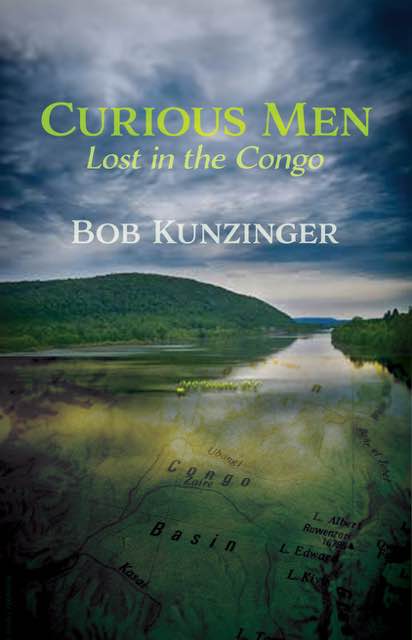
When I struggled with transitioning my book The Iron Scar from the “who gives a shit” stage to the essential-to-be-published “readable and relatable” stage, the answer came while in a writing seminar in Ireland where I had been formulating the final draft of a series of letters from myself to my dad while traveling with my son across Siberia. Writer Elizabeth Rosner, almost as an aside, asked me why the chapters are formulated as letters. “I don’t know,” I told her. “Bad bad answer” she said. I pulled together a response about wanting to have three generations on board, and the reality of my son becoming an adult and moving on in the world the same time my father was approaching his final days. But I still couldn’t answer so I came home from Connemara and chopped my manuscript to small pieces. A few weeks later in a conversation with a friend in Texas, I said, “Tim, I’m losing focus on the theme.” He responded, “I’m not. This is all about fathers and sons. About moving on while trying to hold on. And the metaphor of the train is nothing more than setting.” Between the time my son and I rode the train and the time I wrote the book, my father died. I heard once that the loss of a parent is the greatest loss of security we can face, even at fifty-five years old. Not because we aren’t able to handle the turmoil of life on our own but because that foundation has been rocked. 

So I rewrote the entire book as a narrative that takes place on the trans-Siberian railway, with all the characters and unknowns that trip entails, but that’s not what it is about. It’s about relationships, about being between two generations who are about to transition. 

Back to Ted.

Sudeikis masterfully weaves every possible father-son relationship into what on the surface is a comedy about an American football coach hired to the helm of a British premier league soccer (football) club. 

Right away we have the estranged father as Ted Lasso separates from his wife, and his young son remains with his mother. We also soon learn the powerful impact his own father had on him and the fallout from his father’s suicide when Ted was just sixteen. In England we meet the team, including Jamie Tartt, whose father is physically and verbally abusive, Sam Obisanya, whose father is more of his best friend and mentor, Nathan Shelley, whose Dad is demanding of his son’s talents and seemingly never satisfied, Leslie (male) Higgins who is the proud and dotting father of five boys, Roy Kent, who becomes a surrogate father to his niece, and of course Ted himself, who moves into the father-role to the entire team, the individual players with which he has various degrees of parental conflicts and resolutions.

This is listed as a comedy, but it absolutely fits the bill as a drama as well, placing it in the same vein as shows like MASH which walks that thin line between laughter and tears. 

But this isn’t about that. We are in a drama that has become laughable, and the line between what’s funny and what is tragic is a shadow at best.

Both the Mother and Father figures in our lives have served to keep grounded the best efforts of humanity throughout history. We need either to recognize the example or play the part. Almost all aspects of society rely upon those roles to set the strong example with seemingly unconditional love as we push through difficult moments. When hope seems fleeting and one feels “lost in a pathless wood” as Frost proclaims, that Maternal strength or Paternal guidance is almost always enough to help us keep going, knowing that whatever happens we’ll be okay. Even if we lose, we suffer those losses together, and we move on. 

There seems to be a lack of parental symbolism in the world, in the nation, in our lives. In fact, more often than not those who should be in those roles these days are appearing more like Jamie Tartt’s abusive and untrustworthy father. It would be perfect if we could always rely upon Sam Obisanya’s Yoda-like dad to turn to, but that’s not the hand we’ve been dealt. In fact, it feels like we’re a player down right now and this time it’s the captain of the team who is absent. That loss of security can be overwhelming. 

I do not want to judge. In fact, if we are to do so, I remember Ted’s line, “I hope that either all of us, or none of us, are not judged by our weakest moments, but what we do with it if and when we are given a second chance.” But our foundation has been rocked, and it’s getting harder to find solid ground these days. So we must do what the team does and depend upon each other, pass to each other when we don’t have a clear shot, hold each other up when we’re flailing, and celebrate each other when we work things out. 

We will get through this time we are in. We might have to switch our game plan, but we’ve got each other’s backs, and that might be enough. 

My brother, my son, and my dad, 2015