I headed off by myself for a few days last week, wandered about some trails, sat and stared across a lake for a few hours, just stared, thought about people who I used to know, used to love–love still, I suppose–and came to a few conclusions.
Nothing is more important than love. Spending as much time with people who make you forget all about what might happen next, what happened already, people who chase away anxiety and dismiss regret, who finish your sentences, know when to laugh, know when to sit in silence while you cry. Know when to hold on and when to hold on even tighter. Nothing, I swear to you, nothing can possibly be more important than this. We build our lives and occupations and make contributions to society so we can know we played our part in this powerful play that just goes on and on, and that’s all right and true, but it remains secondary at best, a shadow at best, to how our lives can only be truly illuminated by the love of those who make us understand more of who we are. Those who we celebrate for who they are, all of each of them, not just the parts we find convenient.
I’ve been around the block and have had the good fortune to ease my way through so many worlds, so many lives, with some of the most accomplished people of our age. Oh, in the name of all that’s holy I have known life at its best, and experienced more than I ever imagined I would, from deep deep rivers to the wind-shaped rock formations on the sides of mountains, and there is more beauty in what I’ve seen than one can experience in ten lifetimes, and what I’ve seen is nothing, a sliver, a minute fraction of what there is to be experienced in this world, and yet we spend our time watching other people live there lives, watching other people pretend to live yet other people’s lives; we spend our time looking for the right moment or the right person or the right way to say the right thing, instead of letting the beautiful passages of truth and pure love come out of who we are as we simply live in honesty, not afraid to take a chance if we know it leads us closer to who we were meant to be. We start so pure and honest, and we go through all those firsts until we become experienced and “wise” only to find out all those firsts were the closest we ever were and ever will be to the truth of who we are.
Here’s another truth: People die of brain tumors, of heart failure, of kidney disease, they die from falling over or falling down. But first, if they were lucky, they lived. Death is not so sad if it comes after life. But lately I’ve noticed people passing away before they had a chance to live their lives at all. It reminds me of an old lyric: “Pity the poor one, the shy and unsure one, who wanted it perfect but waited too long.”
We need to stop waiting for something to happen.
The world these days is not worth the beauty that life can be. Leaders are corrupt, struggles are real, starvation is epidemic, children are being killed for no good reason at all. The world has been ravaged by waves of interference that have compromised our nerves and our focus, and we are drowning. This world leaves so many believing suicide is a viable option. Society has not nearly earned the beauty that life can be.
So I’m stepping to the side for a while. I took a few days to myself last week to finally and conclusively mourn my mother and father, my friends Dan and Dave, Letty, because I had not yet done so and because I have not yet loved the way I believe we were intended to love.
And that is a death worse than all the others.
I took a few days off last week to try and see if I could find that person inside buried beneath layers of the soot shoveled onto me from a life of almost’s and nearly’s. And I quickly understood the time I have left is a fragment of the time I’ve already wasted.
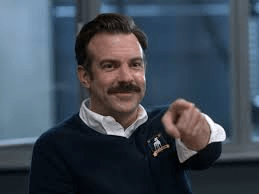
When my brother suggested I watch “Ted Lasso,” I trusted his judgement. He had already nailed it with a few other shows, including “Eureka.” The first time through I enjoyed it immensely, the acting, the writing of course, the timing. It took a few episodes to understand this was not simply a series of set-up/punchline comedy, a method I despise. And it took a few times through the entire three seasons to recognize the primary overall theme at the heart of creator/producer/writer/star Jason Sudeikis’ efforts: This show is all about fathers and sons.
When I struggled with transitioning my book The Iron Scar from the “who gives a shit” stage to the essential-to-be-published “readable and relatable” stage, the answer came while in a writing seminar in Ireland where I had been formulating the final draft of a series of letters from myself to my dad while traveling with my son across Siberia. Writer Elizabeth Rosner, almost as an aside, asked me why the chapters are formulated as letters. “I don’t know,” I told her. “Bad bad answer” she said. I pulled together a response about wanting to have three generations on board, and the reality of my son becoming an adult and moving on in the world the same time my father was approaching his final days. But I still couldn’t answer so I came home from Connemara and chopped my manuscript to small pieces. A few weeks later in a conversation with a friend in Texas, I said, “Tim, I’m losing focus on the theme.” He responded, “I’m not. This is all about fathers and sons. About moving on while trying to hold on. And the metaphor of the train is nothing more than setting.” Between the time my son and I rode the train and the time I wrote the book, my father died. I heard once that the loss of a parent is the greatest loss of security we can face, even at fifty-five years old. Not because we aren’t able to handle the turmoil of life on our own but because that foundation has been rocked.
So I rewrote the entire book as a narrative that takes place on the trans-Siberian railway, with all the characters and unknowns that trip entails, but that’s not what it is about. It’s about relationships, about being between two generations who are about to transition.
Back to Ted.
Sudeikis masterfully weaves every possible father-son relationship into what on the surface is a comedy about an American football coach hired to the helm of a British premier league soccer (football) club.
Right away we have the estranged father as Ted Lasso separates from his wife, and his young son remains with his mother. We also soon learn the powerful impact his own father had on him and the fallout from his father’s suicide when Ted was just sixteen. In England we meet the team, including Jamie Tartt, whose father is physically and verbally abusive, Sam Obisanya, whose father is more of his best friend and mentor, Nathan Shelley, whose Dad is demanding of his son’s talents and seemingly never satisfied, Leslie (male) Higgins who is the proud and dotting father of five boys, Roy Kent, who becomes a surrogate father to his niece, and of course Ted himself, who moves into the father-role to the entire team, the individual players with which he has various degrees of parental conflicts and resolutions.
This is listed as a comedy, but it absolutely fits the bill as a drama as well, placing it in the same vein as shows like MASH which walks that thin line between laughter and tears.
But this isn’t about that. We are in a drama that has become laughable, and the line between what’s funny and what is tragic is a shadow at best.
Both the Mother and Father figures in our lives have served to keep grounded the best efforts of humanity throughout history. We need either to recognize the example or play the part. Almost all aspects of society rely upon those roles to set the strong example with seemingly unconditional love as we push through difficult moments. When hope seems fleeting and one feels “lost in a pathless wood” as Frost proclaims, that Maternal strength or Paternal guidance is almost always enough to help us keep going, knowing that whatever happens we’ll be okay. Even if we lose, we suffer those losses together, and we move on.
There seems to be a lack of parental symbolism in the world, in the nation, in our lives. In fact, more often than not those who should be in those roles these days are appearing more like Jamie Tartt’s abusive and untrustworthy father. It would be perfect if we could always rely upon Sam Obisanya’s Yoda-like dad to turn to, but that’s not the hand we’ve been dealt. In fact, it feels like we’re a player down right now and this time it’s the captain of the team who is absent. That loss of security can be overwhelming.
I do not want to judge. In fact, if we are to do so, I remember Ted’s line, “I hope that either all of us, or none of us, are not judged by our weakest moments, but what we do with it if and when we are given a second chance.” But our foundation has been rocked, and it’s getting harder to find solid ground these days. So we must do what the team does and depend upon each other, pass to each other when we don’t have a clear shot, hold each other up when we’re flailing, and celebrate each other when we work things out.
We will get through this time we are in. We might have to switch our game plan, but we’ve got each other’s backs, and that might be enough.
I am not yet among the dead of this world, scattered ashes or sunken corpse. Not yet discussed in past tense, not yet absolved at last rites.
I am still conscious of the leaves on the red maple, hanging on, like me, trying to express brilliance before the fall.
I wake up in soft, fresh cotton sheets and see the trees through the skylight turning toward the sun, and a bird scatters to the porch rail, just like she promised she would.
I can call my mother and say hello, talk to my siblings, laugh with people I have loved since I was nineteen, since I was twenty-five, grateful to have closed those gaps in our lives when we lost track of each other. Grateful to know what it’s like to be quiet and know peace. I can climb hills with my son, stop for lunch and talk about what is beautiful, talk about what is next.
For the peace that can only be found in life, that stillness of the soul that keeps us present. Yes, for that peace and stillness and presence, which one must be conscious of to understand.
For consciousness.
For the fox at the edge of the woods waiting for apple slices.
The veteran who stopped to see if I was okay.
The homeless man in Norfolk last week who let me help, which reminded me I could; his gift to me.
For having had the type of relationships—so close, so intimate and alive—so that when those souls died, my sadness which is alive still simply reminds me I have known such love, even briefly.
For the way the river still keeps tabs on my moods, washes clean the extremes which constrict my hopes, tugs me back to the Island, or off across the equator to distant mountains on the moon and then washes me ashore here on the edge of what’s next, giving me the strength to fight the tigers that come at night.
Thankful is a shallow word. There must be something better to express our gratitude for being alive, now, with the aroma of leaves, the chill at night pulling the skin taut on my face, the stars stretched out like compassion through the universe. Thankful is not enough.
To still be able to string together a battalion of words which might make someone cry when I remind them of a loved one or make someone laugh when they recall a moment they once knew but thought they had long ago forgotten.
For forgiveness.
For compassion.
For the way I feel when I reach for the phone to call someone who left this world before me, and my heart sinks, and my stomach drops, and I remember, and I put the phone down. For remembering that is another way you can measure love; you remember how you almost called anyway but then didn’t.
Thankful for the ones who see my mistakes and don’t give up on me.
For the soft touch of another soul who understands.
Note: If you are easily offended by religious thought that contradicts your oh-so-verified and perfect understanding of God and the Afterlife, move on. You probably shouldn’t be reading my work anyway.
Let’s start with this religious/philosophical concept: God created the heavens; the universe; all of it; not only this corner of the Milky Way. It is rightfully assumed by believers that God wasn’t relegated a portion of the universe or put together just this one part of the universe and then accidentally spilled the rest on the floor.
No. God created the universe. Any God you want, since all the major religions claim the same accomplishment for their deity. In Christianity, Judaism, and Islam, this is absolute. In Hinduism, it is damn close in that the universe was asleep and then came to life, but it wasn’t not there and then was as is the case in the dominant trifecta.
The after-death part: In Christianity, Islam, and most schools of Judaism, everyone will end up in heaven. The do-gooders pretty quickly; the rest of us after some pretty compromising-sounding trials. But still, the post-purgatory promise is some sort of salvation awaits us all. Eventually.
Okay. Of the major religions, while Mormonism would be the most chill with the concept of life in other galaxies, Jews and Muslims alike have come to terms with the reality of science. Christianity is the slowest to nod to the extraterrestrials, impaling people as recently as the 16th century for suggesting the earth is not the center of the universe, but they’ve come around. Extremist evangelicals not so much but they live in their own universe anyway.
Recap: God created the heavens—all of them—and when we die those of us who chewed our food with our mouths closed get to go there.
What this means to me is there just might be life from other galaxies in heaven, unless there are a whole bunch of heavens, as in each planet or galaxy has its own heaven isp domain and the universe is indeed segregated. Otherwise, heaven just might appear closer to life in Mos Eisley Cantina than a moose lodge. But how cool would that be? No matter their origin, anyone in this galactic heaven would have had to been good by their God’s standards, so fights are not likely to break out and they’ll probably never run short on stock.
A few glitches.
Cremated people, like those spread in Russian art galleries and artists graveyards, or those dispersed in the Mediterranean Sea near childhood beaches, would either not be present, or none of us is actually “present” to begin with as if we will run into a cousin at the mall, but instead we are there in some sort of thought presence, a force if you will, a spiritual embodiment we recognize because of something eternal, like the soul. Since the earthly ashes simply ended any actual post-mortem embrace or long, tight hug with a kiss on the neck, they must not be present. Right? Not so much.
The major (and minor actually) religions have an answer for this dilemma: The body is a vessel, nothing more, and the afterlife is a gathering of souls. This allows the dismissal of ET showing up in our heaven because most of these same belief systems assume the rest of the universe is soulless. It’s that arrogance we have, I assume, that keeps them away from Earth to begin with.Shame.
I’ve made some mistakes in my life; wrong turns, bad decisions, like everyone else. At the same time, I’ve spent the past forty-five years either studying research and verification methods or teaching it at the collegiate level. Truth has a closer relationship with science to me than it does with faith. I haunt my students with one question which I tell them is the beginning and end of all they do in college: Where did you get your information?
The bible? The Koran? The Torah?
Mom and Dad? The plumber?
Maybe this is why I spend so much time in earthbound cantinas; I want to celebrate what is, here, the tangible love of the human touch, laughter, sorrow, now, here. This much I know is true, the rest is certainly faith, and I’ve spent my life surrounded by a few people as close to sainthood as ever one could be, and they have often swayed my faith. But I get tied up sometimes in what I “want” to be true. I “want” to meet Letty again, have a hard cider and tuna bites in whatever soul-like state we find ourselves. I want to drive to Florida with Eddie, guitars in tow. I want to sing on some heavenly park bench with Dave. Of course I do. I want to sit quietly again with my dad, talking about nothing, just being nearby and again feel that wonderous safety of my father, even if–especially–in heaven.
But for now, truth impels me to seek love while I’m still using this aging vessel. We are the only known species in the universe—for if there are others, we don’t yet know—leaving us the only species anywhere who can create from nothing; creatio ex nihilo. We can create a space between us reserved for compassion, for understanding. We can create hope for those who have had less fortune, and we can use language—another creation from nothing—to tell someone, again, “I love you,” like we did before, no matter how long ago it was. We can say again, “I will miss you,” before they move on and close that door behind them.
We can say, “We will meet again someday,” and know that despite the lack of evidence, despite the need to rely entirely upon faith to say that and believe it, eventually, it is all we have left.
She led a beautiful life.
He led a holy life.
They have moved on and whatever truth there is to know they now know. But for us, they’ve decidedly moved on.
Note: This is a very serious one. Read. Share. Forgive. It’s all we’ve got.
This is for Dave W, Bobbie B, Bud D, Tricia K, and the one’s who live with those unseen wounds which simply won’t heal.
***
A broken limb is obvious. A cast, a sling, a set of crutches or even a knee cart, and people can see the problem, understand the delays and compromises. We move aside or assist in any way we can.
What happens when someone injures their mind, breaks their thought process, when a person cracks their perception of reality and ration? The world is quick to judge the results of some unseen wound festering in their frontal lobe. “They’re lazy,” we say; “They’ve given up,” we say; “They keep asking for help and I’ve had enough,” we say. No one replies to the unfortunate soul with some walker, “No, sorry. I’m not helping you anymore.”
Well, in both cases the likelihood of one asking for help is pretty slim anyway.
Monsters such as depression, anxiety, and nervous breakdowns can destroy a person’s ability to function. People can’t think as clearly so they lose jobs, they make bad financial decisions and lose money and property. “They could have done something else; they could have sought help from a professional if that was true,” we say.
And when nothing makes sense anymore and the world is too much with them and there is absolutely no meaning in anything—when numbness overtakes the idle sadness, they find a way out.
The truth is suicide is not always the result of depression; it is not always a person simply giving up. In fact, it is often seen by the psychologically afflicted as the perfect solution. It is not doing harm; it is solving problems. The mind no longer functions the same as others’ minds. If they even want to ask for help, they don’t even know what it looks like to ask for anything in particular, so they seek solutions on their own, like sleep, like cutting off contact, like shutting the brain down for good. It is not life they fear or wish to escape; it is their mind. It is a difficult task to escape one’s own thoughts.
“There is medicine for that,” we say.
Not really. Sure, there is medicine to help someone cover up the wound, like a Band Aid, but the sore doesn’t heal as much as it is buried. The infection will return as soon as
well
as soon as it rains, or when the next call comes from a creditor because they can’t work enough to keep up, or, worse, when a call doesn’t come any longer from friends and they suddenly remember they were better once, and they won’t be like that again. But even that’s not accurate since they simply are like this now, and apparently always were, and the moment it happened is an allusive memory.
Because while in the movies when someone has a nervous breakdown, they flail their hands and scream, cry, and someone might slap them, tell them to snap out of it, in reality that’s not what happens. The truth doesn’t play well on film. In reality they say nothing. They might drink, of course, or become addicted to some pain reliever, some vice that keeps their brain in the moment like alcohol or other self-defeating measures that keep their mind from dwelling on some past or future attack, but they might just as easily sleep all day, or more likely not sleep at night. They try and work but the ability to focus is gone; not ignored or delayed—the actual part of the brain that helps them do work or see a reason to exist at all has a hole in the middle of it, the circuits are infected and surrounded by puss, but no one can see that, so it can’t possibly be anything other than “a phase,” “laziness.”
Later, afterwards, people say they didn’t know, “They always seemed fine.” “I thought they were going through something.” “They said it was no big deal.”
They say, “I wish they had asked for help.” They say, “I did all I could.”
They say, “What a shame.”
Indeed.
Did Hemingway have another novel, Van Gogh another masterpiece, Robin Williams another routine for the thousands of kids he used to visit in hospitals?
Depression and mental illness often caused by a mental breakdown can cause lives to rip apart, and the only explanation they have when they ask for help again and again is “I’m trying.” And eventually that simply isn’t good enough no matter how much they are loved.They live out on the fringe, they hold signs, they sleep on grates. Likewise, they live in country houses and city apartments. They seem to try, they try to seem to fit in.
Maybe if they wore a cast, had sutures across their forehead. We like to see problems before we help solve them. We don’t offer help to people when we don’t know they’re suffering; how could we? Unless we know them well.
And that’s the problem. No one knows them at all. They’re funny and outgoing. They make light of serious situations. They can work a room. So they either never ask at all or, when they do so too often say “I need help,” it is difficult to see how. “Again?” we reply. “Why now?” we ask. The thing is in a few days they will not even remember they ever asked for help to begin with. This is true; the compromised brain actually blocks that out completely. To us they can either be absolutely silent or seem constantly desperate; but to them it just happened.
Here’s the problem:
How can we find that line between someone who really needs help and someone who just needs a bit more tough love? What do we do if there is no visible “mistake” that needs correcting? What do we say when they say nothing at all, or if we do ask if they need help, they say, “No thank you, it’ll be fine,” more out of a notion of being too embarrassed to say yes. Too ashamed. They’d rather…what?
They’d rather die. To be sure. I remember a phone call early one morning when I just didn’t want to hear it again. I remember a visit from someone who needed more than I could give. I recall calling once and the phone kept ringing. I’ll never forget that one.
Where is the line between knowing whether we helped enough and we could have done more?
Honestly, it runs right down the middle of the rest of our lives, and we walk it aimlessly, hoping we made the right call, that there was nothing we could do. Even if we’d rather be on the side of foolishness, helping people way more than they probably deserve, we can’t ever know.
So we call and talk, stop by, we get them to laugh because apparently we think laughter is the best medicine.
That’s not how a nervous breakdown plays out. Trust me on this one. But there is no Habitat for Humanity that helps people rebuild their minds. So they lose everything: their homes, their families, their purpose. And there’s not a damn thing we can do about it. Well, sure there is, but the place between knowing and not knowing is dark and difficult to navigate.
So. What do we do?
We forgive them for finding a solution the rest of us thinks is foolish. We forgive them for believing that the pleasure found by watching their kids and grandkids grow, watching another sunset with someone, laughing at lunch with friends, still isn’t worth the pain—the constant and debilitating pain—that comes constantly to infect their mind; constantly, day and night. Even their dreams are saturated with pain.
Forgiveness for something we do not understand is a monumental task. But then for some, so is life.
If you need help, Call 988 immediately.
If you know someone who needs help, Call them.You don’t have to know what to say. Say anything.
If you are living with the memory of someone you feel like you could have helped more, it isn’t your fault. It isn’t their fault. Forgive them. Forgive yourself.
Remember what we learned as toddlers: How would we want them to react if it was us? What would we want them to remember if it was us?
Not everyone is fine. It’s that simple.
Bob Kunzinger writes the weekly blog, A View from this Wilderness, which premiered in January 2016, and is the author of eleven books, including the forthcoming Office Hours, as well as hundreds of articles in national and international publications. He lives in Virginia.
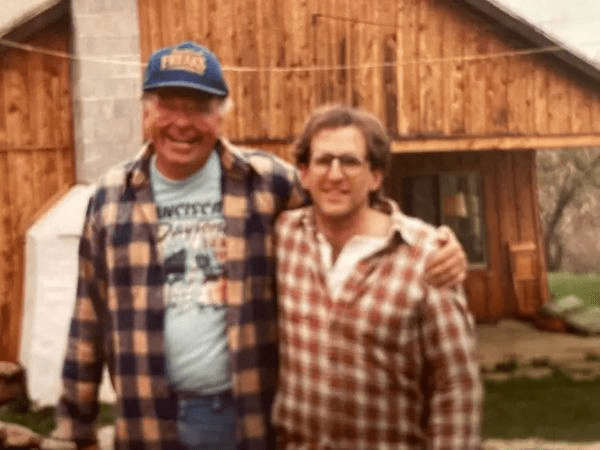
The Peaceful Priest on the left/the asshole on the right/1980’s
A friend of mine is a Franciscan priest who remains calm no matter what happens.
We are not alike.
He is compassionate, understanding, patient, and saint-like. He is perfect for his job and does it 24/7; that is, he is one of those rare souls that couldn’t be anything but some sort of man of God. If he gets stuck in traffic, for instance, he keeps it all in perspective. If someone cuts him off, his response remains, “They really must be in a hurry. I hope they’re careful.” Or, “Wow, God bless them and watch over them, they really must be anxious about some appointment.” His is a peaceful soul.
This contrasts directly with my “Use a frigging turn signal, butthead!” approach. When entering a tunnel and the traffic decelerates from sixty to forty, the good Father cares: “Oh, thank our Lord they are all being careful going into this tunnel. It really must be frightening to so many people.” I handle it with my own style: “It’s a tunnel. IT IS A TUNNEL! It is not a brick wall! Wilie E. Coyote didn’t paint the f***ing thing! The Road did NOT shrink! It’s a damn TUNNEL!”
We obviously address frustration differently, which makes me wonder how we ended up this way. Would Monastery-Bob and Professor-priest keep their temperaments? If I lived on a mountain in prayer would I be less likely to want to kill the cashier for needing a pen to subtract $5 from $20?
I was like him once, my friend the peaceful priest.
When we met during college we talked a long time about peace and where it comes from. To search for peace in the world is a fruitless act. Even if we find it, it can disappear with war, with stress, with distractions and interruptions. It is like turning to others to find what you want to do with your life; it must come from within. And peace, too, must be a spring, not a shower. I always liked that thought.
I once went to Father’s room and found dozens of people drinking beer and laughing as they told stories about their lives. Afterwards, I said I had a great time and found it strange that I could feel so lost among friends on one day and on another feel so connected and centered. He said, “Bobby—tonight you brought the peace with you.”
Man, he made it sound so simple: Bring the peace with you.
So a few years ago when some dirtbag student of mine called me an asshole in class, I thought of Father, and how it is never the situation but how we handle it. I could picture him with his wide smile and deep laugh and huge hands on my shoulders telling me I’m going to be just fine. I brought the student into the division office and sat the little bastard’s ass in a chair while I filled out a withdrawal form. Before I could finish the paperwork, however, and before he stopped crying, I decided to give this “peace” thing a shot.
“Are you scared?” He looked at me. “College, I mean, the assignments? Are you worried?”
“I suppose,” he said, calming down.
“Why?”
It took him a long time to answer something other than the moronic, I don’t know. “I’m not a good student. I was never good at school.”
“You get confused?”
“Yeah,” he said, nodding, knowing I hit on his fear.
“Yeah,” I said. “A lot of people do. I know I did. What you might try doing is stepping back a bit. Sit to the side and watch everything from a distance for awhile—get some perspective. Instead of calling me an asshole, ask me some questions.”
“Right,” he said, with not just a little indignation.
Bring the peace, Bob. Bring the peace.
“Sometimes we need to see things from a different point of view.”
He was quiet a long time and I believed I got through to him, and I wondered what he pictured as I recalled sitting in Father’s room listening to stories of scared and lost students like myself still trying to get a handle on our place in the world.
“Wow, thanks for your psycho-babble bullshit, Dude,” he said.
I took a breath, thought of Father, and told the little prick to get out of my site; that Hardees is hiring and someone has to clean the toilets.
It’s a gift, really, knowing one’s place in the world.
I headed home thinking about peace and frustration, fear and anxiety. He’s where he should be, this former student of mine. He’s out in the real world where he can seek out only those challenges he knows he can conquer. He is part of the masses that only face what they’re not afraid of. I wondered, though, how often I only face what I know I can conquer.
Bringing peace to an otherwise hostile environment is a difficult task and it gets harder when we watch the world simmering in anything but serenity. Maybe that’s why I, too, often avoid the challenge and instead wander down country roads, watch the water ebb and flow rather than suffer the anxiety hurled at us from the news of Ukraine, of Gaza, of DC, of course. It’s why I don’t drive during rush hour, avoid fast food restaurants and box store checkout lines. Hell, maybe I’ll just start giving everyone A’s so less people will call me bad names.
Yes. Let there be peace and let it begin with me, Bob the Asshole. I’m going for a walk and I’m bringing my peace with me.