Dave

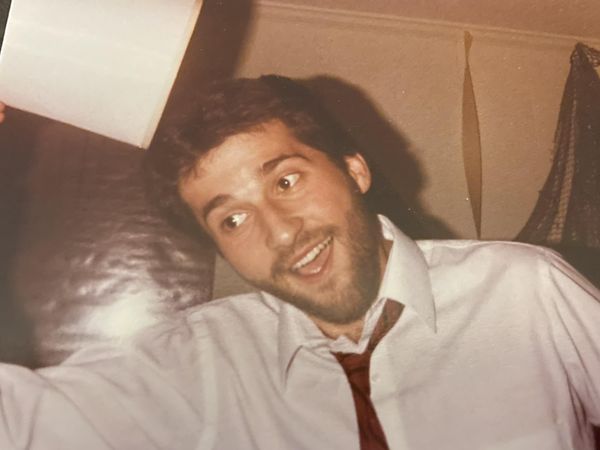
That’s my friend Dave Szymanski. He died Tuesday, May 14th. RIP my brother. We laughed so much that now just laughing at all often makes me think of him. We were going to get together when we both turned seventy and sing “Bookends” on some park bench. No kidding; it was part of the plan. We wanted to belt out to whatever audience was out walking their dog, “How terribly strange to be seventy!” Well, that won’t happen. Still, I am absolutely certain if I make it that far I’ll most definitely do just that, but alone, crying, laughing. I have so many stories about Dave you’d think we were twins. But those are mine now–Dave and I agreed to have joint custody of the stories of those times, but since he is gone now, I’m assuming full ownership. Unfortunately, they fall squarely under the category of “You had to be there,” so there’s no point in sharing them.

This is not likely to go where you believe it might go.

I’ve been thinking about what I can best call the start of some independent consciousness–that is, the time when I was first aware I was a growing, independent thinker/dreamer, mentally unattached to others, my thinking not entirely tethered to parents or siblings or teachers. I guess I was in what we then called Junior High, now Middle School, and at thirteen or fourteen years old life was still idyllic. That’s the point I think I started to think of myself as an individual. I have no idea if that is late, early, or disturbed. We lived near the Great South Bay next to a State Park and an arboretum, a golf club, and I was surrounded by friends in the village of Great River. I have memories before that, and possibly even dreams, which at that time were to either be an astronaut (Apollo 11) or play baseball during the summer (Miracle Mets) and be an ice cream man in Florida during the winter. But those were the “in the immediate” aspects of life; that is, things you thought about and said to friends but then forgot nearly instantly. But realism crept into my view somewhere around seventh grade when more realistic plans surfaced, like sailing around the world or riding my bike across the country, or being a musician or a writer or a tennis pro. All seemingly real plans at the time; those things which you no longer imagine and pretend but which you pursue, even if fruitlessly and without much talent.

No one save his family knew Dave was sick, so most of us didn’t have the chance to take the time to reminisce. It’s important; we always say, “Tell people how much you care about them because you never know if they’ll be around next week,” but we rarely follow through. We know it is true, and we know it is real, but we just don’t. But if we really did know it was the last time we might talk, the last chance to say something, like how much you appreciate the long conversations in the radio station at five in the morning, you picking out albums, him tearing UPI articles for the news; or how the three am pancake house runs were more important than final exams; or how the weekly texts through the next forty years kept you going, you’d tell him. Listen: Please, make sure if something happens and you know you’re going to be checking out, do not keep it a secret; some of us have a few things to say.

Anyway.

A few days ago someone asked me for my favorite picture of Dave. I went searching deep both on and offline, but I do not have many at all since back when we spent a lot of time together we rarely walked around with a camera and film. But I looked, all the while sifting through tons of other photos of the scattered years throughout my life, and at some point I stopped and simply sat remembering, and I realized something close to lifesaving during an otherwise heartbreaking week: What an amazing ride this has been so far.

I’ve mostly taken the paths of least resistance, I must admit, but apparently someone was up ahead clearing it for me, because it’s been outrageously fortunate. And I finally figured out what the pictures are for. Not only to reminisce, but to remind myself when I get lethargic or depressed, lonely, or tired, that I’m still walking this brilliant Camino, and to remind me of the words of Virgil when he wrote that Death twitched his ear and whispered, “Live….I’m coming.”

Not knowing when someone is going to die, or even that they are sick, is a cold reminder that we don’t know when we’re going to die, or when we might fall ill, and the truth is we just might have a few things to say to those we will leave behind. Speak now or forever…

I normally try to not write too directly only about myself, choosing instead for a digression into some common ground. But not this time. Honestly, this one is for me. Just a few findings from the journey so far:

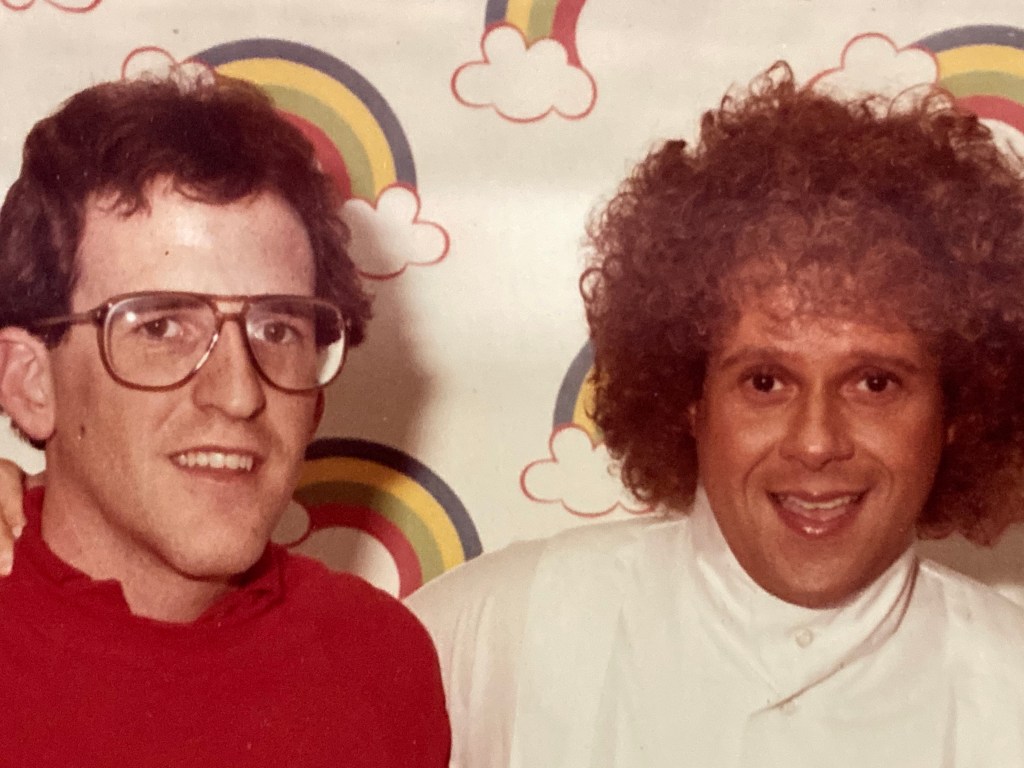
Sandy. My best friend forty-five years ago.
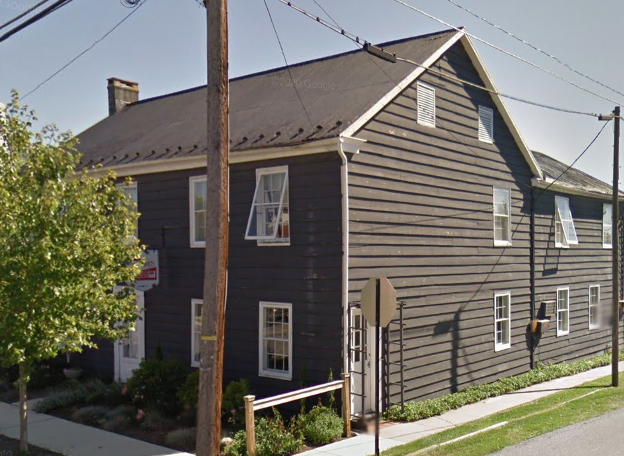
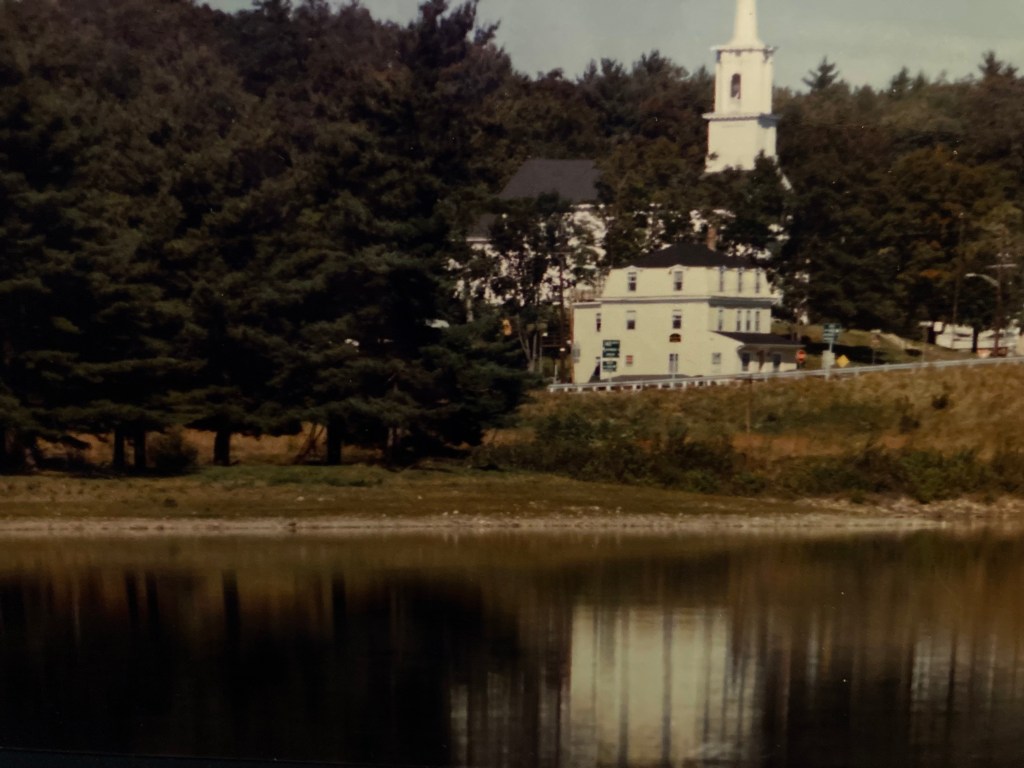
My yellow house in Oakdale, MA. I lived for a few years on the first floor/basement behind the hill. The water is the Wachusett Reservoir, and up the road to the right was an apple mill, then up the mountain to the ski slopes, Princeton, Massachusetts. I loved it there and never should have left. 100 years earlier the house was a fish market.
My siblings and me (in the middle) in Massapequa Park on Long Island, where we lived from just after I was born until I was nine. It was a great place to be; Dad worked his tail off so we had great childhoods. My siblings are two of my five heroes.
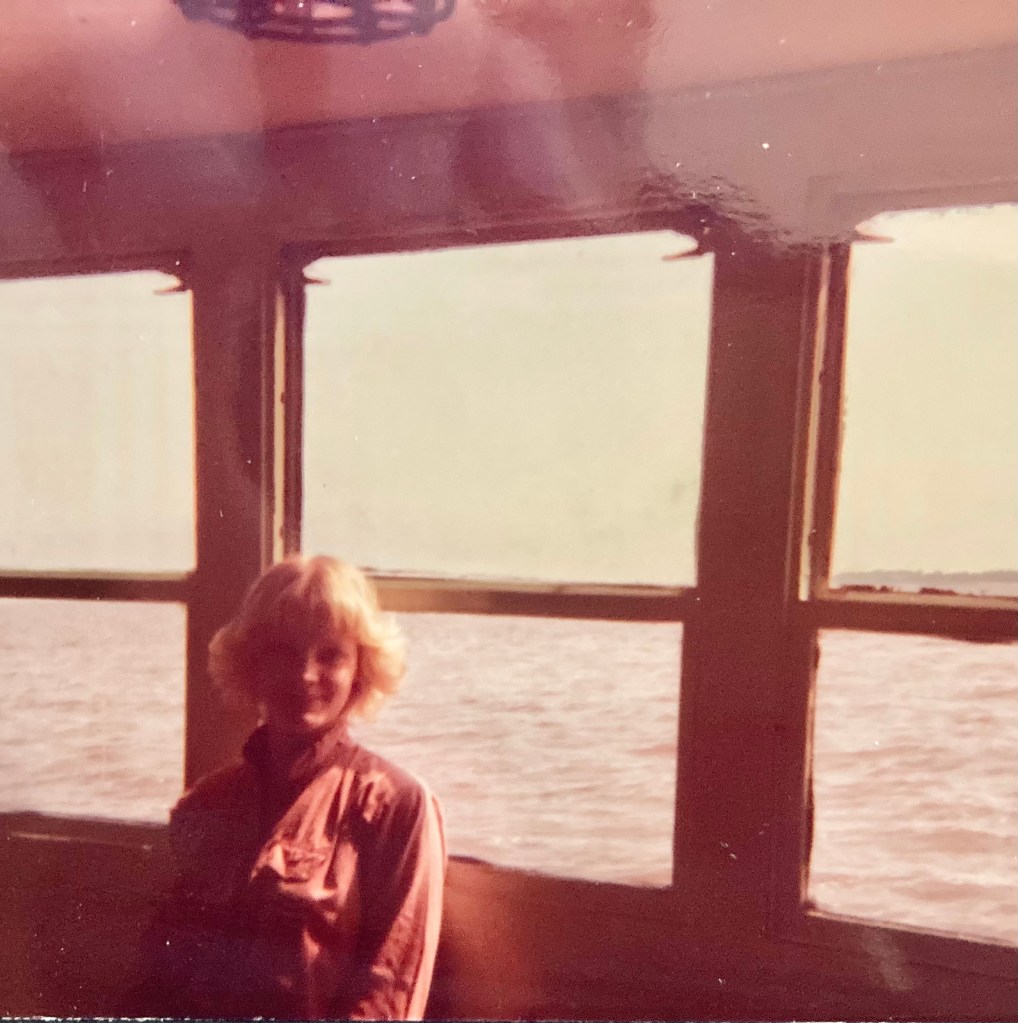
My friend Michele during high school. One day I borrowed Dad’s car to go to Michele’s for “about an hour.” Instead, we drove to the end of Knott’s Island on the Carolina border, drove onto the ferry, and headed down the coast of the Outer Banks. Neither one of us wanted to turn around. If we hadn’t we might well still be driving.
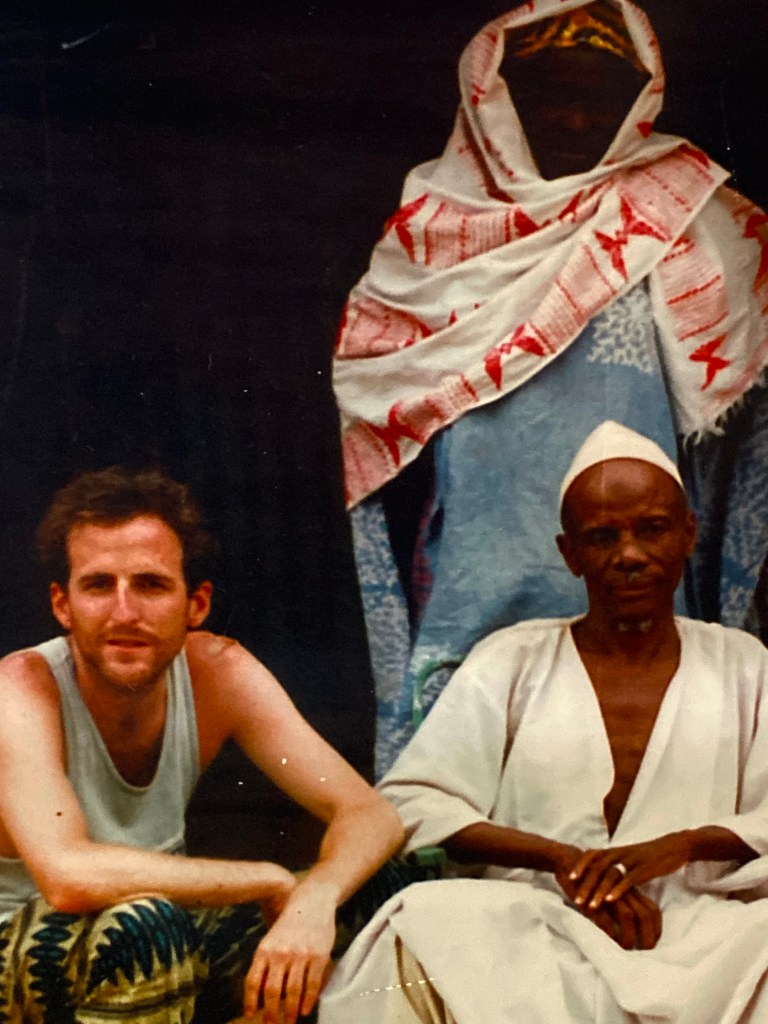
In Senegal where I spent some time before headed somewhere else in Africa. A few months earlier my life had completely changed, so I decided to change it further and ended up there. My college friend Claire and me with a village jeweler on the left. We had no clue who the dude on the right was. He just jumped in the picture.
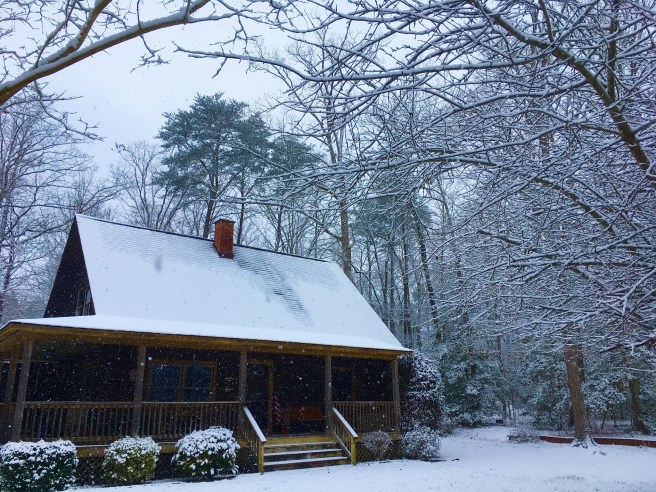
I lived in this cabin in northern Norway for March of 1995 with my colleague Joe and American teacher/writer John Slade while we taught at the Bodo Graduate School of Business. We filleted cod caught by our seventy-five year old neighbor, Magnus. A Russian guitarist, Max, and I spent evenings in the cabin dueling folk tunes from the US and Russia. One night I fell through the ice on a lake but only to my ankles. Another we felt we had to duck from the swirling bands of the Northern Lights. Another we chased moose up a hill. Other stories for another time.
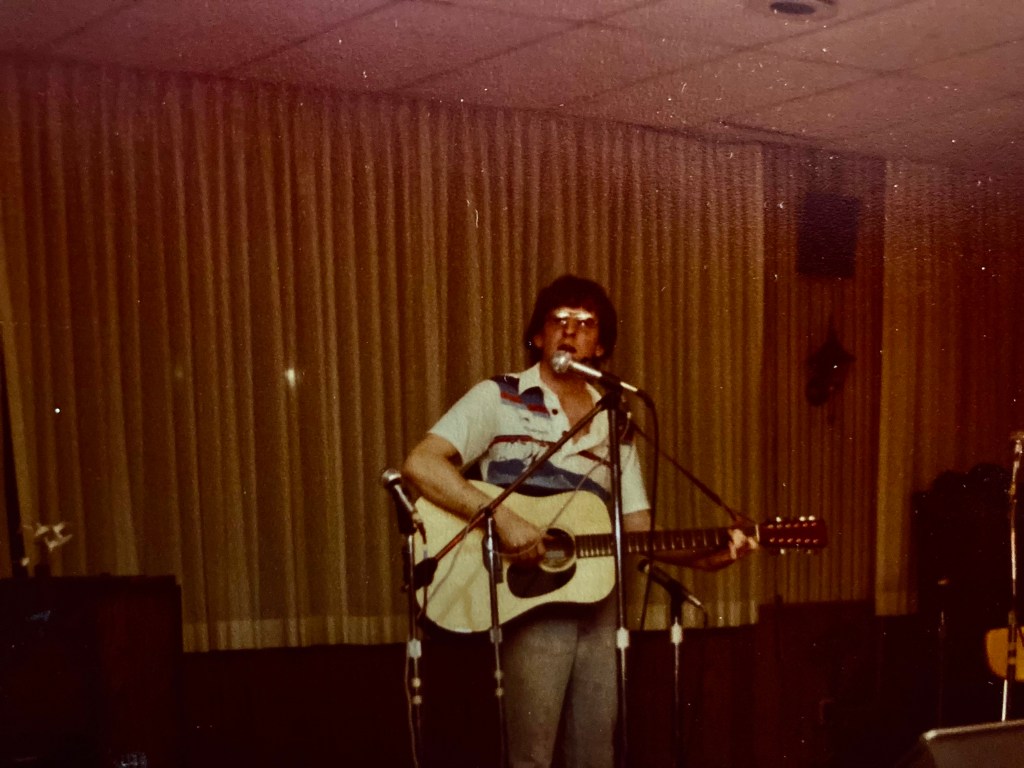
This old guitar saved my life. Coffeehouses kept me from falling through some proverbial ice during those years. And what stories from those gigs, like the time when 150 people sat to watch us play and at one point we opened the curtains behind me (there’s an Olympic size swimming pool on the other side of the windows) at the exact time a swimmer climbed out of the pool and his suit had slipped to his knees. We all waved. He dove back in the pool.
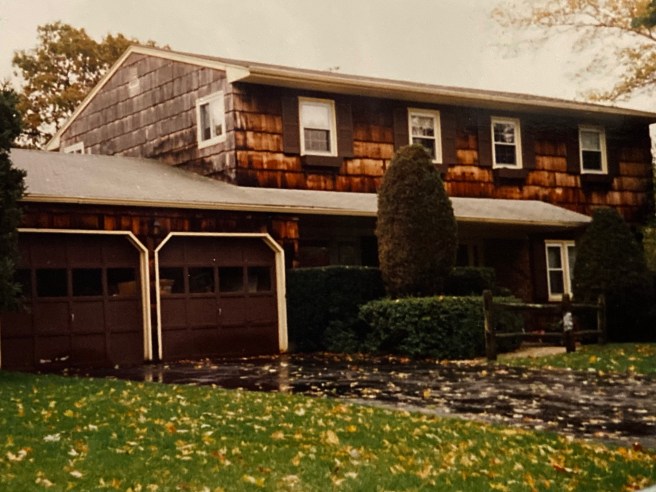
The Great River house my father had built and where we lived until moving to Virginia in ’75. When people ask where I’m from it is a difficult question to answer, but as I get older I say “Great River” and it is listed that way on my FB page. I live in Virginia. But I’m from Great River. Hard to explain.
My advisor and mentor, Pete Barrecchia. He was one of the true journalists of this country and the source of my first and greatest writing lesson. When someone in editorial writing class complained about not knowing how to start and where to put in the research and on and on and on, he put down his cigarette, grimaced, and said, “Oh just write the fucking thing.” It worked.
One of my escapes during college; Letchworth State Park. My escapes were either music or nature. Sometimes just the smoke-filled art studio beneath a dorm on the other side of campus. But escape was always important for me. Hard to explain.
My boss in the mid-eighties. One of the finest humans I’ve ever known. Yes, that’s him.
Village chief. And his wife.
My Great Uncle Charlie Kunzinger and Aunt Jane. Time note: He fought in WW1 in France, and when I was a freshman in college at St Bonaventure, he was still writing me letters and sending poetry.
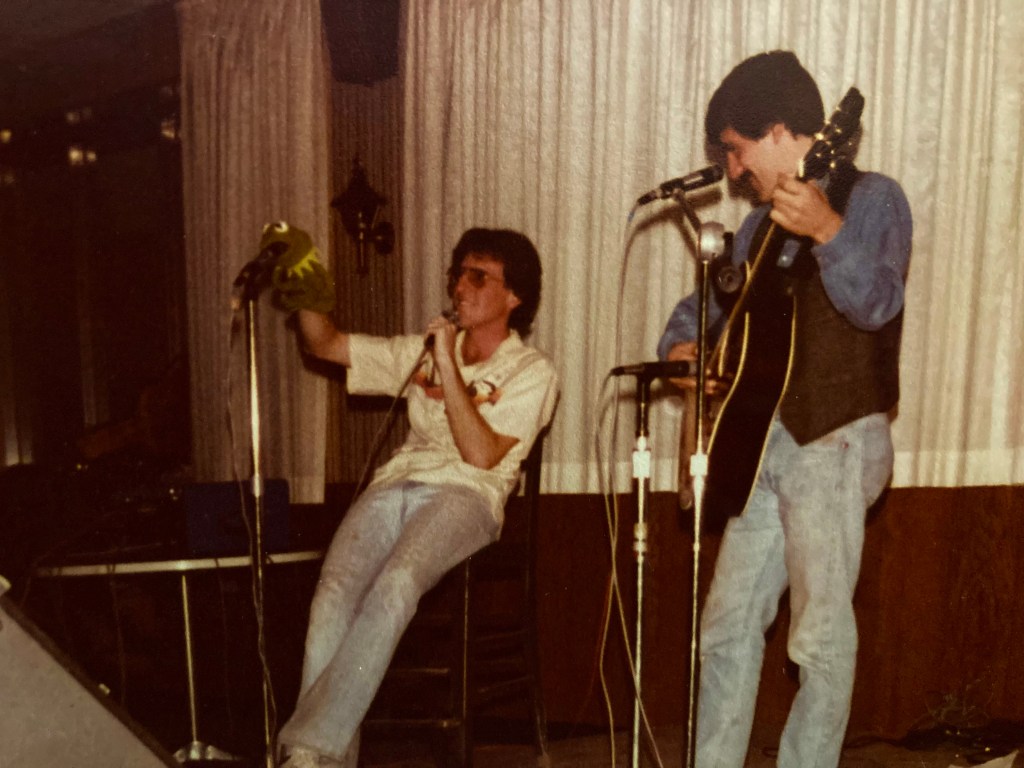
Mike Bonnano and Kermit when idealism was still okay to sing about, and where no one cared how bad you were.
My friend Tim O’Brien who most know for his prose writing but few know is an extremely accomplished magician. True story.
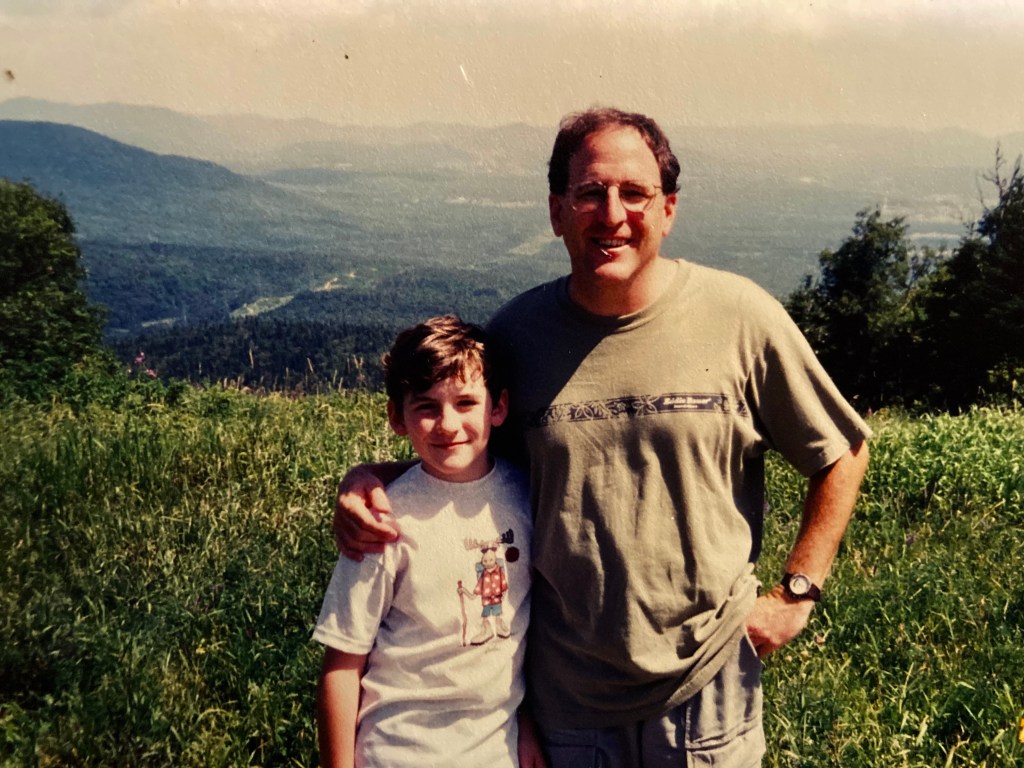
Michael and me in mountains of eastern Quebec many years ago. We’ve been literally around the world since then, and we’re still going. With apologies to Maya Angelou, “I wouldn’t take nothing for my journey now.”

Call someone. Tell them something. Anything. Forgive them. Ask them to forgive you. Tell them you’re sorry you didn’t answer the phone that last time they called and said they felt like talking. You planned to call them back but just didn’t “feel” like it yet. Now you can’t. Go ahead, call someone and say you wish you were as good a friend to them as they have been to you. Don’t be embarrassed. It’s only life, you know. That’s all.

It’s only life.

Can You Say “Non-fictionalist”?

Last night I had dinner with seven other writers at an Italian restaurant (manicotti, meatball, salad with blue cheese dressing, chianti). I never before met the two women on either side of me, or a few of the others for that matter. We talked about weather, of course, and about the food. Where we’re from, what genre we write in (most of these people are poets). The talk turned to “what we’re working on,” and that’s when I ordered the wine. I’m not comfortable talking about what I’m working on unless I, a. know you very well, and even then, b. will change the subject. I’m not alone in this. One of my closest friends for twenty years is a poet and in all of our lunches or dinners through the years we only ever talked about writing when we read together at some event, and even then we don’t. Rick, another very dear friend, was there last night and we sideswipe the writing conversation nearly all the time. We’ll send each other drafts for comments, but don’t really talk about it

I never saw the point. I’m interested in what they’re working on, sure, kinda, but I’d rather really just read the final copy. If they do mention it, I’m really looking for little more than, “A collection about warts” or the like, no details. Peek my interest and step back. And who am I kidding; I’m not going to ask what anyone is working on, particularly people I don’t know. I don’t think it’s rude; I’m more comfortable with my work if it goes from brain to screen without getting blown around in the air between other people. I don’t mind the question; I get it all the time. But my answer will be little more than “some work about teaching,” or “several things going right now,” which doesn’t answer the question at all, which works best.

I find it revealing that the writers I know well also simply don’t really talk about it. We’ll talk about the process, or the stages of publication, or past work (ugh), but what’s on the front burner now is simmering and it’s best not to get too close.

It might be different for poets, or even novelists. But then those monikers right there in the previous sentence explains a lot–they are, in fact, “poets” and “novelists.” I’m neither, and what I do do does not translate to such a label. “Hi, I’m Bob, I’m a non-fictionalist.” Memoirist comes closest, I suppose, but most of my writing is not (my last book and my next book excepted, since both are full-length manuscripts about a certain time and place in my past). I write essays, or observations. A book slated for 2025 is a Sedarisest-style book about teaching; it’s not a memoir, so in that case I could be called an essayist, but that’s not accurate either since, it’s very memoiry, but, well, never mind.

The point is the manicotti. Growing up my mother always pronounced in manigaut (I’m not even sure how to spell this, but assume it is said as might an Italian who doesn’t speak English–without offense to my Italian cousins, and you know who you are). I was old enough to order my own food when I pronounced it that way and some server somewhere looked at me for a minute and replied in all her Virginian perfection, “OH! ManiCATTi!” Okay. Last night I heard a lot of menu items pronounced by the staff in a very non-West Virginian way of saying it, so when I knew I was going to order this dish (avoidance there, thank you), and when our excellent server, Jaimie, asked what I would like, I replied, as might my mother fifty years ago, “Manigaut.” She looked over my shoulder for a few seconds at the menu and replied, “Oh, the manicAtti, excellent.” Sigh.

Do you say what is the proper way to say things or do you say what they simply need to hear, are used to hearing? “I’m working on a piece about being nineteen years old.” “I’m working on a group of short essays, really nearly flash non-fiction, about stages of life, the patience we need when our children are very young and the patience we need when our parents are very old.”

That usually gets an accepting “Sigh. That sounds so good.” But it sucks, so I can’t agree, it might be good later, maybe tomorrow maybe in a dozen years by someone else. And that’s why I don’t talk about it.

Another writer I’m very close to is working on quite an involved work of fiction and is already nearly 100,000 words into it, and does not mind talking about it. But it helps, I believe, that writer clarify all the various aspect of this work, so talking about it somehow sharpens the mind about it. And I truly loved hearing about it.

But that’s not me. I don’t do small talk to begin with, and certainly have more trouble with it when even I don’t know what I’m talking about yet. So I’m more of the grunting type. “What are you working on, Bob?” “A book.” “Nonfictional stuff.” “Being nineteen.”

I was honest and as thorough as I could be. Jaimie returned and asked if I wanted anything else. I was about to order another chianti but hesitated. In America, shouldn’t that be che ante, hitting the ch, instead of the keeantay, pronouncing it as it should be in Italian? And if not, then why are we calling it ManAcotti? It’s Managaut.

A real non-fictionalist would know that.

Proof:

Valuation

outside my window

It’s foggy across the river and bay this morning, and out on the bridge a heavy mist blanketed the area so that even seeing the sky-blue girders above us was difficult. A foghorn sounded from the mouth of the river, presumably menhaden boats out on the Chesapeake, perhaps an oyster workboat. It’s chilly, but not too bad. That could be a description of my head, but it’s not. It’s outside my head I’m pretty certain.

The view from this desk is only slightly better. The woods are misty, but the fog lifted. I can see pretty deep into the trees, and the skylight above my head is wet.

Sitting before me is a to-do list. I need to record a few art lectures for a university in Ohio, send edits of a piece to a journal, read proposals from capstone writing students in West Virginia, make a topic list for my writing students down in Norfolk, rewrite twenty pages of the monster—twenty pages about a time in my life when absolutely nothing happened, but something should have happened and that is the point of nothing happening, so that the reader will feel like something should have happened all the while nothing happens at all. Wow. That sounds like a metaphor for life. But it’s not. It was life, once.

And I need to send emails to a bunch of people who I was supposed to send emails to a few weeks ago but then college happened. And deadlines. And basic malaise. Luckly, the Kahlua bottle behind me is still full.

Alternate plan: Sail down to the Gulf of Mexico, teach online from the aft cabin, grab the guitar, play some Fogelberg and Cat and Van around a beach bonfire with friends and Malibu rum. Forget finally that social media had ever been invented. Go back to wondering how everyone is instead of knowing constantly. I miss wondering, I miss “catching up,” telling stories about things that others don’t know about yet. But we don’t. We value our homes and the lives we built; we asses and measure in terms of security and balance instead of whim and ideals. Of course. It’s called being mature, something I have rarely been, I suppose. I don’t know why; a design flaw, perhaps? Too much daydreaming when I was young? Not enough classical music?

So naturally I’ll need to stick with Plan A for a while. I wonder why, of course. Not enough nerve? Gummies? Too many responsibilities?

First, though, I need to complete a self-evaluation for the college. It’s a once-a-year thing, not difficult, which includes understanding what I did right, what I might change, how I respond to criticism of others, particularly students, what I’m going to include or exclude in the future, and some sort of game plan. It sounds more involved than it is, and it won’t take long. And after thirty five years of these things, I can clearly see how they have helped fine-tune my work.

Yet recently I realized I should have been doing one of these self-evaluations about my life all along. Five pages about the year, perhaps. Five written pages about what worked, what didn’t, what I need to do differently and proposals of how I might get there. This time five pages might not do it; I messed up in some big ways simply by not doing things, which should be part of any evaluation: what didn’t I do that I should or could have?

Do you do this? Maybe schedule a drink with a significant other or close friend next to a fire, talk a bit, then do self-evals with each other. It’s what I like about the assignment: At least a few other people are going to read it, so I need to be clear, concise, constructive. And so the “life-evals” should be too, whether oral or written. In both cases, honesty is essential. In both cases, brevity is dangerous. The college assignment is two or three pages of actual written self-analysis. That’s just short enough to bullshit with the best of them, which is why I believe it should be five pages; then I’d have to come up with some serious details and examples to maintain info about the man in the mirror for that long. Plus my writing is foggy and misty for the first two pages, even in rewrites, but by the time I’m moving into page four, everything is clearer, and you can see even my metaphorical trees far into the woods.

She’s a 41’ Morgan Out Island, spacy aft cabin with a queen size bed, long and wide main cabin with a navigator’s table which converted makes an excellent writing desk, another two cabins up front and two heads, one forward and one aft. The stove is a good size, and the refrigerator holds more than a few bottles of Kahlua.

What would you do? How do you write this into your self-evaluation? Truthfully.

I guess we’re not always so honest with ourselves after all, are we? I need to finish preparing the week’s lectures, send in the rewrites to the journal, and clean up the monster, clarify I wasn’t doing anything when I was hoping to be doing something.

That’s the point, though, isn’t it?

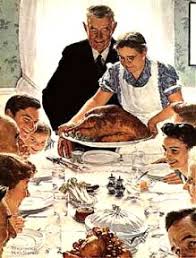
A Joyeux Noel

rockwell

Well before dawn this morning, I could see some stars and what must have been a planet in the west. Something about a clear sky at Christmastime has always mystified me, captivated my attention and imagination, from the simple, fun thoughts of reindeer and sleighs to the philosophical digressive pondering of First Cause and the imaginative world of proof. I love Christmas morning with its tidings and anticipatory pay-off. But even more I love the days earlier, of anticipation, alone, when the sky is a narrative, and the Author was sharp enough to leave enough room to us to fit in our own passages as we need to.  

In the east a sliver of light.

I remember now:

On Christmas morning before our parents were awake (or so we supposed), my siblings and I would gather, usually in my sister’s room, to exchange gifts we had bought for each other, before we headed down for the beginning of Christmas Day. It would inevitably still be dark out, and I know we’d lay awake waiting to hear each other also awake in the other room. A tap on the door. A “come in.” And we’d sit on the floor and open our presents.

At some point (like clockwork, as much an annual tradition as the Turkey or the pies), our mother would wake our father and he would exclaim, “I thought I said no one up before nine am!” and he couldn’t hide his smile to our laughter at the ludicrous suggestion we’d be up any later than five. It was always cold out during those Long Island years, and often snowy, but we weren’t going outside so it just added to the magic. Dad would be in his robe and slippers and he’d head to the living room as we gathered on the stairs and waited for him to plug in the multi-colored lights on the tree, and those on the rail, bringing to life the otherwise dark room. Mom had, of course, already organized whatever presents we would get into separate piles, and Dad would stand back and she directed us to the right area under the branches, though sometimes it was obvious if an unwrapped toy appeared, clearly already wished for by one of us. Dad would sit on the couch and watch in joy, even through the stream of “Wow, thank you Mom!” wishes continued.

It wouldn’t be long before the aromas of breakfast mixed with the onions and Bell Seasoning already underway for the stuffing, and eventually we’d need to get dressed, if not for church since we might have attended midnight mass, certainly for the droves of family who would soon fill the rooms. It was a beautiful way to grow up. I do not know the possible stresses, fears, and sacrifices that went on behind the scenes—that’s how good they were at it. Then, much later in the day after everyone else had left and we had all settled into the routine of looking at our gifts again, Dad would emerge from some closet with his gifts for each of us—books he had personally picked out, bought, and wrapped. It remains one of my favorite memories of all of my memories of my dear father.

It’s in the forties here today along the Chesapeake, and sunny. This is one of those days each year where I’ve been up so long and have done so much that it feels like it should be six hours later than it is. My sister and brother and nieces and nephew are all off in various parts of the country with their families anticipating their own Christmases, all of us with some common traditions, all of us with our individual touches to the holiday. Certainly all of us fortunate enough to be celebrating Christmas, laughing and telling stories, enjoying the food, the drinks, the sounds of football or Christmas music, and especially the welcome sounds of children, with another on the way. We are, to be sure, at peace this year. Anyone with family is engulfed in traditions which help balance our lives; they bring peace to our soul while providing some shared space not only with each other but with the idea of our ancestry, the hope of our posterity.

My father used to sit to the side for most of the holiday and enjoy being surrounded by his family. He’d carve the turkey, and of course disappear toward evening to get the books to give to us, but I picture him most in his chair, watching a game, laughing with us, waiting for Mom to call him to duty in the kitchen. He has moved on, and whatever there might be to know after this life of ours, well, he now knows, and that too brings me great peace.

Two deer stand nearby in the woods, cautious but not fleeing. It’s so quiet out. Absolute peace stretched out like canvas in all directions. On the water some ducks ease by.

I miss the days before society took “nearby” and “not far away” and tossed them to the strong breezes of technology and One World. The people I love are hundreds and even thousands of miles away, and we are used to that now. But this time of year I’m keenly aware of the distance. But in that small house around that small table when I was a child were so many relatives it is crazy to conceive how we pulled it off. But no one cared—we were together. Everyone was close enough to “drive over,” and by the time the turkey came out of the oven, a small crowd was sitting and standing and outside and in, laughing and sharing serious moments, because it was Christmas.

The sun is present now, but it is chilly, so I’m going inside again. I bought Michael a book at a local nautical shop and I need to wrap it to “surprise” him with Christmas evening when the rush of the day has settled down. He will be gracious enough to act surprised, just as we did with our father when he would predictably surprise us with books fifty and more years ago.

Well, except for one time. We had all settled down and we were sitting quietly, even the television off, the games had ended and dinner was done. My sister looked at our father and said, with a smile, “Okay, so where are our books?”

Thank God for memories. They bring us closer, help us to find the simplicity.

Shameless Self Promotion

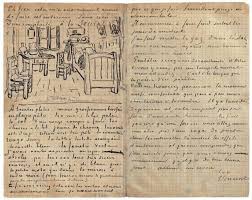
You can now order books direct from me at my book page. Think summer reading. Think early holiday shopping. For the Van Gogh lover, for the traveler, for the fathers and sons, the ones who walk, the ones who pray.

Order the books then email me (bobkunzinger@yahoo.com) the titles and addresses for inscription.

Thank you for supporting freelance writers, small presses, and the arts in general:

Go to the “books” link in the menu above, or tap “Continue reading” in the box below

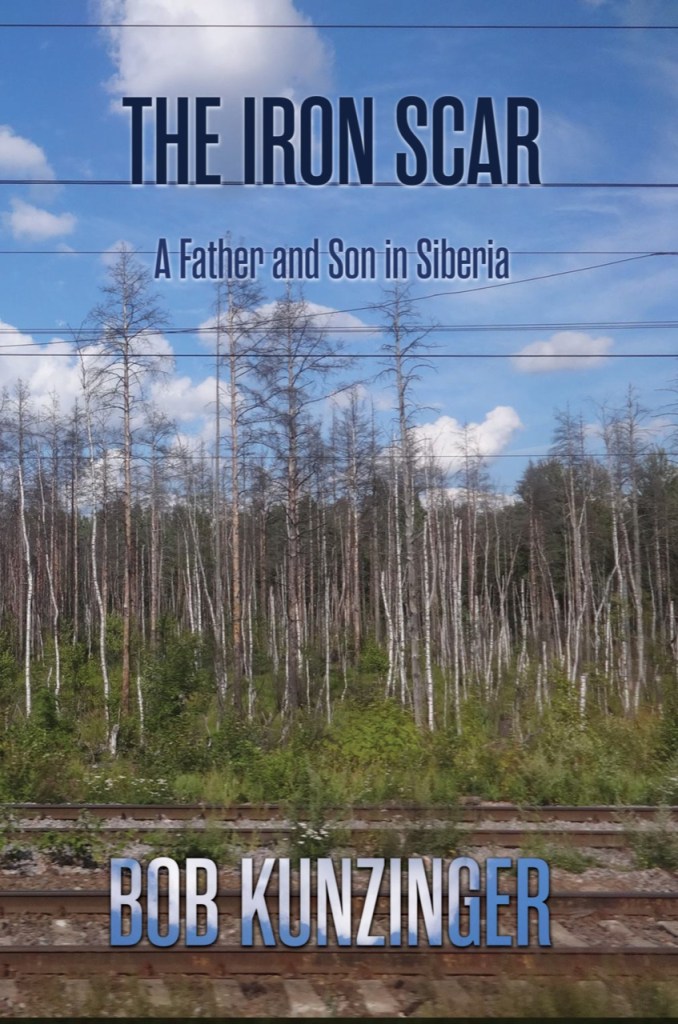
Special Edition/The Iron Scar

I’m excited to announce here on A View from this Wilderness, the release of my ninth book, this time a memoir; The Iron Scar: A Father and Son in Siberia.

The official release date from Madville Publishing in Texas is April 22nd, though word on the street is it will be available in March at the Associated Writers Programs conference in Philadelphia. And I’ll be there for that.

It is difficult to promote a book without sounding like one is bragging, but the reviews have been beyond my expectations. From Martin Sheen (actor, author of Along the Way: The Journey of a Father and Son, written with Emilio Estevez) to Tim O’Brien (writer, The Things They Carried and Going After Cacciato) to Sam Pickering and more, it has been a true journey that did not end in Vladivostok.

Mostly, I’m excited and proud of this book because not only was my then-twenty-year-old son (now turning twenty-nine), Michael, along with me for the entire journey, venturing out, exploring the world, but as a professional photographer I used him and his talents for the brilliant Photo Gallery within the book. Talk about proud.

This is about traveling across Europe and Asia by train, of course, but it is also about fathers and sons, about feeling like you’re starting brand new whether you’re in your twenties or your fifties. My father is very present in these pages, and the book is dedicated to him and Michael.

You can order right now and for the next few days by clicking here: inscribed copies directly from me for $20 each, which includes shipping, and when the books arrive on my doorstop I will sign them and send them right off to you (or wherever you’d like them to go); or you can order directly through the publisher at Madville Publishing once the site is ready to accept pre-orders.

I’ve made many trips to Russia–nearly thirty–but that trip, that summer, meeting new friends, playing chess, sharing meals and drinks, walking the streets of Irkutsk and Yekaterinburg, of Vladivostok and St Petersburg, walking the hills near Chersky Rock high above Lake Baikal, nearly getting completely stranded on the edge of Siberia, inching over a once-in-a-100 year flood in tiger-saturated taiga region of eastern Siberia, living for several days in a cramped cabin with a large, mostly drunk, boisterous Russia, playing chess against a gang of four chessmen, negotiating for food on platforms, talking about movies, about music, about the rain all those countless times just the two of us stood between train cars, and on and on

I hope you take this ride with us. It is an exciting place to be. If you wish to support the arts, writers, photographers, all in one shot, head up to that link above and order some copies for you and your friends.

Here are some reviews:

From National Book Award Winner, Tim O’Brien:

I just finished again– it’s wonderful.  I wish every book and manuscript I’ve read over the past two months had been as moving, gripping, and/or loaded with fascinating information about a huge swath of our planet.  Your relationship with Michael leads the way, of course, and binds the journey into an emotional and thematic whole that transcends the standard “look what I saw” travel book.  The chess, the harp, the photography, and the desire to take a 7-time-zone journey with his dad — wow, what a son to have.  And bravo to you for risking it, especially the whole language problem, which would’ve stopped me in my tracks, pun intended.  So many things stick with me.  The czar and Alexi and their fate.  I’ve read a book — read it twice — about the ending days, execution, disposal, and eventual recovery of the Romanovs, or what little was left of them, so I didn’t go into it blind with your book, but I felt the father-son, sharing-death connection much more powerfully.  Boris (Alexander Ivanovich, that is) was a memorable character portrait in all kinds of ways, and your descriptions (along with the photo of him) certainly match my memories of the cartoon character!  Moscow time.  What a nightmare.  What a miraculous ending to the nightmare.  The royal blue station shacks, the birches with no tops, the meat and potato  pastries — if pastry is the correct word — the smell of onions, the vodka, the wheel tapping, the once-in-hundred-year flooding, the vast vacancies of human presence, the moving village of the train, the Leningrad hero, the Leningrad ghosts, the ungraspable Leningrad numbers . . . Just so much. Well done, Bob.  My congratulations.  And thank you for a pleasurable few hours.

From Actor and Author, Martin Sheen:

The Iron Scar brought me on a journey that unexpectedly and artfully had me thinking about my own father and my sons throughout the book, as well as introducing me to the wild, warm, and colorful world of Siberia. Thank you for bringing me onboard with you and your son.

In Vladivostok at the end of the line (photo by some French guy)