I’ve run out of words. Out of ideas. Out of patience and interest and desire. I’ve run out of stories to share and any sense that any of those stories are remotely worth writing about to begin with. I’ve grown tired of getting it right, of editing, of restructuring and developing and trimming down. I’m over the clarity thing, finding the right noun, the more specific verb, eliminating obtuse modifiers, over the placement of pronouns and split infinitives.
I’ve said what I wanted to say.
Except to say this:
Every instance is miraculous to me. Every nuance of life, the breezes and stillness of a summer night, the aroma of honeysuckle, lavender in the air, the yellow of forsythia, the hints of orange and rust low on the horizon. All of it and more of it strikes me speechless and as often as I’ve tried to write about this I couldn’t do it justice. Time and again I ripped up or deleted the prose out of protest to my own lack of focus and ability. I should have been a photographer, bought the equipment and peddled my pictures to magazines and couples on the beach just before dawn–you know the shot, two people in the sand leaning against each other watching the sky lighten in the east. Before cellphones, couples remembered the moment by their presence, but now the moment is ever present because of the picture from the phone, so they no longer know if they recall that moment or simply the endless stream of “love this picture of you two” comments which flood their feed. But what of the shot from behind? The one of the two of them three feet from the water’s edge when the quick ray of dawn hits that small solstice space between their otherwise entangled lives. I could have done that instead of writing about dead relatives and other love songs.
It turns out what I’m best at is simply being present, watching the river run past, a heron searching for minnows and the osprey teaching her young to fly. I have mastered the art of taking it all in and the constant state of miraculous now which engulfs us every moment. But I tried writing instead because I couldn’t make money simply being alive, though I came close; but I could make money writing, teaching about writing, showing people some places I’ve been and what happened along the way, hoping they would sit back and say, “Yes, I know what you mean.”
Instead, I’m out of stories. I am starting to believe my last book took forty years to write not because it was so difficult but because I knew once that story was told I would have nothing left to say.
The story is told and I was right: I have nothing left to say.
Except to say this:
I have been working on a book about teaching. Well, it’s not about teaching, it’s about the best of and worst of what happens when you spend thirty plus years with twenty-year-olds and some of them go on to wonderous things while others die by their own hand, or their ex’s hand, or the random drop of evil. So I’m dealing with a publisher about that manuscript, but my mind is entangled in something that is a bigger deal to me, and that’s the “who gives a damn” factor which plagues writers from time to time, only this time the plague has spread into sentence structure and transitions and now its damned near everywhere. Even the pronouns are complaining; it’s always “I hate” this and “You suck at” that. And I’m also stage-deep in a play, a tragic play about the glory of hope, a one person play which I’m planning to premier in upstate New York but I ran into the “this kind of sucks” part of the writing process and if the book were not out I’d totally use the play as an excuse to avoid the book and most likely would finish the play, but instead the book is out and the play is pointless now. And my book about traveling, about the philosophy of being somewhere for a week or a month and being 100 percent present so that years later we remember every moment—that book, it is out there waiting for me to gather all the words and slap them into the correct order. But not today. It’s rainy and windy and there’s a possibility of tornados today, so maybe next week after coffee one morning.
You see what I mean? It just might be that all the other books and essays and readings and articles I’ve done in the past thirty plus years was a way to avoid finishing the book, and it worked, but now that that the book is done and out, everything else seems to have been a distraction from what I wanted to do originally, before the writing, before the planning and scheming and blind ambitions of a teenager, and that was simply to “live in the world, not inside my head” with thanks to Jackson for the line—to just take it all in at this rest stop as I pass through nature. Wordless. Anonymous. Present.
Maybe I’ll just head back to Spain.
After I get back from Oregon of course.
And Paris.
I feel as if my point—if I ever had one—has been made so I have no reason to go on with these unalphabetically disorganized letters.
Except to say this:
Everything I do seems to be prep work for something that I have not yet figured out. Or, to return to Jackson again, “It seems I’m just a day away from where I ought to be.”
Letty’s birthday would be Wednesday. Dave’s next week. Mom’s and Dad’s in two months, Dan’s a month ago, Cole’s in ten days. I’ve written about all of them. And about Joe, whose birthday was the day my last book, the one about him, kinda sorta, launched. So it can often feel like I’m all out of words, but this time it’s extreme, like the alphabet hasn’t even been invented yet.
But then a hawk flew by my window here at Aerie, and I read something about the Oregon coast, and I saw a clip of Lady Gaga singing “La Vie en Rose,” and I woke up. See, there’s no such thing as writer’s block, there’s only the lack of wind and the empty sails and that sense the doldrums are a permanent state of being. Then, softly at first like a fragment, like a clause, the wind picks up, then more, and suddenly you’re sailing wing on wing through compound sentences and everything, I mean all of it, falls into place and, as Dan notes, “There’s nothing left to say but come on morning.”
This piece was originally written for the Jewish Mother Sessions with Tim Seibles, and then published in several journals and the collection Fragments: Flash non-Fiction. It has since been anthologized twice. It crawled out of one of my thumb drives this afternoon.
A
BCDEFGHIJK
LMNOP
QRSTUVWXY
Z
26 letters.
That’s it.
In the beginning. That which doesn’t kill us makes us stronger. To be or not to be—that one just six letters. Jesus wept—seven.
I can’t write, my students say; my mother said; my very own demons say when something needs to be said but I’m at a loss of words. The history of English has turned and spun back on itself, argued with endings and double negatives, trampled meaning, treasured nuances, made murderers of us all, and unearthed muses to slipknot a string of letters, tie together thoughts like popcorn for a Christmas tree, individual kernels only able to dangle dutifully due to one common thread.
I do. Rest in Peace. Go to Hell. I quit. Fuck you. I love you—7 letters.
The English language, more specifically the alphabet, was not alphabetical at first, made that way in the 1300’s on Syria’s northern coast. Today, we slaughter its beauty with a cacophony of sounds whose aesthetic value is lost in translation while simultaneously softening hardened hearts with poetry and prose for the ages. For nearly a millennium this alphabet whose letters lay the way for understanding in multiple languages, has dictated decrees, is uttered by infants one syllable at a time until by age five they’ve mastered the twenty six consonants and vowels. What circles of wonder are children’s faces when someone’s tongue pushes out “toy” “treat” “your mommy’s here” “your daddy’s home.”
Plato said, “Wise men talk because they have something to say, fools because they have to say something”; Socrates said, “False words are not only evil in themselves, but they infect the soul with evil.” The sins of our fathers forever condemn us to hell but for confession, penance, and absolution.
Forgive me father for I have sinned—14 letters.
Of all the languages on the planet, English has the largest vocabulary at more than 800,000 words, all from those same 26 symbols.
There are roughly forty five thousand spoken languages in the world, about 4500 written today but almost half of them are spoken by less than a thousand people. English, though, is the most common second language on Earth—translate or original, the Magna Carter, The Declaration, The Bible, the Koran, the Torah, the tablets tossed by Moses and a death certificate all reassembled versions of the twenty-six.
I have a dream—eight letters.
Ask not what your country can do for you; ask what you can do for your country—fourteen.
We the People–seven
Teeter-totter, gummy, Mississippi, and Utah—four.
Billowy is one of only a few seven letter words whose six letters remain alphabetical. Spoon-feed is the longest, at nine letters, whose seven letters are reverse-alphabetical.
We can talk, us English. We can spin a yarn, chew the fat, beat the gums, flap the lips. We have the gift of gab, we run off with the mouth, we can spit it out, shoot the breeze, talk someone’s ears off, or just talk shop, talk turkey, talk until we’re blue in the face, be the talk of the town. We can, for certain, at just seven letters, bullshit.
My point (7 letters) is that (3 letters) sometimes, despite our skills (4 letters) with the English language (6 letters), we are often left, at just six letters, speechless.
Like in the lobby that day.
You texted me well less than 160 characters, which is the alphabet 6.1 times, that you were in the lobby. I stood, lost, staring at strangers, until one more text; seven letters long—turn around.
I had aged twenty three years, you not one. The sun settled through lace curtains and bathed your face, your hair, your smile, my God your smile, and when you saw me, you leaned forward just enough like you used to when we laughed at some private joke, and there, for the first time, I knew I knew nothing about language, that Shakespeare, Keats, Wordsworth, would be worth nothing to me had they been muses in my mind feeding me phrases to capture what I saw when I saw you. There are no words. No language has been invented to allow me enough expression that others can read how I felt, how every moment returned, every hope, every single possibility, the innocence, the honesty, the complete oneness of two. No. It has never, can never be captured with twenty six times twenty six letters.
It isn’t love, exactly, and perhaps some symphonic phrase might come closer then the limitations of language. This is the frustration of poets, the complete sense of ineptitude of writers and lovers throughout history. To define that smile, the slight lean forward, that light through laced curtains at just that moment all those years later. We can’t impose such limitations.
We say hello. We say soon after, perhaps, so long.
Portions of this piece originally ran in Ilanot Review as “I Knew Two Men,” and it has subsequently appeared in several journals, including a publication honoring the late Arnost Lustig.
My son is leaving for Prague in a few days and this is on my mind.
Prague Adaptation
Arnost Lustig and I drank pilsner at the Golden Tiger in Prague. A large man in a white smock served our fourth pint when I asked about Hrabal. “You knew him, then,” I said.
***
“Yes, of course. We all knew him. The writers, the musicians, we all knew each other.” Arnost leaned forward. “Prague’s not that big, you know,” he said and laughed.
Arnost was a burly man who wore a leather coat and carried a satchel. We sat one table down from where Bohumil Hrabal, the great Czech writer, once drank. Hrabal came here to enjoy his beer and tell stories which ended up as classic works of European literature, such as I Served the King of England and Too Loud a Solitude.
“He came to Washington and stayed in my flat once,” Arnost added.
After a while I mentioned Hrabal’s death.
“Okay, then, let me ask you,” I leaned into him so the gatherings of Czech men at this mostly hidden pub couldn’t hear. “Do you think he fell out of that window like the nurse reported, or did he jump?”
Arnost leaned back and laughed. “Ah! Such mysteries we can’t answer! How we all love unanswerable questions!”
“She said he was feeding the pigeons. At a hospital? Come on!”
Arnost smiled at me while ignoring my comment and continued to talk while he said hello to some patrons. Everyone knew this man. “So yesterday you went with Jan to Terezin. Tell me about it.”
The day before I had walked about the Terezin Ghetto with Jan Weiner, a colleague of ours. Unlike Arnost, Jan was a stern man with a straight back and fine combed hair. He was calculating. He didn’t turn his head to talk but his entire body instead, like a soldier always at attention. He was very proud of himself, and every conversation somehow reeled back to his accomplishments during the war. To be certain, he deserved the praise, albeit mostly self-inflicted these days.
Arnost shook a stranger’s hand then nodded to me. “Did you sit on the cot?”
We sat on the cot.
Terezin is actually the so-called “town Hitler gave to the Jews,” for its use in successfully teasing the International Red Cross into believing the Nazis had set up the Jews well in small towns of their own. An adjacent eighteenth-century small fortress, used as a political prison for anti-Nazi protesters, is where Jan and I spent the morning, walking about the museum. Arnost knows Terezin well: he spent nearly three years there interned during his teens. He worked the rails that would bring him and his family to Auschwitz where his father was immediately gassed. On a transport to Dachau, the allies bombed the train and Arnost took advantage of the confused guards and escaped into literary history, writing countless bestsellers about the Holocaust and Terezin, all wrapped in the folds of unrequited love and the romance of war, despite its genocide. Diamonds in the Night, Night and Hope, and Darkness Casts No Shadow all remain staples of Holocaust literature.
So Jan and I walked into the women’s quarters at the Small Fortress, a compound really, and he showed me what one of the small cells looks like. We sat on a cot and he said, “Here, my mother was a prisoner. Right here.” He stroked the rusty metal and sat straight, stern, and oddly proud. “They tortured her for several days in every way imaginable before they killed her.” We walked about for an hour or so, and outside the compound he sat on a wall and ate a sandwich.
On the way back to Prague he told me that during the war his family took care of two young girls. Their parents had traveled to Africa as missionaries and were to return for them but the Nazis took over during the interim. “Those girls were gassed,” he said, then explained how soon after this his own father and step-mother killed themselves in their apartment in front of Jan. That’s when instead of giving up he escaped on a train south to Italy where he was imprisoned, only to escape to England. There he joined the Royal Air Force and flew bombing missions that helped turn the war. This was a real hero. Before we got off the bus in Prague we shook hands and he said, “I don’t believe in God.”
“Okay. I get it,” I said.
“No God could exist in a world like this,” he added.
“Okay.”
Arnost smiled and said, “Jan is always trying to convince himself of something. It makes him feel better about life.” He nodded toward a relief of Hrabal on the wall above the next table. “What do you think, Bob? Do you think you know what happened?”
Here’s what I knew:
Hrabal died when he fell from the fifth floor window of the Bulovka Hospital in Prague while leaning out trying to feed pigeons. He also lived on the fifth floor of his apartment building, which itself is uninteresting except for his fascination with fifth-floor suicides. He dreamt of his own death from that height. He would lean out the fifth-floor window of his flat to gaze up at the sky above St. Giles, and he would often walk down to the Maison Oppelt, where Franz Kafka once wanted to jump from the fifth floor.
I knew he sat here, six feet from where I drank my fourth pilsner with Arnost. They spent a weekend together in DC drinking beer and watching Charlie Chaplin films, right after Susan Sontag wrote in the New York Times that Hrabal’s Too Loud a Solitude would be “one of the twenty books that would shape literature in the twentieth century.” I asked Sontag once about Hrabal with whom she had laughed and drunk in New York City, and Susan said to me, sober as can be, that if I could only read the writing of one person let it be Hrabal.
And I knew that his devotion to his wife, whom he called Pipsi, was so complete that after her long, drawn-out death, he wanted to jump from their fifth floor window. “Every room in the apartment hurts,” he wrote, and every time he thought of jumping from that fifth floor he said his guardian angel pulled him back because the angel wanted him to “remain as yet. But I’ve felt like it.” Just like Kafka, Hrabal noted, who had also been “hurt by the world,” he supposed. Kafka didn’t jump from the fifth floor of the Maison Oppelt onto Paris Avenue, as he desired. I knew Hrabal was fascinated that, ironically, Rilke’s Malte Brigge tried to jump from another fifth floor in Paris.
And I supposed it was all too poetic for Hrabal to bear, like his beloved poet Biebl who jumped from a window to die only after asking a painter to create a canvas of a man falling backwards out of a window. So Hrabal’s routine included what he called “morning suicidal, work until midday, lunch, bus ride, back to the pub.”
This pub where one beer after another would fall backwards into his round and grateful stomach, and he’d listen to these very same men in this very same Golden Tiger talk, feeding him what he called “morsels of life,” which he’d store away and use later in his work.
Including Too Loud a Solitude, his very last work before his unfortunate fifth-story pigeon-feeding plunge. Too Loud a Solitude, where at the end the protagonist climbs into the trash compactor he ran for thirty five years beneath the streets of Prague and compacts himself, saying, “I will follow Seneca. I will follow Socrates, and here, in my press, in my cellar, choose my own fall, which is ascension.”
I thought perhaps Hrabal chose his own fall.
That’s what I knew. I stared through Arnost’s large glasses into his engaging eyes, which have witnessed what no human should, but who took those experiences and excised them through his enchanting and haunting prose. Jan never let go of what happened, whereas Arnost took what happened and gave it back to the world in bestsellers, some of which had been made into films. By 2003 he was so respected in Prague that his good friend, playwright and President Vaclav Havel, gave him high honors and an apartment in the Castle, yet his eyes looked the same as they did in the rare pre-war photos of him with his parents and sister.
“What do you think, Bob?”
I listened to the old men who sat at picnic tables which lined the pub walls and wondered if Arnost listened to what they said. Did he store away morsels of life for use in one of his works? What were these men saying that Hrabal might have half listened to and molded into prose the way only he knew how while beers tumbled all afternoon?
This was in 2000. Hrabal fed his pigeons only a few years earlier. These may in fact be the same men.
I nodded at Arnost. “I read once that he could recite whole chapters from books without missing a word,” I said. Arnost laughed and agreed he had heard the same thing and noted Hrabal to be one of the most intelligent men he’d ever known.
I stared at the room full of Czech men. “There’s really no way for someone like that to make a graceful exit, is there?”
Again Arnost laughed. “Nothing poetic enough you don’t think?” He thought for a moment, always searching for a better way to phrase his words. “Maybe nothing more poetic?” he added. “You know sometimes it is best not to know too much, don’t you agree?”
I knew Arnost enough to know that “don’t you agree” was rhetorical.
We didn’t order, but the large man in the white smock brought two more beers, marked them on a white slip of paper on the table, and walked away. After a while we toasted toward the relief of Hrabal on the wall.
“Okay,” I said. “Here’s what I think: He wrote that if God really loved him, he’d just drop dead over a beer at the Golden Tiger.” We laughed hard and Arnost raised his eyebrows, nodded slowly, and finished his drink. “Finish up,” he said. “I have to lecture in thirty minutes or so.”
It was a time of extremes. I drank in every morsel of life from the minds of men who cracked open history and edited the outcome. It was a time to speak of the tragic haunting of dead relatives and the mystical power of words. One man finds romance in the crumbling memories of internment, and the other loses faith in God. Sometimes soldiers, whether fighter pilots or writers, dilute death and inhumanity with beer, while others drink to celebrate what’s left.
Sometimes they spend a weekend watching Chaplin films and talk about home and how it was before before the Nazis and the Communists cared about Prague, the trashing of books, the elimination of a race, the fatal tumblings of souls.
Later that night I left the university alone and went to the hospital on my way back to my apartment. I stopped and stared, counting floors to five, and wondered what Hrabal would have written about next. He was in his early eighties when he died; there was still plenty of time. I left, but turned back briefly and gazed at the façade for a few minutes.
I didn’t see a single pigeon anywhere.
About a week later, I returned to Terezine with Arnost and a friend of his, Academy Award winning filmmaker, Milos Foreman. On that particular day in 2000 Arnost needed to talk to Milos who wanted to make a movie based upon Arnost’s book The Unloved. He made beautiful movies like One Flew Over the Cockoo’s Nest, Man on the Moon, Heartburn, and others including my favorite, Amadeus. At some point on that cool afternoon between conversations about the horrific ghetto museum of Terezin and the prison for anti-Nazi protesters, the Small Fortress, I ended up having a conversation with Milos about adaptation. He discovered that subject matter to be the focus of my lectures at the university. It seems the theme of my entire time in Prague that year was Adaptation.
“So we agree then,” he said to me. He was much younger than Arnost with the same controlling conversational style.
“Yes,” I said, “Of course. It is always frustrating when people say how much more they like the book, or do any form of comparison at all. They are completely separate art forms.”
“Exactly! I can’t film all of a book!”
We talked further about our common concern on the subject of movies based upon a novel or play, and we reiterated the inability of people to see movies and books they are based upon as separate. Yet we also agreed on the difficult task of expecting anything else of the average person at a movie on a Saturday afternoon.
Eventually, of course, the talk turned to his work.
“Yes,” I said. “I’ve taught both “Cockoo’s Nest” as well as Amadeus, and I did read Kesey’s book as well as Shaffer’s play, which I first saw when I was in college.”
“Well?”
“Both times you nailed it. From Kesey’s novel you kept the major themes which worked and consolidated what needed to be. In Amadeus you made music the central theme of the movie instead of the ridiculous “mystery” between Mozart and Salieri. I still enjoy watching both films and teaching them. Oh, and Amadeus has the BEST cut in movies, when Mozart is in bed and Salieri finally hands him the completed “Requiem,” and Mozart says, “Okay, from the beginning,” and we hear an entire orchestra for the first time as his wife’s horse and carriage come into view. Love that scene.”
Milos indicated it was hard to miss with such material and brilliant film editors, but I appealed. He was a great director.
Then he mentioned Ragtime.
When I was young my father bought me E.L Doctorow’s book. I loved it and read if several times. I loved how it swept across decades and included some major historical figures such as Houdini. But I never could picture it as a movie; even if one could save the major themes, it simply is too complicated to pull off as a traditional narrative with the proper conflicts clarified.
Then I saw the movie and I didn’t like it all that much. I even watched it again after I learned a few things about adaptation at Penn State, and it still, for me, didn’t work. I even left behind my memory of the book and focused solely on the new art form, trying the best I could to not include the literature in my analysis.
“What about Ragtime,” Milos said.
I thought about saying, That was really some casting they did for “Cockoo’s Nest,” wasn’t it? But I could tell he was enjoying our conversation. I looked at his Czech copy of The Unloved in his hands. It was bookmarked and folded and noted in dozens of places. He clearly learned the book as if it were his own, like his films each became his own, not Kesey’s or Shaffer’s and definitely not Doctorow’s.
“It seemed too complicated to capture,” I said.
“Yes,” he agreed, reflectively. “It never did convey the themes well. Or at least the way I wanted to.”
“It seemed more of a vehicle for Cagney seeing as it was his last film.” I was feeling ballsy now in the conversation.
“You’re probably right. He got more attention than the film. Will you discuss these films tomorrow in your class?”
“No. I’m moving on to Hrabal’s Closely Watched Trains.” He smiled. Milos was a fan and friend of Hrabal’s. As Arnost said, the Prague art community is not very big.
I told him I was going to talk about how adaptation of one art form into another involves both deciding what essential elements must make the transition and which ones very specifically needed to be left behind.
Arnost returned, always sharp, always ready for what’s next. I stared at this man’s eyes and thought about how much he went through. The Nazi’s disrupted his life, caged him for three years as a workhorse, forced him to build a railroad from Terezin to the mainline on the way to Auschwitz, killed his family, and still he escaped. And still he went on to not only live his life, but live it fully as a writer. He knew what to take with him after the war and he knew what he need not address ever again. His entire life was about what to leave in and what to leave out.
It is not easy, adapting, saving the best of what exists, our strengths, and leaving behind the weaknesses, the parts we wish we could do over given the chance.
St Nicholas Cathedral (one of the rare churches to never close during Soviet days)
I’ve been thinking a lot about Russia lately, about how so much these days reminds me of my time there. Over the course of more than twenty years, I came to know the backroads and alleys of St. Petersburg, Russia. I found the coolest little cafes and late night jazz joints, made friends in shacks serving Georgian wine and shashleek—a kind of shish kabob—in a small room with low ceilings and dirt floors, the Gulf of Finland pounding at the sand outside. I returned again and again to long embraces from friends like Igor and Dima and Valentine the crazy man and brilliant artist.
I taught American culture at the college, endured endless people wanting to practice their English, celebrated Victory Day on Palace Bridge year after year, mourned the losses of people during the siege with veterans who sat telling me their stories all the while holding my arm, connecting to me through touch.
I prayed with old nuns in shrines, climbed the rubble of the ruined St Catherine of Alexandria Catholic Church with American priest Frank Sutman who raised enough money to rebuild this first Catholic Church in all of Russia back to its glory from the ruins of the storage facility it had become during the Soviet Era. I met musicians in old bars—Gypsies—and played music with them until the sun came up, read my own work at the famed Stray Dog Café surrounded by the ghosts of Anna Akhmatova and Trotsky and Brodsky.
What a time it was.
With friends I toured palace after palace, attended private concerts by quintets from the Kirov who played just for us before dinner at the Nikolaevsky, walked the halls of the Summer Palace and wondered about the infamous Amber Room, learned every crevice of the Winter Palace and its five building complex that is the Hermitage Museum. Had drinks in the basement of the Yusopov Palace where Rasputin had drinks just before he was killed for the fifth time. Walked the grounds of Galinka Palace, the Church of Spilled Blood, St Isaacs, St Nicholas, Trinity, and more. I climbed to the top of the tower of Smolney from which St Seraphim supposedly fell the ninety feet to the ground when he was ten but landed softly and got up and ran toward canonization.
I learned where to buy vodka and where not to sip it at all. I found the best places for authentic borsch and had Beef Stroganoff at the Stroganoff Palace.
I ate at McDonalds, Pizza Hut, Kentucky Fried Chicken, and more western joints filled to the gills with Russians all in love with the taste of America, drinking in the swell of western culture, surrounding my friends and me trying to fit more English into their Cyrillic mouths.
We took canal rides and saw folk shows where more than a few times I was dragged on stage to dance with the Russian women and men as balalaika music filled the packed arena. I’ve seen Swan Lake at the Marinksy Theatre more than a dozen times and have seen Hamlet in Russian.
I’ve made friends with former Soviet Naval Captains, countless professors, writers, and artists. I’ve become friends with translators and more than a few vets of the Chechnya War who would have rather stayed home and continued their studies in Engineering at St Petersburg University than return with no legs, one arm, half a face blown away, leaning against the Metro Walls, cap in hand—handicapped, hopeless.
I’ve sat on the rocks of the Gulf of Finland drinking champagne during the White Nights while one of Russia’s finest flautists performed privately for us, laughing, making us cry with Tchaikovsky and Bach. I’ve sat backstage at the St Petersburg Conservatory with a dear friend who is a choreographer, and his teacher, who used to dance with Baryshnikov, and watched them practice.
We’ve had food from an Uzbekistan Restaurant, and I came to understand the plight of the refugees from Azerbaijan after the slaughter by Armenians. I’ve read at the flat of Dostoevsky with an original volume of Pushkin on the table next to me and one of Fyodor’s own manuscripts two feet away. We have wandered through the massive marketplace next door and carried home to our apartment bags of fresh vegetables and chunks of meat cut before my eyes off of a carcass.
I’ve battled with border patrol over textbooks, bribed cemetery guards to let us wander sacred grounds, sat in the cell that held Dostoevsky and other dissidents, and watched the ruble gain strength, take a beating, then recover, then fall. I’ve sat on benches with women who were survivors of the siege during the Great Patriotic War and talked about family, talked about poppyseed rolls, talked about the flowers that grow in the dirt.
I was there when they reinterned the remains of Czar Nicholas II and his family, including Anastasia and Alexi. I was there for the celebration of the 300th anniversary of the city that Peter the Great called the Window to the West.
I watched as Marlboro came to town, then Clairol and every Russian woman suddenly had bright red hair. Adidas showed up and all the men wore warmup suits. I’ve walked past too many men in cheap three piece suits holding semi-automatic rifles guarding some boss’ SUV as money exchanged hands—all cash, USD, in suitcases.
I had just turned thirty-one when Communism fell and two years later I went to St Petersburg. The city streets were dank and barren, not a single neon sign, not a single advertisement, nothing to see or do. I toured the lab of Pavlov where dogs are still used, and I stood on the Field of Mars next to the eternal flame commemorating those lost during the siege. I met then-Vice Mayor Vladimir Putin. I met ambassadors. I met Sophia, who was a young teen when the Czar was still in charge, who lost her husband and son during the siege, and who sat in the shadow of the Smolensky Shrine and told me they can take anything they want from her, but they’ll never take her faith from her again. She blessed herself in the large Orthodox way and held my arm with her ninety-something year old transparent hands. She could tell me whatever she wanted. I could talk about anything I wished. I watched this country I was raised to fear fixate on all things west, becoming a strong and welcome presence in world culture and exchange. Every person I brought returned home amazed at the life that was Russia, hoping to return, knowing they had friends there, and dozens did return with me for a second, some for a forth or fifth time. Russia was addicting.
I’ve brought dozens of US faculty, hundreds of college students, a dozen cousins, pilots, performers, writers, and a four star Army General, twice.
Now, exactly half a lifetime since my first trip, I’ve watched it all go full circle. The little western influence that is still there can’t be changed, but the welcome presence has faded away—no more McDonalds, Pizza Hut, or KFC. No more Starbucks. Open readings are tolerated only if no one, no one, absolutely no one uses the word “War” in reference to the Ukraine.
After the invasion, I sat by hopelessly four thousand miles away as friends wished me well and hoped we’d someday meet again. I told them, my friends, including those now in Germany and France, a few in Norway, that I cannot wait to see them again, perhaps in New York, or Paris. Maybe Oslo. Not Russia. Those who had left or since left Russia, I talk to, but too many to mention I can no longer get ahold of, and I have no idea whatever happened to them. Many were men in their twenties and thirties. All had terrific senses of humor and the hopes young artists and engineers who knew only democratic principles their entire lives. Gone.
I have taken a train from one end of that massive empire to the other with my son, creating memories to last all our lives, spent late nights drinking shots of vodka with Siberian businessmen. I’ve sat in the home of tour operators and laughed and became brothers with them. I have mementos on bookshelves, on walls. I’ve written three books about my times in Russia, and more than fifty articles. I’ve developed three college courses about Russian Culture and mentored more than two hundred students who received Study Abroad credit. I miss the beauty of the architecture, the beauty of the people, and the mystical way history bathes me when I walk the streets at night. I miss my friends. I miss laughing with Valentine and talking about butterflies and angels. I miss sitting alone at this one café I love drinking tea, making notes, listening to contemporary folk music and enjoying this impossible life I’ve had the chance to live that brought me more than two dozen times to a place that until I was in my thirties, I never thought I’d ever see. I miss the people very much.
I miss the way old women swept the streets with birch brooms. I miss the Hermitage and the Hidden Treasures Collection, and that time I helped spread the ashes of my artist friend, James Cole Young, in the crevices of one of his favorite paintings. I miss counting stripes on the wallpaper and chasing pigeons in the park.
I miss the hope that was Russia. I miss that hope. Even now, here, I miss hope.
Which in reality was a small schoolhouse in central Massachusetts where Mary Elizabeth Sawyer walked each day from her farm, followed by the lamb.
I’ll come back to this.
I worked for some time at a quaint inn in Sterling, Massachusetts. The restaurant with a small lounge and several rooms upstairs sat just near the Wachusett Reservoir, at the bottom of a hill in the village. It was owned by the Roy family, and Al Roy had studied cooking in France. His son, Mark, ran the restaurant and inn, along with his wife Patti. The staff consisted of about ten of us. Dave was a chef, Tom the bartender, Rich—a student at the time at the Culinary Institute of America—assisted Dave, and the wait staff. We were like family and shared each other’s lives.
I’d go hawk watching at the Quabbin Reservoir an hour west with Dave and his wife, and often Cathy and Stacy and others would come to my place—an old yellow house just down the shore of the reservoir a few miles past the cider mill—and sometimes after the dining room closed we’d sit around and have a drink and talk. There were funny times, like when I went out one cold winter night to put the trash out and the only other person left was Cathy who was placing the fine China plates out for the next evening’s guests, but I locked myself out. I went to the back windows of the dining room which faced the wooded hillside, standing two feet deep in snow, and knocked on the window. It scared the crap out of Cathy and the stack of plates sailed out of her arms and crashed to the floor. She screamed. I laughed. It was an accident, truly. Or when a couple from Quebec came to dinner just as the dining room closed and kept just Tom and me there for hours, well past midnight. Dave had closed up the kitchen after their meal and went home, but they still had wine and dessert. At about 1 am they left and when I opened their bill folder to see what kind of tip they left on the $40 tab for keeping us there so late, the credit card receipt showed no tip at all. I cursed loud enough for Tom to laugh and say, “No tip, huh?” and when I picked up the folder, a $100 bill was underneath.
Some tragic times as well, mostly January 28th, 1986, two months to the day after Thanksgiving, and just about a week before I moved to Pennsylvania. Most Americans will never forget this day, but it was particularly poignant for those of us in New England since Christa McAuliffe had lived just across the border in New Hampshire, and on that morning and afternoon, the inn was packed with people—many friends of Christa’s—to watch the Challenger launch on television. I was tapping a keg of Budweiser and looked up as Patti said, “Oh wow, that doesn’t seem right.”
It was completely silent, followed by cries. I can still smell the beer, hear the dishes from the kitchen, Cathy saying, “What’s going on?” and Tom behind the bar quietly repeating, “Holy Shit. Oh wow. Holy Shit.”
But today I remember a happier time there. Thanksgiving Day, 1985. Forty years ago next week. We had a limited menu of Turkey, Scallops, or Prime Rib, and we were booked for all three seatings. The last guests left about 7 that night, and after we cleaned the dining room and the kitchen, we all sat around a bunch of tables pushed together and had a full meal with all three entrees, bottles of wine, pies, and stories, constant and hilarious stories. It was a beautiful time in my life and I loved where I lived, what I did, and the people I spent my time with.
But something had to change; I knew this. I did not know what needed to happen, but something else needed to be next. I had graduated from college, traveled through Mexico, lived in Tucson, managed a health club, and was happy, but stagnant, and this state of being, albeit pleasant, contradicted my very nature. It would not be long before I would turn in my notice and move to Pennsylvania, but on that Thanksgiving where a dozen misfits all sat around the table together laughing and drinking and wishing it could be like that forever but knowing it had to change—and would, for every single one of us—I got up to open another bottle of wine but instead walked out the front door to see that even more snow had accumulated on the couple of feet we already had.
I walked to the center of the village just a half block away and found a statue I’d never seen before. It was of Mary Elizabeth Sawyer’s lamb. Mary is the young girl in Sterling, Massachusetts, who had a small lamb that followed her everywhere, including school. It was a big event in the small school, and the next day a classmate of Mary’s, John Roulstone, a year older than Mary, handed her a poem he had written about the event. The poem had three stanzas—the first of which is at the top of this page.
Some years later, a poet, Sarah Hale who lived not far from there, published a small book of poems which contained a longer version of the poem, but Hale insisted it was original and based upon imaginary events. The controversy lasted for some years, well after both Mary and Hale had died. Until Henry Ford—yes, that one—investigated the incident and not only sided with Sterling’s own Mary, but purchased the schoolhouse from the village of Sterling, moved it to Sudbury, Massachusetts, and then published a book about Mary.
Back to me.
I stood at the small statue watching snow slowly cover the lamb’s wool now truly white as snow, and waited in perfect silence, listening to the quiet of rural Massachusetts. I can feel that moment today, that sense of peace braided with a sense of restlessness. I had to leave. I had to stay. Back then for people my age riding the tail of the Baby Boomer generation, the urge to “change” something usually meant going to the liquor store for boxes, filling them with books I’d never read again, tying them up with string, and moving somewhere else. Boston was out of the question—geez, an hour to the east was too far. Staying meant improving my life where I was—figuring out how to take the best of my situation and improve it, and I stood in front of Mary’s lamb and knew I didn’t know how to begin to do that. I only knew how to pack up and leave; that I was good at.
I went back in and grabbed the wine bottle and while I was opening it, Mark came in the kitchen.
“Where the hell have you been? We’re a bottle a head of you!”
“I was talking to the lamb.”
“What lamb?”
“Mary’s.”
“Ha. Oh. Well…”
“Mark, I think I’m going to have to turn in my notice, but, I don’t know, maybe January, maybe February. I need to find something else to do.”
“Oh wow, well, okay. We can talk about this later. You’re here for the holidays, though?”
“Yes, of course.”
We drank wine. I suddenly felt a little out of place, more like a visiting cousin than immediate family.
At the end of the night, everyone had left, Mark and Patti had retired upstairs, and just Cathy and I were left, she placed the dinner plates out for the next day, and I put out the trash, where I accidently locked myself out.
I moved. Cathy moved. Dave opened his own restaurant. Tom died. And the Sterling Inn fell into disrepair over the next few decades, abandoned, with vines taking over the building, the parking lot cracked and covered with weeds. Someone bought it from the Roy family a few years ago with the intent of restoring it to its full original glory. Same red trim; same black shutters.But some town controversy has kept it from proceeding. I miss the place. I’m glad I moved but I’m sorry I left.
That was forty Thanksgivings ago. Some memories follow us around, waiting for us to notice them.
Some of us are masters of self-deception; we can convince ourselves of just about anything and we learn to look for the smallest of clues to justify whatever illusion keeps our delusion alive.
I am certain this all sounds somewhat psychotic, even sinister at times. I know. Yet this mental acuity of delusion and ambition is not only necessary, it’s what separates those of us in lives of quiet desperation from those whose names are synonymous with acts of greatness.
Two truisms:
One, “Insanity is doing the same thing over and over hoping to reach a different result.” Okay.
Two, “The Greater Fool is the one who thinks they can succeed where others before have consistently failed.”
But notice the problem; no advancement in technology, science, the arts, moves forward without a delicate balance of both: Science in particular means doing the same thing over and over to check results, to see if it comes out differently even once, only once in a million trials, to make certain everything is okay or everything just changed. The movie The Right Stuff which begins in California with test pilots does an excellent job of showing how insane those fools were to get into yet another new jet after everyone else had died, only to take flight to another level and eventually out of this world. Certainly the engineers made alterations each time, so it wasn’t the same thing over and over, but with patience and caution.
It is a difficult thing to keep trying to get something right that continually fails. And worse, everyone that cares about you watches and calls you insane for still persisting when nothing positive has happened, and they call you a fool for not listening to the sage advice of intelligent and caring people. But the reality is only we know what we are capable of and so few of us ever try to find out what that is.
Example: Vincent van Gogh kept painting the way he believed was right despite being told to change his ways by the most respected art critics and dealers—including his own brother—of the day. When he failed, they said, “The fool is insane, and he lived off of his brother!” When he succeeded, they said, “His persistence paid off, and he had the undying support of his family.” When he painted “Starry Night” from a room in the asylum, it wasn’t liked at all by others in the art world. Today, some estimates place its value at just about one billion dollars. Can you point out the genius among delusional if pressed to do so? Can we ever know for certain the guy on the corner in St. Augustine I met decades ago who was screaming to passers by that the voices in his head told him the “water is rising my brothers and sisters; the water is rising,” wasn’t talking about Hurricane Mathew? There’s a thin line between genius and delusion; and history has proven it takes an insane person, a fool, to be exalted for their persistence and determination. “How pathetic” they say beforehand; “How original” they say later.
I’m sure that, like me, this all makes you think of the overweight patrons at the health club I managed forty years ago. Some of the members were there to lose well over one hundred pounds, some fifty. I taught an advanced class for the football squad at Holy Cross College as well as a class where the minimum desired weight loss was fifty pounds, and some wanted to shed triple that. They tried everything. Everything, over and over.
One day I walked into class with five, five-pound bags of sugar in a backpack. I sat on the small riser at the front of the room and put the pack on the floor and told everyone to sit down. We talked a bit about weight, about the physicalness of carrying it around, the mental weight we carry with it; the ridicule from others, the spouses telling them they’ll never lose it and to give up, the neighbors calling them fools for going to the club everyday when “you should have thought of that before you gained all that weight,” never understanding, never ever empathizing.
So I asked a woman to come up and pick up the pack. She gasped when she tried, of course, and she barely got it off the ground. So I told her to crouch down and I put the pack on her thighs so that she could wrap her hands around it, and then I told her to stand up, helping her at the elbows. She laughed when she was all the way up, and then I told her to drop the back, which she gladly did, and it made a thud when it hit the gray carpeting so that everyone jumped. She sat back down; I picked up the backpack and put my arms through the straps.
“This is heavy,” I said, and we laughed. When I asked if anyone else wanted to try and pick it up they all shied back, laughing, looking away. I sat again and opened the pack and pulled out the yellow bags of sugar one at a time and lined them up on the riser.
“Sugar! Not-yet-completed cake!” We laughed. “How many people want to lose twenty-five pounds?” Everyone’s hands went up, of course.
“Of course! You have to want to lose fifty just to get in this class. This is just half of that–this is twenty-five pounds that you could not lift without great effort! Should I get another five bags so it meets the minimum of the classes’ desires?”
Everyone was quiet.
“Buy a backpack. Buy ten bags of sugar—granulated sugar of course.” We laughed some more. We had to; we had to laugh to do this at all. “Buy the backpack and fill it with ten five pound bags of sugar, and when someone tells you to give up, when you tell you to give up, when someone calls you a fool or says you’re insane for trying what you’ve already tried before and it clearly isn’t working, hand them the back pack—give your weight to them and tell them to carry it for a while. And then come to another class. Let them know that this time it’s different.”
“Persistent and determined remains crazy and foolish unless you keep going and succeed, but to keep going short of success is insanity. That’s where you come in. You believing in yourself is all that’s necessary for everything to work out. The others are just more grains of sugar you have to carry around.”
Why is it we praise the people who stay within our boundaries of expectation and understanding, but when someone pushes the envelope a bit, heads out toward Mach One on the meter, they’re crazy because they’re doing something we wouldn’t.
“Maybe people laugh at you because they know they do not have the determination and persistence you do to do what you’re doing, and they don’t have the vocabulary to tell you that. Don’t get upset, just keep emptying that backpack one bag of at a time.”
I have felt foolish lately and it has slowed down a project I am working on, and I thought of the members of the club, and I thought of Richard, the club owner who himself at one time needed to lose more than twenty bags of sugar, but he played the role of The Greater Fool, and he persisted to the point of insanity, until he crossed that thin line into “inspirational.”
There’s a thin line between so many things, but most allusive is the one between failure and unprecedented success. The problem is sometimes that line is so far ahead of us giving up seems not only easier, but logical. “No one would blame you if you just strapped the pack on and kept going; it’s easier than trying to empty the damn thing.”
But that’s why when we’re working on something you believe in that no one else does, something which everyone else might consider insane and foolish, it’s important not to look toward the distance for that line, but to look at the next step, then the next step, then the next one after that.
Something is always missing in my writing that I can’t put my finger on. This is normal, and over the years I’ve had conversations about this with everyone from Tim O’Brien to Susan Sontag; that others read your work and say, “That’s exactly right,” all the while you step away from it frustrated that it is still shy of what you meant, what you know it needs, or worse, know it needs something but can’t figure out what. Welcome to the arts. It’s a like/hate relationship. Love rarely shows up except, ironically, during the conception stage when everything makes sense. But later, well, something is always missing.
More than a few times I’ve been asked to read from older works. My last few books I don’t mind reading from because even though I know I could improve what is there, I’m still satisfied with the material. But when I’m reading a piece from one of the two early books about life in Russia I want to apologize as I go, read a few lines, look up and say, “Geez I’m so sorry this is so shitty,” and then continue, sighing after each paragraph. That’s the nature of the beast–actors too don’t watch old films for the same reason. Perhaps we have learned more since then and we approach the early material unfairly from a more experienced perspective. Or perhaps it really did suck and we just hate to realize it is in print somewhere waiting to embarrass us.
But this: I’ve never read something I’ve written and found material I wished I had not included. It is only what’s missing that haunts me, the untold parts, the “I didn’t say that quite right” parts. And then when I recognize what I should have done, when it is clear to me what really is missing, it can be unbearable.
***
It’s hot today, mid-nineties, heat index about 104. I brought my car to the dealer for it’s check-up and I bought new pillows. I spoke to a friend in Ireland, and I talked to someone in Rhinebeck, New York, about a new project. Then I had to make a call to a friend at a newspaper.
You know, some things simply don’t work out no matter how hard you try. I had planned some overseas trips with people that fell through, and two of three book projects have been delayed. So I took the morning to get stuff done and enjoy a little peace. Then I spent an hour on the phone doing an interview with an old friend of mine up north about the book that is coming out this winter, and we talked about those days back in college when much of it takes place. It was nice to look back.
When I thought the questions were done, he recounted my life for me–the books, some of the jobs, most of the years, as a way of matching my work to my experience. And then he asked something that no one had ever asked before and which never really crossed my mind: “Bob,” he said laughing, almost as a rhetorical aside, “is there any aspect of your life you haven’t written about?”
“Bob?”
I was quiet a very long time, and it came into my caffeinated mind like it had been waiting ready to expose itself, and it was quite suddenly and for the first time for me at least, quite obvious.
“Well. Fuck.”
“Yes.”
It took me awhile to understand what just happened in my head, and I apologized, glad he was someone I used to know well enough to not worry about the dead air between us. It didn’t take him long to decide to remain silent, knowing/sensing I needed to get myself together. He quickly changed the subject but I pulled him back. “No, that’s okay. Repeat the question.”
“Just curious if there’s anything significant in your life that might be worthy of a book or even an essay, but you haven’t written about it and, well, why? Why not?” That’s real journalism right there. We had the same mentors but I was never that good. Damn.
It’s always frustrating when something is missing and you can’t put your finger on it. We all know that feeling, like the song that’s on the tip of your tongue, or the meal you prepared and before the guests arrive you step back and feel like there needs to be one more thing, and it turns out to be the most important element. That feeling. Only this time I had the answer; I know what has been missing, what I never wrote about, though it was never a conscious decision. What’s even crazier is I spent part of that phone silence wondering how no one, no one, through the years ever even once asked about it. Ever. Yet it’s absence now seems so crystal clear, like seeing the two shadowy faces that turns out to be a lamp, and once you see the lamp you can’t find the faces anymore.
“So what you’re wondering,” I replied, “is if I ever consciously didn’t write about something that probably deserved to be written about since everything I’ve ever written has been about me, not to sound egocentric or anything.” He laughed and said my work rarely is about me, that I’m just a character in the narrative. This guy is that good at his job. Our mentor Dr. Russell Jandoli would be proud.
“Is there?”
***
Last year I heard a review on NPR of Tim O’Brien’s book American Fantastica, in which the reviewer said, “This is clearly going to be his last book.” I called Tim and we laughed about it and he said he had heard the review and ironically he was already at work on a new book and now he’s thinking of calling it “Posthumously.” We laughed a long time.
“So you’ve got more to say?”
“Yeah, Bob, but it doesn’t mean anyone wants to hear it.”
Well as just another player in the art world I can vouge for the idea that we all just assume no one will ever want to read or listen to or watch our work; that’s not why we create. But, yeah, I still have more to write about as well.
I’ve been rejected plenty of times. Sure it hurts. Of course I always hoped that “this would be the one.” It would be one thing if I was talking about a woman. That I could get over, and have. But my writing? That’s when it gets personal.
I have known rejection.
I sent an essay to a journal and they rejected it. This is year’s ago. Their brief note suggested they enjoyed the piece but ultimately decided to pass. It was a nice note; no one died in it. About a year later I did a reading at a conference and read that very piece, completely unchanged. After the reading, the very same editor came up and asked if the piece was available, that he loved it and would like to publish it. Not only did he do so, but the work went on to be my first essay noted by Best American Essays. The same journal with two different editors went on to publish four more works of mine, with two more going on to further recognition at BAE.
My point: publishing and rejection can be completely random. It can depend upon the particular style of the journal, or a particular editor, or even the theme of one particular edition, but it can often be equally dependent upon the caffeine intake of whoever read the work, the time of day, the weather, how much it reminds the reader of an old lover, or even whether or not the Pirates won that day. Sometimes essays and poems are rejected simply because the journal already had enough pieces for that time, and other times they’re rejected with great scrutiny and long epistles explaining all the changes that could be made for whichever other journal might publish it, though that new journal may just as easily prefer the essay in its original form. Sometimes editors try and make the rejection letter sound like the literary equivalent of “It’s not you, it’s me.” Get over yourselves, guys. Yes or no?
With a new book launching this Christmas, I’ve been sending out excerpts to journals and magazines.Over the course of the last week or so I was rejected twice, accepted three times, and had two publications hit market. So tonight seemed like the appropriate time to think about my writing. It comes with the job.
Writing has taught me to trust myself and let go of my concerns and anxiety over what others think, how others perceive my decisions. In the writing world, editors can be helpful or random, can understand what they want but not what you do, or appreciate what you do but still not want it. Some like snark, some like drama, some like biting humor and some aren’t happy unless the piece sounds like it was written by some foulmouthed hack. It is essential to study the journal, to understand its history and style, its preference for length and how free one can be with language. In fact, for an editor to suggest in the rejection letter that the writer should first study the journal before submitting is so pretentious I can only assume the editors who make such suggestions don’t know their audience.
Bottom line: Editors can be hacks as can writers. It’s all disturbingly random.
I once sent a piece to a place and it was rejected. A few days later, forgetting I submitted it there because my mind sometimes slips, resubmitted the same piece without changes to the same journal and they accepted it with great thanks. Random. I sent one piece to four different places. This isn’t unusual, but as soon as one accepts it, the writer is responsible for letting the other editors know it is no longer available. Sometimes, though, writers forget and several places accept the same piece. Oops. It helps to change the title of pieces.
I usually don’t pay attention to the comments and suggestions from the readers at journals about how I should change the work they have no intention of publishing anyway. That’s just silly. “Hey, we didn’t like your work enough to publish it but make these changes and we still have no intention of publishing it, but then you will ‘learn’ from us.” Freaks. I do not know them; I do not know their style or ability; and I may be fine with the piece as it is but need to find another journal instead. In the end, I simply need to trust myself or I will forever be second guessing myself. However, once it is accepted, editors suggestions are welcome. Usually. Here’s something: One editor accepted my work but during the proof stage questioned one of my facts. I proposed that when Marie Antoinette said, “Let them eat cake” it was a subtle reference to the fact that bread was too good for the masses. Editorman questioned if it actually happened. After research and discussions, I asked him to just scratch the line completely; it wasn’t that important. But instead, Editorman added the word “spurious” to the sentence, as in “According to spurious account, Marie…” I’m not kidding—I had to look it up. I turned to my friend, Tom, also a writer, and said, “That pisses me off! I wish he had just dropped the Marie Antoinette line!” Not because it wasn’t a good suggestion—it was, but because I’m not the type to use the word “spurious,” and I thought it sounded awkward with the rest of my prose. I think I had a good argument, but it was too late. So, in retribution for making the change without my input, in the four other essays that journal published, I used the word “spurious” in every one.
Writers need to humor themselves with things like this.
My favorite rejections are the simple ones. I received one which read, “Dear Bob, Pass. The Editors.” Perfect. They don’t want it; got it. I understand. That one is crystal clear. I also once received what appeared to be a detailed rejection from a journal which mentioned my piece by name several times in the letter, and which truly made me feel as if they took their time and honestly wished to communicate with me. Then I mentioned it to a friend of mine who is a writer in Ohio, and she revealed she received the identical rejection from the same journal, only the name and title changed in the paragraphs. How do they expect us to take their thoughts seriously?
Last year I received a rejection from the journal which published five essays of mine, but which turned down this particular piece with the suggestion I study their prose style before considering submitting to them and that they expect their writers to read their journal before expecting to be published in it. First of all, the rejection of the essay didn’t bother me; after reevaluating the work I agree it needed much more polishing, and I have since done so and sent it out elsewhere and it has been published. The trouble I had with the thoughtless rejection was that editor’s inability to simply say no. I wanted to write back and say, “I took your suggestion and read old issues to get to know your prose style and, oh, hey, look! You did publish FIVE essays I found particularly excellent–moron.” Instead I deleted it. I delete lots of rejections. I have one friend who adheres to the trend to tape the rejections to the wall and shoot for 100 rejections in a month or maybe in a year, I forget. I prefer to keep the negative crap out of my line of sight. Besides, the implication that the writer did not study the prose style of the journal is condescending. One writer/friend commented I might not recognize the editor is new and the prose style is no longer the same therefore the comment was valid, but that makes no sense. Then why did they send me to old issues to study their style?
But it is the nature of rejection; I’m used to it, both socially and professionally. When the percentage of acceptances goes up, it is mostly because those essays have been rejected enough for me to rework them and then they all do well. It is a numbers game.
I know a writer who for a while every time a journal accepted one of his works, the journal subsequently folded.
Another example: I have a close friend whose manuscript was at a publisher getting ready for publication when a new editor there decided it needed a LOT of changes; “very invasive editing suggestions,” my friend told me. Instead of making the changes he pulled the manuscript and sent it somewhere else which accepted it and published it as my friend wanted it. The work went on to be a finalist for the National Book Award. Editors and readers are like teachers: just because they’re qualified to get the job doesn’t mean they don’t suck at it.
I swear I once got a rejection from a journal I never sent anything to. It was like a “Snoopy” cartoon. I mean, I must have sent them something and simply forgot, but I could never find what I sent them, didn’t have an email in my sent file or a file in my Submittable account, and have nothing on my list of “works submitted” which I keep. Perhaps they just anticipated receiving crap from me and wanted to cut me off at the pass.
A writer’s history with a journal is irrelevant to acceptance. The new piece must stand on its own and it must meet the criteria for the new reading period. But that doesn’t mean the writer started from scratch when the piece was sent. It helps to mention previous successes in a cover letter, especially if some of those successes are the result of publication in that very journal. I don’t know a single writer who doesn’t do this. But like a famous comedian taking the stage; the audience will give you a break and listen more intently for a few minutes, but if you don’t quickly start making them laugh, you’re outta there. A track record with a journal may get you read faster, but that’s about it. You still can’t suck. But neither should the journal treat any writer like he or she is a moron. Just read the damn thing and Pass or Accept.
I have no idea what my win/loss record is at this point. Better than the Mets I’m guessing, certainly better than the Pirates, but really, I stopped keeping track. I think it’s pretty good. Mostly that’s because I do a fine job of rejecting my own work several times through scrutiny before I decide it is ready to head out on its own. I don’t believe writers should listen to the advice of anyone who criticizes the work unless the writer knows and trusts that person. I have a few I trust, very few. Of course, finding someone to criticize the work is as easy as finding a relative to praise it. In the end it is a waste of time trying to “improve” through blind criticism. You must know and understand and trust the person who makes suggestions. And this isn’t because these other people don’t have something beneficial to contribute; they very well may.
The list of famous rejections is out there; check it out. You’ve got to be one hell of an accomplished writer to make the list of famous rejections, and I don’t play at that level. Still, in my own little world I show up enough to understand the process pretty well, and I understand this most: my audience is me, I’m the first and most important editor, and only when I’m pleased does the work move along. I’m the primary reader, no one else. If someone finds something in what I do worthy of passing along to her or his readers, that’s tremendous, but if I’m not happy with the prose style, I probably won’t send it out; and if I am, I probably won’t change it for someone else I don’t even know. I write this stuff for me, not you. I just hope you like it anyway.
I exaggerate, a little. Yes, I read the comments editors make and every once in a while one of those comments hangs on long enough for me to consider it. And editors, too, change their minds. I met one at a conference once who rejected a piece of mine and subsequently read it in another journal and told me he regretted passing on it—on the new reading, he saw what I was doing and really enjoyed it.
I like to think all rejection is this way: that somewhere someone who rejected me socially is thinking, “Damn, I screwed up,” sad because I’m being edited by someone else now. It’s a crazy world of rejections and self-doubt. I’ve sent out more stories in one week than resumes I ever sent out in my life. I’ve not gotten jobs I wanted, but I’ve also fallen backwards into the best opportunities in my life. Writing is like that too. Some rejections force us into a new direction, and often that new direction has more meaning and purpose than the original goal. I once wrote a piece in about fifteen minutes, thought it was pretty good and planned to send it to a local paper which has published my editorials before. But I couldn’t find the email address, so on a whim I shot it off to the Washington Post. By the time I returned from the bathroom, the Post had accepted it. Lightning strike. On the other hand, one of my favorite pieces I wrote many years ago and sent out dozens of times still has not found a home. I guess that one’s for me.
One more thing: There’s only one thing worse than rejection and that’s completely ignoring the work or the writer. This is true in the submission world and the reading and book signing world. If you see us sitting at a table of our books, don’t walk past because you don’t plan on buying a book. Come say hi—we’re an intensely lonely bunch of people. And besides, someone else might come over if you’re standing there and that person won’t feel pressured since I’ll be talking to you.
Listen, in the end writers write because somewhere deep inside is a deeply-seeded need to scream, “Holy Crap! Did you SEE that??!!” from some rooftop after an amazing sunset or an incredible connection with someone new, but we don’t want to get arrested. Banned, yes. But not arrested.
Despite my dislike of djt and em, two of the deplorables, I am intrigued by the assignment put forth by the South African/Canadian currently in charge of the United States; to record five things I accomplished this past week and send it to my boss.
I don’t really have a boss, per se. Never did actually. I mean, at the college I have a supervisor, but we’re trusted enough to be left alone to do what we need to do to accomplish the college’s mission. That’s the thing about good leadership; it lets the people who know what they’re doing do what they know. In my twenties I ran a health club and in my late-teens and early twenties I managed a hotel and in both cases my boss was either across the country or across town. So while in all those jobs I had someone above me, likewise in all those cases, they let me do what I needed to do.
My point is I am not sure to whom I should send this Muskian request of five accomplishments, so I decided to put it out here in the Wilderness, where thousands can View what I’ve been doing this week which I believe warrants that I continue doing what it is I do.
I made a list of what I would do if I wanted to rule indefinitely without anyone able to stop me. I’d fire all the Generals who are responsible for insuring checks and balances is taking place. I’d fire the chief counsel at all branches of the military along with the Chair of the Joint Chiefs to make sure if there is any sort of “delay” in my leaving office, I will have the military and the ones fighting on my behalf in court all on my side. I would trim down all branches of the government which could somehow seize my power back financially, and I’d discontinue media access to press conferences to anyone who did not agree with me, so that the propaganda is not directly from my office but from the media’s lack of coverage of dissenting opinions. This is just a brief list so far and I know it is ludicrous to think congress or even a conservative senate would allow this to happen knowing their legacy depends upon the preservation of our country, but I had to accomplish something this week and I chose this.
I filled out the form and made an online promise to participate in the march on Washington in defense of DEI employees, for LGBTQ+ rights, for diversity and inclusion in the military, and more. I am confident my chosen supervisor genius inventor idiot would never fire me for wanting to make sure as many people as possible in this country no matter their backgrounds, their gender, their identification, race, religion, or any other aspect of their humanity that these two feckless weaklings take issue with, have as much opportunity as possible to make this country greater than it already was.
I asked my critical thinking and research students to find one federal program that was cut and investigate what are the long-term losses by the programs demise that are apparently compensated for by any short-term financial gains. And if there aren’t any gains in the long run, I asked them to find out who will be responsible for fixing it. I suggested they start with the many medical and health assistance programs which save the lives of children around the world, which prevent the spread of deadly diseases such as Ebola, or anything they want really. It is up to them. I suggested they wear masks while doing the research as measles is getting bad again.
I walked through the woods and along the trails here at Aerie. I wandered down to the river and sat on the rocks and visited with some ghosts I’ve known for some time. We talked about the changes that find us now, and how they leave me so cold and so scared. I told my spirited late friends that thinking of them brings me peace, and maybe because of the heart trouble and kidney cancer, and the heartbreaking brain tumor, that they are free from this slow erosion of democracy and now they don’t need to watch. I laughed and thought of how they all might respond, and then I remembered what a writer once said, that “so long as I have breath and the ability to write, I will remain here to fight another day.” And so I shall. It was a beautiful walk and reminded me too of what is important. I miss my ghostly companions.
Which leads me tonumber five:
I’m writing a group of songs. I’m about halfway through. Let’s call them folk songs, but let’s also call them protest songs. I’ve taken out my guitars and they stand obediently on their stands near the window. I have a pile of notes and scribblings and some complete sheets of paper with phrases and lines and irony and metaphor. I tried doing something similar to this forty-five years ago when I was a young, immature college student badly playing coffeehouses. I couldn’t write well at all then. Now I can. And at some point I’ll record and upload the group of—let’s call them Go-Fuck-Off-Don and Elon songs—to Youtube, and at that point I’ll complete my “five things I did In Class Today Mommy” assignment properly. Maybe the album will do so well I’ll receive a Kennedy Center Award.
Oh Right! Number Six: Turn down Kennedy Center Award.
When Michael was about three or four, he used to play “Sir Michael the Knight.” Sometimes it would be on the sand in the yard of a beach house we rented one winter where we would build elaborate castles and he’d be Sir Michael and I was the dragon inevitably slain by the knight, culminating in my plunging death into the castle. Most often he occupied himself on rainy days when he would don his shield and sword and cardboard helmet and then barrel around the house. One time he ran through his grandmother’s home, cardboard sword before him, through the kitchen to the living room to the dining room and back into the kitchen, several times always calling “Sir Michael the Knight is going to slay the dragon!” or “You can’t get away from me dragon!” as he passed again, his voice fading in some Doppler effect as he disappeared into the kitchen, emerging around the corner seconds later. On one turn he was mid-sentence running into the dining room when his shoulder clipped the table and his feet flew out before him and his entire body slammed to the floor in perfect professional wrestling fashion. I jumped from the couch when I heard his head hit the ground, but he only lay there a second before he said, “Sir Michael the Knight hurts himself bad.” He got up and kept running.
He is still running. Michael turns thirty-two tomorrow; half my age. When he was born, I was thirty-two times his age, and now we’re down to twice his age. He’s aging, I’m not, is how I like to look at it.
What’s crazy is the obvious math here: The time it took for me to get to Michael’s birth is the time it took to get from his birth to now. It makes me examine everything I did in those first thirty-two years, and it was a lot. By the time he was born I had been around the block, to be sure. Time pushes us in multiple directions. A week from now seems a stretch compared to thirty-two years ago. Anticipation slows down time, but recollection instantly thrusts us back to one moment like it just happened. And when I look back at what happened, I often wonder how I’m still here. But all of those years are nothing at all compared to what we’ve done since 1993. It’s been one hell of a ride.
It isn’t unusual to find us at a local oyster bar splitting a dozen and drinking hard cider. Together we’ve ventured to various east coast spots like Long Island and the Outer Banks of North Carolina, trained across Europe and Asia on the Trans-Siberian Railway, and walked across Spain. We’ve seen more together than most fathers and sons get to experience in a lifetime. I am constantly aware of this and deeply grateful.
But none of those journeys compare to the pilgrimage we make to the river every evening when we’re both home to take pictures of the setting sun, and we wander around in silence to listen to the water and watch the wildlife. One of us might mention a colorful cloud formation or the approach of an osprey, but mostly we take pictures and point out the peacefulness. This has been a steady routine since he was four; the picture taking started just a few years later. In the summer the sand fleas can be unbearable but we tolerate them, swatting our legs and faces determined to remain at the river a bit longer. In winter we bundle up ready for whatever wind whips down the Rappahannock toward the bay.
Over these nearly three decades we must have taken thousands of pictures. I prefer to point my camera up at the ever-changing cloud formations picking up the last bit of light from the fading sun. I try not to allow anything “earthbound” into the frame, including trees or even the water. I like the fluidity of clouds, how beautiful they are ever so briefly before they dissipate. Michael aims at the surface, seeing hues and shapes that swirl and gather and disperse as fast as he can find them, capturing just the right combination of color and design before the tide takes over.
It is about perspective.
He’s been around the world on his own. Ireland, Spain, Cuba. And he holds together the art community here on the Bay. He’s done alright. When someone asks who he is like in the family, I don’t have to hesitate: My father. And I wouldn’t have it any other way.
These days I prefer to look forward. There’s a lot to look forward to, and more often than not these days it is separate from each other, but always letting each other know how it’s going. I am not sure where Michael’s headed next but wherever it is and for whatever reason, I am confident it is with faith, a sense of humor, and an instinctive ability to be kind to people. I am as excited as he is about what’s laying out there ahead of him in that land of hopes and dreams.
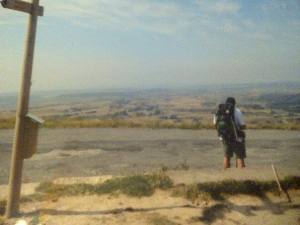


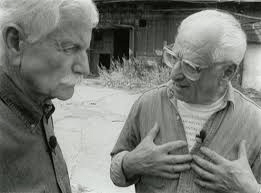
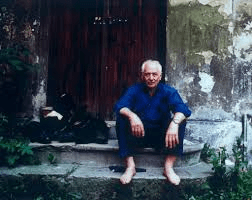
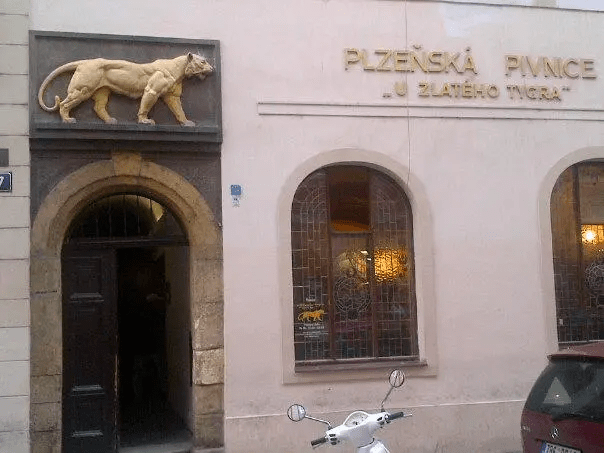
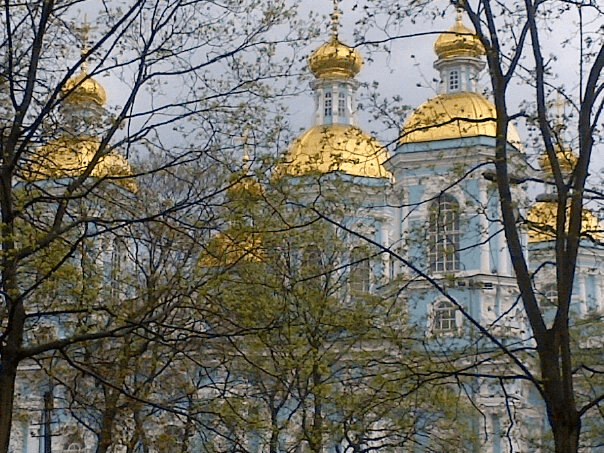
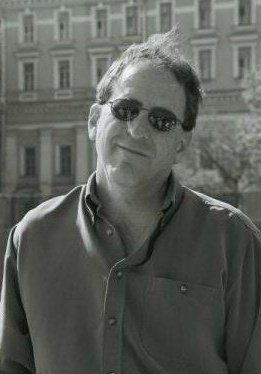
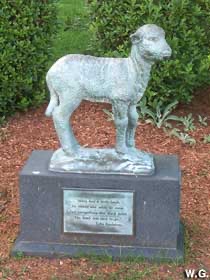


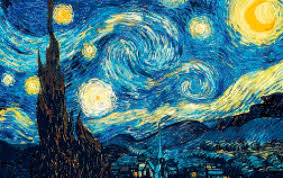





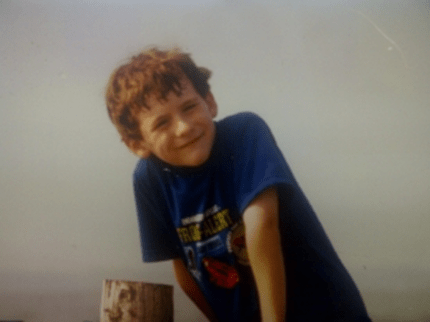
 a view from this wilderness