I had an unconventional youth. Specifically, I did not lead the normal life of a nineteen-year-old away at college. While my floormates were drinking heavily and sleeping until noon, I was at classes early to get them out of the way so I could head out to the Allegany River, or up to Niagara, or out to Chautauqua Lake, canoeing, listening to fascinating stories from a friend of mine, helping him plan his return to the Congo River for an adventure I couldn’t possibly contemplate prior to then.
I have two books coming out next year. The first, Office Hours, is a “Sedaris-like story-telling” of thirty-five years of college teaching. The second, Curious Men, is about that time back then in college myself, planning the Congo trip, turning a first semester probation they said was due to grades but I knew was due to complete indifference, into an honor-roll semester due to my sudden acute interest in absolutely everything. A friend of mine used to ask, “You mean that year you were on crack without ever touching a single drug?”
Yes, that year. Nineteen.
Memoir writing is a challenge for the need to engulf yourself in the emotions of a time that was apparently significant enough to warrant a book, yet absent enough of those same emotions so the reader can find the bigger picture of the narrative, the part that must reach up and out of itself into their lives, show them their emotions instead of displaying my own.
I brought this up because I just finished it, the book, Curious Men: Lost in the Congo. As a point of reference, though, and in full disclosure, I started it forty years ago. I’m a slow writer.
But the primary question publishers, publicists, agents, and–what do you call them? Oh yeah, readers–ask is, “What’s it about?”
So that needs to be split into two answers. Most people mean “What happens” when they ask what it is about. And that’s fine and not too difficult to answer: A friend asked me to help him plan a canoe trip—solo—on the Congo River. I did, and he went, and he never returned. Eventually, I went. But I returned—most of me anyway. This might be of interest to readers, particularly those who have enjoyed my writing in the past, or those who like adventure, distant places, rivers. Mysteries, even. Possibly psychology. But that “what happens’ response makes it all seem very 1981ish, and little more.
Which means there must be a second answer for this to work. And that is the true response to “What’s it about?”
In this case, it’s about being nineteen-years-old. It’s about being on my own for the first time, out from under the parental umbrella only to be thrust into a world where countless adults want to know my plans for the rest of my life, my major, my summer internship possibilities, my “declaring” of a focus for my entire career before I’d even taken a single class, all the while living with someone I’d never met on a floor with ninety guys I’d never met who seemed to insist I drink despite my desire not necessarily to not drink, but not to drink because they insisted; and all of us with two bathrooms, one payphone, and honestly little guidance to navigate. This wasn’t the military where some sergeant told us what to do when to do it how to do it but never why. We were paddling out in the deep-end, completely solo. Hence, the drinking and the need to join the pack. Just because I didn’t end up face down in the stairwell every night doesn’t mean I didn’t understand the draw of the need to do so. It’s just that I found my own alcohol of sorts.
I found another outlet, something well outside the box, and in doing so ended up with a working knowledge of a few African languages, an understanding of the fauna of equatorial Africa, a comprehension of diseases, some knowledge on how to temper loneliness, and a taste of a particular lesson I couldn’t find in my mass comm classes: outrageous adventure is simply a matter of deciding to do something and following through. I discovered that I didn’t need to follow some template to be alive. I learned that maybe it was everyone else who didn’t fit in. At least that’s what I told myself at the time as a defense mechanism.
But something changed over the years. You see, I’ve been staring at nineteen-year-olds for thirty-five years now and that alters the narrative some.
In the end, Curious Men is not about Africa, it’s not about the Congo or anyone in particular; it is about being nineteen and scared, and how that has changed in the decades since I ate sun-dried fish while bantering in Lingala, and most importantly, learning how to jump, knowing, absolutely understanding, that once you jump, you’ll either land on your feet or you’ll learn how to fly. Unless you don’t. Then you need the “What’s it about?” to step to the plate. Sure, it takes place in rural western New York and ruraler central Africa, but the narrative and the theme often divert.
Indeed, I’ve been staring at nineteen-year-olds for thirty five years now, and students today are no less timid then then, no less adventurous, no less interested. The difference is they are infinitely more distracted, bending toward convenience and accessibility, seeking and finding adventure on a screen, through gaming and TikTok, and I don’t doubt that if I were nineteen today the rivers I sought out would be virtual from the safety of some Virginia Beach bedroom. Maybe I was born at the right time, back when you sat around some diner eating wings and talking until some spark ignited, and you drew maps and made lists on the back of placemats, and then, most importantly, you followed through.
Curious Men: Lost in the Congo, is, as S.E. Hinton (The Outsiders) wrote, “A story that should be a must read for all teenagers—and adults alike for that matter.”
I’m just deciding now on the dedication. That’s a tough one. In ten books I’ve ever only dedicated one; The Iron Scar: A Father and Son in Siberia is dedicated to my father and my son. I’m not sure yet I am going to do so this time, but I’m leaning toward this, a variation of sorts of something Richard Bach once wrote:
Note: The following essay was originally titled “Carry That Weight” and published in the collection Borderline Crazy, as well as reproduced in several anthologies. Some years ago I received a call from Richard to whom I had mailed the essay. He loved it, and he bought several hundred copies of Borderline Crazy to give out to everyone at his club in LA, “Slimmons.” Not recorded in this essay is the crazy coincidence of me meeting Richard at St Bonaventure University where I was a senior and ran sound for the college two years before I went to work for him. He came to do a show, and during rehearsals he asked how loud I could get the music. When I said as loud as he wanted, he called me a smartass and walked away. I didn’t think I was, since I really could turn it up; we had equipment used by Springsteen. I cranked the music and the room shook. He gave me a dirty look. When I got to know him well, I recounted the incident and of course he had no recollection. “But I was so arrogant then,” he said. Some lessons we learn too late.
When Richard died today, my oldest friend, Jonmark Stone, gave me the news, and while I was just guessing that he was probably on his way out, it still shocked me. I think because he was so full of life. That always seems the be the case.
For those who know me, the publication here of this essay is absolutely predictable, but I’m happy to say it comes with the imprimatur of Richard himself, may he finally, finally rest in much peace.
Carry That Weight
I managed a health club in Worcester, Massachusetts. Before it opened, we trained at another club in Natick, Massachusetts, thirty minutes away. I went to as many classes as I could, sometimes just to get exercise, and sometimes to lead the session for practice. Once, after the lower body workout, the instructor, Ellen, asked me to do the arm isometrics.
“You want me to work their arms?” I asked, prodding Ellen for an “Oh, never mind.”
“Yes, Bob. Come on.” She looked in the mirror and pulled at the skin under her chin.
“Just do what Richard Simmons would do,” she said and smiled wide. Ellen was in perfect shape, and the break was not to give her a rest but to offer me experience. Ellen swept the hair back behind her ear, not a drop of perspiration on her.
“And what would Richard Simmons do?” I asked, sarcastically.
“Well, okay. But do what you want to keep them going for about eight minutes. Let them rest whenever they want. Smile. Sing. Scream. I don’t care,” she said, and kneeled on the platform behind me, seemingly praying to Our Lady of Vanity.
I swallowed hard and put my arms up in an appropriate crucified position, palms pointed out. I moved them to the beat, slowly gliding about the room trying to get everyone’s arms higher than their hips. Ellen whispered for me to take it easy, but I couldn’t. I moved about and got their arms tottering to Wham and called about the studio for everyone to think of their favorite thing and yell it out:
“Spaghetti! Discount stores! Discount food stores! Malted Milk Shakes and French Fries!”
I laughed and switched to pushing the palms toward the ceiling, walking about to keep them from turning isometrics into jumping jacks.
I needed to keep their minds occupied. “What are you holding?” I screamed.
“A Plate of Spaghetti and French Fries!” “Two Pizzas!”
“Seven Snickers Bars!” called one woman, Betty, and I moved over to her.
A few weeks earlier, the regional supervisor, Niki, had asked me to sign people up at a trailer near the construction site in Webster Square when I wasn’t training or attending classes in Natick. Sure, I thought. More money–I’d be paid per signature. And since the average woman in Worcester wanted to lose weight, this would be easy. Cars pulled up and women came in, signed up. Fourteen dollars down, fourteen a month for the lowest plan. Three hundred sixty five a year for the highest. For that, they got classes from nine till eight, six days a week, exercise bikes, showers, a nursery, and nutritional counseling.
When Betty came to the trailer, she signed for the complete package, and immediately recounted her caloric intake so far that day. I stopped her when she got to the ten Snickers bars. I laughed, thinking she was joking. She got quiet and the silence weighed heavy for a moment. I told her I’d like to see her down to about seven Snickers bars a day by the time the club opened.
She notified her friends and two days later I signed up eighteen people in one hour, setting a record. Oh, some were in fine shape, fine in every way, and probably didn’t need to be there. But winter in Worcester is brutal, and they wanted a fun, indoor setting to work out with friends and meet people. They came with questions: How long will it take to lose 135 pounds? “About two years.” Can I still eat at Papa Gino’s once a week? “Salad, yes, with water, not Diet Pepsi.” Will exercising make my breasts smaller? “Sure.” Or sometimes, “absolutely not,” depending upon who asked. They came with doubts. They came with their defenses high, ready to quit. We built the club and they came. I was quickly designated a manager along with a slender woman named Andrea, and we kept the clients coming. I got my pitch down to a minute before they wrote the check. I hated to leave each day; the money was coming in already and I hadn’t taught a class yet.
And sometimes these new members summoned the nerve to attend classes at the other clubs as well while waiting for the new one to open. Betty found her way to Natick, along with some of her friends, and stood before me, arms stretched out, longingly imagining seven Snickers bars in her palms. We laughed and I slapped her hands as they went up and down, calling for her to keep them going. I heard moans and sighs, grunts and “Oh God” and it was then I knew I’d never see opening day. I had no business being there. I mocked and ridiculed these people in my mind while hypocritically encouraging them. For God’s sake I was only twenty-four and deeply arrogant, mostly from absolute insecurity. I didn’t fit in. I had trouble relating to the women and difficulty justifying a job not remotely close to comfortable for me. At twenty-four I had other plans. I was going to do something with my life. I was going to make a difference, not schlep my time to some small city women wanting to look better.
This all bantered about my brain while Wham slammed against the studio walls. Women toppled fast. And just then, before anyone else could see him, Richard Simmons entered the studio from behind, put his arms out to join into the rhythm, and then, at the top of his red-afro lungs, squealed “Come on! Keep it up!”
Let me back up:
Several years after college I moved to central Massachusetts. I read the papers and the bulletin boards, perusing them for good paying, low effort jobs. I found one advertisement for a job as a sound engineer for a radio station in Winchester, a town toward the New Hampshire border.
Then I saw this:
“Wanted: Exercise Instructors at new health club in Webster Square, Worcester. No experience necessary, will train. $12 an hour per class taught. Tryouts at Quality Inn, Worcester.”
Cool. I was in shape.
About one hundred people showed for fifteen positions. Not many guys were there, maybe six.Most of them were a bit chunky, with waxed hair and wavy voices. They wore leg-warmers outside their neon Adidas suits and hummed dance re-mixes to themselves. One guy weighed about 200 pounds standing five four. He wore tan slacks, a white shirt buttoned past the neck, and brown socks lazy about his sneakers. I peered at the women. They ranged from athletic to asthmatic. Most were in their late teens and early twenties, though a few former Chorus Line looking ladies showed up, late forties, too much make-up, too little sense, sporting matching headbands and leg warmers, car keys on twirly, neon wires about their upper arms. Most of them flocked in front of the one mirror in the room, plucking the skin under their chin trying to shape it.
A woman wearing a red warm-up suit entered carrying a clip board and gave us simple instructions. We were to line up like an exercise class. Then one at a time we had to take turns motivating each other to move; the training would come later. When advanced to the lead, some screamed in faces, micro-managing us into twisted pretzel-like contortions. A few sweet-talked us to bend and fold and tuck and turn, teaching while tugging on their skin. The brown sock guy got up and, during some arm isometrics, yelled for us to “Keep it up! Keep It Up! KEEP IT UP!” and then collapsed, barely breathing, spent. He lay on the floor till all his body parts stopped twitching.
After three days they picked the team: Fourteen girls and me. A few of those chosen were quite rotund, while others had no reading on the fat scale. One small girl, Susan, was transparent. Our instructions were clear: The club would open in seven weeks, during which time we would train seven hours a day, five days a week. We would learn to warm up, work the neck and arms, the waist and thighs. We would know the butt, the abdomen, and the names and purposes of the muscles; how to measure, motivate, choose music, and tender nutritional counseling. We trained in a large hotel room and when not training were told to attend classes at the other clubs. We showed up to the hotel the first Monday at eight to meet the directors. Maureen, or Mo, was the ring leader–the one who got us mobilized during tryouts, and she brought with her some California-type women, carrying mats and hair clips and red sweatshirts.
I almost left. This was not my scene, and I was clearly the focal point from the outset since I was the token male. Clearly, I’d be the one to maintain gender balance, bring in the male population of Worcester. Ferry in the overweight, brown-socked guys.
We gathered and sat cross-legged, ready to embark on the grueling two-month march toward hard-bodies and well-balanced diets. To start though, we briefly met the owner of the club. Turns out this was his sixth club in New England after expanding from L.A.
And in he pranced. Red shorts, stripped tank-top shirt, orange afro and deep tan. He came in calling, “Come on and move those tuschees!” his arms flailing about, his mouth somewhere between a pout and a pucker. With no escape, with no warning I found myself with fourteen female trainees, three female trainers, and Richard Simmons in a sweaty hotel room. I watched him ricochet about in his tight red shorts and tank top.
At the hotel in Massachusetts, we primed from the top down. The neck, bending and rolling it, had to be loose, and the waist and the arms and the legs, thighs, butts, calves, abdomens, again and again, rolling and stretching and challenging them, from the top down until they were limber or taught and firm or loose. For a while I burned, then I ached, then I could not move at all. Finally, I was relaxed and ready, but the club was still a few weeks from completion. They were adding the grey carpet with red stripes, the grey, red and white walls, and the “Richard Simmons Anatomy Asylum” sign. Women waded into the trailer after that sign went up, and membership increased to the thousands.
So at the Natick club, when Richard sprayed into the studio, I prayed it didn’t turn into a rumble. Betty dropped her hands and started to cry. Women wailed. Walls vibrated. Richard slid behind Betty and slapped her hands from behind, calling out, me in front, him behind, and Betty separating us by a good three feet.
“Come on!” he called. “Keep them up!”
“You’re doing great, Betty” I said, with as much gusto as I could gather. She grew pale and distant, her eyes watering.
“Come on Betty! Keep it going!” Richard screamed, and the women flapped their arms again hoping he’d move near them. But he stayed with Betty and me. “Keep it up! Keep It Up! KEEP IT UP!” he kept howling.
“Keep it up, please!” he yelled, and I retreated toward the platform, allowing him the floor. Ellen smiled at me, coming out of her trance.
“You knew that was going to happen, didn’t you?” I whispered to her. Richard sat everyone down and they panted. Some continued to walk about, getting their breath. He sat and crossed his legs, straightening his back and looking at each person, slowly, smiling.
“Do you know why you’re here?” he asked. Some laughed and said “no,” and a few kept panting. “It isn’t to lose weight.” Everyone laughed. Even I laughed, perhaps too loudly.
“You’re here because you want to feel good about yourself again.” He nodded, getting everyone else to nod. Soon the whole room was nodding. Even I nodded. “You want to feel good about yourself again,” he repeated, as if it didn’t make sense the first time. Actually, it didn’t Now, however, people stopped breathing heavily. They stopped walking around. They listened now.
“Just being here shows me that you already are feeling good about yourself. Do you remember how depressed you used to get?!” he asked, laughing at the same time, brilliantly moving their problems immediately to their past. “Do you remember when food was kinder to you than your husbands? When the only thing that calmed you down was eating? Sitting around, watching “General Hospital” and eating?” Everyone clapped, acknowledging the show upon which Richard spent four years early in his career.
“I KNOW girls! I was you!!! I really really really was!” He was. He tipped the scales at weights never revealed but well over the size of anyone in the studio. He grew up in New Orleans, and after overcoming some of his weight problem, he moved to LA where he could not find a single health club for anyone not yet in great shape. It all started then.
“It’s about feeling good, girls! Be proud of who you are and remember you have two choices! Not one! TWO! Say it with me,” and the whole studio chanted with Richard “I’VE GOT TWO CHOICES!”
They grew quiet. “You can let the simplest thing depress you. Or you can let the simplest thing make you laugh, make you say “I am too good to feel bad!”
They cheered and Ellen put on Donna Summer’s “Last Dance” as everyone followed Richard’s cue to start bouncing about the studio.
I left and went to the shower. There was a men’s bath and shower by law, but it might as well have said, “Bob” on the door. I don’t recall having ever seen another male inside.
I sat on the bench in the locker room for awhile, and then showered. When I came out, Richard came into the cramped quarters.
“You had them going beautifully!” he said. “Oh, isn’t it so exciting when they laugh and move around so much! It makes me shake to think about it!” he said, his arms to his chest in a self-hugging hold. His left eye was tearing.
“Yes, very exciting,” I agreed. I sat on the bench staring at the red and grey cinder blocks, counting them.
“Niki tells me you are going to help manage the club!” he said. He hadn’t heard a thing. His grey roots were barely visible past the red strands of live electrical wire flaring from his scalp.
“Yes. Manage, yes.”
“You’ll help them loose weight, sure, but oh how they’re going to love you for making them feel better!” He held my hands. “Do you realize what can happen if they don’t feel better about themselves and don’t lose some of their weight?”
He told me:
Hypertension. Cerebrovascular accidents. Myocardial infarction. Congestive heart failures. Prostate cancer. Colon cancer. Rectum cancer. Gall bladder disease. Gouty arthritis. Osteoarthritis. Sleep apnea. Richard pushed his head forward with each disease, to accentuate the seriousness of it all. “And Pickwickian syndrome.”
Pickwickian syndrome. That can’t be real, I thought. You’re making this up. I’m living in a bad Dicken’s novel, I thought.
But it’s real. Obesity, red face, under-ventilation, and drowsiness. Pickwickian syndrome.
“But we can help them feel good about themselves and then they’ll lose the weight. They’re not heavy simply because they eat too much. They eat too much because they are depressed,” he said. Husbands belittle them; strangers make fun of them. They eat to gain immediate sensory pleasure, which depresses them, which causes them to eat. It is a bloody cycle.
I nodded. “Well,” I said, “I’ll do what I can to change that.”
“Good. I will see you at the opening! Good work today! Keep an eye on Betty!” He took my hands in his. “Really, please keep an eye on her,” he said, and he left, a wave of screams and “Oh Richards” washed into the room as the door gently closed. I stared at the wall and thought of Snickers Bars. I thought of Richard and how he really moved those women. Then I thought of the money, and repeated what had become my mantra: “The money is great and I’m getting in shape…the money is great and I’m getting in shape…the money…”
Money. “You whore,” I thought. Yeah, whatever. I was 24.
On opening day in Worcester, between the classes and autographs with Richard, and pictures and parties, Andrea and I met with women in our cubicles down a short hallway. We left the doors open to the small boxes called our offices.
“I love the smell of new carpet,” she said from her office to mine.
“Uh-huh,” I replied. I picked up papers available at the desk about obesity and depression and had been reading them. “Andrea,” I called across the wall, “check this out.”
“The average American woman weighs 140 and stands 5,4. The average model weighs 115 and stands 5,10. Fashion models are thinner than 98% of American women. 91% of college going women attempt a diet. 22% are always dieting. Between 5-10% of women will have an eating disorder as a result of dieting. That’s between 5-10 million women. Shit. 50,000 of them will die from an eating disorder. 95% of dieters will gain back the weight within one year.”
She walked to the door and leaned against it, listening more closely.
“45% of American women are on a diet at any given time and spend over 50 billion dollars a year on diet-related products.” I looked up. “That’s more than the gross national product for Ethiopia, Somalia, and Mozambique combined! And everyone there is starving to death! Don’t you see the irony? And the money is all being spent on diet related products!”
“Like health clubs,” Andrea said, reminding me of why I was there to begin with: to make some of that money. We walked to the lobby to greet more members.
We met women for sign ups, weigh-ins, and nutritional counseling. Some ate more for breakfast than I would the entire day. Others refused to eat thinking that will be a smart weight-loss program. Some signed just to meet Richard. Some were too embarrassed to come alone. Some hid if they recognized someone else. After teaching one of the advanced classes, I sat recovering in my office, signing up some Pickwickian chick from Auburn, Massachusetts, who left her family at Papa Gino’s pizza place a few doors down and she had to get back before dessert. As she left, Betty walked in, crying.
“Are you hurt? Betty? Are you alright?” I asked. Andrea came in quickly, asking if she should call someone.
Betty looked up. “No, thank you. I’m fine. I just need to talk to Bob.”
Andrea left and closed the door, cutting off the last remaining source of oxygen.
I sat for a moment while Betty amassed herself.
“Bob, I need to quit. I cannot continue,” Betty said. She was serious, staring right at me, confident in her decision.
“What happened, Betty? Was class tough? You hung in alright in Natick. What’s going on?”
“I am fat,” she said. “I will always be fat. Have you looked at those people out there?”
Okay, now, I had this empathy problem. I had no problem sympathizing with these women because that is an intelligently charged reaction. I could think through their problem and understand why they felt bad, depressed, why they felt like quitting. But empathy is an emotionally charged reaction. To empathize is to identify with their situation because I could so easily stand in their shoes. Sympathy is the generalization; that is, it is to understand the big picture and comprehend the difficulties involved. But empathy demands a more specific reaction. It is to target a specific individual, that person’s circumstances, and truly understand.
I really wanted to empathize, but I already knew I didn’t belong.
“I see them Betty, I do. And I somehow can sympathize with you.”
Betty got excited. “But I can never be like them! To be around the thin ones reminds me of what will never be! To be around the fat ones reminds me of who I am, and I don’t like me!” She started to cry again. She opened her purse pulled out a Snickers Bar, looked at my disapproving smile, and put the bar on the desk.
“Bob,” she said, after a long sigh to gather the guts to ask this, “Do you notice how fat I am?”
Wow. How do I answer that one? Yes, and she cries, affirmed of what the world has already grasped; No, and she loses trust in me, who is to counsel her in nutrition, exercise, and motivation. Andrea called out for me to come to her office, and I dismissed myself before I had to answer.
“Would you excuse me for a minute, Betty? Promise you won’t go anywhere, right?”
“I’ll be here. I am not leaving till after everyone else does,” she said.
I moved into Andrea’s office. “Geez, Andrea, she’s suicidal in there.”
“Richard has to go and we are getting our picture taken with him in the nursery,” Andrea said.
When we got to the nursery, Richard was talking to the parents and the kids and other workers. The room was quiet, and he stood perfectly still, rubbing his hands together. Everyone listened while he talked, and he made eye contact with every single person in the room. He touched those close to him. He stared hard at those across the room. When we entered, he waved, but kept on talking. The crowd was enormous. People had come from Worcester to Boston. And they all listened to Richard:
He put his hand on a child’s head, a little girl about eight. “How you feel about yourselves is how they will feel about themselves. How you act is how they will act” He choked up a bit. From this close, however, I noticed something quite revealing: he meant it. Pure empathy. “What you do is what they will do. Love them, but don’t forget to love yourselves. Truly, love yourselves.”
I recalled the fact sheet in my office: More than half of the children in this country only feel good about themselves if they are on a diet. And almost half of first to third graders want to be thinner.
Richard looked across the room and whispered. He whispered because his voice broke when he spoke loud. He whispered so he could get through. His eyes caught those of everyone else’s. “YOU are important! And when YOU believe it, she will believe it!” Then everyone talked and moved about and hugged Richard and each other and hugged the kids. And Richard hugged the kids.
We did the picture thing, fluffy ballooned wallpaper surrounding our heads, Richard between us, smiling, his hair tickling our faces.
“What do you want from working here?” Richard asked Andrea. He held her hands between his.
“To have fun,” she said. “And make money,” she added
I knew it was coming. “To pay my rent,” I returned, smiling.
“Oh but you are going to help people so much!” he said. “Think of all the people you will help!” We moved to a quiet corner, and he asked if we had any questions.
“Richard,” I asked. “How long is it going to take some of these people to lose, say 135 pounds?”
Without hesitation: It doesn’t matter.
“Is it okay to tell them places like Papa Gino’s Pizza are okay to go to?”
For salad, yes, with water, but not Diet Pepsi.
“Will exercising make their breasts smaller?” Andrea took me by the arm and escorted me out of the nursery before I got an answer. We headed for the door and Andrea reminded me Betty was waiting.
“Betty?” Richard asked. “Our Betty?” He stared at my eyes trying to read me, trying to understand me. Completely intense. Completely honest.
I nodded. Our Betty, I thought. I started to feel shallow, and that feeling began to weigh heavy.
“What’s the matter? Is she alright?” He became serious; his hands rubbed each other in a nervous, compulsive manner. I rubbed my face and sighed.
“Richard, she’s doing seven to ten Snicker’s Bars a day, just asked if I notice how fat she is, and wants to quit because the thin people here make her realize she never will be and the…heavy…ones make her feel hopeless. She’s in my office,” I said, finally completely aware of my inability to relate to these people. I could never have the look and intensity Richard had at that moment. I headed back to tell her, yes, she is massive, but it is no big deal, and she should be proud of who she is inside and blah blah blah and yada yada yada, and no there is nothing wrong with that, and we worry too much about the superficial elements instead of the spiritual ones and on and on. Mr. Cliche. Dr. Trite. I turned down the short hallway to my office when Richard caught up, springing up next to me saying he’d like to join me with Betty.
I walked in first and Richard followed, sitting in the chair next to Betty. She screamed and cried. A crowd gathered outside and I closed the door and sat down.
“Betty, this, of course, is Richard Simmons. He asked if he could join us. I hope you don’t mind, but I told him what we were talking about and what you asked, if I thought you looked fat.”
“Oh my God, it is so great to meet you!” she said. They hugged and recounted the Natick club experience for a moment. “Well?” Betty asked, looking at me then to Richard.
Richard sat up, his torso seemingly in perpetual motion. “Can I answer you Betty?” he said, grasping her hands.
“Of course,” she answered. Thank God, I thought.
“Yes, people notice how fat you are. You are, and people will notice.”
“Oh God, I know,” she said, laughing and crying at once at the reality of it all.
“But who cares?” Richard said. “Who cares? Why do you care?”
“I want to be pretty. I want to feel good about myself,” Betty said.
“They are not the same thing, Darling,” he said, shaking his finger at her. Richard picked up the Snickers Bar. “Does this make you feel good, Betty? Or does it make you feel bad?”
“Both,” she said.
“You can’t have it both ways, Betty. Come on. I love you Betty. I know what you are going through. You can not have it both ways. Feel good or feel bad?” Again he held the Snickers Bar, this time unwrapping it some.
“Bad,” Betty said, and Richard put the bar back down.
“Betty. Betty. Betty, Richard kept saying. He hugged her and kept staring into her eyes and hugged her again, holding her hands and then staring into her eyes. I hadn’t eaten since dawn, had taught an advanced workout, and focused on the Snickers Bar.
“Betty, don’t quit. You don’t have to come to the club, but you can’t quit on yourself. God is too great, Betty. You are part of it all. You can’t quit. And quitting is more than just leaving, it is abandoning yourself, inside. Don’t quit. I know it isn’t simple, Betty.”
They sat quietly for a moment, and Richard sat up, wiping some tears from his face.
I decided to give this advice thing a shot. “Betty,” I said, “It is simple. It really is. You going to stop on the way home and pour coke in your car?”
She laughed, “No,” she said.
“No, it won’t run, but we pour that filth in our body and can’t figure out why it won’t run. But we choose to pour it in. We do it to ourselves by choice! Are you going to consciously drive your car into a ditch on route 12 going home?”
Again she laughed. Richard sat nodding, a smile on his tanned face.
“But you’re going to do things that drive your body to its death. Sure you’re depressed, but you are more depressed because you make choices that are wrong. Don’t! Remember what Richard said in Natick–you have two choices!”
He spoke up. “You worry too much about what is superficial. You worry too much about what things look like and what you are looking at in the mirror. A person must seek refuge inside, and then work on the rest. Work on the inside, and then on the outside, okay? You are so beautiful, Betty.”
She nodded, standing with Richard, who took her by the arm and walked down the hallway to “Oh Richards,” and screams and wails. She hugged him. She hugged me. Richard hugged me. Richard hugged her. “Come and let Bob know all the time how you are. Go to classes and just walk around in the back whenever you want. You have a great attitude You will lose the weight someday, but first, weigh yourself inside” he said, touching his heart, tilting his head, tearing up. “Promise you’ll come?”
“I will,” she said, and he embraced her a long time. He turned and waved to everyone, standing on his toes and waving with his arm stretched up and his hand bent down. He blew kisses with both hands and I hedged back into my office and closed the door. “Your choice, Bob,” I said to myself, “I stared at the candy.” Andrea came in, took a bite of the snickers, and leaned against the desk.
“What do you think?” she asked. I shook my head. The club was relatively quiet, everyone moving to the parking lot to wave goodbye to Richard. A class continued in the rear studio, but no one was about the offices.
“This is serious. These people have some serious problems. He can really make these people feel good no matter what they look like. What a difference,” I said. “Shouldn’t we have a shrink on staff?”
“Nah,” Andrea said. “Just a refrigerator.”
“Oh don’t be a smart ass,” I quipped back.
Andrea laughed. “No, we work on the body, not the mind,” she said.I thought of Richard and knew that just wasn’t true. This place had less to do with weight loss than it did therapy. It was all about the mind, all about choices. Andrea handed me the Snickers Bar and left for the lobby. I tossed the candy in the can and walked out and watched Richard’s limo drive off. The women all turned toward the club, toward Andrea and I standing in the window, and I realized the burden we carried.
Afterward: To note Richard’s sincerity. About a month after the incident in this piece, Richard called the club and we talked a bit and then he asked for Betty’s phone number so he could call and check in with her. The woman who went home on Friday before the phone call came in to the club on Monday after the phone call with an entirely new outlook on life. It is safe to say he deeply touched the lives of millions of people, some of which he quite literally saved.
“What do you think happens, Bawb?” Letty asked at coffee one day last year.
“I don’t know, but I know I’ll miss you.” She started to cry.
“Guy said he thinks it’s like closing the door behind me. I like that. I’m just going to close the door behind me.”
“You going to be wearing heels?” We laughed. “Not this time! I think I’ll wear my running shoes and get in one last workout on the way.” Honestly, we made light of everything. “I’ll close the door behind me and keep on running.” We sat quietly a long time. Then we talked about the reality of it all. “I’m sorry I don’t have the strength to walk. The treatments are exhausting.” I said nothing. There was nothing to say. “Oh! Did you figure out our mileage?” For thirty years or more we walked a few times a week about four miles each time, talking, sharing, helping each other through the thirty years or more.
‘Yes I did. We walked six thousand miles. I figured the four miles each time, twice a week, but I only figured thirty weeks a year since we missed some and vacations. And i figured twenty-five years since at the beginning is was more sporadic, but later on it was more miles, so it evens out.’
‘Six thousand miles!”
I didn’t care so much about not walking anymore. The point was to talk and we were doing that anyway.
“What do you want after you shut the door?” I asked.
“You know exactly what I want,” she said. I did, but now that it’s real I had to ask again. “What about you?” she asked.
“I’d like to be cremated and then rolled into joints and have a bunch of writers smoke me while reading all my work that was rejected.”
“You know if I outlived you I would have made that happen.” That made us quiet again. “Let’s go outside and take a picture.
It’s the last one of us.
***
I don’t even know where to start. I was waiting to teach one of my first classes ever at Tidewater Community College in Virginia Beach, and across the hall Letty sat in her office with the door open. We said hi, and after I left class that day we talked all afternoon.
That was 1989 and immediately followed by three plus decades of hour and a half walks three times a week talking about our kids, our hopes and disappointments, the other people in our lives, and endless deep conversations about what we (mostly she) had read that week in The Economist, The Atlantic, Le Monde, The Washington Post, and more. When she was pissed off she’d switch to French, then realize I was staring at her and she’d switch to Spanish. We helped each other through the most significant changes people can face.
Almost thirty-five years of coffee in the morning, afternoons at the Mexican place across from campus, cider at the local pub–way too often–and sharing. I gave her books I thought she’d like; she introduced me to French and Italian writers, we’d walk through the Chrysler Museum in Norfolk and talk about everything except art. We made fun of each other, like the time in the Hermitage Museum in Russia when I told her I’d meet her in the Impressionists so I could see some of Jean Francois Millet’s work. I didn’t pronounce it correctly though and she had no idea who I meant; “Apparently I’m not spitting enough,” I told her. She said, “But you had me all discumboobulated,” and I told her there is no such word in English. We spent our lives making fun of how each other talked, though she won hands down since she could carry on a conversation in a half-dozen languages. I made fun of her heels, she made fun of my flip flops. It was like that.
The week after my son was born she came to my office and sat and we talked for hours about life. We cancelled our classes and talked about kids and grandkids and posterity and ancestry. She told me how every summer when she was a little girl, her father would drive the family to the Mediterranean coast to a town there where they spent a month swimming in the Med. Her father would head back home to work during the week but return on weekends. It was her favorite place. She said maybe someday we could travel there. A few days after my father died, she called me up and asked if we could meet for coffee on the boardwalk. We did, and she talked about Camus, and about Saint-Exupery–one of her absolute favorites. She remembered a day in the mall when we were shopping and ran into my father who was there to walk, and how she would remember forever how thrilled he seemed to see us. She said she missed her dad.
We were each other’s open books, somehow more than friends despite the misconception of that suggestion. She told me once that I knew her better than anyone except Elisabeth and Guy. That night she texted me, “I wasn’t just saying that; I mean it; no one else knows me like you do.” I wrote back, “Really? You mean that’s all you’ve got? I know all of it? How sad you must be.”
We made each other laugh. We were friends in what must be the original intent of the word.
Thirty years of laughing about work, about changes in personal lives. Thirty plus years of lunches and coffee breaks, of drives to the beach. Once, a memorable trip to Russia for eight days where she refused my pleas to lose the high-heel shoes on six mile walks up Nevsky Prospect. “I was born in these and I’ll die in these,” she said.
There’s more, but I am having trouble explaining myself here. It’s like I have no idea how to do this.
Over the last year and a half since the diagnosis, we finished each conversation with “Talk to you in a few days.” On our last conversation recently, she said, “Talk to you in a few days. I love you Bawb.” It was the first time she signed off that way and the last time we talked. But for several years after I left the college, she would go for a walk three or four days a week and use that time to call me. Then when she told me of her prognosis, we spoke every few days; sometimes for ten minutes, often for a few hours. She talked about how Billy was taking such good care of her, she always asked about my mother and how she is doing, we talked about what I was working on. On one call she asked me to read some of my new work to her; she said, “In case it comes out after.” After that last call last month, a few days passed and she didn’t call or answer my texts, then a week, then more, so I knew she had turned that corner.
We saw this coming from the start, though. In October of 2022, she texted me: “I just want to say you are the best friend I ever had and I’ll never be able to tell you how much I care about you.”
An hour later I was out for a walk and thought about her message. She had never expressed herself like that. We specifically didn’t do that on purpose. So I texted back: “What’s wrong?” Part of me expected some laughing emoji and her words saying “Nothing! Just thinking about you!” but a bigger part of me expected a serious response. Unfortunately, I was right. She wrote: “I was rushed to the hospital from the gym; they thought it was a stroke. It wasn’t; they are taking out a brain tumor. I wanted you to hear it from me. I’ll call you when the alien is out of my head.”
The results were heartbreaking.
She called. She said, “I want to tell you something.” I was quiet. “Do you remember that time you walked by my French classroom and I wasn’t there yet, so you went in and said that Madam Stone would be along shortly. You then got to talking, and you taught them some Spanish and told them they were wasting their time taking French, unless they planned to hitchhike across Quebec, but they couldn’t go anywhere without being able to use Spanish. By the time I showed up and walked in, you were all talking in short Spanish sentences.”
I told her I remembered it well. She said she loved that day. She then recalled another time when she was late I brought her entire class across campus to the faculty parking lot and we stood where she normally parked and waited. When she pulled in she was laughing so hard she nearly drove over the curb.
This was how we passed time; three and a half decades of a friend like that is another level of fortunate. She used to say we were Jerry and Elaine, and the comparison completely fits. Not long after her diagnosis and some treatments, we had coffee at the beach and she said she has so many pictures of me but only a few of us and they were from Russia. So we took a picture. I love the shot. I’m just in front of her and she’s leaning against me from behind, looking short that day since she had on running shoes, not high heels. People say how nice the picture is and how affectionate she is in it, but she isn’t being affectionate; I’m holding her up.
But these are personal musings about someone I cared about who left us all too soon. There’s nothing in this writing that could possibly matter to anyone who doesn’t know the two of us, which is the vast majority of readers. I fear this remembrance can too easily be met with an “oh that’s so nice they had such a great relationship” response and not understand that there’s more than that here. It’s about being open, about dying without leaving anything unsaid. We all have lost someone or experienced something that can’t be communicated properly enough to capture the raw and festering emotion, and it frustrates us because we want people to truly get it, but we are shackled by language. The true essence of the love we have for someone we lose is very personal and something we must accept as ours alone and can’t be shared.
I’d give anything to hear her voice one more time, call me, saying, “Oh, hello Bawb” in her heavy accent, but that’s not going to happen. Ever, no matter how much time passes, it simply is part of my past now; memories remain, of course, but the reality of her voice, the way she always held my arm when she said goodbye, the way she smiled. The way after I told people I was leaving campus and my plan was to never return, and their response was one of “of course you will visit,” not knowing me, but Letty’s response was, “It’s about time, Bawb. Take me with you.”
Just over a month ago she told me she was not feeling well. “But I made it to 65!” she added. “Now I need to make it to your birthday! That is my goal!”
“Happy Birthday to me,” I laughed.
“That way you will not forget me!” She was quiet and I could hear her trying to talk normally. “You’re going to write about me, aren’t you?” She wasn’t hoping I would, but predicting I would.
“Yes.”
“Good. I trust you. Will you mention how much I love Billy? And how I wouldn’t have any life at all without Guy and Elisabeth? Oh, and how I’m so glad I lived long enough to see my Sophia, my granddaughter!? And mention the time we went over to Elisabeth’s office at Operation Smile and banged on the window to get her to come to lunch with us! And you have to mention that Jewish Mother reading and the books that night and how your student thought I was your wife, so I said, ‘yes I am’ and sold him five books and for weeks on campus rumors in my French classes kept going, all of them asking if you were going to come by the class again. I liked that.”
“Do you want to write it?”
“Oh sure, this way I can write myself back to life,” she joked, and we were both quiet. “Besides, there’s more to write about.”
“I know. but some things should remain just ours.”
“I’m very glad for that, you know. Etre en paix avec quelqu’un,” she said mostly to herself.
‘Letty, I’m from the United States. Speak Spanish.”
It’s about having a connection with someone. It’s not love, exactly; it’s a sense of peace.
A minute later: “Watch for the birds that come to feed at your porch mon amour et ami. I’ll be among them.”
That image saddened me. “Will you be chirping with an accent so I know which one is you?”
“Yes! I’ll be the Bawbwhite!” We laughed. We laughed, so I knew we should hang up. It was the last time we talked.
Letty reached her goal and died in the overnight hours of my birthday. Her ashes will be spread across the Mediterranean Sea.
with granddaughter Sophia
Laetitia Sciarrino Stone March 18, 1959-July 4, 2024
It’s Fourth of July week and I’m about to get older, and I’m in a café on the Bay thinking how I’d love for this place to be open at night, late, like 4am, and sit and have beers or wine and talk to strangers about where they’ve been, literally and figuratively. I’m sitting here thinking about the the past four or five decades. “Fortunate” doesn’t come close to describing this pilgrimage; but something is different lately. I’m just turning sixty-four and I’m outliving so many people I know. This makes me curious about what’s next, about this brief span before me. I thought I’d grow tired by now, start to unwind, but curiously I find myself gaining momentum.
Here’s a decidedly oversimplified explanation of what runs through my mind on an almost daily basis: We are going to die, of course, but we have no idea when, and even if I live to my mother’s age of ninety-one, that’s just twenty-seven years form now. That’s nothing. And after that we close the door behind us and slip into that nothingness of never being this way again, through the eternal and infinite future of all futures. My point is, to be trite, “Today is my moment; now is my story.”
And today while sipping a cappuccino and after talking to a couple who are sailing down the bay to cross back to the Netherlands, I felt awake, like that crystal-clear awake you have sometimes after it rains. Like all of my senses were cleansed and rebooted. Happy Birthday to me.
To be sure, I’ve had my share of everything: I’ve had a lot of chances to travel. I’ve walked across Spain, trained across Siberia, drove around North and Central America, stood in rivers from the Connetquot to the Congo, and I’ve followed a herd of moose through the woods in Northern Norway. But still it simply isn’t enough; not on this abbreviated timeline. There’s not enough time, never enough love, too much wasted energy, too many spoiled days and nights, not nearly enough love.
In looking back, the moments that stick out most in my mind are the ones where I stepped out of my comfort zone and risked being embarrassed, rejected, and humiliated. Sometimes those things happened, to be sure, but those times are still better and more memorable than sitting safely at home watching reruns of an old show, watching other people live still other people’s lives.
Oh there have been moments. And they all have one thing in common; my memories are of the people I was with completely engaged with each other. It might have been my son in Spain and Russia, or just us taking pictures down at the river. It could have been sitting on a beach in Florida or drinking champagne while watching a sunset on the Great Salt Lake.
Sitting around a club I ran in Massachusetts after hours and swapping stories, laughing, eating pizza from down the road after all the people left. It’s the one am stop at Ocean Eddies on the pier in Virginia Beach in the late ’70’s for a drink and a talk with someone from somewhere else, nothing but the sound of waves crashing under us.
One Fourth of July I was in Massachusetts and drove to Boston to watch the fireworks and I stopped at the Bull and Finch Pub, made famous for being the model for “Cheers.” I sat at the bar and had a beer and got talking to someone who was there to play music. I told him I had played and he asked me to play a short set during one of his breaks. Okay, so this is an example of knowing as sure as I’m sitting here that ten minutes after I said no I’d be absolutely pissed at myself, so I said yes. Rarely am I 100 percent in the moment, not distracted by next or was, but moments like that I am present, completely present–like on the Camino or the Train or the Lake or the river. I said yes and risked being myself. I even had the balls to play “Please Come to Boston.” When I got home to my house on the reservoir that night, I got out my guitar and played while my cat Huey sat on my knee and listened.
Alive. I was so freaking alive that night. The next day friends came by for my birthday and I told them about it and they were excited for me but like with most things in our lives, you absolutely had to be there. I was.
Geez I’ve been fortunate.
But there was one night in particular which stands out a bit more than most of the others. It took place in a bar which long ago burned down. We called it The Shack because it had no name.
This happened about twenty-five years ago.
Just off the Gulf of Finland not far from an exclusive hotel but well in the woods was one of this world’s coolest bars—a dive really—a place to drink and sing and meet people you’d never want mad at you. It was small, with broken-down shed-like walls and windows which barely kept out the storm blowing off the Baltic one May night in the nineties. It was well after midnight and we ordered a bottle of Georgian Merlot and several plates of shashleek, a Russian shish kabob dish. A gypsy band showed up, including a guitar and violin player I’d met before and had played with there along with a friend of theirs, a woman singer. Hours passed as we played and sang and drank. There were four others, three of them, a waitress, the owner and his cat, and we sang and drank while what must have been that hurricane from The Perfect Storm slammed to shore. This duck blind of a building sat amongst birch trees, but that simply made me more aware of the weather, wondering when one might topple through the roof. It was exhilarating, an adrenaline rush that had nothing to do with the wine. It was being alive, right then at 3 am, with total strangers, live gypsy music, Georgian wine, and shashleek, that kept us awake. It felt dangerous, subversive, but it was just a bar in the woods.
I had been in my hotel room, ready to call it a night since the next day we were all going on a river cruise, but I got dressed to head back up the beach to The Shack and have some wine. I didn’t want to wake up the next morning and wished I had gone. The storm hadn’t yet kicked up. But it was coming; you could see it in the haziness of the midnight sun.
The band took a break and came to our table and we spoke in broken Russian and English about the storm and how we hoped it wasn’t high tide soon since the water was just a hundred feet west, maybe less. Then Alexi, a two hundred eighty pound drunk Russian who hated Americans started screaming at us like he had the first time I ever met him, the first time I walked in the place a few years earlier. He had kept to himself mostly since then, sometimes talking to me, mostly not, but this night something got under his skin and he screamed at me like he did that first time, “I hate Fucking Americans.” He startled me, but he had a drink in front of him, and another regular customer, a friend of the gypsy band, was sitting with him and told him to quiet down so he did.
But then I saw his eyes. They were deep and vacant, like he’d seen a ghost, and when he saw me watching him he stood up and said, “I hate fucking Americans!” and he tossed his beer at me. Sasha, the guitar player, stood up and yelled at him in Russian. But just then thunder, with a sound like the sky opening up and dropping two tons of hard earth on our shack, rattled the walls and ceiling and we all cringed. I thought for sure one of the birch trees cracked and was going to kill us all. I went down on the floor with my friends and the gypsy band, and Alexi cursed and fell against the back of his chair. He suddenly looked so small, and the thunderclap crashed on us again, this time blowing open one of the windows, and rain and wind sheered a path across our booth and against the other wall. Dima put his violin under his coat and our shasleek flew off the table onto the floor. The shack cat went for it but the wind and rain chased him back under the bar and into his bed.
Another flash of light lit up the shack and Alexi was trying to hide under his table but he was too big, and just as he glanced out the window on his way to the floor, he stopped and stared. I was watching him, and he looked out the window for some time, then looked at me, and with a nod he said, “Horosho. Horosho” which means, “okay. It’s okay.” And he looked out the window again when the window slammed back and forth. He grabbed it before it hit him and he held it a second, staring out over the Gulf. He looked at me as if to ask me to come see but he didn’t know how. Instead he closed the window and latched it again and turned and sat down. He nodded to me, “Horosho. Edeesuda.” It’s okay, come here. A few of us gathered and sat at his table, and Dima took out his violin. Alexi smiled at me, looked out the window and peered with a stoic face, then turned and smiled again. He looked at the waitress and said “pivo,” beer, and he motioned to us all so she brought us all beer. The rest of the night we laughed and sang songs. I asked Alexi what he saw outside but he just nodded at me and said, “I hate fucking Americans,” and we laughed and toasted and Dima played, then Sasha joined in and then the woman singer, and the beer tasted good. Alexi sat quietly the rest of the night.
The storm passed and the sky quieted down. I almost had stayed at the hotel that evening, turned in early, read in bed. Those are all good things, quiet ambitions which keep me grounded and invested in whatever happens next. But that night I didn’t. Like the time we went Ghost Hunting at midnight at the Saint Augustine Lighthouse, or when my son and I sat up all night in the town square of Portomarin, Spain, because we couldn’t find a place to stay. One time a friend of mine and I hitchhiked to Niagara Falls and it took no longer than it would have to drive, but coming back we walked for eight hours along dark roads through small towns. But if we had been given a ride right away, I’m not so sure I’d remember we even made the trip to begin with. We talked a lot that night, and I wish I could walk like that with more people, and talk, and just walk quietly too.
Sometimes you have to stay up until dawn to understand what’s hiding behind the night. It’s the rest stop at three am with two truckers talking about the next town; or the sound of wildlife in the desert brush, or tall pines scraping together in winter in the woods with no light but the moon. It’s walking up an Arctic path at four am in snow-deep March with Northern Lights bouncing past like a bull whip; or lying on my back on a cot in a compound in Africa beneath more stars than could possibly exist, the distant sound of someone chanting the Koran. It’s walking out of a shack in the woods after a storm passed, the sun just lifting over the raised bridges, ears buzzing from loud live music. It’s the perfect silence on a salt bed and the music of family talking about old times, talking about now. My new year needs to start not just remembering the beautiful path it has been so far, but what made it beautiful to begin with. Its enjoying the passing of time, as JT wrote.
On that night on the gulf after the storm, after the music and the wine, when I stood in the quiet light of morning and shook hands with Alexi as we went separate ways, most likely for good, I began to understand that this crudely brief life of ours is best punctuated with those we love.
The odometer on my Toyota Camry just flipped to 300K. My mother gave me the car when her neuropathy prevented her from driving any longer. She bought it new in 2014 and when I took it over in late 2017, she had racked up 14K miles. Yes, it was literally driven by an elderly woman just to go to church. Since then, I have been to Florida a bunch of times, western New York several times, Ohio, Utah several times—no wait; I flew there. Prague once, but, again, by plane. Still, my math tells me I could have driven to Prague thirty-three times round trip, or Nogales, Mexico, one hundred and twenty-nine times.
I drive a lot. To steer Paul Simon into this, “If some of my homes had been more like my cars, I probably wouldn’t have traveled so far.”
Working backwards, my Toyota Highlander is still going at 430K miles; my son took it over and is careful now to only drive in on short trips; but, hey, Toyotas rock. I traded in the Hyundai Santa Fe when it reached 180K, and I had the Jeep Cherokee towed to Doc’s Auto Parts in Hartfield, Virginia, when it turned 225K miles old.When that car had just 8000 miles on it, someone rammed me from behind at 55 miles per hour and sent me 100 feet into a ditch. Ultimately, the car was repaired, but they could never fix the gas needle and for the rest of its life empty was full and full was empty.
Out in the driveway but not running right now is a 2000 Infiniti G20 with 325K on it, and while it needs a new battery and fluids replaced, and new tires, and maybe a good de-molding inside, my mechanic in the village says it’s still a great little, sporty car that runs well, and which a propane delivery driver once offered me $3K for without knowing anything about it.
I bought a POS from a colleague for a few hundred dollars, and while the felt roof kept falling in, the trunk floor had a hole in it, and this Dodge Lancer Turbo had no reverse gear at all for the last two years of its life, I personally put 150K more miles on it than it had when I bought it. My son grew up in that car–not literally–and it was laid to rest at the Goodwill Donation Center in Virginia Beach, Virginia.
My red Chevy Spectrum spent some time in Pennsylvania and more time in Virginia, but that crappy little car kept me cruising for 180K before I swapped it out for a Toyota Corolla, which rolled over roads for 140K miles.
My first car was a Chevy Monza, and like my current car, had been my mother’s for just 10K miles before it was mine back in the early 80’s. That car gave me geography lessons for many years, pulling this restless soul across country, out to LA, down through Mexico more times than I can count, its trunk packed tight with blankets and Kahlua, across Route 10 through the fifteen-thousand-mile wide state of Texas, to New Orleans, up through Nashville, up through Ontario and Quebec, through years in New England and endless trips to Boston and the Cape; it spun out of control down an icy hill in Worcester and slammed into a tree above a graveyard and the poor little guy fractured a few bones and ruptured a lung. After it had recovered, Richard Simmons rode in that car, and just a few weeks later Huey the Cat came home in the backseat to my reservoir house; it climbed Mt Washington, Mt Wachusett, and once broke down not far out of Manhattan after a museum trip to the city, but I was sick as a dog and my friend Liz had to drive us home after we changed the flat tire and discovered the smoke pouring out of the car was from lack of oil. I had no idea. That car of mine moved my shit from Massachusetts to Hershey, Pennsylvania, where it sat downwind from the chocolate factory on East Chocolate Avenue, then to a small village in the middle of nowhere.
The day that power-blue Monza died I had packed it full of an old girlfriend’s clothes and odds and ends to drive to her mother’s house forty-five minutes away when, symbolism not lost on me, the engine exploded and fell out just outside Annville, Pennsylvania. A friend picked me up, helped me finish my delivery that day, and then I sold it for two hundred dollars to a car guy I knew from the bar next to where I had lived in Hershey. On that day it had 255K on the dial and two Mexican blankets still in the trunk. I carried them home.
Not including rental cars, my Dad’s Nova which I drove from 1975 to 1983, and friends’ cars in college, I’ve driven roughly 2,171,000 miles, or 77 trips around the world, in forty-one years.That’s over thirty-six thousand hours behind the wheels.
I don’t know a damn thing about cars. I never had any interest, and when they broke down I had them fixed by people who do have an interest. I’m not mechanically inclined by design; I never cared. But I did the vast majority of this driving before GPS, before cell phones, before anything more than paper maps and bad road signs, when asking directions led to conversations, and sometimes to friendships. When getting lost was the most beautiful part of life and finding a phone to call for help could be a several-hour ordeal, especially if you’re west of Tucson at three am where wild boar wait for idiots like me.Man, the stories I could tell. Do people even have stories anymore? Everyone knows exactly where they are going, and that’s a shame.
We have lost the art of getting lost, of driving down strange roads in unfamiliar places, like the Sonoran Desert, or western Mexico, or Georgia. We have slipped away—too far away—from throwing a backpack in the trunk of the car, swinging by AAA for a few roadmaps, and heading out of town a few hours before the sun comes up, and then just after dawn you stop for coffee and breakfast at some roadside dive, and you ask where you are, and you ask where they think would be a good place to go.
We have left behind the immediacy of pulling over to figure out which way to drive and seeing some roadside attraction sign and stopping for an hour. I love rest stops, truck stops, scenic overviews where on some late afternoons you can see the highway below running off into the distant mountains, disappearing into the hazy dusk, sometimes music on the radio, sometimes the windows open and nothing but the sound of wind and somebody’s truck tires whining up ahead.
The car, that highway, that distant anywhereness of driving, is what keeps some people from giving up completely. It’s the hope of somewhere else; it’s the promise that can come from leaving a place and heading to another place you don’t yet know.
“Sometimes I get this crazy dream that I just take off in my car,” Harry Chapin wrote, followed by, “But you can travel ten thousand miles and still stay where you are.” Yeah, that’s true. But I’d rather have done the two million and ended up where I started then never to have left to begin with.
Oklahoma State Superintendent Ryan Walters said during a board meeting that, “Every district and every classroom will have a Bible in the class and they will teach from that Bible.” Essential to his motivation is what Supt. Walters said next: “It is an historical document that needs to be taught.”
Mr. Walters is right. Everyone should read the Bible, be taught its significance in the history of humanity, the peace it provides to the multitudes, the carnage it caused on so many. Truly, it is impossible to teach about US or world history without understanding the Bible; its influence on why the early immigrants came here should be understood from the primary source, not some secondary hearsay such as biased preachers or well-meaning but uninformed, untrained Sunday School instructors. The Bible’s despicable use as a tool by slaveowners and overseers to perpetuate slavery is a solid example of how having a complete understanding of the Bible can only help students understand this country’s origins and shortcomings. If schools insist on an all-inclusive curriculum including the horrors of that history as well as the belief systems, all source materials should be read and understood, so long as those materials are not, shall we say, taught as gospel. Of course the Bible is a document of ministry and the peace that some can find in worship, but it was also a tool of dehumanization, and students should have the opportunity to know that. All of it. Yes, Mr. Walters, I agree; let’s educate these people.
But to defend your line of reasoning for its use in the curriculum, classes in World History, Sociology, Political Science, and the Humanities cannot be taught fairly unless students read the Koran and the Torah as well, and other often ignored texts detrimental to understanding who we are and how we got here. Just those three texts alone are not only part of the foundation in understanding what motivated civilizations to migrate, fight, create borders, attack enemies, defend sacred grounds, and more, they are at the root of current conflicts throughout the Middle East.
“There is absolutely no disadvantage to having more information”
Oh, and to exclude the writings of dissidents such as Martin Luther and John Calvin, Karl Marx and Friedrich Engels, would be to pretend most of European history from the early 16th century on did not occur, so make sure the acquisitions department gets ahold of these texts as well; clearly our kids need to know all the information, not just what we find convenient for our beliefs, because I promise you, others have read all those texts and are therefore better equipped. The words of Calvin and Luther, Mohammed and Buddha, redefined thinking throughout the world, challenged borders, crushed political systems, and instigated revolutions–everyone needs to know this in order to move forward. And Marx with Engels created ideas which remain at the heart of every conflict and negotiation with the Soviet Union, and then Russia, China, Cuba, and North Korea. To not have students read the Communist Manifesto is to allow those we disagree with most and those with whom we will have the highest level of aggression to have the intellectual advantage, because I promise they’ve read our constitution and declaration. The Russians have studied American culture–I know, I taught it to them. So on top of the Bible, stack the Koran, the Torah, the Manifesto….oh, there’s more.
There is absolutely no disadvantage to having more information. I want our grandchildren to have read all of these texts: the Bible, the Koran, the Torah, the writing on the subway walls, the graffiti in Basque country, the samizdat documents distributed among rebellious youth in a failing Banana Republic; the Karma Sutra, the banned books in Florida, the crappy texts that become soft-porn films, those ever-popular wizard stories, and the Swifties comments on TikTok. I want them to understand the religious ramifications, the political dissidence, the social movements, and today’s fleeting fads. All of it. However, we should certainly worry who is disseminating that information. You want to start with the Bible, that’s fine. But to stop there–and please pardon this trite truism–is to send them with a knife into a gun fight. They need all of it, Mr. Walters.
Here’s a simple question: If your children are going to grow up and likely work with, negotiate with, or fight against people of different faiths as well as varying political and social mores, do you want them to have more information than their counterparts, or less?
I recently had to get a new phone. It didn’t work out, but that’s a different issue. You see, I have had an iPhone since my Blackberry died years ago. But I ordered an Android by accident. It came and I gave it one day and could not deal with it. Quick sidebar: I’m not remotely interested in pursuing a discussion of the differences, advantages, and quirks of phones in this space, or the comments, or casually—like, ever. I mention it only to illustrate that transitioning from the I to the A simply didn’t work out.
Ironically, the transition itself was ridiculously easy. I simply took the SIM card out of one and put it in the other. Done. Everything transferred. Very cool. But that wasn’t always the case. Some years ago I gave up my Blackberry for my first iPhone and in doing so I lost everyone’s phone numbers. Gone.
I wrote about it back then. What happened was I had to send an email to everyone I knew. It went something like this:
“Can you please text me, ‘Hi, this is _____’ so I can put your phone number back in my contact list?”
It was, I thought, a simple request.
First, my friends Robert and Molly in Ohio carried this out perfectly. From both I received a text with their names in the text. Understand, when you send a text to me, I can only see a phone number; it does not come through with your name on it unless you are already in my address book, which obviously no one was. So for the twelve people who wrote, “Here you go” or “It’s me” or “Sorry about your phone, here’s my number” or “Here ya go, let’s get beers,” some deciphering was necessary.
“Let’s get beers” was easy—Jose. It is his standard comment to me, so perhaps he wrote that on purpose knowing I’d know he’d know I knew. Someone else wrote, “So if I don’t say who I am, will you be able to figure it out?” which I figured out immediately because I could hear her “tone” in the response. For a few of the texts I had to look up the area code to figure out who it might be. One of them was on Long Island, so I knew it was a cousin, but that really doesn’t narrow it down much in my family. Then the message said, “Funny I just saw someone who looks just like you and I was smiling, thinking, ‘Hey there’s my cousin’ when he clearly thought I was smiling at him and it kind of got me in trouble,” so I knew it was Lisa. My cousins, all of them, have distinct personalities. Lisa has several.
My late friend Dave emailed his name, address, current location, plans for the weekend, apologies for my troubles, offers of assistance, and his next week’s schedule. But no phone number. No kidding. And since it was an email and not a text, I still couldn’t call him. Eventually I received a random song lyric from a Florida number and added “Dave” to my contacts. He’s one of a dozen or so contacts no longer with us. I am not sure how long I should wait until I delete them. I don’t think I ever will.
My brother, my friend Jack, and several others just replied to my email with their phone numbers, which was actually much easier and made more sense, but they also took that opportunity to welcome me to the 21st century and the world of Smart Phones (though my Blackberry was pretty smart). And that really is the point here.
There was a time back in the last millennium when I knew everyone’s number by heart. That was when I had no “contact list” in my phone; back when “my” phone was a fat machine on the counter used by the entire family, long before the invention of voice mail, call waiting, or answering machines. When we looked up someone’s number in a small address book enough times and then dialed it (rotary) enough times that the digits tended to stick in our minds. I can recall most of my own numbers well back into my childhood, most of my friends’ from then and through my twenties, as well as work numbers and relatives’ numbers, including my grandmother’s from her apartment in Queens in the eighties. It is not age that stole my retention; it is convenience. We now live in a world where, “If we don’t have to, we don’t.” In fact I know it isn’t age because I once went into one of my classes and asked fifteen twenty-year-olds if they could tell me the phone number of their best friend, and only one of them could. These are the same people who don’t take notes or rewrite notes from a peer after they’ve missed class, but instead simply take a picture of the pages and then can’t understand why they don’t understand.
I had a friend at Penn State who asked me for the date and time of something I was involved in. When I told her and asked if she wanted a pen to write it down, she said, “No, if I write it down I’ll forget it.” Exactly. Certainly, my memory is not what it used to be. Students’ names for me are nearly impossible, though to be fair that has less to do with memory than it does interest. One young lady said I don’t remember their names because I’m not trying hard enough to do so, and I said she was wrong, that I wasn’t trying at all. Ironically, I can tell you the name of every single person in my first class I taught thirty-five years ago. Much like the phone numbers, however, I had more reason to retain them years ago than I do now.
Numbers, though, have always come easy for me. I never had trouble committing to memory zip codes, addresses, bank account numbers, as well as phone numbers, and I still can. I even still remember one particular airman’s social security number, because in the ‘80s when you addressed letters to people in the Air Force, you followed their name on the envelope with their complete social security number. It was a different world. Today’s world has made it easy to forget what is essential—the phone numbers of my loved ones. Shouldn’t those numbers be second nature?
Apparently not, so I emailed everyone. Some people didn’t respond at all, which made me realize, yeah, maybe I don’t need them in my life. What a great opportunity to weed out the ones I wonder why I knew to begin with. Worse, there were numbers for people for whom I don’t have emails and can’t contact them at all. I know if there is a reason to contact me they will, but something more revealing crossed my apparently feeble mind: I don’t need nearly so many people in my life. My average contact-scroll used to take a while. This turned out to be a great way to clean house. I thought it would happen again moving from iPhone to Android, but no.
I most likely will not return to memorizing numbers, though I will attempt to retain a dozen or so of those people I can’t imagine not being able to call in an instant. What if I had to borrow someone’s phone? I’d like to remember those numbers or recall someone’s birthday without a Facebook prompt. One response via text was, “Hey, it’s me! Shouldn’t you know my number by heart?!”
My immediate thought was, “Yes, of course.” But then I thought, “No, I shouldn’t.” What I should be doing is seeing loved ones often enough that we have no reason to call. We should be laughing together at pubs, at picnic tables, across the fence in the yard, across the room, across time. Numbers should be pointless. Memory should be irrelevant for our consistent commitment to spending time together now. Too many numbers have no recipient anymore. People get deleted too quickly, and before you know it we’re wishing we could just meet them somewhere—no phones, no devices. Just the human touch.
One text came through as “Poetry is Bread Brother!!! Eat it up!!” so I entered, “Tim.” My favorite response to my email was the last text I received. It said simply, “Just put me in your contact list as ‘Tumbleweed’.” I knew exactly who it was even though that handle had been unknown to me before that text.
I had no reason to contact everyone this time, which was a bit sad, actually. But in the end I gave up on the Android—it has no Facetime. So I simply moved the SIM card back to my iPhone and said, “Hey Siri. Text everyone,” to which she (mine’s a she from Ireland) replied, “What would you like to say?” I thought about it while the little squiggly thing moved back and forth, then replied, “Call me. Let’s talk.”
I found the streets of Nogales, Mexico, on Google Earth, or whatever one lets you watch it live, now, immediately. The streets are crowded these days, and the crossing is packed with people trying to walk or drive through to Nogales, Arizona. I’ve crossed that border at exactly that spot dozens of times, albeit forty years ago. Yes, there were migrants wishing to make it to the United States back then; after all, we invited them. We put up a big lady who literally said to come here, and we pushed our excellence in the marketplace every chance we could. If you build a huge ice cream shop and flash it in front of everyone who has no ice cream at all, a line will form; mayhem will follow. Either feed the poor souls or take down the “Give us your poor” statue.
Anyway. Nogales.
I used to eat at a small café there called La Caverna. They served cold Tecate and a burrito with jalapeno sauce and salad. One afternoon after lunch while standing on the dusty Mexican village street, an old man approached me. “You want to buy some blankets?” he asked in Spanish. His face was sun-carved and his thin frame as prickly as the saguaro cactus at the edge of town.
“How much?” I asked, knowing I only had about twenty dollars left.
“Two dollars,” he said. Now my Spanish was pretty decent, but I still stopped to figure if he meant two, or twelve, or twenty-two.
“How much?”
“Dos. Solamente dos mi amigo.” I agreed and he walked me down a few streets and a few back alleys. I was nervous, anticipating being jumped by younger, athletic guys who would steal my wallet, my car keys. Instead, we approached a small shed and Diego unlocked a padlock and opened the door. Stacked from floor to ceiling and throughout the 12×14 or so room were blankets of every color, with just enough room to step in and then crawl up the mounds to look for different kinds.
I looked at my twenty. “I’ll take ten,” I said, and left for my apartment in Tucson with my arms full. At this now-famous border, the guard asked if I had purchased anything. I had just graduated from college, drove a small Chevy, and hadn’t cut my hair or shaved in some time. The odds were high I had bought at least a few ounces of something illegal, though I hadn’t.
“Just those blankets,” I said, motioning to the back seat.
“How many?”
“Ten.”
He stared at me then let me go. I brought them to my Tucson apartment noting the unusually cold weather. A neighbor called to me, “Good thinking; it might be cold at the game tomorrow.” We lived across from the University of Arizona. He helped me carry the blankets inside and asked how much I paid.
“Twenty dollars,” I said. He thought I meant each.
“I’ll give you twenty-five.”
“Sure.” He gave me the cash and chose a green blanket with tan stripes. Very Mexican. “Hey, my buddy Paul will want one,” he said. “Can you sell another?”
I decided I could sell all of them and before night I’d done just that, pocketing two hundred and fifty dollars. The following week I went back, had lunch and found Diego. We backed my car up to his shack and loaded one hundred blankets.
Mexico then had a simplicity to it that seems to have been hijacked by drug cartels and border crashers. Not that these things were absent in the early eighties, but they certainly weren’t covered as closely by media, and the impact on people like me just bouncing around Mexico was nearly non-existent. Back then people who lived in southern Mexico, Guatemala and Nicaragua certainly knew of the promise of a better life in America–in particular for those pressured by the rising drug cartels and street gangs, but the lure was not as present. There was no internet to push them, not social media or other methods of communicating for Coyotes to build a small human-smuggling empire upon. The vast majority of migrants traveled in small groups and weren’t scrutinized by media–which had only just reached the now-antiquated level of “Cable TV.” Surveillance cameras were non-existent. Commentary on American radio stations or by political operatives was minimal at best. It was simply easier. I could train to Mazatlán, hitch to villages, and even drive my car deep into the interior without worry. Even when someone did approach me, whether to sell me something, check out what I had, or simply seek a ride North, the only consequence was time, and a few times I made friendships which lasted a little while anyway.
At the border, a different patrolman approached my car.“About one hundred,” I said somewhat nervously, even though I cut my hair and shaved.
“Then you’ll have to pay taxes,” he said, not moving away from the car.
“But they’re for my family.” He smiled. “I have a big family,” I added. We both laughed.
He stared at me. “Open the trunk.” Very colorful, really, all that wool shoved into every corner of the Chevy. “Sometimes college students will distract us by buying a lot of one thing and smuggling something else. Like drugs.” This was true: More than ninety-three million cars crossed the border between the US and Mexico that year and not all carried blankets.
I laughed. “Oh hell, I hadn’t thought of that.” He smiled but I don’t think he believed me.
“Why buy one hundred blankets?”
I thought about my answer the way I think when I’m pulled over for a ticket and the cop hasn’t reached my window yet. What angle should I take? I gave in completely. “Look, I’m broke,” I said. “These cost me two dollars each and I can sell them for twenty-five bucks each at the UA game this weekend.”
He looked at me awhile, then back at the car, pulling up a few floor mats. He didn’t seem to be concentrating, though, and then I found out why. “I need ten,” he said.
He wanted a bribe. El Duh. “That’s a two-hundred-fifty dollar loss,” I said.
“No, that’s a twenty-dollar loss.”
“Cost, yes. But not profit. I mean, the taxes can’t be that high.”
“No, they’re not,” he said. “But the paperwork can take forever to finish.”
I stared at another agent ripping the panels off of some guy’s car doors.
“Ten blankets,” he repeated.
“Done.” He chose ten blankets. I got back in the car and he carried the blankets to the office where he put the “confiscated” goods and returned. “Next time, buy one hundred and ten blankets, Si?”
“Si, gracias,” I said, and started to drive off, but stopped. I backed up and he came to my window.
“When do you work?” I asked. I wrote his schedule on a napkin in black marker and in no time at all we became friends. That winter I made a ton of money and made a few good friends just south of the border. Decades later, I still have a few blankets. For me they represent time and place. Going to Mexico meant more than crossing into another culture; when I hear the word “blanket,” I sense the dust of a quiet road and the taste of cold Tecate, I hear the rough tones of Diego’s voice. It turns out there is a thin line between what we buy and where we’ve been. Souvenirs are more akin to snapshots than presents. They are narratives and conversations; they are moments, not mementos. And I learned more about where I am from by crossing the border than had I stayed home, like what true “need” is, the value of simplicity, and the restlessness that comes with a desire to improve. I had never thought about what it “takes” to grow, to improve my life; at home we didn’t really need to do more than keep moving forward. But in Mexican villages I witnessed first hand the work ethic and determination which makes improvement possible to begin with.
And really, once I saw the line someone else drew in the sand, how could I not cross it?I made a dozen or more trips for the sole purpose of buying blankets. By the last one in January of ’84 I was picking out ten blankets myself for the guard and simply handing them to him before driving on. During one of my last trips to Mexico I wasn’t going for the blankets. The line through the automobile gates was long, so I parked and walked across the border, ate one more lunch at La Caverna, bought some Kahlua and talked to Diego for a while. I brought him a University of Arizona Wildcats sweatshirt and we talked a long time. It was only then I learned his family actually lived in Mexico City. He had come to the border to try and make it to Tucson and work, and would send for his family later. He got as far as the border, like so many do, especially today, who make it to the southern edge of the United States, and no further. I asked him what will he do since he had been selling blankets at that point for a few years. “I’ll head back to Mexico City this summer,” he told me. The following year was one of the worst Earthquakes in history, virtually destroying a large portion of Mexico City. I thought of Diego then, and his family. I think of him when I open my trunk where I keep one of the blankets–it is indigo blue with tan and red stripes and has been everywhere with me for four decades now.
I walked to the turnstile gates that last time, nodding to my agent friend, who waved not knowing I’d never be back. I stood in the short line and wondered if I would have what it takes to leave absolutely everything I know–all of it–at a time when contact was primitive and I would perhaps never talk to or ever see my friends and family again, so that my life, and that of my kids and descendants would be better. For all of our wealth and their poverty, I learned that for the most part, my friends in Mexico, and those I only passed crossing the border one way or the other, value life itself much more than we do. I did carry some of that north with me.
Aerie is surrounded by farms worked by mostly migrant workers who speak little English. On more than one occasion while waiting to buy coffee in the early summer morning at 711, I’ve translated the order of a frustrated worker from Mexico living for the season in Deltaville. Inevitably, the conversation moves outside, and they ask how I know Mexico, and I tell them about my time there, back when “Coyotes” were animals. I tell them that I can recall quite clearly sitting on the porch of a café there, sipping beer and watching people walk by, and the faces of those heading north for the first time were alive and filled with promise. And just beyond them, through the gates on the other side of a few guards, was the literal line in the sand, and what I always saw as the southern border of my own country, they all knew as the front edge of hope.
In the beginning. That which doesn’t kill us makes us stronger. To be or not to be—that one just six letters. Jesus wept—seven.
It is what it is—six.
I can’t write, my students say; my mother said; my very own demons say when something needs to be said but I’m at a loss for words. The history of English has turned and spun back on itself, argued with endings and double negatives, trampled meaning, treasured nuances, made murderers of us all, and unearthed muses to slipknot a string of letters, tie together thoughts like popcorn for a Christmas tree, individual kernels only able to dangle dutifully due to one common thread.
I do. Rest in Peace. Go to Hell. I quit. I miss you; I love you—7 letters both.
The alphabet was not alphabetical at first, made that way in the 1300’s on Syria’s northern coast. Today, we slaughter its beauty with a cacophony of sounds whose aesthetic value is lost in translation while simultaneously softening hardened hearts with poetry and prose for the ages. For nearly a millennium this alphabet. whose letters lay the way for understanding in multiple languages, has dictated decrees, is uttered by infants one syllable at a time until by age five they’ve mastered the twenty-six consonants and vowels. What circles of wonder are children’s faces when someone’s tongue pushes out “toy” “treat” “your mommy’s here” “your daddy’s home.”
Plato said, “Wise men talk because they have something to say, fools because they have to say something”; Socrates said, “False words are not only evil in themselves, but they infect the soul with evil.” The sins of our fathers forever condemn us to hell but for confession, penance, and absolution.
Forgive me father for I have sinned—14 letters.
Of all the languages on the planet, English has the largest vocabulary at more than 800,000 words, all from those same 26 symbols.
There are roughly forty-five thousand spoken languages in the world, about 4500 written today but almost half of them are spoken by less than a thousand people. English, though, is the most common second language on Earth—translated or original, the Magna Carter, The Declaration, The Bible, the Koran, the Torah, the tablets tossed by Moses and a death certificate all reassembled versions of the twenty-six.
I have a dream—eight letters.
Ask not what your country can do for you; ask what you can do for your country—fourteen.
We the People–seven
Teeter-totter—four.
Mooo—two.
Billowy is one of only a few seven letter words whose six letters remain alphabetical. Spoon-feed is the longest, at nine letters, whose seven letters are reverse-alphabetical.
We can talk, us English. We can spin a yarn, chew the fat, beat the gums, flap the lips. We have the gift of gab, we run off with the mouth, we can spit it out, shoot the breeze, talk someone’s ears off, or just talk shop, talk turkey, talk until we’re blue in the face, be the talk of the town. We can, for certain, at just seven letters, bullshit.
My point (7 letters) is that (3 letters) sometimes, despite our skills (4 letters) with the English language (6 letters), we are often left, at just six letters, speechless.
What are the odds on a planet of nearly eight billion, the vast majority of us would comprehend each other because of twenty-six characters, small symbols.
The first time we meet we say hello (four). And then we love (four). And all too soon later, with the misery of six letters, “Goodbye.”
And because eight characters is simply too much sometimes; sometimes too painful, we knock it down to three with RIP.
Some of this I’ve written before, But some is new. I’ve started to write letters again. Emails, yes, but real letters as well on actual paper. I sit at one of the tables here at Aerie and cover my iced tea from flies, find the spot where the shade hits the table and place my pad down, and write. I write about my garden, about the bay, about travel plans or family matters, depending upon who I’m writing. I don’t write about writing. I try not to write about anything negative, and I never have written and never will write about politics in a letter.
When I was young I wrote a lot of letters. On summer vacation from college I wrote friends in other parts of the country, and even after college kept a close written communication going with a few people. One is a woman I’ve known since we were freshmen, and another is a priest who I remained very close to through the years. I still have some of those replies, and some I recently sent back so my friend can see what was on her mind forty years ago. I wrote probably several hundred letters to someone I obviously cared very much about to write that many words who joined the air force back in the 80s. Listen: here’s how far we have come since then: At that time I would have to address the OUTSIDE of the envelope with her full name, followed by her full social security number—right there on the front of the envelope. I still remember it, actually. The former maintenance crew who emptied the trash at Lackland Airforce Base probably does as well.
Letters used to be the sole source of communication. Vincent van Gogh wrote more than two thousand pages of his thoughts to his brother Theo, a sister, as well as fellow artists. Thomas Jefferson and John Adams letters to each other famously expose the thoughts of our forefathers, and even as far back as the early Christian era we have Paul’s letters to the Corinthians. I just want to write some stuff about my garden and mail it in an envelope to my friends. Thought I’m tempted to write a large group like Paul did: Letters to the Czechs perhaps. Or the New York Mets.
I learn so much when I write letters. Simply by telling other people what I’m doing, I’m reminding myself how I spend my time. It also allows me to sit in nature, slow down, and take my world one word at a time. In an age that is spinning at Mach 6, writing is like sitting on a stage coach, but that’s okay. Remember those days when we would anticipate mail from a friend? It seems like a long time ago now, but I recall the satisfaction of dropping a thick envelope into a mailbox, or opening mine to see that marvelous white rectangle of someone thinking about me.
My sister found letters our dad wrote to his mother when he was eighteen. When I was in college my Great Uncle Charlie, who was in his early nineties at the time, wrote me letters and often included poems he wrote. This was a man who fought in France during World War One. And when I was in my late teens he was still writing letters and poems and dropping them in his local postal box. I don’t know what happened to those; I moved around so much. Also lost are letters from my childhood friends on the south shore of Long Island. During the first year or so after my exodus, we wrote religiously. I am back in touch with a few of those people from that time, but I wish I still had those epistles of what we were like then, our hopes, our plans, our fears, and our indescribable confidence which time has eroded along with our penmanship skills. My closest friend from then has since died, as have several other close friends through the years, and those letters would have brought their voices to life. When I read a letter I don’t simply look at it, I listen to it as well.
I know the problems in resurrecting such an ancient art form: besides the “slowness” of letter writing, there is the “I don’t really know what to write about” aspect my mother used all the time when I was away at school. Then there’s the “I don’t have time” factor which is just a crock. Sitting down to do anything for ten minutes is not an Olympic feat. And can we please just stop with the “it’s just easier to email” laments. Yes, it is. Write anyway. My favorite avoidance mantra is “I think faster than I write and I can’t slow down to do it.” Geez if you don’t think faster than you write than you’re probably legally brain dead. As Neil Diamond wrote, “Slow it down. Take your time and you’ll find that your time has new meaning.”
As for the upside, it helps me remember what is important in life that I want to write about it, and it reminds me that since I spend the vast amount of my time doing things I don’t deem worthy of including in a letter, I should appreciate the small stuff through the day as much as the grand letter-worthy events. It really does slow me down, helps with my blood pressure, my stress, and sometimes I might sit back while writing a letter to listen to the wrens or the cardinals, or leave it all on the table and wade in the river a bit before returning to finish. Mostly though, it is instigating a physical presence in another’s life in a completely non-threatening way; it is my DNA sealed and sent to another state.
I wish I had written back and forth with my father, or kept in written contact with some friends from Spain. I’d love to have heard from my grandparents, or to read a collection of letters from ancestors from another land. They are treasures; they are history, humanity, emotion and time, all in one stroke of a pen.
Despite the losses of valuable letters from loved ones through the years, I still have some I cherish. I have a few from Leo Buscaglia, a few from Martin Sheen, and one from Michele Obama. I have some from friends in Germany, Russia, and various other distant places. When I was young I remember my brother had a pen-pal in Germany. I would love to start a correspondence with someone far away, someone I’ve never met. According to the data page of WordPress, this blog has roughly 2000 unique weekly readers in twenty one countries including India, Japan, and Australia. If anyone is reading this, drop me a line, hand-written, to PO Box 70, Deltaville, VA 23043. I will reply, Promise.
I’ll even stick a leaf in the envelope to send along a small piece of Aerie. It really is peaceful here; a place to write home about.
Always,
Bob
writing a letter to my father while in the dining car of a train in eastern Siberia
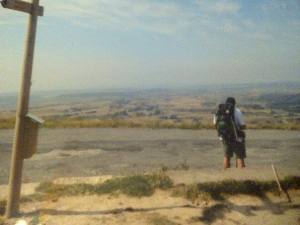



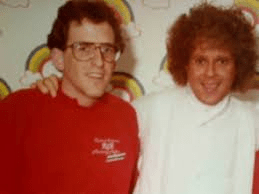





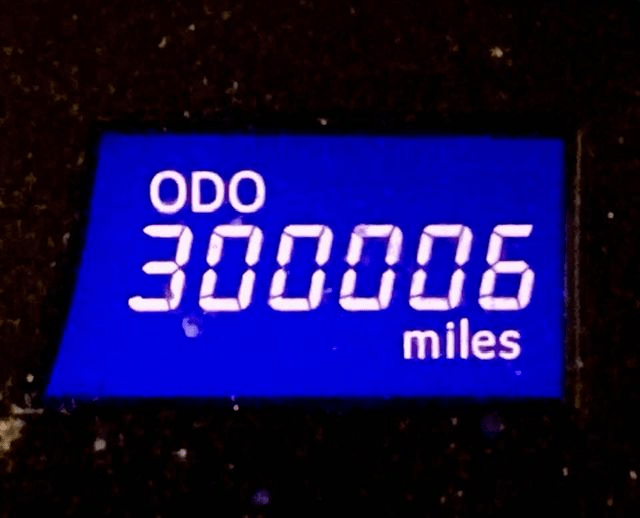
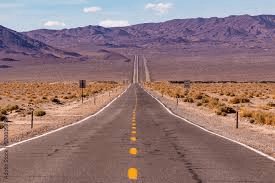






 a view from this wilderness