It’s that time again. When I was born Dwight Eisenhauer was president and Richard Nixon was his vice. The average household income was just over $5000 a year, the average house just about twice that and the average new care just about half.
I appear on the scene just hours after the first fifty-star flag had been revealed noting Hawaii, and a week before the Pulitzer Prize winning Harper Lee book To Kill a Mockingbird is published.
Benin, Niger, Ivory Coast, Ghana, all gain independence, and Aretha Franklin makes her first recording. Cyprus, the Central African Republic, and Chad gain independence. And in August, the Beatles with Pete Best perform for the first time with their new moniker in Hamburg.
Belka and Strelka board Sputnik with forty mice, two rats, and a rabbit and actually make it back to earth alive.
Hurricane Donna rips up the east coast and in my home state of New York, Governor Nelson Rockefeller declares September 19th Grandma Moses Day in honor of her 100th birthday. She was born at the start of the Civil War and died when I was a toddler. Time is deceptively swift.
I’m amazed by the people I shared this space with. First and foremost, birthdays remind us in fine mathematical style that we are alive and are still part of the population which constantly expands like bottle rockets in the deep blue sky. It bends my small mind to think of this reality that I’m certain everyone knows but few contemplate: I shared this planet with every other human who ever breathed the air. Read Carl Sagan’s “Pale Blue Dot” as a brilliant reference.
Just in my lifetime: Mother Theresa. Malcolm X. Neil Armstrong. Jimi Hendrix. Pope Paul the Sixth. Lech Walesa. St. John Paul the Second. Thomas Merton. President General Eisenhower. Elvis. Pablo Picasso. Albert Schweitzer.
Rwandan Tutsis. The Lost Boys of Sudan. Steven Biko. Pol Pot.
I shared time with these people; these saints and sinners brushed my sleeve simply by sharing the earth during my stay. I have a loose connection to miracles and massacres.
This world has some serious issues; always has. It is at best, though, a hotel, and every once in a while I take a look at the register to remind myself who else stayed here. Alexander the Great, Charlemagne, Mohammed, Ivan the Terrible, Ghengas Khan, all guests just over the slope of the horizon, just beyond some small slice of linear time. On the same human trajectory as mine but before is Geronimo, Moses, Jesus, think about the gentle bend of time, the careen of place that separates me from the disciples, the Visigoths, the founding fathers. All here but just before.
Closer to now, when I look inside the lines of my coming and going, I can see the souls who at one time or another shared with me this spinning blue wad. Not short of miraculous, we claim the same particles of stardust, and that’s what keeps me looking around when I walk down some city street; I want to know whoon earth is with me on earth.
Time has ripped past. I was born a month ago. I waded through foreign rivers last month. My son was born last Tuesday. Fleeting. Swift. Impatient. And my thin life falls on the same graph as Richard Wright and Ernest Hemingway.
Carl Jung lectured during my youth, and Ty Cobb watched the same Mets players as me. When I was still cutting new teeth and outgrowing my Keds, I could have headed downtown with my Dad and possibly been on the same train as William Faulkner, ee cummings or Marilyn Monroe. I might have passed them on the street, maybe stood in line at some drug store counter with my mom and behind us because of the blending of circumstance might have been Sylvia Plath or Sam Cooke; Nat King Cole; Otis Redding. We have overlapping lives. On a Venn graph, we share the shaded space.
Judy Garland and I watched the New York Jets in Super Bowl Three. When I was born World War One vets weren’t yet senior citizens and World War Two Vets were in their thirties. Vietnam isn’t history to me; it is my childhood, my early teens. The fall of Saigon was announced over the loud speakers at my high school.
There are empty fields save monuments and markers where soldiers died defending this land against the British, against ourselves, and they stood where I stand and watched the hazy sun rise. Same sun; same beach, same blessed Commonwealth. Don’t mistake history for “back then.” Those people just happened to check out before us. It could have been us. It is us now, watching the orange moon like we do, noticing the calm river, sharing time with loved ones, thinking about others. Getting ready to die since it won’t be long before our lives overlap with the crying call of a newborn Einstein. Did you see that boy running at the park? That girl climbing the tree at her home? Did I just pass by some senator, some Cicero or Socrates, some St Augustine?
Like a couple today buying the same house that young lovers lived in centuries ago, like sour-dough starter. Like a relay race.
My adult son is trying to get a shot of fireworks in front of the moon, but the angle is wrong. When he was just five months old I held him with my hand over his ear, the other ear against my chest, as we watched fireworks out over the Atlantic in Virginia Beach. That was last Friday or so.
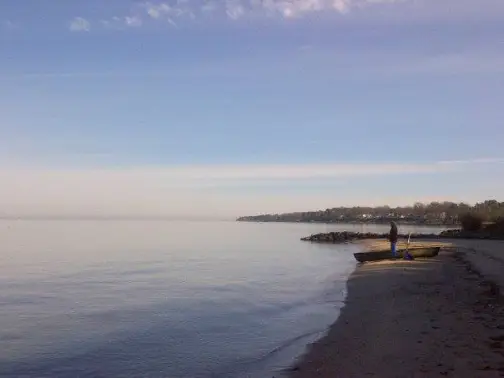
What a life. How many times do we reinvent ourselves? How often do we stop in our tracks, get out of the rush and inertia of humanity pushing from behind, and let it all go by, catch the moon over the Chesapeake? Why do we so rarely rest easy in the love of those near and of those still far away when our stay in this world in our time is brief at best.
I love getting older, knowing more people, turning the pages. I miss my mom and dad, I miss Dave and Fr. Dan, and I miss Letty. My parents lived longer than I thought and the others I really didn’t think would check out as soon as they did. Thank Buddha for Ghosts and reincarnation. Just in case I watch the birds on my porch.
The Infamous Stray Dog Café where I read with Anna Akhmatova and others (not at the same time or in the same century)I had just given this carnation to the WW2 vet on Victory Day3 am at The Shack, my hang out for years where I met locals and played music in the woods on the beach of the Gulf of Finland
I’ve traveled all over the world with friends and family: To Ireland, Prague, France and Spain, Norway and Amsterdam. But Russia has been on my mind the past few days as it and the war in Ukraine seems to have been drowned out by the noise coming from the Middle East. For quite some time I had quite some time there. I dined in palaces while quartets played for our private group, and I’ve paid off people guarding graveyard gates so we could explore the backstreets of St Petersburg. I’ve brought friends to apartments of artist and writer friends of mine, sat backstage during rehearsals at the Conservatory, had private concerts at the home of Rimsky-Korsakov, and read my work at the famous, dissident occupied Stray Dog Café as well as Dostoevsky’s flat. I know the streets of that city better than any other place in the world, including places I’ve lived. It has something to do with that heightened, acute awareness we experience when we travel. It also has something to do with going back dozens of times.
The city today in this post-Ukraine-invasion world, I fear, more closely resembles the city it was when I first arrived just after the coup. I thought those times were dead and buried, covered by the fresh grass of several new generations who know little else but freedom and capitalism. But it took one sick man to throw it all back thirty-five years.
In 1994, the streets of St Petersburg were dank, a monotone of browns absent of advertising, neon, or anything other than some Soviet style atmosphere. The only placards placed in random spots on Nevsky Prospect—the city’s Fifth Avenue—were Marlboro signs, the only western clothing of note worn by the suddenly displaced masses was Adidas warm-up suits. It appeared a parody of itself as presented in 1970’s and ‘80’s anti-Soviet movies. For seventy-five years the country, and Leningrad, moved in darkness under the Soviet leadership, and for centuries before that under the long reach of the Czars.
When I first arrived to teach American culture to faculty at Baltic State University, the first of what would end up being more than twenty-five trips in thirty years, democracy had found the streets of Leningrad, which had just changed its name back to the Imperial “St. Petersburg,” and Russians struggled to figure it out. The first week there, I stood in line for two hours at a bakery, and when I pointed this out at the college, my colleagues shrugged and said, “Da. Canushna.” Yes, of course. I explained that in the States, a new bakery would open across the street and be faster, charge less, offer discounts. Then I had to explain discounts and why, explain that the cashier who stood outside smoking while twenty people were in line would be fired. This led to a conversation about capitalism, and everyone was suddenly enthralled to hear about businesses and learn how to make money, the advantages of choices, the value of options. The men of the previous generation on through to the college students present when I first taught in the city, simply understood service to their country as paramount; it involved time away from family, but also provided pensions and a chance to protect their living conditions.
But after the coup, and certainly in the few years which followed leading up to 1994, it was a brand-new way of existence, and the long, cold winter of communism had finally ended. Things changed—and this is where it got tricky. At first everything was different overnight, like their currency, living conditions, international relationships, and availability of goods. But then the changes slowed to an immeasurable pace. People couldn’t find jobs or food, or they had to work for some organized crime group. Old folks lined the metro begging for money or selling items—shoes, loose cigarettes, empty bottles. But within a few years they figured it out. One afternoon that first year I went to the market behind a cathedral in the arts district. It was a park area with tables covered in tourist items: matryoshka dolls, the famous Russian wooden bowls known as khokloma, pins, small wooden toys bears. Scarfs, shawls, icons, amber jewelry. The following year the market built small booths in long rows instead of random tables. A year or two later, the booths had roofs over them, then lighting was put in for night shopping, and by the 300th anniversary of the city in 2003, the entire market was covered, gates out front, a veritable mall filled with all the previous items, but also fine art, expensive purses, technology, and food were added to the shelves. The Russians were figuring it all out, and many made more money in a month than they had in a year under the Soviet regime. Organized crime groups took over and took a cut, and the city streets once filled with just Russian-made Ladas were now lined with black SUVs.
A friend of mine in the marketplace, photographer and artist Valentine, remained my source of all things business, and the changes almost became too much for him to handle. In 1995, I went in the Catholic Church nearby to find piles of rubble where an altar used to stand eighty years earlier, and the walls had been painted black, on the floor lay statues without heads. The priest, Fr. Frank Sutman, explained it had been used as a storage facility for motorcycles since the Great Patriotic War, World War Two, but the church took it over for the first time since 1917. By the turn of the millennium, the grandeur of the marble floors and beautiful walls had been restored. Across the street was a small shop. In the early years, I had to point to the item I wanted on the shelf behind a counter or in a glass case, and if I liked it, I took a handwritten receipt to the cashier who figured out the total on an abacus (no kidding), gave me a new receipt which I took back to the first worker to retrieve the items. This is how it was in the few grocers, the pharmacies, the bakeries. Only in the tourist market did one deal directly with one person.
Years pass.
A supermarket opened with cashiers at the end of conveyor belts who rang up your items, bagged them, and you walked out like you just left Walmart. The discovered calculators, paper bags, and the shelves were stocked with European goods. And on the streets, neon signs dominated the avenue: KFC, McDonalds, Pizza Hut, clothing brands, cigarettes, alcohol, appliances, cars. Except for the language I could have been in my native New York. The once empty streets were filled with people, all on their new phones, all taking pictures, all donning expensive jackets and shoes.
These were the years of tourism, of an entire generation and the next growing up without memory of Gorbachev, even of Yeltsin. Today no one under forty-five would remember communism. For thirty-years we went on canal rides and took videos, wandered through neighborhoods and graveyards. I went to Victory Day a dozen times, talked to Vets of the Great Patriotic War, who loved to share their experiences, and I talked to the women—St Petersburg became known as a city of old women since the men mostly died in the war and children starved to death—about the changes, often as they swept the streets with brooms made from birch branches. I played guitar with a gypsy band in the woods and danced on stage with a folk group with no inhibitions at all. I have absolutely successfully embarrassed myself behind the former Iron Curtain.
We went to the Kirov Ballet, the opera, folk shows, and soccer games. We dined in restaurants from Germany, Italy, China, and played music, danced and drink at The Liverpool, a Beatles bar.
Peter the Great’s dream of a city of culture, his “Window to the West” as he called it, had come to fruition. Over those decades I have written three books and dozens of articles about my experiences there, and the experiences of the World War Two veterans.
By 2014, after twenty-years of going to Russia, anyone thirty or thirty-five years old and younger only new this new way of life. By 2025, the Soviet system was foreign to anyone under fifty. The very notion that the government would dictate what they could and could not do was as foreign to them as it is to us in the west. Students graduated from college and set up businesses, tech companies, they traveled freely and often to Portugal, the United States, Hong Kong, Sicily, everywhere. After almost a century of needing to walk everywhere and live with two other families in small communal apartments, they now owned cars and nice apartments. The once common practice of tourists bringing Levis or other western brands to trade for Russian trinkets was not only over, but laughable, with malls opening up with shoe stores, clothing stores, phone, sporting goods, and music stores, all filled with western brands.
Again, it’s crazy to realize that the “old country” of Russia had so modified over the course of just two decades, one had to be in their forties to remember the Soviet system. What the average Russian citizen could not know, of course, was that the modifications made in palaces throughout the country, but in particular St Petersburg, was paid for by organized crime to increase tourism and international trade. The city where I could in those early years buy items for a few dollars, quickly figured it out and charged twenty or thirty dollars for the same items. Restaurants appeared everywhere with prices for those driving the SUVs, not for the Lada crowd.
My friends from Russia adjusted. A tour operator learned business well and built a company that dealt with tourists from all over the world. My artist and writer friends found new freedom in being able to take pictures of anything and anyone they wanted without recourse. They criticized the Yeltsin administration without worry of harm. For seventy-five years, the notion of dissidence, which not only included those who wrote against the government, but those who simply didn’t always write positive things about the government; particularly Stalin, had in just a few shaky years, slipped into history. Going to St Petersburg became simple. There was even talk for a while of dropping all the VISA requirements. I wouldn’t call it democracy, as such, but communism was dead. Gone. Lenin’s statues which had been everywhere in the early ‘90s were much more difficult to find. It became simple for a Russian to leave home and travel to the United States. And the did, gladly, relishing in being a part of the world, finally. This wasn’t simply détente; this was the start of a beautiful relationship.
In 2013, my son and I rode the trans-Siberian railway from St. Petersburg to Vladivostok, across more than six-thousand miles, and seemingly across decades as we retreated into the previous century the further east we traveled. In Yekaterinburg the western influence was still obvious, but in Irkutsk, another few days east, Soviet style practices still appeared common. The one fortunate thread remained the people, all deeply rooted in new democratic, even capitalistic practices. They drove Kias and Toyotas, they wore Levis and Ray-Ban sunglasses, and they spoke of their vacations in Australia, the Canary Islands, Florida. If I had not been already in my fifties, there would be no basis of comparison to the old, Soviet ways I grew up learning about, fearing, hating. Nothing I had learned about these people was true, even in the early nineties. The propaganda machine, practiced just as efficiently in the west, had turned out to be shallow, and that was with a generation of Russians whose experience had only ever been Soviet or Czarist. This new generation, those already well into their careers, families, homeownership, and substantial investments, just two decades old, was the dominant population across the country, and they knew less about living under a fascist regime than I did.
Until Vladimir Putin.
He came in early and soft, almost friendly, certainly acceptable. He was a man with a vision for this new country who followed the floundering Boris Yeltsin, and as Putin’s power and wealth increased, he rebuilt his native St. Petersburg. He saved the former Soviet Union from ruin and the economic disaster of the Yeltsin years, which left a rampant homeless and starving population to fend for themselves. Right after the coup to end communism, the nationalization of all businesses and housing ended, but so did the pensions. Housing privatized and if the residents couldn’t afford the new rent they were kicked out. Hospitals quite literally rolled patients out the door and left them near churches to fend for themselves. Putin moved from the city’s Vice Mayor up the ladder to President on the promise he would “clean up” the homeless problem, “employ” people willing to work for anyone, and made business deals that brought unprecedented wealth to the nation. Russians welcomed him; so did western leaders. And the population which benefited the most were under forty, tech-savvy millennials who worked their way up, drove expensive cars, and lived in large sweeping apartments on Nevsky Prospect with beautiful dachas in the countryside or Ekaterinburg. Tourists who visited St Petersburg discovered open palaces with gourmet dining rooms, clean hotels with five-star service, shops with icons, malachite and amber jewels, and all-things-fashion. Russians, too, became tourists able to see more than the dachas they shared with other families. They traveled to Italy, to Portugal, France, and the United States. Satellite television common in the nineties became fast internet service enabling partnerships and communication with anyone anywhere.
Then Ukraine happened.
Those same students just out of communism and thrust into capitalism are now in their late forties, at least, and their children, raised in nothing but a mostly free-capital society with all the advantages and freedoms we understand here in the States, are being drafted into an army to attack a country they spent their entire lives visiting on vacation. When the news speaks of “Russian military,” this is who they’re talking about; men and women whose only reference and background was freedom of choice, of employment, of wandering, of economic wealth. Their only requirement was the possibility of two years mandatory service before they turned twenty-seven. Piece of cake; their billets ranged from one end of the earth to the other. So while their parents may not have been surprised to have been called to service in Afghanistan in the seventies for the Soviet government, these men and women dreading duty in neighboring Ukraine had anticipated their best-laid plans to pursue personal ambitions, and went to schools which had been teaching them international relations and economics, until the hope they had for life was disturbingly aborted for reasons beyond their comprehension or desire.
Then western sanctions hit and the country shut down, banks stopped all business outside the borders, foreign companies which lined Nevsky Prospect with signs and tables and parties were suddenly gone. The streets once again seemed grey, empty of life. Employment disappeared and no pension waited by to save them, so the army promised to pay their bills, which they did for a short while, and when word spread that the truth is they could barely feed their soldiers, let alone pay them wagers a fraction of what they had been used to, many fled.
Back in the mid-nineties, a friend of mine would write complaining about Yeltsin, about the lack of support from the United States, about the homelessness and difficulties dealing with “Old Russians,” who knew Soviet Ways, and how the “New Russians,” assume they have a right to whatever they can get. The anecdote which circulated then was how a New Russian in a Mercedes SUV waited at a stoplight when an Old Russian in a Lada with no brakes hit him from behind. The Old Russian got out of his car terrified, but the New Russian simply said, “Aren’t you glad I’m here to stop you? Otherwise you would have run out of control and killed yourself.” That was the propaganda which took hold and brought this nation to life; this nation now isolated and quite possibly on life support.
In the last few months, after a year of no word from friends who still live behind this new Putin Curtain, I heard from the friend who twenty years ago spoke openly of the problems in the city, back when the place was starting to shine. This time he speaks only of pleasantries, of how beautiful the weather is, and how he loves his city. No word of Putin; my friend remains uncharacteristically quiet about all things governmental. Another friend in Europe tells me his own family in St. Petersburg reports the lines are back for the purchase of many goods, like before the coup thirty-five years ago, and families are once again forced to move in together to save money, and he cried knowing his family whom he could visit whenever he wanted and who came to see him often, no longer has the ability to travel anywhere, nor the means even if they could leave. And he spoke as if this was the early fifties and Stalin was still in charge, that “to speak negatively about President Putin is to be thrown in jail.” And today come reports that anyone with dual citizenship with the US and Russia who had been contemplating going back to Russia should not do so lest they be detained indefinitely in Russian “holding” areas.
Maintaining control over the population of the Russian Empire after the Civil War following World War One was not difficult; the people had never truly known freedom as we understand it; Czarist Russia ruled for nearly a millennium. Russians appreciated the promises made by the Bolsheviks, and despite many of those promises never coming to fruition, most people abided by the Soviet system, even out of fear. And following the fall of communism in the late eighties and early nineties, Russians welcomed the opportunity to break free of the limitations of their previous government, but when almost a decade passed and things got worse, not better, it was not difficult for someone like Putin to convince them a little more government control, “like it used to be,” was a good thing. For a while, he maintained a perfect balance of top-heavy government—albeit one on the take to the tune of billions of dollars—and the personal freedom to come and go, grow and expand, as one pleased. This lasted until February 24th, 2022, when Russia invaded Ukraine.
But something is different this time. One hundred years ago the people had only known an oppressive government, as was the case thirty-five years ago, so leading them down the path the new leaders desired was not difficult. But now, two generations into a country used to most of the freedoms we have in the west, the population, despite the Russian propaganda to the contrary, is displeased with their government’s bombing of an innocent nation, ending the freedoms of the people of both countries. When the war began, Russia had 360,000 active troops. In the past years, well more than 315,000 of them have been killed or badly wounded, only to be replaced by new “recruits.” According to the UN, that amounts to 87% of their numbers at the start of the war. In the Ukraine since the world changed two years ago, more than 30,000 soldiers and civilians have been killed or wounded. When the communists took over from the Czars, the people only knew submission, but this time they need to be threatened to fight. Things are different indeed. Like Weimar Germany, Russia between Gorbachev and Putin was a fine place to travel, to live, and to have hope. It’s gone, at least until Putin is gone, and the people who remain remember that time of peace and prosperity and can on with their lives.
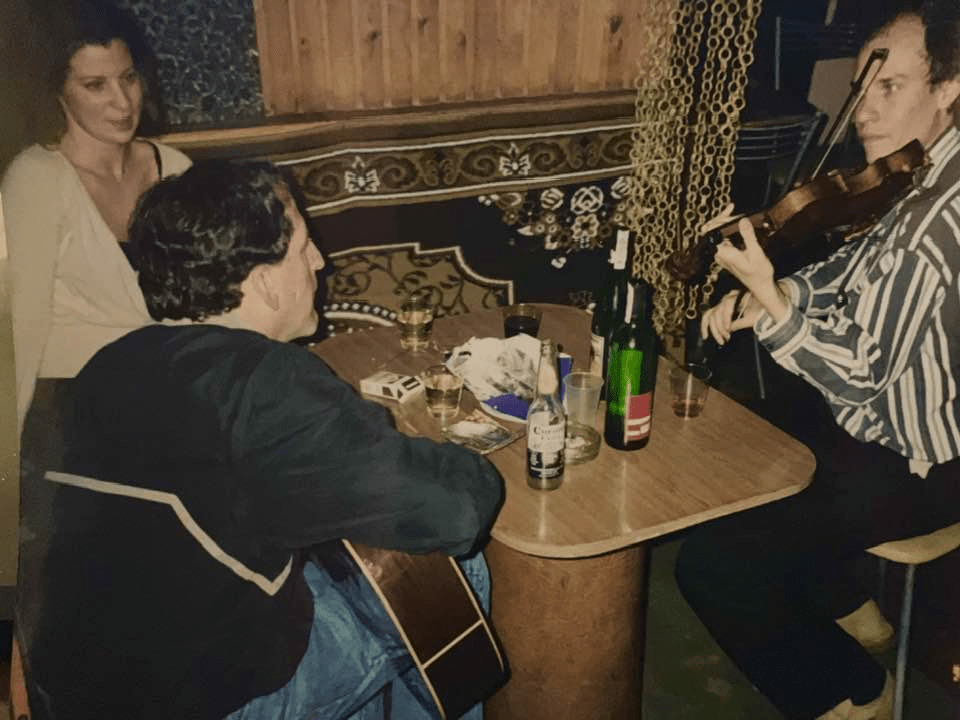
The Russia I knew is dead. I miss my friends, Valentine, Igor, Sasha the guitar player, and Dima the violin player. I miss the atmosphere, the storied example of perseverance that was the St Petersburg I knew, filled with veterans who miraculously survived the siege of their city for nine hundred days in World War Two; a siege and destruction of people which one of the city’s own, Vladimir Putin, once exclaimed must never be allowed to happen again, until he did just that. The promise and beauty of the Russian artists, the teachers, and the children, are simply gone. And in Ukraine with a history deeper, older, and more beautiful than even Russia’s, a civilization has been annihilated. Historians will not point to a myriad of reasons for this incomprehensible tragedy; studies will not have to be undertaken to better comprehend the causes of the invasion. The brunt of this brutality falls squarely on the shoulders of Vladimir Putin.
Valentine
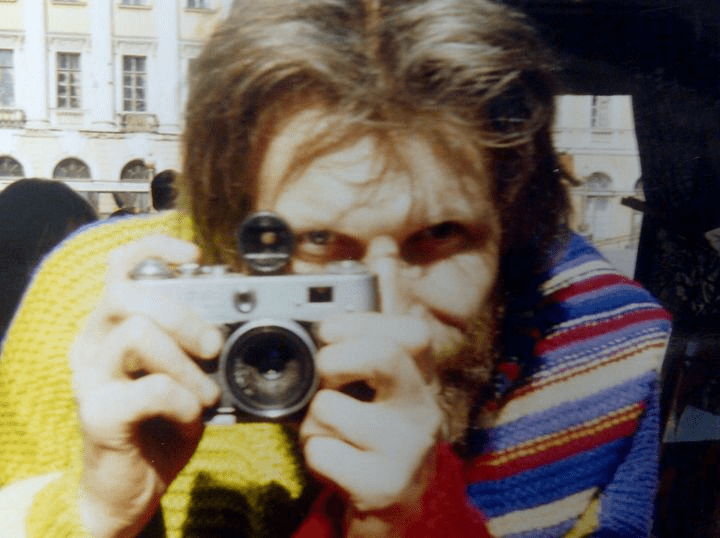
Valentine loved Ukraine and took many pictures there
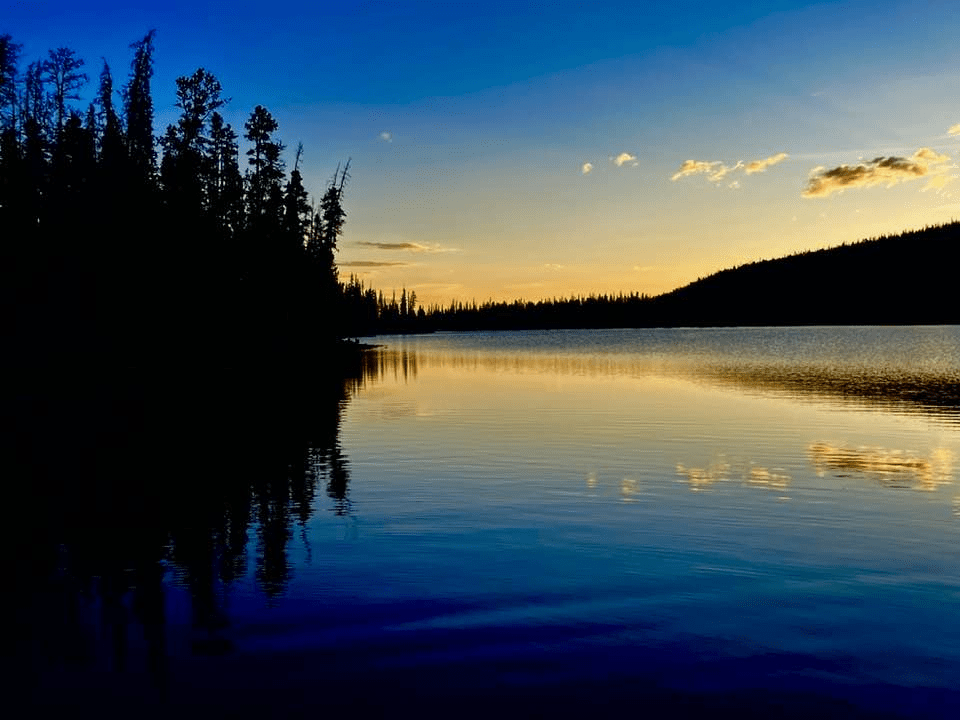
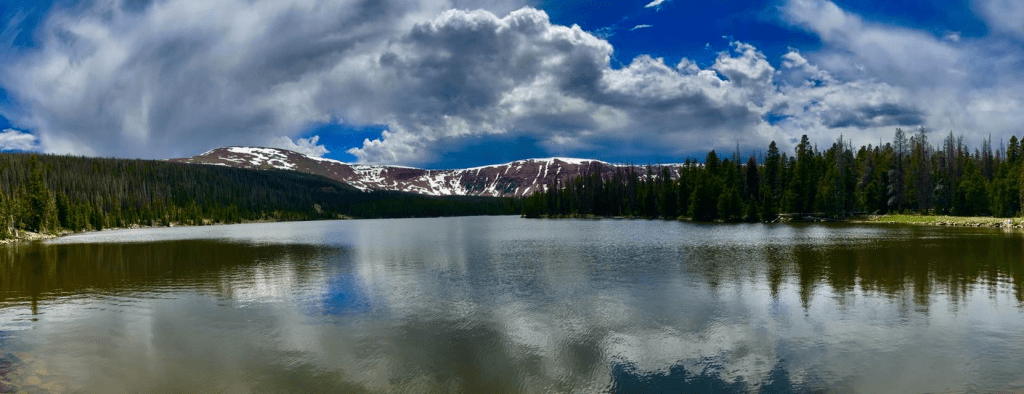
No running water, no electricity, no means of communication. We hiked from our cabin at just over ten thousand feet in the Uinta Mountains to just over eleven thousand feet. Snowpack remained, and while the temperature was pleasant, often even warm, a quick turn into the shade marked the cool dryness. In the evening we kept a fire going in front of the cabin, cooked on a camp stove, drank, went for a walk to watch the moon rise—which didn’t—walked to the dock at Spirit Lake and lay on our backs to watch the abundance of stars. An otter or two swam by, a few moose showed up in the field, chipmunks buzzed about, and the unmistakable peace of absolute silence dominated the days to the point I didn’t even notice. The nights turned cold and we fed the small, nearly 100-year-old cabin’s wood burning stove long enough to make it to morning.
Absent was the news, cellphone reception, communication with anyone else save the lodge owner and his wife, no neighbors in the few other working cabins to chat with, just the indescribable silence and laughter, a lot of laughing.
I worried about grizzlies. “There are no grizzlies here; they’re over in Colorado. Just black or brown bears.” So I worried about black and brown bears.
I worried about snakes. “There are no snakes at this altitude. Too cold.”
Damnit, I needed something to worry about. Habit. What I didn’t worry about was the disconnection with the world; being above the tangled waves of electronics saturating the air just a few thousand feet below. I could breathe; well, except for the air being so thin that I couldn’t breathe. And I could in that brief stretch of days, for the first time in a long time, be unapologetically myself because I knew I could. Sometimes it takes a friend to reveal who you really are. Sometimes it takes a lifetime.
Bob Unplugged.
I’ve been this way before, a long time ago during my sometimes-weeklong jaunts into Mexico before cellphones, or two excursions into Africa, and other places where I was mostly alone, or where the people I was with were equally absent of some umbilical to all things civilized, and all that was left to do was to talk, so we talked. Indeed. We talked about how we missed our moms, we talked about what breaks our hearts, we talked about what we dream of and what we don’t dream of, we talked, as Harry Chapin described, “of the tiny difference between ending and starting to begin.” We talked about how sometimes it takes years to understand the beauty of silence, the value of peace. Remember talking? Not words out loud, but real talking.
The night before I left Virginia I hit “Send” on the email to my publisher which contains the final draft of a book which talks about, in fact, celebrates, that very sense of disconnect, the abandonment of society, the push into the unknown. Early one morning after wandering to the outhouse and then up to the field to see if the moose had returned, I wandered to the lake and walked out on the dock. A soft orange sky spilled just to the top of the mountains, and the water worked from dark black to its normal greens and blues, and I stood alone before the dawn and my mind dislocated itself from time. This could be 1981, I thought, remembering a solid portion of my just-sent book; or it could be 1984 half a world away. It could be 1986 in Pennsylvania, or a year later waist deep in some equatorial river.
It might be years from now or just as easily the Jurassic or Cretaceous periods when dinosaurs tramped about these very hills. I forgot what day it was, and then I forgot how old I was. And then everything fell apart because that happens, things fall apart, but as it turns out that just makes it easier to rebuild from scratch.
I found myself on the dock completely at peace no longer worried about anything. I lay again on the dock as we had the previous night but this time alone and looked up and felt transported in such realistic ways that to describe it here would be to hack my way through this short reflection, but I was transported not to Pennsylvania 1986, not to Senegal or Allegany or the Congo. My entire presence slipped into Great River, New York, nearly fifty years earlier to the very day, and Eddie Radtke must have been somewhere in the woods looking for firewood, and I stared past what must have been the Great South Bay early one morning which he and I had explored daily for a solid wave of our childhood. That’s where my mind went; it reeled northeast about as far as one can, and slipped into 1975.
It was like being back in 1975 at the start of something but this time knowing how to handle it, knowing what to say right and what not to say at all, this time. I had not yet unearthed tennis courts and guitar shops, not yet swallowed the ocean water of the southeast beaches, not yet changed my mind, not yet learned hesitation and self-doubt that befell me just a decade later.
—
I turn sixty-five in two weeks. This year that day is tangled up in so many memories and symbolism, but something is different now than just a few weeks ago, pre-disconnect, if you will.
At one point in the book to be published later this year, I had been working in a bar in Harrisburg, Pennsylvania, with no true sense of direction except the absolute conviction that the lack of direction was not working for me. Late one night, early one morning I woke on a bench near a lake in a local State Park with no real recollection as to how I got there. I had not been drinking, no drugs, no overworked exhaustive excuses led me to the familiar shore where I had at one time laughed so hard. No, it was my complete indifference that brought me there. And I sat up and waded into the lake to my waist. When I returned to my home that morning, everything changed; or, better said, I changed everything.
Peace does that. Silence, and the depth of some connection that is difficult to find does that.
I lay on the dock at Spirit Lake and remembered the bench two thousand miles east. I’ve had so many changes this past year, perhaps more than in all my previous years combined, and I thought of Jackson Browne: “Oh God, this is some shape I’m in.” But I recalled not the last twelve months but my long drives into Mexico more than forty years ago when I thought I’d find the answers, or the walk across Spain, or the train across Siberia. All those times I was so at peace, so much in the moment and loving my existence, but I had not been this much at peace with myself and who I am—or, better said, who I need to be—since that morning in the park when I felt some sense of absolute clarity, when on a dime I let everything go, disconnected from absolutely all aspects of thought and commitment and simply let myself be myself as I imagined I was meant to be. And I lay on the dock and thought of Paulo Coelho who wrote, “Maybe it’s about un-becoming everything that isn’t really you, so you can be who you were meant to be in the first place,” and things seemed suddenly obvious.
Thank you clarity.
We packed, we meandered our way four days later though the mountains to the lowlands through a small swatch of Wyoming and back into now, back to suburbia, back to the news—the bombing of Iran, the bombing of Israel, the war in Ukraine, the disarray of Washington, the murder of protestors, the abandonment of morality, the sacrifice of truth—all of it, and I briefly envied those who left—Eddie and Letty, Dan and Dave and Mom and Dad. They have been spared this nonsense.
But, briefly, so was I, by choice. We sat in chairs around the fire and laughed like hell when I accidently burned off the soles of my sneakers, laughed harder when after banging my head several times on the exceptionally low doorframe, returned at one point to find the door jam covered in bubble wrap, laughed at the sudden appearance almost on demand of a family of moose, and laughed at the nature of change, the value of friendship. We too often choose not to step away from it all. Seriously, metaphor warning: If you keep your feet too close to the flames something’s going to burn.
I’m stepping away from the nonsense; life is too short. Six and a half decades down and I’ve already outlived nearly everyone I know, so I suppose it’s “time and time and time again to find another way.”
At the risk of being logical and empathetic, I offer my plan for the best teaching and parenting. I call it The Bob Plan.
Dear Everyone:
Learn everything. All of it. Memorize the multiplication and periodic tables, memorize the dictionary, the standard one, of course, but also the Slang Dictionary, and the Urban one, the Rural, the Southern, and the New England Elitist one. Know how to talk to everyone; know what everyone is saying. In that vein learn French and Spanish. Find yourself fluent in Arabic and Mandarin, Farsi and all other ways in which others speak. Know sign language. Study the click languages.
Read the history of the world by writers in the United States, China, Russia, Ethiopia, and the Vatican. Know the sacred texts as well as you know your phone texts. Read the Torah in Hebrew and the Bible in Greek. Know the differences between the New Standard Bible and the King James Version and talk about it with friends after reciting the Koran. Know the Pali Cannon.
Why would any teacher, parent, civic leader, country leader, anyone not want their own people to know more than others? Why would anyone want to send their children/students/citizens into battle without at least as much knowledge as those they might face? It is a supreme derelict of duties to march our young into the world half-dressed, but there are some who believe to send those same humans into school, the workplace, the world arena, with only a portion of the material everyone else might have, makes sense. But it is not only neglect, it is criminal. If our students, children, citizens, can have the answers to life’s questions which might be put to them at the most inopportune time, what sane-thinking person would deny them that information?
Know the laws, all of them—the local dictates and the constitutional arguments. Say whatever you want to say about the ideas of those you disagree with and know the amendment which allows you to do so without interference. Know the statutes and precedents, know the case names and dates and understand their practical application.
Understand every sexual preference, position, and disease. Be able to converse with the unlicensed prostitute and the Surgeon General at the same table with equal respect and knowledge. Understand the schedules to the subway system and the history behind the Great Migration in the 1930’s. Be able to discuss the effects of slavery on the industrial stagnancy of the sub-Sahel as well as the disenfranchisement of your neighbors two streets away. Be able to predict the weather and prevent heart attacks. Know CPR and how to use a defibrillator.
What would happen if everyone in a society turned out to be the smartest person in the room?
How could that hurt anything or anyone?
Arguments would be tight and based upon verifiable evidence gathered cautiously and patiently. Accuracy would be a given, sources would be well vetted, and mutual respect would engulf the debate.
Know the value of diplomacy and the value of gardening. Understand short- and long-term investments, the advantages and dangers of credit, and the National Highway numbering system. Know how to use a slide rule and AI. Know how to spot any constellation at a glance and the species of every bird just by hearing its call.
Who would have a problem with all of this knowledge except someone who, by keeping the public ignorant, can take advantage of them? There is no other value of ignorance. None.
Learn to make an omelet and a whiskey sour. Learn to pick up after yourself and how to greet a stranger. Learn to say “thank you” and “you’re welcome.”
Know seventh grade Social Studies as well as eleventh grade English. Memorize the twenty-seven amendments to the constitution and read Dickens, Dickenson, and Stephen King. Read Flaubert in French and Dostoevsky in Russian. Kafka in German. Watch Citizen Kane and Fifty Shades of Grey. Read and watch and listen to it all. All of it. The entire everything.
Learn how to learn; observe, ingest, swallow. Learn diplomacy and humor, learn nuance and grandeur. Recognize hyperbole and subtle inflections. All of it. Understand how to fix a car, build a rabbit pen, and stack wood. Learn the proper methods to painting a room and the best way to get red wine stains out of a white carpet.
Why would anyone want their citizens to be less knowledgeable than others? It makes no sense. Study with the people of your community and those from small villages in other hemispheres. Find out what they know, share what you’ve got. Remember their names and learn their customs. Knowledge guarantees inclusion and diversity. Those who learn not only have the answers, they know how to find new answers, decipher fact from falsehood.
Be smarter than AI, more efficient than algorithms, more fluent than the translators. Be a step ahead.
No one should want someone they care about or are responsible for to be less prepared than anyone else.
Choose your own path based upon ambition instead of statistics, your own pronoun based upon preference not ordinance, your own partner based upon love not gender. Understand why that makes sense. Learn how to show others that makes sense.
Find out why we’re still talking about Mozart three hundred years later. Find out what happened at the Second Continental Congress, what did Henry Highland Garnett and WEB Dubois know? Read the slave narratives, read all of Shakespeare. Learn how to gamble; learn how to smuggle. Try the haggis. Taste the raw fish. Find out.
Everything. Learn absolutely everything. It is the only course of action you should want so you can navigate this world on your own terms with all the information necessary; and it should be the only logical ambition all true leaders should desire for their citizens.
I woke about three this morning; it happens a lot. This time it happened because this weekend has always represented change in my life. Growing up, of course, the school year is just about over and summer is waiting; throughout my college summers not only was one year over and another still three months away, during that time I worked at a beachfront resort hotel every summer, so the “season” started this weekend. And for more than thirty-five years in higher ed, this is about the time of year we finally exhale for a few months. At three this morning I woke thinking about those changes this weekend those years, but this time I found myself surrounded by the ghosts of those dear to me, and in my tired, gummy-induced thought process, they all had the same opinion.
This weekend might feel more significant because so much of my life completely changed in the past twelve months, beginning about mid-May last year, and I added to that weight by spending this same year tuning my manuscript for my next book about a time in my life when I had to grow up and move on, about learning what to let go of and what to hold on to and guessing wrong in both cases. The brain decides on its own when it will dump all of this in your lap to stare at and make sense of. Usually it’s at three am. And raining.
It’s safe to say that my life has been anything but consistent and predictable, but when we’re young we have more courage to change. I believe that’s because if whatever we try falls apart, well, we’re still young enough to laugh it off and start over. But as the years pass, we tie ourselves down, let the roots take hold, gather more responsibilities and obligations. So change is usually subtle, a series of nuanced negotiations that are closer related to diversions than anything resembling a complete abandonment of one way in favor of another.
When I was young, I would regularly jump into some unknown ideal. Now, with Realism as my guide, I am more apt to step off carefully, insuring there is solid ground ahead. But at three am the smallest variation in our path can seem like a canyon. This morning started like that as I listened to the rain on the skylight. I felt my anxiety simmer just below the surface and I was in danger of completely waking up, so I tried to repress it, remind myself that whatever status quo I find myself part of is not only fine but damn near ideal. But that didn’t hold. I thought of a line from, of all people, Barry Manilow: “My life goes along as it should; it’s all very nice but not very good.”
Just wait. I’m one of the more fortunate souls I’ve ever known, and I know that; but that is an external judgement. “Very good” is a relative term. We are in the awful habit of comparing ourselves to others when we should be measuring ourselves against ourselves alone: What are we capable of? What do we wish we had done? What are you going to do with the time that is left? This is that old axiom, “The only way to fail is to not even try.” And this isn’t about you. I swear it’s not. It’s about me, from the young boy in the park, to the young teen on the courts, to the young man on the go. The distance between where I am and where I will end up can only be measured by how I feel about where I am and where I am going; this has nothing to do with “accomplishment” and “achievement.” I think I’ve done okay. It’s has something to do with fulfillment and a personal sense of purpose. Honestly, success has many definitions; just ask the ghosts.
So I stumbled to my desk to organize my thoughts, write down my list for the day to help settle my simmering mind before my anxiety won, and in the pile of stuff I created on the floor while trying to find a piece of paper to write on, I found a postcard from one of my earliest students.
It was about 1994.
Student comes to see me. He says he can’t handle the pressure of school. I tell him I think he’s a good student and he says yes, he can do the work, he just can’t stand it. He hates it, he says. He gets bored fast. It’s a good conversation, honest. Had we been somewhere else we would have talked over beers. He looks at his watch and says he has to work in a few hours and sighs. He’s twenty-five and runs his own roofing company but hates that too. He has six grand invested in equipment and no help and he just dreads doing the work now. He says he’s at some fork in the road, referencing our work in class, two paths that look the same, so he’s frozen, finds it easier to just stay put. He gets quiet and stares at a photograph on my wall of a village in Africa. Looks nice he says, like he wants to say anything to forget what he’s really thinking about. Then he remembers and sighs again. He’s quiet for some time and I find myself drifting.
I worked at a bar. Good money and mindless work; the kind of work where if you don’t think too much about what you’re doing, you can keep on working. I know I only spent a few years there but it seems like it was always winter, all grey and bone-cold. One morning I woke on a bench near a lake in a park and didn’t know how I got there. I had to work a few hours later but never made it. I quit the bar, withdrew most of my money, and bought a ticket to Africa. Turns out changing my life was as easy as jumping off a cliff knowing for certain I would either land on my feet or learn how to fly. “Boring” disappeared from my life.
But this student has trouble talking about it, so I talk: I tell him I get that feeling in my chest too. Tight, constricting, difficulty breathing. You know what I’m talking about. It’s the sense that something needs to change. I tell him all of that, and then I think, but I don’t say, that it’s the Philosophy class with five minutes left of three hours and the prof starts another chapter because there are still five minutes left; it’s the meeting you can’t tolerate but you’re in a row of seats with too many people on both sides so you can’t leave and all you can think about is how if this is your career, if this is how you’ve chosen to spend your life, shouldn’t you love being here, love the interaction and discussions instead of dreading every word that someone says; it’s that this-homily-is-way-too-long feeling. It’s the feeling you’re just one day away from something else, but then that day comes and you find yourself one day away from something. I tell him it’s the Whitman poem about astronomy; the wide awake at three am feeling and you can’t move so you stare at the alarm clock wondering what your someday-dying self would say to you now.
Exactly, he says. I’m always staring at the clock. I’d love to know what you’d do, he says. I tell him about a bar somewhere I didn’t belong. I remember working and then not working but I don’t remember what happened between the two. I just recall waking up one day in the peace-of-mind of another world, centuries away from being behind bars; like I could finally breathe on my own. I remember dreading the moment between what was and what was next, so I just kept pouring drinks, hesitating, putting off change. But then one day I didn’t, and when I looked back from where I ended up, the “what used to be” that so engulfed my life didn’t even exist anymore. He looks at me like I am looking in a mirror. I tell him if it were me, I’d withdraw from school, liquidate my roofing equipment, put some in the bank and some in the gas tank and take just one slice of life to myself for a while.School isn’t going anywhere, I tell him. We’ll wait for you.
He stares at me a long time then laughs, sweeps his long blond hair back and blinks his eyes a few times, as if to restrain some emotion. “I’m not that brave,” he says, and we laugh. Then he says he’s going to work and he leaves.
Six months later he sends me this postcard from Australia. “Don’t know when I’ll return,” it says. “When I am, let’s get some beers and talk.“
I look forward to it but, of course, way leads on to way, and I doubt he ever came back
Frederick W. Kunzinger: May 23rd, 1925 to October 21st, 2015
Dad had a toll-free number, so for most of my life when I traveled I could call him at his desk for free. I’d be about to enter Mexico through Nogales, Arizona, and I’d find a pay phone and tell him I was going back down for more blankets and some Kahlua. He’d laugh and offer his “Well be careful” in his deep voice, and for some reason I always knew, despite his desk job on Wall Street and in Virginia, his troubled feet which kept him out of the service, I knew he wished he were out there with me. I once called from Massachusetts to tell him I wouldn’t be able to call for a few days because I was going whale watching off of Maine with a friend, and he was truly excited. I wasn’t going whale watching, though; I was flying to Virginia along with his entire extended family to surprise him for his sixtieth birthday. When he came in his house and he saw me among the crowd, he actually looked disappointed that I wasn’t out on some vessel in the Maritime Provinces. That was Dad. Quiet. Proud. And kinder than just about any person I’ve ever known.
Funny how I just assume all dads should be like him. And maybe to each of us in some way our own father is the model. I’m guilty of not emulating him earlier. As much as my memory tells me he worked a lot–leaving the house for the Long Island Railroad at the crack of dawn and returning barely in time for dinner five days a week, and after dinner, coffee, the newspaper, he’d watch television, burned out from another long day on Wall Street, somehow he fit us all in without complaint–ever–as if nothing else mattered but being around family. What an example he set without ever offering one single word of advice. That’s how to Dad.
When my son and I traveled across Siberia by train for a book project which became The Iron Scar: A Father and Son in Siberia, the original writings from the trip, many of which were published while he was still with us, were written in the form of letters from me to him about Michael and me headed through Russia. In those pages I wondered if he was such a good father because he lost his own Dad when I was just five, and perhaps we are never completely fathers or sons when we’re between two living generations. Eventually, the book became a narrative instead of a series of letters, but he is always present in the pages. At the time of the trip and subsequent year or so while working on the book, he was slipping away just as my son was coming of age to head out on his own, so comparison was instinctive, and I could say with complete objectivity that my son turned out to have the same personality–kind, caring, without judgement–as my father. It was somewhere near Irkutsk I understood that my father lives on in the way my siblings and I as well as our kids live our lives.
For a man who worked all the time, though, he was always there: He brought me on my first flight, first class, from Norfolk to LA when I was fifteen. He taught me to drive. He would come by my office after he retired and see if I had time to go to lunch. Mom and us kids were his life; and when family visited our house for holidays or just a Sunday afternoon barbeque, he was in his glory. Nothing mattered to him more than us; that was clear though he never, ever said so. That’s how to do it.
Random thoughts:
I saw him cry twice. The evening of the day my sister told him she was diagnosed with aggressive Stage Four Ovarian Cancer, and the evening of the day she told him she beat it.
The last thing I wrote which he could read, according to my mother, was “Instructions for Walking with an Old Man at the Mall.”
His face always lit up every time my then-toddler son and I would “accidentally” run into him at the stores.
Every Tuesday night we had Scotch. I hated Scotch but I loved Tuesday nights.
Every Super Bowl we sat in his living room and watched while eating wings and shrimp. It is the only time I ever saw him eat chicken wings, on Super Bowl Sunday.
He loved watching baseball and golf. To this day, when I hear golf or baseball on television, I think of Dad and miss him again.
He would go downstairs first on Christmas morning to plug in the tree lights. With a smirk at 5: 30 am he’d quip “I thought I told you no one up before nine!” He would wait until Christmas night when our relatives had left and we were all sitting around to give us each one last gift, books he picked out with each of us in mind.
I never knew my grandfathers. But my son and my father were as much friends as they were anything else. They were together a lot for Michael’s entire life until he was twenty-two, and we’d play golf regularly, especially when my brother came to town, and every month or more the three of us or the four of us would go to lunch at the beach, and sometimes we’d just go to his house while Mom was still working and sit and talk, or go out on the porch and watch the birds out on the river, and when Michael was still a toddler he would take his hand and walk him to the edge of the water to look for wildlife. I could have posted hundreds of photos of the two of them, and perhaps just as many as the two of us since Michael always had a camera with him.
But I see no need. I can hear his voice as clearly as I can hear these keyboard keys, see his face as if he was sitting right here. I’m not in denial about Dad’s passing at ninety-years old, ten years ago this October, but it isn’t unusual still for me to have a conversation with him, or almost pick up the phone to call him about going to lunch. I suppose it will always be that way, and I’m okay with that.
Some days are tough, of course, just as they must have been for him after his dad passed when Dad was just forty-years old. But he never showed it that I recall; he just continued to Dad us, and I am lucky–fortunate, blessed, grateful, honored, humbled–he was my father.
From The Iron Scar: A Father and Son in Siberia:
I guess you have to be a parent to understand what kind of child you were. You need a basis of comparison that goes beyond the parent-child relationships of cousins or friends. It must be later, years later, when you understand what he would have wanted you to ask, what he wished you had shown interest in, how close–or not close–you were. Turns out we were so much closer than I knew, and I could have asked anything, but I never did.
Happy Birthday Dad. I love you.
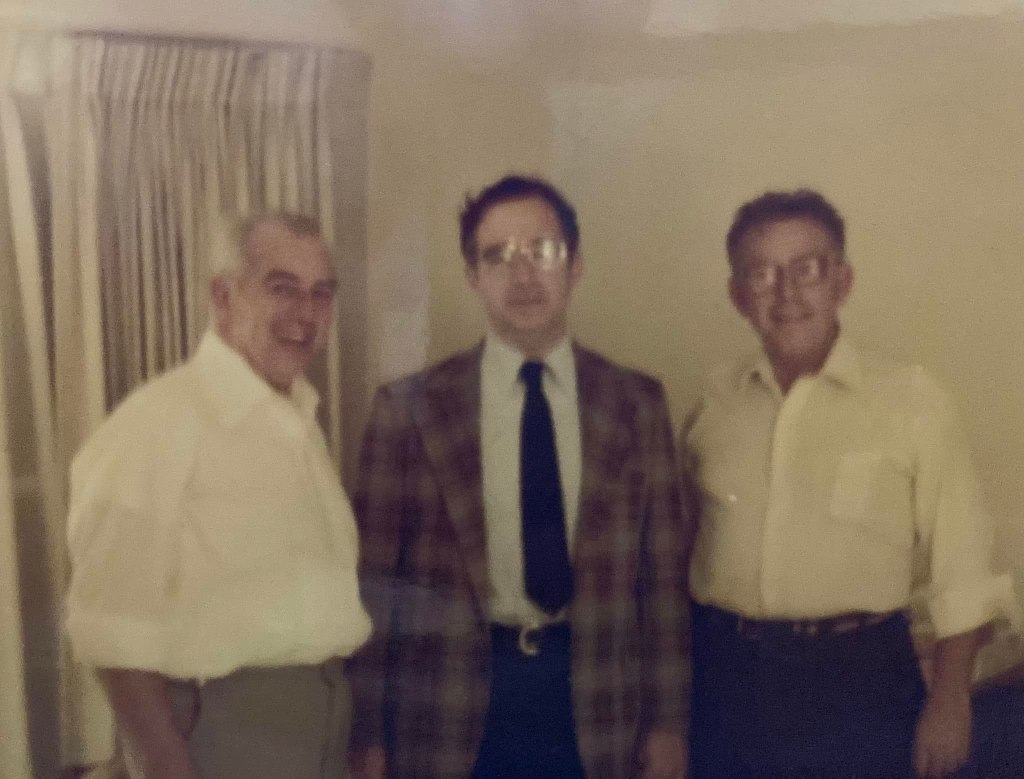
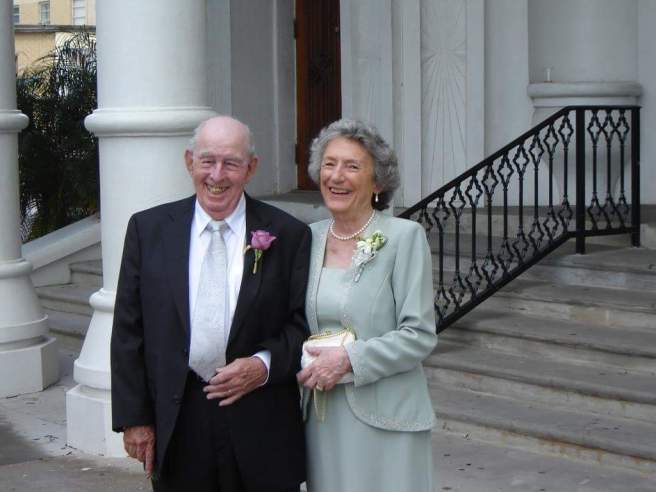
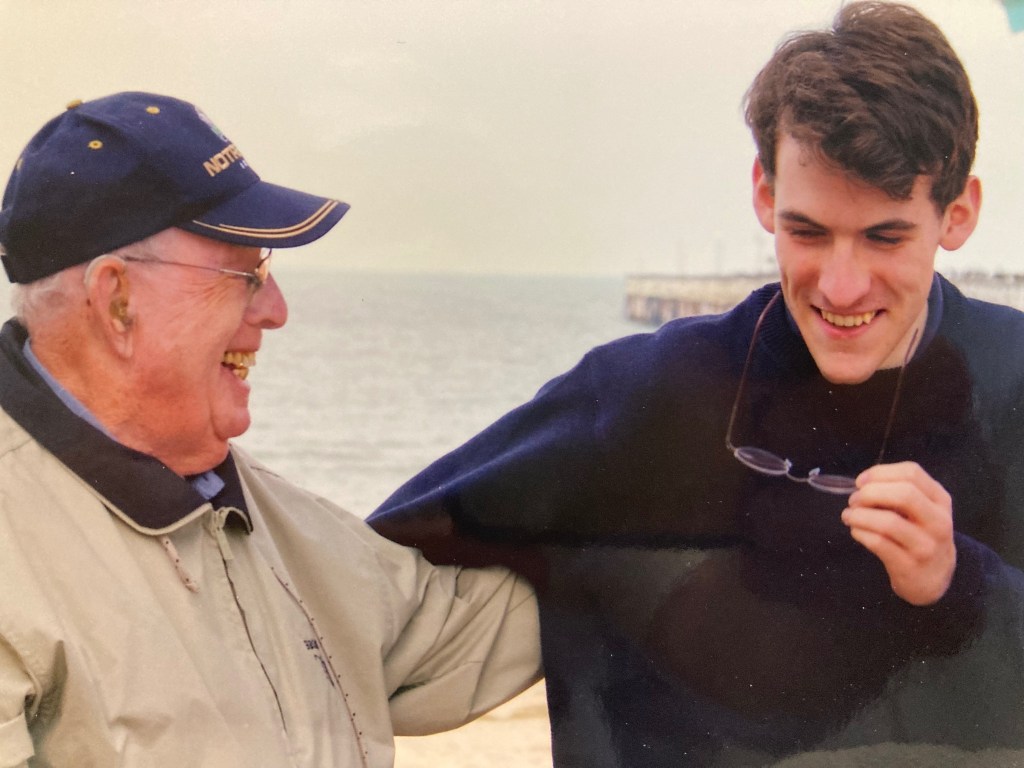
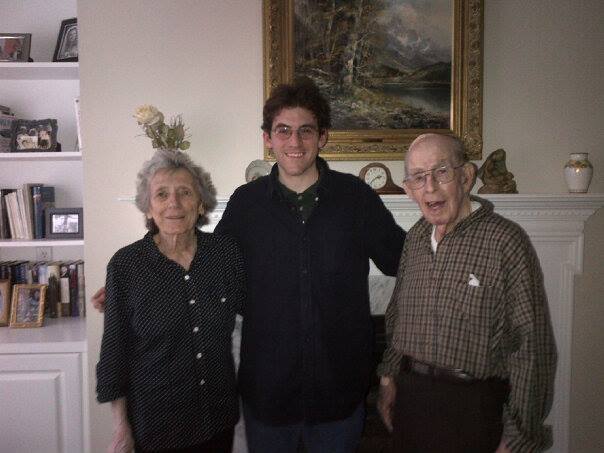
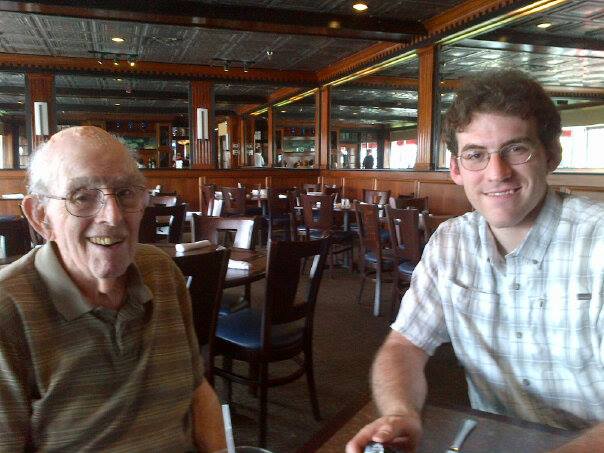
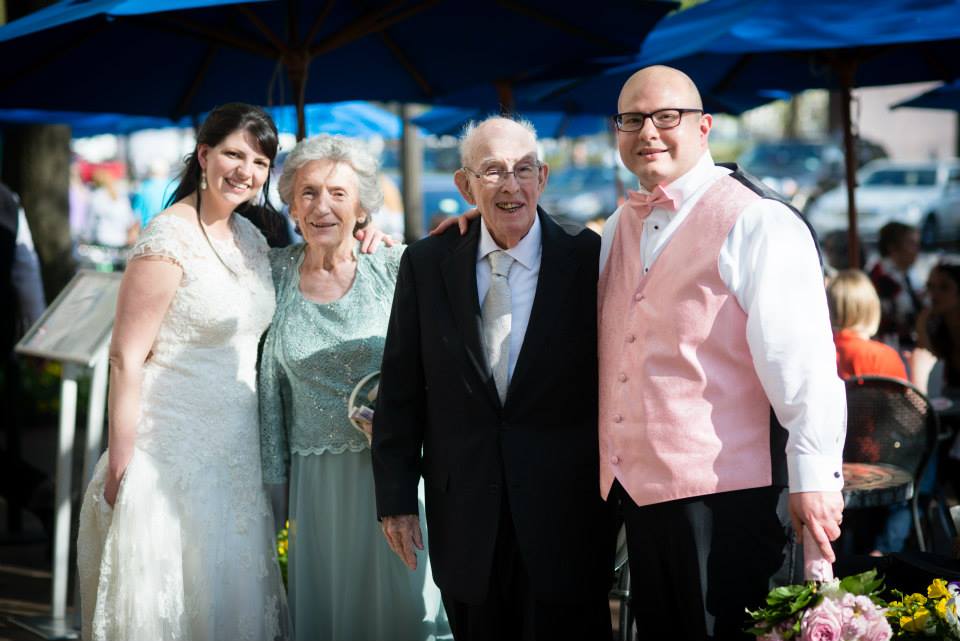
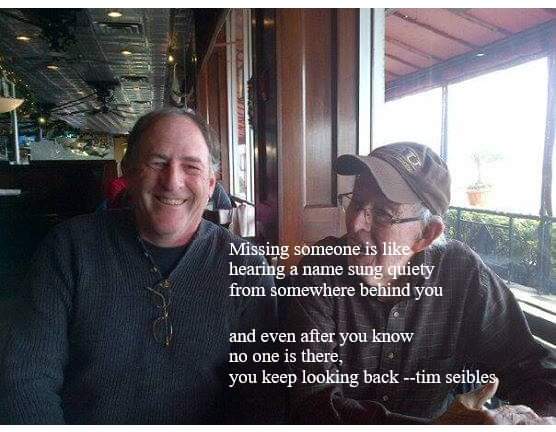
Canoeing in the Poconos on their honeymoon, 1952 (27 years old)Virginia BeachWith My Siblings and MeWith his first Great Grandson, Kieran With My Son MichaelWith His Brothers Ed and Howardwith my Brother-in-Law Greg and me at The Tides inn on my parents’ 35th AnniversaryWith Michael at a Tides Game in Norfolk, VAThe Normal Choking on My Front Porch With His Brother Howard, 1930’s Behind the House on the Lynnhaven River in Virginia BeachMichael’s Birthday63 years of Marriage His LAST Putt, 22 Feet and it went in At His Parents Home in Point Lookout, Long IslandAugust 23rd, 1952His Passions were Family and Golf, Not Always in that Order With Michael on the Chesapeake BayAn Avid Reader, Especially of Historywith Michael a few months before Dad Died One of our frequent lunch outings On Marion Street, Bushwick, Brooklyn, where Mom grew upFred, Michael Dad and Me at Mahi Mah’s in Virginia BeachDad’s Siblings in 1987With their Grandson Edward With their Granddaughter Barbara and her husband Jean With Michael in Williamsburg 1985 in front of the Bull and Finch Pub, Boston, inspiration for Cheers another of Michael’s Birthdays
It is fifty days from my mother’s birthday to mine. This year feels different since this was the first of Mom’s birthdays that she is no longer with us, and this year I will turn sixty-five. Funny, but I don’t feel my age; I think of myself as about fifty-two. Maybe, on good mornings, fifty. Let’s call it that; so with fifty days to go to my birthday and feeling all of about fifty, I’ve decided to change a few things. I’m going with a “Fifties” theme this year. Cue Buddy Holly.
Fifty.
I can’t lose fifty pounds. I mean I can, but then my weight would be about what I weighed in high school when I was slightly more active and my body could digest Tupperware and be fine. So let’s try for some variation of fifty pounds to keep with this year’s magic number.Five pounds should do it.I re-joined the Y near my home, so I think for the next fifty days I’m going to get on the treadmill and walk for fifty minutes five days a week. If the Cartoon Network is available, I’ll stretch that out to fifty-five.
I’m going to write five pages a night on one or another book project I’ve got going—I really do have five files of work-in-progress here, but then I’ve had the same ones for going on five years now. Still, this next month and two thirds is different.
Damn right. High five.
Listen, like the rest of us, I know about time. I’ve read about it, watched it tick away, felt it creep up my spine and into my mind with new drips of hesitation and doubt. Geez I know about time, the way it tricked Bobbie into thinking she could get better, never knowing the addiction had already won, and the slight of hand it pulled with Letty, and Dave, and Cole, and others; tricked them all, so yeah, I know something about the passing of time. We all do, especially as we move through the years, and about how Mom and Dad made it to their nineties—no complaints there—but how Rachel didn’t make it out of her twenties. I’m sure I’ll be thinking a lot about time in the next fifty days, and about Mom and Dad as I hit the Medicare mark, and about Letty who died on my birthday, and about Michael who right now is exactly half my age yet when I was his age I felt like I had already lived several lifetimes. Honestly, I think I turned sixty-five when I was nineteen. Time, man. I can count on it to keep pace, not lose one fat second on my account. It doesn’t take a time out, doesn’t sit one out, doesn’t find any value at all in changing the pace. Yeah, we all know a little bit about time.
Fifty days. Forty-nine days and about seven hours actually. Fifty glasses of wine, fifty gummies, fifty mornings at the bay watching the sun crack the surface, fifty evenings at the river watching it take forever to fade. This year I’m going to make fifty phone calls and write fifty letters to old and new friends; I’m going to find fifty beautiful moments—one a day—and keep that habit going another fifty, then fifty more. That’s the thing about time; it can’t decide for me what I do with it, only when it will end.
And it will end.
So fifty songs that give me chills and fifty minutes spent each day finding just a little peace of mind.
Fifty is the fifth magical number in nuclear physics. It’s the Golden Anniversary. It’s half of whatever whole you fall into. Fifty is the traditional number of years for a jubilee. Fifty in both the Torah and the Bible is associated with the concepts of freedom and abundance.
There are fifty stars for the fifty states. It’s two bits. It’s just sitting out there as some sort of centennial half-way point.
In fifty days I’ll be ready to turn sixty-five and feel fifteen years younger than that. It was fifty years ago my life completely changed as a chasm fell between everything that was when I lived in New York and everything that would be when we moved to Virginia that June 18th. I was terrified. I was just a few weeks short of fifteen, which is young at any age. But looking back now fifty years on, it seems to have turned out okay.
Seriously, what a time it turned out to be. For fifty days I’m going to remind myself I have a home and food, I was not born in a refugee camp in Somalia, was not born during a bombing campaign in the Middle East, was not born on the streets of just about any American city.
I’m going to remind myself of passion and hope, and that I still have the energy to climb mountains or simply just fall asleep. That I’m really good at. But for now, I’m going to keep moving, keep noticing the beauty and continue to look for the peace. I’m going to remember the grace I experienced being able to have the parents and siblings and friends I did for these years, I’m going to remember all of the love I had in my life from those who passed this past year, and I’m going to look forward to what happens next.
Time is persistent, yes. But how we measure it is completely up to us. Hell, they’ve already changed the calendar several times out of little more than convenience; I can do that too. For the next fifty days, I’m going to grow young again.
The American National Cemetery at Margraten, The Netherlands
When my Uncle Tom Burton died, the service was held at Arlington National Cemetery. He was a war hero, then a sheriff, always a father and a fine man. He lived a long life and it was an honor to be there when a marine knelt in front of my cousin, Audrey, and whispered, “On behalf of the President of the United States…” and guns were fired, and a soldier stood amidst some headstones and saluted the entire time. Nearby a horse-drawn carriage waited.
I walked about the cemetery that day and noted the names and dates, and while many of them did indeed die in combat and were interred at Arlington, many, such as my Uncle, served his time and lived a good, long life–never long enough, of course–and played with his grandchildren before that inevitable day. I wrote about Arlington Cemetery for the Washington Post, and while sadness was a motivating factor in my prose, it was not nearly as present as was pride for the women and men who served.
Staff Sergeant Edward L. Miller of the 309th Infantry, 78th Division, from Pennsylvania, was never buried at Arlington. Killed during the Battle of the Bulge, his final resting place is in the American National Cemetery in Margraten, Netherlands. His is one of more than 8000 soldiers buried there beneath the white crosses with names carved in perfect formation. The grounds of the cemetery–officially American Territory about two hours southeast of Amsterdam–are manicured and, in April, spectacular for the flowering trees and freshly mown lawns. Sergeant Miller’s niece, Kay Miller Debow, with the assistance of the abundantly friendly and respectful staff of the cemetery, made a rubbing of her uncle’s stone. After, she rubbed sand from the beaches of Normandy into the letters of the familiar name, washed the stone, and stood back to note how Edward’s name now stood out from the rest of the whiteness. What an honor it was to be there, to be part of this journey which began across the German border more than eighty years ago, and which continues with relatives who do not want their sacrifice to be forgotten.
In fact, honor was the word most exchanged in Margraten that day. The staff commented several times that it is an honor for them to care for the grave of the men who protected the country from the Nazis and liberated them not long after Edward Miller’s death. Kay commented what an honor it was to meet the people who look after so many fallen American’s, and the family who cares for his grave drove to meet her and brought flowers for her uncle and said it has been their family’s honor to be able to do so since the end of World War Two.
I don’t hear the word honor anymore. It was an emotional day for the obvious reasons, but also for what no longer seems to be so common: honor, respect, sacrifice, gratefulness.
It was a beautiful day; clear blue skies and a soft sixty degrees. I’ve known Kay since we were young, before the world slipped into our lives with all of its competition and anger; before Kay’s own service in the United States Air Force, before the world invented a way to sit at a table, logon, and find fallen soldiers, back when Sergeant Miller had been gone just forty or so years. That was a lifetime ago. Several. And I looked out at the crosses and wondered how many families in the States take the time to come to this remote, country town to pay their respects to someone who never made it home again to see their mom; never returned home again to get back together with an old flame and get on with their lives; never saw the sunsets and distant beauty of a morning mist.
Still, I could not understand why this was so much more emotional than the internment of my own uncle at Arlington. Then it struck me as I watched Kay place her hand on Edward’s headstone while no one was nearby: She never knew him. I knew my uncle; we laughed at parties together, and he showed up at my parents’ anniversary parties and always laughed with us, told stories. He died when my son was already in his twenties, and when my cousin’s kids were adults. Edward Miller died when his brother, Kay’s own father, was still a child.
Eric Van Heugten, the man who brings flowers to the grave and whose family has done so now for eighty years, stood next to me along with our host, Roel Timmermans, as I looked about and said, mostly to myself, “These men were the same exact age as my students.” That is what I couldn’t shake. That’s the difference. When I’m in class and my students are reading their text messages or staring out the windows, I look at them on the front edge of their lives, many of them living away from home for the first time, and they are the same age as the soldiers beneath the soil of Margraten. Eight thousand of them. More. Eight thousand men still teenagers and in their early twenties who never chose a major, never asked anyone out, never got back in touch with an old friend and said, “I’m so glad you’re home.” Because when someone you love goes to war, you simply don’t have a clue if you’ll ever see them again, and it’s terrifying.
And I don’t think my students understand that, or even understand the honor it is to be alive at all. I wish I could bring them all to Margraten, or the American National Cemetery at Normandy, or any of the other thirty-one cemeteries in seventeen nations which forever hold the remains of men who just learned to shave, just learned to drive. Just fell in love.
RIP Sergeant Edward L. Miller. You’d be proud of your niece and all of those who served with her in yet another war, this one in the Gulf.
Vocabulary list for my very-much-alive twenty-year-old students: Honor. Sacrifice. Gratefulness. Loss. Mortality. Love.
Since I’m a child I have wanted to travel the world–I think it was Pippy Longstocking who first turned me on to the idea of exploration and adventure. Certainly Robin Lee Graham and Woody Guthrie and Mark Twain. And I have done just that; more than I imagined. Ironically, for almost thirty years I’ve lived in one house which I built here in the country. My previous homes lasted, from birth, four months, eight years, six years, four years, four years, eight months, three years, three years, three years, two years, two years, and now, well Aerie since my mid-thirties.
If I had to choose between being always on the go for the rest of my days, or always at home for the same life, I’d choose home. I’d learn to garden and each year expand the crops with more tomatoes and cucumbers, and I’d have a fig farm on the land, perhaps more apple trees, and I’d share the results with neighbors. I’d know the names of the birds, and their migratory dates, and over time I’d have the hummingbird feeder ready for their return every spring. I’d add flowers to the land each year so that the back trail was lined with impatiens and the front with marigolds, and the north side toward the river would have a new trail with hanging baskets of herbs. I’d build by hand and bricks and stone a small guest house, with carvings in the doorframe and a wood-burning stove in the corner on clay tiles I made myself in the kiln I would build in the field. I’d have a dog, some cats of course, and a goat or two. Watermen and farmers would swing by sometimes to chat out front in the gazebo. And I’d walk to the post office to mail my manuscripts; I’d no longer be in a hurry.
Just as easily I might simply leave, keep going
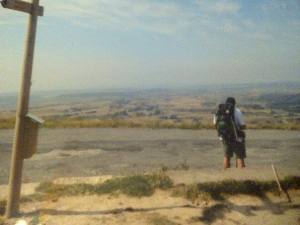
I’d do the Camino again, perhaps for years, and everyone would come to know the “old American” who is always out there heading toward Santiago. I’d relish the knowledge that no matter what else happens in my life, I have as a foundation to keep going the Way, the pilgrimage trail from France to the west of Spain. I would take Paulo Coelho’s advice and unbecome all the things that I’ve accumulated over the years which were not me at all, until finally I become who I was supposed to be to begin with.
If I needed a break I’d head up to Connemara in August each year to walk the Sky Road near Clifden. Or I’d head to Prague in May for the music festivals in Old Town and stop and see my friends at the university. I’d have strudel and tell newbies about the time I used to write in the corner of Nerudova 19 when it was a tea room, and I’d write and have a pot of tea and strudel, and I’ll say it is too bad they weren’t around then since now it is an ice cream shop and it isn’t the same.
Parts of me are already scattered all over the world. Pieces of my twenties are in Mexico and Africa, and large portions of my thirties are in Russia. Some of my forties made it there along with Prague and Amsterdam, and slices of my fifties are sprinkled like diction across this country from St Augustine to Seattle. If I had been able to simply keep moving, I’d have distributed what’s left of me in Spain and Ireland, with a small sampling saved for a state park on Long Island’s Great South Bay where most of the elements in my being come from to begin with.
Still, I like the idea of spending my life in a small town where I’ve always known everyone, and I leave the doors unlocked, and I have a running tab at a local shack of a pub. Equally I like the notion of having friends all over the world, writers in cities throughout Europe to call up and spend time with on my way through again. I like knowing other cities in other countries as well as I know the trails here at Aerie.
I wrote a book once about a guy who traveled the world until he settled in a small town and meets a woman who knows everyone and is from there, and they fall in love and the idea of staying grows on him, but she, by meeting him, understands she isn’t stuck in a small town after all and there is a world out there to see and experience, so she leaves. He decides the small town life isn’t the same without someone to share it with, so he leaves too, ironically also traveling the world, always wondering where she went, looking for her in crowds and metro stations, but he never finds her. It was a great idea and a decent manuscript, called An Innocent Season, but I could never figure out how it should end. That and I suck at writing fiction.
Life has a way, doesn’t it?
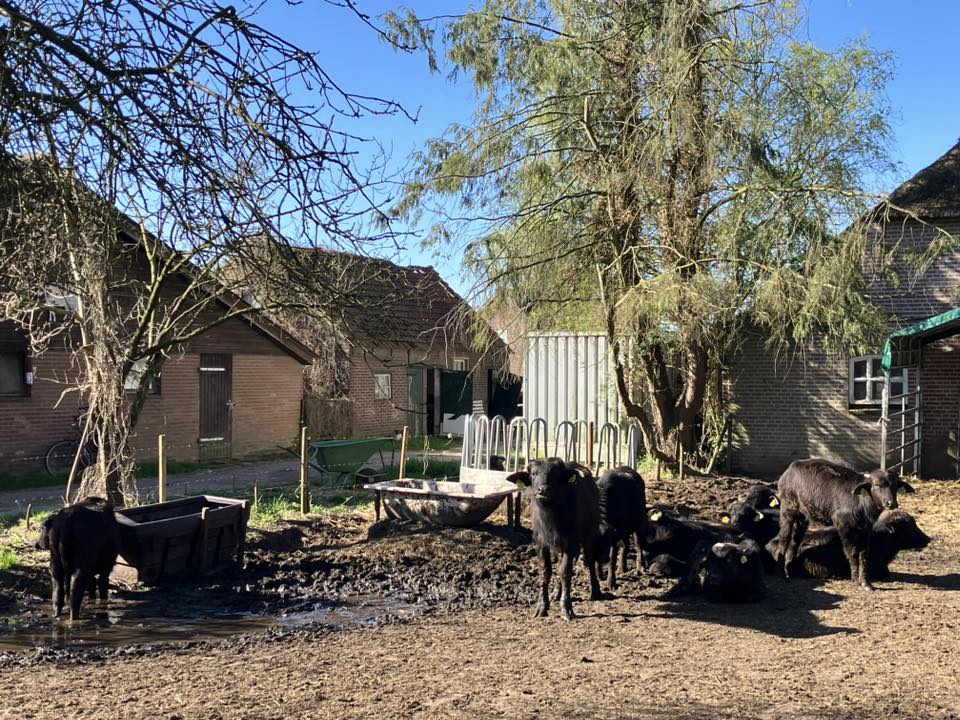
Last week I pet a water buffalo. This was near Neunen in the Netherlands. He was quite cute, still relatively small, and I scratched his neck and rubbed his face between his eyes, and he kept nudging me to continue, licking my shoes and pushing my hand. Luckily he was an Asian water buffalo who are kind, unlike the mean African ones. We stood at the fence and I pet him and we had just bought water buffalo yogurt and cheese but passed on the water buffalo ice cream. This little guy was loving on my shoes and my hand but I had stepped back and he came closer and his nose hit the electric fence, and we could hear the “zap!” and a small spark shot out and that little guy backtracked to his mother near a muddy area across the pen. He just stared at me with scared eyes as if to say, “Why?!” It wasn’t anger; no sense of “you bastard” in his face. Just a questioning “why did you hurt me like that?” and it made me a bit sad. I ate the yogurt anyway, though, with raspberry jam and some nuts.
But we do that, we get close and then our perception is thrown off. Something zaps us and we associate that pain with those close to us when they might have had nothing to do with it; it was more than likely just circumstance, timing, the time of day. I wonder now how long will the little guy remember the pain. Will it make him leery to get close to the next guy with Hokas on and a hand stretched out? Or will he just keep getting hurt because the pleasure is worth all the pain?
I would. In fact, I have more than a few times. Emily Saliers wrote we must “take part in the pain of this passion play” if we must love. The worst pain of course is departure, leaving again, and one comes to realize that eventually you’re best off either to just keep going, following whatever Camino you find yourself on, or agree to stick around awhile and simply accept that the pain is part of it all.
So we ate the yogurt and gave away the cheese and went back to Amsterdam and flew home. Three days later my beautiful mother passed away. I’ve been thinking about my youth, and mostly I remember laughing. My childhood included every emotion possible, but what comes to mind first and strongest is the laughter. I remember going to the supermarket as a kid and pushing the cart and getting a treat. I remember her making food for my class in elementary school and not minding when my friend Eddie and I dragged in mud from the state park. I remember her making lemon meringue pie because I liked it, and I recall perfectly her listening to me attempt to play the guitar for the first time as I butchered John Denver’s “Sunshine on my Shoulders.” I am sure I was zapped more than a few times back then by her voice when I inevitably did something wrong, but I can’t pull those memories up right now; only the good things. Like all the laughter and the music; these two things I inherited from my Irish-Italian mother–laughter and music.
That and to keep going. Perhaps the finest lesson of all; just keep going.
So here’s one I wrote and let it go. It’s partially told in a piece in my short collection Howl at the Moon (Cuty Wren Press). It came to mind this morning because I’m leaving in a few days for Amsterdam, and I’m sure there will be cheese involved.
I was in the Netherlands about twenty years ago, maybe twenty-five. I lectured at the University of Amsterdam and talked about art and Van Gogh and death. Normal stuff. In class one day, which was open to visitors and in which everyone was required to speak English, an older woman whose late husband was an artist sat in for the lecture, and afterwards she gave me an etching her husband did of a local cathedral. When she learned I was going to find a way up to the Zuider-zee, she offered me her son’s motorcycle for the day. Students gathered to talk about Van Gogh and about America and more. While the woman and I spoke, they talked amongst each other. One guy asked another if she was working that night and she said no, but the next night she was. He told her he’d come by. Another said it hurt to speak in English, and the young woman said it’s good for him to learn, that she wants to learn as many languages as she can. They all talked about van Gogh’s art.
That night on my way back to the hotel, I walked through the Red Light district to use a computer at a Brown Café to tell my officemate about how it was going so far. The windows of the district display scantily clad women, select lingerie on the floor, a couch, maby velvet, sensual surroundings and lighting. They move about tenderly like flesh and bone mannequins, and when a prospect passes, they urge him to pause, consider coming in for a quick turn. They whisper to them in Dutch, in English, French, German. There’s a back room for the business end of the exchange. I kept walking.
The next morning was one of those movie-set days with a perfect temperature, ideal soft breeze, postcard tulips and windmills, dikes running roadside holding back calm waters. I rode out to a Volendam café on the docks where som sailor just back from the states finished washing down his ketch, and we talked about his Atlantic crossing, about the Chesapeake Bay where he had been, and about the cheese he had on deck which he shared with me. We went in the café for a beer and the waitress offered some Gouda and bread with eel and herring. She said the cheese was from a small factory just a few miles away and that I should go, so I did.
Inside the cheese factory—a small barn-type building—a young man and woman stirred a vat of vlaskaas cheese which was sharp, and they told a half dozen of us how gouda is made and molded into wheels and how we shouldn’t refrigerate it, and how healthy it really is, being a hard cheese, including aged, smoked, and toasted. I bought two wheels for fresh gouda and stacked them in my pack and walked outside where a few other travelers from a bus sat at a picnic table.
A Dutch girl about twenty-five eating cheese and drinking white wine asked me to sit with her, and when I told her she looked familiar she said she had been at my lecture, and she swept her blond hair behind her ear and that’s how I knew her—she did that the entire reading, it kept falling forward and she kept sweeping it back and I thought Geeze just tie it back already. I told her simply I recognized her.
She offered me a glass of wine and retrieved a plastic cup from inside, and I shared her cheese. Her name was Abby and she came up to get a few wheels for her family and one for her. After about thirty minutes and a glass of white, the bus driver called for them to go so she left and said she’d hoped to see me again, and I walked toward the bike to leave. The cheese was heavy but I was glad to have it, and the perfect day made me not care so much.
That night I packed for my trip home the next day and decided to head back to the Brown Café to write again to my officemate back home to tell him about the ride out to the North Sea and the sailor and the hair-sweeping blond. I did so on the upper level of the first café I came to where the open door swept the smoke from the hash up to the internet café section so that by the end of my email I couldn’t spell anything correctly.
I left the café and strolled around the district where people drank espresso and the aroma of various smoke filled the narrow streets and top-shelf women worked the windows, and if you can see this coming you must believe me that I certainly didn’t see it coming at the time: I turned a corner and glanced at a blond in a prime-site window, and it was her, Abby, the hair girl with the cheese, and she motioned to me like I was just another passerby, but then recognized me and sat up more from where she had been prone on some pillows and her white lingerie lingered just a bit behind, and she pulled her strap back on not trying too hard to do so, and she pressed against the glass and urged me to come inside, motioning toward the door on the left. I thought about just walking by but that thought didn’t hold so I went in just to say hello. She cut me a slice of the cheese she had bought that day and she pointed that out, that it was the same wheel of cheese that we shared earlier, and that thought seemed to connect us closer than I cared, but it hung there between us. I had one slice of the vlaskaas on the table and said I didn’t want her to lose business on account of me, and that I really had no intention of patronizing her profession, and she smiled and said she understood. I left, and on the way out I passed the guy from class who had asked her if she was working that night. He glanced at me and I laughed. This is not like the colleges at home, I thought.
On the way home I walked by the Van Gogh museum one more time. It was quite in that part of town, and I stood in the cool night air, the sweet aroma of flowers everywhere, and remembered Vincent’s words about Sien, a prostitute who lived with him for a while with her young daughter. About her he wrote to his brother, “I believe there is nothing more artistic than to love people.”
Next week I’ll be there, at the museum, at the village where he lived a while with his parents, and along the canals. Just look at how everything in our lives moves on, grows and changes and, eventually dies. We age and hold out hope that some of who we used to be remains, knowing, of course, that is true only for a little while. Since I walked those streets last, friends and loved ones have died and my world has changed time and time again, but this week I’ll walk along that avenue and the hallways of the van Gogh museum where his work remains on permanent display, and I’ll think about the man who was nothing more than a peasant who lived with a prostitute, didn’t make any money in his last ten yers, lived off of his brother, was disliked and consdiered a leech and a failure by everyone including the best artists of the day who for the most part said his work had no hope. And I’ll think about that as I pass people sleeping on benches in the park and wonder which ones are artists and which ones of us merely pass judgement.