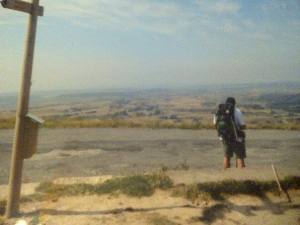

Encounter

I sat on a bench on the boardwalk in Virginia Beach early Wednesday morning and talked to a man at the next bench who had a sign tucked into his backpack. I could see the words “food” and “work” and “less,” this last one I assumed was the second half of “home.” I asked if he was a vet and he was, and I asked if he was from the Beach, and he wasn’t—he’s from Pennsylvania originally, but he stayed in the area after leaving the military since he had received care here at the clinic off of Shore Drive along the Bay. Until he didn’t. He managed a HVAC company for a while, but his bills outpaced his contracts, his medical conditions outpaced his insurance and money, and his constant stumbling got the best of him. He borrowed from family, from friends, he took jobs until he couldn’t concentrate and had to leave, he sold whatever he could to try and keep it going. No one wanted to help him anymore. But I get that, he said. Just look at me. At some point they said they’ve helped me all they can. I’d have stopped too, he said. He hadn’t shaved in a while, but he had clean clothes and had showered. He told me the church at 19th Street helped him out. He said he’s really running out of options. He added that several friends of his he served with in Afghanistan had killed themselves and they weren’t even homeless, as if they missed a step—they should have had to go through homelessness to get to death was his implication.

I asked what keeps him going. Something good might happen to me, he said. Not today, though, he added and laughed. But something good gonna happen. I got a friend with an apartment gets my mail for me. I keep hoping someone will send me some money, get me back on my feet. I asked what happened all the other times they sent him money; why didn’t that get him back on his feet, thinking about the times I’ve stumbled, thinking about the times I felt lost.

He shrugged. People don’t know what it costs to get out of a foxhole, man. I don’t know what it costs. I wish I did; then I could have said I need this amount and I’ll be fine. But I don’t know. More than what I got. More than what I had. Maybe this week I’ll have enough to get my ass straight again. Probably not. Anyway, that’s why I’m not dead. Something good will happen. Not today though.

I told him I was on my way to meet a friend of mine who received some bad news recently. We were quiet for a few minutes, I said something about how calm the water was. He nodded but stayed in his head.

Friend of mine…I said, and I told him what was going on. See, he said, this is what I’m talking about. Things ain’t so bad for me. You and me sitting here watching how calm the water is. Things ain’t so bad really. I could use a little more help, but not really. You know?

I knew exactly what he meant. I only had five dollars with me but I gave it to him, which he refused at first but then took. He didn’t do it hesitantly. He took it the second time and said, Yeah, thanks, I really could use it. I hate begging.

I asked if he ever hears from family. They stopped answering him. And this year he’ll be thirty, he said. He looked mid-forties at least. Thirty. I asked what he thought it would take to get things right again.

I just gotta decide to do it, he said. You know? I knew.

I told him I’d see him again, but I won’t, and I left wondering exactly who helped who.

Really incredible how calm the water was. Like glass. Like a mirror.  

Spying on Hope

I walked through the library at the college before heading home, and I talked to a few present and former students studying for finals, writing papers, eating bagels. I did not frequent the library when I was in college; I knew where it was though.

This time I sat at a table to read notes sent by an editor for a book project—ironically, about teaching college—and looked up from time to time this last week of classes. A few were on cell phones, but not many. Many were on laptops, but more were reading textbooks, writing, or talking quietly to other students with open textbooks and laptops.

My collegiate muscle memory kicked in and I thought, but it isn’t raining out, or snowing, why are all of these people in here?!

After about ten minutes, a young man, John, who had been a student for a few classes of mine some years ago and for whom I wrote a letter of recommendation for a Study Abroad in Australia, came to my table. We talked about his trip and about how he can’t wait to graduate in May. He sat down and before me was a young man only a few years older than last time I saw him but a world away from who he had been back then. It was his maturity, yes—eighteen to twenty-two is a leap unlike most others in life. But it was more. Experience, of course, travel, and the fact he was always an excellent student.

But it was also anticipation. He is just months from moving away from the bubble of dormitories and fraternity fellowship, and it shows in his eyes, the way when I asked his plans, he sat up, how he talked faster. I rarely get to see this part. I teach predominantly freshman and sophomores here, and they’re still ripe, high school residue still on their shoulders they do not yet wish to brush off, in front of them the camp that can be college when you’re away from home but not really. That’s what I stare at. I’ve been looking at twenty-year-old’s for thirty-three years, and the eyes of someone just a couple of years down the line are different. I never get to look into those eyes.

John’s eyes have that hope, they have appreciation, they have understanding. He said the polite, “I could not have done this without you, Professor,” but I know better. He could have, of course. Some students have an internal motivation that no one could defy if they even wanted to.

I returned to my manuscript written on and off through the years of teaching mostly unmotivated, unenthusiastic, unhopeful twenty-year-old’s, and I knew what I needed to do to sharpen the narrative. Throughout the work I dip into the idea of “possibility,” but sitting in the library looking at the students studying, sharing ideas, working, I noted the one aspect of collegiate life I missed out on in my thirty years of teaching first and second year students—hope. The ones at my previous place of employment as well as many of my freshman and sophomore students here move through the day like they were lucky to drag their asses out of summer break. But later, when what’s next is the next forty years of their lives, these same students will come to life, will discover what they are capable of and if they have the metal to make it beyond the confines of the classroom for the first time in their lives, which already are about a quarter of the way over.

Sitting at that table, pushing aside my own work to watch others, talking to John, talking to a few others I knew as I moved my way from the study area to the Einstein Bagels area, filled me with a sense that whatever might be wrong in the world, these people have what it takes to make it right, and for the first time since I walked by Friedsam Memorial Library at St Bonaventure in 1983 on my way to my life, things felt like they were going to be just fine.

Peace of Mind

I never truly fit in.

When I was young I certainly had friends, but I was never completely comfortable around anyone—it probably explains my ease in front of a crowd instead of in a crowd. Honestly, I’m much better and more myself in front of two-hundred-fifty people or more than I am with three or less. The art of small talk has always eluded me; in fact, I wrote a relatively successful piece entitled just that, “Small Talk.” It’s not my thing.

I could never involve myself in the minutia of life. I was always better at big picture jobs—a hotel, a health club—where the objectives were clear and the conversation was kept to a minimum. So you can see the irony coming, right? Yes, thirty plus years teaching and discussing and reworking writing by college students, very often one-on-one. I always fell back on my health club training. That is, I became not so much a professor of grammatical skills or syntax as much as I was a motivator.

Big picture themes. That’s my wheelhouse.

So I never fit in at departmental meetings or brown bag discussions. In those places my mind shut down when endless conversation ensued about how to word one sentence of a document or the need or not the need for the Oxford comma, and on and on and blah blah blah and whomp whomp whomp…

They didn’t want me there. I didn’t take it personally; I just, once again, didn’t fit in. When I was growing up, Eddie and I would wander the state park and sing, and even with him, my best friend, conversation came with a melody and lyrics. Things don’t change.

I went to a high school reunion a few years ago. I knew just four people there. Kathy, her sister Patti, our friend Michele, and…okay three people. In retrospect that makes sense—I didn’t really do much in high school. My friend Mike and I did announcements, and that left the appearance I was involved, but I wasn’t. There was a mic, a room, and hallways between me and everyone else. Perfect.

In college it was the same. I was very involved, but scrutiny of that involvement is illuminating for me. Radio station (alone in a studio talking to the campus); coffeehouses (alone on stage in front of a crowd of people I couldn’t see anyway because of the lights); weekends with keg parties and drunken floormates found me borrowing a car and heading for Niagara Falls. I was more comfortable around the resident directors who were often alone in their apartments, or driving to Canada.

Even when I did participate, what I participated in is defined by the singular concept of “one.”

Tennis is an isolated sport.

Guitar can be played without accompaniment.  

Writing.

Walking. Hiking. In college it was the Allegheny River, in Tucson I’d drive down and wander the empty streets of a Mexican village, and in New England I’d hike to the top of Mt. Wachusett where kettles of hawks kept my attention for hours.

Nature.

I find myself more comfortable in nature because it doesn’t mind failure, it pays no attention to shortcomings and disappointments. It simply allows us to exist as we are without judgement or ridicule.

This afternoon after the storm I sat on some stones at the river and watched the choppy waters, the heron gliding across the duck pond toward the marsh, a kingfisher perched on a wire, and the distant, dark clouds building again, bringing more rain again.

It was a few moments of absolute peace of mind.

A thought about this: The peace of mind thing is not easy to obtain. It is not an absence of sounds and conversations, it is an internal escape from one’s own internal disturbances; the constant interior monologue about everything from the practical (money, transportation, deadlines) to the emotional (sick friends, relatives), to the fleeting irrelevance in life that get their claws in your thoughts and won’t release. So finding peace of mind is not easy to do just because my surroundings are quiet and natural; it just makes it easier.

So I sat on the rocks in a rare moment of internal quiet, the still waters of my mind undisturbed by some psychological pebble, and I looked calmly across the river and realized something profound: this river doesn’t want me here either. It was not created for humans, it is not set up for people. It’s why the heron flew off because of me but not because of the egret or the eagle or the osprey. It is why the tide will ebb and flow based upon the natural phenomena of the moon and the sun, gravity and storms—not because of anything or anyone anywhere.

I once stood waist deep in the Congo completely aware that no human should be there. It is the same in any natural place. In Tucson we stood on the shores of the San Rillito River during the horrific floods of 1983 and watched this once calm, low waterway—a place where kids would play baseball at low tide—snap bridges in half, grab houses off of their foundation, flip them over, and carry them on its back to some other place.

Nature has a whole other level of confidence.

Still, it’s as close as I have come in life to being myself, being out there. Hiking in the mountains, canoeing, simply walking down the coast toward some other where.

Some people never find their reason for being here; they let the world saturate their thoughts like a swollen river and swallow them, giving up, giving in, letting that minutia like money and disappointing others get the better of them. It’s easy to do; it happens. I suppose most people don’t ever feel completely comfortable around others, a bit of self-consciousness slips through. But it isn’t that, exactly. It’s that feeling of always thinking I should probably be somewhere else.

Counselors have said since counselors have been saying things that it is essential to find your place in the world. I agree. I’m not sure I ever will, but I certainly agree, and at least I know where to look.

I’ll be outside. Don’t come.

Not Yet

I watched a hawk sweep down and pulverize a dove. The hawk perched on an oak branch and the dove, distracted by the wind and some seed on the lawn, stopped paying attention. It happens. The hawk isn’t fast as much as he is silent, just a simple cliff dive, stepping off the branch, and with wings out, sweeps in with perfect form with his claws out front to grab the dove at the neck. A sudden puff of feathers bursts into the air, and the raptor is gone. So is the dove.

This time the dove simply stood on the grass. She had been facing the direction of the hawk and when she turned around the hawk flew into action. The dove seemed to hunch down like she knew what was about to happen. Gone.

I wondered if she just gave in, like she’d had enough. Sometimes the natural instinct to survive is not as strong as simple resignation.

When I was in high school some friends and I went to the beach on the bay. At some point one friend and I decided to swim out to the end of a very long pier. We made it but we were exhausted and ended up helping each other back, each of us taking a turn at holding the other until we were at the breakers and could ride in. She and I just collapsed on the beach, spent. It isn’t like we weren’t in shape. We had stamina; we just swam too far out. I wonder when it is that people decide to give up. I wonder if we had been another hundred feet would it have been too far or would we have found the strength and determination to push it. I mean, did we collapse on the beach because we couldn’t go another yard or because we didn’t have to?

I wonder how often I’ve given up because I thought I found the shore when the truth is I could have probably held out for more, pushed it a bit, opted to swim a bit further.

It’s cold today, but sunny, and the hawk is around—I can hear him, though the doves are feeding on the porch rail where it is safe and out of sight. Earlier out on the river an eagle found food, and the buffleheads have returned. Sometimes some river dolphins swim under the Rappahannock Bridge, but not yet this season. I like it here. I find peace here. I think mostly though I like the area because of the water and the sand. Ironically, the first time I was in this area was exactly ten years before I bought the land to build the house. Just across the river is The Tides Inn, a quiet resort right on the Rappahannock. For my parents’ thirty-fifth wedding anniversary, my father invited us all to stay at the Inn. It was an excellent time, and we went for a river cruise on the Miss Anne, a riverboat which went under the bridge, and we followed the south shore and returned to the Inn along the north shore, turning around at the mouth of the river into the Chesapeake. I had no clue we passed close enough to my eventual home to be able to cast a line to shore and pull us in.

Thirty-five years later I’m watching osprey out across the same bridge feeding their young, while hawks stand watch in oak trees waiting for doves to stand still.

I was born a moving target; I’m not sure I ever learned the right time to collapse on the beach. The hawks have for the most part missed me up until now. When I do settle down it is usually to look at a map. Ironically, since I moved into this home, I have traveled more than I ever dreamed I would—Russia, Prague, Amsterdam, Spain, France, Norway, and plenty of states. And at night in the darkness we use the telescope to travel through the heavens out across the waters and find planets and meteors. We often joke about one of the meteors ripping through the atmosphere and hitting us in the back of the head while we’re facing the other way.

When I was in college a friend had a poster on his wall promoting Nike. It was a long shot of a winding road through open country with one solitary runner, and the tag line said, “There is no finish line.” I like that. If we didn’t know when to stop, I wonder how often we would keep moving. I’m not an advocate of indecision. But I’m a staunch opponent to settling for something when there’s still more options for the ones willing to wander a bit more. It is, to be sure, a delicate balance.

Certainly I get tired as I move forward, especially on the days when I’m not sure where I’m going or how long it will take to get there. But when I think about that swim to the end of the pier and back, I don’t often recall the collapse on the sand; I remember how quiet and peaceful it was taking turns helping each other back to shore. It was hard to tell if we were helping each other or saving ourselves.

The journey doesn’t necessarily end because we found a safe place to rest

The Rain

The View from my Office Window

It has been raining steadily since early this morning, and it’s in the mid-fifties today, going toward sixty or more by Tuesday. This reminds me of the rainy days when I was a child and I’d lay on the den floor and watch old black and white westerns all afternoon. I enjoyed seeing the blazing western Sun and the sweat on the cowboys’ foreheads all the while our yard swelled from hours of torrents.

Like today. The leaves are somewhere between summer and winter, with carpets of amber and red running the length of the driveway and all along the Aerie trails. Even the porch, which has remained dry because of no winds today, has scatterings of leaves right up to the log walls and on the furniture. The river is calm, and a slow endless hum of rain on the surface is both peaceful and somewhat melancholy. Sometimes when the riverfront is barren and the mist rises from the storm, I can hear some faint call of kids on innertubes, or the distant grind of a jet ski passing out toward Parrot Island. It reminds me of those beach sounds when I was young, on the Great South Bay or at Point Lookout on the Atlantic, and some music drifts from the blankets of other family’s, and the low murmur of adults talking about some trip to the city while kids yell from the surf break. Those sounds are my life’s soundtrack; they are embedded in me as much as the sound of my own voice. Sometimes some nearby transistor radio would toss over Ralph Kiner’s voice announcing a Mets’ game, and I’d tune into that while laying on my stomach on the blanket.

But today’s connection is the rain and how it sounded on the awning in Massapequa, or how it sounded in the trees of Heckscher when Eddie and I would wander the trails not minding being soaking wet, not minding the ebbing of the days of summer and fall.

That was then.

Now, the rain comes in steady streams then lightens up, then heavy again, but never stopping; not today. Outside my office window here across the driveway is nothing but woods for quite some distance, and if I look out long enough I can usually see deer, even in the rain, and opossum. At night in the flood of the porch light I can see the fox at the edge of the woods nosing her way in wet leaves looking for apple cores I leave out. She will eat a few, then she will mouth a few to bring to her kits. I have never seen her den, but I imagine it is not far and is fairly dry—or at least protected from the weather.

Today I did nothing. Earlier, I caught up on writing classes and finished an article for a deadline and then organized the area around this desk, but once that was done by late morning, I did nothing. Today is the day I decided to undo myself, neatly put my pieces spread out on the floor, clean off each one slowly, clear out the buildup from years of neglect, and then carefully put myself back together. So the rain is good—it is cleansing, it is like some late autumn baptism.

Once classes are done and the leaves have fallen and the cold air comes on, undoubtably taking me by surprise again, I will clear the leaves off the driveway, clear the paths by raking the leaves into the woods, and get the firewood ready for winter. The house is well-heated, but I like fires in the stone fireplace. It feels safe, though I’m not sure why since I never really feel threatened by anything. Still, there seems to be a difference between not feeling any threat and feeling “safe.” I know at least one person knows exactly what I mean.

In 1981 or ’82, a friend of mine and I took a van to Rochester from college to pick up a piano he bought for his campus apartment. He worked for the university. On the way home we stopped at Letchworth State Park and hiked for a while, then we stood next to the stone wall which overlooks some waterfalls. It was autumn, and the leaves were at their peak. It was like standing in a state of Grace; it was like stopping time and all civilization could breathe better. We talked about music and other normal early-twenty-year-old conversations, and then after some time of quiet, he said, “You ever think about how every year we pass the exact moment we will die?” I stared at him a minute and said, well, to be honest, no—it never crossed my mind—until then. He laughed and added, “I don’t mean that in a morbid way, but if someone died on November 10th at 11:12 am, then every year before his death he passed that tragic moment not knowing its significance.”

I made some jokes about morbidity and how he managed to bring down what had been a really good moment, and we laughed for a long time. We even sat in the back of the van and played the piano and sang while a few other tourists stood by and listened. It was a good day. Before we drove off, he said, “I guess it’s just that sometimes I wonder how many autumns I have left. Probably a lot, sixty or so maybe. But who knows.”

That was exactly forty years ago, and I’m glad to say he is still with us, though we lost touch a long time ago. But we’re both in our sixties now, and we are closer to 100 years old than we are that afternoon. So there aren’t a lot of fall days left to enjoy this suspension of seasons; this literal “change” of nature.

And so I too have decided to change. I need—must—let the old ways slip off and fall away and gather at my feet before I continue this pilgrimage. No doubt it has been beautiful—in the big picture I have had one hell of a string of seasons in my life. But it seems like a fine time to go dormant and get back in touch with my roots a bit, understand again where I was going to begin with.

The rain stopped about two paragraphs ago. It is dark grey still, and the moment of what would have been a sunset if not for the grey skies has passed, so it is getting dark. I’ll put the porch lights on soon and look for the fox, most certainly I’ll see some opossum. I’ll sit on the porch a while and have some tea and for a little while I’ll notice how beautiful the fallen leaves are having served their purpose, having made way for the new leaves to come.

Humanity Needs to be Edited. Fast.

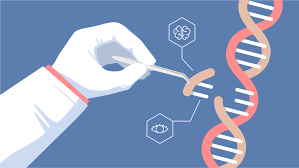
Crispr is alive and well and causing controversy throughout the world of science. It’s still in the intensely early stages, of course, so I know I’m getting ahead of myself here, but in the not too distant now, scientists will be able to “edit” genes in a human embryo to prevent a disease. As a writer and a professor of writing I stand strongly behind any form of editing. It is, after all, an attempt to make something better either by adding clarity, eliminating awkwardness, or, in this case, correcting errors. It is difficult to find fault with this.

Honestly, I know the arguments. Gene manipulation of any sort can lead to “designer” babies. Sure, parents with money will be able to not only eliminate disease but order up some character traits not already fine-tuned in the sperm. Those without the means will suffer the process of natural selection and have to be satisfied with what birth brings them. Further, the embryo-envy group will insist that this could lead us into dangerous territory including cloning, or possibly creating a robot-like race.

Slow down. There are regulatory speedbumps still to overcome. In the meantime, if we can scrape the cancer out of a kid why would we not want to? And when someone suggests it really should be “God’s will” how the baby comes out, I get frustrated, pissed off, and downright angry. Of course, all of my reactions are traits that could have been removed with one more run through of gene-check when I was born. But how can anyone not become infuriated? It is God’s will that children be born with cancer? Seriously? Cerebral Palsy? Cystic Fibrosis? Oh, come on. That’s sick. How (in God’s name) do these people not know it possibly was God’s will to enable scientists to finally have this moment where in some lab somewhere someone sat back, looked up and stared straight ahead, blinked, and said, softly to herself, “Praise God. We did it”? Under the acutely pretentious mentality that it was “God’s will” that misfortune remain standard, we should have no medicines, eyeglasses, or deodorant. You can’t have it both ways; the same God that “allows” tragedy to befall a newborn might just have balanced His intent with a scientist’s capability to solve the problem.

If some baby has a dangling modifier or comma splice, I say have at it. Eliminate the gene that bends toward polio, Chron’s, leukemia, or blindness, and on a personal note, Parkinson’s and ovarian cancer. Clean up the embryonic paragraph which begins with an incomplete digestive system, a fragmented spine, a misspelled heart valve. And, my dear scientists, surgeons, or managing editors—however you will be so labeled—while you’re in there, quickly skim through the frontal lobe and fine-tune the common sense. See what you can do about the math scores on SATs and the gene that enables tailgating, stealing, lying, and pain. This little move toward disease control could be a step toward babies designed to share with others, to empathize, to help the needy and to not text and drive.

I wonder, though, if personality traits can be manipulated as easily as cancer control. If so, can we finally make a move toward understanding and compassion? Is it possible that this discovery is the end to the common trend toward gluttony and greed? These designer babies might, by design, be intolerant of hunger, might make homelessness obsolete because of some doctor who checked the fetus galley sheets and noticed a gene which still allowed unnecessary suffering and had the presence of mind to grab a bottle of amniotic white-out. “Be gone, apathy!”

In a world where so many have no issue with the swerve toward technology and computers that think ahead, robots with limbs not unlike our own, what is so wrong with a step toward humanity? Instead of improving machines to help us make life more convenient and comfortable, how about making the technology obsolete by improving the people?

How much embryonic manipulation will it take before hunger is no longer an issue? How many edits is it before the desire for war doesn’t even enter someone’s mind?

People must stop being suspicious of science and finally understand that the human race is dying; we are on a slow decline and have become more accustomed to crude comments than constructive conversation, indifferent toward arms buildup and troop movement, and infinitely more blasé about hope, possibility, and peace. When did we decide that disease and suffering were simply part of humanity and will never change?

Still not convinced that gene-manipulation might be at least worth investigating further just to understand the possibilities? Then ask yourself this: If you knew your child was going to be born with a painful disease or perhaps die at ten-years-old from cancer, and you could stop it from happening, would you?

Full Exposure

Essay time at A View:

I have a scar on my cheek from a jagged section of chain link fence. But that is not what I told my son when he was two and ran his finger across it. One hand rested behind my neck the other outlined the scar, or pushed it, or pulled at it. “How did this happen, Daddy?”

I would smile, and with a story-telling voice, say something different each time, like: “I was escaping from a lioness when I accidently stepped on her cub, and just as I dove off the edge of the waterfall, her right paw clawed at my face.”

“Wow!” he responded, amazed for a moment, and then, “No, really. How did you hurt your face?” I’d laugh that laugh we use to dismiss what we said as recognizable nonsense, as if what we are about to say is the real story, and I would tell him “I fell off a train in Mexico and when I rolled safely into the Sonoran Desert, a scorpion stung me. Since I had no antidote for such stings, I had to dig out the poison myself with a dull pocketknife.” I would set Michael back down on the floor and he’d run off satisfied, not with the truth but with adventure, mystery, and more to think about. His vocabulary and imagination gathered these non-sequiturs—scorpion, lion, desert, waterfalls—and they would dance in his mind as he made up his own tales of near-death encounters and narrow escape.

At night I read Curious George to him and when the stories were finished, he would lean against me and ask what’s new or how my day was. And then after a few minutes of silence he might say, “Daddy. It wasn’t a scorpion.”

“What do you think it was?”

“I think you were born that way.”

“Well I wasn’t. I can show you pictures.”

“Well, then it must have happened at work. I think a student did that to you.”

“I’m sure many have wanted to, but none have tried…yet…so that isn’t it.”

“Then what?”

I would think a minute and say, “Son, honestly, it was a rabid vulture,” and he would sneer at me, laugh, and jump off the couch exclaiming, “I guess it’s time for bed.” After he ran off, I would sit and think awhile; kids do that to you. They say something, or ask, or sometimes just laugh a certain way that rakes up what had been settled matters, and you can’t help but think awhile before heading up and tucking them in and letting them know everything is fine and that you’ll be fine and when they wake up, you’ll be there, safe and whole, albeit with a few imperfections.

Scars are not unusual. For some, they are the unfortunate leftovers of disease, for others battle scars not treated or tended to, or untreatable. And for some they are souvenirs, notches on the skin akin to those carved on walking sticks or gun barrels. George Washington had scars left over from Smallpox, as did Soviet leader Josef Stalin, whom as a result was called “Pocky.” When Andrew Jackson was a boy, a British officer demanded Jackson shine the officer’s shoes. When the boy refused, the soldier cut his forehead with a saber—a mark which the future President of the United States did not hide.

George Custer’s younger brother, Thomas Ward Custer, a two-time Medal of Honor recipient, was shot in the face by a confederate color bearer when Custer reached for the man’s flag. The younger Custer killed the confederate and carried off his flag only to be shot and killed eleven years later beside his brother at Little Big Horn. Ironically, Crazy Horse had also survived a shot to the face, his by a war chief whose wife he stole. Go figure.

Me, well, I can still taste the dust, smell the rotten fruit of the nearby marketplace, hear the random commands in Lingala. I can still feel the fence, not on the way in but on the way back out.

When Harriet Tubman was young, an overseer threw a weight at her head which not only caused seizures most of her life but left a “horrific scar” which she said never let her forget “the horrors suffered during slavery.” A glance in the mirror may remind some of a tragic event, but that same memory might serve as inspiration, the signature of survival, the markings of the moments they overcame unthinkable odds. The picture of the slave’s back whipped to shreds and left to heal like a topographical map is also a document of inhumanity recorded for posterity. Branded numbers on holocaust survivors’ forearms forever keep alive the knowledge that evil walked these lands. Scars are history; they infect our psyche with sometimes unconscionable reality to make our history present. They are proof we survived our past despite odds, sometimes despite logic.

Some marks are merely fictional scars which, because of literature and film, are closer to legend than falsities teased by a father to his son. Harrison Ford’s marked chin comes from a car accident at twenty, but has since become an asset, a distinctive feature and part of his personality, even incorporated into the storyline of movies like Indiana Jones and the Last Crusade. Robert Shaw and Richard Dreyfuss exchange stories in Jaws of which sharks left their teeth marks on their legs. The scars render pride in their ability to survive. These souvenirs and conversation starters carve their credibility into bone, and they read like brail to tell us that these people have been there. Who we are is more than the aesthetic; we are all branded in one way or another.

The injury, disease, or self-inflicted wound caused the mark, but our character traits, from malicious villain to a hero with integrity are what we see. In both fiction and reality, the imperfection is just that because of its diversion from “normal.” Most people do not have scars, not visible ones. So when someone does expose such diversion from the expected aesthetic, judgment often follows. “If not for the wound,” they say; “He should have done something about it,” they say; “He should get it taken care of and move on,” some say. Of course, I didn’t seek out the wound like some scarification ritual; it isn’t an African osilumi—a mark of sorrow made after the passing of a loved one. It isn’t for fashion, similar to the tattoo-like Mehndi in India. It isn’t even political or ethnic as most African traditional markings. Some scars prove the woman can meet the demands of childbirth; some symbolize lost children either during childbirth or to slavery. And slaves themselves were branded or scarred to make less attractive or more noticeable. In other locations scars were burned or cut and then left to heal on their own to mark temples or foreheads or forearms for the pride or disgrace of a group. And paleontologists trace scarification to 50,000 BC.

When Michael was three, he slipped on monkey bars at a park and hit his head on the crossbeam. He wrapped himself around me and cried, but it was only when I checked to see if he had a bump that I noticed a hole in his forehead where a bolt on the beam had punctured his skull above his eye. Ultimately, he was fine, and his tears quickly resulted not from pain but because we left the park to go to the hospital where they sewed him up and we went home. More than two decades later there really isn’t any scar, but for a few years when he was little it was obvious. For others the scar briefly took attention away from his head of thick curls.  For me it was a crevice through which I traveled back to that moment, my shirt covered in blood, his piercing screams, the hole in his head. The scar is no longer visible. The markings of that moment of impact cannot keep pace with the persistence of my memory.

But years may pass before someone once again asks what happened. And by then, what happened often gets watered down and what seemed to happen takes over. Then, the story is either exaggerated or forgotten altogether.

Until you touch the cheek.

I was just across the border when a guard asked for my papers but actually wanted another payoff.  I can still smell rotten fruit; taste the red dust. That was more than three decades ago; that was just now. You see a scar; I smell sweat, I hear the low buzz of a generator not far away, the diesel sound of a truck. I smell rotten fruit and feel the tug of children begging for money. You barely see the unevenness of my face; I feel and taste the sweetness of my blood dripping into the corner of my mouth, I taste the significance of a terrifying moment. Sometimes the worst of our scars marks the best of who we were at that point in our lives. 

After the monkey bar incident, Michael and I returned home from the hospital, his head bandaged and a new book in his hands. We moved on. The physical wounds of war or personal battles are transient. Even when they seem permanent, they fade to some accessory-like marking, barely noticeable for seeing it all the time. No, the wounds which usually keep opening are the stinging reality of memory which wakes us at three am. For someone it is the love which melted into hatred and bitterness; for someone else it is the belittling by siblings, spouses, parents; it is the cuts on the wrist; the two-thirds of a man; the inability to vote—look at their scars, just under the skin, healed, forgotten, and then like magma rise out to flow through months and years, to grab us and say, “Yeah, now you remember.” It’s the vet. It’s the abused wife. It’s the battered child, the neglected, the forgotten, the Jew, the Serf, the back of the bus, the separate water fountain, the depression; the depressed. You can touch my scars, run your finger along the ragged edge where skin never really met skin again, and find some tale there, but it might be closer to myth. It can never be simply facts and dermatology. Really, it could totally have been a hot curling iron; no, a kitchen knife. Cancer. Ask me again, and I swear I will tell you the truth this time. The thing is: the truth never completely heals.

Maybe I was born this way. Perhaps my DNA bends toward crossing borders. It is possible I simply was not cut out to keep intact, and these scars have always been just below the surface waiting for the right place and time. Check points and jagged fences might have been inside somewhere while I was still gathering adventurous words and fantastic ideas.

That night after the hospital, on the couch after listening to me read him another story from one of his books, Michael touched his forehead, freshly stitched and bandaged, and then touched my face. “Will I have a scar like yours?” he asked, paying more attention to his bandage.

“No, of course not,” I said.

“How come?” he asked, and I truly wasn’t sure if he was curious or actually disappointed.

“Well, the doctor fixed yours right away and it won’t be long before it isn’t there anymore. But I couldn’t get medical help for a while.”

“How come?” 

I pulled his hand away from his bandage. “Well,” I said. “Once I pushed the mother dingo away from my head and pulled her paw far enough away to come out of my cheek, I had to rush her cubs to a vet to get them care.”

He was quiet, opened his book and fingered his forehead, then said. “Daddy, you can do better than that.”

3 AM. The Tigers Just Left

I cannot change my age. I cannot change any path I have taken to reach this point. I cannot undo the choices I made about employment, people, where I have lived and where I have left; I cannot unravel a single thread sewn in or extracted from this tapestry that is me so far.

I can, however, stand to lose a few pounds, choose to walk a few miles more each day, eat a bit healthier, be nicer to people, be quiet more often, spend a few days alone in peace each day, do something for someone else each day, contact those I love just to say hello more often, stand and appreciate the good fortune that finds me here, now, taking a deep breathe in the cool autumn air, staring at a brilliant blue sky, knowing tonight I’ll watch Jupiter again, and Saturn, do their thing across the sky again.

I can try harder to fulfill obligations and stop spending time in regret. I can imagine each morning what I will have wished I achieved by the end of the day and make choices to reach that point. And do that for the week. And do that for the month. And a year. And a life.

I can refuse that which I crave if it is not healthy for me physically, mentally, socially. It does not matter how hard it is to add the good and subtract the harmful—I can, in fact, choose to choose correctly. I can include in my routine just five minutes out of sixteen waking hours each day to contemplate what is beautiful. I can listen to more music and less news, watch less television and more sunsets.

I can try a bit harder to understand my purpose and try a little less to satisfy what others think.

It does not take wisdom as has been suggested. It certainly takes discipline. It takes sacrifice. I can stop expecting perfection in what I am looking for which can lead to emptiness and depression by waiting too long. I can stop expecting everything to work now and accept life by degree, small daily gains, acknowledging sometimes small roadblocks and backstepping. But the pursuit of my “self” and how I would like to be, the truly satisfied self, is not a goal but a pursuit.

I need less than I think.

I can give more than I do.

And everything I require to be happy, to be satisfied, to be completely myself, I already have. Disappointment comes from looking elsewhere for what is self-satisfying.

I am not a wise man, but I know the difference between what I should have done and what I, in fact did; between what I can do now and what I am not doing, and what I can do next and what I should not do next.

I complicate what should be easy.

I put off what I should address now and spend time on things that have no value whatsoever.

These realities:

The past is done.

Tomorrow is not written in stone.

Most events and decisions in my life are my own choice, no matter how much I can easily blame someone or something else.

And when the tigers come at night, I can roll over and go back to sleep, no matter how much the chemicals in my brain often wish those beasts would just devour me and get it over with. No. I know better.

Because the morning.

Poetics

I have several writing projects at various stages of incompletion.

My manuscript Front Row Seat is under negotiation; one of my early books, Penance, is getting attention and I’m seeking a new publishing home for it to find new life; I’m talking to a few publishers about my second book of short non-fiction prose, Wait/Loss, and I’m still in a boxing match—the same boxing match I’ve been in for decades—with my manuscript, Curious Men.

Shifting between projects is quite easy—oh, I can abandon one for another without much effort. It is sticking with one for a while that alludes me sometimes.

And I have drawers filled with starts and near-finishes, segments and introductions, good lines, decent paragraphs, and scribbles I can’t decipher but I keep them in case I learn my written language again.

This is all on my mind because at an online creative writing workshop recently someone asked the standard “Where do you get your ideas from?” question. I used to say, “Trenton. I use a mail-order catalogue,” but I realized that was somewhat snarky. Now I quote my good friend Tim Seibles:

Some things take root in the brain and just don’t let go

I love when someone says exactly what I’m thinking. Saves me time.

As for ideas, yes, that’s how it works. I might be out for a walk along the water, or perhaps driving somewhere, and one thought leads to another, and then just the right song comes on, or a smell—yes, sometimes it might be an aroma that makes me think of a place, and then the receptors in my head are off and running; I’m just along for the ride, somehow simply a spokesperson who never really gets the translation right. That’s the problem with writing; it is rarely right. If someone looks at a piece they’re working on and very comfortably suggests there is nothing more that can be done, I am weary of reading it.

But of all the writers I know it has always been the poets who can get me to sit back and say, “Yes! Exactly.” I can carry on conversations all day long about a subject and then toss it around in my head for a few days, write it out, readdress it, and pour some decent energy into it, only to turn to a few lines some poet wrote and find the need to burn my work. I’ll do it too; I’ll sit here with a match and hold the pages while they flare up. It has a very cleansing effect.

Here’s an example: Tim and I went to lunch at this same divey joint in Norfolk we always go to, and we talked. We talked about our fathers, or about something in the news. We talked about a variety of things that good friends talk about; no, we rarely talk about writing. Well, somewhere over the course of the last year I have several times talked about my dad, about how I miss him; I know Tim can relate so I don’t’ have to say much, but still, talking is always helpful. Unfortunately, my words are trite, predictable, and lazy descriptions of how missing a person feels. Of course, I’m not trying to compose a play; I’m just talking about my dad. Still, I want to get it right.

Then not too long ago I flipped through one of Tim’s books and came across this:

Missing someone is like hearing a

name sung quietly from somewhere

behind you. Even after you know no

one is there, you keep looking back.

I could write a thousand lines about how I miss my dad, but that covers it. That’s poetry.

Anyone who listens to a lot of music knows what I mean. Some lines just say it all.

I have tried to write essays about nature, already handicapped by the vast selection of the genre from people such as Thoreau, Muir, and E.O. Wilson. In my files are dozens of starts in an attempt to finish a piece about the closing of autumn and the onset of winter. Those particular brain receptors often click into the passing of time, the end of things, the changes beyond our control. I wrote one “epic” diatribe that might be the most bloated piece of crap I’ve ever attempted. The only way to make it more pretentious would have been to have it translated into Latin. Then Frost does this:

So dawn goes down to day,

Nothing gold can stay

Bastard.

I prefer conversations at lunch, of course. I like to sit and have a beer and talk about our dads; I like running into a friend and grabbing a bite and laughing about simple things like sports and movies.

But I also like reminders of our glide across this thin layer of life.

Still, over the course of the past bundle of time I found a way to handle my frustrations when I can’t find the right words to express our need to celebrate being alive: I call a friend and meet him for lunch. I head to a favorite café and have a beer and talk to strangers. After all, every single one of my closest friends was, at one time, a complete stranger. I walk along the water and watch the dolphins breech and disappear. I feel the coolness of morning give way to the warmth of the sun on my face.

I am surrounded by poetry.

I sat in an Irish pub in Prague once during a soccer match between Dublin and Manchester United. The excitement and roar of the crowd, the explosion of being in the moment, alive, right then ever-so-briefly, was poetry.

There was the time my friend Tom and I sat on a rock in the mountains west of Tucson and watched the sun work its way across the desert. Or that same year when my friend Renee and I walked through a Mexican village and found a restaurant inside a cave where, incredibly, someone who had babysat her sat at another table. Or the time Kay and I stood atop a supposedly haunted lighthouse and laughed uncontrollably, or when Michael and I walked past the small sign that said “Santiago de Compostella” five hundred miles and five weeks after we left France. Or when we watched the seals at Lake Baikal. Or nearly every night when we watch the sun slide away.

Poetry.

Or Tuesday nights after I finished teaching and Dad and I would have some Scotch. I can still hear the announcers of the baseball game, the sounds of ice in Dad’s glass.

So many poetic sounds.

The sound of the golf ball dropping into the cup.

The sound of cardinals on the porch, looking for food.

Waves. Rain on a lake.

A very long hug from an old, old friend when we knew there was no reason on Earth we should have lost touch.

My dad’s laugh.

His deep “Hello.”

A name sung quietly from somewhere behind you