And what if you knew

A full moon is hanging through the winter branches of the oak trees on the far east side of the property, and clear across the sky, Mars is lingering behind Jupiter with Venus shadowing the big planet. It’s as if they should hold their breath before sinking below the earth’s surface.  

It’s a clear night, cool but not cold, and Orion is ablaze with its blue headlights on in the upper right corner. It looks like a comet ripping open the Hunter’s bow. I stare that way a while half expecting to see the belt suddenly spin in a circle like the old Orion Pictures logo. It doesn’t.

The sky saved me again tonight.

Earlier a friend of mine asked, “So what would you do?” It’s a real question, a serious one few of us decidedly consider more than during a passing whim of light conversation.

What would you do if you knew you had less than a year to live?

Read that again and take it seriously.

I’m sure the romantic in us would like to burn out a la Tim McGraw’s “Live Like You Were Dying.” Skydiving, Rocky Mountain Climbing. But it’s not likely.

The bills are debilitating, and the energy is fried. People we love live all over the country these days, and you probably don’t want everyone coming to you as if every single day is last rites. Plus they have to work, tend to their own days and nights.

The answer is probably not too varied from the answer we already have while hoping and expecting to have several dozen years left: See those you love as much as possible, work if you can to pay bills and not leave a mess behind for others to deal with, maybe travel if you can.

What will you do in those months before you “close the door behind you”?

First, I’m certain I’ll be keenly aware of all the projects I started writing or planned to write but didn’t get to. I’ll remember that I wanted to become more serious about playing guitar. I’ll remember that I was going to make next year’s garden the best one ever, and plant fig trees, and get a dog. I was going to go back to the Camino with Michael and train across Canada. A friend of mine and I were going to go to the Netherlands. We were going to do a European River cruise.

I was going to restain the house.

But those long-range plans will all be suddenly moot. I suppose that the best we can hope for is we get to the end of our dreams before the end of our days.

Still, I’m pretty sure what I would want to do. I’d get up early and sit at the bay and watch the sunrises whether it was sunny or not. Something I do on a regular basis anyway, but I’d do it more. And more still.

And I’d go to the river with my son and watch the sunset, skip stones, feed the gulls. We’d talk about art and music, about movies and travel. And we’d note all the colors in the sky as the sun disappeared up the Rappahannock.

I’d invite friends over, sit on the porch on a warm summer evening, have a few drinks, some music in the background, and talk about the baseball game, talk about what people we know are doing, about Molly’s new book or Rick’s new essays. We’d laugh about that time we….and we’d get quiet when someone mentions next Christmas. We’d change the subject to how beautiful it is out.

“And when the morning light comes streaming in

We’ll get up and do it again.

Amen.”

I won’t look at photo albums from the Island, or watch videos from when my son was small; God no, no videos. I won’t talk about any more seasons, no. Just this one.

I will talk about my dad, About Cole. I’ll tell funny stories about Dave and Bobbie, about Rachel and Trish.

I’ll speak of how I never could get the African story right, knowing that the truth of that time would be coming with me. And then I’ll finally tell everyone about something else, something beautiful, something still nearly completely mine.

What would you do if you knew?

I’d call everyone I love, but not to say goodbye or even to tell them. I’d just say I felt like saying hi, catching up. And we would, and we’d laugh, and we’d say we have got to get together, that it’s been too long, and not to let another five years go by. Then I’d call the next person, then the next.

I’d remind myself that the truth is I’ve already lived completely out loud and nearly always on my terms, and it has been enough for a half-dozen lives. No kidding. I’d keep telling myself that. Because it’s true. What a journey it’s been so far.

Okay, the superstitious Irish side of me is thinking even posting this blog is a bad idea. But the ballsy New Yorker in me is thinking to lay it all out there right now, because you never know, like Eddie who at 11:45 pm one December 15th was talking to a coworker, and at 11:52 pm he was dead on the street, a car hit him. He never saw it coming.

He had no idea. We have no idea.  

And there’s the thing: Knowing allows you to rewrite the ending how you want your character to finish this story. But not knowing allows you to exit completely unaware of what didn’t get done without having to face the fact that most things didn’t get done simply because you simply didn’t bother to do them. No mysteries to unravel, no excuses and fallacies to face—just reality—you just didn’t bother to do them.

Life happens that way. So does death. Knowing roughly when you’re going to die forces you to face knowing how much you didn’t live at all to begin with.

Maybe tomorrow morning that can be different. Another sunrise, or the first; another phone call to an old friend to thank him or apologize or to just say hi. Another glass of cider on the porch listening to the Mets, talking about that time we….talking about that time we didn’t…and maybe a sunset, most certainly a sunset.

Maybe tomorrow the lines won’t bother me, the rude clerk at the convenience store won’t bother me. Perhaps by lunch time I’ll realize that sitting on the deck at the café working on that editorial for the paper is refreshing and satisfying. Or that talking to students about potential, about the hope of what comes later, about the swiftness of now and the thinness of life, is more projection than it is lecture. And I’ll feel good about it. And they’ll look forward to another class. So will I.

And I’ll come home, and again, at least one more time again, get out the telescope and watch how Venus is tucked away, shy. And we’ll stare toward that blue blaze on the upper right corner of Orion, and understand that life is expanding, faster and faster, running out into the distance, and only those who are told they’ve got a limited amount of time left on this planet seem to understand what that means.

And the stars won’t seem so far away anymore.

Bob I Am

Instant Replay

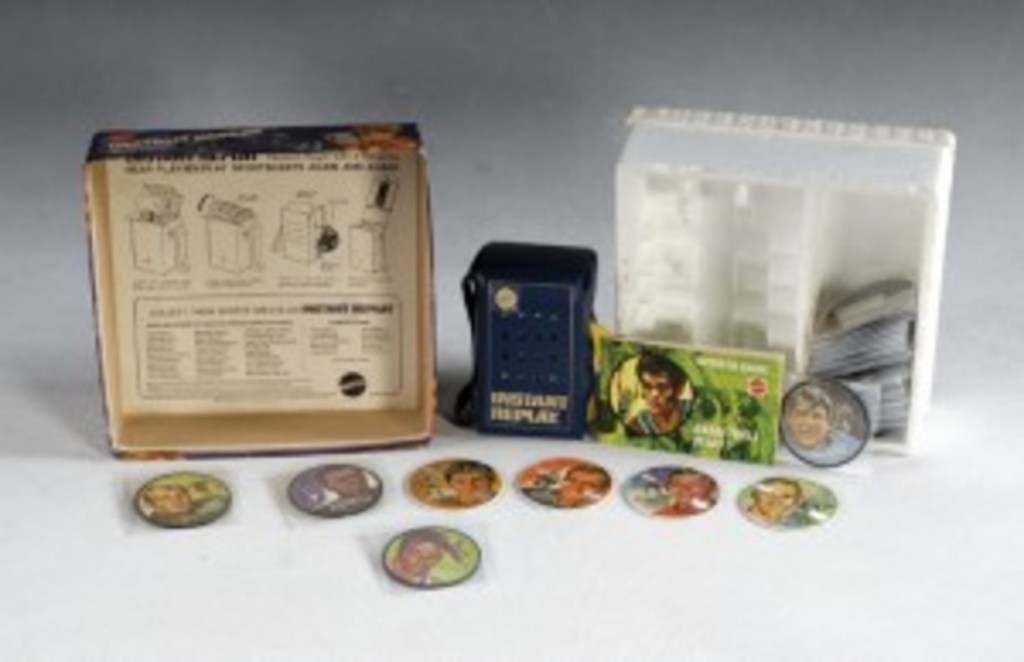
I remember Lou Alcindor. When I was young, I had a hand-held radio style device by Mattel, called Instant Replay. You put a disc in its side and highlights played from different athletes’ lives. It came with a handful of discs from all the major sports. I loved that thing, and I remember hearing highlights from Lou Alcindor’s early days, his pre-Karem Abdul-Jabbar days.

It played a disc featuring Cassius Clay.

This was the same year LeRoi Jones changed his name. About fifteen years after Malcom Little changed his the first time, and three years after he switched it a second to el-Hajj Malik el-Shabazz.  

And, of course, I remember listening to

Personally, I remember Robert, but that was a long time ago. Some family still call me that, and that is fine because it would be weird if they didn’t. So when someone calls me that I assume they are family. Or someone from the neighborhood on the Island. But sometimes someone I don’t know will call me Robert for some fracked up reason since they’re not family and I introduce myself as Bob. I don’t get that. If someone told me their name was Bill, I can’t imagine saying. Well, William, it is nice to meet you. That’s rude. He said his name was Bill.

I’m Bob.

Not Lou. Not Cassius. Not LeRoi. Not even Prince. Just Bob.

Names change. Sometimes for religious reasons, sometimes for marriage or divorce or some identity crisis. Sometimes someone wants to disappear into the masses. I wonder if Martin Sheen’s sister calls him Ramon. Certainly he is Martin now. But his daughter and two elder sons use Estevez while his third son uses Sheen. I read that John Denver’s adopted kids use Denver while his biological daughter Jessie Belle uses Deutschendorf, her father’s real last name. No offense meant to Jessie, but I’d have gone with Denver.

Crazy, but President Gerald Ford’s real name was Leslie King, while Bill Clinton’s real last name is Blythe. The Fourth.

The first name recorded on a document is Kushim.

In elementary school, we learned to write by printing our names on those loose leaf sheets of paper that had lines to keep your penmanship straight, and dotted lines to know where the top of the lower-case letters should reach. My friend Chris Smith on Euclid Avenue didn’t have a problem. But I had to print it all out, and living where I did didn’t make it easier:

R O B E R T  S T E P H E N  K U N Z I N G E R

200 E A S T  L A K E  A V E N U E

M A S S A P E Q U A  P A R K, N E W  Y O R K

For God’s sake, I was seven.

I think I ran next door from the school to our house to plead with my mom to let me change my last name to a letter. “I can be K! I can be Z! Whatever!”

Last names didn’t really begin in the west until the later part of the Middle Ages, about the late 11th century, though the first known European last name is from my ancestral home, County Galway, Ireland, in 916. I do not believe O’Cleirigh is a relative, but since the subsequent variations include O’Cleary and O’Leary, they might be ancestors of my friend Will O’Leary. I shall ask Himself when I get the chance. Surnames, however, not surprisingly, are thousands of years older than that in China, used, logically, to separate people with the same first names. The last names typically were some variation of “son of” or “from the land of.”

I wish we still did that. I could be Bob of Deltaville. Or Bob of the Great River. Or Robert of Brooklyn. Not as melodic as Leonardo de Vinci or Francis of Assisi.

What I like about my name is if you google me, the first seven hundred entries are actually about me.  I Googled my friend Tom Williams once and I found a reference to him six hours later.

I spoke to a woman recently who told me I say my last name different every time I say it. Do you have any idea how self-conscious that made me? Now my tongue hurts from repeating the damn nine letters for an hour to see what she meant. Kunzinger KUNzinger KunZINGer. KunzingER. I had a Social Studies teacher in high school who when calling roll would say KUNNNNNNNZinger. I had a prof at college who would insert an “r” for no good reason at all and called me Kurnzinger. Other variations followed me through life, some not worth repeating. But I have come to like my last name. The people I know with the same name are people I’m insanely proud of, whom I enjoy being associated with.

I hope I never do anything to bring shame to the name. It is our identity, my link to Lohr en Mein, Germany, to Bay Ridge, to glassmakers and butchers, organ builders and accountants. Snow White

A stockbroker.

A photographer.

A student recently asked how I pronounce my name. I told her, “The same way it sounds.” “OH! She said, thank you Professor K.”

Robert lives on Long Island. Bob lives on a river and writes books. Bobby is hiking the trails on a retreat in western New York. We are a multiplicity of identities, a collage of personas. Sometimes Bob would like to take a train up to see Robert, tell him to take it easy, to not be in a rush to do anything. Sometimes I miss Bobby—his innocence and hope, his lack of inhibitions and his willingness to embarrass himself.

I spent the past five years finding my footing, making drastic changes—some by choice and others by circumstance, and the truth is you can change your name a thousand times and never change at all. Change must be deeper than the alphabet; integrity and self-worth are tied to actions, not labels.

Done Too Soon

It’s forty-five degrees and rainy today. Two days ago it was eighty-four and sunny. I think snow is in the forecast this week; that, or triple digits. I can’t keep track. Nor do I care that much. It’s weather; I like weather. Whether it is collar up, teary-eyed, runny-nose, bone-vibrating cold; or sweat on the tip of my nose, prickly heat, brow-dripping, sun-burning hot. Either. I’m good. Middle ground works best for being most benign, of course; those New England type, low-humidity seventies with the air-clarity of New York’s Southern Tier, the colors of the Sonoran Desert, and the salty-scented wind of the coast. Everyone loves autumn or spring weather. “Pleasant” they say. Mostly because it doesn’t hit you in the face.

I don’t mind a little headbanging with the elements.

Anyway, it’s raining now. So I’m inside, physically, mentally, psychologically. Like a grocery-store lobster, like a termite, like Kenneth Graham’s Mole, like the malted part of a malted milk ball. That’s me—I’m inside today. I will go for a walk to the river, stroll up Pintail Road past the pond to the dock; I’ll abandon the warm here at Aerie, finish first my cup of hot chai latte, all steamy and frothy.

I have a game I play when things seem down, dark, or otherwise non-descript and boring. It’s actually quite effective: I imagine I’m already dead.

I imagine I found out that time is short—a feat not difficult to imagine these days as several people I care for very deeply no longer have to imagine this; it is real. But I force myself to imagine hearing the news, the disbelief followed by denial and then anger. Then somewhere before acceptance I imagine the rain.

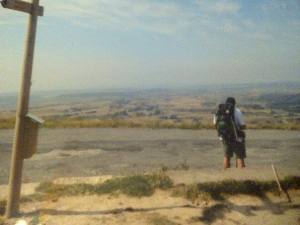
I remember the streak of wet up my back when I was a kid on the island riding my bike after a summer shower. Or the choppy Great South Bay splashing at my knees when Eddie and I would walk along the rocks of Heckscher. I remember Spain, the Camino back from Finisterre to Santiago, and that day it poured the entire time, and a fog settled ahead of us, and we were soaked, but we were so alive, finding small medieval chapels where we stood under the overhang and listened to the far-reaching quiet of Galicia. We found an albergue and changed clothes and walked to a pub and played foosball and had some local brew.

The rain was a visceral reminder we were alive, right then, a drop-by-drop pronouncement of existence. Rain doesn’t reach the interior walls of anyone’s sarcophagus. It is solely for us, for those here, those of us still alive and aware.

And then I imagine the sun.

I remember the heat while hiking Sabino near Tucson, deep pools of mountain water to dive into after my body was dripping with sweat from heat. Or the cold, the uniquely-desert-borne cold feel of my skin when I turned under a cliff into shade and the dry air dropped twenty degrees. Once, in Senegal, in the southwestern Sahara, I fell asleep on a cot in the yard of a house in a small village, and the heat woke me up. I went to the porch and the thermometer in the shade read one hundred and ten. I can remember my shoulders, the tingling sensation when I lightly rubbed my palm across my skin. It caused shivers to run down my spine.

Alive. Absolute clarity.

So, really, so I’ve stoped bitching about the rain, or the cold, or the heat.

Or about anything really. I am alive.

I’m at my desk and above me rain is pelting the skylight tonight. Out the window the deep woods are misty, and I can’t hear any of the normal wrens or even crows. Just the sound of rain and the distant rumble of tires out on 33 more than a mile away. If this clears out before bed, I’ll go out and look at the planets and the stars with the telescope and deep-space binoculars and it will be cold, upper thirties cold, and at first I’ll move from foot to foot, bouncing to keep warm, until some sort of numbness settles in, and I’ll breathe hard on purpose to watch my breath, and my neck will feel wet and cold, and I’ll remember this part of the night as much as I’ll remember spotting Vega or Alpha Centauri. What contrasts! The billions of years ago presence of stars and the immediate dripping reminder of the right now.

How often are we aware of our existence? I mean, how often are we conscious of the beauty and sensation of our life? We go through motions, we dress so we can’t feel the warmth or the cold but who doesn’t love the cold feel of our bare feet on the grass at twilight? We eat so we feel the nothingness of not being hungry, but to fast once in a while is to cleanse our minds of the monotony of food. We don’t connect to others because we find something familiar in the airgap lives we lead in a world where whatever is most convenient works best and connections back to those we knew is so much easier than reaching out to those who just might be in our lives moving forward.

But back to the rain,

my God the rain slaps us, and this is what makes our lives on this earth unique. In the distant unfathomable reaches of eternity both behind us and yet to come is a nothingness and never ever againness that stretches without end, in a state of seemingly complete unexisting. But here, now, we shiver, we sweat, we stretch ourselves to shake off the stiffness, and we wipe our eyes, throw some cold water on our faces, shake off the drowsiness, and live.

Because now is all there is left. As one dear friend of mine recently commented about “passing”: “Then I’ll close the door behind me.” This is it. Make no mistake, this is it,

and still people avoid the cold, avoid the rain, the sleet and snow, the blazing sun, but those extremes make us aware of the present. Humanity’s most vulnerable trait in shunning the passing of time is its apparent need to remain numb as much as possible. Meanwhile, if we tolerate the rain we can see droplets of life on the beautiful flowers outside, shake the wet from our hair, catch some drops of life on our tongue.

Am I being a bit mystical? A little too “earthy”? Damn right. But just how much time being alive have we lost by blaming weather? The atmosphere can be most inconvenient, it seems. Breathe in. Breathe out.

Move on.

“I hate the rain,” some say. “I hate the heat” some say. Sure there are legitimate reasons to abstain from constant weather-beating. Asthma, sensitive skin, and other issues.

But no one should ever miss the experience of the sound of rain on a lake. The blinking away of snow from your eyes. The vertical streak of sweat down your back on a hot day. No one should veer around the puddles. Let that water rip up your back and even the back of your head. Honestly, you can change clothes and dry off, put on warm clothes when you get back inside.

We are dying, my friends. Some soon, some not so soon. So let’s go for a walk in the rain. You and me. Let’s stand on the lawn when it snows. We can sit on a bench in a park when the sun is so strong we will feel it in our veins. Because at some point, whether we are ready or not, we will wish for one more rainfall. We will pray for another soft blanket of snow. We will trade the best of our days for one more season, whatever season it may be.

The weather is the closest we come to recognizing the immediate. And the rain says, quite softly most of the time, “Come. Fill up your senses.”

Truly. There will come a time when we understand that all of it–the lashing of rain and the drifts of endless snow–will be behind us, whether we wish it to be or not.

Jesus Christ, Fanny Brice
Wolfie Mozart and Humphrey Bogart
And Genghis Khan
And on to H. G. Wells

Ho Chi Minh, Gunga Din
Henry Luce and John Wilkes Booth
And Alexanders King and Graham Bell

Ramar Krishna, Mama Whistler
Patrice Lumumba and Russ Colombo
Karl and Chico Marx
Albert Camus

E.A. Poe, Henri Rousseau
Sholom Aleichem and Caryl Chessman
Alan Freed and Buster Keaton too

And each one there
Has one thing to share:


They have sweat beneath the same sun
Looked up in wonder at the same moon
And wept when it was all done
For bein’ done too soon

–Neil Diamond “Done too Soon”

The Book List

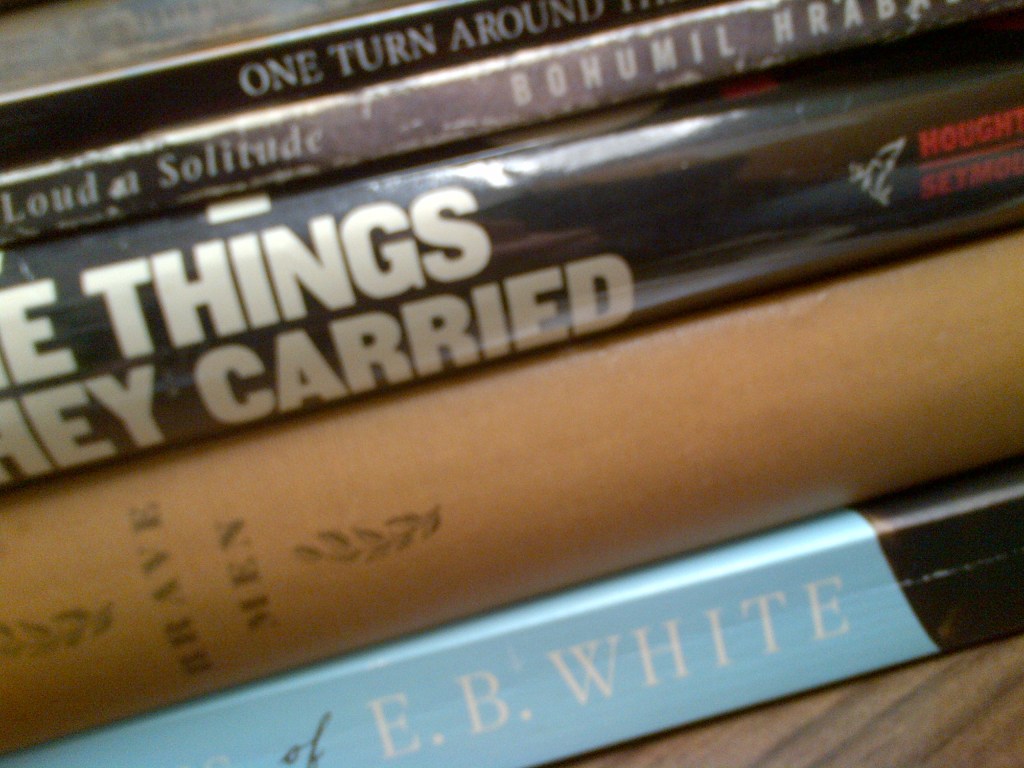
Tim O’Brien The Things They Carried.

Tim Seibles One Turn Around the Sun

Ernest Hemingway Old Man and the Sea

Bohumil Hrabal Too Loud a Solitude

Carlos Fuentes Old Gringo

Ernie Pyle Brave Men

Roberto Bolano A Little Lumpen Novelita

E.B. White Here is New York

Frederick Douglass Narrative

Robin Lee Graham Dove

 ——

When I was in college a professor asked us to list ten books we loved so he could explain what he figured out about us from the list. Except for the minor detail that I wasn’t sure I had even read ten books, I thought it an interesting assignment. I remembered this a few years ago when I heard of a professor who claimed he could tell the IQ of a student by looking in his backpack. I thought about doing that assignment with my students at the last college where I worked full-time, but I think instead of being able to tell their IQ I’d be predicting the length of their jail time. 

My book list in college included Stephen King, Woody Guthrie, Robin Lee Graham, Woodward and Bernstein, and most likely Dr. Seuss because I was a wise-ass. I don’t remember much of the professor’s analysis except what was clear to anyone, I liked adventure and bent toward non-fiction.

I am doing this with my students next week, but to be fair I decided to redo my own list now that I have actually passed the ten-book mark. The ten books above are what I consider the most influential or memorable or re-readable books I can recall. I didn’t head to my bookshelves to come up with them; I simply put my head back and thought about books.

Some observations:

  • I still like adventure and have a bend toward non-fiction.
  • Five of the books are non-fiction though O’Brien is thinly disguised fiction (Read If I Die in a Combat Zone for reference)
  • Seven of the books are pretty short
  • None were written by women despite some heavy influence from women in my writing, including Alice Walker, Frances Harper, and Virginia Woolf.
  • Three were not written in English.
  • Seven do not take place in the United States, though The Things They Carried is debatable since much of it does but much of it doesn’t. So six and a half.
  • Five of the authors are also known as essay writers.
  • Seven somehow wrapped themselves into the narrative.

Tim O’Brien’s The Things They Carried is simply one of the greatest books of the 20th century, and while it takes place in Vietnam, it is not about Vietnam anymore than Tim Seible’s One Turn Around the Sun is about astronomy. In O’Brien’s book, along with Hemingway, Hrabal, White, Douglass, and to a lesser degree Pyle, the author either writes directly to the reader or involves the reader in some way.

Seibles’ book is about his parents and age. In fact, the passing of time is a common theme for Hrabal, O’Brien, Guthrie, and Pyle. I have heard Tim read from the book long before it was published, have talked to him many hours over lunch about our parents and time and age, and admire his diction and phrasing perhaps more than that of any writer I know. He is a giant in the poetry world and this book is his best. Read it from start to finish; don’t jump around. People pick up poetry books and read them like they’re Russell Stover boxes of chocolates. Stop. There is an arc in there, and it should be read that way.  

I love how Old Man and the Sea is about an old man at sea whose pride is simply too strong to let the damn marlin go and focus on the smaller fish around him. And then when I read it again it was really about pride in general and who we are and what we learn as we mature. And then when I read it a third time I realized the entire story is the Passion of the Christ. I like how Hemingway never lost his journalistic tightness and how he uses repetition as an art form. Also, the book is really short and I generally run out of steam at about 100 pages. When he wrote, “It was an hour before the first shark showed up” just a dozen pages from the end, I was already hoping the boat would sink.

Susan Sontag once said Czech writer Bohumil Hrabal is one of the finest writers she has ever read and Too Loud a Solitude is one of the finest books. I’m with her on that. It took me several reads to understand how this crazy-ass little book is a compact version of all the greatest philosophies in history, and the “compact”ness of it is a metaphoric spin from the lead character who compacts trash. It is funny as hell and poignant. To top it all off it happens to be parallel in so many ways to The Things They Carried that I could teach a seminar in those two books. As an aside I should say that Tim told me once he focused on Czech language and literature for a while and that Hrabal was a favorite. Go figure. Read both books and you’ll see what I mean.

When I was at Penn State, I spent a lot of time reading all of Fuentes’ work. He seems so much like Hemingway and uses a classic narrative structure. I read his work more because of his locales than the story, and also I was trying to fine tune my Spanish, but Old Gringo is my favorite. If anyone likes Hemingway, he or she will like Fuentes. Read it in English, though.

Ernie Pyle’s work was introduced to me by Professor Pete Barrecchia at St. Bonaventure. Since then I have not met a journalist who was not at least somewhat influenced by Pyle. He is, to be certain, above all other war journalists before or since, and Hemingway once said if Pyle had not been killed at the end of World War Two, it is unlikely anyone would know of what Hemingway wrote after that. Google “Ernie Pyle Normandy” and read his piece about walking the beach at Normandy. It is easy to see how Hem and O’Brien both took much away from this great journalist, particularly O’Brien.

A few months ago, Tim Seibles gave me a copy of Bolano’s book and I read it start to finish without stopping; a nearly impossible feat for me except it isn’t that long. I had given him a copy of Too Loud a Solitude and he said that crazy-ass book reminded him of this one and when I was through we laughed about how neither of us could explain to anyone what the hell it is about, but it simply keeps you from start to finish. It sent me to the rest of Bolano’s work. I still can’t explain what happens but I love how it happens. Bolano is a writer’s writer in that he is an artist in his work instead of simply a storyteller.

I was listening to “Selected Shorts” some years ago, already familiar with EB White’s excellent essay work outside of his famous grammar book, and I heard someone reading “Here is New York.” It stands alone for work that is less “about” New York than it is about the state of “being” in New York. If I were born earlier I think I’d like to have been EB White. It is absolutely one of the finest essays ever written about the spirit of place—something I am very drawn toward. Plus, you know, it’s about New York.

I love Douglass’ writing style—very journalistic in approach—and his description is honest and raw, made more revealing by his first-person experience. But there is something else that makes this one of my favorite all time books and Douglass my greatest American hero—his Character. Frederick Douglass is an inspiration not only for his accomplishments against the greatest odds in an evil system, but for his mostly firm moral compass through it all. He is simply a tremendous example. The Narrative of Frederick Douglass should be required reading in every single school.

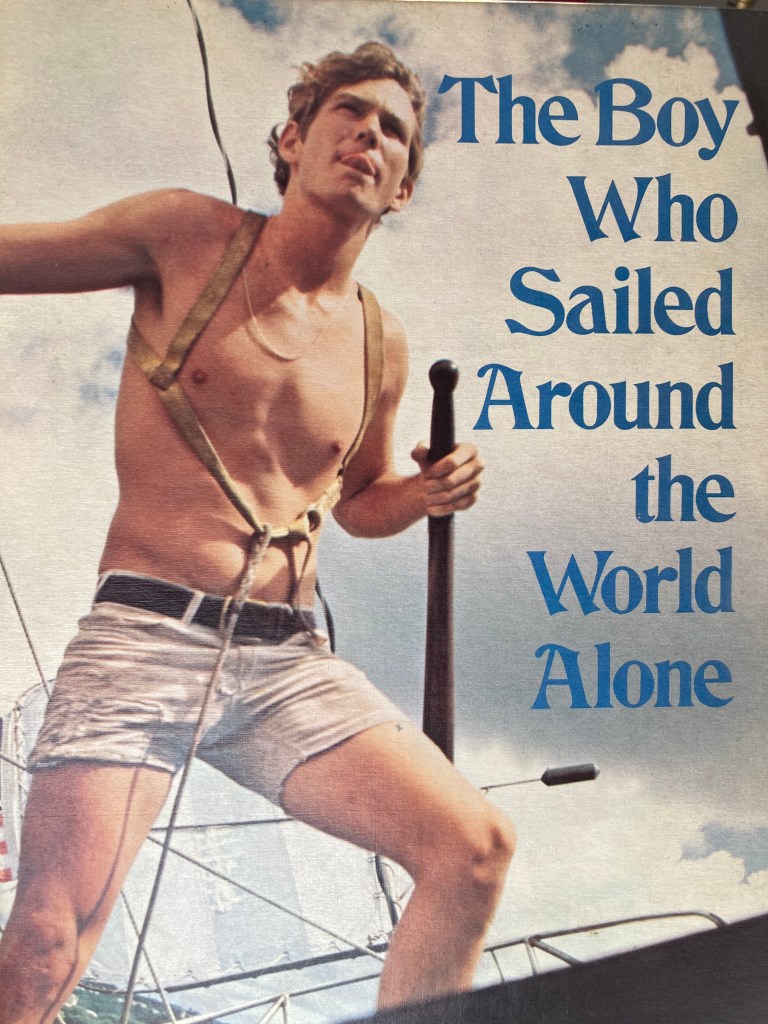
Graham’s book was simultaneously published with a young adult version called The Boy Who Sailed Around the World Alone, one of the first books my father ever gave me for Christmas. Indeed, the first. This book’s influence, for me, has nothing to do with his writing. It is about sailing, seeing the world, writing about it, and taking that money to go see more of the world. It very well might be the most influential book in my life as far as my motivation is concerned. Years ago I lost the copy my father gave me, but a month ago my son and I were in a local shop and there was a copy. Reading it still stirs something in me I cannot explain.

These are not the most influential writers for me as a writer—that is a different list, though there is some crossover. To the point—O’Brien, Hemingway, Pyle, and Hrabel make both lists, but the rest do not. These four for one reason or another “inform” how I write—sometimes by outright theft. The other two writers who influenced me as a writer are first Aaron Sorkin, who I think is simply one of the finest writers working today, though he is wholly a screenwriter and playwright, but that makes him a master of dialogue. And finally Jackson Browne. His early emotionally-driven work sets tone for me better than any writer I know. Obviously, part of it is hearing a minor key come in for something like “Sky Blue and Black” or the musical phrasing of “For a Dancer.” As I get older, poetry for its diction has become more important, and I’m still trying to find the patience to be meticulous in that regard. But for tone, the music of Browne or Van Morrison or just the right rendition of Pachelbel’s “Canon in D” can light fire under my work way faster than the classic writers. Often even faster than caffeine.

I have read many books beyond this list, including a stack my son gives me saying, “This seemed like a book you’d like.” He has already read more books than I have in my life. I am not sure why I have an aversion to reading; I think it is because I try to spend as little time as possible reading about what other people have done and spend that time doing something. When my colleagues in the writing world get together and talk about our peers and what they’re doing, I generally slide out of the conversation and find someone who wants to talk about something more relevant to me, say like goats or the beach. Part of it is I hate talking about writing; but the larger issue is simply I do not read that much. I write or I do things.

So when I do come across a book that takes me in and takes over my mind for a while, I want everyone to read it. When they finish reading all my books of course. It shouldn’t take long; they’re short.

What books influenced you?

Peace Out Rage

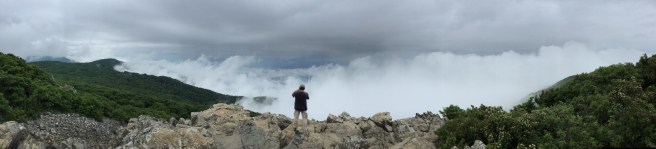
shenandoah
shenandoah (photo by j varley)

A friend of mine is a Franciscan priest who remains calm no matter what happens.

We are not alike.

He is compassionate, understanding, patient, and saint-like. He is perfect for his job and does it 24/7; that is, he is one of those rare souls that couldn’t be anything but some sort of man of God. If he gets stuck in traffic, for instance, he keeps it all in perspective. If someone cuts him off, his response remains, “They really must be in a hurry. I hope they’re careful.” Or, “Wow, God bless them and watch over them, they really must be anxious about some appointment.” His is a peaceful soul.

This contrasts directly with my “Use a frigging turn signal, butthead!” approach. When entering a tunnel and the traffic decelerates from sixty to forty, the good Father cares: “Oh, thank our Lord they are all being careful going into this tunnel. It really must be frightening to so many people.” I handle it with my own style: “It’s a tunnel. IT IS A TUNNEL! It is not a brick wall! The Road did NOT shrink! It’s a damn TUNNEL!”

We obviously address frustration differently, which makes me wonder how we ended up this way. Would Monastery-Bob and Professor-priest keep their temperaments in tack? If I lived on a mountain in prayer would I be less likely to want to kill the cashier for not being able to multi-task?

I was like him once, my friend the peaceful priest.

When we met during college we talked a long time about peace and where it comes from. To search for peace in the world is a fruitless act. Even if we find it, it can disappear with war, with stress, with distractions and interruptions. It is like turning to others to find what you want to do with your life; it must come from within. And peace, too, must be a spring, not a shower. I always liked that thought.

I once went to Father’s room and found dozens of people drinking beer and laughing as they told stories about their lives. Afterwards, I said I had a great time and found it strange that I could feel so lost among friends on one day and on another feel so connected and centered. He said, “Bobby—tonight you brought the peace with you.”

Man, he made it sound so simple: Bring the peace with you.

So when some dirtbag student of mine called me an asshole in class, I thought of Father, and how it is never the situation but how we handle it. I could picture him with his wide smile and deep laugh and huge hands on my shoulders telling me I’m going to be just fine. I brought the dirtbag into the division office and sat the little bastard’s ass in a chair while I filled out a withdrawal form. Before I could finish the paperwork, however, and before he stopped crying, I decided to give this “peace” thing a shot.

“Are you scared?” He looked at me. “College, I mean, the assignments? Are you worried?”

“I suppose,” he said, calming down.

“Why?”

It took him a long time to answer something other than the moronic, I don’t know. “I’m not a good student. I was never good at school.”

“You get confused?”

“Yeah,” he said, nodding, knowing I hit on his fear.

“Yeah,” I said. “A lot of people do. I know I did. What you might try doing is stepping back a bit. Sit to the side and watch everything from a distance for awhile—get some perspective. Instead of calling me an asshole, ask me some questions.”

“Right,” he said, with not just a little indignation.

Bring the peace, Bob. Bring the peace.

“Sometimes we need to see things from a different point of view.”

He was quiet a long time and I believed I got through to him, and I wondered what he pictured as I recalled sitting in Father’s room listening to stories of scared and lost students like myself still trying to get a handle on our place in the world.

“Wow, thanks for your psycho-babble bullshit, Dude,” he said.

I took a breath, thought of Father, and told the little prick to get out of my site. It’s a gift, really, knowing one’s place in the world.

I headed home thinking about peace and frustration, fear and anxiety. He’s where he should be, this former student of mine. He’s out in the real world where he can seek out only those challenges he knows he can conquer. He is part of the masses that only face what they’re not afraid of.

Bringing peace to an otherwise hostile environment is a difficult task. Maybe that’s why I, too, often avoid the challenge and wander down country roads, watch the water ebb and flow rather than rub elbows with anxiety. It’s why I don’t drive during rush hour, avoid fast food restaurants and box store checkout lines.

Yes. Let there be peace and let it begin with me, Bob the Asshole. I’m going for a walk and I’m bringing my peace with me.

Cool Change

It’s raining. The sky is deep grey, like it’s never going to clear. A steady breeze is pushing down the river, and out on the bay a fog has settled. No one is out in the village, not at the IGA, not at the convenience store. A worker stood smoking a cigarette under the overhang and said, “Ain’t no one been here today. A few for gas is all. Beer for the game. Quiet.” I bought a coffee and left the change on the counter so he could stay outside and finish his Marlboro Red. “You watching the game, tonight?” he asked when I came out and sat on the bags of logs.

“Some. Michael’s headed to a violin concert by a touring musician down at the episcopal church on 17, so I might head over to the 606 to catch the second half.” The 606 is a pub run by some guys from Australia who also have an Irish pub attached to it, though that part—The Quay—is hardly ever open. Next month it will be, obviously.

“Good food.”

“Yes, and Fosters.”

He took a drag and snubbed out the butt in the ashtray on top of the huge cement garbage can. “I better start wings and pizza. Gonna be a rush on wings and pizza soon.”

“I’m just going to have one draft and head home and eat there.”

He nodded. “Philly gonna win.”

“Okay.”

“Don’t talk to me about KC’s defense. This is going to be all Philly.”

I sipped my coffee.

“You don’t care do you?” he asked.

“Not really, no. Go Bills!” We laughed.

“This rain ain’t never letting up. I think it supposed to do this all night.”

I looked out at the Exxon sign. $3.25 a gallon for regular. A white truck pulled in and parked next to the kerosene pump. He pulled out a blue can and put it on the ground.

“Yeah, it’s pretty steady.”

“Don’t it bother you? All this rain? It’s starting to bother me.”

“Not really, no.”

He held the door open for Bubba, who said hello, commented on the weather, asked how Michael’s doing, and went in to pay. I sat thinking about Sundays, the pace, the slow erosion of hours. I thought of Sundays in my childhood when it rained and I’d lay on the floor and read or watch football or an old black and white western. I almost felt like the aroma of pot roast should drift out of some kitchen. Onions.

I thought about the book.

Yesterday at a local shop, Nauti Nell’s, Michael and I stopped to see if they had any books he liked. The shop has stationary, enough nautical equipment to build several sea-going crafts, candles, Old Bay seasoned peanuts, and more, and one of the finest book collections—mostly used—about the Chesapeake, and sailing in general, anywhere.

I’ve told this part before: Growing up, my dad would give each of us a book for Christmas. He shopped for them himself and picked up books which he believed met our personality. I still have almost all of them—James Herriot’s All Things Great and Small series, A Walk Across America, Bound for Glory, and more. But the first one and the one that had the most impressionable impact on my way of thinking was Robin Lee Graham’s The Boy Who Sailed Around the World Alone; the young adult version of his bestseller Dove.

Through the years of moving, packing and ditching things, selling and losing things, I lost that one. The irony is that was the one book that I specifically remember waking me up, making be think of something beyond my tight little world.

Yesterday I turned a corner inside Nells, and there it was, same publishing year, same hardback everything. I opened it slowly half-expecting to see “Merry Christ Robert, Love Dad, 1974” scribbled inside.

Five bucks. I didn’t even have my wallet, so I dug the change out of a canvas bag in my car. Then last night I read it again for the first time since Gerald Ford was president.

I do have the adult version, Dove. In the mid-90’s, not long after Michael was born, I acquired a 26’ Columbia sloop—identical to Graham’s boat. I worked on it most of my free time, and bought a copy of the book for inspiration. When Michael was three he’d come with me and sit in the cabin playing with his Legos as I worked on the deck and the rigging. I didn’t plan to sail around the world, of course. But I did think about circumnavigating the Chesapeake. If it had been slightly bigger and a little less leaky, I could envision myself sailing it to Florida, across to the gulf and up the southern coast.

It was my very first dream that I recall with such specificness and with such clarity. Previous ambitions involved some sort of magical realism, like when I wanted to build a rocket and fly to space, or when I wanted to design and build a car that could also go in water and on snow. Early on I set myself up for failure.

But the boat was different. Even in my early teens it was real. We lived at the water on Long Island’s south shore, and I was around boats all the time, albeit other people’s boats. And Graham’s YA book had lots of pictures and details of how he came up with the plan and saw it through.

My boat sank in Broad Bay in Virginia Beach. The police called me at Aerie and asked, “Did you own a 26’ Columbia?” Honestly, they used past tense.

Michael was not happy about the loss of his Legos still in the cabin.

Bubba came out of the store. “$6.35 a gallon for kerosene. Geeeeeez. You’d think with all the marinas and boats and users in this town it would be cheaper!”

This seventy-something-year-old man has sailed quite far from here, as have most of the people in this small village. It is what they do. “Deltaville: Sailing Capital of the Chesapeake” the sign says when you enter town from 33 to this place, the very end of the road before hitting the Bay. “Deltaville: A Drinking Town with a Boating Problem,” says it all, and the fact there are three times more boats than people here.

I thought of Joshua Slocum, the first American to circumnavigate the world, and my favorite, Laura Dekker, now the youngest person to do so. And of course, Graham, who lives in Montana now, fifty years after returning from his five-year journey.  

It’s nice to have dreams, to find some old ones literally on some shelf somewhere. To pick them up and blow off the dust and remember that ancient and very real spark, the one that helped you turn some corner toward adulthood.

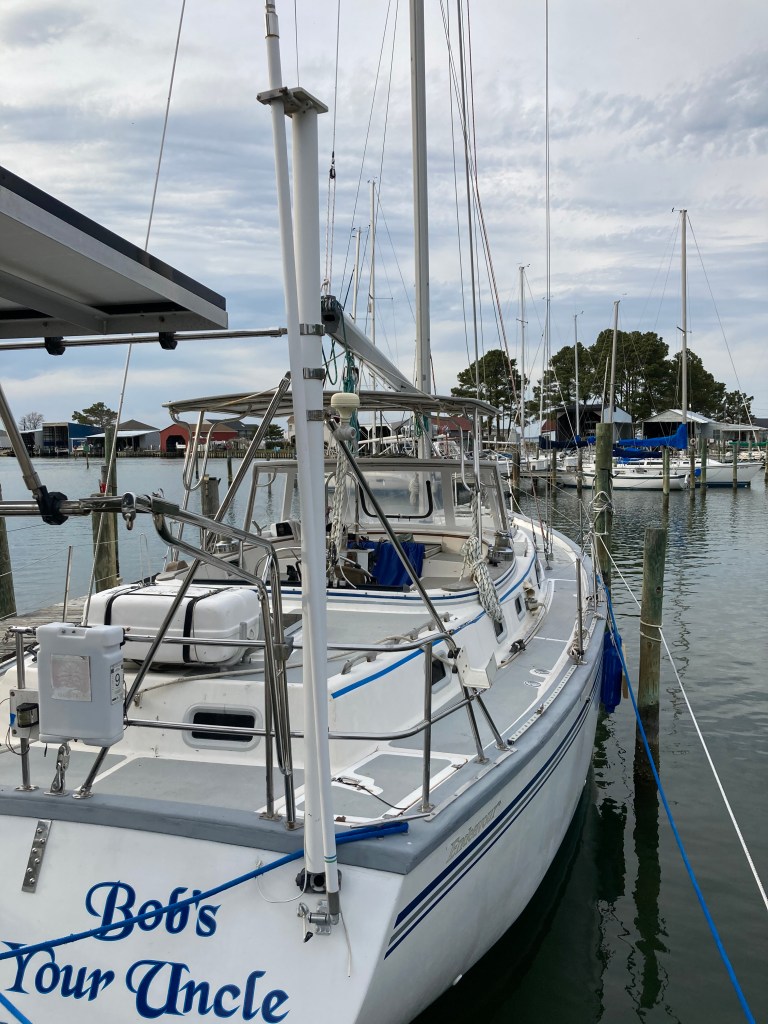
I drove to the bay and walked in the rain on the docks at Stingray Marina, noticing the sloops, a couple of Ketches, one conveniently called, “Bob’s Your Uncle.” I thought of the Morgan Out Island down at the slip in Wilmington, the one with charts of the intercoastal. “Begin Again,” it’s called.

Do we move on from our youthful dreams because they’re not practical or because we don’t know what to do next? When are we simply too old?

It would take real gumption to chuck it all and take off, open it up wing on wing and glide past all the excuses and hesitations. But “not just ordinary gumption,” as Paul Thoreau once wrote, “But three in the morning gumption.”

And who’s got that?

100 Words A Day

In my writing class today, we talked about not simply the “need” to be succinct in descriptions and, well, most prose, but the beauty as well. I reminded them we’ve all heard songs that say exactly what we feel but could never express.

They knew what I meant.

So I had them write about one feeling. “You’re in a small town, high school age, maybe a bit older, no jobs to be found, no future, but it’s where you’re from. Factories closing, and all you do is hang out on street corners or someone’s garage drinking. How do you feel? Do this in less than 100 words.”

The responses an hour later were decent, but only because we all knew what everybody else meant from discussions. “Good writing like good music doesn’t come with the artist to “explain” themselves,” I said and we laughed.

I mocked, “Hello, Professor Kunzinger, I just finished your book about Siberia, can you come here and explain everything you meant so we’re on the same page?”

With a little prodding, a few students read their work. One talked about being able to predict the next twenty years nearly hour by hour. I liked that idea. Another used a string of drowning similes.

I wrote this on the board:

“It’s a deathtrap. It’s a suicide rap. We’ve got to get out while we’re young.”

Fifteen words. “Fifteen words! And Springsteen nails it.”

Do that, I told them, and you’ll get an A.

I gave more examples from Seibles to Frost to Dylan to Dylan Thomas. A.E. Housman. Gwendolyn Brooks.

I went for a walk afterwards, trying to shake “Born to Run.”

A friend of mine called and we talked about life and food and weather and hair. Then she told me her daughter-in-law gave her a website address where my friend will answer writing prompts about her life. “What was it like growing up where you did?” “What did you and your mom do together?” “Your Dad?” Your grandmother?” “What did you want to be when you grew up?” “Did you have any dreams?” “What did you play with?” “Tell me about your best friend when you were little.” And more. And she is to load whatever pictures she can, or her son and daughter in law can, and the web company will put it all together in a book for her granddaughter.

I almost cried. “I LOVE this!” I told her.

“Really?”

“If I sent you a journal with those questions would you do it?”

“Yes!”

“Excuse me?”

“Maybe.”

“Again?”

“Probably not.”

“Exactly, but you’re at the computer every day, and this will take ten or fifteen minutes.”

“That’s for sure,” she said. “They give very little space for each response. I have to be quite succinct.”

I told her about the death trap, about the suicide rap.

“This is why I’m calling you.”

“I feel so special now.”

“You know what I mean. How can I be short in my answers but say a lot.”

“Don’t try and write everything. If you asked how my weekend was, what would I say?”

“Same thing you always say: “Fine,  you?” We laughed.

“Exactly! Because you’re asking me to sum up in probably a few minutes at best before you need to get off the phone the previous seventy-two hours! That’s just a mean question and few people anywhere answer anything other than ‘fine, you?’”

“But if I said, “Fine, went for a walk, did some work, watched…Oh, I almost forgot! Saturday night about midnight I heard a noise in the woods, so I put on the spotlights and…”

“Oh I’d have loved it if you had something interesting like that even once!”

“Exactly! Write about midnight, not about the weekend. Don’t write about your mother, write about one trip you took with her. Write about one thing you did with her. What expression did she use that you remember? That’s writing.”

“What toy did you play with when you were growing up?”

“Oh, you know what? I forget, but I’m forgetting a lot these days.”

“Wow. See?”

“Okay so this is really why I called. Now I’m going to do it.”

“I wish I had something like that from my grandparents. Hell, my own parents. How cool if they had that. The highlights, the best memories, of their lives. Nothing sweeping like Facebook or vague like pictures alone, but moments. Quick 100 word memories.”

I think she was going to start right after we hung up. I thought about it the rest of the day, how I really wish everyone I knew had done so. I know so little about my paternal grandmother, and while I’ve heard my parents stories their whole lives, how cool for my son to have books like that of their youth.

“You should do one too, Bob,” she said.

“I think he’s got enough of my stories written down to sustain him. Too many!”

She was quiet awhile, then said, “Bob, I know for certain there are some stories you haven’t told him.”

I was in my office thinking about how to describe my father’s laugh in less than 100 words, or my mother’s sense of humor. The way my grandmother would always look out the window. The way a friend of mine would always hold his nose when he laughed, and another wanted to be but never became a dancer.

I want to tell him about a cow I heard one morning, about what really caused me to finally grow up.

There’s too much and not enough time. There’s the problem: the problem isn’t that we have such lengthy stories to tell; it’s that life is too succinct. And we barrel through it with hardly any time at all to remember how beautiful it is.

The Day After Tomorrow

At the store in the village this morning, Mark, a waterman I know, told me he didn’t head out today. “Waves are five to seven, wind chill out toward Tangier at best below zero, close anyway,” he said.

It’s been cold here, single digit wind chills two nights ago. The weather is a dominant force in the employment of most of the people here at the end of the peninsula. Watermen, farmers; even my friend Mike’s flying enterprise over at the field is airborne or grounded based upon the weather.

Mt Washington had wind chills of nearly 100 below yesterday. I remember in Massachusetts one January when the pipes at the health club froze. Another time I sat in the bleachers at Rich Stadium in Buffalo as some Lake effect took off layers of my face for three hours.

For weather, I have better stories about the heat than the cold; the Sonoran Desert in ’83 when my car broke down near the mission toward Mexico. In Senegal where the temps were in the 110’s in the shade and the air was heavy. When I collapsed from heat exhaustion while building a brick wall here at Aerie twenty something years ago. Yet for some reason I don’t mind it. I can do sweat.

But for cold days (literally, not metaphorically) in my life, there is only one story:

My friend Joe and I arrived in northern Norway to spend a month teaching at a university. We lived in a cabin owned by an American there, John. It had three bedrooms, views of a fjord, a neighbor, Magnus, who brought over codfish, and a massive fireplace always burning. It might be one of my fondest memories. And while the cabin had a beautiful, normal, modern bathroom, John had it shut down and we were all to use the outhouse, fifty feet behind the cabin, just up a path with snow piled to the side higher than our heads.

The first night I sat up at 3 am and had to go. It was serious, so simply peeing out the window was not an option. The temps were pushing twenty below outside, and I sat contemplating whether or not I could make it to the University the next afternoon.

No, I could not. And I was going to be there a month so I knew I simply had to get this over with. I spent fifteen minutes getting dressed in six layers of clothes, lacing up my boots, strapping on my neck covering and hat, gloves, and moved up the path like a polar bear, pulled on the handle—locked. Then from inside, Joe called, “I’ll be out in a minute.”

I waited inside, he came out, I went in, discovered the origin of the phrase, “Froze my ass off,” and returned to the mudroom just inside the cabin.

So here’s the thing: When you are fully dressed to go out at 3am in negative temperatures, you are awake—blood awake, no-going-back-to-sleep awake. Behind the cabin were woods and a wide, snow-covered path running well up the hills overlooking a lake.

“We’re dressed anyway,” Joe said. So we went back out, heading up the path.

This is what happened, though my prose falls desperately short of the experience:

Green bands of light bounced down the fjord and across the lake, touching the hills and rolling off like a green curtain in the wind, lifting, holding, then falling and bouncing again. I had heard of the beauty of the aurora borealis but never saw it. Better said, never imagined I’d be under it, literally under the green bands of northern lights, so that a few times we almost ducked.

We walked further when further up the hill two moose slowly walked out of the woods on the right and stood in the path staring down at us. They moved slowly to the left, into the woods, and a few more followed.

And the stars, the carpet of endless stars, a shooting meteor, all breaking through the northern lights. It was like standing on the moon. We seemed suspended in space, in absolute, deep canyon, liquid silence.

By the time we returned about four thirty, our neighbor, seventy-five year old Magnus, a fisherman his entire life, pushed his skiff into the water to motor out into the bay for cod. His small engine sounds filled the canyon and echoed well into the fjord, and later he would return—red face, red hands—to give us the cod. He will have already cut out what he wanted; namely, the liver. And I’d stand in the warmth of the kitchen to clean and filet the fish for dinner.

When we got back it took ten minutes to get all the outer wear off, and as I moved up the stairs to my room I noticed, was completely conscious of the fact, that I never thought once about the cold. It was not even “the price you pay for the experience.” It simply wasn’t part of the evening’s vocabulary.

When I think of Norway, now almost thirty years ago, I think of that night, and of the next day and a ferry ride out to the Lofoton Islands, of teaching at the college and walking the fishing piers of Bodo, of Joe and I starting a fire in the snow to cook some red potatoes we brought on a hike, of falling through the day-melt layer of ice on the lake to my calves one evening, of playing guitars with a Russian musician, Max, of so much, so very much.

But I don’t think of cold. I don’t remember that part of it.

Norway, 1995

SAD

Sometimes you can sense some sort of lethargy this time of year revealing itself in blatant ways, like not wanting to go to work, not filling out some forms or editing some article, not bothering to return important calls completely out of a sense of avoidance, as if you might be able to wait long enough and all of this will pass—this stuff that brings you down, and to be honest, you’re not really sure what that stuff is. The idleness of society maybe, the constant sense of impending doom reported in all forms of media about democracy, about pandemics, about weather, about climate, about the economy, about depression and isolation. You have no reason to take any of it personally, but some people can’t let it go, and it weighs heavy, so you aim for avoidance, which unfortunately ends up a heavier burden.  

Sometimes the withdrawal is subtle. You can sense yourself not trying as hard or caring as much, like eating whatever is around instead of thinking it through, not going for a walk because you don’t want to be bothered putting on a coat or dealing with any sensory change. You’re sitting; you’re comfortable, and you’re numb. It works. 

Numb is good.

In both situations you are absolutely aware of it. Going for a walk helps. Filing out the forms, returning calls, all help by providing a sense of accomplishment and forward motion, like checking things off the to-do list, it leaves you with the hint that if you keep going there’s something worthwhile on the other side.

There’s the rub. It seems you keep reaching the other side and there’s still nothing there to lift the spirits, not this season anyway—more hostility in the east, more pessimism in our government, more variants on deck ready to step to the plate after Omicron smacks a triple into right field. So you try a little less at one task, and it spirals from there. You realize your handwashing time has dropped to about 12 seconds. It’s not depression; it’s, well, yeah, it’s depression, but not in the deeply caving sense; in the “whatever” sense.

The problem with this type of malaise is it can be debilitating to you without being scary to others if you are not suicidal. The truth is, the vast majority of people who deal with depression are not contemplating suicide and will never kill themselves, which is what most friends fear most, and when those friends learn that is not part of the equation, they feel better. But that can often make it worse since the objective is for you to feel better, not them. But that’s fair since you know what they don’t: that a different suicide exists, a slow erosion of sorts, which anonymously eats away at ambition and accomplishment, takes the edge off of energy and momentum. It’s the guy sitting at a bar nursing a beer, nowhere to go despite having a million things to do. It’s the one on the park bench watching people walk by but not noticing a single one of them; it’s the inability to concentrate, the disinterest in listening, the short responses to questions, the inability to make it through the most basic of activities. It’s writing endless emails about nothing to others in some attempt to reach out; but that just backfires. Rational thought has nothing to do with it. “Knowing” what to do is not relevant. Your mind is suspended, your thought process withdraws into some elementary state.  

On the one hand it’s situational—financial problems, relationship problems, blizzards. But it can also be chemical if you don’t have medical help. It’s addiction without restraint. It’s a combination of these, and it is unpredictable because the same thing that leaves you in bed staring at the ceiling feeling hopeless can drive you to your feet to tackle whatever it is that left you prostrate to begin with. It is a conundrum that plays handball in your brain.

The guy at the bar with the beer, the woman in the park, the man at the river watching the tide roll out, all know exactly what the problem is. But their brains are aflush with fog, their anxiety has disabled their decision-making capabilities, and their strongest assets and most celebrated talents that normally keep them going the rest of the year, are no longer applicable since they carry a sense that those traits are probably what brought them to this place to begin with. They sit and wonder what if. They sit.

“Maybe if I had just…”

“Perhaps I should have…”

“Fuck it.”

At some point it seems you stop fighting altogether and are either not afraid to hit bottom, or you hope to use that bottom to bounce back, not afraid to fail since it can’t be worse than this. It is extreme but that is part of the diagnosis—extremes, polar reactions—sometimes both in one day. Sometimes within one hour.

More often than not, the guy on the corner holding the cardboard sign didn’t “decide” to quit, didn’t give up, but “felt” a pressure that he no longer could handle or define, caught in some stream of disconnect and hopeless confusion. Sometimes the one who does, in fact, tragically go that last fatal step didn’t “decide” to do anything at all, and that is the point. Suicide is not a decision. It is one step beyond decision making. The vast majority of people who deal with depression have that in check, less so in the dead of winter, of course.

But that’s not you. Truly. And that is the problem; you really aren’t suicidal at all. And when suicide is not part of the equation, others feel that you must be “okay,” or “going through something right now.”

Yeah, winter, you’re going through a snow bank. This is the worst time of year for many people with depressive issues. Seasonal Affective Disorder is real and feels like all of the above. Nothing helps but time, but time to some people sounds like the slow drip of icicle melt. Others say you’ll get over it, it will pass, hang in there, talk to someone. Yes, all of the above, but right now–right this minute–you need help and you don’t know it.

Other people try to help so they talk about the weather or sports or anything at all with enthusiasm and a sense of caring, but it often makes it worse, only emphasizes that others get excited about the minutia while you can no longer find value in a sunrise.

And the disguises are nothing short of cunning. I’ve known people fighting depression who on the outside resonate as the very poster image of Carpe Diem. I’ve been friends with people who contemplated overdosing on Monday while making plans for Tuesday, who loved others more than the average soul but only wanted their puppy nearby at checkout time, and people who fought depressive ways by pushing adventure to the limit, and beyond. “What a lust for life!” people exclaimed. They had no idea.

It isn’t exactly depression, by the way, though it is easier to simply call it that because it certainly wears the same eyeshadow as depression. It is indifference; it is a vague inability to muster the energy to lift your spirits enough to give a damn about anything. It’s not like you woke up depressed so you decided to stay on the couch all day; you simply don’t care that you’re on the couch to begin with. Complete apathy. You’re not down about anything; you answer “fine” because you really are fine; fine’s a fine word; vague and indifferent. It has the definitive weight of a horse shoe and the value of fog. “I’m fine, really,” should never be left alone with a person who fights depression.

Ironically, for most of these afflicted people, life is amazing, every half-beat is a moment of “miracles and wonder” which is why you cannot comprehend the misuse of time. The abuse of time in so short a life, you think, is as suicidal as the abuse of substances, and that can be depressing as well.

It is the time of year when you wake at three am knowing nothing is going to work, and you’re going to lose your house and your sense of security and no answer makes sense, no way forward seems rational. Equally, the dawn can come with new ideas and hope, and if you push those moments far enough into the morning, you just might be able to make a day of it. But January has 285 days. And February is several months long. March? Well you well know that March is merely a tease. April comes and breathing is easier. May, and nothing stands in your way. But in January it is safe to say yet difficult for others to understand that May hasn’t even been invented yet. It doesn’t exist and neither will you by then.

On the outside you seem to be fine. On the inside you’re grasping the thin rope of enthusiasm with clenched fists, pretending all will be well, but your insides—much against your will—are shredding at the thought of what to do next.

You “hang in there.” You “get through it.” You suffer the trite suggestions of others who simply can’t understand what the big deal is. That’s okay though, you think. Really. There are no solutions, per se. Just more questions. And “hang in there” is at the very least an acknowledgement you really aren’t trying to dismiss your very existence; it just happens sometimes. Depressed people do not feign depression; they feign contentment.

This afternoon I went to the river where a bitter breeze is pushing down from the west. There’ll be ice tonight somewhere, and snow, but I sat reminding myself I have been there, touched that ring of undefinable despair, and I’ve moved through it, sometimes with difficulty, often with ease, always with the knowledge that I’ve had one freaking incredible life so far, and time enough left, I hope, to continue my pilgrimage well into the next mood swing. But there are moments, collisions with frustration at the gap between the way things are and the way things should be, that catch some people off guard. “You’ve been like this before,” a dear friend told me not long ago when things were less than fine. “And you’ll be like this again.” And all you can think is, “Yes I will, like right now.” But what she meant was this is you, this is part of your DNA, this is as much you as your skin. What she meant was there is no “fighting” the tigers that come at night. Better to sit and dine with them, and wait. Just wait.

And Eventually you remember that the seasons, like everything else, change. And love, despite its bad reputation, is holding the other end of that thin line you’re grasping.

Because nothing else matters but love. Nothing.

I’ve been released
And I’ve been regained
And I’ve been this way before
And I’m sure to be this way again
Once more time again

–N. Diamond

First the COVID-19 pandemic, now winter….is seasonal depression coming my  way? — Dear Pandemic

The Moon and My Own Private Ghosts

My moon, today

It’s not easy finding the constant in life. You think—or at least you hope—it will be people, and sometimes, but rarely, a particular person, but that doesn’t always hold to be true. People change, they come and go, they die, they just die, and while that’s not unexpected or even unusual, it still creates that ripple, that slight adjustment which a constant helps steer you through.

The constants in life mean everything.

Today while out for a long walk to clear my head, to figure out where yet again I most likely screwed up, I looked up at the moon and understood there is my constant. The moon, yes, but all of it—the water and the marsh, the woods, the sounds of the rest, and all the rest included.

From the start it was always nature. When I was still in the single digits we moved to a house in walking distance to a state park, the Great South Bay, a river, and an arboretum. Even behind the houses before the highway, which anyway ended right there, were woods and a mysterious trail leading to “the creek.”

When we moved my constant came along. We lived on a river and I could canoe clear out to the Chesapeake right from my own yard. I’d ride my bike all over the city, but in particular along the boardwalk and clear back through a new state park to a smaller but beautiful different bay. It was always nature that saved me from loneliness, from anxiety, from the awkwardness of me.

It simply never changed. At college I never felt either mature enough or hip enough to engage much with others, except if separated by a mic, but the river—that river running along New York’s Southern Tier saved me more than a few times, and my hikes up to the Heart where Thomas Merton used to sit and write in his journal, or overnighters out in the National Park not far west.

And Niagara. Canada. And my go-to safety net, Letchworth State Park.

Bring on Arizona and the Sonoran Desert, the Catalinas, the canyons with waterfalls and paths. I’d head up to Kitt Peak and watch the stars, or up Mt Lemon and watch the snow just miles from friends in shorts. I was safe there.

In many ways I never matured. Some might say my constant is immaturity then. Okay, perhaps. I admit I am more interested in hiking through woods watching birds than I am just about anything else. I moved to New England and hiked Mt Wachusett most weekends; I lived on a reservoir and walked out to the Old Stone Church and sat for hours playing my guitar hoping no one could hear, praying someone would listen.

Africa.

The trails at the small but memorable Pinchot State Park in Pennsylvania.

Here. Aerie, where hawks and eagles nest, and osprey teach their young to fly, and deer, opossums, fox and countless birds make themselves at home, because it is their home. I’m a guest.

Nature has no concerns. It is its own constant. It has no financial obligations; it does not have to ask anyone for help again and again; it does not answer to differing opinions or lie about its past. Nature does not judge, it does not question, or answer for that matter.

I know these trees, like I still know the ones Eddie and I climbed in Hechscher, like I still know the ones bending over like “girls throwing their hair over their heads to dry in the sun” along the Allegheny where my friend Joe and I used to wade for hours, dry fish on the rocks, and talk about wilderness and time.

Everyone above is gone. They’re just gone. But the nature of us is there, as well as nature itself. I wander for hours with my ghosts, talking about back then, talking about what’s next.

Today through the branches the half moon stood stark in the dark blue sky, and I swear not one other human could see it. Sure, you have a moon to admire in your world, but it’s not this one. Because this one knows Eddie and how he warned me one night when walking through the trails just after sunset to lookout for lunatics. I didn’t know what that was so I asked what a lunatic is and he said never mind. When I thought he had left to go home, I walked further past some grove and he jumped out and screamed, and I screamed, loud, and I called him crazy. And he laughed and said, “That’s a lunatic.”

My moon knows that story.

The trees here know about the time my dad and I sat on the porch and he couldn’t remember the names of some loved ones and he couldn’t see how sad I was. And they know about the time he let my son tie him up in a lasso and put a small cowboy hat on his head, and my father and my son laughed. That’s in the air; that’s out there, waiting for me to cut through the path on the west side of the property.

I have much on my mind, and a great deal of it I would rather not discuss with many people. And that’s not healthy—keeping it in like that. So I go outside and share it with the waiting trees and the ghosts I bring along. Certainly it is all internal monologue, but it’s always been that way, when Eddie and I wandered the woods singing Harry Chapin songs, or Karen and I canoed the Lynnhaven talking about how far the river reached to the south, through the marshes. I was always in conversation, connecting to the wilderness.

A friend of mine in Colon, Germany, but who is from Poland, calls me “the Man from the Country.”

“I was born in Brooklyn,” I told him.

He looked around when he was here and we walked to the river many years ago, and said, “This is not Brooklyn, Bob. This is a jungle. You live in a jungle.”

So it is. But it’s an honest jungle, with a river and a bay and a moon.

Nature lets me off the hook. Nature holds me responsible. It teaches me to be honest with myself and, in turn, with others. It teaches me to be quiet, to let others think what they want.

I have lived, lived very much “out loud” as it is fashionable to say. Oh, I have certainly lived. But it is in nature I am alive. There’s a difference. You know what I mean. There is a difference. You know exactly what I mean.

The Great South Bat at Hechscher State Park