AI AIN’T

A student actually asked me if it was okay to allow artificial intelligence (I see no reason to capitalize that) to write his paper. He didn’t try and plagiarize and pass it off as his; he didn’t unintentionally use someone or something else’s material and mistakenly claimed it to be original. No. He sat at his computer, opened his browser, addressed an email to me, and wrote, “Is it okay if we allow ai to write our papers? Will I lose points for this?”

Once again, we have slid right past the founding problem and into the next level, where we have already accepted the premise but now we must fight small issues. It happened with cell phones when we moved from not allowing them in class at all to penalizing students if they use them at the wrong times or for the wrong reasons. What happened to “No cell phones. Pay attention to me”?

We have so much technology in our lives and in our classes that time must be spent powering up and down, downloading, transferring, waiting, and on and on that the actual time a student is truly “present” and looking at who is talking, making notes, discussing, has diminished by nearly eighty percent according to Pew Research and a study at the University of Pennsylvania. The productivity and scores at every level of education in this country suck and we cannot figure out why. Here’s why: No one is paying attention.

Problems:

*As soon as cell phones or laptops entered the classroom, teachers had competition for already questionable attention.

*Students who consumer energy drinks have an attention span nearly twenty minutes shorter than just one generation (pre-cell phone and energy drinks) ago.

*It was proven many decades ago that writing things down, even just once, increases the ability to remember information tenfold. It is called “writing to learn.” But today students do not write down a single note choosing instead to take a picture of the information.

Education is easy: Listen intently (that means with intent to learn) to the person who knows what they’re talking about, ask questions of those areas you are not sure you clearly understand, write it down somewhere to see if you will remember it all. This is how it was done by slaves like Frederick Douglass who battled opposition from overseers who would whip him for reading, plantation owners who would kill him for learning, national laws forbidding him to read and write. This is how it was done by the Irish who were forbidden to learn in their own land so they had to hide behind the hedges in small groups to learn reading and writing from their “hedge master.” This is how it was done by immigrants who needed English to get a job and wanted to make a better life for themselves. This is how it is done. All the technology available will not replace internal motivation necessary to achieve your purpose. Nor will it explain to you what that purpose is.

But students today read texts from friends, use a program to write their papers, believe they can only get through the next five minutes with another Five Hour Energy drink.

There is no more quiet, no more earbudless, phoneless people walking peacefully from one place to another, listening to nature, listening to each other, listening to themselves, thinking about the day or about the moment. There is no more sense of now. They don’t yet realize that you have to put down the past and the future if you want to learn to unwrap the present.

There is no more sense that people are paying attention. Not on the highway where distracted driving is the number once cause of accidents; not in the classroom where distracted students are missing nearly eighty percent of the material. Not in our souls, where we need to pay attention to our own compass, our own course.

Artificial intelligence can certainly write a pretty decent paper, but it will read like the blind date pretending to get along with you so that the night isn’t a complete waste of time. Yes, it will fulfill the requirements and might even be acceptable, but I won’t feel it in my soul. When I read someone’s writing, I need to believe they stood in that spot, felt the sand, tasted the old wine. Ai cannot make me believe your heart raced when you got closer to some destination. Ai cannot convince me you actually lived.

Ai is not alive. Cell phones are not alive. The energy gained by ingredients in even the most natural of power drinks is not the fire you need to be truly alive, present.

We are dying. Slowly for certain; but dying equally for certain. And the only way to make that worthwhile is to be absolutely present on the way. To do the work, to grow tired from trying so hard.

Our pace is all wrong. Somewhere we believed that advances were always a good idea. We convinced ourselves that convenience was the best approach. The number of people fighting depression is at unprecedented levels; the suicide rate is increasing nearly daily; the dropout rate is growing exponentially; and our success in English, Math, and Science is nearly out of competition with all other industrialized nations. Our priorities are wrong.

Artificial intelligence assumes some level of intelligence to begin with. But it is not intelligence that is the problem to begin with that we need to use artificial versions like we do with sweeteners and flavors and levels of energy. It is purpose.

On the first day of class I ask my students to put everything away—laptops, cellphones, notepads, energy drinks, earbuds, bluetooths, all of it. We sit and I ask them where they’re from. Then I ask them this: Why are you here? What are you doing here? You can be anywhere–tending bar in the Caribbean, backpacking around Europe, working and making money at some resort hotel, absolutely anywhere you want. But you’re here. Why? And we spend the rest of class exploring purpose.

Does it work? I have no idea. But on my long drive home I ask myself that same question trying hard to answer it before my mind melts and I put on the radio instead, relying upon some noise to fill that dangerous space of silence.

Life is paper thin, Toni Wynn wrote. How are we spending it?

What did I really do with my time?     

133 Years Ago

The Potato Eaters, 1885

Imagine these circumstances:

A thirty-seven-year-old man has not held a steady job since he was twenty-seven, and he was fired from the six jobs he held until then in his adult life. He has fallen out with his father, lived with a pregnant prostitute and her daughter, and his younger brother gives him every dime he needs for food, housing, and supplies so he can paint. He claims (after saying he wanted to be a preacher, an art dealer, a tutor, and a bookstore clerk) he wants to be an artist, but every artist save one believes he simply isn’t at all good at it. The critics dismiss him as an amateur with no control over his craft, and everyone believes him to be a bum, a vagrant, a freeloader. He has a handful of maladies such as syphilis, bi-polar, manic depression, and “fits of dismay” we can today label as seizures, but in his day was simply considered signs of insanity. Four months after turning thirty-seven, he still has no job, sold no paintings, received no sign of hope from critics or artists, and has been rejected by women from his cousin to his landlord’s daughter.

Then on July 27, 1890, he shoots himself in the side (yes, he did it, not some teenager in town, not some unknown soul, he did it), and two days later on the 29th he dies. There seems every reason to consider this poor man has thrown away his life and took advantage of those he loved for some foolish “obsession” only he seems to believe in.

Yet, within a few dozen years he becomes one of the most influential, inspiring, and successful artists in the history of western culture. His letters found later reveal his passion to show others the humanity so overlooked in the poor and destitute of the world. In his day, this greatest of artists was considered the least of our brothers.

How many of us would pay attention to such a character, listen to what he has to say, get close enough to understand what bothers him, motivates him? How many of us would simply walk past this man?

I am not suggesting we are surrounded by genius disguised as misunderstood, downtrodden individuals. But it seems believing in others even when no one else does, especially when no one else does, can change a person’s life, and who knows what kind of ripple effect that might have.

I feel that there is nothing more truly artistic than to love people.

–VVG

Friends of A View: Watch this. Trust me. You’ll cry:

Curious Men

The piece I wrote which was the fastest to go from concept to completion, in ready to be published form, was in 2016 about Arlington National Cemetery. From the time I sat down to write to the moment I sent the version that would eventually be published in the Washington Post spanned just twenty minutes. We call that a lightning strike.

The slowest has been “in progress” for more than forty years, but as of a few days ago it headed to the fast lane and dragged my procrastinating ass with it. Here’s what happened:

When I was a freshmen and sophomore in college, I was deeply involved in the planning and training for a great adventure of a friend of mine who had graduated from the college about four years earlier. While it was not my adventure we planned but his, in just a couple of years it unsuspectingly became mine, and I have tried to write about it ever since. A few pieces have been published by journals such as Matador Review and Palooka, and the entire 275-page manuscript became my MFA thesis, Fly. It was more than a little weak, however, and I subsequently attacked it with a pen, markers, highlighters, and anything else to move hard-copy paragraphs from chapter to chapter and front to back. I trimmed it down to a not-so-well written 50 pages. That version, Curious Men, received some decent reviews, but the primary response involved readers wanting to know more. That can be both good and bad, and in this case, way bad. I was never satisfied with the work; I could not capture the excitement—exhilaration really—and anticipation at just twenty-years old, followed by confusion and disappointment. For me it became the quintessential “you had to be there” narrative. The true story goes to emotional extremes, pulling this nineteen-year-old boy out of some catatonic state and into some woke existence of adventure and exploration. The written version, well, didn’t.

Long story short: the long version was way too long, and the short version left people longing for more, indicating I came up short. I can’t get it right.

Honestly, I have been thinking about, writing about, messing with, focused on, and ignoring this story for forty years. I long ago decided that I would never get it right, figuring it would be wrong to put it out there. I have letters, maps, notes, journals, emails, and a half dozen different versions of the same manuscript all saying the same thing, and not very well.

Until last month. On a drive to Florida I listened to the audio version of Beryl Markham’s West with the Night. I enjoyed this version of the book I had read several times decades ago, but somewhere while driving past the dilapidated and very incorrect theme park, “South of the Border,” in South Carolina, my mind drifted back to my manuscripts. And on I-95 South I figured out exactly how to start, what to focus on, and I finally understood the problem I’ve had all along with the narrative: It isn’t about anyone else’s journey, it’s about mine. The book is not about the character I had been writing about for forty years; it is about me; I’m the protagonist.

When I got home, I pulled out the long, bound version that was my MFA thesis, as well as the short version in a binder on the shelves behind me. I pulled up the published versions which focused on one segment of the story, and I reread the longer version, Curious Men, and sat back knowing two essential things: First, they all suck. Second, I know now exactly what I need to do to unsuck them. My energy has returned, some internal motivation has been reignited.

It was a four-hour session that first morning I did little more than read through pages and chapters with a fine-tooth comb much like the NY Times editor must have when he first received the Pentagon Papers. What I believed was a story no one would care about and which I was not telling well at all, I finally knew exactly how to tell so others would be interested.

It was both exhilarating and terrorizing. I am ready to get back to this and get it done right this time, yet doing so means not only facing the possibility of not getting it right yet again but also dealing with some realities I’d almost rather let lie dormant.  

But if my trip to Florida followed by an inspiring trip to western New York ignited some spark, it would be just a few hours later that some bomb exploded in a manner that sent those proverbial chills up my spine.

Long story not so short:

I received a message that very afternoon; I mean I closed the manuscript, got in the car to get a Slurpee, was sitting in the parking lot thinking about the protagonist of the work, me, and I received a message from the sister of the subject of my book. Be clear: I had never heard from her before in my life; I did not know she existed. Yet, she messaged me the very afternoon I had started work in earnest on a book about her brother.

She said in part, “My name is Kim and I just read online one of the stories you wrote about my older brother. I never knew him, he left with you that last time when I was five, and I am now almost fifty. I saw online you are a writer now and I am wondering if you plan to write a book about him.”

Again, that message came just hours after I decided in earnest to get back to it, my desk covered with pages and maps and journals and emails. Insert Twilight Zone music.

Kim wrote that she remembers the leather coat in a picture of him with me and a friend, Annemarie. We’re in a hallway at the college, laughing. She remembers him dropping her off at kindergarten the last week she saw him, and her teacher asked if the man in the car was someone else he happened to look like. She still has an old, worn sweatshirt of his he left behind. I asked what made her write me that day and she said their oldest brother George had recently died and it got her thinking about her other brother who was long gone, and so she found me online and messaged me.

I told her about my day up until then, and she agreed it was more than a little freaky that she chose to write me that day. Strange, but when I read her message, I didn’t picture a fifty-year-old, but instead a little girl.

The most difficult part of writing is getting started. In this case, I started more than a few times, and each complete version begins differently. Chronologically, the story starts in Virginia Beach in the mid-seventies. For narrative sake, it starts in February 1980 in my small dorm room. If I want to put a “hook” at the front, it starts a few years later seven thousand miles southeast of here in a then-peaceful, not-so-small-anymore village in what is now one of the most volatile and dangerous places on the planet. In a few versions it starts with a nightmare I had three or four times—same one—that woke me up. In one version it starts at the end and works its way backward.

None of them worked.

But when I think of that time, that experience; when I recall the “me” of back then and the life that I had, the energy and motivation and confidence I had then; when I think of the times I’ve told this story to others, my thoughts always go directly and immediately to one place: Antonio’s Italian Restaurant on Route 417 in Allegany, New York.

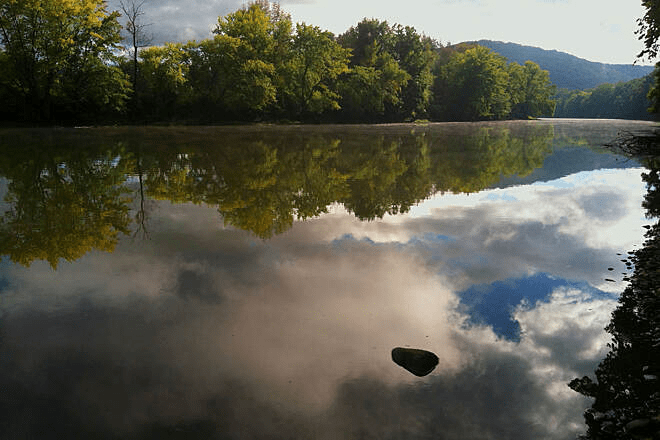
Last week I was in western New York, and I walked along the Allegheny River, followed a path through the woods, and remembered my life in that very spot almost forty-five years ago. I felt younger and vibrant yet somehow tired and disillusioned. The perfect combination for a work of creative non-fiction.

So that is where it starts. Time to wake this narrative back up so I can put it to bed and send Kim her own copy of a book about her brother that in the end isn’t about her brother at all. It truly should not take forty years to finish writing a book. On the other hand, some books, perhaps, should not be written at all, and that may well be the case here.

I have learned that sometimes it is best to not search too long and too deep for a resolution to the narrative, and that in real life sequels are rare. But I’m a naturally curious person, and it seems to me now that Joseph Conrad was absolutely correct: “Curious men go prying into all sorts of places where they have no business.”

Allegheny River, New York

Too Early for the Sun

Sometimes you have to stay up until dawn to understand what’s hiding behind the night. It’s been a tough two days, and I need a significant diversion. For me, anyway, I find hope in the same time of day that can push me over the edge; late night, early morning, just after the tigers come out but too early for the sun.

Like a rest stop at three am with two truckers and a couple of local high school kids screwing around, or the sound of wildlife in the desert brush, or tall pines scraping together in winter in the woods with no light but the moon. It’s walking up an Arctic Path at four am in a snow-deep March with Northern Lights bouncing past like a bull whip; or lying on my back on a cot in a compound in Africa beneath more stars than could possibly exist, the distant sound of someone chanting the Koran. It’s walking out of a shack in the Russian woods after a storm passes and you see the sun just lifting over the raised bridges, ears still buzzing from loud live music. That’s when you know it’ll be okay.

In Portomarin, Spain, one night, my son and I stayed up as long as we could because the rooms were all filled. We hung out in a small café until one am and then walked around the misty, cooling waterfront. Then we settled on the town square with covered walkways running next to a medieval church. Against some storefront we pulled together folding chairs and wrapped ourselves in whatever we could and tried to sleep in rapidly dropping temperatures. A kid on a bike did tricks on the steps of the church until three am which anyway kept me amused. But for a brief time after that, it seemed like dawn would never arrive, like I totally screwed up, and I couldn’t believe I would put myself and, worse, my nineteen-year-old son in danger. But at 4:30 we got out our flashlights and headed west. You can see a million stars in Spain at 4:30 in the morning, and the darkness makes the silence nearly sacred.

If I can make it past the tigers, I’m usually just fine. Better than fine.

That shack in the Russian woods was just off the Gulf of Finland—a dive really—a place to drink and sing and meet people you’d never want mad at you. It was small, with broken-down shed-like walls and windows which barely kept out the storm blowing off the Baltic one May night in the nineties. I use past tense since sometime just after 911 it burned to the ground. But back then, it was well after midnight, closer to dawn than dusk, and we ordered a bottle of Georgian Merlot and several plates of shashleek, a Russian shish kabob dish. A gypsy band showed up, including a guitar and violin player I’d met before, along with a friend of theirs, a woman singer. I played with them for thirty minutes or so, and hours passed as we sang and drank. I long ago forgot what night-terror sent me walking into the Russian night, let alone up the beach into the woods and this shack, but I did, and we sang and drank while what must have been that hurricane from The Perfect Storm slammed to shore. This duck blind of a building sat amongst birch trees, but that simply made me more aware of the weather, wondering when one might topple through the roof. It was exhilarating, an adrenaline rush that had nothing to do with the wine. It was being alive, right then at three am, with total strangers, live gypsy music, Georgian wine, and shashleek, that kept me awake and okay.

But those are extremes, aren’t they? Right before that, you wake up in a sweat and your heart is racing and your mouth is bone dry, and you know everything is going to fail. The hot water heater blows out and you can’t afford the five grand for a new one, the car needs work, the dentist is waiting for the call back, things are tight, and your chest gets tighter. You are at that line, the one some use as an excuse to check out, the one that can terrorize others into submissive acceptance, but the one some simply cross. I keep thinking of that line from Dar Williams: “And when I chose to live, there was no joy it’s just a line I crossed.”

.It doesn’t have to be a broken down bar or some desert hike. It could be a porch, and you sit there with tea and note the coming of the first birds, and you have an hour on the sun. And whatever it was that shoved a hot blade into your chest just thirty minutes earlier has been doused by the deluge of the new day, the sky, dark blue, then pale yellow.

There is no miracle. It is something on the other side of hopelessness; the place too many people I know could not hold out long enough to find.

One night in Virginia Beach some years ago when someone dropped a brick wall right in my line of trajectory, I could not sleep so I went to the oceanfront, walked on the pier I have walked out on since I’m a teenager, and sat listening to the surf in the still-dark night. A fisherman walked up the pier on his way to try his luck and he stopped to adjust his bucket and gear. I asked if the water seemed flat enough for good fishing, and he said he didn’t think so, but he added, “I ain’t got no other reason to get up, so I’m here. I guess I’ll find out.”

We laughed, but not really.

When a hot water heater breaks it sounds like the surf; it wakes you up, sends you ankle deep on hardwood floors for mops and valves and towels. And you know you can’t do a damn thing about it, and you know it’s going to be a long time before you can, so you go back to bed telling the tigers to go ahead, have at it.

But the whippoorwill is doing her thing, and a few house wrens have come out of the nest. If it’s early enough you grab a bottle of cab, head to the café table on the front porch and fill a small glass, and you look east, out over the bay, and wait for that sliver of light. It’s not so bad you tell yourself. You don’t need help you tell yourself. And you remember some story that was told to you to hold on to for just this moment. Like this one: When I lived in the Sonoran Desert, I would spend a lot of time at the San Javier Mission down Route 19 toward Nogales. There I learned that the Navajo used to run toward the sunrise every morning to visit and welcome the spirits who watch from the sky over their people below.

When the priest at the mission told us that story, a friend of mine said she thought it was beautiful how they ran toward the sunrise, but I couldn’t help but wonder what they were running from. What tiger’s grasp did they narrowly escape, barely pushing across that line?

If you ever see a picture I have taken of dawn, the sun slipping out of the water on the horizon, you’ll know I ran there, narrowly escaping some grasp, to welcome the new day.

The Chill

My freshman year at college, Parents Weekend rolled around the end of September, and since my folks lived in Virginia Beach and St. Bonaventure University is on the Southern Tier of Western New York, they were not coming; neither were those of my roommate, Steve. He hailed from Auburn, NY, but he said they were busy and he had asked them not to make the drive.

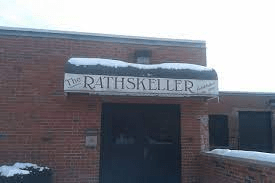
Friday evening Steve asked if I wanted to go to the Skeller. The Rathskeller was a bar under the campus dining hall, conveniently the building next to ours. A few particulars made the skeller the most popular place on campus. First, the drinking age back then was eighteen. Second, there was absolutely nothing—nothing—to do on the Southern Tier of Western New York. Third, there was (Youth: Read this twice to grasp it) no such thing as a computer available to the average person, phones were still connected to the wall, each dorm floor had one payphone to be shared by ninety drunk floormates, who were more likely to cover the earpiece with shaving cream as they were to answer the phone and find you, the dorm had one television and it was in the lobby, cable was brand new so most dorms didn’t receive more than a few channels, and pitchers in the skeller were $2.50 each.

So Steve and I went down there that Friday night. Understand, no one who went to Bonas knows exactly what the skeller looks like since it was always packed from wall to wall with students, shoulder to shoulder, with a small wooden raised, enclosed DJ booth in the back, and a bar running down the right. Tables throughout. It was always hot and walking down the stairs from outside meant taking your glasses off if you wanted to see without being steamed up. Music blared all the time—Springsteen, Joel, Stray Cats, the Clash, Lou Reed’s “Take a Walk on the Wild Side” which had its airtime nearly every two hours. If “Born to Run” came on, everyone stood up and sang, standing on chairs, screaming in unison, “ONE TWO THREE FOUR” at the exact moment. If “Piano Man” was on, the room swayed and pitchers of Genny Cream Ale slopped over their sides.

The smell of pizza, wings, and beer soaked our clothes.

Steve got a pitcher and we found a rare empty table since so many students were with their parents eating at The Castle Restaurant across the street. It was late-September cold out, with a crisp and refreshing chill in the air, and hot as hell in the underground bar.

Two women saw the empty seats at our table and asked if they could sit there. We all introduced ourselves, I got up and retrieved two more glasses from the bar, and we talked about where we were from, what dorms we lived in, our majors. Finally one of them asked if our parents were around for the weekend.

I went first. All of this had to be hollered over the music. “NO! IT’S SO FAR AND THEY WERE JUST HERE IN AUGUST, SO I WON’T SEE THEM UNTIL THANKSGIVING!!”

Both of the women’s parents would be there on Saturday. Then they asked Steve. He took a sip of beer, sighed, and said, “NO! MY PARENTS WERE KILLED IN A CAR ACCIDENT ON I-90 THE WEEK BEFORE CLASSES.”

Both women apologized profusely, moved about in their chairs for a minute, clearly uncomfortable after being quite settled in to our company, and then they said they had to leave since it would be a big day on Saturday, and they squeezed their way through the crowd toward the door.

Steve took another sip of his beer and smiled. I looked at him. “WHAT THE FUCK?!”

“THEY WERE DRINKING ALL OUR BEER!”

“I WOULD HAVE BOUGHT MORE.”

“OH!! RIGHT! WELL….SORRY!”

He was a good roommate. We got along fine that year, and while we traveled in separate circles, different interests, I don’t remember ever quarreling. He was there during some significant events in my life, and we talked about them often. Still, after that year I don’t ever remember seeing him again, even in a hallway anywhere. I never really thought about it since we did have such different interests.

Time jump thirty-four years.

A new hire at the college liked to talk. I forget her name as I left there five years ago, but I can picture her—always talking. One day in the copy room I stood quietly while she moved from subject to subject until she bounced into a few sentences about her home in Auburn, New York.

“One of my college roommates was from Auburn.” I told her his name.

They were next door neighbors their entire lives. Turns out Steve left Bonas, received a master’s from UNC-Chapel Hill, and has coached sports his entire life, currently golf at an Upstate NY community college. His son lives in Boston, and everyone is doing fine. I just had no idea.

I forgot he existed. Somewhere through the years I stopped thinking of some people from there, from then, as humans out living lives and just characters in a play that took place in the early ‘80s. I forget sometimes that out there, just over the slight curve of the earth, are those people who are now, four decades on, at the other end of our ambitions and hopes. They traveled their own narrative arcs and ended up wherever just like I did, and they, too, have memories of that time.

But when we last see someone, it is easy to think of them as “then” more than “them.” In The Big Chill, William Hurt says poignantly, “A long time ago we knew each other for a short period of time. It was easy then. I grew up.” All that is true, but these were people we lived with, day and night, shared bathrooms, showers, tragedies, and heartbreaks. Those four years were like dog years.

But look: Social media has refriended so many of us, closed that gap. I have colleagues at my job I’ve worked for five years making comments to friends I haven’t seen in forty, and conversing with childhood friends of mine who I can’t even remember. Time is out of joint and linear measure of memories is up for grabs.

And then you run into someone who knew someone who knew. This colleague spoke of Steve and I could smell the stale beer, the must of the dorm room. The cold of the hallway where all the windows to the outside were always broken. I could, just for a second, almost name every single person on the floor. Then it’s gone. But in that sudden flash of not-so-great memory, is some ghost, waving at me, awoken for a brief because I happened to look that way, and just when I realize I thought I saw something, it’s gone.

But it haunts me like a dream that wakes you up in a sweat but you can’t remember.

I stopped looking back in recent years. Still, when I do, I “look back carefully, because there’s still something there for me,” as Jackson Browne wrote. And I was wondering what that is; like going away and forgetting something you just knew you meant to bring along but can’t put your finger on it.

Thinking of that story in the Skellar brings me closer to remembering what it is that I feel like I should not have forgotten, but then it slips away.

Everyone we ever knew is out there somewhere, if they’re still with us—and even if they’re not, I suppose—living their lives well beyond the shared grey space of our Venn Graph that overlapped during the end of the Carter Administration. Now we’re senior citizens, have lived our lives, and no matter how much time we have left–hopefully a good deal–we wonder most about those we lost somewhere along the way. I wonder how many times I walked past someone I used to know so well—maybe on a city street or in some café somewhere.

Well, it really was easy back then.

Bill DeWeese

Dr. Bill C. DeWeese

1944 – 2023

I’m thinking about Bill tonight. Bill De Weese, the Division Chair in the Humanities department when I was first hired at the college in 1989. Later he would return to faculty status as a Reading instructor, and we remained close friends. Bill was the second person I ever met on campus. Eleanor, the administrative assistant, was the first, sitting behind her desk in the tiny Humanities Office (which in recent years became Letty’s office, oddly enough).

I’ve told some of this before, but some I haven’t.

My car broke down in the parking lot of the college in August of ’89 when I was returning from Chesapeake to our apartment at the oceanfront. I was in a bad mood because a job I had been promised to teach journalism to high school students was given to someone else. Then the car.

So I walked into the first building and went into the first office and asked to use the phone (Youth: there was no device available to contact anyone else without going into a building or a booth). I was on hold with AAA when Bill came out of his even smaller office and said to Eleanor, “We still need someone to teach Humanities on Wednesday nights.”

“I can do that.”

“Who are you?”

“This young man asked to use the phone. His car broke down.”

“I have a master’s degree in arts and humanities from Penn State.”

“When you’re off the phone would you come see me?”

Click.

I went home with one class, three credit hours. That night the phone rang (Youth: This is before caller’s phone numbers popped up to warn you), and it was Bill. “Baaaubb?” Understand, Bill was from Kentucky and talked very slow with a beautiful southern drawl. For thirty-something years, he started every conversation with me that way—“Baauubbb? Can you teach a few more classes starting next week?”

“Sure.”

“How about six?”

And so it was for three years as an adjunct—back before restrictions on credit hours, when I was teaching six classes every semester, including college composition, developmental English, American Lit, British Lit, all of it. Scroll back up and read my degrees. Yes, Arts and Humanities. This is critical later.

I remember one class in which I taught Hamlet. I had absolutely no training in Shakespeare, or any literature for that matter, but I really loved that play, especially the Kevin Kline stage version I had just seen, so I taught it in Intro to Literature. The day the reading was due, I asked who read it and everyone admitted they hadn’t. I stood up, told everyone they were absent, and left.

Someone complained to Bill and he called me into his office the next day.

“Baaauuubbbb? I have done that too. And I appreciate why you did it, but perhaps you can just give a quiz.”

The following class I told my students that I was aware someone complained but I didn’t know who, and I wanted them to know the Dean took it seriously and talked to me. Then I asked again who had read Hamlet. No one. I stood up, told them there were all absent, and after so many they would fail the class, and I left. I went to Bill’s office, closed the door, told him what just happened, and I said, “Bill, first of all, how I handle things in the classroom is my business and I don’t appreciate you telling me how to do things. Second, these are adults and should be treated as such and not lead to believe every time they have a complaint you will jump for them.”

Bill was quiet a minute, then smiled, then said, “Baauuubbb. I think everyone today has learned an essential lesson.” He shook his index finger slowly, then said, “Don’t fuck with Kunzinger.” He laughed hard. For thirty years when we passed in the hallway, or when he’d catch my eye from across a division meeting, he’d just shake has finger and we’d both laugh.

God, what a rare, to the bone, decent human being.

Bill died last week.

When I was hired full time, on the day the hiring committee met to make the final choices, I was home. He called and said, “Baaauubb, you’re not qualified for this job! Three years you’ve been here but you’re not qualified. You don’t have an English degree and this position is for English majors.” I told him I took English at PSU as required for the dual degree, but he insisted all the records show all HUM classes.

The following all took place in one hour:

I called the Humanities department at PSU and explained to the Dean of Graduate Studies, Louise Hoffmann, what was going on. She faxed a letter to the committee explaining that all degrees at that time in the Humanities Department at Penn State were listed as HUM, even those with focuses and majors in English.

It satisfied the committee and Bill called back one hour later to tell me I was hired full-time.

The thing is, and I told Bill this sometime later that year, I really wasn’t qualified. I had a scattering of lit courses, and absolutely no college comp courses—my specialty at the college—and I told him that I was basically teaching journalism courses as college comp, since my undergraduate degree was in journalism. Plus I was good in front of a crowd—had been for a decade—and that helped. The upside, Bill pointed out, is that Letty and I were the only two in the department who actually had Humanities degrees and could corner those classes if we wanted. It worked for me.

Still, Bill laughed hard and said, “Well maybe that’s why you’re one of the best comp teachers here!” Then added, “You know, the college will pay for your terminal degree. Why don’t you get one just in case.” So I did, with all the writing and lit courses necessary to move on, albeit fifteen years after starting there.

During those decades, Bill came to my place for Christmas Eve dinner and drinks with his partner, George, several years in a row, was at my son’s baptism and my father’s funeral.

One morning, early, I was walking across campus and saw Bill for the first time in a month and said something. He told me George had been killed by a drunk driver. The drunk hit George’s car forcing him into an oncoming semi. He was killed instantly. He stood there and cried and we went and sat on a bench for hours, talking, sitting quietly. I learned a lot about not talking from Bill.

Three times I read for the community at Bill’s retirement residence in Virginia Beach. The second time just him and I had dinner first, and while we were eating, a woman at the next table died and fell on the floor. I tried not to stare, I really did, and then paramedics came and enclosed the area with walls and the woman she was eating with finished her soup at another table.

Bill said, “I hate when people stare whenever this happens.”

“How often does this happen?!” I did not know the proper etiquette for eating while someone is dead next to you. “I am sorry I stared; I was just shocked. I want to help but the medics were here instantly.”

“Do you want a drink before you read?”

“Yes.”

A few weeks after my dad died, I was scheduled to read again about the Camino de Santiago to a group of about sixty residents of Westminster Canterbury. Bill called: “Baauub? Why don’t you bring your mother? I am sure it would do her a world of good to get out. Wally (a former colleague) will be there and we’ll all have dinner first.”

It was a beautiful night, and everyone treated Mom like they’d known her forever. A few weeks earlier at my father’s funeral, he took me to a side room and asked how I was doing, and Mom, and Michael. He said if I wanted to cancel the reading, he would understand, and I said I was still looking forward to it.

“I told Josephine about your daddy. We both cried for you. You two were so close. I remember meeting him in your office once. What a lovely man,” he said.  

Oh, Josephine: The first time I read, Bill insisted I arrive early because he wanted me to meet the new love of his life, Josephine. Several times before that night he reminded me and told me he told Josephine all about me and she really is looking forward to meeting me.

I was not sure if Josephine was a really close friend that Bill spent all of his time with or if he had moved to the heterosexual world so late in life, so I didn’t know what to expect.

He met me in the lobby, and we went to his apartment, and Josephine came running out of the bathroom.

A Yorkie. Adorable to be sure, but simply not what I was expecting, though I don’t know why, since Bill spoke of everyone in his life with such love. It was never “My mother,” but “Mother” and never “My father,” but “Daddy,” as if Bill and I had been brothers since birth.

He made me feel that way, to be sure.

RIP Brother Bill.

Ad Invicem

It’s hard to imagine the horrors taking place in Sudan, Syria, Afghanistan, and, of course, Ukraine, when the water and the occasional call of a gull drifts down the river. I try to look out and think more about the peace in northern Spain than the hunger that haunts the people in South Sudan, but only because I’ve been lucky. I mean, sometimes when the Chesapeake and I are just hanging out peacefully like this, I can be painfully aware that I wasn’t raised in Mosul; I wasn’t born in Beirut.

Humanity is a crazy race, building irrigation systems to help grow food to feed millions while building methods to annihilate those poor souls in seconds. Maybe the greatest irony of education is the stretches of intelligence, research, and application it takes for the human mind to conceive, create, and execute weapons which can evaporate entire cities. The mechanics to build the means by which to destroy someone else wouldn’t cross the mind of an uneducated person. Only educated people can accomplish such a holocaust.

Doesn’t it feel like no one wants to save the world anymore? Yesterday at the White House State Dinner, South Korean President Yoon Suk Yeol sang Don McLean’s “American Pie.” He was good, too! This was big news today. This should be irrelevant for its commonness. It should be an expectation, not an exception.

There needs to be a new requisite in schools everywhere: Humanity 101. The subtitle could be “We are here for each other.” The course could cover the benefits of helping other people, the rewards of sharing not just gains but losses as well. There could be a lesson on compassion and one on being a good Samaritan. A sociologist might talk in one session about how what happens in one section of the globe really does have an impact on the rest, and a psychologist can show the class how to balance the beauty of nature with the evil things people say and do, which would decrease after everyone took the class.

A theologian could explain why there are, or at least needs to be, some absolute morals. That person might explain why the belief in postmortem can keep evil in check, keep the horrible potential of humanity at bay. Without preaching about salvation in heaven, they can certainly drop in a few lectures about earthly responsibility to each other, and if the fear of God is necessary to get it done, so be it; not unlike threatening toddlers who act up with the possibility of Santa skipping their house. The potential of a little supernatural backlash is just what this world could use right now.

Honestly, it seems like everyone is resigned to some sort of slow decline. Did our parents feel this way? Well, if so, they didn’t smear it all over social media. I fear for the absence in education of something other than the notion of “career.” More connections with other people can be made by sharing a meal than college administrators give credit for.

In my last class this semester I told everyone they could bring food. They brought food. Lumpia, pizza, chips, wings, donuts (and not the cheap-ass kind either—Duck Donuts, a delicacy in southeastern Virginia). We laughed and shared stories, but we also talked about what worked in our writing and what didn’t. We connected. Is food the trick? Perhaps; I really don’t know. But I know we saw each other as humans. That works.

I told my students that seeing the between times from their age to mine, them starting careers and me finishing, I learned one lesson. One. No kidding, Uno. In the end we are here for each other. That’s it. With everything else which tugs and tears at our lives, pushes us to extremes and dehydrates our ambition, in the end we simply are here for each other.

Maybe we can solve more problems by knowing what our neighbors like on their pizza than understanding the treaties that keep us apart.

Here’s the thing:

Five years ago this week I left a job I held for thirty years. I’ve thought a lot about my career then and since then, and I know for certain one absolute:

Our education system sucks. The entire thing, all of it, from K through PhD, it sucks dogs. Complete bile.

What good amid the world are these people with their expertise in engineering, computer design, programming, business management, and more, if they are not first taught to be human? The most essential aspect of all of life, of all we get educated for to begin with, is absent from the curriculum.

It should have been the foundation of all teachings since before Plato. Such a simple, simple lesson plan: “We are here for each other first.”

Then State dinners might be closer to celebrations where leaders celebrate each other rather than merely tolerate each other.

I mean, honestly, the man nailed American Pie.

_____

This:

From Haim Ginott:

I am a survivor of a concentration camp. My eyes saw what no person should witness: gas chambers built by learned engineers. Children poisoned by educated physicians. Infants killed by trained nurses. Women and babies shot by high school and college graduates.

So, I am suspicious of education.

My request is this:  Help your children become human. Your efforts must never produce learned monsters, skilled psychopaths or educated Eichmanns. Reading, writing, and arithmetic are important only if they serve to make our children more human.

Changing Gears Again

My car has been in the shop again. Three flat tires last week. Fuel pump before that. This time transmission issues. I know it is time for a new car. I had my eye on the new Range Rover SV with all the options, but the price tag is just over $300K, so maybe something more realistic, like a 74 Pinto hatchback like my brother used to own. With brown panels. Just don’t tailgate me, please.

I’ve logged more than 1.5 million miles in my cars. Some of them were memorable. I owned an ’85 burgundy, 5-speed, fuel-injected, three-door, turbo charged Dodge Lancer. We called it the POS. It was the car I used to bring garbage to the dump, carry bricks and wood, and haul crap without caring. I kept it clean but didn’t worry if it wasn’t. We’d find driftwood and toss it in the back, sand and shells and all. We spent countless hours driving to the beach, the ice cream parlor, the auto repair shop. My son practically grew up in that car, learned music from its cassette deck, held up the felt on the falling roof so I could see where we were going. I drove him to school in that thing well into third grade.

We all remember our cars.

My first was my dad’s ’72 Nova, which wasn’t mine but I racked up the miles on it for him as good sons do. My first car I drove when I lived on my own was a 1980 light blue, Chevy Monza. That little thing and I saw the United States a few times, smuggled blankets out of Mexico and Molson’s out of Canada. We spun out down an icy hillside in Massachusetts and I ended up junking it in Pennsylvania when the engine blew out. I was driving all of a friend’s belongings from my house to her mom’s when that happened. I think that’s when I started understanding metaphor. In fact, to this day metaphor drives my writing life. It comes from cars.

My favorite was a red Jeep Cherokee five speed. I abused that car the way jeeps should be abused, and it lasted far longer than I it should have based upon how I treated it. It is the car I think of when I hear Paul Simon singing, “If more of my homes had been more like my cars, I probably wouldn’t have traveled so far.” Those were good times, windows open, radio blasting. There was the time I was stranded in the desert with a dead battery a hundred miles from a tree. Or when for several years the gas gauge on the Jeep was backwards. I had to fill it up until it read empty.

In forty years, I went from fitting everything I own in the trunk to needing a U-Haul just to go away for the weekend. Still, I can think of very few objects I’ve owned that symbolized “freedom” more than my cars. If I had it to do over, I’d gauge what I owned based upon how much fits in the trunk of my car. No more. But we can’t do it again. Maybe that’s why you can only go so far in reverse before the transmission says, “No more. Stop. Drive.”

I have experience with this:

One day when Michael was small and we were in the POS, we drove over a pothole at a sub shop parking lot. The chassis slammed hard and made a crumbling sound like folding metal. I tried to back up and it refused. A friend pushed me out and I drove home thinking whatever was wrong righted itself.

No. In fact, I couldn’t go backwards for the next eighteen months.

I learned to look for a pull through. I’d park far away at the mall, grocery stores or work. I learned to anticipate what was next so as not to corner myself, or worse, find myself with my face against the wall. I learned patience. Only three times in a year and a half I found myself trapped. The first was at Old Dominion University while working on my MFA. I arrived for a night class and the parking lot was full save one spot against a pole. I paused and asked my friend if he wanted to push me in then or push me out later.

I learned what roads I couldn’t turn down, what tight situations might be waiting, when to find a slope to roll back down, when to walk. A cop once pulled me over for pushing a yellow light. He let me go but stood and waited for me to leave first, but I had stopped in front of a sign and for the second time I couldn’t back up when I needed to. He waited. I waited. Finally, I said, “Wow Officer, my heart is still racing and I’m tired. I think I’ll sit here a minute and compose myself.” He left.

It was after the third time that I junked the car—excuse me—donated it to Good Will. I had to get it inspected and went to a shop where I know the mechanic, Tuna. Honest to God his name is Tuna. I didn’t want to tell Tuna about my inability to back up, obviously, since I refused to buy a new transmission, and I realized I was screwed when he pointed me into his one car bay with no way out but back.

In Virginia, an inspector’s first task is to scrape the old sticker off the windshield, so while he scraped I called, “Hey Tuna, it’s the last day of the month so I know you’ll be swamped and I’ve got to get to the Beach for work, go ahead and put the lights on while you’re in there.”

“Good idea, Bob!”

I called out. “Okay. Brakes? Good. Left signal? Good. Right signal? Good,” and found myself doing my own state inspection. “Reverse” No white lights lit up, of course. “Good!” We finished that part and he finished the rest, put on a new sticker and asked for ten dollars. I gave him a twenty and said, “Tuna, I need a five, four ones, three quarters, two dimes, and five pennies.”

“Sure Bob,” he said and headed to the register in the front of the shop. When the shop door slammed I got in the car, threw it in neutral, got out, heaved it over the red tire lifts onto the gravel lot, jumped on the brakes until the POS was far enough back to go forward. Tuna came out and I held my side gasping for breath. “You must be in a hurry!” he said handing me my change.

I drove off wondering what was next. Seems like back then I was always wondering what was next.

The following day I drove Michael to school. We listened to music while he held up the roof. He grabbed his bag, got out and waved as I rolled forward, moving on, and realized the truth is we rarely have a reason to go backwards anyway.

Man, my son and I had a blast in that car, listening to the “fall cassette” in the fall and the Christmas cassette in December. But it was time, and I rumbled down the road near work to Good Will.

So, this isn’t my first experience with a bad transmission, where you have to use all your energy just to move forward. Eventually we learn, one way or another, to let go of everything that we relied upon to keep going and find another way.

Maybe it’s time to find another way.

Everyman

Nearly every evening this time of year just before dusk bends to night, in those moments after twilight when I have to let my eyes adjust to the lack of light, a few hundred geese land in the pond, some on the river, and a few in the field nearby.

I can hear them for quite some time before they actually fly into sight from beyond the trees to the west. The air is so clear now that I can hear them honking in groups, joining in like a chorus which starts with just a few voices and adds another rafter until they reach some crescendo. At first it might be only a flight of a dozen or so based upon the muted sound from the distance. But over the course of five minutes or ten I hear another group, then another, and more. They fly in a “V” to be able to see each other clearly for protection and create just a little draft, but the closer they come to landing, the faster the formation falls apart.

Eventually the first group is already in the pond when the last group crests the bare branches of the oaks and hundreds settle into the field or onto the river. One time some years ago a bit earlier in the evening thousands of geese, no kidding—thousands—landed on the plowed cornfield just down river. Their honking continued for an hour that night, and just as the sounds of these geese slowly softens and, finally, quiets, so did theirs so that from my porch I could tell they had all landed safely.

But every single time a while after the large group arrives, two or three geese come in late, alone, as if they stopped at another farm over near the bay and had to regroup and find their flock.

I don’t want to disturb them, but I always want to watch. So when I walk along the river at that hour and the skin on my face is tight from the cold, and my nose runs a little, and the muscles in my back are also tight from the cold, I keep my hands thrust into the pockets of my coat and walk along the soft shoulder of the tiny dead-end street so that my feet make no noise. I can usually get to the narrow strip of sand at the river from where I can see both it and the pond, but not the field so well. Their call increases in a burst of warnings to the rest that I’m around. It quiets quickly though as I remain absolutely still and sit on the cold rip rap running along the river and blend into the rocks and am no longer a threat.

On winter nights the water is almost always calm, a slow methodic lap at the rocks and sand. The sky is all stars with no unnatural lights for more than twenty miles in any direction except from the scattered farmhouses or buoys; the sky is a carpet of constellations.

It isn’t by chance my Canada friends find respite here. They need grass for food, they need water, and they need to be able to see great distances to anticipate danger. That’s why they’re here on the edge of the bay with open fields and ponds. It also explains why they love airports and golf courses. The abundance of geese isn’t an accident either; they travel in gangs, often the younger geese are forced into the gang, so that traveling is safer and they can better dominate areas like this.

But their coolest trait is their honk. They keep that up as a form of encouragement so the lead geese will maintain their speed and not give out so easily. Basically, the ones in the back are telling the ones up front to “Go! Go! Go! Go!” and move their asses. And when the lead gets tired, she moves to the back and gets to badger the others for a while. And they do this their whole lives—about twenty-seven years.

And just after twilight when dusk is making its brief appearance, and the water is like a mirror, the call of the geese from well across the treetops is musical, somehow eternal. When this land was unbroken, Canada geese called to each other, rushing for the open fields and waterways, settling down here. Powhatan heard geese here as did Pocahontas, and John Smith, and Washington just to the north at his birthplace on the Potomac, and Jefferson not far from there. Through the centuries the flyway from the St. Lawrence down across the Adirondacks and Catskills to the Susquehanna south into Virginia to the mouths of these five fair rivers spilling into the Chesapeake has been their home.

And they love dusk, just before dark, as it is the best time of day for them to recalibrate their internal magnetic compass to cross continents; to come here year after year.

But this isn’t about geese.

The peace in such sounds late on a winter’s evening definitely touches my soul, settles me somehow beyond my ability to explain. I sit and blend into the rocks and watch the geese in the water, and I contemplate their distance from the central regions of Ontario and Quebec, across Hudson Bay. My entire life I’ve been drawn to migration, to some sense of movement from one place to another, particularly the seeming randomness of such order. They know where they are going every time, and yet they move south without boundaries, schedules, or maps.

I am drawn to that lack of boundaries, an absence of schedules. And I’ve never been much for maps. In my days at home and my days traveling as far north as these geese and as far south as the osprey who will be returning from the tropics soon, I take great issue with some sedentary lifestyle. I am older now, of course, and a bit more tired. I think more about gardens than marketplaces, more about my porch than some hotel balcony. But I’m not settled yet. No. In fact, I just might be less settled than I’ve been in decades. I like the consistency of this migration; the predictable return, surrounded by friends, a quiet night.

I still have some dreams simmering which require wings. Was it Austria? Monterrey? Wasn’t it the Netherlands or Ireland again? Maybe it was just a drive to see my beautiful siblings or my flock of cousins, to spend time laughing, sharing stories, saying we need to do this again before moving on.

I suppose all dreams are migratory, both in hopeful destinations and their transience with the changes in our responsibilities and circumstances. I’ve lived many of my dreams, but we always have some out there in the field, picking up a sliver of light at the end of the day. At times I even take flight, abandon my flock and push off for a while. But I look forward to coming home to settle into some sense of domesticity, which I can accommodate briefly at best, because eventually I think about the dreams of my youth as I fly toward my twilight years. Those dormant–not dying–dreams call to me to “Go Go Go Go” as my life moves further along, pushing at the edges of dusk.

And now as night falls completely I walk back to the house and always a few more geese find their way to the flock long after dark. Only once did I experience the return to the sky of so many all at once. I was walking from the river to the house past the field where hundreds that evening had settled, and either something or me or the ground disturbed them, or it was simply time to move on, but in great waves they took off, honking. I heard them calling, waves of them into the sky, honking, great waves of honking geese calling ahead to the ones already in flight, as those behind fell in line and they swept from horizon to horizon blocking out the moon and headed out over the trees running down the bay, and I stood and watched them until the last.

It is one of my most beautiful memories.

Then everything was silent and I found myself, much like I do now, oddly alone, like a young man left on the sand while his friends all pushed off to sea to head for distant lands.

“But don’t think too badly of one who’s left holding sand.

It’s just another dreamer dreaming about everyman,”

-jbrowne

To Finish: (13 century) from Latin finire; “to limit”

“To set bounds,” the definition continues.

I watched a hawk sweep down and pulverize a dove. The hawk perched on an oak branch and the dove, distracted by the wind and some seed on the lawn, stopped paying attention. It happens. The hawk isn’t fast as much as he is silent, just a simple cliff dive, stepping off the branch, and, wings out, sweeps in with perfect form with his claws out front to grab the dove at the neck. A sudden puff of feathers busts into the air, and the raptor is gone. So is the dove.

This time the dove simply stood on the grass. She had been facing the direction of the hawk and when she turned around the hawk dropped into action. The dove seemed to hunch down like she knew what was about to happen. Gone.

Sometimes the natural instinct to survive is not as strong as simple resignation.

When I was in high school some friends and I went to the beach on the bay. At some point one friend and I decided to swim out to the end of a very long pier. We made it past the end, but we were exhausted and ended up helping each other back, each of us taking a turn at holding the other until we were at the breakers and could ride in. She and I just collapsed on the beach, spent. It isn’t like we weren’t in shape. We had stamina; we just swam too far out. I stood on the beach and wondered how much more we would have had to swim before we had to give up? If we had been another hundred feet would it have been too far? Or would we have found the strength and determination to push it.

I mean, did we collapse on the beach because we couldn’t go another yard or because we didn’t have to?

I wonder how often I’ve given up because I thought I found the shore when the truth was I could have probably held out for more, pushed it a bit, opted to swim a bit further.

It’s cold today, but sunny, and the hawk is around—I can hear him, though the doves are feeding on the porch rail where it is safe and out of sight. Earlier out on the river, an osprey just back from warmer waters found food for their new offspring, and the cormorants have returned. Sometimes some river dolphins swim under the Rappahannock Bridge, but not yet this season. I like it here. I find peace here. I think mostly though I like the area because of the water and the sand. Ironically, the first time I was in this area was exactly ten years before I bought the land to build the house. Just across the river is The Tides Inn, a quiet resort right on the Rappahannock. For my parents’ thirty-fifth wedding anniversary, my father invited us all to stay at the Inn. It was an excellent time, and we went for a river cruise on the Miss Anne, a riverboat which went under the bridge along the south shore and returned to the Inn along the north shore, turning around at the mouth of the river into the Chesapeake. I had no clue then we passed close enough to my eventual home to be able to cast a line to shore and pull us in.

Thirty-six years later and I’m watching osprey out across the same bridge feeding their young, while hawks stand watch in oak trees waiting for doves to stand still.

I was born a moving target; I’m not sure I ever learned when the right time is to collapse on the beach. The hawks have, for the most part, missed me up until now. Even when I do settle down it is usually to look at a map. Ironically, since I moved into this house I have traveled more than I ever dreamed I would—Russia, Prague, Amsterdam, Spain, France, Norway, and plenty of states. And at night in the darkness we use the telescope to travel through the heavens out across the waters and find planets and meteors.

When I was in college a friend had a poster on his wall promoting Nike. It was a long shot of a winding road through open country with one solitary runner, and the tag line said, “There is no finish line.” I like that. If we didn’t know when to stop I wonder how often we would keep moving. I’m not an advocate of indecision, but I’m a staunch opponent of settling for something when there’s still more options for the ones willing to wander a bit more. It is, to be sure, a delicate balance.

Certainly I get tired as I move forward, especially on the days when I’m not sure where I’m going or how long it will take to get there. But when I think about that swim to the end of the pier and back, I don’t often recall the collapse on the sand; I remember how quiet and peaceful it was taking turns helping each other back to shore. It was hard to tell if we were helping each other or saving ourselves. I do recall quite clearly, however, that it wasn’t long after we had rested that we headed back out, a little bit further that time.

The journey doesn’t necessarily end because we found a safe place to rest.