I immersed myself in outdoorsy stuff in my early teens; even beyond that. I wonder if something innate in my DNA attracted me like chemistry to the outdoors and references to it, or my environment and influences doused me with enough references to nature that my path was clear.
I listened to all of John Denver; knew every word to every song. Played his music on the record player and my guitar. At the same time, my friend Eddie and I spent every single day in the woods and along the Great South Bay at Heckscher State Park, nearly literally our backyard back then on Long Island’s South Shore. I watched movies like Jeremiah Johnson and television shows like Grizzly Adams. I wanted to disappear from civilization like they did; I wanted cabins like they had up in the Rockies, with a warm fire going.
The beach took hold of my Buddhist-bending mentality, combined with Dan Fogelberg and Jimmy Buffett, books by Joshua Slocum and Robin Lee Graham. Patrick O’Brien and the first paragraph of Melville’s Moby Dick, which reads:
Some years ago—never mind how long precisely—having little or no money in my purse, and nothing particular to interest me on shore, I thought I would sail about a little and see the watery part of the world.
Damn I wish I wrote that, wrote “Son of a Son of a Sailor,” “Rocky Mountain High” and “Sweet Surrender,” wrote home from some mountain in Utah not far from Redford’s “Sundance” ranch, long before the film festival was born. Instead, I played their music, watched the shows, and spent as much time as I could in whatever nature I could.
I think it was the beginning of me always feeling slightly outside of everything, just a little beyond understanding people. For some time I thought it was insecurity, but now I believe I just preferred the natural state of things, how perfect it is out there. I had the theme of Grizzly Adams down pat:
Deep inside the forest Is a door into another land Here is our life and home We are staying, here forever In the beauty of this place all alone We keep on hoping.
Maybe There’s a world where we don’t have to run And maybe There’s a time we’ll call our own Living free in harmony and majesty Take me home Take me home.
Even that line repetition is a nod to Frost’s line “Miles to go before I sleep.” Exactly.
Is it true that everything we are we remain? Our hopes remain. Our dreams remain. And if we hadn’t lived them out yet, perhaps we still will in some other season? Maybe.
A part of my mind never truly grew up, I know that. A part of my psyche still holds tight to how I used to think when I was young, sometimes to the point I can be out for a walk and not even remotely feel my age, forget that my ability to do most of the things I could then is, shall we say, compromised. But we trick ourselves. I can still ride a bike; can still hike in high altitudes. In my fifties I walked across Spain. So who knows.
What happens is we forget. We let go of so much of who we were to make room for who we become. It is natural and beautiful and necessary, and we would not come close to being who we are today without who we were then, watching Dan Haggerty and his bear walk down the mountain, or listening to John Denver’s opening guitar riff on “Rocky Mountain High.” It’s in our blood. It has to be.
Unless, again, something in our blood attracted us to those things. Who the hell knows, right?
Ever come across a trigger that brings you back to those moments you had then? Maybe it’s a picture in some old album your parents kept; or a book you read. I have books like that, from then, I have a baseball my friends all signed when I left Long Island and it transports my mind to that small village, almost as if had I driven there today I’d see fourteen-year-old Eddie coming out of his house ready to hike through the park. We have so much more ability to manipulate time than we realize.
So, I had this job. One of my first, and the last one as a high school student. I worked on Seagull Pier on the South Island of the Chesapeake Bay Bridge Tunnel which connects Virginia Beach, Virginia, with the Eastern Shore of Virginia, known as the Delmarva Peninsula. I was thrilled to get hired out there for one reason: I’d be working “nearly” on the water, watching the sunset and rise, feeling the salt water on my face all the time, like Melville but without whales. I worked 10 pm to 6 am every night, usually alone, frying shrimp and fries, serving sodas to travelers with coupons they received when they paid their toll to make the crossing of one of the longest bridge-tunnels on the planet. Yes, they got a free Pepsi at the pier. It was pretty barren then—a diner-style interior with a few tables, a gift shop, and a pier filled with fishermen. In later years the restaurant took over part of the pier and became quite nice with a full menu. But back then it was just a quick stop for a basket of fried food, coffee or Pepsi, a few souvenirs and back on the road.
They tore it down a few years ago to expand the bridge tunnel.
I would drive my dad’s ‘72 Nova out there just before dark, park and stand on the rocks looking west up the Chesapeake, west, toward the setting sun. Then I’d head inside and cook, serve, clean, make coffee, talk to fishermen on rainy nights when they crowded the counter, talked to the rare customer who stopped for their free Pepsi or a burger at three AM. Then when my shift ended, or sometimes even before then if no one was there, I’d walk out on the parking deck on the east side of the building and watch the sunrise over the Atlantic at the mouth of the bay.
Just remembering that brings me such absolute peace I can, just for a moment, forget some of the minutia that I find myself up to my neck in. I remember, and I am there, can smell the salt, can feel the breeze coming off the water.
I love to remember.
One morning at about four, the door opened as I was just about to clean the grill. I glanced back to see who was coming in and it was a man by himself in a sweater. He had long hair, a thick beard, was tall, big, like a linebacker, and stood for a moment looking around. I called to him to sit anywhere and he came right up behind me and sat at a stool, and he said, “Can you make me a burger on that grill before you clean it, my friend?”
Instant voice recognition. It was Dan Haggerty. Grizzly Adams himself. I asked and he said yes. We talked and he insisted I make a burger for myself as well, and fries, and we sat together and talked for an hour in the empty Seagull Pier restaurant. He was on his way to Florida and preferred to drive very late and very early.
Young people: This is before there was any form of a device with which I could capture the moment unless I happened to have my camera—a big device with film in it—which I didn’t. So we have those triggers. A baseball, an old guitar. Stories.
Today I received mail from my sister. My brother-in-law bought a new car, and in the old car, buried somewhere in the console or glove compartment or somewhere, they found three Free Drink coupons for Seagull Pier from one of their many trips south to see our parents in Virginia Beach.
She was discarding outdated coupons some toll clerk shoved at her with her change. I received a wormhole to a version of me that had my entire existence in front of me from a place I loved to show up and leave out in the middle of nature, where the sun set and rose again with my arrival and departure. What had for nearly fifty years become illusionary, almost some fiction from forever ago, suddenly seemed to happen this morning, and I felt younger, more alive.
I still head to the bay—same bay, ironically—to watch the sunrise; and to this river every evening to watch the sun disappear west into the Utah mountains. I still dream of riding horses across the Rockies. I still listen to Denver and Fogelberg.
If not, I know for certain I’d be a poorer man.
Everything we are, we remain. Our hopes remain. Our dreams remain. And while not all of them will find fruition, some might. Some just might. If not in this, then perhaps in some other season.
Perhaps.
Thanks Cathy and Greg, for not stopping for a free beverage
Originally published in the now defunct St Petersburg (Russia) Times English edition, as well as the collection Fragments. In honor of National Caffeine Day (September 29th).
Awake
Irina asked if I wanted something to drink besides water and suggested coffee. “Espresso might be a good idea, Bob.”
“No thanks. I don’t drink coffee.”
“You are an American and you don’t drink coffee?”
“Never have. The one time I tried it the bitterness was so bad I couldn’t swallow.”
“Oh! You thought it would taste good! That’s the problem,” she said, laughing. “Bob, you don’t drink coffee for taste.” Then she poured a cup, a regular sized coffee cup, filled with espresso. “Here, try espresso. It will give you some energy.”
I’d already been awake for nearly thirty-five hours including the flight from New York to St Petersburg, and at some point my body simply woke up again, as if the bright midnight sun and the over-exhaustion were sensors to start over. Still, my mind flat-lined and I sat in the café and stared at the wall expecting it to move or fall or something. This was a new level of exhaustion. Friends showed up one at a time, each ordering a glass of wine or a beer, sometimes just water. Without noticing I had finished my cup of espresso. Also without noticing, Irina filled it up again. When we were all there and made our plans to walk along the gulf during the few short hours of the midnight sun, one friend sitting close put her hand on my arm and said, “Bob! You’re vibrating!”
That was the moment–just after midnight–I discovered caffeine.
I needed to know who came up with this so as soon as I returned to the United States I ordered a venti, half-soy, non-fat, caramel cappuccino extra hot with foam and an extra shot of espresso, and googled away the night. Caffeine dates back to the Stone Age. They’d chew seeds of certain plants to ease fatigue and elevate their mood. But it wasn’t until about 3000 BC when a Chinese emperor accidently dropped some leaves in boiling water that the
“drink” form was formed. I drank and kept researching: Actually coffee as we know it according to myth though it is widely accepted as accurate evolved from Ethiopia of course Ethiopia where else I mean almost everything has some sort of origin in Ethiopia but anyway the myth suggests that Kaldi a goat herder noticed his flock would not rest well and in fact be extra active after chewing on certain bushes so Kaldi began eating the berries of the bush his hyper goats were eating and he felt a sense of vitality and it really grew in reputation and spread west so that by the 16th century coffee was pretty well used in the near east and in the early 17th century it swept Europe and was most often referred to as Arabian wine and it was during this time that the first coffee shops opened in places like Constantinople and Venice and in 1652 the first coffee shop opened in London and they quickly became places of important social relations where significant trades and dealings were carried out on this addictive legalized substance which I suddenly craved again so I got up and ordered a quad half caf venti 3 pump vanilla 3 pump hazelnut soy extra hot no foam with whip and cinnamon sprinkles latte and read more about how caffeine heads right to the blood and the liver takes the stuff and cuts it into three parts one of which elevates the glycerol and fatty acids in the blood which must kick open the eyes a bit, another dilates blood vessels making us pee more, and the third relaxes the bronchi muscles making breathing easier and man that is so true talk about getting the motor going so anyway various studies show dramatic increase in the pace runners have the distance cyclists cover in any given period and intense results in attentiveness driving but it cannot make a drunk person sober at all never could and it cannot replace the bodies need for sleep but since I couldn’t sleep I mean I wasn’t close to tired I got up and ordered a triple grande skim iced upside down iced caramel macchiato and read about the Kola nut.
Since that night on the Gulf of Finland when the sun both literally and metaphorically never went down, that wonderful, miraculous property has kept me awake during long drives, helped two of us count all the stripes on the wallpaper in a Russian hotel room, kept me awake during my own boring lectures and a couple of wedding ceremonies. It has mowed my lawn, painted my bedrooms, and wrote more than a few essays.
And today I learned that the moon is slowly drifting away from Earth. Like I really needed this with everything else going on. Last week it was one excuse after another from students; this week I picked up a new bottle of an old prescription but instead of it being 50 mg per dose, the pharmacy accidentally gave me 200 mg per dose. Yeah, yesterday sucked. The good news is I survived. Today I learned that the moon won’t.
The truth is we won’t really have to worry about losing our lunar brother. By the time it slips out of this planet’s gravitational hold, the sun will have already swallowed up most of the solar system anyway.
There’s a positive spin for everything.
This reminds me of Woody Allen’s movie Radio Days. The parents of a kid about ten take him to the psychiatrist because he refuses to do his homework. The doctor asks why he won’t do his homework and the kid replies, “I learned in school that the sun is going to die in four billion years.” “So??” the doctor says, and the kid replies, “So what’s the point?”
I know it is extreme, but I get this. I mean, I TOTALLY understand this. Especially yesterday with 150 extra milligrams of drugs in my blood. We put forth great efforts to make some contribution to the world, add our “verse” to the “play,” as Whitman wrote and which I’ve often quoted, yet even the greatest humans in history become footnotes. Friends die, parents, relatives die, or worse, fade away and stop calling or stop returning your calls, which can be even more painful, and you wonder what was it all for. What good amid these people, these trappings of life, am I, to cop another Whitmanism.
Answer: The moon.
The very orb whose drifting I learned about which caused not just a little sadness circles back to play the role of savior. I mean, just look at it, the most common object for all of humanity, the one—and other than the sun, the only—object we all share, stare at, dream about, write poems and prose about since the origins of humanity, the one object we’ve relied upon since humans looked up, save the sun, and even more so, actually, since we often look right into those cold, white crater eyes of the lunar surface but shy away from the retina-burning sun.
At night, at the river, I watch the moon shimmy on the surface of the bay, or catch a gull in flight and watch her wings spread out over the reach of the fullness of the moon. It has stood witness to wars, to famine and plight, to self-destruction and sacrifice, to suicides and celebrations; it has hung peacefully above pilgrims and plane passengers traveling overseas overnight; it illuminated safaris and caravans of refugees, guided Marco Polo, Magellan, my son, now, in Spain, fumbling home to his hotel.
There’s the Wolf Moon, the Worm Moon, the Snow Moon, the Pink Moon. There’s the Flower Moon and the Buck Moon.
In my life I have counted on it, hanging out there over the Great South Bay, over the Allegheny River, hung just above Merton’s Heart, over the Sonoran, the Sahara, the Chesapeake.
There’s a moon over Brooklyn, Anne Murray sang, and it’s coming into view. It was certainly in view the day I was born in Brooklyn, as it was a waxing gibbus, with more than ninety percent of its surface illuminated that July night. The Bob Moon it was called.
The sun on the moon makes a mighty nice light, wrote James Taylor.
She comes more nearer earth than she was wont, and makes men mad, Shakespeare said.
It’s the small step. It’s the giant leap. It’s one of three things with the sun and the truth that Buddha reminds us cannot be hidden.
I walked once, many moons ago, along a mountain path in Norway, and I watched the moon shiver in the wake of the Northern Lights bouncing around my head like lace curtains lifted by a breeze through an open window. I glanced at Brother Moon as an old friend as if to say, “Are you seeing this?” He was.
It’s a harsh mistress.
It’s the friend, Sandburg tells us, all the lonesome can talk to.
It’s made of cheese.
It knows far more secrets than Sister Sun. Of course. People have less to confess in the light of day, which by its sunny nature brings out our hope, pulls from us some sliver of possibility. But the moon catches us at the witching hour, it remains sole witness to our suffering when those tigers come and taunt us, tug at our fears and anxieties that keep us awake. He’s watching; promising us, if we stop crying long enough to notice, that we’ve been this way before, and we will again.
We have been there, to this moon of ours, for it is ours for now. It was simple science. Jim Lovell once noted that we now live in a world where humans have walked on the moon; that it wasn’t a miracle; we just decided to go. I once wanted to go, when I was nine or ten and Neil and Buzz were blemishes on its face. As I grew, I knew I’d never get there, but that was okay. I started to contemplate people instead, and fixated on Merton’s inquiry as to what can we gain by sailing to the moon if we are not able to cross the abyss that separates us from ourselves.
Now I’m depressed again. Time for some moonshine, head outside to talk to some neighbors, and if we drink enough we’ll moon people in passing cars.
But I digress. I’m sorry; sheer lunacy.
***
Some years ago my son and I walked across Spain. Sometimes we got up before the sun, like we did in the village of Ponferrada, and followed the moon down a trail west toward Santiago. We talked about breakfast and new friends and old ways. We talked about other places to see and the last village we stayed in. We were that rarest of all things—absolutely and completely present, walking beneath the moon, talking.
We drifted away from the village and the lights and the people ever so slowly, wondering if we remembered everything, but then letting it go, moving away from the city’s gravity and into our own space, just the two of us, knowing full well, as did Lennon, that we all shine on, like the moon and the stars and the sun.
Drift away as you must, Brother Moon. I’m not going to let it bother me tonight. You’ve gotten me through some seriously long nights before, and you certainly will again.
I was three, just a few months older than John-John, when his father President John F. Kennedy was shot. I don’t remember the incident at all, nor am I aware of a difference in temperament before and after that fateful day in November of ’63. But I’m told it was distinct, black and white, an absolute clarity in “before and after” references. I’m told Kennedy came with hope, with promise, with lofty goals like landing a man on the moon and cleaning the earth, the Peace Corps, the hope of peace in general. He was young and so was most of the population as the first wave of baby-boomers came of age. Things were good.
Camelot.
I saw footage of the event only in great retrospect years later. People talked about conspiracy theories, they talked about Vietnam and Civil Rights; and they talked about the subtle differences of expectation and hope before and after November 22nd, 1963. But I only ever understood a post-Dallas world; there will always be something lacking in the narrative for those of us who didn’t experience life back then, in the times before Dallas. There will always be some subtle element we will never be able to grasp.
***
I used to ask my writing students this week every year, what do you remember? How were your parents that day? Their work covered the spectrum from indifference to passionate recollections of military members who had returned from Afghanistan and Iraq. And, predictably, as the years went by the details became less clear, less “involved,” and more repetitive to what they heard from others, from history class even.
I don’t ask those questions anymore. None of my current college students were yet born September 11th, 2001.
They couldn’t know that before 911 our thought process was different, more hopeful, absent of impending doom. We still had that absolute conviction that whatever happened to us as individuals and as a nation was still pretty much in our hands. They have no idea that before that day we looked forward to what was next, not fearful of what might happen. Our daily vocabulary was absent of phrases involving extremism, terrorism, anthrax, and Fallujah. These concepts were real and among us, but they affected others, were problems for others, were handled by others. Our attitudes of issues concerning Afghanistan and Iraq and terrorism back then are similar to my students at this campus in Virginia worrying about what is happening to students at some college eight thousand miles away. We were peripherally aware of a situation, that’s all.
***
Higher education has once again become more of a world of industrial education, where students expect that the sole purpose of their classes should be to prepare them for employment, where enrollment is plummeting not just because of cost but because of the greater population of teenagers not seeing a point to it, so there is a desperate need for the study of philosophy and art.Am I being too optimistic? Am I tilting at windmills? I suppose.
But In a world which has adjusted to constant violence and invasion, where disease is rampant and the climate is killing us, I can’t think of a better time for educators to emphasize the potential of humanity. But technology is our new curriculum, and students today are convinced it is the sole foundation of whatever they do. But “it has become appallingly obvious,” Einstein said, “that our technology has exceeded our humanity.”
“Intelligence plus character is the goal of a true education,” Martin Luther King, Jr. insisted. Yes, let’s go there. Let’s get back to that pre-911 thought process. It seems we are in dire need of starting over. Now. The earth is dying and the human race is watching it all happen on Instagram and TikTok. In this culture, we cannot teach anyone what “hope” was like in the before times; all we can do is hope. Educators first must be examples. In these times, those of us older than forty are by virtue of memory social historians who can remember a world of possibility and promise. We were there.
According to Plato: “The direction in which education starts a man, will determine his future in life.” Shouldn’t we start with hope? With possibility. We didn’t used to have to teach those ideals, but my students weren’t born when those once innate concepts were foundations instead of today’s cyber security and terrorist activities.
I cannot teach these people what life was like before terrorism terrified our cities. I can perhaps describe what it was like to sit at a table for lunch at Windows on the World completely absent of fear and enjoy the view. I can talk about crossing borders without interrogation, walking family members all the way to the plane for their departure, carrying pretty much anything I wanted on board a flight. I can talk about what wasn’t talked about, places we never heard of. I can ask them why it isn’t like that anymore and what do we need to do to find our way there again.
Now I ask them to write what they think is humanity’s greatest strength, most encouraging potential. The papers are sparse. Their minds draw a blank; and it isn’t their fault. If the terrorists succeeded in one aspect in affecting American culture, it is this: We used to think about what can go right; now we think about what might go wrong.
That’s as tragic as the difference between pre and post can get.
The Siege of Leningrad is one of the more disturbing and inspiring events in history. The Nazi’s blockaded Leningrad (present day St. Petersburg) on this day, and for the next 900 days bombarded the city in an attempt at first to take the city, but when they couldn’t, they tried to wipe it from the face of the earth.
The following is a chapter from my last book The Iron Scar, in remembrance of those lost and the survivors.
Persistence
(from The Iron Scar: A Father and Son in Siberia)
Bob Kunzinger
This evening I sit in the dining car somewhere in eastern Siberia, writing, drinking tea, and the only other passengers are an elderly man and his son, also drinking tea. They’re quiet and both glance at me from time to time. Eventually, I walk to their booth and ask if I can join them—the younger of the two speaks broken English and he waves to the empty spot next to his father. He introduces himself as Dima; and the elderly man, Sergei, wears two or three medals on his green shirt, and I ask if one particular medal is the same as another I had seen in St. Petersburg, given for bravery during the siege of Leningrad. It is.
The dining car on the trans-Siberian railroad looks much like old Airstream-style diners in America, with booths along both sides, full size windows at each one with small curtains, and all are kept clean, with flowers, a napkin holder and place mats. At one end of the car is a bar with well drinks as well as a small variety of more expensive liquor on a higher shelf, and a generous selection of domestic and imported beers and soft drinks. The menu rivals the most common pub at home. Grilled chicken, hamburgers with French fries and other sides are available, as well as more complete dinners and some appetizers. Caviar, too, and salmon slices with toast, borsch, and traditional fare such as cabbage and sausages for tourists like us who wish to feel part of the landscape, and for locals whose daily diet includes such items anyway.
The prices are about the same as they would be at stateside diners, but Russians for the most part can’t afford that and usually buy their food from the babushkas at the stops along the way. Seeing as how there are so few tourists, the booths are always available, so Michael and I spend much of our time here, playing chess, eating, and working.
Paying attention to this sudden mixture of cultures is the tender. This always smiling woman sits at her own booth near the bar with several pads spread about which apparently need her attention. From time to time she looks up, partly to see if we need anything and partly, it seems, to catch what she can of our conversation. She normally likes to play traditional music on the player whenever I sit down, but when she sees me join this veteran and his son, she puts on Shostakovich. We all recognize it immediately and the old man smiles. Composer Dmitri Shostakovich wrote his Seventh Symphony, the Leningrad Symphony, in the forties and performed it for the first time to a packed theater in his besieged city of Leningrad. Despite the rattle of Nazi bombs exploding in the background, no one left the performance. Today in the memorial cemetery in that city where nearly 700,000 people are buried, Piskaryovskoye Cemetery, it is still played while thousands of people pay their respects. I have spent many Victory Days there, meeting veterans, offering them a carnation in thanks for their work in the war, so it is an honor to share tea with this veteran.
It would be negligent of any traveler, foreign or domestic, to make this journey without learning about and acknowledging the Blockade in Leningrad, the horrors of the Great Patriotic War, and the incomprehensible courage displayed by the citizens of what is now St. Petersburg, which was bombarded by the Nazi’s for 900 days in an effort to complete Hitler’s desire to “wipe Leningrad from the map.” That history is this old man’s youth; and the fact he survived and went on to raise a son is nothing short of miraculous.
This is where this great railway and Russian history collide.
Some background:
The original name in Russia for the railway was the “Great Siberian Way,” and it was only in the west we called it the trans-Siberian railway. At the World’s Fair in Paris in 1900, the railway was an exhibit with the most extravagant interior cars on display and promoted as the ride of Czars. While it was true the line from St. Petersburg to Yekaterinburg was indeed the rail for Czar Nicholas II and his family to seek refuge in their palace on the Iset River, the promotion at the Fair was misleading since from the start this railway mostly carried people to war. When Czar Alexander put his son Nicholas on the project, he did so with the assistance of Sergei Witte, a minister in the Russian government and confidant of the Czar. The heart of the empire was, indeed, in the western third of the country. St. Petersburg and Moscow were, and still are for that matter, the center of the Russian universe, and from the time of Peter the Great’s ambition to create a “Window to the West,” the powers-that-be focused their attentions there. But in the late 1800’s, the government noted the potential resources available in the east, thinking Siberia might be an economic boon instead of simply a destiny for dissidents. At the same time, St. Petersburg had its eye on parts of Manchuria and moved forward with the rail to that destination under the pretense of trade; the truth is they eventually occupied the territory, a move which aggravated Japan who also wanted control of the area. Japan saw the TSRR as a tool of expansion and eventual invasion, which, of course, it was. Hence, the Russo-Japanese War in 1904. But the tracks weren’t finished yet, and troop movement in the area where roads even today are poor, meant ultimate defeat for Russia.
Still, they had their rail, which a few years later was completed to the Pacific port of Vladivostok. But Japan had its day, and instead of Russia using the railway to dominate the eastern Asian region, Japan did just that by defeating Russia’s Pacific fleet and controlling territory they long wanted. Their rise to power anticipated the conflict in the Pacific which would be that part of the globe’s World War Two.
During World War One, the United States had many economic interests in the region, not the least of which was a ton of weapons strewn north from Vladivostok along the rail. To protect those interests, President Wilson sent eight thousand US troops to the region—the only time US soldiers were stationed in Russia. The War in Europe would not be over for another three months, but in Russia, change was constant. The Mensheviks had ousted Czar Nicholas and replaced him with Kerensky, who the Bolsheviks quickly ousted, so the allies had no one with whom to work in eastern Asia. But it was during that short and welcome reign of Kerensky that the US took over the operation of the trans-Siberian railway, a move supported by the allies in Europe and seen as the spread of democracy the western world had hoped for. At the same time, however, the Bolshevik Revolution swept east literally following the tracks all the way to Vladivostok. The United States withdrew their interests and in a few short years the noble ambitions of the entire empire would quickly derail.
Josef Stalin took over the Soviet Union in 1922, a post he would hold for thirty-one years. He longed for a railway across the polar region of Russia to expedite travel to the Far East. This “Dead Road” was built by “enemies of the people” of Russia. It is estimated that 300,000 prisoners worked on this project with a third of them dying in the brutal northern winters. The entire project proved short-lived, however, when the short part of the line which had been completed sank into the ice and snow. But Stalin understood the value of rail transport, and the pogroms started by the Czar to relocate Jews to eastern Russia were continued under his rule with the aid of the Trans-Siberian railway further south. It was no possible to purge entire towns, exile anyone who so much as spoke about him without praise, as well as those who outwardly opposed the oppressive government. In fact, not many people during those years rode the railway by choice. It was a means for guards to get to work or to send prisoners east. The rail between St. Petersburg and Moscow remained a crucial route between what is considered the cultural capital in the north and the political capital an eight-hour ride south. And the cross-continental railway in post-coup Russia became a means of transport for workers heading to and from a job, families going to a dacha, and the rare and idealistic tourist heading to Beijing or Vladivostok.
Aside from so much death associated with this transport, there is one glaring and essential exception when rail travel was, in fact, a lifeline in Russia: The Great Patriotic War. World War Two. A separate rail from the trans-Siberian route was built by hand every single winter during the war across the frozen Lake Ladoga just to the east of Leningrad to try and bring in supplies and bring out citizens of the city, which was besieged from September 8th, 1941, until January 27th, 1944. During that time nearly one and a half million people in the city—mostly women and children—died of starvation. The people of the city to this day are most proud of the fact that, despite nine-hundred days of bombardment, the Nazi’s still couldn’t defeat the “defenders of Leningrad.” And because of the invading Germans, factories were moved from the western part of the country to the most eastern reaches of European Russia, in the Ural Mountains, where more than three hundred plants were rebuilt close to the railway, mostly by the prisoner population.
Before me now, however, is a man who refused to leave Leningrad. I mention my understanding of his courage and struggle, and the old man smiles. He places his hand on my wrist and says, yes, he could have ridden the rail across the lake during that first winter—he was just a young teenager, and no one would have questioned it. But he chose to stay and help transport whatever food he could to the front line, which during the blockade was in every direction.
The tender brings a plate of salmon and bread which they share with me, and we drink more tea. Sergei dips some bread in his tea, and his son offers me salmon.
We speak for quite some time about the trail, about Michael and I and our wild idea to see Siberia, and about their present journey to a Dacha to spend August. Eventually, I ask about his medal, about the war, and how much he remembers. Sergei takes a long bite of his bread and nods toward the plate of salmon. “Food was the most significant issue,” Dima translates as he looks in despair at his father, clearly knowing what comes next. “Leningrad’s population of dogs, cats, horses, rats, and crows disappeared as they became the main courses on many dinner tables. Nothing was off limits. People ate dirt, paper, and wood. The vast majority of casualties were not soldiers, but women and children.”
This much I know already: The siege of Leningrad is political history as well as military history, yet it is also personal. It is the story of a child living on a few grams of bread, his mother making sure he only takes small bites throughout the day for fear if he eats it all at once he will surely starve to death. He will anyway, and the history of the siege of Leningrad must include the story of these women who survived, these sorrowful mothers, who had to grasp whatever sliver of hope they could that they would win in the end so to save their beloved Mother Russia.
The siege is one of the chapters in books about 20th-century atrocities; yet it is also the conversation over beers in a corner pub, where as late as the nineties when I first started coming here, most veterans still held back their emotions against the questions of the curious’. Some allowed others to cross the line into their world, allowed them to suffer the starvation through stories and tears because they knew it might be the only way these great heroes, the defenders of Leningrad, will be remembered.
Me on the right after giving the carnation to the veteran (photo by Kay Debow)
I recall a conversation I had once with a woman in St. Petersburg’s Palace Square. She was fifteen during the siege when she had to pull a sleigh carrying the body of her sister, who had died of starvation. She made it to the graveyard and left her sister on the pile of bodies. Another there, Alexander, remembered how he would cut up a piece of bread once a day for his brothers. His parents had died of starvation some time earlier.
Nearly three million civilians, including nearly half a million children, refused to surrender despite having to deal with extreme hardships in the encircled city. Food and fuel would last only about two months after the siege began, and by winter there was no heat, no water, almost no electricity, and little sustenance. These citizens still had two more years of this to endure. Leningrad is roughly at the same latitude as Anchorage, Alaska. It gets cold.
During that first January and February, 200,000 people died of cold and starvation. Because disease was a problem, the bodies were carried to various locations in the city. Even so, people continued to work in the deplorable conditions to keep the war industries operating. When they were not working or looking for food and water, they were carrying the dead, dragging bodies on children’s sleighs or pulling them through the snow by their wrists to the cemetery.
One man said, “To take someone who has died to the cemetery is an affair of so much labor that it exhausts the last strength in the survivors. The living, having fulfilled their duty to the dead, are themselves brought to the brink of death.”
But the people of Leningrad would not surrender. I met a woman named Sophia in a graveyard on the north side of the city. She had been an adolescent during the reign of Czar Nicholas II and thirty years later lost her husband and son during the siege. We sat on a bench, and she told me of her life, of her family, as if time had turned it into a hazy event she had heard someone talk about years earlier. Her hands were transparent, and she spoke of Leningrad as being a prisoner of war, with no rations and no electricity and little hope. The city became a concentration camp, its citizens condemned to death by Hitler.
But thousands of people were evacuated across Lake Ladoga via the famous frozen Doroga Zhinzni, the Road of Life. During warm weather, some were boated across, but in winter they were carried on trucks across the frozen lake under German fire and moved via the railway. Heading north was pointless; the Finnish Army, allied with the Germans since the bitter Winter War with the Soviets in 1939-1940, held the line there. But once across the lake, this very train took people further east until the rails simply could not run. When we stand between the cars and rumble along, listening to the clashing of metal beneath us, it is hard for me not to think of the thousands of starving citizens transported east, listening to the same sounds.
“We simply had nothing to eat.” Yes, starvation was the Nazi’s objective. The blockade was a time during which one gauged success by being alive or not. Some survivors, however, tell of encounters with people who had such severe mental illness from disease and starvation that it had become unbearable. The accounts are sometimes spurious, but too many narratives contain too many parallel events to write them off as exaggerated. Several wrote of what became known as “blockade cannibalism,” including the story of a boy who was enticed to enter someone’s apartment to eat warm cereal
One woman used one of her dead children to feed the others.
For nearly three years, Leningrad was under attack night and day, and almost half its population, including 700,000 women and children, perished. The Germans left the city of Peter the Great, his “Window to the West,” in ruins. Still, the Nazis could not defeat Leningrad.
The likes of that bravery and sacrifice will never be seen again.
During those years as well as a decade before and past Stalin’s death in 1954, Soviet industrialization moved many citizens to the region stretching from Omsk to the Pacific, and the vast majority of these people worked in towns built for the sole purpose of some factory. But the most infamous use of the railroad during this dark period was to transport prisoners to the Gulag system. Prisoners in the penal system in Russia were tapped to exploit the natural resources in the mineral-rich east. It started officially in 1929, but just five years later, nearly half a million Soviet citizens with a prison term of three years or longer were loaded on these railcars and transported to the Gulags. Five years after that, the camp population totaled more than two million. Some eighteen to twenty million inmates, while suffering the most inhumane conditions, facilitated the exploitation of timber and minerals in remote areas in slightly more than two decades. They also laid railroads which branched off of this one, constructed roads, secured dams, and worked in the factories and on the farms,
The veteran looks around and says more quietly as his son again translates, “Every single person on this train is connected to the war; either a grandparent or parent was killed, or less likely, survived. Everyone on this train is fortunate to be alive because of citizens of Leningrad under the most horrific conditions. I played a very small part, but I am glad I survived to be able to raise my own family.” He smiles at his son, who places his own hand on his father’s sleeve.
Today, war monuments dot the landscape. Most of them honor veterans of the two World Wars, but many as well for those who served in Afghanistan, the most notable being the Black Tulip memorial in Yekaterinburg, named for the ship which carried home the Soviet deceased. The monuments to the Siege of Leningrad, or the “Blockade” as Russians refer to those dark nine-hundred days, are numerous in St. Petersburg, of course, but they also spread surprising far to the east, following the tracks taken by those souls who managed to get out of the city under cover of a cold, dark winter. The same chance Sergei turned down, as his medal clearly shows.
I grew up during the age of the Evil Empire, the Red Menace. Siberia and Irkutsk might as well have been on the moon—I was never going. All I knew of this land when I was young was from playing RISK with my older brother. He usually won but I had fun moving my armies around the board, sometimes skipping from Alaska to Kamchatka, proving to me capture of the Russian coast was key in controlling the outcome. When Michael was growing up we did the same thing. But it wasn’t until I was much older that I learned something valuable: that miserable game screwed up my sense of geography. Siberia is not a country or a state, it is a region, like the American West or heading out to the Plains. Ian Frazier wrote Siberia is more of an idea than a place. Irkutsk is not a country but a city, and Yakutsk is not east of Siberia it is in Siberia. The Ukraine does not take up most of map, doesn’t run from the Arctic to the Med, and doesn’t replace Russia, which that Soviet era game completely left off the planet. Still, those faraway places in beautiful colors with brightly colored armies became mythical. In the end, I didn’t have to move armies to travel to Siberia; no opponents waited across Parker Brother’s boundaries. I didn’t roll doubles. I didn’t pick the wild cards. I just came, and in doing so I wiped out decades of ignorance about these people over a cup of tea and some salmon slices.
The old man looks out the window into the dark evening, and I can sense his mind has recessed into some sharp and tortured memories. His son leaves his hand on his father’s and nods to me, indicating he sees I understand. We sit quietly like this for a long time, drinking tea, as the train rolls forward through history.
photo by Michael Kunzinger
You can order The Iron Scar: A Father and Son in Siberia, by clicking here
This morning I woke up about four from a dream so real I looked around the room expecting to see people from a place I used to work; people who just a few deep minutes earlier were sitting next to me in intense discussion. I sat in bed aflush with images of standing in hallways, sitting in my office, standing before classes, walking from building to building; or the early days out in portable buildings, walking to the market with my officemate for lunch.
My heart raced and my breathing became labored and shallow. My BP spiked and my mouth went completely dry. I got up and headed out to the river where the water found my resting pulse. Some seabirds dove for breakfast, and I watched an osprey carry a fish to a nest. Dolphins swam by. The dolphins don’t know about my dream. The osprey might.
With a nod to Jason Isbell: Maybe it’s time to let the old ways die.
I rode that train for almost thirty years, one-way, full speed. When I disembarked, it took me some time to get my bearings; I still can’t always find my balance. Usually I can forget that period of my life, but when I remember incidents, or, like last night, when I wake up awash in the past, I shake.
It is difficult to explain.
There’s nothing from that time I need any longer, and nothing to gain from remembering. It has taken me five years to figure this out, always assuming that since I spent so much time—literally half my life—wading through those murky waters, it must be essential to carry at least some of it forward. But no—and this is where one can get their money’s worth out of therapy: Simply, no. Nothing. Oh, of course at the time the paycheck and benefits, the ability to travel the world on someone else’s dime, all worked for me. But that inner-core sensation that I’m “contributing” my “verse” to the bigger “play,” well, that never materialized for me, so thirty years of pouring oneself into the same bucket with a hole in the bottom is quite discouraging. Don’t misunderstand me; it had serious advantages over nearly every other profession. This isn’t about that. In fact, I still do it somewhere else, and I love it. It was there. It was then. Some people who try and remind me I did some good, had a positive effect on some people, and should be proud of that period, are missing the point. I know what happened; I was mostly there at the time. It is irrelevant. Like watching your favorite baseball team score six runs in a game but lose ten to six. Yes, remind them of how great they did scoring the six runs; then step back.
This is about the self-preservation necessary by living a life which outpaces the past. Sometimes—granted, not always; in fact recently I wrote fondly of my time at a health club in New England where I know I had a positive effect as well, and about where I wish I would have a vivid dream, of course—but sometimes there are no glory days and there is no sense of melancholy. Sometimes those tethers simply tug at the scars, open old wounds. You have to let it go. It’s not always an amicable separation; sometimes it’s a reminder of wasted time, and the best psychological recourse is akin to a bad divorce. Or, better, like you never met the person to begin with. Yes, that would be better—some dreams can kill.
The idea of “moving forward” is so simple and common that the axioms to do so are abundant, and they all are a variation of the need to “face forward” and “take small steps.”
Let’s go deeper:
A nervous breakdown in movies is nearly always represented as a person freaking out, flailing their arms, and screaming or crying or otherwise needing to be slapped upside their head. This makes sense since some visuals are needed. But the reality is a nervous breakdown can be as subtle as the rain. Certainly there can be “emotional outbursts and uncontrollable anger,” but more often it is what cannot be shown appropriately on a screen that dominates the symptoms: withdrawal, a sense of being overwhelmed, not wanting to interact with others, feeling burnt out, moody, low. Your self-esteem evaporates, you feel worthless and unqualified for anything, you make illogical requests, you assume nothing is going to work. You stop showing up. You make horrible, self-destructive decisions to the point that those who had faith in you lose their desire to help.
At first, after a major change, after that significant about face, what you do not yet realize is a nervous breakdown can come disguised as a welcome surprise. It is, in fact, similar to mania in that the person might feel overly optimistic.
Here’s how the experts break it down:
The honeymoon phase – The first stage of a nervous breakdown is referred to as the “honeymoon” stage and is particularly noticeable when undertaking new work responsibilities or initiatives. There are no warning signs of a nervous breakdown at this time. You are, on the contrary, enthusiastic and committed to your work. You are also highly productive and eager to demonstrate your potential in any way possible. If you do not avoid overworking or implementing effective strategies to deal with stressful situations and get enough rest, you will gradually progress to the next stage.
The onset phase – This stage is reached when you recognize that certain days are more stressful than others. You have insufficient time for personal needs, family, and friends. As you struggle to keep up with your stressful schedule and workload, your productivity levels begin to diminish. And you may begin to experience some mental and physical symptomsof stress, such as headaches, anxiety, changes in appetite, high blood pressure, and an inability to concentrate or focus.
The chronic stress phase – Chronic stress sets in when you do nothing to manage the mounting stress of work or other commitments. As a result, your productivity levels decline, and you may start to feel overwhelmed. You begin to withdraw from social situations and exhibit symptoms of mood disorder. In extreme circumstances, some individuals may start to self-medicate with alcohol or drugs to escape their overwhelming negative emotions.
The burnout phase – Burnout occurs when an individual has reached their limit and can no longer function normally. During this stage, you will neglect your personal needs and self-care and continue to isolate yourself socially. Along with other physical symptoms, headaches and fatigue may intensify.
The habitual burnout phase – Those unable to recover from burnout and whose symptoms have become a part of their daily lives attain this level. This phase can have a detrimental effect on your career, relationships, and health and cause burnout syndrome or other long-term complications. Therefore, getting assistance as soon as possible is imperative if you are experiencing this phase of a nervous breakdown.
Usually comfort is found in extreme retrospect; that is, you look to times before the place of the fall, when that proverbial garden was still green and the metaphoric apple was still on the tree. You reach back for help from those you knew before all of that time, those without association.
And sometimes you get it, though usually not because there is an overwhelming urge in society to tell people it is a “phase” and they’ll “move past it.”
Ask them to do that to a soldier just back from war; tell them their issues are just a phase and they should move past it. How about this instead: listen. Tell them you’re there if they need you. Call them more than once to see how they’re doing, to talk about something completely present and benign.
Semantically, the words “nervous” and “breakdown” are deceiving because it isn’t the same “nervous” one feels when the roller coaster is clicking to the apex of the ride; it is an internal, simmering, indefinable nervousness more akin to complete and absolute helplessness so that even talking seems irrelevant. And it isn’t a “breakdown” in the category of the car no longer running because the starter is broken. It is more like a stall; all the parts are working, but you have a complete sense of an inability to move. You’re a deer in the headlights.
And often, quite dangerously, there is the overwhelming need to just end the thought process that fuels all of this.
Ask that soldier just back from war what their instincts are when they’re feeling this way. It isn’t to “talk about it” or be told anything at all. And the mere fact one might have to take drugs to get them through is a daily reminder swallowed with water that something is not right and any sense of hope is clearly synthetic.
So what is to be done?
Ironically, you accept that it was a phase you went through, and it is time to move on. You just do not, do not, absolutely do not want to be told that.
Because the dreams will come and you’ll see faces of people you used to eat lunch with, used to share an office with, and your depression with force you to wonder why you wasted so much time with people who couldn’t give a rat’s ass you ever existed at all. And that just fuels your sense of worthlessness. And the cycle begins.
Every single person has to decide for themselves how to deal with this. And no one can tell them how; even a therapist, though any therapist worth their weight already knows this and simply helps someone discover these things on their own.
It is as individual as your dreams.
If it were me? I mean, just speaking hypothetically here, but if it were me what would I do to somehow shed those deeply rooted and tightly clasped feelings of worthlessness?
My instinct of course would be to leave like I did throughout my twenties. Maybe I’d go back to Spain, or perhaps sail south on a forty-one foot Morgan Out Island named Pura Vida. Maybe I’d move to some mountains somewhere and go hiking. Yes, that would be nice too. That therapist worth their weight would somehow suggest that having plans like these, escape plans, is essential even though you know you’ll never follow through on any of it. That isn’t the point; the point is about possibility, about choice, about regaining that often taken for granted ability to make our own decisions, something that seems completely gone to a person with this level of depression and hopelessness. They need to feel possible.
It’s kind of like hope but not really. Hope implies some form of stagnancy, of waiting. It needs to be more kinetic than that, like saying, “Hey, let’s get an Airbnb in the Netherlands,” or “You know I think I’ll walk the same route this time instead of doing the Portuguese Route.”
Imagine a brain whose sense of “possibilities” has been extracted. Just for a moment, imagine a person who has not even a remote sense that anything good can possibly ever happen again.
That’s what we’re talking about.
And if you walk into any store today, anywhere, one out of every twelve people are feeling helpless. One out of every twenty completely abandoned.
+++
On the wall of an office I was in a few weeks ago is a poster of an open sky across some western vista. The quote from Richard Bach is one I remember from when I was young.
“Here’s a test to see if your mission on this earth is complete: If you’re alive, it isn’t.”
Too simple? Too elementary? Too, excuse me, pedestrian?”
Maybe.
But I saw the poster and thought of Spain, so there’s that.
Yesterday I sat with someone who asked questions about my past. Vague questions, searching, I assume, for some root cause or instigator of both good and bad changes.
“You’ve worked a lot of jobs,” she said, recalling an earlier conversation some months ago. “What was your favorite?”
Easy.
When I was twenty-four years old, I managed a health club in central Massachusetts. It was a great job, and I started before the building was even built, signing up members in a trailer next to the site. When it opened, it smelled new. The grey carpet, the red and grey paint on the walls, and the wallpaper glue in the nursery.
We had two studios, the one up front being larger, both soundproof—kind of—and beyond the studios down the hallway were about ten Lifecycles, the nursery and two locker rooms, though only the women’s locker room could be considered such, the men’s might as well have been a closet with a shower since out of about four thousand members, the overwhelming majority of them—I’d be safe to call it one hundred and ninety nine out of two hundred—were women.
The workout lasted an hour, and we worked every muscle in the body from the neck down. We did aerobics as part of the program, of course, but also lengthy isometrics, abdominal work, thigh and butt work, everything. We also did motivational talks during the warm-up and cool-down. We were trained for this for eight weeks, eight hours a day, five days a week. We were trained in muscle work, exercise, breathing, health concerns, CPR, nutrition, and, of course, motivation.
The music would seep out of the studio windows and drift down the short hallway to my office. Music like Wham’s “Wake me Up before you GO Go,” which, while I despise that stupid song, ignites something in me that makes me feel strong enough to run uphill all out for hours whenever I hear it. “We are the World” had just happened, so there was that, and Springsteen’s “Born in the USA.” Madonna, Mariah, Michael, Seegar (Bob not Pete), and more. What a life it was then. I went to work managing this place, making a ton of money wearing a sweatsuit, listening to music surrounded by a sea of women, and I lived in a cool house on a reservoir.
Oh, we had no problem signing up members. In Central Massachusetts in the winter there are only two things to do: ski at Mt. Wachusett just up the road from my one-hundred-year-old yellow house, or nothing at all. So they built the club and people flocked in. They came to this particular club for a very good reason. You see, a good number of the members needed to lose weight, many of them more than a hundred pounds, and while I taught advanced classes that included the Holy Cross and Boston College football teams, I also taught women who on a daily basis did not move; they were an entire other human being overweight, and many could and did eat a box of ice cream by lunch. We needed to show these souls that they did not directly have a weight problem, they had a depression problem—bad marriage, bad finances, no education—whatever, and the depression emerged from their psyche as hunger. They were not going to lose weight unless they lost the depression, so we had to work on both.Some took much longer than others to understand this; myself in particular.
This was before Yoga hit the mainstream, so we had our share of twenty-something thin beautiful women who wanted to workout right in front of the mirror. Still, we had four thousand members and only two studios, each which held 40 to 70 people. We used to joke that one day everyone was going to show up at the same time. But studies showed ninety percent of members will never return after signing up. Well, that was still four hundred people, so we stayed busy. But the main reason people came to our club was not the weather or inability to ski—it was the name that went up on the marquee six weeks before opening: “Richard Simmons Anatomy Asylum.”
Richard himself owned it, came to the club, called on a regular basis, and checked in both on the phone or in person. This was during the height of his popularity, and no one ever, ever could change the life of a depressed, overweight woman like Richard. A master.
Of the piddling of men at the club, one came to my advanced class then spent an hour on the lifecycle: John. John was sixty-three. I remember because I thought how disturbingly old he was, four years older than my own dad at the time, and he bounced in and outpaced the BC running backs. This guy was good. Tall, thin, grey curly hair, a club sweatshirt with the sleeves cut off. Way too cool for Central Massachusetts I thought.
When you’re twenty-four years old, someone sixty-three is almost dead.
I’d wander about the club talking to members, making sure they were doing okay. I’d observe classes, sit on the floor in the back taking notes, listening to my favorite music, laughing with everyone as the instructor joked. In my office I filled out forms for everyone. One of the questions we always asked was “What are you goals?” Some were straight forward: Get in shape; lose one-hundred-fifty pounds; get out of the house; daycare; an hour of him not yelling at me; an hour of peace and quiet—and really loud music.
John said to me after staring at me with a Sam Elliot smile, “I’m not going to tell you. They’re my goals. I hope that’s alright.”
There was something about his increased time in the studio, on the bike, his quicker step, his friendlier attitude toward other members, that somewhere inside he was satisfied he had been reaching his goals, whatever they were.
Damn, it was a great job. I’d sign up people or work with members who requested nutritional counseling. I’d take lunch at Papa Ginos a few buildings away or Christo’s Italian Restaurant across the road. I’d joke with Andrea, the other manager, with Melissa, the clerk, and the fourteen instructors ranging from overweight to transparent. I was the only guy. In fact, except for two guys in LA and Dan the regional manager, I was the only guy working for Richard in the entire Asylum network.
I couldn’t wait to go to work. At home I was walking all the time, quick hikes to the summit of Mt. Wachusett, runs around the reservoir. My typewriter was on my kitchen table, and I would write while I cooked, after I ran, before I hiked. Energy is right, but something else; something even chemical maybe. Everything clicked.
Then I left. Different story. Life happened until about five years ago when I left a job I held for thirty years. Not long later I was prescribed medicine with a primary side effect of weight gain and depression—and by the way, I nailed both of them. Went through some traumatic experiences, slept more or not at all, fumbled through some editing, started and quit a dozen projects, until last night when I had shrimp for dinner. That brings me to today.
Except for one thing.
About three weeks ago I was sitting down near the river. It was hot, and I had been at the store so instead of driving up to the house, I parked at the river and sat on the rocks watching the river run by.
There are moments you remember all your life. If we were even conscious enough to know what was happening, we’d anticipate them, but we’re not; we tend to careen into them. I sat on the rocks and realized everything has to change. All of it. It was like a valve opened up in my brain, or a switch I had accidently tapped off clicked back on.
And for some bizarre reason I thought of John. I suppose I had been thinking about the past and when I was in the best shape of my life, which made me think of John; John, the sixty-three-year-old dude from the club, He popped into my mind for the first time in thirty-nine years.
Thirty-nine years.
Yes, I did the math right there on the rocks: that would make him one-hundred-two years old if he were alive, which, I suppose, is possible for the shape he was in. That time then, those days at Richard’s, don’t seem so long ago to me, they really don’t. I can recall events like they happened Tuesday, and please don’t even look at me if Wham comes on the radio. Seriously, I know life goes by fast, but those days were right there, just over the edge of time, like those days are just up the beach a bit.
The thing is, I’m the same age now as John was then. The distance from my days then to now is the same time frame as now to when I’m one-hundred-two years old.
It truly stopped me in my tracks at the river. Even the heron looked at me like, “You okay?”
Everything. Diet, movement, prescriptions, work ethic, the time I spend on myself, the time I spend volunteering to help others; the time I spend. How I spend the time.
That moment at the river was fifteen pounds and six-miles-a-day ago. But it’s not enough. I know this because I know inside what my goals are, and I’m headed that way for the same reason people came into the club to change their lives to begin with: they just decided to.
Yeah, I have goals. But I’m not going to tell you what they are. They’re my goals. I hope that’s alright.
I am drawn toward the early morning hours before dawn, when I feel ahead of the world, and I can sense some small whisper of…what….hope, I suppose, or wonder maybe. To hear life around the river in those moments motivates me, awakens in me possibilities which otherwise lie dormant. Before the sun rises, often just after the first sliver of light reaches up across the bay, I can hear osprey and other sea birds who at that hour never seem to mind my presence.
But earlier, when that glimmer on the eastern horizon is still merely a possibility, I have taken to walks by moonlight, sometimes not even that. In the woods where I live and down along the water, something is going on. There is life out there wide awake and moving through the dark hours like spirits who need to finish their errands before the sun gives them up. Like sneaking up on some grand behind-the-scenes operation, or suddenly discovering the dark web and meddling around a bit, those hours when the rest of our lives are at rest, motionless, recharging, the world around us is in full swing on the midnight shift.
Fox come about the edges of the woods looking for scraps of food or the peels and rinds of bananas and melons. I can stand patiently off the side of the drive and one fox will wander across the yard from the woods behind me to those on the south and stop before disappearing again beyond the laurel, and she will stare at me, relaxed, nosing around the base of a tree I occasionally put food. Then she’s off—not swiftly or in fear, but nonchalantly, demonstrating that she lives here as well and has decided to stretch her legs. That’s all.
Owls, too—some barn but mostly screech owls, perch in the oaks and elms, sometimes swooping down and moving through branches with precision. But my favorite are the geese which cover the night sky in flocks sometimes so enormous the swoosh of their wings alone creates a breeze, and their call to “Go! Go! Go!” is startling.
Closer to home, out front near the edge of the trees, deer nearly always feed on the dew-soaked grass and often the hostas, and if they sense me sitting on the porch or standing in the clearing, they will look up, briefly, ears turned forward—just for a moment—and then return to their grass, not minding me, aware just the same.
And it is then, when I am well acclimated with the night and my eyes have adjusted, and my soul too has adjusted, that I think of my way in the world, the motivation behind the turns and hesitations, my purpose of this passing in time. It’s then my own spirits circulate, pulling aside the thorny branches and leading me through the pathless wood. There’s one friend nodding his head and insisting I follow my own path. I can hear him clearly when I’m out there, see his small sardonic smile as he says, “Come on Kunzinger. You know how to do this, stop waiting for approval or it’s never going to happen.” And there, too, is another friend whose smile is as wide as dawn pressing his sense of adventure into my spirit with an “all or nothing” carelessness about him which brings me up short yet livens my ambition. In one brief moment I am eased by no longer thinking of them in the past tense, but just as quickly, we all move on.
And sometimes sitting there on one of the benches is another friend, subconsciously rubbing her neck, tearing off the edges of her notebook pages, and looking at me with wide brown eyes saying, “Someday I will,” and then laughing and repeating, “Honest, someday I will,” and it makes me sad, deeply sad like dark water, but that moment too passes.
And then the distance across the reach lightens ever so slightly, from dark, almost Navy blue to something slightly more pale, like powder, and I’m alone again—the fox rushing off into the woods, the geese at rest in the harvested field or at the river’s edge, and the murmurs of chickadees and wrens and cardinals chase away what’s left of the stillness, and even my friends bow off, and I have trouble separating memory from imagination. So I go inside and wake my son so we can head to the bay to catch the sunrise.
It’s as if when I wander out in the pre-dawn hours, linear time cuts me some slack. It seems to offer a small reward to some of us who stay up late or get up early to gather as much out of our moments that we can, and I can bend her ever so slightly and talk again with what can best be defined as “unfinished friendships.” Then, just briefly, it eases the almost vague pulse somewhere deep which some have defined as depressive tendencies, as if labels somehow are half the solution.
But predictably and somehow simultaneously surprisingly, dawn returns with that hope I need and says, “Wait, watch. Just watch.”
Indulge me this brief history jolt before I get to my point:
In 1930, W.E.B. Du Bois gave the commencement address at what was then Howard College. The title of that speech was “Education versus Work.” In it, he addressed what had been, from the late 1800’s to about 1915, a public disagreement between him and the ideas of Booker T. Washington. In a nutshell, Washington gave a speech in 1895 at the Atlanta Exposition in which he called for “Separate but Equal.” He proposed that the African-American community, particularly in the south, should not concern themselves with the folly of higher education, of learning Greek and Latin, when they could barely read and had no job, no money. “He insisted that the former slaves and children of former slaves should “cast down their bucket where they stand.” They should use what they know–agriculture–to build their lives up and make some money to buy some land. Learn a trade, he insisted. He was right; in fact, the school he principled, Tuskegee, is now one of the leading universities in the world, particularly in aeronautical engineering.
But at the time there was only one source of financial support for this so-called industrial education: Industrialists like J.P. Morgan, Andrew Carnegie, and others. This in itself wasn’t so bad, but there are some who, though at first supported Washington, started to recognize that he was popular–world famous in fact–with the White leaders of the country because not only was he not threatening, he was downright compromising (in fact, that speech he gave in Atlanta later became known as the “Great Compromise Speech”).
One of those dissenters was the first Black PH.D from Harvard, a man who wrote the treatise on the poor of Philadelphia: Du Bois. He wrote a book called The Souls of Black Folk, and in chapter three, called “Of Mr. Booker T. Washington,” he calls out his friend and colleague for undermining their pursuit of equality in this country. He said that at least ten percent of every race are leaders, the ones who insure the progress of the other ninety percent. He called it the “Talented Tenth.” These were the people who would pull the train. Because no matter how much money they earned, what kind of land they might buy, if they didn’t have CEO’s in the boardroom, representation in Congress, lawyers and judges to defend them and insure justice, they would just be taken advantage of by systemic racism and hatred. He was right. He stated when speaking of Washington’s speech in retrospect, that, “In one five minute speech Mr. Washington set back our hopes of Civil Rights in this country by decades.” He was right again. He was not against industrial education; in fact, he wrote and spoke often of the brilliance of the ideas of Washington. He just insisted those progresses came at a cost, and since the only source of money was going to industrial pursuits, the cost was much too high. “We must,” he insisted, “put all of our efforts into insisting on our rights to higher education, if not for any other reason than to protect our welfare.”
Okay. Now this:
This meme has been circulating with what looks like a very cool version of The Village People with the tag, “Promote trade schools with the same passion we promote college.”
No, I don’t believe I will. I support them, of course. I absolutely support trade schools; the vast majority of the people I know are in the trades: electricians, HVAC, construction, mechanics with auto and marine specialties for which they went to trade schools. For thirty years I taught retiring military who first learned a trade and led constructive, successful lives, making a greater contribution to their community and this country than most I’ve ever known. Then they went to college. Of course I support trade schools. On any given day for the past three decades I have recommended students abandon their course of action in higher education and pursue a trade since that is where their passions truly lie.
But my passion is not. My passion is the exchange of ideas, philosophies, and civil discourse. My skills and my support go fully behind learning the thoughts and ideas of the Renaissance, the Classical age, the Greco-Roman period, from when we learn to consider how to argue, how to understand validity and the difference between facts and opinions, where we learn fallacies and how to recognize the intricacies of human behavior and understanding from philosophy to psychology and, of course, the humanities. It is in higher education where we learn the significance of history and its relevance to what happens next; it is where we understand constitutionality and precedents.
Trade schools are essential and those whose ambitions are to pursue excellence in the trades should have the support of everyone. Of course. But do I support the trades with as much passion as I do higher education? Again, absolutely not. When it comes to discourse from experts to dissect what is accurate and what is fable, experts who can check the authorities and keep them in line, balanced, experts who pull the train, I put all my energies behind higher education. Without these experts to study the trends and changes in society, in particular in a global market where trades are no longer simply “local,” the working class, which is made up mostly of tradespeople, would not have a fighting chance in congress, in unions, in contracts, in employment security, benefits, and fair workplace conditions.
There is a place for them both, and we should all support them both; but I’m not going to pretend I don’t first believe in the necessity and power of higher education. I am not proposing, hopefully obviously, everyone should pursue a higher education. People in my life I am closest too and love the most never did. One’s a musician, one a photographer, one a technician, several are watermen, one an electrician, one a contractor. Come on, we need them all.
But we need the study of classical music, of jazz, of literature, of impressionistic art; we need knowledge of the philosophers and the understanding of social sciences; people should know who Albert Schweitzer was, who Emmanuel Kant was, why Bach as so important and how Hemingway not only changed how we write but what we read.
Why? I’m sorry but I’m going to have to quote John Keating again, the character based upon my colleague in writing Sam Pickering: “These are noble pursuits and necessary to sustain life. But poetry, beauty, romance, love, these are what we stay alive for.”
One of a huge fleet of boats hauling up nets of menhaden for Omega Protein of Reedville
Four men in their seventies are at another table at the café. For a while they talk about a trip one of them took to the mountains, and he describes the farms out there, the slopes and crops, the height of the corn and the how dry the air is and the effect of the lack of humidity on the growth. He saw some pheasants and deer, and he saw some cottonwoods which if you cut it up for firewood will quickly rot if it gets wet. It was a bus trip, and he must admit he spent a good deal of time sleeping on the bus.
Then they talk about dead friends, two of whom passed last week. Both had cancer and one is believed to have caught it in Vietnam. The dead vet’s wife is in hospice and doesn’t know he died. “Doesn’t know he was sick,” says another. “Doesn’t know she was married!” laughs a third and they all laugh until one shakes his head and says, “Shame really. Such a loving couple.” They are quiet a bit and sip their coffee. It’s raining today, and it isn’t hot. It’s cold in the cafe and I wear a sweatshirt.
Then they talk about boats.
People in Deltaville for the most part are farmers or watermen, often both. Corn, butter beans, soybeans, tomatoes, wheat, flounder, bass, oysters. Crabs. Inevitably, the talk turns toward the commercial fishing conglomerate in Reedville up the bay that’s been fishing the mouth of the Rap for menhaden for well more than a hundred years and were out there in their fleet of ships again this morning. Omega Protein cooks and grinds the fish for nutritional supplements as well as feed for livestock. No one eats menhaden except the larger fish, in particular bluefish and bass, but they’re a cash cow for fish oil. Still, the watermen will tell you the truth, that the fish of the bay are being starved off because of the over farming of menhaden. One guy’s grandson is working out there on the boats holding the tubes that suck up the millions of small fish out of the nets and pumps them through a filter system and then into the hold. The fleet pulls out five hundred metric tons of the little suckers every year.
“Down at the mouth of the bay, and up bay in Maryland, those fishermen doing okay. We’re dying here in mid-Chesapeake,” one says. He eats a breakfast wrap the sole worker walks back. She hands him a small bag of chips and says she didn’t forget, and they all laugh.
Then one of the men sees the college sticker on the back of my laptop.
“Bob, you work at that college? I heard you’re a professor.”
“I am.”
He nodded.
“My wife read one of your books. Got it at the library.”
“Well. Thank her.”
He nodded.
“Wayne would read it,” says another, “but he only knows so many words.” They all laugh. Oh, these men read. The details and depth of their knowledge of weather, sea conditions, fishing practices, equipment updates, agricultural spill, fertilizer, engines, oyster conditions, and more is extensive, and I’ll turn toward them for what the weather will be like in the next week quicker than any other source.
“So you been to Siberia?” Wayne asks. Before I can answer, another points out the obviousness of the question, but Wayne says he’s just making conversation.
“I have.”
“I ain’t been nowhere. The mountains on a bus trip. Fredericksburg once.”
“And Richmond, Wayne. You went to Richmond that time.”
I’ve been thinking a lot lately about this contrast. I’ve been around the block, and a significant number of my neighbors have not been very far at all. Growing up it perplexed me. The world is massive, with so much variety in people, vistas, foods, customs, and more that to spend your life not exploring seemed a waste of a life, like vacationing in London but only going to see Big Ben every day.
But we’re just curious about different things, is all. I can navigate easily through more than a few foreign countries. So can these men; foreign to me, anyway. From Reedville to Havre de Grace, Tangier to Cape Charles, and Windmill Point to Point Comfort and on, dead reckoning if they must, navigating the depths and dangers beneath them, the changes in the tide, the wind, the mood.
Oh these men read. They read the clouds and can communicate the narrative arc of storms, they read the waves and the tides and can tell what the antagonist will be today, when the skies will clear, when the flounder will return, when to head home early and when to push it.
They are masters at their lives, and while they are often prisoners to the weather (and international conglomerates), they are, most of them, still their own bosses with boats much more costly than my home.
These guys killing time at the café are part of the backbone of this country, and we’re sitting a few hundred yards from the famed Stingray Point where, according to spurious accounts, John Smith was stung by a stingray. They walk into the café or the convenience store or IGA in work boots, sometimes raincoats.
One complains again about Omega. “I saw them out off Windmill again, five am.”
“Come on Jimmy. You know as well as me if you had the money to get one of them boats they got you’d be sucking up the menhaden too. Sheeet.”
“You go out today?”
“Yeah, Out and back.”
“Anything?”
“Tomorrow.”
“I suppose.”
They sit quietly and Wayne shows a picture on his phone of the bus he rode with his wife and a group to the mountains.
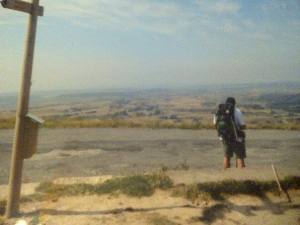
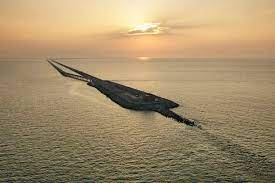





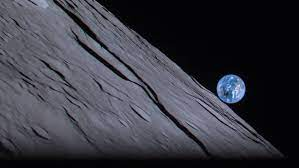


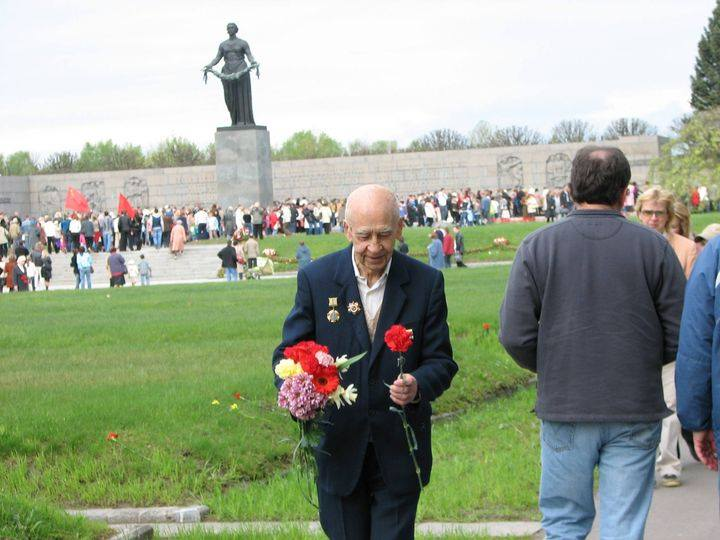







 a view from this wilderness