Grateful

Peter Trimbacher’s Castle

Let me tell you about last night:

An old friend I have not seen since the mid-eighties contacted me. She was just a friend, but she happened to be part of one of the most significant decisions of my life. I was living in Massachusetts, and we briefly worked together. She told me at the time about a man who owned an eight-hundred-year-old castle in Austria. She was going there the following summer to do housekeeping in exchange for her stay. I wrote the man, Peter, and inquired as to other positions, thinking a summer working in a castle built around 1100 just might be what I needed. He said yes, offering me a bartender job for the summer, and having told him my journalism background, asked if I’d help him edit a book he was writing about the castle.

So it was decided. We bought one-way tickets to Salzburg and decided that after that summer I’d wander south through Europe and on to visit a friend in Senegal. And on. And on. I moved to Pennsylvania to live rent-free with an old college roommate so I could save money for the trip. I even got a job at Hotel Hershey to save more money.

Things happened.

I didn’t go. I called my friend and told her I had decided not to go. She was more than a little upset, to be sure. I had reasons, and I don’t regret not going, but it was significant. The following summer came and went and she did go to Austria. And the following fall she called to tell me all about it. That Thanksgiving, she drove to Pennsylvania where I was then watching an estate for some friends who were spending the holidays in New York City, and we had a fun Thanksgiving Day, and she told me how it was a good call that I didn’t join her.  

Last night for the first time in ages, she contacted me and we remembered that Thanksgiving. Her and her husband still live in Massachusetts, and they’ve also traveled around the world since then. But that Austrian trip was the first jaunt, and we talked about her return, and that holiday in November when she clearly forgave me for bailing on her.  

Crazy. Am I sorry I didn’t go? Yes, it haunts me that I didn’t go. Am I glad that I stayed? More than anything else in my life I’m glad I stayed.

Life is like that, and it’s taken me since then to understand what it means to be grateful. I’m not thankful for some things in my life that changed the course of my existence, but I’m grateful for where those things brought me. They’re not the same thing. No kidding, I never really truly understood. I’ve always been thankful for so much, as I’ve pretty much had so much to be thankful for. But grateful? I’m just beginning to understand.

I sat this morning on the deck at Café by the Bay in the village, swirls of dry leaves moving through with the breeze off the water. The place isn’t on the Bay; in fact, it is a mile or more away, but the breeze moves through town this time of year, and this morning I sat on the deck with the leaves lifting and falling, and I drank my cappuccino, and in my mind ran through a list of things to worry about. It’s long.

It seems more common these days to be distracted by life and its happenings. People you love are ill, or they’re pressing against the edge of unhealthy, anyway. Others have fallen away from keeping in touch, and with the holidays imminent, you wonder how they’re doing, about the changes that find us here, and about the mistakes we’ve made.

I’d like to do the last few years over again. Honest to God, I need to do the last few years over again. And I’d like someone to call me up and say, “Hey, let’s try this again. What do you need to get it right this time?” But life simply doesn’t work that way. So what is to be done?

This:

I’m grateful for being here, now, on the deck of a café, drinking coffee and feeling the beautiful autumn breeze on the back of my neck, talking to neighbors heading in and out, making notes about edits I need to make in a manuscript.

I’m grateful that I just hung up the phone with my ninety-year-old mother, and we laughed, talked about the weather, talked about my cousin’s chickens running through her kitchen.

I’m grateful that my life really is a circle, and all that was true nearly forty years ago is still true and present and alive and such a part of me.

I’m grateful that my son is a reflection of my father, the same gentle spirit, the same deep, deep kindness, the same subtle sense of humor. Grateful that on his way back here from Richmond this morning he is stopping at Country Donuts for some toasted coconut fritters for me.

I’m grateful for so much.

I’m thankful for what’s ahead: more Ireland, more Spain, more western New York and the familiar reaches in Florida. I’m thankful for people’s forgiveness, for those who make excuses for me, for those who understand the subplot behind my eyes.

Recently I wrote about students who have died through the years. Today I’m thinking about the ones who kept going; those I can’t thank enough for tolerating my humor and arrogance as we moved through semester after semester, only to send me a note to let me know how they’re doing. The ones who speak up; hell, the ones who show up. The ones who stop afterwards to talk, who call me up and ask questions, who seem to understand the smallest of gestures have the biggest effects.

I’m grateful that I have siblings who have the same sense of humor, thankful they’re much smarter than I am, thankful they “don’t confront me with my failures.”

I’m thankful for the way the trees hang on to those yellow leaves so much longer than the rest, brightening up the sky, filling up our senses and reminding us we’re alive, and we may wake up tomorrow and begin again.

I’m more than a little grateful for my friends. I’ve known some for more than forty years and still can pick up the phone and call anytime and, in the words of Harry Chapin, know that they “see where you are, but they know where you’ve been.”

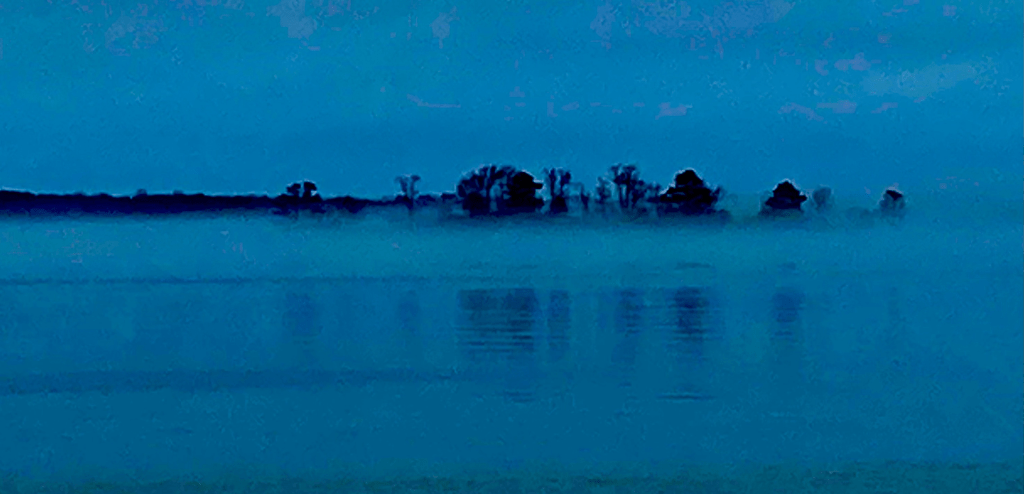
I’m thankful for the way the river keeps running past.

For the way the sliver of a moon reminds me of my insignificance, and the brightness of Vega reminds me of my own light that needs to shine on this all-to-brief journey though nature.

Happy Thanksgiving.

“Friends, I will remember you, think of you, pray for you.

And when another day is through, I’ll still be friends with you.”

–Bill Danoff

The Gardens at Hotel Hershey

A Good Stretch of the Legs

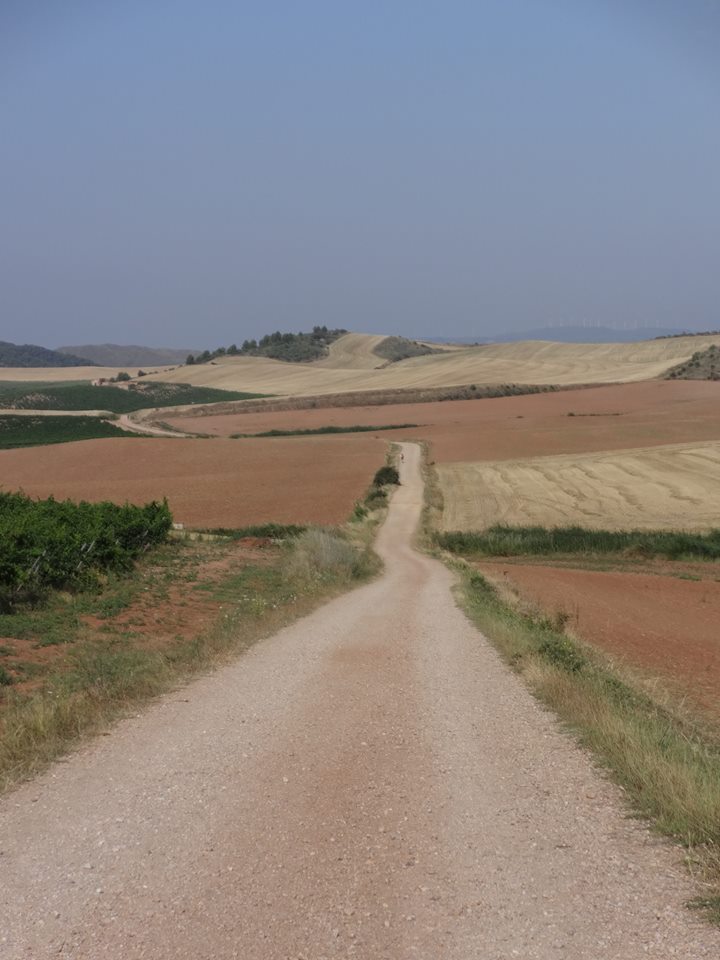
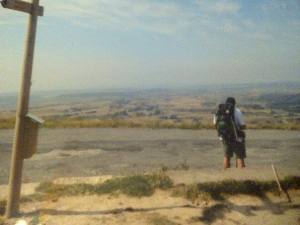
In the summer of 2025, with hope and luck, I’m going to return to the small French village at the foot of the Pyrenees, and I’m going to start walking. Again. I’m going to slow my heartrate down to the length of my gait, and my world will stretch no further than the next kilometer. I’ll stop in thousand-year-old chapels and centuries-old pubs. I’ll drink café con leche every morning along with fajitas patatas, a glass of juice, and a baguette in my pack for the moments of rest, to share with others while we talk about where we’re from. In the afternoons I’ll find an albergue and sit at a picnic table with a bottle of rioja and a small meal, and new friends from Italy and the Netherlands and Nigeria will join me. It’s what we do.

And like last time, I’ll tell stories, and we’ll all laugh, and I’ll be in a fine mood the entire time. Just like last time. And it will again be genuine, not some façade forced by a preoccupied mind.

It is what I should have been doing for decades. No kidding. My life would have been drastically improved had I discovered Spain ten years earlier. I suppose each of us eventually careens into life as it should be. It simply seems most people I know collided earlier than me. I read once we all live out all periods of our life; it’s just that not everyone lives them out in the same order, some aspects delayed for one reason or another. The part where I unearth what brings me peace? Very recently. But that’s no surprise; at least not to me.

***

For far too many people, life can sometimes feel like everything changes at once; as if the Gods conspire to let all the difficult aspects of life accumulate until their collective voice announces, “Now!” and all the old ways are no longer relevant, the old friends no longer available, the old hopes and dreams seem adrift on some frayed tapestry of old expectations. And you feel just past the point where good times still seem plausible. It is the proverbial edge, and many people balance on that jagged edge on a regular basis.

Such is depression. Such is the crash of anxiety. Random afflictions are certainly less random when the smallest of circumstances consistently pinch that nerve between “everything’s fine” and “everything is going to fail.” I’ve been this way before. I’ll be this way again. A lot of us have, right? The “this too shall pass” and “it is what it is” lectures do not work.

You attempt to tackle the entire list of worries, but you know you’re never going to pay all the bills, you know you’re never going to finish the projects, and you are absolutely convinced you’re never going to get the car fixed, the oven fixed, the world fixed. You suffocate in the wash of world failures too, not just your own. So you seek some form of peace, some sense of escape, no matter what it takes to find it. Reason recedes to almost a suggestion, and what seems irrational and drastic to others can somehow make perfect sense. You don’t so much “decide” anymore; and it isn’t about “giving up.” Whatever happens next is simply the only exit in what became a cattle chute void of options. No one gets it. They think you should have simply “gotten over it.” They say, “Had we known.” They say, “What a waste.” They say, “We had no idea.” “We’ve done all we can.” “I didn’t know.”

Of course not. The depressed, the anxious, the one with deep, inescapable demons is more likely than not to make you laugh, get excited about plans, is always there with a sharp and funny story. No one knows; even they don’t know.

***

St. Jean Pied de Port, France, to Santiago de Compostella, Spain, is just under nine hundred kilometers—roughly five hundred miles. If you drive, you can make it in just about eight and a half hours. If you walk it takes about six weeks. I’m a walker.

I’ve been there before. I’ll be there again. It’s what psychologists call “the value of anticipation.” We all need something to look forward to. It can’t be out of reach or near the realm of fantasy. Yet it can’t be so obtainable that achievement becomes routine. As Lily Meola sings, “It’s not big enough if it doesn’t scare the hell out of you.” Yet it can’t be too big. Yeah, life for the afflicted can be a juggling act. In broad daylight you can keep those balls going, hands down. At three a.m. there’s a tendency to hear them all crash on the floor and scatter like delusions.

Welcome to how the world is for more than ten percent of the population. They must find their own truths, despite what others expect. And they carry their own baggage filled with failures and misunderstandings like backpacks, and the best anyone can hope to do is put them down and move on. Here’s the thing: the worst part of some psychological ailments is often the inability to see past the next hour, beyond the next mile, yet the ironic solution to those very same inflictions is to decidedly and quite purposefully not see past the next hour or beyond the next mile.  

You see, when you look too far down the path, and your blinders keep out the light of hope, there is no suspense to keep you turning pages; there is no reason to anticipate the resolution. Life is anything but dynamic.

***

Basque country is my favorite part of the Camino. Navarra. It runs from St Jean south to near Pamplona, and you pass locals who still speak this rare language, and all of the ones we met before, all of them, were friendly, helpful, and hopeful for your journey, as if they each have some personal stake in your every step.

The first day is the hardest. Straight up hill for twenty miles. No kidding; a forty-five-degree angle at times. After that it levels off to just mountain hikes akin to the Catskills until Galacia, where some climbing is involved. But by then, a month later, the body doesn’t mind and the mind doesn’t doubt anymore. And the vistas and the visitors from all over the world keep your mind occupied, and after a week south of France—less maybe, four days—an unhurried pace takes over, and the entire world is arranged by where you’re going and where you “might” stay that night. Somewhere just south of Pamplona, just as the Camino bends to the west, you’ve shut down the part of the mind that begs for self-criticism and doubt, and you feel more free, lighter, but you can’t define it, not exactly. You just know it is easier to breathe; it is easier to sleep. All of the complications which haunt you dissolve. The ghosts recede.

***

Of course, our normal life can be a journey with some “hypothetical destination.” But a journey with some semblance of hope can be the difference between feeling alive and feeling dead all the time, where having an ordinary day is an extraordinary achievement.  

How many of us make plans just beyond our reach, a little past our current condition? It truly might be what saves us. Some of us anyway.

It’s well past time to change the narrative.  

It’s time to go back to Spain.

Chronology, Two

Great River

We had a dog. Sheba. Briefly. She and my mother were terrified of each other. 

And a pool in the back on the edge of the woods where honeysuckle grew, and where we built a small fort out of scrap lumber repurposed from building sites down our road. Before the pool went up, my siblings and I had to pick the stones out of the dirt so they wouldn’t rip the liner. In summer we barbecued in the stone fireplace on the patio and swam with visiting cousins. When I smell honeysuckle, I remember that pool. I remember working on the fort with my friend Eddie who told me one night before heading home when the streetlights came on to watch out for lunatics. I said I didn’t know what a lunatic was, but he left. A few minutes later when I walked past the pool, he jumped out and screamed and scared me to death. We laughed and I called him crazy, and he said, “that’s a lunatic.” When I smell honeysuckle, I think of Ed.

We were protected by our parents’ forcefield, and secure in our innocence. But it wasn’t innocence, was it? Everyone was in tune then; the music did that. It kept us informed about what was going
on in the world; in Ohio, in Vietnam, in Watts; indeed, for what it’s worth, the music was a constant reminder that there was something happening somewhere, even if what it was wasn’t exactly clear. We knew all the words, and the words were ours to build with in the woods, or hike with along the Bay, through Timber Point Golf Course, and along the river to the reeds where an old duck blind was our morning refuge.

Geez, we were twelve. When you’re twelve everything is brand new and it’s all yours, and nothing, absolutely nothing isn’t feasible. That was how life was in Great River in the late sixties and early seventies. An idealistic village surrounded on three sides by an arboretum, a state park, and the Great South Bay. The fourth side was the main road, Montauk Highway, but it was so far removed from us we could wander the woods and streets for hours and never consider heading that way. Only at six pm when Walter Cronkite arrived did news like Vietnam sneak into our consciousness.
At home, Watergate remained a presence because my sister was a history major focusing on politics, and she constantly quizzed me about the players. “Who is John Mitchell?” “Who is G. Gordon Liddy?” This wasn’t history though; it was current events during my junior high years. I had no way of knowing that a half dozen years later I’d sit with Liddy alone in an office at college. When I hear about him now, though, I don’t think of our conversation. I think of our kitchen table in Great River and my sister.  

Mitchell was the Attorney General.

Dad grilled Italian sausage when family from the city or friends from the old neighborhood came over, like Joe and Rose Fontana. Or when cousins came. They didn’t come too often though, other than those who lived four miles up the road. No one back then would make the drive from Nassau County ALL. THE. WAY. OUT. to the South Shore of Suffolk County. Forget about it. Recently I looked it up. The distance from the inconceivably far reaches of my old neighborhood to the new house in Great River was a pilgrimage of twenty-two miles. Seriously, that’s how far it is now from my house here at Aerie to the first stop light. Back then it might as well have been in Kansas. We weren’t going back.

We never do go back though, do we?

Every Thanksgiving my aunt and grandmother would visit. My dad’s mom would play some piano, and Mom would be in the kitchen making everything you’d imagine she would make on Thanksgiving, while Dad and my brother watched football. Sometimes, especially in the early years in the house, my brother and I would toss the football, or tackle each other, or play whiffle ball. We built the first fort together; an outhouse looking thing. And we played Risk and some sports card/dice game about baseball I can’t remember anymore, but I can picture perfectly. We knew everything—absolutely everything—about baseball. We moved in the same year the Mets moved to first place, and everything in life was working. The Jets were winning; the Rangers and the Knicks were winning. Armstrong walked on the moon. And I learned about the music being played just upstate at the village of Woodstock.

We were one of the first homes on this road, and very quickly other twelve-year-old’s moved in. We’d walk to the deli and the post office. We’d walk to the docks at the Connetquot River. Everything was improving.

That’s just the way it seemed back then.

The way friends came and went, and I don’t remember—I mean I have no recollection at all—of ever being inside unless it rained, and even then. We simply stayed outside. Steve and Todd and I played baseball, and Eddie and I marked every trail of Heckscher State Park. For years we stayed outside, even in winter, bundled to the bay breeze. I loved how we were then. Early in the mornings in spring and fall I could lay in bad and hear the fog horns of the fishing vessels headed out toward Montauk or across to Fire Island.

But it was baseball that dominated my summers. The way we always played in Steve’s backyard, and the fence to the Campbell’s yard was a homer. The way I couldn’t hit to save my life in little league, but there on the property I slammed so many balls over that damn fence I felt like Ed Kranepool or Tommie Agee. The way we never tired and we’d quit mid-day and pick it up at twilight. The way even then I’d walk back up Church Road and through the side door to the kitchen where we always, always, had dinner together when Dad got home. The way Cathy would quiz me. The way Fred would talk about what interested him at school and about his trip to Mexico, or to the camp out past the Hamptons that one summer. 

When we prepared to move south, my friends all signed a baseball. Steve Delicati, Todd Long, Craig Long, Camille Villano, Lisa Villano, Frank and Richie and Tom and Paul. And Eddie, who never liked baseball.

When people ask where I’m from, I never know how to answer. New York? Virginia? Deltaville? When they ask where I grew up, though, I say Great River. Because we moved there when I had just
turned nine and we moved out; well, I suppose part of me never did. I can picture every square foot of that house, can name every road in the village, remember the trail that ran along the back of the town to the creek, and remember where the soft spot in the fence was at the arboretum that allowed Eddie and I to explore the old Bayard estate.

Sometimes when I think of that town I imagine if I were to drive the four hundred miles north to the end of the Southern State Parkway, and head down Timber Point Road, make a left on Leeside Drive, and another left onto Church Road, I’d see us all, young, laughing riding monkey-bar bicycles with banana seats, and chasing time like it was never going to end.  

That town is in my blood, and just a couple of years ago, Eddie and I made plans to return there to eat at the old Great River Inn, which had become an Italian Restaurant. That was the plan, anyway. Maybe someday I will. I’ll park outside the old house and walk, wonder what happened to the old folks, what happened to my old friends, and I’ll get a table in the back and raise a glass to my childhood, to growing up, to innocence and coming of age. And to Eddie’s memory.

We will always be twelve-years old, Eddie and me.

The Dead

I guess the first was Karen. Karen was from Pennsylvania–this was quite early in my career and I had just moved back to the Beach from Pennsylvania myself, so I could relate to her writing. She spoke in class about adjusting to being away from home for the first time. Her husband was military and they were stationed here. Her paper was about the changes. I sat on my couch and read about her excitement to start life anew and all the places they would finally see together like they planned. She took a job–not because she needed the money, she wrote–but because she wanted to do something. So she took classes and got a new job as a server at the North Witchduck Inn in Virginia Beach. She got lucky, I read; another worker had been fired and she filled the opening in the place not far from their home.

I had just put her paper down and moved on to the next when the phone rang and it was the provost of the college. He wanted to tell each of her professors before we heard it on the news. The fired server and her boyfriend returned to the North Witchduck Inn and shot four people in the back of the head, execution style, including Karen. For a few years I held on to that paper. It reminded me how in a class filled with “I’d rather be anywhere else but here” students, someone was glad to be present, to be truly present.

Then there was Mark. Mark stopped me in the library and asked if we could talk. He had just received orders he was headed to Kuwait for the first Gulf War, and he was told to get his “affairs” in order. “Talk about telling you you’re going to die,” he said. I assured him everyone going overseas in the military is told to make sure their affairs are in order. We laughed a while about nothing; really nothing at all. The smallest of things that day were funny, the simplest of moments were beautiful. We walked to his car and he showed me a picture of his son. We talked about how when he got home our boys could play together. I don’t remember Mark’s last name, but I will always remember his face.

Tricia and I used to talk at the copier every day. We talked about music and travel. We talked about food and how the smell of cinnamon buns is better than the aroma of coffee. She had braces and said her students haven’t said anything about them yet, but she was certain they noticed. I remember her asking if I noticed her braces and I laughed out loud, right there, like the laughter was my answer, then I said, “Well, T…yeah! They’re right there! But they’re beautiful. I can’t imagine you without them. They’re just so you!” We laughed a long time. T got depressed easily and I could usually tell from the faculty workshops about recognizing various issues with students when she was in a down cycle. The dean came to me and said Tricia’s medicine was messed up and her husband found her hanging in the kitchen.

Stay with me. Please.

Then there was Rachel. Dear, beautiful, full-of-life Rachel. On a study abroad in St. Petersburg, we walked freely down Nevsky Prospect, the Fifth Avenue of the city. I was right behind Rachel on the crowded street so we were all pretty close to each other. As usual, she was engaged in taking pictures and writing in her notebook, jotting down “Kazan Cathedral” which was just to our right. Of all the people I’ve traveled with—numbering well over four hundred—Rachel was by far the most diligent about drinking it all in, making notes, taking countless photographs. She always smiled anyway and could make everyone around her laugh, and there on the other side of the world she was in her element. She absorbed every single moment. In the evenings she’d come into my room and show me what pictures she had taken that day and double-checked their locations. Then we’d sit and talk about her impending motherhood, what it’s like being a parent—my son had just turned ten. We walked past Kazan Cathedral; she was absorbed in her notes and stepped right off the curb and into the cross street where a bus was ripping past us at forty miles an hour. I was close enough to Rachel to grab her hair which she had pulled back in a pony tail, and I yanked her back into my chest, and the bus was close enough to knock her bag out of her hand on into the street. Those around us screamed and Rachel turned back somewhat unaware of what had just happened. “He saw me,” she said, to which I replied, “Yeah, he did. He just didn’t care. Pedestrians don’t have the right of way here.” We picked up her belongings and in no time she was back into enjoying her tour of Russia; my heart didn’t settle down for hours. The last time I saw her she brought her daughter, Shaylyn, to my office. This beautiful woman with her beautiful little girl was so excited to move on with her life; she’d be a single mother, she told me, and hoped she could set a good example. Then we remembered the bus in Petersburg, laughing at the nearly tragic outcome, and she assured me I had saved two lives that day. I laughed and told her I was just glad she hadn’t cut her long, curly hair. “Yeah that hurt, by the way,” she joked, grabbing the back of her head.

Her daughter has her eyes.

Not much later, in May of 2005, the little girl’s father went to find Rachel who was hanging out with some friends at their apartment. When she refused to let him in, he cut a hole in the screen and climbed through. Rachel ran out the back door and called 911. Her ex walked through the house and shot four people killing two of them before he found Rachel hiding outside. She had called 911 and the operator had to ask several times what was going on, but Rachel was quiet, until finally she replied, “He saw me,” and her ex put his gun to her skull and shot her in the back of the head, killing her instantly. This one breaks my heart.

I sat in class last week and watched my students do group work. A few engaged students carried the rest, but more than half the class kept reading their phones, staring out the window, messing with their hair. “What are you doing here?” I asked in a general fashion. They were quiet. “What are you doing here?” I asked again. They just stared at me. I remembered the rule of threes: First time they hear it; second time they think about it; third time they start to understand it, so I hit it once more: “Seriously,” I said. “What are you doing here?”

They remained quiet.

Bobbie slipped slowly inside herself. First alcohol, then drugs, then homelessness, until this beautiful woman who became a neonatal nurse was found dead next to a dumpster. Carrie OD’d and ended up in a brain center where she kept telling me the same joke when I’d go visit to talk to the patients: “Knock Knock. Who’s there? Cargo. Cargo who? Cargo beep beep.” We’d always laugh and she’d keep laughing long after I moved over to Dave who was learning to walk again. Carrie was a biomed major, graduated high school early and had applied for Drexel University to transfer and had just been accepted. The stress got the better of her and she “used a little something to keep her nerves in tact.” Dave was found in the garage. He brought the dog.

“For the next project,” I told my students before leaving on a reading trip to Ohio two weeks ago, “I want you to tell me what you are doing here. Include your short range and long term plans. Include your hidden ambitions, your unspoken dreams, that secret that can ignite your internal motivation. Tell me what you hope this moment looks like when you look back five years from now.”

They stared at me. No one, not one, not a single student: NOT. ONE. TOOK. NOTES.

I asked Geoff, who bares a stringing resemblance to Johnny Depp, and is someone I can usually count on to keep up, what they need to do. “Write about what we’re doing here.”

“And?”

“And…be ambitious with it.”

I repeated what I had said, asking them to write it down, which they all did–on their phones. Fine. I looked at a woman on the right side of the room. Sometimes I hope to see Karen. Or Rachel. I asked her the name of the woman immediately next to her who she had been talking to during group work for a half hour for the fourth time this semester, and it was already late October. “What is her name?” I asked. She looked out the side of her eyes as if the woman wore a badge.

I stared at them. “What are you people doing here?”

I am haunted, some days. Not by the dead or their memories; not by the tragic loss of life and the repulsively early departure of far too many souls–a dozen more of whom I’ve left out of this. I am haunted by how easy it is to not live at all. I stopped at the door. “If it makes you feel better, most of the time I have no idea what I’m doing here either.”

They laughed, and I thought of Bobbie. They laughed and the woman introduced herself to her classmate of ten weeks, and I thought of Karen. I thought of Rachel and Trish–adorable Trish. They laughed and I realized not every moment should be one of ecstatic joy. But we certainly should be closer to life than death, shouldn’t we?

Oh, and there’s Kevin, who simply disappeared, and Charlotte, who just three weeks ago tried to kill herself. Charlotte is transitioning and has just about as little support as a person can get. I leaned against the door jam and asked if they understood the assignment. So I asked again, knowing, waiting, certain someone would give me the answer I absolutely knew they all knew, and someone finally did.

“What are you doing here?”

“It’s required.”

I smiled. “No. It’s not,” I said. “You’ve been deceived. Certainly to attend this college, to graduate, this is a required course. But nothing is required of you anymore. You’re not children. You can tend bar in Key West. You can hike across Europe. You can be anywhere, do anything, and you, for some apparently unknown reason, chose to be in my class on this day at this hour and sit and stare at your phones even though you could be anywhere else.” I laughed at the last part. “Anywhere!”

“With that in mind,” I added, “What are you doing here?”

Oh, and Bo, who got killed when the car he was riding in hit a tree on the way to Florida. And Eddie. Dearest, kindest Eddie. And Marcus. Jamal. Chris. Joe.

Karen wanted to have kids. Rachel wanted to be a teacher. Mark wanted to come home and bring his son out for ice cream. Bobbie wanted to dance.

All she ever wanted to do was dance.

Listen:

https://www.youtube.com/watch?v=Kg-Qdrr3XSk

Au(tumn)

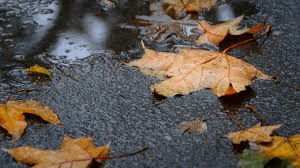
I’m home and the leaves changed and mostly fell while I was away the past week. I love traveling in the autumn, especially in the north, this time western Maryland, Ohio, West Virginia, and the mountains of Virginia. Such colors I’ve rarely seen anywhere else, like a painter’s palette, like a quilt. Like fall.

“I lived in a yellow house, like butter,” Van Gogh wrote of his place in Arles where he did his boldest work, filled with colors and tube paints pushed onto the canvas like toothpaste. When we speak today of his work, it is from Arles we mostly mean.

I, too, lived in a yellow house, like butter, along a country road running past a reservoir in central Massachusetts. Next door was a tall, white church with a cemetery, and the road wound up through the small village, past the Deacon’s Bench Antique Store, past the nursing home, up into Sterling and past the cider mill. It ran up the mountain, winding into the village of Princeton on Mt. Wachusett, where in autumn I’d hike to the summit and look across the New England tapestry of orange and rust, stretching clear to Boston, to New Hampshire, and west toward the Quabbin Reservoir. The crisp air, like yesterday in West Virginia, cleared my head, pushing away fears and anxiety. “It’ll be fine,” it whispered. Well, it won’t, I thought, but for now it is, and sometimes that’s enough.

I wonder if I’m starting to enjoy autumn more now than summer because I’m getting older.

The trail behind the house is covered beautifully in leaves that no step, yet, has trodden black, though signs of deer are evident. They bed down in a holly grove at the far end of the property and walk down toward the patio where the deep, heavy birdbath is apparently now theirs. The front path remains mostly clear as it runs in such a way and is wide enough for a soft northern breeze to keep the leaves to the side. But not always, and certainly not after a good, steady October rain like last week before I left. There’s something so immediate about autumn.

It is the time of year my father died. I read somewhere that other than the holidays, autumn is the most common time of year for elderly deaths. Younger people die more in Summer, which makes sense for the numbers out doing things they probably shouldn’t be, and January through March has the highest rates of suicide.

It’s odd how so many people come to life in autumn when nature is slipping away for a while, ducking behind the guise of death, returning half a year later, slowly. For now, it is beautiful, and the colors reflect in the duck pond and out on the river. They shine back at the hills I walked around a few days ago, and they remind me that for now, just for now, we’re all noticing the same beauty. It’s incredible that people throughout the autumn world all marvel and gaze at the ripple of color coming down the tree line, the scatterings of hues under oaks and maples and birches, and how the white trunks stand forth as the control group so we can see just how fine a job nature did.

I used to get depressed in autumn, feeling the summer slip away, the time of life and the sun on my back. It always, absolutely always, brought me to life, so I pushed the fall off as much as I could, perhaps anticipating what happens after the fall, in the dead of winter when hope is often difficult to unearth. But now I find in autumn something reassuring. Maybe it is simply that even growing old and letting go can be done with absolute beauty and grace.

At the end of The Lion in Winter, Geoffrey wonders what difference it makes how a man falls, and Richard remarks, “When the fall is all that’s left, it matters a great deal.”

Nature knows how to make an exit. She knows how to hold her own. I suppose her last green is gold as well as her first. I am surprised I have been so resistant to change. Maybe I’m getting tired.

Or maybe I just miss my yellow house near the Old Stone Church on the road to Wachusett.

“The Old Stone Church” where I walked nearly every day for three years. My Yellow House is just off to the left of the picture. No, I didn’t take this shot.

Departure Signs

Some stories are difficult to write about for a variety of reasons. This falls into that category, but not for the reasons one may conceive, such as “too sad,” or “too morbid,” both of which I write without much trouble.

No, this is about diction and sound. It relies heavily on the reader “hearing” particular words phonetically so one can understand the misunderstanding.

Here’s what happened:

Many years ago I drove my parents to Norfolk International Airport for a flight to Islip, Long Island. It was early, just after six, and nothing was open at the airport food court yet except an “A&W Root Beer” joint serving breakfast biscuits and coffee. Dad was still tired, so he and I sat at a table while Mom went to get two coffees and two breakfast sandwiches for them. I opted out.

I could hear my mother repeating the order several times to the Filipino woman working alone behind the counter, and frustration grew between both of them. After fifteen minutes of Dad wondering where Mom disappeared to, she returned with a brown tray with their order.

“Somethings not right,” she said.

“Why?”

“It came to $27.50.”

“Airport food is very expensive,” my father chimed in, reaching for his bacon, egg, and cheese biscuit.

“That sounds wrong, Mom.”

“I couldn’t understand a word she said.” And at that, Mom grabbed the sandwich out of Dad’s hand, put it back on the tray, and walked to the counter.

“They’re speaking Spanish. No wonder.”

“No Dad, it’s Tagalog.”

“Why don’t you help your mother. You speak Spanish.”

I walked to the counter. The woman looked at me. I simply repeated what my mother had said from the start, that the sandwiches and coffee should have come to just over $8. I swept my hand across the plate and showed her the receipt for $27.50, and she put four more sandwiches on the tray. I took them off and asked if she was the only one there. She walked into the kitchen.

Exasperated, I put my hands on the counter with my head down and said, mostly to myself, but my mother could hear, “We’re not going to get anywhere unless we speak Tagalog.”

My mother stood up as if she had new life breathed into her. “Well! Then let’s speak to Galag. Is he the manager?

The woman returned with an older, Filipino gentlemen, and my mother, very politely, told him, “I’m sorry but we paid almost thirty dollars for sandwiches that only cost about eight, so we’d like to speak to Galag.”

“Mom…” (it was hard for me to speak as I was laughing)

“I think my son here knows him, but we’d like to speak to Galag immediately.”

“I don’t understand!” the man said.

“Is Galag here? We’d like to speak to Galag please.”

“I speak English,” he said to her, and then, just as I was finally calm, added, “I’m sorry but it takes quite a while to speak Tagalog.” I lost it when Mom looked at me and asked when the flight leaves and if we had time to wait for him.

The man, figuring out the problem quickly, refunded all of Mom’s money and gave her new sandwiches for free. On the way back to the table, she turned to me and said, “How do you know Galag?”

Dad had wandered across the hall to Starbucks which had opened by then.

I was at Mom’s this week. We talked about Long Island, and about Dad, who passed away eight years ago on October 21st. I think of him when I’m in airports, or when I see a payphone. He had an 800 number at his desk back when the only way to call home was “long distance,” and it cost a fortune. So throughout my techless twenties, I was able to talk to Dad several times a week. I’d call from the Arizona/Mexico border, from New England, New Orleans, and everywhere in between. He was a quiet man with a deep sense of humor. One of my biggest regrets in life is I am not more like him.

In their later years I brought them to the airport or Amtrak more than a few times. Once, we were on the train and I disembarked just before they left. But it turns out my officemate Tom, who knew them, was on the same ride north and kept them company the entire way. Another time I brought Dad to some flight somewhere, I forget where, but we had a drink at Phillips Seafood Restaurant in the airport and talked about travel and books and plans. When we talked like that I felt close, of course, but also more connected; as if we shared something larger than ourselves. I could always tell when he was thinking about travel, though he rarely went very far. He didn’t miss a chance to talk to his kids about it, though. The signs were there to show me where his mind was; the way he liked to ask where I was going next. The way he listened so closely, responded always with such encouragement.

The first time I flew in my life I was fifteen. Dad had a convention in California, and Mom refused to fly. So Dad and I dropped her off at the Amtrak Station in Norfolk, played golf, and went home. Spent the next day around the house and then we went out to dinner together. The following day we flew to Los Angeles business class—my first ever flight—with dinner menus and a large screen on the wall so all the passengers could watch a movie together. It was Rooster Cogburn with John Wayne. We arrived in LA, rented a car, and drove to the train station and waited for Mom to arrive. We laughed about that for years.

One time we remembered that story when he brought me to the airport to fly back to Buffalo for college. He said he couldn’t stay, so he shook my hand and left. I got something to eat, wandered around, found my gate, waited, boarded, and the plane taxied out to the runway.

It had been about ninety minutes, but when I looked out the window, I saw Dad at the observation parking lot standing near his car, waving.

“My life has been a poor attempt to imitate the man.”

–d fogelberg

Me with Dad at Mahi Mah’s Restaurant in Virginia Beach (photo by Michael Kunzinger)

Passing through Nature to Eternity

there’s a house in there, swallowed by the growth

It’s raining, and the air is cooler than it has been, which brings with it, for me anyway, a soft undercurrent of sadness. You see, I love summer. I love the heat and the stillness of it, the hot sun on my face and shoulders, the sand under my feet, the water—oh the water. So when I wear long sleeves or shoes with socks, or when the water can no longer be waded into for no reason at all other than slant of earth and distance to the sun, I get melancholic (as if listening to Jackson Browne right now might not already be responsible). And today was like that, but more so because of the rain.

This week’s work involves adding random details from my younger years to a one-hundred-and-eighty-page manuscript to set a sharper tone to a time that was above description, beyond anything that could be limited by diction. This editing stage sends me back to a place I would, both at once, relive again in a heartbeat and never want to think about in my lifetime. But it was so long ago I have trouble remembering some details and I get lost in the weeds of long ago. So to clear my head, I went for a walk to keep myself present, keep my mind on the here and now. Rain can certainly do that. This can be a Herculean task at times—keeping things clear. More so for me when the air is cooler, and the sun is not so hot anymore. It made me realize how much simply fades from our lives if we stop paying attention to it.

Writers have various ways of dealing with ghosts. Some watch Pirates games, some watch movies. Some drink and some play with their dogs in open fields. I walk.  

Down the road is a track of wooded land with an old colonial house. At one time, even since I built here twenty-seven years ago, the house was completely visible and well admired. It sits recessed on the front edge of beautiful, forested land with hardwoods, which this time of year are starting to show their colors. The house is white with a wrap around porch, hedges, and a front lawn more akin to a rolling, green field where deer gathered every day at dawn and dusk to sip the dew. I loved walking by and think about sitting on the porch, drinking tea on a day like this, watching deer and listening to something gentle, like piano music, while rain kept meter on the porch roof.

You can no longer see the house. The front lawn has grown deep in weeds and small trees after just a half dozen years of no one caring for it. Nature has reclaimed the entire property, and the house, if you walk up the no-longer-navigable driveway far enough, is covered in vines and mildew. Several porch slats are caved in, and while the windows remain in tack, portions of the siding are simply gone. I don’t know who owns the place, but the man who rented it and lived there with his dog has gone back to Richmond an hour from here and, presumably, has no connection to or obligation for the place. For all I know the owner is dead. That happened elsewhere nearby. One house not far from here has been so reclaimed by nature it is absolutely impossible to tell there is a structure there except for a slight glimpse on a sunny day of a car bumper and an old boat appropriately named “Prozac.”

It happens sometimes when there is a lack of heirs in a community where restrictions are limited and property size is usually somewhat sweeping. The once lived-in and celebrated home is a house being swallowed by the earth, as all eventually will be. It makes me wonder if Mars at one time had a suburbia which a billion years of burning sun and negative-Kelvin ice storms vaporized into nothingness. That’s what crosses my mind when someone doesn’t mow their lawn very often.

There was a time, though, when someone oversaw the construction of the beautiful place, measured twice and cut once, new owners backing up a moving van and carefully designing the rooms, children running up the steps to their bedrooms, leaning against the window on days like this to watch the deer out front. The place might have filled with the aroma of turkey in the fall, soft sounds of football from the television in the den in the back, with the double doors that looked out over the marsh to the east. Geese frequent the area, and from the porch the kids would have sat in the chairs when relatives visited and watched the birds land in the fields across the road.

The kids grow up and leave, for Richmond, for DC, for another place. The parents can’t take care of it as well as themselves, so they move to a smaller place in the village, or in with one of their kids, and the paid-for-house sits alone and silent. Taxes only run a few hundred a year, so they’re easily paid and then forgotten. Then they rent it to a man with a dog, but he leaves too, and the owners die, and the kids let it go, hoping to take care of it someday.

Or maybe they had no kids, like the Prozac house. It just sits there until nature, which always wins in the end, wins.

I wonder if I’d run through that entire scenario if it wasn’t raining. Autumn is proof, I suppose, like old, uninhabited homes, of the passing of time.

Back at Aerie, I sit on the porch, drink tea, listen to a football game, and can smell turkey drifting out from the kitchen. I have some planting to do for the fall—bulbs mostly, but the back trails have gone untended for far too long. I’ll do that, this week probably. The area behind the shed needs to be cleaned up as well, and I need to get an estimate on stripping and restaining the house; I’m way overdue on that. I don’t have the energy I did when I built the place twenty-seven years ago. Then, all winter long I came and helped stack the logs, met sub-contractors while my then three-year-old son sat watching his home rise out of the dirt. While the roofers worked or the electrician figured out how to install wires in a log home, he’d ride on my shoulders as we walked down the hill to the river and we’d talk about what we’d do here–a pool, of course, and a basketball net. We’d play football in the yard, and we’d throw the baseball, of course. Come that early Spring I built the inside; all the interior walls, the cabinets, the stairs, the rest. The rest of life was still a distant curve after a still-to-come lengthy journey, and this place was forever. Come spring, we moved in, and the wood smelled so fresh, plus outside honeysuckle and lilacs.

The leaves are changing colors early this year, and I can feel the fall in the chill of the wind. The bay breeze helps keep it seasonal for now, but the winds will shift soon to the north, shutting down summer completely.

I don’t mind fall; it is beautiful. My time in western New York and especially in central New England spoiled me for how intensely beautiful autumn can be. But summer for me has more hope, still holds just enough promise for everything to work out fine in the end. It is the time when we keep building our lives instead of stepping aside and letting nature run its course.

Does everything eventually bend the way of the once-white colonial? Is even Aerie headed someday to the condition of the Prozac house? We like to think not.

And anyway, for now, I am here, sitting and drinking tea. Tonight the fox will come by the side of the house for apple pieces, and the birds flitter between the crepe myrtles and the porch-rail feeders. Life is everywhere right now, even while summer fades. I can hear the geese headed toward the field.

The rain has eased, and I think I’ll walk again, down past the farm, past the unseen, recaptured house, and to the river, which will hold its own for eras beyond everything else, as waters have done since the start. But then I’ll need to cut the grass. If I have the energy, I’ll also trim the hedges.

“And while the changing colors are a lovely thing to see,

if it were mine to make a change I think I’d let it be.

But I don’t remember hearing anybody asking me.”

–John Denver

Aerie

That Which We Are, We Are

The Chesapeake Bay Bridge Tunnel

I immersed myself in outdoorsy stuff in my early teens; even beyond that. I wonder if something innate in my DNA attracted me like chemistry to the outdoors and references to it, or my environment and influences doused me with enough references to nature that my path was clear.

I listened to all of John Denver; knew every word to every song. Played his music on the record player and my guitar. At the same time, my friend Eddie and I spent every single day in the woods and along the Great South Bay at Heckscher State Park, nearly literally our backyard back then on Long Island’s South Shore. I watched movies like Jeremiah Johnson and television shows like Grizzly Adams. I wanted to disappear from civilization like they did; I wanted cabins like they had up in the Rockies, with a warm fire going.

The beach took hold of my Buddhist-bending mentality, combined with Dan Fogelberg and Jimmy Buffett, books by Joshua Slocum and Robin Lee Graham. Patrick O’Brien and the first paragraph of Melville’s Moby Dick, which reads:

Some years ago—never mind how long precisely—having little or no money in my purse, and nothing particular to interest me on shore, I thought I would sail about a little and see the watery part of the world.

Damn I wish I wrote that, wrote “Son of a Son of a Sailor,” “Rocky Mountain High” and “Sweet Surrender,” wrote home from some mountain in Utah not far from Redford’s “Sundance” ranch, long before the film festival was born. Instead, I played their music, watched the shows, and spent as much time as I could in whatever nature I could.

I think it was the beginning of me always feeling slightly outside of everything, just a little beyond understanding people. For some time I thought it was insecurity, but now I believe I just preferred the natural state of things, how perfect it is out there. I had the theme of Grizzly Adams down pat:

Deep inside the forest
Is a door into another land
Here is our life and home
We are staying, here forever
In the beauty of this place all alone
We keep on hoping.

Maybe
There’s a world where we don’t have to run
And maybe
There’s a time we’ll call our own
Living free in harmony and majesty
Take me home
Take me home.

Even that line repetition is a nod to Frost’s line “Miles to go before I sleep.” Exactly.

Is it true that everything we are we remain? Our hopes remain. Our dreams remain. And if we hadn’t lived them out yet, perhaps we still will in some other season? Maybe.

A part of my mind never truly grew up, I know that. A part of my psyche still holds tight to how I used to think when I was young, sometimes to the point I can be out for a walk and not even remotely feel my age, forget that my ability to do most of the things I could then is, shall we say, compromised. But we trick ourselves. I can still ride a bike; can still hike in high altitudes. In my fifties I walked across Spain. So who knows.

What happens is we forget. We let go of so much of who we were to make room for who we become. It is natural and beautiful and necessary, and we would not come close to being who we are today without who we were then, watching Dan Haggerty and his bear walk down the mountain, or listening to John Denver’s opening guitar riff on “Rocky Mountain High.” It’s in our blood. It has to be.

Unless, again, something in our blood attracted us to those things. Who the hell knows, right?

Ever come across a trigger that brings you back to those moments you had then? Maybe it’s a picture in some old album your parents kept; or a book you read. I have books like that, from then, I have a baseball my friends all signed when I left Long Island and it transports my mind to that small village, almost as if had I driven there today I’d see fourteen-year-old Eddie coming out of his house ready to hike through the park. We have so much more ability to manipulate time than we realize.

So, I had this job. One of my first, and the last one as a high school student. I worked on Seagull Pier on the South Island of the Chesapeake Bay Bridge Tunnel which connects Virginia Beach, Virginia, with the Eastern Shore of Virginia, known as the Delmarva Peninsula. I was thrilled to get hired out there for one reason: I’d be working “nearly” on the water, watching the sunset and rise, feeling the salt water on my face all the time, like Melville but without whales. I worked 10 pm to 6 am every night, usually alone, frying shrimp and fries, serving sodas to travelers with coupons they received when they paid their toll to make the crossing of one of the longest bridge-tunnels on the planet. Yes, they got a free Pepsi at the pier. It was pretty barren then—a diner-style interior with a few tables, a gift shop, and a pier filled with fishermen. In later years the restaurant took over part of the pier and became quite nice with a full menu. But back then it was just a quick stop for a basket of fried food, coffee or Pepsi, a few souvenirs and back on the road.

They tore it down a few years ago to expand the bridge tunnel.

I would drive my dad’s ‘72 Nova out there just before dark, park and stand on the rocks looking west up the Chesapeake, west, toward the setting sun. Then I’d head inside and cook, serve, clean, make coffee, talk to fishermen on rainy nights when they crowded the counter, talked to the rare customer who stopped for their free Pepsi or a burger at three AM. Then when my shift ended, or sometimes even before then if no one was there, I’d walk out on the parking deck on the east side of the building and watch the sunrise over the Atlantic at the mouth of the bay.

Just remembering that brings me such absolute peace I can, just for a moment, forget some of the minutia that I find myself up to my neck in. I remember, and I am there, can smell the salt, can feel the breeze coming off the water.

I love to remember.

One morning at about four, the door opened as I was just about to clean the grill. I glanced back to see who was coming in and it was a man by himself in a sweater. He had long hair, a thick beard, was tall, big, like a linebacker, and stood for a moment looking around.  I called to him to sit anywhere and he came right up behind me and sat at a stool, and he said, “Can you make me a burger on that grill before you clean it, my friend?”

Instant voice recognition. It was Dan Haggerty. Grizzly Adams himself. I asked and he said yes. We talked and he insisted I make a burger for myself as well, and fries, and we sat together and talked for an hour in the empty Seagull Pier restaurant. He was on his way to Florida and preferred to drive very late and very early.

Young people: This is before there was any form of a device with which I could capture the moment unless I happened to have my camera—a big device with film in it—which I didn’t. So we have those triggers. A baseball, an old guitar. Stories.

Today I received mail from my sister. My brother-in-law bought a new car, and in the old car, buried somewhere in the console or glove compartment or somewhere, they found three Free Drink coupons for Seagull Pier from one of their many trips south to see our parents in Virginia Beach.

She was discarding outdated coupons some toll clerk shoved at her with her change. I received a wormhole to a version of me that had my entire existence in front of me from a place I loved to show up and leave out in the middle of nature, where the sun set and rose again with my arrival and departure. What had for nearly fifty years become illusionary, almost some fiction from forever ago, suddenly seemed to happen this morning, and I felt younger, more alive.

I still head to the bay—same bay, ironically—to watch the sunrise; and to this river every evening to watch the sun disappear west into the Utah mountains. I still dream of riding horses across the Rockies. I still listen to Denver and Fogelberg.

If not, I know for certain I’d be a poorer man.

Everything we are, we remain. Our hopes remain. Our dreams remain. And while not all of them will find fruition, some might. Some just might. If not in this, then perhaps in some other season.

Perhaps.

Thanks Cathy and Greg, for not stopping for a free beverage

Awake

Originally published in the now defunct St Petersburg (Russia) Times English edition, as well as the collection Fragments. In honor of National Caffeine Day (September 29th).

Awake

Irina asked if I wanted something to drink besides water and suggested coffee. “Espresso might be a good idea, Bob.”

“No thanks. I don’t drink coffee.”

“You are an American and you don’t drink coffee?”

“Never have. The one time I tried it the bitterness was so bad I couldn’t swallow.”

“Oh! You thought it would taste good! That’s the problem,” she said, laughing. “Bob, you don’t drink coffee for taste.” Then she poured a cup, a regular sized coffee cup, filled with espresso. “Here, try espresso. It will give you some energy.”

I’d already been awake for nearly thirty-five hours including the flight from New York to St Petersburg, and at some point my body simply woke up again, as if the bright midnight sun and the over-exhaustion were sensors to start over. Still, my mind flat-lined and I sat in the café and stared at the wall expecting it to move or fall or something. This was a new level of exhaustion. Friends showed up one at a time, each ordering a glass of wine or a beer, sometimes just water. Without noticing I had finished my cup of espresso. Also without noticing, Irina filled it up again. When we were all there and made our plans to walk along the gulf during the few short hours of the midnight sun, one friend sitting close put her hand on my arm and said, “Bob! You’re vibrating!”

That was the moment–just after midnight–I discovered caffeine.

I needed to know who came up with this so as soon as I returned to the United States I ordered a venti, half-soy, non-fat, caramel cappuccino extra hot with foam and an extra shot of espresso, and googled away the night. Caffeine dates back to the Stone Age. They’d chew seeds of certain plants to ease fatigue and elevate their mood. But it wasn’t until about 3000 BC when a Chinese emperor accidently dropped some leaves in boiling water that the

“drink” form was formed. I drank and kept researching: Actually coffee as we know it according to myth though it is widely accepted as accurate evolved from Ethiopia of course Ethiopia where else I mean almost everything has some sort of origin in Ethiopia but anyway the myth suggests that Kaldi a goat herder noticed his flock would not rest well and in fact be extra active after chewing on certain bushes so Kaldi began eating the berries of the bush his hyper goats were eating and he felt a sense of vitality and it really grew in reputation and spread west so that by the 16th century coffee was pretty well used in the near east and in the early 17th century it swept Europe and was most often referred to as Arabian wine and it was during this time that the first coffee shops opened in places like Constantinople and Venice and in 1652 the first coffee shop opened in London and they quickly became places of important social relations where significant trades and dealings were carried out on this addictive legalized substance which I suddenly craved again so I got up and ordered a quad half caf venti 3 pump vanilla 3 pump hazelnut soy extra hot no foam with whip and cinnamon sprinkles latte and read more about how caffeine heads right to the blood and the liver takes the stuff and cuts it into three parts one of which elevates the glycerol and fatty acids in the blood which must kick open the eyes a bit, another dilates blood vessels making us pee more, and the third relaxes the bronchi muscles making breathing easier and man that is so true talk about getting the motor going so anyway various studies show dramatic increase in the pace runners have the distance cyclists cover in any given period and intense results in attentiveness driving but it cannot make a drunk person sober at all never could and it cannot replace the bodies need for sleep but since I couldn’t sleep I mean I wasn’t close to tired I got up and ordered a triple grande skim iced upside down iced caramel macchiato and read about the Kola nut.

Since that night on the Gulf of Finland when the sun both literally and metaphorically never went down, that wonderful, miraculous property has kept me awake during long drives, helped two of us count all the stripes on the wallpaper in a Russian hotel room, kept me awake during my own boring lectures and a couple of wedding ceremonies. It has mowed my lawn, painted my bedrooms, and wrote more than a few essays.

Happy National Coffee Day

The Drifters

And today I learned that the moon is slowly drifting away from Earth. Like I really needed this with everything else going on. Last week it was one excuse after another from students; this week I picked up a new bottle of an old prescription but instead of it being 50 mg per dose, the pharmacy accidentally gave me 200 mg per dose. Yeah, yesterday sucked. The good news is I survived. Today I learned that the moon won’t.

The truth is we won’t really have to worry about losing our lunar brother. By the time it slips out of this planet’s gravitational hold, the sun will have already swallowed up most of the solar system anyway.

There’s a positive spin for everything.

This reminds me of Woody Allen’s movie Radio Days. The parents of a kid about ten take him to the psychiatrist because he refuses to do his homework. The doctor asks why he won’t do his homework and the kid replies, “I learned in school that the sun is going to die in four billion years.” “So??” the doctor says, and the kid replies, “So what’s the point?”

I know it is extreme, but I get this. I mean, I TOTALLY understand this. Especially yesterday with 150 extra milligrams of drugs in my blood. We put forth great efforts to make some contribution to the world, add our “verse” to the “play,” as Whitman wrote and which I’ve often quoted, yet even the greatest humans in history become footnotes. Friends die, parents, relatives die, or worse, fade away and stop calling or stop returning your calls, which can be even more painful, and you wonder what was it all for. What good amid these people, these trappings of life, am I, to cop another Whitmanism.

Answer: The moon.

The very orb whose drifting I learned about which caused not just a little sadness circles back to play the role of savior. I mean, just look at it, the most common object for all of humanity, the one—and other than the sun, the only—object we all share, stare at, dream about, write poems and prose about since the origins of humanity, the one object we’ve relied upon since humans looked up, save the sun, and even more so, actually, since we often look right into those cold, white crater eyes of the lunar surface but shy away from the retina-burning sun.  

At night, at the river, I watch the moon shimmy on the surface of the bay, or catch a gull in flight and watch her wings spread out over the reach of the fullness of the moon. It has stood witness to wars, to famine and plight, to self-destruction and sacrifice, to suicides and celebrations; it has hung peacefully above pilgrims and plane passengers traveling overseas overnight; it illuminated safaris and caravans of refugees, guided Marco Polo, Magellan, my son, now, in Spain, fumbling home to his hotel.

There’s the Wolf Moon, the Worm Moon, the Snow Moon, the Pink Moon. There’s the Flower Moon and the Buck Moon.

In my life I have counted on it, hanging out there over the Great South Bay, over the Allegheny River, hung just above Merton’s Heart, over the Sonoran, the Sahara, the Chesapeake.

There’s a moon over Brooklyn, Anne Murray sang, and it’s coming into view. It was certainly in view the day I was born in Brooklyn, as it was a waxing gibbus, with more than ninety percent of its surface illuminated that July night. The Bob Moon it was called.

The sun on the moon makes a mighty nice light, wrote James Taylor.

She comes more nearer earth than she was wont, and makes men mad, Shakespeare said.

It’s the small step. It’s the giant leap. It’s one of three things with the sun and the truth that Buddha reminds us cannot be hidden.

I walked once, many moons ago, along a mountain path in Norway, and I watched the moon shiver in the wake of the Northern Lights bouncing around my head like lace curtains lifted by a breeze through an open window. I glanced at Brother Moon as an old friend as if to say, “Are you seeing this?” He was.

It’s a harsh mistress.

It’s the friend, Sandburg tells us, all the lonesome can talk to.

It’s made of cheese.

It knows far more secrets than Sister Sun. Of course. People have less to confess in the light of day, which by its sunny nature brings out our hope, pulls from us some sliver of possibility. But the moon catches us at the witching hour, it remains sole witness to our suffering when those tigers come and taunt us, tug at our fears and anxieties that keep us awake. He’s watching; promising us, if we stop crying long enough to notice, that we’ve been this way before, and we will again.

We have been there, to this moon of ours, for it is ours for now. It was simple science. Jim Lovell once noted that we now live in a world where humans have walked on the moon; that it wasn’t a miracle; we just decided to go. I once wanted to go, when I was nine or ten and Neil and Buzz were blemishes on its face. As I grew, I knew I’d never get there, but that was okay. I started to contemplate people instead, and fixated on Merton’s inquiry as to what can we gain by sailing to the moon if we are not able to cross the abyss that separates us from ourselves.

Now I’m depressed again. Time for some moonshine, head outside to talk to some neighbors, and if we drink enough we’ll moon people in passing cars.

But I digress. I’m sorry; sheer lunacy.

***

Some years ago my son and I walked across Spain. Sometimes we got up before the sun, like we did in the village of Ponferrada, and followed the moon down a trail west toward Santiago. We talked about breakfast and new friends and old ways. We talked about other places to see and the last village we stayed in. We were that rarest of all things—absolutely and completely present, walking beneath the moon, talking.

We drifted away from the village and the lights and the people ever so slowly, wondering if we remembered everything, but then letting it go, moving away from the city’s gravity and into our own space, just the two of us, knowing full well, as did Lennon, that we all shine on, like the moon and the stars and the sun.

Drift away as you must, Brother Moon. I’m not going to let it bother me tonight. You’ve gotten me through some seriously long nights before, and you certainly will again.

Let’s take it one night at a time, shall we?