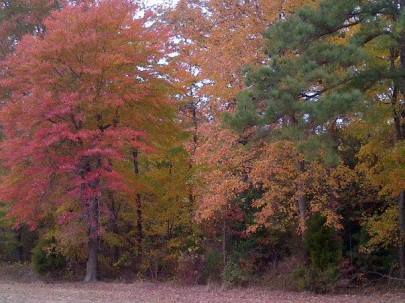
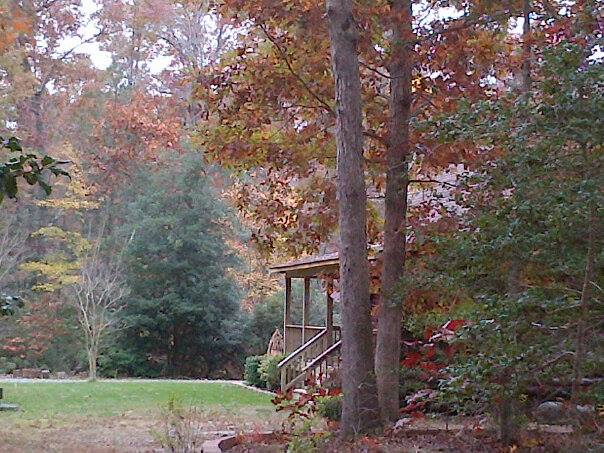
It occurred to me one day on my porch while staring at the surrounding woods, that at some point less than one hundred years ago none of those trees were there. The land has beautiful eighty foot oaks, some maples, tall thin pines and various other hardwoods including black walnut trees, which I am told can provide the ingredient necessary in the liqueur, Wild Spiced Nocino.
The branches protect birds as diverse as red-tailed hawks, downy woodpeckers, and countless chickadees, and they are habitat to other wildlife including one flying squirrel we spotted a few years ago when his tree fell. The squirrel was fine and found a new home in a white oak.
But a hundred years ago this was just land, sandy land, edged by the running Rappahannock River and backed by equally treeless farmland. A century before that these nearby plantations provided food for the region at the expense of slavery, and some slave descendants remain, selling vegetables at food carts out on the main road, or working the bay as watermen, telling stories about how the Chesapeake is just about farmed clean every season by crabbers at the mouth or the headwaters leaving nothing left for those working the midland shoals.
This area hasn’t changed much in one hundred years.
It is like this everywhere, the coming and going of things. In Manhattan a few hundred years before the wild construction on bedrock, coyote and deer were common. It was hilly (Manhattan means land of hills), and where the United Nations stands once stood grand oaks. The Lower West side was a sandy beach, and ecologists say if left to do what it wanted, most of the upper west side would be covered in trees and vines, shrubbery and wildflowers inside twenty years.
I can’t imagine what my house would look like if left untouched. When I don’t mow the lawn for a few weeks it looks like a refuge for timber wolves.
But these trees weren’t here a century ago and I sat on my porch and wondered if there had been other trees or if this land was barren, or was it used by the Powhatans, or was it home to some former slave family, or just a dumping ground. Evidence is scarce, buried beneath the roots of this small forest.
This happens to me everywhere I lived; I like to imagine what was on that spot one hundred, two hundred, a millennium earlier. The house I rented in Pennsylvania was used as a hospital during the civil war. Before that it was a farm. Now it is a Real Estate office. The maples which lined the road and shaded the living room are gone. Someone planted new ones but it will be decades before they mature. My house in Massachusetts was a fish market a century earlier. Purpose moves on with time. Maybe that’s why I’m so mesmerized by the Prague hotel I always stay at. It was the same building seven hundred years ago that it is now. But here on my porch I realize this house is the only place in my life I’ve lived for twenty years, and I was curious if five times that score of years ago I could sit on this spot and see right out on the water, or were there trees then as well, different ones which died or were timbered to make room for crops.
The house is made from western pine forested on land which I assume is either now empty of trees or filled with young pines waiting to become log homes. What will be left a hundred years from now? Will someone sit on this same porch and look right out toward the bay once these oaks have long fallen? I know this house, this land, is a “hotel at best” as Jackson Browne despondently points out. “We’re here as a guest.”
Wow. Wrote myself into some sad corner there. Thanks Jackson.
I know nothing is as permanent as nature, despite the constant changes. It simply isn’t going anywhere. We are. So I like to remember that a century ago farmers sat here and talked about the bounty in the soil, or talked to 19th century watermen about the changing tides. And I like to realize that a hundred years before that the nearby swampland, now home to so many osprey and egrets, was a major route for runaway slaves. They’d have been safe in these woods, if there were woods then.
I like to do that because it reminds me a hundred years from now perhaps I will have left some sort of evidence of my passing through; even if just in the cultivation of language, the farming of words.
So I sit on the porch and listen to the wind through the leaves. It is now; it is right here, now. Sometimes at night we stand in the driveway with the telescope and study Saturn, or contemplate the craters on the moon—both here long before us and in some comforting way, long after we’re gone.
In spring and fall the bay breezes bring music even Vivaldi would envy, and I’ll listen to his Four Seasons, written nearly four hundred years ago, and listen to the wind through the leaves of these majestic, young trees reaching eighty feet high, and be completely, perfectly in the moment.
Despite the warming trends, the extreme tendencies of weather, the fragile ecosystem which sustains life, nature is still the only place I have found that really doesn’t change. It never has. Ice ages and dust bowls will alter it, but eventually some seed will take root.
The following is an excerpt from my 2018 bookBlessed Twilight: The Life of Vincent van Gogh; however, the words are his from a letter he wrote to his brother Theo in 1888. Often, an artist who excels in one genre dos so in others as well; Vincent was no exception. I believe his writing to be as artful as his paintings.
Vincent van Gogh: March 30, 1853-July 29, 1890
From a letter to Theo:
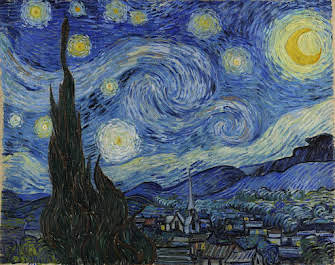
It certainly is a strange phenomenon that all of the artists, poets, musicians, writers, and painters are unfortunate in material things—the happy ones as well. Maupassant is a fresh example of that. It brings the eternal question: Is the whole of life visible to us or isn’t it rather that on this side of death we see one hemisphere only? Painters, taking them only, dead and buried, speak to the next generation and very often several after in their work. Is that all or is there more besides? In a painter’s life, death perhaps is not the hardest thing there is.
The earth has been thought to be flat. It was true, and is today, that between Paris and Arles, it is. But science has proven the world is round and nobody contradicts that nowadays. But notwithstanding all of this people persist in believing that life is flat and runs from birth to death. However, life too is probably round and very superior in expanse and capacity to the hemisphere we know at present. For my part, I know nothing of it. But to look at the stars always makes me dream as simply as I dream over the black dots of a map representing towns and villages. Why, I ask myself, should the shining dots of the sky not be as accessible as the black dots on a map of France? If we take a train to get to Rouen, we take death to reach a star. One thing undoubtably true in this reasoning is this: that while we are alive, we cannot get to a star any more than while we are dead we can take the train. So it seems to me possible that cholera and cancer are the celestial means of locomotion just as steamboats and railways are the terrestrial means.
To die quietly of old age would be to go there on foot.
I feel more and more that we must not judge God on the basis of this world; it is a study that didn’t come off. What can you do in a study that has gone wrong if you are fond of the artist? You do not find much to criticize; you hold your tongue. But you have a right to ask for something better. It is only a master that can make such a muddle as this, since then we have a right to hope that we’ll see the same creative hand get even with itself. And this life of ours, so much criticized and for such good and exalted reasons—we must not take it for anything more than what it is and go on hoping that in some other life we’ll see a better thing than this.
I’ve run out of words. Out of ideas. Out of patience and interest and desire. I’ve run out of stories to share and any sense that any of those stories are remotely worth writing about to begin with. I’ve grown tired of getting it right, of editing, of restructuring and developing and trimming down. I’m over the clarity thing, finding the right noun, the more specific verb, eliminating obtuse modifiers, over the placement of pronouns and split infinitives.
I’ve said what I wanted to say.
Except to say this:
Every instance is miraculous to me. Every nuance of life, the breezes and stillness of a summer night, the aroma of honeysuckle, lavender in the air, the yellow of forsythia, the hints of orange and rust low on the horizon. All of it and more of it strikes me speechless and as often as I’ve tried to write about this I couldn’t do it justice. Time and again I ripped up or deleted the prose out of protest to my own lack of focus and ability. I should have been a photographer, bought the equipment and peddled my pictures to magazines and couples on the beach just before dawn–you know the shot, two people in the sand leaning against each other watching the sky lighten in the east. Before cellphones, couples remembered the moment by their presence, but now the moment is ever present because of the picture from the phone, so they no longer know if they recall that moment or simply the endless stream of “love this picture of you two” comments which flood their feed. But what of the shot from behind? The one of the two of them three feet from the water’s edge when the quick ray of dawn hits that small solstice space between their otherwise entangled lives. I could have done that instead of writing about dead relatives and other love songs.
It turns out what I’m best at is simply being present, watching the river run past, a heron searching for minnows and the osprey teaching her young to fly. I have mastered the art of taking it all in and the constant state of miraculous now which engulfs us every moment. But I tried writing instead because I couldn’t make money simply being alive, though I came close; but I could make money writing, teaching about writing, showing people some places I’ve been and what happened along the way, hoping they would sit back and say, “Yes, I know what you mean.”
Instead, I’m out of stories. I am starting to believe my last book took forty years to write not because it was so difficult but because I knew once that story was told I would have nothing left to say.
The story is told and I was right: I have nothing left to say.
Except to say this:
I have been working on a book about teaching. Well, it’s not about teaching, it’s about the best of and worst of what happens when you spend thirty plus years with twenty-year-olds and some of them go on to wonderous things while others die by their own hand, or their ex’s hand, or the random drop of evil. So I’m dealing with a publisher about that manuscript, but my mind is entangled in something that is a bigger deal to me, and that’s the “who gives a damn” factor which plagues writers from time to time, only this time the plague has spread into sentence structure and transitions and now its damned near everywhere. Even the pronouns are complaining; it’s always “I hate” this and “You suck at” that. And I’m also stage-deep in a play, a tragic play about the glory of hope, a one person play which I’m planning to premier in upstate New York but I ran into the “this kind of sucks” part of the writing process and if the book were not out I’d totally use the play as an excuse to avoid the book and most likely would finish the play, but instead the book is out and the play is pointless now. And my book about traveling, about the philosophy of being somewhere for a week or a month and being 100 percent present so that years later we remember every moment—that book, it is out there waiting for me to gather all the words and slap them into the correct order. But not today. It’s rainy and windy and there’s a possibility of tornados today, so maybe next week after coffee one morning.
You see what I mean? It just might be that all the other books and essays and readings and articles I’ve done in the past thirty plus years was a way to avoid finishing the book, and it worked, but now that that the book is done and out, everything else seems to have been a distraction from what I wanted to do originally, before the writing, before the planning and scheming and blind ambitions of a teenager, and that was simply to “live in the world, not inside my head” with thanks to Jackson for the line—to just take it all in at this rest stop as I pass through nature. Wordless. Anonymous. Present.
Maybe I’ll just head back to Spain.
After I get back from Oregon of course.
And Paris.
I feel as if my point—if I ever had one—has been made so I have no reason to go on with these unalphabetically disorganized letters.
Except to say this:
Everything I do seems to be prep work for something that I have not yet figured out. Or, to return to Jackson again, “It seems I’m just a day away from where I ought to be.”
Letty’s birthday would be Wednesday. Dave’s next week. Mom’s and Dad’s in two months, Dan’s a month ago, Cole’s in ten days. I’ve written about all of them. And about Joe, whose birthday was the day my last book, the one about him, kinda sorta, launched. So it can often feel like I’m all out of words, but this time it’s extreme, like the alphabet hasn’t even been invented yet.
But then a hawk flew by my window here at Aerie, and I read something about the Oregon coast, and I saw a clip of Lady Gaga singing “La Vie en Rose,” and I woke up. See, there’s no such thing as writer’s block, there’s only the lack of wind and the empty sails and that sense the doldrums are a permanent state of being. Then, softly at first like a fragment, like a clause, the wind picks up, then more, and suddenly you’re sailing wing on wing through compound sentences and everything, I mean all of it, falls into place and, as Dan notes, “There’s nothing left to say but come on morning.”
We don’t get up early enough. We don’t play with the kids enough. We don’t walk on the grass enough, we worry too much about losing. We don’t throw the ball enough, hike through the woods, climb the low trees, eat fruit off the vine, go for a drive. We don’t tell enough stories, listen to records, dance for no reason at all. We don’t call old friends who are hard to find, aunts and uncles who made us laugh, stay longer with our parents talking about the times we had, talking about the rain. We don’t journey enough to places close by, we don’t find beauty in what there is plenty of, we don’t appreciate what is common, we don’t celebrate what is in our grasp. We’ve lost the art of contemplation, of solitude, of fasting, of quiet walks. We forget the world exists in each step, the saints and martyrs, philosophers and missionaries walk with us, whisper about the temporal state of life, the immortal flight of a bird. Life is the way we sit around and laugh until two. Life is the feet on the coffee table, the tie undone, the kids asleep in their beds. Life is the sound of water in a pool, the sound of tea poured into china cups, the sound of distant thunder at dusk. Life is unwrapped gifts, cards in the mail, the smell of bacon on Sunday morning; drinking beer with friends on Friday night, the first cold day in autumn we need to wear a sweater, life is the spring grass showing beneath the melting snow. It’s the mother in the door waving to her youngest child moving away. It’s the father at the observation deck waving to his son on the plane. It’s the letting go of small hands; it’s the giving away of the bride, it’s the days that pass without a phone call.
Life is the distance between a falling leaf and the ground.
Portions of this piece originally ran in Ilanot Review as “I Knew Two Men,” and it has subsequently appeared in several journals, including a publication honoring the late Arnost Lustig.
My son is leaving for Prague in a few days and this is on my mind.
Prague Adaptation
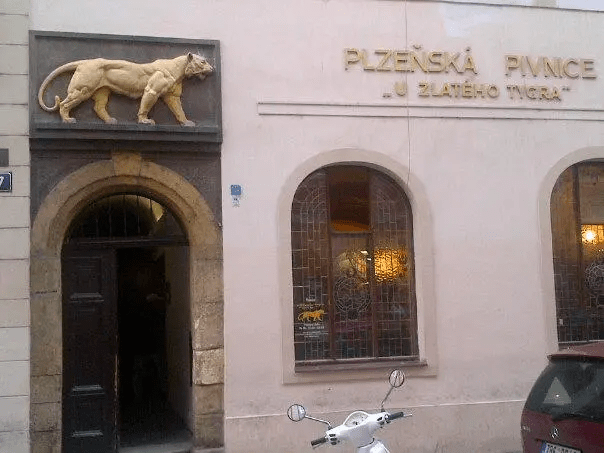
Arnost Lustig and I drank pilsner at the Golden Tiger in Prague. A large man in a white smock served our fourth pint when I asked about Hrabal. “You knew him, then,” I said.
***
“Yes, of course. We all knew him. The writers, the musicians, we all knew each other.” Arnost leaned forward. “Prague’s not that big, you know,” he said and laughed.
Arnost was a burly man who wore a leather coat and carried a satchel. We sat one table down from where Bohumil Hrabal, the great Czech writer, once drank. Hrabal came here to enjoy his beer and tell stories which ended up as classic works of European literature, such as I Served the King of England and Too Loud a Solitude.
“He came to Washington and stayed in my flat once,” Arnost added.
After a while I mentioned Hrabal’s death.
“Okay, then, let me ask you,” I leaned into him so the gatherings of Czech men at this mostly hidden pub couldn’t hear. “Do you think he fell out of that window like the nurse reported, or did he jump?”
Arnost leaned back and laughed. “Ah! Such mysteries we can’t answer! How we all love unanswerable questions!”
“She said he was feeding the pigeons. At a hospital? Come on!”
Arnost smiled at me while ignoring my comment and continued to talk while he said hello to some patrons. Everyone knew this man. “So yesterday you went with Jan to Terezin. Tell me about it.”
The day before I had walked about the Terezin Ghetto with Jan Weiner, a colleague of ours. Unlike Arnost, Jan was a stern man with a straight back and fine combed hair. He was calculating. He didn’t turn his head to talk but his entire body instead, like a soldier always at attention. He was very proud of himself, and every conversation somehow reeled back to his accomplishments during the war. To be certain, he deserved the praise, albeit mostly self-inflicted these days.
Arnost shook a stranger’s hand then nodded to me. “Did you sit on the cot?”
We sat on the cot.
Terezin is actually the so-called “town Hitler gave to the Jews,” for its use in successfully teasing the International Red Cross into believing the Nazis had set up the Jews well in small towns of their own. An adjacent eighteenth-century small fortress, used as a political prison for anti-Nazi protesters, is where Jan and I spent the morning, walking about the museum. Arnost knows Terezin well: he spent nearly three years there interned during his teens. He worked the rails that would bring him and his family to Auschwitz where his father was immediately gassed. On a transport to Dachau, the allies bombed the train and Arnost took advantage of the confused guards and escaped into literary history, writing countless bestsellers about the Holocaust and Terezin, all wrapped in the folds of unrequited love and the romance of war, despite its genocide. Diamonds in the Night, Night and Hope, and Darkness Casts No Shadow all remain staples of Holocaust literature.
So Jan and I walked into the women’s quarters at the Small Fortress, a compound really, and he showed me what one of the small cells looks like. We sat on a cot and he said, “Here, my mother was a prisoner. Right here.” He stroked the rusty metal and sat straight, stern, and oddly proud. “They tortured her for several days in every way imaginable before they killed her.” We walked about for an hour or so, and outside the compound he sat on a wall and ate a sandwich.
On the way back to Prague he told me that during the war his family took care of two young girls. Their parents had traveled to Africa as missionaries and were to return for them but the Nazis took over during the interim. “Those girls were gassed,” he said, then explained how soon after this his own father and step-mother killed themselves in their apartment in front of Jan. That’s when instead of giving up he escaped on a train south to Italy where he was imprisoned, only to escape to England. There he joined the Royal Air Force and flew bombing missions that helped turn the war. This was a real hero. Before we got off the bus in Prague we shook hands and he said, “I don’t believe in God.”
“Okay. I get it,” I said.
“No God could exist in a world like this,” he added.
“Okay.”
Arnost smiled and said, “Jan is always trying to convince himself of something. It makes him feel better about life.” He nodded toward a relief of Hrabal on the wall above the next table. “What do you think, Bob? Do you think you know what happened?”
Here’s what I knew:
Hrabal died when he fell from the fifth floor window of the Bulovka Hospital in Prague while leaning out trying to feed pigeons. He also lived on the fifth floor of his apartment building, which itself is uninteresting except for his fascination with fifth-floor suicides. He dreamt of his own death from that height. He would lean out the fifth-floor window of his flat to gaze up at the sky above St. Giles, and he would often walk down to the Maison Oppelt, where Franz Kafka once wanted to jump from the fifth floor.
I knew he sat here, six feet from where I drank my fourth pilsner with Arnost. They spent a weekend together in DC drinking beer and watching Charlie Chaplin films, right after Susan Sontag wrote in the New York Times that Hrabal’s Too Loud a Solitude would be “one of the twenty books that would shape literature in the twentieth century.” I asked Sontag once about Hrabal with whom she had laughed and drunk in New York City, and Susan said to me, sober as can be, that if I could only read the writing of one person let it be Hrabal.
And I knew that his devotion to his wife, whom he called Pipsi, was so complete that after her long, drawn-out death, he wanted to jump from their fifth floor window. “Every room in the apartment hurts,” he wrote, and every time he thought of jumping from that fifth floor he said his guardian angel pulled him back because the angel wanted him to “remain as yet. But I’ve felt like it.” Just like Kafka, Hrabal noted, who had also been “hurt by the world,” he supposed. Kafka didn’t jump from the fifth floor of the Maison Oppelt onto Paris Avenue, as he desired. I knew Hrabal was fascinated that, ironically, Rilke’s Malte Brigge tried to jump from another fifth floor in Paris.
And I supposed it was all too poetic for Hrabal to bear, like his beloved poet Biebl who jumped from a window to die only after asking a painter to create a canvas of a man falling backwards out of a window. So Hrabal’s routine included what he called “morning suicidal, work until midday, lunch, bus ride, back to the pub.”
This pub where one beer after another would fall backwards into his round and grateful stomach, and he’d listen to these very same men in this very same Golden Tiger talk, feeding him what he called “morsels of life,” which he’d store away and use later in his work.
Including Too Loud a Solitude, his very last work before his unfortunate fifth-story pigeon-feeding plunge. Too Loud a Solitude, where at the end the protagonist climbs into the trash compactor he ran for thirty five years beneath the streets of Prague and compacts himself, saying, “I will follow Seneca. I will follow Socrates, and here, in my press, in my cellar, choose my own fall, which is ascension.”
I thought perhaps Hrabal chose his own fall.
That’s what I knew. I stared through Arnost’s large glasses into his engaging eyes, which have witnessed what no human should, but who took those experiences and excised them through his enchanting and haunting prose. Jan never let go of what happened, whereas Arnost took what happened and gave it back to the world in bestsellers, some of which had been made into films. By 2003 he was so respected in Prague that his good friend, playwright and President Vaclav Havel, gave him high honors and an apartment in the Castle, yet his eyes looked the same as they did in the rare pre-war photos of him with his parents and sister.
“What do you think, Bob?”
I listened to the old men who sat at picnic tables which lined the pub walls and wondered if Arnost listened to what they said. Did he store away morsels of life for use in one of his works? What were these men saying that Hrabal might have half listened to and molded into prose the way only he knew how while beers tumbled all afternoon?
This was in 2000. Hrabal fed his pigeons only a few years earlier. These may in fact be the same men.
I nodded at Arnost. “I read once that he could recite whole chapters from books without missing a word,” I said. Arnost laughed and agreed he had heard the same thing and noted Hrabal to be one of the most intelligent men he’d ever known.
I stared at the room full of Czech men. “There’s really no way for someone like that to make a graceful exit, is there?”
Again Arnost laughed. “Nothing poetic enough you don’t think?” He thought for a moment, always searching for a better way to phrase his words. “Maybe nothing more poetic?” he added. “You know sometimes it is best not to know too much, don’t you agree?”
I knew Arnost enough to know that “don’t you agree” was rhetorical.
We didn’t order, but the large man in the white smock brought two more beers, marked them on a white slip of paper on the table, and walked away. After a while we toasted toward the relief of Hrabal on the wall.
“Okay,” I said. “Here’s what I think: He wrote that if God really loved him, he’d just drop dead over a beer at the Golden Tiger.” We laughed hard and Arnost raised his eyebrows, nodded slowly, and finished his drink. “Finish up,” he said. “I have to lecture in thirty minutes or so.”
It was a time of extremes. I drank in every morsel of life from the minds of men who cracked open history and edited the outcome. It was a time to speak of the tragic haunting of dead relatives and the mystical power of words. One man finds romance in the crumbling memories of internment, and the other loses faith in God. Sometimes soldiers, whether fighter pilots or writers, dilute death and inhumanity with beer, while others drink to celebrate what’s left.
Sometimes they spend a weekend watching Chaplin films and talk about home and how it was before before the Nazis and the Communists cared about Prague, the trashing of books, the elimination of a race, the fatal tumblings of souls.
Later that night I left the university alone and went to the hospital on my way back to my apartment. I stopped and stared, counting floors to five, and wondered what Hrabal would have written about next. He was in his early eighties when he died; there was still plenty of time. I left, but turned back briefly and gazed at the façade for a few minutes.
I didn’t see a single pigeon anywhere.
About a week later, I returned to Terezine with Arnost and a friend of his, Academy Award winning filmmaker, Milos Foreman. On that particular day in 2000 Arnost needed to talk to Milos who wanted to make a movie based upon Arnost’s book The Unloved. He made beautiful movies like One Flew Over the Cockoo’s Nest, Man on the Moon, Heartburn, and others including my favorite, Amadeus. At some point on that cool afternoon between conversations about the horrific ghetto museum of Terezin and the prison for anti-Nazi protesters, the Small Fortress, I ended up having a conversation with Milos about adaptation. He discovered that subject matter to be the focus of my lectures at the university. It seems the theme of my entire time in Prague that year was Adaptation.
“So we agree then,” he said to me. He was much younger than Arnost with the same controlling conversational style.
“Yes,” I said, “Of course. It is always frustrating when people say how much more they like the book, or do any form of comparison at all. They are completely separate art forms.”
“Exactly! I can’t film all of a book!”
We talked further about our common concern on the subject of movies based upon a novel or play, and we reiterated the inability of people to see movies and books they are based upon as separate. Yet we also agreed on the difficult task of expecting anything else of the average person at a movie on a Saturday afternoon.
Eventually, of course, the talk turned to his work.
“Yes,” I said. “I’ve taught both “Cockoo’s Nest” as well as Amadeus, and I did read Kesey’s book as well as Shaffer’s play, which I first saw when I was in college.”
“Well?”
“Both times you nailed it. From Kesey’s novel you kept the major themes which worked and consolidated what needed to be. In Amadeus you made music the central theme of the movie instead of the ridiculous “mystery” between Mozart and Salieri. I still enjoy watching both films and teaching them. Oh, and Amadeus has the BEST cut in movies, when Mozart is in bed and Salieri finally hands him the completed “Requiem,” and Mozart says, “Okay, from the beginning,” and we hear an entire orchestra for the first time as his wife’s horse and carriage come into view. Love that scene.”
Milos indicated it was hard to miss with such material and brilliant film editors, but I appealed. He was a great director.
Then he mentioned Ragtime.
When I was young my father bought me E.L Doctorow’s book. I loved it and read if several times. I loved how it swept across decades and included some major historical figures such as Houdini. But I never could picture it as a movie; even if one could save the major themes, it simply is too complicated to pull off as a traditional narrative with the proper conflicts clarified.
Then I saw the movie and I didn’t like it all that much. I even watched it again after I learned a few things about adaptation at Penn State, and it still, for me, didn’t work. I even left behind my memory of the book and focused solely on the new art form, trying the best I could to not include the literature in my analysis.
“What about Ragtime,” Milos said.
I thought about saying, That was really some casting they did for “Cockoo’s Nest,” wasn’t it? But I could tell he was enjoying our conversation. I looked at his Czech copy of The Unloved in his hands. It was bookmarked and folded and noted in dozens of places. He clearly learned the book as if it were his own, like his films each became his own, not Kesey’s or Shaffer’s and definitely not Doctorow’s.
“It seemed too complicated to capture,” I said.
“Yes,” he agreed, reflectively. “It never did convey the themes well. Or at least the way I wanted to.”
“It seemed more of a vehicle for Cagney seeing as it was his last film.” I was feeling ballsy now in the conversation.
“You’re probably right. He got more attention than the film. Will you discuss these films tomorrow in your class?”
“No. I’m moving on to Hrabal’s Closely Watched Trains.” He smiled. Milos was a fan and friend of Hrabal’s. As Arnost said, the Prague art community is not very big.
I told him I was going to talk about how adaptation of one art form into another involves both deciding what essential elements must make the transition and which ones very specifically needed to be left behind.
Arnost returned, always sharp, always ready for what’s next. I stared at this man’s eyes and thought about how much he went through. The Nazi’s disrupted his life, caged him for three years as a workhorse, forced him to build a railroad from Terezin to the mainline on the way to Auschwitz, killed his family, and still he escaped. And still he went on to not only live his life, but live it fully as a writer. He knew what to take with him after the war and he knew what he need not address ever again. His entire life was about what to leave in and what to leave out.
It is not easy, adapting, saving the best of what exists, our strengths, and leaving behind the weaknesses, the parts we wish we could do over given the chance.
Fr. Dan at the campus ministry, 1980On the porch at Vic’s Cabin, Nov ’79
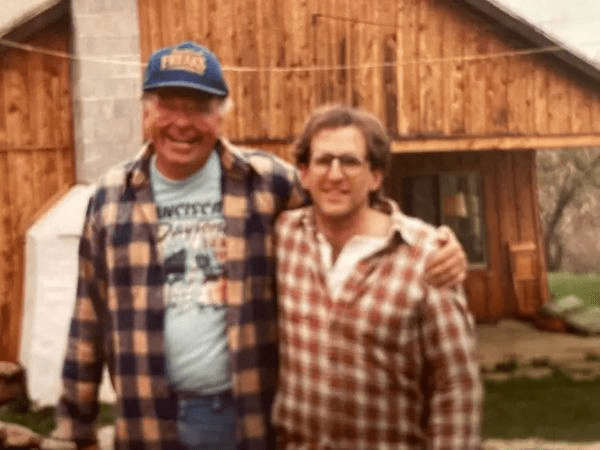
I was nineteen, Dave Szymanski eighteen, and Fr. Dan Riley thirty-six years old. I met Dave because I simply met him; I’m not sure where or when but we were both J majors and worked for both the campus newspaper and radio station, WSBU, 88.3 FM. I met Fr. Dan when just weeks into my freshman year I caught the Russian flu and ended up in the infirmary, and he’d come by every evening and sit bedside and we’d talk; instant friends.
Early that fall we started a radio show. Dave and Fr. Dan were hosts and I was the producer and engineer. “Inscape” aired every Saturday morning for an hour, with open discussion about spiritual matters, a deeper conversation with a new guest each week, and a musical artist for interludes. The guests included Fr. Mathias Doyle, college president, Charles Osgood, CBS newsman and St. Bonaventure favorite, author Fr. Roy Gasnick, an expert on St. Francis of Assisi, and Fr. Irenaeus Herscher, campus librarian and archivist, close friend of the late Thomas Merton, and namesake of what would become Mt. Irenaeus (yes, named after the good priest, not the saint himself).
One fall day in 1979, Fr. Dan and I met early for breakfast at Mary’s in Allegany, and we walked in the chilly air for an hour and talked about hopes and fears, about friendships and families, and we continued that conversation consistently until July 23rd, 2024—the day before he died. We talked, we texted, we emailed, snail mailed, visited each other, and shared writing—he sent copies of my book Penance to a dozen friends of his, I sent copies of his book Franciscan Lectio to a dozen friends of mine. I have piles of letters from Dan; over 300 spanning four decades. We consulted each other. When Dave died, his widow asked me to call Fr. Dan. When he answered the phone before I could speak, he said, “Bobby! I’m glad you called! I don’t like you anymore and I don’t want to be friends with you!” and despite his eighty-one-year-old frailty, he laughed the laugh he is known for by tens of thousands of students across five decades. He added, “Brother Kevin is sitting right here, and I want to tell him something. Kevin, it’s Bob. We don’t like him anymore,” and they both laughed. Then I said, “I’m not calling you for a good reason” and he slipped right into Franciscan-priest mode, his voice going deeper and more serious, and I gave him the news of Dave’s death. For some time we remembered those innocent days in the Fall of ’79.
Jimmy Carter was president, the Iranian hostage crisis (kids, watch Argo to understand) was underway, and Inscape—a Merton term for escaping within—was on the air, and one of our early guests was Fr. Irenaeus, the featured music was from James Taylor. The theme music for the radio show which lasted for two years was by Dan’s fellow Rochester native, Chuck Mangione’s “Hills Where the Lord Hides.” Reference: This was forty-five years ago this fall. Dan, Dave, and I with a dozen others were about to go on a retreat to a place called “Vic’s Cabin,” and it would be the first of many retreats in various mountain areas over the next four years while he looked for a permanent location for spiritual retreats for students.
On that show, the three of them talked about retreats as Fr. Irenaeus spoke softly and with such kindness about how his friend Fr. Louis—Thomas Merton—thought retreats were essential to the human soul, and the same of St. Francis. He said he personally believed a true retreat, however, was about community as well, where people can be alone, yet with others, in silent prayer but in living gospel. Fr. Dan smiled wide, his brown mustache stretching to his ears, him nodding, repeating, “Yes, exactly.” After the show we walked Fr. Irenaeus back to the friary. A few days later he was hospitalized for several months and died not long after that. Fr. Dan and I walked back to the dorm we both lived in and sat in his apartment on the fourth floor and talked about the retreat scheduled for early November.
I graduated. I moved about: Arizona, Massachusetts, Pennsylvania, all the while exchanging letters with Fr. Dan, and in early May of 1989 I drove to what had become Mt. Irenaeus near West Clarksville, New York, to spend the weekend talking to him, helping out around the two-hundred or so acres. Construction on the Holy Peace Chapel had begun, but only the frame was standing at that time, and Dan and I worked on a small stone edging of a path to run through the woods to the chapel entrance. It was in the upper sixties and we laughed and talked for hours, noting the beautiful spring day and the budding trees. On Saturday morning I woke to his bellowing laughter and walked into the small hallway of the original house of peace for the mountain. He walked me to the door and pointed—it had snowed six inches overnight.
Everyone left over the course of the next few hours, but I stayed by his insistence to enjoy the weekend and write—I did, and the journal by my side now is called “These Days: The Weekend Alone at Mt. Irenaeus” but I’ve never published it. Still, I noted many of our conversations from the previous day, including Dan’s fear the Mount would become too big to handle; too popular to remain personal.
No one was there and they had not stocked the pantry yet except for cereal, so I spent the next two days eating Captain Crunch and walking through the pines in snow, surrounded by absolute peace, taking advantage of the chance to inscape.
But everyone who knew him, which was everyone who went to St. Bonaventure University since the mid-seventies, has stories about time with Fr. Dan Riley. The first time I met his family, they kept calling him Billy (Fr. Dan’s birth name is William) and I joked “I’m going to start calling you Fr Billy from now on,” and he quipped—with his dark eyes peering across his glasses at me to demonstrate his seriousness, “No. You’re not.”
When my son had a solo show of his abstract art at the Quick Center for the Arts on campus, Fr. Dan let Michael know his old friend, Tony Bannon, former director of the George Eastman Museum of Photography and the oldest photography museum in the world, thought Michael’s work was one of the best and most unique catalogs of photography he had ever seen. Fr. Dan seemed so proud, and so energetic about all people and the moments we shared. Not long ago before his passing he recalled how he enjoyed telling Michael what Tony had said.
But listen, everyone who knew him has stories. It is what raises Fr. Dan up from the status of “friend” to the realm of mentor, truly, without equal, the seeming recurrence of St. Francis of Assisi himself in virtually every way, for Fr. Dan’s influence on students, community, and faculty of the university helped him almost single-handedly, like Francis, rebuild the church in the hearts and souls of us all.
Late one night a couple of years ago he and I sat in the House of Peace drinking Baileys and he nodded toward a poster on the cabinet entering the kitchen. It says, “Ending World Hunger Starts Here: Please Don’t Waste Food.” “I remember when you had those posters made,” he told me, “and when you started the World Hunger Committee on campus your sophomore year.”
“Yes,” I said. “I told one of the Wintermantels—I think Dan—what I wanted it to look like and we made thirty of them. I’m glad one survived to be here at the mountain.”
“Whenever I look at that or think of the outreach programs for the hungry, I think of you,” he told me, and I realized how far I had strayed from those days. It was then I understood why Dan and the mountain remained a place that I needed to return to from time to time to understand who I am at the core.
***
Mymother was very ill and on July 23rd, 2024, I texted Fr. Dan. He called me immediately and we talked awhile, laughing of course, and he said he would pray for her, naturally. I told him I had a reading up North the end of September and planned to come by the mountain to visit if he would be there.
He said, “Yes, Bobby, I’ll be here. I’ll always be here for you. I can’t talk right now, he said, but I’ll call you tomorrow night.” When I hung up, I received this text: “I certainly will be remembering your mother in prayer. Probably Kevin is coming by and I’ll ask him to have the community hold her in prayers as well. Your memory of her certainly will bring you comfort even though eventually when someone you love dies there is great pain. Peace, and all good my dearest friend. Dan.”
The very next night I walked from the hospital to my car to find my phone lit up with messages. I remembered then that Fr. Dan had said he’d call me that night, but the messages weren’t from him. They were about him. My dear friend had died that day, July 24th, 2024.
Yes, memories bring comfort despite the great pain. I wonder often why we lose our innocence to such a damaging degree that we need to go back to find it. At retreats back then–particularly that first one at Vic’s Cabin, we talked about how to carry that peace with us instead of looking for it out in the world. One night not long later I was depressed for what could have been a dozen reasons, and I wandered to Dan’s room where three of four guys were hanging out talking, and I joined them. Eventually, they left, and I told Fr. Dan how much better I felt just sitting and talking, and I wondered why. Dan smiled and said. “Bobby. You brought the peace with you this time.”
Amen.
I imagine now Dan is off in the hills where the Lord hides.
At Mt. Irenaeus the day we worked on the path to the chapelAt Mt Irenaeus House of Peace the night we drank Baileys and rememberedThe poster at Mt Irenaeus, originally hung in the campus ministry in 1980.
I was tapping a keg of Bud. Tom was swamped behind the bar. The Sterling Inn was packed for lunch early that day and even Patti, the manager’s wife, came down from the nine rooms upstairs they rented out to travelers so that she could help on the floor. Her husband, Mark Roy, moved from maître d’ to waiter to give me a hand. The entire wait staff and kitchen staff showed up to work.
Normally the Inn was subdued, a quiet whisper no matter the number of patrons. It was an upscale restaurant with a pricey menu and listed as one of the finest in New England by Yankee Magazine. The head chef, Al Roy, had studied in France, and his specialty was duck. Dave the “other chef” who was always on duty and who normally never came out of the kitchen where he made steaks, haddock, and duck, wandered at some point into the lounge area.
“Did they go up yet?” he asked in his thick central-Massachusetts accent.
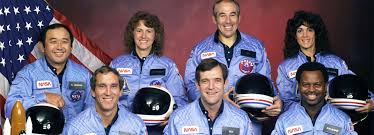
“Not yet,” I said as I placed lunch in front of a couple at a table nearby. Tom called me over to tap a keg. The entire place was buzzing, almost loud, everyone talking and laughing. Half the customers were friends or relatives of Christa McAuliffe, and they were there that day with the rest of us, with the rest of the country, to watch the now mythical and beloved teacher ride the Challenger into Space. When I did get a chance to hear the announcers talk about what the crew was doing at any given point, I got goosebumps. I’d followed the Apollo program and had been an avid fan of space flight since I was a kid, as were many people my age. But this was different. A civilian–a teacher at that–captured the attention of the country.
Christa grew up about thirty miles east in Framingham, and taught in Concord, New Hampshire, about an hour and a half away. This was a time when the nation followed her progress from applicant to astronaut, and her enthusiasm, energy, and warmth engulfed everyone. Back in Massachusetts, she was as beloved as the Red Sox, and it seemed everyone suddenly “knew” her. But on this day, the place was packed by her true friends from Framingham who swamped stories or bragged to us about the times they had with her “back in the day.”
Back at my house just down the reservoir my bags were packed and a friend from Pennsylvania was flying in a few weeks later to help me move to Hershey before my own travels were supposed to commence. But on that day I was a native of Massachusetts, and the young teacher’s ambitions and plans for her students after her return inspired us like little had for quite some time. This was the Reagan years, and the world was being beaten by constant life-altering events like the explosion of the AIDS epidemic, the verbal battle between Reagan and Mikhail Gorbachev, the Mexico City earthquake, and more. But then just after the New Year after months of buildup and anticipation, Christa and the rest of the crew, including Commander Francis R. Scobee, Pilot Michael J. Smith, Mission Specialists Dr. Ronald E. McNair, Lt. Col. Ellison S. Onizuka, and Dr. Judith A. Resnik, along with Payload Specialist Gregory Jarvis, moved us all into a place of hope. We were literally and metaphorically taking the stagnant thoughts of the nation and rocketing them into another place entirely. No one was not affected by this.
I wrestled with the keg with one eye on the television behind the bar as the Challenger lifted off the pad and cheers filled the place, and a few tables grabbed their pre-ordered bottles of champagne.
Patti: That doesn’t look right.
Tom: What happened?
Patti: Something is…
deafening silence in the place.
just absolute silence. Then comments to justify the explosion, like it was just a “bad angle of the booster,” or it “did that last time too,” until NBC commentator Tom Brokaw said, “The Challenger appears to be a fireball…”
and someone screamed.
And I don’t remember hope like that in this country since then
Do not, do not, please do not skip this video:The Challenger Preflight, and “They Were Flying for Me” by John Denver, and Reagan’s memorial words
Stop covering President Trump’s daily activities and decisions. We are numb to their predictability and redundancy. I could write the next ten days’ headlines concerning his knee-jerk presidency and be pretty close. We know seventy-five percent of Americans disagree with most of his current obsessions, including Greenland, Iran, and Venezuela. They are concerned about affordability, a word Mr. Trump apparently thinks was only recently invented. They are concerned about housing prices and the cost of milk.
Do this instead: Cover congress. Obviously, most of them have gone silent since they know that to suffer the wrath of Mr. Trump is to risk unemployment, perhaps even an investigation, but not if all of them all at once stand up and say, “No more.” Report about that. Ask them the questions instead of the president. Ask congressional leaders if they agree with the possible invasion of Greenland and the likely subsequent chaos at the United Nations, in NATO, and the inevitable explosion of prices for everything from Europe, and make that front page top of the hour news instead of comments from Mr. We’ve Heard it All Before. Ask them how they feel about the president’s threats to invade Iran if they continue to badly treat the protestors while he defends ICE’s motives, including shooting a woman in the face as the agent called her a “fucking bitch.” Ask congress where they stand on that matter. Find out why they are not proposing bills with an overwhelming majority to avoid veto that state any action by the military must be approved by Congress. Ask them if they are aware that their constituency has ceased liking the president’s actions to the point of a supermajority. Make it front page news that in this republic that the overwhelmingly majority of actions taken by the president are only possible because of either their approval or their silence. Don’t let them be silent. Don’t let them avoid the truth. Expose their cowardice at supporting anti-American policies from the American president because they’re afraid of losing their civil servant job.
Make it clear that the American public lays the blame for all of this at their feet, and every single morning be at their doors asking them again, and again, how they are letting him get away with his unprecedented weak-minded plans. Remind them that when a bully’s disciples refuse to go along with the demands and threats, the bully stands alone and inevitably folds, and his supporters will move quickly behind someone else to stand in unity. Then, in the form of a question, somehow tell them that if a handful of republican leaders stand against the president, they will likely suffer childish ridicule and adolescent belittling, followed by a public shaming and a loss of office. But if a majority of them stand against the president, if they all decide that enough is enough, their followers will abandon Mr. Trump and stand behind them, even if simply because they don’t want to appear to go down alone.
This is psychology 101, but you are too misfocused on the hype and vacuum created by the president. Make it your mission to control the conversation since you have from Edward. R Murrow to now. And today’s headlines should no longer begin with “Here is what the president did today.” It must begin, “Here is what congress did not do today.”
I’m thinking of doing a kid’s show. Maybe an adult show but as if we’re kids. I’m not sure; I just thought of it when I started typing just now. But it could work.
I’ll call it Bob’s Log House. or Bob’s Got Way Too Much Time on His Hands.
I’ll play a song for all the seniors as we sit in a circle around a bowl of Cheese-Its and a few bottles of Mike’s Hard Lemonade, and I’ll play “Today,” or “This Land is Your Land,” or “I’m All Out of Fucks.” A bowl of gummies to share, perhaps.
And then we can have a special guest. Someone to explain Medicare, or someone to explain K-Pop. And there will be questions and I can move from person to person like Phil Donahue, and tilt my head slightly as if my follow-up question should be carved in marble for its brilliance. Then we’ll give the guest a BGWTMTHH t-shirt and coffee mug. It’ll be great.
Like SNL and other shows, we can have a News Update, and I could comment on what’s happening in the news, in Ukraine, Iran, Venezuela, and, of course, Greenland. I’ll keep the information as valid and accurate as possible, but since it’s my show I might toss out the occasional declarative observation, such as, “Apparently the President is attempting to get away with as much as he can in his first two years since he knows once the GOP is voted out of congress, he is fracked.” Or, “The Bills look good to beat the Broncos this Sunday.” I’ll keep it light, of course.
And I’ll finish each show with a stroll outside to the river; it doesn’t matter what the weather is since the weather was here first and I’m just passing through, and sometimes we need the storms and winds and rain to remind us we can still feel something, that all of the emptiness we constantly sense from others, slips out of our mind when a crisp wind comes down the Rapp and tightens our skin. And we’d walk to the river as I and whatever special guest might join me–sometimes my son, sometimes Kevin from next door or Wayne from the village, and maybe sometimes artist William Clarke or Governor Abby Spanberger–walk quietly until we both toss out short comments about what we discovered today.
Like how I just learned that if you take the pit of an avocado and slice it up, boil it until the water is dark, then let it become lukewarm, it is a powerful pain reliever to rub on your joints and skin, better than the emu stuff even.
Or how in Switzerland it is illegal to own just one guinea pig, or that Australia is wider than the moon (and way wider than the Mississippi), or that a shrimp’s heart is in its head, or how Romans used to drop a piece of bread in their glass before raising a glass, hence, to make a “toast.”
I have more. And you will hear them if you watch the part of the show where some guest and I walk to the river and mention that the shortest regional flight in the world is on Loganair and goes the entire 1.7 miles from Westray to Papa Westray, Scotland, in about 90 seconds. People will love this segment and it might make BGWTMTHH a viral hit.
And it’s educational so I could have gotten a grant from the Corporation for Public Broadcasting, but they’re gone so I can point out in that quick segment the irony of the defunding of the CPB because a tiny tiny tiny fraction of NPR’s budget comes from the CPB; the vast majority of that money was going to local NPR stations to help fund local programming, so now those shows are being cancelled, but the stations have to fill the time with something and since they pay one fee for NPR no matter how much or little of it they use, they are filling in the empty local timeslots with MORE NPR. So that DJT in his effort to get less NPR by defunding CPB, is helping to spread the bass-heavy, treble-absent voices of America. Who doesn’t love irony. I could have an Irony segment where I sit on my porch eating bacon and talk about irony.
I will never run out of material.
Like how when someone is cremated, the eyes vaporize. They just, well, vaporize. And I can’t shake that one. I think of all the beauty in the world, all the fields of the Netherlands with windmills and canals, and the dusty trails of West Africa, or the village streets of Mexico, or the rivers–all the rivers–and the tears from unbearable sadness and unforgivable laughter, and the idea that the eyes don’t so much burn up as much as they vaporize like a tissue tossed on a firepit that lifts into the air, into the darkness, its light fading quickly, and it is again part of the air and the world. That. That the eyes vaporize. Maybe I’ll end one of the shows on that, and the picture can fade out to quick images of places that are too beautiful to look at sometimes, and the faces of people who live inside my soul.
Tune in, my friends, for the new Netflix show, “Bob’s Got Way Too Much Time on His Hands.”Coming soon.
Announcing the release today of Curious Men: Lost in the Congo. Order by tapping the link below the video: Thank you for supporting independent presses and artists. Many thanks to Kim, Bill, and Jacquie, and everyone else at Madville Publishing.
Here’s a video about the writing of the book, the living of the book, and the time that has passed:












 a view from this wilderness