Winging It

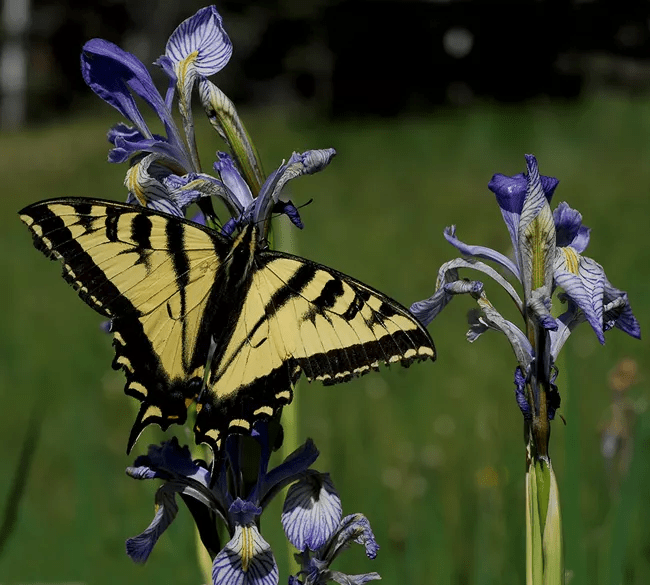
I no longer like butterflies. Those miserable little hyperactive buzzards flutter around like drunk scraps of tracing paper. “Oh they’re beautiful, especially the Monarchs,” everyone says. Why? Because of their colors? Their fragility? We just like things more delicate than we are. As George Carlin famously pointed out, we eat more lobsters than bunnies because bunnies are soft and furry and lobsters look like miniature monsters. No contest. Honestly, I used to love the little beauties, butterflies. I was always intrigued that the average life span is less than a year. I watched documentaries about the monarchs’ migration from northern regions of the states to the mountains of southern Mexico. I couldn’t find my way there with a map and a guide, and these little fuckers do just fine every single year. But lately I have lost interest. They’re as disturbing to me now as the flying monkeys in “The Wizard of Oz.”

I turn sixty-five this week and I’ve been thinking about that trite and necessary Bucket List. I figure I have another good–good being solidly vertical–fifteen years. Hopefully more, of course, but with some adjustment for pace. Still, the first six and a half decades found me mostly pinballing through life. This evening I sat setting up my new Snoopy and Woodstock 3D light and thought about what I might still be able to accomplish.

Here’s my list:

Whatever. It’s all good to me. Just glad to be here, really. A good garden and a small grove of fig trees. Go for walks in various countries, through marketplaces, along coasts, small villages. Nice walks, hikes, talking and laughing. Sit at a café near the ocean with drinks and a soft breeze.

Not what you were expecting, huh? I guess I’ve already done what I wanted to do. The time left is reserved for those I love and as much laughter as possible.

And as for the “The Wizard of Oz, ” the scariest scene is not the flying monkeys, or the balls of fire the Wicked Witch of the West throws down upon the bone-dry scarecrow. It is the hour glass filled with red sand set up in the castle room with Dorothy. Such a small scene in an irritating film still affects me half a century later. “You see that?” the witch cries to the terrified Judy Garland, “That’s how much longer you have to be alive! And it isn’t long, my sweetie. It isn’t long!” This scared the crap out of me. You mean it’s that easy, I thought, to no longer exist? Someone just flips the hourglass and the sands run out? My heart raced every time the camera focused on the depleting red grains dripping through the huge timepiece.

It didn’t help that during those years my mother watched “Days of Our Lives,” and the opening sequence was always, “Like sand through the hourglass, so go the Days of Our Lives.” Whoa! Talk about depressing. I was raised saturated in this daily dose of “you’re going to die soon.” Growing up near the beach probably didn’t help; the shifting patterns of sand symbolized to me the passing of seconds and hours and days and years. And when aunts and uncles exclaimed I had an “old soul” I thought they were ordering last rites.

So some sense of urgency festered in me from quite early on. I started attacking my ambitions like I had just three weeks left before the sand ran out. When I was young, I had an outrageous list of dreams, ambitions, or “fantasies” as most others called them. One of the first brilliant ideas was doomed for failure: My friend Eddie and I had been sending up rockets; the ones with a gun-powder-filled battery shoved up their tails which we bought from a hobby shop. We were getting good at this and our imagination ran away fast. This was around 1973 and I was totally into adventure. Papillon had just come out and my mind was already bent on traveling to faraway lands. Mostly, though, I was obsessed with becoming an astronaut. I knew all their names, and I had memorized every detail I could find about rockets, their speeds, thrust, history and expectations. I had a brown cpo jacket and asked my mother to sew on an American flag and a NASA patch. When we went into stores I liked to pretend people thought I must have something to do with the space program. I played it cool, of course, holding my mom’s car keys like I just got back from the Johnson Space Center. I was twelve.

Even so, Eddie and I had a plan. We were going to take apart the batteries to study how they are made, and then we would make a large one that could carry one of us, me, into the clouds. We knew we would have needed a heat shield to exit the atmosphere and return—we weren’t dumb—so we planned to use a metal garbage can. We only were going to lift a few hundred feet just to show the naysayers we earned our patches. So we slowly filled a coffee can with the gun powder from several dozen batteries bought over several months. But one night Eddie left the coffee can on his patio in the rain. We didn’t have enough money to buy more batteries so we tossed the plan and played baseball. A few years later I moved away and found more pragmatic plans. I am not certain, however, if I was ever so serious or energetic as I was when I thought I was going into the clouds. To me that fantasy was simply reality’s childhood.

Back then I couldn’t possibly know that eventually the most treasured content of my bucket list would be the simplest of thoughts—plans really—like lying on the floor playing Risk and Boggle with my son and sharing a bowl of pretzels while we laughed at the anxious final seconds of each round. Or the one of walking slowly through a mall with my dad, sitting on a bench reminiscing or being quiet, sitting having Scotch on Tuesday nights. I was always excited to be able to sit and watch a baseball game on television with him, neither of us saying a word. That doesn’t sound a bit like a dream for anyone’s bucket list, but it makes it into most of ours at some point. I thought of all those small moments while standing in the doorway to his room during his last days. I’d lean against the wall and stare at the paper butterfly, the universal symbol of comfort care, on the door jam.   It’s crazy how the simple moments like time together get overshadowed by fleeting ideas like skydiving and hot air ballooning.

I’m certain at some point early on in my life while listening to “Days of Our Lives” my mind turned toward adventure. I’m equally sure that my dad had a lot to do with that. Every Christmas he bought us books and for some reason, perhaps intuition, the ones he picked for me all focused on outrageous escapades. Robin Lee Graham’s The Boy Who Sailed Around the World Alone; Peter Jenkin’s A Walk Across AmericaBound for Glory about Woody Guthie, Heart of Darkness by Joseph Conrad, and more. These were obvious influences for me, and growing up a child of the late sixties certainly added to the action. From the moment of Kennedy’s decree to reach the moon to actually reaching the moon occupied exactly my first nine years of life. Many moments in my youth lit a fire under me that still burns. This can be both exhilarating and exasperating.

Still no one ever told me I was wrong. No one ever indicated anything I suggested was a bad idea, only that it was too early, or that I was “too young.” So dreams got pushed aside, never making it to the “did that already” bucket but never really leaving the list. It took me years to realize the dreams we fill our lives with don’t necessarily play out in chronological order. I’m lucky, actually, that some chaotic appearances on my radar don’t coincide with their fruition. I learned quickly that if things don’t play out as planned to just toss them back in the bucket and let them simmer around awhile like a lottery ball.

I have only a little desire left to climb in a garbage can and light a fire under my ass, but since then biking around Ireland made the list. Or maybe I’ll just go back to Spain. And more than a few folks older than me sail the Caribbean well into their sixties. Many many years ago I had hopes of getting to Greece. Maybe I’ll still get there and share a bottle of wine. Sometimes it’s just that we take the long way. I had other bad ideas besides dying in a flaming piece of metal. There was the time my friend Tom and I were going to push a desk from Tucson to Washington, DC to point out corporate waste while people were starving to death. Even philosopher and writer Leo Buscaglia dropped us a line to wish us luck. It took us a while to realize he was being sarcastic. No good Monarch would waste his time on such nonsense, no matter how noble. Butterflies, man. Butterflies are bad examples; they offer false hope.

Whenever my son and I would play that Boggle game, he flipped that damn hourglass with the three-minute timer and tap his finger. Tap. Tap. Tap. My anxiety level increased and my blood pressure peaked. OH, he knew what he was doing. But he couldn’t know he was feeding the trauma of PTSD from some fictional witch. “In good time,” I can hear her saying. It was that threatening decree, “In good time,” that motivated me. Still, she never said “in time”; it was always, “In good time.”

I suppose even a witch, like turning sixty-five, can have some redeeming qualities.

The Five Things I did This Week Assignment

Despite my dislike of djt and em, two of the deplorables, I am intrigued by the assignment put forth by the South African/Canadian currently in charge of the United States; to record five things I accomplished this past week and send it to my boss.

I don’t really have a boss, per se. Never did actually. I mean, at the college I have a supervisor, but we’re trusted enough to be left alone to do what we need to do to accomplish the college’s mission. That’s the thing about good leadership; it lets the people who know what they’re doing do what they know. In my twenties I ran a health club and in my late-teens and early twenties I managed a hotel and in both cases my boss was either across the country or across town. So while in all those jobs I had someone above me, likewise in all those cases, they let me do what I needed to do.

My point is I am not sure to whom I should send this Muskian request of five accomplishments, so I decided to put it out here in the Wilderness, where thousands can View what I’ve been doing this week which I believe warrants that I continue doing what it is I do.

  1. I made a list of what I would do if I wanted to rule indefinitely without anyone able to stop me. I’d fire all the Generals who are responsible for insuring checks and balances is taking place. I’d fire the chief counsel at all branches of the military along with the Chair of the Joint Chiefs to make sure if there is any sort of “delay” in my leaving office, I will have the military and the ones fighting on my behalf in court all on my side. I would trim down all branches of the government which could somehow seize my power back financially, and I’d discontinue media access to press conferences to anyone who did not agree with me, so that the propaganda is not directly from my office but from the media’s lack of coverage of dissenting opinions. This is just a brief list so far and I know it is ludicrous to think congress or even a conservative senate would allow this to happen knowing their legacy depends upon the preservation of our country, but I had to accomplish something this week and I chose this.
  2. I filled out the form and made an online promise to participate in the march on Washington in defense of DEI employees, for LGBTQ+ rights, for diversity and inclusion in the military, and more. I am confident my chosen supervisor genius inventor idiot would never fire me for wanting to make sure as many people as possible in this country no matter their backgrounds, their gender, their identification, race, religion, or any other aspect of their humanity that these two feckless weaklings take issue with, have as much opportunity as possible to make this country greater than it already was.
  3. I asked my critical thinking and research students to find one federal program that was cut and investigate what are the long-term losses by the programs demise that are apparently compensated for by any short-term financial gains. And if there aren’t any gains in the long run, I asked them to find out who will be responsible for fixing it. I suggested they start with the many medical and health assistance programs which save the lives of children around the world, which prevent the spread of deadly diseases such as Ebola, or anything they want really. It is up to them. I suggested they wear masks while doing the research as measles is getting bad again.
  4. I walked through the woods and along the trails here at Aerie. I wandered down to the river and sat on the rocks and visited with some ghosts I’ve known for some time. We talked about the changes that find us now, and how they leave me so cold and so scared. I told my spirited late friends that thinking of them brings me peace, and maybe because of the heart trouble and kidney cancer, and the heartbreaking brain tumor, that they are free from this slow erosion of democracy and now they don’t need to watch. I laughed and thought of how they all might respond, and then I remembered what a writer once said, that “so long as I have breath and the ability to write, I will remain here to fight another day.” And so I shall. It was a beautiful walk and reminded me too of what is important. I miss my ghostly companions.

Which leads me to number five:

  • I’m writing a group of songs. I’m about halfway through. Let’s call them folk songs, but let’s also call them protest songs. I’ve taken out my guitars and they stand obediently on their stands near the window. I have a pile of notes and scribblings and some complete sheets of paper with phrases and lines and irony and metaphor. I tried doing something similar to this forty-five years ago when I was a young, immature college student badly playing coffeehouses. I couldn’t write well at all then. Now I can. And at some point I’ll record and upload the group of—let’s call them Go-Fuck-Off-Don and Elon songs—to Youtube, and at that point I’ll complete my “five things I did In Class Today Mommy” assignment properly. Maybe the album will do so well I’ll receive a Kennedy Center Award.

Oh Right! Number Six: Turn down Kennedy Center Award.

So what’s on your list?

Looking for Space

I don’t fit in. That’s okay.

When I was young I certainly had friends, but I was never completely comfortable around anyone—it probably explains my ease in front of a crowd instead of in a crowd. When I was growing up, Eddie and I would wander the state park and sing, and even with him, my best friend, conversation came with a melody and lyrics. Things don’t change. Honestly, I’m much better and more myself in front of two-hundred-fifty people or more than I am with three or less. The art of small talk has always eluded me; in fact, I wrote a relatively successful piece entitled just that, “Small Talk.” It’s not my thing.

I could never involve myself in the minutia of life. I was always better at big picture jobs—a hotel, a health club—where the objectives were clear and the conversation was kept to a minimum. So you can see the irony coming, right? Yes, thirty plus years teaching and discussing and reworking writing by college students, very often one-on-one. I always fell back on my health club training. That is, I became not so much a professor of grammatical skills or syntax as much as I was a motivator.

Big picture themes. That’s my wheelhouse.

So I never fit in at departmental meetings or brown bag discussions. In those places my mind shut down when endless conversation ensued about how to word one sentence of a document or the need or not the need for the Oxford comma, and on and on and blah blah blah and whomp whomp whomp…They didn’t want me there anyway. They didn’t mind me there, but they knew–I knew–I had no idea what they were talking about, not because I wasn’t smart enough; I just didn’t care so much and it showed. I didn’t take it personally. They argued about policy and pedagogy and pedestrian approaches to the diaspora of whatthefuckever. I watched a hawk outside. It seemed more important.

I went to a high school reunion a few years ago. I knew just four people there. Kathy, her sister Patti, our friend Michele, and…okay three people. In retrospect that makes sense—I didn’t really do much in high school. My friend Mike and I did announcements, and that left the appearance I was involved, but I wasn’t. There was a mic, a room, and hallways between me and everyone else. Perfect.

In college it was the same. I was very involved, but scrutiny of that involvement is illuminating for me. Radio station (alone in a studio talking to the campus); coffeehouses (alone on stage in front of a crowd of people I couldn’t see anyway because of the lights); weekends with keg parties and drunken floormates found me borrowing a car and heading for Niagara Falls alone or with one friend. I was more comfortable around the resident directors and priests who were often alone in their apartments, or driving to Canada, then my floormates.

Throughout my life, even when I did participate, what I participated in is defined by the singular concept of “one.”

Tennis is an isolated sport.

Guitar can be played without accompaniment.  

Writing. Oh hell, I’m not even there when I’m writing.

Walking. Hiking. In college it was the Allegheny River, in Tucson I’d drive down and wander the empty streets of a Mexican village, and in New England I’d hike to the top of Mt. Wachusett where kettles of hawks kept my attention for hours.

Nature.

I find myself more comfortable in nature because it doesn’t mind failure, it pays no attention to shortcomings and disappointments. It simply allows us to exist as we are without judgement or ridicule. It doesn’t care who is in charge. And in the end, Nature is in charge anyway.

This afternoon after the storm I sat on some stones at the river and watched the choppy waters, the heron gliding across the duck pond toward the marsh, a kingfisher perched on a wire, and the distant, dark clouds building again, bringing more rain again.

It was a few moments of absolute peace of mind.

A thought about this: The peace of mind thing is not easy to obtain. It is not an absence of sounds and conversations, it is an internal escape from one’s own internal disturbances; the constant interior monologue about everything from the practical (money, transportation, deadlines) to the emotional (sick friends, relatives), to the fleeting irrelevance in life that get their claws in your thoughts and won’t release. So finding peace of mind is not easy to do just because my surroundings are quiet and natural; it just makes it easier. I have found peace of mind in the midst of a thousand people and felt trapped inside a panic attack when alone on a beach. This is definitely a mental thing.

So I sat on the rocks in a rare moment of internal quiet, the still waters of my mind undisturbed by some psychological pebble, and I looked calmly across the river and realized something profound: nature doesn’t necessarily want me there either. It was not created for humans, it is not set up for people. It’s why the heron flew off because of me but not because of the egret or the eagle or the osprey. It is why the tide will ebb and flow based upon the natural phenomena of the moon and the sun, gravity and storms—not because of anything or anyone anywhere.

Nature has a whole other level of confidence. Still, it’s as close as I have come in life to being myself, being out there. Hiking in the mountains, canoeing, simply walking down the coast toward some other where.

Some people never find their reason for being here; they let the world saturate their thoughts like a swollen river and swallow them, giving up, giving in, letting that minutia like money and disappointing others get the better of them. It’s easy to do; it happens. I suppose most people don’t ever feel completely comfortable around others, a bit of self-consciousness slips through. But for me it isn’t that, exactly. I don’t feel uncomfortable around others; I’m okay in my own skin. It’s more of a feeling of always thinking I should probably be somewhere else.

Counselors have said since counselors have been saying things that it is essential to find your place in the world. I agree. I’m not sure I ever will, but I certainly agree, and at least I know where to look.

I’ll be outside. Don’t come.

The $5,000 Question (part one of two)

The following piece originally appeared in the Chronicle of Higher Education, June 2009, and has since found its way into other journals and texts.

PART ONE:

Wherein our protagonist discovers the first of two important life lessons

Almost every day I hear my fellow professors complain about their students’ poor writing on papers and tests. The papers lack depth, my colleagues say, and reflect a lack of commitment to good writing. Having read countless examples of such sloppy college writing over the past three and a half decades myself, I’ve identified the main cause. Weak writing has little to do with students’ innate writing ability, even less with how much time they spend working on their papers, and less yet with how ill-prepared they are to do college-level work.

The real problem is this: Students know that professors must read their papers, no matter how poorly they might be written, how irrelevant their cited examples, or how “un-collegiate” their content. Poor writing persists because students know that professors are obligated to suffer through endless garbage in hopes of finding something salvageable. They are well aware that many professors will highlight their papers’ weaknesses and then allow rewrites, and that some professors will accept nonwritten extra-credit projects to improve their final grades. In short, students know there are usually ways to avoid putting forth a gallant effort.

I realized this great truth some years ago at the beginning of a semester in a composition class after I finished reading a paper by one of my students. During our next class, I asked everyone, “If I were to skim only the introductions of all twenty of your papers, but read in their entirety only the five papers with the best introductory paragraphs —the ones that entice me to continue reading —and automatically give the rest failing grades, would your introductions improve?”

They all said yes and admitted that they would put more of an effort into capturing my attention and solidifying their theses. I’ve continued to ask each new class of students the same question, and I invariably get the same response.

So a few semesters later, I added to my proposition a more tangible, albeit hypothetical, reward. I asked, “What if I had a check on my desk for $5,000? And what if I rewarded the writer whose introduction most caught my attention, who most effectively made me want to continue because of a solid and clear thesis, with a check for five grand? Would your introductions improve even more?”

Cries of “Absolutely!” filled the room. I stood and stared at them for a solid, uncomfortable minute, nodded, and said, “There it is.” They looked confused, so I added, “You always could do it. You just couldn’t be bothered. You just admitted that to me.”

Silence followed.

I still do this, pointing out to class after class, “You know you write better than these half-baked attempts you typed up late at night. There just wasn’t anything tangible in it for you.” The students will agree. Some will even acknowledge that conditioning throughout high school left them believing that a “good” attempt is good enough.

Now, I’m confident that my students aren’t sitting at home saying, “I’m going to make this as pathetic as possible.” There is no malice on their part. But there’s little “real world” risk involved, either. “What’s an A on a college paper worth in the grand scheme anyway?” they reason.

While the answers are obvious to those of us who do the grading, to the average student with 12 credit hours, a full-time job, a family, and essays to write, excellent work is often simply getting it done at all. Professors are in competition for attention not only with family, friends, classes, and jobs, but also with ever-increasing news-media onslaughts that rarely require students to focus for more than 20 seconds at a time. Our competition is TikTok and Reels on social media.

We must reshape students’ thinking so they understand that “good enough” isn’t, and that doing better is simply a matter of seeking the rewards of excellent writing in the same way one might seek a bigger paycheck for working overtime. We aren’t offering them real training in earning rewards if we allow them to pass their courses despite weak effort and poor results. In the real world, people often get only one opportunity, one job opening, one chance to move ahead. Most of us know that the amount of time that a person commits to a project usually leads to better outcomes, but many students work under the delusion that almost any result is acceptable.

But what if we teach students to write their essays as though professors simply won’t read them if they are of unacceptable quality? What if we all asked ourselves if we would be doing better if the reward for our actions was more enticing? Shouldn’t we be operating at that level anyway?

By driving students to improve their efforts, we can teach them how to maximize their ability and overcome their lack of motivation. We must repeatedly remind them that doing poorly in college through halfhearted effort and mediocre work could lead to doing poorly in the real world, too, damaging their reputations and chances to advance in their careers. We want our students to view us as gatekeepers to what comes next in life instead of as mere grade distributors. Combined, those strategies are often sufficient wake-up calls for students to improve their efforts.

We need to show students that we expect the same effort to get an A that they put forth to get a job, establish a career, or win a trophy. They can do it; they just need to be reminded of the difference between short- and long-term rewards, between internal and external motivation.

And so do I. Sitting in classes now I think about all the times I did “good enough” work—to this day—when had there been more of a tangible reward I’d have made more of an effort, until I trained myself to understand that the effort is the reward.

Anything less than a fully-committed effort should mean an F —failure in college, fired in the real world.

Next time: Our protagonist learns the lesson of his life on a golf course

vestibular schwannoma

A stone in water.

The overture of Swan Lake.

Those brief piano notes that start “Scenes from an Italian Restaurant.”

How “Bob” and “Mom” sound so much alike in a busy mall.

A drink being poured over ice in a glass.

Ice in a glass.

An oboe coming in high, one note falling in slowly like silver rain, fading away and handing the note off to a French horn.

The way my friend Zhora stood on the rocks of the Gulf of Finland and played his flute for us, the Beethoven notes slipping off across the water under a midnight sun. The whispers of everyone about his playing. Champagne.

A few days ago, chickadees hatched in the birdhouse near the woods. When I am at my desk upstairs, I can hear them chirping away for the mom who seems to be in constant flight from the small hole in the eave of the birdhouse to the lawn and then back. They’re hungry. And they’re loud. Almost as loud as hummingbirds’ wings.

I have pretty good hearing.

Snowmelt dripping from a branch. The muffled sound of tires on a winter street. Rain on a canvas awning. Rain on the skylight above me.

Dizziness sometimes. Imbalance occasionally. Tinnitus.

A racquet solidly making contact with a tennis ball. Someone turning pages at a table in a library.

Geese in flight at dusk headed for the river.

My father’s deep voice. My mother’s laugh, which is more of an inhale.

Burgers sizzling over coals.

Rigging.

Some mornings there would be some leakage from my left ear. Could be anything, they said. I heard them clearly; they could have whispered. Three doctors in two weeks; well, two, one two times. I have an acoustic neuroma. “Shouldn’t I be losing my hearing?” “No. Well, I suppose it could rupture, but not always.” Not always.

When I’d watch television with my father, whose own hearing had diminished in his final years, he’d keep the volume at 35-40. For perspective, when he left the room, I lowered it to 5, and even then, it still seemed loud. The joke was I knew which episode of Law and Order he was watching when I turned the car onto his street. If I’m trying to get work done at my desk I put on headphones just to muffle the noise coming up from the river or down from the highway or in from the trees where squirrels scatter and chase. When they are scared they sound like a ball pein hammer, and herons sound like they have something stuck in their throats and they’re trying to hack it out. Osprey and hawks have their own similar high-pitched sound, and eagles take it up an octave.

Some surgeon makes an incision above the ear in the skull bone, uncovers the internal auditory canal, and removes the neuroma. Takes about the length of the entire production of Gizelle, or the extent of all Shostakovich’s Seventh Symphony. I tell my doctor I don’t want to only be listening to John Cage’s 4’33” the rest of my life, but I don’t think she heard me.

Water talks to me too, usually at night. The river is calmer in the evening and the slow, methodic lap at the land is nearly imperceptible but lasts a while as the dripping lip of the water bends on itself, running down the beach. I sit on the rocks sometimes and listen as it folds away, holding on, eventually giving in to one last break. On the marsh shore peepers are chanting their own scripture.

Acoustic guitar strings, a piano, pool water splashing, the voice of an old friend, waterfalls, foghorns, a baseball slapping into a mitt, a cat’s purr, children aimlessly laughing. And odd sounds too; a dryer spinning, a plow, a lawnmower starting up, cups and plates hitting each other in the kitchen of a diner. Swirling conversations from people on beach blankets, kids calling, music floating on the breakers. Champagne glasses meeting on some western salt bed at twilight, and a small plane moves along the dry lake about what sounded like a mile or so away.

It’s a gumball. It’s basically a small sack of nothingness camped out deep inside my ear canal. I was supposed to fly next month, and I was told in no uncertain terms not to do so until at least sixty days after it is removed. It is benign, but if it explodes (they say rupture, but we’ve taken to calling it an explosion, with images of ear canal parts landing on the person next to me on the plane. I suggested she wear a smock; she suggested I wear a football helmet), I could go deaf, at the very least in my left ear; more likely both.

When I am reviewing my work, I read aloud to myself; I can hear the cadence, the meter, how lyrical it sounds, much more accurately than if I just read it on the page.  

Because writing, when it is done right, is music; it can be recited and sung like hymns by choirs; it should hang in the air like winter-breath, and it should worm into someone’s mind and play in there all day, birthing ideas and pressing them into some new direction, ever present, a small presence you don’t even know about but is there, waiting.

My Bad

A friend and I were texting today about age, about our inability sometimes to remember how old we are; especially when we both have been fortunate enough to have parents live into their nineties. It is difficult to feel like a senior citizen when you’re out to lunch with your mom laughing and eating pizza.

But we certainly have aged, and it’s not going to get easier. Toward the end of our exchange I related how I know I’ve made countless mistakes through the years, particularly the last several, but I’m still here and as long as I can rise tomorrow, I can make amends for those mistakes, or, more likely, make even bigger mistakes.

It’s called being alive.

Here’s one:

When I first went to Russia in the early nineties, an orthodox nun asked me to kneel next to her and she prayed for me for ten minutes at the Shrine of St Xenia, one of the patron saints of St. Petersburg. Then she gave me a piece of bread from the top of the sarcophagus and asked if I liked it. I wanted to say yes, I enjoyed her blessed bread, but my weak language skills kicked in and I told her, “I love you and I lust for your black God.”

It feels odd to make mistakes in a foreign language. Oh, there’s more:

I wanted to ask a cab driver where I could find a bathroom but ended up saying I like to drink dark beer from a toilet.

I told someone I thought was a waitress who turned out to be a prostitute what I thought was yes I could use a few minutes to think but turned out to be yes I’d absolutely love oral sex. I turned to a friend with me at the bar and said wow, the service here is phenomenal.

I wanted to tell a room full of students to listen, but instead I told them to get their suitcases.

I pulled out a chair for a lady and told her to heel.

I asked for five Danishes and walked out with fifty.

A priest friend of mine stationed in the city wanted to tell a waitress he would like some mayonnaise but ended up saying I love to masturbate.

Some friends went to buy coffee and asked me how to ask for sugar. I told them. It turns out the word for sugar is “Suga” but the word for bitch is “Suka.” They returned exclaiming Don’t ask for sugar in your coffee in Russia, Dude; they’re assholes about it.

I could go on but more or less by screwing up I learned to fit in, pick up the nuances of accent and syllables, which brought down prices at the flea market, brought out their best Georgian wine, and opened gates to closed graveyards and monasteries.

My mistakes are some of my best memories. Even the ones which broke my heart, left me penniless, crushed my ambition. Sometimes we don’t know they are mistakes at the time—our lives are filled with those incidents. Acutely optimistic people will tell me those aren’t mistakes, they’re lessons. No, they’re mistakes. I can honestly look back at certain moments in my life—no matter how sure I was of my decision at the time—and say, definitively, I screwed up.

But we move on and hope we are forgiven; we keep going and learn to forgive ourselves.

At the back of one church, in the rubble of what was and would eventually again be St Catherine’s Catholic Church, a woman stood looking for a priest I knew. She seemed confused and we talked a bit—slowly of course. Her mother had been the secretary of the church before the revolution seventy-five years earlier. She needed to see the father. In my weak Russian I determined the woman told me she had a huge cross to bear because of the horrors of communism for all those decades and wanted the priest to take the sins away from her, but when Fr. Frank appeared with sharper language skills than mine, his translation was somewhat more significant. Sitting outside was the original cross for the church dating back hundreds of years, which she had brought with her, and which her mother had taken when the Bolsheviks took control after World War One and had buried in the yard at their dacha where it remained for seventy-five years. She thought it was time to return it.

My bad.

Back at home and much more recently I showed my students how to present a paper using the guidelines from the Modern Language Association. I gave them copies, I presented another example on the outline, I asked them to open their books to the appropriate example in the text, and still forty percent of them did it completely wrong. Is that a mistake? Is that boredom? Distraction? Idiocy? I like to think they are overwhelmed and go home kicking themselves for doing something wrong that was so easy to get right, but I’m probably mistaken. A few years ago I would have returned to a class like that and lectured them about how their priorities are screwed up; I would have told them that if they can’t get the easy stuff done, they’ll never handle the challenges as they attempt to move up the collegiate ladder. I would have used the appropriate sarcasm with a touch of professorial belittling attitude.

But last January I was driving through the Pennsylvania countryside on my way to western New York on a Sunday morning when I heard a guest on a talk show quote St. Bernard of Clairvaux who said we need to learn to make excuses for other people.

We need to learn to make excuses for other people.

If we can see other people’s reasons for their failures, their errors, their need over and over again for help despite being helped so many times before; if we can consider the myriad possibilities that they might need help other than the knee-jerk reasons we label them with, the world changes. For us, for them. It gets lighter, somewhat more manageable.

Sometimes students come in later and we see laziness, disrespect, disregard.

We need to learn to make excuses for other people.

I once had a student who came in late because her husband is stationed in Iraq and she got to talk to him that afternoon. Another one told me after the fact that she left early because her father had died that afternoon. The one who couldn’t get the presentation correct no matter how hard he tried has never been the same since returning from war. No one would know that to watch him stumble through a relatively easy assignment; but a little background information illuminates so much.  

The one who stared at me the entire class without blinking an eye, then left, only to later email me to apologize for not concentrating; she had just learned her cousin was shown on television in Baghdad, dead, and left swinging from a bridge. I taught in a different environment in the military rich resort city of Virginia Beach. I wish I had learned to make excuses for other people earlier in my career.

St. Francis de Sales said, “Never confuse your mistakes with your value.”

I’m trying. Mostly, I hope beyond hope that others, particularly those I’m closest to, make excuses for me.

I suppose, though, in all honestly, that sometimes we really can be lazy assed howl-at-the-moon stupid people. I do it all the time. Make no mistake about that.

Valuation

outside my window

It’s foggy across the river and bay this morning, and out on the bridge a heavy mist blanketed the area so that even seeing the sky-blue girders above us was difficult. A foghorn sounded from the mouth of the river, presumably menhaden boats out on the Chesapeake, perhaps an oyster workboat. It’s chilly, but not too bad. That could be a description of my head, but it’s not. It’s outside my head I’m pretty certain.

The view from this desk is only slightly better. The woods are misty, but the fog lifted. I can see pretty deep into the trees, and the skylight above my head is wet.

Sitting before me is a to-do list. I need to record a few art lectures for a university in Ohio, send edits of a piece to a journal, read proposals from capstone writing students in West Virginia, make a topic list for my writing students down in Norfolk, rewrite twenty pages of the monster—twenty pages about a time in my life when absolutely nothing happened, but something should have happened and that is the point of nothing happening, so that the reader will feel like something should have happened all the while nothing happens at all. Wow. That sounds like a metaphor for life. But it’s not. It was life, once.

And I need to send emails to a bunch of people who I was supposed to send emails to a few weeks ago but then college happened. And deadlines. And basic malaise. Luckly, the Kahlua bottle behind me is still full.

Alternate plan: Sail down to the Gulf of Mexico, teach online from the aft cabin, grab the guitar, play some Fogelberg and Cat and Van around a beach bonfire with friends and Malibu rum. Forget finally that social media had ever been invented. Go back to wondering how everyone is instead of knowing constantly. I miss wondering, I miss “catching up,” telling stories about things that others don’t know about yet. But we don’t. We value our homes and the lives we built; we asses and measure in terms of security and balance instead of whim and ideals. Of course. It’s called being mature, something I have rarely been, I suppose. I don’t know why; a design flaw, perhaps? Too much daydreaming when I was young? Not enough classical music?

So naturally I’ll need to stick with Plan A for a while. I wonder why, of course. Not enough nerve? Gummies? Too many responsibilities?

First, though, I need to complete a self-evaluation for the college. It’s a once-a-year thing, not difficult, which includes understanding what I did right, what I might change, how I respond to criticism of others, particularly students, what I’m going to include or exclude in the future, and some sort of game plan. It sounds more involved than it is, and it won’t take long. And after thirty five years of these things, I can clearly see how they have helped fine-tune my work.

Yet recently I realized I should have been doing one of these self-evaluations about my life all along. Five pages about the year, perhaps. Five written pages about what worked, what didn’t, what I need to do differently and proposals of how I might get there. This time five pages might not do it; I messed up in some big ways simply by not doing things, which should be part of any evaluation: what didn’t I do that I should or could have?

Do you do this? Maybe schedule a drink with a significant other or close friend next to a fire, talk a bit, then do self-evals with each other. It’s what I like about the assignment: At least a few other people are going to read it, so I need to be clear, concise, constructive. And so the “life-evals” should be too, whether oral or written. In both cases, honesty is essential. In both cases, brevity is dangerous. The college assignment is two or three pages of actual written self-analysis. That’s just short enough to bullshit with the best of them, which is why I believe it should be five pages; then I’d have to come up with some serious details and examples to maintain info about the man in the mirror for that long. Plus my writing is foggy and misty for the first two pages, even in rewrites, but by the time I’m moving into page four, everything is clearer, and you can see even my metaphorical trees far into the woods.

She’s a 41’ Morgan Out Island, spacy aft cabin with a queen size bed, long and wide main cabin with a navigator’s table which converted makes an excellent writing desk, another two cabins up front and two heads, one forward and one aft. The stove is a good size, and the refrigerator holds more than a few bottles of Kahlua.

What would you do? How do you write this into your self-evaluation? Truthfully.

I guess we’re not always so honest with ourselves after all, are we? I need to finish preparing the week’s lectures, send in the rewrites to the journal, and clean up the monster, clarify I wasn’t doing anything when I was hoping to be doing something.

That’s the point, though, isn’t it?