Rutting Season

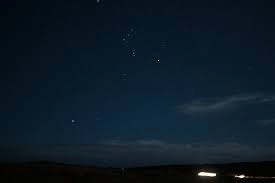
I spent time tonight outside watching Saturn slide west, and the half-moon along with an abundance of stars visible along route 33 east on Virginia’s Middle Peninsula. From my vantage just up the side of an embankment three miles from any town, stars filled the ordinarily black sky.

It gave me pause. Jupiter started to reveal itself just about the time the State Trooper showed up to take pictures of my car and the deer, but once he put out the flares and made sure I was okay before he left, I moved right back up that hill and found what is probably a nebulous, and other than talking to three or four kind people who stopped to make sure I was okay and to see if I needed a ride, I spent the night focused on the distant lights.

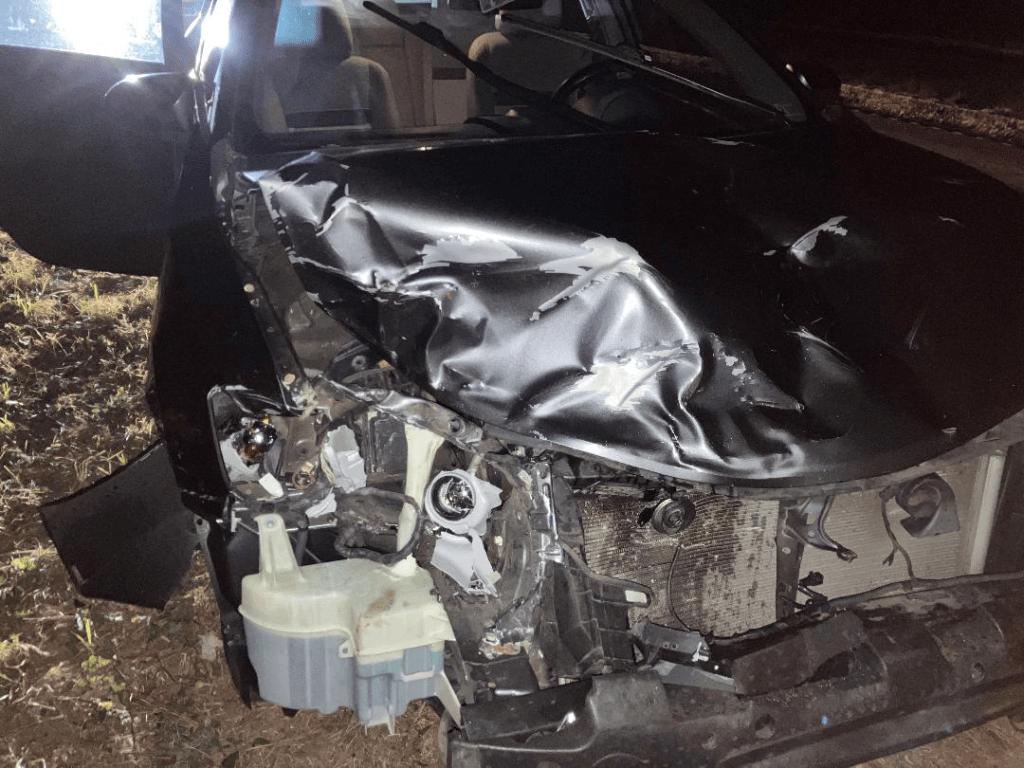
A deer hit me. I think we need to dispense with the ridiculous notion that we “hit” deer. Sometimes, perhaps, if we are distracted and a deer happens to be minding her own business in the middle of a road. But usually, and this time in particular, we are moving along fine when from the woods on the right a deer hit me, a beautiful tall, strong buck leaped to clear a small ravine between the road and the hill, and landed on the front of the passenger side of the car, crushing it entirely to the ground. I managed to stop on the shoulder but the deer went spinning through the air another twenty feet in front of me. He never twitched. Never looked back up. Dead on contact, both the deer and the Toyota.

But man, those stars. Just this morning on NPR I heard that a good friend of Galileo, Simon Marious, named the moons of Jupiter. I couldn’t see them with the naked eye, nor the rings of Saturn, but our own moon was perfectly visible. When the State Trooper lit the flares I thought I wouldn’t be able to see as well, but it was fine.

I was trying to remember some song from the seventies about the moon when a pick-up pulled up and a man got out. He asked if I needed help and if everything was okay. His license plate noted Disabled Vet so I asked and he had served two tours in Afghanistan. We walked up the road to the deer, still in perfect shape except for being dead, and the vet asked what I was going to do with it.

I’ll be honest. It never crossed my mind to do anything with it other than pull it off the road. I told him since the police already got pictures and filled out the police report for the insurance, he was welcome to the buck. I helped him load it on the bed of his truck and he was so pleased. “This is a ton of fresh meat” he told me. I wished him a Happy Veterans Day and thanked him for his service, and he drove off. I climbed back up the hill to wait for the tow truck. Almost two hours later he arrived. It was a flatbed since my engine is more or less crumbled beneath the new accordion style hood. I climbed in his cab and after he hauled my car onto the truck, we drove off. The car now sits in a field in the front of my property since he was able to make it around the first bend of the driveway.

I’ll deal with the car tomorrow.

Tonight my mind is on stardust and the million tons of meteor dust that fall every day, some of it fell tonight while I waited, almost bridging the distance between me and the cosmos, uniting us, like a deer and the hood of my car but with more grace.

I can have an anxiety problem on occasion. It hit tonight and it might take a few days to subside, but it will dissipate faster because of the stars, and the sky, and the way it never minded what went on. I kept thinking of my mother who in so many videos I’ve made of her, says, “It is what it is.” Trudat Joanie. Damn straight. I actually thought “It is what it is” as I climbed back up the small embankment and watched the sky, fixed on some bright star not far from Ursa Minor. Maybe Vega.

I have been in need of slowing down, of taking my time, being more present. I have been on the go for far too long cruising in the left lane, and lately I’ve been thinking about that, about walking the Camino in the summer of ’26, about just slowing down in everything I do. Then a deer hit me.

The tow truck driver was like Obi Wan, the way he talked with such exactness, with a kind tone. He said he was glad I was okay, and he put his hand on my shoulder when he saw the car and said, “Brother you are not having a great night, but I’m glad we’re here and talking about it.”

Way to slide the worst of this night immediately behind me.

We drove home and he slid the car off the truck bed onto the grass in the field on the front of the property, where it sits right now in the cold instead of down here near the house under the porch lights, warm and comfortable.

After I emptied it of most of the stuff inside, I stood in the field and looked at it, thinking about the myriad trips to western New York and Maryland, to Florida so many times, and to all the state parks my son and I have hiked in the past five years or so, and I sighed, looked up, and found Vega again, lighting my way, walking me back from the car to the house. Before I went inside I heard something in the woods. Deer bed down around here all the time, and when I heard several I knew that’s what was out there behind the shed. More likely a fox, but that just ruins this story, so I’m going with the deer.

I wanted to apologize. I mean, I can replace the car. But that poor deer is now on his way to some Vets freezer.

Time. Out.

So here’s the thing: According to scientists who constantly work on and adjust the Asteroid-Satellite Collision Probability, when a meteor or other such space object hits a satellite, the rock “vaporizes into hot, electrically charged gas that can short out circuits and damage electronics, causing the satellite to spin out of control.” Don’t worry about being hit–it’ll burn up on reentry into the planet’s atmosphere. No, that’s not the problem.

See the problem? Yes, no more satellite. And if a large such space rock plays pinball with Space X’s system of communication, we here are earth are, as they might say on “Eureka,” simply fracked.

Since the beginning of the Industrial Age, humanity has forged ahead into the more convenient, even at the expense of the more improved. Further, we have built these castles at the expense of their foundations. The percolator becomes Mr. Coffee becomes a Keurig. Hell, I’ll just swing by Starbucks, and I’m not getting out of the car; I’ll go through the drive thru. Fine, but now give someone a percolator and ask them to make coffee. It’s not going to happen. How many people know their friends’ phone numbers? Their own? Ever been in a store in the middle of checking out when the “connection” fails on their register, and the clerk who can’t write in cursive or add without a calculator stands there completely perplexed?

The world became transfixed by convenience so that ambitious endeavors are no longer defined by “better than it was,” but “more convenient.”  As a result, we are completely, arguably, most definitively reliant upon the 2500 operational satellites orbiting the earth (about 6000 actually are orbiting, but more than half simply don’t work). The argument is the more time we save the more time we can spend with those we love.

Nice. But we’re not. People don’t drive by and visit. Hell, they don’t even call anymore. We’re not going for more walks in the park or along the beach. Where is that extra time? Where are all the people?

You know what? Let’s do it this way instead: Every single day, 100 tons of meteorite dust coats the entire planet. This is true. You, me, the cars, buildings, everywhere, everything. It is so miniscule, of course, that we don’t even know it is happening, preferring instead to wait for the Leonid shower, or the Perseid, the Geminid, or even the Urid, to run outside and watch the shooting stars every twenty or thirty seconds on a clear moonless night. Who isn’t transfixed by that?  Yet equally, who isn’t freaked out by the thought of meteor dust in their hair? On their ice cream cone?

But wait, there’s more:

The temperature at the core of the earth is the same, about 10K Fahrenheit, as the surface of the sun. I love symmetry but part of me wonders if The Great Universal Thermometer simply stops tracking at 10K. Based on that and some formula they figured out with a slide rule (look it up), scientists–the ones who know what they’re talking about because of generations of research and who have less ability to create a fiction than I do–say the planet is about 4.5 billion years old, but humans of any sort have only been here for about 450,000 years (Note: If you are even slightly considering posting a response about how the earth was created in April about 6000 years ago, go away). Now, if you do the math and divide the history of the universe into a day, humans have been searching for convenience stores for about ten seconds.

Our time here is short. So it comes back to meteors. Stardust. The naked-to-the-eye coating which exploded countless zeros away from here several billion years ago, arriving, now on our chocolate swirl cone.

Keep that dust in mind as we add this to the equation: The greatest scientists in the world have trouble wrapping their mind around the concept that our own planet is an anomaly. Even if you are like those of us who believe somewhere in the deep recesses of unthinkable distance are planets with lifeforms playing Scrabble and drinking Pinot Noir, astrophysicists like Stephen Hawking, Neil Tyson, Carl Sagan, and Brian May can’t tell you where, and they’ve looked with equipment so advanced some of it has left the solar system, some landed on moving asteroids, and some is scooping up dirt on the moon like it’s dog poop and bringing it back. And these experts with combined IQ’s in the thousands do not know.

But they can tell us around 100 tons of meteorite dust coats the earth, and us, daily.

I sat at the river this morning completely unplugged and, to be honest, uninterested in much. I get that way a lot. I felt like going for a long walk in the mountains or sitting on the sand and look for manatee. But both those locales seem as distant as the stars. Instead, I looked out at the Norris Bridge two miles upriver, and the cars and trucks crossing the mile and a half span headed North, up toward DC, up toward New York, up, just further and further up and my mind wandered up as well, across the Niagara Frontier, across Ontario. Up.

I couldn’t hear them, the cars, but I could catch the glint of sun on their windows. Closer, on the river, some bufflehead ducks surfaced then dove again. A workboat headed out from Locklies; I guess to check some traps. And now it is raining, torrents. When it rains like this, when the sky seems to be falling, I don’t want to retreat inside as much as I want to go all in–dive into the river and feel the water around me like amniotic fluid. But it is late. Today, it is about noon, but as far as the history of “time in a day” is concerned, for me it is four in the afternoon. The sun is no longer at its full strength, dinner will be ready soon. The streetlights will soon be on.  

I can’t focus on the minutia in life; never could. Some student asks me about subject verb agreement and I’m wondering why we can only see about 2000-3000 stars, not “millions” as we feel when standing at the bay on a clear, moonless night. I’m more focused on the reality that I have so much I want to see, so many glasses of wine to drink with friends in European pubs and small quaint villages and sandy southern beaches, but very possibly won’t, brings me to the brink of psychosis when someone actually screws up simple comma rules. Part of me wants to say, “Come on! This isn’t rocket science! It’s a fracking comma!” and another part of me wants to whisper, “You’re doing fine. It’s just commas–I knew what you meant. Now go bathe in the miracle of meteorite dust. Buy a chocolate cone and wait for it!!”

In some inhumane attempt to find the easier, find the quicker, the more efficient, humanity has drifted too far astray in 450,000 years; so far from the essential; so far afield from what matters.

We’ve got to get ourselves back to the garden.