This blog is about reading some of the most motivational writing you will find while helping fight Parkinson’s Disease.
So here’s what happened: About four decades ago I put together a book called Vincent which my former advisor at Penn State, Eton Churchill, and I published. It did okay and had rave reviews for its simplicity combined with insightfulness on the part of the author. I did not write this book; I pared down more than 2000 pages of letters that Vincent van Gogh wrote to others–mostly his brother Theo, but also other artists. The book became about 160 pages of startlingly beautiful first person prose in which Vincent tells his own life story including his turmoil with depression, his passion for life, his visions in art, his relationship with God, and his relationships with women. It truly is captivating writing.
In 2017, a real press picked it up and reissued it as Blessed Twilight: The Story of Vincent van Gogh, with a gorgeous cover and more wide-spread distribution. especially since the release coincided with the release of the movie Loving Vincent. It did incredibly well, but eventually went out of print as the publisher in Florida shut down and the people in Ohio who took it over also closed their doors.
The overstock of these books floated around the east coast and the mid-west, and with great generosity on the part of the people in Ohio, arrived at my door yesterday.
I am selling them and all the money is going to aid in the fight against Parkinson’s Disease.
These make fantastic Christmas gifts or just reading material for yourself. I can’t overstate how everyone who reads this book is captivated by Vincent’s philosophy, perspective, and passion. I can compliment it since I only organized the material, Vincent van Gogh did the writing.
Order copies for yourself and your friends. They are $25 a piece including shipping, or 5 for $100.
You can:
Venmo: @Robert-kunzinger
Zelle: rskunzinger@gmail.com
or send a check made out to APDA (American Parkinson Disease Association) and mail it to me at Bob Kunzinger, PO Box 70, Deltaville, VA 23043. ALL the money (except postage) will go to assist the research for Parkinson’s.
“There’s nothing more truly artistic than loving people“
So here’s one I wrote and let it go. It’s partially told in a piece in my short collection Howl at the Moon (Cuty Wren Press). It came to mind this morning because I’m leaving in a few days for Amsterdam, and I’m sure there will be cheese involved.
I was in the Netherlands about twenty years ago, maybe twenty-five. I lectured at the University of Amsterdam and talked about art and Van Gogh and death. Normal stuff. In class one day, which was open to visitors and in which everyone was required to speak English, an older woman whose late husband was an artist sat in for the lecture, and afterwards she gave me an etching her husband did of a local cathedral. When she learned I was going to find a way up to the Zuider-zee, she offered me her son’s motorcycle for the day. Students gathered to talk about Van Gogh and about America and more. While the woman and I spoke, they talked amongst each other. One guy asked another if she was working that night and she said no, but the next night she was. He told her he’d come by. Another said it hurt to speak in English, and the young woman said it’s good for him to learn, that she wants to learn as many languages as she can. They all talked about van Gogh’s art.
That night on my way back to the hotel, I walked through the Red Light district to use a computer at a Brown Café to tell my officemate about how it was going so far. The windows of the district display scantily clad women, select lingerie on the floor, a couch, maby velvet, sensual surroundings and lighting. They move about tenderly like flesh and bone mannequins, and when a prospect passes, they urge him to pause, consider coming in for a quick turn. They whisper to them in Dutch, in English, French, German. There’s a back room for the business end of the exchange. I kept walking.
The next morning was one of those movie-set days with a perfect temperature, ideal soft breeze, postcard tulips and windmills, dikes running roadside holding back calm waters. I rode out to a Volendam café on the docks where som sailor just back from the states finished washing down his ketch, and we talked about his Atlantic crossing, about the Chesapeake Bay where he had been, and about the cheese he had on deck which he shared with me. We went in the café for a beer and the waitress offered some Gouda and bread with eel and herring. She said the cheese was from a small factory just a few miles away and that I should go, so I did.
Inside the cheese factory—a small barn-type building—a young man and woman stirred a vat of vlaskaas cheese which was sharp, and they told a half dozen of us how gouda is made and molded into wheels and how we shouldn’t refrigerate it, and how healthy it really is, being a hard cheese, including aged, smoked, and toasted. I bought two wheels for fresh gouda and stacked them in my pack and walked outside where a few other travelers from a bus sat at a picnic table.
A Dutch girl about twenty-five eating cheese and drinking white wine asked me to sit with her, and when I told her she looked familiar she said she had been at my lecture, and she swept her blond hair behind her ear and that’s how I knew her—she did that the entire reading, it kept falling forward and she kept sweeping it back and I thought Geeze just tie it back already. I told her simply I recognized her.
She offered me a glass of wine and retrieved a plastic cup from inside, and I shared her cheese. Her name was Abby and she came up to get a few wheels for her family and one for her. After about thirty minutes and a glass of white, the bus driver called for them to go so she left and said she’d hoped to see me again, and I walked toward the bike to leave. The cheese was heavy but I was glad to have it, and the perfect day made me not care so much.
That night I packed for my trip home the next day and decided to head back to the Brown Café to write again to my officemate back home to tell him about the ride out to the North Sea and the sailor and the hair-sweeping blond. I did so on the upper level of the first café I came to where the open door swept the smoke from the hash up to the internet café section so that by the end of my email I couldn’t spell anything correctly.
I left the café and strolled around the district where people drank espresso and the aroma of various smoke filled the narrow streets and top-shelf women worked the windows, and if you can see this coming you must believe me that I certainly didn’t see it coming at the time: I turned a corner and glanced at a blond in a prime-site window, and it was her, Abby, the hair girl with the cheese, and she motioned to me like I was just another passerby, but then recognized me and sat up more from where she had been prone on some pillows and her white lingerie lingered just a bit behind, and she pulled her strap back on not trying too hard to do so, and she pressed against the glass and urged me to come inside, motioning toward the door on the left. I thought about just walking by but that thought didn’t hold so I went in just to say hello. She cut me a slice of the cheese she had bought that day and she pointed that out, that it was the same wheel of cheese that we shared earlier, and that thought seemed to connect us closer than I cared, but it hung there between us. I had one slice of the vlaskaas on the table and said I didn’t want her to lose business on account of me, and that I really had no intention of patronizing her profession, and she smiled and said she understood. I left, and on the way out I passed the guy from class who had asked her if she was working that night. He glanced at me and I laughed. This is not like the colleges at home, I thought.
On the way home I walked by the Van Gogh museum one more time. It was quite in that part of town, and I stood in the cool night air, the sweet aroma of flowers everywhere, and remembered Vincent’s words about Sien, a prostitute who lived with him for a while with her young daughter. About her he wrote to his brother, “I believe there is nothing more artistic than to love people.”
Next week I’ll be there, at the museum, at the village where he lived a while with his parents, and along the canals. Just look at how everything in our lives moves on, grows and changes and, eventually dies. We age and hold out hope that some of who we used to be remains, knowing, of course, that is true only for a little while. Since I walked those streets last, friends and loved ones have died and my world has changed time and time again, but this week I’ll walk along that avenue and the hallways of the van Gogh museum where his work remains on permanent display, and I’ll think about the man who was nothing more than a peasant who lived with a prostitute, didn’t make any money in his last ten yers, lived off of his brother, was disliked and consdiered a leech and a failure by everyone including the best artists of the day who for the most part said his work had no hope. And I’ll think about that as I pass people sleeping on benches in the park and wonder which ones are artists and which ones of us merely pass judgement.
Vincent van Gogh was born on March 30, 1852, and died at birth. His parents buried him in the entrance to the graveyard in the church where his father was an Episcopalian minister. Exactly one year later to the day, the couple gave birth to another boy and named him after his dead older brother. Vincent van Gogh was born March 30, 1853, and spent his youth seeing his name and birth date on a headstone when he went to the church.
He tried working in a bookshop, as a tutor, an art dealer, and a preacher in the mines of Belgium. He spoke multiple languages, read Hugo in French and Dickens in English. He fell in love with his cousin and lived for some time with a prostitute and her daughter. For the last ten years of his life he lived entirely off of his brother, sold only a painting and a scattering of drawings, fought with every artist he knew and rarely paid his bills. He was belligerent and sick with syphilis, manic-depression, and epilepsy. He was considered a bum by every contact he made, and only two art critics thought he showed any promise at all. At thirty-seven he shot and killed himself.
That was 135 years ago this July. We’re still talking about him.
By today’s standards, he would be outcast and dismissed as a man who wasted his life pursuing a passion with no hope of even making a living at it, let alone gaining any success. He would be quickly forgotten.
A few years after his suicide, Vincent began to be recognized for his innovations in art, his vision as an expressionist, and his deeply-moving letters to his brother about life, love, God, hope, art, and death. Today he is considered one of the most influential artists in history.
I’m going to the Van Gogh Museum in Amsterdam next week followed by a reading I’ll be doing at the Van Gogh Library in Neunen, Netherlands.
It started when I was a freshman in college, and a dear friend, the late artist James Cole Young, gave me a three volume set of letters Van Gogh wrote to his brother and other artists. I mostly ignored it for a few years, until in Massachusetts when I went home after work each night and read them several times, intrigued by two seeming contradictions: One, he wrote extensively about his inability to gain any attention at all in the art world and other artists’ bad opinion of his work, yet he became one of the greatest artists of all time; and two, he stated often his thrill for being alive, for life itself, for everyone, and he wrote of the insane idea of taking one’s own life, yet he did just that. So I looked further. As a graduate student, I wrote a one man play as one part of my Masters in Arts and Humanities at Penn State and performed it at the Olmstead Theatre in Pennsylvania, under the direction of the late playwright Eton Churchill. Eventually, my work Blessed Twilight: The Life of Vincent van Gogh was released in 2018.It is all first person from Vincent’s letters.
In just over a week I get to hang out where he lived and wander aimlessly down the same streets of Neunen. Perhaps I’ll even drink some absinth
Most people love Vincent’s art. But I like his writing.
Like this:
In a painter’s life, death perhaps is not the hardest thing there is.
The earth has been thought to be flat. It was true, and is today, that between Paris and Arles, it is. But science has proven the world is round and nobody contradicts that nowadays. But notwithstanding all of this people persist in believing that life is flat and runs from birth to death. However, life too is probably round and very superior in expanse and capacity to the hemisphere we know at present. For my part, I know nothing of it. But to look at the stars always makes me dream as simply as I dream over the black dots of a map representing towns and villages. Why, I ask myself, should the shining dots of the sky not be as accessible as the black dots on a map of France? If we take a train to get to Rouen, we take death to reach a star. One thing undoubtably true in this reasoning is this: that while we are alive, we cannot get to a star any more than while we are dead we can take the train. So it seems to me possible that cholera and cancer are the celestial means of locomotion just as steamboats and railways are the terrestrial means.
To die quietly of old age would be to go there on foot.
I feel more and more that we must not judge God on the basis of this world; it is a study that didn’t come off. What can you do in a study that has gone wrong if you are fond of the artist? You do not find much to criticize; you hold your tongue. But you have a right to ask for something better. It is only a master that can make such a muddle as this, since then we have a right to hope that we’ll see the same creative hand get even with itself. And this life of ours, so much criticized and for such good and exalted reasons—we must not take it for anything more than what it is and go on hoping that in some other life we’ll see a better thing than this.
I found an old silver key while cleaning my closet floor. For years it might have been there shoved in the corner under the lip of a log, fallen perhaps from pants pockets or my winter coat. I don’t recall losing a key or changing a doorknob. Perhaps it opens some old lock on the old all-glass door on the side porch. At the start back then strangers would meander down the winding driveway through the woods to the house and cup their hands against the reflections on the door windows to look around. I replaced that door with a solid one and put a no-trespassing sign up front.
Older, I think; the place in Wellsville, Pennsylvania, where I came home one July morning to find plants and flowers in the entrance and at the top of the stairs for my birthday. It was the first place I lived where I gave someone else a key. Or it might be from my first house in New England, where the door stuck in winter when the frame froze. I’d spend hours shoveling my steps and those of the old woman across the street who delivered mail. She’d bring apple pie for my efforts or leave one for me with Sam at the Deacon’s Bench antique store.
But that key was gold. Now I think this one some souvenir from my childhood home on Church Road, the two-story colonial where I owned my own first house key though I never needed it since after playing ball or riding bikes all day along the Great South Bay, I’d run in the back door full stride and laugh the way childhood makes you laugh for no reason at all.
I can’t recall now what this silver key might be for, though I’ll keep it, resist the urge to throw it away as evidence shows I clearly resisted before. After all, it still opens doors to places I never thought I’d return.
The following is an excerpt from my 2018 book Blessed Twilight: The Life of Vincent van Gogh; however, the words are his from a letter he wrote to his brother Theo in 1888. Often, an artist who excels in one genre does so in others as well; Vincent was no exception. I believe his writing to be as artful as his paintings.
Vincent van Gogh: March 30, 1853-July 29, 1890
From a letter to Theo:
It certainly is a strange phenomenon that all of the artists, poets, musicians, writers, and painters are unfortunate in material things—the happy ones as well. Maupassant is a fresh example of that. It brings the eternal question: Is the whole of life visible to us or isn’t it rather that on this side of death we see one hemisphere only? Painters, taking them only, dead and buried, speak to the next generation and very often several after in their work. Is that all or is there more besides? In a painter’s life, death perhaps is not the hardest thing there is.
The earth has been thought to be flat. It was true, and is today, that between Paris and Arles, it is. But science has proven the world is round and nobody contradicts that nowadays. But notwithstanding all of this people persist in believing that life is flat and runs from birth to death. However, life too is probably round and very superior in expanse and capacity to the hemisphere we know at present. For my part, I know nothing of it. But to look at the stars always makes me dream as simply as I dream over the black dots of a map representing towns and villages. Why, I ask myself, should the shining dots of the sky not be as accessible as the black dots on a map of France? If we take a train to get to Rouen, we take death to reach a star. One thing undoubtably true in this reasoning is this: that while we are alive, we cannot get to a star any more than while we are dead we can take the train. So it seems to me possible that cholera and cancer are the celestial means of locomotion just as steamboats and railways are the terrestrial means.
To die quietly of old age would be to go there on foot.
I feel more and more that we must not judge God on the basis of this world; it is a study that didn’t come off. What can you do in a study that has gone wrong if you are fond of the artist? You do not find much to criticize; you hold your tongue. But you have a right to ask for something better. It is only a master that can make such a muddle as this, since then we have a right to hope that we’ll see the same creative hand get even with itself. And this life of ours, so much criticized and for such good and exalted reasons—we must not take it for anything more than what it is and go on hoping that in some other life we’ll see a better thing than this.
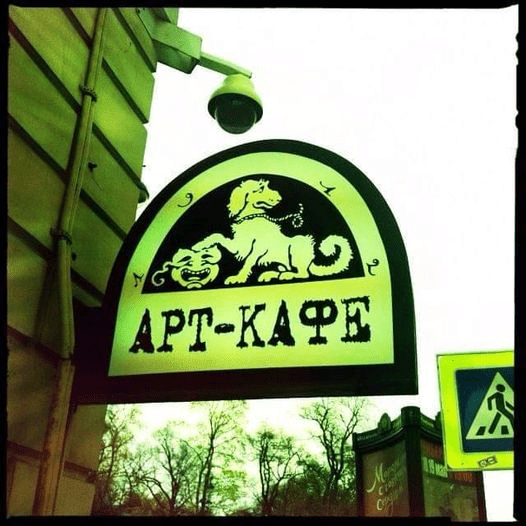
Eleven years ago I read a not-so-subversive piece called “Driving Under the Influence” at St Petersburg, Russia’s, infamous Stray Dog Café, where in earlier years Pasternak had read, and before him Mandelstam, who died in a gulag near Vladivostok for his threatening words, and also Anna Akhmatova, and a string of dissidents who risked their lives so their prose and poetry might be read and heard.
We sat at a long table, and while everyone listened to my innocent story of teaching my son to drive, I imagined the whispers and quiet conversations in those same corners about the Czar, who walked the hallways of the Winter Palace a few hundred yards away. What a world it must have been, I thought, but also, how good those days of revolution and dissidence were in the past. The city in 2013 was alive with artists, writers, photographers, musicians, and mostly legal political opposition to everything, with St Petersburg University students free to protest, complain, object, and support whatever they desired. As a result, no one needed to so much. It’s the greatest value of freedom; when people are free to choose, fighting and uprising recede. The horror of seventy-five years of Soviet oppression, preceded by three centuries of Czarist rule, was finally over.
My Russian friend and photographer Valentine shot pictures of old women, survivors of the siege, and of his children, his “Butterflies,” and laughed through a cloud of vodka, ever ecstatic at being able to express himself in marketplaces, newspapers, and galleries. Full of life and hope, these artists pushed their mediums to the max and shared stories of “darker” times when pointing a camera at anyone meant a possible sentence in Siberia, just east of Irkutsk, not far from the archipelago of dead poets. Not any longer, Valentine told me again and again over shots of Russian Standard and tables of photographs that just a few years earlier he had to hide those photographs inside the lining of books. “You should write here, Bob,” he told me. “You’d be free to write here,” he said. “Those dark days of Soviet Russia are dead.”
That was then.
The truth has once again folded up her tables and left the marketplace; transparency has turned away in shame. The Russia that Valentine came to love for three decades, and the only one I ever knew firsthand, is gone. It is gone. The citizens still attempt to navigate the streets of Peter the Great, the backroads of their “Window to the West,” but they are once again driving under the influence of a Neo-Stalinism, Vladimir Putin’sFascist Regime.
Russia needs dissidents again. It is a time for poets. The Stray Dog should be crowded again with college students and artists listening to new poets risk everything for a few stanzas of truth. A contemporary Mandelstam, a modern-day Pasternak, should come out of the corners of the university classrooms and set ablaze a bonfire of observations and digressions. Because nothing ignites writers more than the attempt to extinguish truth.
This work originally appeared in Susurrus Magazine, with portions published in various other journals.
Happy New Year. Sort of. I can’t keep track anymore, what with shifts and adjustments through the ages. Hell, I can’t even keep track of the days of the week. Last Monday was Christmas, which made Tuesday feel like Monday, but my son works on Mondays and Wednesdays so being around all day made Monday feel like Sunday or Thursday, until Wednesday came and it felt like Monday again. Next week I’m certain to go through this once more, with Monday being a holiday, and Tuesday feeling like Monday, and to add to that I’ll still date everything 2023, though, really, what difference does it make?
It’s only time after all.
Time Piece
The truth is, if we made lists of all the reasons why we need to know the days of the week, those lists would not be that long, nor the reasons to remember the year for that matter. It’s all relative, and they can be as irrelevant as they are essential to our lives, existing in the extremes.
No calendar can keep measure of how much time has passed since my father died; I can argue it was a month ago, I can claim it decades ago. And my childhood on Long Island ended about fifty years ago, but when I recently spoke to a friend from then, my adolescence seemed to have happened on Tuesday. No education I can conceive can inform how I feel when I stand on the sand along these beaches in Virginia before dawn, quietly watching the surfacing sun as buffleheads swim by and oyster boats churn out to sea; it is timeless in its immediacy. Einstein’s relativity metaphor aside, nothing says “it depends” more than our references to time—sweet, delicate, ethereal time. Certainly, calendars keep track of the days of the week, the months, but they can never measure moments, they cannot calculate how long we love, how long we have mourned.
Which makes the measurement of time as problematic now as it was in pre-recorded history, when sundials and seasons were used instead of Big Ben and Prague’s Atomic Clock. Still, they managed to mark holidays and celestial changes with the most primitive tools. Some people had that rare ability to look up to the stars, do a double-take, and say, “Shit. I think it’s Friday,” and then things change.
New Year’s Day, for instance, is New Year’s Day for a reason. Since my tenth birthday on a warm Fifth of Quintilis, in 1970, I have wondered why the New Year often starts smack dab in the middle of a blizzard. Simple, actually: First of all, ancient Romans had a God for everything. One of them held the key that unlocked that “passage” between what is and what is to come; or, metaphorically speaking, this particular God was the key master that opened the way for new things to occur.
His name was Janus. He was also the God of doors, by the way, which makes sense. New Year’s used to begin in March, but in 46 BC, the world’s most popular Caesar and favorite orange drink, Julius, decided the calendar needed reform. He was right, actually, as the Roman calendar already in place for six centuries followed the phases of the moon, and that totally screwed with people over time as the seasons seemed to “shift.” Worse, the politicians who oversaw the calendar kept adding or subtracting days to affect the length of their terms one way or the other.
So JC met an astronomer named Sosigenes who convinced him to trash the lunar module and follow the Egyptians’ lead—they followed the sun. To balance it out, JC added sixty-seven days to 46 BC, which put the solar calendar on track, and the first New Year’s Day of the Julian calendar fell on the First of Janus’ month, January. Mr. Sosigenes also instructed that a true “year” around the sun is six hours longer than 365 days, so JC decreed that once every four years an extra day be added.
We know most of this. Let’s leap to the good part.
After JC was killed, his successor, Mark Anthony, changed the name of Quintilis to “July” to honor him. But JC and Professor Sosigenes had miscalculated slightly, so by the end of the first millennium there were seven extra days, fifteen by the time Prague was founded in the fourteenth century. The Czechs were royally confused. And to add to this cluster of cloistered calendar decision makers, a monk, Dionysius Exiguus, figured out in the early 500s that Christ was born about 753 years after the founding of the city of Rome, so he called that year “zero.” Up until then, Roman years from 753 BC forward were numbered from the founding of the city, making what we call 753 BC, they called zero (founding of Rome). So according to Brother Dionysius, Christ was born in 753 Ab Urbe Condita: “after the founding of the city.” The monk decided, conveniently during a time when Christianity was sweeping the empire, to call that year “zero,” but it was not widely adapted until the eighth century just as the Roman Empire was becoming the Holy Roman Empire, so that nearly until the time of Charlemagne, people mostly counted time Ab Urbe Condita. Once more then, what we call 800 A.D., people at the time mostly called it 1553 Ab Urbe Condita, or AUC.
All of this speculation was finally confirmed in the 1740s by Jacques Cassini with his astronomical skills, and it was only then that the Roman years before Brother Dionysius’ declared year “zero” were labeled “Before Christ.” If it wasn’t for Brother D and Dr. Cassini, New Year’s this Janus the 1st would be the year 2774 AUC.
There is more; hang in there.
With all that timeline information, we cut to the 1570s, about the time St. Augustine, Florida, was beginning to flourish. St. Gregory the XIII noted the days were still not accurate based upon both the lunar and the solar measurements, so he hired a Jesuit astronomer named Chris to fix the damn thing once and for all and get the dates aligned with the sun, and he did so by dropping ten days from the calendar for that year only—a realignment, if you will. Thursday, December 21st, 1581, was followed by Friday, January 1st, 1582, the first day of the Gregorian calendar. You know they partied hardy that New Year’s Eve. Honestly, I have awakened on January First with some serious hangovers in my years, but I have never thought, “What the hell happened to the last ten days?”
And while most of the time I’m not really sure what day of the week it is anyway, I do know of one consistency through the ages from 753 BC through some hot summer Quintilis afternoons, and on past zero to today: people from kings and popes to paupers and astronomers made resolutions and promises, and maintained the hope that life would not pass them by. Most certainly, for all of these January Firsts, people resolved to spend more time with those they love, go for more walks in nature, stare at the moon, wake up with the sun, sit and talk to their dad, tell him how much he is loved, how much he is missed, and not one of them could imagine how swiftly life would dissolve.
‘We mark time, humanity; calculate how long it has been, how long it will be. We measure and subtract, add, and subsequently deduce that we know what time it is according to astronomical wizards and Holy Texts. Yet we can’t grasp the speed of the fleeting lives of those we love and lost.’
Now let’s assume you follow the Chinese calendar, which follows the moon, with an extra month every three years, and it dates from 2637 BC, when Emperor Huangdi started counting. This worked for farmers, and the fact the emperor “knew” the astronomical cycles made him a bit other-worldly (with thanks to his astronomers). In the seventeenth century, Jesuits introduced the Gregorian calendar in the east, but the tradition of the Years of the Monkey, Rat, Ox, Tiger, Rabbit, Dragon, Snake, Horse, Goat, Rooster, Dog and Pig continue.
The Hebrew, or Jewish, calendar is the official calendar of Israel and is used throughout the world to determine religious holidays and readings from the Torah. The clock started ticking in 3761 BC, which, according to the Old Testament, is the date of the creation of the world. It is also the oldest calendar in use, dating back to the ninth century BC.
We mark time, humanity; calculate how long it has been, how long it will be. We measure and subtract, add, and subsequently deduce that we know what time it is according to astronomical wizards and Holy Texts. Yet we can’t grasp the speed of the fleeting lives of those we love and lost.
For some years before his death, my dad and I drank scotch. Dad always liked blends to which he probably became accustomed early on. On special occasions he drank Chivas, aged just right. And on Tuesday nights we poured two glasses on the rocks. Routine is important when one pushes ninety years of age, so I’d always try and get there about nine and was no sooner in the door when he’d jokingly say, “My coaster seems to be empty,” or something similar with a laugh and a welcoming smile. I would put down my things and offer to pour, and he would insist he was just fooling and didn’t mind at all getting our drinks, which was true. He would walk in the kitchen, and I could hear the cabinet and the ice and the heavy bottle he put back in the cabinet, never leaving it on the counter for more because we never had more. He’d return steadily and slowly and hand me my glass, and we’d raise them to toast and he’d say, “Well,” nodding his head politely at a loss of words, aphasia setting in some time before those last months, and I’d interrupt and say, “To your health,” to which he would again nod and with his deep voice reply, “And to yours.” Then we watched baseball, not really talking much. It was late. He sipped his scotch.
But I don’t like scotch, so I preferred to pour. When I went in the kitchen everything was the same, but instead of scotch in my glass I had mostly water. Dad’s eyes had faded in those last few years, and he wouldn’t have noticed the lighter tint of my drink. And anyway, it wasn’t about the scotch; we would sit together a long time those Tuesday nights and he would always turn once and say, “Boy this is good, isn’t it?” and I would agree. Sometimes I felt guilty and would pour a bit more for myself as well, but usually only when it was the Chivas. After a while he would head upstairs to bed. Then I would sit alone in peace after a long day, but inevitably I’d wish he had stayed up longer even just to sit quietly. I’d promise myself that the next Tuesday while drinking scotch I’d make more conversation, talk more about the baseball game or about my day or anything really, since he wouldn’t have minded even turning the game off, but the following week would come and, like clockwork, I’d be exhausted and silent and he would get tired and go to bed.
My father aged well and sitting with him on those nights was the purest time I had during those days. When I get home late and stand in the driveway on a clear, cold night, it is too real to think about, and I know Virgil was right when he said that time passes irrevocably. But memory tosses linear time to the wind and leaves us with years which shift positions from our perspective, and we come to understand what Elie Wiesel meant when he said, “In the end, it is all about memory.” Death, perhaps, is the consequence of time, but so is memory, whether that time be linear or ephemeral.
Even before he died, time slipped out of joint those last few months, passing quickly, moving slow. And our calendar certainly needed adjustments along the way. Of his ninety years, I was alive for fifty-five of them. Of those, I was out of his life, physically, for thirty-five of them, and of the rest he worked and I played or went to school.
It was only those last years, the fleeting ones which cannot be calculated by astronomers or priests, when we truly bonded. In the end, I would give anything to add that extra day, set my world right again, realign my time with his.
art·ist /ˈärdəst/ noun • a person who practices any of the various creative arts, such as a sculptor, novelist, poet, or filmmaker. • a person skilled at a particular task or occupation.
Artists engage in a daily battle between the belief their work is worthy—that it can stand the scrutiny of those who know better and it will be well received by critics and customers alike and is ready for publication or presentation; and the conviction that it is a complete waste of time—that it is predictable or trite or tiresome, will sit on shelves or in bins without so much as a glance, and a dozen better ways to approach the topic will become apparent while the brutal reality that no other creative work will ever emerge remains crystal clear.
Artists, writers, work for free, hoping, praying, someone, anyone, will order the book just out of support, just out of curiosity. There is no health care, there is no retirement plan, there is no guarantee the time invested wasn’t simply folly. There is no yard stick to measure how well it is going, how much longer it will take, which parts need attention, and which deserve to be deleted. Often, artists stare at the medium for hours, fiddling around, snacking, cleaning, engaging in any form of distraction and avoidance. On a good day, a writer may have a good page, sometimes three or four, and every once in a while, lightning strikes, but an artist lives with the strong possibility of waking up the next morning and chucking the whole project. Artists have panic attacks, breakdowns, and bad habits. They drink. They swear. It is the creative version of coping, of loosening the tie, but the work is never finished, unless one buys into Rembrandt’s insistence that a work is finished when an artist realizes the intentions.
Few occupations demand the tenets of faith like that of an artist. If they agree with Kahlo and paint their own reality, then artists demonstrate daily the belief in things unseen, constantly starting from scratch, always inventing, and always—by definition—always searching for originality in a world flooded with ideas and blogs and podcasts and books, and still the artist works in one of the original exercises of pure faith, well knowing that Gauguin was right, that art is either revolution or plagiarism.
An artist wants to scream “buy my book,” “purchase this painting,” “please listen to my music.” An artist wants to balance the need to promote her work with not wanting to come across as egocentric when in fact the very act of creating something from nothing under the conviction others will want to make it part of their lives is a level of egoism few professions demand. An artist deals with these tugs of war between humility and pride. The tug of war, as Merton writes, of finding oneself and losing oneself at the same time.
An artist keeps working because it is a race against time to not “die with the music in you” as Wayne Dwyer noted, with stories on the cusp of creation, with unfinished work, with incomplete manuscripts, because two things are absolute: one lifetime cannot accommodate the ideas and works and starts and restarts of an artist, and they will die sooner rather than later and it is coming on fast, no matter how long they will actually live, because perception is different for an artist, hence the need as James Baldwin insists, to vomit up the anguish.
An artist cries because so much time is wasted. An artist cries because it is impossible, it is just impossible to capture the turmoil in humanity, but the artist tries to abide by Pollock and paint “what he is” by sketching another river, writing another digression, composing another score where an oboe comes in high and slow in some minor-key attempt to capture the sadness which, anyway, a true artist well knows she will never aptly express, because all artists know that Rodin was right—the main thing is to be moved, to love, to hope, to tremble, to live.
If one does not have a bestseller, a gallery, an audience, people consider the art a fleeting phase, never completely understanding the difference between art and commodity. An artist wants sales, of course, but only for the purpose of having the time to produce more art. An artist is disturbed by negative reviews and criticism, of course, but works anyway. If a benefactor bestows funds for an artist to keep working without the stress of financial burdens so common in the creative world, that artist will produce. But for certain if no such benefactor exists, the artist works anyway, finds the freedom necessary anyway, producing the same work anyway, because the artist knows what Monet knew, that the richness comes from nature—the true source of inspiration. The world is graced with art because some people must create as certain as they must exhale, as certain as Chagall’s belief that the artist simply picks up where nature left off.
Artists are not amateurs, they are not hobbyists. An artist will spend hours figuring out the necessity of one word, an artist will step back after two months work and scrape off the paint of an oak to move it one inch for a better composition, an artist cannot eliminate a note or a phrase. An artist wants to leave a mark, believes, as did Trotsky, that art is not a mirror to hold up to society but a hammer with which to shape it.
Artists are shooting for something else, and in the end the art is merely a symptom of their desire to express the inexplicable. Because in the soul of an artist is the deep understanding and resignation that, as van Gogh insisted, the true artist works not with brushes and canvas but with flesh and blood, believing first in humanity.
An artist is never quite certain of her mental stability but has complete faith that how she behaves is perfectly normal. Virginia Woolf, Eugene O’Neil, Beethoven, Keats, Tennessee Williams, Vincent van Gogh, Hemingway, Sylvia Plath, Michelangelo, Charles Dickens all lived with mental illnesses and any artist worth his salt will insist if any element of these great souls had been more regulated, more controlled, we would never have heard of them.
Georgia O’Keefe was right: Whether you succeed or not is irrelevant, there is no such thing. Making your unknown known is the important thing, that is success. Something is that was not but for an acute thought, some simmering neurosis only settled by the act of creation. Hence poetry, literature, paintings, symphonies, and all.
An artist can quench the stress and anxiety of bill collectors and illnesses, of hunger and sleeplessness, by producing two or three decent pages, by catching the color of what will forever be last night’s sunset. An artist makes beauty permanent, makes our deepest emotional reactions permissible.
We walk that tight rope spanning obscurity, balanced only by a pole of phrases and transitions, of oil and acrylics, minor keys and crescendos. Walt Whitman had his Leaves of Grass, but an artist has a blank sheet of paper. This leaves the advantage with the artist. Everyone knows the work Whitman wrote and how it still grows in the literary field, but an artist has the uncriticable blank sheet of paper, and with the right choice of words, he may harvest his own Grass. To be an artist, Henry Moore said, is to believe in life, and life is mystery, and mystery is the flint which ignites creativity, without which, as Rene Magritte points out, the world would not exist.
An artist hopes for longevity but couldn’t care less about time. He worries about time but isn’t concerned about death. He is terrified of death but deep inside hopes beyond all reason the work will survive. Yesterday I put down a ton of bricks I’ve been carrying for several years, and today I wrote eight pages and walked four miles in 110 degree heat. I was invincible; I have been reborn, and I can write volumes again. Next week I’ll find a wall, some wall somewhere, and run head first into it with an absolute conviction that I have embarrassed myself, humiliated myself, lost the respect and faith of others. Artists do not need critics; they tear themselves apart just fine. Artists do not want advice; they have no intention of following it anyway.
We do the best we can with blank screens, empty canvases, charts without a single note. Writers in particular have no batting cage; it is all from scratch. A painter can mimic van Gogh until it is perfect and then move toward something original. Musicians are famous for cover songs, gaining a following, slipping in something original after a while. But writers have no such approach. We can’t retype For Whom the Bell Tolls and tell people, “Check it out, man. Just like the original.” No. We must start from scratch, invent some story, some way of looking at things, some turn of phrase, which never existed before, ever.
We want you to buy our books, a picture, a song. It isn’t money. It isn’t ego. It is a simple inexpensive way of letting artists know they didn’t just waste their entire life.









 a view from this wilderness