The Almost

I posted a comment today that simply said, “I’ve lost interest in absolutely everything. Almost.”

I wasn’t kidding. Sometimes I joke or lead on, sometimes I post things in a broad stroke as an inside joke to someone out there who gets it and everyone else is like, “Huh?” And sometimes, once in a while, I mean it. That’s this time, now. I’ve truly lost interest in absolutely everything.

The news has stolen so much of my time I feel like I should be ten years younger but for the endless endless ENDLESS barrage of manure pouring out of left and right and mainstream and radical outlets, filling the empty spaces of life with reports on the childish behavior of world leaders. So I turn to see what’s going on around the world and I see children dying in droves in the Middle East, but nowadays in a world filled with bitter and anxiety-ridden people ready to snap at anyone who speaks, those that point out the tragedy of dying Palestinian children are called anti-Semitic when they just are trying to say no matter what else you feel about land rights and terrorist organizations, at the very least we should be able to agree that tens of thousands of children should not die from war and starvation, right? Right?!

And my beloved St Petersburg is a place I’ll never go again because two or three men at the top decided to change the lives of the entire nation–two nations actually–so I turn my attention to students and classes since I stumbled into that career, but everyone is cheating with AI claiming it doesn’t make a difference since the work is done and the essay is written and I did the same thing when I was their age by using a calculator instead of working out the math on paper and it is nearly impossible to prove anyway. So I look toward some planned trips I had with some groups of people, but when they fell through and I let them know, I received mostly belligerent, nasty, attacking emails from the same people because they decided not to read my emails. People suck. Come on, you know it. They just suck.

So I turn my attention to my work, but one book project for a publisher in New York got pushed off a year, and the other book project for my publisher in Texas is going well and launches this Christmas, and while I think it is some of my best work and the endorsement from writers I respect is unprecedented, it will never be what I want it to be because it is so personal, so significant to me, that it took forty-five years to tell the story and I’ll never be satisfied, and letting it go to the publisher was like watching the main character die all over again.

I’m exhausted. No. That’s not right. Fatigued isn’t close either.

Numb. The worst kind of numb; the numb that feels good and makes it hard to give a rat’s ass about anything at all except being numb. Exhausted and fatigued can be bad. Numb can be dangerous.

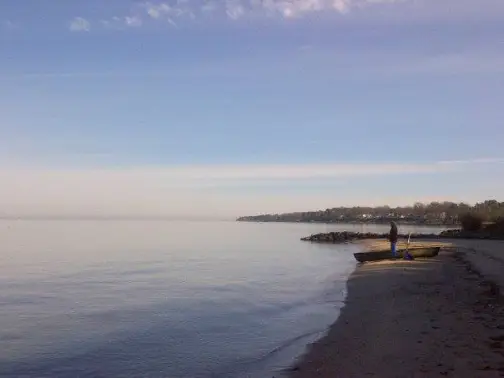
But I had a few moments of “excellent” in the past few months. In The Netherlands. At Spirit Lake, Utah, and with my son hiking various trails along the Chesapeake. But I’ve lost interest in almost everything else. True story.

So I decided to forget about the news and the world situations and the AI essays and the publishing delays and writing disappointments and instead just focus on the Almost.

We spend much too little time focusing on the things that we do find interest in, we are too often held hostage by the news cycle which only pisses us off. This cannot be healthy. So I’ve decided to save myself. It might be one thing. Sometimes you might be close to a tragedy but there is one thing–perhaps a child, perhaps an event, maybe some faith–that keeps you going anyway.

So I turned to the things that motivate me from inside somewhere.

Shit.

I wish I could remember what they were.

Student Comes to See Me

A Personal Reflection This Week:

I woke about three this morning; it happens a lot. This time it happened because this weekend has always represented change in my life. Growing up, of course, the school year is just about over and summer is waiting; throughout my college summers not only was one year over and another still three months away, during that time I worked at a beachfront resort hotel every summer, so the “season” started this weekend. And for more than thirty-five years in higher ed, this is about the time of year we finally exhale for a few months. At three this morning I woke thinking about those changes this weekend those years, but this time I found myself surrounded by the ghosts of those dear to me, and in my tired, gummy-induced thought process, they all had the same opinion.

This weekend might feel more significant because so much of my life completely changed in the past twelve months, beginning about mid-May last year, and I added to that weight by spending this same year tuning my manuscript for my next book about a time in my life when I had to grow up and move on, about learning what to let go of and what to hold on to and guessing wrong in both cases. The brain decides on its own when it will dump all of this in your lap to stare at and make sense of. Usually it’s at three am. And raining.

It’s safe to say that my life has been anything but consistent and predictable, but when we’re young we have more courage to change. I believe that’s because if whatever we try falls apart, well, we’re still young enough to laugh it off and start over. But as the years pass, we tie ourselves down, let the roots take hold, gather more responsibilities and obligations. So change is usually subtle, a series of nuanced negotiations that are closer related to diversions than anything resembling a complete abandonment of one way in favor of another.

When I was young, I would regularly jump into some unknown ideal. Now, with Realism as my guide, I am more apt to step off carefully, insuring there is solid ground ahead. But at three am the smallest variation in our path can seem like a canyon. This morning started like that as I listened to the rain on the skylight. I felt my anxiety simmer just below the surface and I was in danger of completely waking up, so I tried to repress it, remind myself that whatever status quo I find myself part of is not only fine but damn near ideal. But that didn’t hold. I thought of a line from, of all people, Barry Manilow: “My life goes along as it should; it’s all very nice but not very good.”

Just wait. I’m one of the more fortunate souls I’ve ever known, and I know that; but that is an external judgement. “Very good” is a relative term. We are in the awful habit of comparing ourselves to others when we should be measuring ourselves against ourselves alone: What are we capable of? What do we wish we had done? What are you going to do with the time that is left? This is that old axiom, “The only way to fail is to not even try.” And this isn’t about you. I swear it’s not. It’s about me, from the young boy in the park, to the young teen on the courts, to the young man on the go. The distance between where I am and where I will end up can only be measured by how I feel about where I am and where I am going; this has nothing to do with “accomplishment” and “achievement.” I think I’ve done okay. It’s has something to do with fulfillment and a personal sense of purpose. Honestly, success has many definitions; just ask the ghosts.

So I stumbled to my desk to organize my thoughts, write down my list for the day to help settle my simmering mind before my anxiety won, and in the pile of stuff I created on the floor while trying to find a piece of paper to write on, I found a postcard from one of my earliest students.

It was about 1994.  

Student comes to see me. He says he can’t handle the pressure of school. I tell him I think he’s a good student and he says yes, he can do the work, he just can’t stand it. He hates it, he says. He gets bored fast. It’s a good conversation, honest. Had we been somewhere else we would have talked over beers. He looks at his watch and says he has to work in a few hours and sighs. He’s twenty-five and runs his own roofing company but hates that too. He has six grand invested in equipment and no help and he just dreads doing the work now. He says he’s at some fork in the road, referencing our work in class, two paths that look the same, so he’s frozen, finds it easier to just stay put. He gets quiet and stares at a photograph on my wall of a village in Africa. Looks nice he says, like he wants to say anything to forget what he’s really thinking about. Then he remembers and sighs again. He’s quiet for some time and I find myself drifting.

I worked at a bar. Good money and mindless work; the kind of work where if you don’t think too much about what you’re doing, you can keep on working. I know I only spent a few years there but it seems like it was always winter, all grey and bone-cold. One morning I woke on a bench near a lake in a park and didn’t know how I got there. I had to work a few hours later but never made it. I quit the bar, withdrew most of my money, and bought a ticket to Africa. Turns out changing my life was as easy as jumping off a cliff knowing for certain I would either land on my feet or learn how to fly. “Boring” disappeared from my life.

But this student has trouble talking about it, so I talk: I tell him I get that feeling in my chest too. Tight, constricting, difficulty breathing. You know what I’m talking about. It’s the sense that something needs to change. I tell him all of that, and then I think, but I don’t say, that it’s the Philosophy class with five minutes left of three hours and the prof starts another chapter because there are still five minutes left; it’s the meeting you can’t tolerate but you’re in a row of seats with too many people on both sides so you can’t leave and all you can think about is how if this is your career, if this is how you’ve chosen to spend your life, shouldn’t you love being here, love the interaction and discussions instead of dreading every word that someone says; it’s that this-homily-is-way-too-long feeling. It’s the feeling you’re just one day away from something else, but then that day comes and you find yourself one day away from something. I tell him it’s the Whitman poem about astronomy; the wide awake at three am feeling and you can’t move so you stare at the alarm clock wondering what your someday-dying self would say to you now.

Exactly, he says. I’m always staring at the clock. I’d love to know what you’d do, he says. I tell him about a bar somewhere I didn’t belong. I remember working and then not working but I don’t remember what happened between the two. I just recall waking up one day in the peace-of-mind of another world, centuries away from being behind bars; like I could finally breathe on my own. I remember dreading the moment between what was and what was next, so I just kept pouring drinks, hesitating, putting off change. But then one day I didn’t, and when I looked back from where I ended up, the “what used to be” that so engulfed my life didn’t even exist anymore. He looks at me like I am looking in a mirror. I tell him if it were me, I’d withdraw from school, liquidate my roofing equipment, put some in the bank and some in the gas tank and take just one slice of life to myself for a while. School isn’t going anywhere, I tell him. We’ll wait for you.

He stares at me a long time then laughs, sweeps his long blond hair back and blinks his eyes a few times, as if to restrain some emotion. “I’m not that brave,” he says, and we laugh. Then he says he’s going to work and he leaves. 

Six months later he sends me this postcard from Australia. “Don’t know when I’ll return,” it says. “When I am, let’s get some beers and talk.

I look forward to it but, of course, way leads on to way, and I doubt he ever came back

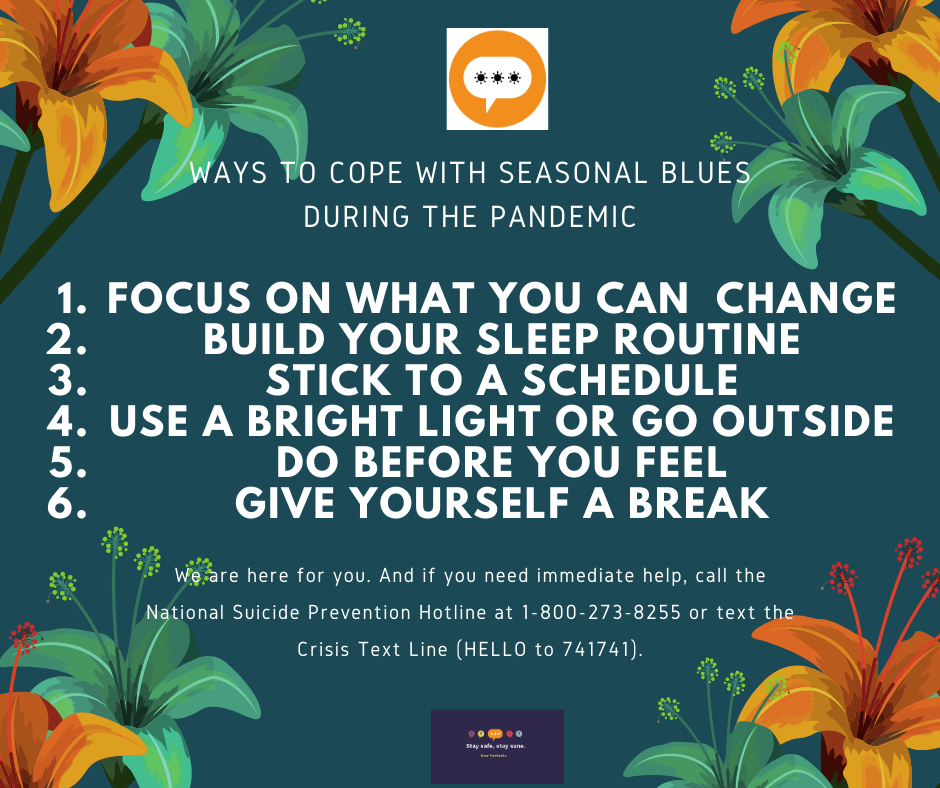
SAD

Sometimes you can sense some sort of lethargy this time of year revealing itself in blatant ways, like not wanting to go to work, not filling out some forms or editing some article, not bothering to return important calls completely out of a sense of avoidance, as if you might be able to wait long enough and all of this will pass—this stuff that brings you down, and to be honest, you’re not really sure what that stuff is. The idleness of society maybe, the constant sense of impending doom reported in all forms of media about democracy, about pandemics, about weather, about climate, about the economy, about depression and isolation. You have no reason to take any of it personally, but some people can’t let it go, and it weighs heavy, so you aim for avoidance, which unfortunately ends up a heavier burden.  

Sometimes the withdrawal is subtle. You can sense yourself not trying as hard or caring as much, like eating whatever is around instead of thinking it through, not going for a walk because you don’t want to be bothered putting on a coat or dealing with any sensory change. You’re sitting; you’re comfortable, and you’re numb. It works. 

Numb is good.

In both situations you are absolutely aware of it. Going for a walk helps. Filing out the forms, returning calls, all help by providing a sense of accomplishment and forward motion, like checking things off the to-do list, it leaves you with the hint that if you keep going there’s something worthwhile on the other side.

There’s the rub. It seems you keep reaching the other side and there’s still nothing there to lift the spirits, not this season anyway—more hostility in the east, more pessimism in our government, more variants on deck ready to step to the plate after Omicron smacks a triple into right field, and fires in LA so out of control it’s hard to watch or imagine. So you try a little less at one task, and it spirals from there. You realize your handwashing time has dropped to about 12 seconds. It’s not depression; it’s, well, yeah, it’s depression, but not in the deeply caving sense; in the “whatever” sense.

The problem with this type of malaise is it can be debilitating to you without being scary to others if you are not suicidal. The truth is, the vast majority of people who deal with depression are not contemplating suicide and will never kill themselves, which is what most friends fear most, and when those friends learn that is not part of the equation, they feel better. But that can often make it worse since the objective is for you to feel better, not them. But that’s fair since you know what they don’t: that a different suicide exists, a slow erosion of sorts, which anonymously eats away at ambition and accomplishment, takes the edge off of energy and momentum. It’s the guy sitting at a bar nursing a beer, nowhere to go despite having a million things to do. It’s the one on the park bench watching people walk by but not noticing a single one of them; it’s the inability to concentrate, the disinterest in listening, the short responses to questions, the inability to make it through the most basic of activities. It’s writing endless emails about nothing to others in some attempt to reach out; but that just backfires. Rational thought has nothing to do with it. “Knowing” what to do is not relevant. Your mind is suspended, your thought process withdraws into some elementary state.  

On the one hand it’s situational—financial problems, relationship problems, blizzards. But it can also be chemical if you don’t have medical help. It’s addiction without restraint. It’s a combination of these, and it is unpredictable because the same thing that leaves you in bed staring at the ceiling feeling hopeless can drive you to your feet to tackle whatever it is that left you prostrate to begin with. It is a conundrum that plays handball in your brain.

The guy at the bar with the beer, the woman in the park, the man at the river watching the tide roll out, all know exactly what the problem is. But their brains are aflush with fog, their anxiety has disabled their decision-making capabilities, and their strongest assets and most celebrated talents that normally keep them going the rest of the year, are no longer applicable since they carry a sense that those traits are probably what brought them to this place to begin with. They sit and wonder what if. They sit.

“Maybe if I had just…”

“Perhaps I should have…”

“Fuck it.”

At some point it seems you stop fighting altogether and are either not afraid to hit bottom, or you hope to use that bottom to bounce back, not afraid to fail since it can’t be worse than this. It is extreme but that is part of the diagnosis—extremes, polar reactions—sometimes both in one day. Sometimes within one hour.

More often than not, the guy on the corner holding the cardboard sign didn’t “decide” to quit, didn’t give up, but “felt” a pressure that he no longer could handle or define, caught in some stream of disconnect and hopeless confusion. Sometimes the one who does, in fact, tragically go that last fatal step didn’t “decide” to do anything at all, and that is the point. Suicide is not a decision. It is one step beyond decision making. The vast majority of people who deal with depression have that in check, less so in the dead of winter, of course.

But that’s not you. Truly. And that is the problem; you really aren’t suicidal at all. And when suicide is not part of the equation, others feel that you must be “okay,” or “going through something right now.”

Yeah, winter, you’re going through a snow bank. This is the worst time of year for many people with depressive issues. Seasonal Affective Disorder is real and feels like all of the above. Nothing helps but time, but time to some people sounds like the slow drip of icicle melt. Others say you’ll get over it, it will pass, hang in there, talk to someone. Yes, all of the above, but right now–right this minute–you need help and you don’t know it.

Other people try to help so they talk about the weather or sports or anything at all with enthusiasm and a sense of caring, but it often makes it worse, only emphasizes that others get excited about the minutia while you can no longer find value in a sunrise.

And the disguises are nothing short of cunning. I’ve known people fighting depression who on the outside resonate as the very poster image of Carpe Diem. I’ve been friends with people who contemplated overdosing on Monday while making plans for Tuesday, who loved others more than the average soul but only wanted their puppy nearby at checkout time, and people who fought depressive ways by pushing adventure to the limit, and beyond. “What a lust for life!” people exclaimed. They had no idea.

It isn’t exactly depression, by the way, though it is easier to simply call it that because it certainly wears the same eyeshadow as depression. It is indifference; it is a vague inability to muster the energy to lift your spirits enough to give a damn about anything. It’s not like you woke up depressed so you decided to stay on the couch all day; you simply don’t care that you’re on the couch to begin with. Complete apathy. You’re not down about anything; you answer “fine” because you really are fine; fine’s a fine word; vague and indifferent. It has the definitive weight of a horse shoe and the value of fog. “I’m fine, really,” should never be left alone with a person who fights depression.

Ironically, for most of these afflicted people, life is amazing, every half-beat is a moment of “miracles and wonder” which is why you cannot comprehend the misuse of time. The abuse of time in so short a life, you think, is as suicidal as the abuse of substances, and that can be depressing as well.

It is the time of year when you wake at three am knowing nothing is going to work, and you’re going to lose your house and your sense of security and no answer makes sense, no way forward seems rational. Equally, the dawn can come with new ideas and hope, and if you push those moments far enough into the morning, you just might be able to make a day of it. But January has 285 days. And February is several months long. March? Well you well know that March is merely a tease. April comes and breathing is easier. May, and nothing stands in your way. But in January it is safe to say yet difficult for others to understand that May hasn’t even been invented yet. It doesn’t exist and neither will you by then.

On the outside you seem to be fine. On the inside you’re grasping the thin rope of enthusiasm with clenched fists, pretending all will be well, but your insides—much against your will—are shredding at the thought of what to do next.

You “hang in there.” You “get through it.” You suffer the trite suggestions of others who simply can’t understand what the big deal is. That’s okay though, you think. Really. There are no solutions, per se. Just more questions. And “hang in there” is at the very least an acknowledgement you really aren’t trying to dismiss your very existence; it just happens sometimes. Depressed people do not feign depression; they feign contentment.

This afternoon I went to the river where a bitter breeze is pushing down from the west. There’ll be ice tonight somewhere, and snow, but I sat reminding myself I have been there, touched that ring of undefinable despair, and I’ve moved through it, sometimes with difficulty, often with ease, always with the knowledge that I’ve had one freaking incredible life so far, and time enough left, I hope, to continue my pilgrimage well into the next mood swing. But there are moments, collisions with frustration at the gap between the way things are and the way things should be, that catch some people off guard. “You’ve been like this before,” a dear friend told me not long ago when things were less than fine. “And you’ll be like this again.” And all you can think is, “Yes I will, like right now.” But what she meant was this is you, this is part of your DNA, this is as much you as your skin. What she meant was there is no “fighting” the tigers that come at night. Better to sit and dine with them, and wait. Just wait.

And Eventually you remember that the seasons, like everything else, change. And love is holding the other end of that thin line you’re grasping.

I’ve been released
And I’ve been regained
And I’ve been this way before
And I’m sure to be this way again
Once more time again

–N. Diamond
First the COVID-19 pandemic, now winter….is seasonal depression coming my  way? — Dear Pandemic

I Never Needed Anybody’s Help in Any Way

I heard an interesting comment on NPR last week. When talking about someone who died by suicide, the victim’s brother said he didn’t think his sibling didn’t like life anymore as their mother had suggested, but just didn’t like one particular part of life, and somewhere over the course of time—maybe weeks, maybe months or longer—the poor man hyper focused on that one aspect until it became a monster, blocking his view of any other aspect of existence remotely salvageable; even the finest reasons to continue were saturated with the pain of one part, perhaps even a small part, of life.

On the one had it made their mother feel a bit stronger—that her late son did not despise life, and in particular perhaps not the life she and her husband had built for them, but one thing happened, who knows what, and that overtook him despite the beauty around him. He couldn’t see past that monster any longer, and in his then-compromised view, nothing else existed any longer. Life became about the pain-inflicting monster, so killing oneself seemed the only clear way to end the pain.

On the other hand, for those who still know someone with some form of depression, particularly situational depression and not chronic or manic depression, being able to unearth and understand that aspect of life which has the potential to take over a person’s mind can help isolate it and, over time maybe, destroy it. At the very least the knowledge of the issue might help others keep it in perspective, perhaps even eliminate it.

The surviving brother then, almost off-handedly, said, “I wish we had gone hiking more.” No one picked up on it; at least not on air. But I did. It slid right in my thought process and simmered all day. His brother must have been considering how things might be different if he had helped replace the monster with something more powerful, more soul-owning. For them, apparently, hiking. Had they gone enough times, or consistently enough anyway, for the deceased to have discovered that hiking was his life and he now could own that choice, his routine and whatever negative issues came up—a problem with a partner, finances, even simple malaise that chronically depressed people will never be able to explain—would be minimized by the power found in something positive.

It doesn’t have to be hiking. Could be music, sports, food. But something active, something visceral and kinetic.

I asked my students the other day how much time each day do they spend watching other people live their lives or pretend to live life. That is, how much time are they stagnant viewing other people’s happenings on tv, movies, TikTok, etc. I’m not talking about going to events like sports or lectures or the like. No, those are very participatory. I mean the dead-brained observation we do that when we’re done—or better stated, when we take a break–we are exhausted, and we never did a damn thing.

The suicide rate among college-aged students is about 2 percent, about 1100 per year, and about 25% know of someone who killed themselves, and just over that percentage thought about it themselves, all of them offering as their primary motivators pressure, helplessness, relationships, loneliness, and money.

It takes just one issue to debilitate a person, make them feel hopeless, and all the time in the world trying to balance it with positive acts cannot extract that monster from the mind, and eventually ration slides away so that suicide is not a conscious decision but in itself a rational act to eliminate the pain, which by that point is all there is.

And later people say they wish they knew, they say they would have helped. The man on the radio said, “He asked for help; we told him we had helped him all we could and he had to do this alone.” He was riddled with guilt, but then realized that the way he could have helped may not have been clear to either his brother or him at the time. One just assumes the help one asks for when in a bad place is the only way to help them out of that place, but that’s not always accurate; in fact, it is often hardly ever accurate. “I just should have been there more, called and asked how he was doing more, had lunch,” the brother added. Exactly.

Yes. He should have, but not because of his tragic loss, but because we are humans, responsible for each other, and I am so guilty of not being there for others it is disturbing. I can change that, but there are some things I cannot change. We can at least change the things we can. I’ll leave the wisdom part for someone else.

I guy I knew a long time ago told me a story about a friend who couldn’t see past a bad relationship, a mentally abusive relationship, and saw no way out of it, particularly since they just had a baby girl. In all other aspects of his life he was okay, very giving, impossibly kind to others, but he felt he had nowhere to turn. His mother ignored him, his father tried to help but without emotion, making it difficult. And he thought his friends had moved on. One morning the troubled one called a friend, but the friend didn’t answer the phone. The friend was pretty sure he knew who was calling and that he was probably depressed, but he didn’t want to deal with it at that moment. Three hours later the guy I knew called to tell him that the troubled one killed himself. He told the friend that the widow told him his last outgoing call was to the friend. He thought it would make him feel good to know the dead guy was thinking of him, probably missed him. He had no way of knowing that the man had ignored that very call. I knew these people; and it is easy to say there was nothing anyone could have done, but that simply isn’t true. We just tell ourselves that. Certainly we may not be able to save someone’s life, but we can save some time for them. It’s a tough call but an easy decision; make the call, stop by, go for a walk. Grab some tea.

Give them a reason.

We are here for each other. It’s all we have. We are only here for each other. We can’t save others if they don’t want to be saved, but by trying to help others we just might end up saving ourselves.

Rewrite

The first draft of this didn’t do it for me.

This instead:

When I was young—early twenties—as a journalism student I kept up-do-date on national and world events even after I knew I would not be pursing a career in the Fourth Estate. My interest in and passion for accuracy in reporting and objectivity in sources is as strong now as it was then, which simply is a way of saying I even before the ease of technology made staying current on events in a world that was pre-computer, pre-internet, pre-psycho-at-the-helm world, I tried to know what was going on. And looking back, I don’t remember anything near the caliber of terror on all levels of life we face now.

Even without tuning in, life can be stressful and downright nerve wracking to just start a conversation with neighbors if politics or the economy enters the conversation. And truth be told, I’m not handling it all very well. It might be my meds are off, it might be other stress factors, or it simply might be extreme negative information overload.

The news is crushing me; the constant stream of repetitive speculation and guesswork, the constant commentary instead of news, the constant personal stories about individuals so we can better understand the big picture keeps me trying to tread water in the deep of information, but it is simply not natural for humanity to be in a constant state of anxiety, always waiting for the next tragedy, the next shooting, the next outrageous court decision, the next fascist takeover. But we are. We tune in each morning to see what blew up the night before. This lack of peacefulness and hope is decidedly dangerous.

The west is burning, the arctic is melting, the waters are rising, the war rages on; the day-to-day struggle to keep my eye on what’s in front of me has become more difficult, and I wasn’t all that stable to begin with.

*** (Deep breath. In. Out.)

Instead, my friends, just for now, the news from Deltaville:

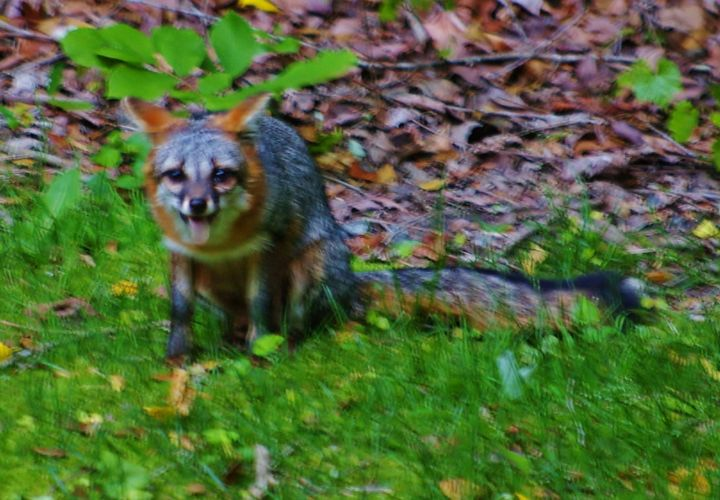
Tonight a dense fog has drifted in off the Chesapeake, and the marsh is alive with spring peepers. The fox is not around tonight, probably holed up in her den with her kits out in the woods, and I just heard a foghorn drift up from the river—a sound that rings forth from my childhood on the Great South Bay when we could hear the fishing boats headed out (or in) early in the morning when the fog was always present. It’s like that here today; something familiar, even the salty air is familiar.

My fox likes kibbles and bits—mixed together. She likes mashed potatoes and the occasional bird. I talked to a vet yesterday who said feeding the fox is not an issue, and, in fact, might help any kits she may have in some den in the woods out back. This gal is getting used to me (the fox, not the vet). I call her “my fox” simply out of affection, not ownership. When she hears my car door or the screen door slam on the porch, she scurries through the woods to the edge of the grass next to the driveway and sits, her bushy tail wrapped around her. If I talk gently or whistle lightly, she’ll cautiously move closer—ten feet or so away—and wait. If I go in the house to retrieve food, she doesn’t disappear. I return and she’s sitting like my dog Sandy used to, knowing what was to come. I put water out too, despite the deluge which has soaked this lower part of the peninsula for the past few weeks. I just now looked out my second story window to the normal fox area, and she is not there. The food’s gone too, though. One night I looked out and she was looking up at me like, “I knew you were in there; I saw the light. Get down here.”

It feels good to connect to something that connects to me. That mutual appreciation is a deeply natural state of being that humans need. At least I do. Like a very limited few people in my life, it feels like this fox and I can finish each other’s sentences, as if we think alike. And perhaps we do. I’m certainly more comfortable around her than I am nearly everyone else who is thinking of a dozen different things while pretending to be listening to me. Everyone’s distracted.

Come on, honestly. How many people sometimes think I just hope things don’t get completely bad until after I die? Maybe there is too much information. Maybe all the electronic and wireless vibration and movement in the atmosphere has so saturated the air that it is affecting our very cells and making us more anxious, more violent, more distracted.

Or maybe we simply don’t connect anymore now that we’ve homogenized our existence. The uniqueness is lost. It is fair to say humanity is having some serious connectivity issues, and while we are spending a great deal of time digging in and defending our position, we are spending very little time attempting to find common ground, instead we remain on full alert, ready to dart back into our den at the slightest movement.

I’m not trying to be simpleminded here; I am simpleminded—I usually have to try to be more engaged and more involved in issues and complicated discussions. No, my default position is sitting in a canoe watching the river run.

Just as individuals need a breather from time to time, a vacation if necessary, Humanity needs to take five, like how when the stock market gets out of control the feds will shut it down for a day to give investors a chance to take a breath, put it back in perspective, and return with a clear and rational mind. Yeah. That. Humanity needs to leave the building for a bit and return to its natural state. Ever wonder what your default position is? We probably don’t spend nearly enough time there. Mine is outside, or laughing with someone who gets me. And as it turns out, little more than that is ever necessary.

I hear the fox. I’m out of apples. I hope she likes fudge stripes.

Timing

I had a bad night, last night. Couldn’t sleep, finally wide awake at four am talking to ghosts and sitting at my desk. Part of it is standard anxiety, part of it is staring a cold-hard truth in the face, and that usually happens with the utmost clarity at four am.

Then on the drive to work I listened to the news. Yeah, I have no idea what I was thinking. And here I had Jason Isbell in the cd player, but no, I went to NPR. Kiev, Moscow, invasion, twenty-mile Russian convoy (now thirty, now forty, now fifty), nuclear arsenal on high alert, one million Ukrainian refugees fleeing for elsewhere from their homeland which has stood for more than a thousand years, long before Moscow.

So I checked my email and a dear friend whom I’ve known since 1994 had written. He lives in St. Petersburg and said they’re probably losing all social media, he can’t travel anywhere, food is hard to find, and everything he owns, including his finances, are worth less than half than they did one week ago. He worries about his son.

I thought of the people I’ve met across the entire stretch of Russia from the Baltic to the Sea of Japan, and how none of them–seriously, none of them that I’ve ever known and by all of the accounts I hear from journalists and other writers in-country, support Putin. They are indeed opposed to the invasion. These are people who, unlike Putin, grew up in a non-Soviet state, where western goods and services and freedom to travel were standard. They understand the invasion of Ukraine is supported by and carried out by a small group of bitter men from Soviet Days who have no respect for human life.

So I wondered what it would take for Putin to go over the deep end, even further than he is, and order the release of nuclear weapons, and I realized he would have to have his back against the wall and feel like there is no other way, and I thought about how the entire world, supported by every single United Nations member country who voted today save five despicable ones, are for pushing this psychopath against the wall, and while that’s a good thing, my anxiety spiked.

So I escaped that mental bloodbath by returning to my original issue from 4am and pulled out a pad and started to make lists of how to handle that, and I briefly thought “sure, go ahead, push Putin to the wall: two problems solved,” but of course I just needed caffeine. Then I spoke to a dear friend, and though I spoke more than I listened, nothing cleanses the soul like talking to someone who knows you now and knew you then.

Then I got home and it started all over; no problems solved, but definitely better perspective having gotten through a beautiful day, and I went to the river, my river, here, and

well

every star in the sky must be visible tonight. No city lights, no moonlight, just starlight, and it’s brilliant. Orion and his troops are on full blast in the south, and just to their left Sirius is seriously awake this evening. I stood a long time, saw a few shooting stars, made a few wishes (come on, you have to), and walked along a bit, the waves gentle, a few boats out past the channel. And I remembered how sometimes nature grounds us, not because it makes us feel small, though that too, but because it has such integrity, such steadfast confidence. Five hundred years ago what people in this wilderness witnessed is not much different than I saw tonight, despite the wars and poverty and the combined human sense of fear at falling away from itself since then. Nature simply is. What a lesson; Buddhist in its manner, eternal in its truth: Nature simply is. As we should be.

So I came up to my desk and in my search for one document found another. I read it, sat back and wondered which ghost put it there for me to find tonight of all nights. Might have been Bobbie–she liked poetry, or perhaps Lianne–she taught poetry. Wasn’t Dave; Dave would have left me some Bowie lyrics again.

Doesn’t matter. I’ll ask later when the anxiety kicks in.

In the meantime, it is a good one to remember–that we are, as the Bard once touted through Gertrude, simply passing through nature on our way back to eternity.

Still, the news makes me miss my friends tonight.

Seriously. Read this:

There Will Come Soft Rains

by Sara Teasdale

There will come soft rains and the smell of the ground,
And swallows calling with their shimmering sound;

And frogs in the pools singing at night,
And wild-plum trees in tremulous white;

Robins will wear their feathery fire
Whistling their whims on a low fence-wire;

And not one will know of the war, not one
Will care at last when it is done.

Not one would mind, neither bird nor tree,
if mankind perished utterly;

And Spring herself, when she woke at dawn,
Would scarcely know that we were gone.