
The piece I wrote which was the fastest to go from concept to completion, in ready to be published form, was in 2016 about Arlington National Cemetery. From the time I sat down to write to the moment I sent the version that would eventually be published in the Washington Post spanned just twenty minutes. We call that a lightning strike.
The slowest has been “in progress” for more than forty years, but as of a few days ago it headed to the fast lane and dragged my procrastinating ass with it. Here’s what happened:
When I was a freshmen and sophomore in college, I was deeply involved in the planning and training for a great adventure of a friend of mine who had graduated from the college about four years earlier. While it was not my adventure we planned but his, in just a couple of years it unsuspectingly became mine, and I have tried to write about it ever since. A few pieces have been published by journals such as Matador Review and Palooka, and the entire 275-page manuscript became my MFA thesis, Fly. It was more than a little weak, however, and I subsequently attacked it with a pen, markers, highlighters, and anything else to move hard-copy paragraphs from chapter to chapter and front to back. I trimmed it down to a not-so-well written 50 pages. That version, Curious Men, received some decent reviews, but the primary response involved readers wanting to know more. That can be both good and bad, and in this case, way bad. I was never satisfied with the work; I could not capture the excitement—exhilaration really—and anticipation at just twenty-years old, followed by confusion and disappointment. For me it became the quintessential “you had to be there” narrative. The true story goes to emotional extremes, pulling this nineteen-year-old boy out of some catatonic state and into some woke existence of adventure and exploration. The written version, well, didn’t.
Long story short: the long version was way too long, and the short version left people longing for more, indicating I came up short. I can’t get it right.
Honestly, I have been thinking about, writing about, messing with, focused on, and ignoring this story for forty years. I long ago decided that I would never get it right, figuring it would be wrong to put it out there. I have letters, maps, notes, journals, emails, and a half dozen different versions of the same manuscript all saying the same thing, and not very well.
Until last month. On a drive to Florida I listened to the audio version of Beryl Markham’s West with the Night. I enjoyed this version of the book I had read several times decades ago, but somewhere while driving past the dilapidated and very incorrect theme park, “South of the Border,” in South Carolina, my mind drifted back to my manuscripts. And on I-95 South I figured out exactly how to start, what to focus on, and I finally understood the problem I’ve had all along with the narrative: It isn’t about anyone else’s journey, it’s about mine. The book is not about the character I had been writing about for forty years; it is about me; I’m the protagonist.
When I got home, I pulled out the long, bound version that was my MFA thesis, as well as the short version in a binder on the shelves behind me. I pulled up the published versions which focused on one segment of the story, and I reread the longer version, Curious Men, and sat back knowing two essential things: First, they all suck. Second, I know now exactly what I need to do to unsuck them. My energy has returned, some internal motivation has been reignited.
It was a four-hour session that first morning I did little more than read through pages and chapters with a fine-tooth comb much like the NY Times editor must have when he first received the Pentagon Papers. What I believed was a story no one would care about and which I was not telling well at all, I finally knew exactly how to tell so others would be interested.
It was both exhilarating and terrorizing. I am ready to get back to this and get it done right this time, yet doing so means not only facing the possibility of not getting it right yet again but also dealing with some realities I’d almost rather let lie dormant.
But if my trip to Florida followed by an inspiring trip to western New York ignited some spark, it would be just a few hours later that some bomb exploded in a manner that sent those proverbial chills up my spine.
Long story not so short:
I received a message that very afternoon; I mean I closed the manuscript, got in the car to get a Slurpee, was sitting in the parking lot thinking about the protagonist of the work, me, and I received a message from the sister of the subject of my book. Be clear: I had never heard from her before in my life; I did not know she existed. Yet, she messaged me the very afternoon I had started work in earnest on a book about her brother.
She said in part, “My name is Kim and I just read online one of the stories you wrote about my older brother. I never knew him, he left with you that last time when I was five, and I am now almost fifty. I saw online you are a writer now and I am wondering if you plan to write a book about him.”
Again, that message came just hours after I decided in earnest to get back to it, my desk covered with pages and maps and journals and emails. Insert Twilight Zone music.
Kim wrote that she remembers the leather coat in a picture of him with me and a friend, Annemarie. We’re in a hallway at the college, laughing. She remembers him dropping her off at kindergarten the last week she saw him, and her teacher asked if the man in the car was someone else he happened to look like. She still has an old, worn sweatshirt of his he left behind. I asked what made her write me that day and she said their oldest brother George had recently died and it got her thinking about her other brother who was long gone, and so she found me online and messaged me.
I told her about my day up until then, and she agreed it was more than a little freaky that she chose to write me that day. Strange, but when I read her message, I didn’t picture a fifty-year-old, but instead a little girl.
The most difficult part of writing is getting started. In this case, I started more than a few times, and each complete version begins differently. Chronologically, the story starts in Virginia Beach in the mid-seventies. For narrative sake, it starts in February 1980 in my small dorm room. If I want to put a “hook” at the front, it starts a few years later seven thousand miles southeast of here in a then-peaceful, not-so-small-anymore village in what is now one of the most volatile and dangerous places on the planet. In a few versions it starts with a nightmare I had three or four times—same one—that woke me up. In one version it starts at the end and works its way backward.
None of them worked.
But when I think of that time, that experience; when I recall the “me” of back then and the life that I had, the energy and motivation and confidence I had then; when I think of the times I’ve told this story to others, my thoughts always go directly and immediately to one place: Antonio’s Italian Restaurant on Route 417 in Allegany, New York.
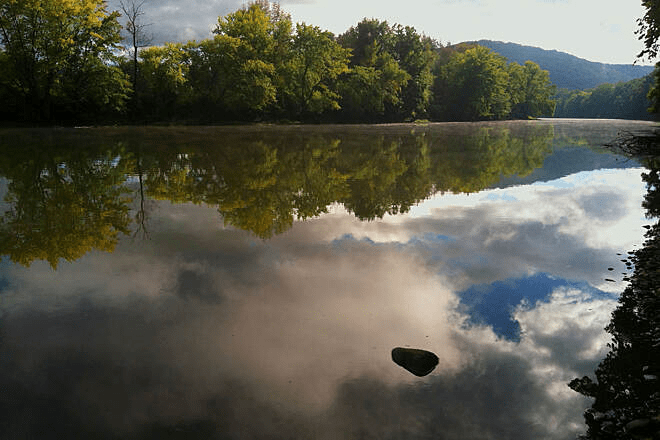
Last week I was in western New York, and I walked along the Allegheny River, followed a path through the woods, and remembered my life in that very spot almost forty-five years ago. I felt younger and vibrant yet somehow tired and disillusioned. The perfect combination for a work of creative non-fiction.
So that is where it starts. Time to wake this narrative back up so I can put it to bed and send Kim her own copy of a book about her brother that in the end isn’t about her brother at all. It truly should not take forty years to finish writing a book. On the other hand, some books, perhaps, should not be written at all, and that may well be the case here.
I have learned that sometimes it is best to not search too long and too deep for a resolution to the narrative, and that in real life sequels are rare. But I’m a naturally curious person, and it seems to me now that Joseph Conrad was absolutely correct: “Curious men go prying into all sorts of places where they have no business.”

 a view from this wilderness