May 23, 1925-October 21, 2015

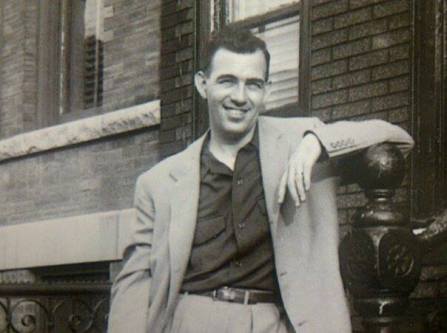
Dad died ten years ago this Tuesday, the 21st. Words can’t express how I miss him. The following essay first appeared in Kestrel: A Journal of Literature and Art, as well as my collection Fragments, and anthologized in a few other publications. It was the last piece of my writing I am aware my father read.

12063306_10207030426106557_3199067376729529480_n

Instructions for Walking with an Old Man at the Mall

First of all, he’s walking, you’re joining him. Don’t stop if he doesn’t. Don’t keep walking if he doesn’t. You are a shadow, an imitation.

Stand on his side where he can better hear you. If he can’t, repeat yourself as if for the first time, no matter how many times. Never say “never mind.” When he tells you something, you have never heard that story before, even if you can repeat it word for word. When he tells you about the baseball games with his Dad seventy years earlier, they are new stories, and your response must sound genuine. When he tells you about the time he went swimming at camp with his friends, and how when they went to retrieve their clothes from under a boat they found a snake, be amazed again, ask what happened. Laugh again since he will laugh.

When he pauses in front of a store, don’t question it. At that moment, allow his sole purpose in pausing is to look at whatever item is in that display. He might mention how he used to own that tool, those pants. Let him know you remember; do not make a big deal that he remembered. He needs you to know he didn’t stop “to rest”—he stopped to look at the display. When he says he could use that new suit, a new pair of shoes, or a new whatever is new, agree. If he happens to stop in front of Frederick’s of Hollywood, there’s no need to joke; it will only emphasize he couldn’t get past a place he would never stop with his son. This time he simply couldn’t continue. Talk instead about his grandkids. Talk about the rain. Do not talk about old times. There’s no need to recall the time he drove you to the airport for a flight to college and you saw him hours later waving to you onboard the plane. Avoid bringing up the time just the two of you spent the day at Shea Stadium when you were a child. Instead, ask about the Mets and if he happened to catch the game last week. You know he did. Let him tell you about it.

When he seems tired but doesn’t want you to keep stopping, stop to fix your shoe, to read a sign; look for a bench and suggest you sit and talk. He’ll ask about your son; he’ll ask about work. Have something to say other than “fine, Dad.”

Do not look at your watch. Do not check your phone; most definitely do not check your phone. Leave both in the car. Do not indicate in any way he is keeping you from anything. No other time is relevant anymore. But you will grow tired and restless. If he senses this, he will insist you leave. He will say he knows you have a lot going on, and he’ll say he’ll see you later, and he’ll do whatever he can to make you feel he is completely fine with it. Stay anyway. Then sit a bit longer. Do not ask about the doctors; the walk is to forget about the doctors. Do not quiz him on medicine or schedules. He is out for a walk, you joined him, it is something about which he will tell others—that he went for a walk at the mall and his son was there and joined him. Do not let his story end with “but he had to go.”

When he can’t remember where he parked his car, ask if he parked in the usual area. He did. Sit down for a few minutes. It will come to him. There’s no need to ask probing questions like “which stores” or “what street” he was near. Just sit a while. He’ll remember. You’re not in a rush.

When you leave the mall be near him as he steps from the curb, but do not help. He will be fragile and unstable. The step from curb to parking lot is a leap; he used to do it with you on his shoulders and two others running out front. Let him step down on his own but be ready. He bruises easily and a simple scrape is a trip to the doctor. Have the patience he had when your childhood curbs seemed like the cliffs of Dover.

Don’t say “I guess I’d better get going.” Don’t make plans. Don’t make any comment to indicate he did well or that it was a “good walk.” He didn’t do well and it wasn’t a good walk. He’s older now. He’s slower now, but he knows this. Really, once the walk is done, the time spent together always seems to have passed faster than we recall. He knows this as well.
12143183_10207071237766823_459922957598238343_n

The Rest of Me

I ask my students the same question the first class every semester. I pull a chair into the middle of the front of the room, ask them their names and where they’re from, and we talk about the area, hobbies, majors, quirks, travel favorites, and more. Half the class—I find it a priceless investment in time as they warm up, get to know me and each other, find themselves more able to talk throughout the semester, ask questions, share ideas.

Then I sit quietly for a second and ask them the same question every time:

What are you capable of?

What do you think you are capable of? I don’t mean “What do you hope you can do?” but what tangible proof from previous experiences has convinced you it is worth reaching out a little further than your grasp this time because you know you can do it?

It’s not an easy question to answer because it is difficult to know if we can achieve that which we have not yet attempted, so at best we need to guess. And even the most educated guess is still hypothetical. Yeah, I lose a few at this point, but I usually can reel them back in by jumping that chasm to the goal. “Okay then,” I continue. “What do you wish you were capable of?”

I remind them that unfortunately, every semester the evidence gets worse that freshmen in college are capable of anything other than having technology complete their assignments for them. I insist, then, that one of the finest results of college beyond the degree and the friends and the job prospects is the sense, the absolute pure sense, of accomplishment. To achieve something, to find out we are capable of so much more than we thought, becomes part of one’s bloodstream.

I asked myself that recently, the Capable Question. It was my birthday, sixty-five years to the day after I showed up at the now defunct Shore Road hospital in Brooklyn; one year to the day after Letty “closed the door behind her.” I looked back at what I have done with my life, who is in it and who no longer is, and who is again, and the good news is I’ve been around the block a few times and that’s one thing I always wanted to do. The bad news is as it turns out the block isn’t in my neighborhood.

Sometimes I don’t know where the hell I am. For a person who has traveled as much as I have, I still need direction an awful lot of the time.

So I asked myself, “What are you capable of?” I figure I still have a couple of decades, surprisingly. Maybe more on a good day, maybe just a few weeks when my mind downshifts. But let’s call it twenty years.

I just agreed to a location to perform a one man play in New York. My book Curious Men comes out in just a few months. My book Office Hours comes out in about eighteen months. My fig trees need watering. I’m thinking of getting a new cat or two. Maybe a dog. A goat for sure.

A few months before she died, Letty and I sat in Starbucks at the beach and after a lot of laughing, she said, “I always thought I’d be here past sixty-five, Bawb. I just never thought it would all be over; my life would be completely done at sixty-five.” I nodded. I tended to avoid trying to come up with a response. She didn’t want one. She wanted me to listen, to hear her existence, to be there while she was being alive. After a while she leaned forward and said, “Since I’m not using the rest of me, you can have those years. I trust you to use them well. What will you do with them?”

I thought about it like she had some power to give me twenty more years. “I am going to walk the Camino de Santiago again. I’m going to drive through the northwest for a few weeks. I’m going to take a river cruise in Europe with a friend of mine. I’m going to camp in Havasu Falls.”

“…and?”

The perfect response. “And?”

This is all to bring up a point:

After something I wrote went online about a month ago, several people, some I don’t know, wrote to tell me how good it is that someone my age still thinks I can do something new. They wanted me to know how much they are behind me no matter how outrageous it is that I’d try something besides enjoying retirement.

Two things here: One, I have no idea what they’re talking about. And two, Seriously? I mean, I’m sorry you took a nose dive as soon as you were eligible for Social Security, but I can’t wrap my mind around that mentality. Maybe it’s because retirement is somewhat irrelevant if you never really worked to begin with, but also in the world of arts, in the realm of love, there is no “retirement.” You can’t turn it off, you just can’t. And I want to spend my time with people I care about, seeing things together. I felt the same way when I was in my twenties. Did you guys grow tired of those you know?

“Someone my age” my ass.

I’m not going to republish the litany of accomplishments by people in their seventies and eighties. If you understand then you’re not sitting around lamenting anyway; and if you don’t, you’ll just shake your head.

I have done okay until now, and parts of my life turned out to be riddled with circles, as if Einstein was right—there is no actual “time,” humans have just made it linear so we can comprehend our passage here. Well, I’ve never been good at staying inside the lines anyway.

Honestly, I don’t know what’s going to work and what won’t work from day to day. I just hope for the best for the rest of me.

But, at the risk of being in over my head, here’s my plan: To speak my mind, about love, about hopes, about what is working and what is not. To keep writing as long as I have something to say. To fulfil some plans that I can’t shake.

I’ll retire when I’m dead, and then I’ll close the door behind me. If something should happen to abort those plans, feel free to take the rest of me and see what you’re capable of.

Fifty Days and Counting

It is fifty days from my mother’s birthday to mine. This year feels different since this was the first of Mom’s birthdays that she is no longer with us, and this year I will turn sixty-five. Funny, but I don’t feel my age; I think of myself as about fifty-two. Maybe, on good mornings, fifty. Let’s call it that; so with fifty days to go to my birthday and feeling all of about fifty, I’ve decided to change a few things. I’m going with a “Fifties” theme this year. Cue Buddy Holly.

Fifty.

I can’t lose fifty pounds. I mean I can, but then my weight would be about what I weighed in high school when I was slightly more active and my body could digest Tupperware and be fine. So let’s try for some variation of fifty pounds to keep with this year’s magic number. Five pounds should do it. I re-joined the Y near my home, so I think for the next fifty days I’m going to get on the treadmill and walk for fifty minutes five days a week. If the Cartoon Network is available, I’ll stretch that out to fifty-five.

I’m going to write five pages a night on one or another book project I’ve got going—I really do have five files of work-in-progress here, but then I’ve had the same ones for going on five years now. Still, this next month and two thirds is different.

Damn right. High five.

Listen, like the rest of us, I know about time. I’ve read about it, watched it tick away, felt it creep up my spine and into my mind with new drips of hesitation and doubt. Geez I know about time, the way it tricked Bobbie into thinking she could get better, never knowing the addiction had already won, and the slight of hand it pulled with Letty, and Dave, and Cole, and others; tricked them all, so yeah, I know something about the passing of time. We all do, especially as we move through the years, and about how Mom and Dad made it to their nineties—no complaints there—but how Rachel didn’t make it out of her twenties. I’m sure I’ll be thinking a lot about time in the next fifty days, and about Mom and Dad as I hit the Medicare mark, and about Letty who died on my birthday, and about Michael who right now is exactly half my age yet when I was his age I felt like I had already lived several lifetimes. Honestly, I think I turned sixty-five when I was nineteen. Time, man. I can count on it to keep pace, not lose one fat second on my account. It doesn’t take a time out, doesn’t sit one out, doesn’t find any value at all in changing the pace. Yeah, we all know a little bit about time.

Fifty days. Forty-nine days and about seven hours actually. Fifty glasses of wine, fifty gummies, fifty mornings at the bay watching the sun crack the surface, fifty evenings at the river watching it take forever to fade. This year I’m going to make fifty phone calls and write fifty letters to old and new friends; I’m going to find fifty beautiful moments—one a day—and keep that habit going another fifty, then fifty more. That’s the thing about time; it can’t decide for me what I do with it, only when it will end.

And it will end.

So fifty songs that give me chills and fifty minutes spent each day finding just a little peace of mind.

Fifty is the fifth magical number in nuclear physics. It’s the Golden Anniversary. It’s half of whatever whole you fall into. Fifty is the traditional number of years for a jubilee. Fifty in both the Torah and the Bible is associated with the concepts of freedom and abundance.

There are fifty stars for the fifty states. It’s two bits. It’s just sitting out there as some sort of centennial half-way point.

In fifty days I’ll be ready to turn sixty-five and feel fifteen years younger than that. It was fifty years ago my life completely changed as a chasm fell between everything that was when I lived in New York and everything that would be when we moved to Virginia that June 18th. I was terrified. I was just a few weeks short of fifteen, which is young at any age. But looking back now fifty years on, it seems to have turned out okay.

Seriously, what a time it turned out to be. For fifty days I’m going to remind myself I have a home and food, I was not born in a refugee camp in Somalia, was not born during a bombing campaign in the Middle East, was not born on the streets of just about any American city.

I’m going to remind myself of passion and hope, and that I still have the energy to climb mountains or simply just fall asleep. That I’m really good at. But for now, I’m going to keep moving, keep noticing the beauty and continue to look for the peace. I’m going to remember the grace I experienced being able to have the parents and siblings and friends I did for these years, I’m going to remember all of the love I had in my life from those who passed this past year, and I’m going to look forward to what happens next.

Time is persistent, yes. But how we measure it is completely up to us. Hell, they’ve already changed the calendar several times out of little more than convenience; I can do that too. For the next fifty days, I’m going to grow young again.

The Joanie Channel

Joan in the Great River house, circa 1969

On June 22, 2002, my sister sat at our parents’ kitchen table and recorded an audio interview she did with them about their lives, about life during the depression and World War 2. She asked other questions, and just like Terri Gross on Fresh Air, did a great job of bouncing off of their responses. She sent copies to my brother and me about five years ago, and when I sat to listen to them, a few things struck me. One, my father was precise in his responses, and my mother was hysterical in hers. He was 77 at the time, and Mom was 69. But what hit me hardest was hearing our father’s voice for the first time in half a decade. I can hear his voice in my mind, of course, but to actually hear his voice like he was sitting there made him young again. The last few years of his life I was around him all the time and his dementia grew worse and worse. So when I played the cd, I heard not just my father, but my father younger, still alert to everything. It was nice to push past the sound of his weak and confused voice that had filled the corners of my mind and hear him as he had been. Ironically, at the same time it makes it hard to listen.

About two years ago while out to lunch I randomly recorded a video of my mother talking about something. I don’t remember what and the video is gone, but the idea took hold, and for the last two years every couple of weeks when we were at lunch or getting coffee, I’d ask her a specific question, or I’d encourage her to remember a particular time in her life. Note that she is one of the funniest and smartest people I’ve ever known, and understand too that she has had quite the life from the streets of Bushwick, Brooklyn, to Long Island, to Virginia Beach, and now in Williamsburg, Va. There are fifty plus videos here, but I recorded more than a hundred and deleted many. Some were redundant, and some in the past year or so I got rid of when Mom would struggle with a memory, or lose track of what she was talking about.

Still, this is decidedly not about Joan Catherine.

It is about time. This has everything to do with the brief flash of time we have to share with each other. Watch how a person can at once both change so much and still be themselves, who they are in their heart. The truth is at some point as we age we realize that we must set aside our anger and anxiety and arguments, and we seem to do so far too late in life. In the past year I’ve lost a half dozen people I loved very much who were my confidants and companions, and every one of them died relatively young, three of them in their early sixties. At the same time, my mother has nose-dived into a wall, fallen and slammed her head on a porcelain tub, fallen on the floor, faced cancer–again–had a pacemaker put in, battled neuropathy, and moved from her spacious condo where she lived with my dad, to an independent living apartment in Virginia Beach, to an assisted living apartment in Williamsburg, and she just keeps going. Last July she was in the hospital with pneumonia and sleeping eighteen hours a day, and the doctor did not think she would leave the hospital. Yesterday we went to lunch at an Italian restaurant and she woofed down a massive piece of tiramisu. She Just. Keeps. On. Going. And always with a sense of humor. She talks here about her move from Brooklyn to Long Island, from there to Virginia, and about how patient she can be. Or not. She sings the Banana Song, Woody Guthrie, a Shampoo commercial, and in one of my favorites when she had no idea I was taping from the cup holder of my car as we drove along, she sings “New York, New York.”

But this isn’t about Joan. This is about brevity. When we look ahead–when we anticipate–time can slow to a tragically slow pace. But when we look back, when we recall, we can transport our mind instantly to another era, as if it happened two seconds ago. This makes it seem like time goes by so fast. But it is the same now as it was when we were children. That’s the thing about time: it is dependable. Not one fat second will lose an ounce on my account. But the older we get, the more we recall instead of plan, so the clock can be deceptive. In these videos, Mom is full of energy, sitting up and laughing, with immediate recall of incidents an hour earlier as well as two generations ago; at the same time, here Mom is wearing oxygen, sometimes softly gasping for air, and her memory is nearly non-existent.

Time. It is the only measurement that matters. And we are endlessly distracted by the news and entertainment and the stress of finances and politics and health. But all of it slides away when we start to list what is essential. Then, the answer is easy: each other. That’s it. People leave us, sometimes slowly and sometimes with the swiftness of a cool, autumn morning that takes us by surprise. But they do, in fact, leave.

These videos are in no order, so one of Mom recently trying to remember her Uncle’s name might be followed by one of her looking stronger, heavier, talking about her favorite foods. I decided against a strict chronological order so that instead of watching a woman’s slow decline as age takes hold, we can see how life is, in the words of my friend poet Toni Wynn, “Paper thin.” I will add more to her page as time permits. Thanks for enjoying our mother’s beautiful sense of humor and simple take on what matters the most.

Note: There are some videos on the “Video” tab, but most of the videos are on the “Shorts” tab. Please check out both. And “follow” The Joanie Channel.

https://www.youtube.com/@TheJoanieChannel/shorts

Parenthood: A Lesson in Algebra

I’ve told this story before.

When Michael was about three or four, he used to play “Sir Michael the Knight.” Sometimes it would be on the sand in the yard of a beach house we rented one winter where we would build elaborate castles and he’d be Sir Michael and I was the dragon inevitably slain by the knight, culminating in my plunging death into the castle. Most often he occupied himself on rainy days when he would don his shield and sword and cardboard helmet and then barrel around the house. One time he ran through his grandmother’s home, cardboard sword before him, through the kitchen to the living room to the dining room and back into the kitchen, several times always calling “Sir Michael the Knight is going to slay the dragon!” or “You can’t get away from me dragon!” as he passed again, his voice fading in some Doppler effect as he disappeared into the kitchen, emerging around the corner seconds later. On one turn he was mid-sentence running into the dining room when his shoulder clipped the table and his feet flew out before him and his entire body slammed to the floor in perfect professional wrestling fashion. I jumped from the couch when I heard his head hit the ground, but he only lay there a second before he said, “Sir Michael the Knight hurts himself bad.” He got up and kept running.

He is still running. Michael turns thirty-two tomorrow; half my age. When he was born, I was thirty-two times his age, and now we’re down to twice his age. He’s aging, I’m not, is how I like to look at it.

What’s crazy is the obvious math here: The time it took for me to get to Michael’s birth is the time it took to get from his birth to now. It makes me examine everything I did in those first thirty-two years, and it was a lot. By the time he was born I had been around the block, to be sure. Time pushes us in multiple directions. A week from now seems a stretch compared to thirty-two years ago. Anticipation slows down time, but recollection instantly thrusts us back to one moment like it just happened. And when I look back at what happened, I often wonder how I’m still here. But all of those years are nothing at all compared to what we’ve done since 1993. It’s been one hell of a ride.

It isn’t unusual to find us at a local oyster bar splitting a dozen and drinking hard cider. Together we’ve ventured to various east coast spots like Long Island and the Outer Banks of North Carolina, trained across Europe and Asia on the Trans-Siberian Railway, and walked across Spain. We’ve seen more together than most fathers and sons get to experience in a lifetime. I am constantly aware of this and deeply grateful.

But none of those journeys compare to the pilgrimage we make to the river every evening when we’re both home to take pictures of the setting sun, and we wander around in silence to listen to the water and watch the wildlife. One of us might mention a colorful cloud formation or the approach of an osprey, but mostly we take pictures and point out the peacefulness. This has been a steady routine since he was four; the picture taking started just a few years later. In the summer the sand fleas can be unbearable but we tolerate them, swatting our legs and faces determined to remain at the river a bit longer. In winter we bundle up ready for whatever wind whips down the Rappahannock toward the bay.

Over these nearly three decades we must have taken thousands of pictures. I prefer to point my camera up at the ever-changing cloud formations picking up the last bit of light from the fading sun. I try not to allow anything “earthbound” into the frame, including trees or even the water. I like the fluidity of clouds, how beautiful they are ever so briefly before they dissipate. Michael aims at the surface, seeing hues and shapes that swirl and gather and disperse as fast as he can find them, capturing just the right combination of color and design before the tide takes over.

It is about perspective.

He’s been around the world on his own. Ireland, Spain, Cuba. And he holds together the art community here on the Bay. He’s done alright. When someone asks who he is like in the family, I don’t have to hesitate: My father. And I wouldn’t have it any other way.

These days I prefer to look forward. There’s a lot to look forward to, and more often than not these days it is separate from each other, but always letting each other know how it’s going.  I am not sure where Michael’s headed next but wherever it is and for whatever reason, I am confident it is with faith, a sense of humor, and an instinctive ability to be kind to people. I am as excited as he is about what’s laying out there ahead of him in that land of hopes and dreams.

Happy Birthday, Sir Michael.

2025 Day One

Life is too short to simply run out the clock.

Van Gogh once wondered, “Those of us who live; why don’t we live more?” I considered my lack of effort, my lack of discipline, my lack of patience; and I thought about my abundance of inattentiveness, my tendency to rush, to generalize, to blame. I need to live more not despite the losses of 2024 but because of them. Because I can, simply put. Fortune has me well in hand. Lesson Learned.

Is there an age limit on starting over? At what point are New Year’s Resolutions simply pointless?

Let’s find out.

Grandma Moses didn’t start painting at all until she was seventy-six.

Frank McCourt, author of Angela’s Ashes, winner of the Pulitzer Prize and National Book Critics Award, didn’t start writing until he was sixty-five.

Laura Ingalls Wilder started writing the Little House on the Prairie series at sixty-five.

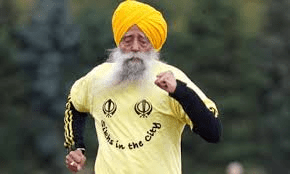
Fauja Singh ran his first marathon at eighty-nine (luckily if I choose this path I can wait twenty-five years before getting off of the couch).

Harland Sanders established Kentucky Fried Chicken when he was in his sixties.

And for God’s sake, Noah was six hundred years old when the waters started to rise. Hell, I’m going back to bed.

Truthfully, it isn’t about starting over, really. We make resolutions this time of year to lose weight and exercise and save money and volunteer more, and those are common ambitions for a good reason: they’re admirable goals, apt adjustments to our otherwise well-planned life. Emerson tells us that “the purpose of life is to be useful, to be honorable, to be compassionate and have it make some difference that you have lived and lived well.” I must do all of those things, for certain. But a slight adjustment simply won’t cut it for me anymore. Not this time. 2024 was a wake-up call.

Certainly, the atmosphere these past few years hasn’t exactly been conducive to positive change. I seriously grew up believing my generation was the one that would clean the world, bring peace to all countries, and create a more inclusive society. I know it was innocent and naïve, of course, and I didn’t really expect some land of Oz, but I also didn’t expect this pathetic disaster we still call humanity. We are a mess; our supposed “intelligent life” turned out to have little compassion for each other, and it is stressing me out more than my meds can handle. I don’t understand why it all gets to me and brings me down. It just does. I know that “a happy soul is the best shield for a cruel world,” as Atticus wrote. But listening to the news is akin to swimming in toxins, and it has become overwhelming, drowning out whatever happiness takes root. Something has to change–if not out there, certainly in here.

And it helps to have a distinct starting-over point. A few times each year—birthdays, Spring equinox, for educators the first day of classes, and New Year’s Day for us all, we can take a deep breath and make some sort of commitment to do some small part by changing ourselves, either by dancing with the Druids at Stonehenge or making resolutions. Of course, I can only speak for me.

The clock is ticking while I’m distracted by society’s bad energy, spending valuable time on meaningless banter. I need to get back to me and remind myself, as Dan Fogelberg sang, that “there’s more than one way of growing old.” I need to take more chances and figure out which dreams I simply refuse to allow to fade before I die. Not all of my imaginings are realistic, of course. Certainly I can narrow down the list with some rationale: I can probably toss out the Wimbledon win and playing outfield for the Mets. I’m confident the circumnavigation of the world is sliding off the list as well, as is winning an Academy Award for directing.

So what do those people above have in common? They’re not afraid to fail, they’re not afraid to embarrass themselves and be transparent. They’re not afraid to be ridiculed, mocked, trolled, dissed, and dismissed.

With that in mind it occurs to me most of my successes came in the midst of countless failures for most of my life; I have embarrassed myself in front of crowds since I’m nineteen, I remain pretty open about myself, and as a professor and a writer, I have suffered a steady barrage of ridicule, mockery, rejection, and dismissal. Yet in the words of Hamlet: “I do not know why yet I live to say, ‘This Things to do.’”

And now it’s New Year’s 2025, and despite the crappy year that 2024 was, I’m still here and able to write these words. That is step one: Be Alive.

I know a man who joined the Peace Corp at seventy-five. Another who learned French and became a translator at seventy-one.

There are barriers to these resolutions, to be certain. Pressure, stress, money, fear, and sheer exhaustion. Age! Yes, dear, persistent and unyielding age. The obstacles can seem insurmountable, but as Moliere said, “The greater the obstacle, the more glory in overcoming it.” Still, on top of this, those battling depression have to also face those internal voices telling us there’s no point, those for whom the “resolve” in resolution can be a monumental task, those for whom as a friend of mine recently noted, “no longer care if there’s a light at the end of the tunnel; I’m tired of the tunnel.” But none of us, I am not wrong about this, none of us wants to reach the point of death, as Thoreau reminds us, only to find out we never really lived at all, and, even worse, never even tried.

Certainly, some of us are simply mentally exhausted. Some of us have little faith in ourselves or no clue where to begin with some of this. Some of us fear we are simply wasting our time. “I’m just going to gain back the weight,” people rationed when I worked for Richard Simmons. We used to tell those who wanted to quit that in everything in life we have two options: I will attempt this and do what’s necessary to succeed so that even if I fail, I know I tried, or I will not bother trying because I’m likely to quit anyway or simply do not have the energy.

Which group do I want to be in when I’m older? Older?! Ha! I mean now. When I am near the end of the end, what would I have been successful at if I had just, well, showed up?

So Happy New Year, and if you’re thinking it is too late and much too hard to start over, I leave you with the words of Joseph Zinker from the Gestalt Institute:

If a man in the street were to pursue his self, what kind of guiding thoughts would he come up with about changing his existence? He would perhaps discover that his brain is not yet dead, that his body is not dried up, and that no matter where he is right now, he is still the creator of his own destiny. He can change this destiny by taking his one decision to change seriously, by fighting his petty resistance against change and fear, by learning more about his mind, by trying out behavior which fills his real need, by carrying out concrete acts rather than conceptualizing about them, by practicing to see and hear and touch and feel as he has never before used these senses, by creating something with his own hands without demanding perfection…We must remind ourselves, however, that no change takes place without working hard and without getting your hands dirty. There are no formulae and no books to memorize on becoming. I only know this: I exist, I am, I am here, I am becoming, I make my life and no one else makes it for me. I must face my own shortcomings, mistakes, transgressions. No one can suffer my non-being as I do, but tomorrow is another day, and I must decide to leave my bed and live again. And if I fail, I don’t have the comfort of blaming you or life or God.

Fauja Singh running a marathon at 100

The Palm of your Hands

I won’t do the math or muster up more metaphors of clocks measured in years; I’m sixty-two. How old that is, really, is hard to say. Some days, like those this past week, I can hike miles upon miles up steep slopes in the very thin atmosphere of seven thousand feet in 100 degree weather, and no matter how many times I had to stop and scratch my last will and testament into a stone, my need to push on and finish—really, my passion to reach our destination—was never in question, and not only did I make it, I felt a new surge of energy once I did. Screw you sixty-two.

But other times pulling myself out of bed to go for a walk at sea level is akin to clawing my way through dirt and stone out of a grave. It’s not that I can’t breathe; it’s that I really don’t feel like it anymore.

When I worked at the health club in New England, one thing the owner drilled into us during long weeks of training: the vast majority of our members’ primary problem would not be weight, it would be depression or anxiety or, worst of all, apathy. The weight would be a symptom of a deeper problem more difficult to address.

I’ll never forget sitting in my small office with the owner of the club and a member who needed to lose more than one hundred pounds. She asked point blank if she looked as fat as she felt and without missing a beat he responded, “Yes, of course!”

I looked for a hole in the floor to drop through.

But then, also without missing a beat, he added, “Did you want me to lie to you? That would only help you continue to lie to yourself. But so what? It is who you are! You want to feel better about your life! Of course you want to lose the weight, but more importantly, you need to stop feeling bad about yourself! You’re beautiful, no matter how other people make you feel! You need to surround yourself with people who make you feel good about yourself! Then you will, and the weight will be easier to address.”

She cried at the truth. It’s like he knew her pain firsthand, and, of course, he did. I stopped thinking of her and started thinking of me and nearly cried right there at my truth. This was almost forty years ago. It’s still that difficult sometimes. Today is a good example; when clarity sets in.

But at some point, it’s time to stop apologizing for who you are and start being honest with yourself and, in turn, others. It’s time to stop apologizing to others because the choices you make are not the one’s they wanted you to.  

“Your first step is not into this studio with Bob,” he added. “It is to find the courage to be honest with yourself and say to everyone, ‘This is me!’ and ‘This is what I’m going to do about it. People who don’t support you are probably the cause of the problem to begin with.”

Some of us wait in hope some solution falls in our lap, but we end up with the same problems decades on.

Some of us want everyone else to be happy but end up unable to pull ourselves out of bed.

Some of us worry about what others will think and explain ourselves instead of finally saying, “You want to know what happened, ask. You want to know how I feel, ask.”

Some of us are afraid to close any doors in fear we chose the wrong ones; we “wanted it perfect but waited too long,” as lyricists Marilyn and Alan Bergman wrote.

Some are martyrs, some are indifferent, or most tragic of all, frozen in fear of shattering what little hope they still have, what little life we still have. Some of us know exactly what to do to change our lives and get back on track, whether it be as challenging as losing weight the equivalent of another human, or simply being honest with ourselves and not rationalizing away the years.

I’m sixty-two-years-old. Sort of. I’m twenty-six. Kind of.

I’m eligible for Social Security. I’m walking nearly twenty-thousand steps a day.

Sure there are legitimate problems for which simply willing them away won’t work. But at the very least we need to stop inviting the problems inside, allowing them to fester, allowing them to dictate, to decide, to die with us or tear us apart.

Certainly, age is relentless. It is persistent and patient. Not one fat second will lose an ounce on our account. My students quip, “Oh man, you’re that old!” and I’ve learned to say, “Yeah. I am. And not so long ago I was twenty-three, and I nailed it. I did twenty-three great, but nothing like I did twenty-four and thirty two and…. It’s not the age, people, it’s how you do the age.

It’s my call: I can wallow in the reality that I’ve entered the fourth quarter, or I can keep climbing, through thin air and dry lungs, keep climbing. Richard the club owner was right: nothing improves, nothing, nothing at all improves until you start to feel good about yourself.

“Tick tock, tick tock, tick tock people. Times ticking away.” Yeah, at some point, it’s time to feel good again.