SAD

Sometimes you can sense some sort of lethargy this time of year revealing itself in blatant ways, like not wanting to go to work, not filling out some forms or editing some article, not bothering to return important calls completely out of a sense of avoidance, as if you might be able to wait long enough and all of this will pass—this stuff that brings you down, and to be honest, you’re not really sure what that stuff is. The idleness of society maybe, the constant sense of impending doom reported in all forms of media about democracy, about pandemics, about weather, about climate, about the economy, about depression and isolation. You have no reason to take any of it personally, but some people can’t let it go, and it weighs heavy, so you aim for avoidance, which unfortunately ends up a heavier burden.  

Sometimes the withdrawal is subtle. You can sense yourself not trying as hard or caring as much, like eating whatever is around instead of thinking it through, not going for a walk because you don’t want to be bothered putting on a coat or dealing with any sensory change. You’re sitting; you’re comfortable, and you’re numb. It works. 

Numb is good.

In both situations you are absolutely aware of it. Going for a walk helps. Filing out the forms, returning calls, all help by providing a sense of accomplishment and forward motion, like checking things off the to-do list, it leaves you with the hint that if you keep going there’s something worthwhile on the other side.

There’s the rub. It seems you keep reaching the other side and there’s still nothing there to lift the spirits, not this season anyway—more hostility in the east, more pessimism in our government, more variants on deck ready to step to the plate after Omicron smacks a triple into right field, and fires in LA so out of control it’s hard to watch or imagine. So you try a little less at one task, and it spirals from there. You realize your handwashing time has dropped to about 12 seconds. It’s not depression; it’s, well, yeah, it’s depression, but not in the deeply caving sense; in the “whatever” sense.

The problem with this type of malaise is it can be debilitating to you without being scary to others if you are not suicidal. The truth is, the vast majority of people who deal with depression are not contemplating suicide and will never kill themselves, which is what most friends fear most, and when those friends learn that is not part of the equation, they feel better. But that can often make it worse since the objective is for you to feel better, not them. But that’s fair since you know what they don’t: that a different suicide exists, a slow erosion of sorts, which anonymously eats away at ambition and accomplishment, takes the edge off of energy and momentum. It’s the guy sitting at a bar nursing a beer, nowhere to go despite having a million things to do. It’s the one on the park bench watching people walk by but not noticing a single one of them; it’s the inability to concentrate, the disinterest in listening, the short responses to questions, the inability to make it through the most basic of activities. It’s writing endless emails about nothing to others in some attempt to reach out; but that just backfires. Rational thought has nothing to do with it. “Knowing” what to do is not relevant. Your mind is suspended, your thought process withdraws into some elementary state.  

On the one hand it’s situational—financial problems, relationship problems, blizzards. But it can also be chemical if you don’t have medical help. It’s addiction without restraint. It’s a combination of these, and it is unpredictable because the same thing that leaves you in bed staring at the ceiling feeling hopeless can drive you to your feet to tackle whatever it is that left you prostrate to begin with. It is a conundrum that plays handball in your brain.

The guy at the bar with the beer, the woman in the park, the man at the river watching the tide roll out, all know exactly what the problem is. But their brains are aflush with fog, their anxiety has disabled their decision-making capabilities, and their strongest assets and most celebrated talents that normally keep them going the rest of the year, are no longer applicable since they carry a sense that those traits are probably what brought them to this place to begin with. They sit and wonder what if. They sit.

“Maybe if I had just…”

“Perhaps I should have…”

“Fuck it.”

At some point it seems you stop fighting altogether and are either not afraid to hit bottom, or you hope to use that bottom to bounce back, not afraid to fail since it can’t be worse than this. It is extreme but that is part of the diagnosis—extremes, polar reactions—sometimes both in one day. Sometimes within one hour.

More often than not, the guy on the corner holding the cardboard sign didn’t “decide” to quit, didn’t give up, but “felt” a pressure that he no longer could handle or define, caught in some stream of disconnect and hopeless confusion. Sometimes the one who does, in fact, tragically go that last fatal step didn’t “decide” to do anything at all, and that is the point. Suicide is not a decision. It is one step beyond decision making. The vast majority of people who deal with depression have that in check, less so in the dead of winter, of course.

But that’s not you. Truly. And that is the problem; you really aren’t suicidal at all. And when suicide is not part of the equation, others feel that you must be “okay,” or “going through something right now.”

Yeah, winter, you’re going through a snow bank. This is the worst time of year for many people with depressive issues. Seasonal Affective Disorder is real and feels like all of the above. Nothing helps but time, but time to some people sounds like the slow drip of icicle melt. Others say you’ll get over it, it will pass, hang in there, talk to someone. Yes, all of the above, but right now–right this minute–you need help and you don’t know it.

Other people try to help so they talk about the weather or sports or anything at all with enthusiasm and a sense of caring, but it often makes it worse, only emphasizes that others get excited about the minutia while you can no longer find value in a sunrise.

And the disguises are nothing short of cunning. I’ve known people fighting depression who on the outside resonate as the very poster image of Carpe Diem. I’ve been friends with people who contemplated overdosing on Monday while making plans for Tuesday, who loved others more than the average soul but only wanted their puppy nearby at checkout time, and people who fought depressive ways by pushing adventure to the limit, and beyond. “What a lust for life!” people exclaimed. They had no idea.

It isn’t exactly depression, by the way, though it is easier to simply call it that because it certainly wears the same eyeshadow as depression. It is indifference; it is a vague inability to muster the energy to lift your spirits enough to give a damn about anything. It’s not like you woke up depressed so you decided to stay on the couch all day; you simply don’t care that you’re on the couch to begin with. Complete apathy. You’re not down about anything; you answer “fine” because you really are fine; fine’s a fine word; vague and indifferent. It has the definitive weight of a horse shoe and the value of fog. “I’m fine, really,” should never be left alone with a person who fights depression.

Ironically, for most of these afflicted people, life is amazing, every half-beat is a moment of “miracles and wonder” which is why you cannot comprehend the misuse of time. The abuse of time in so short a life, you think, is as suicidal as the abuse of substances, and that can be depressing as well.

It is the time of year when you wake at three am knowing nothing is going to work, and you’re going to lose your house and your sense of security and no answer makes sense, no way forward seems rational. Equally, the dawn can come with new ideas and hope, and if you push those moments far enough into the morning, you just might be able to make a day of it. But January has 285 days. And February is several months long. March? Well you well know that March is merely a tease. April comes and breathing is easier. May, and nothing stands in your way. But in January it is safe to say yet difficult for others to understand that May hasn’t even been invented yet. It doesn’t exist and neither will you by then.

On the outside you seem to be fine. On the inside you’re grasping the thin rope of enthusiasm with clenched fists, pretending all will be well, but your insides—much against your will—are shredding at the thought of what to do next.

You “hang in there.” You “get through it.” You suffer the trite suggestions of others who simply can’t understand what the big deal is. That’s okay though, you think. Really. There are no solutions, per se. Just more questions. And “hang in there” is at the very least an acknowledgement you really aren’t trying to dismiss your very existence; it just happens sometimes. Depressed people do not feign depression; they feign contentment.

This afternoon I went to the river where a bitter breeze is pushing down from the west. There’ll be ice tonight somewhere, and snow, but I sat reminding myself I have been there, touched that ring of undefinable despair, and I’ve moved through it, sometimes with difficulty, often with ease, always with the knowledge that I’ve had one freaking incredible life so far, and time enough left, I hope, to continue my pilgrimage well into the next mood swing. But there are moments, collisions with frustration at the gap between the way things are and the way things should be, that catch some people off guard. “You’ve been like this before,” a dear friend told me not long ago when things were less than fine. “And you’ll be like this again.” And all you can think is, “Yes I will, like right now.” But what she meant was this is you, this is part of your DNA, this is as much you as your skin. What she meant was there is no “fighting” the tigers that come at night. Better to sit and dine with them, and wait. Just wait.

And Eventually you remember that the seasons, like everything else, change. And love is holding the other end of that thin line you’re grasping.

I’ve been released
And I’ve been regained
And I’ve been this way before
And I’m sure to be this way again
Once more time again

–N. Diamond

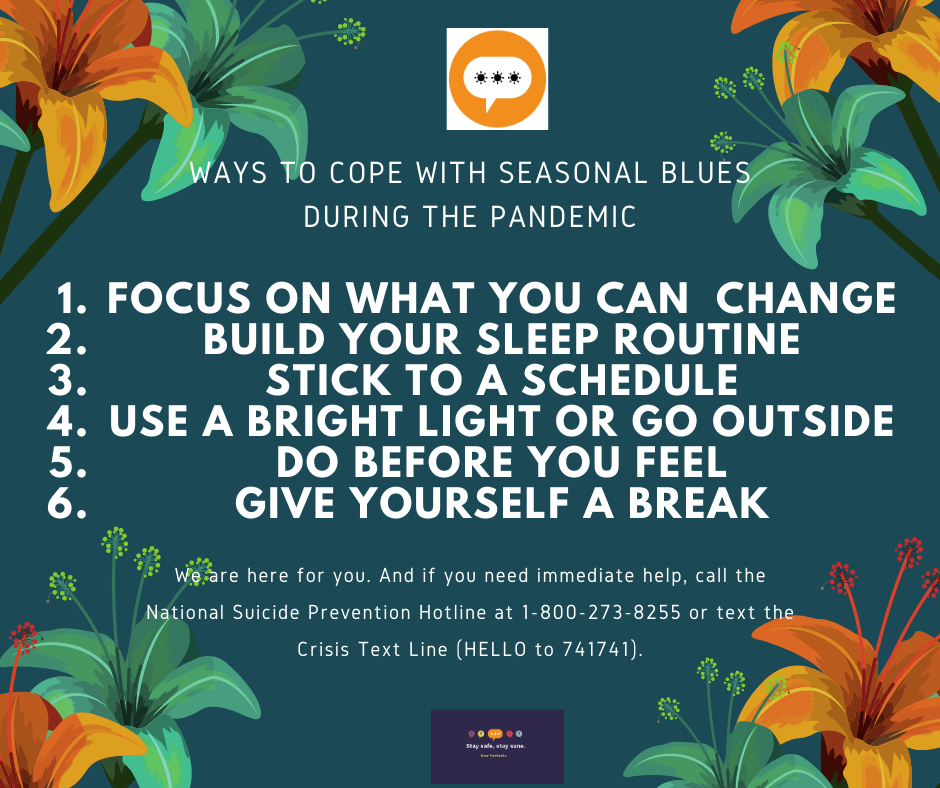
First the COVID-19 pandemic, now winter….is seasonal depression coming my  way? — Dear Pandemic

Life in the Margins (Part two of two)

When I was in my late teens my father and I played golf one afternoon at his club in Virginia Beach. About the third hole a man caught up to us and played along. He was good; a driver, short chip, one putt player. I was not. I had the same clubs but more often than not sliced it to the right or bounced it into a water hazard. I didn’t have a temper, but it wasn’t unusual for me to put my club back in my bag with some force, as if to say, “Don’t even think about coming back out until you know how to hit the ball straight!”

I did this after I butchered an easy fifty-yard chip shot by clipping it straight to the right into a lake. I cursed, of course. The golfer was standing nearby waiting to hit his second shot to my fourth.

“Can I give you some advice?” he asked. I sighed. First of all, no, no you cannot, because I’m nineteen and I don’t take advice, and because I don’t even know you. But noting my dad just a few yards away I opted for sportsmanship.

“Sure,” I sighed.

He paused. “You’re not good enough to get mad.”

I stared at him.

He continued: “Really, how often do you play? Do you take lessons? Do you have the best clubs? If you played all the time and took lessons, well then you could be upset at not improving. Otherwise you’re just wasting good energy.”

Ever since then, I have not only relaxed and enjoyed the game, I play better. After a while I applied this to most aspects of life, not in a way to find an excuse to not try, but to relieve the stress that comes from going through life doing things everyone else seems to simply be better at than me. It also motivated me to get into the game a bit in those areas I do have some game.

Awkward Transition Section:

I gave an assignment not long after September 11th, 2001, when my students would have been in their teens during the attack. I wanted them to reflect on what will remain one of the most significant days in our lives. How, I wondered, do they remember that day? I thought it was a good assignment—a specific event but a vague enough request for them to wander where they wished.

One student wrote of her aunt who never made it out of the South Tower. Another wrote about her sense of horror and disbelief, which, she wrote, she could never correctly capture on paper. Several actually commented they didn’t think it affected their lives at all while others spit out what they kind of paid attention to with one ear from local television reports—about heightened security, conspiracy factors, the indescribable loss of life that spontaneously erupted on TV that morning. But one student’s piece caught my attention. He wrote, in part:

In a way, September 11 demonstrated, more than any one phrase can contain, the strength of our Constitution. The day became the beginning of a new era of the democratic process, and the definition of how we will defend our liberty, maintain our principles and remember our purpose—to stand as an example of humanity’s potential. It was Memorial Day. It was Victory Day.

I read this with amazement. I asked for the rough draft and received exactly what I knew I would: A similar, hand written version with some words written differently and others crossed out. Excellent.

“You plagiarized this,” I said, which, understand, is rare for teachers to say. We receive copied material all the time, but nearly never have enough proof to say, directly, “You didn’t write this.” In a world of AI generated essays, it gets even tougher, but I ask them to ask themselves if they’re good enough to plagiarize correctly. I remind them in order to pull off an AI paper or plagiarized work they need to have a deep understanding of my requirements for the essay, the style I’m looking for, the specific language, the relevant references, and to be frank, I let them know, most of them aren’t good enough writers to plagiarize that well.

But this kid nailed it. “I didn’t plagiarize that!”

I smiled. “Yeah, you did.” My small laugh, I think, pissed him off. He continued to challenge me. Normally, plagiarized papers frustrate faculty members when they know an assignment was plagiarized—either from another student or from one of the many web sites offering papers for sale, or more recently for various AI sites— but can’t prove it. So when proof does come along, while it’s disappointing to have such lazy ass students,  it’s not just slightly satisfying to stop them in their tracks.

“Yes, you did. Tell me why you shouldn’t fail.”

“Because I didn’t plagiarize it.”

“Okay, I’ll tell you what. I want you to bring me a copy of the original. If you do, I’ll let you redo the assignment without penalty.” I figured the embarrassment would be sufficient.

Once a student turned in a paragraph she plagiarized from our own text. Another time a student turned in a paper right out of the psychology textbook assuming I wouldn’t recognize that his in-class writing had the ability of a seventh grader and the essay he turned in was written by Freud.

I don’t think they’re simply overworked. They’re bored. What they’re doing is staring at me and thinking of everything else. In the front row is the guy with his fingers in his mouth, gnawing on his fingernails, pulling them out wet every once in a while to observe his work and then shift his focus to a different cuticle. In the back row some dude’s pretending to write notes while he’s reading his text messages on his cell phone.

Certainly, some things really are boring, and sometimes it’s difficult to find the relevance. I know; I was a student.

Too many aren’t listening. And I totally understand. There’s too much noise. Streaming services, reels, TikTok, internet scrolls, deadlines, term papers, credit card bills, car repairs, moving in, moving out, daycare, spouse abuse, deployment, speeding tickets. The pace of life is at Mach 7, and we’re teaching from a stage coach—no wonder they’re bored. They haven’t yet realized that life is infinitely more interesting from the stage coach; that life exists in the margins as well as the headlines, and we should not simply focus on the large, obvious lessons we underline but the small details where we learn what we are and are not good enough at to get upset to begin with.

We’re too busy for that. Before they’re out the classroom door, students are calling each other, talking and walking from building to cars, elbows bent, phone tucked tight to their ears. We’re completely plugged in. There’s no time to think. Don’t stop, don’t listen, and don’t figure it out. Just keep yourself plugged in to create the illusion that something’s getting done.

And we keep missing the good stuff because we don’t have time. A college where I used to teach had a reading by one of America’s leading poets, Reetika Vazirani. Maybe a dozen people showed up. There was enough room for her cute two-year-old to run around the auditorium, climb across chairs and make everyone laugh. Reetika’s poetry was magic. Students who did show up sat looking at their laps while Reetika read:  

Little by little, I’ll figure it out

I’ll say to them, Relax, we’ll live to be a hundred

I’ll sort things out.

And her child danced down steps toward the small crowd. They missed that for the noise. Noise, that unlike the rest of our lives, won’t ever fade but instead will grow in intensity until it blends to the point of saturation, and becomes inaudible, an undercurrent of indiscernible distraction.

I can’t help but sympathize with students. They see the careers of their parents or friends, and they know at best the future holds the slow erosion of enthusiasm.

Early before class one day, I waited for my student with the plagiarized 9/11 paper to show up. Some papers are so moronic I pray they were plagiarized just so I don’t have to believe one of my students wrote that crap. I read a paper once which began, “Shakespeare wrote Hamlet almost a decade ago.”  Another paper I received once had the same page printed three times. When I pointed out the mistake, he said he couldn’t think of anything else to write but knew the paper had to be 800 words, so he just copied it a few times.

When the student with the plagiarized paper returned, I was ready. “Ah, did you find it?” I asked when he came in and tried to sit down without looking at me.

“No,” he said, as I knew he would. Pride sucks.

“It’s okay. I brought a copy. Shall I read it to you?”

“No.”

“Great! Here goes:”

I believe our best education has nothing at all to do with the classroom or the assignments or the degree. It’s between the lines and off to the side of the narrative where we discover the best of what we need. This isn’t original; in fact, it’s a thought and practice older than formal education.  I don’t remember much from grammar school, which they called it then because they still taught grammar there. But I do remember my teacher taking us all out one April afternoon to lie in the grass on our backs and stare at the sky while she told us about the tragedy aboard Apollo 13 going on right then in space above us. All the discussions about what went wrong and how they might not make it back were irrelevant until we rested in the grass and stared at the sky.

The thing is, we’re all the same. Conditioning has them believing that life is supposed to be some Reality Television show. There’s no plot, no writers, no purpose.  Suicide is the second leading cause of death among college students behind accidents. In fact the rate is higher among college students than it is for the same age group who aren’t enrolled in college—you know why? Because life is infinitely more interesting than most of the crap we’re fed in school. No one cares about most of the material we spend so much time preparing.  In the real world, however, we tend to seek out challenges we know we are up to, where in college students face new levels of expectations, and when they’re not up to the task they complain instead of asking themselves if they’re good enough to be there to begin with, if they’re willing to get better. They’re trying to make sense of it all—or want someone to help them, and when they can’t they rely upon what others have done and plagiarize that.  No wonder they’re bored. Hell, I’m bored.

Sometimes I try and picture my students as toddlers and help them not in a childish way but in a way which I hoped faculty had helped my son, as if he were their own. Was he paying attention when teachers taught?

Was I?

Recently I remembered Reetika’s son, who ran through the vacant auditorium while his mother read poetry. Shortly after that reading, just before taking her own life, Reetika—riddled with psychological challenges—killed her son. I’m tuning that one out. There’s no lesson there. Sometimes I picture my son at twenty, wondering which of my students he would have been like and how would I have answered his questions, approached his plagiarized paper.

I stared at the young man that plagiarized the 9/11 story and asked if he were ready. He turned his head to one side, trying not to make eye contact. “Hey, it’s from the local paper! Well, let’s see:

“There are still no words for September 11’ by…”  I stared at him: “Oh my god, Dude, should I go on?” He laughed a little at my sarcasm because he knew what came next and because, really, it’s so laughable.

“There are still no words for September 11’ by…” I stopped and looked at him. “You’ve got to be kidding,” I said.

He spoke quietly: “I didn’t know you wrote it.”

“Where’d you get this?” I asked. A friend of his gave it to him from his developmental English class but had taken my name off his copy.

“I was set up,” he said.

“You think? Do it over. Here. Now. You’ve got the whole class.”

I opened the door and the class came in. I talked about something, I forget what since I wasn’t really listening, and after class everyone left and he gave me his paper. He wrote:

September 11th scared the hell out of me. I was only fifteen and our country was being attacked. I remember rumors that a bomb had been planted at the State Department and I really thought it was just starting, that we were at war right here in America. My brother was nineteen at the time and in the Army in North Carolina, and I couldn’t sleep. Our teacher talked to us about it during the following period at school, but I wasn’t listening. I was thinking of my brother and about war. I was thinking about how a few hours earlier my friends and I were talking about how some guy bought us beer that weekend and we hung out in Croatan, and suddenly none of us was talking at all, and no one wanted to. We just stood around and said, “Damn,” and we were scared.

He found his voice. “I’m disappointed,” I said. “This is way better writing than the one I wrote that you tried to plagiarize.”

“See you Thursday.”

Most students don’t find their own voice or would even hear it over all the noise. When things finally do settle down and it gets quiet and the cell phones are turned off, most of us wouldn’t know our own voice. Maybe we’re scared. I know I am. Maybe we don’t want to know what we sound like, preferring instead to fall into some mainstream composite of expectation and predictability. I tried to tell my son to figure things out for himself. Don’t rely upon being taught, but instead, learn. They’re not the same thing. I hope he listened.

And I’m certain he hoped I listened as well. I tried to pay attention, but it was hard back then with the constant noise of students and papers and classes and all the other voices in my head. So sometimes, too often I suppose, it was difficult to always pay attention and listen to everything. And that scares me.

Turns out it is the small stuff that mattered. It’s the details I should have paid attention to. In class I wonder if I have any right to get angry when they’re cheating with AI; I mean, maybe if I were a better professor they wouldn’t do it. But it’s more than that: In the hallways, in conversations, in all lessons I want to drill into them that the larger objective is not difficult to digest; it is the details that we need to spend more time focusing on. It’s the same for college students as it was for toddlers. You see, I had this fear when my son was little that I would get mad at him one day and he would turn to me and say, “Dad, you’re not a good enough father to get mad. Maybe if you’d practiced a little more.”
The $5,000 Question (part one of two)

The following piece originally appeared in the Chronicle of Higher Education, June 2009, and has since found its way into other journals and texts.

PART ONE:

Wherein our protagonist discovers the first of two important life lessons

Almost every day I hear my fellow professors complain about their students’ poor writing on papers and tests. The papers lack depth, my colleagues say, and reflect a lack of commitment to good writing. Having read countless examples of such sloppy college writing over the past three and a half decades myself, I’ve identified the main cause. Weak writing has little to do with students’ innate writing ability, even less with how much time they spend working on their papers, and less yet with how ill-prepared they are to do college-level work.

The real problem is this: Students know that professors must read their papers, no matter how poorly they might be written, how irrelevant their cited examples, or how “un-collegiate” their content. Poor writing persists because students know that professors are obligated to suffer through endless garbage in hopes of finding something salvageable. They are well aware that many professors will highlight their papers’ weaknesses and then allow rewrites, and that some professors will accept nonwritten extra-credit projects to improve their final grades. In short, students know there are usually ways to avoid putting forth a gallant effort.

I realized this great truth some years ago at the beginning of a semester in a composition class after I finished reading a paper by one of my students. During our next class, I asked everyone, “If I were to skim only the introductions of all twenty of your papers, but read in their entirety only the five papers with the best introductory paragraphs —the ones that entice me to continue reading —and automatically give the rest failing grades, would your introductions improve?”

They all said yes and admitted that they would put more of an effort into capturing my attention and solidifying their theses. I’ve continued to ask each new class of students the same question, and I invariably get the same response.

So a few semesters later, I added to my proposition a more tangible, albeit hypothetical, reward. I asked, “What if I had a check on my desk for $5,000? And what if I rewarded the writer whose introduction most caught my attention, who most effectively made me want to continue because of a solid and clear thesis, with a check for five grand? Would your introductions improve even more?”

Cries of “Absolutely!” filled the room. I stood and stared at them for a solid, uncomfortable minute, nodded, and said, “There it is.” They looked confused, so I added, “You always could do it. You just couldn’t be bothered. You just admitted that to me.”

Silence followed.

I still do this, pointing out to class after class, “You know you write better than these half-baked attempts you typed up late at night. There just wasn’t anything tangible in it for you.” The students will agree. Some will even acknowledge that conditioning throughout high school left them believing that a “good” attempt is good enough.

Now, I’m confident that my students aren’t sitting at home saying, “I’m going to make this as pathetic as possible.” There is no malice on their part. But there’s little “real world” risk involved, either. “What’s an A on a college paper worth in the grand scheme anyway?” they reason.

While the answers are obvious to those of us who do the grading, to the average student with 12 credit hours, a full-time job, a family, and essays to write, excellent work is often simply getting it done at all. Professors are in competition for attention not only with family, friends, classes, and jobs, but also with ever-increasing news-media onslaughts that rarely require students to focus for more than 20 seconds at a time. Our competition is TikTok and Reels on social media.

We must reshape students’ thinking so they understand that “good enough” isn’t, and that doing better is simply a matter of seeking the rewards of excellent writing in the same way one might seek a bigger paycheck for working overtime. We aren’t offering them real training in earning rewards if we allow them to pass their courses despite weak effort and poor results. In the real world, people often get only one opportunity, one job opening, one chance to move ahead. Most of us know that the amount of time that a person commits to a project usually leads to better outcomes, but many students work under the delusion that almost any result is acceptable.

But what if we teach students to write their essays as though professors simply won’t read them if they are of unacceptable quality? What if we all asked ourselves if we would be doing better if the reward for our actions was more enticing? Shouldn’t we be operating at that level anyway?

By driving students to improve their efforts, we can teach them how to maximize their ability and overcome their lack of motivation. We must repeatedly remind them that doing poorly in college through halfhearted effort and mediocre work could lead to doing poorly in the real world, too, damaging their reputations and chances to advance in their careers. We want our students to view us as gatekeepers to what comes next in life instead of as mere grade distributors. Combined, those strategies are often sufficient wake-up calls for students to improve their efforts.

We need to show students that we expect the same effort to get an A that they put forth to get a job, establish a career, or win a trophy. They can do it; they just need to be reminded of the difference between short- and long-term rewards, between internal and external motivation.

And so do I. Sitting in classes now I think about all the times I did “good enough” work—to this day—when had there been more of a tangible reward I’d have made more of an effort, until I trained myself to understand that the effort is the reward.

Anything less than a fully-committed effort should mean an F —failure in college, fired in the real world.

Next time: Our protagonist learns the lesson of his life on a golf course

2025 Day One

Life is too short to simply run out the clock.

Van Gogh once wondered, “Those of us who live; why don’t we live more?” I considered my lack of effort, my lack of discipline, my lack of patience; and I thought about my abundance of inattentiveness, my tendency to rush, to generalize, to blame. I need to live more not despite the losses of 2024 but because of them. Because I can, simply put. Fortune has me well in hand. Lesson Learned.

Is there an age limit on starting over? At what point are New Year’s Resolutions simply pointless?

Let’s find out.

Grandma Moses didn’t start painting at all until she was seventy-six.

Frank McCourt, author of Angela’s Ashes, winner of the Pulitzer Prize and National Book Critics Award, didn’t start writing until he was sixty-five.

Laura Ingalls Wilder started writing the Little House on the Prairie series at sixty-five.

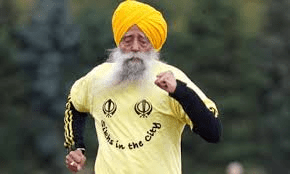
Fauja Singh ran his first marathon at eighty-nine (luckily if I choose this path I can wait twenty-five years before getting off of the couch).

Harland Sanders established Kentucky Fried Chicken when he was in his sixties.

And for God’s sake, Noah was six hundred years old when the waters started to rise. Hell, I’m going back to bed.

Truthfully, it isn’t about starting over, really. We make resolutions this time of year to lose weight and exercise and save money and volunteer more, and those are common ambitions for a good reason: they’re admirable goals, apt adjustments to our otherwise well-planned life. Emerson tells us that “the purpose of life is to be useful, to be honorable, to be compassionate and have it make some difference that you have lived and lived well.” I must do all of those things, for certain. But a slight adjustment simply won’t cut it for me anymore. Not this time. 2024 was a wake-up call.

Certainly, the atmosphere these past few years hasn’t exactly been conducive to positive change. I seriously grew up believing my generation was the one that would clean the world, bring peace to all countries, and create a more inclusive society. I know it was innocent and naïve, of course, and I didn’t really expect some land of Oz, but I also didn’t expect this pathetic disaster we still call humanity. We are a mess; our supposed “intelligent life” turned out to have little compassion for each other, and it is stressing me out more than my meds can handle. I don’t understand why it all gets to me and brings me down. It just does. I know that “a happy soul is the best shield for a cruel world,” as Atticus wrote. But listening to the news is akin to swimming in toxins, and it has become overwhelming, drowning out whatever happiness takes root. Something has to change–if not out there, certainly in here.

And it helps to have a distinct starting-over point. A few times each year—birthdays, Spring equinox, for educators the first day of classes, and New Year’s Day for us all, we can take a deep breath and make some sort of commitment to do some small part by changing ourselves, either by dancing with the Druids at Stonehenge or making resolutions. Of course, I can only speak for me.

The clock is ticking while I’m distracted by society’s bad energy, spending valuable time on meaningless banter. I need to get back to me and remind myself, as Dan Fogelberg sang, that “there’s more than one way of growing old.” I need to take more chances and figure out which dreams I simply refuse to allow to fade before I die. Not all of my imaginings are realistic, of course. Certainly I can narrow down the list with some rationale: I can probably toss out the Wimbledon win and playing outfield for the Mets. I’m confident the circumnavigation of the world is sliding off the list as well, as is winning an Academy Award for directing.

So what do those people above have in common? They’re not afraid to fail, they’re not afraid to embarrass themselves and be transparent. They’re not afraid to be ridiculed, mocked, trolled, dissed, and dismissed.

With that in mind it occurs to me most of my successes came in the midst of countless failures for most of my life; I have embarrassed myself in front of crowds since I’m nineteen, I remain pretty open about myself, and as a professor and a writer, I have suffered a steady barrage of ridicule, mockery, rejection, and dismissal. Yet in the words of Hamlet: “I do not know why yet I live to say, ‘This Things to do.’”

And now it’s New Year’s 2025, and despite the crappy year that 2024 was, I’m still here and able to write these words. That is step one: Be Alive.

I know a man who joined the Peace Corp at seventy-five. Another who learned French and became a translator at seventy-one.

There are barriers to these resolutions, to be certain. Pressure, stress, money, fear, and sheer exhaustion. Age! Yes, dear, persistent and unyielding age. The obstacles can seem insurmountable, but as Moliere said, “The greater the obstacle, the more glory in overcoming it.” Still, on top of this, those battling depression have to also face those internal voices telling us there’s no point, those for whom the “resolve” in resolution can be a monumental task, those for whom as a friend of mine recently noted, “no longer care if there’s a light at the end of the tunnel; I’m tired of the tunnel.” But none of us, I am not wrong about this, none of us wants to reach the point of death, as Thoreau reminds us, only to find out we never really lived at all, and, even worse, never even tried.

Certainly, some of us are simply mentally exhausted. Some of us have little faith in ourselves or no clue where to begin with some of this. Some of us fear we are simply wasting our time. “I’m just going to gain back the weight,” people rationed when I worked for Richard Simmons. We used to tell those who wanted to quit that in everything in life we have two options: I will attempt this and do what’s necessary to succeed so that even if I fail, I know I tried, or I will not bother trying because I’m likely to quit anyway or simply do not have the energy.

Which group do I want to be in when I’m older? Older?! Ha! I mean now. When I am near the end of the end, what would I have been successful at if I had just, well, showed up?

So Happy New Year, and if you’re thinking it is too late and much too hard to start over, I leave you with the words of Joseph Zinker from the Gestalt Institute:

If a man in the street were to pursue his self, what kind of guiding thoughts would he come up with about changing his existence? He would perhaps discover that his brain is not yet dead, that his body is not dried up, and that no matter where he is right now, he is still the creator of his own destiny. He can change this destiny by taking his one decision to change seriously, by fighting his petty resistance against change and fear, by learning more about his mind, by trying out behavior which fills his real need, by carrying out concrete acts rather than conceptualizing about them, by practicing to see and hear and touch and feel as he has never before used these senses, by creating something with his own hands without demanding perfection…We must remind ourselves, however, that no change takes place without working hard and without getting your hands dirty. There are no formulae and no books to memorize on becoming. I only know this: I exist, I am, I am here, I am becoming, I make my life and no one else makes it for me. I must face my own shortcomings, mistakes, transgressions. No one can suffer my non-being as I do, but tomorrow is another day, and I must decide to leave my bed and live again. And if I fail, I don’t have the comfort of blaming you or life or God.

Fauja Singh running a marathon at 100

This Year (Can’t End Fast Enough)

What a year. Just, well damn, just, what a year.

For the first time in fifty years—1974—I have no reason to go to Virginia Beach other than a Bloody Mary at the Beach Pub or breakfast at Ocean Eddies, and of course to visit my father’s resting place. 1974 was the year my parents purchased a house on the Lynnhaven River, and this year my mother left the Beach for Williamsburg. It’s odd, really, not needing to go to a place I needed to go for five decades. And while I’m the sort that never needs a reason to go somewhere, I’m painfully aware that Virginia Beach has permanently aligned itself with other towns of my past, such as Massapequa Park and Great River. Oakdale and Wellsville.

Forty-five years ago this past September I met two people that would change and influence me for years—Fr. Dan Riley, who would visit me every night late in the infirmary for a few weeks while I had the Russian flu, during which time we bonded and came up with the idea of a radio show—Inscape. And Dave Szymanski, who joined me many mornings every week in the campus radio station as we tried to figure our way through the gives and takes of that freshman year—him pulling news off the wire, me spinning albums, both of us talking, sharing, hoping. Both of them died this year, exactly forty-five years later, and I meet them sometimes in my mind when I need some advice or companionship.

Forty years ago I walked into a hotel room in Worcester, Massachusetts, thinking I was trying out for a part time job as an exercise instructor at some local health club, and walked out that day a member of the management staff of that club, working for Richard Simmons. It was a wild ride for a while, and the fall of ’84 found me moving into a beautiful yellow house near a reservoir, making a ton of money from America’s Favorite Exercise Guru, and having a blast while getting in shape. This year, forty years later, Richard died, reminding us all it doesn’t matter how full of life we are, how much joy we bring others, eventually we too pass all too quickly.

Thirty-five years ago this past summer my car broke down in the parking lot of Tidewater Community College. This was pre-cell phone of course, so I wandered into an office to use a phone to call AAA. While on hold, the dean—Bill DeWeese—said to his assistant—Eleanor Shannon—that he needed someone to teach Humanities on Wednesdays. I hung up and got the job. One week later I stood outside the door of my first class waiting for students and talking to a woman in an office across the hall. She had a heavy French accent and in those first five minutes we laughed more than I had the previous five months. Letty welcomed me to the college, and the next day we went for coffee. Eleanor passed away some years ago, Bill last year, and Letty this past July, nearly thirty-five years to the day after we met.

Thirty years ago this year I made my first of two and a half dozen trips to St. Petersburg Russia. Prior to that initial journey with my colleague and friend Joe Antinarella for a grant with the Commonwealth, it was much more difficult to travel there. But through the years I watched the city move from vacant streets without advertising or western influence, to restaurants and concerts, European clothing lines and shoe stores, American coffeeshops and fast-food joints, and we wandered freely throughout the backstreets of the Window to the West, knowing Peter the Great’s idea of a “New Amsterdam” had finally been fulfilled. And now, thirty years after that first month-long stay, the streets are again vacant of advertising and western influence, and I cannot go back, nor do I plan to go back.

Twenty-five years ago I made my first of many trips to Prague. It was a month-long stay as I taught at Charles University, was befriended by the great Czech writer, Arnost Lustig, and read all the works of one of the more influential writers in my life, Bohumil Hrabal. I also discovered Pilsner and Terezine, the Hunger Wall and 19 Nerudova Tea Room where I wrote an entire manuscript at night over apple strudel and Irish Crème tea in just over three weeks, and some years later published it as Penance. Since then I’ve come to know Prague as well as I know any city, though much there has changed. It seems change tends to happen.

We like round numbers, don’t we? We like even years, silver and golden anniversaries. More people showed up for the fiftieth anniversary of Victory Day in St Petersburg than the forty-ninth. More people observed a moment of silence on September 11th, 2021, than the same day a year earlier or a year later. We count in decades, we measure in leap years. You can buy birthday cards for someone’s 45th or 50th or 60th, but not their 64th, as if there is less reason to celebrate a life until they finish some imaginary five-year plan.

Still, on this fiftieth anniversary, I understand that I have no real reason to return to the Beach anyway, other than see my Dad’s headstone and tell him about the Mets. I remember the city like it was last week, and what a time it was, managing the hotel those summers during college, attending gigs with my oldest friend, musician Jonmark Stone, and lounging on the beach or at Ocean Eddies back when the drinking age was eighteen. I’m not nostalgic—we had our day in the sun; a lot of them, and I’m lucky enough to carry those memories with me. When I talk to Jonmark on the phone we don’t reminisce, we talk about when we can make our next tee time or when I might get out to Indiana. No, looking back is fine, really, as there’s always going to be something there for me, but it’s not nearly as productive as looking ahead. Fr Dan and Letty would agree; Dave maybe not so much but I didn’t love him less because of his instinct to recall our Glory Days at the radio station.

Many of my habits ended this year, some for the better and some absolutely for the worse, but they ended just the same—they aren’t sitting just behind me in some fog. They’re done. No more weekly phone calls or thrice a week walks. No more late-night Bailey’s on Ice at a mountain on New York’s Southern Tier. That’s why I knew as fall slipped away that this New Year’s is going to be an important one; this is not going to be the same old lang syne.

This year I’m traveling again. First stop, the Netherlands. This year two books are slated for release, one about teaching college, Office Hours, and one I started more than forty years ago and which I finally completed, Curious Men, which tied me to the past for four decades, and which ironically enough is about a time in my life I learned to jump first and invent the parachute on the way down. Perhaps I was simply in denial back then, or a little too angry. For certain I was depressed. But if I understand psychology correctly, this is the acceptance part. And just in time, too. It’s nearly New Year’s.

I understand most people live between the two, comfortable in the daily life of here and now, glad for the past, at the same time they have prepared for their future. Their New Year’s Resolutions are practical and fulfilling, and while some are broken, a birthday is an inevitable chance for a reboot.

So this year, borrowing from Fitzgerald’s Jay Gatsby, I have but one resolve. This year, after the loss of three people I spoke to nearly daily, the completion of a manuscript that on a daily basis brought me back to when I was nineteen-years-old, and a nearly complete amputation of a city that shaped my very existence, as my one resolution for 2025 I’ve decided to simply get out of my own way. In the words of John Denver, who has been there for me from the start,

It’s time to make mistakes again

It’s time to change the show

It’s time and time and time again to find another way

It’s time to gather forces and get out of yesterday.

Happy New Year everyone. Thank you for another year of reading my small entries here.

Merry Christmas

It has been a bad year, a year of great and significant loss, and I realize this evening the only way to approach Christmas this year is with love and much peace.

It is, after everything else departs us and closes the door, all we have left–that peace and such love, leaving us to realize, sometimes too late, it is all we ever had to begin with.

It’s almost Christmas now, and I can see some stars and what must be a planet in the west. Something about a clear sky on Christmas has always mystified me, captivated my attention and imagination, from the simple, fun thoughts of reindeer and sleighs to the philosophical digressive pondering of First Cause and the imaginative world of proof. I love Christmas morning with its tidings and anticipatory pay-off. But even more I love Christmas Eve, alone, when the sky is a narrative, and there remains enough room for us to fit in our own passages as we need to.  

In the west the fading light, and I pull my collar up higher and remember so much love.

On Christmas morning before our parents were awake, my siblings and I would gather, usually in my sister’s room, to exchange gifts we had bought for each other, before we headed down for the beginning of Christmas Day. It would inevitably still be dark out, and I know we’d lay awake waiting to hear each other also awake in the other room. A tap on the door. A “come in.” And we’d sit on the floor and open our presents.

At some point, our mother would wake our father and he would exclaim, “I thought I said no one up before nine am!” and he couldn’t hide his smile to our laughter at the ludicrous suggestion we’d be up any later than five. It was always cold out during those Long Island years, and often snowy, but we weren’t going outside so it just added to the magic. Dad would be in his robe and slippers and he’d head to the living room as we gathered on the stairs and waited for him to plug in the multi-colored lights on the tree, and those on the rail, bringing to life the otherwise dark room. Mom had, of course, already organized whatever presents we would get into separate piles, and Dad would stand back and she directed us to the right area under the branches, though sometimes it was obvious if an unwrapped toy appeared, clearly already wished for by one of us. Dad would sit on the couch and watch in joy, even through the stream of “Wow, thank you Mom!” wishes continued.

It wouldn’t be long before the aromas of breakfast mixed with the onions and Bell Seasoning already underway for the stuffing, and eventually we’d need to get dressed, if not for church since we might have attended midnight mass, certainly for the droves of family who would soon fill the rooms. It was a beautiful way to grow up. I do not know the possible stresses, fears, and sacrifices that went on behind the scenes—that’s how good they were at it. Then, much later in the day, after everyone else had left and we had all settled into the routine of looking at our gifts again, Dad would emerge from some closet with his gifts for each of us—books he had personally picked out, bought, and wrapped. It remains one of my favorite memories of all of my memories of my dear father.

It’s in the twenties here tonight along the Chesapeake. This is one of those days each year where I’ve been up so long and have done so much that it feels like it should be six hours later than it is. My sister and brother and nieces and nephew are all off in various parts of the country with their families celebrating their Christmases, all of us with some common traditions, all of us with our individual touches to the holiday. Certainly all of us fortunate enough to be celebrating Christmas at all, laughing and telling stories, enjoying the food, the drinks, the sounds of football or Christmas music. We are, to be sure, at peace today. Anyone with family is engulfed in traditions which bring peace to our soul while providing some shared space not only with each other but with the idea of our ancestry and the hope of our posterity. It is a day like Christmas that helps ease the sense of loss and emptiness some have in their lives on this day when we normally would spend time laughing with others who have left us all too soon. Sometimes it takes a day like Christmas to turn that around and move forward again.

I miss the days before society took “nearby” and “not far away” and tossed them to the strong breezes of technology and One World. In that small house around that small table when I was a child were so many relatives it is crazy to conceive how we pulled it off. But no one cared—we were together. Everyone was close enough to “drive over,” and by the time the turkey came out of the oven, a small crowd was sitting and standing and outside and in, laughing and sharing serious moments, because it was Christmas.

I’m going inside again. I bought Michael a book at a local nautical shop and I need to wrap it. He will be gracious enough to act surprised, just as we did with our father when he would predictably surprise us with books forty and fifty years ago. I won’t be calling as many people this year to tell them Merry Christmas, so those that I can talk to, I will let them know how much they mean to me, how important they are to me in this brief flash of time we share.

Peace. And Merry Christmas.

On This Silent Night

The Blue’s Brother’s Light Display

It’s misty tonight but not raining, and all the lights have halos from the soft air. Today I slowed down after sixteen weeks of not, followed by a few days of noise–it was all in my mind, of course, but noisy just the same, so this evening I decided to slow down and after standing on the front lawn looking at the moon through the haze in the east, I drove down into town.

I put on some solo piano music from George Winston’s December and rolled slowly past the fish market to the real estate office where Steve and Randy Blue have the best lights I’ve seen. They have music synced with a radio station across the river, and the largest tree in the front keeps beat with the sounds, but I kept my windows rolled up and just listened to George’s deep rendition of Variations on Canon in D. Kids with parents ran through the paths between light displays, and I assume they were yelling, or calling out what they saw, but I heard nothing. Just George and Pachelbel.

I stopped next door at 711 and bought some hot chocolate, talked to Wayne a while in the parking lot, but families started moving past the Nutcracker display to the parking lot, so I drove off toward the bay, pausing in front of Hurd’s Hardware. Jack Hurd has the entire front window filled with illuminated Christmas trees in various colors, and on the left side the trees are several deep. This window against a black sky with no other stores around makes it more silent than it should be. I turned off the car and the radio and rolled the window down and still heard nothing but quiet, a faint spill of music from the light display at the realtors.

Behind Hurd’s and across the street is the village branch of the county library, and tonight my son worked while a local Y hosted kids who had entered their artwork to be hung in the library gallery in the back. I rolled down the street and looked back into the window. This, right here, is one of my favorite things to do in the dead of a cold night in December; to see kids and families laughing and warm inside a window, not able to hear them, but watching them play and talk while outside I can see my breath and my face is tight from the cold. At one table near the front Michael talked to a woman, while over near the door a few kids entered to head back to show their parents their work.

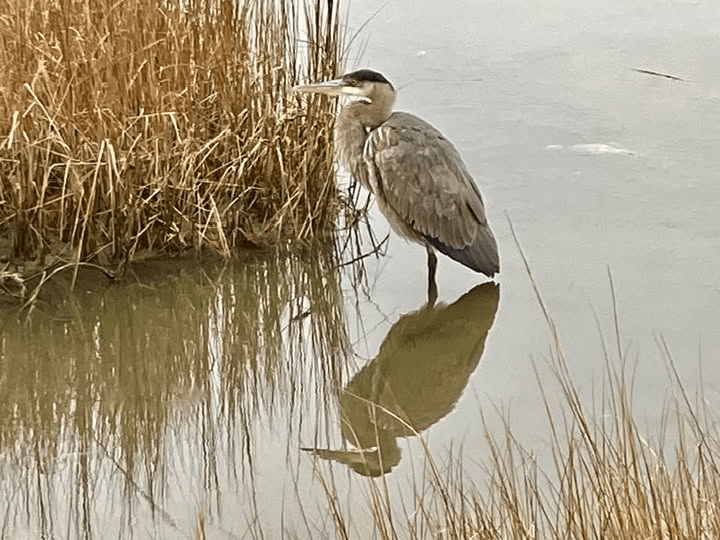
On the way home I rolled into the IGA and could see Kristin from the museum and one of her kids at the checkout, talking to the clerk, laughing. The lot was empty, mostly because it’s Monday but also the rain, and I headed to the river, rolled down the windows, and turned off the car and sat quietly. Out on the Norris Bridge I could hear the whining of truck wheels moving across to White Stone, and the light at the airfield was circling, indicating someone will land at some point tonight, probably Mike in his PT-13 headed back from some weekend show. All of this going on yet all I can hear is the lapping of the Rap on the sand and the slow movement of a heron about fifty feet away in the marsh. To my right in the windows of the yellow house across the reeds is a blue light of a computer or television flashing on the walls.

I like the peace I find when I am outside looking in at Christmastime, and some rebirth of familiar connections take hold of everyone. It is fleeting of course, but present for now. I enjoy watching these flashes of life around me. I try not to be creepy and prefer only to look in public spaces like convenience and hardware stores, but it is nice to catch a place like the library where so much activity is going on behind my music, like shadows on some cave wall. But this year is different than last. Some of the people I used to talk to every day have gone silent, somewhere beyond the ideas and anticipations of those still here. So my world in general has gone mostly silent in the past several months for the first time in three decades.

So tonight I decided a drive made perfect sense; not only because it fills me with some sort of hope to see life being lived, but also because I’ve always been just outside looking in.

This happens to a lot of people, especially this time of year; we have a sense that we’re better off a step back, perhaps a small part of the conversation but not participating as much as others, preferring instead the safety of the next row back instead of the circle of talkers; we are more comfortable on the patio bench quietly watching the stars until someone else who feels awkward comes out and quips about needing some air. That’s where I am, away from the small talk, and I turn around, place my elbows on some wrought iron fence behind me, and look in a everyone laughing. I am okay a step back.

But at the river I sat in silence and thought about why this distance works for me.

It is safely consistent. I know blindfolded how to walk through most of the Blue’s Brother’s light display, and I know Wayne and Maria will be at 711 at this hour. Monday nights Michael always works the library, and Jack’s trees make everyone smile for a few weeks. They make me smile anyway, and I appreciate that. It is predictable and consistent at the end of a year that has been anything but either.

So I drove around listening to Winston’s version of Bach’s Joy and felt completely and literally at peace. Life is out there, through the windows, in the market and the front steps of the convenience store. The kids in the library laugh like Michael used to when I brought him in to sit at those same tables two and a half decades ago. This is what we can count on when we are running out of things to rely upon; that Christmas will bring out people with lights and once dark window displays are somehow almost personified, the trees in Jack’s window display appear more like watermen at the cafe standing around talking about the coming snow.

I slowly rolled down my long, winding driveway until I reached the lamppost near the lawn at the house. The porch is lit with white lights, as usual, and the wreathes illuminate the walls and windows. I had one other significant loss this past year; the Penguin, affectionately known as Pengy, died last January. His wires were shredded from years of moisture and his skin simply popped. Sad really, because I liked seeing him for twenty years at the corner of the porch.

But things change. I have new light displays now someone sent me, and after tonight’s Chocolate Bailey’s on ice I’m not going to care so much anyway. But I do have a suggestion: Turn off the music except for something peaceful, and stay outside for a bit–watch life for a while from the outside, observe it’s consistent laugher and predictable love. Watch others enjoy the moments they have together while they still have those moments.

But don’t stay out there too long. The love is inside.

Hurd’s Hardware, Deltaville
west on the Rappahannock tonight

Stopping by the River on an Icy Morning

The tide is lower than I’ve seen in some time, mud flats running into the river easily one hundred feet or more. Fiddler crabs scurry about and seagulls land to grab them in the same place they normally would dive from on high into water three or four feet deep. This ebb is unusual.

Where the water does lap at the mud, foam formed from the icy cold winds, with temps in the upper twenties and lower thirties early this morning, and the winds pushing down from the northwest drop those another eight degrees or so. It is cold, and damp, so I feel it in my bones.

I like this. I mean, no, not all the time. But every so often I need some visceral reminder that I am alive now, not tomorrow when I have a laundry list of things to do or yesterday when some punk in my college comp class complained because I didn’t pass his plagiarized paper. Now, I am aware of the cold, the mudflats and panicked crabs, and my skin is tight, my eyes water from the wind, and my breath is frozen. It cleanses my entire world. I move about, which gets my blood flowing, and that not only warms me but awakens my senses even more. My mind, too, is clear, as if the winds and the cold blew off the soot that settled all semester.

Then the obligations seem fleeting, the problems which yesterday boiled my blood from the sheer weight of such minute interruptions, are cooled and dismissed by the ripple of foam running down the beach to Locklies Creek near Rappahannock River Oysters.

Here’s what is important, that I am still here. Alive, but more so, aware that I am alive, here, along this river today, and the cold pulls tight the skin on my face.

I thought of Richard Bach this morning and his work Illusions, in which the protagonist says almost as an aside, “Here’s a test to see if your mission on this earth is complete: If you’re alive, it isn’t.”

Hard to know sometimes, though, what that mission might be, isn’t it? You’d think by my age it would not only be second nature, but nearly complete, but I’m just waking up to the fact I should probably do something with my life. To do that I’m going to have to suppress the cold reality that I’m not young.

Except today, when what could have been some stagnant morning happened to turn kinetic because of the cold. My energy returned like a flood tide, and I stood on the sand wondering how to channel it. I think we do that sometimes; we have ambition, energy, even a wave of hope, but we simply don’t know what to do with it.

And for the first time in a long time, I understood my immediate response:

Nothing. Do nothing.

See the day, walk along the river and watch the eagles find food, and the lingering osprey who has not yet left for points south, dive for his meal. The most essential elements for life go ignored, or worse, aren’t even considered, for our need to be “productive.” But is it any less productive to walk on a leaf-covered path and watch cardinals move from holly tree to the ground and back? Is it any less productive to look east across the bay or the Atlantic and contemplate the waves, their calm and their power, as they approach and recede?

It is the same in summer for me, the blazing heat on my neck and face insist I remain present, the sweat on my forehead somehow similar to the tears from the cold wind, catch me and hold me tight in the moment, and I welcome it because at some point it will no longer be, or, better said, I will no longer be.

But not today. Today a dozen geese came in low across the duck pond and settled on the river just to the west, their honking subsiding, their journey paused for now. It doesn’t end exactly, not yet, but they take a moment and rest before they need to continue their flight.

And maybe they discover their purpose is in these moments, aware of the peace around them when they’re not rushing from one place to another, leading a flock or following the same. For geese, it is when they land and rest that it is impossible to tell who was in charge and who fell behind.

I came home, eventually, made some tea, organized my thoughts, responded to a few inquiries, but I did so with added calm I didn’t have before. I have a sense of peace now, of some sort of presence I can’t quite define, which is good, since I still have more than a little to do in front of me.

Yes, much more to do still in front of me.

Thankful 4

I am not yet among the dead of this world, scattered ashes or sunken corpse. Not yet discussed in past tense, not yet absolved at last rites.

I am still conscious of the leaves on the red maple, hanging on, like me, trying to express brilliance before the fall.

I wake up in soft, fresh cotton sheets and see the trees through the skylight turning toward the sun, and a bird scatters to the porch rail, just like she promised she would.

I can call my mother and say hello, talk to my siblings, laugh with people I have loved since I was nineteen, since I was twenty-five, grateful to have closed those gaps in our lives when we lost track of each other. Grateful to know what it’s like to be quiet and know peace. I can climb hills with my son, stop for lunch and talk about what is beautiful, talk about what is next.

For the peace that can only be found in life, that stillness of the soul that keeps us present. Yes, for that peace and stillness and presence, which one must be conscious of to understand.

For consciousness.  

For the fox at the edge of the woods waiting for apple slices.

The veteran who stopped to see if I was okay.

The homeless man in Norfolk last week who let me help, which reminded me I could; his gift to me.

For having had the type of relationships—so close, so intimate and alive—so that when those souls died, my sadness which is alive still simply reminds me I have known such love, even briefly.

For the way the river still keeps tabs on my moods, washes clean the extremes which constrict my hopes, tugs me back to the Island, or off across the equator to distant mountains on the moon and then washes me ashore here on the edge of what’s next, giving me the strength to fight the tigers that come at night.

Thankful is a shallow word. There must be something better to express our gratitude for being alive, now, with the aroma of leaves, the chill at night pulling the skin taut on my face, the stars stretched out like compassion through the universe. Thankful is not enough.

To still be able to string together a battalion of words which might make someone cry when I remind them of a loved one or make someone laugh when they recall a moment they once knew but thought they had long ago forgotten.

For forgiveness.

For compassion.

For the way I feel when I reach for the phone to call someone who left this world before me, and my heart sinks, and my stomach drops, and I remember, and I put the phone down. For remembering that is another way you can measure love; you remember how you almost called anyway but then didn’t.  

Thankful for the ones who see my mistakes and don’t give up on me.

For the soft touch of another soul who understands.

For understanding.

The History Conspiracy

The Cup of Blood, a Gift from a Colleague in St Petersburg, Russia

I own a porcelain cup made in Russia in 1896. It is about four inches tall, white porcelain interior with blue and red markings. On the side is the seal of Czar Nicholas II and Alexandra, and “1896,” the date of his coronation. A friend of mine in St. Petersburg gave it to me. The “coronation cups” were made for the occasion to be filled with beer and passed out to the masses of people outside the Kremlin walls so the peasants could celebrate along with the aristocracy. The military training field where half a million people gathered for the souvenirs of cups and various food and clothing items was already a dangerous place to walk for all the trenches and mud pits. But things quickly went south when a rumor spread that each cup had gold in it and there were not nearly enough of them to go around. The stampede left over 1700 people trampled to death. The cup became known as the “cup of sorrow,” so called by Alexandra herself, but it is more often referred to as the “cup of blood,” and the tragedy seemed a bad sign for things to come during the reign of the last Czar. I own one of only five hundred or so made.

As the Raiders of the Lost Arc character, French archeologist Renee Belloch, notes, “We are simply passing through history; this is history.” When I hold the cup in my hands and turn it over I wonder which guard, swarmed by people, handed it out, which peasant held it in her hands. I turn it over and realize the likelihood it was stepped on in the mud, or smuggled away quickly by some young worker who managed to escape the tragedy. It is one thing to listen to a history lecture about the event, and something else entirely to go to the Kremlin and hear the tour guide explain the events as you look out over the parking lots and office buildings on the once barren land, and imagine the droves of Russians pushing for the gates, their comrades crushed just for the cup, this cup.

I am not a history buff by any means, though I have toured many historical sites around the world. My own sister earned a doctorate in history from Notre Dame. Her husband, too, received his Ph.D. from there and is a leading historian at Temple University, author of countless award-winning works about military history, and it isn’t unusual to see his familiar face pop up on the history channel as commentator. Even my father knew so much about history he could have taught it in college, and in school he won a history award.

Me, not so much.

But I am a hands on guy fascinated by items that survived time and war and neglect. I need an object, a talisman of sorts, to bring history to life. When I hold the cup, my mind wonders what they were talking about before the stampede, what music were they listening to, was it an exciting time or, because of the conflicts already underway throughout the empire, was it subdued and the cup distribution simply a brief diversion. Who made the cups? For me, owning one is a way to reach through a rabbit hole and pull out some 19th century reality. Though I suppose it might also be considered moronic to have it in my possession and I should probably sell the damn thing on Ebay.

The irony is I have made so many trips to Russia for the purpose of experiencing culture that I became heavily steeped in history by virtue of immersion. Russians are deeply rooted in their tragic and beautiful past. In Prague it is the same. There, I stay in a building built almost 700 years ago and dine in former bomb shelters as well as a wine cellar used by Charles the IV in the 1300’s. I have no interest in reading about those times. I like to be in the present, walk the same hallways with someone like my brother-in-law to tell me what happened while I half listen and half focus on the immaculate trajectory of time, like an arrow, like a beam of light, like a falling star. Time remains relentless, and I like to hold the cup in Russia or lean against The Hunger Wall in Prague, or sit in a pew in a Spanish chapel prayed in by Charlemagne and contemplate the immediate reality that we are on the same line, standing between them and what’s next, isolating this moment. I am nobody, to be sure, but I am here, part of the conspiracy to keep those ages alive. Time can be like a relay that way. Observers grab the events of the past and pass them along to whoever’s next, and on. But while my sister and her husband are direct descendants of Herodotus, I like to consider myself the descendant of the barkeep who served up some honey mead for the evening gatherers who stood around and told stories and tried to pick up eunuchs.

History would be well served to have a bartender’s version as well as a scholar’s. We could bypass the normal reference material like dates and plans and titles and influences, and keep track of what they really thought, their insecurities, their ambitions. Who wouldn’t want to pour another hekteus of wine and listen to Aristotle rattle on about which Sophocles play bored him to death and which sent him reeling to his corner table after intermission to contemplate the center of the universe? What tender stood by with the bottle of chianti that got Galileo hammered, relegating him to the courtyard at three am on his drunk ass with a dizzy head, and as he lay on his back he looked up at the stars and thought, “Whoa, hang on here.”

I think I’ll let the others write history. Instead, I’m heading to this small oyster shack I know and have a dozen Old Salts and sit in the same place oystermen sat while Teddy Roosevelt was pounding up San Juan Hill, and I’ll talk to some fisherman about changes in the tides, and how some Bay islands used to be so much larger, before the storm of ’33, and before the one in ’03, and if you paddle out to them at low tide and work your way through the mud, you can still find hundred-year-old hand crafted beams, and abandoned hand-made traps. When I was a child on Long Island, we would find arrowheads. The Native American culture on the Island wasn’t solely history lessons in school books; it was lying around in the sand and marshes of the south shore.

If I drink enough at the oyster shack, I might stumble out to the patch of grass on the river and fall on my back and stare up at the stars and think about Galileo and Copernicus and who else lay still in the quiet of night, the faint sound of water lapping the shore nearby, and watched Orion’s belt loosen, or the Pleiades spread out like buck shot. Then I might go back inside and sit a few stools down from the cook sitting alone on the corner stool, and lean toward the tender and ask, “So what’s his story?”