Mon soon Come

weather

“The Weather is Here, I wish you were Beautiful” –j buffett

Maybe (maybe) the most universal effective aspect of life is weather. It concerns every person who wakes and must go outside, and even those who remain cloistered. It determines what we wear, how we travel, what grows and can be harvested, what we eat, our health, our heating bills, flight schedules, road conditions, skin cancer, landscaping, pizza delivery, getting to work, to school, to the stores to buy food, to our friends and family in need. To be clear—it is everywhere, this weather.

No metaphors here. No convoluted comparisons. Just weather.

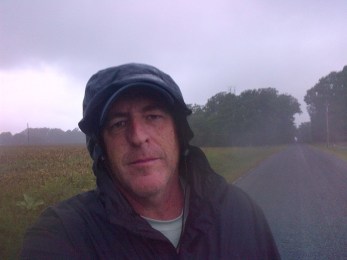
I spend the vast majority of my time outside. I absolutely love to walk in the rain. Part of that is I know when I’m done I can dry off, change my clothes and make some tea. It is the same with snow. The cold tightness of my skin on a blustery winter day feels oddly healthy, as does the blistering sun on my neck in August. I love wearing my flip flops, shorts, a t-shirt and sweating profusely as the hours pass well into the afternoon while walking in the sun, listening to nature react. Equally, I’m completely engaged when I have to put on three shirts, a hoodie, sweat pants and two pairs of socks just to be able to go for a walk during which I might see deer, cardinals, and various other life scooting around for something to eat while I am engulfed in the deafening silence of the snow. I’ll cover the porch rail with seed and stay dressed and sit on the porch. Those birds don’t care that I’m a foot away; they stay, they brave my presence. Only in winter.

Then I go back inside and change into warm sweatpants and have tea. See, it works for me; it doesn’t work if you have no home. A little perspective there. Every time I walk in extreme weather I think about someone who might be in the streets of some cold place, or blistering hot place, and I remind myself it is more than bearable for a little while until I make the choice some can’t—to get out of the weather.

“Come in from the cold,” people say. “No I can’t it is pouring out,” people say. “Wow, it is just too damn hot,” people say. They’re not speaking for me. I like to spend as much time as possible immersed in the unbearably brilliant sensual joy of life. That includes rainy days.  

Hurricane Matthew is approaching the Florida coast and predictions show it will go ashore in just a few hours. I worry about my friends there, and I think about one of my homes away from home, St Augustine. It seems at this moment the worst of this storm will not make it as far north as my house, not like Isabel did, and others. But maybe (maybe) it is too soon to tell. There are times the weather seems not so much part of nature as it is simply nature having a bad spell. Blizzards, tornadoes, drought; these to me are nature’s way of hemorrhaging.

Van Gogh wrote, “There is peace even in the storm.” I understand that. When it rains hard, or the wind is fierce and I can hear branches snap, as long as I am safe it all simply reminds me I am alive to experience this weather, this turn of currents, this atmospheric screwball, and I feel somehow calmer and more alive. Of course I love the perfect weather, the still day with low humidity and pleasant sunshine. But equally, to experience the rain on my face, getting drenched, reaching out and being a part of the earth and nature instead of it simply being something “around” me or something “outside,” floods my senses and elevates my awareness to keep everything else in perspective.

Who among us during the calm days doesn’t hope for some metaphoric lottery win, some breakthrough in life to make us feel like there is something more to grab on to? And then severe weather arrives and we shift our thoughts and pray no one gets hurt and our property is spared, and above all else that we come out of it alive. When some system swirls off the African coast creeps its way up the Saffir-Simpson Scale, it throws our lives into a whirlwind of measuring value and understanding perspective to discover what is essential. Hell, just a little rain should do the same thing. Putting on warm clothes and having tea is absolutely more enjoyable when doing so is preceded by a good drenching.

The weather is constantly changing, and so are we. Rachel Carson believed that a rainy day was the perfect time to walk in the woods. Of course. And “the best thing to do when it is raining,” Longfellow tells us, “is to let it rain.”
rainy-bob

Just for a Moment I was Back at School

with-ed

I talked about Spain at the Regina A. Quick Center for the Arts at St Bonaventure University Wednesday night. Normally, I do readings of my work. But last night I talked about the pilgrimage I walked with my twenty-one-year old son, and the places we saw, the chapels and mountains, the people we met. I’ve done this before in various venues, but never at my alma mater.

There was the exciting and predictable chance to be back home, and I didn’t miss the opportunity to point out how my own pilgrimage began in 1979 in Devereux Hall, just a few dozen feet from the auditorium. Some old friends showed up whom I haven’t seen since graduation, and some whom I’ve seen quite consistently since. But last night we realized just how many years have passed. We all are well along our journeys. 

There was some consistency. I saw Rula who traveled to Russia with me and other friends a few years ago. I saw the good friars at Mt. Irenaeus, including Fr Dan who has been an anchor for three dozen years. Renee and I ate at the Beef and Barrel, of course, as we did thirty five years ago before heading to Arizona. I saw Fr. Kevin, and went to dinner with Sean, a kindred spirit who understands how to listen and how to laugh. I saw Liz. Mikel. Bobby. And Rick—good friend and publisher, as well as excellent writer, who made the pilgrimage from West Virginia since he wasn’t far, comparatively speaking.

I can’t talk too much about what has changed. That students walk around with phones, so spontaneity seems rare; that there are endless fast food joints; that “sponsorship” signs are abundant; that there is a Starbucks on campus. I did notice, however, the view to “Merton’s Heart” is the same. At some point while having coffee with Sean, we noticed how empty campus was, even between classes, and I wondered if the students don’t hang out so much anymore, sitting under trees or throwing a football as was common years ago. It was, after all, an absolutely beautiful fall day. 

My journey since I was a student is nearly impossible to communicate. In fact I’ve written volumes about my life in books and articles yet haven’t scratched the surface of  what happened during the years since I lived here. When I think of my life back then, I remember innocence and hope, much like Michael’s and my innocence and hope while standing in Saint Jean at the start of the Camino. As the pilgrimage continued, new experiences contributed to the narrative, and the innocence slowly slipped away, but never the hope. The small village of Saint Jean became little more than a gorgeous village to begin from and which I look forward to seeing again, but it holds nothing on the deep satisfaction gained on the journey itself.

Yesterday I stood near the Center for the Arts about to talk to the audience surrounded by my son’s brilliant artwork, and I looked up at Devereux Hall where I lived when I was nineteen-years-old, and for a moment I glanced at a young man looking back at me. I swear I almost called out to him across the quad, across the ages, the innocence on his face so precious and frightening, to tell him I promise it is going to be okay. I immediately knew, however, he wouldn’t listen. And it’s just as well. We have to find our own way. And we will, so long as we keep hope. I still wanted to quickly warn him about the girl on the second floor of Francis Hall, but all lessons must be learned on our own. 

I walked around for a long time on roads and pathways so familiar in my youth. In that aspect nothing changed and I made my way across the bridge into the village of Allegany then back and well into Olean and was overwhelmed by the thought that  I’ve already done this; I’ve already walked this way. I wanted to find new roads but there weren’t any around here–not for me anyway; maybe for some newbie nineteen year old. I guess a few things the Camino taught me well is to keep going forward and only bring along what is necessary–like those people who made all of these journeys so worthwhile. My heart does not remain in the Enchanted Mountains; it is with people like Liz and Sean, Rula and Renee, and those who “see where you are, but they know where you’ve been.”

Harry Chapin had it right when I was doing coffeehouses thirty-five years ago, and it is still relevant today: All my life’s a circle. No straight lines make up my life–all my roads have bends. With no clear cut beginnings, but so far no dead ends.

Buen Camino.


1981

It’s Like Rain

rain

It’s been raining for a few days now; almost four inches last night alone. Roads throughout the area are flooded and creeks and rivers have swelled well beyond their banks. Today schools throughout the area are closed because of impassable roads, and classes at the college are only half-filled.

I went to the oceanfront and walked as usual, though no one else was around. The waves were choppy but the tide wasn’t that high, and the wind was strong, though not as fierce as I’ve found before.

There is something so cleansing about walking in the rain. It keeps my mind almost entirely in the moment, and though by the end of a half dozen miles I’m soaked as if I dove in the Atlantic, it doesn’t bother me so much since I know I can change my clothes, or at the very least find a place to dry off.

Still, I prefer the sun and warmth, but I don’t mind the rain. There’s something about wet weather which makes me feel alive. It is the visceral, it is the texture of life we normally don’t brush against. Usually weather is something “above us” or “out there” or even if we are out on a fine autumn day, it is something somehow balanced so that we barely notice. Rain, though, a heavy rain with a slight tropical wind swirling back down from the northeast, makes its presence known. I love it.

When I was very young we lived in a house with a side patio surrounded by hedges and covered by a green canvas awning. I loved sitting at the picnic table on the patio when it rained and listening to the sounds. It is the same camping. After high school my friend Mike and I went camping in the mountains of Virginia and one day the rain was torrential. I’ll never forget it. We found things to do like visit the most obscure caverns in the east, but mostly we sat inside the canvas tent, listening to the rain and writing a letter to Jimmy Carter. It passed the time.

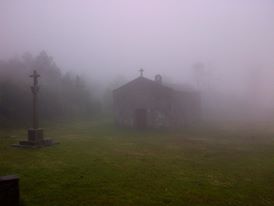
I am sure my most memorable rainy day was one spent with my son in Spain. We walked east on our way back to Santiago from Fisterra on the Atlantic, and there was a long, steady, heavy rain the entire hike. The mist was heavy and while there were supposed to be scenic cliffs and vistas to our right as we walked, we couldn’t see past the trees. At one muddy incline we followed a path to the left which led to an old chapel and stood in a bandstand-type structure in the back. It was the most beautiful sight, looking out at the chapel in the mist as if it was a thousand years ago or a thousand from now. We were soaked to the skin, but it felt fine; we didn’t mind. We were there, understanding the absolute sense of “now.” Rain can do that.

In 1983 I was in Tucson for the floods. Renee and I and Tom and a few others headed to the San Rillito River which had been used for kids baseball games just a few days earlier and watched an A-frame house drop off the cliff as the mud was torn away from raging waters. The house flipped and floated downstream toward Mexico. Even Route 19 South to Nogales was wiped out in one direction from the floods, which came from the heavy rains. It never ceases to amaze me how individual droplets of rain are harmless, but gathered together they are the number one cause of weather-related deaths. It is amazing and terrifying what the singular can do when bonded to others with a common goal—in this case just, you know, falling and saturating the ground.

The least rainy place on earth is Antarctica. Lloro, Colorado is the rainiest with 534 inches a year. Raindrops look more like chocolate chips than teardrops. Rain falls at about 18 to 22 miles per hour, no matter how “torrential” you think it is—it isn’t falling faster or harder, just denser. (See, sometimes you learn something from a blog)

In college I once borrowed a Franciscan friar’s robe for a Halloween party and went as a priest. With the hood up on the rainy walk home to my off-campus apartment about a mile away, no less than a dozen cars stopped to offer me a ride. I simply blessed them and kept walking.

It doesn’t seem to rain as much as it used to growing up. I used to love rainy Saturday afternoons when I was young, and we’d hang out in the den and watch old westerns or old movies. I thought those days would never end. Like that rain, the rain today reminds me that it had been sunny and isn’t now. It is a slight push toward melancholy, it hints at appreciation of things past. I welcome the rain so that I will not take for granted the sun. It is like fasting, a rainy day. It forces me to spend an entire day not in the sun, somehow allowing my senses to breathe.

“Some people walk in the rain. Others just get wet.” –Roger Miller

chapel-rain

Indescribable

14th

I have a problem: I am having trouble writing about beauty.

This frustration all comes from failed attempts to write about the scenery in northern Spain and eastern Siberia, my two latest locales for my current work. I envy photographers who can wait for just the right light and mesmerize us with panoramic views of anywhere. I suppose, though, even they would say the same; that when they look at their photographs they just shake their heads and admit, “No. Close, sure, but this isn’t what it was like.”

Landscape artists (apologies to Cole Young who hated that term) as well, such as Young and Mikel Wintermantel and Thomas Cole and others, might admit this gap between what they see and what they create, though I’ve been to the places some of these artists captured and can confidently say they nailed it.

The irony, though, is I surround myself with beauty. In my house are artifacts from various travels: A small shell from Spain, icons from Russia, a musical instrument from Africa, and more. On the walls is the inspiring artwork from my son, Michael, from our travels together; a half dozen or so Mikel Wintermantel paintings which calm me, energize me, remind me of where so much of my soul resides in western New York; and other beautiful artwork. There’s the glass work by artisan and friend John Almaguer, the pottery of NY and Arizona compatriot Tom Schell, and on the shelves books by friends too many to count. I read them sometimes—I read about the ‘60’s in Philadelphia, or the things they carried in Vietnam, or growing up in the Bronx, or the floods of North Dakota, and I am mesmerized by beautiful prose and poetry; I am transfixed as writing is apt to do when it is that good.

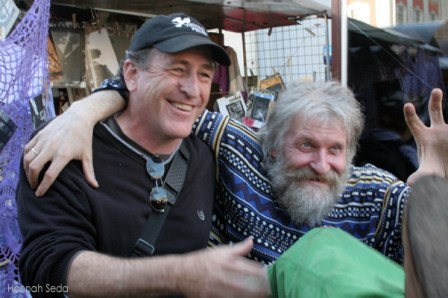
In my office, too, I have taken the time to insure I am not cut off from that beauty for which we should be alive. I have Michael’s photos overlooking the Atlantic in Spain and others on the wall for me to fall into, and pictures by my Russian friend Valentine. When I look at those photos I laugh and remember how out of touch with reality he is, and how in touch with beauty he has always remained. He is legitimately crazy and figured out how to make a living at it. That’s beauty.

Also in my office is a small statue of St James the Greater as a pilgrim on horseback Michael bought for me at the cathedral in Santiago. There is artwork from friends in various places. A monkey clock from Kay. Pottery from St Augustine (the place not the person). A Cole Young painting which to look at immediately places me in his studio listening to his rant, listening to Van Morrison. I can smell paint.

Outside, however, the beauty has always escaped my writing. I think because that scenery is so obvious, such the standard example of what is recognized as “beautiful.” The ocean this morning was especially calm, and more dolphins swam by than I’ve seen in some time with pelicans barely above the water, always in a straight line, not a “V” like geese. The sun burned through the few clouds at eight a.m. and it was warm before I was half way down the sand. I rarely try and describe that for the countless scribes who tried and failed in years past. Oh, there were some who knew how to capture the beauty of nature—Muir, Thoreau, of course, Frost, even EB White’s “Here is New York” describes the city in a most enticing way making the skyline as much horizon as the Atlantic.

You’d think with something like eight hundred thousand words at my disposal I’d not have an issue with translating the lush mountains of the Pyrenees. So I find myself instead writing about my inability to write about something. It can be a cruel occupation.

To avoid writing, as we writers are quite apt at doing, I decided to clean out some boxes I moved in here a while back. Also, my file cabinet should be thinned out. Oh, and a few tea mugs look dusty so I need to wash them in the bathroom sink, which isn’t far from the café, so I might as well head over there for something to drink. See, that is how we think. It is absolutely beautiful to watch a writer avoid writing.

But I did empty the box to focus on something other than beauty and found old artifacts from before I began measuring time. A wall rug of seagulls and clouds my sister made for me almost half a century ago; a few mugs my dad bought for me in some of his travels to conventions during the early years; a drawing, scribble really, of the moon Michael did when he came to work with me one night when he was two; a high school yearbook with a picture of my old friend Mike and me doing the morning announcements (a good hour was lost looking through that relic); a key to my house in Wellsville, Pennsylvania, I have kept for all this time; a guitar pick from an old friend; two tootsie rolls.

A note here: the tootsie rolls aren’t garbage. I collected money once outside a grocery store for the Knights of Columbus and we gave away the candy. Michael was just six at the time and we had so much fun that day I believe we both remember the details of every person who came by; at least I do. There is certainly beauty in recollection, much to admire in some degree of melancholy.

I have a dried sunflower, a ton of photographs, and three rolls of undeveloped Kodak film; I have no idea from when or where.

I think the natural instinct when wishing to write about something we find beautiful is to turn to metaphor instead of focusing on detail. We do that in life too, I believe. I know I do. When stress is overwhelming and the days feel like something to “get done” instead of enjoy, it isn’t the “ocean” I need to fix on, but the break of the wave right near my feet and how it chased young sandpipers back and forth with the surf. I shouldn’t write about Siberia, but about that moment our cabin mate Alexander figured out how to say “rain” in English, and he taught us the Russian; and it certainly isn’t possible to write about the Pyrenees, but I can write about the Basque café owner who gave us flag pins and shots of Pacheron and was thrilled beyond description when Michael spoke some of the man’s native tongue.

And so throughout writing, it is the details. I can’t write about how much I miss my father, but I can write about how his face lit up when he sank a long putt; or how I forgot to say just the right thing; or how I never really did like Scotch all that much; or how I’ve lost interest in eating at Mahi Mah’s.

It isn’t difficult at all to write about beauty. The problem then is not recognizing how we are always surrounded by it and never know.


val-and-me-good-pic

1963. 2001.

1963-funeral_1469436i

I was three when President Kennedy was shot, just a few months older than John-John. I don’t remember the incident at all, nor am I aware of a difference in temperament before and after that fateful day in November of ’63. But I’m told it was distinct, black and white, an absolute clarity in “before and after” references.

I’m told Kennedy came with hope, with promise, with lofty goals like landing a man on the moon and cleaning the earth, the Peace Corps, the hope of peace in general. He was young and so was most of the population as the first wave of baby-boomers came of age. Things were good.

Camelot.

I saw footage only in great retrospect years later. People talked about conspiracy theories, they talked about Vietnam and Civil Rights; and they talked about the subtle differences of expectation and hope before and after November 22nd, 1963. But all I was ever exposed to was a post-Dallas world. There are newsreels, of course, and stories from older relatives. But there will always be something lacking in the narrative for those of us who didn’t experience life back then. There will always be some subtle element we will never be able to grasp.

***

This Sunday will be the fifteenth anniversary of the terrorist attacks on September 11th, and like I do every single year, I asked my students this week to write a few hundred words about that day: What do you remember? How were your parents that day? When I first did this fourteen years ago, the responses were heartbreaking. As the years went by the paragraphs covered the spectrum from indifference to passionate recollections from military members who had returned from Afghanistan and Iraq. And, predictably, as the years went by the details became less clear, less “involved,” and more repetitive to what they heard from others, from history class.

I gave the assignment yesterday and one of my more ambitious students raised his hand. “Professor. I’m sorry, but I was three when that happened.” The rest of the class nodded in agreement. An image of JFK Jr saluting his father’s passing casket ran through my mind.

I let this reality sink in.

“Then you couldn’t know,” I said.

You couldn’t know that before 911 our thought process was different, more hopeful, absent of impending doom. We still had that absolute conviction that whatever happened to us as individuals and as a nation was still pretty much in our hands. You have no idea that before that day we looked forward to what was next, not fearful of what might happen. Our daily vocabulary was absent of phrases involving extremism, terrorism, anthrax and Fallujah. These concepts were real and among us, but they affected others, were problems for others, were handled by others. Our attitudes of issues concerning Afghanistan and Iraq and terrorism back then were similar to students at this campus today worrying about what was happening to students at another college thousands of miles away. We were peripherally aware of it, that’s all.

But it is all you know. Your daily news intake since then—which involves a plethora of social media outlets not yet invented fifteen years ago, as well as traditional media—is riddled with world events as if the next horrible event will be fifty yards away in the dining hall and you’d better be ready.

It is hard to be positive, isn’t it? It is difficult to find some pathway to hope and prosperity when it seems as if we’re swimming upstream against an inevitable tsunami of a collapsing world.

***

In an age when higher education has once again become more of a world of industrial education, where students expect that the sole purpose of their classes should be to prepare them for employment, where enrollment is plummeting not just because of cost but because of the greater population of teenagers not seeing a point to it, there is a desperate need for the study of philosophy and art.

I can’t think of a better time for educators to emphasize the potential of humanity. But technology is our new curriculum, and students today are convinced it is the sole foundation of whatever they do. But “it has become appallingly obvious,” Einstein said, “that our technology has exceeded our humanity.”

“Intelligence plus character is the goal of a true education,” Martin Luther King, Jr. insisted.

And according to Plato: “The direction in which education starts a man will determine his future in life.”

I cannot teach these people what life was like before terrorism terrified our cities. I can perhaps only describe what it was like to sit at a table at Windows on the World for lunch and enjoy a view absent of fear. I can talk about crossing borders without interrogation, walking family members all the way to the plane for their departure, carrying pretty much anything I wanted on board a flight. I can talk about what wasn’t talked about, places we never heard of.  

I changed their assignment. I asked them to write what they thought was humanity’s greatest strength, most encouraging potential. Again my student raised his hand. “Professor,” he said. “I’m sorry, but can I write about what I remember from fifteen years ago instead?”

911

a dirty, dark shack

IMG-20160829-00455

                                                                                 (apologies to Hemingway)

At lunch today, I talked to a man at Ocean Eddie’s about our preference for pubs that are dives. The tide came in beneath the floor boards and we sat at separate tables with patio umbrellas on the deck . He drank a draft and some of the head dripped over the side of his glass and onto the table.

He told me about his favorite dive, outside Danville, Virginia. Then he asked about mine. 

“No contest. The Shack.”

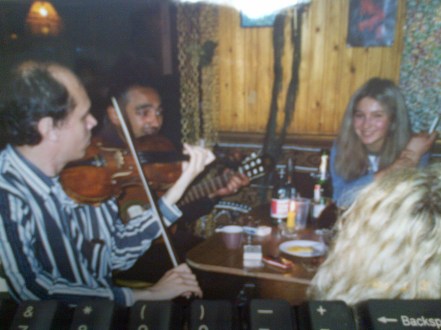
There was a bar in the woods on the Gulf of Finland just outside St. Petersburg, Russia, I frequented in the late night early morning hours back in the nineties, but it burned down. It was a small place to drink and sing Gypsy songs and meet people you’d never want mad at you. The windows barely kept out the weather, including a storm blowing off the Baltic one night. It was well after midnight and we ordered a bottle of Georgian Merlot and several plates of shashleek, a Russian shishkabob dish the owner grilled on a hibachi in the sand out back.  A gypsy band I knew showed up, including a guitar player and a violin player and a woman singer I had never met. Hours passed as we sang and drank; I milked one glass of Merlot for hours while others indulged with more energy. There were four of us from America, three musicians, a waitress, the owner and his cat, and one other customer, Alexi, and we sang and drank while some storm from the west intensified.

I tried explain to the man at Ocean Eddie’s what it was like. I watched a surfer wipe out, took a sip of my beer, and described that night: 

“This duck blind of a building sat among birch trees, but that simply made me more aware of the weather, wondering when one might topple through the roof. It was exhilarating, an adrenaline rush that had nothing to do with the wine; it was just being there . It felt dangerous, subversive, but it was just a bar in the woods. Being in Russia just a few years after the coup helped mystify the atmosphere.”

I told him how the band took a break and came to our table and we spoke in broken Russian and English about the storm and how we hoped it wasn’t high tide soon since the water was just a hundred feet away, maybe less. Then the other customer, Alexi, the two hundred eighty pound drunk Russian who hated Americans, started to yell at me like he did the first time I ever met him, the first time I walked in the place a few years earlier. It was as if he never moved. He had mostly kept to himself on my previous visits to the Shack, sometimes talking to me, mostly not, but this night something got under his skin and he yelled at me like he did that first time, “I hate Fucking Americans.” He startled me but he had a drink in front of him and the woman from the gypsy band was sitting with him and told him to quiet down and he did.

But his eyes all night seemed deep and vacant as he kept looking through the window at the storm, and once in awhile when he noticed me watching him he would lean forward and say, “I hate fucking Americans!” But then a sound like the sky opening slammed on the walls and ceiling, and we all ducked, we cringed, and I thought for sure one of the birch trees cracked and was going to kill us all. I went down on the floor with my friends and the gypsy band and Alexi cursed and fell against the back of his booth. He suddenly looked so small, and the thunderclap crashed on us again, this time blowing open the swinging window near Alexi as rain and wind sheered a path across the booth to the other wall. Dima put his violin under his coat and our shasleek flew off the table onto the floor. The shack cat went for it but the wind and rain chased him back under the bar and into his bed.

“I would have gotten the hell out of there. The trees would have scared the crap out of me.”

“I know, right?! but leaving in the dark in the storm in the woods is the only thing that scared me more than being there.” We both drank our beers.

Another flash of light lit up the shack and Alexi was trying to hide under his booth but he was too big, and I watched him, and he looked out the window for some time until the weather calmed, then he looked at me, and with a nod he said, “Horosho. Horosho” which means, “okay. It’s okay.” He looked at me as if to ask me to come sit with him but he didn’t know how. Instead he closed the window and latched it. He nodded to me, “Horosho. Edeesuda.” It’s okay, come here. A few of us gathered and sat at his table, and Dima took out his violin. Alexi smiled at me, looked at the closed window with a stoic face, then turned and smiled again. He looked at the waitress and said “pivo,” beer, and he motioned to us all so she brought us all beer. When she returned she told us she didn’t know what Alexi would do if something happened to the Shack; she had no idea what he would do, that he practically lived there. I asked Alexi if he lived nearby but Alexi just nodded at me and said, “I hate fucking Americans,” and we laughed and toasted each other.

Dima played, then Sasha joined and then the singer, and the beer tasted good. Alexi sat quietly the rest of the night. The storm passed and the sky quieted down.

At Ocean Eddie’s we sat on the pier in the August heat. “Then it burned down. Dima wrote me and told me it burned to the ground and everyone was pretty sure local businessmen who owned a hotel not far did it, but they could never prove it.”

“Places disappear, man. The place in Danville closed up years ago. Hard finding a new one.”

Unfortunately, the distinguishing feature of a “dive” is that it is about to burn down, be condemned, fall apart, or otherwise render itself uninhabitable. I love those places, right before the fall. It is important, then, not to become too attached. 

I thought of the places I frequented that have closed. The Shack, Rasputin’s on the other side of that city, the Blue Door Blues  and Jazz Club in Prague (where the door was brown and they didn’t play either blues or jazz), the old Jewish Mother right here at the beach, and I just read that Sea Gull Pier on the Chesapeake Bay Bridge Tunnel is closing as well, talk about a dive. But the Shack wins for losing. It was both literally and figuratively on the edge of everything. It was the stereotype of some Soviet-era bar in the middle of nowhere, and I always half expected Rasputin himself to wander in. It burned, though, like most of the traditions and purity of Russia. It seems the city is built on ashes. 

He drank more of his beer and then asked, “So where are you going to go after this place is gone?”

“Well, luckily I have other places I like.” I sat quietly for a few minutes and thought of some: Big Sams at the Inlet is a shack, for sure;  There’s the Golden Tiger in Prague which I love; Maria’s Pub in Santiago is my new favorite, the Burton in Allegany. Things burn or get torn down or simply fall apart. It’d be nice if these places were always there for us when we return to them; or for people like Alexi who never leave. I go because I meet the people that way, real ones, with personalities and a severe lack of pretense. Mi Casa Cafe in St Augustine, Yorktown Pub. Some lady’s garage just west of Portomarin, Spain.

“Well I need to find a place. A shame really. I was just getting used to it here.”

He could tell from my face I had no idea what he was talking about.

“I’m guessing you didn’t hear. It was in the papers and the old man in the bait shack told me a few weeks ago. They’re closing it up, tearing it down and rebuilding some steel pier, gift shop, amusement, hotel complex. This is Ocean Eddie’s last season.”

He left and I sat and watched lone surfers working the small waves.

Damn.

Well, this place doesn’t have what it takes to be a shack anyway. Maybe thirty years ago when it was falling apart, but after it was cleaned up and painted, not so much. Ironically it came into its own just in time to tear it down.

No, a dirty, dark shack has to be open late, at least until three. It needs old floor boards and low lighting, it most certainly needs low lighting though bright lights is all one can find these days. It is best if the vast majority of clientele do not speak English and look as if they escaped a gulag. These are the people to talk to. This is where to find honesty.

A dirty, dark shack doesn’t serve drinks with umbrellas and it doesn’t own a blender. Even electricity should be a last resort except for keeping the beer cold. It should serve only a few food items and those should be grilled. A pet is helpful. And just for atmosphere and to pay homage to Hemingway who understood sometimes a person needs a place to go late to sit alone and have a drink, a dirty dark shack should have an old man in the corner; someone who looks like he still has the dust from the road. He should look like he is always just a few hours from where he wants to be. And he should be wearing flip flops. He most definitely should be wearing flip flops. 


IMG-20160526-04419

Sweet Surrender

oceanfront


Truth be told I’m simply overwhelmed. There is so much going on in every aspect of my life it is difficult some times to keep anything straight at all. The irony is that when I returned from Spain I did so with a conviction toward “simplicity.” I came back focused and determined to concentrate on what I learned on the Camino, that the simplest things in life are the most valuable and fulfilling. But somewhere in the course of the past two years things got away from me. And here I am back in the thick of spread too thin.

I’m not complaining since I can control what I add to my life and what I don’t. But still the current trench is somewhat deeper than usual and it makes it difficult to see the sky.

So, I walk.

I walk along the Rappahannock River near the Chesapeake Bay, or back along the small roads running along the marsh lands under tall pines and past duck ponds. Deer, geese, osprey, egrets and eagles are normal companions on my walks. In the winter I don the proper clothes and keep going. In the summer I’m down to a t-shirt, sunblock shorts, and my Merrell hiking sandals and I sweat my way through eight or ten miles. I think, I write in my head, I remember what needs to be done and I plan on what I will no longer do. The endorphins engage and at night I get down more thoughts about projects I’m working on.

But it is a required retreat, and that isn’t always healthy either. So I am going to simplify again, ease my way out of the trench. This afternoon I heard an ancient John Denver song I have not heard I believe since I’m seventeen years old, and it made me remember the simplicity of being seventeen, the innocence. Ironically I was very plugged into events and society back then. About to go to college for journalism made me aware of things around me, and like Woodward and Bernstein (younger readers can go Wiki them now) I was going to be uncovering the next scandal, so I wanted to know what was going on. But it seemed different, and I think it wasn’t because the times were more innocent or that less corruption infiltrated the government and businesses and colleges, but because there was less coverage, less inundation by media and watch-dog groups, Go Pro and Facebook posts, and Twitter, and on and on.

Left Turn:

I was on a bench this morning at the beach next to another bench with a guy about my age, emaciated, deeply burned black skin, who looked as if he hadn’t been in a shower in a while. He said, “This might be the most beautiful morning in a very long time!” At 7:30 it was about 68 degrees and the sun still hadn’t risen so high. I agreed with him. He went on, “This tells me it is going to be a good day.” Again I said I was certain he was right.

Than this:

“What is it you do? You on vacation? Where you from?”

“No I live here. I’m just out for a walk before headed to the office. I teach.”

“Where do you teach?”

“Today I’m at TCC. Tidewater Community College.”

“Oh that’s absolutely fine! I never made it to college. I could have! I got out of the army and could have gone to college but I never made it there. What do you teach?”

“Writing.”

“Oh well I’ll tell you what you oughta do! Bring them students down here and have them write about this beautiful day! This’ll inspire them.”

I agreed. We were quiet a moment and I fixated on what a tremendous suggestion that was.

“You know I was going to ask you for some money but I can’t now.”

I reached for my wallet. “Oh I’m sorry, absolutely, it isn’t a thought! Let me give you enough for breakfast at least.”

“Absolutely not,” he said. “We’re friends now and I don’t take money from friends. I’ll ask one of these fine tourists from out of town.”

I handed him a five. “I’m actually from New York, originally.” He smiled and took the five.

We talked a few minutes more and I left. We don’t have enough conversations like this. We don’t talk enough about nature, about sunrises and breezes. We listen too much to the wrong information. I’m turning toward simplicity; at least I’m going to try again. I don’t want to be homeless on an oceanfront bench, for certain, but that was still the most valuable conversation I’ve had all day.

I headed to campus singing to myself. For the life of me I couldn’t remember what I had to do that was so urgent.

You’re in the Way

sleeping-in-lecture-copy

Sadly, another seven-week break quickly comes to an end, and in a few days I’ll find myself in front of hundreds of college freshmen. First, however, we have faculty meetings. The buzzword before this break, and for several semesters prior, was “Retention.” College enrollment has decreased across the country, and administrators are worried about how to keep the students from dropping out.

Then there’s me.

We all received an email asking what we thought faculty could do to “retain” students. The question wasn’t meant to “blame” faculty, though some took it that way; instead, it was a plea for help, a way of saying “We are at a loss as to why they’re leaving; what do you think?”

Here’s what I think: They see no reason to stay. Most college students don’t drop out because they aren’t up to the task, and while money is a major issue even that is not difficult to deal with. No, most community college students don’t see the point in attending.

First of all, many have the ability to do the work, they’re just conditioned to be lazy. We live in a world of convenience and college course material is not at all convenient.

Last year on the first day of the semester I asked students to all write a 150 word introduction to a paper about their first day at college. When they finished I asked them if they thought they would have done a better job if they knew I was going to read them all but only give A’s to the top five and I would fail the rest. They agreed they would have done better. So I raised the stakes: I asked them if they knew that the five introductions which caught my attention and made me want to read the paper would each receive one thousand dollars, would those introductions be better written. They all sat up straighter and said with absolute affirmation, “Yes!” There it is. I told them, “So you always could do better; you just couldn’t be bothered.” When I put some reward in front of them, something more tangible than an A or the promise of being better prepared for the world, they suddenly were bucking for honor roll. Take the reward away and replace it with the obscure grading scale as the only immediate satisfaction, and boredom quickly kicks in.

One more: In my Humanities class I asked my students to read Hamlet, or watch a good version since it is a play, and to come in the following week ready to discuss why is it still so relevant and still taught in classrooms four hundred years later. The following week they came in predictably and embarrassingly unprepared. So I asked if I gave them another chance to read or watch Hamlet and come back ready to discuss it, the five people who all contribute the most intelligent material to the discussion will all get brand new I-Pads that day, would they be ready? They all, again, laughed and agreed, and one student said he would watch every version and memorize the Spark Notes. I said. “So you can do the work, you just don’t bother. Listen, you’re wasting your money, your time, my time, and you are, without a doubt, in everybody’s way. You really should reconsider college. You’re not up to it.”

The dean of my department hates when I do this.

Listen, we’ve lowered the bar so far we are trying to come up with new ways to beg them to not leave. We’ve compromised entrance and placement exams, we’ve offered accommodations up the whazoo, we’ve got work-study students calling the students who leave and asking them to return, and we are allowing them to do more work online in case they “can’t make it to class.” Colleges now offer courses so outrageously simple that pre-teens can master the material: at the university, “Curves: the shape of women in art”; “The Simpsons: A comprehensive study”; and even at Amherst—AMHERST—they offer a course on the music of (Dear God) Miley Cyrus. I am not kidding. What can we do to retain students? Here’s an idea: maybe we have so lowered our standards that a “college education” doesn’t command the respect it once did. If I were in college today I’d leave too.

In addition, students don’t see the point of spending tens of thousands of dollars for a degree when they’ve been conditioned that the degree is a means to an end, and the end is not looking very hopeful. Forty years ago a college education offered hope. There was a brick wall out there and the degree was the ladder of hope necessary to climb over. Now many students only see the wall itself, and a college education doesn’t offer any better hope of clearing that wall than a dozen other avenues, all of which are infinitely cheaper and less challenging.

We need to make the wall irrelevant. College should become the destination, not an exit ramp from high school to life. It needs to be the arena of discussion and connections so that students see being in college as the objective. But offering simple-minded courses shows the student such disrespect, curriculum committees should be embarrassed. Keep the courses challenging; make having a college degree something not every person can or should do. Raise the bar so that if students can’t make it, then they shouldn’t be there to begin with. A degree can then once again command the respect earned through hard work, focus, and discipline, and not through the music of Miley and binge watching cartoons. Then, if students drop out, it is because they aren’t up to it, and not because we bored them out of there.

Unfortunately some students have parents who don’t prepare them. Some come from high schools that only made things worse. Some are too spoiled, too smart, too dumb, too hyper, too distracted, too angry, too tired.

Too bad. Yeah, welcome to the fucking race, Frosh.

It isn’t like they aren’t warned about what is required of them. Every course outline in college now spells out in anal-retentive detail every aspect, expectation, and demand for the semester. All students understand how many times they can be late, how many absences are allowed, when papers are due, what happens if papers are late, how long papers must be, and what to do in an emergency. They know professors’ phone numbers, emails, office numbers, and if they check some social media, they can learn professors’ temperament, workload, travel schedule during the semester, and more. No matter what shit-field these poor bastards had to wade through before they arrived, make no mistake, once they’re registered and sitting down, every single student is well informed and warned about what is expected of each of them going forward. They are told that if they don’t understand or have a problem or need to discuss things or are completely clueless as to what anything means, they should come see the professor, or a counselor, or an advisor or the dean. But many simply don’t bother. Retain them? Ha! Get them out of the way! DING! We have some lovely parting gifts for you.

Many students simply aren’t up to the challenge of college and it is way easier in the real world to seek out and find challenges they know they can conquer. The worst part is that in a world of college grads with outrageous debt who can’t get jobs, many new students wonder why they should go to college in the first place. Colleges don’t seem to offer as much promise for the future as they did when I was eighteen.

And now we are assigned with the task of “keeping them here” until they complete at least two years. The students who understand the value of a college education will need no explanation at all; and the ones who can’t figure out why they have to study anything other than the subjects in their field will never grasp the concept of a “higher” education. No, Higher Education is not about legalization, sorry.

So how about this: Admittedly, the grades are clearly not the most enticing element to make students want to bust their collective asses; I’m with them on that. So maybe they need to understand that the key to success in college isn’t simply showing up, it is how they act in class, how much they focus on what is going on at the moment, how well they can tune out distractions, how well they show respect for the professor, their peers, and the subject matter, and how sincerely they knock on the door and say, “Help me understand, please, how to get through this to your satisfaction.” If they don’t understand that, I don’t want them in my class to begin with, let alone beg them to return.

They’ll be back, though. As a professor at a community college as well as a university catering to retiring military students, I know they almost all come back, and are almost always infinitely better students at an older age than had they come right out of high school. We don’t need to “retain” students; we need to find the ones wandering around in their late twenties and say, “Are you ready yet?”

They will be ready eventually. And they will no longer make excuses. They will know something that their eighteen-year-old counterparts have trouble grasping: if you’re not going to take going to college seriously, seriously get out of the way and let someone who gives a damn have a shot at it.

sleeping

“The best index to a person’s character is how he treats people who can’t do him any good, and how he treats people who can’t fight back.” ― Abigail Van Buren

Humorist Dave Barry once wrote that a person who is nice to you but is not nice to a waiter is not a nice person. It is terrifying how we overlook the faults of people whom we otherwise are friends with, or agree with, or admire. Rare is the person who has the integrity to act with respect in all situations.  

It is called character.

This has been written about often and I am certain I can’t add anything to the discussion, but I do wish to at least raise the issue. Because for quite some time and for apparently some time to come people seem to celebrate those with a lack of character. We have seen it on television for many years now with reality shows featuring housewives and bachelors and lost people and even naked lost people. It is in the way they yell at each other, make fun of each other, curse and degrade and ridicule each other. Talk shows have done this for a while as well. Most famously, perhaps, is Jerry Springer where it isn’t unusual to see people throwing chairs at each other after it is revealed Guest A is not the father of Guest B’s baby, and then Guest C comes out to say he is the father, only for the host to confirm the father is actually Guest D. This is entertainment, and it is being played out in communities throughout the country. This is what we’ve become.

It is called lack of character.

I’m not going to speculate on causes; I’m not a sociologist or psychologist or talk-show host. I do want to recall, however, some basic rules we were all taught as kids. This is similar to the bestselling book, Everything I Need to Know I Learned in Kindergarten. Only really, we learned it before then.

  1. Be nice to people. The Golden Rule thing. Do unto others….
  2. Don’t speak poorly about people, especially if that person is not in the room.
  3. Don’t make fun of people.
  4. If you wish to criticize someone’s performance on a certain job, stay focused on the performance and do not attack him or her personally.

A brief interlude to point out that in basic essay writing classes there are things called fallacies. There’s the sweeping and hasty generalizations that any half-brained student should avoid. There’s the deceptive ideas and statistics that any person with character would never lower him or herself to. And there’s the slandering issue, where the writer is required to stick to the issue, and NOT attack the person.

  1. Let the other person talk, or, if arguing, hear them out with the same respect you want in return.
  2. Don’t lie.
  3. And just to reemphasize the essential element of a good character as listed in number one, Be Nice To People.

If our young children violate any one of these basic character traits, we correct them and show them how essential it is in life for vertical homosapians to act like dignified humans if they wish to be taken seriously and respected. It is the core of every preschool, kindergarten, elementary and beyond education, especially at home.

Back to Dave Barry’s restaurant parable: If you’re on a date and your date is being nice to you but then is consistently an asshole to the waiter, most likely any clearly thinking person would not go on a second date with that person. It is only a matter of time before that unkindness and lack of character is turned on you. At some point we step back and look at a person not solely for the aspects we agree with, but for that person as a whole—his or her attitude, actions, demeanor, decorum.

You’re getting ahead of me here, aren’t you?

We have had leaders with whom I disagreed completely, some of whom I thought simply did not have the mental capability to hold a milk jug, let alone a public office. But none of them in my adulthood were foul-mouthed, characterless, embarrassments. And everyone can read this and say, “Of course, Bob! No kidding!”

So the question is this: Why do some bullies get so much support?

I found part of the answer in twenty-seven years of teaching community college: If I say what the students want to hear, they don’t hear anything else. They don’t do research to find out if I am right or wrong, they don’t discuss what I say with others to find out the validity of opposing viewpoints. In the wisdom of Paul Simon, they “heard what they want to hear and disregard the rest.” (da da do da do da da dum, do da do da do da dum)

But we want a person of character to lead us because that person represents who we are as a nation. We want a person of character to negotiate for us because there will be effects months and years down the road we, and others, must answer to. We want a person of character to command the military because we can then trust that decisions will be based upon the desire not to engage in war, and not based upon the desire to “bomb the shit out of them.”

We want a person of character to execute the duties of the executive office because even if we don’t trust that person, we can then at least trust they will act on our behalf with concern for the character of our nation.

Barry’s restaurant again: Even if you completely agree with the other person, admire his or her ideas and ambitions, trust his or her judgement on how to handle difficult situations, if the person lacks character and bullies the waiter and makes fun of him, that person doesn’t show the dignity necessary to be with you, and you shouldn’t lower yourself to such an absence of standards.

I guess I got political. It is a view, after all, from the wilderness.

lincolm

Copy Cats

plagairism

I often plagiarize myself. I write phrases or concepts in one essay and use them in another, or, often, both. Sometimes subject matter blends across pieces and some semblance of work I wrote elsewhere peeks out its phrases in new work. It happens. Tim O’Brien does it. Hemingway. St. Luke. Borrowing from oneself for reuse is more dangerous due to accusations of repetition than for self-plagiarizing. I’m just saying it isn’t taboo.

When I was a student in a world with card catalogues and reference librarians, where no one—no one—knew what a computer was, where you wandered through “stacks” at the library looking for documentation in old reference books from deep in the bowels of the building, plagiarism would have been easy. Odds were low that some keen-minded prof would think: I know exactly what reference book from the library’s bowels this came from! The professor would rely upon consistency of voice within the paper and through other papers and compare the writing to other work done in class. Today for every one site a student has for plagiarizing a paper, we have three sites to find it. Hell, just Googling some key phrases often brings up the original source. Sometimes colleagues and I will order pizza and hang out and search sentences from a stack of papers. It’s addicting.

One night at work last semester I started wondering what motivates them to steal other people’s work. Time and laziness, I am sure, are at the top of the list, since they think it is easier, though I still claim it has to be just as hard to search around for other people’s papers which meet my requirements as it is to just write the thing themselves. Fear is another factor “forcing” them to plagiarize. Fear of bad grades, of losing their grants, of disappointing their parents, of disappointing themselves or me. So I went to work and gave them an assignment. I wanted a 750-1000 word argumentative essay on any subject. I told them what concepts should be in each section and how it should be structured. And then I instructed them to “not write one single original word.” That’s right, they were required to “lift” every aspect of the paper, and if they were good, the entire paper all at once, from some other source or sources.

Word quickly spread I was requiring their papers be plagiarized. Many questioned my motives and suggested I wasn’t teaching them anything valuable. I assured them the most essential part of the lesson was the students’ discovering we are keenly aware of the difference between their writing and someone else’s.

The papers they turned in were mostly choppy and poorly structured. A few met the mark with seamless transitions and flawless sentence structure while still meeting the paper’s requirements. But a few lazy students tried to get away with turning in their own work! Can you believe it?! When I asked why they would do such a thing, they said they didn’t have time to plagiarize. Punks. Still, those who did successfully steal other people’s writing said they believe they had a better understanding of what I was looking for in an essay and they believe it made them better writers, or at least better at structuring, which is not a small thing in freshman English.

Still, the first day of every semester I read them the Plagiarism Riot Act, which is also printed clearly on my outlines:

Do not turn in anyone’s work but your own. Do not turn in someone else’s writing, answers, ideas, proposals, or bad humor; do not, as some have, turn in an article published in Time Magazine or written by Hemingway; do not, as some have, turn in work written by me; do not put quotation marks around the entire essay and declare you did give credit. If you do plagiarize, do not ask for an incomplete; do not come to class anymore; do not contact me, do not pretend you have a future. God gave you one face and you paint yourselves another by doing something stupid like quoting Shakespeare and allowing others to suppose your thoughts are original. Stop pretending you can do college level work. Stop pretending no one will notice. Stop pretending you’re anything more than howl-at-the-moon-lazy-ass-stupid.

 Go ahead and copy this and pass it along. I’d be honored

plagairism