
13.1

images

Here is a contradiction:

I am twenty-five pounds over what I want to be. The reasons aren’t relevant; here I am. I can make excuses as is customary in situations like this. I have had one of the most stressful years of my life; circumstances with obligations kept me from my routine, I was pretty sick for a while, and my son constantly makes delicious bread. Whatever—here I am.

At the same time, I was a highly trained and practicing expert in exercise and weight loss. I ran a club for one of the most celebrated and accomplished exercise gurus in America, and I went through months of training, eight hours a day, five days a week, to learn about how to properly work every muscle in the body, how to eat, how to lose weight and keep it off. I helped work out everyone from college football teams to excessively obese women. Granted, that was more than thirty years ago, but I still remember the process.

I know, for instance, age has little to do with it. DNA plays a part, of course, but in most situations, adjustments can be made as we grow older. The metabolism slows making it more difficult to shed pounds as you age, most of the gain or lack of loss is environmental, and there are compensations readily available to make up for that. Schedules are another oft-referenced excuse, but the exercise aspect doesn’t take long and the eating, well, if you’re doing it right, takes less time than you think.

No, we simply don’t bother doing what is necessary because of lack of will power, bad habits, pressure from loved ones, bad associations, and a slew of other contestable dissents.

I am not trying to go back to being twenty-five-years old, though how cool would that be? No, I’m going to apply the knowledge of then-me to the increasingly discouraged now-me. This has nothing to do with how I look; it is about how I feel. I used to tell all people who came to the club that it is not about the scale, it is not about how it weighs on your mind. It is about how you feel about yourself. Friends say I don’t look like I need to lose that much; but it isn’t about what they think. 

Since every other aspect of my existence is rebooting, I figured this was a good time for a complete renaissance. So here are a few guidelines I plan to follow to help me lose twenty-five pounds by Labor Day. I used these at the club, and they helped some members lose upwards of one hundred and fifty pounds:

1. It’s an old axiom but it is true: breakfast like a king, lunch like a prince, dinner like a pauper.
2. Cut back the carbs, cut out the sugar, cut out the salt.
3. Plan the day’s food the night before and stick to the plan.
4. Drink a lot of water; often we aren’t hungry we’re dehydrated.
5. Cardio ten to fifteen minutes a day through swift walking or climbing stairs.
6. Get on the floor and do simple sit-ups, leg lifts, and a few others you can learn by Googling “lower body exercises” to work the waists and thighs fifteen minutes a day. And move slowly; speed during exercise is counterproductive.
7. Abdominal work 8 minutes every other day.
8. Arm isometrics for five minutes every day.

And the small things:

1. Park far away from anywhere I’m going (not too far).
2. Wear comfortable shoes.
3. Carry water.
4. Stop thinking about food, talking about food, and watching shows with food.

And the quirky things:

1. Brush your teeth when you start to feel hungry. No one ever enjoys following teeth-brushing with chocolate or sugars. That’s disgusting.
2. Eat food with natural sugars like oranges and apples, which are healthy and curb the desire for junk.
3. Leave your money at home. Empty the wallet except for what you need for gas. Carry no change and convince yourself that charging fast food is just pathetic.
4. Keep the list with you of what you’re going  to eat for the day.
5. Avoid dairy; it screws with the digestive system.
6. Until you reach your goal don’t agree to go to the normal places with family or friends where you always end up getting something to eat.
7. Wear tight clothes. Everyone feels thin in sweatpants.
8. Choose one day (and it must be the same day—Sunday works for me) that you’ll allow yourself to not worry about what you eat (still worry about how much you eat, keeping the calories below 2000). This gives you something to look forward to instead of constant denial, which inevitably results in binge eating.
9. Set up a plan to cut back on bad habits. To cut out completely is always a mistake, just like with alcohol or heroin, there will be some serious withdrawal problems resulting in falling off the wagon. So if you’re doing ten snickers bars a day like someone I knew at the club was doing, go down to eight, then six, then four, in subsequent weeks until you’re only having one on one day a week.
10. Don’t check the scale. Stop worrying about how much you are losing; you’re going to go up and down for quite some time until the body adjusts and then will finally find the slope back down to what you are working toward. If you must must must must check the scale, do it once a week and laugh at the lack of results when they happen. If you have a deadline for losing weight, count on no more than two pounds a week, ever. If you do more, that’s great, but losing just two pounds a week insures you are seventy percent more likely to keep it off
11. Stop going to grocery stores; send someone else. Tell your son to stop making bread.
12. Stop STOP STOP!! Eating out!! The sodium alone in processed foods will keep the weight on and cause unwanted heart problems.

Do. Not. Quit. After three weeks if you stick to this, you’ll more naturally start to accept this way of doing things, and it will work. I’m using the second person here but really that is mostly so when I read this again I will talk to myself (which is more normal for me than you might think). I’m not trying to lose twenty-five pounds; I’m trying to lose five pounds in two or three weeks. At that point I’ll think about what’s next. Eventually it will be the twenty-five. Think about it: We are adamant about what type gas we put in our car but not what food we put in our body. That’s insane.

One more trick, and I am not trying to be mean. Find two pictures of yourself: one when you thought you were at your best, and one when you were at your worst, and keep them somewhere visible. If you don’t have any, find a picture of some poor slob eating a box of Krispy Kremes, and find another of some buff person. In both sets of examples, ask yourself which direction you’d prefer to go and are you doing anything to get there. Two picture; two ideas; two dreams of the once-would-be-now you waiting to emerge, and shelf any notion that starting over is more difficult. I won’t list examples from the club or from the world at large of people who made up their minds to see it through. In the end, though, it only worked when they did it for themselves. Just for themselves. 

The first time I ever heard my boss at the club offer advice I was sitting right next to him and I not only never forgot it, I used it many times both at the club and in classes at the college:

Too often we do things because we are bored or depressed or because we aren’t getting along with someone we love or something isn’t going right at work, and we do something self-defeating because it is something we can control, such as eating. We can eat what we want and no one can stop us and it makes us feel good and empowered. The immediate satisfaction is worth the price of any long term problems. Sometimes when we eat it is the only time we feel alive. But you always have two choices. Always. You can do what brings you toward your goal or do what takes you further from your goal.

For me? Well, let’s just say I once again feel entitled to pursue my goals. 

there-is-no-finish-line-8

Adaptation

IMG_2326

I stood in the gates of the small fortress next to the Terezin Ghetto north of Prague. I traveled there with my colleague Arnost Lustig, who had been interned there with his family from when he was about fourteen to seventeen, shortly before being sent to Auschwitz, and a few years before he wrote himself into literary history with more than a dozen bestsellers, some made into movies. I’ve written about the burly author before for Ilanot Journal in the work, “I Knew Two Men.”

This isn’t about him; it’s about a friend of his.

On that particular day in 2000 Arnost needed to talk to his good friend Milos Forman, who wanted to make a movie based upon Arnost’s book The Unloved. Milos, who just passed away last week, made beautiful movies like One Flew Over the Cockoo’s Nest, Man on the Moon, Heartburn, and others including my favorite, Amadeus.
At some point on that cool afternoon between conversations about the horrific ghetto museum of Terezin and the prison for anti-Nazi protesters, the Small Fortress, I ended up having a conversation with Milos about adaptation. He discovered that subject matter to be the focus of my lectures at the university.

“So we agree then,” he said to me. He was much younger than Arnost with the same controlling conversational style.
“Yes,” I said, “Of course. It is always frustrating when people say how much more they like the book, or do any form of comparison at all. They are completely separate art forms.”
“Exactly!” he said, gesturing with his fist. “I can’t film all of a book!”
We talked further about our common concern on the subject of movies based upon a novel or play, and we reiterated the inability of people to see movies and books they are based upon as separate. Yet we also agreed on the difficult task of expecting anything else of the average person at a movie on a Saturday afternoon.

Eventually, of course, the talk turned to his work.

“Yes,” I said. “I’ve taught both “Cockoo’s Nest” as well as Amadeus, and I did read Kesey’s book as well as Shaffer’s play, which I first saw when I was in college.”
“Well?”
“Both times you nailed it. From Kesey’s novel you kept the major themes which worked and consolidated what needed to be. In Amadeus you made music the central theme of the movie instead of the ridiculous “mystery” between Mozart and Salieri. I still enjoy watching both films and teaching them. Oh, and Amadeus has the BEST cut in movies, when Mozart is in bed and Salieri finally hands him the completed “Requiem,” and Mozart says, “Okay, from the beginning,” and we hear an entire orchestra for the first time as his wife’s horse and carriage come into view. Love that scene.”
Milos indicated it was hard to miss with such material and brilliant film editors, but I appealed. He was a great director.

Then he mentioned Ragtime.

When I was young my father bought me E.L Doctorow’s book. I loved it and read if several times. I loved how it swept across decades and included some major historical figures such as Houdini. But I never could picture it as a movie; even if one could save the major themes, it simply is too complicated to pull off as a traditional narrative with the proper conflicts clarified.

Then I saw the movie and I didn’t like it all that much. I even watched it again after I learned a few things about adaptation at Penn State, and it still, for me, didn’t work. I even left behind my memory of the book and focused solely on the new art form, trying the best I could to not include the literature in my analysis.
“What about Ragtime,” Milos said.
I thought about saying, That was really some casting they did for “Cockoo’s Nest,” wasn’t it? But I could tell he was enjoying our conversation. I looked at his Czech copy of The Unloved in his hands. It was bookmarked and folded and noted in dozens of places. He clearly learned the book as if it were his own, like his films each became his own, not Kesey’s or Shaffer’s and definitely not Doctorow’s. 

“It seemed too complicated to capture,” I said. 
“Yes,” he agreed, reflectively. “It never did convey the themes well. Or at least the way I wanted to.”
“It seemed more of a vehicle for Cagney seeing as it was his last film.” I was feeling ballsy now in the conversation.
“You’re probably right. He got more attention than the film. Will you discuss these films tomorrow in your class?”
“No. I’m moving on to Hrabal’s Closely Watched Trains. He smiled. Milos was a fan and friend of Hrabal’s. The Prague art community is not very big.

I told him I was going to talk about how adaptation of one art form into another involves both deciding what essential elements must make the transition and which ones very specifically needed to be left behind.

Arnost returned, always sharp, always ready for what’s next. I stared at this man’s eyes and thought about how much he went through. The Nazi’s disrupted his life, caged him for three years as a workhorse, forced him to build a railroad from Terezin to the mainline on the way to Auschwitz, killed his family, and still he escaped. And still he went on to not only live his life, but live it fully as a writer. He knew what to take with him after the war and he knew what he need not address ever again.

It is not easy, adapting, saving the best of what exists, our strengths, and leaving behind the weaknesses, the parts we wish we could do over given the chance.

And this week I found my copies of Arnost’s work when I packed up my office and brought everything home. I sat in the small room at the college scouring stacks of books I’d collected in nearly three decades. I decided which ones to leave on a table somewhere for students to take, which ones to give to certain people, and which ones to bring home to pull out from time to time as I make my transition into a new way of life. Arnost’s work is a keeper; he is as strong a writer as he is a person. I also found my notes and thesis from Penn State. I flipped through my work about adaptation; meanwhile, on the radio the news anchor announced Milos’ death.

And I left the college. I didn’t throw a water fountain through some bars and escape across a field, and I didn’t end up in an asylum as the Patron Saint of Mediocrity. No, I simply packed my belongings and brought them home, and hopefully I’ve kept the basic theme of my life alive. Now I must try to set it to new music.

RIP Milos. Ragtime was fine. But I liked the book better.

IMG_2325

A Piece of Fertile Ground

13133182_10208384568959282_830887679397207826_n


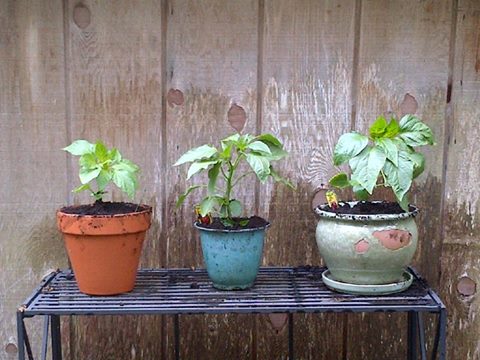
I planted four varieties of tomatoes and four kinds of peppers, including hot and spicy. Cucumbers run along a small green fence and several blueberry plants hold tight to the lattice behind the shed. Along the path to the new garden area are peas and beans in pots and just at the entrance to the new sitting area inside the garden are several pots of container-size lettuce, which looks a lot like romaine.

I’m craving salad right now. I might put a small refrigerator out there stocked with various Newman’s Own Salad Dressings.

In the new area are the ground/vine varieties, such as watermelon, cantaloupe, and squash, as well as more cucumbers and a few large pots for cherry tomatoes. I’m also about to hang several containers of various sweet pepper plants on shepherd’s hooks along the way.

I have always had some vegetables running alongside the shed, behind it under the window, and on various tables and garden stands. But this year I decided to finally cut through a fallen tree in the woods and open up the clearing inside what used to be a fort, a young boys play area. There were planks of wood and two by fours, a hand-made box buried in the ground for storage, long vines and sticks intertwined like lattice for fences, and although most had fallen over, they still held together just fine. Michael read about how to make them in WW1 books and survival books by Bear Grylls. He was only eight or nine at the time (Michael, not Bear).

I took two chairs from another sitting area and moved them to the new clearing, and I rested thinking about what to grow. It is the hardest part, knowing what will take and what won’t, what will need a lot of nuturing and what can make it on its own. I have rain barrels scattered about so watering will be easier during dry periods, but I finally learned that for the best pollination there should be several plants of the same kind near each other. Even plants need companionship. I got tired of year after year having amazing beautiful yellow flowers on the squash vines but no squash growing. Now it should be fine.

When Michael was very young the garden was on the other side of the house and I worked in it until he would find me, ask if I wanted to see what he did in his fort, and then I’d stand right about where the cucumbers are now and he’d explain the changes, why he made them based upon the best fortification on the No-Mans-Land side of the fort (the woods to the south), and what his plans were when he had a chance to “pick up more materials.” Then he’d asked if I wanted to explore with him, and we would, walking through the woods for hours checking out osprey and eagles nests above us, fox dens at the end of long-fallen oaks, and animal tracks including raccoon, deer, opossum, and more.

Like it was yesterday I recall standing on a fallen tree as I noticed how fast he was growing. I always stood on the same spot when he showed me his progress, so I was able to measure him against a thin dogwood to the rear of the fort. One day I noticed for the first time how high up the trunk he had grown despite the fact the tree had also sprouted. He spent the vast majority of his youth and young adult years outside, much of it in the fort, and I believe he is healthier both physically as well as mentally as a result. He has never had trouble finding peace of mind. He grew well here.

Where there is now a slate patio with wrought iron furniture, was once a stack of tree trunks—dozens and dozens of them. When I had the area for the house and driveway cleared, they placed the trunks in a pile in that area so that I could use the wood later for the fireplace or other projects. I cut up several dozen cords before I made the slightest dent, so over the course of several years it became overgrown with weeds—and lizards. All sorts of lizards, fence swifts, salamanders, and more. Michael would grab his net and stand there, carefully climbing, looking for more reptiles to add to his aquarium on the table behind the fort where I now do my replanting. On a nice summer day he might have hunted lizards for hours, catch them, feed them, and then a few days later let them go. He left berries for them, of course, just in case they had already “acclimated to domesticity” as he once conveyed to me.

I sat at the slate patio where those logs used to be and thought about how long ago those years were; almost two decades. I looked at the house we built and remembered how when this was all woods I came out and taped off the area to be cleared. Then my dad and I came up here and he helped me stake out where I wanted the footings to go for the foundation. We measured it out together and talked about how centrally located the place is—not too far from DC, from Richmond, from Virginia Beach. We talked about the soil and I said how I had hoped things would grow well there; I was worried that being so close to the river and the bay made the ground a bit sandy and the nutrients might be questionable.

But as it turns out, things grow just fine here; they always have.

14088538_10209272109667245_6325731574787723766_n

Now. And Again.

thin-ice


So this woke me up the other night:

I stood at the urinal about 9:30. I was the only one left in the building, when the door opened. I couldn’t see who it was from my angle, and whoever it was didn’t step more than a few feet in the bathroom, so naturally I thought, This is how it ends, isn’t it? This dude’s going to shoot me in the back and some midnight maintenance guy is going to find my body laying here unzipped on the floor.

It sounded like he/she just stood there. I didn’t hear a move toward a sink, a stall, nothing.

Sometimes I think the more we realize that death is totally random and can occur at the most inappropriate time in the most ironic of situations, the more we appreciate the very nature of life. Like the guy in Buffalo who stayed home from a family vacation because he didn’t like to fly and then died when a plane crashed into his house. Or the student who just after complaining on the phone to a friend that the person in front of him shouldn’t be texting and driving because he keeps swerving, hit a barrier and died. I’m superstitious enough to think about these things. Like when my at-the-time-young son and I were walking once in a parking garage, and there was a rumble and he looked nervous, so I told him it was just some truck nearby. I said that garages don’t crash in on people, but was actually thinking, Shit, I hope this isn’t it. I can see the headline: “Professor dies in freak accident in parking garage.”

I don’t go through the day thinking like this. I’m not paranoid, I’m not a hypochondriac, and I’m generally not afraid of most situations. In fact, I welcome them in a strange sort of way. They remind me I am still here, I am still engaged in the persistent miracle of life, and I have not yet started to coast along.

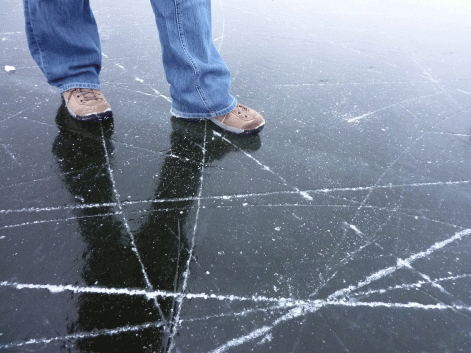
In fact, when I do feel the ground move beneath me, it usually wakes me up and places me firmly in the moment. Like the time I fell through the ice on a frozen lake in northern Norway. It was two in the morning, twenty below, and I followed two friends across the snowy ice toward a road on the other side. I heard the ice crack and I stood still, a green band of aurora borealis bent just above us, and I stood still like Wile E. Coyote—suspended for just a moment listening to the ice crack—and thought, “oh, wow, shit,” and went through.

I landed just about ten inches below the surface on another ice shelf. I stood just deep enough for frigid water to cover and fill my boots about calf-high. I waited for the next crack when my friend Joe turned and we froze in fear of us both plunging into the lake. Usually for me a walk on thin ice was metaphorical, but there I stood with icy feet; my heart pounded in my chest ready to plunge into my stomach when nothing happened. It turned out to be a layer of day-melt I fell through to the six-feet-thick layer of ice beneath. I sloshed to shore, took off my socks, and stood at the end of a fjord when across a field six moose walked by. To the north lay nothing but wilderness for a thousand miles; the Arctic Circle sat a hundred miles south. I was soaked in below zero temperatures, green bands of borealis bent above my head, and I never felt so awake, like sleep wasn’t part of the Human idea, like caffeine was a tranquilizer. Awake.

That moment, right then, will never go away.

I’ve been lucky to have had many such moments of being blatantly alive—some good and some scary, and none with regrets. None.

I’m not sure who walked in the bathroom, saw me and apparently walked out before the door even closed, but for a few moments I stood on that ice again, waiting for the ground to fall beneath my feet. In fact, I’ve been skating most of my life, and now I find myself by virtue of countless changes watching the cracks widen and waiting to land somewhere. And I’ve never felt so alive, so conscious of each moment and each step.

It seems I feel more secure when I’m least grounded. Or, another way to think of it is this: life has a way of forcing me to be in the moment, to be present, and that is fine with me, even if it comes at a cost.

images

22 Foot Putt


IMG-20150803-01351

It is the quiet on a golf course that captivates me. It is the sound of a swinging club and the small smack of the ball. It is the smell of mowed grass and often honeysuckle on the breeze. It is pausing to watch some nearby bird, or to admire the slope of a fairway down to the right toward a pond or some woods. It is the sound of the ball falling into the cup which seals the emotional deal that keeps us going back out there.  

I started playing golf when I was about nine and my father and brother took up the sport. I naturally tagged along and we spent many days over the years teeing up at Timber Point Country Club on the South Shore of Long Island, then the courses around Virginia Beach. At home, we watched golf on weekends, and through the years that sport kept us connected. My brother and I play together when we can when we are in the same state, and my son and I have played consistently since he was a toddler. He, my father and I played together very often throughout the nineties and beyond.  Golf is a family sport, and more often than not it is about fathers and sons, it is the common ground we otherwise might not be able to find.

This week is one of my favorite times of the year; the Masters tournament begins. I think of my father, and I can still hear his quiet sigh of disappointment when someone misses a small putt. He would like watching this year in particular with Tiger being back in the game. He would be rooting for Tiger, especially if the odds were against him. He would love to see him come back to the top after so many years of struggle.

We didn’t have a lot in common, Dad and me. To be clear, we got along very well, and over the years we spent many evenings talking about different television shows we watched or how work was going for me. But beyond that we didn’t have much to say. Part of it was Dad was always a quiet man, and I was always on the go anyway. Oh, we never argued; it wasn’t like that. In fact we were very close; just not very much alike. I simply had different interests, different paths altogether. I was in the arts and Dad was a stockbroker; he was brilliant at history and an avid reader, and I, well, I wasn’t. However, he did feed my flames for some favorite aspects of life; travel and adventure through the books he bought me; sports through his passion for following everything from baseball and football to golf. He even followed tennis for a while when I was involved during my teens.

Once—and, yes, once is a lot in this case—Dad hit a hole-in-one on the 15th at Broad Bay in Virginia Beach many years ago, and while I was not there, I can visualize every part of that stroke in my mind from the oft times he repeated the story; and well he should have. For a man who loved being on the course, to hit a hole-in-one is a highlight in life. I loved when he talked about it, the way his face lit up.

But golf was the come-together activity. On the course we didn’t really talk about anything but being on the course and what club we used and how I might have “picked my head up” or how my putt “came up short.” But we were together, the two of us, or more often the three of us, early on my brother and in later years my son. It was the ultimate bonding—we didn’t have to talk at all, yet we connected completely. Sometimes when I’m on the course, if I don’t pick my head up I hit a better shot, but I also can imagine I’m ten-years-old standing on the par three on the Great South Bay, knowing I’ll never make it over the small patch of water to the green. Other times I’m on the third hole at Bow Creek in Virginia Beach knowing no matter how hard I try to avoid it, I’m going to hit the damn tree right in the middle of the fairway. The memories on a golf course are thick for fathers and sons. They are of laughter, and of learning to overcome inevitable disappointment. The lessons are laid out like long putts, and we pass them along like old clubs.

One of those lessons went like this: When I was in my late teens Dad and I played nine and an elderly man, an excellent player, joined us. This man was hitting the green on every drive. At some point I clipped a short shot right into the water and slammed my club into the bag. Looking back I’m sure I was embarrassing my father, though being as young as I was I doubted I noticed or cared. Then the man came to me and said, “Can I give you some advice?”

I sighed. “Sure.”

“You’re not good enough to get mad.” I looked at him, a bit surprised at his blunt comment. “Do you practice every day? Do you have new clubs and have you taken lessons? If so, then maybe you’d have earned the right to get disgusted. Otherwise, you’re just wasting energy.”

Cue the sound of angels singing. It was like a light went on, like something obvious which had been foggy suddenly became clear. I relaxed and from then on I played better, had a better time, laughed more, and enjoyed the time with my father so much more. Then I found that lesson translating into life; I became better at understanding those things in life from which I could claim better results and those things I simply had no right to comment about, complain about, do anything about except to try harder.

The summer before my dad passed away he, my son and I stopped at his old country club, Broad Bay, just to use their putting green. It had been awhile since he had the physical stability and presence of mind to commit to a round of golf, so going to the green was a good compromise and he was thrilled. He showed Michael again how to hold the putter, said hello to some golfers who recognized him and stopped to say hello, and smiled the entire time. He putt a few balls and then stood steady as a pro above a putt and let it go for twenty-two feet on a slight bank downhill to the left, and it sank in the hole, that familiar sound echoing in our hearts.

That was his last golf shot. It is strange how you never know when that last shot will be.

Watching the masters is a tradition I’ll always cherish, though sometimes I’m not sure if it is a pleasure or a heartache. All I can do is to keep playing. Michael and I will head out this week; and the next time I see my brother I hope we play. When my close friend Jonmark comes to town we’ll rip up some fairway to be sure. And in every case, Dad will be out there with me, telling me to keep my head down. 

pictures of dad 013

On the Edge


IMG_1731


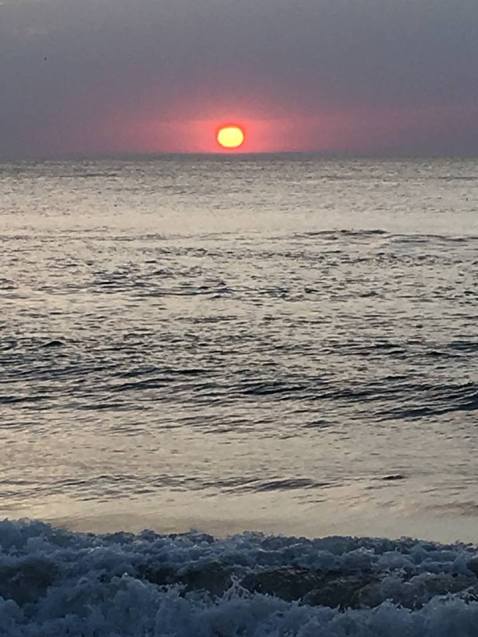
It’s late and I’m a stone’s throw from the ocean listening to the crashing waves. It’s a warm night, and the tide is low so a walk at the water’s edge keeps me far from the busy boardwalk and music-filled cafes. No one else is out here, and the light from the moon makes it easy to see where I’m going. I’ve been walking an hour. Some nights it takes longer than others to slow down my mind and clear my head.

I heard once that if you spend enough time near the ocean you can hear it as far away as Nebraska. This must be true. Even in college, six-hundred miles and thirty-five years away I seemed to sense when the water was like glass or choppy, or, like tonight, smooth with four foot waves coming to shore in sets of three. There’s a light wind.

Over the years it has become for me a safe place to be. Ironic, really, when I stand at night close enough for my feet to get wet and face east, and the dark and distant horizon seems unforgiving. When I was seventeen I stood here looking out toward Spain, thinking about the reach, contemplating the journey. I’m not smart enough, as James Taylor writes, for this life I’ve been living, but I know all I need to know when I’m near water. I don’t have the science to explain the currents and I can’t remember the names of the seabirds. But when a dolphin breaches the surface I have all the information necessary to satisfy why I’m out here to begin with: to slow down my mind and clear my head.

I have just over a month left at the college. It occurred to me tonight that I knew more people when I started thirty years ago than I do now. We used to stand in the hallway or someone’s office between classes and talk, tell stories, or go for coffee. My office mate and I went out for lunch on a regular basis, and sometimes we’d walk to the local grocery store. Over the years some have left, some died, but most simply retreated to their offices to work at their computers. Really, even when you do happen by someone’s office, that person more often than not carries on the conversation without ever looking up from the screen. We always had a sense of growth, of the spark which led to the conversation which led to action; now, it’s as if everyone has hit their pace and decided to coast. I don’t understand that.

I’m ready to go. It’s too lonely there, too isolating. It lacks passion and possibility. Some years ago the best ideas came when hanging out in groups, interrupting each other and building upon each person’s thoughts, and students knew each other’s life stories by the third week of class. Now they don’t even know each other’s names and we have less than a month left in the semester.

It makes no sense to have busy hallways that are as silent as this empty evening along the eastern edge of the continent. In fact, I feel less isolated here than I do on campus. That’s just wrong.

People need to shake hands more, ask each other where they’re from, where they’re going. We need to stand in hallways laughing, building possibilities on the backs of anecdotes. It should take a while to get the room to quiet down. I shouldn’t have to suggest people look up from their laps. We are on the edge of a dangerous change, and I fear if we’re not careful, our efforts to be connected will cut us off completely.

Isolation is killing growth and suffocating ideas. And this great migration toward absolute individualism is rampant. People along the boardwalk take selfies instead of asking someone to take a picture, and in the process talk about where to eat, where to explore. Students sit before class in deep online conversations with friends they’ve known since seventh grade instead of finding out how the people around them might be part of their future, part of changing what’s next and what can be. I have lost interest in this regressive approach to life—I hesitate to call it life.

Life is the way we make eye contact and understand each other; life is the stories we share of the times we laughed so hard it hurt. Life has depth and can’t be communicated in memes or posts. It is about character, not characters; it is about making connections, not being connected.

So I come here and walk in seeming complete contradiction to my disdain for such growing isolation. But out here life is entirely visceral. The sand and the mist and the quiet distant call of a gull is primal and ancient and eternal.  

The waves are gaining strength and the tide has turned. By morning the water will be choppy and the gulls will feed on schools of fish being chased by dolphins, and it will fill my mind with such peace I long to share it, to gather my friends and sit on blankets and watch the daily repetition of miraculous life, but I can’t find a soul.

flying-over-the-ocean-at-night-facing-the-moon-full-hd_vyehd3p7g__F0000

Enough/Never Enough

23032348_10213223529370268_294631935625723953_n

I watched a hawk sweep down and pulverize a dove. The hawk perched on an oak branch and the dove, distracted by the wind and some seed on the lawn, stopped paying attention. It happens. The hawk isn’t fast as much as he is silent, just a simple cliff dive, stepping off the branch, and, wings out, sweeps in with perfect form with his claws out front to grab the dove at the neck. A sudden puff of feathers busts into the air, and the raptor is gone. So is the dove.

This time the dove simply stood on the grass. She had been facing the direction of the hawk and when she turned around the hawk flew into action. The dove seemed to hunch down like she knew what was about to happen. Gone.

I wondered if she just gave in, like she’d had enough. Sometimes the natural instinct to survive is not as strong as simple resignation.

When I was in high school some friends and I went to the beach on the bay. At some point one friend and I decided to swim out to the end of a very long pier. We made it but we were exhausted and ended up helping each other back, each of us taking a turn at holding the other until we were at the breakers and could ride in. She and I just collapsed on the beach, spent. It isn’t like we weren’t in shape. We had stamina; we just swam too far out. I wonder when it is that people decide to give up? I wonder if we had been another hundred feet would it have been too far or would we have found the strength and determination to push it. I mean, did we collapse on the beach because we couldn’t go another yard or because we didn’t have to?

I wonder how often I’ve given up because I thought I found the shore when the truth was I could have probably held out for more, pushed it a bit, opted to swim a bit further.

It’s cold today, but sunny, and the hawk is around—I can hear him, though the doves are feeding on the porch rail where it is safe and out of sight. Earlier out on the river osprey found food for their new offspring, and the cormorants have returned. Sometimes some river dolphins swim under the Rappahannock Bridge, but not yet this season. I like it here. I find peace here. I think mostly though I like the area because of the water and the sand. Ironically, the first time I was in this area was exactly ten years before I bought the land to build the house. Just across the river is The Tides Inn, a quiet resort right on the Rappahannock. For my parents’ thirty-fifth wedding anniversary, my father invited us all to stay at the Inn. It was an excellent time, and we went for a river cruise on the Miss Anne, a riverboat which went under the bridge, and we followed the south shore and returned to the Inn along the north shore, turning around at the mouth of the river into the Chesapeake. I had no clue we passed close enough to my eventual home to be able to cast a line to shore and pull us in.

Thirty-one years later I’m watching osprey out across the same bridge feeding their young, while hawks stand watch in oak trees waiting for doves to stand still.

I was born a moving target; I’m not sure I ever learned when was the right time to collapse on the beach. The hawks have for the most part missed me up until now. When I do settle down it is usually to look at a map. Ironically, since I moved into this house I have traveled more than I ever dreamed I would—Russia, Prague, Amsterdam, Spain, France, Norway, and plenty of states. And at night in the darkness we use the telescope to travel through the heavens out across the waters and find planets and meteors. We often joke about one of the meteors ripping through the atmosphere and hitting us in the back of the head while we’re facing the other way.

When I was in college a friend had a poster on his wall promoting Nike. It was a long shot of a winding road through open country with one solitary runner, and the tag line said, “There is no finish line.” I like that. If we didn’t know when to stop I wonder how often we would keep moving. I’m not an advocate of indecision. But I’m a staunch opponent to settling for something when there’s still more options for the ones willing to wander a bit more. It is, to be sure, a delicate balance.

Certainly I get tired as I move forward, especially on the days when I’m not sure where I’m going or how long it will take to get there. But when I think about that swim to the end of the pier and back, I don’t often recall the collapse on the sand; I remember how quiet and peaceful it was taking turns helping each other back to shore. It was hard to tell if we were helping each other or saving ourselves.

The journey doesn’t necessarily end because we found a safe place to rest. Really, there is no finish line.

10426893_10212684993107198_7869380231877784156_n

The Physics of Basketball

Devereux Hall (detail, roof), St. Bonaventure University

Last night two things happened:

First, St Bonaventure University beat UCLA in the NCAA Tournament. This was their first win in the tournament since before my older sister attended the college. And during the game I was part of a spontaneous, online reunion with friends I haven’t seen in exactly thirty-five years. I graduated, in fact, 35 years ago May 15th.

It was fun interacting like college kids, our hearts racing at the turnovers, the excitement growing at the lead, boiling at the missed shots and fouls. The interaction via text and social media was so constant, we could have been all together at the Reilly Center, sitting with our floormates, cheering them on as the band played off to the side not long after “Lou” famously sang the National Anthem.

But we are much older now, closer to ninety than graduation day. Some of us have stayed close to others, some have drifted, and some are, tragically, gone too soon and missed even more on nights like this. These are not people I “kind of” knew; we lived together, ate together, sat in classes and in bars together, hitchhiked together, and, of course, lost our voices together at basketball games behind Coach Jim O’Brien and stars like Mark Jones and Eric Stover. Afterwards we walked together to the skellar and wiped clean our foggy glasses as we ordered three dollar pitchers of beer and talked over the blaring music of Billy Joel and Bruce Springsteen.

Last night was a 21st version of a family reunion. I don’t want to again be the immature, overtly innocent particle I was in the early eighties; but it was fun to hang out again, from Ohio to Florida to Albany to Allegany (and yes, for you non-Bona people and spellcheck ghosts, “Allegany” is spelled correctly).

The second event of the day is desperately more tragic: Stephen Hawking died. One of the books which made a big impression on the population in the late eighties was A Brief History of Time. I remember first understanding who Hawking was when he received an honorary degree at my brother’s graduation from the University of Notre Dame. This man, who could not talk without aids, could not walk or function in just about any traditional manner, and whose diagnosis predicted his death even before that graduation day in 1978, pushed the envelope of possibility, bent time away from him as he made his mark not only on physics but on thought itself for another forty years.

Hawking once wrote, “We are now all connected by the internet, like neurons in a giant brain.” Last night was quite the example of that.

Hawking also implored us to, “Look up at the stars and not down at your feet. Try to make sense of what you see, and wonder about what makes the universe exist. Be curious.”

As I walk into my classrooms I am confronted by students with a desperate lack of curiosity, a dangerous lack of eye contact, a pathetically unmotivated group of teens. I don’t remember life this way. When I was my students’ age—and yes this is going to sound like an old man complaining about how things were better—things were better. We interacted, knew each other, laughed OUT LOUD, not LOL, we held each other’s hands and had each other’s backs. We formed bonds so tight they lasted three and a half decades so that for a few brief hours it was as if we were all together again, like neurons in a giant brain. I see the irony; but could we have remained so close, or reignited so quickly online had we only been connected by technology when we were young? I think it is probable the absolute raw interaction of our hearts and souls four decades ago is the only reason our friendships survived. I understand these friends today because we understood the sorrow and joy behind each other’s eyes so long ago, without the border wall of technology, without the ravine dug by platforms and gigabites. 

Hawking wrote, “The past is indefinite and, like the future, exists only as a spectrum of possibilities.” Everything changes. Everything. Even the past as we move forward on this pilgrimage. Things change, of course, and for some all the changes come at once and often unexpectedly, but physics has proven that we keep moving forward, no matter what, and if we are lucky, the best parts of our lives, the deepest roots of our lives, remain. Last night I knew that was true.

And tomorrow night, it happens again, against Florida. Gulp. What a beautiful time to be alive. Yes, 

“What a glorious time to be alive” –Stephen Hawking

1718682-Stephen-Hawking-Quote-Look-up-at-the-stars-not-down-at-your-feet

Clarity

Vincent_van_Gogh_-_Wheatfield_with_crows_-_Google_Art_Project

This morning a heavy mist settled on the ocean, turning the sky and horizon and breakers right up to the sand all one color, one dimension, like the façade on a movie set or some impressionistic painting. At the water’s edge, I could see maybe thirty or forty feet before the wall of blue blocked my view. A group of pelicans flew by, inches above the calm ocean, not far from where I stood, and about six or so dolphins moved past, their backs rising out; only one, just once, breached the water. Had she been another ten feet beyond I probably wouldn’t have been able to watch.

It is winter, but it is warm, and no one was around, not even the normal runners, not the scattered homeless. It was simply quiet, and I walked at the water’s edge a long time in the salty air enjoying the peace. There is such a difference between the solitude through the day when I go for a walk or sit on a porch, and the peace found in nature where certain sounds, like gentle waves lapping the shore or an occasional call of a gull, remind me of the silence, forces me to focus on what I’m not hearing. It reminds me of John Cage’s, “4’33” which is that length of time of complete silence—a cd with a more-than-four-minute track of absolute nothingness; he makes the listener completely aware of the absence of sound. Walking along an empty coast early before the sun comes up, or, like this morning, when there simply is no sun to speak of, reminds me first of the peace I find there that I can count on, and second of the noise I encounter when I leave the beach.

I am tired. I have been quite tired for a long time now, and some people I could count on to talk about it have disappeared; they formulate their own opinions and vanish, preferring the silence of distance to any peace of mind that comes from conversation. Isn’t there such a disturbing difference between quiet and peace? When I find myself like this, when I catch myself falling into some semblance of depression or confusion, I know I can clear my head. It is empowering to truly understand that when things are not going well I can walk to the water’s edge, to the one spot I have found which has never changed and has never abandoned me, and let the salty air and ocean breezes clear away the confusion.

The problem, of course, is the ocean is not a cure; it is a bandage. After a while, the only remedy would be to abandon society completely and camp out just this side of the high-water mark. No, one must address the cause of the need for escape. Ah, what an easy, Psych 101 response! Yes, the cause—it is an argument, a misunderstanding, a failure, a crossroads, a judgement, a realization, a loss too unbearable to contemplate. Yes, okay, it is one of those or maybe something else, it really doesn’t matter. Because what so many do not understand about “escape” is that the “cause,” no matter how solvable, no matter how seemingly simple, is often a permanent presence in one’s soul created by a sense of abandonment and indifference, and it seems like there is no remedy.

I have known people like this; I have been close to people who found no recourse, could not negotiate the shadows, the parts of life without a clear and obvious path. One friend from high school killed himself (and his dog) in his garage. A close colleague of mine hung herself in her kitchen. We all have a story; we all know some poor soul who never understood a way out.

We should have high school classes designed to help students find peace. We should give college credit for lessons in perspective and escape.

Some people seek therapy to talk it through, some medicate for balance, and some simply live in the middle, safe, where they never experience extremes, where highs and lows all wash out.

And some go for walks, discover the beauty inside which cannot be shrouded by others’ dismissal, by others’ judgments. They put on some John Cage and escape to the water’s edge where they can find themselves at peace somewhere out past the horizon.

“Do not let the behavior of others destroy your inner peace”

–Dalai Lama

28377671_10214167494528807_2941284055158679184_n

From Russia with Love

999579_10201257476546426_1977632030_n

Note:     Because of the work I’m doing right now, Siberia is very much on my mind; in particular, the ride across by rail my son and I traveled in 2013. I wrote this letter in my journal at the airport in Vladivostok almost four years ago. I just found it while piecing together material from those journals for a book. You know, from the outside, it is easy to judge what life is like for someone else, what he or she is going through and the decisions they make, especially the bad ones. Unfortunately, no one anymore—not even people we’re close to—bothers to ask directly how things are, if everything is okay. I have never had that issue with Michael, and I’m deeply appreciative of that rare character trait in him.

That was on my mind at five in the morning at the airport in far eastern Russia drinking coffee and writing:

Dear Michael,

When you were born, the Soviet Union had just collapsed, Boris Yeltsin was the president of Russia trying to keep his newborn nation alive, and everyone in St. Petersburg and in Moscow was still trying to figure out what to do. The powers-that-be were people not used to asking for help from anyone. Mistakes were common.

That was me in ‘93 when you came into this world. Like all new fathers, I made decisions based on what I needed to know to keep you alive, followed by decisions based on what I remembered from growing up or from watching other young fathers. I don’t recall asking anyone for help but I clearly remember making many mistakes. And the hardest part of parenthood is knowing when to be there for you and when to back off. If I’ve mixed them up from time to time, forgive me.

Yet here we are at the end of one of the greatest journeys in modern travel. The irony is most fathers of twenty-year-old’s only go to the train station to wave goodbye, not to embark on a month-long adventure. Maybe you’d have rather done this alone; maybe with someone your own age. I’m certain either of those is most likely preferable to traveling with your father, but we find ourselves here nonetheless. Consider it your gift to me; my heart is full.

We’ve covered thousands of miles in twenty years. I was thinking last night about the Brio train set we gave you for Christmas when you were just two or three. We spent endless hours on the floor creating scenarios, traveling across the country, over mountains and even oceans. You learned geography; I learned patience. You learned how to turn a few simple wooden trains into a universe; I learned how expensive toys can be.

During your youth you and I did so much together, and luckily for me as the years passed and you grew older, that didn’t change. And now after traveling across Europe and Asia, I can’t imagine taking the journey with anyone else. I don’t think many fathers and sons stay as close as we have all these years later. Your grandfather and I got along fine but the roles were written differently in the sixties and seventies than the contemporary take. While I’m sure there are more than a few fathers and sons these days who have full-blown, knock down, drag-out fights which leave scars too deep to heal, the cause of most conflict is seemingly subtle. And unlike the shaky lines of communication between your grandfather’s generation and mine, the lines of communication between mine and yours is almost always open.

And now we’ve disembarked, left the final station, spent some time in the city, and are ready to return home to head toward whatever’s next. Spain perhaps. We shall see. In the meantime I need you to do something for me: I need you to forgive me for growing older, for someday losing the energy I’ve had until now.  As I write this we’re still at the airport in Vladivostok. You’re looking at maps of Kamchatka planning to come back and possibly do on your own what to this point we did together. I’m looking out at the early morning light revealing itself over the Sea of Japan. At what point you will actually read this is a mystery to me since I’m not sure if I’ll even copy it out of my journals and onto a screen to print and mail. If I do it certainly won’t be anytime soon. Between now and then who is to say what will happen—to me, to you, to us. We’ve done okay together though; we understand each other and maybe that is all a father can ask for. It is probably well more than a son can ever expect. So I believe we’ve done okay so far, you and me.

To use the metaphor of this journey just one more time—I don’t know what’s ahead. At some point we will split off and follow separate tracks. I am lucky we stayed on the same ride as long as we have. Thank you for that. I’m certain your urge to take off has been strong. If our relationship has any scars at all, they are nearly unrecognizable, subtle, mysterious; I think we have come out of these two decades mostly unblemished. But to be honest, I do not know and maybe I never will know just how badly I screwed up as a father. Should I have pushed you out on your own sooner? Should I have encouraged you toward different paths? Maybe I said too much.  I know every father wonders how he could have done things differently, and the best we can hope for is we did the best we could.

But before this trite little letter becomes so predictable you throw it out, you need to know how much like your grandfather you have turned out to be. Maybe that is why I allowed you so much room through the years to make up your own mind on so many issues; because you have the same quiet, contemplative manner. I heard once that when a father dies it is the greatest loss of security a son will ever know. I suppose that only is true if the father was a protector to begin with. I certainly have tried to be, just as I always tried to be a good son. I think that if we pay attention to what we would have done differently as sons, maybe we become better fathers. I don’t know.

Maybe in some inconceivable time from now when you’re well beyond my years and I’m long gone, perhaps you’ll look back to this journey and remember how we laughed so long together, discovered so much of the world together. Maybe, someday, you’ll be sitting somewhere and someone—perhaps a grandson of your own or maybe just two strangers on some bench—will be talking about Siberia or fathers and sons or sunsets on a summer night, and you’ll think of me. If you do, I hope you’ll smile and remember the time when we were both so alive, and we walked the hills near Lake Baikal. I hope you’ll remember when we joined our Russian friends in the dining car for drinks and music, and time didn’t pass us by as much as we left it behind.

Mostly, I hope you will recall how we stood alone together between the cars, you playing harmonica and me watching the passing landscape of birch trees and green fields, just you and me, enjoying this random trip through time.

Love,

Dad

557940_10201257508307220_1772982156_n