Let the Rivers Run

The Connetquot River, Long Island

The Connetquot.

The Lynnhaven.

The Allegheny.

The Rillito.

The Lualaba

The Senegal.

The Charles.

The Susquehanna.

The Neva.

The Vltava.

The Angara.

The Amur.  

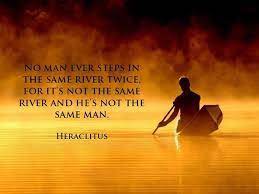
The Rappahannock, where tonight I stand and think about this “first world” with its factories and interstates and rockets, and more. And I think about the “third world,” or, at least, the third world as I knew it. I have waded across rivers in both; I’ve wandered aimlessly and with purpose in both, and I have touched the extremes of elation and despair in both. Langston is an obvious muse here: I have known rivers. My soul has grown deep like the rivers.

Rivers are a running theme in my life’s narrative, and I’m not certain if it is because I have always lived near one or if it is more than that. I have always been drawn to them, whether when young and my friend Eddie and I would walk the shore and push through the marsh grass and onto the duck blind near Timber Point, or at college where the river was my retreat, my refuge, and sometimes my dining hall.

There is certainly a sameness about them: the flow of water tells me where the river is shallow or deep, where the sandbar might alter the flow and current, and where the water is warm or cool. Along the shore the markings make clear what wildlife might be about, whether the slushy prints of a muskrat or the skid marks of a croc. All low tides expose crustaceans and debris caught on ancient and mysterious tree roots, and it is easier to know where to walk, when to portage. And hightides, likewise, tell of the coming weather, the movement of the moon, and the suddenly unpredictable movement of wildlife.  

The worst flooding I ever saw is a tie between the Amur in eastern Siberia, where its unprecedented height wiped out bridge tracks, and the Rillito in ’83, where we watched a house float by and the bridge of Route 19 to Mexico get wiped out, where just a week before kids played baseball on the dry bed.

The driest riverbed I experienced, however, was the Senegal, which was once so low, my friend Claire and I walked across the wide reach from Senegal to Mauritania to walk through a village there, and we barely got our feet wet. Such is drought in the third world. Such is dehydration and starvation and emigration to find a river with bounty to make a living.

I learned to canoe on the Lynnhaven, to plan the future on the Allegany, and to be a father here on the Rapp. I once wanted to canoe from Harrisburg down the Susquehanna to the Chesapeake at Havre de Grace, Maryland, and down to Virginia Beach, but didn’t. I don’t know why I didn’t, or I do know why but like so many of our plans and dreams, “why” we don’t do them is such an allusive thought it is difficult to say anything except “life happened,” but that is, of course, a weak response, since life was clearly already happening for a mind to imagine such adventure. Maybe, instead, simply, “You know what? I really don’t know why I didn’t do that.” In the end, I simply didn’t.

I have fallen into all of these rivers except the Neva, the Vltava, and the Charles, which I used to walk along on Sunday afternoons and watch the Harvard crew team scull along unaware. I’d walk to Harvard Square and buy breakfast and sit on a bench near the Chuck and wonder if I could paddle all the way to the Cape, and beyond the Cape to the Vineyard. I do know why I didn’t do that; it was simply a bad idea.

While I have been “in” all of these rivers save the Angara, the Amur, the Vltava, and the Charles; ironically, I’ve only swam in the Allegheny and the Rapp. I’ve fished in the Connetquot, the Lynnhaven, the Allegheny, and the Rappahannock, and from the Allegheny I’ve boiled water, dried fish in the sun, and dropped into it a stack of books so that they were all ruined, and I dried them in the sun like small fish and returned them to the library through their afterhours book drop.

I have skated on the Connetquot.

I have lost dear friends on the Allegheny and the Lualaba, and I’ve made friends on the shores of them all. I studied the Native American life who used to live along every single one of these rivers save the Neva and the Vltava, some of them I studied in more depth than others; a few to the point of absorption so that I could easily believe I lived there in another life, and perhaps I have, since even those days along the Allegheny now seem like several lifetimes ago.

The Connetquot makes me think of Eddie; the Lynnhaven my father, and also my neighbor Karen, who told me while we were deep into a late day canoe trip about a girl who had been killed by a muskrat in a canoe at Bush Gardens, and she frightened us both so much that we never paddled to shore so fast. The Allegheny and the Lualaba makes me think of Joe; the Rillito, Tom and Renee; the Charles, Linda, who, ironically, I only met briefly in Massachusetts, and not along the Charles, and I didn’t even know her there but met her again when she overheard me talking to a friend about “the Chuck” and turned around, five states away, and we had lunch at Bubbas on the Lynnhaven River. The Senegal, Claire of course, and the Susquehanna, Brian, whom I drove with more times than I can remember but not enough times—no, not nearly enough times, all along Route 22 from Harrisburg to the Allegheny on the Southern Tier of New York State.

The Neva reminds me of too many people to mention since I’ve walked the shores with so many friends and family, but mostly it reminds me of the fortitude, perseverance, and sheer will of the women of Leningrad during the Blockade during World War Two, when the Nazis bombed the city for nine hundred days, yet these women broke through the ice daily to find water and fish to sustain the troops and the children. To walk the shores of the Neva is to wade through time so that the war is always at your ankles, pulling you, and the stories of survival run up your legs and saturate your very existence.

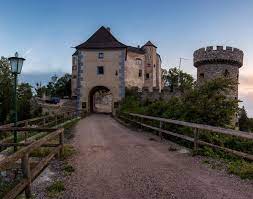
The Vltava makes me think of Arnost whose bestselling books often include this distinctive river. It also makes me think of medieval torture methods since I’ve spent some time in that museum right on the river where they have four floors of the actual instruments used half a millennium ago, some of which were incorporated into the bridge crossing the river.

Let’s move on.

The Angara and the Amur remind me of my son, though I can add him to many others on this list except the Rillito and the Lualaba, the Vltava and the Charles, since we have traveled together to many of these locales.

And just about every night now for twenty-five years, we head down the hill to the Rappahannock River and wait for the sun to slip behind the trees upriver, behind the Norris Bridge, behind the distant Hummel Field, behind Fredericksburg at the headwaters, and behind the Blue Ridge beyond that, and the sky darkens to some royal blue, like river water, with channels of burnt orange and rust, and yellow ebbing farther west, hinting at sunrise, which, when we can of course, we catch at Stingray Point where the Chesapeake Bay and the Piankatank River gather and lift us up for the day, giving us pause, so that when we head out to face the unknown, we at least understand we do know rivers, and our souls have grown deep like the rivers.  

Sunset on the Rappahannock River, Virginia

“Dear Contributor: Pass” –The Editors

6 Mistakes That Will Get Your Short Story Rejected | Celadon Books

I sent an essay to a journal and they rejected it. This is year’s ago. Their brief note suggested they enjoyed the piece but ultimately decided to pass. It was a nice note; no one died in it. About a year later I did a reading at a conference and read that very piece, completely unchanged. After the reading, the very same editor came up and asked if the piece was available, that he loved it and would like to publish it. Not only did he do so, but the work went on to be my first essay noted by Best American Essays. The same journal with two different editors went on to publish four more works of mine, with two more going on to further recognition at BAE.

My point: publishing and rejection can be completely random. It can depend upon the particular style of the journal, or a particular editor, or even the theme of one particular edition, but it can often be equally dependent upon the caffeine intake of whoever read the work, the time of day, the weather, how much it reminds the reader of an old lover, or even whether or not the Pirates won that day. Sometimes essays and poems are rejected simply because the journal already had enough pieces for that time, and other times they’re rejected with great scrutiny and long epistles explaining all the changes that could be made for whichever other journal might publish it, though that new journal may just as easily prefer the essay in its original form.

Over the course of the last week or so I was rejected three times, accepted twice, and had three publications hit market.  So tonight after a day of septic systems and sewerage pipe repair, it seemed appropriate to think about my writing.  

Writing has taught me, finally, to trust myself and let go of my concerns and anxiety over what others think, how others perceive my decisions. In the writing world, editors can be helpful or random, can understand what they want but not what you do, or appreciate what you do but still not want it. Some like snark, some like drama, some like biting humor and some aren’t happy unless the piece sounds like it was written by some foulmouthed hack. It is essential to study the journal, to understand its history and style, its preference for length and how free one can be with language. In fact, for an editor to suggest in the rejection letter that the writer should first study the journal before submitting is so pretentious I can only assume the editors who make such suggestions don’t know their audience.

I once sent a piece to a place and it was rejected. A few days later, forgetting I submitted it there because my mind sometimes slips, resubmitted the same piece without changes to the same journal and they accepted it with great thanks. Random. I sent one piece to four different places. This isn’t unusual, but as soon as one accepts it, the writer is responsible for letting the other editors know it is no longer available.  Sometimes, though, writers forget. Oops. It helps to change the title of pieces.

I usually don’t pay attention to the comments and suggestions from readers at journals about how to change the work if they have no intention of publishing it anyway. That’s just silly. “Hey, we didn’t like your work enough to publish it but make these changes and we still have no intention of publishing it, but then you will ‘learn’ from us.” Freaks. I do not know them; I do not know their style or ability; and I may be fine with the piece as it is but need to find another journal instead. In the end, I simply need to trust myself or I will forever be second guessing myself.  However, once it is accepted, editors suggestions are welcome. Usually. Here’s something: One editor accepted my work but during the proof stage questioned one of my facts. I proposed that Marie Antoinette said, “Let them eat cake” was a subtle reference to the fact that bread was too good for the masses. Editorman questioned if it actually happened. After research and discussions, I asked him to just scratch the line completely; it wasn’t that important. But instead, Editorman added the word “spurious” to the sentence, as in “According to spurious account, Marie…” I’m not kidding—I had to look it up. I turned to my friend, Tom, also a writer, and said, “That pisses me off! I wish he had just dropped the Marie Antoinette line!” Not because it wasn’t a good suggestions—it was, but because I’m not the type to use the word “spurious,” and I thought it sounded awkward with the rest of my prose. I think I had a good argument, but it was too late. So, in the four other essays that journal published, I used the word “spurious” in every one.

Writers need to humor themselves with things like this.

My favorite rejections are the simple ones. I received one which read, “Dear Bob, Pass. The Editors.”  Perfect. They don’t want it; got it. I understand. That one is crystal clear. I also once received what appeared to be a detailed rejection from a journal which mentioned my piece by name several times in the letter, and which truly made me feel they took their time and honestly wished to communicate with me. Then I mentioned it to a friend of mine who is a writer in Ohio, and she revealed she received the identical rejection from the same journal, only the name and title changed in the paragraphs. How do they expect us to take their thoughts seriously?

Last year I received a rejection from the journal which published five essays of mine, but which turned down this particular piece with the suggestion I study their prose style before considering submitting to them and that they expect their writers to read their journal before expecting to be published in it. First of all, the rejection of the essay didn’t bother me; after reevaluating the work I agree it needed much more polishing, and I have since done so and sent it out elsewhere and it has been published. The trouble I had with the thoughtless rejection was that editor’s inability to simply say no. I wanted to write back and say, “I took your suggestion and read old issues to get to know your prose style and, oh, hey, look! FIVE of my works are in there! Moron!” Instead I deleted it. I delete lots of rejections. I have one friend who adheres to the trend to tape the rejections to the wall and shoot for 100 rejections in a month or maybe in a year, I forget. I prefer to keep the negative crap out of my line of sight.  Besides, the implication the writer did not study the prose style of the journal is condescending. One writer/friend commented I might not recognize the editor is new and the prose style is no longer the same therefore the comment was valid, but that makes no sense. Then why in God’s name did they send me to old issues to study their style?

But it is the nature of rejection; I’m used to it, both socially and professionally. When the percentage of acceptances goes up, it is mostly because those essays have been rejected enough for me to rework them and then they all do well. It is a numbers game.

I know a writer who for a while every time a journal accepted one of his works, the journal subsequently folded.  

Another example: I have a close friend whose manuscript was at a publisher getting ready for publication when a new editor there decided it needed a LOT of changes; “very invasive editing suggestions,” my friend told me. Instead of making the changes he pulled the manuscript and sent it somewhere else which accepted it and published it as is. The work went on to be a finalist for the National Book Award. Editors and readers are like teachers: just because they’re qualified to get the job doesn’t mean they don’t suck at it.

I swear I once got a rejection from a journal I never sent anything to. It was like a “Snoopy” cartoon. I mean, I must have sent them something and simply forgot, but I could never find what I sent them, didn’t have an email in my sent file or a file in my Submittable account, and have nothing on my list of “works submitted” which I keep. Perhaps they just anticipated receiving crap from me and wanted to cut me off at the pass.

A writer’s history with a journal is irrelevant to acceptance. The new piece must stand on its own and it must meet the criteria for the new reading period. But that doesn’t mean the writer started from scratch when the piece was sent. It helps to mention previous successes in a cover letter, especially if some of those successes are the result of publication in that very journal. I don’t know a single writer who doesn’t do this. But like a famous comedian taking the stage; the audience will give you a break and listen more intently for a few minutes, but if you don’t quickly start making them laugh, you’re outta there. A track record with a journal may get you read faster, but that’s about it. You still can’t suck. But neither should the journal treat any writer like he or she is a moron. Just read the damn thing and Pass or Accept.

I have no idea what my win/loss record is at this point. Better than the Mets I’m guessing, but really, I stopped keeping track. I think it’s pretty good. Mostly that’s because I do a fine job of rejecting my own work several times through scrutiny before I decide it is ready to head out on its own. I don’t believe writers should listen to the advice of anyone who criticizes the work unless the writer knows and trusts that person. I have a few I trust, very few. Of course, finding someone to criticize the work is as easy as finding a parent to praise it. In the end it is a waste of time trying to “improve” through blind criticism. You must know and understand and trust the person who makes suggestions. And this isn’t because these other people don’t have something beneficial to contribute; they very well may.

The list of famous rejections is out there; check it out. You’ve got to be one hell of an accomplished writer to make the list of famous rejections, and I don’t play at that level. Still, in my own little world I show up enough to understand the process pretty well, and I understand this most: my audience is me, I’m the first and most important editor, and only when I’m pleased does the work move along. I’m the primary reader, no one else. If someone finds something in what I do worthy of passing along to her or his readers, that’s tremendous, but if I’m not happy with the prose style, I probably won’t send it out; and if I am, I probably won’t change it for someone else I don’t even know. I write this for me, not you. I just hope you like it anyway.

I exaggerate, a little. Yes, I read the comments editors make and every once in a while one of those comments hangs on long enough for me to consider it. And editors, too, change their minds. I met one at a conference once who rejected a piece of mine and subsequently read it in another journal and told me he regretted passing on it—on the new reading, he saw what I was doing and really enjoyed it.

I like to think all rejection is this way: that somewhere someone who rejected me socially is thinking, “Damn, I screwed up,” sad because I’m being edited by someone else. It’s a crazy world of rejections and self-doubt. I’ve sent out more stories in one week than resumes I ever sent out in my life. I’ve been turned down by jobs but I’ve also fallen backwards into the best opportunities in my life. Writing is like that too. Some rejections force us into a new direction, and often that new direction has more meaning and purpose than the original goal.  

One more thing: There’s only one thing worse than rejection and that’s completely ignoring the work or the writer. This is true in the submission world and the reading and book signing world. If you see us sitting at a table of our books, don’t walk past because you don’t plan on buying a book. Come say hi—we’re an intensely lonely bunch of people. And besides, someone else might come over if you’re standing there and that person won’t feel pressured since I’ll be talking to you.

Listen, in the end writers write because somewhere deep inside is a deeply-seeded need to scream, “Holy Crap! Did you SEE that??!!” from some rooftop after an amazing sunset or an incredible connection with someone new, but we don’t want to get arrested. Banned, yes. But not arrested.

Walking with an Old Man at the Mall

Originally published as part of a trilogy called “Cycle” in Kestrel: A Journal of Literature and Art, and later included in the book of flash non-fiction, Fragments, this piece has just been adopted for inclusion in a new anthology of literature sponsored by AARP.

For my father, who would have been ninety-six on the twenty-third.

Instructions for Walking with an Old Man at the Mall

First of all, he’s walking, you’re joining him. Don’t stop if he doesn’t. Don’t keep walking if he doesn’t. You are a shadow, an imitation.

Stand on his side where he can better hear you. If he can’t, repeat yourself as if for the first time, no matter how many times. Never say “never mind.” When he tells you something, you have never heard that story before, even if you can repeat it word for word. When he tells you about the baseball games with his Dad seventy years earlier, they are new stories, and your response must sound genuine. When he tells you about the time he went swimming at camp with his friends, and how when they went to retrieve their clothes from under a boat they found a snake, be amazed again, ask what happened. Laugh again since he will laugh.

When he pauses in front of a store, don’t question it. At that moment, allow his sole purpose in pausing is to look at whatever item is in that display. He might mention how he used to own that tool, those pants. Let him know you remember; do not make a big deal that he remembered. He needs you to know he didn’t stop “to rest”—he stopped to look at the display. When he says he could use that new suit, a new pair of shoes, or a new whatever is new, agree. If he happens to stop in front of Frederick’s of Hollywood, there’s no need to joke; it will only emphasize he couldn’t get past a place he would never stop with his son. This time he simply couldn’t continue. Talk instead about his grandkids. Talk about the rain. Do not talk about old times. There’s no need to recall the time he drove you to the airport for a flight to college and you saw him hours later waving to you onboard the plane. Avoid bringing up the time just the two of you spent the day at Shea Stadium when you were a child. Instead, ask about the Mets and if he happened to catch the game last week. You know he did. Let him tell you about it.

When he seems tired but doesn’t want you to keep stopping, stop to fix your shoe, to read a sign; look for a bench and suggest you sit and talk. He’ll ask about your son; he’ll ask about work. Have something to say other than “fine, Dad.”

Do not look at your watch. Do not check your phone; most definitely do not check your phone. Leave both in the car. Do not indicate in any way he is keeping you from anything. No other time is relevant anymore. But you will grow tired and restless. If he senses this, he will insist you leave. He will say he knows you have a lot going on, and he’ll say he’ll see you later, and he’ll do whatever he can to make you feel he is completely fine with it. Stay anyway. Then sit a bit longer. Do not ask about the doctors; the walk is to forget about the doctors. Do not quiz him on medicine or schedules. He is out for a walk, you joined him, it is something about which he will tell others—that he went for a walk at the mall and his son was there and joined him. Do not let his story end with “but he had to go.”

When he can’t remember where he parked his car, ask if he parked in the usual area. He did. Sit down for a few minutes. It will come to him. There’s no need to ask probing questions like “which stores” or “what street” he was near. Just sit a while. He’ll remember. You’re not in a rush.

When you leave the mall be near him as he steps from the curb, but do not help. He will be fragile and unstable. The step from curb to parking lot is a leap; he used to do it with you on his shoulders and two others running out front. Let him step down on his own but be ready. He bruises easily and a simple scrape is a trip to the doctor. Have the patience he had when your childhood curbs seemed like the cliffs of Dover.

Don’t say “I guess I’d better get going.” Don’t make plans. Don’t make any comment to indicate he did well or that it was a “good walk.” He didn’t do well and it wasn’t a good walk. He’s older now. He’s slower now, but he knows this. Really, once the walk is done, the time spent together always seems to have passed faster than we recall. He knows this as well.

The May Second Alliance

My God we were so young and unblemished, the very image of innocence.

You have to understand the times: The seventies had just ended a few months earlier; the fall of Saigon was only five years in the past, and we were brand-spanking new college students raised in an era when we were still able to remember the excitement of the late sixties, CSN, Dylan, marches, protests, and all that came with it—long hair, tie-dyed shirts (the first time around), and some sense of innocence and hope—Earth Day, Woodstock, RC Cola commercials, and Peter Max posters. And if we were not old enough to experience those cultural turning points in the country’s history, some of us had older siblings who made us aware of more than baseball cards and stickball in the street.

It is also important to know there were only a half-dozen television channels (which went off the air during the overnight hours), AM radio was king, there were only landline phones without answering machines, and every one of us—I mean everyone—spent the majority of our time outside. We were aware of the news, from Nixon to Ford to Carter; from the Beatles breakup to Disco to the advent of MTV.

Okay, some other crucial details to set this up: I went to college at a Franciscan University which is one of the core places for Franciscan studies in the world. Add to this that Thomas Merton taught there briefly just before becoming a monk (and during my freshman year, one of the librarians, Fr. Irenaeus Hirscher, would tell me stories about his friend “Fr Louis,” aka Thomas Merton), and even our orientation included video lectures by the feel-good, self-hugging likes of Leo Buscaglia. It was a place of peace, or harmony, and the priests lived on our floors (though Bonas was ranked one of the top ten drinking colleges in the country, so there’s that to include).

Is that enough imagery? You have the picture of peace and tranquility? The only thing missing was someone walking around putting flowers in everyone’s hair.

So, May 2nd, 1980

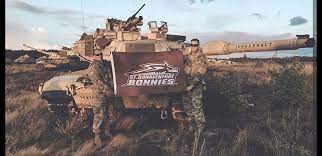
We woke that Saturday morning to the ball fields covered with tanks, military equipment, a few helicopters—a full-on display of all things ROTC. It was a day to celebrate the US Military on campuses in the form of their collegiate programs. Officers walked about in uniform, recruiting officers walked about with clipboards and smiles, and ROTC students walked about in their ROTC uniforms . This seemed to be a direct contrast to everything the college had preached. Remember, this is more than twenty years before 911, and we were already war weary. Hell, “Give Peace a Chance” was still getting regular airplay and Lennon was still alive.

I walked across campus and ran into two people: Fr. Dan Riley, a priest just back at his alma mater to live in a dorm and be a spiritual guide to students and run the ministry center—a man who remains a dear friend to this day; and an upperclassman, Lloyd Withers, who drove an antique black pick up truck. Our conversation drifted toward the display on the ballfield and how it all seemed out of place. I believe Lloyd was the first to say, “We should say something,” or something radical to that effect. The hairs on the back of my neck stood up. We should say something. Wow! Suddenly I felt like I was in college for real! I was about to become part of a new movement. Fr. Dan agreed with Lloyd and eventually we talked about how the military should not be a presence on a Franciscan campus, and how it contradicts everything St Francis and St Bonaventure stood for. I stood there saying “Exactly!” having never read a word of either one of them, but just figuring Fr knew what he was talking about. A few other students joined the conversation and since Fr is a tall man with a deep, hearty laugh, when people saw or heard him back then, they drifted in. One thing led to another, and someone showed up with a hand-held speaker with a microphone.

Fr said, “Bob, go get your guitar.” Lloyd said, “I’ll get my truck.”

Within thirty minutes a dozen or more of us stood on or around the back of Lloyd’s truck chanting something like, “No ROTC at Bonas!” or something else that most likely rhymed as those things are apt to do. Fr read passages from St Francis and the gospel, and in between his readings I played “Teach your Children” and everyone around sang together. A crowd formed. I switched to “For What it’s Worth” and more people came. Fr. read. People sang.

Someone took pictures. Note: there were no cameras other than, you know, cameras, and on that particular day the only one walking around with one was a newspaper man from the Olean Times Herald in town. Then local artist and teacher and friend Cole Young came by and played “Working Class Hero.” I joined him on the truck as we switched to “Give Peace a Chance,” and a movement had begun. This was going to be big.

During a break the photographer came over and talked to Fr and Lloyd. He asked why we were doing this, and our general consensus was that we were not at all against ROTC or the military, of course, but found its blatant display on a Franciscan campus out of place. He asked what we called “this alliance of yours.” Lloyd looked at me and asked, “What’s today?” I said, “May 2nd.”

“We call ourselves ‘The May Second Alliance,’” Lloyd answered, and I immediately envisioned t-shirts, posters, an office in the student center. Maybe a compilation album. Definitely more press.

After the military and the students and the “protesters” all dispersed, we stood around and talked for a bit, and on May 3rd, we all got up and went about our business. I don’t recall anyone ever mentioning it again other than when the article came out in the newspaper, and I wondered, or today I’d like to think that back then I wondered if all movements started like this—excitement, motivation, purpose, the definition of Margaret Mead’s decree that the world is most often changed by the efforts of a small group of people. And what separates us from those that we remember for their longevity and influence are the ones who woke up on the following morning and kept talking, kept at keeping at it until progress was made. Not only do I not remember if any talk of the contrast of Franciscan values and military power made it to the administration building, I’m not completely sure I even cared. It wasn’t my thing, really. I’d like to believe that when the article came out, then President Fr Mathias Doyle and Vice President Fr James Toal at the very least talked about it, but, honestly, whatever.

It was suddenly the 80’s and the new decade brought with it other ambitions for me to become passionate about.

But I do know that on that day I knew that’s what being in college should feel like. Raw emotion fueling a hopeless cause with just enough authority to make us feel like we had a voice, and I’m sure that Fr. Dan knew that, and was playing his part for us, helping us find our own voices as he preached into the mic.

Teach your children, indeed.

Pin on Thomas Merton Conference 2014
“Merton’s Heart” in the distance, where he would go work in his journal, overlooking the ballfields of campus

The Haunting of Water

I like standing at the river. Sometimes the water is mildly rough, or the current is strong, and the sound of water is persistent, and it is easy to understand that such sounds have always been with us. But even when the water is calm, a mirror, I can hear the slow, gentle lap at the sand. There is never no sound, even in the calmest moments; and at night (when the river always seems quiet), I stand motionless and always hear water and it somehow meets my moods, like Zhuang, who said, “The sound of water says what I think.”

The inviting sound of pounding waves at the ocean also calms my nerves, slows my pulse and puts me in some state of suspension where I could be five in Point Lookout, Long Island, or ten on the Great South Bay. Seventeen with friends at Seventy-Seventh Street, or fifty on the Outer Banks, the same pounding, though each set of waves has its unique tone, and over the years I have come to know the meter, the slow crescendo, the fermata—brief, barely a pause, and the sound of retreat accompanied by that dizzying visual of the next wave approaching as a thin layer of the last one recedes under, and it is deafening and immediate, though it doesn’t make a sound. Not really.

And out over the channel some gulls glide by, or work their way into the wind, hovering, watching for fish below. I’ve seen them dive sometimes from so high it is hard to imagine the impact not fracturing their frame, but no; they rise, sometimes swiftly, fish in claws, other times tentatively, wading a while, then shaking off the water, some seagrass, and taking off hungry.

But it’s their call I have come to find comfort in, the high-pitched shriek of an osprey or eagle, the deep-throated, almost guttural gasp of a heron, and the familiar scream of the gulls.

The marsh is almost always silent during the day, save the frightened call of a heron or the circling of some osprey calling to her young. But in the late hours of the day and even later, when dark, the sound of spring peepers is ever-present, and the occasional bullfrog closer to the edge of the trees where the marsh pools around the holes of former stumps. There, if you walk too closely along the bank or at the edge of the road, the bullfrogs leap quickly from some pads or high grass and jump into what Basho described as “at the ancient pond the frog plunges into the sound of water.”

Sometimes I can hear a fishing boat, but usually only in the mornings or early afternoons. I am startled at how midday somehow dilutes these sounds, the water, the marsh, the gulls, even though from this vantage I can’t hear the cars crossing the bridge or the conversations of neighbors, since anyway no on lives close enough to see them, let alone hear them. Still, the sounds so present at dusk and dawn disappear when the sun is high, as if the very light itself has shrouded the music of water and the rhythm of nature.

I come here to the river to listen but not be heard, to see but not be noticed, because, like Thoreau, I believe, “There is a subtle magnetism in Nature, which, if we unconsciously yield to it, will direct us alright.”  After all, Nature is the true artist, the composer, the painter, the writer, and the rest of us spend our lives imitating the master the best we can, which, on the best of days, remains a shadow of our thoughts when standing on the sand, listening.

Eventually, all things merge into one, and a river runs through it.

The river was cut by the world’s great flood

and runs over rocks from the basement of time.

On some of the rocks are timeless raindrops. Under the rocks are the words,

and some of the words are theirs.

I am haunted by waters.”

–Norman Maclean

Spin

The doctor told me that while I carry my weight well and I am not too far “out of shape” per se, my blood pressure, cholesterol, and all sorts of things, not the least of which is anxiety caused both by certain situations and blood pressure medicine, would all drastically improve if I lost weight; and he said I don’t need to lose all that much weight anyway, about fifteen pounds. Here’s the crazy thing: not only did I already know that before I went to see him last week, I used to literally be an expert in weight loss, nutrition, and exercise. So why do I find myself here, now, like this?

Yeah, the plethora of people who ask that question of themselves every single day puts me in the company of millions.  

It is the Great Battle: The Mind vs. Outside Forces (hereon called The OF—I’ve been watching Supergirl).

The mind in its pure state has everything it needs, at least for me, to succeed in the tasks set forth. I know what foods to eat and what not to; when to eat them, when I’m hungry and when I am simply thirsty; when to exercise, how, how much, and how to focus those exercises to get the most benefit from the least efforts for maximum efficiency. Good. And for those who don’t have that information, it is easily obtainable. Done.

The OF, however, are acid, are kryptonite, they know my weaknesses, and they know my Achilles Heel. The bp medicine screws with my moods, the doctor told me; yes, but I know they screw with my moods so I should ignore those feelings and just follow the schedule, plan my days around that. But OF are tricky; they twist and bend to find new ways to undermine our will power. Their wheelhouse includes malaise, unexplained tiredness, indefinable stress from bills and work and loved ones and unloved ones. The OF use time and memory as a weapon. They use distractions—it as the OF, in fact, that are responsible for eliminating the line between work and home, bringing into our homes tablets then laptops then iPhones then Apple watches, bringing them into our bedrooms and bathrooms and on vacation so that the traditional workweek simply evaporated, and now we are expected to be accessed by anyone anytime. That time used to be ours, separated by two highways, a parking lot, and an elevator. It all crashed in on our rooves and trapped us in some fluid office building. As a result, our previous ability to shift gears from responsibility to others to caring for ourselves has been shattered now by those dangerous shadows, the grey areas of our minds, and suddenly it is hard to focus on one thing when something else is hovering just outside our consciousness, waiting to pounce on our motivation and what scraps of self-discipline we managed to salvage. Yeah, gone.

The point, and I did have one some time ago, is that we need to learn to shut out the OF and accept, completely celebrate, that we already know what we need to do and how to do it, if we just allow ourselves to box out that OF point guard trying to score on our weak side.

For my own part, it used to be easy to separate those worlds when I was standing in the sand, ankle deep in the bay, watching gulls dive for oysters. Of course, but the OF is bleeding into that world too; you know it is true. You can tell by the way you stare out but don’t see anything, feel the water flow and ebb at the ankles but stop noticing it, your mind drifting to some unfinished report, that bill, that message and text and

and

So nature is not always the escape I hope it can be. No. All escape starts in the mind. Easy.

HA!

Not so much when we create those OF ourselves through worry and guilt and panic and depression. Sure, layoffs and cutbacks and funding all play on their team, but step one is to understand they don’t represent who you are and what you need to do.

(Geez what a pretentious load of crap that sounds like…time to pull a Barack-toned summary)

Look, when I worked for Richard Simmons, we used to tell people they had two choices, always just two. Though it might seem like a thousand troubles have piled on our backs, weighing us down, what we do with them comes down to two choices—the key thought there being “choices.” We can accept that weight, walk around with it, even wade into the water with it, splice it into our day’s routine and braid it into our sleep at night, keeping us always slightly awake. Or: We can put it down, step back, and say, “Today I may not do much, but I will do what I can toward my goals without being pushed back any further. Today I will take care of this. Tomorrow may not work out. But that is tomorrow. Today I’m on offense.”

Then repeat the next day.

And the next.

Until eventually I lose fifteen more pounds.

Step One

I look around and see so much that needs to be done and seen and experienced. More than I could possibly do in ten times ten lifetimes that I just get brain-lock. I still have my eyes set on Spain again, Siberia maybe, the Continental Divide Trail is a weak possibility, the Canadian Rail, biking to Coos Bay, Oregon, and around Ireland. I want to grow a bountiful garden and I’d love to raise a goat. I have books to write and old friends and family to visit. The list goes on and on and the time does not, it simply does not. It took me decades to realize I just need to pick a direction and go, see what happens and then bounce from there. That’s kind of how I used to do things, though more often than not I simply fell backwards into forward motion. Still, sometimes now I sit on my porch and look out at the property and end up instead walking the docks looking at sailboats, thinking about cruising around the bay or down the inter-coastal waterway someday, or often we will drive around taking pictures and we always end up at this abandoned building on a bluff over the river and I think how I’d love to open a pub there. It makes me tired thinking of it all and I can’t even write because there are so many words and I can only chose one to get going, so instead I sit on the porch and look out, tired, but not really.

I often wonder if seemingly lazy people aren’t unambitious as much as they are simply overwhelmed with possibility without firm decision-making skills. Add to that undercurrents of anxiety and other roadblocks, and it isn’t unusual for a huge leap to make more sense than a small step. It’s all about timing.

It turns out all artists can be like that. Writers and musicians too. I remember a line from a song written by Alan and Marilyn Bergman—“I pity the poor one, the shy and unsure one, who wanted it perfect but waited too long.” Love that.

Just yesterday I read an article by a writer who said he shoots for no less than 100 rejections a year. That is his goal, he wrote, adding that if he doesn’t get at least 100 rejections a year it means he wasn’t working hard enough. I know what he means. Often we sit on possibility not because we are afraid of failure—rejections are more than welcome and way more than common—but because we are never quite sure if it is the “right” place to send something, or to return to the life example, the right place to go, the right person to ask out, the right plan for the weekend. It isn’t that we don’t want to get it wrong as much as we want to make sure it is right. We don’t want to waste anymore time taking steps in the wrong direction, which we perceive as “backwards,” just adding more time to any possibility of success. So we sit there. There is a fine difference and it feeds our idleness.

Idleness leads to chronic immobility, both physically and mentally. In writing classes I tell my students to just go, pick a direction and go, and it might not be the right way but I swear somewhere in paragraph three you will make a left turn into exactly where you want to be next. And so in all things, just go. Sometimes we are afraid we might miss something if we go, or stay, or change or remain idle. That’s funny since no matter what happens we’re going to miss something. The list of things we’ll never do will always be infinitely longer than the things we attempt.

So this was all brought on because I was listening to very old James Taylor, which isn’t always a good idea because it reminded me, as music is apt to do, of times in my life I sat staring at possibility, and today it was a very particular time I recalled during which I hesitated because I was overwhelmed. Well, I’m not feeling overwhelmed anymore, just much older. Age really never has and still doesn’t bother me in the least. The only thing, the one thing, which bothers me is if I become indifferent to the passing of time and incapable of getting up and jumping off into whatever might be next. My list of reasons I’m limited now is long, but what scares me is because of those tethers I might not write what I want, express myself how I want, stand somewhere and look out and know that is where I was meant to be.

This is why I have two sayings I keep in my workbag. The first enables me to at the very least appreciate where I am and how lucky I am. It comes from Denis Waitley: “I had the blues because I had no shoes, until upon the street I met a man who had no feet.”

The second enables me, forces me, actually lights a fire under my ass. It is from Grandma Moses: “Life is what you make of it; always has been, always will be.

Yes. Exactly. Time to choose again a new direction and step forward.

And so I will do so. Tomorrow.

The Damn Palalam

It’s yellow outside. The green leaves are yellow, and tips of the leaves of grass; the cars are yellow, the porch, the tables scattered around the property here at Aerie, and there’s a small film of yellow on the water in the birdbaths. On the skylight above my head here at my desk is a powdering of yellow that makes the sky look more sunset than midday, and even the squirrel on the porch roof outside my window, sitting there looking in at me as I eat some freshly made bread (not yellow) which he surely can smell, is yellow.

And a cardinal in the apple tree, he’s yellow, like a Dutch home first painted red and then someone decided to paint over it. Not quite speckled but, yeah, speckled.

I thought perhaps the rainier winter and the cooler spring made conditions right for a higher pollen count, and that’s true, but it also turns out the standby fall guy for all problems in nature—Global Warming—is mostly to blame. Longer springs, more rain (at least here) means my world will look like Charles Schulz’s Woodstock for some time to come.

I wash my face a lot. I hose things down, and I hope for rain, which as it turns out it is about to, heavy, most of the evening. The irony? The rain will aid the trees and grass and flowers in their growth and when the precip slips by the pollen wagons will once again circle for their next coating.

I know. I live in the woods—a lot of woods, filled with countless trees, and there are paths lined with flowers, benches next to azaleas, and those two blooming apple trees, or what I’ve come to call the squirrels’ pantry. All of it creates, displays, and spreads pollen. What is one to expect out here? It’s my own fault, really.

****

Pollen is a Sanskrit word, originally, coming from “palalam,” which means “ground seeds.” It was first used as a botany reference in the 1700’s, and it is said that John Bartram, American botanist, horticulturist, and explorer from the mid-18th century, was the first known person to attribute a sneezing fit to the yellow menace.

And today, I continue the sternutation, tissues in hand. But other than living on a forty-one-foot Morgan Out Island sailboat, I wouldn’t have it any other way; pollen is the tradeoff. Maybe that is why my favorite color is yellow. Sure there’s the sun, goldfinches, and lemon pound cake, but there is also the indirect beauty of yellow—nature awakening, shaking off her birthing powder, the transition of trees and the work of the bees. When I walk to the river, I hose down my face first, put some tissues in my pocket, and head out into the clouds and fog of this amber ambience.

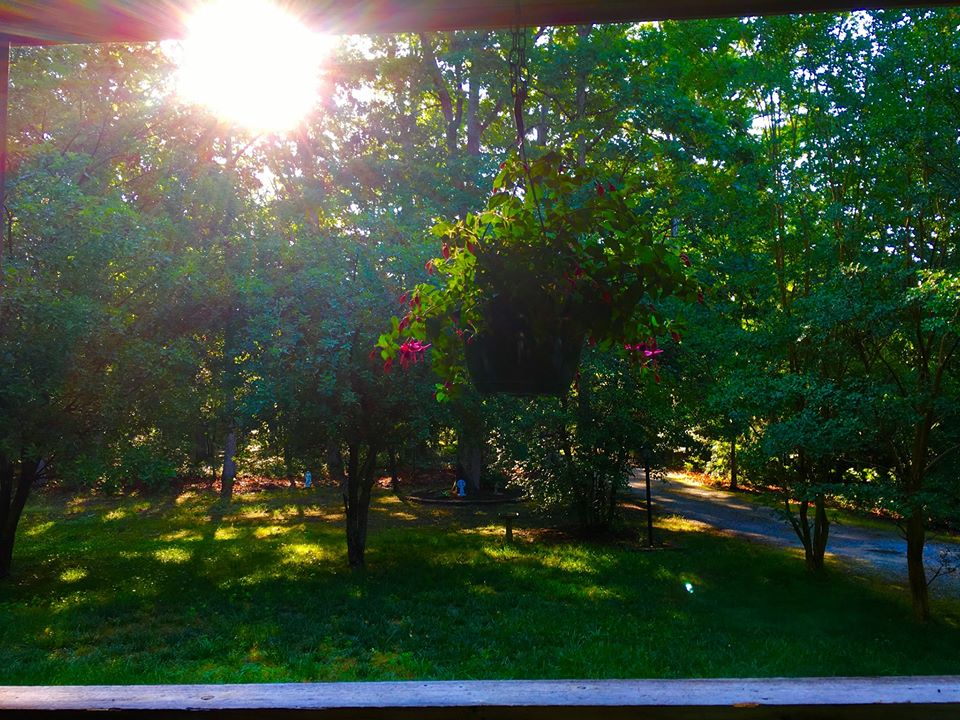
In a month or so after the yellow turns to dusk, I’ll sit on the porch, a low hum of bees nearby, a cloud of gnats above the lawn somewhere, the subtle smell of saltwater, and the thin sound of music coming from a neighbor in the distance who always plays music I love. I’ll lay in the hammock and stare into the canopy of oaks and maples, unable to see the sky so clearly anymore, and then I’ll walk in the cool grass to find my flip flops, saunter out of the shade where the sun on my neck is one of the finest feelings I know, and I’ll walk to the river in the quiet of a country day. My mind wanders out onto the river, or up the bay, and I think of projects I’m working on while the same indigo bunting sits on a wire down the road. I’ll wade into the cool river about knee deep and just watch the gulls and osprey move out toward Parrot Island and back. It is as close to whole as I’ve known, out in nature, as I’ve been most of my life.

Entry fee? Wander for a few weeks blurry eyes and sniffling through a cloud of yellow dust like the stuff that put Dorothy et.al to sleep outside Oz. It is so dangerously beautiful.

This is what coats my writing, has always colored my music; it is as natural to me as the sounds of city streets or the crack of a baseball bat, the sound of the ball slapping into the catcher’s mitt, or the murmur of the crowd and the occasional call of the man selling hotdogs was to my “Father of Brooklyn”; the sounds that surround us, the clouds of life around us, complete us somehow.

For me, yeah, nature at any cost. Go figure. My complete bio is deceiving: it says I was born in Brooklyn; but that’s about where any city reference ends, nearly immediately, in fact. For the rest of this six/tenth of a century, I’ve always been a boy from the country.

Covered in that frigging pollen.

Be ready for pollen season - Las Vegas Sun Newspaper

We Adapt

ARNOŠT LUSTIG - Winton Film
Milos and Arnost

Three years ago—my God, three years ago—I packed up my office at a college where I had worked for nearly three decades, and I brought everything home. This week back then I sat in the small room at the college scouring stacks of books I’d collected and I decided which ones to leave on a table somewhere for students to take, which ones to give to certain people, and which ones to bring home to pull out from time to time as I make my transition into a new way of life (I’m still transitioning, btw). The work of my late friend Arnost Lustig was a keeper; he is as strong a writer as he was a person. I also found my notes and thesis from Penn State where one half of my master’s there was a study of adaptation of the arts. As I flipped through my work that spring day, on my radio the news anchor announced the death of Czech film director Milos Forman. It was April 13th, 2018.

But suddenly it was March of 2000.

I stood in the gates of the small fortress next to the Terezin Ghetto north of Prague. I had traveled there from Charles University with my colleague from American University, Arnost. It was a significant place to be with him. Arnost had been interned there with his family during World War Two, from when he was about fourteen to seventeen, shortly before being sent to Auschwitz, and a few years before he wrote himself into literary history with more than a dozen bestsellers, some made into movies. I’ve written about the burly author before for Ilanot Journal in the work, “I Knew Two Men.”

But this isn’t about him; it’s about Milos.

On that particular day Arnost needed to talk to his good friend who wanted to make a movie based upon Arnost’s book The Unloved. Milos had already made beautiful movies like One Flew Over the Cuckoo’s Nest, Man on the Moon, Heartburn, and others including my favorite, Amadeus. At some point on that cool afternoon between conversations about the horrific ghetto museum of Terezin and the prison for anti-Nazi protesters, the Small Fortress, I ended up having a conversation with Milos about adaptation. Arnost had told him that was the subject matter for my lectures at the university.

“So we agree then,” he said to me. He was much younger than Arnost but with the same controlling conversational style. 

“Yes,” I said, “Of course. It is always frustrating when people say how much more they like the book; or do any form of comparison at all. They are completely separate art forms.”

“Exactly!” he said, gesturing with his fist. We talked further about our common concern on the subject of movies based upon a novel or play, and we reiterated the inability of people to see movies and books they are based upon as separate. Yet we also agreed on the difficult task of expecting anything else of the average person at a movie on a Saturday afternoon.

Eventually, of course, the talk turned to his work.

He asked, so I answered. “I’ve taught both “Cuckoo’s Nest” as well as Amadeus, and I did read Kesey’s book as well as Shaffer’s play, which I first saw when I was in college.”

“Well?”

“Both times you nailed it. From Kesey’s novel you kept the major themes which worked and consolidated what needed to be. In Amadeus you made music the central theme of the movie instead of the ridiculous “mystery” between Mozart and Salieri. I still enjoy watching both films and teaching them. Oh, and Amadeus has the best cut in movies, when Mozart is in bed and Salieri finally hands him the completed “Requiem,” and Mozart says, “Okay, from the beginning,” and we hear an entire orchestra for the first time as his wife’s horse and carriage come into view. Love that scene.”

Milos indicated it was hard to miss with Mozart’s material and the brilliant film editors, but I appealed. He was a great director.

Then he mentioned Ragtime.

When I was young my father bought me E.L Doctorow’s book. I loved it and read if several times. I loved how it swept across decades and included some major historical figures such as Houdini. But I never could picture it as a movie; even if one could save the major themes, it simply is too complicated to pull off as a traditional narrative with the proper conflicts clarified. Then I saw the movie and I didn’t like it all that much. I even watched it again after I learned a few things about adaptation at Penn State, and it still, for me, didn’t work. I tried to leave behind my memory of the book and focused solely on the new art form, trying the best I could to not include the literature in my analysis. 

“What about Ragtime?” Milos asked. “That took me a long time to get made.” Then he whispered, “I think Unloved might take longer, if I get to make it at all.”

I thought about saying, “Boy, that was really some casting they did for ‘Cuckoo’s Nest,’ wasn’t it? But I could tell he was enjoying our conversation. I looked at his Czech copy of The Unloved in his hands. It was bookmarked and folded and noted in dozens of places. He clearly learned the book as if it were his own, like his films each became his own, not Kesey’s or Shaffer’s and definitely not Doctorow’s. 

“It seemed too complicated to capture,” I said. “Ragtime.”

“Yes,” he agreed, reflectively. “The themes never did translate very well. Or at least the way I wanted them to.”

I was feeling ballsy now: “It seemed more of a vehicle for Cagney seeing as it was his last film.”

“You’re probably right. He got more attention than the film. Will you discuss these films tomorrow in your class?”

“No. I’m moving on to Hrabal’s Closely Watched Trains.” He smiled. Milos was a fan and close friend of Hrabal’s. The Prague art community is not very big. He told me stories of the two of them from year’s earlier, and standing there with Prague’s bestselling author, its celebrated director, in a museum which was once the prison/home of the man ten feet to my right, was all surreal.

I told him I was going to talk about how the adaptation of Hrabal’s book into Jiri Menzel’s academy award winning film meant unearthing what essential elements must make the transition and which ones very specifically needed to be left behind.

Arnost returned, always sharp, always ready for what’s next. I stared at this man’s eyes and thought about how much he went through. The Nazi’s disrupted his life, caged him for three years as a workhorse, forced him to build a railroad from Terezin to the mainline on the way to Auschwitz, killed his family, and still he escaped and went on to not only live his life, but live it fully as a writer. He knew what to take with him after the war and he knew what to never address again. It is not easy, adapting, saving the best of what exists, our strengths, and leaving behind the weaknesses, the parts we wish we could do over given the chance.

In my office, I packed the last of the books, turned off the radio and thought of Milos, and Arnost, and change, and I left the college. That’s it. I just left. I didn’t throw a water fountain through some bars and escape across a field, and I didn’t end up in an asylum as the Patron Saint of Mediocrity. No, I simply packed my belongings and brought them home. Three years later and I’m still learning this, to adapt, to leave behind what I no longer have a use for and carry on with what gives me life, the themes that hopefully make me a dynamic character in my own story.

A story which needs a new context, one in which it is clear what needs to come along for the rest of the pilgrimage and what needs to be left behind.  I hope the new version works out.

RIP Milos. Honestly, I liked the books better. Sorry.

Part of Terezin Ghetto and the Small Fortress, where Arnost lived for three years, and subject of his celebrated works.

For the Record: Life First, then Art

When I was in fourth grade I wrote a book called “Flight” about two boys who travel through the Milky Way. They talked about what they saw along the way, and they seemed in no worry for want—if they got hungry they had plenty of Milky Ways and Mars bars to eat, and one of the two had stuffed his pockets with “Now and Laters” for that long stretch between Mars and Jupiter. I write all this in past tense since I have no idea what happened to it. I can picture the construction paper cover, and I typed it on a small manual typewriter I also used to write letters to my friend Charlie in the old neighborhood.

We had just moved to a new area surrounded by two waterways: the Great South Bay and the Connetquot River. We had also just watched Neil Armstrong walk on the moon and I was obsessed with space travel. I had a brown jacket with patches on it and memorized all the astronauts and their flight assignments. All of it. I was also enthralled by writing. So naturally, I wrote about space travel.

When I got sick, my mother made me a small desk from a folding tray with a placemat on it, and I used it in the den and would carry it to my room, my first room I had without my brother, so I was able to leave my “manuscript” out all the time. This was fourth grade and I had pneumonia so missed a chunk of school, which allowed plenty of writing time. That small folding-tray table desk got a lot of use.

I also typed a poem about Christmas. I don’t have that anymore either, but I still remember some of it:

Christmas is coming, it’s coming soon

But not that soon since it’s not yet June

So I’ll sit here and watch the moon

With all my Christmas plans in ruins.

Kind of dark. I was ten. And I recall the “s” at the end of “ruins” bothered me. But, man, I wrote it at my own desk. How cool was that? 

I’m sixty years old and a writer now (thanks Tim O. for the line), and I’m sitting in my home at my desk looking out at acres of oak trees with bare branches. The area is surrounded by the Chesapeake Bay in one direction and the Rappahannock River in another. A little while ago a hawk was on one of the branches, no doubt looking down and sizing up the doves and cardinals at the feeders and birdbaths on the front lawn. It is absolutely peaceful here with osprey and deer. The closest town is four miles away and even that is little more than a bank, a convenience store, a hardware store, and a vet. The busiest of them all is the vet, not just for dogs and cats but the myriad farm animals nearby, particularly horses. I know nothing of horses despite having more of them as neighbors than I do people. But I know Alice Walker was right when she wrote, “Horses make a landscape look more beautiful.”

But right now I’m at this desk, which is not unfamiliar as it belonged to my parents since I was young. They purchased it when we moved to a new house. And now it is mine, and I sit behind it looking out at the oaks; scatterings of notes cover the desktop.

It is impossible to predict where the best place to write might be. The manuscript I’m editing now comes from letters I wrote at a booth in the dining car crossing Russia. The car was mostly empty so I was always able to sit with my papers spread about, a cup of tea, or, later in the morning, a beer or two, and work away while outside the glass-plate window birch forests dominated the hemisphere. Years before that I once did a great deal of writing in a bar, and these days for the most part I work well in my mind. I have a friend who writes poetry in coffeeshops or museums, and another who writes in her “writing room” looking out at the quaint houses on the beautiful street in her small town.

For me, the writing occurs when I walk, or when I’m driving, and disjointed, seemingly irrelevant events slam together in my mind. I might have spent time with family, and then went for a walk along the bay, and later had something to eat with a friend, and somewhere in the following days my caffeinated mind wanders between these events, amazed at the connections between stories of ancestry followed by the persistent pounding of waves, followed by the complete absorption in the enjoyment of the passing of time. And as the hours pass the connections become more obvious, the balance between childhood memories shared with my siblings now that we’re all AARP members, and how time can often tease us with occasional flutters in our linear perception. Between old stories of younger days and the eternal ebb and flow of tides as I walk on the beach, and the suspension of all measure when talking to a friend, the writing begins, the mostly futile attempts to capture something of this passing. And now this desk is the caldron in which those ingredients simmer.

I don’t ever remember seeing my father or mother sit at this desk. In fact, despite the passing of more than forty years with it in the family, I might just be the first person to actually sit at it and do work. It had always been primarily aesthetic by location and, as a practicality, a storage area for their important papers. And I am positive no computer has ever been atop it as mine is now. Everything is repurposed eventually.

Even us.

I’m happy with my new work area, though I still like writing at the oyster shack or the café by the bay. I added this to my possessions at the same time I’m getting rid of so many, many things. I’m selling most of my art, giving away parts of my past, and thinning out my souvenirs. I’m sure part of it is my post-pilgrimage epiphany that our most precious possessions are the moments spent along the way; the backyard games on the Island with my brother and sister, the dinners with my parents, laughing and crying with friends at college, and of course, the love and loss and heartaches along the way since. I don’t need souvenirs of Tuesday nights when Dad and I drank Scotch, or early morning conversations with my mom at the breakfast table. Nor do I need “things” from the past two and a half decades—the hours of evening conversations with my son, our shared cabin on a train to the other side of the world, and our month-long journey side by side on the Camino. Come on, what possible souvenir comes close? Oh, I have pictures of all these times, of course, and I cherish them and look at them often. But I have never been able to find a trinket worth keeping.  

But I can sit at this desk and write stories about the journey. And these small stories, while irrelevant to others, are my possessions. Like some glance at the curio cabinet, I sit at this desk and open a file and write about memories. Like how Dad and I used to watch the Super Bowl together every year at his house. We’d have wings and shrimp my mother would put out, and drink beer—a side-step from the Scotch since football calls for beer—and talk about the players and the missed opportunities. We laughed at commercials but never watched the half-time show. Dad didn’t care and I would rather talk to him.

And in the bottom right drawer of this desk which I’ll probably always refer to as “my parents’ desk,” are rough drafts about teaching, about ancestry, and about Africa. Souvenirs fall short of experience; we know that. Words come closer but they remain little more than some form of shorthand to remind us of the complete narrative. Even pictures for all their emotional tugs remain stagnant, moments more than memories. No, the only true way to enjoy the memories is to make them, to push away from my parents’ desk and go.  Writing comes close, for me anyway, like writing music might for my friends Jonmark or Doug, or painting might for Mikel; but I’m more than a little confident they’d all agree that even their best work can leave them shaking their heads, thinking, “No, no. Not exactly.”

No, life must come first; art is the imitator. Many years ago when Facebook was new my niece Erin updated her status to read: “I’m too busy out living my life to post about it on Facebook.” I never forgot that. I’m grateful to sit at my parents’ desk to do my writing, but their much more treasured gift to me was my desire to live life to begin with, to have something to write about.

So I sit down and gather my thoughts, put on some old Jackson Browne, and tie together seemingly irrelevant happenings, sometimes discovering the serendipity in the world. And later in the evening my son will call up and ask if I want to join him outside to use the telescope and gaze at constellations out across the bay.  So I’ll save the document, push away from the desk, head outside and find Mars above the horizon, and in some small way live out our own version of some story somewhere about two young boys traveling through the Milky Way.