This Night, This Day

In the east this morning a sliver of light. I stood at the bay and remembered:

More than five decades ago on Christmas morning before our parents were awake (or so we supposed), my siblings and I would gather before we headed down for the beginning of Christmas Day, usually in my sister’s room, to exchange gifts we had bought for each other. It would inevitably still be dark out, and I know the three of us would lay awake waiting to hear each other also awake in the other room. A tap on the door. A “come in.” And we’d sit on the floor and open our presents.

At some point (like clockwork, as much an annual tradition as the turkey or the pies), our mother would wake our father and he would exclaim, “I thought I said no one up before nine am!” and he couldn’t hide his smile to our laughter at the ludicrous suggestion we’d be up any later than five. It was always cold out during those Long Island years, and often snowy, but we weren’t going outside so it just added to the magic. Dad would be in his robe and slippers, and he’d head to the living room as we gathered on the stairs and waited for him to plug in the multi-colored lights on the tree, and those on the rail, bringing to life the otherwise dark room. Mom had, of course, already organized whatever presents we would get into separate piles, and Dad would stand back as she directed us to the right area under the branches, though sometimes it was obvious if an unwrapped toy appeared, clearly already wished for by one of us. Dad would sit on the couch and watch in joy right through the stream of “Wow, thank you Mom!” wishes.

It wouldn’t be long before the aromas of breakfast mixed with the onions and bell seasoning already underway for the stuffing, and eventually we’d need to get dressed, if not for church since we might have attended midnight mass, certainly for the droves of family who would soon fill the rooms. It was a beautiful way to grow up. I do not know the possible stresses, fears, and sacrifices that went on behind the scenes—that’s how good they were at it. Then, much later in the day, after everyone else had left and we had all settled into the routine of looking at our gifts again, Dad would emerge from some closet with his gifts for each of us—books he had personally picked out, bought, and wrapped. It remains one of my favorite memories of all of my memories of my father.

***

It was in the sixties here today along the Chesapeake, and sunny, and to be honest I’m just tired. This is one of those days each year where I’ve been up so long and have done so much that it feels like it should be six hours later than it is. My mother and sister and brother and nieces and nephew and their spouses and offspring are all off in various parts of the country preparing to celebrate their Christmases, all of us with some common traditions, each of us with our individual more recent touches to the holiday. Certainly, in times of such tumultuous anxiety throughout the world, all of us remain fortunate enough to be celebrating Christmas at all, laughing and telling stories, enjoying the food, the drinks, the sounds of football or Christmas music. We are, to be sure, at peace. Anyone with family is engulfed in traditions which help balance our lives; they bring peace to our soul while providing some shared space not only with each other but with memory, the idea of ancestry, the hope for posterity.

My father used to sit to the side for most of the holiday and enjoy being surrounded by his family. He’d carve the turkey, and of course disappear toward evening to get the books to give to us, but these days I picture him most in his chair, watching a game, sipping scotch or wine or a beer, laughing with us, waiting for Mom to call him to duty in the kitchen. He has moved on, and whatever there might be to know after this life of ours, well, he now knows, and that too brings me great peace.

It’s so quiet out tonight. Absolute peace stretched out like canvas in all directions. On the water some buffleheads ease by. Still, there are moments I wish I was somewhere else; or maybe simply some “when” else. I miss the days before society took “nearby” and “not far away” and tossed them to the strong breezes of technology and zoom. In that small house around that small table when I was a child were so many relatives it is crazy to conceive how we pulled it off. But no one cared—we were together. Everyone lived close enough to “drive over,” and by the time the turkey came out of the oven, a small crowd was sitting and standing and outside and in, laughing as well as sharing serious moments, because it was Christmas and we were together, and it was going to be like that forever.

For the day anyway.

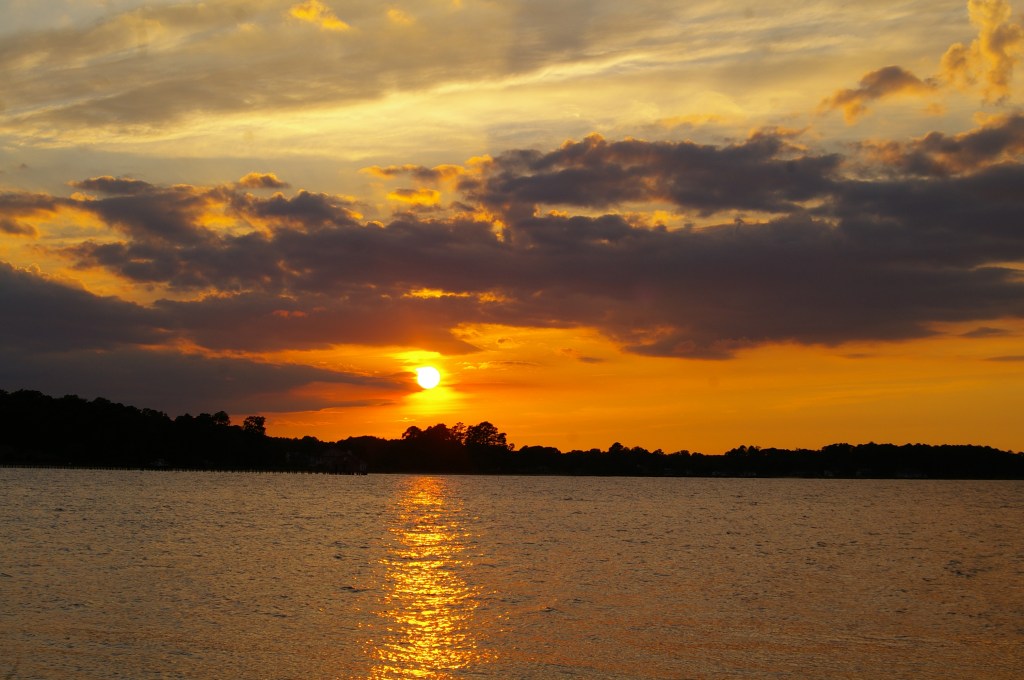
The sun is getting low and it’s getting chilly. I’m going inside again. I bought Michael a book at a local nautical shop and I need to wrap it and “surprise” him with it later in the day tomorrow after the lift of Christmas has settled down. And he will be gracious enough to act surprised, just as I did with my father when he would predictably surprise the three of us with books half a century ago.

Geez, fifty years. More.

Hold tight to those around the table tomorrow. And when you have to let go, make sure they know you didn’t want to.

Merry Christmas my friends.

Priorities

I stayed outside all day. Mostly I raked, but I also moved planters around, piled empty pots behind the garden shed, and cleared off the trail in the back woods where deer bed down at night, and at dusk a fox always scurries around waiting for Michael to toss some leftovers into the brush. The oaks are nearly bare, except for a few that keep their leaves until spring. This land has mostly hardwoods, so the view above isn’t impeded anymore, but down at eye level an abundance of holly keeps the property green all year. The laurel, as well, remains, and a little higher up the thin pines stay green.

It might snow this year. It seems every year snow falls more regularly. Three years ago it snowed so much I don’t remember it clearing out enough to see the grass until well into February or March, which for this part of Virginia out on the Chesapeake is unusual. I’ll take it, or the heat, doesn’t matter. Ice cold hands from doing work without gloves or a back covered in sweat in August are equally satisfying. I like being in nature, wearing it, letting it penetrate beyond the visual so that all of my senses come to life.

From my perspective in these woods, whether the view be unobstructed across fields and waterways, or blocked, able to see only the nearby thicket like shadows on the wall of a cave, it is a beautiful world; yes, despite the news today, we live in a beautiful world. While humanity gets hung up on every metaphoric syllable, the natural world bends and turns and spins and thrusts itself forward in endless revolutions of perpetual next. This country is still an infant, despite what we call history as well as histrionics. It teethes on change and feeds on self-indulgence. It always has.

But this country, where the river has ebbed and flowed for tens of thousands of years, and the watermen still cross the reach each day before dawn like their great-grandfathers did, is infinite. Here in the early morning a channel marker rings, and the oyster boats return to their docks by the time the morning news anchors have poured their first cup of coffee and sign on to keep us informed about what is “important.”

I have no argument in nature. I have no sense of conflict. The paths are not compromised by a lack of decorum, the deer are not prone to an absence of character, and the osprey and eagles which frequent these skies do not suffer from questionable integrity. Nature is neither crass nor belittling; it does not lie. The trees remain firm in their convictions, the birds—with one exception—do not mock other birds, and the skies, whether cloudy or clear, have no ulterior motives.

Next month I’ll head to Utah, so now I think of the mountains, or Antelope Island in the Great Salt Lake; and then Florida, where I can stare for hours looking for manatee, watching the gulf, bothered by and bothering no one. But here, always here along the river, the extremes which occupy my mind level off and remind me of the complicated gift of simplicity.

Nomenclature

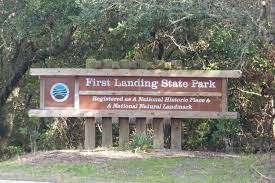
During high school I spent a good deal of my time hiking and biking, often with my dog, Sandy, through Seashore State Park. It’s a beautiful wilderness stretching between the Chesapeake and Broad Bay in Virginia Beach. Even today I have friends who bike or run the trails under Spanish Moss and across bridges through marshlands. But it’s not called Seashore State Park anymore, it’s First Landing State Park because John Smith first landed there on the Atlantic beach. A cross marks that spot.

Talk about arrogant and, well, wrong. It was not the first landing, and not only because of the Icelandic peoples up north or the Spanish in Florida (San Marco Fort in St Augustine was built before John Smith was born), but also not even the first Brits, with some vicious colleague of Smith’s arriving several years earlier.

So when tourists arrive from Pennsylvania or Quebec they marvel at standing on the first spot in the New World. The name needs to be changed back, either to Seashore State Park again, or something historically apropos, like “Seventh Landing State Park” or “Greedy Bastard’s Landing State Park,” (my personal favorite).

This rebranding isn’t unusual in human history. Before the Romans were in Italy it was the Etruscans; before England it was Engla Land, “Land of the Angles,” a Germanic tribe; and before Virginia was even the Old Dominion, it was Tsenacomoco; and this region of the Chesapeake known today as the Middle Peninsula had been Powhatan land, ruled by Chief Powhatan, father of Pocahontas, who grew up not far from here.

My point is names change. I don’t tell anyone, “Oh, I live in the former Powhatan Lands on the once-hunting grounds of the Rappahannock Indians, long before John Smith was stung by a Stingray at the mouth of the river in the Chesapeake, but the Greedy Bastard survived.” No, I just say Deltaville. It’s easier to find on a map.

I was out on the former hunting grounds (my backyard) and walked to the river (still called the Rappahannock, I’m glad to say, as opposed to the freaking James River (the Powhatan River), and the York River (The Pamunkey River). Even the Chesapeake has had some identity issues. Before the English called it The Chesapeake (two versions exist: Great Shellfish Bay and Mother of All Waters), the Spanish called it Bahia de Santa Marie, or Bay of St Mary, but the Powhatan, who certainly had first naming rights, called it, “Chesepian,” which is an Algonquin word meaning “Village at a Big River,”

This brings me back to me. When I was in high school not far from Greedy Bastard Landing State Park, we lived in a beautiful neighborhood, Chesopian Colony. We had just moved from New York where growing up I was Robert to everyone. Everyone. My family, my friends, teachers, strangers, and had I been able to have run into any Native Americans—and there were many on the Island—I’m sure they would have also called me Robert.

When we moved I decided to call myself Bob. Only my Uncle Bob ever called me Bob (he knew), but at the high school, everyone called me Bob because that was how I introduced myself. This started my struggles with multiple personalities. You see, when I got home I had to slip back into Robert mode. I tried telling my parents I was now Bob and Robert decided to stay in Great River on the Island, but it didn’t take. Once, a girl I knew well and had a serious crush on called my house looking for me. My mother answered the phone and said, “Oh no, I’m sorry, there is no Bob here,” and hung up. “MA!!!! NO!!!” Damn. My father was good about introducing me to his co-workers or golf buddies as Bob, but he always said it was a small sneer, like I was adopted or something.

Very few people call me Bobby. A friend in Albany, a priest in western New York, and another friend who floats around the eastern United States. No, I’m solidly Bob now. In fact if you Google me, Robert comes up mostly in reference to collegiate issues, like Rate My Professor, but if you Google Bob, I’m the only one, making it easy to find most of what I’ve written. That’s good. I’d hate to be a writer with a common name like Tom Williams or Robert Frost.

I suppose nothing is what it once was, and even our memory only goes back so far. What were these lands twenty-thousand years ago, before the Algonquins, before the other peoples crossed land-bridges or built reed boats? Do we have to return to Pangea to understand? Is it possible that the “original peoples” were themselves Greedy Bastards? Probably not since the population was so much smaller. I like knowing that these lands above the Rappahannock River were only previously occupied by animals. I like animals way better than nearly all people I’ve met.

When I sit out near the river at night and look across the Bay, I forget that people everywhere are not only replacing people everywhere, but we’re also simply passing through, guests, temporary settlers in a land that was green for millennia before us and will return to her natural state pretty much as soon as we’re gone. Somehow this brings me peace. I still don’t understand why people everywhere don’t understand this—that we must remain connected, learn each other’s names and ways, histories and hopes. It is so much harder to invade a place when you know their names.

My roots are not Native American; they’re, in descending order of percentage, Irish, English, German/Italian, French, and Neanderthal. I have felt equally connected to the people of Connemara as I have those in Brooklyn. The Celts of the Wild Atlantic Way are there now and go back a long time, much longer than the four hundred years of the people on Long Island’s western tip. Those names have been changed so many times it would be difficult to keep track.

My son’s middle name is Frederick, after my father, who was named after his grandfather, whose father came from Germany. My brother, too, is named for my father.

I’m not named after anyone. I suppose that’s good; it’s like I’m the first visitor creating my own identity without previous inhabitants of my name setting some sort of expectation. I’m the original Bob in the paternal line of my family.

Hmmm. I think I’ll go with it for now.

People of the River: Powhatan Indians" Henricus Historical Park Educational  film - YouTube

In Dreams Awake

Tonight a fox wandered along the edge of the driveway for a while, and when I went out about half an hour later, an opossum was foraging in the leaves and ran up a tree and played dead on a branch. It was kind of cute, actually, the way he just sat there probably thinking, “He can’t see me. I’m not going to move, and he can’t see me.”

Above him was a three-quarter moon, and Saturn, and Jupiter, and stars whose names I’ll never know. It’s a clear night here, upper thirties, and still, perfectly still. I sat at a table on the porch, cold, yes, but okay, and heard an owl out toward the river, and a dog somewhere. I always loved how sound travels at night, especially near water. Probably more so in an area like here where neighbors are few and far between and horse farms and plowed corn and soybean fields carpet the county from here to the Chesapeake.

One of my favorite movie scenes—in that I can relate to it I suppose—is in Thelma and Louise when they’re driving out west and a variety of shots shows Geena Davis looking at the desert, at the road, at the sun in the distance, and she turns to Susan Sarandon and says, “I’m really awake. Do you feel awake? You know, I don’t think I’ve ever felt so awake in my life.” Of course they just blew up an oil tanker, so there’s that.

But I’ve been fortunate enough to feel that way more than a few times in my life. Awake. It happens here pretty often.

From my porch I really can’t see more than trees until later in winter, but when I look north on a clear night, I can imagine the vast ocean silence stretching from here to Long Island where I picture childhood friends sitting in their living rooms watching television or just talking. Some are gone now, but some still live there, just a few miles from our old neighborhood. I’ll look south and see just over the curve of the earth, in some sort of simultaneous now, friends having drinks in Florida, and others in Georgia at their computers, writing, another near the gulf sitting on his back porch listening to a ballgame.

Mom’s asleep two hours away, my brother’s playing golf just fifty miles southwest of here, my sister five hours north is perhaps babysitting her grandson, all in their pulsating lives, right now.

Brian’s (the PA one) is having wine. Sean (the NY one) is at a movie shoot of some sort. Another Brian (FL) is doing an online reading talking about writing and dealing with loss; Sean (the Syracuse one) is somewhere in the world walking his dog; KL is trying to figure out why she’s not more German than she thought. My son is taking photos of water. The lives in my life are all present, and thinking of them reminds me I am present as well, as if they are proof, just as the geese gliding over right now are proof, or the tightness of my skin from the cool is also proof.

Someone is being born, others are dying, some are getting drunk and about to make a bad decision, someone else in some corner café drinking caffeine is about to have a great idea. Right now.

Awake.

We spend so much of our lives on autopilot. I won’t flood this folly with carpe diem quotes, except to say too many of us learn too late that life is swift, and that there is a difference between “a life” and “alive.”   We drift downstream with the current, caught up in conversations with others about the minutia, the meaningless. This isn’t to imply we shouldn’t have those interactions and focuses; it is simply a matter of balance, and there is no proof that this world is anywhere near in balance.

I’m not daft. I know I’m not pointing out anything anyone hasn’t thought of or doesn’t know. But step outside. Seriously, step away from the phone, the laptop, the television, the kids, the parents, the rest of everything that is and step outside and see what else is, and be present, be quiet.

I stood tonight and thought about where I was standing and how I got there; those times—and there have been more than a few—I thought I’d not make it through the night. Other times I didn’t want the night to end—and, thankfully, there were more than a few of those, too.

This is it. This is what keeps me going. Searching for moments of clarity, that awakeness. It can come on a mountain hike, sculling the river, or sitting quietly on the patio near the firepit on a cold night, sipping red wine, talking about the, well, the minutia, like the stars, the distant sounds, some light from a plane high above headed north, headed somewhere else. Being awake is spending time with someone with whom you don’t have to think about anything. Being awake is spending time alone and you don’t have to worry and anticipate or regret or second-guess. Being awake is akin to air; it is akin to water.

An owl just hooted here at Aerie somewhere behind me. And I can hear the diesel engine on a workboat, this late. On nights like this I swear I can hear clear across to Cape Charles on the Eastern Shore, and up toward Tangier, and up toward Montauk.

Colder weather is coming. It’s clear tonight, but clouds are moving in. Changes, constant turns and spins of expectations and wonder. Whenever I am in this state of mind, I remind myself it will inevitably change; as will the frequent moments of self-doubt. It gives me something to look forward to in moments of weakness, and, moreover, it reminds me to hold tight to the moments of such sharp clarity when I can almost feel like I understand my place among things.

In the Still of the Night

At the river again.

An eagle rises from a branch and lifts toward the far side of the marsh, and a heron methodically moves from the reeds on my right deeper into the duck pond searching for minnows and other small fish floundering near the surface where the water is warmer. Out on the water a workboat chugs back toward the docks at Locklies upriver a mile or so, and Mike is out in his PT banking out across the Norris Bridge and moving in for a quiet landing at Hummel Field.

A new moon tomorrow means spectacular stargazing this weekend, and a few hours ago both Jupiter and Saturn sat above the trees in the west. Tomorrow night earlier than this we’ll check out the moons, the rings. I am always taken aback by this same site seen by astronomers hundreds of years ago, same celestial location, and I am certain with the same terrestrial wonder.

The river is quiet this evening, like a mirror, glass. Some lights on the far shore reflect in a perfect motionless line pointing toward me, and the cars crossing the bridge appear inverted just below themselves. There’s something about standing at the river at night that makes me forget the sun is still out over the Pacific and just rising in the Urals. It’s breakfast time in Irkutsk and lunchtime in Vladivostok.

But here it is dark save the cars and lights across the water, and nighttime on the river can be engulfing. Worries and concerns, anxiety and stress drift west with the night, as if that’s Beryl Markham herself flying up there, gathering the problems of those of us along the shore, and lifting off toward the mountains to let them disperse in the dark. I’m not daft; I know this is a temporal relief to the daytime deluge of discouraging news and worries about tomorrow, about today, and even about things that were, but tonight, in this blackness, nothing is more worrisome than accidently startling the heron or the buffleheads on the water, which not even the workboat bothered as it went by.

And it reminds me of something it took me some time to pinpoint. But I did.

I lived across the street from a reservoir in Massachusetts in a yellow house in a quaint village at the corner of two roads which wound around the water, the Wachusett Reservoir. Across a small bridge and up the road about half a mile, a small strip of land reached into the water to a round piece of land on which is an old stone church, abandoned when I lived there, with thick walls and windows so wide you could sleep on the sills, fresh air blowing through the open spaces.

It was common for me to walk out in December along the road to the skinny stretch to the church, walk into its blackness and climb into a sill and sit for an hour or two, watching the occasional cars go by from West Boylston past my house and up toward the mountain, or up on the road heading north into Sterling, through that village and on up toward Leominster and New Hampshire. It could be cold, and geese often settled there for the night, letting out the occasional honk, not minding me, noticing me just the same.

It is an odd mixture of absolute peace of mind, of space, of being, wanting to stay there for a long time, but stirring my soul enough to make me want to do something, to get my guitar and play quietly, or to find a pub and talk to people, to come to life in the dead of night, but I always knew that as soon as I did something like that, very quickly I’d long for the safety of the old church sill where I could still see the lights inside my yellow house, and I could walk home, close the door, turn off the lights and lay in bed thinking about somewhere else.

I was always thinking about somewhere else back then. It wasn’t dissatisfaction with the here and now; it was—is—a restless spirit that I’ve finally recognized has the dubious role of only being truly at peace if it keeps moving.

Like in Spain. Or Siberia. Or Mexico. Or…

I sometimes think about places I’ve been more in terms of time than location, as if I really were to drive to that reservoir, the old stone church would still be overgrown and abandoned, and my house would still have a light on waiting for me to come home and turn in for the night. When one leaves a place and doesn’t return for many, many years, it leaves the last visit hanging there in the air between back then and now, as a mirage, like water on a desert highway, and the closer you come the more you realize there’s nothing there anymore.

A can hear a truck crossing the bridge tonight, heading north toward Maryland perhaps. Further. By the time I walk home and get ready for bed it will be crossing the Potomac, heading up 301 toward Baltimore. The world is small at night, more navigable. I can stand here at the river and believe I can almost see that desert highway reaching across the Sonoran toward Tucson, and at this hour when the world has no sound at all, I can hear two young friends sitting along another river, talking about other dreams in other times.

I love the night for its limitlessness, its clarity despite the darkness, perhaps even the result of the darkness.

November 28th, 1985

“Mary had a little lamb

whose fleece was white as snow

and everywhere that Mary went

her lamb was sure to go”

Which in reality was a small schoolhouse in central Massachusetts where Mary Elizabeth Sawyer walked each day from her farm, followed by the lamb.

I’ll come back to this.

I worked for some time at a quaint inn in Sterling, Massachusetts. The restaurant with a small lounge and several rooms upstairs sat just near the Wachusett Reservoir, at the bottom of a hill in the village. It was owned by the Roy family, and Al Roy had studied cooking in France. His son, Mark, ran the restaurant and inn, along with his wife Patti. The staff consisted of about ten of us. Dave was a chef, Tom the bartender, Rich—a student at the time at the Culinary Institute of America—assisted Dave, and the wait staff. We were like family and shared each other’s lives.

I’d go hawk watching at the Quabbin Reservoir an hour west with Dave and his wife, and often Cathy and Stacy and others would come to my place—an old yellow house just down the shore of the reservoir a few miles past the cider mill—and sometimes after the dining room closed we’d sit around and have a drink and talk. There were funny times, like when I went out one cold winter night to put the trash out and the only other person left was Cathy who was placing the fine China plates out for the next evening’s guests, but I locked myself out. I went to the back windows of the dining room which faced the wooded hillside, standing two feet deep in snow, and knocked on the window. It scared the crap out of Cathy and the stack of plates sailed out of her arms and crashed to the floor. She screamed. I laughed. It was an accident, truly. Or when a couple from Quebec came to dinner just as the dining room closed and kept just Tom and me there for hours, well past midnight. Dave had closed up the kitchen after their meal and went home, but they still had wine and dessert. At about 1 am they left and when I opened their bill folder to see what kind of tip they left on the $40 tab for keeping us there so late, the credit card receipt showed no tip at all. I cursed loud enough for Tom to laugh and say, “No tip, huh?” and when I picked up the folder, a $100 bill was underneath.

Some tragic times as well, mostly January 28th, 1986, two months to the day after Thanksgiving, and just about a week before I moved to Pennsylvania. Most Americans will never forget this day, but it was particularly poignant for those of us in New England since Christa McAuliffe had lived just across the border in New Hampshire, and on that morning and afternoon, the inn was packed with people—many friends of Christa’s—to watch the Challenger launch on television. I was tapping a keg of Budweiser and looked up as Patti said, “Oh wow, that doesn’t seem right.”

It was completely silent, followed by cries. I can still smell the beer, hear the dishes from the kitchen, Cathy saying, “What’s going on?” and Tom behind the bar quietly repeating, “Holy Shit. Oh wow. Holy Shit.”

But today I remember a happier time there. Thanksgiving Day, 1985. We had a limited menu of Turkey, Scallops, or Prime Rib, and we were booked for all three seatings. The last guests left about 7 that night, and after we cleaned the dining room and the kitchen, we all sat around a bunch of tables pushed together and had a full meal with all three entrees, bottles of wine, pies, and stories, constant and hilarious stories. It was a beautiful time in my life and I loved where I lived, what I did, and the people I spent my time with.

But something had to change; I knew this. I did not know what needed to happen, but something else needed to be next. I had graduated from college, traveled through Mexico, lived in Tucson, managed a health club, and was happy, but stagnant, and this state of being, albeit pleasant, contradicted my very nature. It would not be long before I would turn in my notice and move to Pennsylvania, but on that Thanksgiving where a dozen misfits all sat around the table together laughing and drinking and wishing it could be like that forever but knowing it had to change—and would, for every single one of us—I got up to open another bottle of wine but instead walked out the front door to see that even more snow had accumulated on the couple of feet we already had.

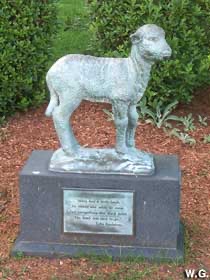
I walked to the center of the village just a half block away and found a statue I’d never seen before. It was of Mary Elizabeth Sawyer’s lamb. Mary is the young girl in Sterling, Massachusetts, who had a small lamb that followed her everywhere, including school. It was a big event in the small school, and the next day a classmate of Mary’s, John Roulstone, a year older than Mary, handed her a poem he had written about the event. The poem had three stanzas—the first of which is at the top of this page.

Some years later, a poet, Sarah Hale who lived not far from there, published a small book of poems which contained a longer version of the poem, but Hale insisted it was original and based upon imaginary events. The controversy lasted for some years, well after both Mary and Hale had died. Until Henry Ford—yes, that one—investigated the incident and not only sided with Sterling’s own Mary, but purchased the schoolhouse from the village of Sterling, moved it to Sudbury, Massachusetts, and then published a book about Mary.

Back to me.

I stood at the small statue watching snow slowly cover the lamb’s wool now truly white as snow, and waited in perfect silence, listening to the quiet of rural Massachusetts. I can feel that moment today, that sense of peace braided with a sense of restlessness. I had to leave. I had to stay. Back then for people my age riding the tail of the Baby Boomer generation, the urge to “change” something usually meant going to the liquor store for boxes, filling them with books I’d never read again, tying them up with string, and moving somewhere else. Boston was out of the question—geez, an hour to the east was too far. Staying meant improving my life where I was—figuring out how to take the best of my situation and improve it, and I stood in front of Mary’s lamb and knew I didn’t know how to begin to do that. I only knew how to pack up and leave; that I was good at.

I went back in and grabbed the wine bottle and while I was opening it, Mark came in the kitchen.

“Where the hell have you been? We’re a bottle a head of you!”

“I was talking to the lamb.”

“What lamb?”

“Mary’s.”

“Ha. Oh. Well…”

“Mark, I think I’m going to have to turn in my notice, but, I don’t know, maybe January, maybe February. I need to find something else to do.”

“Oh wow, well, okay. We can talk about this later. You’re here for the holidays, though?”

“Yes, of course.”

We drank wine. I suddenly felt a little out of place, more like a visiting cousin than immediate family.

At the end of the night, everyone had left, Mark and Patti had retired upstairs, and just Cathy and I were left, she placed the dinner plates out for the next day, and I put out the trash, where I accidently locked myself out.

I moved. Cathy moved. Dave opened his own restaurant. Tom died. And the Sterling Inn fell into disrepair over the next few decades, abandoned, with vines taking over the building, the parking lot cracked and covered with weeds. Until this past fall, when someone bought it from the Roy family with the intent of restoring it to its full original glory. Same red trim; same black shutters.

That was thirty-six Thanksgivings ago. Or last year. My perspective is off today. But some memories follow us around, waiting for us to notice them.

Don’t Blame the Robo Man

Every few weeks I get a call for Robin.

No one named Robin lives here or uses my phone. I don’t even know anyone named Robin. Well, I did: a professor at a college and a colleague at a job in Pennsylvania—her name was, no kidding, Robin Masters (that’s for Magnum PI fans). But she doesn’t live here.

This has been going on for many years. At the start it was frustrating because I’d say, “I’m sorry you have the wrong number,” and hang up. I see no need for conversation, none. You have the wrong number; what else is there to say? If you dial it again and I answer, you know that it is wrong. If you dial it again and get Robin, ouila.

But the mystery of Robin has been solved. It is the Police Benevolent Society looking for money. Once I said there is no Robin here and he said, “Oh well I’ll talk to you then,” and he read his sheet of paper looking for a donation and I told him to mail me information, knowing the money is not entirely going to the police but instead to this organization that donates a small portion to them. Whatever, I hung up.

But they are persistent, to say the least, so thinking of how my Uncle Howard used to keep a blow horn near the phone for when he received these calls and would blow it right into the receiver, and how Seinfeld answers his phone by saying, “I’m busy right now, but let me have your number and I’ll call you tonight while you’re eating dinner,” I have formulated a variety of ways to answer the phone.

Sometimes, I answer in Russian or French, and they hang up. I answered in Spanish but once there was a click and some recording in Spanish tried to get me to extend my car warranty. I once wanted to actually do that because one of my cars has 400,000 miles on it, but the recording just kept playing.

Then the dude called for Robin again, and I said, “Yeah, this is Robin, what can I do for you?”

Other times:

“Holy Cow Batman! It’s the Police again!”

“Robin?? Yeah, hang on, I’ll get her…” and left the phone on the table for a while.

“Robin? Robin??!! Why would you bring up Robin!?!?! WHY WOULD YOU FUCKING CALL AND ASK FOR HER!! I JUST GOT OVER HER!!!”

“Robin’s Dead.”

It’s not their fault, really, these poor phone people; they’re just trying to do a job. I feel guilty, sometimes. Not with the ones who are trying to scam people into giving money to who people actually think is some police organization but isn’t, but some, like pollsters, who really don’t mean any harm, and can actually be beneficial to us all.

Plus, I did this once, I was a caller. I was fifteen and couldn’t legally drive yet, but I got a job in an office park across from our neighborhood in Virginia Beach making appointments for encyclopedia salesmen. It was a small, fancy office, and the front room had one desk with some well-dressed, middle-aged man and next to him a door lead to a large room with about eight desks where us callers sat and cold-called from cards we were given at the beginning of each shift. If we made an appointment we made some money, I forget how much. I was there only a few weeks and never made a single appointment.

I do remember two instances though. On one, an older gentleman answered and screamed at me for “trying to steal his dignity.” No kidding. I said, “I’m just trying to see if you want a set of encyclopedias, sir,” but he wanted to talk to my boss. I got my boss and after he hung up he said, “Don’t steal anyone’s dignity anymore,” and went back to his desk laughing.

The other was when someone called him at his desk in the outer room and I happened to be out there when I heard something like this after he said his name, which I’ve long forgotten, even when I still worked there: “Yes, that’s me. Wow, you have quite a memory, Sir. You really know your baseball. No, just five years, in Minnesota, then St. Louis.” He told me who he was but he wasn’t a New York Met so I didn’t really pay any mind. This was a time when professional athletes had jobs in the off-season because tickets to see them play were still affordable.

I believe that was my first non-raking, non-mowing, non-shoveling job, though I did my share of shoveling, I suppose.

And now we get Robo calls, Facebook ads, spam texts. I miss the real voice of someone asking if I have a few minutes, I really do. I thought about that, about how lonely these callers must be, the only job they could find, perhaps? Or extra money to pay off bills or make enough to buy food for the week. I don’t know, but I remember I took the job because we had just moved to Virginia Beach and I didn’t know a soul, and it was nice to talk to people.

So when the phone rang the other day, I answered it calmly, thinking, this time I’m going to talk to this guy, find out where he’s from. Who knows what we might have in common and we might even become friends. Hell, we might even have mutual friends—he must be calling from the area.

So I answered, ready:

“Hello, is Robin there?”

“No I’m sorry, can I help you?”

“Yes, maybe you can. I’m Dan from the Police Benevolent Society and we are trying to raise money for…”

Click.

I tried to hang in there, I really did.

Grief is Love

I Keep Trying to Catch His Eye

“Even though I have a lot going for me, I still want something more”

–Max Maisel

According to the page statistics for this blog, over the past few weeks the “unique readers” numbers have moved up from about 850 each week to around 1100. I’m happy about that, of course, but today I’m going to take advantage of that.

Please order and read this book. It will emotionally destroy you, yet it will offer a foundation of hope for the idea of love. Ivan Maisel provides a perspective on loss—in his case the loss of his twenty-one-year old son Max who took his own life—that doesn’t so much turn that loss into something positive, of course, but certainly demonstrates that with all loss, but especially the profound loss of one’s son, one can recognize just how deeply love had rooted itself.

Add to this that the book is written by one of my favorite writers. He has the unique ability to proceed as a journalist who occasionally allows a comment reflecting what the reader has to be thinking to sneak in the window of his prose. He’s that good, a man who spent his life writing about sports, which provides that edge of humor one must have to keep the subject fresh, and the insight of a journalist who has done his homework. On my list of favorite writers, which is nearly packed with journalists, Ivan Maisel has been in the top five, but this book just pushed him to the top of that list.

And yet, I am haunted by this book for how it grabbed hold of my anxiety about losing those close to me and tightened its grip. I finished the book earlier today and my chest still hurts, yet I crave more. I want to hear more about Max.

On a personal level, the book digs deep into not only my present but my past. My son was born just eleven months before Max; my son is a photographer by trade, just like Max, he is for the most part also a very quiet person and finds as much comfort in the natural world as he ever would in a room full of people. Further, Ivan’s brother-in-law, Sean, and Sean’s wife Deb are dear friends of mine whom I’ve known since we ourselves were twenty-one, and Sean can best be described as my “brother from another mother.” To connect further, I understand the concept of “missing” someone, hoping to hear good news, knowing you won’t. A couple of months after Max’s disappearance, Ivan and Meg Maisel were told of the recovery of their son; I never learned what happened to my friend, but Ivan artfully demonstrates there is still no closure in the knowledge, there is no resolution.

But I could have no connection at all; might never have met anyone in the family, not have understood what it is to have someone you care for go missing, not have a son of my own, and this work speaks to me because it is truly about each of us who loves and has lost. It is a profound work when you consider the eroding sense of “appreciation” of those we love. It is a wake up call.

I’ve read Ivan’s work for years before this tragic incident redirected his prose for this book. I’ve enjoyed his casual professionalism, his succinct yet deeply engaging style. He’s really good. But this is the first time I’ve read his work and he doesn’t make me feel like I’m reading as much as if he’s talking to me, handed me a cup of coffee or a beer, sat on the stool across the kitchen island, and poured his heart out, never making me feel uncomfortable as much as he, through his description of grief, helped me better understand love.

“Grief is Love,” someone told Ivan. That resonated with me like little has in a very long time: “Grief is Love.” It calls to mind my own losses, from dear, dear friends to my beautiful father, that in the grief we experience, and which never completely dissipates, we come to recognize just how deeply we loved someone for the contrast to be so stark, and reminds us to be glad for that.

But I Keep Trying to Catch His Eye is about Max, whose life lasted twenty-one years but whose narrative continues, like a character who slid just offstage but who remains in eyeshot of the other characters, and everything they do is the result of Max’s dynamic presence.

I am a parent, so this book sits in my throat; and I am a writer, so this book stirs up deep admiration of a colleague whom I already recognized as a master of our craft, though I’ve never met him. But I am a human who loves and cries, who has lost people close to me, and doesn’t spend nearly enough time with those who are still in my life. And this book calls to me.

Honestly, if you’ve hung in there with this blog for all this time, trust me when I say you truly must read this book. Click on the book cover now:

I Keep Trying to Catch His Eye

Moment by Moment

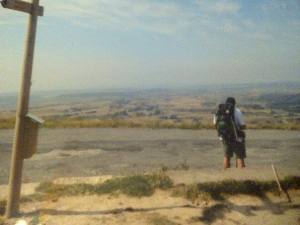
I stood outside for a while tonight and stared at what looked like a million stars. It made me think of Spain; in fact, I have been thinking about Spain a lot lately; thinking about how we lived our days when we were there, and wondering why we left that behind. It’s hard to explain, but lately I’ve been thinking about the Camino I was on, the one I’m on now, and why there needs to be a difference.

One evening, Michael and I spent the night above a bar in Samos, Spain, and had pulpo–octopus–for dinner. Later that night a priest invited us to a private party and we stood next to four buffet tables of pinchos and wine, and we ate and stood on the balcony drinking wine and watched swans swim by in the lake behind the cloister hissing at the setting sun. Every single day outdid the previous one. I kept waiting for that golden moment, and they kept coming. Like that following morning when we walked to a nearby field and found a chapel from the 9th century alone in the mist, and some eternal sacred silence.

We slept on yoga mats in a hallway of an old church in Logrono, Spain, with seventy other tired souls after we shared dinner and walked through the basement of the five hundred year old building. For two nights we slept in comfort in the same hotel Hemingway stayed while working on The Sun Also Rises. In some small, old chicken village we stayed in a brand new albergue, which had no business being open yet. The floors and ceilings weren’t done, it was freezing inside, and the yet-to-be-inspected bathroom was three floors down. The only bar in town was closed so the owner gave us a few beers which made up for the thick dust everywhere. We stayed near Torres del Rio above a bar with fine food and a wading pool out back to soak our blistered and swollen feet. We stayed in an old monastery a hundred yards from a church St Francis of Assisi himself asked to be built for the poor souls who were too ill in those days to make it to Santiago. In Portomarin we stayed up as long as we could because the rooms were all filled. We hung out in a small café until 1am and then walked around the misty, cooling waterfront. Then we settled on the town square with covered walkways running next to a medieval church. Against some storefront we pulled together folding chairs and wrapped ourselves in whatever we could and tried to sleep in rapidly dropping temperatures. A kid on a bike did tricks on the steps of the church until 3 am which anyway kept me amused. At 4:30 we headed west. You can see a million stars in Spain at 4:30 in the morning, and the darkness makes the silence almost visible.

In O’Cebreiro there was no room and we nearly walked out of town to camp when a man waved us toward a back door at an inn and we ended up with a beautiful private room for practically nothing at all and just outside the door were a few tables on a stone patio overlooking valleys that stretched across Galicia. In the morning the fog sat below us in those valleys, and the sun came up like we were looking at the ocean until the clouds dissolved and the sky turned blue and the green hills welcomed us.

When we first crossed the Pyrenees into Spain’s small village of Roncesvalles, we stayed next to a chapel Charlemagne used and at night we went to the basement and spent hours drinking gin and tonics and talking to the innkeeper. In the village of Zubiri in Navarra, just before Pamplona, we stayed in a new place on the fourth floor and shard a room with a couple from France. We were all quiet that night. My son took pictures from the Roman Bridge outside our window. A few days later on the eve of the feast of Saint James, patron of this pilgrimage, we stayed in a small inn run by a single mom who made dinner for us, a woman from Madrid, and two men from Germany. We shared a delicious Italian meal and drank clay pitchers of red wine and talked about the distances. We laughed in three languages and despite someone snoring most of the night we slept well enough to leave an hour after everyone else making our journey quieter and more perfect. We didn’t worry about how far we walked or where we might stay. We walked and we would find a place. Like the fly-infested villa with tremendous views, or the albergue with dogs who insisted on sleeping on our laps, or the room above the garage with a killer bar at the street; or the stone building down some slope where we met some girl from Texas and a father and son from Amsterdam. After paying at the restaurant we drank the best hard cider in Spain.

In one neighborhood as close to suburbia as we ever saw, some couple opened an albergue in their house and we got the first two of five beds, the others occupied by a salesman from Madrid, a woman from Barcelona and another from Mayorca. We all had dinner on the back porch where all the flies in Spain gathered to join us, as well as a dog named Bruno, and the sun was brilliant and we slept well. Once, we stumbled into some tiny town, another chicken village, looked like a movie set for an old western, and we slept in the bunk room with fifty other people. In the morning we picked up a few supplies at their shed they called a store, but man oh man the lemon chicken was awesome.

Everything we did was deliberate.

Everything we ate was delicious.

We were absolutely awake. We remained present for almost two months. Everyone we met enriched our lives.

It should be this way all the time. At home. Anywhere. We live in a phenomenal world for a disturbingly short period of time. It should always be this way, and love, and the way we wake in the mornings. I know the arguments, the schedules and appointments and necessary obligations. But, you know, still, it should always be this way.

It was in Spain, every single day, and when we came home we slid quietly into the old routine, stumbled back upon a world where what was and what might be constantly drown out what is, where few live in the present, where few talk to each other. Where people stand around hissing at the setting sun, passing through life quietly, hoping before they pass away that they can raise their voices and just once join in one last swan song. They wait too long. We always wait too long.

Periphery

for Trish

I have known suicide by virtue of proximity. More than just a few students, particularly military students, and seven or eight friends and acquaintances, some very close, volunteered to step off the stage; and a few others didn’t in particular “kill” themselves as much as they acted in such self-destructive ways that while officially it wasn’t suicide, their behavior certainly was. And much to the confusion of everyone who watched Loving Vincent, it is still my belief that the artist, whom I studied and have written about extensively, did himself in. And each one of them, from Bud Dwyer to Dave to Trish—dear, sweet Trish—to the rest, had trouble settling into some sort of acceptance of the way things should be for them, never depressed but never quite not; always cheerful but always marginally in denial of their chronic sadness. These people are impossible to distinguish from the rest of us until they are no longer with us and we can look back and note just how obvious it all was, their distance, their morose. They move nearly unnoticed amongst the alive. It is said that depressed people never pretend to be depressed, they pretend to not be.

We live for a while, and love, which offers some sense of purpose, I suppose, even if that purpose can often seem hazy, a murmur. And we all have moments of absolute clarity; moments in which we can see down the road and around the bend, when we understand, and know we are understood. And we all have occasions of despair, when, as Mr. Frost reminds us, “Life is too much like a pathless wood.” But so many suffer through stretches of time when hope has gradually eroded without a particular noticeable instant when we might have changed course. It is the slow slide through what seems like years watching everyone else, noticing the laughter and motion of everybody else.

Most of us spend the wide years of our lives in the middle somewhere, encouraged and discouraged in equal and fluctuating amounts in pleasantly spaced and pondered moments, and we talk about it with friends late at night on some porch drinking some drink, and we know with absolute triteness that “tomorrow will be better.” This is the crowd of humanity moving from start to finish like a march from Herald Square to Central Park in shoulder-to-shoulder pedestrian traffic on Fifth Avenue. This is and was and one can only assume will be for the vast majority of souls who have done their jobs to their best, raised families, picnicked, partied, celebrated, and vacationed, astutely playing their part in Whitman’s Powerful Play.

But there are some who rarely find themselves in that middle range of sweet and handsome middle-class, middle-aged moments—to swipe a phrase from Joni Mitchell. Yes, there are some who linger for the fat of their lives on the edges, bouncing from clarity to confusion. They can dominate and direct their desires one moment, and then the next might just as intently walk off into the wilderness never to be seen again. Either way; it’s all the same to them. Drastic extremes, opposing ambitions, if we can even call it ambition when it is not some internal drive that pushes those polar pursuits but a dramatic sense of combustion to keep themselves from what they see as the neuropathy of that middle-life spirit. They’d just as soon kill themselves one moment and the next declare their absolute passion for life and living and love. Again, they might say, either way; it’s all the same.

Van Gogh wrote of this, of his passion for life, of his hatred of suicide, and then in a letter perhaps a week later he questions the purpose of it all, the difficulties and debts, the indifference toward him and his art, and suggests not going on would be the truly humane thing to do for everyone. Then, just as abruptly, he swings back to his “lust for life.”

He wasn’t alone.

Hemingway, Virginia Woolf, Eugene O’Neil, Beethoven, Tolstoy, Keats, Tennessee Williams, Isaac Newton, Plath, Churchill, Dickens, Michelangelo, Lionel Aldridge. Brian Wilson. Not all of these people committed suicide; but all stood on that precipice, glanced into that river that asked them for a kiss.

It’s a bit unnerving how many writers are on this list. Artists in general, but it makes sense. For many artists, it was write (or paint or compose or …) or drink the hemlock, suck down that “tall gall in the small seductive vial.”

What I find most interesting about these people, and, with very few exceptions, almost all the people I’ve known or read about with what society has labeled mental illness, is how deeply and extensively they have provided us with beauty, with some form of timeless contribution to the world. Their stories, their poetry that digs deep into our souls, their color and splashes of life on canvas and sculpture. Maybe they spent their lives screaming in despair in their own way—Darkness Visible, William Styron called it. Perhaps the closer one comes to humanity through art, the further from humanity they feel, forcing them to produce even more, which is, in their way, how they reach out for someone. “I wish he had just said something,” people will say as they walk through the gallery of his work, as they thumb through pages of her sonnets, as they listen to Sonata Number Eight in C Minor. “If only they had let us know.”

Never realizing, as they read the pages, as their eyes swell at a turn of phrase, they did say something.


Sit down. Inhale. Exhale.
The gun will wait. The lake will wait.
The tall gall in the small seductive vial
will wait will wait:
will wait a week: will wait through April.
You do not have to die this certain day.
Death will abide, will pamper your postponement.
I assure you death will wait. Death has
a lot of time. Death can
attend to you tomorrow. Or next week. Death is
just down the street; is most obliging neighbor;
can meet you any moment.

You need not die today.
Stay here–through pout or pain or peskyness.
Stay here. See what the news is going to be tomorrow.

Graves grow no green that you can use.
Remember, green’s your color. You are Spring.

–Gwendolyn Brooks