My DNA

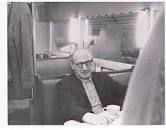
Joe “Pop” Urso, my mother’s father

Growing up I was German/Irish. That was a standard combo on Long Island. Even Robert Duvall in The Godfather says, “I’m German/Irish” to the film producer.  The German might be obvious from the name—my great-great grandfather came from Lohr en Main, Germany, in the 1850’s with his three brothers. The Irish is my maternal grandmother. In fact, DNA shows me at 51% Irish (some slipped in from my father’s maternal family as well). But that should have been it. This is simple arithmetic. Mom—Irish. Dad—German and Irish.

But when I was fifty-seven-years old I found out my maternal great-grandfather was Giuseppe Urso, a stonemason from Sicily, and his son, my grandfather, Joe Urso (Pop), owned the Metro Diner in Albany, New York. My mother suspected from her youth that the man she knew and loved as her father was not, in fact, her father. The details aren’t important, but when she was born in 1933 life in Brooklyn had not advanced between the Irish and Italian immigrants. It turns out my very Irish (McCormick) grandmother fell in love with a very Sicilian man in the neighborhood. Apparently, both of their fathers forbid any wedding despite her pregnancy (to be fair no one knows if they yet knew about her pregnancy). This was real—this was a time when marrying someone not from your village was taboo, let alone from enemy territory. So Joe headed to some family friends in Scranton, Pennsylvania, and Catherine met and married Ernie—the man my mother knew as her father.

In Florida one day at lunch with my brother, who had done some research online and ended up in contact with someone who popped up on the family tree after all of us had done the DNA thing, he told me about the Urso family, about Giuseppe (Mom’s grandfather) and Joe (her father), about the forbidden romance.  I had never heard the name Urso in my life. But serendipitously, that night while standing on the ninth floor of a building at the University of Tampa, I looked out the window to the next building where in huge letters read, “FRANK URSO BUILDING.” No relation, but creepy nonetheless.

Then I found an article about Pop Urso, Metro Diner owner, who had two sons—Joe and Jim, and how Jim took over the family business until the diner closed in the ‘80s. The author of the article was Jim’s nephew, Jack Urso. Then I read Jack’s bio: Jack Urso teaches college English at a community college and has a blog. Nearly identical to my bio. So I wrote him, the first line of my email said, “This is going to be the strangest email you’ve ever received.” He replied with a beautiful letter, and thirty minutes later I received an email from Jack’s sister, Annmarie. We corresponded a lot with pictures and information, all of us amazed at the undeniable resemblance between my mother and their father Joe—Mom’s younger brother by about eight months, and a nearly identical resemblance between Mom and her father, Pop. It seems Pop left Brooklyn and hightailed it to Scranton where he married a woman and had a son just eight months after Mom was born (Joe–Annmarie and Jack’s father). No one knows if Pop knew about the pregnancy. My new cousins told me about “our” grandfather. Then I read Annmarie’s email signature—a college professor at the same SUNY college where one of my dearest friends of four decades works.

So I texted my friend. “Liz, do you know Annmarie Urso?”

“Hey Bob. Yes, of course. How do you know her?”

“She’s my cousin.”

“WTF???!!!”

Yes, exactly. WTF?

Eventually when I did meet Annmarie, it was as if we knew each other our entire lives.

***

Writer John Edgar Wideman wrote in his book Brothers and Keepers that everyone needs two parents, four grandparents, eight great-grandparents, then sixteen, then thirty-two, sixty-four, one hundred and twenty-eight. He comments how about two hundred years ago sixty-four men made love to sixty-four women in various places, none of the couples ever meeting at all in their lifetime, all in some grand genetic conspiracy to eventually create you.

I love the stories of ancestry. What did they do for a living? Who excelled, who disappeared, who emigrated and who stayed behind to tend to family matters? We all have our stories, and the fact we are “present” makes our stories less interesting or even relevant much of the time. But one hundred years from now will some young man be looking through old documents to see what I did for a living? What happened to me? Will someone wonder why some of my story is from Long Island and some from the South? What questions will I leave unanswered?

Here’s the answers as they stand now:

I’m 51% Irish, mostly because of my mother but very strongly my father as well as his roots return to Connemara, and that’s where my chart places more than half my blood. I’m 21 percent Italian—specifically, northern Sicilian. If we use the old-fashioned, commonsense method of determination, my ancestry is traced to Ireland (maternal grandfather), Italy (other maternal grandfather), Germany (paternal grandfather), and English/Irish (other paternal grandfather). But under this reasoning my German should be about one quarter or so as well, but it barely makes a reading at 6 percent. In fact, I have more “Jewish People’s of Europe” in me than German, though I have no clue as to what JPE is exactly.

Still, my maternal grandfather owned a diner in Albany, the other a glass company in Brooklyn. Their fathers were a stonemason and a butcher respectively. Those men and their wives left their homes for whatever reason—war, famine, disease, hope—and came here without means of communicating with home except by hand-written letters which could take months each way. No, it was a time when those brave souls left everything well aware they most likely would never be back and never see any of those left behind ever again. We can’t begin to wrap our mind around this concept when we talk several times a day to all living generations no matter where in the world they live.

My parents come from what we commonly call the Greatest Generation, but their parents might be part of what could be named “The Bravest Generation.” The sacrifices they made to ride on a sliver of hope are inconceivable.

Mom has olive skin and hazel eyes, different than her fair-skinned and blue-eyed brothers and sister. The suspicion lasted her entire life, though always deep in the background, and certainly not anything the rest of the family knew, let alone talked about. It was ancient history. Except while growing up in the Bushwick section of Brooklyn, kids would point out how she looked different than the rest, and her maternal grandfather, she remembers, did not like her—the Irishman who forbid his daughter from marrying the Italian leaving room to believe they all knew who Mom’s real father was and were not happy about it. Through the years we all joked how Italian she really is—not in some insightful way, but in her lifestyle—her sister-in-law and best friend for many years were both Italian and taught Mom the art of cooking their food. It is ironic now, of course, but somehow quite fateful.

Last week my mother and I were talking about her Sicilian family and how thrilled she is to know the truth about it all thanks to DNA and my brother’s dive into our ancestry. She loves that Annmarie calls her “Aunt Joan” and sends her pictures, and was sad to learn that both her “new” brothers had passed away before she knew this. Annmarie said her father would have been thrilled to know he had a sister. This made Mom both so happy and a bit sad. I said that my new cousin Jack and I joked about writing about it and Mom got excited. “Please do so, at least before I die!” she quipped. “Really, I would love for you to write about it before I am gone.” She’s proud of her new old lineage. We looked together at pictures of her father, Pop, and the uncanny resemblance. I commented on the photo, noting how much she looks like him, and not much at all like her siblings. She asked again to remind her of who’s who in her father’s family. It isn’t age or mental capacity; this is all brand new. “I’m not sure I can remember it either, Mom,” I told her. “I don’t know all the facts; no one does.”

“Well write what you know,” she said.

Now, on the wall of my mother’s apartment is a large picture of my parents on their wedding day seventy years ago this week. Mom was nineteen. Inserted in the frame in the right corner is a small photograph of her father Joe “Pop” Urso taken when he was nineteen. The eyes and mouth are identical, and the skin tone. It’s crazy, this DNA, these connective songlines that make us descendants and ancestors.

One would think that with such technology the world would better appreciate how connected we all are. In my ancestry chart I can go back almost to where my ancestors roamed during the days of hunting and food gathering. It turns out we all can.

The article written by my cousin Jack Urso which I read and enticed me to first get in touch with him:

http://www.aeolus13umbra.com/2014/04/the-last-days-of-metro-diner_4589.html

Mom and Dad’s wedding day when she was 19 years old, and Pop Urso when he was 19

We Believed in Things

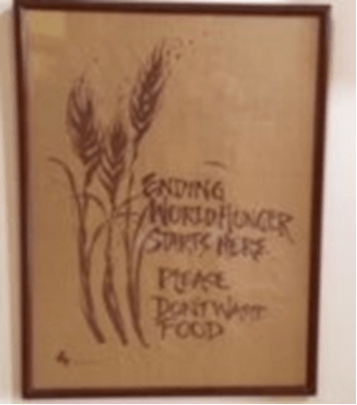
(“Ending World Hunger Starts here: Please Don’t Waste Food” Sorry so blurry)

This poster hangs in the dining room at the Franciscan Mountain Retreat of Mt Irenaeus in western New York. It is more than forty years old. When I was last there, Fr Lou at the retreat was interested to know how I remembered its exact age. “I made it,” I said.

When in college I started the World Hunger Committee, which had a short-lived purpose to provide information about the plight of hungry at home and abroad. Maybe the greatest accomplishment of the group was obtaining permission to have just one day where all students who were on the dining plan would turn in their dining cards for that day and the money would go to World Hunger organizations. I do not know if that tradition continued, but we managed my senior year and it was quite rewarding to find out the dining hall was nearly empty the entire day (the staff knew ahead of time how many would not be there that day so they would not, ironically, waste food).

But before that, when I was a sophomore, I had twenty-five of these posters made and put them up around campus. A few went in the dining hall, a few in the campus café, and one in the campus ministry, where Fr Dan Riley, founder of Mt Irenaeus, was then working. I still have one at home.

It’s a bit surreal to sit at the dining room table at the mountain and see the poster. I can picture a young man, a boy really, standing next to one of the Wintermantel brothers in the then-brand-new Studio 4 East discussing the phrase to put on the poster. I came up with the words, and he came up with the idea of the wheat stalks up the side. It is like a different life, a movie I once saw and only kind of remember the plot. But that scene I recall just fine.

And here is the evidence that those times existed—like going from dorm to dorm to speak at floor meetings where we collected money to help the hungry. We were inspired by the late Harry Chapin, who championed efforts to end world hunger, and who had recently been killed. We held a coffeehouse during which we handed out information about the numbers of hungry in the state and the country. And we helped sign up volunteers to assist at the Warming House in the next town. It was a time—both the era and our age—when we believed in things like solving world hunger, like achieving world peace. We were so idealistic but we added some action to the mix. We were going to end world hunger; but if all we did was feed some of the homeless in Olean or made others aware of how much food we wasted, that’s fine too.

But like all twenty-year-old’s I aged, lost some idealism, got busy with life, and the energy of that time faded. Graduation has a way of filtering out idealism.

But on that day when everyone left the Mountain but me, I sat at the table and stared at the poster. It was like it suddenly became animated and was calling to me across the room, across decades, and it said, “Where the hell did you go?”

“I got sidetracked I guess,” I said to the wheat stalks. I thought about what I had for lunch.

It is coming on forty years later and today forty percent of food is wasted every year in the United States. Forty percent. 60 million tons worth of produce alone is wasted every year just in this country. According to a study published in The Atlantic, food occupies the single largest amount of room of all landfills. One reason is American’s maniacal obsession with perfection. Most of the waste is the result of blemishes on produce, or other such aesthetic “faults” which cause chefs both professional and not to toss food away.

Another reason is how cheap food can be, so throwing it away doesn’t have much impact on the budget. In addition the portions are insanely large, and to make it worse parents stand over their children trying to push in another fork from the way-too-big pile of corn and tell them to “eat every bite” because there are children starving.

Result? Some American kids get fatter while some American kids get nothing, and the balance gets tossed in the trash. The only punishment for the stuffed kid is “no dessert” for not gouging his mouth with more and the punishment for one in five American children is to go to bed hungry.

We think of “wasting” food as a “trash” problem. That is just part of it. Wasting food is also a consumption issue. Portions, again, are too large, snacks are too common, people eat between meals, multiple dinners, and while the recommended daily caloric intake is about 2000, the average American caloric intake every day is 2900, while 1 in 5—that’s ONE in FIVE—children’s average caloric intake is 700 a day. That’s just a little less than one blueberry muffin from Starbucks. I could go on; there seems to be some rekindled idealism in my dormant conscience. But the point is clear: we don’t need to feed the world to help the less privileged—the first step to ending world hunger is much closer to home:

But we are overwhelmed. The war in Ukraine; the climate, the fires, the floods, Covid, political unrest, racism, mass shootings. And on a personal level, I fell into a ditch a few years ago and every time I try and get back up, or every time someone tries to help me, I fall back down under the depressive weight of reality. I don’t mean to, despite lectures about how I need to do things differently. I’m sixty-two for God’s sake; of course I know better. So imagine how it is for children with no resources, no clue as to where to turn for assistance, or even that there is such a thing as assistance. In the world today, it seems like hungry children and starvation don’t even make the top ten of issues which must be addressed. Where’s the USA for Africa crew? What happened to Bob Geldoff and his mates? God, we need Harry Again.

The problem is we are, all of us, smothered with issues and problems. The world, simply put, sucks right now, and it can all seem too much to deal with. I went to a local organization a few months ago, left the car running to go inside for a second and offer my time in any way they could use me at their food bank. Well, it turns out they do so much–they run flea markets, food distribution, furniture sales, Habitat for Humanity, and a dozen other charitable efforts in a deceivingly large warehouse. The woman in charge whose name is on the building gave me a tour and introduced me to everyone–every single person–in the complex, explained to me what their missions were for each section, where everything comes from, where it goes, who does what, where they got the walk in freezers and where they hope to get more storage units. I made it back to the front door and a woman handed me my car keys. “I turned it off for you,” she said. Three hours had passed.

I went home (just a few miles away and I swear I had no idea what they did there), overwhelmed. I went in wishing to help but left with the impression they wanted me to do everything. My brain was on different meds at the time and I already couldn’t think straight, so I just didn’t go back. I found a half dozen rationalizations. There are always a few good ones laying around.

Then a few weeks ago a student wrote saying he knows the paper is very late but he decided to write about “School Shootings,” and he just doesn’t know where to start. I explained what all writing teachers do: you’re trying to write about a massive topic–no one could do that. You’ll never find the words to get started if you try and tackle too much. You’ve only got room on the pages for a sliver of that topic; how about one aspect of one shooting. Start there, let the paper communicate all you can about one thing instead of skimming the surface about everything and end up only communicating what everyone already knows. Standard lecture about topic choice.

You’re ahead of me on this one, I can tell.

Yes, I drove back to the center and apologized for not being in sooner and explained why–the overwhelming introduction that left me feeling like I could never remember anything. But I was there, and I wanted one task–one. I didn’t want to know just yet what else there is to do. Just let me pick up food or hand it out or clean up afterwards or whatever. Give me a task and let me rebuild my idealism that such seemingly menial efforts all add to the bigger picture, which IS the ideal: To feed everyone.

I am out of the ditch. But I learned something I had forgotten over the course of four decades–those ditches are packed with people who don’t know how to get themselves back on their own two feet again.

The poster had the answer all along. It doesn’t instruct how to revamp the agricultural system; it doesn’t suggest massive movements of crops. It says, simply, “Ending world hunger starts here: Please don’t waste food.” That’s it. A simple task that at one time I believed might change the world. It will.

“How I’d love to find we have that kind of choice again”

–Harry Chapin.

The Artist

art·ist /ˈärdəst/ noun • a person who practices any of the various creative arts, such as a sculptor, novelist, poet, or filmmaker. • a person skilled at a particular task or occupation.

images

Artists engage in a daily battle between the belief their work is worthy—that it can stand the scrutiny of those who know better and it will be well received by critics and customers alike and is ready for publication or presentation; and the conviction that it is a complete waste of time—that it is predictable or trite or tiresome, will sit on shelves or in bins without so much as a glance, and a dozen better ways to approach the topic will become apparent while the brutal reality that no other creative work will ever emerge remains crystal clear.

Artists, writers, work for free, hoping, praying, someone, anyone, will order the book just out of support, just out of curiosity. There is no health care, there is no retirement plan, there is no guarantee the time invested wasn’t simply folly. There is no yard stick to measure how well it is going, how much longer it will take, which parts need attention, and which deserve to be deleted. Often, artists stare at the medium for hours, fiddling around, snacking, cleaning, engaging in any form of distraction and avoidance. On a good day, a writer may have a good page, sometimes three or four, and every once in a while, lightning strikes, but an artist lives with the strong possibility of waking up the next morning and chucking the whole project. Artists have panic attacks, breakdowns, and bad habits. They drink. They swear. It is the creative version of coping, of loosening the tie, but the work is never finished, unless one buys into Rembrandt’s insistence that a work is finished when an artist realizes the intentions.

Few occupations demand the tenets of faith like that of an artist. If they agree with Kahlo and paint their own reality, then artists demonstrate daily the belief in things unseen, constantly starting from scratch, always inventing, and always—by definition—always searching for originality in a world flooded with ideas and blogs and podcasts and books, and still the artist works in one of the original exercises of pure faith, well knowing that Gauguin was right, that art is either revolution or plagiarism.

An artist wants to scream “buy my book,” “purchase this painting,” “please listen to my music.” An artist wants to balance the need to promote her work with not wanting to come across as egocentric when in fact the very act of creating something from nothing under the conviction others will want to make it part of their lives is a level of egoism few professions demand. An artist deals with these tugs of war between humility and pride. The tug of war, as Merton writes, of finding oneself and losing oneself at the same time.

An artist keeps working because it is a race against time to not “die with the music in you” as Wayne Dwyer noted, with stories on the cusp of creation, with unfinished work, with incomplete manuscripts, because two things are absolute: one lifetime cannot accommodate the ideas and works and starts and restarts of an artist, and they will die sooner rather than later and it is coming on fast, no matter how long they will actually live, because perception is different for an artist, hence the need as James Baldwin insists, to vomit up the anguish.

An artist cries because so much time is wasted. An artist cries because it is impossible, it is just impossible to capture the turmoil in humanity, but the artist tries to abide by Pollock and paint “what he is” by sketching another river, writing another digression, composing another score where an oboe comes in high and slow in some minor-key attempt to capture the sadness which, anyway, a true artist well knows she will never aptly express, because all artists know that Rodin was right—the main thing is to be moved, to love, to hope, to tremble, to live.

If one does not have a bestseller, a gallery, an audience, people consider the art a fleeting phase, never completely understanding the difference between art and commodity. An artist wants sales, of course, but only for the purpose of having the time to produce more art. An artist is disturbed by negative reviews and criticism, of course, but works anyway.  If a benefactor bestows funds for an artist to keep working without the stress of financial burdens so common in the creative world, that artist will produce. But for certain if no such benefactor exists, the artist works anyway, finds the freedom necessary anyway, producing the same work anyway, because the artist knows what Monet knew, that the richness comes from nature—the true source of inspiration. The world is graced with art because some people must create as certain as they must exhale, as certain as Chagall’s belief that the artist simply picks up where nature left off.

Artists are not amateurs, they are not hobbyists. An artist will spend hours figuring out the necessity of one word, an artist will step back after two months work and scrape off the paint of an oak to move it one inch for a better composition, an artist cannot eliminate a note or a phrase. An artist wants to leave a mark, believes, as did Trotsky, that art is not a mirror to hold up to society but a hammer with which to shape it.

Artists are shooting for something else, and in the end the art is merely a symptom of their desire to express the inexplicable. Because in the soul of an artist is the deep understanding and resignation that, as van Gogh insisted, the true artist works not with brushes and canvas but with flesh and blood, believing first in humanity.

An artist is never quite certain of her mental stability but has complete faith that how she behaves is perfectly normal. Virginia Woolf, Eugene O’Neil, Beethoven, Keats, Tennessee Williams, Vincent van Gogh, Hemingway, Sylvia Plath, Michelangelo, Charles Dickens all lived with mental illnesses and any artist worth his salt will insist if any element of these great souls had been more regulated, more controlled, we would never have heard of them.

Georgia O’Keefe was right: Whether you succeed or not is irrelevant, there is no such thing.  Making your unknown known is the important thing, that is success. Something is that was not but for an acute thought, some simmering neurosis only settled by the act of creation. Hence poetry, literature, paintings, symphonies, and all.

An artist can quench the stress and anxiety of bill collectors and illnesses, of hunger and sleeplessness, by producing two or three decent pages, by catching the color of what will forever be last night’s sunset. An artist makes beauty permanent, makes our deepest emotional reactions permissible.

We walk that tight rope spanning obscurity, balanced only by a pole of phrases and transitions, of oil and acrylics, minor keys and crescendos. Walt Whitman had his Leaves of Grass, but an artist has a blank sheet of paper. This leaves the advantage with the artist. Everyone knows the work Whitman wrote and how it still grows in the literary field, but an artist has the uncriticable blank sheet of paper, and with the right choice of words, he may harvest his own Grass. To be an artist, Henry Moore said, is to believe in life, and life is mystery, and mystery is the flint which ignites creativity, without which, as Rene Magritte points out, the world would not exist.

An artist hopes for longevity but couldn’t care less about time. He worries about time but isn’t concerned about death. He is terrified of death but deep inside hopes beyond all reason the work will survive. Yesterday I put down a ton of bricks I’ve been carrying for several years, and today I wrote eight pages and walked four miles in 110 degree heat. I was invincible; I have been reborn, and I can write volumes again. Next week I’ll find a wall, some wall somewhere, and run head first into it with an absolute conviction that I have embarrassed myself, humiliated myself, lost the respect and faith of others. Artists do not need critics; they tear themselves apart just fine. Artists do not want advice; they have no intention of following it anyway.

We do the best we can with blank screens, empty canvases, charts without a single note. Writers in particular have no batting cage; it is all from scratch. A painter can mimic van Gogh until it is perfect and then move toward something original. Musicians are famous for cover songs, gaining a following, slipping in something original after a while. But writers have no such approach. We can’t retype For Whom the Bell Tolls and tell people, “Check it out, man. Just like the original.” No. We must start from scratch, invent some story, some way of looking at things, some turn of phrase, which never existed before, ever.

We want you to buy our books, a picture, a song. It isn’t money. It isn’t ego. It is a simple inexpensive way of letting artists know they didn’t just waste their entire life.

The Convergence of Hard Truths

I walked along one of the country roads today thinking about how the stress slips away for awhile when I’m out there. It isn’t being “present” as seems to be the hip way to call “aware.” I’ve always been so in country roads throughout the world; I am rarely more in the moment than when I’m walking somewhere. But I’m also thinking about the times I’ve screwed up, the times I’ve made things work, the differences between the two which seems to be an ultrathin line as it turns out.

I’ve had a half dozen moments in the past five years I’d give anything to have back, to rethink how I approached it, how I’d do it differently. It is entirely possible—as was the case with me—to “do the right thing” in a situation yet completely fuck it up. That’s been me for a decade or so.

I’m quite tired of it. Indeed, I’ve absolutely had enough. I keep thinking of that traditional song, which I know because of James Taylor’s rendition: “If I had stopped to listen once or twice; if I had closed my mouth and opened my eyes. If I had cooled my head and warmed my heart. I’d not be on this road tonight.” Damn straight.

But here I am, nonetheless, confident I made the right decision at the time, confused as to how doing so could lead me to such places as I’ve found myself this half-decade. But I digress, which I’m apt to do from time to time. One paper once called what I do “Digressive Writing.” Okay, I like that, but it’s like trying to have a conversation with a radio, so I’ll get back to my point of the moment—the country road today.

When I was young there was a road which led from the main country road back to stables on the fringe of both a country club and a state park. My friend Eddie and I spent many days walking this road lined with tall pines. It ran behind the deli and the post office but branched off quickly so that nothing sat on either side of the road but woods. Eventually, stables, but until then the peace of nothingness, as if Eddie and I walked alone in the world, some Cormac McCarthy world but only in a good way instead of an everybody’s-probably-going-to-die way.

And we’d sing. Chapin, CCR. CSN. All the initialed ones. One time, and ever since then when I’m on a road like this, we both started singing “The Long and Winding Road,” at the same time. Instead of either of us stopping or both of us laughing, we kept singing, quietly, never looking at each other, never missing a word.

I needed that moment today and I found it right near my home, on another road which runs along the river, spotted by houses set back, but mostly road, trees, and quiet. No concerns about falling down or fucking up. No concerns about what to do next—it is next, there is no next, only a long string of both impossible and beautiful nows.

Just my feet on gravel. Some wind. A house wren, an osprey. No water as it was quite still today on the river. No neighbors, no cars, no dogs in the distance. Just my feet on the gravel or the grass and the light breeze.

And me:

Many times I’ve been alone
And many times I’ve cried
Anyway, you’ll never know
The many ways I’ve tried

I’m not sure what happened next. I was engulfed by all things that have gone wrong; I had a clarity of every path, every diversion, every digression. I stood for a long time and thought of Eddie, of the stables, of a road I used to walk in Pennsylvania and another in New England. There have always been country roads for me. I suppose even my brief time in Brooklyn after college I could consider President’s Street a country road for all of the time my mind was wandering.

When else is a person to think about things?

My brother pointed out to me that someone—Einstein, maybe?—said the definition of insanity is following the same course of action hoping to reach a different result. Geez—lock me up now. Guilty. You know why? No, me neither, and that’s the problem. Sometimes it takes the right convergence of circumstance to cut short a dangerous cycle.

Which brings me to the past week or so. This is my convergence; these are my circumstances: I was in Utah and hiked and laughed and remembered and hoped. I was in Utah and pushed myself harder than I have had to in a long time and found out I could. And the sun set across a field of salt, and that moment is forever; that moment was thirty-five years old and thirty-five years from now. So, I came home and continued to hike, albeit mercifully at sea level. And I let go of my mistakes, my bad decisions. Sure, I still have some bluffs to call, some baggage to burn, and I just hope to high heaven those around me have a little more patience while I find my way back. But I came back and hiked, and today I walked that road down past the house of the late Walter Cronkite, and all the way to the dock and the pier sticking into the Rappahannock River, and I walked to the end of the road lined with pines and let my feet dangle, let my past week just hang out there, let my soul just float out there, and knew that everything we go through, everything, even the depths of bad decisions, brings us back to this moment now, and I took a long breath, let it out, watched a boat head out to the bay, and quietly sang, Eddie’s voice up in the clouds somewhere,

The long and winding road
That leads to your door
Will never disappear
I’ve seen that road before
It always leads me here
Lead me to your door

Please: Take two minutes and seventeen seconds:

Shameless Self Promotion

You can now order books direct from me at my book page. Think summer reading. Think early holiday shopping. For the Van Gogh lover, for the traveler, for the fathers and sons, the ones who walk, the ones who pray.

Order the books then email me (bobkunzinger@yahoo.com) the titles and addresses for inscription.

Thank you for supporting freelance writers, small presses, and the arts in general:

Go to the “books” link in the menu above, or tap “Continue reading” in the box below

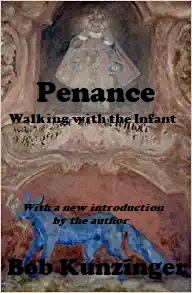
Penance: Walking with the Infant

In 2007, I released a small, magical-realism work, Penance. It is a first-person account of nine days spent in Prague. Through the eyes of the professor, the reader explores the city, the monuments, history—both celebrated and tragic—the food, the literary life, and its famous underground arts community.

All the while, the professor carries on a conversation with Prague’s most famous relic—the Infant of Prague. Through these monologues, they explore not only this “City of a Hundred Spires,” but faith, doubt, death, war, and more.

On the 15th anniversary of its release, Penance is now expanded, including extra chapters left out of the original, and with a new introduction.

Critically acclaimed when it launched in 2007, Penance was endorsed by The Catholic Virginian, Asian Catholic, and listed by Inside the Vatican Magazine as recommended reading for anyone interested in Prague.  

Coming this November, could there be a better Christmas present than this tale of a professor and the Infant Jesus of Prague? This limited-edition book is available only by pre-order for inscribed/numbered copies. Reserve your copies today

$20 includes shipping

You can mail a check to Bob Kunzinger, PO Box 70 Deltaville, VA 23043 (remember to include your shipping addresses)

Or Venmo @robert-kunzinger

Or Zelle bobkunzinger@yahoo.com

Or Paypal https://paypal.me/vawriter?country.x=US&locale.x=en_US

The Palm of your Hands

I won’t do the math or muster up more metaphors of clocks measured in years; I’m sixty-two. How old that is, really, is hard to say. Some days, like those this past week, I can hike miles upon miles up steep slopes in the very thin atmosphere of seven thousand feet in 100 degree weather, and no matter how many times I had to stop and scratch my last will and testament into a stone, my need to push on and finish—really, my passion to reach our destination—was never in question, and not only did I make it, I felt a new surge of energy once I did. Screw you sixty-two.

But other times pulling myself out of bed to go for a walk at sea level is akin to clawing my way through dirt and stone out of a grave. It’s not that I can’t breathe; it’s that I really don’t feel like it anymore.

When I worked at the health club in New England, one thing the owner drilled into us during long weeks of training: the vast majority of our members’ primary problem would not be weight, it would be depression or anxiety or, worst of all, apathy. The weight would be a symptom of a deeper problem more difficult to address.

I’ll never forget sitting in my small office with the owner of the club and a member who needed to lose more than one hundred pounds. She asked point blank if she looked as fat as she felt and without missing a beat he responded, “Yes, of course!”

I looked for a hole in the floor to drop through.

But then, also without missing a beat, he added, “Did you want me to lie to you? That would only help you continue to lie to yourself. But so what? It is who you are! You want to feel better about your life! Of course you want to lose the weight, but more importantly, you need to stop feeling bad about yourself! You’re beautiful, no matter how other people make you feel! You need to surround yourself with people who make you feel good about yourself! Then you will, and the weight will be easier to address.”

She cried at the truth. It’s like he knew her pain firsthand, and, of course, he did. I stopped thinking of her and started thinking of me and nearly cried right there at my truth. This was almost forty years ago. It’s still that difficult sometimes. Today is a good example; when clarity sets in.

But at some point, it’s time to stop apologizing for who you are and start being honest with yourself and, in turn, others. It’s time to stop apologizing to others because the choices you make are not the one’s they wanted you to.  

“Your first step is not into this studio with Bob,” he added. “It is to find the courage to be honest with yourself and say to everyone, ‘This is me!’ and ‘This is what I’m going to do about it. People who don’t support you are probably the cause of the problem to begin with.”

Some of us wait in hope some solution falls in our lap, but we end up with the same problems decades on.

Some of us want everyone else to be happy but end up unable to pull ourselves out of bed.

Some of us worry about what others will think and explain ourselves instead of finally saying, “You want to know what happened, ask. You want to know how I feel, ask.”

Some of us are afraid to close any doors in fear we chose the wrong ones; we “wanted it perfect but waited too long,” as lyricists Marilyn and Alan Bergman wrote.

Some are martyrs, some are indifferent, or most tragic of all, frozen in fear of shattering what little hope they still have, what little life we still have. Some of us know exactly what to do to change our lives and get back on track, whether it be as challenging as losing weight the equivalent of another human, or simply being honest with ourselves and not rationalizing away the years.

I’m sixty-two-years-old. Sort of. I’m twenty-six. Kind of.

I’m eligible for Social Security. I’m walking nearly twenty-thousand steps a day.

Sure there are legitimate problems for which simply willing them away won’t work. But at the very least we need to stop inviting the problems inside, allowing them to fester, allowing them to dictate, to decide, to die with us or tear us apart.

Certainly, age is relentless. It is persistent and patient. Not one fat second will lose an ounce on our account. My students quip, “Oh man, you’re that old!” and I’ve learned to say, “Yeah. I am. And not so long ago I was twenty-three, and I nailed it. I did twenty-three great, but nothing like I did twenty-four and thirty two and…. It’s not the age, people, it’s how you do the age.

It’s my call: I can wallow in the reality that I’ve entered the fourth quarter, or I can keep climbing, through thin air and dry lungs, keep climbing. Richard the club owner was right: nothing improves, nothing, nothing at all improves until you start to feel good about yourself.

“Tick tock, tick tock, tick tock people. Times ticking away.” Yeah, at some point, it’s time to feel good again.

4:20 pm

I have updated this piece since it was first published at 3:30 pm. Perhaps you have a few seconds:

If life happened in a day, and Einstein is horrifically more accurate than we would like, then let’s make a 6 am sunrise birth and place death around a 9pm sunset. I’ve always preferred summers for the extended daylight hours.

And if we break a life of ninety years (I’m an optimist) into a day, we live about six years an hour, or a year every ten minutes. Goes fast doesn’t it? In fact, my clock reads 4:20 pm. School’s out, lunch has been made, eaten, and cleaned up, and the morning hours are so long ago I barely recall them anymore.

If life happened in a day, we’d make sure we didn’t miss much, no matter the weather or how tired we are. We’d call our closest companions and ask them to join us—we’d go through this together. It is too bad we can’t do this again, we’d admit. I don’t want to miss any of it, we’d say, suddenly aware of how fast time goes by, how many moments we let slip away. In fact, just talking about the fleeting morning might make us miss those hours of the day’s youth when discovery is ripe and exploration is new. Those hours of life when no one but us has yet discovered the forest out back, the rapids in the creek down the road, or the view from the bent branches of a birch.

Looking back at my own day, around 10 am I lived in Massachusetts in a yellow house next to a reservoir. It was a quaint village surrounded by a larger town, and across the street was a small post office and an antique store. Just up the winding road was an apple orchard where I bought bags of apples and where my neighbor the postmaster would buy me an apple pie for shoveling her driveway. I loved then, and I often talk about how I wish it was 10am again, and I again was leaving work to head to the mountain to hike to the summit to see kettles of hawks.

Just an hour later, I was gone, living in a different latitude and finding myself finding myself once again. Love was easier than it should be and shorter than I had hoped, and the lessons learned so late in the morning stole my energy for a while. Exhaustion isn’t always because of age; sometimes it is momentum. But time passes. I’d give the next six hours to have a few minutes back, but we can’t. We must look forward. If I spend too much time regretting what happened at 11 this morning I’ll blow right through the afternoon without noticing the way the light of the sun can bring everything to life.

At noon I walked to the river with my son on my shoulders, and we laughed our way through the early afternoon, hiking through woods and eventually continents. It was just about three this afternoon we trained across Siberia, and ten minutes later hiked across Spain. If my clock battery broke between three and four, I’d consider myself a lucky man.

What a day it has been so far. I can’t recall a single hour of my life I’d not do again. From sunrise on I’ve had a great time trying to stay one clip in front of the bend, with golden moments I couldn’t have scripted myself. Maybe that’s why the day seems so fast—I’m really having a great time.

Did you ever stop and just recall a moment from years ago like it had just happened, just now? I mean so that you can taste the meal and smell where you were, feel it, so real like it just happened, just now, but it didn’t. That happened to me today, over and over and over, and now it is 4:20, and it is happening again. Thank God happy hour is so close; I need a drink.

Tonight, from 6 to 9, I’m going to take my time and do the best I can. I’m going to wander, both literally and metaphorically, until I run out of time. Want to come?

What time is it in your world?

Poshel Na Khuy, Vladimir Putin

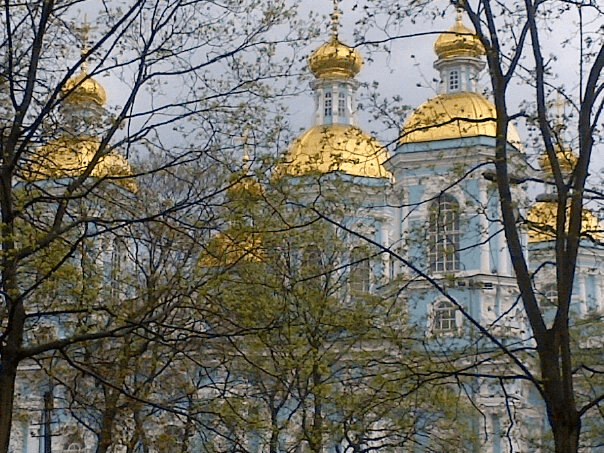
St Nicholas Cathedral (one of the rare churches to never close during Soviet days)

Over the course of more than twenty years, I came to know the backroads and alleys of St. Petersburg, Russia. I found the coolest little cafes and late night jazz joints, made friends in shacks serving Georgian wine and shashleek—a kind of shish kabob—in a small room with low ceilings and dirt floors, the Gulf of Finland pounding at the sand outside. I returned again and again to long embraces from friends like Igor and Dima and Valentine the crazy man and brilliant artist.

I taught American culture at the college, endured endless people wanting to practice their English, celebrated Victory Day on Palace Bridge year after year, mourned the losses of people during the siege with veterans who sat telling me their stories all the while holding my arm, connecting to me through touch.

I prayed with old nuns in shrines, climbed the rubble of the ruined St Catherine of Alexandria Catholic Church with American priest Frank Sutman who raised enough money to rebuild this first Catholic Church in all of Russia back to its glory from the ruins of the storage facility it had become during the Soviet Era. I met musicians in old bars—Gypsies—and played music until the sun came up, read my own work at the famed Stray Dog Café surrounded by the ghosts of Anna Akhmatova and Joseph Brodsky.

What a time it was.

With friends I toured palace after palace, attended private concerts by quintets from the Kirov who played before dinner at the Nikolaevsky, walked the halls of the Summer Palace and wondered about the infamous Amber Room, learned every crevice of the Winter Palace and its five building complex that is the Hermitage Museum. Had drinks in the basement of the Yusopov Palace where Rasputin had drinks just before he was killed for the fifth time. Walked the grounds of Galinka Palace, the Church of Spilled Blood, St Isaacs, St Nicholas, Trinity, and more. I climbed to the top of the tower of Smolney from which St Seraphim supposedly fell the ninety feet to the ground when he was ten but landed softly and got up and ran toward canonization.

I learned where to buy vodka and where not to sip it at all. I found the best places for authentic borsch and had Beef Stroganoff at the Stroganoff Palace.

I ate at McDonalds, Pizza Hut, Kentucky Fried Chicken, and more western joints filled to the gills with Russians loving the taste of America, drinking in the swell of western culture, surrounding my friends and me trying to fit more English into their Cyrillic mouths.

We took canal rides and saw folk shows where more than a few times I was dragged on stage to dance with the Russian women and men as balalaika music filled the packed arena. I’ve seen Swan Lake at the Marinksy Theatre more than a dozen times and have seen Hamlet in Russian.

I’ve made friends with former Soviet Naval Captains, countless professors, writers, and artists. I’ve become friends with translators and more than a few vets of the Chechnya War who would have rather stayed home and continued their studies in Engineering at St Petersburg University than return with no legs, one arm, half a face blown away, leaning against the Metro Walls, cap in hand—handicapped, hopeless.

I’ve sat on the rocks of the Gulf of Finland drinking champagne during the White Nights while one of Russia’s finest flautists performed privately for us, laughing, making us cry with Tchaikovsky and Bach. I’ve sat backstage at the St Petersburg Conservatory with a dear friend who is a choreographer, and his teacher, who used to dance with Baryshnikov, and watched them practice.

We’ve had food from an Uzbekistan Restaurant, and I came to understand the plight of the refugees from Azerbaijan after the slaughter by Armenians. I’ve read at the flat of Dostoevsky with an original volume of Pushkin on the table next to me and one of Fyodor’s own manuscripts two feet away. We have wandered through the massive marketplace next door and carried home to our apartment bags of fresh vegetables and chunks of meat cut before my eyes off of a carcass.

I’ve battled with border patrol over textbooks, bribed cemetery guards to let us wander sacred grounds, sat in the cell that held Dostoevsky and other dissidents, and watched the ruble gain strength, take a beating, then recover, then fall. I’ve sat on benches with women who were survivors of the siege during the Great Patriotic War and talked about family, talked about poppyseed rolls, talked about the flowers that grow in the dirt.

I was there when they reinterned the remains of Czar Nicholas II and his family, including Anastasia and Alexi. I was there for the celebration of the 300th anniversary of the city that Peter the Great called the Window to the West.

I watched as Marlboro came to town, then Clairol and every Russian woman suddenly had bright red hair. Adidas showed up and all the men wore warmup suits. I’ve walked past too many men in cheap three piece suits holding semi-automatic rifles guarding some boss’ SUV as money exchanged hands—all cash, USD, in suitcases.

I had just turned thirty-one when Communism fell and I went to St Petersburg. The city streets were dank and barren, not a single neon sign, not a single advertisement, nothing to see or do. I toured the lab of Pavlov where dogs are still used, and I stood next to the eternal flame commemorating those lost during the siege on the Field of Mars. I met Putin. I met Ambassadors. I met Sophia, who was a young teen when the Czar was still in charge, who lost her husband and son during the siege, and who sat in the shadow of the Smolensky Shrine and told me they can take anything they want from her, but they’ll never take her faith from her again. She blessed herself in the large Orthodox way and held my arm with her ninety-something year old transparent hands. She could tell me whatever she wanted. I could talk about anything I wished. I watched this county I was raised to fear fixate on all things west, becoming a strong and welcome presence in world culture and exchange. Every person I brought returned home amazed at the life that was Russia, hoping to return, knowing they had friends there.

I’ve brought dozens of US faculty, hundreds of college students, a dozen cousins, pilots, performers, writers, and an Army General.

Now, exactly half a lifetime since my first trip, I’ve watched it all go full circle. The western influence is there and that can’t be changed, but the presence has faded away—no more McDonalds, Pizza Hut, or KFC. No more Starbucks. Open readings are tolerated only if no one, no one, absolutely no one uses the word “War” in reference to the Ukraine.

I sat by hopelessly as friends wished me well and hoped we’d someday meet again. I told them, my friends, including those now in Germany and France, a few in Norway, that I cannot wait to see them again, perhaps in New York, or Paris. Maybe Oslo. Not Russia.

I have taken a train from one end of that massive empire to the other with my son, creating memories to last all our lives, spent late nights drinking shots of vodka with Siberian businessmen. I’ve sat in the home of tour operators and laughed and became brothers with them. I have mementos on bookshelves, on walls. I’ve written three books about my times in Russia, and more than fifty articles. I’ve developed three college courses about Russian Culture and mentored more than two hundred students who received Study Abroad credit. I miss the beauty of the architecture, the beauty of the people, and the mystical way history bathes me when I walk the streets at night. I miss my friends. I miss laughing with Valentine and talking about butterflies and angels. I miss sitting alone at this one café I love and drinking tea, making notes, listening to contemporary folk music and enjoying this magical life I’ve had the chance to live that brought me more than two dozen times to a place that until I was in my thirties, I never thought I’d ever see. I miss the people very much.

But I’m not going back until Vladimir Putin is dead.


on Nevsky Prospect

A Seasonal Man

my local market is open for the season

It’s the “Open for Season” signs on ice cream joints and t-shirt shops. It’s the tossing of the football at the surf break, the running back on the boardwalk in bare feet to buy more drinks for everyone, the smell of coconut oil, the sound of a distant whistle of a guard in red shorts standing up, cupping his mouth, waving in some kid caught in the current.

It’s the first table full of tomatoes at Merryvale Market in the village, the pick-them-yourself marigolds still growing, but the corn is ready, and the cucumbers, and someone filled a cooler with ice and containers of crabmeat. This is where I shop; this is my local store.

It’s not simply that summer has arrived, with all the normal excitement of closed schools, warm sun, surf, gardening, hot hikes in the hills, canoeing, barbeques, and breakfast on the porch. Long days, days that run well into the evening hours so that someone might say, “Geez, it’s almost nine-thirty and the sky is still light.”

Those things, of course, but it’s more than that. I’ve spent more than half of my life in tourist towns, so that the non-summer months are punctuated by a sort of abandonment. As such, it is difficult to deny like most people I’ve known who lived and worked on the strip at a beach or in a drinking town with a bad boating problem as I do now, that it is relaxing come fall, when, as Jimmy Buffett points out, “They close down the tourist traps; the kids are back in school.” The “Coast is Clear” to say the least in those months, and some hotels and restaurants are boarded up, some simply open only on weekends, and others, well, they shut down completely and something new will rise from the sand come next summer.

Locals love that; the going back home part of tourism. I spent all of high school and my summers during college working on the strip in Virginia Beach, and I quickly became absorbed in the culture, where dressing up meant putting your shirt back on to enter a store.

But I like the arrival as well. I like the crowds, the murmuring of inlanders heading to the “coast” or the “shore” or the “beach.” Summer itself has an almost “opening” date quality about it, and those of us with depressive tendencies in the winter months come back to life, find that hope again that comes from radios playing on blankets and the sound of the surf, and the Cessna pulling an ad for some local restaurant, a boat hauling some paragliders, a few jet skis, a few kids playing frisbee, a few months of never quite getting the sand out of your hair or the salt off of your lips.

When I was a child, my family would pile in the car and head to Point Lookout, Long Island, where my grandparents had a house and I can recall like it was this morning walking single file down the center of Freeport Avenue, pushing my toes into the strip of soft tar which separated the two sides of the street, and headed around the dune fence onto the beach, and cousins would come and we’d play. Or later, my dearest friend Eddie and I would wade down the beach, knee deep, in the Great South Bay at Heckscher State Park, and we’d talk of boating across the reach to Fire Island, and further, down the coast to who knows where.

And my family moved to that who knows where, and that first summer when I couldn’t drive and didn’t know a soul, I biked that boardwalk every single day, and body surfed, and hauled strangers’ suitcases to their rooms, and made peace with heat and humidity.

There’s salt in my blood, but it only seems to season my life when the “Open for Season” signs appear.

And I know I love fall, and I like the fireplace ablaze come December, and I pull out oversized sweatshirts which anyway are more comfortable than semi-saltwater wet t-shirts with sand in the armpits.

I’m fifty years past that move south, forty years from working on the strip, thirty years from becoming a father, and there’s still something about some clerk hosing down a sidewalk in one of the eastern Long Island villages, or some high school kid rolling bikes to rent out near the boardwalk, or the guy selling snow cones, that is that constant in my life.

I’m a cancer, missing the Fourth of July by hours, so I really was, as has been written, “Born in the sign of water.” And it really is there that I’m at my best.