Poetic Justice

I’ve written only a few poems in my life. I’m decidedly not a poet. As a writer who spends a significant amount of time surrounded by other writers, most of them poets, I can say their craft is infinitely more meticulous than I can manage. We both work in imagery, of course; we both shoot for a sense of place and emotion, but while they’re trying to figure out where to break a line, I’m three paragraphs on with no idea where I’m going next.

But I wrote a few. Like this one, which I still remember: 

Christmas is coming 

It’s coming soon 

But not that soon 

It’s only June. 

It’s about a baby 

And some food and some toys 

But it’s still only June 

So I’ll have to wait.

Okay, so I was ten. I used a white Olivetti typewriter on a snack table in front of a black leather couch in our den in Great River. I used that typewriter to write letters to friends in an old neighborhood, to write a fiction story called “Flight” about two boys in a capsule zooming through the Milky Way (which they used for food, of course, saving space on cargo; if they got hungry, they just reached out and grabbed part of a Milky Way—again, ten years old). I long ago lost the story, but I remembered the poem. Interesting that I remember hating the last line because it didn’t rhyme with “toys” (I tried “noise” and “boys” but never returned to it), but now that last line is the one I believe actually works. 

The second and only other poem I wrote appeared in several journals and was excerpted in a column in the New York Times. I wrote it in response to the murder of Eric Garner and it found new energy after the death of George Floyd. It has gone under two names, “In Visible” and “White Out.”

Here it is:

“White Out” 

I drive speeds to make color disappear and cops
never pull me over. Buy me drinks
and turn me loose at three am;
they never notice. Never catch me. Blow hard
into some tube—I’ve seen it,
haven’t been asked, ever. I loiter
in malls, linger too long outside
some convenience store; play music loud
along the strip, midnight, trying to hook up
with some woman both of us hold up traffic. Officers
never suggest we move along, never notice
my brake lights are out– all they see is white
and polished chrome. Old women walk ahead
home from the grocery relaxed, worry-free. Clerks at night don’t eyeball me up aisles

I can pump then pay
I can try it on
I can move through the mob, wander unsupervised. Understand how unimaginable to question me when I ask for change without buying

a blessed thing.
I am armed with my ancestry; I am a card-carrying Caucasian. I am
unnoticeable on 95 North; this marks me as Everyman.

If someone asks me for the time, she asks “that man,” Not

“that white man.” I have never been “othered.”   

White is a given. I am never modified; I am

hardly ever described at all.

I have always been allowed to make eye contact.

I could always curse and complain.

If I say “I can’t breathe,” I am given oxygen. Just because

I am white.

I am disturbed by and proud of that poem. It is absolutely true, all of it. Sometimes privilege comes from simply by being left alone, out of eyeshot of suspicion, off everyone’s radar. I am a sixty-something white guy in America; it’s like being a Roman Citizen when they could walk the earth without fear of attack. There’s something wrong with this.

I have stood in the local convenience store talking to neighbors, drinking coffee, and random men with Civil War style beards come up and tell me when “the next meeting is” or start talking about what needs to be done to the man (“the N”) who just left who doesn’t look anything like us, whether they are Black Americans or Hispanic or Asian. These people, the talkers in front of the piles of bagged wood next to the Propane Tank Exchange Cage, are sick, and I let them know. One man in his forties held up a headline for me to see not long after the Floyd incident, and he told me what should have happened. I’m not sure where I lost my inhibitions and fears, but at some point in the last five years they evaporated. So I said, “You are one sick mofo, you know that? Get away from me.” He never approached me again. This isn’t just here. This is everywhere I’ve traveled, and it isn’t simply that we are left alone by authorities because of our whiteness; there are a growing number of people who assume we agree with them also because of our whiteness.

Many people in this nation don’t mind expressing their hatred and racism. On the one hand perhaps the blatant exposure is better—we know who they are. On the other, the violence and ignorance, fueled by leaders all the way to the top, is a powder keg and it seems more people are standing around playing with matches. They are small-minded, yes. They are insecure, definitely. They are terrified of “different,” obviously. And I have no problem telling them their heads are up their collective asses. But the worst aspect is the most difficult to change—they are suspicious of education. No one, not anyone, nobody, not one soul they know is teaching acceptance, teaching the gains of multiculturalism, teaching the facets of being human and those that are, in their minds, mean them harm. The education system needs to be overhauled starting with pre-school, yes, but that doesn’t address the ones at home teaching Junior who to hate and who to trust.

They trust me. They don’t even freaking know me, but they trust me. “He’s the quiet one at the convenience store. White guy.”

I’m a small voice, despite a weekly readership here of close to two thousand. But this subject, this inhuman behavior, is best addressed by the poets.

In that vein, I’m starting a new poem. What do you think? 

Changes are coming 

They’re coming soon 

But not too soon 

Because the small-minded, ignorant

fucks are everywhere. 

Okay, so I’m still working on it. I’m not a poet, you know.

“In the end we will remember not the words of our enemies but the silence of our friends” Martin Luther King, Jr.

Unexpected Flowers

I watched an osprey teach her young to fly today. The nest is in a tree next to the post office parking lot in the village, and normally I wouldn’t notice for the car engines and the people coming and going from the hardware store across the road, but the mother’s call was quick and loud from high above the pine. The offspring moved out over a higher branch, then she fluttered out into the deep end of the sky for a moment until she Woodstocked her way back to the nest. I could have watched for hours.

A deer came out of the marsh woods on my walk. It stopped, frozen, and looked at me like she wondered if I could see her just ten yards away. I stood still until she nibbled on some grass. When I took one step she galloped back into the brush, leaving me alone and suddenly at peace.

I moved past the tall reeds at the edge of the marsh where it meets the river, and a heron stood ankle deep and did not move as I walked by.

An elderly woman at the convenience store called from her car window as I walked toward the store and asked if I’d mind bringing her a bag of ice for her cooler in the back seat. She had a disabled vehicle tag and clearly could not walk from her car onto the curb, let alone carry ice, so I did so, and I noted her northern accent. Worcester. I mentioned my life there, both in and just north of town, and we talked for thirty minutes. She remembered the health club I managed. She knew of the mountain. Time slipped out of joint again.

An old friend texted and suggested we get together. He lives near DC and I said perhaps later this month. “It’s been too long,” he said. It takes very little to change the tone of a person’s day. He did that today.

Another very dear friend sent a picture of him holding his new grandson. When we were young, forty-two years ago, he had told me about the previous summer he spent riding his bike through Ireland. His eyes were alive and full of life, like it was something everyone should do; something he might even do summer after summer. In this picture he sent holding his daughter’s son, his eyes were alive like that.

Today I noticed unexpected flowers pushing through the soil.

Yesterday it rained and I watched it on the river for quite some time. It felt good to be so present.

I sat this afternoon on the patio drinking tea while listening to The Piano Guys and writing a piece for a newspaper about how we are focusing on the wrong things—all of us, the whole planet, focusing on the absolute wrong ideas. The writing was pretentious and arrogant; I need to humiliate it a bit, so tonight I put on Jackson Browne and it is starting to make sense. That moment, this, now, when something I want on the page has trouble leaping from my mind, but then the right song (Sky Blue and Black) pushes it out and what I meant spills across the screen. That’s when it feels good to push through the hard parts.

My father’s picture on the wall downstairs. He’s holding an oar in the air; he is twenty-seven, he is in a canoe and my mother, his newlywed in the photo, took the picture. He is laughing hard.

In the picture he is thirty-six years younger than I am now. I said, “It is hard to believe he was ever that young,” but I quickly realized it is hard to believe that I was ever that young.

That’s when I went for a walk and saw the deer, and the heron. That’s when I noticed the flowers I didn’t even know were growing there.

One

I would like a quiet day. One. A quiet day without the residue of yesterday or headwinds of tomorrow. Just the day. A quiet one during which I could just let the river run past and feel the cool and heat of the sand and the sounds of gulls or osprey and, of course, waves; when I define quiet I include birds and waves.

I would like one of those days where I’m not waiting for a response from anyone, or when I’m not anticipating appointments or deadlines. A day where the phone doesn’t ring and no one knocks except family, ready with a joke or an old story to get us all laughing and remembering and planning. Usually quiet days include laughter and stories.

A day to myself like I used to do in my twenties when I drove into Manhattan and walked from Herald Square all the way up and through part of the park, talking to the vendors or checking out the music along the way coming from the cafes and radios. When I explain “quiet day,” I must include the sounds of the city as natural and organic as the osprey and waves since they are expected. Plus, they aren’t talking to me as much as near me so no response is expected or necessary, just my presence.

My life is not unlike Thoreau’s in that my retreat is near the water in the woods where I am able to regroup, not to ignore civilization as much as be better prepared to face it. So I would like one day. One. One quiet day where I could live deliberately and be in absolute touch with the passing of time solely for the sake of the passing of time, not to watch the seconds or to count the minutes. I could lean against a tree and hear the combine on the neighbor’s farm or the rigging on the boats on the river. There is a thin, very thin line between quiet and the sound of rigging in the early morning hours.

I was thinking the other day about the quiet days in college when a bunch of us would walk into town just to get something to drink and everyone would be talking at once, and laughing at once at different things, and we were always like that and we were always going to be like that. If my mind wandered at all it was to exaggerate, to magnify, the sweet and passive activity of such permanent transience. If I am going to define “quiet days” I can’t leave off my friends. Or a drink or two.

I have had many days which I would “formally” call quiet by the Oxford definition. In Spain, at home on the river when it is early, or late. When I was young and hiked through Heckscher State Park or later in Mexico. Sometimes when I am alone at home I fiddle around the house, working out on the property or on the porch, and I can go from sunrise to sunset without a sound except the breeze, the water, and the birds, and it can be deafening. But those are literal, and I have come to understand that true peace is not the absence of noise but rather the presence of something like love.

I remember a beautiful, perfect, quiet evening a long time ago when a friend of mine and I went to an Italian restaurant in a run-down strip mall, and they were almost closed but they let us order some bread and a bottle of wine and we talked for hours, joking with the woman who worked there but mostly just laughing together about now and about then. We finished each other’s sentences and the wine. Or another time when my son and I stood between train cars far from home barreling across a landscape so barren that to cross it by foot is not possible, and the silence was beautiful and permanent and we brought it home with us.

Like the quiet of night and the moon, or Vega, sitting out there like God. Like that three a.m. peace when I wander to the front lawn and watch a lone cloud drift across a full moon and there’s nothing to think about except philosophy.

That kind of quiet.

Wait/Loss

Wait

I might take down the clock if I’m here a few more days; and the laminated sheet which notes television stations he will never watch. I would at least ask someone to fill in the information on the empty whiteboard I’ve stared at for a week; the one that says “Nurse:” “Contact:” with smiley faces next to frowny faces to indicate his pain tolerance. That one I’d cross off; he can’t feel anything. If he had more time, I might have filled it in myself since I know the names and shifts of everyone on this ward.

Most certainly I might move the two boxes of latex gloves from the wall inside the door to the wall outside the door. Nothing says “If I touch you, I might die” like latex gloves. I might turn around the health monitor above his head to face the opposite wall since I memorized his steady vitals days ago. At the very least I would turn off the incessant beeping noise.

Three times I moved his food trays into the bathroom. I explained the meals are merely trice-daily reminders that he hasn’t regained consciousness—the dank brown tray and plate cover, the aroma of onion soup he doesn’t know exists.

I’m okay with the medical jargon I’ve picked up. I’m okay with sitting here. Because I know as sure as I know his blood pressure, blood oxygen level, and pulse, I will miss waiting, miss the slim possibility, miss the sliver of “just maybe.”

Loss

The text from my brother read, “He’s gone. Come back over.”

I dismissed class just after 8:30 at night and left for the hospice center only a few miles from the college. I forgot to tell the students it would be a few weeks before I returned. I knew this was coming but I knew as well that it would still startle me, snap me out of the subconscious illusion that Dad was at his condo watching a movie. I drove to see my suddenly-late father.

My mother, siblings, and I took turns saying goodbye once more, this time after the fact. I went last. He looked gone—as if he’d been dismissed, like he transferred to a different body, a stronger vessel. I held his bare arm below the sleeve of the green golf shirt they provided. I wondered if all the patients had the same shirt. The entire building had a sense of oneness, of warm togetherness, like all the nurses should have the same name, and all the patients looked like my dad.

I held his bare arm and kissed his withdrawn face. I thought he might feel cold, and perhaps his arm would feel cold to a stranger, but not to me. No, to me Dad’s arm felt warm from the sun from all those days at the field coaching my brother in Little League, and from sitting all day in the bleachers at Shea Stadium, buying me hotdogs, letting me keep score as he showed me how to fill in the small boxes. Then his arm felt almost wet, like from the pool water at the house on the Island, or from the resort pool when we went swimming at one of his conferences when I was fifteen.

I touched his face and it, too, was not cold, but warm from the August heat when we canoed on the Lynnhaven those first two summers at the Beach. I smiled, wanted to remind him of our trip to the big theater to see the premier of Jaws, how he jumped when the man’s head appeared that night in the hole of the hull of the boat.

When I took his folded hand in mine, it felt stiff, but not from some medical transition; no, from his muscular grip when he took my infant son in his arms and laughed, his eyes wider than Space, his laugh deeper than love, just moving Michael up and down as his grandson laughed and laughed, reaching for his nose, for his glasses.

He looked barren in the green golf shirt. I wondered where his glasses were. Home, I suppose. Yes, I am sure everything of his at that point was at home.

We all drove home separately. It had been a week. No. Not a week. Six days. Almost a week since that morning I had stopped at the hospital about seven-thirty to check on him, expecting another day of quietness after a week of him never regaining consciousness.

But I walked in to see his eyes wide open, staring at the ceiling, then at me.

“Well hello,” he said in his baritone voice I can still hear.

“Hey Dad, how are you?”

“I’ve been here since 4:30 this morning.”

“You’ve been here for four days.”

“Four days! What hotel am I at? Ha! Hotel! I wish I was at a hotel! What hospital?”

He could have been thirty years younger. After a long, slow erosion from dementia, I had not heard Dad so lucid in a year. More.

“You’re near home, Dad. You’re at the hospital right near home.”

“It is serious, then?  Tell me.”

“You have pneumonia, Dad.”

“So I probably don’t have much longer, do I?”

And that nurse came in. I didn’t want to answer Dad anyway, but I didn’t want to stop talking. I wanted the nurse to leave, to turn around and walk out fast, so I could tell him we hadn’t thought he had much longer but now he sounds great. And we would have talked about the Notre Dame/USC game he had watched with my brother, and then I would tell him how my students were thrilled I had to leave class, and we would both laugh, and he would say when we got home we need to have just a little Scotch, and he’d hold his index finger and thumb up to show me how much.

But the nurse came in and Dad checked out. That night I rode in the transport ambulance to take him to hospice.

We had Scotch on Tuesdays. I’d arrive at his place about nine-thirty at night and before I could take off my jacket, he would say, “Okay I’ll have just a little,” or “Gee, my hand feels pretty empty,” and we would laugh, and I’d go get two glasses of Scotch, though mine was mostly water. I never liked Scotch, but he never knew that.

The Chill

My freshman year at college, Parents Weekend rolled around the end of September, and since my folks lived in Virginia Beach and St. Bonaventure University is on the Southern Tier of Western New York, they were not coming; neither were those of my roommate, Steve. He hailed from Auburn, NY, but he said they were busy and he had asked them not to make the drive.

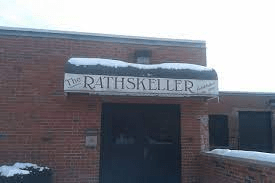
Friday evening Steve asked if I wanted to go to the Skeller. The Rathskeller was a bar under the campus dining hall, conveniently the building next to ours. A few particulars made the skeller the most popular place on campus. First, the drinking age back then was eighteen. Second, there was absolutely nothing—nothing—to do on the Southern Tier of Western New York. Third, there was (Youth: Read this twice to grasp it) no such thing as a computer available to the average person, phones were still connected to the wall, each dorm floor had one payphone to be shared by ninety drunk floormates, who were more likely to cover the earpiece with shaving cream as they were to answer the phone and find you, the dorm had one television and it was in the lobby, cable was brand new so most dorms didn’t receive more than a few channels, and pitchers in the skeller were $2.50 each.

So Steve and I went down there that Friday night. Understand, no one who went to Bonas knows exactly what the skeller looks like since it was always packed from wall to wall with students, shoulder to shoulder, with a small wooden raised, enclosed DJ booth in the back, and a bar running down the right. Tables throughout. It was always hot and walking down the stairs from outside meant taking your glasses off if you wanted to see without being steamed up. Music blared all the time—Springsteen, Joel, Stray Cats, the Clash, Lou Reed’s “Take a Walk on the Wild Side” which had its airtime nearly every two hours. If “Born to Run” came on, everyone stood up and sang, standing on chairs, screaming in unison, “ONE TWO THREE FOUR” at the exact moment. If “Piano Man” was on, the room swayed and pitchers of Genny Cream Ale slopped over their sides.

The smell of pizza, wings, and beer soaked our clothes.

Steve got a pitcher and we found a rare empty table since so many students were with their parents eating at The Castle Restaurant across the street. It was late-September cold out, with a crisp and refreshing chill in the air, and hot as hell in the underground bar.

Two women saw the empty seats at our table and asked if they could sit there. We all introduced ourselves, I got up and retrieved two more glasses from the bar, and we talked about where we were from, what dorms we lived in, our majors. Finally one of them asked if our parents were around for the weekend.

I went first. All of this had to be hollered over the music. “NO! IT’S SO FAR AND THEY WERE JUST HERE IN AUGUST, SO I WON’T SEE THEM UNTIL THANKSGIVING!!”

Both of the women’s parents would be there on Saturday. Then they asked Steve. He took a sip of beer, sighed, and said, “NO! MY PARENTS WERE KILLED IN A CAR ACCIDENT ON I-90 THE WEEK BEFORE CLASSES.”

Both women apologized profusely, moved about in their chairs for a minute, clearly uncomfortable after being quite settled in to our company, and then they said they had to leave since it would be a big day on Saturday, and they squeezed their way through the crowd toward the door.

Steve took another sip of his beer and smiled. I looked at him. “WHAT THE FUCK?!”

“THEY WERE DRINKING ALL OUR BEER!”

“I WOULD HAVE BOUGHT MORE.”

“OH!! RIGHT! WELL….SORRY!”

He was a good roommate. We got along fine that year, and while we traveled in separate circles, different interests, I don’t remember ever quarreling. He was there during some significant events in my life, and we talked about them often. Still, after that year I don’t ever remember seeing him again, even in a hallway anywhere. I never really thought about it since we did have such different interests.

Time jump thirty-four years.

A new hire at the college liked to talk. I forget her name as I left there five years ago, but I can picture her—always talking. One day in the copy room I stood quietly while she moved from subject to subject until she bounced into a few sentences about her home in Auburn, New York.

“One of my college roommates was from Auburn.” I told her his name.

They were next door neighbors their entire lives. Turns out Steve left Bonas, received a master’s from UNC-Chapel Hill, and has coached sports his entire life, currently golf at an Upstate NY community college. His son lives in Boston, and everyone is doing fine. I just had no idea.

I forgot he existed. Somewhere through the years I stopped thinking of some people from there, from then, as humans out living lives and just characters in a play that took place in the early ‘80s. I forget sometimes that out there, just over the slight curve of the earth, are those people who are now, four decades on, at the other end of our ambitions and hopes. They traveled their own narrative arcs and ended up wherever just like I did, and they, too, have memories of that time.

But when we last see someone, it is easy to think of them as “then” more than “them.” In The Big Chill, William Hurt says poignantly, “A long time ago we knew each other for a short period of time. It was easy then. I grew up.” All that is true, but these were people we lived with, day and night, shared bathrooms, showers, tragedies, and heartbreaks. Those four years were like dog years.

But look: Social media has refriended so many of us, closed that gap. I have colleagues at my job I’ve worked for five years making comments to friends I haven’t seen in forty, and conversing with childhood friends of mine who I can’t even remember. Time is out of joint and linear measure of memories is up for grabs.

And then you run into someone who knew someone who knew. This colleague spoke of Steve and I could smell the stale beer, the must of the dorm room. The cold of the hallway where all the windows to the outside were always broken. I could, just for a second, almost name every single person on the floor. Then it’s gone. But in that sudden flash of not-so-great memory, is some ghost, waving at me, awoken for a brief because I happened to look that way, and just when I realize I thought I saw something, it’s gone.

But it haunts me like a dream that wakes you up in a sweat but you can’t remember.

I stopped looking back in recent years. Still, when I do, I “look back carefully, because there’s still something there for me,” as Jackson Browne wrote. And I was wondering what that is; like going away and forgetting something you just knew you meant to bring along but can’t put your finger on it.

Thinking of that story in the Skellar brings me closer to remembering what it is that I feel like I should not have forgotten, but then it slips away.

Everyone we ever knew is out there somewhere, if they’re still with us—and even if they’re not, I suppose—living their lives well beyond the shared grey space of our Venn Graph that overlapped during the end of the Carter Administration. Now we’re senior citizens, have lived our lives, and no matter how much time we have left–hopefully a good deal–we wonder most about those we lost somewhere along the way. I wonder how many times I walked past someone I used to know so well—maybe on a city street or in some café somewhere.

Well, it really was easy back then.

Bill DeWeese

Dr. Bill C. DeWeese

1944 – 2023

I’m thinking about Bill tonight. Bill De Weese, the Division Chair in the Humanities department when I was first hired at the college in 1989. Later he would return to faculty status as a Reading instructor, and we remained close friends. Bill was the second person I ever met on campus. Eleanor, the administrative assistant, was the first, sitting behind her desk in the tiny Humanities Office (which in recent years became Letty’s office, oddly enough).

I’ve told some of this before, but some I haven’t.

My car broke down in the parking lot of the college in August of ’89 when I was returning from Chesapeake to our apartment at the oceanfront. I was in a bad mood because a job I had been promised to teach journalism to high school students was given to someone else. Then the car.

So I walked into the first building and went into the first office and asked to use the phone (Youth: there was no device available to contact anyone else without going into a building or a booth). I was on hold with AAA when Bill came out of his even smaller office and said to Eleanor, “We still need someone to teach Humanities on Wednesday nights.”

“I can do that.”

“Who are you?”

“This young man asked to use the phone. His car broke down.”

“I have a master’s degree in arts and humanities from Penn State.”

“When you’re off the phone would you come see me?”

Click.

I went home with one class, three credit hours. That night the phone rang (Youth: This is before caller’s phone numbers popped up to warn you), and it was Bill. “Baaaubb?” Understand, Bill was from Kentucky and talked very slow with a beautiful southern drawl. For thirty-something years, he started every conversation with me that way—“Baauubbb? Can you teach a few more classes starting next week?”

“Sure.”

“How about six?”

And so it was for three years as an adjunct—back before restrictions on credit hours, when I was teaching six classes every semester, including college composition, developmental English, American Lit, British Lit, all of it. Scroll back up and read my degrees. Yes, Arts and Humanities. This is critical later.

I remember one class in which I taught Hamlet. I had absolutely no training in Shakespeare, or any literature for that matter, but I really loved that play, especially the Kevin Kline stage version I had just seen, so I taught it in Intro to Literature. The day the reading was due, I asked who read it and everyone admitted they hadn’t. I stood up, told everyone they were absent, and left.

Someone complained to Bill and he called me into his office the next day.

“Baaauuubbbb? I have done that too. And I appreciate why you did it, but perhaps you can just give a quiz.”

The following class I told my students that I was aware someone complained but I didn’t know who, and I wanted them to know the Dean took it seriously and talked to me. Then I asked again who had read Hamlet. No one. I stood up, told them there were all absent, and after so many they would fail the class, and I left. I went to Bill’s office, closed the door, told him what just happened, and I said, “Bill, first of all, how I handle things in the classroom is my business and I don’t appreciate you telling me how to do things. Second, these are adults and should be treated as such and not lead to believe every time they have a complaint you will jump for them.”

Bill was quiet a minute, then smiled, then said, “Baauuubbb. I think everyone today has learned an essential lesson.” He shook his index finger slowly, then said, “Don’t fuck with Kunzinger.” He laughed hard. For thirty years when we passed in the hallway, or when he’d catch my eye from across a division meeting, he’d just shake has finger and we’d both laugh.

God, what a rare, to the bone, decent human being.

Bill died last week.

When I was hired full time, on the day the hiring committee met to make the final choices, I was home. He called and said, “Baaauubb, you’re not qualified for this job! Three years you’ve been here but you’re not qualified. You don’t have an English degree and this position is for English majors.” I told him I took English at PSU as required for the dual degree, but he insisted all the records show all HUM classes.

The following all took place in one hour:

I called the Humanities department at PSU and explained to the Dean of Graduate Studies, Louise Hoffmann, what was going on. She faxed a letter to the committee explaining that all degrees at that time in the Humanities Department at Penn State were listed as HUM, even those with focuses and majors in English.

It satisfied the committee and Bill called back one hour later to tell me I was hired full-time.

The thing is, and I told Bill this sometime later that year, I really wasn’t qualified. I had a scattering of lit courses, and absolutely no college comp courses—my specialty at the college—and I told him that I was basically teaching journalism courses as college comp, since my undergraduate degree was in journalism. Plus I was good in front of a crowd—had been for a decade—and that helped. The upside, Bill pointed out, is that Letty and I were the only two in the department who actually had Humanities degrees and could corner those classes if we wanted. It worked for me.

Still, Bill laughed hard and said, “Well maybe that’s why you’re one of the best comp teachers here!” Then added, “You know, the college will pay for your terminal degree. Why don’t you get one just in case.” So I did, with all the writing and lit courses necessary to move on, albeit fifteen years after starting there.

During those decades, Bill came to my place for Christmas Eve dinner and drinks with his partner, George, several years in a row, was at my son’s baptism and my father’s funeral.

One morning, early, I was walking across campus and saw Bill for the first time in a month and said something. He told me George had been killed by a drunk driver. The drunk hit George’s car forcing him into an oncoming semi. He was killed instantly. He stood there and cried and we went and sat on a bench for hours, talking, sitting quietly. I learned a lot about not talking from Bill.

Three times I read for the community at Bill’s retirement residence in Virginia Beach. The second time just him and I had dinner first, and while we were eating, a woman at the next table died and fell on the floor. I tried not to stare, I really did, and then paramedics came and enclosed the area with walls and the woman she was eating with finished her soup at another table.

Bill said, “I hate when people stare whenever this happens.”

“How often does this happen?!” I did not know the proper etiquette for eating while someone is dead next to you. “I am sorry I stared; I was just shocked. I want to help but the medics were here instantly.”

“Do you want a drink before you read?”

“Yes.”

A few weeks after my dad died, I was scheduled to read again about the Camino de Santiago to a group of about sixty residents of Westminster Canterbury. Bill called: “Baauub? Why don’t you bring your mother? I am sure it would do her a world of good to get out. Wally (a former colleague) will be there and we’ll all have dinner first.”

It was a beautiful night, and everyone treated Mom like they’d known her forever. A few weeks earlier at my father’s funeral, he took me to a side room and asked how I was doing, and Mom, and Michael. He said if I wanted to cancel the reading, he would understand, and I said I was still looking forward to it.

“I told Josephine about your daddy. We both cried for you. You two were so close. I remember meeting him in your office once. What a lovely man,” he said.  

Oh, Josephine: The first time I read, Bill insisted I arrive early because he wanted me to meet the new love of his life, Josephine. Several times before that night he reminded me and told me he told Josephine all about me and she really is looking forward to meeting me.

I was not sure if Josephine was a really close friend that Bill spent all of his time with or if he had moved to the heterosexual world so late in life, so I didn’t know what to expect.

He met me in the lobby, and we went to his apartment, and Josephine came running out of the bathroom.

A Yorkie. Adorable to be sure, but simply not what I was expecting, though I don’t know why, since Bill spoke of everyone in his life with such love. It was never “My mother,” but “Mother” and never “My father,” but “Daddy,” as if Bill and I had been brothers since birth.

He made me feel that way, to be sure.

RIP Brother Bill.

Ad Invicem

It’s hard to imagine the horrors taking place in Sudan, Syria, Afghanistan, and, of course, Ukraine, when the water and the occasional call of a gull drifts down the river. I try to look out and think more about the peace in northern Spain than the hunger that haunts the people in South Sudan, but only because I’ve been lucky. I mean, sometimes when the Chesapeake and I are just hanging out peacefully like this, I can be painfully aware that I wasn’t raised in Mosul; I wasn’t born in Beirut.

Humanity is a crazy race, building irrigation systems to help grow food to feed millions while building methods to annihilate those poor souls in seconds. Maybe the greatest irony of education is the stretches of intelligence, research, and application it takes for the human mind to conceive, create, and execute weapons which can evaporate entire cities. The mechanics to build the means by which to destroy someone else wouldn’t cross the mind of an uneducated person. Only educated people can accomplish such a holocaust.

Doesn’t it feel like no one wants to save the world anymore? Yesterday at the White House State Dinner, South Korean President Yoon Suk Yeol sang Don McLean’s “American Pie.” He was good, too! This was big news today. This should be irrelevant for its commonness. It should be an expectation, not an exception.

There needs to be a new requisite in schools everywhere: Humanity 101. The subtitle could be “We are here for each other.” The course could cover the benefits of helping other people, the rewards of sharing not just gains but losses as well. There could be a lesson on compassion and one on being a good Samaritan. A sociologist might talk in one session about how what happens in one section of the globe really does have an impact on the rest, and a psychologist can show the class how to balance the beauty of nature with the evil things people say and do, which would decrease after everyone took the class.

A theologian could explain why there are, or at least needs to be, some absolute morals. That person might explain why the belief in postmortem can keep evil in check, keep the horrible potential of humanity at bay. Without preaching about salvation in heaven, they can certainly drop in a few lectures about earthly responsibility to each other, and if the fear of God is necessary to get it done, so be it; not unlike threatening toddlers who act up with the possibility of Santa skipping their house. The potential of a little supernatural backlash is just what this world could use right now.

Honestly, it seems like everyone is resigned to some sort of slow decline. Did our parents feel this way? Well, if so, they didn’t smear it all over social media. I fear for the absence in education of something other than the notion of “career.” More connections with other people can be made by sharing a meal than college administrators give credit for.

In my last class this semester I told everyone they could bring food. They brought food. Lumpia, pizza, chips, wings, donuts (and not the cheap-ass kind either—Duck Donuts, a delicacy in southeastern Virginia). We laughed and shared stories, but we also talked about what worked in our writing and what didn’t. We connected. Is food the trick? Perhaps; I really don’t know. But I know we saw each other as humans. That works.

I told my students that seeing the between times from their age to mine, them starting careers and me finishing, I learned one lesson. One. No kidding, Uno. In the end we are here for each other. That’s it. With everything else which tugs and tears at our lives, pushes us to extremes and dehydrates our ambition, in the end we simply are here for each other.

Maybe we can solve more problems by knowing what our neighbors like on their pizza than understanding the treaties that keep us apart.

Here’s the thing:

Five years ago this week I left a job I held for thirty years. I’ve thought a lot about my career then and since then, and I know for certain one absolute:

Our education system sucks. The entire thing, all of it, from K through PhD, it sucks dogs. Complete bile.

What good amid the world are these people with their expertise in engineering, computer design, programming, business management, and more, if they are not first taught to be human? The most essential aspect of all of life, of all we get educated for to begin with, is absent from the curriculum.

It should have been the foundation of all teachings since before Plato. Such a simple, simple lesson plan: “We are here for each other first.”

Then State dinners might be closer to celebrations where leaders celebrate each other rather than merely tolerate each other.

I mean, honestly, the man nailed American Pie.

_____

This:

From Haim Ginott:

I am a survivor of a concentration camp. My eyes saw what no person should witness: gas chambers built by learned engineers. Children poisoned by educated physicians. Infants killed by trained nurses. Women and babies shot by high school and college graduates.

So, I am suspicious of education.

My request is this:  Help your children become human. Your efforts must never produce learned monsters, skilled psychopaths or educated Eichmanns. Reading, writing, and arithmetic are important only if they serve to make our children more human.

The Immaculate Presence of Astonishing Beauty

I’ve been trying to spend more time in nature and less in my head, more behind the reeds watching herons feed or ospreys nest and less behind a desk staring at a computer screen. Even now, as that is where I am, it isn’t my eyes that are strained but my anxiety level. Things changed rapidly for me over the course of the past several years, and I kept tacking, changing course based upon the prevailing winds, instead of finding some safe harbor to wait it all out for a while, reevaluate, well, everything, everywhere, everyone. 

So, pushing the triteness envelope a bit, better late than never. 

So let’s start with that, with Never.

Over the course of my adult life, I’ve been more than a little fortunate. I’ve seen a healthy swatch of the planet, built a satisfactory career, met and became friends with people of every possible path, hiked and trained with my son, built a house, and written a few memoirs. But laying out my CV or writer’s guild list is not my point, it is the “never” part of the past four decades which haunt me. I never rode my bike to Coos Bay, Oregon, and while that means nothing, absolutely nothing, to anyone, it is significant to me. Do you have a “never did” list? I do. I don’t need to write it down, either; it goes everywhere with me–to the river on walks, on trails when we explore the wilds of Virginia. It was on my sleeve when I hiked to the Wind Caves in Utah, and it holds my guts in its grasp every single time we walk the docks past sloops and ketches just back from the Caribbean. 

Never. I have two manuscripts under contract, but it is the two on the shelf behind me, hundreds of pages each, marked up, folded, crossed out and covered with notes, that I fear will never be published that wake me up at three am. Sometimes the tigers come and I see them there at the end of the bed, flipping through one of the binders, or tracing a map with a claw. I do not want to die before I can cross so much off of my “never did” list, but that is going to happen. It just is, so, honestly, tell me this doesn’t happen to you too: I freeze up, get brain lock, and since I have no idea where to start or which one is most worthy of attention, which one most likely still has some spark to set some fire in me, I just step back further, satisfied and safe in the “could have been” folder, sister to the “never did” folder. I never used to be like that; I had no problem embarrassing myself throughout my youth, my twenties. Where is that person? Probably in some 1980’s safe harbor somewhere recovering, waiting for the winds to change. 

I wonder how many parts of me I’ve left tucked in some cove somewhere, moving on only with those parts of myself I knew would be okay. 

Way too many nevers.

I never got to play a dead body at the beginning of “Law and Order.” 

I never met John Denver, though I came really close once at the entrance to the arena where he was waiting to pass through the bleachers to play in the round. I stood with a friend of mine who was the spitting image of him. I said, “Hey John!” and he looked, saw my friend, smiled, laughed, and said, “Far Out!” and went onstage to play. I am well aware this is permanently in the “never” column. That’s my point. 

I never played Bjorn Borg in Tennis. Never ziplined across the Straights of Gibraltar. Never cliff-dove in Guatemala. Never wanted to, actually, but that’s not the point.  

But…still….I 

never walked around Brooklyn with my father. Never sat on a bench in Marion Street Park with my mother and listened to stories about her childhood, there, on set. 

Never will.  

Time has no patience at all. Not one fat second will lose an ounce on my account. 

So perhaps I need a new variation of “never.” 

I’m never going to miss the beauty in life. In my life anyway. 

I don’t know what happens when we die, and neither do followers of Buddha, Mohammad, Jesus, Abraham, Springsteen, and Beyoncé, despite their pontifications to the contrary. But I am confident some grace must be given for noticing the colors, the immaculate presence of astonishing beauty. 

The way the water is just the right shades of blue and green, sometimes turquoise, and the sky too, a powder, just enough to contrast the snow-white gull lifting and diving again. The forsythia, the azalea, the crepe myrtles and dogwoods, the buttercups and dandelions, the house wrens, the indigo buntings, the sandpipers and great blue herons. The osprey and eagles vying for the nest, the reeds measuring the tide, the pull of the soft sand when the water ebbs fast, and then the salt on ankles and thighs, stomachs and shoulders when the the water flows again, and the tide comes in again, and the sun pulls itself up over the edge of the horizon again. 

Certainly credit can be given for noticing this. I mean, the mistakes and shortcomings which saturated my life might be eased by another glance at the eucalyptus trees, the black walnut, the melancholic weeping willows and the lilies, of course the lilies. 

I may leave behind manuscripts and unrecorded songs, I may forget to tell someone I love that I love them, and I may not have held up my end of way too many bargains. But ask me about the kettle of hawks above Wachusett, or the osprey diving for oysters out at Tangier; the roll of fog coming across the hills of the Southern Tier or drifting across the bay from Fire Island. I have not only noticed these things, they have embedded themselves like chapters in my life. 

I’m going back outside. If I have to choose between finishing that manuscript in which I measure losses and gains, tragedy and exasperation, or going for a walk along the river, watching the sun slide away, hoping beyond hope I get to see it one more time again come morning, I never have to wonder where my faith falls. 

Acknowledgements

I’d like to acknowledge a few people without whom few things in my life would be possible. My parents, of course, and God, I’ve got to acknowledge God, it’s required of these kinds of things. I’d like to thank the friends that got me here, like Eddie and Steve, Mike and Dave, Sean and Tom, Tom and Tim, oh I could go on, yes I could go on.

I’d like to thank those that influenced me: Tim and John. The Muppets and the Velvet Underground and Lou Reed for reminding me that “everything will happen when it’s going to happen.” Jackson and Bruce and Billy and Eric, Jimmy and Neil—the other Neil. I can’t forget the places along the way: the shack and the dives. The Club and the Bull and Finch. The Golden Tiger and the Blue Door Blues and Jazz club where they don’t play blues nor jazz and the door is brown, but really that makes me thank them more. I’d like to thank those who took a chance on me and then broke it off; and those that said I was worthless which only forced me to do something valuable out of spite.

I’d like to thank Spite. God Bless Spite.

I’d like to acknowledge the people who left impressions on me that cannot be repaid. The profs and elementary school teachers. Mr. Kingston for caring what kind of adults we would turn out to be; and Mrs. Guidice for understanding we were only five years old and for instinctively knowing what Yeats meant when he wrote that “education is not the filling of a pail but the lighting of a fire.”

I’d like to acknowledge that I’m impatient; that I’m intolerant of people who repeat themselves; that I’m prone toward wandering instead of being focused. I have to acknowledge right here that I’d much rather have taken more time after high school; and then after college instead of ending up in Mexico headed instead to New York. I’d like to admit it was simply a matter of thinking something would simply drop in my lap.

I’d like to acknowledge that I am irked by people who use sentences in the form of a question when they’re not really asking anything. I’d like to acknowledge I’m as curious as to what happens to the assholes who I’ve taught as much as I wonder about the honor roll members, who often, I must admit, are equally assholic.

I’d like to thank my son for teaching me how to be a father and my father for teaching me how to raise a son. I’d like to acknowledge it might be the only thing I never tire of doing. I’d like to admit right now I tire of doing everything else really pretty quickly.

I’d like to have known my grandfathers.

I’d like to thank Camus for making me question everything but then reminding me that I will “never live if I spend my life looking for the meaning of life,” and Indiana Jones for making me think I know everything. I’d like to acknowledge the people who pick up the cigarette butts most people flick out the window because they’re too-lazyass-howl-at-the-moon stupid to use their ashtray. I’d like to acknowledge Aaron Sorkin for some of these lines, including that “most writers would rather have people know them on paper.”

I’d like to thank Kathleen who I knew when I was five. And Kay, of course, whom I knew a whole bunch of times, and the early morning calls of cows in the distance, the never-ending rows of stripes on the wallpaper.  I’d like to thank Essie for not humiliating me. I’d like to thank Lynn and Kathy and Michele—not that Michele the other Michele—for teaching me how to talk; and Mary and Joan and Margo and Lisa. I do not wish to thank Stacey. Freak.

I’d like to acknowledge people like Albert Schweitzer and Mother Teresa for making me realize I’ve really done nothing at all. It was Al who warned us that “in everyone’s life, there is a time the fire will go out,” but before he got to the truly depressing parts, Mother T added that “we fear the future because we are wasting today.”

I’d like to thank my inexperience in starvation, my ineptitude in homelessness, my warless neighborhood, and the plague-less road I’m on. I’d like to thank John and Dan and Harry and Jonmark and Neil (the other Neil) and Janis and the other Janis and Joni for the oxygen.

I’d like to take some time right now to acknowledge the passing of time, the quickness of life, the fleeting moments during which we are truly passionate, the ability, the possibility, and the stability. I’d like to recognize my ability to know when it is time to move on, to let go. I need to thank Toni Wynn for telling me that “life is paper thin” and my brother from a different mother, Tim, for understanding how “some things just take root in the brain and don’t let go.”

I’d like to thank my son for four weeks in Russia, five weeks in Spain, a thousand sunsets at the river, and a reason to carry on.

I’d like to thank myself for not hurting anyone. I’d like to thank those I might have hurt for dropping my classes. Ironically, I’d like to acknowledge I’ve hurt way too many people. I’d like to take it all back. I’d like to give it all away. I’d like to leave it all on the playing field.

I’d like to go back one more time and tell Dave and Bobbie and Joe and Cole and Tricia and Rachel and Debbie and Lianne and so many more that they are the reason I would not want any life but the one I’ve had or I would not have known love, I’d not have understood life is a quest, and we ride on together, even after the others are gone, in search of some adventure, only to find out what we are truly searching for is ourselves.

I’d like to thank melancholy for being the proof that its been an incredible journey so far. Yes, I’d do it again, I’d go back and run one more time on the South Shore beaches where I grew up and head to Point Lookout where my grandparents lived, where we’d walk along Freeport Avenue smack dab in the middle of the road where the cement slabs met along long strips of soft tar, and we’d press our toes into the tar as we made our way to the ocean, and be two behind my sister, one behind my brother, in front of some cousins, and later we’d go back to the house and explore the ancient attic.

And we’d drive home late that night, and in the early, misty morning I’d wake to the sound of foghorns drifting up from the Great South Bay.

Changing Gears Again

My car has been in the shop again. Three flat tires last week. Fuel pump before that. This time transmission issues. I know it is time for a new car. I had my eye on the new Range Rover SV with all the options, but the price tag is just over $300K, so maybe something more realistic, like a 74 Pinto hatchback like my brother used to own. With brown panels. Just don’t tailgate me, please.

I’ve logged more than 1.5 million miles in my cars. Some of them were memorable. I owned an ’85 burgundy, 5-speed, fuel-injected, three-door, turbo charged Dodge Lancer. We called it the POS. It was the car I used to bring garbage to the dump, carry bricks and wood, and haul crap without caring. I kept it clean but didn’t worry if it wasn’t. We’d find driftwood and toss it in the back, sand and shells and all. We spent countless hours driving to the beach, the ice cream parlor, the auto repair shop. My son practically grew up in that car, learned music from its cassette deck, held up the felt on the falling roof so I could see where we were going. I drove him to school in that thing well into third grade.

We all remember our cars.

My first was my dad’s ’72 Nova, which wasn’t mine but I racked up the miles on it for him as good sons do. My first car I drove when I lived on my own was a 1980 light blue, Chevy Monza. That little thing and I saw the United States a few times, smuggled blankets out of Mexico and Molson’s out of Canada. We spun out down an icy hillside in Massachusetts and I ended up junking it in Pennsylvania when the engine blew out. I was driving all of a friend’s belongings from my house to her mom’s when that happened. I think that’s when I started understanding metaphor. In fact, to this day metaphor drives my writing life. It comes from cars.

My favorite was a red Jeep Cherokee five speed. I abused that car the way jeeps should be abused, and it lasted far longer than I it should have based upon how I treated it. It is the car I think of when I hear Paul Simon singing, “If more of my homes had been more like my cars, I probably wouldn’t have traveled so far.” Those were good times, windows open, radio blasting. There was the time I was stranded in the desert with a dead battery a hundred miles from a tree. Or when for several years the gas gauge on the Jeep was backwards. I had to fill it up until it read empty.

In forty years, I went from fitting everything I own in the trunk to needing a U-Haul just to go away for the weekend. Still, I can think of very few objects I’ve owned that symbolized “freedom” more than my cars. If I had it to do over, I’d gauge what I owned based upon how much fits in the trunk of my car. No more. But we can’t do it again. Maybe that’s why you can only go so far in reverse before the transmission says, “No more. Stop. Drive.”

I have experience with this:

One day when Michael was small and we were in the POS, we drove over a pothole at a sub shop parking lot. The chassis slammed hard and made a crumbling sound like folding metal. I tried to back up and it refused. A friend pushed me out and I drove home thinking whatever was wrong righted itself.

No. In fact, I couldn’t go backwards for the next eighteen months.

I learned to look for a pull through. I’d park far away at the mall, grocery stores or work. I learned to anticipate what was next so as not to corner myself, or worse, find myself with my face against the wall. I learned patience. Only three times in a year and a half I found myself trapped. The first was at Old Dominion University while working on my MFA. I arrived for a night class and the parking lot was full save one spot against a pole. I paused and asked my friend if he wanted to push me in then or push me out later.

I learned what roads I couldn’t turn down, what tight situations might be waiting, when to find a slope to roll back down, when to walk. A cop once pulled me over for pushing a yellow light. He let me go but stood and waited for me to leave first, but I had stopped in front of a sign and for the second time I couldn’t back up when I needed to. He waited. I waited. Finally, I said, “Wow Officer, my heart is still racing and I’m tired. I think I’ll sit here a minute and compose myself.” He left.

It was after the third time that I junked the car—excuse me—donated it to Good Will. I had to get it inspected and went to a shop where I know the mechanic, Tuna. Honest to God his name is Tuna. I didn’t want to tell Tuna about my inability to back up, obviously, since I refused to buy a new transmission, and I realized I was screwed when he pointed me into his one car bay with no way out but back.

In Virginia, an inspector’s first task is to scrape the old sticker off the windshield, so while he scraped I called, “Hey Tuna, it’s the last day of the month so I know you’ll be swamped and I’ve got to get to the Beach for work, go ahead and put the lights on while you’re in there.”

“Good idea, Bob!”

I called out. “Okay. Brakes? Good. Left signal? Good. Right signal? Good,” and found myself doing my own state inspection. “Reverse” No white lights lit up, of course. “Good!” We finished that part and he finished the rest, put on a new sticker and asked for ten dollars. I gave him a twenty and said, “Tuna, I need a five, four ones, three quarters, two dimes, and five pennies.”

“Sure Bob,” he said and headed to the register in the front of the shop. When the shop door slammed I got in the car, threw it in neutral, got out, heaved it over the red tire lifts onto the gravel lot, jumped on the brakes until the POS was far enough back to go forward. Tuna came out and I held my side gasping for breath. “You must be in a hurry!” he said handing me my change.

I drove off wondering what was next. Seems like back then I was always wondering what was next.

The following day I drove Michael to school. We listened to music while he held up the roof. He grabbed his bag, got out and waved as I rolled forward, moving on, and realized the truth is we rarely have a reason to go backwards anyway.

Man, my son and I had a blast in that car, listening to the “fall cassette” in the fall and the Christmas cassette in December. But it was time, and I rumbled down the road near work to Good Will.

So, this isn’t my first experience with a bad transmission, where you have to use all your energy just to move forward. Eventually we learn, one way or another, to let go of everything that we relied upon to keep going and find another way.

Maybe it’s time to find another way.