Some years ago when I knew for sure I was leaving my job I held for nearly thirty years, I started to focus not so much on what was next as much as how fast, how so very fast it all went, and I realized that about the same amount of time to come would put me at nearly ninety years old.
I cleaned out my office—slowly at first, then with much more indifference. I carried piles of books to a common table in the building’s lobby, I moved file cabinets and other useless furniture into a storage area for someone else to claim and configure to their job the way we do with all things in our lives—we mold them to fit in the corners of our growth and accomplishments. Yeah, I was done with all of it.
And outside my office I took down all announcements and office hours and lists of readings from my bulletin board so that all that was left was black construction paper. It looked clean, like a slate, and I absolutely loved the metaphor of it all, but I also thought I should take a piece of chalk and write in some demanding font, “Outta here.”
Instead, I typed up a favorite saying of mine, “Life is really simple, but we insist on making it complicated,” by Confucius. I stapled it to the middle of the board, smiled, and went about my business of unraveling three decades and finding my way to that diversion Frost wrote about with such eloquence.
Next to my office was a classroom, and students often leaned against the wall (and my door) while waiting for another class to empty before entering. A few noticed the saying and commented to me when I returned to my office. “I like it,” one woman commented, “because it makes me think about it.” I liked that. I wish she had been one of my students.
The following week I added another quote to the board. This time Lao Tzu, one of my absolute favorites: “If you don’t change directions, you may end up where you are going.” Just stapling that to the board punctured a ball of emotion that spilled out across the rest of that day. How many times have I preached, I thought, about the dangers of getting caught in the currents and letting the world around us carry us through instead of pulling ourselves out of the stream and deciding for ourselves where we are going? Students had the same reaction, and I know they were wondering just who is it that decided going to college right then was the right thing to do. Often there is absolutely nothing wrong with where we are going; this is not a rebellious statement, I don’t think. I believe Lao was just indicating it can’t hurt to get a glimpse of what’s ahead every once in a while to see if you really are okay with the path you’re on.
Well, the board caught on and people started asking when the next quote was going up, gathering around my door on Tuesdays after they figured out I didn’t work Monday’s and that I must have posted them early Tuesday mornings, which I did. Up went James Taylor, Mae West, Seneca, St Augustine, and Jonathan Swift. More than a few passing people commented on how motivating the sayings were, and how they looked forward to them. Well, motivation was always my profession anyway, not teaching. For those thirty years it wasn’t English I was there for—hell, I was barely qualified for the first fifteen of those years. It was that I knew how to get them to find significance in it all—the work, the direction, the balance of dreams and reality. My job in New England after college was to motivate people, and I learned it well. So when I ended up teaching college, I knew instinctively that it really doesn’t matter how much I know the work, if they aren’t engaged—if they don’t feel motivated—I’d be speaking to the walls. Plus, my board was an extension of what I knew was about to end, and I started in those last months to motivate myself forward. I was absolutely projecting.
William Penn. Herman Hesse. Helen Keller.
Thoreau.
Darwin.
Then it was the first week in May at the start of my last week ever on campus. And I found this: We must let go of the life we have planned so as to accept the one that is waiting for us—Joseph Campbell.
I typed it up, printed it out, moved Thoreau a bit for balance, and stapled Joseph to the board. That one was for me.
One of my most vivid memories from Spain was being in Santiago after more than a month of walking at about two or three miles an hour, sitting in cafes, crossing Roman bridges noting each step, each breath—essentially, more than a month of barely moving to cross a nation—and then seemingly suddenly we we boarded a train for the six-hour ride–just six hours–back to Pamplona. Six hours. It took four weeks to go from Pamplona to Santiago, and six hours to get back. On top of that disturbing reality check was that after a month of barely moving, we were suddenly barreling along at sixty and seventy miles per hour. It simply felt wrong. I leaned against a window looking at the landscape and when I saw pilgrims walking the opposite direction toward Santiago, holding their walking sticks, their backpacks strapped and the sun beating down as they walked and laughed, talking to other pilgrims on the road, I got a pit in the center of my stomach, a nauseous pain, like a child on a school bus for the first time who sees his parents outside walking the other way. I wanted to get off; I wanted to pull back the doors between the carriages, toss my pack out onto the trail and tumble out like a character in a movie. Writing that just now brought the pit back; it was that real, it is that real. It was the only time in my life I compared side by side the notion of getting somewhere and going somewhere. They’re not the same.
I’m a pilgrim, not a passenger.
Sometimes that happens. You’re riding along, caught up in the mainstream, barely noticing where you’re going because you’re engaged with everyone else in the stream barely noticing where they’re going, and you catch a glimpse of some shadow of yourself just out of reach. And you know that’s where you should be, of course, but the trouble, the pain, the expense, the sacrifice, the explanations necessary, the possibility of failure, the probability of doubt all slide in front of you, each holding you back just a little, all adding up to a gravitational force of “now” and “comfortable” and “responsible” that’s harder to break free from than the strongest of currents.
And even if you do jump, you’re immediately inflicted with that same pit in the stomach, only this time it pulsates, “Oh my God, what have I done?” The things is, you’ll never lose the pit, one way or the other.
Anyway.
On that last day back then, I cleaned out my office and walked outside the door, and for a moment I thought about leaving the quotes there, or maybe replacing them all with just one quote in the middle of the black construction paper, saying, “and this bird you cannot change—Ronnie van Zant,” but I changed my mind and took them all down and gave them to my friend Jack. Each week he’d come by my office and we’d talk about the latest quote and what it meant to us. Then on that last day when I was about to throw out the last folder of teaching materials, I found another passage, typed it up and stapled it to the board. I’d like to believe it is still there.
I know now how much I need that motivation again. But there are two types of motivation: Internal and external. That external one is easy: do the work or don’t get paid. Clean the room or don’t eat dinner. But the internal motivation that drives us from somewhere deep inside, that contradicts the currents, that learns how to turn on a dime, I need that once again. I’m surrounded by people retiring and settling their affairs, haunted by others who slipped off the stage too soon, and it simply creates an indefinable stagnation.
But today while walking along a street in a small village on the Rappahannock River, I remembered that last quote, and it felt right, deep in my stomach it felt right:
“If a man in the street were to pursue his self, what kind of guiding thoughts would he come up with about changing his existence? He would perhaps discover that his brain is not yet dead, that his body is not dried up, and that no matter where he is right now, he is still the creator of his own destiny. He can change this destiny by taking his one decision to change seriously, by fighting his petty resistance against change and fear, by learning more about his mind, by trying out behavior which fills his real need, by carrying out concrete acts rather than conceptualizing about them, by practicing to see and hear and touch and feel as he has never before used these senses…We must remind ourselves, however, that no change takes place without working hard and without getting your hands dirty. There are no formulae and no books to memorize on becoming. I only know this: I exist, I am, I am here, I am becoming, I am my life and no one else makes it for me. I must face my own shortcomings, mistakes, transgressions. No one can suffer my non-being as I do, but tomorrow is another day, and I must decide to leave my bed and live again. And if I fail, I don’t have the comfort of blaming you or life or God.”
Every semester about the second week of classes I pull my chair into the center of the room and ask them how college is going so far. I ask what it’s like, the challenges and changes. It takes little imagination to guess the various yet typical answers, which tend to start with generalizations, such as “Going great. Love it,” and as I push for details they become more specific, such as the food in the dining hall or the dorm noise they’re not used to.
It’s a writing class so I keep the conversation casual but at times relate their responses back to essay development, demonstrating the combination necessary of personal experience and universal understanding. Eventually everyone enjoys this day’s discussion and contributes, laughs, argues, agrees. They start swapping stories about roommate issues and the volume of music while trying to sleep.
This happened Tuesday.
I won’t digress into the inane concept that they’ve been here for three weeks and most couldn’t tell me the names of more than three people, or how when I ask them what they do when not in class they say, “Nothing.” They go to the dining hall or the food court, then back to their room to log on. Getting this much information from them has become increasingly difficult. The student body as a whole has grown quieter, more introverted. Some of it is technology, some of it the fact these are Covid Kids, moving through middle and part of high school isolated at home. Part of it is being a freshman at college without any preparation or clue as to what to say when a professor asks these types of questions.
But I did and they answered, and it grew better as they talked and laughed and swapped stories about floormates. It was loud and active, and it felt good, it seemed classic, like a class out of my early career when a lack of cellphones and laptops forced everyone to talk to each other.
But one young quiet woman mumbled to herself when I asked how they felt when they got here. No one else noticed or heard as they were already involved in the group conversation, but I noticed. Quietly I asked her what she said so she could repeat it to me and not the class or she already would have, but she just said, “Nothing. Forget it.”
“Seriously,” I said. “I’m just curious, that’s all.”
She stared at me for a long ten seconds and said, “I’m terrified.” I nodded to her. She put her head back and I could see her eyes welling up. “I’m just fucking terrified!” she said louder, and the room quieted down. She ran her hand through her hair, sat up, and shrugged us off. “Forget it, just forget it.”
We were quiet just long enough for her to talk again. “I’m just terrified. I don’t know anyone and when I try and meet them they shrug me off. They do that to everyone. Everyone does it. I don’ t know how psycho these people are! I try and meet them but they never come out of their room! I’ve never been lonelier surrounded by so many people!“
One compassionate classmate, whether she meant it or not, said, “I feel the same way. Every single night.”
The first one said she can’t keep calling home. She said her advisor said to her, “You must have some idea of what you want to major in; what you want to do with your life.” Her voice broke at the end of it, and she moved like she was going to add more, but she just looked out the window, her eyes red and swollen.Then to herself, she said, What I want to do with my life?! Are you serious!?
The others contributed the expected comments: They also don’t know what they want to do, and they also call home way too much, but something about this girl told me something the others couldn’t possibly know: I was her.
I fell into a hole first semester freshman year. My roommate and I got along fine and I got heavily involved in music and the radio station and the newspaper. I kept busy, but at night in the dorms it was like a barracks and I simply did not fit in. I wasn’t terrified of anyone or anything in particular, but I was absolutely terrified I simply made a bad choice about what was the most important decision of my life to that point.
So I said that. I said one of the scariest things I have ever known, and it has happened on several occasions, is the absolute terror that I made a bad decision and there was no way out of it.
She sat up and stared right at me, then said, “Everyone in my life either wants answers to these huge questions or they want to be left alone completely. No one just wants to get a cup of coffee and sit quietly. She cried fiercely now, and several others became emotional.
“I think,” I said, “there is nothing more difficult to do in life, nothing more challenging…nothing more…misunderstood, than moving out on your own for the first time surrounded by total strangers and then having the authority figures nearby demanding answers you simply do not have. It’s absolutely insane and often unbearable for anyone.”
I pushed. “Let’s break this down.”
“If you’re not sure what you want in life, what are you doing here?”
She wants to be a nurse.
“You could have gone elsewhere.”
This school with its sister nursing school is the best.
“You could have waited until you had better perspective.
I don’t want to wait.
“Geez, you have a lot of answers for someone who doesn’t know.”
She laughed. It’s just at night, she said. She gets scared at night. She wakes up in the middle of the night with desperately bad panic attacks.
“I do too,” said one of the others.
Really?
“Yes, I’ve already called my mom more than a few times at three am.”
Her mom would kill her, she replies.
I walked to the front of the room and everyone straightened their desks. One girl finally asked the other’s name. It was the first time in several years I have heard someone ask someone else their name. She asked if she wanted to go get coffee after class, and they did.
I said, “Well, anyway, that’s what it’s like to be in college I suppose.” And we all laughed.
I added one thing: “What terrifies me is the student who isn’t scared. That scares the crap out of me. To move through like everything is just right and never think about it, never feel in your gut the questions about what you should be doing? That’s terrifying. Waking up at three am in a panic that I’ve made all the wrong decisions is exactly what I want to happen; not some complacent, mindless acceptance of the status quo. I need those emotional checks and balances. I just don’t want them to derail me.”
They didn’t move. They just sat though I was halfway to the door. So I stopped. “Here’s a quote for your Discussion Page musings: It is from a man named Denys Finch Hatton. “I don’t want to wake up one day at the end of somebody else’s life.”
They left talking to each other. I love when they leave still talking to each other.
Marvin Hamlisch: one of only two people (and Richard Rogers) to win not only an Emmy, Grammy, Tony, and an Oscar (three actually) but also a Pulitzer Prize.
I grilled some burgers on Labor Day; the kind that drips fat onto the coals and the smoke and flames sear the juices inside. I’m going pescatarian again with a strong reliance on veggies and some chicken in preparation for the Shamrock Half-Marathon in March. So I had one last juicy burger.
And I stood on the patio recalling burgers through the years, and steaks, thick-cut, medium rare steaks and burgers. Makes me sick a little now, but I have enjoyed my times with cooked cows. In more recent years I have been criticized for undercooking my burgers. Growing up we always had red meat medium rare; and according to Dave the chef at the Sterling Inn where I worked many lifetimes ago, anything more than medium-rare can’t be considered steak any longer, but a variety of material for handbags. So I knew ordering red meat medium rare, despite today’s bend toward not dying of some disease, to be the right call.
One time, however, I may have ordered wrong.
In 1984, I stayed at my dear friend Sean Cullen’s apartment in Brooklyn which he shared with a friend of his, Mike. I had an interview with Theatre Arts Magazine to be a staff writer—they had read a file of my work I had sent and asked to meet with me. I went to Brooklyn, parked in a friend’s driveway in Bay Ridge, and headed to Sean’s at Presidents Street and 4th Avenue—today a mecca of café glory—forty years ago a death wish.
The day of the interview I was flying high. I had worked hard back in Virginia and had saved money for adjusting to a move to “the city.” Sean had a PA job for some commercial and several auditions for television parts, so I told him I’d pick up a pizza at Vinny’s on 7th Avenue that night, and I boarded the subway at 9am for a 3pm appointment at the magazine. By 10 I was walking all over midtown, strolled into NBC and stood next to Walter Matthau on an elevator, walked to the park, and realized I still had several hours to kill when I decided to treat myself to lunch at Tavern on the Green. What a way to start my career as a writer in New York City, by eating in one of the landmarks of the Big Apple. This place was in Beaches, Ghostbusters, the Out-of-towners, Arthur, and more.
The maître d showed me to my small table near a window, just next to a table occupied by Marvin Hamlisch. I ordered a glass of wine, sipped some water, and nodded to one of my favorite composers of all time. “I love your work,” I said, quietly, then put my hand up to indicate that was all I was going to say. He thanked me earnestly and ordered a club sandwich.
My turn, the waiter indicated, and I perused the menu looking for something distinctly New York, particularly since I was starving. I knew I wouldn’t find black and white cookies on the menu, and nearly every item listed was out of my price range. I was about to order an appetizer when I saw steak listed for $18.95. Wow, I could afford that despite it seeming pricey for a 1984 lunch, but I couldn’t order the club sandwich. Marvin just ordered it and after my nod and comment, to do so seemed too stalkish for me.
“I’ll have the steak,” I told the server, who took my menu and said, “Oh, very nice choice,” in the same manner he said it to Marv for the club. I so fit in here, I thought.
“I will bring you a tray of spices, sir,” he said.
“That’d be fine,” I replied, noting how unique it is for the chef not to put them on himself during the cooking stage,
“And crackers,” he added.
“Of course,” I said. “Steak and crackers.”He left and I looked at Marvin just as he looked at me, so I said, “I’m having steak and crackers,” and I laughed. He did too.
I sipped my wine, looked out at a couple standing in the park-side entrance, at the tall buildings across the park, and the brilliant blue sky. I was disappointed I mentioned pizza to Sean since the steak was probably going to fill me up, but I’d be walking a lot, so I knew it would be fine.
The server returned with a round tray of spices and a separate tray of various style crackers, and water. He also put down a small fork—slightly bigger than a shrimp fork, but not like a salad fork. “They’re preparing the Steak Tartare now sir,” he said, and left. Looking back I think he relished the fact I had absolutely no idea what he was talking about, but at the time he was just probably doing his job. He brought Marv his sandwich with chips and an iced tea, then smiled at me. Marvin smiled at me too. I asked if he wanted a cracker and he said he was fine and that I’d probably be glad to have them.
I sat quietly looking at the spices and the crackers and thought of Ponderosa Steak House, where you stand in line with a tray and pick out your meal from overhead menus. I usually got a New York Strip, baked potato, corn, and fresh bread. They’d put a plastic marker on your tray indicating “MR” for medium-rare, and we’d find a table made from fat wood and sit on the bench, and I could smell the meat grilling like I was on some Texas ranch at suppertime. I don’t once in any trip to that place or Steak and Ale or Bonanza Steak House or Links on Long Island recall crackers and spices.
Then the waiter slipped a plate of raw meat in front of me. A round, Derby-hat shaped lump of ground beef–raw, like they just sliced open the cellophane and took this pile off of the green Styrofoam and flipped it onto the China plate. A sprig of parsley fell on the top. I looked at it a long time, thinking about the small chunks of raw meat my mother would let me have when she made hamburgers for a picnic, and how with each small amount she would say, “Not too much, you can get very ill from raw meat.”
I looked at Marvin but he was eating his suddenly delicious looking club sandwich, toasted, a small toothpick sticking out of the quarter he had not yet consumed.
I took a small pinch of one of the darker spices and some grated cheese and sprinkled it gently on the meat dome. I sat a moment looking at it, then overturned the spice tray onto the meat, feeling better, but resisting the urge to knead the spices into the meat as if making a meatloaf. I also resisted the urge to ask them to heat it up, or, you know, cook it; I’d wait.
Instead, I picked a cracker, picked up my odd fork with two prongs, and gently slid some chuck onto a saltine. I enjoyed it. A lot. But you know after a few small crackers of raw meat, it gets a bit tiresome. I chewed a bit for a while as Marvin looked over and smiled. I swallowed, looked around then back at Marvin and said, “A Chorus Line is by far my favorite.” He laughed and said thank you. Then I added, “Have you ever had the Steak Tartare here; best I’ve ever had.”
“I haven’t,” he said through a laugh as he paid his bill. I laughed, which I think he appreciated. “And The Way We Were. Good stuff,” I said, picking up another cracker. He stood to leave and picked up his plate which still had one quarter of his club sandwich on it, and placed it on my table. Then he looked at my plate and quietly added, “That’s not cooked nearly enough for my taste,” and left. So I ate the rest of Marvin Hamlisch’s lunch. Best damn club sandwich in Manhattan.
My stomach hurt in the elevator on the way to Theatre Arts Magazine, but I think it was just in my head while waiting for trichinosis to hit. At the magazine I met a wonderful editor whose name I have long ago forgotten who said she absolutely loved my writing but wanted to talk to me about what I knew about the technical side of the theatre.
It was a very short conversation. Nothing. I insisted I could learn but she insisted she had several other interviews that day and she’d call me. I knew she wouldn’t. I almost said, “But I had lunch today with Marvin Hamlisch; that’s got to count for something,” but I just left. I stopped on the way back to Brooklyn and had a hotdog and some chocolate Italian ice, and that night Sean and I had pizza from Vinny’s.
At dinner, Sean asked how everything went in the city, and I sat quietly swallowing a thin slice of pie, where I had to bend the edges to hold it together, and some oil dripped onto the plate, and I said, “You know what? It’s not important. Let’s just kiss the day goodbye and point me toward tomorrow. I did what I had to do.”
The tide is low this afternoon, and the vapors from the marsh saturate the air along the road all the way up the hill. I know this smell, low tide. I’ve inhaled it since I was nine years old when we moved to a small village on the Island where the Connetquot River meets the Great South Bay. My friend Eddie and I would walk the bay and meander through the marshes along the waters of Heckscher State Park next to the town, and it filled my senses so that when I walk now along the Rappahannock half a century later and the small creeks near Aerie during low waters, I still smell my youth. In so many ways those years seem like I see them just below the surface, sometimes exposed when the water recedes.
But here, now, when the tide rolls in, the refreshing smell of salt water and Atlantic mist overtakes everything, like it did back then too when the fog horns out on the Great South Bay called through the wet and cool mornings.
Today the muddy marsh is exposed with reeds and fiddler crabs, small bubbles from submerged frogs, and periwinkles everywhere, hundreds of them; thousands. Herons pull their fragile legs up out of the mud as they walk, and above me several osprey circle and dive for small fish and crabs in the Rapp. Soon they will make their pilgrimage to South America for the winter only to be replaced locally by eagles.
I come here to clarify my confused and often anxiety-ridden mind. Everyone needs a place like this, akin to that “safe home” kids designate during hide and seek—if you touch it before anyone touches you, you’re safe. This is that for me, when I’m here no one can touch me; I cannot be “it” when I’m surrounded by water and salty air, even at low tide. And if I close my eyes this could be the marsh running behind the greens at Timber Point, and boaters might be headed out to Fire Island or just across the river to Oakdale and West Sayville, and sometimes I feel like I’m twelve when my mind would drift during Social Studies at seventh period to the waters of Heckscher and the muddy flats off of Montauk Highway.
Those are familiar names to me, but probably not most others. And those places at that time still belong to me. Just like the aroma of the marsh near Aerie; that’s mine too, and the sound of gulls and osprey and herons, and diesel engines of fishing boats before dawn, and the water lapping on the riprap and sand. Those smells and sounds belong to me; always have. Of course many others know and have absorbed these visceral aspects of life as well, but that’s not what it feels like when you’re alone at a marsh, relishing the peopleless world, and the only sound is the call of gulls, and your sole desire is to roll out with the tide and see what happens; it has the same enticing pull as the comforting tug home up the hill, as strong as the moon’s grip on the tides. We are seventy-percent water, after all, and so is the earth. Being near the ocean or this river and bay helps me keep my balance, like some sort of metronome. It’s always been that way.
Nature has always been my safety net no matter where and when life happens. It is predictable in its controlling and haphazard way. It is non-judgmental; it isn’t distracted. It is as consistent now as it was for the native Americans who hunted on this land, and perhaps some nomads before that, as ancient and consistent as whatever life lived here, died here. Nature asks nothing of me except to be left alone. It’s all I ask of it.
I left the marshes of the Island fifty years ago next June. And even though I’m not there and Eddie is gone, I know the marshes still line the shore of the Connetquot, and out on the Bay the fishing boats cross before dawn. The salty air I’ve always inhaled is in my DNA, and it still hangs out on the reach just below our consciousness. I don’t know how long I might have survived without nature to steady the tides of my moods as they move in and out, pulling me further afar right before I’m trust back ashore. In so many ways my life is one of extremes.
I have been around the block since my days on the Island, and just when I thought I had grown tired and weary of fighting the tides; just when it seems life was more akin to the salt flats out on the Great Salt Lake with a shoreline that will never recover, I notice some sunset beyond the pulsating marsh and it settles me again, moves me right back into the moment where nothing had ever happened and nothing will ever change, for a little while anyway.
It’s like that here, at the river, just down the hill. High tides are exciting and fill me with a sense of awe and possibility, hope, but when the tide pulls back out, that ebb exposes nature for everything it is with its raw and beautifully honest frame filled with nature’s debris. I wish I could see myself with such blatant honesty.
I wish I could always feel so at home, safe and untouchable. How much of our identity can be traced to our youth and those places we chased each other through after school, explored and conquered on summer afternoons? If I lived in the city, miles from any semblance of the salty marshes of the South Shore, would I still feel the tug of the tides? I tell people I found this land here at Aerie by accident. I tell myself that. Sometimes I feel like I should turn around and find Eddie a few steps behind, whispering to himself the lyrics to some Harry Chapin song, asking if we should go swimming in the bay.
September is just days from now, and the August heat, the rise of gnats in the hazy air, the stillness of often stifling walks along the Rappahannock are once again slipping behind me. I believe that like Jay Gatsby I can be melancholic, some strong desire to “reach out and hold it back” overcomes me when the weather turns, and to be honest, Nick’s retort that “there’ll be other summers” is simply not good enough. Not when so many of them fade so fast. Not when the afternoon sun can so easily burn off the mist of our youth.
Tim and I had lunch a few days ago and talked about Salt Cay and the donkeys. About the heat and the isolation, which is for some of us a chance to breathe. We talked seriously about some friends we’ve lost, and then we laughed about what it costs to die. There are few things the two of us do not laugh about. Sometimes irreverence keeps us sane.
Not for nothing but for many years I had a map in my office of a bike route from Williamsburg, Virginia, to Coos Bay, Oregon, Sixteen-year-old Bob was going to do that ride but never did. I kept the map though. It is good to have something slightly out of touch to think about. Some sliver of purpose to sift through.
Anyway, today I called Dee and we talked long about Fr. Dan, about what happened, and about one person’s ability—his—to influence so many through time and space and his presence never seems diluted, not at all. She isn’t feeling well, though, Covid, and her already devastated immune system laid her up for a while, but she’s feeling better than she had been, coughing less she told me. I told her that’s the Italian in her, and she laughed. She has a great laugh that her mom and dad cherished. She sent a picture of herself with Timmy—a 17-year-old cat—and neither looked healthy at all. The eyes. You can tell.
The bay was a lake this morning. The river ran fast. The sun bust its ass to get above the low clouds out over the Eastern Shore this morning, and tonight it settled behind a new bank of storms hovering over the Piedmont. It’s muggy; like rain is coming. Like it did that summer with Isabel. Tim said he was told that sometimes when a storm blows through down there, a stream forms right through the middle of the tiny Island, splitting it in two.
I told Tim I’d like to spend a month at Salt Cay. With the donkeys and the small bar the size of a Jeep Cherokee, and boat the forty-five minutes to Grand Turk for food. A full month. I feel phrases simmering already and I haven’t even had drinks with the locals yet. But someday. The donkeys wander in the yard to chew on the cactus-like leaves, sometimes two or three, sometimes eight or nine, wild donkeys just grazing the cay.
When I look out across the bay to the Eastern Shore in the morning, I often think of my friend Sheri who has a place in Cape Charles which is right there but for fifteen miles of water, but she’s mostly in South Carolina now. But I think of her and how we’d laugh in the halls at the college. I had her sign one of her books once I found at a used book shop for a quarter and in the book she signed, “I can’t believe you got this for a quarter!” I thought of that this morning and about talking in the hallway and how that might have been three books ago, but the current keeps moving, doesn’t it? The current keeps moving.
Tim said the two of them stood out; like there were just the forty-something residents of the Cay and them, and I told him the trick is to stay long enough that you disappear into the landscape, and they stop seeing you as new and maybe even start wondering how long you’re going to stay, which can lead to conversations, which lead to friendships, which is why I want to go but not for a week like them, but for a month. Long enough to name the donkeys.
There are geese on the river tonight, a small flock. They’ve been around for a few weeks but for some reason tonight they felt more present, as if I realized that now that’s happening, and I remembered a post by my cousin Jack just the other day who wrote, “The Geese are heading South; summer is over.” I suppose. He lives just a dozen or so miles from Dee but they don’t know each other. Doesn’t it sometimes feel now like everyone you know knows everyone else you know? Facebook probably caused that. I once wrote a post that my friend Sean responded to which Kay responded to, and then Eddie laughed at that and commented in kind to which Mike made some hysterical retort. None of these people have ever met. None live in the same state, and none are even from the same periods of my life, but right there in one post—one picture—people from all my decades were conversing like we all met at a bar and swapped a few jokes while drinking a few beers. It lasted only a few comments, but it neatly tied up my entire existence right there next to the HIMS ad.
Yesterday my Facebook memory suggested a post of a sunrise I had taken some years ago, and of the six people who made a comment on the picture, five of them are dead. Time is out of joint. All my Bobs are floating on the surface when I really think I’d be better off if the old Bobs would just sink again, disappear again out to sea, drift over to Cape Charles, and let just one of me land a small Cessna on Salt Cay, flaps down, flying south before it gets too cold, just the one of me.
We had Princess Anne sandwiches, which are vegetarian, both Tim and me, and we talked about current projects, which we rarely do, but we also talked about the growing sense of urgency to get things out, to not die with some unpublished works still buzzing our brains at three am. We’re not popular enough for posthumous work, we decided, so everything is going to have to be moribundus at best.
Go ahead, look it up. It means “near death.” Perhaps a book of essays someday about all the people I have loved who left too soon. “Moribundus” by Bob Kunzinger, with an introduction by TS, still chasing donkeys on Salt Cay.
Dee’s voice was weak but way stronger than a few week ago. I have great admiration for people who fight. They take the “it is what it is” concept and push back on it. I hope I’m like that. I know I haven’t been.Part of that is I’ve been lucky, but a bigger part of it is I’m kind of disturbed. I’ve accepted that. Anyone who wants to spend a month on Salt Cay with donkeys has issues that even the poets won’t touch.
Anyway.
This morning at the Bay I almost called a friend of mine I hadn’t spoken to in long time but didn’t. I had no idea what to say. “What’s new?” he’d ask. “Not a lot,” I’d say, which is desperately pathetic when you think about it. It’s not like I saw him this morning; it’s been years. “How about you?” Nothing he’d say, maybe mention a new grandkid. We’d be silent for a minute with a few “it’s so great to hear your voice” comments, until I broke some silence with “Oh, I’m thinking of living with goats.” I like that I know he’d understand.
Listen: I have had one bad fucking month. Two months really. But you know what I remember? You know what surfaces when I let my consciousness stream over the days and weeks? A couple of calls from some old friends, from some people excessively important to me to just talk and laugh, to talk about music, about cats, about the sound geese make at dusk, about farms in Indiana and bears in Utah and Iowa’s Mississippi; about the beaches of Alligator Point and the long reach into the Great Lake out off of the North Coast. I like that that’s what I remember, because at night when it’s quiet, at three am when the tigers come and start gnawing on my stomach and sit their ass on my chest, It helps to know I might talk to someone again tomorrow.
I can tell them about the donkeys of Salt Cay and my plans to know them. Or about Coos Bay and how I can’t believe I was ever sixteen years old. It’s just not possible.
Note: If you are easily offended by religious thought that contradicts your oh-so-verified and perfect understanding of God and the Afterlife, move on. You probably shouldn’t be reading my work anyway.
Let’s start with this religious/philosophical concept: God created the heavens; the universe; all of it; not only this corner of the Milky Way. It is rightfully assumed by believers that God wasn’t relegated a portion of the universe or put together just this one part of the universe and then accidentally spilled the rest on the floor.
No. God created the universe. Any God you want, since all the major religions claim the same accomplishment for their deity. In Christianity, Judaism, and Islam, this is absolute. In Hinduism, it is damn close in that the universe was asleep and then came to life, but it wasn’t not there and then was as is the case in the dominant trifecta.
The after-death part: In Christianity, Islam, and most schools of Judaism, everyone will end up in heaven. The do-gooders pretty quickly; the rest of us after some pretty compromising-sounding trials. But still, the post-purgatory promise is some sort of salvation awaits us all. Eventually.
Okay. Of the major religions, while Mormonism would be the most chill with the concept of life in other galaxies, Jews and Muslims alike have come to terms with the reality of science. Christianity is the slowest to nod to the extraterrestrials, impaling people as recently as the 16th century for suggesting the earth is not the center of the universe, but they’ve come around. Extremist evangelicals not so much but they live in their own universe anyway.
Recap: God created the heavens—all of them—and when we die those of us who chewed our food with our mouths closed get to go there.
What this means to me is there just might be life from other galaxies in heaven, unless there are a whole bunch of heavens, as in each planet or galaxy has its own heaven isp domain and the universe is indeed segregated. Otherwise, heaven just might appear closer to life in Mos Eisley Cantina than a moose lodge. But how cool would that be? No matter their origin, anyone in this galactic heaven would have had to been good by their God’s standards, so fights are not likely to break out and they’ll probably never run short on stock.
A few glitches.
Cremated people, like those spread in Russian art galleries and artists graveyards, or those dispersed in the Mediterranean Sea near childhood beaches, would either not be present, or none of us is actually “present” to begin with as if we will run into a cousin at the mall, but instead we are there in some sort of thought presence, a force if you will, a spiritual embodiment we recognize because of something eternal, like the soul. Since the earthly ashes simply ended any actual post-mortem embrace or long, tight hug with a kiss on the neck, they must not be present. Right? Not so much.
The major (and minor actually) religions have an answer for this dilemma: The body is a vessel, nothing more, and the afterlife is a gathering of souls. This allows the dismissal of ET showing up in our heaven because most of these same belief systems assume the rest of the universe is soulless. It’s that arrogance we have, I assume, that keeps them away from Earth to begin with.Shame.
I’ve made some mistakes in my life; wrong turns, bad decisions, like everyone else. At the same time, I’ve spent the past forty-five years either studying research and verification methods or teaching it at the collegiate level. Truth has a closer relationship with science to me than it does with faith. I haunt my students with one question which I tell them is the beginning and end of all they do in college: Where did you get your information?
The bible? The Koran? The Torah?
Mom and Dad? The plumber?
Maybe this is why I spend so much time in earthbound cantinas; I want to celebrate what is, here, the tangible love of the human touch, laughter, sorrow, now, here. This much I know is true, the rest is certainly faith, and I’ve spent my life surrounded by a few people as close to sainthood as ever one could be, and they have often swayed my faith. But I get tied up sometimes in what I “want” to be true. I “want” to meet Letty again, have a hard cider and tuna bites in whatever soul-like state we find ourselves. I want to drive to Florida with Eddie, guitars in tow. I want to sing on some heavenly park bench with Dave. Of course I do. I want to sit quietly again with my dad, talking about nothing, just being nearby and again feel that wonderous safety of my father, even if–especially–in heaven.
But for now, truth impels me to seek love while I’m still using this aging vessel. We are the only known species in the universe—for if there are others, we don’t yet know—leaving us the only species anywhere who can create from nothing; creatio ex nihilo. We can create a space between us reserved for compassion, for understanding. We can create hope for those who have had less fortune, and we can use language—another creation from nothing—to tell someone, again, “I love you,” like we did before, no matter how long ago it was. We can say again, “I will miss you,” before they move on and close that door behind them.
We can say, “We will meet again someday,” and know that despite the lack of evidence, despite the need to rely entirely upon faith to say that and believe it, eventually, it is all we have left.
She led a beautiful life.
He led a holy life.
They have moved on and whatever truth there is to know they now know. But for us, they’ve decidedly moved on.
The following is an excerpt from my 2018 book Blessed Twilight: The Life of Vincent van Gogh; however, the words are his from a letter he wrote to his brother Theo in 1888. Often, an artist who excels in one genre does so in others as well; Vincent was no exception. I believe his writing to be as artful as his paintings.
Vincent van Gogh: March 30, 1853-July 29, 1890
From a letter to Theo:
It certainly is a strange phenomenon that all of the artists, poets, musicians, writers, and painters are unfortunate in material things—the happy ones as well. Maupassant is a fresh example of that. It brings the eternal question: Is the whole of life visible to us or isn’t it rather that on this side of death we see one hemisphere only? Painters, taking them only, dead and buried, speak to the next generation and very often several after in their work. Is that all or is there more besides? In a painter’s life, death perhaps is not the hardest thing there is.
The earth has been thought to be flat. It was true, and is today, that between Paris and Arles, it is. But science has proven the world is round and nobody contradicts that nowadays. But notwithstanding all of this people persist in believing that life is flat and runs from birth to death. However, life too is probably round and very superior in expanse and capacity to the hemisphere we know at present. For my part, I know nothing of it. But to look at the stars always makes me dream as simply as I dream over the black dots of a map representing towns and villages. Why, I ask myself, should the shining dots of the sky not be as accessible as the black dots on a map of France? If we take a train to get to Rouen, we take death to reach a star. One thing undoubtably true in this reasoning is this: that while we are alive, we cannot get to a star any more than while we are dead we can take the train. So it seems to me possible that cholera and cancer are the celestial means of locomotion just as steamboats and railways are the terrestrial means.
To die quietly of old age would be to go there on foot.
I feel more and more that we must not judge God on the basis of this world; it is a study that didn’t come off. What can you do in a study that has gone wrong if you are fond of the artist? You do not find much to criticize; you hold your tongue. But you have a right to ask for something better. It is only a master that can make such a muddle as this, since then we have a right to hope that we’ll see the same creative hand get even with itself. And this life of ours, so much criticized and for such good and exalted reasons—we must not take it for anything more than what it is and go on hoping that in some other life we’ll see a better thing than this.
I was nineteen, Dave Szymanski eighteen, and Fr. Dan Riley thirty-six years old. I met Dave because I simply met him; I’m not sure where or when but we were both J majors and worked for both the campus newspaper and radio station, WSBU, 88.3 FM. I met Fr. Dan when just weeks into my freshman year I caught the Russian flu and ended up in the infirmary, and he’d come by every evening and sit bedside and we’d talk; instant friends.
Early that fall we started a radio show. Dave and Fr. Dan were hosts and I was the producer and engineer. “Inscape” aired every Saturday morning for an hour, with open discussion about spiritual matters, a deeper conversation with a new guest each week, and a musical artist for interludes. The guests included Fr. Mathias Doyle, college president, Charles Osgood, CBS newsman and St. Bonaventure favorite, author Fr. Roy Gasnick, an expert on St. Francis of Assisi, and Fr. Irenaeus Herscher, campus librarian and archivist, close friend of the late Thomas Merton, and namesake of what would become Mt. Irenaeus (yes, named after the good priest, not the saint himself).
One fall day in 1979, Fr. Dan and I met early for breakfast at Mary’s in Allegany, and we walked in the chilly air for an hour and talked about hopes and fears, about friendships and families, and we continued that conversation consistently until July 23rd, 2024—two days ago, and the day before he died. We talked, we texted, we emailed, snail mailed, shared writing—he sent copies of my book Penance to a dozen friends of his, I sent copies of his book Franciscan Lectio to a dozen friends of mine. I have piles of letters from Dan spanning four decades. We consulted each other. When Dave died a few months ago, his widow asked me to call Fr. Dan. When he answered the phone before I could speak, he said, “Bobby! I’m glad you called! I don’t like you anymore and I don’t want to be friends with you!” and despite his eighty-one-year-old frailty, he laughed the laugh he is known for by tens of thousands of students across five decades. He added, “Brother Kevin is sitting right here, and I want to tell him something. Kevin, it’s Bob. We don’t like him anymore,” and they both laughed. Then I said, “I’m not calling you for a good reason” and he slipped right into Franciscan-priest mode, his voice going deeper and more serious, and I gave him the news of Dave’s death. For some time we remembered those innocent days in the Fall of ’79.
Jimmy Carter was president, the Iranian hostage crisis (kids, watch Argo to understand) was underway, and Inscape—a Merton term for escaping within—was on the air, and one of our early guests was Fr. Irenaeus, the featured music was from James Taylor. The theme music for the radio show which lasted for two years was by Dan’s fellow Rochester native, Chuck Mangione’s “Hills Where the Lord Hides.” Reference: This was forty-five years ago this fall. Dan, Dave, and I with a dozen others were about to go on a retreat to a place called “Vic’s Cabin,” and it would be the first of many retreats in various mountain areas over the next four years while he looked for a permanent location for spiritual retreats for students.
On that show, the three of them talked about retreats as Fr. Irenaeus spoke softly and with such kindness about how his friend Fr. Louis—Thomas Merton—thought retreats were essential to the human soul, and the same of St. Francis. He said he personally believed a true retreat, however, was about community as well, where people can be alone, yet with others, in silent prayer but in living gospel. Fr. Dan smiled wide, his brown mustache stretching to his ears, him nodding, repeating, “Yes, exactly.” After the show we walked Fr. Irenaeus back to the friary. A few days later he was hospitalized for several months and died not long after that. Fr. Dan and I walked back to the dorm we both lived in and sat in his apartment on the fourth floor and talked about the retreat scheduled for early November.
I graduated. I moved about: Arizona, Massachusetts, Pennsylvania, all the while exchanging letters with Fr. Dan, and in early May of 1989 I drove to what had become Mt. Irenaeus near West Clarksville, New York, to spend the weekend talking to him, helping out around the two-hundred or so acres. Construction on the Holy Peace Chapel had begun, but only the frame was standing at that time, and Dan and I worked on a small stone edging of a path to run through the woods to the chapel entrance. It was in the upper sixties and we laughed and talked for hours, noting the beautiful spring day and the budding trees. On Saturday morning I woke to his bellowing laughter and walked into the small hallway of the original house of peace for the mountain. He walked me to the door and pointed—it had snowed six inches overnight.
Everyone left over the course of the next few hours, but I stayed by his insistence to enjoy the weekend and write—I did, and the journal by my side now is called “These Days: The Weekend Alone at Mt. Irenaeus” but I’ve never published it. Still, I noted many of our conversations from the previous day, including Dan’s fear the Mount would become too big to handle; too popular to remain personal.
No one was there and they had not stocked the pantry yet except for cereal, so I spent the next two days eating Captain Crunch and walking through the pines in snow, surrounded by absolute peace, taking advantage of the chance to inscape.
But everyone who knew him, which was everyone who went to St. Bonaventure University since the mid-seventies, has stories about time with Fr. Dan Riley. The first time I met his family, they kept calling him Billy (Fr. Dan’s birth name is William) and I joked “I’m going to start calling you Fr Billy from now on,” and he quipped—with his dark eyes peering across his glasses at me to demonstrate his seriousness, “No. You’re not.”
When my son had a solo show of his abstract art at the Quick Center for the Arts on campus, Fr. Dan let Michael know his old friend, Tony Bannon, former director of the George Eastman Museum of Photography and the oldest photography museum in the world, thought Michael’s work was one of the best and most unique catalogs of photography he had ever seen. Fr. Dan seemed so proud, and so energetic about all people and the moments we shared. Not long ago on the phone he recalled how he enjoyed telling Michael what Tony had said.
But listen, everyone who knew him has stories. It is what raises Fr. Dan up from the status of “friend” to the realm of mentor, truly, without equal, the seeming recurrence of St. Francis of Assisi himself in virtually every way, for Fr. Dan’s influence on students, community, and faculty of the university helped him almost single-handedly, like Francis, rebuild the church in the hearts and souls of us all.
Late one night a couple of years ago he and I sat in the House of Peace drinking Baileys and he nodded toward a poster on the cabinet entering the kitchen. It says, “Ending World Hunger Starts Here: Please Don’t Waste Food.” “I remember when you had those posters made,” he told me, “and when you started the World Hunger Committee on campus your sophomore year.”
“Yes,” I said. “I told one of the Wintermantels—I think Dan—what I wanted it to look like and we made thirty of them. I’m glad one survived to be here at the mountain.”
“Whenever I look at that or think of the outreach programs for the hungry, I think of you,” he told me, and I realized how far I had strayed from those days. It was then I understood why Dan and the mountain remained a place that I needed to return to from time to time to understand who I am at the core.
***
My mother is very ill as I write this, and a few days ago we learned we would be setting her up with Hospice care, and I texted Fr. Dan. He called me and we talked awhile, laughing of course, and he said he would pray for her, naturally. I told him I had a reading up North the end of September and planned to come by the mountain to visit if he would be there.
He said, “Yes, Bobby, I’ll be here. I’ll always be here for you.” When I hung up, I received this text: “I certainly will be remembering your mother in prayer. Probably Kevin is coming by and I’ll ask him to have the community hold her in prayers as well. Your memory of her certainly will bring you comfort even though eventually when someone you love dies there is great pain. Peace, and all good my dearest friend. Dan.”
Yes, memories bring comfort despite the great pain. I wonder often why we lose our innocence to such a damaging degree that we need to go back to find it. At retreats back then–particularly that first one at Vic’s Cabin, we talked about how to carry that peace with us instead of looking for it out in the world. One night not long later I was depressed for what could have been a dozen reasons, and I wandered to Dan’s room where three of four guys were hanging out talking, and I joined them. Eventually, they left, and I told Fr. Dan how much better I felt just sitting and talking, and I wondered why. Dan smiled and said. “Bobby. You brought the peace with you this time.”
Amen.
I imagine now Dan is off in the hills where the Lord hides.
At Mt. Irenaeus the day we worked on the path to the chapel
At Mt Irenaeus House of Peace the night we drank Baileys and remembered
The poster at Mt Irenaeus, originally hung in the campus ministry in 1980.
I had an unconventional youth. Specifically, I did not lead the normal life of a nineteen-year-old away at college. While my floormates were drinking heavily and sleeping until noon, I was at classes early to get them out of the way so I could head out to the Allegany River, or up to Niagara, or out to Chautauqua Lake, canoeing, listening to fascinating stories from a friend of mine, helping him plan his return to the Congo River for an adventure I couldn’t possibly contemplate prior to then.
I have two books coming out next year. The first, Office Hours, is a “Sedaris-like story-telling” of thirty-five years of college teaching. The second, Curious Men, is about that time back then in college myself, planning the Congo trip, turning a first semester probation they said was due to grades but I knew was due to complete indifference, into an honor-roll semester due to my sudden acute interest in absolutely everything. A friend of mine used to ask, “You mean that year you were on crack without ever touching a single drug?”
Yes, that year. Nineteen.
Memoir writing is a challenge for the need to engulf yourself in the emotions of a time that was apparently significant enough to warrant a book, yet absent enough of those same emotions so the reader can find the bigger picture of the narrative, the part that must reach up and out of itself into their lives, show them their emotions instead of displaying my own.
I brought this up because I just finished it, the book, Curious Men: Lost in the Congo. As a point of reference, though, and in full disclosure, I started it forty years ago. I’m a slow writer.
But the primary question publishers, publicists, agents, and–what do you call them? Oh yeah, readers–ask is, “What’s it about?”
So that needs to be split into two answers. Most people mean “What happens” when they ask what it is about. And that’s fine and not too difficult to answer: A friend asked me to help him plan a canoe trip—solo—on the Congo River. I did, and he went, and he never returned. Eventually, I went. But I returned—most of me anyway. This might be of interest to readers, particularly those who have enjoyed my writing in the past, or those who like adventure, distant places, rivers. Mysteries, even. Possibly psychology. But that “what happens’ response makes it all seem very 1981ish, and little more.
Which means there must be a second answer for this to work. And that is the true response to “What’s it about?”
In this case, it’s about being nineteen-years-old. It’s about being on my own for the first time, out from under the parental umbrella only to be thrust into a world where countless adults want to know my plans for the rest of my life, my major, my summer internship possibilities, my “declaring” of a focus for my entire career before I’d even taken a single class, all the while living with someone I’d never met on a floor with ninety guys I’d never met who seemed to insist I drink despite my desire not necessarily to not drink, but not to drink because they insisted; and all of us with two bathrooms, one payphone, and honestly little guidance to navigate. This wasn’t the military where some sergeant told us what to do when to do it how to do it but never why. We were paddling out in the deep-end, completely solo. Hence, the drinking and the need to join the pack. Just because I didn’t end up face down in the stairwell every night doesn’t mean I didn’t understand the draw of the need to do so. It’s just that I found my own alcohol of sorts.
I found another outlet, something well outside the box, and in doing so ended up with a working knowledge of a few African languages, an understanding of the fauna of equatorial Africa, a comprehension of diseases, some knowledge on how to temper loneliness, and a taste of a particular lesson I couldn’t find in my mass comm classes: outrageous adventure is simply a matter of deciding to do something and following through. I discovered that I didn’t need to follow some template to be alive. I learned that maybe it was everyone else who didn’t fit in. At least that’s what I told myself at the time as a defense mechanism.
But something changed over the years. You see, I’ve been staring at nineteen-year-olds for thirty-five years now and that alters the narrative some.
In the end, Curious Men is not about Africa, it’s not about the Congo or anyone in particular; it is about being nineteen and scared, and how that has changed in the decades since I ate sun-dried fish while bantering in Lingala, and most importantly, learning how to jump, knowing, absolutely understanding, that once you jump, you’ll either land on your feet or you’ll learn how to fly. Unless you don’t. Then you need the “What’s it about?” to step to the plate. Sure, it takes place in rural western New York and ruraler central Africa, but the narrative and the theme often divert.
Indeed, I’ve been staring at nineteen-year-olds for thirty five years now, and students today are no less timid then then, no less adventurous, no less interested. The difference is they are infinitely more distracted, bending toward convenience and accessibility, seeking and finding adventure on a screen, through gaming and TikTok, and I don’t doubt that if I were nineteen today the rivers I sought out would be virtual from the safety of some Virginia Beach bedroom. Maybe I was born at the right time, back when you sat around some diner eating wings and talking until some spark ignited, and you drew maps and made lists on the back of placemats, and then, most importantly, you followed through.
Curious Men: Lost in the Congo, is, as S.E. Hinton (The Outsiders) wrote, “A story that should be a must read for all teenagers—and adults alike for that matter.”
I’m just deciding now on the dedication. That’s a tough one. In ten books I’ve ever only dedicated one; The Iron Scar: A Father and Son in Siberia is dedicated to my father and my son. I’m not sure yet I am going to do so this time, but I’m leaning toward this, a variation of sorts of something Richard Bach once wrote:
Note: The following essay was originally titled “Carry That Weight” and published in the collection Borderline Crazy, as well as reproduced in several anthologies. Some years ago I received a call from Richard to whom I had mailed the essay. He loved it, and he bought several hundred copies of Borderline Crazy to give out to everyone at his club in LA, “Slimmons.” Not recorded in this essay is the crazy coincidence of me meeting Richard at St Bonaventure University where I was a senior and ran sound for the college two years before I went to work for him. He came to do a show, and during rehearsals he asked how loud I could get the music. When I said as loud as he wanted, he called me a smartass and walked away. I didn’t think I was, since I really could turn it up; we had equipment used by Springsteen. I cranked the music and the room shook. He gave me a dirty look. When I got to know him well, I recounted the incident and of course he had no recollection. “But I was so arrogant then,” he said. Some lessons we learn too late.
When Richard died today, my oldest friend, Jonmark Stone, gave me the news, and while I was just guessing that he was probably on his way out, it still shocked me. I think because he was so full of life. That always seems the be the case.
For those who know me, the publication here of this essay is absolutely predictable, but I’m happy to say it comes with the imprimatur of Richard himself, may he finally, finally rest in much peace.
Carry That Weight
I managed a health club in Worcester, Massachusetts. Before it opened, we trained at another club in Natick, Massachusetts, thirty minutes away. I went to as many classes as I could, sometimes just to get exercise, and sometimes to lead the session for practice. Once, after the lower body workout, the instructor, Ellen, asked me to do the arm isometrics.
“You want me to work their arms?” I asked, prodding Ellen for an “Oh, never mind.”
“Yes, Bob. Come on.” She looked in the mirror and pulled at the skin under her chin.
“Just do what Richard Simmons would do,” she said and smiled wide. Ellen was in perfect shape, and the break was not to give her a rest but to offer me experience. Ellen swept the hair back behind her ear, not a drop of perspiration on her.
“And what would Richard Simmons do?” I asked, sarcastically.
“Well, okay. But do what you want to keep them going for about eight minutes. Let them rest whenever they want. Smile. Sing. Scream. I don’t care,” she said, and kneeled on the platform behind me, seemingly praying to Our Lady of Vanity.
I swallowed hard and put my arms up in an appropriate crucified position, palms pointed out. I moved them to the beat, slowly gliding about the room trying to get everyone’s arms higher than their hips. Ellen whispered for me to take it easy, but I couldn’t. I moved about and got their arms tottering to Wham and called about the studio for everyone to think of their favorite thing and yell it out:
“Spaghetti! Discount stores! Discount food stores! Malted Milk Shakes and French Fries!”
I laughed and switched to pushing the palms toward the ceiling, walking about to keep them from turning isometrics into jumping jacks.
I needed to keep their minds occupied. “What are you holding?” I screamed.
“A Plate of Spaghetti and French Fries!” “Two Pizzas!”
“Seven Snickers Bars!” called one woman, Betty, and I moved over to her.
A few weeks earlier, the regional supervisor, Niki, had asked me to sign people up at a trailer near the construction site in Webster Square when I wasn’t training or attending classes in Natick. Sure, I thought. More money–I’d be paid per signature. And since the average woman in Worcester wanted to lose weight, this would be easy. Cars pulled up and women came in, signed up. Fourteen dollars down, fourteen a month for the lowest plan. Three hundred sixty five a year for the highest. For that, they got classes from nine till eight, six days a week, exercise bikes, showers, a nursery, and nutritional counseling.
When Betty came to the trailer, she signed for the complete package, and immediately recounted her caloric intake so far that day. I stopped her when she got to the ten Snickers bars. I laughed, thinking she was joking. She got quiet and the silence weighed heavy for a moment. I told her I’d like to see her down to about seven Snickers bars a day by the time the club opened.
She notified her friends and two days later I signed up eighteen people in one hour, setting a record. Oh, some were in fine shape, fine in every way, and probably didn’t need to be there. But winter in Worcester is brutal, and they wanted a fun, indoor setting to work out with friends and meet people. They came with questions: How long will it take to lose 135 pounds? “About two years.” Can I still eat at Papa Gino’s once a week? “Salad, yes, with water, not Diet Pepsi.” Will exercising make my breasts smaller? “Sure.” Or sometimes, “absolutely not,” depending upon who asked. They came with doubts. They came with their defenses high, ready to quit. We built the club and they came. I was quickly designated a manager along with a slender woman named Andrea, and we kept the clients coming. I got my pitch down to a minute before they wrote the check. I hated to leave each day; the money was coming in already and I hadn’t taught a class yet.
And sometimes these new members summoned the nerve to attend classes at the other clubs as well while waiting for the new one to open. Betty found her way to Natick, along with some of her friends, and stood before me, arms stretched out, longingly imagining seven Snickers bars in her palms. We laughed and I slapped her hands as they went up and down, calling for her to keep them going. I heard moans and sighs, grunts and “Oh God” and it was then I knew I’d never see opening day. I had no business being there. I mocked and ridiculed these people in my mind while hypocritically encouraging them. For God’s sake I was only twenty-four and deeply arrogant, mostly from absolute insecurity. I didn’t fit in. I had trouble relating to the women and difficulty justifying a job not remotely close to comfortable for me. At twenty-four I had other plans. I was going to do something with my life. I was going to make a difference, not schlep my time to some small city women wanting to look better.
This all bantered about my brain while Wham slammed against the studio walls. Women toppled fast. And just then, before anyone else could see him, Richard Simmons entered the studio from behind, put his arms out to join into the rhythm, and then, at the top of his red-afro lungs, squealed “Come on! Keep it up!”
Let me back up:
Several years after college I moved to central Massachusetts. I read the papers and the bulletin boards, perusing them for good paying, low effort jobs. I found one advertisement for a job as a sound engineer for a radio station in Winchester, a town toward the New Hampshire border.
Then I saw this:
“Wanted: Exercise Instructors at new health club in Webster Square, Worcester. No experience necessary, will train. $12 an hour per class taught. Tryouts at Quality Inn, Worcester.”
Cool. I was in shape.
About one hundred people showed for fifteen positions. Not many guys were there, maybe six.Most of them were a bit chunky, with waxed hair and wavy voices. They wore leg-warmers outside their neon Adidas suits and hummed dance re-mixes to themselves. One guy weighed about 200 pounds standing five four. He wore tan slacks, a white shirt buttoned past the neck, and brown socks lazy about his sneakers. I peered at the women. They ranged from athletic to asthmatic. Most were in their late teens and early twenties, though a few former Chorus Line looking ladies showed up, late forties, too much make-up, too little sense, sporting matching headbands and leg warmers, car keys on twirly, neon wires about their upper arms. Most of them flocked in front of the one mirror in the room, plucking the skin under their chin trying to shape it.
A woman wearing a red warm-up suit entered carrying a clip board and gave us simple instructions. We were to line up like an exercise class. Then one at a time we had to take turns motivating each other to move; the training would come later. When advanced to the lead, some screamed in faces, micro-managing us into twisted pretzel-like contortions. A few sweet-talked us to bend and fold and tuck and turn, teaching while tugging on their skin. The brown sock guy got up and, during some arm isometrics, yelled for us to “Keep it up! Keep It Up! KEEP IT UP!” and then collapsed, barely breathing, spent. He lay on the floor till all his body parts stopped twitching.
After three days they picked the team: Fourteen girls and me. A few of those chosen were quite rotund, while others had no reading on the fat scale. One small girl, Susan, was transparent. Our instructions were clear: The club would open in seven weeks, during which time we would train seven hours a day, five days a week. We would learn to warm up, work the neck and arms, the waist and thighs. We would know the butt, the abdomen, and the names and purposes of the muscles; how to measure, motivate, choose music, and tender nutritional counseling. We trained in a large hotel room and when not training were told to attend classes at the other clubs. We showed up to the hotel the first Monday at eight to meet the directors. Maureen, or Mo, was the ring leader–the one who got us mobilized during tryouts, and she brought with her some California-type women, carrying mats and hair clips and red sweatshirts.
I almost left. This was not my scene, and I was clearly the focal point from the outset since I was the token male. Clearly, I’d be the one to maintain gender balance, bring in the male population of Worcester. Ferry in the overweight, brown-socked guys.
We gathered and sat cross-legged, ready to embark on the grueling two-month march toward hard-bodies and well-balanced diets. To start though, we briefly met the owner of the club. Turns out this was his sixth club in New England after expanding from L.A.
And in he pranced. Red shorts, stripped tank-top shirt, orange afro and deep tan. He came in calling, “Come on and move those tuschees!” his arms flailing about, his mouth somewhere between a pout and a pucker. With no escape, with no warning I found myself with fourteen female trainees, three female trainers, and Richard Simmons in a sweaty hotel room. I watched him ricochet about in his tight red shorts and tank top.
At the hotel in Massachusetts, we primed from the top down. The neck, bending and rolling it, had to be loose, and the waist and the arms and the legs, thighs, butts, calves, abdomens, again and again, rolling and stretching and challenging them, from the top down until they were limber or taught and firm or loose. For a while I burned, then I ached, then I could not move at all. Finally, I was relaxed and ready, but the club was still a few weeks from completion. They were adding the grey carpet with red stripes, the grey, red and white walls, and the “Richard Simmons Anatomy Asylum” sign. Women waded into the trailer after that sign went up, and membership increased to the thousands.
So at the Natick club, when Richard sprayed into the studio, I prayed it didn’t turn into a rumble. Betty dropped her hands and started to cry. Women wailed. Walls vibrated. Richard slid behind Betty and slapped her hands from behind, calling out, me in front, him behind, and Betty separating us by a good three feet.
“Come on!” he called. “Keep them up!”
“You’re doing great, Betty” I said, with as much gusto as I could gather. She grew pale and distant, her eyes watering.
“Come on Betty! Keep it going!” Richard screamed, and the women flapped their arms again hoping he’d move near them. But he stayed with Betty and me. “Keep it up! Keep It Up! KEEP IT UP!” he kept howling.
“Keep it up, please!” he yelled, and I retreated toward the platform, allowing him the floor. Ellen smiled at me, coming out of her trance.
“You knew that was going to happen, didn’t you?” I whispered to her. Richard sat everyone down and they panted. Some continued to walk about, getting their breath. He sat and crossed his legs, straightening his back and looking at each person, slowly, smiling.
“Do you know why you’re here?” he asked. Some laughed and said “no,” and a few kept panting. “It isn’t to lose weight.” Everyone laughed. Even I laughed, perhaps too loudly.
“You’re here because you want to feel good about yourself again.” He nodded, getting everyone else to nod. Soon the whole room was nodding. Even I nodded. “You want to feel good about yourself again,” he repeated, as if it didn’t make sense the first time. Actually, it didn’t Now, however, people stopped breathing heavily. They stopped walking around. They listened now.
“Just being here shows me that you already are feeling good about yourself. Do you remember how depressed you used to get?!” he asked, laughing at the same time, brilliantly moving their problems immediately to their past. “Do you remember when food was kinder to you than your husbands? When the only thing that calmed you down was eating? Sitting around, watching “General Hospital” and eating?” Everyone clapped, acknowledging the show upon which Richard spent four years early in his career.
“I KNOW girls! I was you!!! I really really really was!” He was. He tipped the scales at weights never revealed but well over the size of anyone in the studio. He grew up in New Orleans, and after overcoming some of his weight problem, he moved to LA where he could not find a single health club for anyone not yet in great shape. It all started then.
“It’s about feeling good, girls! Be proud of who you are and remember you have two choices! Not one! TWO! Say it with me,” and the whole studio chanted with Richard “I’VE GOT TWO CHOICES!”
They grew quiet. “You can let the simplest thing depress you. Or you can let the simplest thing make you laugh, make you say “I am too good to feel bad!”
They cheered and Ellen put on Donna Summer’s “Last Dance” as everyone followed Richard’s cue to start bouncing about the studio.
I left and went to the shower. There was a men’s bath and shower by law, but it might as well have said, “Bob” on the door. I don’t recall having ever seen another male inside.
I sat on the bench in the locker room for awhile, and then showered. When I came out, Richard came into the cramped quarters.
“You had them going beautifully!” he said. “Oh, isn’t it so exciting when they laugh and move around so much! It makes me shake to think about it!” he said, his arms to his chest in a self-hugging hold. His left eye was tearing.
“Yes, very exciting,” I agreed. I sat on the bench staring at the red and grey cinder blocks, counting them.
“Niki tells me you are going to help manage the club!” he said. He hadn’t heard a thing. His grey roots were barely visible past the red strands of live electrical wire flaring from his scalp.
“Yes. Manage, yes.”
“You’ll help them loose weight, sure, but oh how they’re going to love you for making them feel better!” He held my hands. “Do you realize what can happen if they don’t feel better about themselves and don’t lose some of their weight?”
He told me:
Hypertension. Cerebrovascular accidents. Myocardial infarction. Congestive heart failures. Prostate cancer. Colon cancer. Rectum cancer. Gall bladder disease. Gouty arthritis. Osteoarthritis. Sleep apnea. Richard pushed his head forward with each disease, to accentuate the seriousness of it all. “And Pickwickian syndrome.”
Pickwickian syndrome. That can’t be real, I thought. You’re making this up. I’m living in a bad Dicken’s novel, I thought.
But it’s real. Obesity, red face, under-ventilation, and drowsiness. Pickwickian syndrome.
“But we can help them feel good about themselves and then they’ll lose the weight. They’re not heavy simply because they eat too much. They eat too much because they are depressed,” he said. Husbands belittle them; strangers make fun of them. They eat to gain immediate sensory pleasure, which depresses them, which causes them to eat. It is a bloody cycle.
I nodded. “Well,” I said, “I’ll do what I can to change that.”
“Good. I will see you at the opening! Good work today! Keep an eye on Betty!” He took my hands in his. “Really, please keep an eye on her,” he said, and he left, a wave of screams and “Oh Richards” washed into the room as the door gently closed. I stared at the wall and thought of Snickers Bars. I thought of Richard and how he really moved those women. Then I thought of the money, and repeated what had become my mantra: “The money is great and I’m getting in shape…the money is great and I’m getting in shape…the money…”
Money. “You whore,” I thought. Yeah, whatever. I was 24.
On opening day in Worcester, between the classes and autographs with Richard, and pictures and parties, Andrea and I met with women in our cubicles down a short hallway. We left the doors open to the small boxes called our offices.
“I love the smell of new carpet,” she said from her office to mine.
“Uh-huh,” I replied. I picked up papers available at the desk about obesity and depression and had been reading them. “Andrea,” I called across the wall, “check this out.”
“The average American woman weighs 140 and stands 5,4. The average model weighs 115 and stands 5,10. Fashion models are thinner than 98% of American women. 91% of college going women attempt a diet. 22% are always dieting. Between 5-10% of women will have an eating disorder as a result of dieting. That’s between 5-10 million women. Shit. 50,000 of them will die from an eating disorder. 95% of dieters will gain back the weight within one year.”
She walked to the door and leaned against it, listening more closely.
“45% of American women are on a diet at any given time and spend over 50 billion dollars a year on diet-related products.” I looked up. “That’s more than the gross national product for Ethiopia, Somalia, and Mozambique combined! And everyone there is starving to death! Don’t you see the irony? And the money is all being spent on diet related products!”
“Like health clubs,” Andrea said, reminding me of why I was there to begin with: to make some of that money. We walked to the lobby to greet more members.
We met women for sign ups, weigh-ins, and nutritional counseling. Some ate more for breakfast than I would the entire day. Others refused to eat thinking that will be a smart weight-loss program. Some signed just to meet Richard. Some were too embarrassed to come alone. Some hid if they recognized someone else. After teaching one of the advanced classes, I sat recovering in my office, signing up some Pickwickian chick from Auburn, Massachusetts, who left her family at Papa Gino’s pizza place a few doors down and she had to get back before dessert. As she left, Betty walked in, crying.
“Are you hurt? Betty? Are you alright?” I asked. Andrea came in quickly, asking if she should call someone.
Betty looked up. “No, thank you. I’m fine. I just need to talk to Bob.”
Andrea left and closed the door, cutting off the last remaining source of oxygen.
I sat for a moment while Betty amassed herself.
“Bob, I need to quit. I cannot continue,” Betty said. She was serious, staring right at me, confident in her decision.
“What happened, Betty? Was class tough? You hung in alright in Natick. What’s going on?”
“I am fat,” she said. “I will always be fat. Have you looked at those people out there?”
Okay, now, I had this empathy problem. I had no problem sympathizing with these women because that is an intelligently charged reaction. I could think through their problem and understand why they felt bad, depressed, why they felt like quitting. But empathy is an emotionally charged reaction. To empathize is to identify with their situation because I could so easily stand in their shoes. Sympathy is the generalization; that is, it is to understand the big picture and comprehend the difficulties involved. But empathy demands a more specific reaction. It is to target a specific individual, that person’s circumstances, and truly understand.
I really wanted to empathize, but I already knew I didn’t belong.
“I see them Betty, I do. And I somehow can sympathize with you.”
Betty got excited. “But I can never be like them! To be around the thin ones reminds me of what will never be! To be around the fat ones reminds me of who I am, and I don’t like me!” She started to cry again. She opened her purse pulled out a Snickers Bar, looked at my disapproving smile, and put the bar on the desk.
“Bob,” she said, after a long sigh to gather the guts to ask this, “Do you notice how fat I am?”
Wow. How do I answer that one? Yes, and she cries, affirmed of what the world has already grasped; No, and she loses trust in me, who is to counsel her in nutrition, exercise, and motivation. Andrea called out for me to come to her office, and I dismissed myself before I had to answer.
“Would you excuse me for a minute, Betty? Promise you won’t go anywhere, right?”
“I’ll be here. I am not leaving till after everyone else does,” she said.
I moved into Andrea’s office. “Geez, Andrea, she’s suicidal in there.”
“Richard has to go and we are getting our picture taken with him in the nursery,” Andrea said.
When we got to the nursery, Richard was talking to the parents and the kids and other workers. The room was quiet, and he stood perfectly still, rubbing his hands together. Everyone listened while he talked, and he made eye contact with every single person in the room. He touched those close to him. He stared hard at those across the room. When we entered, he waved, but kept on talking. The crowd was enormous. People had come from Worcester to Boston. And they all listened to Richard:
He put his hand on a child’s head, a little girl about eight. “How you feel about yourselves is how they will feel about themselves. How you act is how they will act” He choked up a bit. From this close, however, I noticed something quite revealing: he meant it. Pure empathy. “What you do is what they will do. Love them, but don’t forget to love yourselves. Truly, love yourselves.”
I recalled the fact sheet in my office: More than half of the children in this country only feel good about themselves if they are on a diet. And almost half of first to third graders want to be thinner.
Richard looked across the room and whispered. He whispered because his voice broke when he spoke loud. He whispered so he could get through. His eyes caught those of everyone else’s. “YOU are important! And when YOU believe it, she will believe it!” Then everyone talked and moved about and hugged Richard and each other and hugged the kids. And Richard hugged the kids.
We did the picture thing, fluffy ballooned wallpaper surrounding our heads, Richard between us, smiling, his hair tickling our faces.
“What do you want from working here?” Richard asked Andrea. He held her hands between his.
“To have fun,” she said. “And make money,” she added
I knew it was coming. “To pay my rent,” I returned, smiling.
“Oh but you are going to help people so much!” he said. “Think of all the people you will help!” We moved to a quiet corner, and he asked if we had any questions.
“Richard,” I asked. “How long is it going to take some of these people to lose, say 135 pounds?”
Without hesitation: It doesn’t matter.
“Is it okay to tell them places like Papa Gino’s Pizza are okay to go to?”
For salad, yes, with water, but not Diet Pepsi.
“Will exercising make their breasts smaller?” Andrea took me by the arm and escorted me out of the nursery before I got an answer. We headed for the door and Andrea reminded me Betty was waiting.
“Betty?” Richard asked. “Our Betty?” He stared at my eyes trying to read me, trying to understand me. Completely intense. Completely honest.
I nodded. Our Betty, I thought. I started to feel shallow, and that feeling began to weigh heavy.
“What’s the matter? Is she alright?” He became serious; his hands rubbed each other in a nervous, compulsive manner. I rubbed my face and sighed.
“Richard, she’s doing seven to ten Snicker’s Bars a day, just asked if I notice how fat she is, and wants to quit because the thin people here make her realize she never will be and the…heavy…ones make her feel hopeless. She’s in my office,” I said, finally completely aware of my inability to relate to these people. I could never have the look and intensity Richard had at that moment. I headed back to tell her, yes, she is massive, but it is no big deal, and she should be proud of who she is inside and blah blah blah and yada yada yada, and no there is nothing wrong with that, and we worry too much about the superficial elements instead of the spiritual ones and on and on. Mr. Cliche. Dr. Trite. I turned down the short hallway to my office when Richard caught up, springing up next to me saying he’d like to join me with Betty.
I walked in first and Richard followed, sitting in the chair next to Betty. She screamed and cried. A crowd gathered outside and I closed the door and sat down.
“Betty, this, of course, is Richard Simmons. He asked if he could join us. I hope you don’t mind, but I told him what we were talking about and what you asked, if I thought you looked fat.”
“Oh my God, it is so great to meet you!” she said. They hugged and recounted the Natick club experience for a moment. “Well?” Betty asked, looking at me then to Richard.
Richard sat up, his torso seemingly in perpetual motion. “Can I answer you Betty?” he said, grasping her hands.
“Of course,” she answered. Thank God, I thought.
“Yes, people notice how fat you are. You are, and people will notice.”
“Oh God, I know,” she said, laughing and crying at once at the reality of it all.
“But who cares?” Richard said. “Who cares? Why do you care?”
“I want to be pretty. I want to feel good about myself,” Betty said.
“They are not the same thing, Darling,” he said, shaking his finger at her. Richard picked up the Snickers Bar. “Does this make you feel good, Betty? Or does it make you feel bad?”
“Both,” she said.
“You can’t have it both ways, Betty. Come on. I love you Betty. I know what you are going through. You can not have it both ways. Feel good or feel bad?” Again he held the Snickers Bar, this time unwrapping it some.
“Bad,” Betty said, and Richard put the bar back down.
“Betty. Betty. Betty, Richard kept saying. He hugged her and kept staring into her eyes and hugged her again, holding her hands and then staring into her eyes. I hadn’t eaten since dawn, had taught an advanced workout, and focused on the Snickers Bar.
“Betty, don’t quit. You don’t have to come to the club, but you can’t quit on yourself. God is too great, Betty. You are part of it all. You can’t quit. And quitting is more than just leaving, it is abandoning yourself, inside. Don’t quit. I know it isn’t simple, Betty.”
They sat quietly for a moment, and Richard sat up, wiping some tears from his face.
I decided to give this advice thing a shot. “Betty,” I said, “It is simple. It really is. You going to stop on the way home and pour coke in your car?”
She laughed, “No,” she said.
“No, it won’t run, but we pour that filth in our body and can’t figure out why it won’t run. But we choose to pour it in. We do it to ourselves by choice! Are you going to consciously drive your car into a ditch on route 12 going home?”
Again she laughed. Richard sat nodding, a smile on his tanned face.
“But you’re going to do things that drive your body to its death. Sure you’re depressed, but you are more depressed because you make choices that are wrong. Don’t! Remember what Richard said in Natick–you have two choices!”
He spoke up. “You worry too much about what is superficial. You worry too much about what things look like and what you are looking at in the mirror. A person must seek refuge inside, and then work on the rest. Work on the inside, and then on the outside, okay? You are so beautiful, Betty.”
She nodded, standing with Richard, who took her by the arm and walked down the hallway to “Oh Richards,” and screams and wails. She hugged him. She hugged me. Richard hugged me. Richard hugged her. “Come and let Bob know all the time how you are. Go to classes and just walk around in the back whenever you want. You have a great attitude You will lose the weight someday, but first, weigh yourself inside” he said, touching his heart, tilting his head, tearing up. “Promise you’ll come?”
“I will,” she said, and he embraced her a long time. He turned and waved to everyone, standing on his toes and waving with his arm stretched up and his hand bent down. He blew kisses with both hands and I hedged back into my office and closed the door. “Your choice, Bob,” I said to myself, “I stared at the candy.” Andrea came in, took a bite of the snickers, and leaned against the desk.
“What do you think?” she asked. I shook my head. The club was relatively quiet, everyone moving to the parking lot to wave goodbye to Richard. A class continued in the rear studio, but no one was about the offices.
“This is serious. These people have some serious problems. He can really make these people feel good no matter what they look like. What a difference,” I said. “Shouldn’t we have a shrink on staff?”
“Nah,” Andrea said. “Just a refrigerator.”
“Oh don’t be a smart ass,” I quipped back.
Andrea laughed. “No, we work on the body, not the mind,” she said.I thought of Richard and knew that just wasn’t true. This place had less to do with weight loss than it did therapy. It was all about the mind, all about choices. Andrea handed me the Snickers Bar and left for the lobby. I tossed the candy in the can and walked out and watched Richard’s limo drive off. The women all turned toward the club, toward Andrea and I standing in the window, and I realized the burden we carried.
Afterward: To note Richard’s sincerity. About a month after the incident in this piece, Richard called the club and we talked a bit and then he asked for Betty’s phone number so he could call and check in with her. The woman who went home on Friday before the phone call came in to the club on Monday after the phone call with an entirely new outlook on life. It is safe to say he deeply touched the lives of millions of people, some of which he quite literally saved.
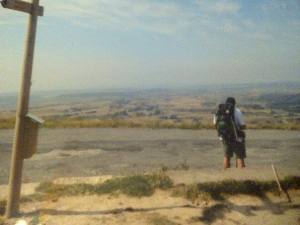
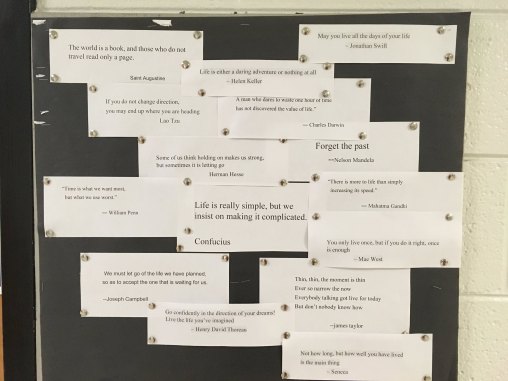


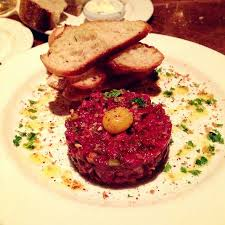






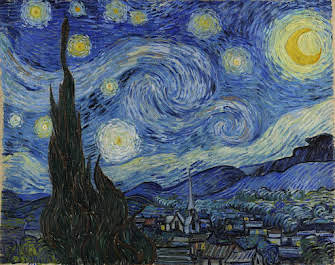


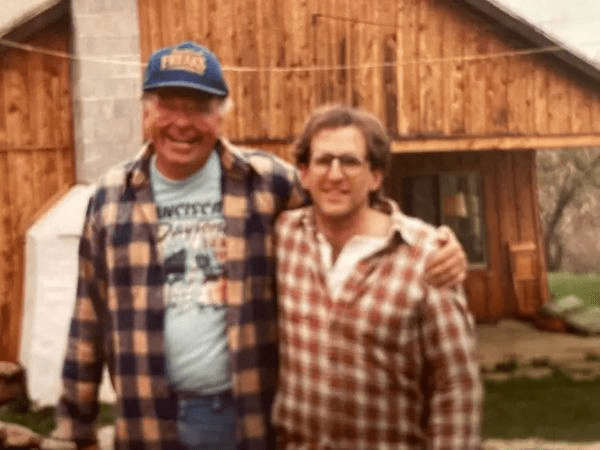


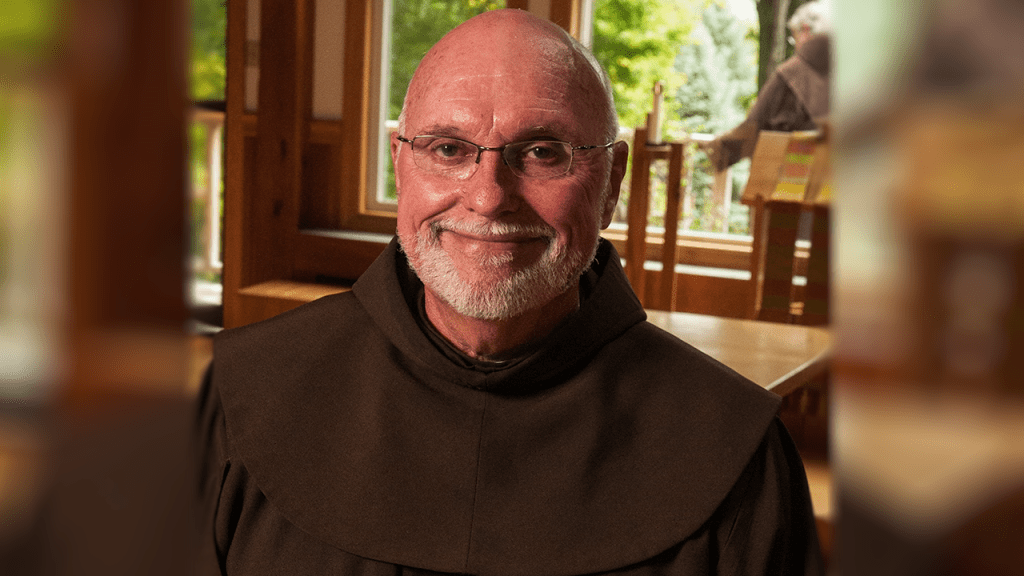



 a view from this wilderness