My last blog was about Seasonal Affective Disorder, SAD, and two people I care about asked me if I was okay, noting this particular entry at A View from this Wilderness was a bit dark; and it was, they’re right. I tried to write that piece in second person in an effort to point the diagnosis out toward the reader, but it was difficult to remain in the background on a subject close to my life. Their simple inquiry brought to light something common: often we don’t even realize we’ve slipped into a dark place, a malaise, a lack of presence. It just happens while we’re hyper-focused on something else. Then someone says, “Hey, you okay?” Wow, how much that means, and most people have no idea that those “little, nameless, unremembered acts of kindness and love” as Wordsworth called them, can quite literally save lives.
It takes only that for the ones in the dark to shake their psyche and take a breath and return to some form of balance.
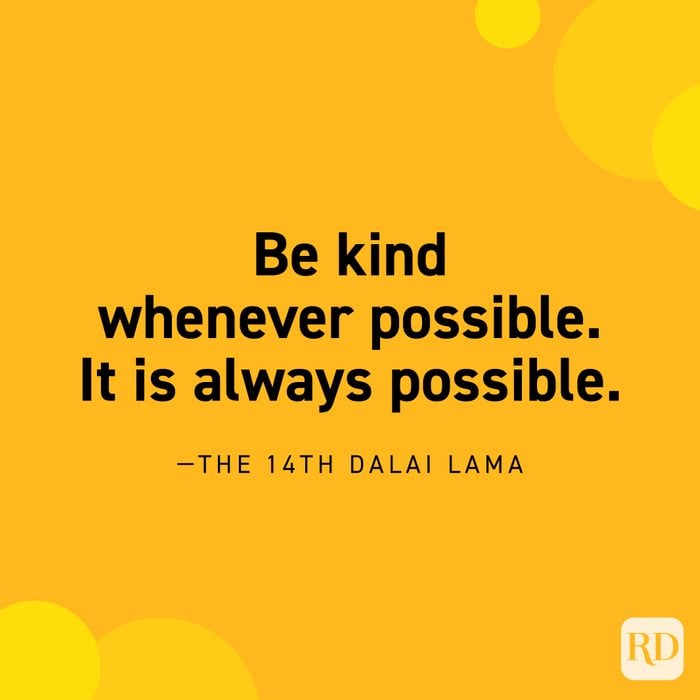
It really does work, you know. The dollar to the dude with the sign, a nod to a stranger standing outside a store in winter, looking in; holding the door, saying thank you, the small things, the activities of a person who is present, who is awake each moment. It is so easy considering it is so rare; Rousseau said the most important lesson any child can learn is simply this: “Never hurt anybody.” Okay, and then throw in a few kind words and really make an impact. I promise you, the one who seems fine might very well not be; but more than this is how little it takes to absolutely grab a soul who is down without knowing why and set them right again. No kidding, it is so easy. The funny thing is when you do these things, recognize others, it lifts your spirits as well—imagine, two people pulling each other up in a matter of moments because one of them was present enough to acknowledge the other. Blaise Pascal wrote that “kind words cost nothing but accomplish much.” Yep.
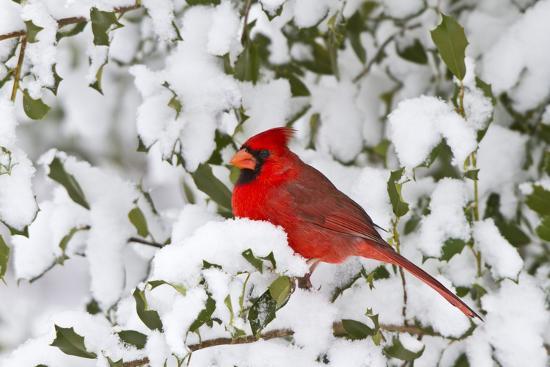
It’s snowing again, and a bit of sleet. Tomorrow night will be one to three inches, which for most of the reading world is laughable as “accumulation,” but for those of us in coastal Virginia, we understand the lunacy on the roads when locals head to 711 in the same driving fashion they use in summer after watching a NASCAR race. But it is beautiful, to put it mildly. The holly and laurel green are covered in white, and cardinals looking for food find refuge in these and the evergreens. A friend just wrote that there’s something about a cardinal in a pine in winter that fills his soul—yes, exactly.
And this is what I’m talking about: the simple things, the generous offerings of natural beauty, the deep-woven connections of conversations and laughter with friends or family. Whatever depression or indifference one may carry without obvious cause, without visible scars, can so easily be chased to the margins by the simplest of moments and the seemingly fleeting kindness of others. They have no idea, they really have no idea of the impact they have on one floundering. Some think it takes hours of therapy and years of acclimation, and perhaps it does for so many, but equally it takes seconds, and most of us know that, but we forget.
You know someone in a nursing facility? A quick call to say, “I can’t stay on but I was thinking of you and wanted to say hi,” can illuminate the darkest of afternoons. Bertrand Russell said to “remember your humanity, forget everything else.”
This must be true now more than ever, when isolation is standard, when even a hug is seemingly forbidden, and we can’t even smile at each other when masks are in play. Sometimes I get so down I forget to look up on a clear night and remind myself how easy it is to find beauty, but also how easy it is to be kind, and to remind myself that as Emerson said, “To know even one life has breathed easier because you have lived, this is to have succeeded.”
“Are you okay?” These words are oxygen, they’re pain relievers, they’re anti-depressants. What can be a normal phrase to one person is an umbilical to new life for someone else. We too often don’t even consider common concern to be uncommon, but it is.
I’ll be down again, indifferent, and completely unambitious, but not right now, not the least of reasons being two people asked how I was. And, recalling Sophocles who wrote that “kindness gives birth to kindness,” I made a few calls, held a few doors—was human, that’s all, but for so many who don’t even realize they’re slipping into somewhere else, somewhere darker, that’s everything.
My doctor hit me with the normal “How are you doing?” and then asked, because I’m on some BP cocktail, if I get depressed.
“Yes, of course.”
“Do you ever feel suicidal?”
“Some semesters, sure.” Turns out doc doesn’t really have a sense of humor. “No, never.” We talked some more and he said, “Well we may want to check into having you talk to someone to see if you have Seasonal Affective Disorder. SAD.”
“Isn’t it possible I simply don’t like winter? When it is cold I shrivel up. I miss my flip flops and shorts and the hot sun and the salty water. It’s Winter. I’m going to be bleh until well into Spring. I mean, I like snow, I really do, it’s just that it sucks.”
He laughed and told me to take care and come back in six months and I assumed he meant when my mood improves, and we talked some more but I knew something he couldn’t possibly know about me: humor is my go-to response when I really don’t know what to say.
Sometimes you can sense some sort of lethargy this time of year revealing itself in blatant ways, like not wanting to go to work, not filling out some forms or editing some article, not bothering to return important calls completely out of a sense of avoidance, as if you might be able to wait long enough and all of this will pass—this stuff that brings you down, and to be honest, you’re not really sure what that stuff is. The idleness of society maybe, the constant sense of impending doom reported in all forms of media about democracy, about pandemics, about weather, about climate, about the economy, about depression and isolation. You have no reason to take any of it personally, but some people can’t let it go, and it weighs heavy, so you aim for avoidance, which unfortunately ends up a heavier burden.
Sometimes the withdrawal is subtle. You can sense yourself not trying as hard or caring as much, like eating whatever is around instead of thinking it through, not going for a walk because you don’t want to be bothered putting on a coat or dealing with any sensory change. You’re sitting; you’re comfortable, and you’re numb. It works.Numb is good.
In both situations you are absolutely aware of it, like an alcoholic staring at a glass of whiskey and saying to himself, “This is a really bad idea.” But he drinks anyway because not drinking means “dealing” with a life that just doesn’t seem to have any silver lining. The irony? Going for a walk helps. Filing out the forms, returning calls, all help by providing a sense of accomplishment and forward motion, like checking things off the to-do list, it leaves you with the hint that if you keep going there’s something worthwhile on the other side.
There’s the rub. It seems you keep reaching the other side and there’s still nothing there to lift the spirits, not this season anyway—more hostility in the east, more pessimism in our government, more variants on deck ready to step to the plate after Omicron smacks a triple into right field. So you try a little less at one task, and it spirals from there. You realize your handwashing time has dropped to about 12 seconds. It’s not depression; it’s ghosting, it’s, well, yeah, it’s depression, but not in the deeply caving sense; in the “whatever” sense.
The problem with this type of malaise is it can be debilitating to you without being scary to others if you are not suicidal. The truth is, the vast majority of people who deal with depression are not contemplating suicide and will never kill themselves, which is what most friends fear most, and when those friends learn that is not part of the equation, they feel better. But that can often make it worse since the objective is for you to feel better, not them. But that’s fair since you know what they don’t: that a different suicide exists, a slow erosion of sorts, which anonymously eats away at ambition and accomplishment, takes the edge off of energy and momentum. It’s the guy sitting at a bar nursing a beer, nowhere to go despite having a million things to do. It’s the one on the park bench watching people walk by but not noticing a single one of them; it’s the inability to concentrate, the disinterest in listening, the short responses to questions, the inability to make it through the most basic of activities. Rational thought has nothing to do with it. “Knowing” what to do is not relevant. Your mind is suspended, your thought process withdraws into some elementary state.
On the one hand it’s situational—financial problems, relationship problems, blizzards. But it can also be chemical if you don’t have medical help. It’s addiction without restraint. It’s a combination of these, and it is unpredictable because the same thing that leaves you in bed staring at the ceiling feeling hopeless can drive you to your feet to tackle whatever it is that left you prostrate to begin with. It is a conundrum that plays handball in your brain.
“They say the first step in dealing with a problem is admitting you have one.”
Yeah, okay; no one I know in this situation has much of a problem admitting it.
But what’s step two? Because the guy at the bar with the beer, the woman in the park, the man at the river watching the tide roll out, all know exactly what the problem is. But their brains are aflush with fog, their anxiety has disabled their decision-making capabilities, and their strongest assets and most celebrated talents that normally keep them going the rest of the year, are no longer applicable since they carry a sense that those traits are probably what brought them to this place to begin with. They sit and wonder what if. They sit.
“Maybe if I had just…”
“Perhaps I should have…”
“Fuck it.”
At some point it seems you stop fighting altogether and are either not afraid to hit bottom, or you hope to use that bottom to bounce back, not afraid to fail since it can’t be worse than this. It is extreme but that is part of the diagnosis—extremes, polar reactions—sometimes both in one day. Sometimes within one hour.
More often than not, the guy on the corner holding the cardboard sign didn’t “decide” to quit, didn’t give up, but “felt” a pressure that he no longer could handle or define, caught in some stream of disconnect and hopeless confusion. Sometimes the one who does, in fact, tragically go that last fatal step didn’t “decide” to do anything at all, and that is the point. Suicide is not a decision. It is one step beyond decision making. The vast majority of people who deal with depression have that in check, less so in the dead of winter, of course.
But that’s not you. Truly. And that is the problem; you really aren’t suicidal at all. And when suicide is not part of the equation, others feel that you must be “okay,” or “going through something right now.”
Yeah, winter, you’re going through a snow bank. This is the worst time of year for many people with depressive issues. Seasonal Affective Disorder is real and feels like all of the above. Nothing helps but time, but time to some people sounds like the slow drip of icicle melt.
Other people try to help so they talk about the weather or sports or anything at all with enthusiasm and a sense of caring, but it often makes it worse, only emphasizes that others get excited about the minutia while you can no longer find value in a sunrise.
But the disguises are nothing short of cunning. I’ve known people fighting depression who on the outside resonate as the very poster image of Carpe Diem. I’ve been friends with people who contemplated overdosing on Monday while making plans for Tuesday, who loved others more than the average soul but only wanted their puppy nearby at checkout time, and people who fought depressive ways by pushing adventure to the limit, and beyond. “What a lust for life!” people exclaimed. They had no idea.
It isn’t exactly depression, by the way, though it is easier to simply call it that because it certainly wears the same eyeshadow as depression. It is indifference; it is a vague inability to muster the energy to lift your spirits enough to give a damn about anything. It’s not like you woke up depressed so you decided to stay on the couch all day; you simply don’t care that you’re on the couch to begin with. Complete apathy. You’re not down about anything; you simply don’t care.
Ironically, for most of these afflicted people, life is amazing, every half-beat is a moment of “miracles and wonder” which is why you cannot comprehend the misuse of time. The abuse of time in so short a life, you think, is as suicidal as the abuse of substances, and that can be depressing as well.
It is the time of year when you wake at three am knowing nothing is going to work, and you’re going to lose your house and your sense of security and no answer makes sense, no way forward seems rational. Equally, the dawn can come with new ideas and hope, and if you push those moments far enough into the morning, you just might be able to make a day of it. But January has 285 days. And February is several months long. March? Well you well know that March is merely a tease. April comes and breathing is easier. May, and nothing stands in your way. You know exactly what I mean.
On the outside you seem to be fine. On the inside you’re grasping the thin rope of enthusiasm with clenched fists, pretending all will be well, but your insides—much against your will—are shredding at the thought of what to do next.
You “hang in there.” You “get through it.” You suffer the trite suggestions of others who simply can’t understand what the big deal is. That’s okay though, you think. Really. There are no solutions, per se. Just more questions. And “hang in there” is at the very least an acknowledgement you really aren’t trying to dismiss your very existence; it just happens sometimes.
This afternoon I went to the river where a bitter breeze is pushing down from the west. There’ll be ice tonight somewhere, and snow, but I sat reminding myself I have been there, touched that ring of undefinable despair, and I’ve moved through it, sometimes with difficulty, often with ease, always with the knowledge that I’ve had one freaking incredible life so far, and time enough left, I hope, to continue my pilgrimage well into the next mood swing. But there are moments, collisions with frustration at the gap between the way things are and the way things should be, that catch some people off guard.
Eventually you remember that the seasons, like everything else, change. And love, despite its bad reputation, is holding the other end of that thin line you’re grasping.
I teach a sophomore level critical thinking and writing class—basic argumentative writing and research. It is one of my preferred courses since my specialty other than writing is research, and in these days where the Fourth Estate is more often dissed than referenced, I like to show the students the path toward accuracy.
The other course on my schedule right now is basic Freshman Comp, which unlike many of my colleagues in the past thirty-three years at three colleges, I truly enjoy teaching. Of course, I start the course by explaining it might be the most boring course they are going to take, but I quickly justify it by adding it is also the most important because of writing being the communication skill most necessary to succeed to college.
This semester on the first day I planned to give my standard lectures for the first day, about the psychology of writing, the motivational tools necessary for even the most advanced writers, and the steps necessary to get through the brainstorming stage to rough draft. I was going to remind them to stop treating me like a professor who “has” to read the paper and think of me like an editor who “may or may not” read the paper, and their writing will improve immediately.
I had the normal three-decade-old bag of tricks.
I arrived early and watched students walk in quietly, masked, heads down, silent. We had about five minutes. Out of nineteen students, one said hello. The rest sat looking down, some at phones, most at the laps, like schoolchildren waiting to be told what to do.
I asked how they were doing. Nothing.
I asked one person directly how she liked ODU so far. Fine.
I asked another what his major is. Shrug. Undecided? I guess, he said.
Back Story: Over the course of thirty years I’ve seen classroom chatter pre-lecture go from boisterous to casually friendly to non-existent. This, of course, is in direct proportion to the introduction of technology, but I have also noted that even without the phones or laptops—for example, this class, where only one student was looking at his phone—the concept of communication with unknown peers seemed non-existent, as if they have spent their entire lives only communicating by text, and, yes, they have.
It isn’t a matter of poor social skills; these are today’s social skills. Since most of these students are freshman, asking them to put the phone away, or indicating that they should be taking notes, generally receives a positive response. But any question is answered with as few words and as little eye contact as possible. This has been slowly coming on for some years now. In early spring of 2020, it was a bit easier to get them to respond with more than a grunt or a monosyllabic answer, but then Covid came and extracted whatever scattering of manners was left when gathering among others.
I asked one young woman where she was from. NOVA. What town? Alexandria. Why did you choose ODU? There are some great schools up there and in DC. Shrug.
I asked one whom I know is an athlete with absence accommodations what his major is. Mechanical engineering. What made you choose that? Shrug.
Time came to start class. I stood up and they sat up, the one put his phone away, a few took out notebooks, but most did not—people stopped taking notes some time ago, expecting me to post them on Blackboard (a program to communicate with students).
Well, we are here to learn to separate accurate and verifiable information from the tons of crap that cover it up, distract you, trick you into believing what they have to say is true and real and essential when it is simply, well, crap. We’re going to learn to know who the true experts are and who present themselves as experts but are simply loud personalities. And then we’re going to learn how to write about it. Let’s start with this: How many people here would rather class be online during this Omicron surge and return to face to face when it settles down?
Nothing.
I asked the athlete. Shrug.
I asked the woman from NOVA. Shrug.
What the fuck are you people doing here???!!! I thought.
What am I doing here?!?! I thought further.
I sighed, pulled my chair to the front center of the classroom, and sat down. Outside, a full-grown magnolia stood in all its majesty, reaching against the windows on this second floor, and in the distance a deep blue sky. I wondered if the herons and buffleheads were at the river. I thought about how the cold feels on my neck when walking on trails. Or the heat.
I thought about Spain.
I smiled at a woman in the front row who accidentally made eye contact. I asked and she said she is from Fredericksburg. She decided on here instead of Mary Washington University in her hometown, but it seemed too much of a subject to approach at the moment. A crow landed on the magnolia then took off. I could see this but none of the students could. I wondered if the classroom had been reversed with the windows behind me instead of them, would they still have not seen it.
“So…” I said…
If you weren’t in college, where would you be right now? I mean, I know it is hard to say, but use your imagination, be idealistic for a moment and imagine you left high school and instead of college you and a friend decided to….what?
And one guy mentioned probably the military.
And another said working for his father who owns a store in Richmond.
I said I’d take off. Get a job in Florida or Martinique or Ireland for the summer—tend bar, wait tables, not make up my mind about what the next sixty years it going to be like while my head is still spinning from high school where I was still friends with the same people I knew before my voice changed. They laughed, some sat up.
Then this:
Guy in the back row said he wanted to drive across the country and live with his brother in San Diego but his father insisted on college. Another said she is the first one in her family to go to college and she wants to make them proud. Another said he had nothing better to do so might as well work toward something instead of wasting time wasting time. People laughed. I nodded toward him and said, “You’re going to do well.” He thought I was joking, so I said it again. “Really.”
We talked for a half an hour, laughing, I told a few quick stories about college, a few about classes I had taught in the past, my first one as a professor and how terrified I was, almost the same age as my students, having no clue as to what the hell I was talking about.
They talked about their decisions about going to college, about their majors, about being away fromhome for the first time. We talked about the impending football game that night for the National Championship; we talked about social media, we talked about which place was best to eat in the neighboring Ghent area of Norfolk , which lead to some funny conversations about types of food.
We agreed we eat out too much, we drink too much coffee, we don’t spend enough time outside, and we are too attached to technology. Even the Computer Science major said this.
I stood up and wrote on the board: What has it been like to be in college so far? 500 words.
I don’t want you to do this, I said, but if I did ask you to, could you?
All said yes.
I mean, you’ve been speaking English for almost two decades now; certainly you can string some thoughts together about this, right? They laughed and agreed.
Then I said, “If you did this but I said the five people whose work really caught my attention will automatically get A’s on their first essay, would you do a bit better? They laughed—we were used to laughing now which made answering questions in front of others so much easier—and agreed theywould. Then this—I’ve written about this before in this blog and in the Chronicle of Higher Education, but it works so I use it when I can, but the timing must be right or they’ll call BS on me, and the timing was just right: Okay, if you guys, that includes you I said to the one who preferred pizza from 711 over the good pizza place in town, and everyone laughed, if you guys were to do this assignment but I had told you the top five get a thousand dollars each right on the spot, would your work be better?
They all laughed almost in unison and responded in various degrees of “hell yeah!”
I sat back down. The crow came back to the magnolia, and I thought about the crows at home and how they often keep the hawks away but not the eagles, and not the finches who despite their size have got some serious food-gathering game. The crow lifted and left again.
“So look at you now,” I said. They remained silent. “You just admitted it to me.”
They shrugged.
“You always could do better. You just couldn’t be bothered.”
Maybe if I paid you, then you’d put more of an effort in. Otherwise, whatever. You just presented to me the proof of why you aren’t doing as well as you could be—you can, you just admitted it—you just don’t bother.
I get it, I told them. In my example, the reward is clear, is obvious, and is immediate. But in a freshman college class the reward is vague, distant, and seemingly irrelevant, but in this class in particular, it’s worth way more than the grand you were going to work for. We are so caught up on immediate satisfaction and reward we have lost the art of sacrificing now for benefits later.
A couple of people still knew who Billy Joel is so I told them how when asked what it was like growing up he said the worst part was the piano lessons, how he could never understand why his mother made him practice three hours a day while his friends were outside playing. Then he was asked what was the best part of growing up back then, and he said the piano lessons and how his mother made him practice three hours a day.
We talked more about football and pizza.
Don’t come here because it is “required,” I told them. Don’t show up next time because you don’t want to lose points for being absent. Come because you just met some new people to hang out with, new voices to listen to and talk at. Come because I am going to constantly remind you that being here is worth way more than you know right now, and I need you to trust me. Come because that crow keeps coming back to the magnolia and I can’t figure out why.
And everyone turned around and laughed and we spent the last few minutes speculating about what the bird could possibly be doing out there.
I have learned the sound of gulls when they circle looking for food compared to their call when confronted by something strange. I can close my eyes and know the direction of the tide and the pull of the current. I do not know most smaller bird calls—my son Michael has to tell me (over and over) which is which when home on the porch—but I know well the call of a hawk or osprey or eagle, especially when they teach their young to fly. It is a sight to behold, and more, it is a sound I will never forget.
There is nothing “silent” about nature. There is nothing quiet about night. On the river in the evening when the stars blanket the sky above the Chesapeake and up the Rappahannock, the most muffled of sounds carries across the water. It could be a car crossing the bridge, a late-night fisherman dropping traps, rigging against a mast, the gentle, familiar, eternal lap of water on the sand.
Paul Simon wrote, “Everybody loves the sound of a train in the distance; everybody knows it’s true.” Yes, across the night, when everything seems silent and the distant call of a train comes across the space between. There is life out there carrying on. Like the red dot of a passing airplane when I stand on the sand in perfect quiet and know onboard passengers are talking, laughing, reading, and life is carrying on, heading for somewhere else. Come morning the call of the fog horns on the fishing boats comes across the reach.
I love the quiet of nature, despite its lack of silence. Believe it or not, it has been quite some time since I’ve experienced the type of quiet I am referring to.
I would like a quiet day. One. One quiet day without the residue of yesterday or headwinds of tomorrow. Just the day, one. A quiet one during which I could just let the river run past and feel the cool and heat of the sand and the sounds of gulls or osprey and, of course, waves; when I define quiet, I include birds and waves.
A day where if the phone rings at all it is just family, ready with a joke or an old story to get us all laughing and remembering and planning. Usually quiet days include laughter and stories.
A day to myself like I used to do in my twenties when I drove into Manhattan and walked from Herald Square all the way up and through part of the park, talking to the vendors or checking out the music along the way coming from the cafes and radios. When I explain “quiet day” I must include the sounds of the city as natural and organic as the osprey and waves since they are expected. Plus, they aren’t talking to me so no response is expected or necessary, just my presence without the noise in my head, the endless, persistent humming in my head of stress or anxiety or what’s next or what happened. Without all that. One day.
My life is not unlike Thoreau’s in that my retreat is near the water in the woods where I am able to regroup, not to ignore civilization as much as be better prepared to face it. So I would like one day. One. One quiet day where I could live deliberately and be in absolute touch with the passing of time solely for the sake of the passing of time, to watch the seconds, to count the minutes. I could lean against a tree and hear the combine on the neighbor’s farm or the rigging on the boats on the river. There is a thin, very thin, line between quiet and the sound of rigging in the early morning hours.
I was thinking the other day about the quiet days in college when a bunch of us would walk into town just to get something to drink and everyone would be talking at once, and laughing at once at different things, and I loved that sweet and passive activity of such transience. If I am going to define “quiet days” I can’t leave off my friends. Or a drink or two.
I have had many days which I would “formally” call quiet by the Oxford definition. In Spain, at home on the river when it is early, or late. When I was young and hiked through Heckscher State Park. Sometimes when I am alone at home I fiddle around the house, working out on the property or on the porch, and can go from sunrise to sunset without a sound and it can be deafening. But those are literal, and I have come to understand that true peace is not the absence of noise but rather the presence of some connection around us.
I remember a beautiful, perfect, quiet evening a long time ago when a friend of mine and I went to an Italian restaurant in a run-down strip mall, and they were almost closed but they let us order some bread and a bottle of wine and we talked for hours, joking with the woman who worked there but mostly just laughing together about now and life at another time. We finished each other’s sentences and the wine and then went our own ways, quietly, until next time.
Another time, we stood on the beach here and watched across the bay toward Wallops Island, and it was late and cold and clear, and a rocket lifted with a payload for the Space Station, and all we saw was a red glow and the entire horizon glow white and red, then the sliver of a rocket move up, pushing out flames, further up to the southeast, and then, quietly gone. We never heard a thing. That kind of quiet is mind-bending to me.
It is quiet tonight, and cold—the type of cold, quiet night where sounds travel quite some distance, and I can hear the north winds sliding across from Windmill Point to the duck pond, and I need to turn my back to the cold, and walk up the hill and down the long, winding driveway to my porch, and the rustle of deer or opossum in the woods, try and find some music to match my mood, but doing so usually just sends me back outside.
Suddenly, it’s New Year’s Day, and since I’m not really doing anything except literally watching the clock and growing older, I’m wondering how many people completely start over—I mean absolutely begin again—at sixty-one. Now seems like a good time to consider this, being the month of Janus and all, the God of Doors and All Things to Come. Plus I couldn’t sleep.
This particular contemplation of “what’s next” is not random for me. I no longer teach full time after almost three decades at one college, the other college where I had hoped to continue teaching Arts and Humanities completely shut down because of Covid, and while I do teach a few classes at yonder university, and I do have a new memoir coming out soon, it turns out the world of Readings and Gigs and Workshops has ebbed into the Coronavirus Sea.
So, I looked for some examples of others who, as Janis Ian proclaims, “Make it when they’re old, perhaps they’ve got a soul they’re not afraid to bare.” It is time, after all, to note that, as T.S. Elliot points out, “Next year’s words await another voice, and to make an end is to make a beginning.”
Well, we shall see:
Grandma Moses didn’t start painting at all until she was seventy-six.
Frank McCourt, author of Angela’s Ashes, winner of the Pulitzer Prize and National Book Critics Award, didn’t start writing until he was sixty-five.
Another writer, Laura Ingalls Wilder, started writing the Little House on the Prairie series at sixty-five.
Fauja Singh ran his first marathon at eighty-nine (luckily if I choose this path I can wait twenty-eight years before getting off of the couch).
Harland Sanders established Kentucky Fried Chicken when he was in his sixties.
And apparently Moses didn’t part the Red Sea until he was eighty years old.
And for God’s sake, Noah was six hundred years old when the waters started to rise.
Hell, I’m going back to bed.
Truthfully, it isn’t about starting over, really. We make resolutions this time of year to lose weight and exercise and save money and volunteer more, and those are common ambitions for a good reason: they’re admirable goals, apt adjustments to our otherwise well-planned life. Emerson tells us that “the purpose of life is to be useful, to be honorable, to be compassionate and have it make some difference that you have lived and lived well.” I must do all of those things, for certain. But a slight adjustment simply won’t cut it.
It isn’t enough to wonder what all of us can do, but what each of us can do, what is my particular purpose, my part in the plan? Certainly, the atmosphere isn’t exactly conducive to positive change. Maybe its Covid, or perhaps it is the endless bickering and childish spats at all levels of government–all levels of society really–that I thought would be history by the time I became an adult. Really, I seriously grew up believing my generation was the one that would clean the world, bring peace to all countries, and create a more inclusive society. I know it was innocent and naïve, of course, and I didn’t really expect some land of Oz, but I also didn’t expect this pathetic disaster we still call humanity. We are a mess; our supposed “intelligent life” turned out to have little compassion for each other, and it is stressing me out more than my meds can handle. I don’t understand why it all gets to me and brings me down. It just does. I know that “a happy soul is the best shield for a cruel world,” as Atticus wrote. But listening to the news is akin to swimming in toxins, and it has become overwhelming, drowning out whatever happiness takes root. Something has to change–if not out there, certainly in here.
It helps to have a distinct starting-over point.A few times each year—birthdays, Spring equinox, for educators the first day of classes, and New Year’s Day for us all, we can take a deep breath and make some sort of commitment to do some small part; maybe not by changing the world, but by changing ourselves. I can only speak for me.
Of course, I need to save more money, exercise more, lose a little weight, and spend more time volunteering. And I will. But I need something else.Something more personal and more essential.
The clock is ticking while I’m distracted by society’s bad energy, spending valuable time on meaningless banter. I need to get back to me and remind myself, as Dan Fogelberg sang, that “there’s more than one way of growing old.” I need to take more chances and figure out which dreams I simply refuse to allow to fade before I die. Not all of my imaginings are realistic, of course. Certainly I can narrow down the list with some rationale: I can probably toss out the Wimbledon win and playing outfield for the Mets. I’m confident the circumnavigation of the world is sliding off the list as well, as is winning an Academy Award for directing.
But I’ve noticed a few elements common in those people who achieved later in life:
They’re not afraid to fail.
They’re not afraid to embarrass themselves.
They’re not afraid to be transparent.
They’re not afraid to be ridiculed, mocked, trolled, dissed, and dismissed.
And the ones criticizing the loudest are the ones on the sidelines. Paulo Coelho writes, “Those who never take risks can only see other people’s failures.” Yes.
With that in mind it occurs to me most of my successes came in the midst of countless failures for most of my life; I have embarrassed myself in front of crowds at least since I’m nineteen, I remain pretty open about myself, and as a professor and a writer, I have suffered a steady barrage of ridicule, mockery, and dismissal.
And now it’s New Year’s, and in less than two years the planet has lost 5.5 million people from Covid alone. I’m sure a disturbingly large percentage of those lost souls never completed the dreams they had not yet grown too old to achieve. Let that thought hang here for a second.
You and I still have some dreams. And we’re still here. And in the words of Hamlet: “I do not know why yet I live to say, ‘This Things to do.'”
***
Some of us are simply mentally exhausted. Why do we get so tired? Why do we have such little faith in ourselves? Is it ignorance—we have truly no clue where to begin with some of this? Is it a fear of wasting our time? “I’m just going to gain the weight back,” people rationed when I worked for Richard Simmons. We used to tell those who wanted to quit that in everything in life we have two options: I will attempt this and do what’s necessary to succeed, or I will not bother trying because I’m likely to quit anyway or simply do not have the energy. Some succeeded, some tried but quit, and some signed on with those famous “good intentions” but didn’t bother to show up.
Which group do I want to be in when I’m older? When I am near the end of the end, what would I have been successful at if I had just, well, showed up? Today’s a fine day to think about this because more and more I’m finding myself sliding into that third group, and that must become unacceptable. “I’m too old to change now,” I’ve heard friends say. That’s fine for those who found their place, and sometimes I feel the same way. But for some, life is too short to simply run out the clock.
I’ve shared this next part before, I’ve read it to my students, I read it to the people who came to my classes at Richard’s, and I’ve memorized it. It is from Joseph Zinker at the Gestalt Institute:
If a man in the street were to pursue his self, what kind of guiding thoughts would he come up with about changing his existence? He would perhaps discover that his brain is not yet dead, that his body is not dried up, and that no matter where he is right now, he is still the creator of his own destiny. He can change this destiny by taking his one decision to change seriously, by fighting his petty resistance against change and fear, by learning more about his mind, by trying out behavior which fills his real need, by carrying out concrete acts rather than conceptualizing about them, by practicing to see and hear and touch and feel as he has never before used these senses, by creating something with his own hands without demanding perfection…We must remind ourselves, however, that no change takes place without working hard and without getting your hands dirty. There are no formulae and no books to memorize on becoming. I only know this: I exist, I am, I am here, I am becoming, I make my life and no one else makes it for me. I must face my own shortcomings, mistakes, transgressions. No one can suffer my non-being as I do, but tomorrow is another day, and I must decide to leave my bed and live again. And if I fail, I don’t have the comfort of blaming you or life or God.
It’s New Year’s Day, and we all know this year, like last, is simply unlike any we’ve had before, but for me, this year seems different, more urgent. When you think about it, if the bills are paid and your health is cooperating, the best approach is to “enjoy the passing of time.” But some of us need to also untether whatever limitations we’ve placed upon ourselves because of routine or fear or society’s expectations, and live a bit more before the living is over.
People do it all the time.
I know a man who joined the Peace Corp at seventy-five.
Another who learned French and became a translator at seventy-one.
There are barriers to these resolutions, to be certain. Pressure, stress, money, fear, and sheer exhaustion. Age; dear, persistent and unyielding age. The obstacles can seem insurmountable, but as Moliere said, “The greater the obstacle, the more glory in overcoming it.” Still, on top of this, those battling depression have to also face those internal voices telling us there’s no point, those for whom the “resolve” in resolution can be a monumental task, those for whom as a friend of mine recently noted, “no longer care if there’s a light at the end of the tunnel; I’m tired of the tunnel.” But none of us, I am not wrong about this, none of us wants to reach the point of death, as Thoreau reminds us, only to find out we never really lived at all, and, even worse, never even tried.
For me, this year’s New Year’s resolution is simple: start something worth finishing.
So,
“If you don’t lose patience With my fumbling around I’ll come up singing for you Even when I’m down
I have written blogs on A View from this Wilderness for six full years. This week, Volume Six is complete, and in just a few days I will begin Volume Seven. It did not go where I had expected it to, though few things in my life, if anything, have gone where I thought they would.
When I started the blog in January of 2016, my father had just died a few months earlier, I was still senior faculty at a college in Virginia Beach, was still senior faculty at a university on the naval base, my mother still lived in a large condominium and my brother lived in Texas. None of those things are true anymore; or, the truths of those things are in the past, as most realities in our life tend to be, eventually.
I thought this site would be a simple escape into nature, and for a while it was. I wrote about geese, about the river and the bay, about the hawks and eagles here at Aerie, and about the wildlife we discovered here at night while looking at the stars. But as the weeks and months progressed, it became more about the nature of things, including and perhaps most significantly, human nature, particularly my own.
I left the college. I left the university (or the university left us, as it shut down because of Covid and never reopened). I lost touch with people I knew well for a very long time, and spent more time on the river, along the trails of the Chesapeake region. When I started this blog, we didn’t yet believe then candidate djt would win the election, we didn’t understand the animal-like attack on the Fourth Estate, and most certainly we didn’t yet know Covid; we didn’t anticipate quarantine, masks, distancing, and so much illness and death. And as we did, nature became more important, no longer simply a refuge, that escape, but a place to breathe without worry, a place to walk without concern.
Professionally, this blog led to a book, A Third Place: Notes in Nature. Among writers, blogs are somewhat controversial. Some believe it can distract from real writing, absorb your energy from completing more worthy works. I understand the argument. But I’ve always had several layers of writing going on at the same time. There is the serious material I know I want to send to publications, perhaps even in book form, as in the case of Siberia, Africa, and another project just underway; slivers of material from these topics sometimes end up in this blog, but rarely. Then there is the raw material—the stuff I read in bars with the likes of Tim Seibles—stuff we generally don’t expect to be published and which certainly won’t appear here; stuff we prefer you hear when you’ve been drinking and where recording is strictly prohibited.
But there is the middle work, the journaling, the reflections, the prompts, the thoughts, the spewing of anger at politicians, the rants at society for ignorance and negligence, and the confessions to those I know and those I do not know about so many of my shortcomings, failures, and misunderstandings. Many times what I thought would be a work about nature turned out to include my heart on my sleeve; yeah, I’ve exposed much in these six years and as a result some people pulled back, others gathered closer. This has certainly been a cleansing experience.
But in the end this blog is a place I simply am what I am. I do not know if I’m departing this life tomorrow or in thirty years, but when I do, I’m leaving everything I can out there, exposed. This blog has taught me, is teaching me still, to be who I must, something I wish I had learned decades ago.
It started with one reader—me. Last week the unique readership numbered almost 1100 people, averaging just around a grand every week. I’m very pleased by that. But make no mistake: I have no illusions that I am changing people’s minds about anything, including my own. I simply found a place to express myself instead of calling you and doing it. You’re welcome. In the end every single blog posting is from the start to the finish, first for me.
I have written about dear friends who I thought I’d spend my life with, confidants I counted on to be there and to be there for, but they moved on too soon, like Cole and Joe and Trish and Ed and Bobbie and Dave and too many more to count. I’ve written about artists who I’ve known and whose work made me feel like they knew me, even the ones who I was never fortunate enough to meet, like Vincent van Gogh and Dan Fogelberg, John Denver, Harry Chapin, Mozart, Chopin, Marley, Nick Drake and so many more whose music plays while I’m typing. Also, I’ve written here about Cole and Eton and Gosha and Slava and Tim and the other Tim.
I’ve written about my son. About my dad. But still, mostly about nature both human and natural, from my perspective, never anyone else’s. The advantage of a blog is we’re like street corner preachers standing on a milk carton flapping our sentiments to the wind, and some people hang out and nod, others hang out and get pissed off, but most just walk on by. That’s fine. I’d walk by too.
And if I haven’t written about some people, it’s because I didn’t want to, don’t want to, and never will want to. If I’ve learned anything at all, it’s reflective of the sentiment of that Long Island philosopher William Joel, to “do what’s good for you, or you’re not good for anybody.” Something else I learned way late in life.
But a few other things I’ve learned in these now 370 posts:
Heron get frightened easily. Geese change course if they see humans. Hawks are hyper-focused on food and if you walk by one while they’re eyeing down a squirrel, they couldn’t give a rat’s ass you’re nearby.
Standing at this river and watching rockets lift from over at Wallops Island raises the hair on the back of my neck, as does standing in the yard and seeing the stars.
Bare trees in winter are as beautiful as the colors of fall and the buds of spring.
I’m stronger than I thought I was but nowhere near as smart as people think I am. My strength is creativity not intelligence, and my true abilities lie in expression, whether through writing, photography, and at one time music.
Some of my posts never made it to publication because they were too honest, too scathing, and not fair. Some never made it to publication because as soon as I finished, I thought they could do better than A View, and they have, including places like the Washington Post. Other entries just sucked so I deleted them.
I learned that people prefer to laugh hard or cry exhaustively over simple education or rants.
I’ve learned that I prefer to be hit over the head by someone about how they feel about things rather than some slow reveal of the truth. And I’ve discovered that time spent with people who make you feel better about yourself is all there is left in life. There is no legacy, there is no endowment more valuable than that—to spend time with people who you love and who love you and who aren’t afraid to be truthful about that, no matter what.
This blog will continue with its bloated pretentiousness and condescending rants, but hopefully, as well, readers will more likely notice the sun on the bottom edge of a cloud, the call of geese or the strong woosh of an egret’s wings. Too, I hope they notice the beauty in human nature, and how swift life is, and how we all know the simple truth is when we leave this world, we’re going to wish we had been more open with others, move loving, more honest with how we feel without concern of hurting or being hurt.
The view from this wilderness is fragile and fast, and beautiful, and it is the same view as those reading in Mumbai, in London, in Brooklyn, Cincinnati, Mexico City, and New South Wales. The View from this Wilderness is not dependent upon coordinates. Everyone has the same view no matter where they are; and if everyone stands in the same spot, every single view is unique. We need to help more people without them asking, and we need to let more people know we love them without worrying about their response. The old Japanese saying remains true: “Just because the message is not received doesn’t mean it is not worth sending.” And we all like to know that people hear and appreciate us, but that’s not why an artist paints or a writer writes.
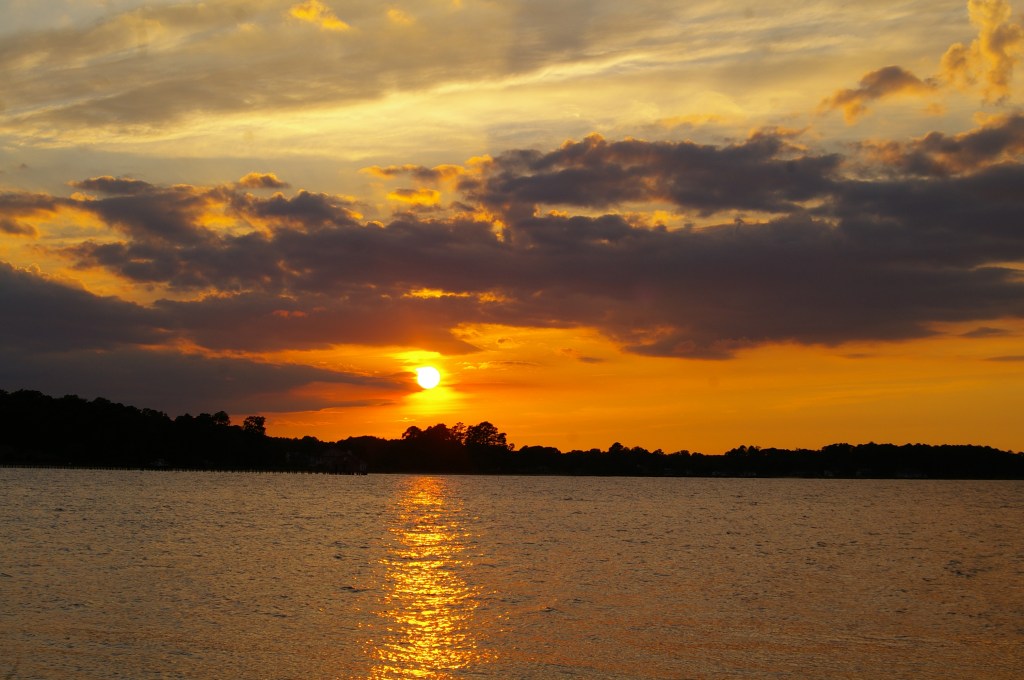
We write to remind ourselves that we miss too many sunsets, sunrises. We walk by too many flowers just beginning to open, and too many quiet lakes. We pass by too many mornings without opening the curtains and too many evenings without stepping outside.
We move too swiftly through life, worrying more about grace than gratitude, more about lofty ambitions than love.
Those of us here at A View from this Wilderness (that’d be just me) wish everyone a Happy New Year.
In the east this morning a sliver of light. I stood at the bay and remembered:
More than five decades ago on Christmas morning before our parents were awake (or so we supposed), my siblings and I would gather before we headed down for the beginning of Christmas Day, usually in my sister’s room, to exchange gifts we had bought for each other. It would inevitably still be dark out, and I know the three of us would lay awake waiting to hear each other also awake in the other room. A tap on the door. A “come in.” And we’d sit on the floor and open our presents.
At some point (like clockwork, as much an annual tradition as the turkey or the pies), our mother would wake our father and he would exclaim, “I thought I said no one up before nine am!” and he couldn’t hide his smile to our laughter at the ludicrous suggestion we’d be up any later than five. It was always cold out during those Long Island years, and often snowy, but we weren’t going outside so it just added to the magic. Dad would be in his robe and slippers, and he’d head to the living room as we gathered on the stairs and waited for him to plug in the multi-colored lights on the tree, and those on the rail, bringing to life the otherwise dark room. Mom had, of course, already organized whatever presents we would get into separate piles, and Dad would stand back as she directed us to the right area under the branches, though sometimes it was obvious if an unwrapped toy appeared, clearly already wished for by one of us. Dad would sit on the couch and watch in joy right through the stream of “Wow, thank you Mom!” wishes.
It wouldn’t be long before the aromas of breakfast mixed with the onions and bell seasoning already underway for the stuffing, and eventually we’d need to get dressed, if not for church since we might have attended midnight mass, certainly for the droves of family who would soon fill the rooms. It was a beautiful way to grow up. I do not know the possible stresses, fears, and sacrifices that went on behind the scenes—that’s how good they were at it. Then, much later in the day, after everyone else had left and we had all settled into the routine of looking at our gifts again, Dad would emerge from some closet with his gifts for each of us—books he had personally picked out, bought, and wrapped. It remains one of my favorite memories of all of my memories of my father.
***
It was in the sixties here today along the Chesapeake, and sunny, and to be honest I’m just tired. This is one of those days each year where I’ve been up so long and have done so much that it feels like it should be six hours later than it is. My mother and sister and brother and nieces and nephew and their spouses and offspring are all off in various parts of the country preparing to celebrate their Christmases, all of us with some common traditions, each of us with our individual more recent touches to the holiday. Certainly, in times of such tumultuous anxiety throughout the world, all of us remain fortunate enough to be celebrating Christmas at all, laughing and telling stories, enjoying the food, the drinks, the sounds of football or Christmas music. We are, to be sure, at peace. Anyone with family is engulfed in traditions which help balance our lives; they bring peace to our soul while providing some shared space not only with each other but with memory, the idea of ancestry, the hope for posterity.
My father used to sit to the side for most of the holiday and enjoy being surrounded by his family. He’d carve the turkey, and of course disappear toward evening to get the books to give to us, but these days I picture him most in his chair, watching a game, sipping scotch or wine or a beer, laughing with us, waiting for Mom to call him to duty in the kitchen. He has moved on, and whatever there might be to know after this life of ours, well, he now knows, and that too brings me great peace.
It’s so quiet out tonight. Absolute peace stretched out like canvas in all directions. On the water some buffleheads ease by. Still, there are moments I wish I was somewhere else; or maybe simply some “when” else. I miss the days before society took “nearby” and “not far away” and tossed them to the strong breezes of technology and zoom. In that small house around that small table when I was a child were so many relatives it is crazy to conceive how we pulled it off. But no one cared—we were together. Everyone lived close enough to “drive over,” and by the time the turkey came out of the oven, a small crowd was sitting and standing and outside and in, laughing as well as sharing serious moments, because it was Christmas and we were together, and it was going to be like that forever.
For the day anyway.
The sun is getting low and it’s getting chilly. I’m going inside again. I bought Michael a book at a local nautical shop and I need to wrap it and “surprise” him with it later in the day tomorrow after the lift of Christmas has settled down. And he will be gracious enough to act surprised, just as I did with my father when he would predictably surprise the three of us with books half a century ago.
Geez, fifty years. More.
Hold tight to those around the table tomorrow. And when you have to let go, make sure they know you didn’t want to.
I stayed outside all day. Mostly I raked, but I also moved planters around, piled empty pots behind the garden shed, and cleared off the trail in the back woods where deer bed down at night, and at dusk a fox always scurries around waiting for Michael to toss some leftovers into the brush. The oaks are nearly bare, except for a few that keep their leaves until spring. This land has mostly hardwoods, so the view above isn’t impeded anymore, but down at eye level an abundance of holly keeps the property green all year. The laurel, as well, remains, and a little higher up the thin pines stay green.
It might snow this year. It seems every year snow falls more regularly. Three years ago it snowed so much I don’t remember it clearing out enough to see the grass until well into February or March, which for this part of Virginia out on the Chesapeake is unusual. I’ll take it, or the heat, doesn’t matter. Ice cold hands from doing work without gloves or a back covered in sweat in August are equally satisfying. I like being in nature, wearing it, letting it penetrate beyond the visual so that all of my senses come to life.
From my perspective in these woods, whether the view be unobstructed across fields and waterways, or blocked, able to see only the nearby thicket like shadows on the wall of a cave, it is a beautiful world; yes, despite the news today, we live in a beautiful world. While humanity gets hung up on every metaphoric syllable, the natural world bends and turns and spins and thrusts itself forward in endless revolutions of perpetual next. This country is still an infant, despite what we call history as well as histrionics. It teethes on change and feeds on self-indulgence. It always has.
But this country, where the river has ebbed and flowed for tens of thousands of years, and the watermen still cross the reach each day before dawn like their great-grandfathers did, is infinite. Here in the early morning a channel marker rings, and the oyster boats return to their docks by the time the morning news anchors have poured their first cup of coffee and sign on to keep us informed about what is “important.”
I have no argument in nature. I have no sense of conflict. The paths are not compromised by a lack of decorum, the deer are not prone to an absence of character, and the osprey and eagles which frequent these skies do not suffer from questionable integrity. Nature is neither crass nor belittling; it does not lie. The trees remain firm in their convictions, the birds—with one exception—do not mock other birds, and the skies, whether cloudy or clear, have no ulterior motives.
Next month I’ll head to Utah, so now I think of the mountains, or Antelope Island in the Great Salt Lake; and then Florida, where I can stare for hours looking for manatee, watching the gulf, bothered by and bothering no one. But here, always here along the river, the extremes which occupy my mind level off and remind me of the complicated gift of simplicity.
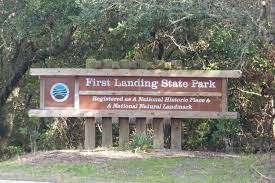
During high school I spent a good deal of my time hiking and biking, often with my dog, Sandy, through Seashore State Park. It’s a beautiful wilderness stretching between the Chesapeake and Broad Bay in Virginia Beach. Even today I have friends who bike or run the trails under Spanish Moss and across bridges through marshlands. But it’s not called Seashore State Park anymore, it’s First Landing State Park because John Smith first landed there on the Atlantic beach. A cross marks that spot.
Talk about arrogant and, well, wrong. It was not the first landing, and not only because of the Icelandic peoples up north or the Spanish in Florida (San Marco Fort in St Augustine was built before John Smith was born), but also not even the first Brits, with some vicious colleague of Smith’s arriving several years earlier.
So when tourists arrive from Pennsylvania or Quebec they marvel at standing on the first spot in the New World. The name needs to be changed back, either to Seashore State Park again, or something historically apropos, like “Seventh Landing State Park” or “Greedy Bastard’s Landing State Park,” (my personal favorite).
This rebranding isn’t unusual in human history. Before the Romans were in Italy it was the Etruscans; before England it was Engla Land, “Land of the Angles,” a Germanic tribe; and before Virginia was even the Old Dominion, it was Tsenacomoco; and this region of the Chesapeake known today as the Middle Peninsula had been Powhatan land, ruled by Chief Powhatan, father of Pocahontas, who grew up not far from here.
My point is names change. I don’t tell anyone, “Oh, I live in the former Powhatan Lands on the once-hunting grounds of the Rappahannock Indians, long before John Smith was stung by a Stingray at the mouth of the river in the Chesapeake, but the Greedy Bastard survived.” No, I just say Deltaville. It’s easier to find on a map.
I was out on the former hunting grounds (my backyard) and walked to the river (still called the Rappahannock, I’m glad to say, as opposed to the freaking James River (the Powhatan River), and the York River (The Pamunkey River). Even the Chesapeake has had some identity issues. Before the English called it The Chesapeake (two versions exist: Great Shellfish Bay and Mother of All Waters), the Spanish called it Bahia de Santa Marie, or Bay of St Mary, but the Powhatan, who certainly had first naming rights, called it, “Chesepian,” which is an Algonquin word meaning “Village at a Big River,”
This brings me back to me. When I was in high school not far from Greedy Bastard Landing State Park, we lived in a beautiful neighborhood, Chesopian Colony. We had just moved from New York where growing up I was Robert to everyone. Everyone. My family, my friends, teachers, strangers, and had I been able to have run into any Native Americans—and there were many on the Island—I’m sure they would have also called me Robert.
When we moved I decided to call myself Bob. Only my Uncle Bob ever called me Bob (he knew), but at the high school, everyone called me Bob because that was how I introduced myself. This started my struggles with multiple personalities. You see, when I got home I had to slip back into Robert mode. I tried telling my parents I was now Bob and Robert decided to stay in Great River on the Island, but it didn’t take. Once, a girl I knew well and had a serious crush on called my house looking for me. My mother answered the phone and said, “Oh no, I’m sorry, there is no Bob here,” and hung up. “MA!!!! NO!!!” Damn. My father was good about introducing me to his co-workers or golf buddies as Bob, but he always said it was a small sneer, like I was adopted or something.
Very few people call me Bobby. A friend in Albany, a priest in western New York, and another friend who floats around the eastern United States. No, I’m solidly Bob now. In fact if you Google me, Robert comes up mostly in reference to collegiate issues, like Rate My Professor, but if you Google Bob, I’m the only one, making it easy to find most of what I’ve written. That’s good. I’d hate to be a writer with a common name like Tom Williams or Robert Frost.
I suppose nothing is what it once was, and even our memory only goes back so far. What were these lands twenty-thousand years ago, before the Algonquins, before the other peoples crossed land-bridges or built reed boats? Do we have to return to Pangea to understand? Is it possible that the “original peoples” were themselves Greedy Bastards? Probably not since the population was so much smaller. I like knowing that these lands above the Rappahannock River were only previously occupied by animals. I like animals way better than nearly all people I’ve met.
When I sit out near the river at night and look across the Bay, I forget that people everywhere are not only replacing people everywhere, but we’re also simply passing through, guests, temporary settlers in a land that was green for millennia before us and will return to her natural state pretty much as soon as we’re gone. Somehow this brings me peace. I still don’t understand why people everywhere don’t understand this—that we must remain connected, learn each other’s names and ways, histories and hopes. It is so much harder to invade a place when you know their names.
My roots are not Native American; they’re, in descending order of percentage, Irish, English, German/Italian, French, and Neanderthal. I have felt equally connected to the people of Connemara as I have those in Brooklyn. The Celts of the Wild Atlantic Way are there now and go back a long time, much longer than the four hundred years of the people on Long Island’s western tip. Those names have been changed so many times it would be difficult to keep track.
My son’s middle name is Frederick, after my father, who was named after his grandfather, whose father came from Germany. My brother, too, is named for my father.
I’m not named after anyone. I suppose that’s good; it’s like I’m the first visitor creating my own identity without previous inhabitants of my name setting some sort of expectation. I’m the original Bob in the paternal line of my family.
Tonight a fox wandered along the edge of the driveway for a while, and when I went out about half an hour later, an opossum was foraging in the leaves and ran up a tree and played dead on a branch. It was kind of cute, actually, the way he just sat there probably thinking, “He can’t see me. I’m not going to move, and he can’t see me.”
Above him was a three-quarter moon, and Saturn, and Jupiter, and stars whose names I’ll never know. It’s a clear night here, upper thirties, and still, perfectly still. I sat at a table on the porch, cold, yes, but okay, and heard an owl out toward the river, and a dog somewhere. I always loved how sound travels at night, especially near water. Probably more so in an area like here where neighbors are few and far between and horse farms and plowed corn and soybean fields carpet the county from here to the Chesapeake.
One of my favorite movie scenes—in that I can relate to it I suppose—is in Thelma and Louise when they’re driving out west and a variety of shots shows Geena Davis looking at the desert, at the road, at the sun in the distance, and she turns to Susan Sarandon and says, “I’m really awake. Do you feel awake? You know, I don’t think I’ve ever felt so awake in my life.” Of course they just blew up an oil tanker, so there’s that.
But I’ve been fortunate enough to feel that way more than a few times in my life. Awake. It happens here pretty often.
From my porch I really can’t see more than trees until later in winter, but when I look north on a clear night, I can imagine the vast ocean silence stretching from here to Long Island where I picture childhood friends sitting in their living rooms watching television or just talking. Some are gone now, but some still live there, just a few miles from our old neighborhood. I’ll look south and see just over the curve of the earth, in some sort of simultaneous now, friends having drinks in Florida, and others in Georgia at their computers, writing, another near the gulf sitting on his back porch listening to a ballgame.
Mom’s asleep two hours away, my brother’s playing golf just fifty miles southwest of here, my sister five hours north is perhaps babysitting her grandson, all in their pulsating lives, right now.
Brian’s (the PA one) is having wine. Sean (the NY one) is at a movie shoot of some sort. Another Brian (FL) is doing an online reading talking about writing and dealing with loss; Sean (the Syracuse one) is somewhere in the world walking his dog; KL is trying to figure out why she’s not more German than she thought. My son is taking photos of water. The lives in my life are all present, and thinking of them reminds me I am present as well, as if they are proof, just as the geese gliding over right now are proof, or the tightness of my skin from the cool is also proof.
Someone is being born, others are dying, some are getting drunk and about to make a bad decision, someone else in some corner café drinking caffeine is about to have a great idea. Right now.
Awake.
We spend so much of our lives on autopilot. I won’t flood this folly with carpe diem quotes, except to say too many of us learn too late that life is swift, and that there is a difference between “a life” and “alive.” We drift downstream with the current, caught up in conversations with others about the minutia, the meaningless. This isn’t to imply we shouldn’t have those interactions and focuses; it is simply a matter of balance, and there is no proof that this world is anywhere near in balance.
I’m not daft. I know I’m not pointing out anything anyone hasn’t thought of or doesn’t know. But step outside. Seriously, step away from the phone, the laptop, the television, the kids, the parents, the rest of everything that is and step outside and see what else is, and be present, be quiet.
I stood tonight and thought about where I was standing and how I got there; those times—and there have been more than a few—I thought I’d not make it through the night. Other times I didn’t want the night to end—and, thankfully, there were more than a few of those, too.
This is it. This is what keeps me going. Searching for moments of clarity, that awakeness. It can come on a mountain hike, sculling the river, or sitting quietly on the patio near the firepit on a cold night, sipping red wine, talking about the, well, the minutia, like the stars, the distant sounds, some light from a plane high above headed north, headed somewhere else. Being awake is spending time with someone with whom you don’t have to think about anything. Being awake is spending time alone and you don’t have to worry and anticipate or regret or second-guess. Being awake is akin to air; it is akin to water.
An owl just hooted here at Aerie somewhere behind me. And I can hear the diesel engine on a workboat, this late. On nights like this I swear I can hear clear across to Cape Charles on the Eastern Shore, and up toward Tangier, and up toward Montauk.
Colder weather is coming. It’s clear tonight, but clouds are moving in. Changes, constant turns and spins of expectations and wonder. Whenever I am in this state of mind, I remind myself it will inevitably change; as will the frequent moments of self-doubt. It gives me something to look forward to in moments of weakness, and, moreover, it reminds me to hold tight to the moments of such sharp clarity when I can almost feel like I understand my place among things.








 a view from this wilderness