I have updated this piece since it was first published at 3:30 pm. Perhaps you have a few seconds:
If life happened in a day, and Einstein is horrifically more accurate than we would like, then let’s make a 6 am sunrise birth and place death around a 9pm sunset. I’ve always preferred summers for the extended daylight hours.
And if we break a life of ninety years (I’m an optimist) into a day, we live about six years an hour, or a year every ten minutes. Goes fast doesn’t it? In fact, my clock reads 4:20 pm. School’s out, lunch has been made, eaten, and cleaned up, and the morning hours are so long ago I barely recall them anymore.
If life happened in a day, we’d make sure we didn’t miss much, no matter the weather or how tired we are. We’d call our closest companions and ask them to join us—we’d go through this together. It is too bad we can’t do this again, we’d admit. I don’t want to miss any of it, we’d say, suddenly aware of how fast time goes by, how many moments we let slip away. In fact, just talking about the fleeting morning might make us miss those hours of the day’s youth when discovery is ripe and exploration is new. Those hours of life when no one but us has yet discovered the forest out back, the rapids in the creek down the road, or the view from the bent branches of a birch.
Looking back at my own day, around 10 am I lived in Massachusetts in a yellow house next to a reservoir. It was a quaint village surrounded by a larger town, and across the street was a small post office and an antique store. Just up the winding road was an apple orchard where I bought bags of apples and where my neighbor the postmaster would buy me an apple pie for shoveling her driveway. I loved then, and I often talk about how I wish it was 10am again, and I again was leaving work to head to the mountain to hike to the summit to see kettles of hawks.
Just an hour later, I was gone, living in a different latitude and finding myself finding myself once again. Love was easier than it should be and shorter than I had hoped, and the lessons learned so late in the morning stole my energy for a while. Exhaustion isn’t always because of age; sometimes it is momentum. But time passes. I’d give the next six hours to have a few minutes back, but we can’t. We must look forward. If I spend too much time regretting what happened at 11 this morning I’ll blow right through the afternoon without noticing the way the light of the sun can bring everything to life.
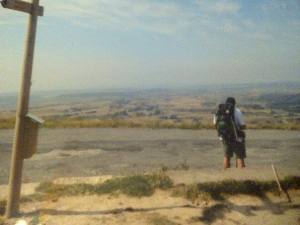
At noon I walked to the river with my son on my shoulders, and we laughed our way through the early afternoon, hiking through woods and eventually continents. It was just about three this afternoon we trained across Siberia, and ten minutes later hiked across Spain. If my clock battery broke between three and four, I’d consider myself a lucky man.
What a day it has been so far. I can’t recall a single hour of my life I’d not do again. From sunrise on I’ve had a great time trying to stay one clip in front of the bend, with golden moments I couldn’t have scripted myself. Maybe that’s why the day seems so fast—I’m really having a great time.
Did you ever stop and just recall a moment from years ago like it had just happened, just now? I mean so that you can taste the meal and smell where you were, feel it, so real like it just happened, just now, but it didn’t. That happened to me today, over and over and over, and now it is 4:20, and it is happening again. Thank God happy hour is so close; I need a drink.
Tonight, from 6 to 9, I’m going to take my time and do the best I can. I’m going to wander, both literally and metaphorically, until I run out of time. Want to come?
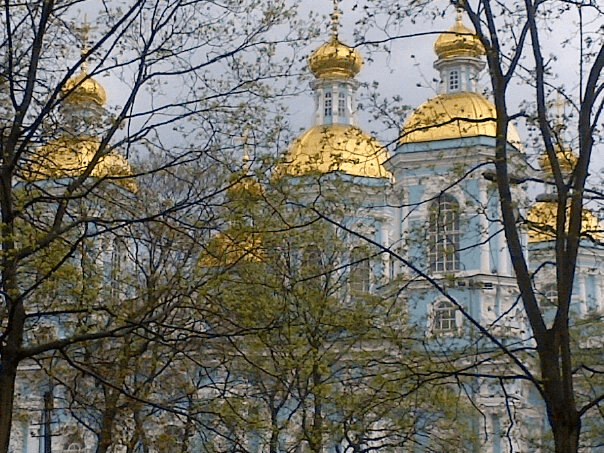
St Nicholas Cathedral (one of the rare churches to never close during Soviet days)
Over the course of more than twenty years, I came to know the backroads and alleys of St. Petersburg, Russia. I found the coolest little cafes and late night jazz joints, made friends in shacks serving Georgian wine and shashleek—a kind of shish kabob—in a small room with low ceilings and dirt floors, the Gulf of Finland pounding at the sand outside. I returned again and again to long embraces from friends like Igor and Dima and Valentine the crazy man and brilliant artist.
I taught American culture at the college, endured endless people wanting to practice their English, celebrated Victory Day on Palace Bridge year after year, mourned the losses of people during the siege with veterans who sat telling me their stories all the while holding my arm, connecting to me through touch.
I prayed with old nuns in shrines, climbed the rubble of the ruined St Catherine of Alexandria Catholic Church with American priest Frank Sutman who raised enough money to rebuild this first Catholic Church in all of Russia back to its glory from the ruins of the storage facility it had become during the Soviet Era. I met musicians in old bars—Gypsies—and played music until the sun came up, read my own work at the famed Stray Dog Café surrounded by the ghosts of Anna Akhmatova and Joseph Brodsky.
What a time it was.
With friends I toured palace after palace, attended private concerts by quintets from the Kirov who played before dinner at the Nikolaevsky, walked the halls of the Summer Palace and wondered about the infamous Amber Room, learned every crevice of the Winter Palace and its five building complex that is the Hermitage Museum. Had drinks in the basement of the Yusopov Palace where Rasputin had drinks just before he was killed for the fifth time. Walked the grounds of Galinka Palace, the Church of Spilled Blood, St Isaacs, St Nicholas, Trinity, and more. I climbed to the top of the tower of Smolney from which St Seraphim supposedly fell the ninety feet to the ground when he was ten but landed softly and got up and ran toward canonization.
I learned where to buy vodka and where not to sip it at all. I found the best places for authentic borsch and had Beef Stroganoff at the Stroganoff Palace.
I ate at McDonalds, Pizza Hut, Kentucky Fried Chicken, and more western joints filled to the gills with Russians loving the taste of America, drinking in the swell of western culture, surrounding my friends and me trying to fit more English into their Cyrillic mouths.
We took canal rides and saw folk shows where more than a few times I was dragged on stage to dance with the Russian women and men as balalaika music filled the packed arena. I’ve seen Swan Lake at the Marinksy Theatre more than a dozen times and have seen Hamlet in Russian.
I’ve made friends with former Soviet Naval Captains, countless professors, writers, and artists. I’ve become friends with translators and more than a few vets of the Chechnya War who would have rather stayed home and continued their studies in Engineering at St Petersburg University than return with no legs, one arm, half a face blown away, leaning against the Metro Walls, cap in hand—handicapped, hopeless.
I’ve sat on the rocks of the Gulf of Finland drinking champagne during the White Nights while one of Russia’s finest flautists performed privately for us, laughing, making us cry with Tchaikovsky and Bach. I’ve sat backstage at the St Petersburg Conservatory with a dear friend who is a choreographer, and his teacher, who used to dance with Baryshnikov, and watched them practice.
We’ve had food from an Uzbekistan Restaurant, and I came to understand the plight of the refugees from Azerbaijan after the slaughter by Armenians. I’ve read at the flat of Dostoevsky with an original volume of Pushkin on the table next to me and one of Fyodor’s own manuscripts two feet away. We have wandered through the massive marketplace next door and carried home to our apartment bags of fresh vegetables and chunks of meat cut before my eyes off of a carcass.
I’ve battled with border patrol over textbooks, bribed cemetery guards to let us wander sacred grounds, sat in the cell that held Dostoevsky and other dissidents, and watched the ruble gain strength, take a beating, then recover, then fall. I’ve sat on benches with women who were survivors of the siege during the Great Patriotic War and talked about family, talked about poppyseed rolls, talked about the flowers that grow in the dirt.
I was there when they reinterned the remains of Czar Nicholas II and his family, including Anastasia and Alexi. I was there for the celebration of the 300th anniversary of the city that Peter the Great called the Window to the West.
I watched as Marlboro came to town, then Clairol and every Russian woman suddenly had bright red hair. Adidas showed up and all the men wore warmup suits. I’ve walked past too many men in cheap three piece suits holding semi-automatic rifles guarding some boss’ SUV as money exchanged hands—all cash, USD, in suitcases.
I had just turned thirty-one when Communism fell and I went to St Petersburg. The city streets were dank and barren, not a single neon sign, not a single advertisement, nothing to see or do. I toured the lab of Pavlov where dogs are still used, and I stood next to the eternal flame commemorating those lost during the siege on the Field of Mars. I met Putin. I met Ambassadors. I met Sophia, who was a young teen when the Czar was still in charge, who lost her husband and son during the siege, and who sat in the shadow of the Smolensky Shrine and told me they can take anything they want from her, but they’ll never take her faith from her again. She blessed herself in the large Orthodox way and held my arm with her ninety-something year old transparent hands. She could tell me whatever she wanted. I could talk about anything I wished. I watched this county I was raised to fear fixate on all things west, becoming a strong and welcome presence in world culture and exchange. Every person I brought returned home amazed at the life that was Russia, hoping to return, knowing they had friends there.
I’ve brought dozens of US faculty, hundreds of college students, a dozen cousins, pilots, performers, writers, and an Army General.
Now, exactly half a lifetime since my first trip, I’ve watched it all go full circle. The western influence is there and that can’t be changed, but the presence has faded away—no more McDonalds, Pizza Hut, or KFC. No more Starbucks. Open readings are tolerated only if no one, no one, absolutely no one uses the word “War” in reference to the Ukraine.
I sat by hopelessly as friends wished me well and hoped we’d someday meet again. I told them, my friends, including those now in Germany and France, a few in Norway, that I cannot wait to see them again, perhaps in New York, or Paris. Maybe Oslo. Not Russia.
I have taken a train from one end of that massive empire to the other with my son, creating memories to last all our lives, spent late nights drinking shots of vodka with Siberian businessmen. I’ve sat in the home of tour operators and laughed and became brothers with them. I have mementos on bookshelves, on walls. I’ve written three books about my times in Russia, and more than fifty articles. I’ve developed three college courses about Russian Culture and mentored more than two hundred students who received Study Abroad credit. I miss the beauty of the architecture, the beauty of the people, and the mystical way history bathes me when I walk the streets at night. I miss my friends. I miss laughing with Valentine and talking about butterflies and angels. I miss sitting alone at this one café I love and drinking tea, making notes, listening to contemporary folk music and enjoying this magical life I’ve had the chance to live that brought me more than two dozen times to a place that until I was in my thirties, I never thought I’d ever see. I miss the people very much.
But I’m not going back until Vladimir Putin is dead.
It’s the “Open for Season” signs on ice cream joints and t-shirt shops. It’s the tossing of the football at the surf break, the running back on the boardwalk in bare feet to buy more drinks for everyone, the smell of coconut oil, the sound of a distant whistle of a guard in red shorts standing up, cupping his mouth, waving in some kid caught in the current.
It’s the first table full of tomatoes at Merryvale Market in the village, the pick-them-yourself marigolds still growing, but the corn is ready, and the cucumbers, and someone filled a cooler with ice and containers of crabmeat. This is where I shop; this is my local store.
It’s not simply that summer has arrived, with all the normal excitement of closed schools, warm sun, surf, gardening, hot hikes in the hills, canoeing, barbeques, and breakfast on the porch. Long days, days that run well into the evening hours so that someone might say, “Geez, it’s almost nine-thirty and the sky is still light.”
Those things, of course, but it’s more than that. I’ve spent more than half of my life in tourist towns, so that the non-summer months are punctuated by a sort of abandonment. As such, it is difficult to deny like most people I’ve known who lived and worked on the strip at a beach or in a drinking town with a bad boating problem as I do now, that it is relaxing come fall, when, as Jimmy Buffett points out, “They close down the tourist traps; the kids are back in school.” The “Coast is Clear” to say the least in those months, and some hotels and restaurants are boarded up, some simply open only on weekends, and others, well, they shut down completely and something new will rise from the sand come next summer.
Locals love that; the going back home part of tourism. I spent all of high school and my summers during college working on the strip in Virginia Beach, and I quickly became absorbed in the culture, where dressing up meant putting your shirt back on to enter a store.
But I like the arrival as well. I like the crowds, the murmuring of inlanders heading to the “coast” or the “shore” or the “beach.” Summer itself has an almost “opening” date quality about it, and those of us with depressive tendencies in the winter months come back to life, find that hope again that comes from radios playing on blankets and the sound of the surf, and the Cessna pulling an ad for some local restaurant, a boat hauling some paragliders, a few jet skis, a few kids playing frisbee, a few months of never quite getting the sand out of your hair or the salt off of your lips.
When I was a child, my family would pile in the car and head to Point Lookout, Long Island, where my grandparents had a house and I can recall like it was this morning walking single file down the center of Freeport Avenue, pushing my toes into the strip of soft tar which separated the two sides of the street, and headed around the dune fence onto the beach, and cousins would come and we’d play. Or later, my dearest friend Eddie and I would wade down the beach, knee deep, in the Great South Bay at Heckscher State Park, and we’d talk of boating across the reach to Fire Island, and further, down the coast to who knows where.
And my family moved to that who knows where, and that first summer when I couldn’t drive and didn’t know a soul, I biked that boardwalk every single day, and body surfed, and hauled strangers’ suitcases to their rooms, and made peace with heat and humidity.
There’s salt in my blood, but it only seems to season my life when the “Open for Season” signs appear.
And I know I love fall, and I like the fireplace ablaze come December, and I pull out oversized sweatshirts which anyway are more comfortable than semi-saltwater wet t-shirts with sand in the armpits.
I’m fifty years past that move south, forty years from working on the strip, thirty years from becoming a father, and there’s still something about some clerk hosing down a sidewalk in one of the eastern Long Island villages, or some high school kid rolling bikes to rent out near the boardwalk, or the guy selling snow cones, that is that constant in my life.
I’m a cancer, missing the Fourth of July by hours, so I really was, as has been written, “Born in the sign of water.” And it really is there that I’m at my best.
The real question, I suppose, is how much of what happens to us, or better stated, how much of what happens in our lives, is the result of uncontrollable outside forces and how much do we simply let happen either out of ignorance of the situation, inability to handle the situation, or, closely related to that, some particular condition (addiction, learning disorders, etc)?
It seems understandable when students with particular disorders don’t produce as well as others, even though they might have the knowledge or ambition; this makes sense these days and we make accommodations. But where is that thin line between true inability to see something through and simple negligence? I’ve written before about my challenge on the first day to my writing students. I ask them if they thought they could write a 500 word paper about being in college and I get them all to acknowledge they can. That’s an easy one, I say. They actually have to write more than that just to get in the college, I remind them. Okay, then, I continue. But if I read them all and the five best would receive one thousand dollars each, would they be better? Would they be among the five best? And they all sit up, excited by the false proposition, exclaiming that, yes, indeed, they would make sure theirs was among the best for a grand. I remain quiet for a bit for effect and to see if anyone realizes what I just did. “Well, look at that,” I say. “You just admitted to me and to everyone else you actually can do better, you just apparently can’t be bothered. Not unless I pay you. Then, sure, you’ll put in the effort if there’s something tangible in it for you. Stop telling me you can’t write or that you’ve done your best when you know if you focus and work like there’s more of a reward at the end of this than a grade. Because there is.”
It usually has a profound effect. I’ve turned that on myself at times when working on a project. The Siberian book, for instance, went through several growth spurts each time I reminded myself that the better the prose, the more people will read it. I’m not quite sure and never will be quite sure if it is the best I could have done—every writer’s curse. But there is a time to move on as well. Hard call, to be sure.
Shift one:
I turn sixty-two next week. Sigh. And I’ve let a few things slip past me, writing it off to depressive tendencies, side-effects of medicines, basic aging, and of course a complete indifference. That one’s a killer.
But here’s the thing: with a week out from my Grand Old Welcome into the world of Social Security Eligibility, I am seeing just how much I can do better and how much of these less than hoped for conditions truly are my new companions.
I have needed to lose weight for quite some time—not a lot, but more than enough for it to be an issue addressed by my doctor, who indicated two of my medicines could go away if I lost twenty pounds. It’s the proverbial vicious cycle: the side effects of the meds include weight gain, but if I lost the weight I wouldn’t need the meds. Sigh.
So a few weeks ago, disgusted more than usual with my condition among other things, I reminded myself that I actually used to be an expert in weight loss and exercise—true story. And I helped more than a few people lose a lot more weight than I need to lose. Tons more. I then recognized that when I’m traveling or very busy I don’t eat that much—at least not bad stuff—and I walk everywhere.
Could I do better than this or can I just not be bothered? So I stopped eating poorly (this after doing that before with several nutritional programs); I just stopped. And I started walking six and seven miles a day. Not every day but some days more. Bottom line? In the past ten days I’ve lost twelve pounds. There’s MY thousand dollars. It seems the older we get the more excuses we come up with. But I’m not doing anything any average sixty-one (for another seven days, thank you) year old can’t do. I walk. I eat right. Go figure. The weight is dropping. I’ll add more exercise again in a few pounds.
But there’s more. My life was on one trajectory for thirty years, and then it came completely off the rails (train metaphor—stop here and go order my book). I have made excuses about why it has taken so long to reinvent myself, but the truth is I just didn’t know where to start. I took shots at different ways of getting back on my feet but always in a half-hearted effort thinking things would continue to move along smoothly as they have for me since I am in my teens. Not so much.
I remembered a common response from that first day of writing classes for all those years: “Professor, I have no idea what to write about but even when I do I can’t get started. I sit and stare at the computer and just really don’t know where to begin!”
It’s a valid point. My response has several layers. First, yes, welcome to everything in life. We simply don’t know where to start, how to get going. I tell them that first of all stop trying to write about world peace or the rain forest. That’s like trying to fit a tractor trailer into a one car garage. The best writers in the world cannot take a subject the size of a room and fit it in a small box. Don’t write about the rainforest—write about one plant. Don’t write about world peace, write about one person, one event. So for me then, in essence, instead of thinking “Okay I need to reinvent myself by returning to that level I was at of senior faculty and three decades of pull behind me,” I need to walk out the front door, volunteer at the food bank one day and see what it’s like. I also remind them that the first step in writing, according to my mentor, the late Pete Barrecchia, is to “just write the fucking thing, you can fix it up later.”
And there it is. It’s Nike’s “Just do it” campaign; it’s Hemingway defying the blank page every morning before booze; it’s not thinking too much about what might go wrong and understanding if you’re going to sculpt an elephant out of a block of clay, the first step is to start whacking away at whatever doesn’t look like an elephant.
If this all seems a tad like oversimplification, you’d be right. There are times that demand a simplified look at what’s next, because sometimes what’s next is not some grand achievement but a simple subject followed by a verb.
And once you get a good verb down there’s no stopping you.
I know it seems silly for some specific date to mean anything. But we do that a lot—New Year’s resolutions, for example. Well this is mine. I saw this birthday coming for quite some time now, so I got a head start. By next week I’m planning on hitting sixty-two running.
But here’s the thing… I saw a guy on a corner last week in Virginia Beach with a “God Bless You—Help if you Can” sign. I helped the best I can. And I’ll be honest: partly because I’m a human being and to not help even in some small way seems ridiculous, partly because he was clearly a vet and I taught vets for nearly three decades and I understand the circumstances which may have found this man hoping for a few dollars at a red light. But also, I must admit, because I wonder sometimes how close we all are at times to the corner, sign in hand. How close are we to the acceptance of things we cannot change when we know, I mean we have the absolute conviction, that usually those “things” fall in the category of “change the things we can.” I may not be wise enough most of the time to recognize the difference, but at sixty-one years, eleven months, and twenty-seven days, I’ll be damned if simple acceptance is going to be my game plan for whatever comes next.
I’m going for a walk now, and I’m going to walk like someone’s holding out ten Ben Franklins at the other end.
I’m cleaning closets and donating clothes and other items I no longer need. Some are just old collectibles in boxes shoved beneath beds and in the attic. If I could fit junk in the crawl space under the house, I probably would. I have too much stuff. Soon, most of it will be gone, but it isn’t easy deciding what to keep. I can easily make a case for retaining every item. Sometimes it is comforting to pull out an old trinket and tell stories about what happened. I have an ashtray from a resort in Palm Springs from when I was fifteen, but I can’t mention it without my mother reminding me how I wandered alone for hours in rattlesnake country in the San Jacinto Mountains. I’m keeping that one. There are postcards and paperweights from family vacations and solo trips out west. Most of it is going. I can remember what happened without a cheap plastic prompt. And if I can’t remember then the item is a waste of space.
But last night I came to what I call the “Long Island Box.”
At almost fifteen years old we moved from my childhood home on the Island to Virginia—that was almost half a century ago; so far in my past I am the same number of years to 100 as I am to leaving the Island. And so much has happened since those days to make those first fourteen years little more than a title page; at best a brief introduction to the rest of my life. In fact, it seems that boy might easily be someone else save one particular item: the baseball my friends signed and gave me when I moved. On the rare days I pick it up it connects us across time and distance. I can look at the ball as proof I actually knew those people, and if I were to go back to Long Island, I’d almost expect to see them in their youth. Memories trick us into thinking of some places as special when, in fact, it is usually a particular time we relish. The truth is, when I hold the ball I don’t want to go back to New York; I want to go back to 1975.
When we were young we played baseball; we listened to music; we hiked the woods of Heckscher State Park; we skated across the Connetquot River and waded well into the Great South Bay. We hopped the fence of the Bayard Cutting Arboretum and camped out and kept secrets; we built forts and fought over stupid things. We came of age during the Vietnam War, and music was part of our blood. Now as if to symbolize all those days, I have the baseball. The names have not faded even while most of the faces have, though I certainly can conjure up the idea of who they all were. Over the years I’ve been back to New York, but never saw those friends again. Still, when I return I say I’m going “back” to New York, not “up,” as if New York will always be a time more than a place.
When those friends gave me the ball that last day, I wanted to stay in that town and finish growing up with Steve and Todd, Eddie and Paul, Janet and Lisa and Essie and Norman and Mike and Camille. So the ball remains my sole possession from life before the fall. I have wondered if my family had stayed, would I have pursued my burning desire to play baseball, or would the music and restlessness that eventually took over my life catch up with me anyway. Smack dab in the middle of my youth, in a small idealistic town, in a time when my friends and I were pushing the limits and planning our exit strategy, I got traded to another existence five states away. I have no regrets at all, but I have the baseball, and it teases me toward the proverbial road not taken. Steve and I were like Chris and Gordie in the film Stand by Me; Eddie and I spent near every single day together hiking through Heckscher, singing, teaching each other guitar. Every. Single. Day. For five years.
They all signed the ball.
Now I’m thinning out my collections of books and art, pawning off possessions and boxing up souvenirs. My emotional connection to many of these things is tied to the people I met along the way. While it is true that the further through life I paddle, the more I’m interested in what I can enjoy at the time, not stow away like pirate booty. How many times do we buy things while traveling, bring them home and display them, and eventually replace them with new souvenirs? Even if I do take the items out and look at them or show people, the significance eventually ebbs. I have stories and memories, and sometimes I have a longing to return, but I quickly realize that an object is not a memory, it is a symbol, a window through which we can watch our youth.
But this box is different. These are the remnants of when a boy literally grew up and tried like hell to hold tight to what he knew he was losing. I can hold the ball and see us in Steve’s backyard, yelling as we ran the bases, and I can still smell the marsh near the river that time we found an old shack for duck hunters and carved our names in the walls. The ball is proof I was there and it all happened. Souvenirs play an important role in moving on. They keep us from carrying the guilt of complete abandonment. Once in a while I pick up the ball and can hear their voices calling across the yard, across the years, Steve holding a sign of luck, Eddie calling for me not to go, please don’t go. And we’d say good night. Not goodbye—a small quirk of ours. Good night! We’d yell, and laugh, oh my living God we would laugh.
I used to have this crazy dream that we would all meet at a pub, probably on the Island, and hug and laugh and drink and tell stories of then. It would be at the old Great River Inn, which I think is an Italian restaurant now, or across the river in Oakdale, on the water, and we’d get tables on the deck. Eddie and I would have made fun of Todd for the way he used to follow us through the marshes and kept cursing whenever he stepped in the mud. Steve would recall the terrifying afternoon I hit a fly ball right at the sliding glass door on the back of his house. We’ll both remember at the same time how we used to see who could hit the ball over the roof, and then we’d retrieve it from the street and see who could throw the ball the farthest. And right at that moment I’ll pull the ball out of my pocket and show them how bad their signatures were when we were young, and we’ll laugh and pass it around, but in the presence of these people the ball will suddenly seem irrelevant. We’ll break into a chorus of the Zombies “Time of the Season” like we used to while walking to the deli. Then we’ll order more wings and beers and someone will inevitably have to leave early because of family obligations. Todd will have to head home, and Camille will have to get back to the city.
But that will never happen. We lost Eddie a couple of years ago just before Christmas, and since then the desire to go back to that beautiful, timeless, idyllic hamlet has faded away. But we could have met, we should have. We could have convinced the bartender to play some early seventies music like the Beatles “Let it Be” album. And Todd and I would tell everyone how we were sitting in his room listening to the radio when the story came through that The Beatles broke up. It will get quiet and someone, probably Janet, will say she has to leave, so we’ll all stand in the parking lot and shake hands, and hug, and say we must do it again. They will drive off, but I’ll wait, because that’s how I see this going down. I’ll stand there almost five decades after seeing them last and wonder how it is possible to live this long and still remember details. I’ll be glad I went back, but I’ll remind myself I really must move on and simplify my life, so I’ll turn toward the river and wonder just how far I can still throw a ball.
Eddie and I got back in touch about five years ago and talked often. Neither of us changed when talking to each other, and it was clear we would have remained close no matter where life brought us. We didn’t drift apart; we grew up. 1975 is so far ago I can’t conceive it ever happened at all; yet I can make a case it all went down last week, and if I head down Great River Road and make a right at Church Road and follow it all the way up past Woodhaven, and stay right when I get to Leeside Drive, my dad would be outside at the barbeque, and my brother mowing the lawn. My sister would be in her room at the top of the stairs, and me, well, I’d be heading down the road to Eddie’s and we’d be walking out toward the Great South Bay for the day to see what is next.
It’s just a ball. It’s just a damn ball. It will go back in the closet, and my friends will go back to their faraway towns scattered from Long Island to Florida. All of us probably keep neat houses with boxes stowed behind stairs just beyond reach. Even this house I’m organizing and which I built twenty-five years ago is little more than a hotel to occupy as long as possible before I check out and others make themselves at home. Maybe someone will find my baseball behind a cabinet, and the names will be worn off when the kids here take it outside and toss it around. Anyway, it’s a ball; it’s how it is meant to be used.
I suppose when I worked at the hotel when I was young, I could go home and leave work at work. It wasn’t my hotel, after all. Certainly, I’d get calls at various times since I was manager, but not often since the owner was often on site. And when I worked for Richard Simmons, it was a similar situation. As manager, I’d get calls at home if there was a significant problem, like when the other manager, Andrea, slammed her finger in a metal door and couldn’t work for several weeks. But overall, when I went home, work stayed at the studio.
This was less true as a college professor. Certainly before computers and cellphones I was able to compartmentalize my papers into office-hours work, and if I planned things well, I could get everything done for my normal eighteen teaching hours at one college, twelve more at the university, each semester. It was an insane schedule I maintained for almost three decades, including summers. But the luxury of making my own schedule, remaining primarily responsible for when things were due, allowed me to keep some sort of retentive check on everything, so, once again, when I was home, so was my mind. Sure, there were times the stack of essays followed me to my porch, sat down next to me, and would not stop babbling until I finished them. But mostly not.
Yet I have another occupation, one which chose me, therefore I cannot simply quit, lay down some sort of guidelines, and go about my business. As a writer, my mind does not clock out, ever. I have many writer friends who can do that, but I simply can’t and I’m not sure why. It might be one of several conditions, or it could be one of several medicines, or perhaps it is simply my inexplicable need to describe and highlight the miraculous beauty of life juxtaposed with the insistently rapid pace of life. But I cannot turn off my mind. I see narratives and characters, I hear stories and elements of distress, and the dynamic moments of everyday life can be overwhelming.
I actually and literally feel completely better when I’ve written something. The fact is this very blog started as an effort to relieve my mind. I know Van Gogh was like this as well, and Hemingway, and Jake the plumber at the hotel who could not rest if there was a pipe that could be fitted just a bit better, but after a solid attempt, even if he fell short, he could rest. Vincent wrote often about how his mind is eased either by absinthe or a good day of painting. My poison is nature and a few moments of trying to say something right.
But I remember fondly the days when I’d go home from the club and absolutely nothing felt undone or needed to be reworked. I could watch a football game and have some drinks with friends and never once glance at a somber face and need to make notes. That’s gone. Maybe that’s why I’m always searching for some peace of mind.
I was in a local store earlier and someone said to someone else, “No I haven’t been able to find him. I’ll call later.” That’s it. But that was enough and for the past three hours my mind has been beating the hell out of a piece I’ve been working on for far too long. This morning my son mentioned he might make biscuits today, and “process” stayed with me like a bad song that won’t leave your mind, and I either need to write things down or dive into some waves, let the cold ocean saltwater wash across me and make me present.
Nature can do that for me, more than anything else, really, make me present. A few months ago I was hiking the mountains in Utah and found myself nowhere else. Nowhere. I wasn’t writing in my mind, I wasn’t rewriting, or making notes. I was hiking. Yesterday I sat at the bay legs in the water to my calves and I watched two egrets fish for dinner. When I walked away I knew I’d spend time with them again late at night on these pages, finding that peace again on the page that I found on the bay. But at that moment, it was just me and them, kin.
I haven’t had a day off since I started working on a book about Van Gogh more than thirty years ago. Wine helps, though more often it can just fuel the flames. Lollipops certainly help. But my mind is growing tired lately. I’m always writing, even when I don’t mean to be. Still, I’ve come to terms with that. My friend Linda used to tell me, “Don’t die with the music in you.” This keeps me going. As long as I have some endless swirl of vocabulary beating at the exits of my mind, I should be fine. Maybe I never needed medicine to begin with. Just a notebook.
Painters see colors and perspective even when walking their dogs. Musicians hear that quartertone in the cardinal’s call, and writers, well, we keep indenting and backspacing, even when trying to eat a bowl of fruit loops.
This is mostly about me. Or you. I have no way of knowing.
Parts of this piece have been recycled from older writing I did, but the sentiment is more than relevant. Four years ago I left a job I held for twenty-nine years. Two years later another college I loved to work at for the same three decades shut down completely. Change was necessary, reinvention. But I’m turning sixty-two in July, and I realize I’m still trying to move forward with way too much baggage—there is the occupation itself, which can be restricting, there’s the people I’ve known both professionally and personally, some of whom I love dearly and some of whom can go to hell. It’s been hard trying to break away, and I find myself still stuck in second gear trying to recover and move on.
My high school prom theme was “Breakaway” by Art Garfunkel. I remember that a lot of friends found it cynical, and maybe a bit uncool for the times. We had just snuck past disco and Manilow, so we were really hoping for something edgy, but we ended up with a non-Simon Garfunkel. In fact I might have been the only one who couldn’t get the song out of my head, not in a “tune won’t go away” fashion, but the sentiment. It captured exactly what I was feeling at the time.
And I am again.
I watch the distant lights on the runway, Disappear into the evening sky
Everyone was thinking about partying at the beach and my mind was already out of there, gone. I was always a bit strange; while I had very close friends, I never completely felt like I fit in, and that remained throughout my misplaced career.
Truly. I am the one who thinks when I’m in any crowd that I should be somewhere else. Any song or poem or movie or work of art or conversation which steers towarddistant places and beyond the horizon instantly attach themselves to my psyche.
I always—I mean always–feel time like drips of water on the back of my neck.
It’s not the sun you’re trying to find; Something else is on your mind. You need a little space and time to break away
I took a gap year. It wasn’t called a gap year back then; it was called the not-go-to-college-for-a-year year. I just figured sometime during those twelve months before I headed to the hills of western New York for college, something amazing would fall in my lap. I kept thinking if I kept looking around, I’d find something that would have changed everything. So I looked around. Nothing changed.
Same thing happened this time, these past four years. Same damn thing, only this time it comes with other people’s misunderstandings and judgements. And I’m tired. I’m really mentally tired. I had mistaken this tiredness for depression. It’s not. It’s mental exhaustion from restlessness and frustration.
I feel like the guy who caught the under-regulation size fish, so he threw it back, but everyone thought he fried the fucker up and ate it. Which pushes a mind like mine further into other places, and you come to realize you cannot, as was pointed out to me, keep trying the same thing hoping to reach different results.
Maybe I am insane. Or maybe I went missing forty years ago and I’m still searching rivers looking for myself, wondering if I’d even recognize myself anymore.
You ever feel like you’re just one thought away from exactly what you want to say? I’m like that all the time; even when I’m writing; maybe especially when I’m writing. Like I am onto something but can’t quite put my finger on it.
Break away, fly across your ocean. Break away, time has come for you. Break away, fly across your ocean. Break away, time has come…
New York. Arizona. Mexico. New England. Pennsylvania. Virginia. A bunch of foreign lands.
…and I’m back. Got that job teaching at the local college none of us ever wanted to attend to begin with. I broke away several dozen times through the years since then to places all over the world, but I kept coming back.
Most of us when we’re young maintain a sense of standing on some edge, the sense of leaning forward and jumping off, the sense of possibility and hope. We are dying to break away from complacency, from predictability and lack of passion. I’m almost sixty-two years old and I still don’t feel like I’ve done it, so I keep thinking it is time for me…
To awaken in another country. Greet the morning under foreign skies
What I know I am best at is the actual act of simply looking around, as if somewhere back in 1960 God said, “Hey I’m just going to drop you off here for a while so you can check everything out” and simply not sitting around would be my measure of success. Well, I certainly haven’t sat around. Until lately.
That must change.
Not long ago I was on the pier at the oceanfront. It was foggy and I couldn’t see beyond where the surf was breaking. I stared at the fog for quite some time, the mist, and how it beautifully shrouded the fishermen on the pier, the workers setting up for an event on the beach, the sculptures up and down the boardwalk. I watched a young boy try and bait his hook, and I talked to an old man about how the selection of fish has changed through the decades. I watched a lone surfer let lesser waves roll by. At some point I thought about what it was like a bit further out to sea. I could clearly see that it was brighter beyond the fog and I knew that out on the horizon the sun was inevitably pushing through, we just couldn’t see it.
I turned and watched walkers and joggers pause at the rail waiting for the sun to come through and I turned back and had this overwhelming desire to borrow the man’s surfboard and push out beyond the fog and go looking for the sun. I thought how cool it must be for the fishing boats already out past the shelf searching the deep waters to be able to feel the sun on their faces, pulling in their catch while gulls dive nearby, and back on shore people wait for that morning light to come to them instead of headed out there to find it. There’s more than one way of pursuit, I’ve heard.
“There’s more than one way of growing old.”
And, of course, like some trite metaphor just waiting to pounce, I stood at the end of the pier and realized:
It’s not the sun I’m trying to find, it’s something else that’s on my mind. I just need a little space and time to breakaway.
Which one of these children was Beethoven? Einstein? Seneca? Obama? Which one did not yet know what a profound effect they would have on friends, family, the country? Civilization?
Those mad shooters of the children at the schools on the list below took more than lives; they took hope, they took possibility. If the world stopped today and straightened out this mess of ours of violence, of anger and greed, of waste, of war, of course things would start to improve. But what damage has been done that cannot be reversed? How many tipping points have we moved past on our way to another tragedy?
Which one of these young people would have, someday, soldiered up and saved your child’s life on the battlefield? Which one might have attended to your care as a hospice nurse someday? Which one would have read you last rites?
Which one of these now dead people wanted to be just like you?
Humanity has become a disturbingly inhumane race. The shootings, of course, the wars, the invasions, starvation, the rape of the land, the lack of response to massacres, the massacres themselves—machetes purchased for ten cents a piece to slaughter three quarters of a million people.
How is it possible that in spite of all our wisdom, we still can’t find a solution for homelessness, for hunger, for mental illnesses like depression and anxiety? Do you have any idea how hard it is for someone with depression to find even a sliver of hope to keep going these days? Is it really that easy to ignore them? Of course, it is what humanity does. We are an inhumane race that needs to stop referring to ourselves as one step below the angels. It is a bad reference, particularly when members of this race of ours is shooting all of the angels.
What a world. What a pathetic and misguided use of potential.
Parable time: There was a man before a judge. He built bridges and solved equations that resulted in the advancement of culture. But he killed someone. And he said to the judge, “Surely my achievements should make it easier for you to show me some leniency?” and the judge said, “You are only as good as your weakest actions. Potential is irrelevant. You should have known better.”
We should have known better. How could we not see this coming?
Humanity needs a do over. It needs to give back the apple and wipe out the sin. Humanity simply isn’t, and we’ve proven that over and over and over and over (multiply by the names of the dead from the schools listed below).
Let’s stop pretending we wouldn’t be better off if climate change won out. We’ve really not proven we’re worth saving, after all; not if the collective masses witness horrors, are horrified by them, but do nothing. Again and again and again (multiply by the parents of the children shot in the head in those schools listed below).
In the wars we’ve created, hundreds of millions have died. The collateral damage of those wars includes mass starvation, enslavement, disenfranchisement, rape, genocide after genocide after genocide.
Please. Stop pointing to all of our achievements and saying, “Yes, but look what we’ve done!” Let’s point to the horrors we’ve created and say, “now do something about this.”
But they won’t. Truly. This is not going to change. Humanity has been a flawed race from the very start, and it is getting worse.And there is absolutely only one solution. One. No kidding, just one way out of this.
But that’s for next time.
I’m going to go for a walk along the bay and wonder which one of these lost souls was the next Cousteau, the next DaVinci, the next Frederick Douglass. Which one was the next Sanger, the next Mother Teresa, the next next door neighbor playing by herself on the patio, her cat nearby, and she’s laughing every time the kitten reaches for a toy, and she is completely alive and in the moment, the sun on her face, her life in front of her?
Which one but for time and place could have been my son? Me? My father. My God.
***
School Shootings From 1998-2022
Thurston High School.
Columbine High School.
Heritage High School.
Deming Middle School.
Fort Gibson Middle School.
Buell Elementary School.
Lake Worth Middle School.
University of Arkansas.
Junipero Serra High School.
Santana High School.
Bishop Neumann High School.
Pacific Lutheran University.
Granite Hills High School.
Lew Wallace High School.
Martin Luther King, Jr. High School.
Appalachian School of Law.
Washington High School.
Conception Abbey.
Benjamin Tasker Middle School.
University of Arizona.
Lincoln High School.
John McDonogh High School.
Red Lion Area Junior High School.
Case Western Reserve University.
Rocori High School.
Ballou High School.
Randallstown High School.
Bowen High School.
Red Lake Senior High School.
Harlan Community Academy High School.
Campbell County High School.
Milwee Middle School.
Roseburg High School.
Pine Middle School.
Essex Elementary School.
Duquesne University.
Platte Canyon High School.
Weston High School.
West Nickel Mines School.
Joplin Memorial Middle School.
Henry Foss High School.
Compton Centennial High School.
Virginia Tech.
Success Tech Academy.
Miami Carol City Senior High School.
Hamilton High School.
Louisiana Technical College.
Mitchell High School.
E.O. Green Junior High School.
Northern Illinois University.
Lakota Middle School.
Knoxville Central High School.
Willoughby South High School.
Henry Ford High School.
University of Central Arkansas.
Dillard High School.
Dunbar High School.
Hampton University.
Harvard College.
Larose-Cut Off Middle School.
International Studies Academy.
Skyline College.
Discovery Middle School.
University of Alabama.
DeKalb School.
Deer Creek Middle School.
Ohio State University.
Mumford High School.
University of Texas.
Kelly Elementary School.
Marinette High School.
Aurora Central High School.
Millard South High School.
Martinsville West Middle School.
Worthing High School.
Millard South High School.
Highlands Intermediate School.
Cape Fear High School.
Chardon High School.
Episcopal School of Jacksonville.
Oikos University.
Hamilton High School.
Perry Hall School.
Normal Community High School.
University of South Alabama.
Banner Academy South.
University of Southern California.
Sandy Hook Elementary School.
Apostolic Revival Center Christian School.
Taft Union High School.
Osborn High School.
Stevens Institute of Business and Arts.
Hazard Community and Technical College.
Chicago State University.
Lone Star College-North.
Cesar Chavez High School.
Price Middle School.
University of Central Florida.
New River Community College.
Grambling State University.
Massachusetts Institute of Technology.
Ossie Ware Mitchell Middle School.
Ronald E. McNair Discovery Academy.
North Panola High School.
Carver High School.
Agape Christian Academy.
Sparks Middle School.
North Carolina A&T State University.
Stephenson High School.
Brashear High School.
West Orange High School.
Arapahoe High School.
Edison High School.
Liberty Technology Magnet High School.
Hillhouse High School.
Berrendo Middle School.
Purdue University.
South Carolina State University.
Los Angeles Valley College.
Charles F. Brush High School.
University of Southern California.
Georgia Regents University.
Academy of Knowledge Preschool.
Benjamin Banneker High School.
D. H. Conley High School.
East English Village Preparatory Academy.
Paine College.
Georgia Gwinnett College.
John F. Kennedy High School.
Seattle Pacific University.
Reynolds High School.
Indiana State University.
Albemarle High School.
Fern Creek Traditional High School.
Langston Hughes High School.
Marysville Pilchuck High School.
Florida State University.
Miami Carol City High School.
Rogers State University.
Rosemary Anderson High School.
Wisconsin Lutheran High School.
Frederick High School.
Tenaya Middle School.
Bethune-Cookman University.
Pershing Elementary School.
Wayne Community College.
J.B. Martin Middle School.
Southwestern Classical Academy.
Savannah State University.
Harrisburg High School.
Umpqua Community College.
Northern Arizona University.
Texas Southern University.
Tennessee State University.
Winston-Salem State University.
Mojave High School.
Lawrence Central High School.
Franklin High School.
Muskegon Heights High School.
Independence High School.
Madison High School.
Antigo High School.
University of California-Los Angeles.
Jeremiah Burke High School.
Alpine High School.
Townville Elementary School.
Vigor High School.
Linden McKinley STEM Academy.
June Jordan High School for Equity.
Union Middle School.
Mueller Park Junior High School.
West Liberty-Salem High School.
University of Washington.
King City High School.
North Park Elementary School.
North Lake College.
Freeman High School.
Mattoon High School.
Rancho Tehama Elementary School.
Aztec High School.
Wake Forest University.
Italy High School.
NET Charter High School.
Marshall County High School.
Sal Castro Middle School.
Marjory Stoneman Douglas High School
Great Mills High School
Central Michigan University
Huffman High School
Frederick Douglass High School
Forest High School
Highland High School
Dixon High School
Santa Fe High School
Noblesville West Middle School
University of North Carolina Charlotte
STEM School Highlands Ranch
Edgewood High School
Palm Beach Central High School
Providence Career & Technical Academy
Fairley High School (school bus)
Canyon Springs High School
Dennis Intermediate School
Florida International University
Central Elementary School
Cascade Middle School
Davidson High School
Prairie View A & M University
Altascocita High School
Central Academy of Excellence
Cleveland High School
Robert E. Lee High School
Cheyenne South High School
Grambling State University
Blountsville Elementary School
Holmes County, Mississippi (school bus)
Prescott High School
College of the Mainland
Wynbrooke Elementary School
UNC Charlotte
Riverview Florida (school bus)
Second Chance High School
Carman-Ainsworth High School
Williwaw Elementary School
Monroe Clark Middle School
Central Catholic High School
Jeanette High School
Eastern Hills High School
DeAnza High School
Ridgway High School
Reginald F. Lewis High School
Saugus High School
Pleasantville High School
Waukesha South High School
Oshkosh High School
Catholic Academy of New Haven
Bellaire High School
North Crowley High School
McAuliffe Elementary School
South Oak Cliff High School
Texas A&M University-Commerce
Sonora High School
Western Illinois University
Oxford High School
Robb Elementary School
(This is an incomplete list of photos from Robb Elementary School)
I don’t usually hear or see geese on the bay this late in spring, but last night they were there. Canada geese fly over my house every night in winter. From late afternoon until after midnight flocks of geese pass or land or take off from the wealth of local waterways. Some settle in small ponds, but most gather in the harvested fields. Usually they commute in groups of fifteen or twenty, but I’ve heard their honking and stepped onto the porch to see upwards of two hundred fly by. One time they were so loud in the field I went out to find thousands of geese settling in before continuing to who-knows-where. Their stay is swift, albeit perennial.
And last night they uncharacteristically crossed the twilight sky. It is that sound, though, the whoosh of wings in a methodical push along with their familiar call, which remains as true and consistent in my life as the sounds of birds in the morning. Here along the Chesapeake some geese nest all year, but it is in winter when migration routes from the St. Lawrence Seaway to all points south steer them into the area after dusk. I have laid in bed well into the evening and listened to them move past in the cold, clear sky. Sometimes I sit on the porch expecting, hoping, knowing they’ll be back.
The migration of geese in and of itself is not what keeps my attention in this narrative, even now in May when they’re more abundant in January. It is their sound and the way it always calls to me, like so many sounds in my life. There is music, yes, of course, but there is more. Some sounds get in my bloodstream, remind me of who I am at the core, which I can use in a world where it is so easy to get lost.
When I was young the foghorns in the early hours called out from the boats on the Great South Bay. I remember waking to their long, singular tone, warning other fishing vessels headed out or coming in across the reach. Foghorns will always remind me of my adolescence and riding bikes out on early spring weekend mornings with my friends, a band of twelve-year-old’s biking it to the bay through the fog and up to the docks. On clear days we could see Fire Island, but some mornings we couldn’t even see each other, and being that close to the water so early meant feeling the booming vibrations from foghorns. I can still smell the marsh on the nearby river and feel the cool wetness of the salty air on my skin.
And I know as long as I find my way to the water in winter I can count on the geese overhead, calling across the river. If I was to head back to the Island and one morning went to the docks at Timber Point, I am certain I’d not recognize the area for how much has changed. There might be more traffic nearby, and the number of leisure boats has most likely increased. But all these decades later I am equally certain the sound of foghorns would drift toward shore in the morning as certain as a flock of geese migrate through these local fields, even now on the front edge of summer.
More than twenty-five years ago I built this house frequented by hawks, the occasional eagle, countless osprey, and on winter evenings, geese. In recent years the number of bald eagles has increased. I have never been complacent watching such majestic birds of prey in flight. One move of her wings and an eagle can glide on a draft clear across the river before turning east across the bay. Still, they make no sounds. Oh, sometimes hawks call out to each other in a very distinct high pitch caw. But mostly they perch in silence. Their lack of sound creates a distance between us like strangers in a waiting room. Once I walked back from the river and saw an adult bald eagle atop the house. But because of the raptor’s silence and blank stare, we lacked connection, some sort of shared space.
Despite my own random migrations, I find comfort in the sound of the familiar. The voices of those I have loved and lost talk to me sometimes when I sit at night on the porch and recall long-ago conversations. There are too many to name, but sometimes I am taken aback by a sound coming off the trees like an old friend calling down the driveway, laughing. It can be very real. Yesterday I listened to a cd my sister made of an interview she did with our parents many years ago. It was the first time I heard my father’s voice in years; it was a profound moment, to find the past brushing against my skin like that, whispering I’m still here if you need me. Some sounds simply defy time itself.
We can be haunted by sound.
In a world where we often seek silence to escape the noise, it is the sounds which ground us; the laughter of friends and companions that call to us through the fog of daily life and steer us home. Pavlov wasn’t far off, but the bells which I respond to are the sounds of my family gathering and telling stories, a football game on television on Thanksgiving Day with the smell of turkey filling the house, an old western on a rainy summer Saturday afternoon.
I love the daily calls of life, the drifting sounds on a summer evening, the persistence of the ocean waves, the relentless ranting of house wrens in the morning.
Wine glasses. Dice on a game board in the other room. The quiet wisp of golf on television. Steaks on a hot grill. An acoustic guitar. The heavy press of a hiking boot on a snowy trail.
Bacon in a pan in the morning. The bouncing of chains on a swing set.
originally published in Kestrel: A Journal of Literature and Arts
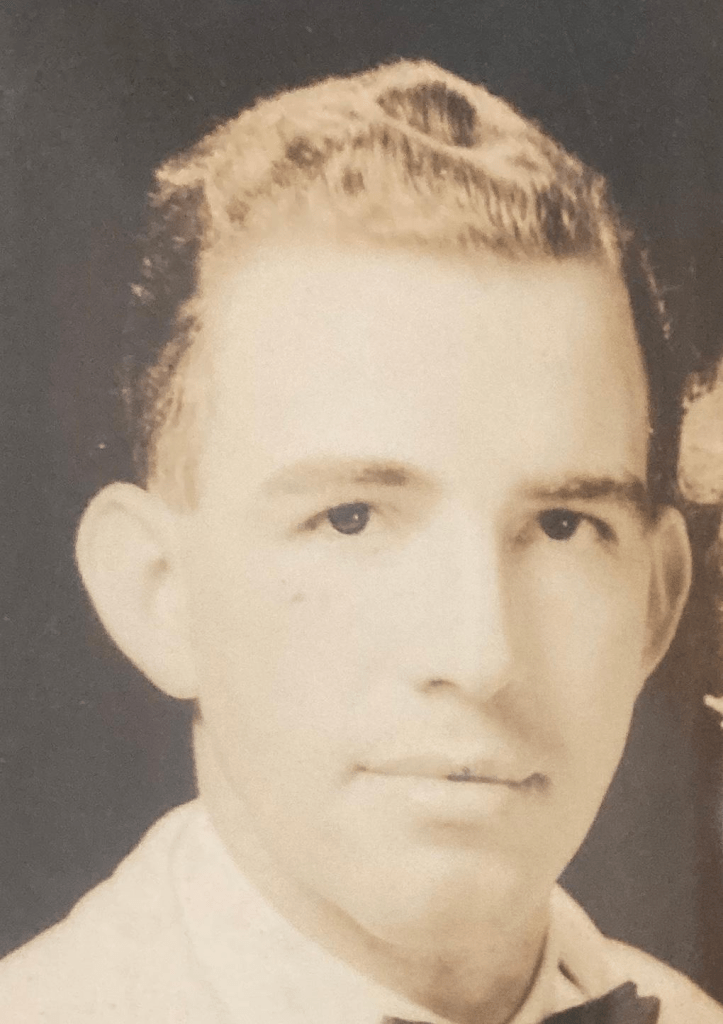
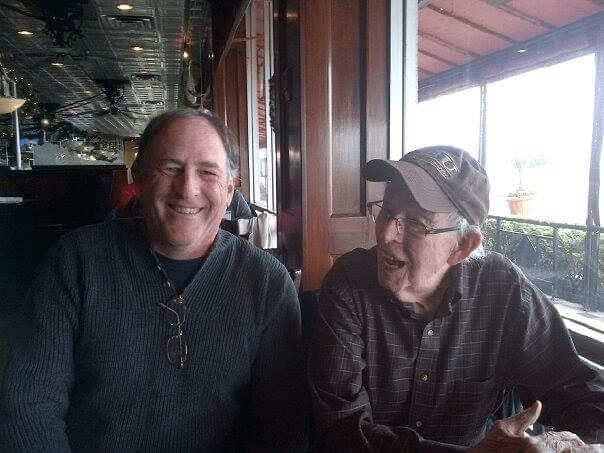
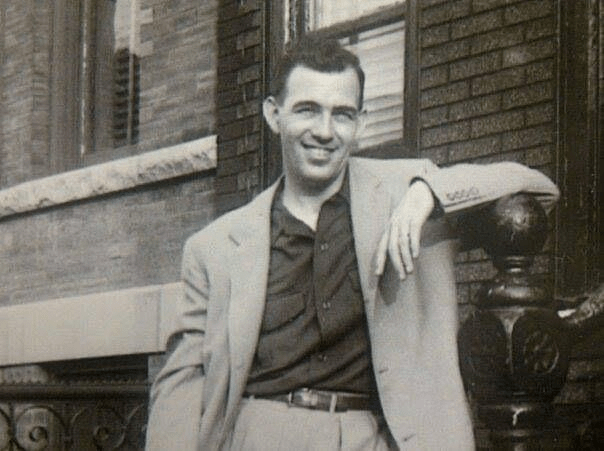
On May 23rd, Dad would have been 97 years old.
I. Little League
My dad coached my team, the Wildcats, and hit us grounders during warm up before each game. When we’d practice our batting Dad pitched to each of us. He never treated me any differently than the others on my team, though they weren’t friends of mine, and even though I couldn’t hit the side of a barn. I was nine and we all played hard. It was 1969 and the Mets went from last to first. Like me, their ninth season of existence, and like me, little was expected of them. But they started winning. I cut out a coupon from a carton of milk for free tickets and we went to Shea to watch them win. Dad helped us move through the parking lot and up the colossal cement stadium steps with ease in time to see them move from three runs down to one run up. Some player hit the “cycle” Dad said; he had hit a single, a double, a triple and a homer. I looked toward first base and a man behind that dugout held a sign that said “You Gotta Believe.” He had other signs, too. One said “Let’s Go Mets!” and everyone chanted “LET’S GO METS!” The infield was the cleanest dirt I’d ever seen and the outfield a shade of green television couldn’t convey. The stands were abuzz with talking and cheering and old men drank beer and their sons ate peanuts or hot dogs and the summer suddenly seemed alive. I wanted to breathe baseball.
The next day the Wildcats played some rival Long Island team and I told Dad I wanted to drive in some runs. “Here’s the deal,” he said. “You hit a home run and I’ll buy you ice cream every day for a week.” Everyone on the team laughed. It was laughable.
On my second at bat, though, I felt stronger than Cleon Jones and took a high pitch and sent it over the first baseman’s head into right. I was around second when it rolled to the chain-link fence. I couldn’t hit but I could run fast. By the time someone threw the ball to the cut-off man, I was across home staring at seven straight days of ice cream. Dad was quiet back then, never a man of words; but I could see how proud he was that day.
For years that story stayed in the family, everyone making fun of my appetite for desserts. “Put ice cream in the deal and the boy can produce,” they’d joke.
But I kept thinking of that sign behind first, the man who stood up the whole game holding up different placards. The one that blinded me was “You Gotta Believe!” which he held up after the homer that gave the Mets the win. I saw that sign all the way home that day, and all the way home the next.
When the Mets won the World Series three months later, he held up one last sign: “There Are No Words!”
Growing up doesn’t come with instructions. I’d look at Dad and see the man with the sign. It’s a lot of faith, a lot of support. He was a great coach. He knew I couldn’t hit worth a damn; but he didn’t stop me from playing ball.
II. Sons
Big Al came in the Harris House Pub by eleven thirty every morning for a few Buds and a pack of cigarettes. He couldn’t see well and moved slowly. He’d sit at the bar and talk about his son and how he doesn’t call anymore, and how he hasn’t seen him since he was young, who told him once: “I’m not spending my days dogging it for my blind dad.” Al gazed with difficulty across thick glasses and walked the snowy streets with his hand touching the wall. He’d stop every block and rest, but eventually he’d swing open the old door to the pub and sit on his stool. He’d order his Bud and begin the questioning.
“Who played in the first world series and who won?” I’d laugh and make a few drinks for other customers then wander into the back. I’d return with ice for the bin and say,
“Pittsburgh versus Boston, 1903 and Boston won …um…five to three!”
“Excellent, Bob, here’s another quarter,” he’d say and laugh, telling his friend Kenny at the next stool how I was a walking encyclopedia of baseball facts. “Who struck out the most batters in his career?” I’d return from the kitchen with hot food for another customer.
“Too easy, Al, I grew up watching him when he was with the Mets!
Nolan Ryan!”Two bits more hit the bar.
A co-worker figured I had a baseball book in the back but I didn’t.
An hour later: “When was the first professional baseball league formed?”
I’d roll out a keg and while tapping it tell him, slowly as if in a state of recollection, “18…7…1.”
Kenny followed me to the kitchen door after one of Al’s questions and heard me on the phone: “Hey, highest batting average.
Cobb? What was it? Got it, talk to you soon.” I turned and he laughed.
“Some sports hotline?” he asked. “Dad,” I told him.
“Cobb. 367,” I said, placing another beer on the counter without charging him. Al never lost a dime.
Back when payphones were standard my father had an 800 number at his desk, and wherever I traveled in the United States I could call him for free. I’d tell him where I was and how life was, and he’d tell me what was new with him and my mom. A certain peace permeated the air back then. A sense of silence drifted through the desert and plains and mountains as I moved through, the comfort of calling always in my mind. If I felt lost I knew Dad would answer and we’d talk about nothing, but it meant everything.
Dad’s hearing is weak now, and he rarely talks on the phone. He watches the games with subtitles on, but they don’t always keep up with the announcers’ rapid-paced reporting. It’s harder to see the score box on the television and sometimes keeping track of what’s going on can be frustrating. When that happens he tells me about his boyhood in Brooklyn, the Branch Richie days of the Dodgers, and going to Ebbetts Field with his friends or his father. He still knows the players’ names, the records, and where they went after the Dodgers went to California. I tell him the time so he can watch the weather, and we talk about the Mets. We’ll complain about a weak bullpen or celebrate their clutch hitters, and we enjoy that the season passes slowly, but baseball has nothing to do with it.
III. Instructions for Walking with an Old Man at the Mall
First of all, he’s walking, you’re joining him. Don’t stop if he doesn’t. Don’t keep walking if he doesn’t. You are a shadow, an imitation.
Stand on his side where he can better hear you. If he can’t, repeat yourself as if for the first time, no matter how many times. Never say “never mind.” When he tells you something, you have never heard that story before, even if you can repeat it word for word. When he tells you about the baseball games with his dad seventy years earlier, they are new stories, and your response must sound genuine. When he tells you about the time he went swimming at camp with his friends, and how when they went to retrieve their clothes from under a boat they found a snake, be amazed again, ask what happened. Laugh again since he will laugh.
When he pauses in front of a store, don’t question it. At that moment, allow his sole purpose in pausing is to look at whatever item is in that display. He might mention how he used to own that tool, those pants. Let him know you remember; do not make a big deal that he remembered. He needs you to know he didn’t stop “to rest”—he stopped to look at the display. When he says he could use that new suit, a new pair of shoes, or a new whatever is new, agree. If he happens to stop in front of Frederick’s of Hollywood, there’s no need to joke; it will only emphasize he couldn’t get past a place he would never stop with his son. This time he simply couldn’t continue. Talk instead about his grandkids. Talk about the rain. Do not talk about old times. There’s no need to recall the time he drove you to the airport for a flight to college and you saw him hours later waving to you onboard the plane. Avoid bringing up the time just the two of you spent the day at Shea Stadium when you were a child. Instead, ask about the Mets and if he happened to catch the game last week. You know he did. Let him tell you about it.
When he seems tired but doesn’t want you to keep stopping, stop to fix your shoe, to read a sign; look for a bench and suggest you sit and talk. He’ll ask about your son; he’ll ask about work. Have something to say other than “fine, Dad.”
Do not look at your watch. Do not check your phone; most definitely do not check your phone. Leave both in the car. Do not indicate in any way he is keeping you from anything. No other time is relevant anymore. But you will grow tired and restless. If he senses this, he will insist you leave. He will say he knows you have a lot going on, and he’ll say he’ll see you later, and he’ll do whatever he can to make you feel he is completely fine with it. Stay anyway. Then sit a bit longer. Do not ask about the doctors; the walk is to forget about the doctors. Do not quiz him on medicine or schedules. He is out for a walk, you joined him, it is something about which he will tell others— that he went for a walk at the mall and his son was there and joined him. Do not let his story end with “but he had to go.”
When he can’t remember where he parked his car, ask if he parked in the usual area. He did. Sit down for a few minutes. It will come to him. There’s no need to ask probing questions like “which stores” or “what street” he was near. Just sit a while. He’ll remember. You’re not in a rush.
When you leave the mall be near him as he steps from the curb, but do not help. He will be fragile and unstable. The step from curb to parking lot is a leap; he used to do it with you on his shoulders and two others running out front. Let him step down on his own but be ready. He bruises easily and a simple scrape is a trip to the doctor. Have the patience he had when your childhood curbs seemed like the cliffs of Dover.
Don’t say, “I guess I’d better get going.” Don’t make plans. Don’t make any comment to indicate he did well or that it was a “good walk.” He didn’t do well and it wasn’t a good walk. He’s older now. He’s slower now, but he knows this. Really, once the walk is done, the time spent together always seems to have passed faster than we recall.
The seasons, too, pass faster. He knows this as well.










 a view from this wilderness