I owned an ’85 burgundy, 5-speed, fuel-injected, three-door, turbo charged Dodge Lancer. We called it the POS. It was the car I used to bring garbage to the dump, carry bricks and wood, and haul crap without caring. I kept it clean but didn’t worry if it wasn’t. We’d find driftwood and toss it in the back, sand and shells and all. We spent countless hours driving to the beach, the ice cream parlor, the auto repair shop. My son practically grew up in that car, learned music from its cassette deck, held up the felt on the falling roof so I could see where we were going. I drove him to school in that thing well into third grade.
We all remember our cars.
My first was my dad’s ’72 Nova, which wasn’t mine but I racked up the miles on it for him as good sons do. My first car I drove when I lived on my own was a 1980 light blue, Chevy Monza. That little thing and I saw the United States a few times, smuggled blankets out of Mexico and Molson’s out of Canada. We spun out down an icy hillside in Massachusetts and I ended up junking it in Pennsylvania when the engine blew out. I was driving all of a friend’s belongings from my house to her mom’s when that happened. I think that’s when I started understanding metaphor. In fact, to this day metaphor drives my writing life. It comes from cars.
My favorite was a red Jeep Cherokee five speed. I abused that car the way jeeps should be abused, and it lasted far longer than I treated it. It is the car I think of when I hear Paul Simon singing, “If more of my homes had been more like my cars, I probably wouldn’t have traveled so far.” Those were good times, windows open, radio blasting. There was the time I was stranded in the desert with a dead battery a hundred miles from a tree. Or when for several years the gas gauge on the Jeep was backwards. In forty years I went from fitting everything I own in the trunk to needing a U-Haul just to go away for the weekend. I can think of very few objects I’ve owned that symbolized “freedom” more than my cars.
One day when Michael was small and we were in the POS we drove over a pothole at a sub shop parking lot. The chassis slammed hard and made a crumbling sound like folding metal. I tried to back up and it refused. A friend pushed me out and I drove home thinking whatever was wrong righted itself.
No. In fact, I couldn’t go backwards for the next eighteen months.
I learned to look for a pull through. I’d park far away at the mall, grocery stores or work. I learned to anticipate what was next so as not to corner myself, or worse, find myself with my face against the wall. I learned patience. Only three times in a year and a half I found myself trapped. The first was at Old Dominion University when arriving for a night class and the parking lot was full save one spot against a pole. I paused and asked my friend if he wanted to push me in then or push me out later.
I learned what roads I couldn’t turn down, what tight situations might be waiting, when to find a slope to roll back down, when to walk. Incident number two: A cop once pulled me over for pushing a yellow light. He let me go but stood and waited for me to leave first, but I had stopped in front of a sign and I couldn’t back up when I needed to. He waited. I waited. Finally, I said, “Wow Officer, my heart is still racing and I’m tired. I think I’ll sit here a minute and compose myself.” He left.
It was after the third time that I junked the car—excuse me—donated it to Good Will. I had to get it inspected and went to a shop where I know the mechanic, Tuna. Honest to God his name is Tuna. I didn’t want to tell Tuna about my inability to back up, obviously, since I refused to buy a new transmission, and I realized I was screwed when he pointed me into the one car bay with no way out but back.
In Virginia, an inspector’s first task is to scrape the old sticker off the windshield, so while he scraped I called, “Hey Tuna, it’s the last day of the month so I know you’ll be swamped, go ahead and put the lights on while you’re in there.”
“Good idea, Bob!”
I called out. “Okay. Brakes? Good. Left signal? Good. Right signal? Good,” and found myself doing my own state inspection. “Reverse” No white lights lit up, of course. “Good!” We finished that part and he finished the rest, put on a new sticker and asked for ten dollars. I gave him a twenty and said, “Tuna, I need a five, four ones, three quarters, two dimes, and five pennies.”
“Sure Bob,” he said and headed to the store in the front of the shop. When the shop door slammed I got in the car, threw it in neutral, got out, heaved it over the red tire lifts onto the gravel lot, jumped on the brakes until the POS was far enough back to go forward. Tuna came out and I held my side gasping for breath. “You must be in a hurry!” he said handing me my change. I drove off wondering what was next.
Seems like back then I was always wondering what was next.
The following day I drove Michael to school. We listened to music while he held up the roof. He grabbed his bag, got out and waved as I rolled forward, moving on, and realized the truth is we rarely have a reason to go backwards anyway.
A million years ago I flipped baseball cards with friends on the sidewalk outside our home in Massapequa Park. I’d sit on the cement in my dungarees and Wildcats little league t-shirt with a stack of Topps cards in my left hand, ready with one in my right hand between thumb and index finger, hoping to take the stack on the ground between us. The older cards were limp and ripped in places, but the new ones were stiff, still dusty from the hard stick of gum that came with them.
I’d turn over a rookie Tom Seaver or a Cleon Jones, not knowing then that I held several thousand dollars in my left hand, and since at some point the following year I had the entire 1969 New York Mets squad, at some point I held tens of thousands of dollars. I only knew I wanted to kick some baseball card-flipping butt before I had to head back inside for dinner. We were about to move further out on the Island, to a new house out near the Great South Bay, and who knew when I’d have another chance to do this.
Life was about flipping cards. Ask anyone who was nine back then—they’ll back me up on this.
Everything was easy. For me, anyway. On the other side of the planet the Vietnam War was in full swing, my uncle on his way over, a friend’s brother on the next street was not coming back. And just upstate, music fans would gather in a month at Max Yeager’s farm, while just fifty miles away in the city, the Mets were in last place for the last time, heading in a matter of months to a miraculous championship. Hippies walked down Main Street, the Beatles were together and going strong, Nixon was reelected, and Steve Bezos just turned five.
Just about the time I lost the Seaver card, somewhere above us Apollo Ten was orbiting the moon, doing surveillance for their successors, Apollo Eleven, a few months later. Funny, now it occurs to me that up until that point I lived in a world where we still had never walked on the moon. I wonder what we compared tasks to before we could say, “We can land a man on the moon, but we can’t…”
In any case, I followed the Apollo mission, didn’t care about Tricky Dick, preferred the Birds to the Beatles , and baseball was the universe. I was eight, for God’s sake. My voice hadn’t yet changed.
Yeah, seriously; a million years ago.
That was back when my friends had no last names. They were simply Charlie and David and Chris and Tommy, and Kathleen, the Little Read Haired Girl Kathleen. We had a pool and block parties and barbeques, and sometimes there were blackouts and everyone came out into the twilight evening, my friends and I chasing each other, the adults standing around in the cooling summer air, talking about how, “Over in Amityville they still have lights, and a few houses on Euclid, but they’re out down on Park Lane, and all the way down East Lake.”
Lights. No Lights. Whatever. I was eight.
My cousins lived too far away to ever think about visiting on a whim—a good thirty or forty miles, and the ice cream man would come, and the television was a big black and white console on which my sister would watch Gunsmoke and Bonanza and my brother would watch Star Trek and the Olympics from Mexico City and I’d watch cartoons or Andy Griffith. And I’d watch baseball when it wasn’t blacked out to local viewers because the game over in Shea Stadium hadn’t sold out.
And at night after the Late Shows ended, if I was still awake in bed and one of my parents had fallen asleep on the couch, I could hear a man’s voice declare, “That is the end of our broadcast day,” and the screen would get fuzzy with a low buzzing noise all night. Didn’t matter which of the five available channels was on, they went off the air.
The friends I have now were from all over the place back then. Rick was probably about to leave high school and hitchhike across the country, Tim was playing high school football in Philadelphia; the other Tim was a lieutenant humping his way through the marshes of Vietnam, and Sean was learning from his father upstate the value of giving, of volunteering. And when I think of my friends back then, well, who knows where they are now? I think about them when I pass through Kennedy Airport or the rare times I’m on the Island and stop in a store, wondering if I just walked by or stood in line behind someone that at one time a million years ago was my absolute best friend; the one I’d know forever. It was so easy then. When you’re eight you’re simply always going to be eight—no discussion. Your parents will always be there, your siblings will always wake up early with you on Christmas morning to exchange gifts before you head down to the living room to see what is under the tree, and baseball card-flipping is more important than school.
Sometimes I have to try hard to make myself realize that that eight-year-old was me. That it wasn’t some kid I saw in a movie or read about, or a child someone told me about. That was me, legs crossed on the cracked cement sidewalk on East Lake Avenue, the same me that sits now near the river and listens to the approaching flock of geese, watches the descending sun, feels the faint brush of something familiar, like a song I once knew or a memory of someone that was kind to me. The same me that barreled across Siberia with my own son, who is now more than twenty years older than I was back then.
I’m at the other end of this game now. It’s late, and I’m tired. I have some writing to finish for readings next week, and a few deadlines looming, and I walked out on the porch and listened to the cold night, the clear, star-filled night, mid-winter night that is colder than it should be here on the bay. A friend of mine believes in reincarnation, believes we come back as, well, some other living form, whether another human like the Dalai Lama does, or as an orangutan, but as something. I’d be okay with reincarnation, but I want to come back as me. I want to do this again, make those mistakes again, fall in love again, have my heart broken by the same girl again, play golf with my father and brother, receive care packages from my sister when I was at school, move into those dorms again, play tennis again. Hurt and give and cry again.
If we agree eighty years is about a life, anything more than that is a bonus—overtime, if you will, then I’m now entering the fourth quarter. Games have been won or lost in the fourth quarter. Some of the greatest plays in history were made in this part of the game.
Back in 1969, the Mets turned a losing season into a winning streak now universally called miraculous more than halfway through the season. But as Mets catcher Jerry Grote pointed out, “It’s not a miracle, it is persistence, it is determination, it is faith in yourself and each other.”
It’s not over yet. And it just might be that the best resource I have so I can face whatever comes next on this pilgrimage is that eight year old boy somewhere inside who could flip baseball cards with the best of them.
I walked to the river and watched geese settle on the field. It is cold, and the water is choppy today. I sat on the grass and watched the tide retreat to the Chesapeake, pulled by the moon and pushed by the current, both. I like the movement of water, the ebb and flow, and even on days when the river is glassy, you can see some subtle and constant change.
That’s how writing should be. And life.
I do not need New Year’s Day to know renewal; it is just down the hill. The last few years brought with it challenges I sometimes could not face without support, but at the end of the day, my pulse returned to normal and my often untethered and anxiety-ridden thoughts realigned themselves with the tide. Sometimes at night—often at night—I feel the same sense of being mentally cleansed that so many experience on this day, and the notion of a new start seems obvious and obtainable. My passive hopes become active plans; my stagnant ambitions, activities; my indifference, passion.
I don’t want to regret life, having lived not saying what I want to, even at the risk of failure and embarrassment. I don’t want to constantly and constantly and forever constantly wonder if I could have done X or succeeded at Y. I want to fail rather than wonder; I want to participate rather than watch others from a distance. I want to say what I want to say.
And I want to be clear.
I need to back off of the gerunds and modifiers, ease up on the nouns. Life should be a string of verbs. I’m attempting to live out the rest of the little there is of life without piling on more passive voice.
When I teach creative writing, I emphasize action. Too many rely upon some benign and wordy noun-universe. Characters—all of us—need to do something. Let’s see the love and heartbreak, the gentle breeze and the raging storm; at least then we’re paying attention. Safety has little place in the creative process, and what is more creative than life? Characters both imaginary and real need to get off their collective asses and act. You can tell me all day about what a person is like, looks like, thinks about, and you can expose the deepest concerns of her soul with some convoluted third-person omniscient narrator, but I want diagonal lines, not straight ones, I want inverted triangles and asymmetrical actions. I want first person. I want active verbs and movement and pace rather than nothing but moments of pondering.
Today is as good a day as any for a rewrite.
Certainly, I have failed, oh my I have failed. I am failing still. So I need to stop holding back. Hesitation doesn’t pay off either on the page or on the go. So I’ll absolutely take advantage today of another chance to begin again. It is always the first day; there is always another draft.
This work originally appeared in Susurrus Magazine, with portions published in various other journals.
Happy New Year. Sort of. I can’t keep track anymore, what with shifts and adjustments through the ages. Hell, I can’t even keep track of the days of the week. Last Monday was Christmas, which made Tuesday feel like Monday, but my son works on Mondays and Wednesdays so being around all day made Monday feel like Sunday or Thursday, until Wednesday came and it felt like Monday again. Next week I’m certain to go through this once more, with Monday being a holiday, and Tuesday feeling like Monday, and to add to that I’ll still date everything 2023, though, really, what difference does it make?
It’s only time after all.
Time Piece
The truth is, if we made lists of all the reasons why we need to know the days of the week, those lists would not be that long, nor the reasons to remember the year for that matter. It’s all relative, and they can be as irrelevant as they are essential to our lives, existing in the extremes.
No calendar can keep measure of how much time has passed since my father died; I can argue it was a month ago, I can claim it decades ago. And my childhood on Long Island ended about fifty years ago, but when I recently spoke to a friend from then, my adolescence seemed to have happened on Tuesday. No education I can conceive can inform how I feel when I stand on the sand along these beaches in Virginia before dawn, quietly watching the surfacing sun as buffleheads swim by and oyster boats churn out to sea; it is timeless in its immediacy. Einstein’s relativity metaphor aside, nothing says “it depends” more than our references to time—sweet, delicate, ethereal time. Certainly, calendars keep track of the days of the week, the months, but they can never measure moments, they cannot calculate how long we love, how long we have mourned.
Which makes the measurement of time as problematic now as it was in pre-recorded history, when sundials and seasons were used instead of Big Ben and Prague’s Atomic Clock. Still, they managed to mark holidays and celestial changes with the most primitive tools. Some people had that rare ability to look up to the stars, do a double-take, and say, “Shit. I think it’s Friday,” and then things change.
New Year’s Day, for instance, is New Year’s Day for a reason. Since my tenth birthday on a warm Fifth of Quintilis, in 1970, I have wondered why the New Year often starts smack dab in the middle of a blizzard. Simple, actually: First of all, ancient Romans had a God for everything. One of them held the key that unlocked that “passage” between what is and what is to come; or, metaphorically speaking, this particular God was the key master that opened the way for new things to occur.
His name was Janus. He was also the God of doors, by the way, which makes sense. New Year’s used to begin in March, but in 46 BC, the world’s most popular Caesar and favorite orange drink, Julius, decided the calendar needed reform. He was right, actually, as the Roman calendar already in place for six centuries followed the phases of the moon, and that totally screwed with people over time as the seasons seemed to “shift.” Worse, the politicians who oversaw the calendar kept adding or subtracting days to affect the length of their terms one way or the other.
So JC met an astronomer named Sosigenes who convinced him to trash the lunar module and follow the Egyptians’ lead—they followed the sun. To balance it out, JC added sixty-seven days to 46 BC, which put the solar calendar on track, and the first New Year’s Day of the Julian calendar fell on the First of Janus’ month, January. Mr. Sosigenes also instructed that a true “year” around the sun is six hours longer than 365 days, so JC decreed that once every four years an extra day be added.
We know most of this. Let’s leap to the good part.
After JC was killed, his successor, Mark Anthony, changed the name of Quintilis to “July” to honor him. But JC and Professor Sosigenes had miscalculated slightly, so by the end of the first millennium there were seven extra days, fifteen by the time Prague was founded in the fourteenth century. The Czechs were royally confused. And to add to this cluster of cloistered calendar decision makers, a monk, Dionysius Exiguus, figured out in the early 500s that Christ was born about 753 years after the founding of the city of Rome, so he called that year “zero.” Up until then, Roman years from 753 BC forward were numbered from the founding of the city, making what we call 753 BC, they called zero (founding of Rome). So according to Brother Dionysius, Christ was born in 753 Ab Urbe Condita: “after the founding of the city.” The monk decided, conveniently during a time when Christianity was sweeping the empire, to call that year “zero,” but it was not widely adapted until the eighth century just as the Roman Empire was becoming the Holy Roman Empire, so that nearly until the time of Charlemagne, people mostly counted time Ab Urbe Condita. Once more then, what we call 800 A.D., people at the time mostly called it 1553 Ab Urbe Condita, or AUC.
All of this speculation was finally confirmed in the 1740s by Jacques Cassini with his astronomical skills, and it was only then that the Roman years before Brother Dionysius’ declared year “zero” were labeled “Before Christ.” If it wasn’t for Brother D and Dr. Cassini, New Year’s this Janus the 1st would be the year 2774 AUC.
There is more; hang in there.
With all that timeline information, we cut to the 1570s, about the time St. Augustine, Florida, was beginning to flourish. St. Gregory the XIII noted the days were still not accurate based upon both the lunar and the solar measurements, so he hired a Jesuit astronomer named Chris to fix the damn thing once and for all and get the dates aligned with the sun, and he did so by dropping ten days from the calendar for that year only—a realignment, if you will. Thursday, December 21st, 1581, was followed by Friday, January 1st, 1582, the first day of the Gregorian calendar. You know they partied hardy that New Year’s Eve. Honestly, I have awakened on January First with some serious hangovers in my years, but I have never thought, “What the hell happened to the last ten days?”
And while most of the time I’m not really sure what day of the week it is anyway, I do know of one consistency through the ages from 753 BC through some hot summer Quintilis afternoons, and on past zero to today: people from kings and popes to paupers and astronomers made resolutions and promises, and maintained the hope that life would not pass them by. Most certainly, for all of these January Firsts, people resolved to spend more time with those they love, go for more walks in nature, stare at the moon, wake up with the sun, sit and talk to their dad, tell him how much he is loved, how much he is missed, and not one of them could imagine how swiftly life would dissolve.
‘We mark time, humanity; calculate how long it has been, how long it will be. We measure and subtract, add, and subsequently deduce that we know what time it is according to astronomical wizards and Holy Texts. Yet we can’t grasp the speed of the fleeting lives of those we love and lost.’
Now let’s assume you follow the Chinese calendar, which follows the moon, with an extra month every three years, and it dates from 2637 BC, when Emperor Huangdi started counting. This worked for farmers, and the fact the emperor “knew” the astronomical cycles made him a bit other-worldly (with thanks to his astronomers). In the seventeenth century, Jesuits introduced the Gregorian calendar in the east, but the tradition of the Years of the Monkey, Rat, Ox, Tiger, Rabbit, Dragon, Snake, Horse, Goat, Rooster, Dog and Pig continue.
The Hebrew, or Jewish, calendar is the official calendar of Israel and is used throughout the world to determine religious holidays and readings from the Torah. The clock started ticking in 3761 BC, which, according to the Old Testament, is the date of the creation of the world. It is also the oldest calendar in use, dating back to the ninth century BC.
We mark time, humanity; calculate how long it has been, how long it will be. We measure and subtract, add, and subsequently deduce that we know what time it is according to astronomical wizards and Holy Texts. Yet we can’t grasp the speed of the fleeting lives of those we love and lost.
For some years before his death, my dad and I drank scotch. Dad always liked blends to which he probably became accustomed early on. On special occasions he drank Chivas, aged just right. And on Tuesday nights we poured two glasses on the rocks. Routine is important when one pushes ninety years of age, so I’d always try and get there about nine and was no sooner in the door when he’d jokingly say, “My coaster seems to be empty,” or something similar with a laugh and a welcoming smile. I would put down my things and offer to pour, and he would insist he was just fooling and didn’t mind at all getting our drinks, which was true. He would walk in the kitchen, and I could hear the cabinet and the ice and the heavy bottle he put back in the cabinet, never leaving it on the counter for more because we never had more. He’d return steadily and slowly and hand me my glass, and we’d raise them to toast and he’d say, “Well,” nodding his head politely at a loss of words, aphasia setting in some time before those last months, and I’d interrupt and say, “To your health,” to which he would again nod and with his deep voice reply, “And to yours.” Then we watched baseball, not really talking much. It was late. He sipped his scotch.
But I don’t like scotch, so I preferred to pour. When I went in the kitchen everything was the same, but instead of scotch in my glass I had mostly water. Dad’s eyes had faded in those last few years, and he wouldn’t have noticed the lighter tint of my drink. And anyway, it wasn’t about the scotch; we would sit together a long time those Tuesday nights and he would always turn once and say, “Boy this is good, isn’t it?” and I would agree. Sometimes I felt guilty and would pour a bit more for myself as well, but usually only when it was the Chivas. After a while he would head upstairs to bed. Then I would sit alone in peace after a long day, but inevitably I’d wish he had stayed up longer even just to sit quietly. I’d promise myself that the next Tuesday while drinking scotch I’d make more conversation, talk more about the baseball game or about my day or anything really, since he wouldn’t have minded even turning the game off, but the following week would come and, like clockwork, I’d be exhausted and silent and he would get tired and go to bed.
My father aged well and sitting with him on those nights was the purest time I had during those days. When I get home late and stand in the driveway on a clear, cold night, it is too real to think about, and I know Virgil was right when he said that time passes irrevocably. But memory tosses linear time to the wind and leaves us with years which shift positions from our perspective, and we come to understand what Elie Wiesel meant when he said, “In the end, it is all about memory.” Death, perhaps, is the consequence of time, but so is memory, whether that time be linear or ephemeral.
Even before he died, time slipped out of joint those last few months, passing quickly, moving slow. And our calendar certainly needed adjustments along the way. Of his ninety years, I was alive for fifty-five of them. Of those, I was out of his life, physically, for thirty-five of them, and of the rest he worked and I played or went to school.
It was only those last years, the fleeting ones which cannot be calculated by astronomers or priests, when we truly bonded. In the end, I would give anything to add that extra day, set my world right again, realign my time with his.
I wish we could design our own year, like some magical date book we get for Christmas that comes with a special pen, and we sit near the fire, pour some wine, a bowl of gummies. and start with January, marking away at how the year will go. And, whoosh, it just happens.
It used to feel that way, didn’t it?
But lately as I get closer to the New Year, I feel more like a first-time marathoner dragging my tired ass across the finish line. I used to hold that C.S. Lewis wasn’t far off when he said, “There are better things ahead than any we leave behind,” but not so much lately.
I don’t like feeling this way.
It’s the last week of December and the full moon is on its way out with the old year. It is beautiful, and the air is chilly, but still, and quiet, and clear across the river to the north and the bay to the east is nothing but the same peace. The few lights of Windmill Point are faint, and the stars fill the sky despite the bold, recessive moon. It’s hard to imagine anyone anywhere is awake. I am absolutely alone, save some ghosts. It’s not as depressing as Frost’s darkest night of the year; poor guy. No, though too many of us will do anything, as Jung suggested, “to avoid facing their own soul.” But I’ve learned to embrace three a.m. I’ve taken to these internal battles between what I need to get done and what I need to never do again.
I won’t rehash the news here; but we demonstrated this past year just how far below the angels we truly are. The human race has mastered the art of being inhumane. It is hard to get up some mornings, for me anyway. I certainly hope the hostility and sheer madness and genocide of 2023 doesn’t hemorrhage into 2024. Lao Tzu is on a loop in my head: “If we do not change directions, we may end up where we are heading.”One truth is absolute for me: I’ve spent way too much time accepting the things I thought I couldn’t change only to discover later through time and self-analysis that I got it wrong; I totally could have changed it.
So tonight in this indescribable, beautiful stillness of peace, and with a calm soul, I’ve decided this year to open the magical date book and make note of what the next year will be, and what it won’t be. I’ve talked it over with my other selves who tend to gather around this time of late night/early morning, and we all agree—if I work together on this, I can turn things around. It seems time to listen to some long gone old friends still whispering at this hour, telling me to trust myself, and not to forget that we can’t do a damn thing about the world at large; each of us is a constituency of one.
This coming year some of my hopes are based less upon what I want to happen and more focused on what I don’t want to happen anymore. But where in the list of resolutions does one make note of something that won’t ever happen again? Where do you put that on your calendar?
When I was working at a health club in New England, the owner and I talked often about how the most promising members of the club–that is, the ones most likely to stick with it and go the distance–were the ones who came with what we called “a quiet resolve.” We didn’t know what drove them, and they didn’t post signs or make announcements; they didn’t have mini celebrations along the way; they didn’t make it something separate from their life that needed to be tackled or climbed or conquered. If there had been social media then, these driven individuals would not have posted a single word about their accomplishments. They simply came in, did their thing–sometimes a little more each time–wiped off the sweat and went about their business.
That is not a resolution. That is resolve. There is a difference. One is a statement; the other is a way of being.So, the question is do I have the resolve to quietly yet decisively change the things I can? I’m not going for the wisdom to know the difference; not this year. Maybe 2025.
It’s a beautiful late night here along the Chesapeake, and these early morning stars reach beyond my imagination. Perhaps some of us need to forget about that “to do” list we tend to create this time of year, and simply “let the old ways die,” as Jason Isbell noted. That just might be the solution to a lot of issues that wake me up to begin with.
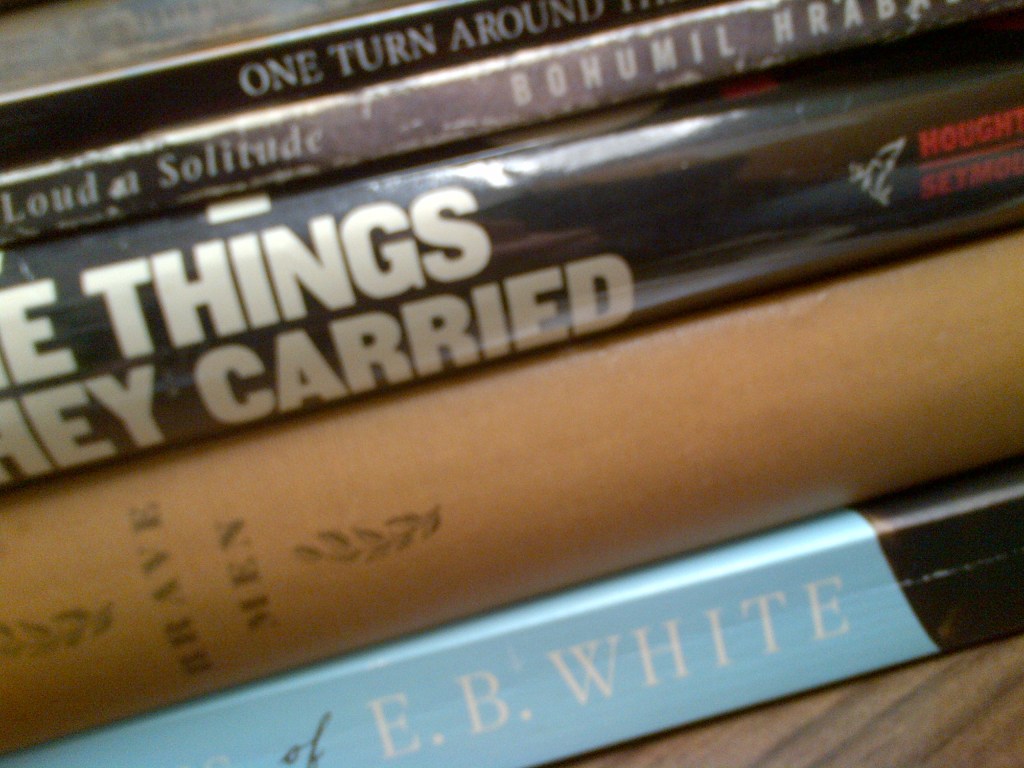
I have a collection of books I received on Christmas nights through the years. All Creatures Great and Small by James Herriott, A Walk Across America by Peter Jenkins, Bound for Glory by Woody Guthrie, Robin Lee Graham’s Dove, and more. Of course, growing up, Christmas morning was filled with the normal toys, candy, clothes, sporting goods, one year a bike, a guitar another, a whirlybird which my Uncles commandeered for the day, and many more memorable gifts. Honest to God, we were very lucky; it was an awesome childhood.
But the books have a different history. While Mom and Dad collaborated in many things, like in most families my mother was Santa when it came to shopping, wrapping, hiding, and organizing the gifts. She went to great lengths to make sure she spent exactly the same amount on each of us. And while I really don’t think we were spoiled, mostly because our parents made sure we appreciated everything, I also don’t remember ever thinking there was something I was expecting but didn’t get; that is, I was never disappointed. Yes, Mom did well. On Christmas morning as we unwrapped our presents, we’d make sure to say, “Wow, thanks Mom!” even on gifts we saw coming. By the end of the morning, though, we’d make sure to also throw in “and Dad” to the thanks, but he didn’t mind when we didn’t, ever.
And like in most families we drifted into that quiet period after opening gifts when we were engaged in our new items, and Mom was getting breakfast ready as well as dinner for the company which inevitably filled the house. Dad would read the paper. But later in the day after everything settled down, Dad would emerge from some quiet place and have a stack of gifts for us, chosen, purchased, and wrapped by him alone.
Books. It was amazing how he seemed to know exactly which ones to choose, and I don’t remember him ever asking what we were interested in. He just observed and took it from there. He’d hand us each a book he had signed inside with a “Merry Christmas, Love, Dad” and the year. I don’t remember when the tradition started but it had to have been early since one that I received was The Boy Who Sailed Around the World Alone, which is the kids’ version of Dove. I wasn’t yet a teen.
As the years went by we came to anticipate the books earlier in the day, though he usually held out. There were some exceptions; like one year when he gave us each money. I bought Illusions by Richard Bach and asked Dad to sign “Merry Christmas, Love, Dad” in the book anyway. Another year he replaced the books with Broadway tickets to see Katherine Hepburn in “West Side Waltz.”
It became my favorite part of the day. It wasn’t just the books, though. While I cherish the memories of Christmas evenings on the couch or stretched out on the floor with our books, it was also a specific moment I got to share with my father and keep up on a shelf .
I have kept the tradition going since my son was born. When he was younger it was Winnie the Pooh, Curious George, Hamlet, anything by Dr. Seuss, Charles Schulz, or Thor Heyerdahl, and more fill his shelves. Today I gave him a beautiful, color guide to trees and leaves. We really do formulate our lives based upon what we’re exposed to growing up. Michael has the kindness of Pooh, the curiosity of George, Schultz’s sense of humor, and Heyerdahl’s sense of adventure. And we have trees. Go figure.
I try and wait until the end of the day, but it doesn’t always work out that way. Now I understand that Dad didn’t just give us books; he gave us his sense of understanding, of knowing, of remembering and anticipating. When I look at the books Dad gave me, they absolutely anticipate my life—music, adventure, the sea. What did he think was going to happen with a list like that? I’m guessing he knew exactly what would happen.
As the years moved on and we all moved out, we started giving him books; he absolutely loved reading. We had to coordinate sometimes so we didn’t get him the same one, and I don’t think we ever did. He received volumes about Brooklyn, about baseball and golf, about history—one of his passions. The last book I gave him was a first edition copy of John Grisham’s first book, A Time to Kill. He loved Grisham’s work. That book is now on my shelf now alongside the books he gave me.
I thought the book exchange between Dad and me would end, but they have not. I can’t give him books anymore, so I write them. My last book had originally been framed as letters to him from a train barreling across Siberia. I ended up changing it to a straight narrative, but he is very present on our journey in those pages, and the work is dedicated to both him and my son. I truly wanted it to be a book he would have bought for me, signed, wrapped, and given to me one Christmas; probably about the time of day I was getting tired and his gift would wake me up and send me on some adventure well into the night.
I would have loved for him to been around when that book came out. I would have given it to him later, after dinner, after football, after the pie and coffee when we were all just sitting around talking, reading. And inside I would have signed it, “Merry Christmas Dad, Love, Robert.”
I have spent the better part of the past two days working solidly on a manuscript I started, no kidding, forty years ago. At the time it was just notes in a few journals, thoughts about certain events in the narrative which I would find out much later quite literally changed my perspective, in turn, changing my life. It is for me the quintessential example that sometimes we don’t know the effects in our life until many years later.
How do you work on something that happened so long ago that remembering the events can be concern enough, let alone the details? Well, in this case, I can picture every aspect like it’s playing out before me in some hologram, and once again I’m reliving it. Some things are too real to remember, and writing them down is painful, second only, perhaps, to not writing them down. Often it hurts to let things go.
So I needed a break; I needed to clear my head and stop thinking about travel to distant lands and the dreams I had before I was in a position to follow through. I walked to the river bundled to the bitter cold coming down from the west.Nearly every evening in winter just before dusk bends to night, in those moments after twilight when I have to let my eyes adjust to the lack of light, a few hundred geese land in the pond, some on the river, and a few in the field nearby.
I can hear them for quite some time before they actually fly into sight from beyond the trees to the west. The air is so clear this time of year I can hear them honking in groups, joining in like a chorus which starts with just a few voices and adds another rafter until they reach some crescendo. At first it might be only a flight of a dozen or so based upon the muted sound from the distance. But over the course of five minutes or ten I hear another group, then another, and more. They fly in a “V” to be able to see each other clearly for protection and create just a little draft, but the closer they come to landing, the faster the formation falls apart.
Eventually the first group is already in the pond when the last group crests the bare branches of the oaks and hundreds settle into the field or onto the river. One time some years ago a bit earlier in the evening thousands of geese, no kidding—thousands—landed on the plowed cornfield just down river. Their honking continued for an hour that night, and just as the sounds of these geese slowly softens and, finally, quiets, so did theirs so that from my porch I could tell they had all landed safely.
But every single time awhile after the large group arrives, two or three geese come in late, alone, as if they stopped at another farm over near the bay and had to regroup and find their flock.
I don’t want to disturb them, but I always want to watch. So when I walk along the river at that hour and the skin on my face is tight from the cold, and my nose runs a little, and the muscles in my back are also tight from the cold, I keep my hands thrust into the pockets of my coat and walk along the soft shoulder of the tiny dead end street so that my feet make no noise. I can usually get to the narrow strip of sand at the river from where I can see both it and the pond, but not the field so well. Their call increases in a burst of warnings to the rest that I’m around. It quiets quickly though as I remain absolutely still and sit on the cold rip rap running along the river and blend into the rocks and am no longer a threat.
On winter nights the water is almost always calm, a slow methodic lap at the rocks and sand. The sky is all stars, and sometimes just after dark in January you can still find the center of the Milky Way in the southwest. With no unnatural lights for more than twenty-miles in any direction except from the scattered farmhouses or buoys, the sky is a carpet of constellations.
It isn’t by chance my Canada friends find respite here. They need grass for food, they need water, and they need to be able to see great distances to anticipate danger. That’s why they’re here on the edge of the bay with open fields and ponds. It also explains why they love airports and golf courses. The abundance of geese isn’t an accident either; they travel in gangs, often the younger geese are forced into the gang, so that traveling is safer and they can better dominate areas like this.
But their coolest trait is their honk. They keep that up as a form of encouragement so the lead geese will maintain their speed and not give out so easily. Basically, the ones in the back are telling the ones up front to “Go! Go! Go! Go!” and move their asses. And when the lead gets tired, she moves to the back and gets to badger the others for a while. And they do this their whole lives—about twenty-seven years.
And just after twilight when dusk is making its brief appearance, and the water is like a mirror, the call of the geese from well across the treetops is musical, somehow eternal. When this land was unbroken, Canada geese called to each other, rushing for the open fields and waterways, settling down here. Powhatan heard geese here, and John Smith, and Washington just to the north at his birthplace on the Potomac, and Jefferson not far from there. Through the centuries the flyway from the St. Lawrence down across the Adirondacks and Catskills to the Susquehanna south into Virginia to the mouths of these five fair rivers spilling into the Chesapeake has been their home.
And they love dusk, just before dark, as it is the best time of day for them to recalibrate their internal magnetic compass to cross continents; to come here year after year.
We have something in common; we’re both very migratory.
I guess that’s what also attracts me to the passing flocks of geese. The peace in such sounds late on a winter’s evening definitely touches my soul, settles me somehow beyond my ability to explain. But also I sit on the rip rap and blend into the rocks and watch them in the water and contemplate their distance from the central regions of Ontario and Quebec, across Hudson Bay. My entire life I’ve been drawn to migration, to some sense of movement from one place to another, particularly the seeming randomness of such order. They know where they are going every time, and yet they move south without boundaries, schedules, or maps.
When I was young my father bought me Robin Lee Graham’s The Boy Who Sailed Around the World Alone. It was the first book I remember inciting in me a sense of adventure, travel and exploration. The sea seemed to have no borders or barriers. Graham’s goal was circumnavigation, but his schedule was wide open. Peter Jenkins, too, in his A Walk Across America, knew where he would end up, he just didn’t know when or how; and along the way the adventure was in the places he paused for food and water, with an open view of life around him. Ironically, I like the consistency of this migration; the predictable return, surrounded by friends, a quiet night.
I suppose all dreams are migratory, both in hopeful destinations and their transience with the changes in our responsibilities and circumstances. At times I take flight, abandon my flock and push off for awhile. But I look forward to coming home to settle into some sense of domesticity, which I can accommodate briefly at best, because eventually I think about the dreams of my youth as I fly toward my twilight years. They call to me to “Go Go Go Go” as my life moves further along, pushing at the edges of dusk.
And now in winter when night falls completely I walk back to the house and always a few more geese find their way to the flock long after dark. Only once did I experience the return to the sky of so many all at once. I was walking from the river to the house past the field where hundreds that evening had settled, and either something or me or the ground disturbed them, or it was simply time to move on, but in great waves they took off, honking. I heard them calling, waves of them into the sky, honking, great waves of honking geese calling ahead to the ones already in flight, as those behind fell in line and they swept from horizon to horizon blocking out the moon and headed out over the trees running down the bay, and I stood and watched them until the last honking geese were gone.
And everything was silent and I found myself, oddly, alone, like a young man left on the sand while his friends all pushed off to sea to head for distant lands, never to return.
from the forthcoming collection, Wait/Loss, this is “Sentence ’86”:
in all of time coming and going, whatever’s next and long before now, before this millennium, or the last, before the Dark Ages, before Jesus, Christ, even before time, we share these years, you and I, this splinter of nanoseconds as we tumble through space in this brief awareness, together, share these histories, these stories, that pandemic, that eruption, the wars, the towers tumbling, the time we stayed up all night looking at stars, and the time we said goodbye that hot summer day, that was us back then, over there, when somehow we got caught onto each other as the accident of now determined that in all of everything that ever was and might be somehow we should share this present, hooked, for just a while, then not, and billions of others and billions more were, are, and will be, so you have to know that the chances remain incomprehensible that we might ever collide at all, leaving pieces of each other in the other’s pockets to carry on some wayward journey through space, and, then, gone again, evaporated into that eternal foreverness of nevermore, so brief, so tragically beautiful yet sadistically brief is this whirlwind of now, so I must wonder what the odds are in the vastness of this expanding thought, that we’d collide yet again, so that here we are, somehow
I don’t know the symbolic signs of winter. I see woolly caterpillars and I think that means something, but I also think it doesn’t mean anything at all. They’re just woolly. Squirrels are gathering nuts, but, again, they do that every year and not every year is cold, so who the hell knows? Wayne at the convenience store in the village complained his knee hurt and said that generally happens when it is going to turn cold, and to be honest I trust that forecast more than most others. In fact, that was a few days before the temperatures dropped and the ground this morning was slightly frozen for the first time.
I welcome the changing seasons, but I do so mostly just out of lack of options; healthy options anyway. The cold takes me up north, and it’s easy for my mind to wander for hours through New York’s Southern Tier or the villages of central Massachusetts, walking familiar paths from four decades ago. In my mind I can feel the cold on my neck back then just like I did when I stepped outside today. I can even hear Dan Fogelberg’s haunting version of “In the Bleak Mid-Winter,” or, of course, “Same Old Land Syne,” which played constantly this time of year when I sat at my small kitchen table in the yellow house on the Wachusett Reservoir. The water often froze over, and geese walked to the pools of melt. I’d sit at that table listening to Dan, the bang of the radiator keeping the small place pleasant. Aromas from the cider mill in Sterling drifted down through the village. I didn’t mind winter so much then.
Something about life now is different though. More muted. I used to think it was me and some internal battle I’d dealing with, but lately I think it’s more than that. Some minor key is running behind life these days. Maybe it is the endless chill in the news of the war in Ukraine, the war in Gaza, the death of thousands of innocent people, civil unrest. I don’t know, but it seems as if any longer people simply hate each other. They despise the idea that other people don’t agree with them, don’t think like them, don’t look or act or believe like them. Death is normal, violence is expected, and the anxiety level running through the streets is unprecedented.
Attention spans have quickened to literally minutes on average, TikTok videos have replaced conversations, we no longer need to figure out anything; not finances, not directions, not phone numbers, nothing. We don’t have to contemplate a problem, we just need to find the solution online. We all, all of us everywhere, carry in our pockets electronic devices which use airwaves to transmit and receive, and we’re always on, the Wifi always searching or linked, so that the air between us, above us, everywhere, is always vibrating with transmissions going everywhere from everywhere so that if those transmissions were water we’d drown. The air is always, absolutely always, vibrating with some form of transmission.
This has to be disturbing our minds.
We are angrier than we have ever been in human history. Seems that way, anyway. I can’t speak for the Visigoths or the Tartars. But we have less patience, seek out more revenge, than ever. More people are on blood pressure, anti-anxiety, anti-depressive drugs than ever. More people are being shot, dissed, made fun of, than ever. Candidates are being charged with countless felonies, making fun of others, mocking how they speak and how they look. And the people at large don’t care. It feels an awful lot like people don’t care about anything anymore. I know that’s not true; I mean I see the evidence of hope in my students, in soup kitchens, in playgrounds. But I really have to search it out anymore.
So I wonder if I simply didn’t listen to enough news back then when the Cold War brought us to the brink of nuclear disaster? Was I half asleep?
Maybe. But I also understand something more disturbing which comes from noting the differences in my life now from then and the changes in the hundreds of twenty-year-olds I spend time with now compared to thirty years ago: Contemplation is dying. Thinking is ebbing, replaced by devices that think for us. Gone are the days where people might go for a long walk and daydream, absorb the peacefulness, contemplate the distant reaches of the northern plains, the vast everything that is out there.
Right before the end of the semester I had my students in two different classes do this assignment: Take out a sheet of paper (yes, I brought a stack as only a few people ever have notebooks with them). I wasn’t interested in laptops or cellphones where bells and whistles might distract their already buzzing brains. Everyone had a sheet of paper and a pen. For fifteen minutes I had them sit quietly, look out the window, walk around the room, whatever, but they absolutely could not talk to each other or check any device. Then I asked them to sit and write whatever is on their mind for about 200 words.
After ten minutes of them writing I had to stop them. Some cleared five hundred words using both sides of the paper. One student asked for another sheet. They found philosophy; they found questions they didn’t even know they had. They found a brief period of peace in a whirlwind of a life that never seems to unplug, ever.
My fifteen minutes? I remembered a retreat.
It was early November my freshman year of college and fifteen of us went to a cabin in the mountains of western New York. We had the normal circles of discussions and walks through the woods, and group dinners and breakfasts. We sat around the fire while music played and a guy who had a hearing-impaired sister signed all the music for us, and it made us cry when he signed “The Rose,” by Bette Midler. But at the end of three days there we talked about how we would carry this seemingly new-found peace back to campus, back to the dorm where keg parties disturbed the nights. We wondered how long it would be before we slipped back into the current of keeping up instead of taking the time to push pause, step aside, and contemplate ourselves, each other, life.
We blend too easily, no matter how much we would prefer to somehow rise above the grind of it all. “Back to reality,” we would always say. That has been my primary problem for my entire adult life: I feel obligated to live in a reality I’d simply rather not be a part of at all.
So, as Paul Simon once noted, “My mind wanders; it seems mindless, but it does.”
I’d like to believe I’ve shown my students a little trick to escape their TikTok lives, even briefly. I’d like to believe that fifteen minutes a day doing nothing but watching the geese out on the ice might just have saved my life, shown me there is something more than crosswires and catapults.
Anyway, I went for a walk earlier this morning, and the ground is frozen for the first time this year, and the cold bit at my neck and face. The bay is calm today, and a small, white foam from temps just above freezing formed at the break. It will be warmer tomorrow, and then warmer still, but winter is coming.
I don’t know all the signs of winter, and certainly not the foreshadowing found in nature, but it is coming. My plan to handle the change this time is to take ahold of the narrative. Maybe I’ll walk along the river every morning, bundled against whatever bone-wet cold the wind carries, and look for the peace that might be found in contemplating such a few visceral moments.
It just might be the only way to gain control over how we spend our time, the only way to take control over what we do with our own minds, is to step aside and let them go.
I am twelve pounds over what I want to be. The reasons aren’t relevant; I can make excuses as is customary in situations like this. I have had a stressful year; circumstances with obligations kept me from my routine, I was pretty sick for a while, and my son constantly makes delicious bread.
Whatever—here I am.
At the same time, I was once a highly trained and practicing expert in exercise and weight loss. I ran a club for one of the most celebrated and accomplished exercise gurus in America, and I went through months of training, eight hours a day, five days a week, to learn about how to properly work every muscle in the body, how to eat, how to lose weight and keep it off. I helped work out everyone from college football teams to excessively obese women. Granted, that was more than thirty years ago, but I still remember the process.
I know, for instance, age has little to do with it. DNA plays a part, of course, but in most situations, adjustments can be made as we grow older. Certain conditions and diseases are as close as we come to a true “reason” for weight gain. Certainly, metabolism slows making it more difficult to shed pounds as you age, but most of the gain or lack of loss is environmental, and there are compensations readily available to make up for that. Schedules are another oft-referenced excuse, but the exercise aspect doesn’t take long and the eating, well, if you’re doing it right, takes less time than you think.
No, we simply don’t bother doing what is necessary because of lack of will power, bad habits, pressure from loved ones, bad associations, and a slew of other contestable dissents.
I am not trying to go back to being twenty-five-years old, though how cool would that be? No, I’m going to apply the knowledge of then-me to the increasingly discouraged now-me. This has nothing to do with how I look; it is about how I feel. I used to tell all people who came to the club that it is not about the scale, it is not about how it weighs on your mind. It is about how you feel about yourself. Friends say I don’t look like I need to lose that much; but it isn’t about what they think.
For some reason in my life right now it feels like a good time for a complete renaissance. So here are a few guidelines I plan to follow to help me lose weight by New Years Day. I used these at the club, and they helped some members lose upwards of one hundred and fifty pounds:
It’s an old axiom but it is true: breakfast like a king, lunch like a prince, dinner like a pauper. 2. Cut back the carbs, cut out the sugar, cut out the salt. 3. Plan the day’s food the night before and stick to the plan. 4. Drink a lot of water; often we aren’t hungry we’re dehydrated. 5. Cardio ten to fifteen minutes a day through swift walking or climbing stairs. 6. Get on the floor and do simple sit-ups, leg lifts, and a few others you can learn by Googling “lower body exercises” to work the waists and thighs fifteen minutes a day. And move slowly; speed during exercise is counterproductive. 7. Abdominal work 8 minutes every other day. 8. Arm isometrics for five minutes every day.
And the small things:
1. Park far away from anywhere I’m going (not too far). 2. Wear comfortable shoes. 3. Carry water. 4. Stop thinking about food, talking about food, and watching shows with food.
And the quirky things:
1. Brush your teeth when you start to feel hungry. No one ever enjoys following teeth-brushing with chocolate or sugars. That’s disgusting. 2. Eat food with natural sugars like oranges and apples, which are healthy and curb the desire for junk. People say to me, “You know fruit has sugar.” Come on. Show me one friend who is obese because of figs and oranges and I’ll go back to Oreos now. 3. Leave your money at home. Empty the wallet except for what you need for gas. Carry no change and convince yourself that charging fast food is just pathetic. 4. Keep the list with you of what you’re going to eat for the day. 5. Avoid dairy; it screws with the digestive system. 6. Until you reach your goal don’t agree to go to the normal places with family or friends where you always end up getting something to eat. 7. Wear tight clothes. Everyone feels thin in sweatpants. And yoga pants are for yoga; not for airports or classrooms or grocery stores. You might as well come naked and start in the cookie aisle. 8. Choose one day (and it must be the same day—Sunday works for me) that you’ll allow yourself to not worry about what you eat (still worry about how much you eat, keeping the calories below 2000). This gives you something to look forward to instead of constant denial, which inevitably results in binge eating. When someone at the club would crave pizza, I’d suggest they make plans to have pizza that Sunday while watching football. 9. Set up a plan to cut back on bad habits. To cut out completely is always a mistake, just like with alcohol or heroin, there will be some serious withdrawal problems resulting in falling off the wagon. So if you’re doing ten snickers bars a day like someone I knew at the club was doing, go down to eight, then six, then four, in subsequent weeks until you’re only having one a day, then one a week. 10. Don’t check the scale. Stop worrying about how much you are losing; you’re going to go up and down for quite some time until the body adjusts and then will finally find the slope back down to what you are working toward. If you must must must must check the scale, do it once a week at the same time wearing the same clothes, and then make sure you laugh at the lack of results when they don’t happen. If you have a deadline for losing weight, count on no more than two pounds a week, ever. If you do more, that’s great, but losing just two pounds a week insures you are seventy percent more likely to keep it off 11. Stop going to grocery stores; send someone else. Tell your son to stop making bread. 12. Stop STOP STOP!! Eating out!! The sodium alone in processed foods will keep the weight on and cause unwanted heart problems.
Do. Not. Quit. After three weeks if you stick to this, you’ll more naturally start to accept this way of doing things, and it will work. I’m using the second person here but really that is mostly so when I read this again I will talk to myself (which is more normal for me than you might think). And this is key: I’m not trying to lose twelve pounds; I’m trying to lose three pounds in two weeks. At that point I’ll think about the next three. Eventually it will be the twelve. Think about it: We are adamant about what type gas we put in our car but not what food we put in our body. That’s insane.
One more trick, and I am not trying to be mean. Find two pictures of yourself: one when you thought you were at your best, and one when you were at your worst, and keep them somewhere visible. If you don’t have any, find a picture of some poor slob eating a box of Krispy Kremes, and find another of some buff person. In both sets of examples, ask yourself which direction you’d prefer to go and are you doing anything to get there. Two pictures; two ideas; two dreams of what can emerge, and shelf any notion that starting over is more difficult. I won’t list examples from the club or from the world at large of people who made up their minds to see it through. And the list of people who lost their target weight only on the fourth, fifth, or tenth attempt is extensive. In the end, though, it only worked when they did it for themselves. Just for themselves.
The first time I ever heard my boss at the club offer advice I was sitting right next to him and I not only never forgot it, I used it many times both at the club and in classes at the college:
To paraphrase: Too often we do things because we are bored or depressed or because we aren’t getting along with someone we love or something isn’t going right at work, and we do something self-defeating because it is something we can control, such as eating. We can eat what we want and no one can stop us and it makes us feel good and empowered. The immediate satisfaction is worth the price of any long term problems. Sometimes when we eat it is the only time we feel alive. But you always have two choices. Always. You can do what brings you toward your goal or do what takes you further from your goal. Two choices. Immediate gratification at a cost or a lifetime of satisfaction. You decide. YOU decide.
For me? Well, twelve pounds to go doesn’t seem like much. But that’s more than two five pound bags of sugar strapped to my body. Try that. Go buy bags of sugar to equal the amount you want to lose, strap them on, then walk around. THEN, take them off. That’s step one.
Step two? That’s up to you.
Merry Christmas. I’ll raise a glass of eggnog to our mutual ambitions. Next Sunday.











 a view from this wilderness