Twenty Cents

pictures with michael june 9 026 (2)

I spent a short time today talking to a woman who was born in 1912. This 105-year-old lady was born almost fifty years before me. It made my day and I can’t stop thinking about the brief encounter, and one nurse said it made the old woman’s day because no one stops to talk. No one stops to talk!? I thought. That’s insane, but the truth is people are too busy to stop and sit quietly with a stranger. Me too; I just happened to be there with time to kill, and I became painfully aware of how important a few minutes can be. Lesson learned.

But driving away I thought about how the small things in life matter most; or annoy us most. In both cases, the big events are anticipated, planned for, and dealt with, whether the event is a birth, death, marriage, divorce, hiring or firing—we adjust. But the small stuff can kick us in the teeth or kick us in the ass.

Don’t Sweat the Small Stuff (PS. It’s all Small Stuff) is one of the most successful books ever. But I disagree with the sentiment. Honestly, the small stuff is all that matters. The small stuff is the difference between service and “good” service; between a good day and a great day; a relationship and true love; on and on and on, it’s always the small stuff that makes the difference.

When people say “thank you” instead of nothing, or when they say “Can I help you?” instead of staring at you when you walk to the counter, they turn a brief experience into something unmemorable and forgetful instead of a bad experience. When you let someone cut in front of you in traffic and the other person waves “thank you,” it feels good and you’re more likely to do it again, or at the very least satisfied you did it that time. I don’t believe we should be looking for a thank you every time we do a favor, but it sure makes a difference. It feels good. And it is polite.

I can afford to buy food but the free samples at Sam’s Club are fun to graze. When I rent a hotel room I just need a place to stay, but thicker towels or a strong shower head make me stay there again. Small stuff. Free oil changes when I buy a car is most likely written into the price I paid to begin with, but not having to worry about laying down fifty bucks every three thousand miles is a nice touch. If I get to save five cents a bag by bringing my own bags to the grocery store, I want my twenty cents, dammit; I don’t care how much I just saved on Breyers.

Many people can do a job, but the one who gets raises and promotions is the one who goes beyond, and it might be in small ways—the extra thirty minutes early or late, the working with individuals, the overtime. In college classrooms 4.0 GPAs are pretty common, so the recommendation goes to the student who volunteered on weekends, joined the club, or tutored the weaker students.

When I was born this lady was forty-eight years old; not that much younger than I am now and I’ve lived a lot of lives myself. She was wheeling herself down a hallway by pulling herself by her feet. I was leaning against a wall and she paused in front of me and I said “Hello.” Her reply of “Well Hello!” was weak and less powerful for her lack of teeth and breath, but she was absolutely coherent. She wore yellow pants and the way she pulled herself showed ambition. When she was born the Republic of China was founded and flight was only invented nine years earlier. 1912 was the year George Bernard Shaw wrote Pygmalion, Dale Carnegie taught his first course in public speaking at NYU, and the Titanic sank. I thought about all that has happened in the more than a century since she was a toddler, and her head dropped backwards and she said, “I like flowers.”

Flowers. At the end of the day, she’s thinking about flowers.

Forget the big stuff—the house, the swimming pool, the convertibles, and the New Year’s Eve parties—it’s the laughter, the looking in the eyes when talking, buying her roses, making breakfast.

It’s Scotch on Tuesday nights, early morning talks about the news, taking sunset pictures at the river, putting on just the right shirt, fresh sheets, a walk. The small things make us laugh, or cry, give us hope or goose bumps.

I don’t think the forthcoming solar eclipse has made many people contemplate the power of the universe, but mention that right-handed people live on average nine years longer than left-handed people and everyone bolts for a search engine. It is the small stuff. It is the human contact, it is the personal touch. Saying “I Love You” is infinitely more common than taking the time to find the small gift that only you would know she’d like.

The short time I take in the morning to stop at the ocean and watch the sunrise stays with me all day. When I move closer to this woman’s age, decades from now, I want to remember those moments at the water, or picking tomatoes from my garden, or watching birds at the feeder. I want to recall the sound of my son’s harmonica when we travel, my father’s deep voice, my mother’s laugh, the incoming tide.

My ambition is simplicity, and my hope is that after a century of gives and takes, failures and fortunes, my final thoughts are about flowers.

sunrise 012 (2)

Be Nice

Silhouette, group of happy children playing on meadow, sunset, s

I had a third grade teacher on Long Island who hated boys. This was not a secret; even my mother used to complain that the woman, whose name I long ago blocked out, despised boys. She would make us sit in the corner but never the girls, would never call on us if we apparently knew the answer but always would if we apparently did not.

And I remember once she said that boys who play outside are very susceptible to spider bites and that might be dangerous since it isn’t unusual for a spider to lay eggs inside you. In fact, she said, she knew of someone who had been bitten in the cheek by a spider, and it started to itch not long after the bite. It became uncontrollable until he ripped open the bite scar with his nails and hundreds of baby spiders crawled out and down his cheek and neck, but some had already crawled into his brain and he died not long later.

We were eight years old.

This can’t be true, I remember thinking. We live in New York, not Panama. The following summer my family moved further east on the Island into a new house in a small village surrounded by an arboretum, a state park, and the Great South Bay. There were bound to be spiders. Still, I spent most of my time during those years hiking through woods, climbing trees, walking forbidden trails to mysterious creeks, and building forts in the trees behind our house. In fact, I’ve spent the better part of my life outside in nature, and I don’t think I ever had a single spider bite, let alone a colony inside my face.

But the story stuck. The following year at a new elementary school, I had better teachers who told us we could grow up to be anything we wanted, and nothing at all could stop us; absolutely nothing. Mark was going to be a musician and Norman was going to be a great athlete. I was going to play baseball. Unfortunately, I sucked. But no matter what happened, I always felt lucky. And I wasn’t afraid of spiders anyway; I just didn’t want them building canals through my dental work.

Who does this? Who so instills fear into others as to mark them for years, decades, to come? Nowadays, everyone. When I mention to my students that in my youth it was simply expected that we’d at the very least treat each other with respect, they laugh. They tell me in no uncertain terms that they believe they are entitled to treat each other how they see fit, and the funnier the disparaging comment, the more popular the person.

They call me old. Go figure. Students don’t have much hope in their future. Faculty doesn’t have much hope in students. The media doesn’t have much hope for our country. It goes on. And all of them attempt to outdo each other in securing the best sound bite to ridicule others. There are some days I long for a good arachnid attack. Still, I am an acute optimist.

I miss the time when people who didn’t agree were still somewhat respectful of each other. Such mutual acknowledgement of separate ideas would never be found on the playing field. It would be at the very least un-sportsmanlike conduct.

We make fun of each other too much. We ridicule what we don’t understand or agree with. We insult what we are threatened by. We manipulate what we need to win. We ignore our weaknesses and pay too close attention to those of others without stopping to say what we admire in others. We should change that approach. It isn’t working out.

quote-mutual-respect-is-the-foundation-of-genuine-harmony-dalai-lama-81-65-02

No Reservations

1908040_10203813288720133_7224931381547605230_n

Sometimes you don’t know where you’re going to be from day to day, night to night. I have been thinking these past few weeks about that exhilarating sense of waking up knowing you’re going to wander a bit and not deciding what happens next until you stumble upon it. A few years ago I lived this way in July and August every single day and night in Spain, and will do it again next year. Everyone should live this way at least once. Really.

One evening, Michael and I spent the night above a bar in Samos, Spain, and had pulpo–octopus–for dinner. Later that night a priest invited us to a private party and we stood next to four buffet tables of pinchos and wine, and we ate and stood on the balcony drinking wine and watched swans swim by in the lake behind the cloister hissing at the setting sun. Every single day outdid the previous one. I kept waiting for that golden moment, and they kept coming. Like that following morning when we walked to a nearby field and found a chapel from the 9th century alone in the mist, and some eternal sacred silence.

We slept on yoga mats in a hallway of an old church in Logrono, Spain, with seventy other tired souls after we shared dinner and walked through the basement of the five hundred year old building. For two nights we slept in comfort in the same hotel Hemingway stayed while working on The Sun Also Rises. In some small, old chicken village we stayed in a brand new albergue, which had no business being open yet. The floors and ceilings weren’t done, it was freezing inside, and the yet-to-be-inspected bathroom was three floors down. The only bar in town was closed so the owner gave us a few beers which made up for the thick dust everywhere. We stayed near Torres del Rio above a bar with fine food and a wading pool out back to soak our blistered and swollen feet. We stayed in an old monastery a hundred yards from a church St Francis of Assisi himself asked to be built. In Portomarin we stayed up as long as we could because the rooms were all filled. We hung out in a small café until 1am and then walked around the misty, cooling waterfront. Then we settled on the town square with covered walkways running next to a medieval church. Against some storefront we pulled together folding chairs and wrapped ourselves in whatever we could and tried to sleep in rapidly dropping temperatures. A kid on a bike did tricks on the steps of the church until 3 am which anyway kept me amused. At 4:30 we got out our flashlights and headed west. You can see a million stars in Spain at 4:30 in the morning, and the darkness makes the silence almost visible.

In O’Cebreiro there was no room and we nearly walked out of town to camp when a man waved us toward a back door at an inn and we ended up with a beautiful private room for practically nothing at all and just outside the door were a few tables on a stone patio overlooking valleys that stretched across Galicia. In the morning the fog sat below us in those valleys, and the sun came up like we were looking at the ocean until the clouds dissolved and the sky turned blue and the green hills welcomed us.

When we first crossed the Pyrenees into Spain’s small village of Roncesvalles, we stayed next to a chapel Charlemagne used and at night we went to the basement and spent hours drinking gin and tonics and talking to the innkeeper. In the village of Zubiri in Navarra, just before Pamplona, we stayed in a new place on the fourth floor and shard a room with a couple from France. We were all quiet that night. My son took pictures from the Roman Bridge outside our window. A few days later on the eve of the feast of Saint James, patron of this pilgrimage, we stayed in a small inn run by a single mom who made dinner for us, a woman from Madrid, and two men from Germany. We shared a delicious Italian meal and drank clay pitchers of red wine and talked about the distances. We laughed in three languages and despite someone snoring most of the night we slept well enough to leave an hour after everyone else making our journey quieter and more perfect. We didn’t worry about how far we walked or where we might stay. We walked and we would find a place. Like the fly-infested villa with tremendous views, or the albergue with dogs who insisted on sleeping on our laps, or the room above the garage with a killer bar at the street; or the stone building down some slope where we met some girl from Texas and a father and son from Amsterdam. After paying at the restaurant we drank the best hard cider in Spain.

In one neighborhood as close to suburbia as we ever saw, some couple opened an albergue in their house and we got the first two of five beds, the others occupied by a salesman from Madrid, a woman from Barcelona and another from Mayorca. We all had dinner on the back porch where all the flies in Spain gathered to join us, as well as a dog named Bruno, and the sun was brilliant and we slept well. Once, we stumbled into some tiny town, another chicken village, looked like a movie set for an old western, and we slept in the bunk room with fifty other people. In the morning we picked up a few supplies at their shed they called a store, but man oh man the lemon chicken was awesome.

Everything we did was deliberate.

Everything we ate was delicious

Everyone we met enriched our lives. It should be this way all the time. At home. Anywhere. We live in a phenomenal world for a disturbingly short period of time. It should always be this way.

Every single day for more than a month, and when we came home we slid quietly into the old routine, stumbled back upon a world where what was and what might be constantly drown out what is, where few live in the present, where few talk to each other. Where people stand around hissing at the setting sun, passing through life quietly, hoping before they pass away that they can raise their voices and just once join in one last swan song.

10516595_10203813284640031_7136791379402372825_n

Angel Appearing to a Shepard

pexels-photo

It’s Fourth of July week and I’m about to get older, and I’m in a café on the Bay thinking how I’d love for this place to be open at night, late, like 4am, and sit and have beers or wine and talk to strangers about where they’ve been, literally and figuratively. It kind of reminds me of a place I used to go to that burned down.

We called it The Shack because it had no name.

This happened about twenty years ago.

Just off the Gulf of Finland not far from an exclusive hotel but well in the woods was one of this world’s coolest bars—a dive really—a place to drink and sing and meet people you’d never want mad at you. It was small, with broken-down shed-like walls and windows which barely kept out the storm blowing off the Baltic one May night in the nineties. It was well after midnight and we ordered a bottle of Georgian Merlot and several plates of shashleek, a Russian shish kabob dish. A gypsy band showed up, including a guitar and violin player I’d met before along with a friend of theirs, a woman singer. Hours passed as we sang and drank. There were four of us, three of them, a waitress, the owner and his cat, and we sang and drank while what must have been that hurricane from The Perfect Storm slammed to shore. This duck blind of a building sat amongst birch trees, but that simply made me more aware of the weather, wondering when one might topple through the roof. It was exhilarating, an adrenaline rush that had nothing to do with the wine. It was being alive, right then at 3 am, with total strangers, live gypsy music, Georgian wine, and shashleek, that kept us awake. It felt dangerous, subversive, but it was just a bar in the woods.

The band took a break and came to our table and we spoke in broken Russian and English about the storm and how we hoped it wasn’t high tide soon since the water was just a few hundred feet west, maybe less. Then Alexi, a two hundred eighty pound drunk Russian who hated Americans started screaming at us like he had the first time I ever met him, the first time I walked in the place a few years earlier. He had kept to himself mostly since then, sometimes talking to me, mostly not, but this night something got under his skin and he screamed at me like he did that first time, “I hate Fucking Americans.” He startled me, but he had a drink in front of him, and another regular customer, a friend of the gypsy band, was sitting with him and told him to quiet down so he did.

But then I saw his eyes. They were deep and vacant, like he’d seen a ghost, and when he saw me watching him he stood up and said, “I hate fucking Americans!” and he tossed his beer at me. Sasha, the guitar player, stood up and yelled at him in Russian. But just then thunder, with a sound like the sky opening up and dropping two tons of hard earth on our shack, rattled the walls and ceiling and we all cringed. I thought for sure one of the birch trees cracked and was going to kill us all. I went down on the floor with my friends and the gypsy band, and Alexi cursed and fell against the back of his chair. He suddenly looked so small, and the thunderclap crashed on us again, this time blowing open one of the windows, and rain and wind sheered a path across our booth and against the other wall. Dima put his violin under his coat and our shasleek flew off the table onto the floor. The shack cat went for it but the wind and rain chased him back under the bar and into his bed.

Another flash of light lit up the shack and Alexi was trying to hide under his table but he was too big, and just as he glanced out the window on his way to the floor, he stopped and stared. I was watching him, and he looked out the window for some time, then looked at me, and with a nod he said, “Horosho. Horosho” which means, “okay. It’s okay.” And he looked out the window again when the window slammed back and forth. He grabbed it before it hit him and he held it a second, staring out over the Gulf. He looked at me as if to ask me to come see but he didn’t know how. Instead he closed the window and latched it again and turned and sat down. He nodded to me, “Horosho. Edeesuda.” It’s okay, come here. A few of us gathered and sat at his table, and Dima took out his violin. Alexi smiled at me, looked out the window and peered with a stoic face, then turned and smiled again. He looked at the waitress and said “pivo,” beer, and he motioned to us all so she brought us all beer. The rest of the night we laughed and sang songs. I asked Alexi what he saw outside but he just nodded at me and said, “I hate fucking Americans,” and we laughed and toasted and Dima played, then Sasha joined in and then the woman singer, and the beer tasted good. Alexi sat quietly the rest of the night.

The storm passed and the sky quieted down. I almost had stayed at the hotel that evening, turned in early, read in bed. Those are all good things, quiet ambitions which keep me grounded and invested in whatever happens next. But that night I didn’t. Like the time a friend of mine and I went Ghost Hunting at midnight at the Saint Augustine Lighthouse, or when my son and I sat up all night in the town square of Portomarin, Spain, because we couldn’t find a place to stay. One time a friend of mine and I hitchhiked to Niagara Falls and it took no longer than it would have to drive, but coming back wasn’t so lucky; we walked for eight hours along dark roads through small towns. But if we had been given a ride right away, I’m not so sure I’d remember we even made the trip to begin with.

Sometimes you have to stay up until dawn to understand what’s hiding behind the night. It’s the rest stop at three am with two truckers and a couple of local high school kids farting around; or the sound of wildlife in the desert brush, or tall pines scraping together in winter in the woods with no light but the moon. It’s walking up an Arctic Path at four am in snow-deep March with Northern Lights bouncing past like a bull whip; or lying on my back on a cot in a compound in Africa beneath more stars than could possibly exist, the distant sound of someone chanting the Koran. It’s walking out of a shack in the woods after a storm passed, the sun just lifting over the raised bridges, ears buzzing from loud live music.

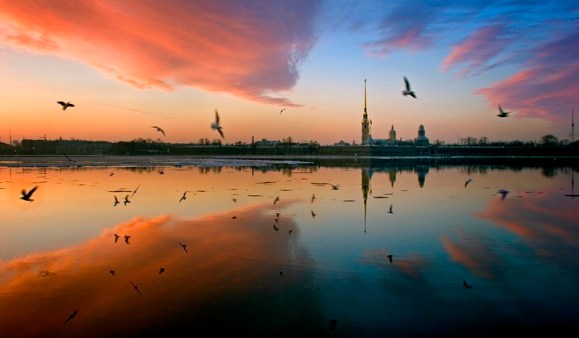
On that night, we stood for a second in the quiet morning light, the four of us, and we watched the sun rise over St Petersburg, then we walked home.

neva-river-opposite-the-peter-and-paul-fortress-at-sunrise-in-st-petersburg

The Quiet Man

10494678_10205819255228042_1870443900926750453_n

I would like a quiet day. One. One quiet day without the residue of yesterday or headwinds of tomorrow. Just the day, one. A quiet one during which I could just let the river run past and feel the cool and heat of the sand and the sounds of gulls or osprey and, of course, waves; when I define quiet I include birds and waves.

I would like one of those days where I’m not waiting for a loan rejection or essay rejection to filter back, or when I’m not anticipating appointments or deadlines. A day where the phone doesn’t ring and no one knocks except family, ready with a joke or an old story to get us all laughing and remembering and planning. Usually quiet days include laughter and stories.

A day to myself like I used to do when I drove into Manhattan and walked from Herald Square all the way up and through part of the park, talking to the vendors or checking out the music along the way coming from the cafes and radios. When I explain “quiet day” I must include the sounds of the city as natural and organic as the osprey and waves since they are expected. Plus, they aren’t talking to me as much as for me so no response is expected or necessary, just my presence. Family is like that too.

My life is not unlike Thoreau’s in that my retreat is near the water in the woods where I am able to regroup, not to ignore civilization as much as be better prepared to face it. So I would like one day. One. One quiet day where I could live deliberately and be in absolute touch with the passing of time solely for the sake of the passing of time, to watch the seconds, to count the minutes. I could lean against a tree and hear the combine on the neighbor’s farm or the rigging on the boats on the river. There is a thin, very thin, line between quiet and the sound of rigging in the early morning hours.

I was thinking the other day about the quiet days in college when a bunch of us would walk into town just to get something to drink and everyone would be talking at once, and laughing at once at different things, and we were always like that and we were always going to be like that. If my mind wandered at all it was to exaggerate, to magnify, the sweet and passive activity of such permanent transience. If I am going to define “quiet days” I can’t leave off my friends. Or a drink or two.

I have had many days which I would “formally” call quiet by the Oxford definition. In Spain, at home on the river when it is early, or late. When I was young and hiked through Heckscher State Park. Sometimes when I am alone at home I fiddle around the house, working out on the property or on the porch, and can go from sunrise to sunset without a sound and it can be deafening. But those are literal, and I have come to understand that true peace is not the absence of noise but rather the presence of love.

I remember a beautiful, perfect, quiet evening a long time ago when a friend of mine and I went to an Italian restaurant in a run-down strip mall, and they were almost closed but they let us order some bread and a bottle of wine and we talked for hours, joking with the woman who worked there but mostly just laughing together about now and about thirty years ago. We finished each other’s sentences and the wine and then went our own ways quietly, content at such perfect time, but not really because it isn’t always that way, is it? No, it isn’t, though it should be.

I would like a quiet day like that again.

10460790_10203722878859943_2793997624701505046_n

STFU

d503da814c40e6575446ae8ad6e7d804

I know someone who can turn the most insignificant happy-thought into the most stroke-worthy bitch-session. If I say, “Hey check out the size of this Big Gulp of iced tea from 7-11. Eighty-nine cents.” I hear, “I HATE 7-11. What a dirty waste of people’s time going there. It is pathetic those places exist and they are filled with GMO food that is killing everyone anyway, AND you’re better off making icedtea at homeornot even having it becausethetea candehydrateyouandyoulljustendupneedingwaterandblahblahblah hmmmmmmmpukepuke….” And on it goes. What is the value in that? Where is the benefit in being around that?

Maybe I’m simply around too many people. By that I should say I am around too many people aware I’m around. When I travel, the crowds don’t bother me because then I’m no one, just another face on the street. But in my life here in the hallways of the college or other places where someone mistakes an innocent comment as an invitation to yet-again-bitch, everyone seems to have something to say to me. And more often lately it is negative.

The concept “If you don’t have anything nice to say, don’t say anything at all,” which I grew up with, is gone. On the news, in the classroom, and even in seemingly innocent conversations about a frigging Big Gulp. Please.

So I’m on a mission to dial back the news to a need-to-know-only basis. Even—especially—the news on the television and internet and radio. It is essential to be well informed, but it is equally essential to be able to separate the news from the noise. My stress level has adjusted up during the last four months to some higher level of anxiety not at all compensated for by valuable information. Material gathered should be worth the anguish to obtain it. But that simply isn’t the case any longer. Now it is just static which causes stress, which doesn’t benefit me at all.

Excuse me while I step aside. It won’t bother anybody if I simply duck away for awhile. I can no longer handle the endless stream of garbage reported in media. Don’t pay any mind to me if I move out of the way while the convoy of criticism and manipulation passes . I’ll just sit and watch the water and wildlife do their thing, the perpetual movement of the tide. In fact, my health, my energy, and my stress level are all improved by the absence of the nightly news, which I once revered. And I’m better off without the one on one conversations with way too many negative people. I am more likely to live longer, less likely to have a negative disposition, and infinitely more likely to relax by turning away from the those discussions. No contest.

When I’m at the river and the sun is just changing tones behind clouds in the west, it doesn’t make a bit of difference who the president is, what the commentators had to say, which tweets came from which attention-deficit minds, and what happens next. My phone alert from the NY Times Breaking News doesn’t really catch my attention anymore, and I am far less interested in who said what than I am in keeping my blood pressure in double digits and my heart rate closer to my age than my golf score.

When the eagle glides from the tree tops, and the osprey teach their young to fly, and the clouds at dusk separate colors in prism-like perfection, it is hard to remember what the complaining was all about anyway. We carry our baggage way longer than we ever need to, if we ever really needed to at all. And the answers we seek in day to day life won’t be unearthed during some pointless pursuit of fair and balanced. Even if I listened more intently to all the facts and expert opinions and came to the correct conclusions agreed upon by Nobel laureates and Pulitzer Prize winning journalists, what then? So I might know the truth about A and the lies told by B and the injustice we see served to those in need. Again, what then?

I think my students would be better served if instead of watching presidential debates and finding the fallacies, we all spent some time in soup kitchens and the cancer ward at a children’s hospital and then came back and discussed respect and morality and fair and balanced. Maybe we could spend a class talking about the good there is.

When I returned from Spain I was on a mission to “simplify” my life. It didn’t take long on the Camino to discover how little I needed; how superfluous most concerns really turned out to be. As a professor of critical thinking courses I found it necessary, pre-trip, to discuss current events and breaking news. But afterwards I found philosophical discussions as relevant as any subject covered by some mass-com major graduate reporting from The Hill. I told my students that any fool can gather and argue immigration or trade; but it took real thought to discuss the “matter” of things, the bend of time. Which works better for you? I asked. “Ted Cruz said that we need to make decisions based upon faith” or “St Bernard said, “We need to learn to make excuses for other people.”  One is a proclamation of how he intends to govern; the other is an edict of how we should live our lives. This lead to discussions of driving and working, and we talked about getting along with relatives and partners. People like tangible applications. Those conversations spilled from the class to the hallway. That’s how it should be.

But time got away from me and Trump was elected and news became Reality Television and Reality Television became scripted and civil rights I thought were fought for when I was four were again issues and I just want to run away.

So I am.

When all I hear is the call of an osprey or the way the waves lap at the edge of the land, I could be in so many other places and so many other times. It is innocent, even ignorant some might say. And in a world where even a lesser-able phone than the primitive one I own can keep me up to date on news, attacks, rumors, memes, messages, appointments, and more, I’m turning off my data.

We live in the age of information, the age of blame, the age of instantaneous and simultaneous where the comment you posted ten minutes ago is now ancient news five screens in the past. It is the age of convenience and the age of emotion and the age of attention-getting-self-indulgent-everyone’s opinion matters and is valid and is equal and should be heard. And that’s just not true, it is wrong, it is defeatist, and it is destructive.

So I’m done jumping through hoops and trying to walk across coals in the classroom or other more personal conversations. I’ve finally “come ‘round right” and am simplifying my life. My theory is this: I will be healthier, happier, more efficient, more useful and focused, and infinitely more at peace.

I love the way the water feels cool on the soles of my feet on a hot afternoon, or how the salt water gets on my lips and seems to stay there all day, even after I shower. It is as if the movement of the waves exactly coincides with the movement of my blood, and that rhythm somehow settles my soul.

And it really was this simple: I just decided to. I’m going to sip my iced tea and let the river run by for awhile.

15541149_1253544308045834_2873510931106247100_n


Defying Gravity

IMG-20170601-02726 (1)


(with thanks to Jesse Winchester for the inspiration)

This morning I had breakfast on the pier probing out over the Atlantic in Virginia Beach. Ocean Eddies had long been an evening haunt, and despite that they’re slated for destruction, they remain open and now offer breakfast. This morning I had an omelet stuffed with scallops, crabmeat, shrimp and cheese, with toast and home fries. The sun skipped off the silvery, glass waves and the breezes kept the humidity at bay.

I was alone. It is still too early in the season—especially on a Thursday—for crowds, and I sat under an awning watching dolphins and pelicans work their way down the coast. I knew they’d reach the jetty at first street and circle back. They always do.

The pier is probably twenty feet off the sand offering more of a crow’s nest view of the horizon than a body-surfer’s vantage. And as quiet as the water was, I drifted off into the distance, circumnavigating the globe in my mind as I have for decades. This morning though I really sat and stared not so much at the water as the distance. Portugal is out there, Spain beyond. I looked just below the sun toward what I knew was the northwest coast of Galacia and pictured the people there right then, right at that moment, staring west across the Atlantic from Fisterra, where Michael and I stood just a few years ago. It never ceases to freak me out that right over the curve of the earth, just time away, are villages still, with small cafes where pilgrims right now rest, as we did. If I had better eyesight and the ability to bend vision, I could be looking right at them. I was looking right at them except for the physics of it all.

And further south is West Africa, where I had ceeb—a rice dish—for the first time and talked to friends over Flagg Beer several decades ago. It is so easy to fall into the trap of remembering the “time” it was instead of the “place” it is. I’m sure some of my favorite spots have changed while others, like the tiny chicken villages of northern Spain, are the same as they always have been. But all of them are still right there nonetheless.  It is profoundly easy to forget that when perception forces us into believing that things close by are larger and more significant than things far away. Often it is just that life blocks our view.

What a ride it has been on this spinning playground. I’ve been blessed to be able to see so much, and not by moving mountains or praying for miracles. I just decided to go. It is easy to forget that in the end the difference between when you dream about something and when you pursue that dream is a split second separated by the notion of simply deciding to do it.

These days the news has lost control and the information barrage is saturating existence; but on the pier this morning I remembered how fragile and fleeting our time is that we waste so much of it tangled up in the goings and comings of the small tentacles of anger and negativity. For example, while drinking orange juice I looked just to the north, across the other side of the bar about four thousand miles toward Norway, where early every morning our neighbor, the fisherman Magnus, came back with a cod, cut out the liver for himself, and gave us the rest. On the other side of the fjord outside the kitchen window of our cabin was nothing for thousands of miles to the north pole. I glanced that way this morning. The small town near is a fishing village, and the air is absolute. “Pure” doesn’t describe it.

I sat and looked toward the piers on Long Island, the docks on Martha’s Vineyard, the rivers and bays of New York. Sometimes I get tired and and give in to the shadows, but then I stumble upon a morning like this and I have no trouble buying into Emmanuel Kant’s insistence that “what’s next” is entirely up to us.

Have you ever sat quietly on a balcony and gazed out on the ocean? Two ideas emerge. First, it pushes part of us toward the possibilities which on a daily basis we are afraid to say out loud, and nearly simultaneously forces the lesser angels off of our shoulders, where we sweep them away with the ridiculous minutia we pretend we need on a daily basis.

Sometimes it seems as if society (allow me one paragraph of philosophical banter) is trying hard to crawl back into the cave. So many people in these days of political uncertainty and cultural dehydration seem to be staring at shadows again, looking away from the flames, obsessed with the flickering of residual data on the walls. The tragedy is the fire will burn out and the shadows are an illusion. The only course of action is to get out of the cave, see what’s out there, but too often we stand in the doorway, hesitant, terrified by terrorism and insecure about disconnection, scared we might miss something.

She refilled my coffee two times. The sun moved above a cloudbank and warmed the pier and the sand, and tourist kids from further north gathered along the waterline. I haven’t been that quiet in a long time. Sometimes at night, but never at that hour of the morning. I thought first about how at night my son and I love to get out the telescope and quietly gaze at the stars. (Warning: Trite writing ahead) The night sky stars make us feel small; they make the passing of time and the love of the people around us so much more important, and I wonder why, every single time we do this I wonder why everyone isn’t out looking at Cassiopeia or Orion’s belt. And then this morning I watched the silvery reflection on the waves and then glanced up at the sun, our very own star, no telescope necessary, and remembered all the times I watched the sunrise or set at various places fore and aft, from Arizona to the Sea of Japan.

It feels good to stop and remind myself sometimes that I couldn’t find my way back to the cave if I tried.

image

May 23rd

12143183_10207071237766823_459922957598238343_n

Joan Collins. Drew Carey. Rosemary Clooney. Douglas Fairbanks. Artie Shaw. And of course Nicole Jaffey, the voice of Velma on Scooby Doo.

All shared a birthday with my dad. Tomorrow he would have been ninety-two. 

King Philip the First of France and hypnotist Friedrich Mesmer. In fact, when I look at the list of people who shared Dad’s birthday—May 23rd—I really am mesmerized.

Franz Kline. Scatman Crothers. John Newcombe, who I once played tennis with on the courts at Timber Point on Long Island when he was out there practicing for the US Open. He showed me how to hold my racket.

It is the 143rd day of the year, making Dad a Gemini, and is World Turtle Day, which might be the coolest fact I uncovered. It is also National Taffy Day as well as World Colitis Day. And Dad’s “Birth Flower” is Lily of the Valley, which represents “humility”; perfect for such a humble man.

Those who died on the day of dad’s birth (though not the year) include John D Rockefeller, Kit Carson and Clyde Barrow; Bonnie is not listed, though I know she shared the barrage of bullets that day.

On May 23rd Joan of Arc was captured and sold, the Netherlands declared its independence from Spain, and Captain Kidd was hanged. Ben Franklin invented the bifocals and the New York Public Library was dedicated by Taft in 1911. On Dad’s 40th birthday, “Help me Rhonda” hit number one, and on his 54th birthday “We are Family” was certified platinum. On some May 23rd or another, the first Preakness was won, Joe DiMaggio hit three home runs, and Colin Wilson rode a surfboard 294 miles. Virginia succeeded from the Union on this day just two years to the day before Stonewall Jackson took Front Royal. On May 23rd in 1883 there was the first—and only—baseball game between one armed and one legged players, and William Love broke ground on his famous canal near Lockport, New York.  

And just three years to the day before Dad’s birth, Walt Disney incorporated his first motion picture company, “Laugh-O-Gram Films.” Just after Dad’s 50th birthday he and I walked through Walt Disney’s park in Anaheim and felt ill at a theater-in-the-round which made flying in a jet through Niagara Falls seem real. We held the bar in front of the row where we stood, but we still wobbled out with a loss of appetite. That was a great day. And about ten years earlier he brought me to Jolly Rogers, a small amusement park in Commack, Long Island, and we enjoyed ourselves even though I was too short for some of the rides.

On his sixtieth birthday we had a surprise party in the Virginia Beach home where my siblings and I all flew in to celebrate. He thought I was going whale-watching that weekend with friends in New England where I lived and when he saw me he almost seemed disappointed: He loved—absolutely loved—the idea I was going whale watching. A few years later he and I did just that off the Virginia coast and watched a humpback breach the water. That was a great day.

On Dad’s 90th we all went to Ruth’s Chris and Dad was in his glory with his favorite soup and steak. I had scallops and my son had a lot of alcohol not realizing the “Ruth’s Chris Coffee” wasn’t so much “coffee” as it was alcohol and he really enjoyed himself. Like we all did at that sixtieth surprise party when our mom’s brother Bob couldn’t make it so he sent a scantily clad woman to sing happy birthday. 

One thing is certain, we always—always—found time to enjoy the passing of time, with family, by ourselves, whenever we could. He made certain of that. I don’t need Google searches to discover significant events. My entire life is laced with significant events. Growing up it was golf with Dad and my brother at Timber Point, baseball games, and the five of us at quiet, low-lit restaurants where he warned us not to fill in on bread and crackers. In my teens I wanted to use his car so I’d drop him off at a local shopping center for him to catch a ride with a co-worker, but not before we stopped each time at Dunkin’ Donuts where he would buy me juice and a donut while he had coffee.

When my son was young we’d “run into him” at the mall, and years later I’d stop at a different shopping center where Dad liked to stretch his legs, and I walked with him, and we sat and talked. During those times every Tuesday we had Scotch at night, and once every three weeks or so my son and I would drive down and the three of us would go out to lunch, usually at the beach and usually he had oysters and beer, but it never seemed “usual.” Sometimes my brother joined us when he was in town and then we all laughed all afternoon.

After Dad retired but before Mom did, he and I went out to lunch about once a week—just him and me—trying different places.

My calendar is covered with significant dates.

Like the time Dad dropped me off at college and the entire drive up we talked about family in Brooklyn when he was growing up. That was a great day. Or when I used to travel throughout the country, especially out west in Arizona, and I could call him for free at his 800 number, and he always loved to hear what I was doing and where I was headed.

Or when Mom and Dad would come to my house and we’d sit on the porch. Or when he read one of my books and, with his sharp sense of humor, told me he didn’t get past page 46, so I read the page and found the line “years before my own aging father was born.” We all laughed hard. Or how we would always share books by John Grisham and talk about them, or how I discovered one of the last things he ever read, maybe the very last thing other than a newspaper he ever read was my essay, “Instructions for Walking with an Old Man at the Mall,” and he liked it. We had Scotch that night.

Or when my sister told him she was cancer free.

Or when he and my brother watched Notre Dame beat USC.

Or that last lucid conversation, that Thursday morning.

You can’t put the most important dates on a timeline; they exist in soft breezes on cool mornings or hazy evenings over Chivas Regal; they lie between holidays and celebrations when having a beer and a sandwich after a round of golf with Dad, my brother and my son. The important moments mark themselves in visuals of him watching golf on television, his hands folded before him, his gentle “tsk tsk” when someone missed an easy putt. Dad carving the turkey. Dad barbequing link sausages or steaks. Dad reading the newspaper on weekend mornings. He was old school; he was part of the “greatest generation,” and from where I stand, they earned the moniker.

Happy Birthday Dad. You made every day significant.

Brain Dump, one (3am)

tumblr_static_tumblr_static__640

A Brain Dump after Reading Too Much of Czech Writer Hrabal Before Bed

note: sometimes I can’t sleep and just stare at the ceiling and type, getting thoughts out so I can go  back later and see what’s there…here is one example, unedited

Some Germans took Goethe way too seriously and those with will to live should avoid Schopenhauer completely, but it doesn’t matter. We find ourselves dying on a daily basis. We start complete and lose a little as we go, like that small bozzetti of the Visitation by Tagliapietra that started as a block of terra cotta clay and ended with Elizabeth and Mary, both with child. We blow through our teens until we’re twenty when we know we’ll live forever. At thirty we think we’ll die so we open the Book of Hours to the Office of the Dead at night when we’re alone to prepare ourselves for the hereafter. We try and rise above it. At least that’s the assumption.

So we leave our marks: carve our names, write our memoirs, sign the canvas, pee on trees. We look for spices and find new worlds, we avoid persecution and found religion, we speak our minds and lose our heads, we say what’s right and get left behind. We find out fast that Orwell knew in a “time of universal deceit, telling the truth becomes a revolutionary act.” We teach such a small portion of information it’s barely noticeable—but leave out that amount and the life crumbles, falls, and can’t be found; we take pictures to show to recall to immortalize; we can’t remember faces we forget to write it down, we lose our energy, our memory, our courage, our determination, our purpose, our identity, our drive, our car keys. We vow to do better next time. We take vows of chastity of obedience of poverty marriage vows we vow to improve get even to avenge. Instead we stand on the dock and mock our hesitation while foot soldiers garrison themselves and face death for an eggshell. 

We start slow. One channel, then two, off the air by 11:30 to the sound of fuzz, a long annoying beep a circle with an x across the white noise screen until six am when the flag flies and the National Anthem plays and the new broadcasting day begins. We pick up a few more channels, we add public broadcasting, we add some locals, then some nationals, then the sky cracks open and we spit out hundreds of possibilities from porn to pygmies on the Discovery channel which tricks us into believing we haven’t yet turned over every stone.

We dig up the bones to point to the obvious: that we’re not the first, not the last and not here long. We get dumped at sea, mummified, burned at the stake. Been going on forever. We pass through once. Some drink the poison, some lose their heads, some get trampled at coronations, millions die in battle, hundreds of thousands of hunger, many of disease, some assassinated, some crucified.

We pray. We say the rosary, go to mass, thank God for the bounty. We eat what’s on the plate because some are starving somewhere else and we keep our mouths closed as we eat and hope no one quotes Isaiah Chapter 49 Verse 10 proclaiming “they will not hunger or thirst_for he who has compassion on them will lead them” and we pick up our forks and swallow the damn peas. We follow St Mark’s quill to the Lion of the Tribe of Judah and hope He’ll help us through. Just in case, though, we pick up the toys because some kids must go without. We keep our lives neat for those who have no life. We want it to look perfect. We want to look right. We buy mirrors. We make mistakes, call the wrong number, bounce a check, steal a pen and run down stairs; we speed, we waste food, we waste time, we worry more about our waist than the serving size of rice in a village. They eat grain, millet, rice, wheat, ground in a bowl in the sun, they wait at the well for the women to haul the camel-skin bags and pour them into buckets, they wait at the truck for relief, they wait in line for bread, they wait for the allies to break the blockade, they wait for the sentence, they wait for the end. But they keep going.

They hike across deserts and seek something else, the were lost they were boys they were soldiers. They were Francos Bok who escaped a shed in Sudan, they were Socrates drinking an avoidable cup. Maybe they were born in Brooklyn not Baghdad, they went to school and ate custard. They played little league and went to summer camp where the local villagers put on a show at night near a fire; they moved to the suburbs and got a new car, they shot off fireworks and fired at pop bottles; they ate barbequed burgers and corn on the cob, boxes of clams and played with a little red Spalding ball. They swam in ponds, they hiked the hills and bought postcards; they stayed too long, it passed so fast, what year was that? Who is that in the picture? How did that song go? When did we own that Oldsmobile? Where did we get that painting? We forget to write it down, we’ll remember. We make the mistake of assuming it’ll be alright.

We like to laugh. For fun, of course, but just as much for survival, to blanket our fears, to extinguish our anxiety, to take away the hurt. It hurts anyway so we laugh and hope Buddha’s Vinaya was wrong when it called for ancient monks in India to go to confession for such an offense as laughing. But we laugh. We tickle we entice we ridicule we play the clown the fool. We work the mirror and tell jokes into mock mics to an imaginary crowd and wait for the laughter to subside before emerging at school the office the party to make others laugh, the ultimate in now, the definitive value of absolute present. Why did the chicken cross the road? A man walks into a bar. It’s Nietzsche’s need to call every truth false which was not accompanied by at least one laugh. We laugh and nothing hurts and no one is going to die. We laugh and we must stop eating, talking, drinking, even moving because it is time to laugh and no one worries when someone laughs. No one is plotting damage or pouring hemlock; no time when we are laughing and everyone lets enjoy the moment the joke the break from the cold reality of life where things fall apart but not when we let ourselves rejoice and be glad.

(then I fell back to sleep)

magtymguly pyragy sees you

Sound Off

sunrise 011

When I walk I don’t listen to music. I just walk and listen to whatever is out there. At home it is the small birds, osprey calls, and the river sounds; sometimes an early morning oyster boat not far from shore, and always the gulls. At the oceanfront it is the waves, of course, but also the plows moving sand around, the sweepers cleaning the boardwalk, radios, tourist chatter, children’s laughter. At the oceanfront the occasional fighter jet passes five hundred feet above heading to Oceana, and at home a Cessna, a Piper cub, or sometimes flight instructor Mike’s World War Two replica P-43 headed out over the Bay with a passenger who paid for a thirty minute tour.

A few months ago I asked my students about their listening habits. The average (way above average actually) routine is to get up and put on music, drive to school with music, at school have their ear buds in with music going except (not always “except”) when in class, and then the same the rest of the day. I asked how often they left the music off, left the buds out, and just sat and listened to life around them. They all said, “oh yeah, every day,” and one young woman in class called “bullshit” on them and an argument ensued. She won. By the end they admitted that “quiet time” simply does not exist anymore in their lives, if it ever did at all.

I remember growing up and when the television was on and we were all talking sometimes my mother would say, “Can you please be quiet I can’t even hear myself think!” Exactly.

When I walk I don’t usually like to walk with anyone. It is different when I travel and we are taking in the sights and sounds and people, but even then when we were walking all day downtime was common, and my son is a quiet person anyway. But at home I prefer to walk alone. I like to hear myself think. It is the only way I recognize my own voice.

It seems so many students are so accustomed to hearing other sounds—music, television, friends, games, teachers, parents, and on and on and on without a break even falling asleep with earbuds in—they don’t know the sound of their own voice.

I, of course, don’t mean that literally. When I walk I find my thoughts, my opinions, my rationalizations and motivations. When I walk I move from exhausted and mentally drained to calm and in perspective to hopeful with new ideas, different thoughts about old ideas; I figure out what to leave out there on the road and what to keep close for more thought. I solve problems, I talk myself out of making new problems. I remember and plan and organize and dismiss. It is a thorough cleansing of the mind. I never feel healthier than when I let my thoughts run free without bumping into earbuds on the way out, or competing with someone complaining or asking questions. I understand myself better and am able to make decisions without influence, or, more likely, make no decisions at all and just stand by and let it all be.

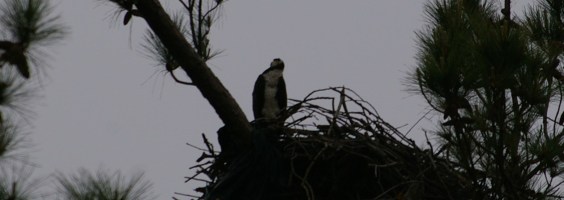
I have learned the sound of gulls when they circle looking for food compared to their call when confronted by something strange. I can close my eyes and know the direction of the tide and the pull of the current. I do not know most smaller bird calls—Michael has to tell me (over and over) which is which when home on the porch—but I well know the call of a hawk or osprey or eagle, especially when they teach their young to fly. It is a sight to behold, and more, it is a sound I will never forget.

There is nothing “silent” about nature. There is nothing quiet about night. On the river at night when the stars blanket the sky above the Chesapeake and up the Rappahannock, the most muffled of sounds carries across the water. It could be a car crossing the bridge, a late night fisherman dropping traps, rigging against a mast, the gentle, familiar, eternal lap of water on the sand. It always, absolutely always, seems calmer at night.

Paul Simon wrote, “Everybody loves the sound of a train in the distance; everybody knows it’s true.” Yes, across the night, when everything seems silent and the distant call of a train comes across the space between. There is life out there carrying on. Likewise on a foggy morning and the call of the fog horns on the fishing boats comes across the reach.

I wish my students would listen. How often have I said that? But I really believe if they would pay closer attention to the quiet sounds around them, the natural pace of life, they would better understand their own thoughts and recognize their own voice. Then, perhaps, they would not simply hear what I say, but would listen to what they hear. At the end of the day there is nothing I can do but what I do at the end of the day: be still and listen to the intricate and miraculous passing of time.

osprey next 004