So ends the tenth volume of A View from this Wilderness. I started this in 2016, three months after my father’s death. Since then I’ve written 667 posts. In the past year alone there were more than 100K views from more than 9K independent viewers. One disturbing stat: This past year there were 30 views sent by Chatgpt.com. It reminds me of the student many years ago who turned in a plagiarized assignment about 911 not knowing that I was the original author of the piece. Oops.
I’ve written about every possible subject I can think of, and I’ve not written about a few things as well. I’ve finished a piece and thought twice about publishing it and so deleted it, and I’ve finished pieces and thought about publishing it somewhere else, and sent it on to newspapers, journals, and magazines. But I’ve written, which always feels good and right and somehow cleansing. It’s not unlike confession or therapy; I’ve done both in my life and I like writing better.
It used to be writing felt like a means of justifying my true ambition which was simply to wander at will. But that is hard to make a living at, so I wrote, which is also hard to make a living at, so I taught, which is also hard to make a living at, and suddenly I’m hell and gone from my original ambition of being able to wander at will, and depression sets in. SAD is going to creep in within a month or so like it does every year, and even the writing will stop at that point.
Is anyone still with me?
Anyway, so after analyzing all of that, I have come to understand a significant truth: I have worked long enough now and written long enough now to be able to just chuck it all and, finally, wander at will. I might even write about it.
You see, last night I watched Deliver Me From Evil.(Traditional transitions always bored the hell out of me). In it, a thirty-two-year old Springsteen attempts to wrestle out the demons in his soul by writing through it with dark, disturbing acoustic pieces. While recording them, he also records the songs which a few years later will become the Born in the USA album, and the record execs have heard that stuff and want it, but Bruce insists on the dark, acoustic stuff first. And to make matters worse from the execs position, he doesn’t want the songs “cleaned up” at the studio. He wants the sound from the cassette tape he originally recorded the songs on in a hotel room. His manager and friend, Jon Landau, finally sees how badly Bruce needs this and how he won’t be able to move forward until this is out of his system. Landau explains to the execs that if they want Born in the USA, they’re going to have to release Nebraska first, and they have to do it without any support from the artist–no tours, no singles, no interviews, not even his picture on the album. They agree and Nebraska goes to number 3 on the Billboard Charts anyway. Two years later Born in the USA shatters all records.
Back to me:
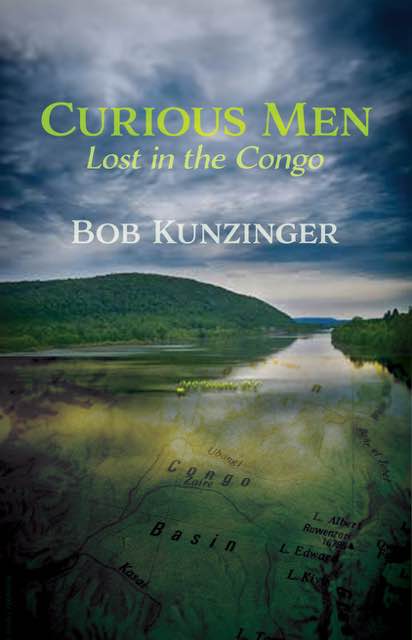
Curious Men: Lost in the Congo is my Nebraska. I have other projects laid out in front of me: “Front Row Seat,” Office Hours, The Coward, more. But this Monkey of a book in the Congo rode my back for forty plus years, and I knew I had to get it out, not for anyone but me. My publisher, Kim, agreed, and a diverse array of readers, critics, and authors chimed in with nothing but good things to say, but I didn’t really care all that much; Curious Men was for me. And now that the story is finally told the way I wanted it to be told, I can “Breathe in, Breathe out, Move on.”
And with cinema-like timing, the year comes to an end. Tomorrow I can wake up and start new, like we should be able to do every year, but we often don’t. We make the same honest but tired resolutions and try to fit them into the same old routine, and that doesn’t make sense. If you want something different to happen, you have to do something different.
Sure, some of you will tune in to watch the Apple Drop in Times Square, if it is, in fact, dropping this year. In fact, throughout New York State, balls drop at midnight. But some of us prefer the big bologna drop in Lebanon, Pennsylvania, while others tune in to the Peach Drop in Atlanta.
But if you prefer to go to sleep early, catch the Lego Drop in Winterhaven, Florida, at 8pm. At Sloppy Joe’s in Key West, a giant conch shell drops to the bar, while in Indianapolis they drop a car. Honestly, a car. In Easton, Maryland they drop a crab while in Havre de Grace, Maryland they drop an eight foot by five foot foam, illuminated duck. In Hagerstown, of course, it’s a donut. In Pensacola, Theresa will be watching the Pelican Drop, while in Bethlehem, Pennsylvania, I fully expect both my friends Barbara and Sean to watch the Peep Drop. It should be pretty quiet.
In Beaufort, North Carolina, they drop a pirate, and in Chagrin Falls, Ohio, much to their…they drop a ball of popcorn. In Dillsburg, Pennsylvania, just ten miles from where I used to live, they drop two pickles, while in the capital of Harrisburg it’s a strawberry. I have no idea why. My cousin Ed said his head will drop on the pillow in Austin just after midnight, whereas Toledo will weigh in when it drops its Cheese Ball. In Boise they’ll drop their new Glowtato–a potato internally illuminated, of course. My favorite, however, is in Las Cruces, New Mexico, where they drop a 19 foot illuminated chrome chili pepper.
The whole notion of dropping the ball in Times Square began in 1907, organized by Adolph Ochs, owner of the New York Times, with nothing dropping at all in 1942 and 1943 due to “dimouts” during the war in case of invasion. Instead, attendees spent a moment in silence for the fallen. This year, the ball which descends at midnight is more than twelve feet in diameter, has a surface of crystal panels made by Waterford, and contains roughly 32,000 LEDs. But this year for the first time ever, there will be two balls (have at it late night hosts). The second, which will begin to fall at 12:04 am, is red, white, and blue to commemorate the 250 anniversary of the country.
It’s definitely a night to drop things. We drop hints about things we want and a few pounds as part of the new resolutions. Plenty of people in the entertainment industry use this significant date to drop their new album, their new book, their new movie, their old boyfriend, and the occasional dime bag.
In the old days neighbors would take it upon themselves to drop in and wish everyone a Happy New Year, while relatives are likely after a few more rounds to drop the charade and tell us how they really feel, and we’ll argue and argue until one of us, finally, says, “let’s just drop it.”
I’ll be outside as well, at the river, watching the nearly full waxing gibbous moon wash over the Chesapeake and it will take my mind off of the passing of time, the coming of the New Year, and the spinning of the earth like a ball, like a top, like a “tiny blue dot.”
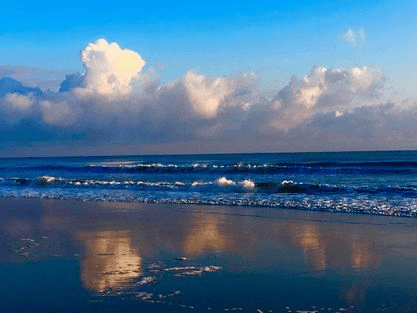
We used to meet at either 77th or 78th street, depending on who went first and when they graduated (or would graduate). I was in the class of ’78 so I would park across Atlantic Avenue and walk across the dunes to the beach and spread out the blanket and then swim. I was not a fan of laying around soaking up sun. I preferred to throw a frisbee or walk down the beach to the tourist areas from 42nd Street down. But when everyone showed up, usually by late morning, we’d all hang out and talk, music on some transistor.
And we’d swim, body surf, wade at waist level talking, the occasional jelly fish finding one of our calves. I remember several years of almost always having salty lips and hair, the soft, warm feel of sun on my shoulders and neck. This was how I grew up, at least during my high school years. When in the water, though, I spent most of the time scanning the horizon. Spain, Portugal. Africa. They were out there. The war in Vietnam had ended my sophomore year and when I graduated, Ford was president. None of that mattered. No, what mattered was where we’d meet that night, whose house, and should we keep it to ourselves or should we let everyone know, like the time fifty or more people showed up to Dave’s house over on Broad Bay, and an equal amount at my house once when my parents were off to a convention. It was all very innocent, and no one had to call the police. We were teenagers figuring it out, and the best I could figure, what I wanted was out there somewhere, across the horizon, past where Robin Lee Graham and Joshua Slocum had sailed. Down the beach toward the places Jimmy Buffett talked about in his early music we and other beach-dwellers were listening to ten years before the rest of the world. He spoke of margaritas in mason jars and friends from Monserrat. Jonmark would get out his guitar when he got home, noting exactly how the songs were played, whereas I would get out the maps noting exactly where I planned to go. Funny, JM still plays and I still navigate my way around this globe. And we’re still dear friends. Yeah, who we are is tethered very much to who we were.
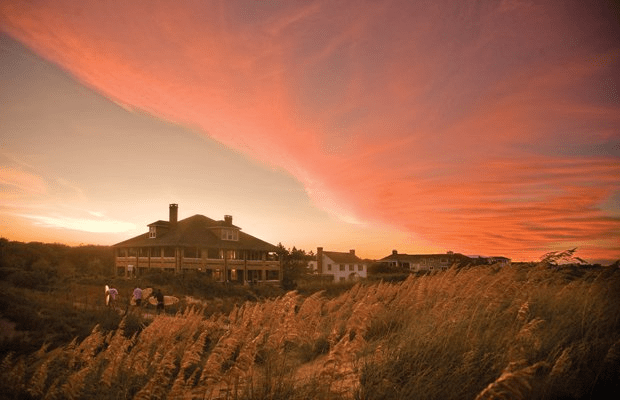
At 77th Street, though, back when we went there, there was an old huge, two story house with first and second floor covered wrap around porches right on the dunes, and I wanted that place so bad. At the time I believed I could have spent the rest of my life on that porch, walking to the water, back to the house, put on some music and talk to friends. I thought that was a pretty ambitious plan. And, in fact, it was, but I was missing the ambitious part. Go figure.
Anyway.
I was at the bay this morning watching a long “shelf” cloud settle in from the north, and the water was glassy, the sun almost above the clouds in the southeast, but not yet, and I understood something with an acute sort of clarity—sitting out in nature with someone, or alone, but with someone is far more engaging, with enough to make the day comfortable—some water, some food, a comfortable chair, is my Minimum Acceptable Required Stuff.
It turns out that after several million miles it is all I need. Oh, and music playing. When I was young I was certain I needed to “make it” in the world, not yet knowing that my true ambition would be to end up where I started. Gotta love irony.
Here’s what I’ve learned since then: nothing. I know a lot more than I did at that time, of course. I’ve been around the block and that kind of experience alone prepares me for what’s next. But the only lesson I absorbed since then is that I really didn’t need to go seek happiness; I needed to create it where I already was. It reminds me of my young college days when I was in constant search of peace of mind in a place I was having trouble adjusting to, and one night I wandered into a friend’s apartment in the dorm—Fr Dan Rily—who was sitting with three or four guys from the floor, and I joined them for a few hours where we talked about nothing at all, but we laughed a lot, and when they left I stood up and told Fr. Dan that I hadn’t been that much at peace since I had arrived on campus, and he smiled his wide, mustache-covered smile and said, “Bobby, that’s because tonight you brought the peace with you.”
I won’t stop traveling; it’s in my blood. I just might stop looking for something else. A hike to some snow covered trail or a morning trip to the bay to watch the geese wing by or the dolphin surface on their way back to the ocean is enough to mark the day. Then it becomes easier to allow that “Sweet Surrender” John Denver sang about back during those beach days take over.
New Year’s Resolution List: To eliminate everything from my life that doesn’t make me feel alive and present. I don’t have enough time anymore for the rest of it. I think Ill head down to 77th street this week and see if that house is still there.
“My” cottage at 77th Street. Built in 1917 by fertilizer magnate F.S. Royster.
For some years now I’ve spent time toward the end of December thinking about the significant moments of the year, which can often include some tragedy, of course. But I quickly became a fan of this wide-lens scan of the previous twelve months. It helped me focus on moments that meant something instead of memories just bouncing around my brain, turning them into little more than some passing haze between other, seemingly more important hazy thoughts. It didn’t take long to figure out that those five significant moments truly were the most important days of the year, and they deserve a more intense recollection. So I listed them for myself and thought about them, focusing, concentrating, then almost reliving them. Yes, even the sorrowful parts.
These are the five that emblazed themselves into my mind so that even just a brief touch of an aroma might bring back the day with complete clarity.
Gwynn’s Island, Virginia. Michael submitted a few pieces to a juried art show at the Island’s museum, and as a result he had to make several trips there to drop off the work, to go to the opening, and then to pick the work up after the show, so I joined him. We hiked the beach one time and ate at one of our favorite Mathews County places, Richardson’s. It is always relaxing when we go on one of our hikes through the trails or along the various coastlines of the area. On that day we dropped off his work and discovered the hidden gem of a museum with artifacts dating back to John Smith’s sojourn there and his storied subsequent swim in the Chesapeake not far from here, where he was stung by a stingray, giving the point its name. But the second trip there was most memorable as the turnout for the art opening was excellent, and they set up an excellent table of food and wine, while the artists and guests admired the work. An art historian and teacher sat as judge, and Michael’s work won first place. Her explanation of her choice was touching and as an art appreciation professor myself, I truly admired how well thought out her choices were (this isn’t Dad speaking, really). One of his rewards for first prize was a gift card to the popular local joint, Hole in the Wall, where we ate on our third trip down. This all seems fast and so local to rank as one of the five moments of a year, but it is hikes like these, combined with the display of his work, that brings such peace I cannot find many other moments during which I’d rather spend my time.
Curious Men:Lost in the Congo. While the official release date for my new book is not until January 4th (as that is the birthdate of the subject of the book), it is available already and receiving the copies in the mail meant more to me than my other works. This one was very personal, and it had been a monkey on my back for forty-five years. The work has been through so many versions, I cannot honestly tell you the final version is the best one, but it is the one that I believe works best for me now. In the end, I discovered the book was not about me and not about my friend. It is about trying to figure out life when out on your own for the first time, and what we choose to pay attention to and choose to ignore. What is most significant about this work and the release of the book is this one is the first book I’ve written which was done so entirely for me. I wasn’t thinking about audience, about others who knew the story, not thinking about critics or publishers, editors or bookstore owners. It was for me. It is the most honest thing I’ve written, and I still could have taken five more shots at it and not been completely satisfied. Releasing this book has more significance than I could ever possibly convey (and it is doing very well thank you very much).
Spirit Lake, Utah. Okay, so this one is special. We drove up in June to an area where snow still drifted across the trails and the temps at night fell into the low forties at best. No running water, no electricity, a wood burning stove in a cabin the size of an SUV, with a firepit off of a porch out front. Our cabin was “Sacajawea,” and we left it often to walk down the hill to Spirit Lake, lay on the dock and watch the stars, or more often to hike some of the trails climbing above 11K feet, where a few times we saw moose. Rarely in my life have I been that relaxed, that detached from everything which causes stress, and able to say what I wanted and talk for hours without any thought about how it came out. I was never so present. How often do we find ourselves so much in the present moment that all matters of concern slide away? It happened that entire trip.
The Netherlands. The only tense moment of this trip was at the end, when I was returning the car to the rental lot at the airport, and I accidentally left the airport and found myself on an interstate headed back to Amsterdam, and a sign which read, “Next exit 14 miles.” I texted to say I’d be really late getting through security, then I sped, spun about some cloverleaf, slipped into the rental lot thirty minutes later and tossed the keys to a man who wanted to inspect the car. I took off running and panted my way through security. The rest of the trip was perfect. To walk the fields where Van Gogh walked and painted, to stay in an Airbnb just a mile from where he lived with his parents in Neunen, to dodge bikes and cars in Amsterdam and stumble upon a festival in Volendam. I will say here that I had a blast, laughed endlessly, remained silent for hours without worry of the quiet, and wondered
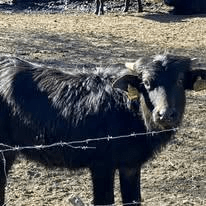
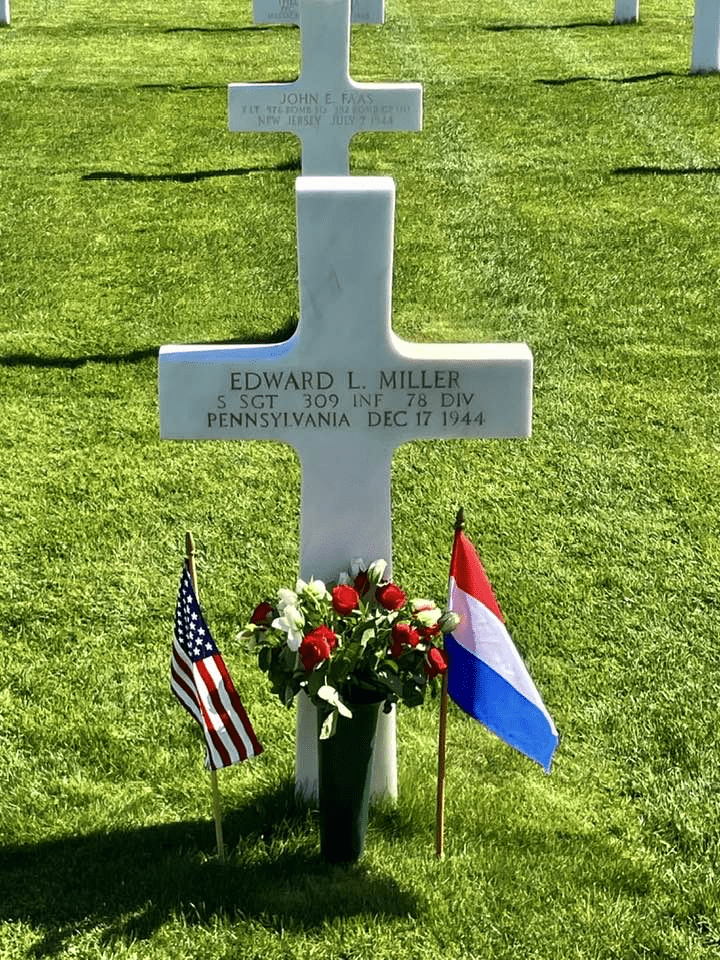
beyond words what circumstances found us there with such presence of mind. There was the small village where a stroll into someone’s backyard yielded a take of water buffalo cheese and yogurt, and I met my new friend, Sparky the Water Buffalo. An old woman in a housedress came out to her own barn where we looked in cases at water buffalo ice cream and other items, to sell the goods without a word of English. By far, however, the highlight of the trip was a small ceremony for Staff Sergeant Edward L. Miller of Pennsylvania who died on December 17th, 1944, at the Battle of the Bulge, and where I stood silent while his niece rubbed sand from Normandy in his name, made an etching of his stone, and met the family who has taken care of his grave since the war. While they spoke to each other, I looked about these grounds of the American Cemetery at Margraten, at the more than 8000 fallen soldiers, and said to one of our hosts, “These men were no older than my students,” and the weight of war, of the Miller family’s loss, of this memorial journey across four thousand miles settled in my chest. What an honor to be part of this in a small, outside way. I can still smell the freshly mown grass as they were cutting it while we stood nearby. I can still hear the voice of the young woman at the park who spoke with such respect and honor. What a day. What an incredible trip. I’ll leave off the part about driving in Delft.
Mom. On April 12th my Mom, Joan Catherine Kunzinger, died at almost 92 years old. Joanie was the smartest, most honest, most caring, most loving woman I have ever encountered. Her strength as a young girl who had to take care of her siblings, as a young bride with two and then eventually three kids, as a wife taking care of Dad when he was not well in the last years of his life, and as a widow who hauled herself around absolutely always laughing, appreciating the fact she was simply alive and grateful. That is the word for Mom: Grateful, for everything, She could make friends with a lamppost and everyone I’ve ever met who met Mom, loved her. Her solidly Irish and Italian background came through strong, and she was forever a New Yorker. But Mom was at home wherever she was. I was fortunate enough to make more than fifty short videos of her talking about her life, but I cannot watch them without breaking down. Still, here’s the significance of her being on this list this year: She wasn’t expected to die. Not when she did. The day before I left for the Netherlands, I made a video of Mom in which she recites a poem about tulips, and laughs. I promised her I’d
bring her cheese, and she was very excited (despite her predictable “oh please don’t go to any trouble” comments). Two days after I returned but was still at my sister’s home in Pennsylvania, Mom fell while getting up from Bingo, and she hit her ribs on the chair. She never recovered as her paper-thin lungs were already beyond strained. I made it home in time for her to look in my eyes while she lay in her bed. Her eyes swelled a bit when she saw me, but she quickly fell back to sleep. She died that night after I had driven home.
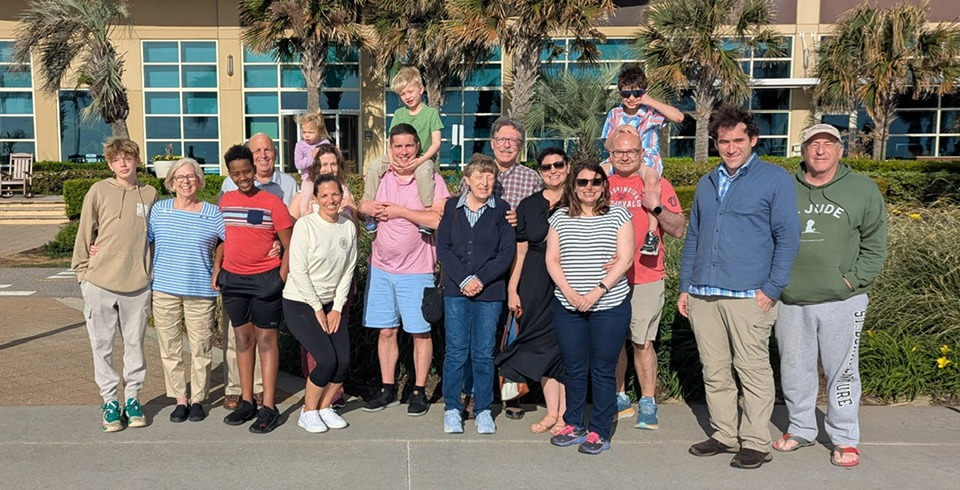
But here’s the thing about this: I have in front of me a picture of the family the morning after the funeral, and we’re on the boardwalk in Virginia Beach, clearly and appropriately enjoying each other’s company, just as Mom would have wanted. My sister made a comment when captioning the picture about this being “Mom’s legacy.” That hit me well. There is her life, right there, in the three kids, the five grandkids, the five great-grandkids, and it’s only just starting. Mom taught me through example to appreciate just the reality that we are alive now, but not for long, so we must love. I never got to tell her all about Amsterdam as she was very excited about me going and was looking forward to hearing about everything. Instead, I ate her cheese. She would have laughed at that.
The days Michael and I spent at New Point Comfort before the art show, the narrative of Curious Men and why it means so much to me, Spirit Lake, the Netherlands, Mom—all of these are the most significant moments of the past year because of the people; only because of the people.
I hope from now on when I recall events from my past, I recall them solely because I had the chance to love and be loved and let that always be what I remember.
I never like starting a piece with a quote. It feels too simplistic and yellow-journlismesque. But here goes:
“Sometimes it is the artist’s task to find out how much music you can still make with what you have left.” This comes from the famous incident when Itzhak Perlman, the polio-stricken, world-class violinist, who during a performance at Lincoln Center, snapped a string at the beginning of a concerto. Rather than stop and move awkwardly backstage to replace the string or the violin, he simply nodded to the conductor to continue, then immediately adjusted his playing on just three strings, not missing a note. The quote had as much to do with his own life as it did that singular performance.
It seems to me that no matter how much we make the best of those holidays which follow a significant loss, the loss is still present; it has to be. To pretend everything is normal, or worse, that annoying pandemic-born phrase, “the new normal,” is a foolhardy act. No, it’s not normal. There’s a hole in the world right in the middle of the gift-giving, the conversations, the Christmas dinner–especially the dinner. We adjust, of course, we work the best we can off of the three strings left, everyone shifting slightly to accommodate the newly-needed positioning. But it certainly can be the elephant in the room.
My mom died in April, and it wasn’t exactly expected. Certainly at nearly ninety-two with already compromised health, I would not call her passing a shock, but when I left for the Netherlands a week earlier, she was fine, even jovial. While gone we bought cheese, and my intention was to share it with Mom. But she died just two days after we returned. Dad’s death was much more anticipated, and at the risk of sounding cold (Merry Christmas Everyone!–nice topic for today, don’t you think?), his death was almost immediately accepted. He had declined so far over the course of the previous two years, and in the one brief moment of lucidity he had while I was present, he told me he supposed he only had a few days left–said it as a matter of fact, an acknowledgement of something he almost welcomed. But Mom had no intention of going anywhere yet.
So we adjust more now than we did back then, though in both cases, the change was noticeable. Dad’s also because his passing was just two months before Christmas.
But here’s what I noticed: I’m paying way more attention these days to those that are here. Hanging onto the conversation longer, thinking more about the gifts I give–are they personal enough and not some last minute purchase to “get it done.” I’m listening more this year–to my son, to my siblings–I’m aware of the spices in the dressing, the timing of the dessert. It’s as if those of us who remain have made the music by filling up the empty spaces with what love we have to give, no longer assuming any of the rest of us will be here next year.
Perhaps I am more focused. The more loved ones exit, the closer attention I pay to those still here in the play, on this stage. Oddly, I can nearly pinpoint the exact moment my adult life began, and someone gave me a present this Christmas which reminded me of that time back then, and two essential truths emerged: That really happened, and I’m still here. We waste so much time not talking to others; we have mastered the art of euphemism and avoidance. We figure that we have time to figure things out, plenty of time to tell them what we’re feeling. And then often without warning they’re gone. So why not turn to those who are left and say, “Listen, I need to tell you what you mean to me…” Being able to still do so just might be our departed loved one’s greatest gift to us. We don’t have everyone we started out with, but we have those who are left, and we have the truth of us in each other’s lives.
I believe the holidays which follow the passing of a loved one, while difficult, just might be the most honest, the most open and transparent. I missed Mom today, and always I miss my father, but this year too I missed, again, Letty, Fr Dan, Dave, and so many more who left in the last sixteen months, left without me taking the time to say what I would have said had I known I’d never get the chance to say anything. No more. That’s their gift to us, right there. This year instead of their absence being only sad, it is also motivating. It’s like they’re still in the shadows silently telling me to love, to just love. And like Virgil’s personified Death, they twitch my ear and whisper, “Live. Live now…I am coming.”
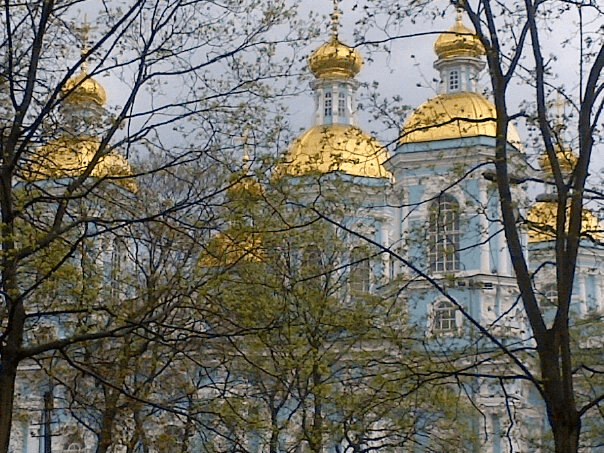
St Nicholas Cathedral (one of the rare churches to never close during Soviet days)
I’ve been thinking a lot about Russia lately, about how so much these days reminds me of my time there. Over the course of more than twenty years, I came to know the backroads and alleys of St. Petersburg, Russia. I found the coolest little cafes and late night jazz joints, made friends in shacks serving Georgian wine and shashleek—a kind of shish kabob—in a small room with low ceilings and dirt floors, the Gulf of Finland pounding at the sand outside. I returned again and again to long embraces from friends like Igor and Dima and Valentine the crazy man and brilliant artist.
I taught American culture at the college, endured endless people wanting to practice their English, celebrated Victory Day on Palace Bridge year after year, mourned the losses of people during the siege with veterans who sat telling me their stories all the while holding my arm, connecting to me through touch.
I prayed with old nuns in shrines, climbed the rubble of the ruined St Catherine of Alexandria Catholic Church with American priest Frank Sutman who raised enough money to rebuild this first Catholic Church in all of Russia back to its glory from the ruins of the storage facility it had become during the Soviet Era. I met musicians in old bars—Gypsies—and played music with them until the sun came up, read my own work at the famed Stray Dog Café surrounded by the ghosts of Anna Akhmatova and Trotsky and Brodsky.
What a time it was.
With friends I toured palace after palace, attended private concerts by quintets from the Kirov who played just for us before dinner at the Nikolaevsky, walked the halls of the Summer Palace and wondered about the infamous Amber Room, learned every crevice of the Winter Palace and its five building complex that is the Hermitage Museum. Had drinks in the basement of the Yusopov Palace where Rasputin had drinks just before he was killed for the fifth time. Walked the grounds of Galinka Palace, the Church of Spilled Blood, St Isaacs, St Nicholas, Trinity, and more. I climbed to the top of the tower of Smolney from which St Seraphim supposedly fell the ninety feet to the ground when he was ten but landed softly and got up and ran toward canonization.
I learned where to buy vodka and where not to sip it at all. I found the best places for authentic borsch and had Beef Stroganoff at the Stroganoff Palace.
I ate at McDonalds, Pizza Hut, Kentucky Fried Chicken, and more western joints filled to the gills with Russians all in love with the taste of America, drinking in the swell of western culture, surrounding my friends and me trying to fit more English into their Cyrillic mouths.
We took canal rides and saw folk shows where more than a few times I was dragged on stage to dance with the Russian women and men as balalaika music filled the packed arena. I’ve seen Swan Lake at the Marinksy Theatre more than a dozen times and have seen Hamlet in Russian.
I’ve made friends with former Soviet Naval Captains, countless professors, writers, and artists. I’ve become friends with translators and more than a few vets of the Chechnya War who would have rather stayed home and continued their studies in Engineering at St Petersburg University than return with no legs, one arm, half a face blown away, leaning against the Metro Walls, cap in hand—handicapped, hopeless.
I’ve sat on the rocks of the Gulf of Finland drinking champagne during the White Nights while one of Russia’s finest flautists performed privately for us, laughing, making us cry with Tchaikovsky and Bach. I’ve sat backstage at the St Petersburg Conservatory with a dear friend who is a choreographer, and his teacher, who used to dance with Baryshnikov, and watched them practice.
We’ve had food from an Uzbekistan Restaurant, and I came to understand the plight of the refugees from Azerbaijan after the slaughter by Armenians. I’ve read at the flat of Dostoevsky with an original volume of Pushkin on the table next to me and one of Fyodor’s own manuscripts two feet away. We have wandered through the massive marketplace next door and carried home to our apartment bags of fresh vegetables and chunks of meat cut before my eyes off of a carcass.
I’ve battled with border patrol over textbooks, bribed cemetery guards to let us wander sacred grounds, sat in the cell that held Dostoevsky and other dissidents, and watched the ruble gain strength, take a beating, then recover, then fall. I’ve sat on benches with women who were survivors of the siege during the Great Patriotic War and talked about family, talked about poppyseed rolls, talked about the flowers that grow in the dirt.
I was there when they reinterned the remains of Czar Nicholas II and his family, including Anastasia and Alexi. I was there for the celebration of the 300th anniversary of the city that Peter the Great called the Window to the West.
I watched as Marlboro came to town, then Clairol and every Russian woman suddenly had bright red hair. Adidas showed up and all the men wore warmup suits. I’ve walked past too many men in cheap three piece suits holding semi-automatic rifles guarding some boss’ SUV as money exchanged hands—all cash, USD, in suitcases.
I had just turned thirty-one when Communism fell and two years later I went to St Petersburg. The city streets were dank and barren, not a single neon sign, not a single advertisement, nothing to see or do. I toured the lab of Pavlov where dogs are still used, and I stood on the Field of Mars next to the eternal flame commemorating those lost during the siege. I met then-Vice Mayor Vladimir Putin. I met ambassadors. I met Sophia, who was a young teen when the Czar was still in charge, who lost her husband and son during the siege, and who sat in the shadow of the Smolensky Shrine and told me they can take anything they want from her, but they’ll never take her faith from her again. She blessed herself in the large Orthodox way and held my arm with her ninety-something year old transparent hands. She could tell me whatever she wanted. I could talk about anything I wished. I watched this country I was raised to fear fixate on all things west, becoming a strong and welcome presence in world culture and exchange. Every person I brought returned home amazed at the life that was Russia, hoping to return, knowing they had friends there, and dozens did return with me for a second, some for a forth or fifth time. Russia was addicting.
I’ve brought dozens of US faculty, hundreds of college students, a dozen cousins, pilots, performers, writers, and a four star Army General, twice.
Now, exactly half a lifetime since my first trip, I’ve watched it all go full circle. The little western influence that is still there can’t be changed, but the welcome presence has faded away—no more McDonalds, Pizza Hut, or KFC. No more Starbucks. Open readings are tolerated only if no one, no one, absolutely no one uses the word “War” in reference to the Ukraine.
After the invasion, I sat by hopelessly four thousand miles away as friends wished me well and hoped we’d someday meet again. I told them, my friends, including those now in Germany and France, a few in Norway, that I cannot wait to see them again, perhaps in New York, or Paris. Maybe Oslo. Not Russia. Those who had left or since left Russia, I talk to, but too many to mention I can no longer get ahold of, and I have no idea whatever happened to them. Many were men in their twenties and thirties. All had terrific senses of humor and the hopes young artists and engineers who knew only democratic principles their entire lives. Gone.
I have taken a train from one end of that massive empire to the other with my son, creating memories to last all our lives, spent late nights drinking shots of vodka with Siberian businessmen. I’ve sat in the home of tour operators and laughed and became brothers with them. I have mementos on bookshelves, on walls. I’ve written three books about my times in Russia, and more than fifty articles. I’ve developed three college courses about Russian Culture and mentored more than two hundred students who received Study Abroad credit. I miss the beauty of the architecture, the beauty of the people, and the mystical way history bathes me when I walk the streets at night. I miss my friends. I miss laughing with Valentine and talking about butterflies and angels. I miss sitting alone at this one café I love drinking tea, making notes, listening to contemporary folk music and enjoying this impossible life I’ve had the chance to live that brought me more than two dozen times to a place that until I was in my thirties, I never thought I’d ever see. I miss the people very much.
I miss the way old women swept the streets with birch brooms. I miss the Hermitage and the Hidden Treasures Collection, and that time I helped spread the ashes of my artist friend, James Cole Young, in the crevices of one of his favorite paintings. I miss counting stripes on the wallpaper and chasing pigeons in the park.
I miss the hope that was Russia. I miss that hope. Even now, here, I miss hope.
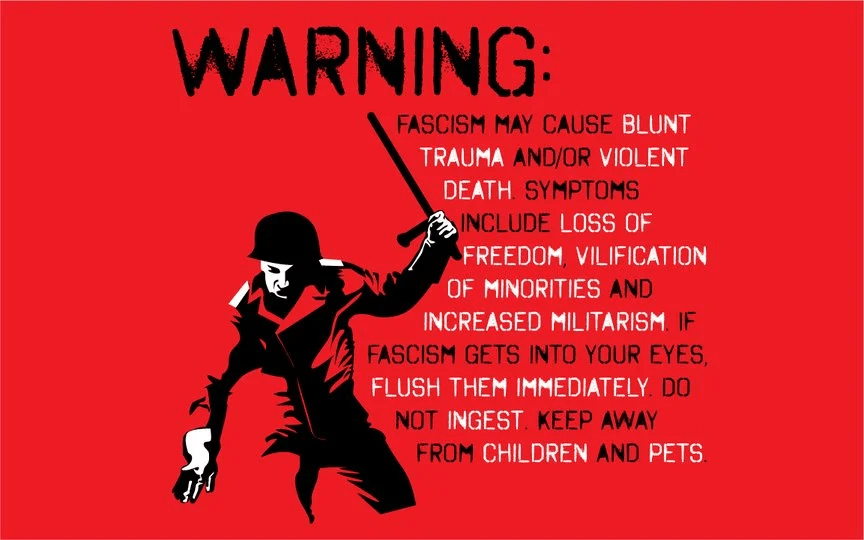
“A far-right, authoritarian political ideology emphasizing extreme nationalism, militarism, a strong dictatorial leader, and the subordination of individual rights to the state, often involving forcible suppression of opposition, economic regimentation, and national rebirth through controlled unity and traditionalism. Fascist movements, like Mussolini’s Italy and Hitler’s Germany, use propaganda, cults of personality, and violence to create a unified, powerful nation, often targeting minorities and foreigners as scapegoats for national decline.”
Yeah, that’s not me. Not a fan of Hitler. Not a fan of Stalin. Not a fan of the Father of Fascism, Mussolini. Never have been.
I don’t believe:
In an infallible leader who never makes mistakes
That the democratic ideals of freedom and equality are a threat
in rampant sexism or the need to control mass media or consider it dangerous for telling the truth
in sustaining a false sense of “victimhood” or that the nation is under attack
in questioning reality and verifiable truth while at the same time encouraging myth and false narratives
So, yes, I am anti (“opposed to, against”) fascist (see above). If someone prefers to drop the “scist” from that title, that’s fine. I’ll go with Antifa
as would:
Ronald Reagan, who said that fascism “glorifies the state and denies individual liberties.” He suggested that fascism would be most evident because of liberals, not knowing, of course, that the current president makes Reagan seem like an MSNBC junkie.
Primo Levi, who said that fascism wants everyone to be the same
FDR, who said that fascism was ownership of government by an individual
Henry Wallace, who said “if we define an American fascist as one who in case of conflict puts money and power ahead of human beings, then there are undoubtedly several million fascists in the United States”
Upton Sinclair, who said that fascism is capitalism plus murder
Eric Fromm, who reminded us that. “When Fascism came into power, most people were unprepared, both theoretically and practically. They were unable to believe that man could exhibit such propensities for evil, such lust for power, such disregard for the rights of the weak, or such yearning for submission. Only a few had been aware of the rumbling of the volcano preceding the outbreak”
The desire on the part of some to define “the Antifa movement” as anti-American is ridiculous, uneducated, and blatantly contrary to the very American “values and ideals” those same sound-bite-driven complainers propose they protect. Nearly all of this country’s forefathers were Antifa, which is why they left Europe and why they tossed the tea in the bay, why they said, “no more.”
So, to all of this country’s new accurate-information-deprived streamers, No More. Not only were the antifas like myself here first, this country still exists because of them. To not support anyone who is anti-fascist is to in turn support North Korea, the Soviet ideals of modern-day Russia; it is to be against all Americans who fought in World War One, Two, Korea, and Vietnam. If your instinct is to don a swastika or raise the confederate flag, then, yes, we are enemies and I’m on the right side of history, you’re not. But if you are just repeating the shouts of the ignorant masses and never took the time to think this through, think it through now and then turn and proudly declare, “Of course I’m against Fascism. Duh.”
I suppose my parents were the original plunger to my pinball life. From the time I was born they slowly pulled back on that spring, maintained that illusion of safety and determination. “We’ll move him to the Island,” they said. “We’ll go out to a quiet village,” they said, “where he can grow up in nature with friends.” I think their hands got sweaty and slipped a bit when they said we’d all move to Virginia, but they recovered just fine.
But then it happened.
Release.
Suddenly I moved about life bouncing from one influence to another, bouncing and tumbling from high scores to near elimination, and all my parents could do was keep their fingers on the flippers so if by chance—and a slight chance it usually was since I mastered the art of bouncing around—I moved anywhere close, they could try and catch me for a moment in metallic suspension, then send me in their chosen direction, or at least back into some middle-ground where I was safe from an early exit.
The thing is, others got their hands on the flippers too. Advisors, sometimes friends, sometimes lovers, holding me out on the end of the bar, deciding which way and how hard to send me on. Too gentle and I’ll tumble right out of the game; too hard and I’ll inevitably come back to haunt. That happened a lot.
The thing is when I was at the height of my ricocheting life, I was in my prime, in my element. I liked not always knowing where I was headed and what might happen. It kept me perilously in the moment, so blatantly aware of the “now” as I kicked off one bad experience and bulleted toward hopefully something better, a tiny cannonball without any ability to steer. Yeah, that was me for a long, beautiful and exciting time.
Then something game-changing occurred: I had a son, and I found myself pulling back on that plunger, looking ahead at the same time wondering if I could help him score the most points by spinning him toward a certain destination of my choosing. I remembered what that was like to not simply be without control, which has its own benefits and limitations, but to be at the mercy of others with their fingers on the flippers. A coach told me I needed more discipline and I could compete at a higher level in tennis, but the parental plunger pulled back a bit more declaring a difference of opinion. I decided not to go to college for a while and I really thought that plunger would let me go in any direction I chose, but no, as a year later I was tucked nicely away in the safety of a university chamber. Truly, my parents weren’t the best in letting this loose cannon follow my own lack of control, but it was to their credit they recognized in me that carelessness. Ironically, life went very well for me because of their foresight, their ability to look ahead, having played the game before. Sure. But it was their game. Not mine. In subsequent years they handled the flippers just fine, often helping me get back on the course I had chosen. So with my son, I wanted so desperately to simply let go and watch that ball of a boy rip out on his own. But I’d been around the block by then, and while I thought I could help by holding the plunger as long as possible, I let go earlier than I wanted, maybe even earlier than he wanted, and he’s found the right bumpers to play off of in his life.
But the point is I’m bored again. Certainly I’m too old to just richochet about hoping to bump into something good, but I’m too young to leave the game. So I looked at some maps and noticed places I want to go and haven’t yet been, and I can’t remember the last time I put myself out there, risked embarrassment in hopes of chance. If I remember correctly, I always got five balls when playing pinball, and when I got to that last one I needed to savor it, and the tendency was to try and manipulate and control those flippers as much as possible, create some illusion I can make this last longer than possible.
But it is in that way that we lose those very years; we slow down, play it safe, find comfort in the flipper that holds us a moment before deciding which way to propel the time that remains.
You know what would be really interesting? Pull the plunger all the way back, and even beyond back, then let it rip. Yes. Maybe go to the Islands, bounce about the South Pacific, perhaps walk the Pacific Coast, maybe train through India or take a river cruise on the Danube. Whatever. But that’s my new plan: I’ll let my imagination control the flippers and see what happens.
In my youth Dad always walked down the small staircase on Christmas morning to plug in the lights while my siblings and I waited. Mom would have stacked our gifts in separate piles under the tree, and after the three of us exchanged our own gifts earlier that morning in my sister’s room, we’d gather on the steps and wait. When the tree lights lit, Dad would call out “Okay, you can come down now,” and we would, each of us steered toward our own third of the presents.
Mom was our Santa back then, waiting in lines for the right gifts, hoping she doesn’t ever again buy my sister the wrong album, trying to get it right, not knowing of course that she couldn’t possibly get it wrong. She’d be in the kitchen as soon as the presents were open so she could make the stuffing and prepare the pies for the relatives coming that day. And then later, after everyone had gone home and the five of us were again alone, Dad would emerge from his closet with books for each of us. This was special as it was common knowledge that Mom did all the shopping, but in the case of the books, Dad shopped himself, wrapped them himself, always picking out the perfect one for each of us, and would “surprise” us with them that night. It is a tradition I continue with my own son. Those days of “Dad’s Books” happened it seems just months ago, and the times that Mom worried she used too much spice in the dressing seems to have occurred weeks ago, but it could not have been. They both made it seem as if we had hundreds of holidays together with just the five of us, but it wasn’t even two dozen. That’s what time does when you’re complaining about the cold or the crowds or the difficulty finding just the right thing to give someone–it passes. Fast.
October 2015
I remember sitting in the uncomfortable recliner next to the hospital window and thinking, “If I’m here a few more days, I might take down the clock; laminate the list of television stations he will never watch; ask to fill in the information on the empty whiteboard I’ve stared at for four days, note the nurse’s name, cross off the faces from frowny to happy to indicate his pain tolerance. If he had more time, I might move his bed closer to the window.” Three times I moved his food trays, trice-daily reminders he hadn’t regained consciousness, into the bathroom. I can still smell the aroma of onion soup he never knew existed.
Most certainly I would move the two boxes of blue latex gloves from the wall inside the door to the wall outside the door. Nothing says “If I touch you, I might die” like blue latex gloves. I would silence the incessant beeping from the health monitor above his head.
I didn’t mind the wait. As sure as I knew his blood pressure, blood oxygen level, and pulse, I will miss the wait, the slim possibility, the sliver of “just maybe.”
The text from my brother read, “He’s gone. Come back over.”
I dismissed class just after 8:30 and left for the hospice center a few miles from the college. I forgot to tell the students it would be a few weeks before I returned. I drove to see my suddenly late father.
We took turns saying goodbye again, this time after the fact. He looked gone—as if he’d been dismissed, like he transferred or simply dropped out. I held his bare arm below the sleeve of the green golf shirt they provided. I wondered if all the patients had the same shirt. The entire building had a sense of oneness, of warm togetherness, like all the nurses should have the same name, and all the patients looked like my dad.
I kissed his withdrawn face. I thought he might feel cold, but his arm felt warm as if from the sun during all those days at the field coaching my brother in Little League, and from sitting all day in the baseball stadium bleachers, buying me hotdogs, letting me keep score as he showed me how to fill in the small boxes.
When I took his folded hand in mine, it felt stiff, but not from some medical transition; no, more like his muscular grip back when he took my infant son in his arms and laughed, his eyes wider than space, his laugh deeper than love, just moving his grandson up and down as they laughed and my son reached for his nose, for his glasses. I reached for those glasses now, unused on the nightstand, and held them.
A week earlier I stopped at the hospital to check on him, expecting another day of quietness after a week of unconsciousness. But I walked in to see his eyes wide open, staring at the ceiling, then at me.
“Well hello,” he said in his baritone voice.
“Hey Dad, how are you?”
“I’ve been here since 4:30 this morning.”
“You’ve been here for four days.”
“Four days! What hotel am I at? Ha! Hotel! I wish I was at a hotel! What hospital?”
He could have been thirty years younger. After a long, slow year-long erosion from dementia, I had not heard Dad so lucid in several seasons.
“You’re near home, Dad. You’re at the hospital right near home.”
“It is serious, then? Tell me.”
“You have pneumonia, Dad.”
“So I probably don’t have much longer, do I?”
And that nurse came in and Dad checked out, turned his head and closed his eyes one last time just days before he died. That night I rode in the transport ambulance to take him to hospice.
If I had more time I might tell him about my failures, my shortcomings. But there is never enough time.
April 2025
We were in a cheese factory shop in Volendam with baskets of cheese wheels to bring home. I held a bag of four wheels and thought about who I can give them to after I separate them. “I’ll give one to Mom,” I said.
Stateside, I stopped at my sister’s home in Pennsylvania when Mom’s nurse called to say she had fallen while rising from her chair at bingo, and she hit her ribs on the chair, bruising the bones around her already-weak lungs. Her nurse, Max, held the phone so Mom could talk. “I’m so confused,” Mom said to my sister and me, and I said I’d be home the next day. A while later another nurse called. “Your mother is transitioning.” She’s becoming a man? I momentarily wondered, not trying to be funny; I truly had never heard anyone reference the stage between being not at all dead and about to die as a “transition,” but I suppose it is as good a euphemism as any. Certainly, “Your Mom is dying,” appears a bit colder, but I still think I’d have preferred such directness over the “I’m so afraid to say what is happening that I’m going to wrap it in obtuse verbs.”
The next night I leaned over her sleeping body and she opened her eyes and they welled up, and I said “I love you, Mom” and she fell quickly back to sleep. Later that night my brother texted.Mom was gone. That was either eight months or eight years ago.
I miss the waiting, especially this time of year when I’d be waiting to give her some gifts—probably flowers and a gift certificate to take her to a nice lunch. She reached the age where those gifts of time spent together were the most valuable.
I miss making videos of Mom, and how for every one video I recorded I deleted four or five because they were too ridiculous to publish. I miss those outtakes now.
I miss seeing Mom in the foyer of her home waiting for me to drive up the circle to pick her up, a wide smile followed by an “Oh, it is so good to get out for a bit! You know?” I knew. She didn’t care if we just drove around. I’d park the car at the market and she’d wait for me as I ran in to get her bananas, fudge stripes, and flowers.
That last time I saw my dad before he entered the hospital he had sank a twenty-two foot putt on the practice green and looked at me with such a proud and excited reaction it’s as if my entire life collapsed into that moment—the golf when my brother and I were young on the Island, that time Dad and I went to see Jaws when it first came out, or when he and I went to Disneyland in California; our lunches every week after he retired but before Mom had. Strangely, I think I felt the loss of my father before he even died because of his ebbing mind and misunderstood timeframe. Loss comes unexpectedly and often out of joint.
The last time I saw my Mom I told her I’d be in Amsterdam and we were going to Keukenhof to see the acres and acres of flowers, and would she like me to bring her some tulips. She stared at me a long time, and I waited, and more time passed, with my phone video playing, and still I waited wondering if I had lost mom right then, until finally she smiled and recited a poem from her youth.
It was worth the wait.
Merry Christmas Mom. I’ll put on some Christmas music for you—some of your beloved Andy Williams. And Merry Christmas to you too Dad. I’ll plug in the lights Christmas morning and later that night I’ll give Michael a book, and I’ll be thinking of you.









 a view from this wilderness