
Speechless

Some years ago while working at a different college, I wrote this essay loosely ripping off an essay by Tim O’Brien. I’m not ashamed. I found it recently and thought about how I still neglect to complete the very assignment I encouraged my students to complete as often as possible. . Something needs to change.

What Have We Learned

Older students are better than those just out of high school. The big dude with the pierced face and tattooed eyelids is probably a great writer. Many students would rather pull a lower grade than have a professor look at a rough draft. Students who take copious notes don’t always fair as well as students who just listen intently. If it happened before they were born, it really doesn’t have any affect on them and therefore they shouldn’t be required to learn about it.

Hamlet is boring; Oedipus is stupid; statistics is tedious; bio lab is too long; developmental classes are a waste of money; introduction to literature is a waste of time; history is not relevant; philosophy has no practical application; psychology is disturbing and the instructors are disturbed; text messages are read more than text books; face to face communication is obsolete; and the only source of information is the internet.

Here’s the great irony of education: While we should become smarter as time goes by because we’ve been given the answers through the centuries, watched the lessons played out on the battlefields and in seminar rooms, we’re actually ignoring more, learning less, and not really keeping tabs of our decline.

Maybe if I text my lectures they’ll pay attention. Phones go off in class, in the hallways, in their backpacks. They reach in to quickly shut it off because they “forgot it was on,” and spilling out onto the floor are the books they need, a few small notebooks, and various articles of clothing. They carry more in their bags then in their minds. 

The science and math books are ten-pounders, and the anthologies aren’t lightweights either. For lab they need their lab equipment, gloves, goggles, special notebooks, dead animals. Rough drafts, final copies, required journals, various books read besides the textbook, art supplies, tape decks, language discs, keys, wallets, games and personal items. Some have staplers, toothbrushes, condoms, aspirin, medicine bottles, and hand soap. Some carry crayons and cookies because their kids come to class sometimes when elementary school is out or cancelled, or when the kid is sick but the Prof told the parent if she missed one more day she’d fail the course. They carry medicine for those kids, bi-polar, attention-deficit, hyperactive. They carry the same for themselves, medicine for their own ADD, ADHD, OCD, diabetes and manic-depression. They carry a lot. They need to remember when papers are due, when tests are scheduled, including their math tests, their physics test, algebra, pregnancy, special needs tests, mammograms, CT scans, and various other tests they’ve got on their mind and written down in their notebooks at the bottom of their parcel.

They carry cell phones with various rings, various friends calling during class, right before class. They have small machines attached to their ear so they can remotely answer the phone without having to move their arms or lift their hands. They have the numbers of everyone they know automatically programmed in. They no longer have to walk to see anyone, walk to find a phone, remember any numbers, lift their arms, or turn their heads.

Once someone’s phone vibrated during class. The vibration on the desk was as loud as a ring, but she politely excused herself. Some professors insist the phones be off during class, and they won’t even allow them to be turned to vibrate. But this student came back in and said she was sorry and that she had to go, that was her babysitter calling and someone from her husband’s command post was at her house waiting for her to come home. A week later I discovered her husband had been blown up at a roadside bombing on the airport road from Baghdad. Another student’s brother was on television. He worked for Blackwater in Baghdad and she watched her brother’s charred body swing from a bridge in Iraq.

One student shot himself in the head because he thought the paper was due and he thought his medicine wasn’t. True story. A colleague of mine listened quietly one day to a near-suicidal student explain why her paper was late and how her daughter was going through depression and they were bringing her to the doctor to see what was wrong, and it weighed so heavily on her mind that she couldn’t really concentrate on the paper and would the professor mind the paper turned in a few days late, and she agreed. Students knew this about her—she would work with anyone. A few days later my colleague hung herself in her kitchen because her medicine was fucked up.

This is the American Community College. These are the trenches, in the city; some of these students come to get ahead, knock off some basic education classes before transferring and paying more at the university. But some come here instead of jail, or to bide their time, or to hang with old friends and maybe hook up with new ones. Some come to keep off the streets; it can get dangerous these days. But some of these students come from real war-torn areas. My student Deng walked across Somalia to Ethiopia twice looking for safety. Before he found it at ten-years-old in a Red Cross camp, he was given an automatic rifle and taught to kill. Now he tries to write about gun control and crime in seven hundred words, making sure the grammar is right. His mother was raped and hacked to death in front of his eyes. His father “disappeared.” He was a Lost Boy. Sometimes he didn’t concentrate. Yeah, okay, sometimes he didn’t pay attention. But when he came to my office we talked about politics and survival. We talked about Africa and faith. We talked about ideas, and he told me Chinua Achebe knows Africa. He told me how Sartre would not be popular in Somalia but Descartes would. He knew the differences, understood the gentle nuances that separate philosophy and politics. I didn’t ask about his scars. He didn’t ask about mine. Deng came here with an education the likes of which we can’t possibly conceive. He told me he as soon as he found the camp he knew he needed to leave. I said I understood. He said it was too much, and he wanted to die so badly and that’s when he knew he just had to get out. I didn’t answer. I had nothing left to say to him.

What I know now is this: all the lectures in all the classrooms from all the professors in the world will not prepare us to be anything of value if we don’t find any value in what we do and how we live our lives.

Of course we would all do things differently; even just a few small moments. I’d never have left Massachusetts. I’d have gone to Monterrey anyway. I would have passed on the Trout in Prague, the oysters in Asheville. When I left Tucson that last time I’d have headed west instead of back east.

We are always in pursuit of ourselves, aren’t we? Even if we don’t consciously consider such notions day to day. In class one morning I asked my students if there was anything they would have done differently in their short but tech-dominated past. They all laughed and had answers that ranged from staying off-line to trying harder in high school to treating a loved one better while she had the chance. They talked for a bit; they got quiet. They thought a while. And I added this: What are you doing now that five years from now you will wish you had done differently?

They looked at me for a moment with just a little confusion and some wonder about their future, and they waited for me to talk.

But honestly, I have nothing left to say.

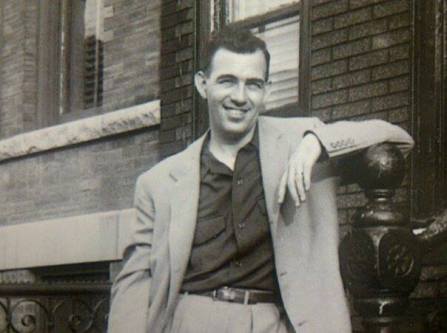
May 23, 1925-October 21, 2015

Dad died ten years ago this Tuesday, the 21st. Words can’t express how I miss him. The following essay first appeared in Kestrel: A Journal of Literature and Art, as well as my collection Fragments, and anthologized in a few other publications. It was the last piece of my writing I am aware my father read.

12063306_10207030426106557_3199067376729529480_n

Instructions for Walking with an Old Man at the Mall

First of all, he’s walking, you’re joining him. Don’t stop if he doesn’t. Don’t keep walking if he doesn’t. You are a shadow, an imitation.

Stand on his side where he can better hear you. If he can’t, repeat yourself as if for the first time, no matter how many times. Never say “never mind.” When he tells you something, you have never heard that story before, even if you can repeat it word for word. When he tells you about the baseball games with his Dad seventy years earlier, they are new stories, and your response must sound genuine. When he tells you about the time he went swimming at camp with his friends, and how when they went to retrieve their clothes from under a boat they found a snake, be amazed again, ask what happened. Laugh again since he will laugh.

When he pauses in front of a store, don’t question it. At that moment, allow his sole purpose in pausing is to look at whatever item is in that display. He might mention how he used to own that tool, those pants. Let him know you remember; do not make a big deal that he remembered. He needs you to know he didn’t stop “to rest”—he stopped to look at the display. When he says he could use that new suit, a new pair of shoes, or a new whatever is new, agree. If he happens to stop in front of Frederick’s of Hollywood, there’s no need to joke; it will only emphasize he couldn’t get past a place he would never stop with his son. This time he simply couldn’t continue. Talk instead about his grandkids. Talk about the rain. Do not talk about old times. There’s no need to recall the time he drove you to the airport for a flight to college and you saw him hours later waving to you onboard the plane. Avoid bringing up the time just the two of you spent the day at Shea Stadium when you were a child. Instead, ask about the Mets and if he happened to catch the game last week. You know he did. Let him tell you about it.

When he seems tired but doesn’t want you to keep stopping, stop to fix your shoe, to read a sign; look for a bench and suggest you sit and talk. He’ll ask about your son; he’ll ask about work. Have something to say other than “fine, Dad.”

Do not look at your watch. Do not check your phone; most definitely do not check your phone. Leave both in the car. Do not indicate in any way he is keeping you from anything. No other time is relevant anymore. But you will grow tired and restless. If he senses this, he will insist you leave. He will say he knows you have a lot going on, and he’ll say he’ll see you later, and he’ll do whatever he can to make you feel he is completely fine with it. Stay anyway. Then sit a bit longer. Do not ask about the doctors; the walk is to forget about the doctors. Do not quiz him on medicine or schedules. He is out for a walk, you joined him, it is something about which he will tell others—that he went for a walk at the mall and his son was there and joined him. Do not let his story end with “but he had to go.”

When he can’t remember where he parked his car, ask if he parked in the usual area. He did. Sit down for a few minutes. It will come to him. There’s no need to ask probing questions like “which stores” or “what street” he was near. Just sit a while. He’ll remember. You’re not in a rush.

When you leave the mall be near him as he steps from the curb, but do not help. He will be fragile and unstable. The step from curb to parking lot is a leap; he used to do it with you on his shoulders and two others running out front. Let him step down on his own but be ready. He bruises easily and a simple scrape is a trip to the doctor. Have the patience he had when your childhood curbs seemed like the cliffs of Dover.

Don’t say “I guess I’d better get going.” Don’t make plans. Don’t make any comment to indicate he did well or that it was a “good walk.” He didn’t do well and it wasn’t a good walk. He’s older now. He’s slower now, but he knows this. Really, once the walk is done, the time spent together always seems to have passed faster than we recall. He knows this as well.

12143183_10207071237766823_459922957598238343_n

“Blessed Twilight” Dickens Called It

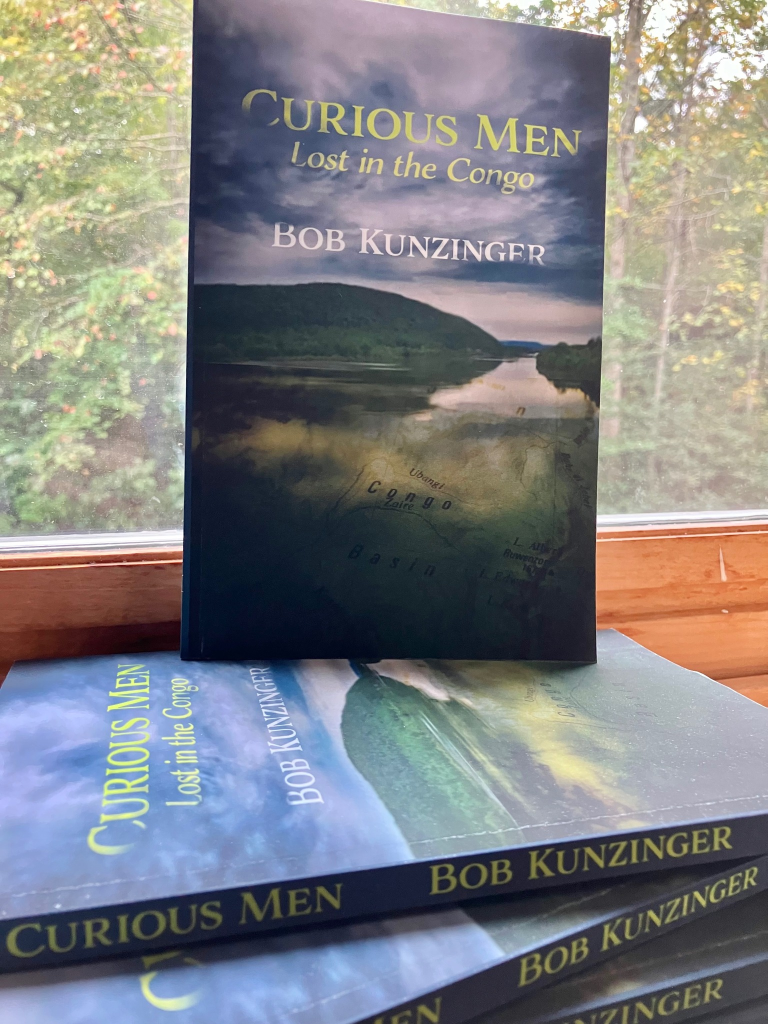
This blog is about reading some of the most motivational writing you will find while helping fight Parkinson’s Disease.

So here’s what happened: About four decades ago I put together a book called Vincent which my former advisor at Penn State, Eton Churchill, and I published. It did okay and had rave reviews for its simplicity combined with insightfulness on the part of the author. I did not write this book; I pared down more than 2000 pages of letters that Vincent van Gogh wrote to others–mostly his brother Theo, but also other artists. The book became about 160 pages of startlingly beautiful first person prose in which Vincent tells his own life story including his turmoil with depression, his passion for life, his visions in art, his relationship with God, and his relationships with women. It truly is captivating writing.

In 2017, a real press picked it up and reissued it as Blessed Twilight: The Story of Vincent van Gogh, with a gorgeous cover and more wide-spread distribution. especially since the release coincided with the release of the movie Loving Vincent. It did incredibly well, but eventually went out of print as the publisher in Florida shut down and the people in Ohio who took it over also closed their doors.

The overstock of these books floated around the east coast and the mid-west, and with great generosity on the part of the people in Ohio, arrived at my door yesterday.

I am selling them and all the money is going to aid in the fight against Parkinson’s Disease.

These make fantastic Christmas gifts or just reading material for yourself. I can’t overstate how everyone who reads this book is captivated by Vincent’s philosophy, perspective, and passion. I can compliment it since I only organized the material, Vincent van Gogh did the writing.

Order copies for yourself and your friends. They are $25 a piece including shipping, or 5 for $100.

You can:

Venmo: @Robert-kunzinger

Zelle: rskunzinger@gmail.com

or send a check made out to APDA (American Parkinson Disease Association) and mail it to me at Bob Kunzinger, PO Box 70, Deltaville, VA 23043. ALL the money (except postage) will go to assist the research for Parkinson’s.

There’s nothing more truly artistic than loving people

I Barely Remember When

Fall has arrived and the breezes this weekend cleared away most of what was left of summer. Last week at home I walked along the river like I always do this time of year when the water laps at my feet, it is warmer than the air, inviting, deceiving, teasing me into thinking summer will push back on autumn and maybe even win out. I don’t mind the change so much; I’m not bothered by the passing of time as much as how I spend the passing of time.

The leaves are just beginning to change here, and my drive in a few weeks to West Virginia will bring me through every stage of autumn. Sometimes you can see all the changes happen in one day. Crazy. Well, the truth is, some things need to change. Even with resistance, sometimes it is the only way to make room for new growth.

For me even the seasonal change from summer to fall is often troublesome. Again, I don’t mind fall—my days in western New York and Massachusetts are most memorable for this time of year. And obviously I know it is going to happen. I watch the weather, I mark the calendar, I see the leaves letting go. But still it always takes me by surprise. I wake up one day and I need to wear more clothes, or I no longer feel the sun so strong on my shoulders, and I am saddened. The Seasonal Affective Disorder which strikes some of us in February can also have its way in October, though usually not as bad.

This year is different; I’m both tired of change and in desperate need of some right now.

In kindergarten I liked a little red-haired girl, Kathleen.

Stay with me here.

Just like Charlie Brown I was afraid to approach her. At the same time I was thrilled I met someone I would get to grow up with. We were in the same class until third grade when at the end of the school year my family moved much further out on the Island. Instead of saying goodbye to her I made a card that said, “I love you” and threw it at her in the hallway. I think she got it. Now I wish I had just handed it to her politely and said I was sorry I was moving. I never saw her again. I probably didn’t handle that relationship well. The change, however, the move east to what would become where I would forever call “where I am from,” was unexpectedly pleasant despite my resistance at first. The same thing happened when I was fourteen and moved to Virginia Beach, four hundred miles south. I absolutely and definitively did not want to go; I’m so glad we did.

During each major change in life, though, I consistently ignored the advice of my older siblings or from examples set down on television or in school. I simply preferred to assess a situation and have at it on my own terms, even if it meant complete and utter disaster. I was slow to learn as a result, but I gained that small bit of confidence we used to earn out on our own, trying and failing, fantasizing and acting and pretending. You simply never know when those youthful lessons will return to come in handy, see us through an unexpected left-turn, help us through the changes. And it seems these days everything is changing, doesn’t it? It’s as if people in positions of power are scanning the horizon to see what they can disrupt next. Even friends are acting strange, distant, and when the very essence of what we can count on is no longer predictable, we must either adapt or run away. I’m running away.

I thought about those years, my early youth in on Long Island, and how innocent it all was; how we flipped baseball cards and played stickball. We had block parties where the block would be closed to traffic and we all put picnic tables and grills out and walked up and down the street talking to everyone else and sharing food, and riding bikes, and the adults had drinks and the kids had fun. Television went off the air at night, just a fuzzy white noise until the early morning when a black and white flag waved across the screen and some dude said, “We now begin our broadcast day” after the National Anthem.

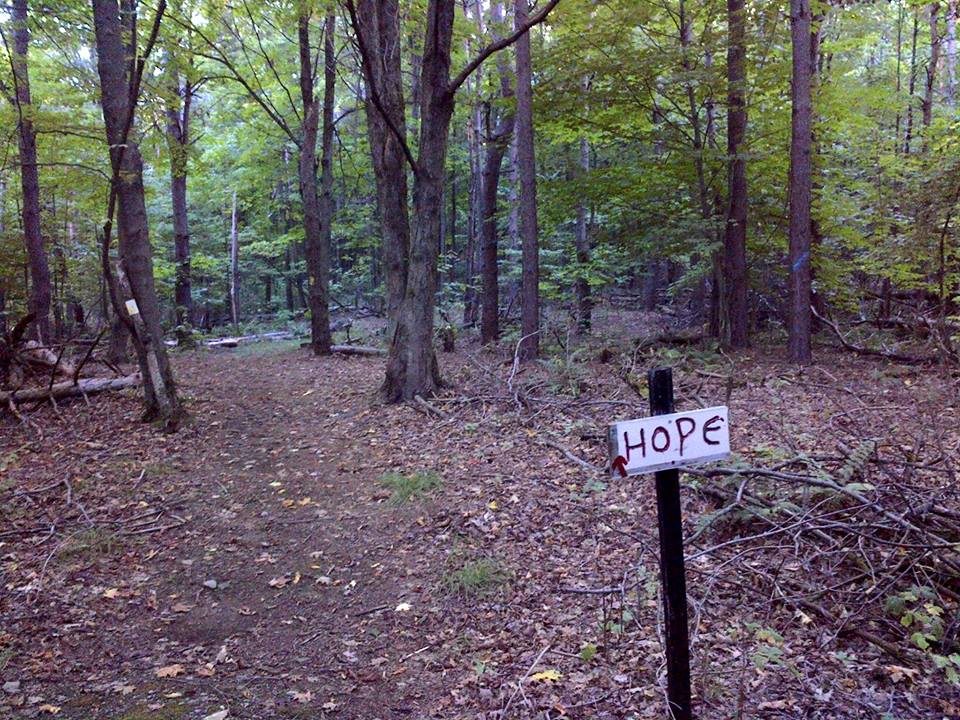
This was the age of my youth. It was innocent and tech-free and filled with hippies and protests and flag-burning and marches and sit-ins and rumbles. The laughable Mets became the champs and we walked on the moon. On the moon, for God’s sake. How can you possibly not understand why at the core of my generation is some semblance of hope, still simmering. Hope is what got us through; the hope of humanity, the hope of leaders, the hope of lovers and friends. We were not a generation of followers staring at our hands; not by any stretch of the imagination. So when the times were a ‘changing, we changed—or we were the ones causing the change to begin with. And as we grew older, those organic traits became part of our DNA.

But hope in everything is fragile now. And the falling leaves are no help; not for me anyway.

It almost seems ridiculous and it is certainly ironic that the best way for me to handle these unexpected and troublesome changes is to, in fact, change. So be it. “To change is to be new. To be new is to be young again.”

“If you do not change direction, you may end up where you are going.”

–Lao Tzu

We now begin our broadcast day.