Absent

Something is always missing in my writing that I can’t put my finger on. This is normal, and over the years I’ve had conversations about this with everyone from Tim O’Brien to Susan Sontag; that others read your work and say, “That’s exactly right,” all the while you step away from it frustrated that it is still shy of what you meant, what you know it needs, or worse, know it needs something but can’t figure out what. Welcome to the arts. It’s a like/hate relationship. Love rarely shows up except, ironically, during the conception stage when everything makes sense. But later, well, something is always missing.

More than a few times I’ve been asked to read from older works. My last few books I don’t mind reading from because even though I know I could improve what is there, I’m still satisfied with the material. But when I’m reading a piece from one of the two early books about life in Russia I want to apologize as I go, read a few lines, look up and say, “Geez I’m so sorry this is so shitty,” and then continue, sighing after each paragraph. That’s the nature of the beast–actors too don’t watch old films for the same reason. Perhaps we have learned more since then and we approach the early material unfairly from a more experienced perspective. Or perhaps it really did suck and we just hate to realize it is in print somewhere waiting to embarrass us.

But this: I’ve never read something I’ve written and found material I wished I had not included. It is only what’s missing that haunts me, the untold parts, the “I didn’t say that quite right” parts. And then when I recognize what I should have done, when it is clear to me what really is missing, it can be unbearable.

***

It’s hot today, mid-nineties, heat index about 104. I brought my car to the dealer for it’s check-up and I bought new pillows. I spoke to a friend in Ireland, and I talked to someone in Rhinebeck, New York, about a new project. Then I had to make a call to a friend at a newspaper.

You know, some things simply don’t work out no matter how hard you try. I had planned some overseas trips with people that fell through, and two of three book projects have been delayed. So I took the morning to get stuff done and enjoy a little peace. Then I spent an hour on the phone doing an interview with an old friend of mine up north about the book that is coming out this winter, and we talked about those days back in college when much of it takes place. It was nice to look back.

When I thought the questions were done, he recounted my life for me–the books, some of the jobs, most of the years, as a way of matching my work to my experience. And then he asked something that no one had ever asked before and which never really crossed my mind: “Bob,” he said laughing, almost as a rhetorical aside, “is there any aspect of your life you haven’t written about?”

“Bob?”

I was quiet a very long time, and it came into my caffeinated mind like it had been waiting ready to expose itself, and it was quite suddenly and for the first time for me at least, quite obvious.

“Well. Fuck.”

“Yes.”

It took me awhile to understand what just happened in my head, and I apologized, glad he was someone I used to know well enough to not worry about the dead air between us. It didn’t take him long to decide to remain silent, knowing/sensing I needed to get myself together. He quickly changed the subject but I pulled him back. “No, that’s okay. Repeat the question.”

“Just curious if there’s anything significant in your life that might be worthy of a book or even an essay, but you haven’t written about it and, well, why? Why not?” That’s real journalism right there. We had the same mentors but I was never that good. Damn.

It’s always frustrating when something is missing and you can’t put your finger on it. We all know that feeling, like the song that’s on the tip of your tongue, or the meal you prepared and before the guests arrive you step back and feel like there needs to be one more thing, and it turns out to be the most important element. That feeling. Only this time I had the answer; I know what has been missing, what I never wrote about, though it was never a conscious decision. What’s even crazier is I spent part of that phone silence wondering how no one, no one, through the years ever even once asked about it. Ever. Yet it’s absence now seems so crystal clear, like seeing the two shadowy faces that turns out to be a lamp, and once you see the lamp you can’t find the faces anymore.

“So what you’re wondering,” I replied, “is if I ever consciously didn’t write about something that probably deserved to be written about since everything I’ve ever written has been about me, not to sound egocentric or anything.” He laughed and said my work rarely is about me, that I’m just a character in the narrative. This guy is that good at his job. Our mentor Dr. Russell Jandoli would be proud.

“Is there?”

***

Last year I heard a review on NPR of Tim O’Brien’s book American Fantastica, in which the reviewer said, “This is clearly going to be his last book.” I called Tim and we laughed about it and he said he had heard the review and ironically he was already at work on a new book and now he’s thinking of calling it “Posthumously.” We laughed a long time.

“So you’ve got more to say?”

“Yeah, Bob, but it doesn’t mean anyone wants to hear it.”

Well as just another player in the art world I can vouge for the idea that we all just assume no one will ever want to read or listen to or watch our work; that’s not why we create. But, yeah, I still have more to write about as well.

However,

I mean, it isn’t exactly “Everything” I’ve lost interest in.

Sunrises still can manage to get me out of bed before dawn for a saunter to the bay where the best moments are about fifteen minutes before the actual sunrise, when the sky is still dark blue, with a streak of burnt orange in one smooth paint stroke near the horizon.

Then coffee, the sound of cups in a diner kitchen, the sound of the pour into the cup, tables and stools of people talking laughing, planning the day, remembering the night.

And children of course, the non-starving, not yet war-torn ones. The ones who remain the way they should, laughing at the simplest nuance, and drinking milk with two hands. It’s the laughter that gets most of us, especially when it reminds me of my own son at a young age, laughing at some lizard in his hands. That memory still holds my attention.

I stood in line behind a World War Two vet a few months ago–ninety-eight years old–stood strong and told me he was driving to Richmond that afternoon to watch his great-grandson play baseball. That is worth the time any day of the week.

I once waited half the night for the moon to rise above a mountain but it never did. That night, the stars, the floating dock, the non-moon night was filled with such peace both literally and psychologically, such complete presence and stillness, that would keep me going a long time during the worst of days. That day closed up decades and reminded me something so essential: Everything we are, we remain. And that real friends are often the only thing worth our attention.

The sound of geese keeps my interest, and talking to local farm workers from Mexico about where they’re from, villages I don’t know, some I do sometimes.

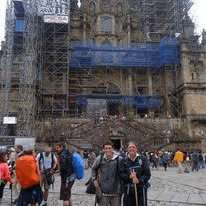
Talking about Ireland, or Prague. Talking about Spain and how the stretch from Southern France to the first village in Spain is so beautiful you hardly notice the climb is trying to kill you.

Yeah, that one always keeps my interest.

Acoustic guitar music. Pachelbel’s Canon in D on piano, slowly, ice in a glass. These remind me of life. Listening to a musical piece written nearly four centuries ago reminds me of the emotions that transcend time while connecting everyone. When I hear the Canon I imagine Johann playing on his organ, thinking about the night he stood outside waiting for the moon to rise above some hill outside Nuremberg, and how it took his breath away, the stars he saw while waiting, the absence of indifference, the absence of apathy. Nothing mattered more than that moment then, and he forgot all about the news of the day. He just watched the moon not rise above the hills and in his mind he played those keys, slowly, as if it was the only thing he cared about in the world.

Close your eyes and let this play, and remember all there is in life to be passionate about.

The Almost

I posted a comment today that simply said, “I’ve lost interest in absolutely everything. Almost.”

I wasn’t kidding. Sometimes I joke or lead on, sometimes I post things in a broad stroke as an inside joke to someone out there who gets it and everyone else is like, “Huh?” And sometimes, once in a while, I mean it. That’s this time, now. I’ve truly lost interest in absolutely everything.

The news has stolen so much of my time I feel like I should be ten years younger but for the endless endless ENDLESS barrage of manure pouring out of left and right and mainstream and radical outlets, filling the empty spaces of life with reports on the childish behavior of world leaders. So I turn to see what’s going on around the world and I see children dying in droves in the Middle East, but nowadays in a world filled with bitter and anxiety-ridden people ready to snap at anyone who speaks, those that point out the tragedy of dying Palestinian children are called anti-Semitic when they just are trying to say no matter what else you feel about land rights and terrorist organizations, at the very least we should be able to agree that tens of thousands of children should not die from war and starvation, right? Right?!

And my beloved St Petersburg is a place I’ll never go again because two or three men at the top decided to change the lives of the entire nation–two nations actually–so I turn my attention to students and classes since I stumbled into that career, but everyone is cheating with AI claiming it doesn’t make a difference since the work is done and the essay is written and I did the same thing when I was their age by using a calculator instead of working out the math on paper and it is nearly impossible to prove anyway. So I look toward some planned trips I had with some groups of people, but when they fell through and I let them know, I received mostly belligerent, nasty, attacking emails from the same people because they decided not to read my emails. People suck. Come on, you know it. They just suck.

So I turn my attention to my work, but one book project for a publisher in New York got pushed off a year, and the other book project for my publisher in Texas is going well and launches this Christmas, and while I think it is some of my best work and the endorsement from writers I respect is unprecedented, it will never be what I want it to be because it is so personal, so significant to me, that it took forty-five years to tell the story and I’ll never be satisfied, and letting it go to the publisher was like watching the main character die all over again.

I’m exhausted. No. That’s not right. Fatigued isn’t close either.

Numb. The worst kind of numb; the numb that feels good and makes it hard to give a rat’s ass about anything at all except being numb. Exhausted and fatigued can be bad. Numb can be dangerous.

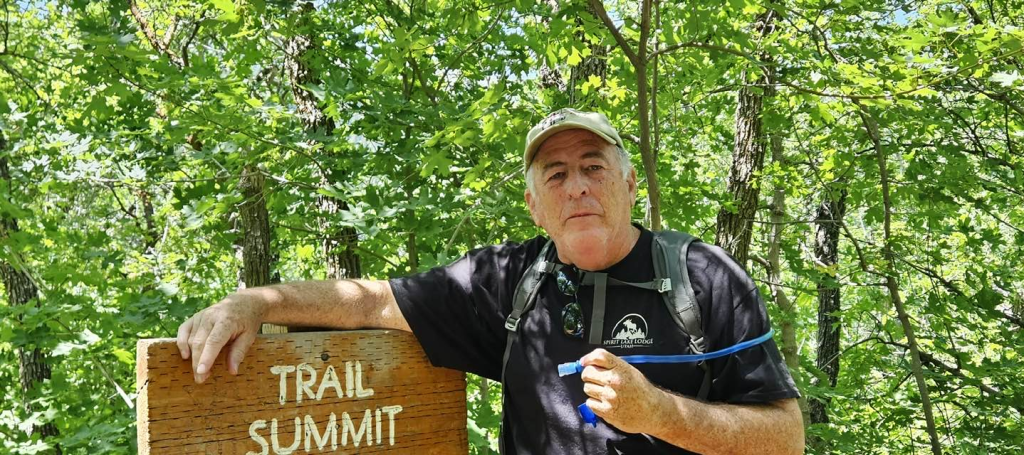
But I had a few moments of “excellent” in the past few months. In The Netherlands. At Spirit Lake, Utah, and with my son hiking various trails along the Chesapeake. But I’ve lost interest in almost everything else. True story.

So I decided to forget about the news and the world situations and the AI essays and the publishing delays and writing disappointments and instead just focus on the Almost.

We spend much too little time focusing on the things that we do find interest in, we are too often held hostage by the news cycle which only pisses us off. This cannot be healthy. So I’ve decided to save myself. It might be one thing. Sometimes you might be close to a tragedy but there is one thing–perhaps a child, perhaps an event, maybe some faith–that keeps you going anyway.

So I turned to the things that motivate me from inside somewhere.

Shit.

I wish I could remember what they were.

Enough

Let the video play while you read

I’m taking more time.

I headed off by myself for a few days last week, wandered about some trails, sat and stared across a lake for a few hours, just stared, thought about people who I used to know, used to love–love still, I suppose–and came to a few conclusions.

Nothing is more important than love. Spending as much time with people who make you forget all about what might happen next, what happened already, people who chase away anxiety and dismiss regret, who finish your sentences, know when to laugh, know when to sit in silence while you cry. Know when to hold on and when to hold on even tighter. Nothing, I swear to you, nothing can possibly be more important than this. We build our lives and occupations and make contributions to society so we can know we played our part in this powerful play that just goes on and on, and that’s all right and true, but it remains secondary at best, a shadow at best, to how our lives can only be truly illuminated by the love of those who make us understand more of who we are. Those who we celebrate for who they are, all of each of them, not just the parts we find convenient.

I’ve been around the block and have had the good fortune to ease my way through so many worlds, so many lives, with some of the most accomplished people of our age. Oh, in the name of all that’s holy I have known life at its best, and experienced more than I ever imagined I would, from deep deep rivers to the wind-shaped rock formations on the sides of mountains, and there is more beauty in what I’ve seen than one can experience in ten lifetimes, and what I’ve seen is nothing, a sliver, a minute fraction of what there is to be experienced in this world, and yet we spend our time watching other people live there lives, watching other people pretend to live yet other people’s lives; we spend our time looking for the right moment or the right person or the right way to say the right thing, instead of letting the beautiful passages of truth and pure love come out of who we are as we simply live in honesty, not afraid to take a chance if we know it leads us closer to who we were meant to be. We start so pure and honest, and we go through all those firsts until we become experienced and “wise” only to find out all those firsts were the closest we ever were and ever will be to the truth of who we are.

Here’s another truth: People die of brain tumors, of heart failure, of kidney disease, they die from falling over or falling down. But first, if they were lucky, they lived. Death is not so sad if it comes after life. But lately I’ve noticed people passing away before they had a chance to live their lives at all. It reminds me of an old lyric: “Pity the poor one, the shy and unsure one, who wanted it perfect but waited too long.”

We need to stop waiting for something to happen.

The world these days is not worth the beauty that life can be. Leaders are corrupt, struggles are real, starvation is epidemic, children are being killed for no good reason at all. The world has been ravaged by waves of interference that have compromised our nerves and our focus, and we are drowning. This world leaves so many believing suicide is a viable option. Society has not nearly earned the beauty that life can be.

So I’m stepping to the side for a while. I took a few days to myself last week to finally and conclusively mourn my mother and father, my friends Dan and Dave, Letty, because I had not yet done so and because I have not yet loved the way I believe we were intended to love.

And that is a death worse than all the others.

I took a few days off last week to try and see if I could find that person inside buried beneath layers of the soot shoveled onto me from a life of almost’s and nearly’s. And I quickly understood the time I have left is a fragment of the time I’ve already wasted.

Breaks over.

Rejection. Acceptance. Whatever.

6 Mistakes That Will Get Your Short Story Rejected | Celadon Books

I’ve been rejected plenty of times. Sure it hurts. Of course I always hoped that “this would be the one.” It would be one thing if I was talking about a woman. That I could get over, and have. But my writing? That’s when it gets personal.

I have known rejection.

I sent an essay to a journal and they rejected it. This is year’s ago. Their brief note suggested they enjoyed the piece but ultimately decided to pass. It was a nice note; no one died in it. About a year later I did a reading at a conference and read that very piece, completely unchanged. After the reading, the very same editor came up and asked if the piece was available, that he loved it and would like to publish it. Not only did he do so, but the work went on to be my first essay noted by Best American Essays. The same journal with two different editors went on to publish four more works of mine, with two more going on to further recognition at BAE.

My point: publishing and rejection can be completely random. It can depend upon the particular style of the journal, or a particular editor, or even the theme of one particular edition, but it can often be equally dependent upon the caffeine intake of whoever read the work, the time of day, the weather, how much it reminds the reader of an old lover, or even whether or not the Pirates won that day. Sometimes essays and poems are rejected simply because the journal already had enough pieces for that time, and other times they’re rejected with great scrutiny and long epistles explaining all the changes that could be made for whichever other journal might publish it, though that new journal may just as easily prefer the essay in its original form. Sometimes editors try and make the rejection letter sound like the literary equivalent of “It’s not you, it’s me.” Get over yourselves, guys. Yes or no?

With a new book launching this Christmas, I’ve been sending out excerpts to journals and magazines. Over the course of the last week or so I was rejected twice, accepted three times, and had two publications hit market.  So tonight seemed like the appropriate time to think about my writing. It comes with the job.

Writing has taught me to trust myself and let go of my concerns and anxiety over what others think, how others perceive my decisions. In the writing world, editors can be helpful or random, can understand what they want but not what you do, or appreciate what you do but still not want it. Some like snark, some like drama, some like biting humor and some aren’t happy unless the piece sounds like it was written by some foulmouthed hack. It is essential to study the journal, to understand its history and style, its preference for length and how free one can be with language. In fact, for an editor to suggest in the rejection letter that the writer should first study the journal before submitting is so pretentious I can only assume the editors who make such suggestions don’t know their audience.

Bottom line: Editors can be hacks as can writers. It’s all disturbingly random.

I once sent a piece to a place and it was rejected. A few days later, forgetting I submitted it there because my mind sometimes slips, resubmitted the same piece without changes to the same journal and they accepted it with great thanks. Random. I sent one piece to four different places. This isn’t unusual, but as soon as one accepts it, the writer is responsible for letting the other editors know it is no longer available.  Sometimes, though, writers forget and several places accept the same piece. Oops. It helps to change the title of pieces.

I usually don’t pay attention to the comments and suggestions from the readers at journals about how I should change the work they have no intention of publishing anyway. That’s just silly. “Hey, we didn’t like your work enough to publish it but make these changes and we still have no intention of publishing it, but then you will ‘learn’ from us.” Freaks. I do not know them; I do not know their style or ability; and I may be fine with the piece as it is but need to find another journal instead. In the end, I simply need to trust myself or I will forever be second guessing myself.  However, once it is accepted, editors suggestions are welcome. Usually. Here’s something: One editor accepted my work but during the proof stage questioned one of my facts. I proposed that when Marie Antoinette said, “Let them eat cake” it was a subtle reference to the fact that bread was too good for the masses. Editorman questioned if it actually happened. After research and discussions, I asked him to just scratch the line completely; it wasn’t that important. But instead, Editorman added the word “spurious” to the sentence, as in “According to spurious account, Marie…” I’m not kidding—I had to look it up. I turned to my friend, Tom, also a writer, and said, “That pisses me off! I wish he had just dropped the Marie Antoinette line!” Not because it wasn’t a good suggestion—it was, but because I’m not the type to use the word “spurious,” and I thought it sounded awkward with the rest of my prose. I think I had a good argument, but it was too late. So, in retribution for making the change without my input, in the four other essays that journal published, I used the word “spurious” in every one.

Writers need to humor themselves with things like this.

My favorite rejections are the simple ones. I received one which read, “Dear Bob, Pass. The Editors.”  Perfect. They don’t want it; got it. I understand. That one is crystal clear. I also once received what appeared to be a detailed rejection from a journal which mentioned my piece by name several times in the letter, and which truly made me feel as if they took their time and honestly wished to communicate with me. Then I mentioned it to a friend of mine who is a writer in Ohio, and she revealed she received the identical rejection from the same journal, only the name and title changed in the paragraphs. How do they expect us to take their thoughts seriously?

Last year I received a rejection from the journal which published five essays of mine, but which turned down this particular piece with the suggestion I study their prose style before considering submitting to them and that they expect their writers to read their journal before expecting to be published in it. First of all, the rejection of the essay didn’t bother me; after reevaluating the work I agree it needed much more polishing, and I have since done so and sent it out elsewhere and it has been published. The trouble I had with the thoughtless rejection was that editor’s inability to simply say no. I wanted to write back and say, “I took your suggestion and read old issues to get to know your prose style and, oh, hey, look! You did publish FIVE essays I found particularly excellent–moron.” Instead I deleted it. I delete lots of rejections. I have one friend who adheres to the trend to tape the rejections to the wall and shoot for 100 rejections in a month or maybe in a year, I forget. I prefer to keep the negative crap out of my line of sight.  Besides, the implication that the writer did not study the prose style of the journal is condescending. One writer/friend commented I might not recognize the editor is new and the prose style is no longer the same therefore the comment was valid, but that makes no sense. Then why did they send me to old issues to study their style?

But it is the nature of rejection; I’m used to it, both socially and professionally. When the percentage of acceptances goes up, it is mostly because those essays have been rejected enough for me to rework them and then they all do well. It is a numbers game.

I know a writer who for a while every time a journal accepted one of his works, the journal subsequently folded.  

Another example: I have a close friend whose manuscript was at a publisher getting ready for publication when a new editor there decided it needed a LOT of changes; “very invasive editing suggestions,” my friend told me. Instead of making the changes he pulled the manuscript and sent it somewhere else which accepted it and published it as my friend wanted it. The work went on to be a finalist for the National Book Award. Editors and readers are like teachers: just because they’re qualified to get the job doesn’t mean they don’t suck at it.

I swear I once got a rejection from a journal I never sent anything to. It was like a “Snoopy” cartoon. I mean, I must have sent them something and simply forgot, but I could never find what I sent them, didn’t have an email in my sent file or a file in my Submittable account, and have nothing on my list of “works submitted” which I keep. Perhaps they just anticipated receiving crap from me and wanted to cut me off at the pass.

A writer’s history with a journal is irrelevant to acceptance. The new piece must stand on its own and it must meet the criteria for the new reading period. But that doesn’t mean the writer started from scratch when the piece was sent. It helps to mention previous successes in a cover letter, especially if some of those successes are the result of publication in that very journal. I don’t know a single writer who doesn’t do this. But like a famous comedian taking the stage; the audience will give you a break and listen more intently for a few minutes, but if you don’t quickly start making them laugh, you’re outta there. A track record with a journal may get you read faster, but that’s about it. You still can’t suck. But neither should the journal treat any writer like he or she is a moron. Just read the damn thing and Pass or Accept.

I have no idea what my win/loss record is at this point. Better than the Mets I’m guessing, certainly better than the Pirates, but really, I stopped keeping track. I think it’s pretty good. Mostly that’s because I do a fine job of rejecting my own work several times through scrutiny before I decide it is ready to head out on its own. I don’t believe writers should listen to the advice of anyone who criticizes the work unless the writer knows and trusts that person. I have a few I trust, very few. Of course, finding someone to criticize the work is as easy as finding a relative to praise it. In the end it is a waste of time trying to “improve” through blind criticism. You must know and understand and trust the person who makes suggestions. And this isn’t because these other people don’t have something beneficial to contribute; they very well may.

The list of famous rejections is out there; check it out. You’ve got to be one hell of an accomplished writer to make the list of famous rejections, and I don’t play at that level. Still, in my own little world I show up enough to understand the process pretty well, and I understand this most: my audience is me, I’m the first and most important editor, and only when I’m pleased does the work move along. I’m the primary reader, no one else. If someone finds something in what I do worthy of passing along to her or his readers, that’s tremendous, but if I’m not happy with the prose style, I probably won’t send it out; and if I am, I probably won’t change it for someone else I don’t even know. I write this stuff for me, not you. I just hope you like it anyway.

I exaggerate, a little. Yes, I read the comments editors make and every once in a while one of those comments hangs on long enough for me to consider it. And editors, too, change their minds. I met one at a conference once who rejected a piece of mine and subsequently read it in another journal and told me he regretted passing on it—on the new reading, he saw what I was doing and really enjoyed it.

I like to think all rejection is this way: that somewhere someone who rejected me socially is thinking, “Damn, I screwed up,” sad because I’m being edited by someone else now. It’s a crazy world of rejections and self-doubt. I’ve sent out more stories in one week than resumes I ever sent out in my life. I’ve not gotten jobs I wanted, but I’ve also fallen backwards into the best opportunities in my life. Writing is like that too. Some rejections force us into a new direction, and often that new direction has more meaning and purpose than the original goal. I once wrote a piece in about fifteen minutes, thought it was pretty good and planned to send it to a local paper which has published my editorials before. But I couldn’t find the email address, so on a whim I shot it off to the Washington Post. By the time I returned from the bathroom, the Post had accepted it. Lightning strike. On the other hand, one of my favorite pieces I wrote many years ago and sent out dozens of times still has not found a home. I guess that one’s for me.

One more thing: There’s only one thing worse than rejection and that’s completely ignoring the work or the writer. This is true in the submission world and the reading and book signing world. If you see us sitting at a table of our books, don’t walk past because you don’t plan on buying a book. Come say hi—we’re an intensely lonely bunch of people. And besides, someone else might come over if you’re standing there and that person won’t feel pressured since I’ll be talking to you.

Listen, in the end writers write because somewhere deep inside is a deeply-seeded need to scream, “Holy Crap! Did you SEE that??!!” from some rooftop after an amazing sunset or an incredible connection with someone new, but we don’t want to get arrested. Banned, yes. But not arrested.
The Higher You Climb

This one’s for me.

When I was out west we hiked uphill (because the West is uphill) to a waterfall. I’m not sure of the elevation but it really doesn’t matter since I live at sea level and the waterfall is not. My home is about 80 feet above sea level and a short stroll down the hill is zero.

A few days before the waterfalls we were at just above eleven thousand feet; June, and still there was snowpack on some of the trails. At night we had a fire going, of course to toast peeps but also to keep us warm. In the cabin we kept the wood burning stove going all night. Back home the ac was running strong. Back at zero elevation. that is.

On the way to the waterfall–it was hot that day–I had to stop more than a few times due to my unconditioned lungs. I had no issue with my heart or legs; no, I felt pretty strong actually. It was just the lungs which in my mind looked like the deflated oxygen masks in planes. I wanted to quit; it was clear I wanted to quit, but it was also clear I just needed to catch my breath and push on. “It’s just a little further” translated to me to those days driving my son long distances and from the back seat I’d hear an impatient, “How much longer, Daddy?” “Not far,” I’d say, as if a two year old could translate “not far” into some sort of calculable distance. Yeah, that was me on the mountain as kids–I’m not kidding, kids!–ran past. I reminded myself they’re closer to the ground and need less air, and “it’s just a little further” to me translated to “move your ass for Buddha’s sake, or we’re going to have to make camp soon.”

I made it. I sat on some rocks and watched the majestic water fall from other rocks, down to a pool, off into a creek, down the mountain past the path we just hiked. I quickly gained my energy back as the issue was my lungs inability to climb at that altitude, not “be” at that altitude. A few days earlier we were at eleven thousand feet and I was fine because there was little steepness about us; it was a casual altitude gain. Plus it was colder. But there I sat outside Ogden, Utah, having climbed what I swear was the Matterhorn and I watched the sky grow bluer, watched the water mist up into the trees, and watched the world below try and make excuses for itself. I can’t recall ever feeling so at peace.

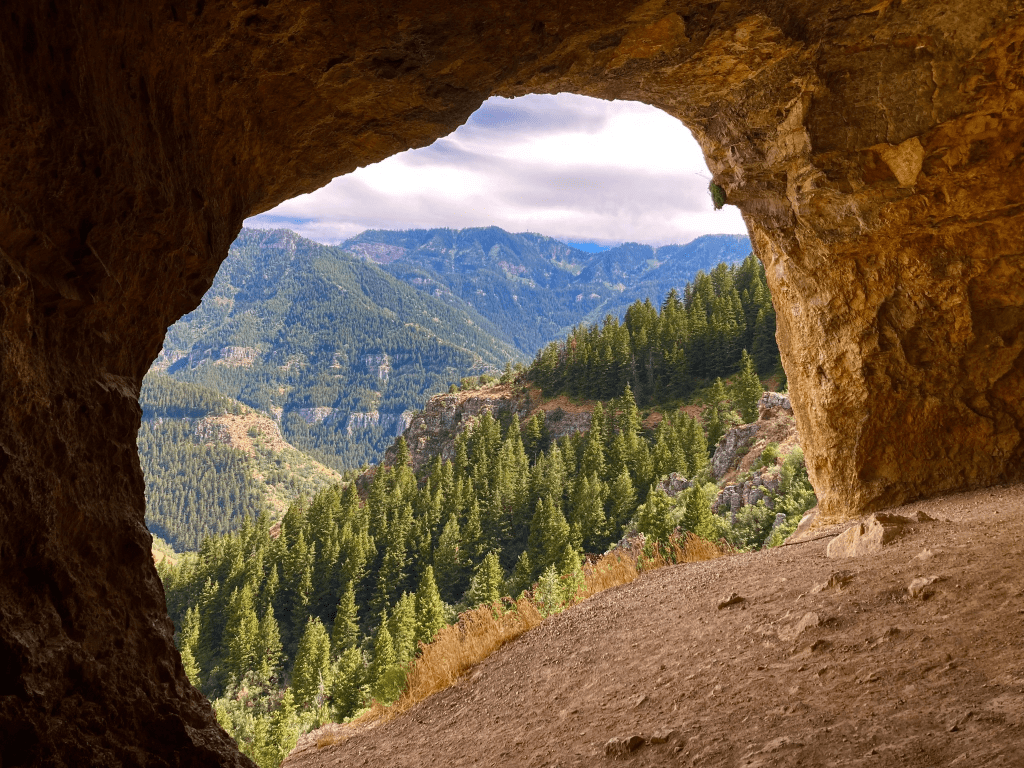
A few years ago we did the same thing not far from there to a place called “Wind Cave” and that was more than just a steep climb, for a flat-earther like myself it was like scaling The Freedom Tower, but we climbed and a few times I wanted to quit–apparently I’m not adept at steepness yet–but I didn’t, and when we came around the top slope and walked back down to the opening of the wind cave, there was nowhere on earth I would have rather been. And so again in the mountains, and then again at the waterfalls.

Fast forward, for that is the theme here: Today I wondered about two distinct things: Why is it so hard for me to do these things when I used to have no issue with them when I was younger? and why did I push myself to finish when I could have so easily stopped without objection?

Let’s get the age bullshit out of the way first. Yes, there are conditions which can slow a person down as we age, and it makes it harder to do what we could do with ease decades earlier, but all things being equal, one can battle a decreased metabolism by eating right and working harder. The list of reasons those antiquated excuses are irrelevant aside, internal motivation has more to do with accomplishment than external excuses. I have some experience in fitness and working with people whose challenges could not be calculated, but who, with the right motivation and persistence, reached their goals. So why is it so hard for us other than absolute and flat out indifference as our minds are occupied by other issues? And two, what changed? Why did I push on despite my better judgement only to find out I was capable of more than I thought? The company? Partly. The kids running past? No. The beauty at the end of the hike? I promise that wasn’t on my mind while dry-heaving into the creek.

No, something different took over.

I wanted to do it for myself.

***

I went to the Y today, again. I’ve been going on and off for some years now, though I took a break during Covid and another break not during Covid. I get bored, or I find something else to do, or…or…or…I lose some weight and I get in shape then I tumble back. This is normal. While my old boss at the fitness club could take an eighty year old and make them feel young and able to accomplish anything–and they often did–it was more normal for a healthy, capable young-something to cave at the first sight of a donut. Enter me.

But I have gained less time, and that is something they and most of the members I trained when I was there did not have at that age back then. It takes a while to understand that all we gain as we age is less time.

Tick tock tick tock tick tock people; times ticking away.

When I did the math this past weekend as the calendar turned on me again, I realized the list of things I plan to do is longer than the remaining time allotted, and that’s if I’m generous with myself. So I went to the Y today just like any other day, but this time I wondered if I could push it a bit, so I increased the incline on the treadmill and turned up the mphs. And again, until my heartrate was safely beyond what I normally do, until I was sweating, which I rarely do, and until I was at the point I never have been to before at the Y–the point where I wanted to quit for a reason other than boredom, so I pushed the dial up a bit more and for ninety minutes I climbed to the wind caves and to the waterfalls, I climbed Mt Wachusett in Massachusetts and to the upper falls of Sabino Canyon near Tucson. It brought me back to those days, first, when I taught classes at the club and I had to push myself because the class wanted to be pushed, and then earlier when playing tennis, and I wasn’t done until I dropped on the court, spent.

Why? Because I want to ride my bike to Coos Bay, Oregon, and I want to go to Seattle and hike Mt. Rainer with my cousin, and I want to make the climb to the waterfall a stroll, a meander. Because I saw the clock. I didn’t want to look; I really didn’t, but I did and I saw it as the large digital numbers clicked over, and I did the math because I’m pretty good at math and the distance from here to 80 is barely enough time to love anymore, barely enough time to dream anymore.

Something was different today. Something clicked. It’s that there are going to be a plethora of things out of my control as I move forward, so I’m going to take control over those aspects of my life I do have some say about. Of course I’m not going to get back to my club weight again, which is fine since I forgot to eat from 1983 to about 1988, but I am going to get to the point I believe I can if I decide to. And that might be all I need during this last push to the summit.

And by the way, we do these things at this point in life for ourselves, no one else, and that’s different too.

This time it’s for me.

65

It’s that time again. When I was born Dwight Eisenhauer was president and Richard Nixon was his vice. The average household income was just over $5000 a year, the average house just about twice that and the average new care just about half.

I appear on the scene just hours after the first fifty-star flag had been revealed noting Hawaii, and a week before the Pulitzer Prize winning Harper Lee book To Kill a Mockingbird is published.

Benin, Niger, Ivory Coast, Ghana, all gain independence, and Aretha Franklin makes her first recording. Cyprus, the Central African Republic, and Chad gain independence. And in August, the Beatles with Pete Best perform for the first time with their new moniker in Hamburg.

Belka and Strelka board Sputnik with forty mice, two rats, and a rabbit and actually make it back to earth alive.

Hurricane Donna rips up the east coast and in my home state of New York, Governor Nelson Rockefeller declares September 19th Grandma Moses Day in honor of her 100th birthday. She was born at the start of the Civil War and died when I was a toddler. Time is deceptively swift.

I’m amazed by the people I shared this space with. First and foremost, birthdays remind us in fine mathematical style that we are alive and are still part of the population which constantly expands like bottle rockets in the deep blue sky. It bends my small mind to think of this reality that I’m certain everyone knows but few contemplate: I shared this planet with every other human who ever breathed the air. Read Carl Sagan’s “Pale Blue Dot” as a brilliant reference.

Just in my lifetime: Mother Theresa. Malcolm X. Neil Armstrong. Jimi Hendrix. Pope Paul the Sixth. Lech Walesa. St. John Paul the Second. Thomas Merton. President General Eisenhower. Elvis. Pablo Picasso. Albert Schweitzer.

Rwandan Tutsis. The Lost Boys of Sudan. Steven Biko. Pol Pot.

I shared time with these people; these saints and sinners brushed my sleeve simply by sharing the earth during my stay. I have a loose connection to miracles and massacres.

This world has some serious issues; always has. It is at best, though, a hotel, and every once in a while I take a look at the register to remind myself who else stayed here. Alexander the Great, Charlemagne, Mohammed, Ivan the Terrible, Ghengas Khan, all guests just over the slope of the horizon, just beyond some small slice of linear time. On the same human trajectory as mine but before is Geronimo, Moses, Jesus, think about the gentle bend of time, the careen of place that separates me from the disciples, the Visigoths, the founding fathers. All here but just before.

Closer to now, when I look inside the lines of my coming and going, I can see the souls who at one time or another shared with me this spinning blue wad. Not short of miraculous, we claim the same particles of stardust, and that’s what keeps me looking around when I walk down some city street; I want to know who on earth is with me on earth.

Time has ripped past. I was born a month ago. I waded through foreign rivers last month. My son was born last Tuesday. Fleeting. Swift. Impatient. And my thin life falls on the same graph as Richard Wright and Ernest Hemingway.

Carl Jung lectured during my youth, and Ty Cobb watched the same Mets players as me. When I was still cutting new teeth and outgrowing my Keds, I could have headed downtown with my Dad and possibly been on the same train as William Faulkner, ee cummings or Marilyn Monroe. I might have passed them on the street, maybe stood in line at some drug store counter with my mom and behind us because of the blending of circumstance might have been Sylvia Plath or Sam Cooke; Nat King Cole; Otis Redding. We have overlapping lives. On a Venn graph, we share the shaded space.

Judy Garland and I watched the New York Jets in Super Bowl Three. When I was born World War One vets weren’t yet senior citizens and World War Two Vets were in their thirties. Vietnam isn’t history to me; it is my childhood, my early teens. The fall of Saigon was announced over the loud speakers at my high school.

There are empty fields save monuments and markers where soldiers died defending this land against the British, against ourselves, and they stood where I stand and watched the hazy sun rise. Same sun; same beach, same blessed Commonwealth. Don’t mistake history for “back then.” Those people just happened to check out before us. It could have been us. It is us now, watching the orange moon like we do, noticing the calm river, sharing time with loved ones, thinking about others. Getting ready to die since it won’t be long before our lives overlap with the crying call of a newborn Einstein. Did you see that boy running at the park? That girl climbing the tree at her home? Did I just pass by some senator, some Cicero or Socrates, some St Augustine?

Like a couple today buying the same house that young lovers lived in centuries ago, like sour-dough starter. Like a relay race.

My adult son is trying to get a shot of fireworks in front of the moon, but the angle is wrong. When he was just five months old I held him with my hand over his ear, the other ear against my chest, as we watched fireworks out over the Atlantic in Virginia Beach. That was last Friday or so.

What a life. How many times do we reinvent ourselves? How often do we stop in our tracks, get out of the rush and inertia of humanity pushing from behind, and let it all go by, catch the moon over the Chesapeake? Why do we so rarely rest easy in the love of those near and of those still far away when our stay in this world in our time is brief at best.

I love getting older, knowing more people, turning the pages. I miss my mom and dad, I miss Dave and Fr. Dan, and I miss Letty. My parents lived longer than I thought and the others I really didn’t think would check out as soon as they did. Thank Buddha for Ghosts and reincarnation. Just in case I watch the birds on my porch.

Listen, please: