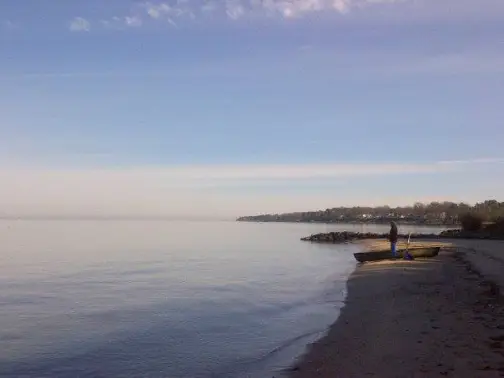
Student Comes to See Me

A Personal Reflection This Week:

I woke about three this morning; it happens a lot. This time it happened because this weekend has always represented change in my life. Growing up, of course, the school year is just about over and summer is waiting; throughout my college summers not only was one year over and another still three months away, during that time I worked at a beachfront resort hotel every summer, so the “season” started this weekend. And for more than thirty-five years in higher ed, this is about the time of year we finally exhale for a few months. At three this morning I woke thinking about those changes this weekend those years, but this time I found myself surrounded by the ghosts of those dear to me, and in my tired, gummy-induced thought process, they all had the same opinion.

This weekend might feel more significant because so much of my life completely changed in the past twelve months, beginning about mid-May last year, and I added to that weight by spending this same year tuning my manuscript for my next book about a time in my life when I had to grow up and move on, about learning what to let go of and what to hold on to and guessing wrong in both cases. The brain decides on its own when it will dump all of this in your lap to stare at and make sense of. Usually it’s at three am. And raining.

It’s safe to say that my life has been anything but consistent and predictable, but when we’re young we have more courage to change. I believe that’s because if whatever we try falls apart, well, we’re still young enough to laugh it off and start over. But as the years pass, we tie ourselves down, let the roots take hold, gather more responsibilities and obligations. So change is usually subtle, a series of nuanced negotiations that are closer related to diversions than anything resembling a complete abandonment of one way in favor of another.

When I was young, I would regularly jump into some unknown ideal. Now, with Realism as my guide, I am more apt to step off carefully, insuring there is solid ground ahead. But at three am the smallest variation in our path can seem like a canyon. This morning started like that as I listened to the rain on the skylight. I felt my anxiety simmer just below the surface and I was in danger of completely waking up, so I tried to repress it, remind myself that whatever status quo I find myself part of is not only fine but damn near ideal. But that didn’t hold. I thought of a line from, of all people, Barry Manilow: “My life goes along as it should; it’s all very nice but not very good.”

Just wait. I’m one of the more fortunate souls I’ve ever known, and I know that; but that is an external judgement. “Very good” is a relative term. We are in the awful habit of comparing ourselves to others when we should be measuring ourselves against ourselves alone: What are we capable of? What do we wish we had done? What are you going to do with the time that is left? This is that old axiom, “The only way to fail is to not even try.” And this isn’t about you. I swear it’s not. It’s about me, from the young boy in the park, to the young teen on the courts, to the young man on the go. The distance between where I am and where I will end up can only be measured by how I feel about where I am and where I am going; this has nothing to do with “accomplishment” and “achievement.” I think I’ve done okay. It’s has something to do with fulfillment and a personal sense of purpose. Honestly, success has many definitions; just ask the ghosts.

So I stumbled to my desk to organize my thoughts, write down my list for the day to help settle my simmering mind before my anxiety won, and in the pile of stuff I created on the floor while trying to find a piece of paper to write on, I found a postcard from one of my earliest students.

It was about 1994.  

Student comes to see me. He says he can’t handle the pressure of school. I tell him I think he’s a good student and he says yes, he can do the work, he just can’t stand it. He hates it, he says. He gets bored fast. It’s a good conversation, honest. Had we been somewhere else we would have talked over beers. He looks at his watch and says he has to work in a few hours and sighs. He’s twenty-five and runs his own roofing company but hates that too. He has six grand invested in equipment and no help and he just dreads doing the work now. He says he’s at some fork in the road, referencing our work in class, two paths that look the same, so he’s frozen, finds it easier to just stay put. He gets quiet and stares at a photograph on my wall of a village in Africa. Looks nice he says, like he wants to say anything to forget what he’s really thinking about. Then he remembers and sighs again. He’s quiet for some time and I find myself drifting.

I worked at a bar. Good money and mindless work; the kind of work where if you don’t think too much about what you’re doing, you can keep on working. I know I only spent a few years there but it seems like it was always winter, all grey and bone-cold. One morning I woke on a bench near a lake in a park and didn’t know how I got there. I had to work a few hours later but never made it. I quit the bar, withdrew most of my money, and bought a ticket to Africa. Turns out changing my life was as easy as jumping off a cliff knowing for certain I would either land on my feet or learn how to fly. “Boring” disappeared from my life.

But this student has trouble talking about it, so I talk: I tell him I get that feeling in my chest too. Tight, constricting, difficulty breathing. You know what I’m talking about. It’s the sense that something needs to change. I tell him all of that, and then I think, but I don’t say, that it’s the Philosophy class with five minutes left of three hours and the prof starts another chapter because there are still five minutes left; it’s the meeting you can’t tolerate but you’re in a row of seats with too many people on both sides so you can’t leave and all you can think about is how if this is your career, if this is how you’ve chosen to spend your life, shouldn’t you love being here, love the interaction and discussions instead of dreading every word that someone says; it’s that this-homily-is-way-too-long feeling. It’s the feeling you’re just one day away from something else, but then that day comes and you find yourself one day away from something. I tell him it’s the Whitman poem about astronomy; the wide awake at three am feeling and you can’t move so you stare at the alarm clock wondering what your someday-dying self would say to you now.

Exactly, he says. I’m always staring at the clock. I’d love to know what you’d do, he says. I tell him about a bar somewhere I didn’t belong. I remember working and then not working but I don’t remember what happened between the two. I just recall waking up one day in the peace-of-mind of another world, centuries away from being behind bars; like I could finally breathe on my own. I remember dreading the moment between what was and what was next, so I just kept pouring drinks, hesitating, putting off change. But then one day I didn’t, and when I looked back from where I ended up, the “what used to be” that so engulfed my life didn’t even exist anymore. He looks at me like I am looking in a mirror. I tell him if it were me, I’d withdraw from school, liquidate my roofing equipment, put some in the bank and some in the gas tank and take just one slice of life to myself for a while. School isn’t going anywhere, I tell him. We’ll wait for you.

He stares at me a long time then laughs, sweeps his long blond hair back and blinks his eyes a few times, as if to restrain some emotion. “I’m not that brave,” he says, and we laugh. Then he says he’s going to work and he leaves. 

Six months later he sends me this postcard from Australia. “Don’t know when I’ll return,” it says. “When I am, let’s get some beers and talk.

I look forward to it but, of course, way leads on to way, and I doubt he ever came back
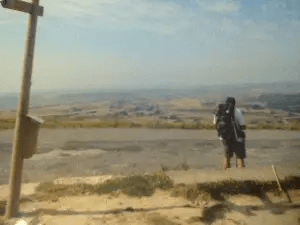
100

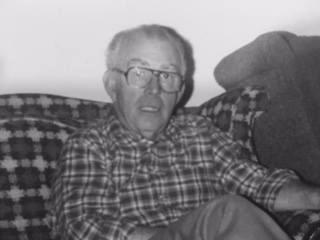
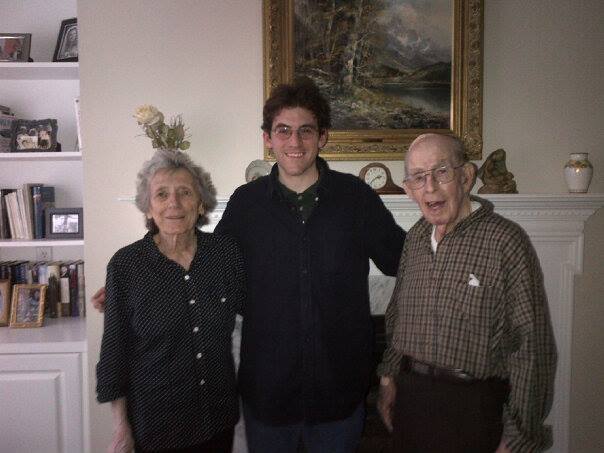
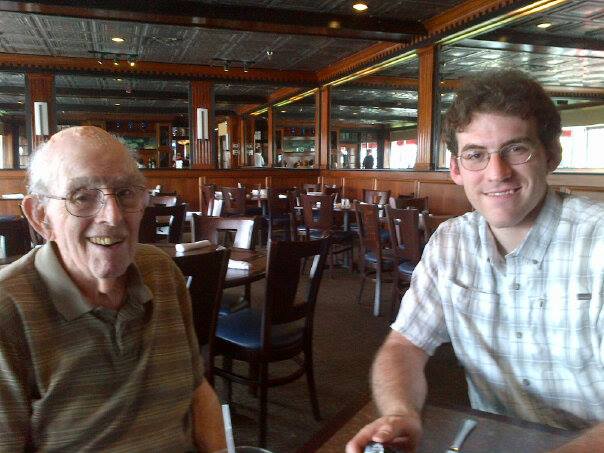
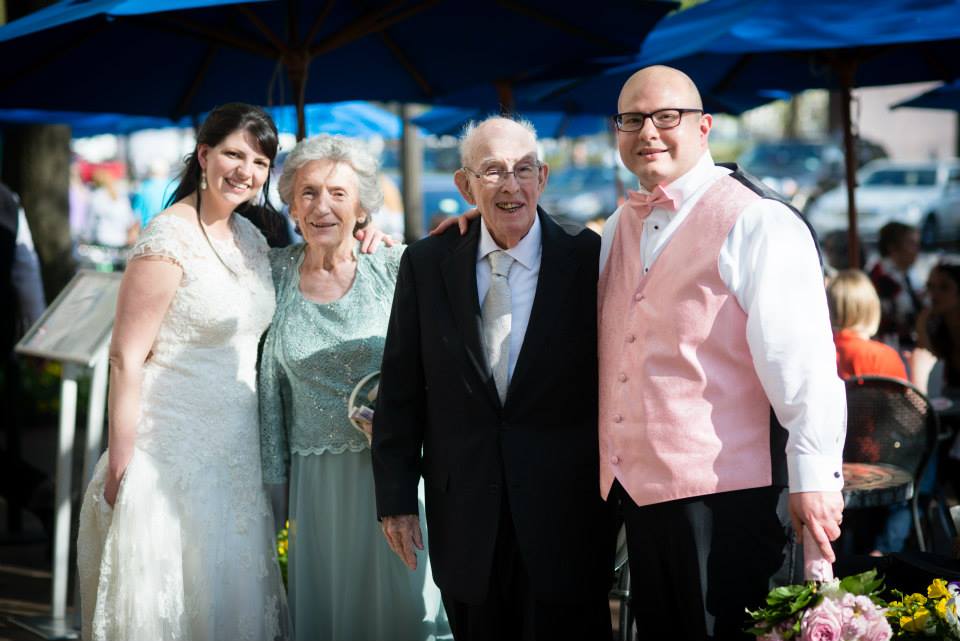
Frederick W. Kunzinger: May 23rd, 1925 to October 21st, 2015

Dad had a toll-free number, so for most of my life when I traveled I could call him at his desk for free. I’d be about to enter Mexico through Nogales, Arizona, and I’d find a pay phone and tell him I was going back down for more blankets and some Kahlua. He’d laugh and offer his “Well be careful” in his deep voice, and for some reason I always knew, despite his desk job on Wall Street and in Virginia, his troubled feet which kept him out of the service, I knew he wished he were out there with me. I once called from Massachusetts to tell him I wouldn’t be able to call for a few days because I was going whale watching off of Maine with a friend, and he was truly excited. I wasn’t going whale watching, though; I was flying to Virginia along with his entire extended family to surprise him for his sixtieth birthday. When he came in his house and he saw me among the crowd, he actually looked disappointed that I wasn’t out on some vessel in the Maritime Provinces. That was Dad. Quiet. Proud. And kinder than just about any person I’ve ever known.
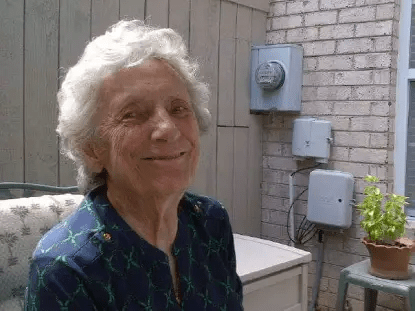
Funny how I just assume all dads should be like him. And maybe to each of us in some way our own father is the model. I’m guilty of not emulating him earlier. As much as my memory tells me he worked a lot–leaving the house for the Long Island Railroad at the crack of dawn and returning barely in time for dinner five days a week, and after dinner, coffee, the newspaper, he’d watch television, burned out from another long day on Wall Street, somehow he fit us all in without complaint–ever–as if nothing else mattered but being around family. What an example he set without ever offering one single word of advice. That’s how to Dad.

When my son and I traveled across Siberia by train for a book project which became The Iron Scar: A Father and Son in Siberia, the original writings from the trip, many of which were published while he was still with us, were written in the form of letters from me to him about Michael and me headed through Russia. In those pages I wondered if he was such a good father because he lost his own Dad when I was just five, and perhaps we are never completely fathers or sons when we’re between two living generations. Eventually, the book became a narrative instead of a series of letters, but he is always present in the pages. At the time of the trip and subsequent year or so while working on the book, he was slipping away just as my son was coming of age to head out on his own, so comparison was instinctive, and I could say with complete objectivity that my son turned out to have the same personality–kind, caring, without judgement–as my father. It was somewhere near Irkutsk I understood that my father lives on in the way my siblings and I as well as our kids live our lives.

For a man who worked all the time, though, he was always there: He brought me on my first flight, first class, from Norfolk to LA when I was fifteen. He taught me to drive. He would come by my office after he retired and see if I had time to go to lunch. Mom and us kids were his life; and when family visited our house for holidays or just a Sunday afternoon barbeque, he was in his glory. Nothing mattered to him more than us; that was clear though he never, ever said so. That’s how to do it.

Random thoughts:

I saw him cry twice. The evening of the day my sister told him she was diagnosed with aggressive Stage Four Ovarian Cancer, and the evening of the day she told him she beat it.

The last thing I wrote which he could read, according to my mother, was “Instructions for Walking with an Old Man at the Mall.”

His face always lit up every time my then-toddler son and I would “accidentally” run into him at the stores.

Every Tuesday night we had Scotch. I hated Scotch but I loved Tuesday nights.

Every Super Bowl we sat in his living room and watched while eating wings and shrimp. It is the only time I ever saw him eat chicken wings, on Super Bowl Sunday.

He loved watching baseball and golf. To this day, when I hear golf or baseball on television, I think of Dad and miss him again.

He would go downstairs first on Christmas morning to plug in the tree lights. With a smirk at 5: 30 am he’d quip “I thought I told you no one up before nine!” He would wait until Christmas night when our relatives had left and we were all sitting around to give us each one last gift, books he picked out with each of us in mind.

I never knew my grandfathers. But my son and my father were as much friends as they were anything else. They were together a lot for Michael’s entire life until he was twenty-two, and we’d play golf regularly, especially when my brother came to town, and every month or more the three of us or the four of us would go to lunch at the beach, and sometimes we’d just go to his house while Mom was still working and sit and talk, or go out on the porch and watch the birds out on the river, and when Michael was still a toddler he would take his hand and walk him to the edge of the water to look for wildlife. I could have posted hundreds of photos of the two of them, and perhaps just as many as the two of us since Michael always had a camera with him.

But I see no need. I can hear his voice as clearly as I can hear these keyboard keys, see his face as if he was sitting right here. I’m not in denial about Dad’s passing at ninety-years old, ten years ago this October, but it isn’t unusual still for me to have a conversation with him, or almost pick up the phone to call him about going to lunch. I suppose it will always be that way, and I’m okay with that.

Some days are tough, of course, just as they must have been for him after his dad passed when Dad was just forty-years old. But he never showed it that I recall; he just continued to Dad us, and I am lucky–fortunate, blessed, grateful, honored, humbled–he was my father.

From The Iron Scar: A Father and Son in Siberia:

I guess you have to be a parent to understand what kind of child you were. You need a basis of comparison that goes beyond the parent-child relationships of cousins or friends. It must be later, years later, when you understand what he would have wanted you to ask, what he wished you had shown interest in, how close–or not close–you were. Turns out we were so much closer than I knew, and I could have asked anything, but I never did.

Happy Birthday Dad. I love you.

Fifty Days and Counting

It is fifty days from my mother’s birthday to mine. This year feels different since this was the first of Mom’s birthdays that she is no longer with us, and this year I will turn sixty-five. Funny, but I don’t feel my age; I think of myself as about fifty-two. Maybe, on good mornings, fifty. Let’s call it that; so with fifty days to go to my birthday and feeling all of about fifty, I’ve decided to change a few things. I’m going with a “Fifties” theme this year. Cue Buddy Holly.

Fifty.

I can’t lose fifty pounds. I mean I can, but then my weight would be about what I weighed in high school when I was slightly more active and my body could digest Tupperware and be fine. So let’s try for some variation of fifty pounds to keep with this year’s magic number. Five pounds should do it. I re-joined the Y near my home, so I think for the next fifty days I’m going to get on the treadmill and walk for fifty minutes five days a week. If the Cartoon Network is available, I’ll stretch that out to fifty-five.

I’m going to write five pages a night on one or another book project I’ve got going—I really do have five files of work-in-progress here, but then I’ve had the same ones for going on five years now. Still, this next month and two thirds is different.

Damn right. High five.

Listen, like the rest of us, I know about time. I’ve read about it, watched it tick away, felt it creep up my spine and into my mind with new drips of hesitation and doubt. Geez I know about time, the way it tricked Bobbie into thinking she could get better, never knowing the addiction had already won, and the slight of hand it pulled with Letty, and Dave, and Cole, and others; tricked them all, so yeah, I know something about the passing of time. We all do, especially as we move through the years, and about how Mom and Dad made it to their nineties—no complaints there—but how Rachel didn’t make it out of her twenties. I’m sure I’ll be thinking a lot about time in the next fifty days, and about Mom and Dad as I hit the Medicare mark, and about Letty who died on my birthday, and about Michael who right now is exactly half my age yet when I was his age I felt like I had already lived several lifetimes. Honestly, I think I turned sixty-five when I was nineteen. Time, man. I can count on it to keep pace, not lose one fat second on my account. It doesn’t take a time out, doesn’t sit one out, doesn’t find any value at all in changing the pace. Yeah, we all know a little bit about time.

Fifty days. Forty-nine days and about seven hours actually. Fifty glasses of wine, fifty gummies, fifty mornings at the bay watching the sun crack the surface, fifty evenings at the river watching it take forever to fade. This year I’m going to make fifty phone calls and write fifty letters to old and new friends; I’m going to find fifty beautiful moments—one a day—and keep that habit going another fifty, then fifty more. That’s the thing about time; it can’t decide for me what I do with it, only when it will end.

And it will end.

So fifty songs that give me chills and fifty minutes spent each day finding just a little peace of mind.

Fifty is the fifth magical number in nuclear physics. It’s the Golden Anniversary. It’s half of whatever whole you fall into. Fifty is the traditional number of years for a jubilee. Fifty in both the Torah and the Bible is associated with the concepts of freedom and abundance.

There are fifty stars for the fifty states. It’s two bits. It’s just sitting out there as some sort of centennial half-way point.

In fifty days I’ll be ready to turn sixty-five and feel fifteen years younger than that. It was fifty years ago my life completely changed as a chasm fell between everything that was when I lived in New York and everything that would be when we moved to Virginia that June 18th. I was terrified. I was just a few weeks short of fifteen, which is young at any age. But looking back now fifty years on, it seems to have turned out okay.

Seriously, what a time it turned out to be. For fifty days I’m going to remind myself I have a home and food, I was not born in a refugee camp in Somalia, was not born during a bombing campaign in the Middle East, was not born on the streets of just about any American city.

I’m going to remind myself of passion and hope, and that I still have the energy to climb mountains or simply just fall asleep. That I’m really good at. But for now, I’m going to keep moving, keep noticing the beauty and continue to look for the peace. I’m going to remember the grace I experienced being able to have the parents and siblings and friends I did for these years, I’m going to remember all of the love I had in my life from those who passed this past year, and I’m going to look forward to what happens next.

Time is persistent, yes. But how we measure it is completely up to us. Hell, they’ve already changed the calendar several times out of little more than convenience; I can do that too. For the next fifty days, I’m going to grow young again.

May 15, 1933

May 15th would have been Mom’s 92nd Birthday.

I can write volumes about her life which is a true record of life in the twentieth century, or about her ethnicity which rewrote itself in her mid ’80s, or her uncanny ability to make friends with a two by four; I could write about how she’d become friends with the ladies in the bakery or the fish market or the produce section of Farm Fresh. One day I stopped by and Dad was all dressed waiting for Mom. I asked where they were going. “To a wedding,” he said. “Oh? Who’s getting married?” “The daughter of the lady who sells fish at the food store.” Of course.

60492314_10217427106297064_3713656275783909376_n

But before that:

I can recall going to A&S’s with my mom, walking through racks of skirts, pushing aside blouses a few racks away, my face near the metal pole waiting for her to call me out. I made her laugh, but, honestly, everyone could make her laugh; she was light, light as air, and laughed like that too, aware of her deep breath.

I remember her making Irish Soda Bread for Ethnic Food Day in second grade, and she said, “Wouldn’t you rather have German potato salad,” noting to my father how much easier it is to make. “Please Mom?” I pleaded. Of course. Yes, of course. She joked with me not long ago about that day and how if she knew then what she knows now I would have just brought a bowl of spaghetti with marinara sauce.

Mom was always there. I remember in the East Islip Public Library asking the librarian a question and when she answered, I was looking down, and Mom said, “Always look in the eyes of someone talking to you.” I never didn’t again. I remember after that we went to Stanley’s Bakery for black and whites and hard rolls with butter. Non-New Yorker’s need to trust me on that one. To get to Stanley’s Mom would tell guests at our house to “turn right two blocks before you get to the mailbox.” It made sense to her.
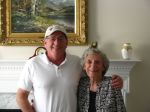
We went to the doctor when my lower back hurt shortly after joining the track team at Islip Terrace Junior High. Dr. Wagner said, “I’m afraid he has strained his sacroiliac,” and my mother sat quietly a second and then laughed and said, “Are you making that up? There’s something in him called a sacroiliac?” There is and I did so I dropped off the team and she bought me a tennis racket. She had a subtle way of changing my life that way.
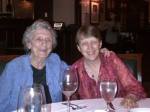
Can anyone truly grasp the lessons we learn from our mom’s who somehow manage to teach us things without doing anything more than practicing unconditional love? That’s it; that’s everything, the secret to parenting. Mom would yell–and she could yell–if I did something stupid, which was not that unusual, and it took me years—years—to understand she was yelling at herself, not at me.

Then life got interesting.

My sister was at St Bonaventure, my brother at Notre Dame, Dad had moved to Virginia to buy the house we would eventually move to, but Mom and I stayed on the Island because it was a recession and it took more than a year to sell the house out in Suffolk County. It was just her and me, driving once a month four hundred miles to Virginia Beach and back. We had fun dinners like pizza and omelets, family over for visits, and I had more freedom than most fourteen year old’s as I’d explore the state park day after day, endlessly. And that winter in the mornings I’d sit in the kitchen before school while she made breakfast, the radio playing a bank commercial. “F. B. L. I. Leaves you more money for living…” and I’d walk to the bus stop with the rising sun. In the evening she’d make spaghetti, or we’d have eggs and fries, or we’d have subs from the deli out on River Road, and once a week I’d get to watch “All in the Family.”  

That last day there in the house which I consider to be where I grew up, she had to be at a lawyer’s office to close on the house, so I walked home from school on the last day of ninth grade with my friends Steve and Eddie. My aunt met me in the driveway and we went back to her house where Mom picked me up and we drove the eight hours to Virginia Beach, June 18th, 1975. Life completely changed; everything I had ever known was suddenly an eight hour drive north, and Mom and I adjusted to our new life together.

Time passes.

High School.

Gap Year.

College.

In the Summer of 1983 I decided to move to Tucson, and I packed my small, light blue Monza and she stood at the door early one morning as I backed out of the driveway to head west. She waved once then closed the door. At the time I didn’t know why.

90985029_10221846708906783_1493911370691772416_n
20525210_10213091627061910_3614873885981443811_n
60646290_10217430003889502_4693851135096651776_o
12042929_10208076662904239_7710928146587044887_n
11241235_10206009578145996_746548987303048614_o
35519481_10215783638240507_6545947767364124672_o

I could add more, of course. Yes, of course. Like how no matter the conversation she could without missing a beat turn one of the lines into a song she remembered from her youth, and she’d sing it. Like the time my siblings and I locked her out on the roof of the house on the Island when she was washing windows, and by the time she was back inside we were all laughing. Or how our German Shepard was so terrified of her that when the dog was in my sister’s room one morning, all my mother did was whisper “Is the dog up here?” and that poor dog didn’t touch a step flying down the stairs and into the safety of the kitchen. Or how when it was time to give my dog Sandy away, a dog which won Mom’s heart, when she dropped him off at the new owner’s house, Sandy jumped up on Mom and put his paws on her shoulders and whined for her not to go, and Mom cried all the way home.

I can clearly recall several years worth of five thirty am talks in her condo kitchen while Dad was still sleeping, and I’d complain about problems at the college and she’d listen so well, and then she’d talk about Dad’s health and small signs she’d notice or which I had noticed the night before, and we’d compare notes. She loved him, honestly she loved that man like a person who should be used as an example of love, for sixty-three years she loved him like that. And no matter how frustrated she got, that always rose to the surface, that love.

Laughter and Love. That was my mom.

60331955_10217404363728514_5299847754724409344_o
45543138_1167797236755361_7357009606289129472_n

She loved light blue.

She loved music.

She always worn a Miraculous Medal.

She had a life I can’t write about properly except to say she took on serious responsibility at a very young age, walked through some serious fires in her life, and always maintained a strength and intelligence and a sense of humor that set an example I can never match. She taught me how to be alive. 

But, with apologies to my late beautiful mother, Joan Catherine, she has one blemish, one which scarred me for, well, I’m going to be sixty-five and I still remember it:

In 1974 or 75 I stayed up to watch The Poseidon Adventure on television and with just fifteen minutes left she yelled down for me to go to bed. I said, “Ma! Gene Hackman’s hanging from a pipe!!” “I don’t care it is getting late and you have school!” she called back, and so I went to bed and wouldn’t see Hackman fall into the fiery water for another fifteen years.  

Some people think their mom’s are just oh so perfect and easy to love and can tell stories about what amazing women they are and that’s fine, really, that’s fine, and I’ve tried, I really have, and she comes close, but, seriously, the Poseidon Adventure, Hackman, the freaking climax of the movie for God’s sake. Come on. There’s simply no forgiving that.

96736454_10220734689904587_1902999128665751552_o