Periods of Long Ago

A few days ago I walked out on the 14th Street Pier in Virginia Beach and stopped in Ocean Eddies. It was the dive I would frequent the summers during college. Back then the bar money was kept in a box and the register was a big brown monster. There was no a/c and the windows had to stay open in the oppressively humid night, but the live bands would wake up guests at the hotel I managed next door, so I had a deal with management: I’d not call the cops on him and he quit the music by 1 am, and I’d get free drinks and a burger. Now, almost fifty years later, there is a  deck around the outside, inside has ac, and the food is better. The tide, however, is still just a few feet below the floorboards.

I was nineteen when I got the job at the Sandcastle Hotel at 14th Street on the beach. The owner, Johnny Vakos, and I got along, and the manager, Jack, had a heart attack about a month after I started, so John made me manager. I stayed that way for four summers, May until August, working all shifts, dealing with every character conceivable. Sometimes at night I’d head out to Eddie’s and swap stories with other locals over margaritas. Sometimes when I worked the overnight shift, come morning I’d head up to the seventies past all the hotels and sleep on the beach, and later in the day friends would show up and we’d waste away an afternoon swimming and listening to music. At night we’d all head to Sondra’s Restaurant or the Jewish Mother or Fantastic Fenwick’s Flying Food Factory to listen to my dear (still) friend Jonmark Stone play guitar. But come the following morning I was back at the beach, working the desk, talking to Niki the bike rental girl, bs-ing with guests about where to eat or about the weather or surf conditions. I only have to think about those days and I can smell the salt air.

Something was different this time, like I really won’t be back this time. It happens.

Still, that part of my life stayed in my blood and every once in a while it passes through my heart and becomes real again. We all have periods of long ago like that. For me it’s probably this place because I’ve almost always lived near the ocean, or maybe it’s because our brains and bodies and this planet are all about seventy percent water and I simply feel the tug of the tide. Perhaps I just like the sound of the surf. But I’ve not come upon many places in my travels which simply don’t change. Old neighborhoods seem smaller, the trees suffocate the once open fields, and old hangouts usually have new crowds, or shut down, weeds pushing through parking lot pavement, some windows broken and boarded near the rusted dumpster. Sometimes it’s simply that people pass away, and the reasons for being somewhere pass away with them.

But the ocean and me, well, we go way back. The rest of nature can show signs of change as well. Forests give way to fires, or new growth simply pushes out old oaks changing the landscape; rivers erode at the banks, and while the mountains can retain their majesty, trails and roads can rip small scars across the land, or some new cabin is built whose windows catch the sun and the glare flickers across the valley.

But I can stand on the sand behind the pier and know what i’m going to see. Certainly some days are rougher than others, and in winter a white foam can gather at the break point, but it is the same as it ever has been. The strength of a wave is like no other natural force on earth. Just to stand in the surf waist deep is a lesson in mobility and resistance no physics class could replicate. At some point you give in and fall back or dive forward, and feel that dark, salty, always slightly cool water sweep across every aspect of your body.

And when you look out across the vastness of nothing but blue water, steel blue, metallic greenish slate blue water, you are looking out at exactly what John Smith saw when he first landed a mile and half up the beach four hundred years ago. It is what Powhatan saw, and whatever wandering seaman or viking or ancient civilization saw, exactly the same. Maybe rougher, maybe in the morning perfectly still like glass. Maybe the tide was higher, or so low they could walk out to the scallop beds and pull them up by the load. But it is the same. Exactly.

I can stand here and it might as well be 1979, or ten years earlier and four hundred miles further north, on the beaches of Long Island. It simply makes sense to me. We all need a place to go that makes sense. It was just ten blocks north of here at my son’s tent for a juried art show in 2017 that my mother walked for the last time without assistance; it was just fourteen blocks south at The Inlet House that my dad lived when he first moved to Virginia Beach before buying the house we would all move into four miles west. They’re all gone now, Mom and Dad, the Art Show moved to October, the Inlet House is a parking lot. But this ocean, well, it’s right there keeping my anxiety at bay.

I read once that we all should discover a “third place.” We have home, which comes with it certain responsibilities and routines. We have work with its predictable patterns of give and take. But we need a third place that is neither, that is ours to claim how we want, and gather with friends, or be alone, and let our stresses and expectations dilute in the deluge of “somewhere else.” For many it is a bar, or a coffee shop, or a park or a gym. For me, back then, I thought it was Ocean Eddies where I learned more about people than I ever cared to know. But it wasn’t; it was outside, on the sand, looking out toward Portugal, toward Spain, and Africa. Looking up the coast toward the Island. It’s lonelier now than it ever has been, and maybe I’ll not be back for some time, or ever. But I like knowing it is here. I like that I can depend upon this. I like that I know it is time to leave.

December 17th, 1944

The American National Cemetery at Margraten, The Netherlands

When my Uncle Tom Burton died, the service was held at Arlington National Cemetery. He was a war hero, then a sheriff, always a father and a fine man. He lived a long life and it was an honor to be there when a marine knelt in front of my cousin, Audrey, and whispered, “On behalf of the President of the United States…” and guns were fired, and a soldier stood amidst some headstones and saluted the entire time. Nearby a horse-drawn carriage waited.

I walked about the cemetery that day and noted the names and dates, and while many of them did indeed die in combat and were interred at Arlington, many, such as my Uncle, served his time and lived a good, long life–never long enough, of course–and played with his grandchildren before that inevitable day. I wrote about Arlington Cemetery for the Washington Post, and while sadness was a motivating factor in my prose, it was not nearly as present as was pride for the women and men who served.

Staff Sergeant Edward L. Miller of the 309th Infantry, 78th Division, from Pennsylvania, was never buried at Arlington. Killed during the Battle of the Bulge, his final resting place is in the American National Cemetery in Margraten, Netherlands. His is one of more than 8000 soldiers buried there beneath the white crosses with names carved in perfect formation. The grounds of the cemetery–officially American Territory about two hours southeast of Amsterdam–are manicured and, in April, spectacular for the flowering trees and freshly mown lawns. Sergeant Miller’s niece, Kay Miller Debow, with the assistance of the abundantly friendly and respectful staff of the cemetery, made a rubbing of her uncle’s stone. After, she rubbed sand from the beaches of Normandy into the letters of the familiar name, washed the stone, and stood back to note how Edward’s name now stood out from the rest of the whiteness. What an honor it was to be there, to be part of this journey which began across the German border more than eighty years ago, and which continues with relatives who do not want their sacrifice to be forgotten.

In fact, honor was the word most exchanged in Margraten that day. The staff commented several times that it is an honor for them to care for the grave of the men who protected the country from the Nazis and liberated them not long after Edward Miller’s death. Kay commented what an honor it was to meet the people who look after so many fallen American’s, and the family who cares for his grave drove to meet her and brought flowers for her uncle and said it has been their family’s honor to be able to do so since the end of World War Two.

I don’t hear the word honor anymore. It was an emotional day for the obvious reasons, but also for what no longer seems to be so common: honor, respect, sacrifice, gratefulness.

It was a beautiful day; clear blue skies and a soft sixty degrees. I’ve known Kay since we were young, before the world slipped into our lives with all of its competition and anger; before Kay’s own service in the United States Air Force, before the world invented a way to sit at a table, logon, and find fallen soldiers, back when Sergeant Miller had been gone just forty or so years. That was a lifetime ago. Several. And I looked out at the crosses and wondered how many families in the States take the time to come to this remote, country town to pay their respects to someone who never made it home again to see their mom; never returned home again to get back together with an old flame and get on with their lives; never saw the sunsets and distant beauty of a morning mist.

Still, I could not understand why this was so much more emotional than the internment of my own uncle at Arlington. Then it struck me as I watched Kay place her hand on Edward’s headstone while no one was nearby: She never knew him. I knew my uncle; we laughed at parties together, and he showed up at my parents’ anniversary parties and always laughed with us, told stories. He died when my son was already in his twenties, and when my cousin’s kids were adults. Edward Miller died when his brother, Kay’s own father, was still a child.

Eric Van Heugten, the man who brings flowers to the grave and whose family has done so now for eighty years, stood next to me along with our host, Roel Timmermans, as I looked about and said, mostly to myself, “These men were the same exact age as my students.” That is what I couldn’t shake. That’s the difference. When I’m in class and my students are reading their text messages or staring out the windows, I look at them on the front edge of their lives, many of them living away from home for the first time, and they are the same age as the soldiers beneath the soil of Margraten. Eight thousand of them. More. Eight thousand men still teenagers and in their early twenties who never chose a major, never asked anyone out, never got back in touch with an old friend and said, “I’m so glad you’re home.” Because when someone you love goes to war, you simply don’t have a clue if you’ll ever see them again, and it’s terrifying.

And I don’t think my students understand that, or even understand the honor it is to be alive at all. I wish I could bring them all to Margraten, or the American National Cemetery at Normandy, or any of the other thirty-one cemeteries in seventeen nations which forever hold the remains of men who just learned to shave, just learned to drive. Just fell in love.

RIP Sergeant Edward L. Miller. You’d be proud of your niece and all of those who served with her in yet another war, this one in the Gulf.

Vocabulary list for my very-much-alive twenty-year-old students: Honor. Sacrifice. Gratefulness. Loss. Mortality. Love.

Love.

Somewhere Down the Road

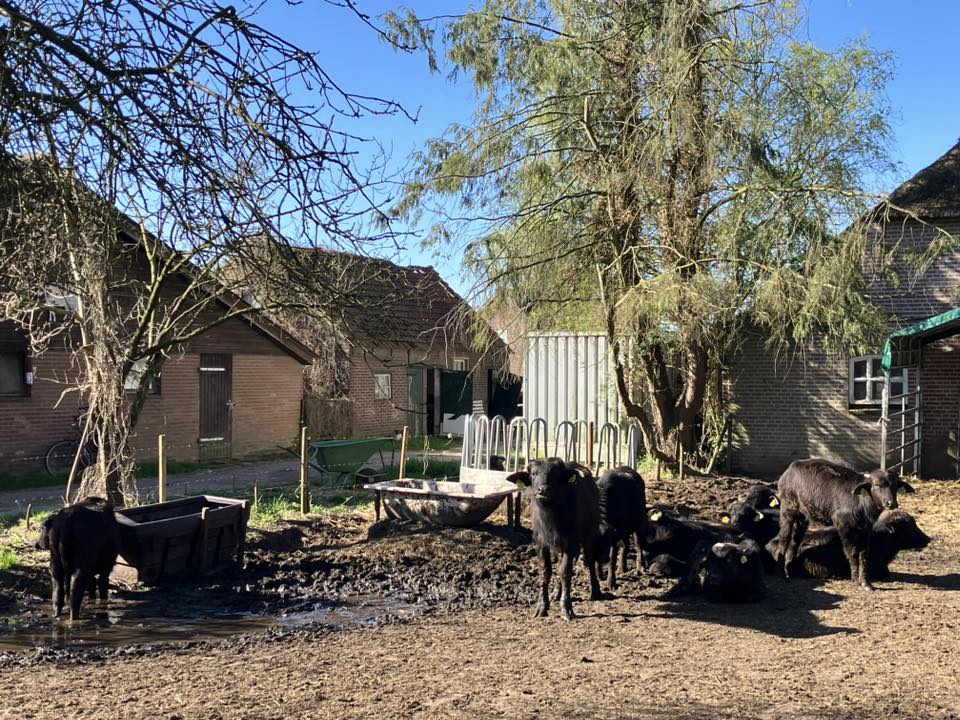
Asian water buffalo of course

Since I’m a child I have wanted to travel the world–I think it was Pippy Longstocking who first turned me on to the idea of exploration and adventure. Certainly Robin Lee Graham and Woody Guthrie and Mark Twain. And I have done just that; more than I imagined. Ironically, for almost thirty years I’ve lived in one house which I built here in the country. My previous homes lasted, from birth, four months, eight years, six years, four years, four years, eight months, three years, three years, three years, two years, two years, and now, well Aerie since my mid-thirties. 

If I had to choose between being always on the go for the rest of my days, or always at home for the same life, I’d choose home. I’d learn to garden and each year expand the crops with more tomatoes and cucumbers, and I’d have a fig farm on the land, perhaps more apple trees, and I’d share the results with neighbors. I’d know the names of the birds, and their migratory dates, and over time I’d have the hummingbird feeder ready for their return every spring. I’d add flowers to the land each year so that the back trail was lined with impatiens and the front with marigolds, and the north side toward the river would have a new trail with hanging baskets of herbs. I’d build by hand and bricks and stone a small guest house, with carvings in the doorframe and a wood-burning stove in the corner on clay tiles I made myself in the kiln I would build in the field. I’d have a dog, some cats of course, and a goat or two. Watermen and farmers would swing by sometimes to chat out front in the gazebo. And I’d walk to the post office to mail my manuscripts; I’d no longer be in a hurry. 

Just as easily I might simply leave, keep going

I’d do the Camino again, perhaps for years, and everyone would come to know the “old American” who is always out there heading toward Santiago. I’d relish the knowledge that no matter what else happens in my life, I have as a foundation to keep going the Way, the pilgrimage trail from France to the west of Spain. I would take Paulo Coelho’s advice and unbecome all the things that I’ve accumulated over the years which were not me at all, until finally I become who I was supposed to be to begin with. 

If I needed a break I’d head up to Connemara in August each year to walk the Sky Road near Clifden. Or I’d head to Prague in May for the music festivals in Old Town and stop and see my friends at the university. I’d have strudel and tell newbies about the time I used to write in the corner of Nerudova 19 when it was a tea room, and I’d write and have a pot of tea and strudel, and I’ll say it is too bad they weren’t around then since now it is an ice cream shop and it isn’t the same. 

Parts of me are already scattered all over the world. Pieces of my twenties are in Mexico and Africa, and large portions of my thirties are in Russia. Some of my forties made it there along with Prague and Amsterdam, and slices of my fifties are sprinkled like diction across this country from St Augustine to Seattle. If I had been able to simply keep moving, I’d have distributed what’s left of me in Spain and Ireland, with a small sampling saved for a state park on Long Island’s Great South Bay where most of the elements in my being come from to begin with. 

Still, I like the idea of spending my life in a small town where I’ve always known everyone, and I leave the doors unlocked, and I have a running tab at a local shack of a pub. Equally I like the notion of having friends all over the world, writers in cities throughout Europe to call up and spend time with on my way through again. I like knowing other cities in other countries as well as I know the trails here at Aerie. 

I wrote a book once about a guy who traveled the world until he settled in a small town and meets a woman who knows everyone and is from there, and they fall in love and the idea of staying grows on him, but she, by meeting him, understands she isn’t stuck in a small town after all and there is a world out there to see and experience, so she leaves. He decides the small town life isn’t the same without someone to share it with, so he leaves too, ironically also traveling the world, always wondering where she went, looking for her in crowds and metro stations, but he never finds her. It was a great idea and a decent manuscript, called An Innocent Season, but I could never figure out how it should end. That and I suck at writing fiction.

Life has a way, doesn’t it?

Last week I pet a water buffalo. This was near Neunen in the Netherlands. He was quite cute, still relatively small, and I scratched his neck and rubbed his face between his eyes, and he kept nudging me to continue, licking my shoes and pushing my hand. Luckily he was an Asian water buffalo who are kind, unlike the mean African ones. We stood at the fence and I pet him and we had just bought water buffalo yogurt and cheese but passed on the water buffalo ice cream. This little guy was loving on my shoes and my hand but I had stepped back and he came closer and his nose hit the electric fence, and we could hear the “zap!” and a small spark shot out and that little guy backtracked to his mother near a muddy area across the pen. He just stared at me with scared eyes as if to say, “Why?!” It wasn’t anger; no sense of “you bastard” in his face. Just a questioning “why did you hurt me like that?” and it made me a bit sad. I ate the yogurt anyway, though, with raspberry jam and some nuts. 

But we do that, we get close and then our perception is thrown off. Something zaps us and we associate that pain with those close to us when they might have had nothing to do with it; it was more than likely just circumstance, timing, the time of day. I wonder now how long will the little guy remember the pain. Will it make him leery to get close to the next guy with Hokas on and a hand stretched out? Or will he just keep getting hurt because the pleasure is worth all the pain? 

I would. In fact, I have more than a few times. Emily Saliers wrote we must “take part in the pain of this passion play” if we must love. The worst pain of course is departure, leaving again, and one comes to realize that eventually you’re best off either to just keep going, following whatever Camino you find yourself on, or agree to stick around awhile and simply accept that the pain is part of it all. 

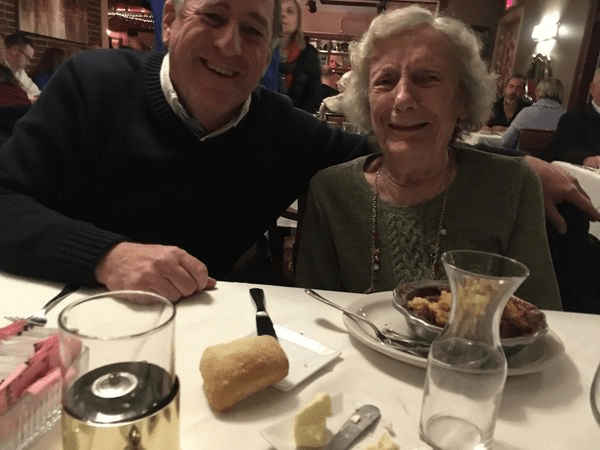
So we ate the yogurt and gave away the cheese and went back to Amsterdam and flew home. Three days later my beautiful mother passed away. I’ve been thinking about my youth, and mostly I remember laughing. My childhood included every emotion possible, but what comes to mind first and strongest is the laughter. I remember going to the supermarket as a kid and pushing the cart and getting a treat. I remember her making food for my class in elementary school and not minding when my friend Eddie and I dragged in mud from the state park. I remember her making lemon meringue pie because I liked it, and I recall perfectly her listening to me attempt to play the guitar for the first time as I butchered John Denver’s “Sunshine on my Shoulders.” I am sure I was zapped more than a few times back then by her voice when I inevitably did something wrong, but I can’t pull those memories up right now; only the good things. Like all the laughter and the music; these two things I inherited from my Irish-Italian mother–laughter and music. 

That and to keep going. Perhaps the finest lesson of all; just keep going.

The Laughter Never Stopped

neither did I