Copy That

This week the assignment in college comp is to write an essay about the positive and negative effects (or short term/long term; physical/emotional, whatever) of involvement in extracurricular activities. Research and valid support from experts are required. Today I read some rough drafts.

Out of twenty something papers, fourteen of them quoted as their source the same “study” done by two professors at the University of Pakistan. Their papers “reflect” the findings in a predictably vague and non-committal way, with language intended for fifth graders and excessive repetition for extreme ADHD readers. My students have not yet figured out that AI writing generally sucks anyway.

After some frustration, I took a moment to Google “Studies of the effects of extracurricular activities,” and the first six or so hits were UCLA, University of Wisconsin, Oklahoma State, Notre Dame, US Department of Education.

National Institute of Health, Texas A&M, Nature. The list of accepted expert sources is extensive.

So what gives?

Ah! I thought. I know exactly what gives.

I Googled “information about the effects of extracurricular activities,” and the first five hits? University of Pakistan. I googled “statistics and quotes about extracurricular activities” and the same Pakistani people popped up. Then I Googled “Essays about the effects of extracurricular activities” and the same people showed up. Go figure.

Quick recount: Test scores started to drop at high schools and universities about the time technology slipped into the curriculum, not unlike obesity showing up more often after the explosion of fast-food restaurants nationwide, or the numbers of hyperactive and anxiety-prone students skyrocketing with the introduction of specialty coffee shops and power drinks. After Texas instruments introduced the calculator to the classroom, the slide rule (kids, look it up) slid out of use. The conversation in the seventies was that students weren’t learning math, they were learning how to use a calculator.

This has been going on since some Bronze Age dad figured out a flint stone started fire faster than rubbing together two sticks. At the time, if he handed his preteen two sticks, the kid might have stared at them like they were relics from the Neanderthal Age.

In all math classes and for all homework, teachers used to exclaim, “Do your own work.” Not meaning don’t cheat, though I suppose that too, but meaning do NOT use electronics such as a Texas Instrument calculator to figure out the solution.

Writing terrifies students because they simply don’t do it. And if they can use AI programs to complete their work AND know the material, well, whatever. But writing is different; it is organic, but most importantly it has been proven to be the most effective tool in learning. It directly aids in retention, and we can actually teach ourselves material and figure out solutions to problems simply by writing about them, page after page. It is called Writing to Learn, and in Days of Yore, it was standard practice, wherein an eighth-grade class might be assigned Hamlet to read, and then their homework was to write two-thousand words about “Hamlet’s madness” or “Laertes revenge,” and so on. The process of writing exposed the characters to the writer with far more accuracy than “thinking” about it, or even talking about it, and the students became better writers, learned to do their own work, and gained valuable confidence in the process. That’s the key issue here—the absolute lack of confidence on the part of the student to write coherently.

But that individual, organically generated (OG?) writing ebbed during a time when individual assignments were sacrificed for “Group Work.”


But I digress. I got carried away as is apt to happen when writing. I do it a lot, though, so I don’t mind. But my students do not do it and they apparently do mind, even in a class they know was a writing class. They avoid it anyway and would rather spend time finding other people who already wrote what I’m looking for. The problem is this isn’t a history class where all I really want to know is if they understand the pressure felt by a group of soldiers on D-Day, which still should be met with original writing of course. No, this IS a writing class, where the lesson we learn is how to actually do it and the subject matter is secondary. We don’t learn how to steal it or copy it or get through by being so howl-at-the-moon lazy that I question how they got through high school to begin with.

(breathe in, breathe out)

Don’t be so quick to assume the student with the 4.0 GPA earned it. Don’t assume the new hire knows the material; they might have just learned how to present information as if they know what they’re doing. Do not automatically believe the students would make good graduate students because they seemed to excel during their undergraduate studies. They may have actually excelled at finding material, not figuring it out on their own.

So how can we tell if students are doing their own work?

Here’s what I do:

I get to know them. I pull a chair into the middle of the room, and we talk about their hobbies, their siblings, their experiences being away at college for the first time, and what they do for fun to relieve the stress of classes. I adopted Leo Buscaglia’s requirement of a “Voluntary-Mandatory” meeting at least once a semester, where every student was required to volunteer to go to his office at least once for five minutes, introduce themselves, and talk about what they want out of the class. So I do that, and I have thoroughly enjoyed getting to know my students better now than I did in the thirty years I was at a different college.

Does it work?

NO! Half my class thinks Hamza Abbasi of the University of Pakistan is the source for all things extracurricular in the American schools. And they all told me so using exactly the same words as each other.

Tomorrow I’m handing out slide rules and asking them for the square root of 3987.5. That will give me time to read more rough drafts.

Depression: Part Four of Five

This is Part Four of a Five Part Series here at A View.

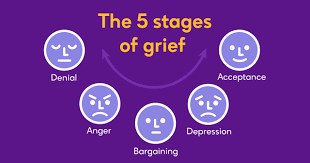
Elizabeth Kubler-Ross’ On Death and Dying defines the five stages of grief as Denial, Anger, Bargaining, Depression, and Acceptance.

Essentially:

  • Denial: A natural reaction to loss, denial can help people slow down the grieving process and avoid feeling overwhelmed. It can also be a way to try to understand what’s happening.
  • Anger: A common reaction to the frustration of no longer being able to live in denial, anger can feel like an emotional outlet as people adjust to a new reality. It can also provide temporary structure and a connection to the person who died.
  • Bargaining: People may try to change the circumstances that are causing their grief, such as hoping that things will improve if they take certain actions.
  • Depression: A stage of grief
  • Acceptance: A stage of grief where people find control and figure out how to proceed 

PART FOUR:

Depression:

Here’s One:

Dad once tried to buy a Snickers Bar from vending machine at a golf course. I hadn’t been nearby, but when I walked over he was getting angry. “Oh geez!” (Dad’s version of cursing). He said the machine was broken even though he kept trying to get it to work. He wanted number 110, the Snickers, and when he would push the “1” but before he would hit it again before moving to the “O,” it immediately gave me a pack of gum.  I pointed out there was actually a button that said, “110” and he only had to hit that button. He pushed it and the bar dropped, and I reached in for him to grab it and found four packs of gum. He wouldn’t mind me telling that story. Dad had a great sense of humor, though my tale would have been followed with a sarcastic laugh and a deep “Very funny” comment.

That story both makes me laugh and makes me sad.

When my father died, I wasn’t exactly depressed by his passing, not in the traditional meaning of the word; Dad had not been well for quite some time, and at ninety years old with dementia, his beautiful life as we knew it had ended long before his death. The depression I have about him is from him no longer being here, no longer around to talk to. I am depressed when I recall the grace of those days we spent walking at the mall, lunches around Virginia Beach, golf with my brother and son, sitting watching sports on television. Dad was a relatively quiet man, and he rarely spoke of his youth, but he celebrated ours and the childhoods of his children and grandchildren (and great grandchildren) every moment he could. It is his absence that hurts, the void, the knowing he no longer knows us, thinks of us, breathes.

Sometimes I think of him and can’t help but laugh at the endless great times we had; and I was fortunate enough to live near him right up until his death. Other times I think of him, something small, like his baritone “Yes Dear” when my mother asked him something, or the way he sat in his chair on holidays and watched everyone else talking, laughing, and he always looked so proud and happy, and when I remember those moments, it hurts, the goneness of him hurts. I don’t cry, which is odd to me since a passing line in Ted Lasso might make my eyes swell, but neither do I think clearly for a while.

Elizabeth Kubler-Ross points out something essential about grief—it is not linear. Depression and anger may weave their way around denial, and at any given time one might snap out of anger and cry for hours. When Letty died I was immediately—and even in those pre-death months—depressed. When Dave’s widow told me of his long illness and subsequent death, depression struck me like a baseball bat. The denial came a little while later and I liked it so I stayed there. But the depression makes its presence known at odd times. Predictably in the middle of the night when my mind can’t find anything positive to counteract it all, but also in random spurts, like driving past a mall dad used to walk at, and now they’re tearing it down. The mall didn’t depress me—the fact they’re tearing it down hurt.

But there is another facet to Stage Three which complicates the narrative. Depression has multiple layers.

Let’s start with this: I battle depression. It isn’t melancholy exactly, and it isn’t sadness either; it is a complete sense of malaise, or, in simpler terms, it is sometimes not giving a damn about a blessed thing. A doctor once told me this might be why I try to live so very consciously, taking risks and exploring. A person like me just might need a bit more stimulus to accept the reality of life. A chronically depressed person (which doesn’t mean we’re always depressed; it means depression may very likely come and go for the rest of our lives) may have no intention of killing themselves, but they’re not against the idea of evaporating either. It is complete indifference. It is this: In Woody Allen’s Radio Days, a young boy who won’t do his homework anymore is taken to a psychiatrist who asks him why he won’t do it. The boy responds, “The sun is going to burn out in four billion years.” “So?” the doctor responds. “So what’s the point?” the kid says.

See, I get that. Not that I don’t understand the point, of course. But when someone cycles through a low in the depressive state, everything seems irrelevant.

Yeah, that’s not what we’re talking about here. E K-Ross bends it like this:  Depression as Stage Four is a very specific “Situation” borne depression. The absence of someone’s laughter, not because they moved away or are ignoring you but because they no longer exist in this world, no longer contemplate the changing leaves, no longer taste or hear or feel, no longer imagine, no longer have any form at all, and when one acutely focuses on that reality, it can be overbearing. That thought, right there, that from now until the sun dries up, someone we love is simply not returning, that any chance you had to enjoy their company has passed, is depressing.

So too is a Jackson Browne song which cries out exactly what I was thinking about someone I loved. It’s everywhere, these depressive triggers. Some are obvious—like that damn Chevy commercial with the family visiting the grandparents at Christmas and a nearly comatose grandmother goes for a ride with her teenage granddaughter—”Sunshine on my Shoulders” on the radio—I can’t even watch that one anymore. OD—Obvious Depression. Some are subtle, like the sound of ice in a glass (Scotch on Tuesday nights with Dad) or peach pie (Dad loved Mom’s peach pie).

The death and subsequent goneness of them is not directly the trigger. If someone asks about my father and I say he passed away in 2015, it doesn’t directly depress me. But if they asked when was the last time I met my dad at the mall to go for a walk, I just might be incapacitated for the afternoon.

The sound of a golf ball leaving the tee, announcers calling a baseball game on a summer afternoon, the aroma of turkey in the kitchen while a football game is on in the other room, remembering, sometimes just remembering.

Stage Four is the weight on the chest. I remember a neighbor when I was young who not only lost a baby in infancy but lost her husband and her thirteen-year-old daughter to a car accident one rainy day. Sometime not long after that, her son found her in bed, dead, and it was said her heart just gave out.  Depression can literally kill, of course, but it can equally kill the spirit, disengage any humor, and dissolve all sense of hope. It leaves one questioning what they did wrong that they are alone now (Bargaining), leaves one pissed that they didn’t tell others how much they love them (Anger), renders them useless laying on the couch in the dark on a sunny afternoon until they can convince themselves it is simply a bad dream, and the deceased is actually at work (Denial). Depression is the umbrella that all other Stages must cower beneath.

When I get depressed, I remember something to laugh about.

Here’s another one:

When his dementia had progressed but when he was still quite functional (which he remained until his final trip to the hospital), he thought there were two Joans (my mother). An upstairs Joan and a downstairs Joan, though I’m pretty sure he thought there were simply two women, and one of them was his wife. One morning when he woke up, my mother—the upstairs one–asked if he wanted to go out to breakfast. He agreed. My mother went downstairs, and sometime later he came down and when she asked how he was doing, he said, “The lady upstairs wants to go out to breakfast, and I said yes, but I really don’t feel like it.”

That makes me laugh every time, as I know it would make him laugh, and the only depressive element to it is my brilliant father’s deteriorating mind. No, depression hits me worst when I recall our trip to Disneyland in California when I was fifteen—just the two of us—that’s a great memory that gets me down. It’s the time he brought me to college one fall and stood around talking to my friends and me like he just didn’t want to leave, like he thought he might not see me again, before leaving. It’s the time he brought me to the airport for a flight out of Norfolk and we shook hands and he left two hours before my flight, but when the plane taxied to the end of the runway near the observation area, I could see him outside his car waving to the plane, not knowing if I could see him or not, that tears me apart.

I don’t think I told him I loved him until he was very old. I wish I could have done so earlier…

Damn. Negotiating again. Always negotiating.

Sometimes when it gets bad and I’m coldly aware of how much I screwed up my life and could use his presence—he never gave advice, but he listened very well—I sit and wait for denial to snap back to attention and save me, and I can go about my business still a little depressed, but this time because I forgot to give him a call before he headed to Florida.

Depression never goes away, it just simmers, often without me even noticing, but also without me feeling completely relaxed. Ever. People tell me “You don’t recover from someone’s death, you just learn to live with it.”

Yeah, I know. And I appreciate the condolences and empathy. But what is not admitted is that while we live with it, yes, the truth is we do so a little slower each time, a little less of ourselves than we had been.

Depression: Dad

Bargaining: Part Three of Five

This is Part Three of a Five Part Series here at A View.

The five stages of grief based upon studies and writings, such as Elizabeth Kubler-Ross’ On Death and Dying, include Denial, Anger, Bargaining, Depression, and Acceptance.

Essentially:

  • Denial: A natural reaction to loss, denial can help people slow down the grieving process and avoid feeling overwhelmed. It can also be a way to try to understand what’s happening.
  • Anger: A common reaction to the frustration of no longer being able to live in denial, anger can feel like an emotional outlet as people adjust to a new reality. It can also provide temporary structure and a connection to the person who died.
  • Bargaining: People may try to change the circumstances that are causing their grief, such as hoping that things will improve if they take certain actions.
  • Depression: A stage of grief
  • Acceptance: A stage of grief where people find control and figure out how to proceed 

PART THREE:

Bargaining:

At the end of The End, an obscure Burt Reynolds movie with Sally Field and Dom Delouise, after spending the entire film trying to die due to his terminal illness, Reynolds finds himself drowning in the ocean and decides he wants to live after all, bargaining with God. “Please God, if you save me, I’ll donate all of what I have to the church!” he screams as he tries to swim to shore. The closer he gets, however, the smaller the percentage. “Really God, save me, and thirty percent of everything…twenty….yes, fifteen percent of everything!”

We’ve all done this. “I’d give anything if…”  That’s bargaining. We’d trade our right arm for one more day. Even Willie Nelson would trade all his tomorrows. “Let her live at least until July and I’ll never again…” fill in the blank.

Bargaining is as much a part of living as death. It serves a purpose; that a loved one’s death was not in vain, and how we live our lives can change as the result of that death.  

The following diction is all negotiation:

Honestly, I’d give anything to be back in Hechscher State Park on the Great South Bay walking through the trails with Eddie, climbing the now-gone ruins of the old beach cabana along the water. How I’d kill to be back in some small café with Dave at two am having eggs and toast and laughing. One night Dave grew depressed because “even musician George Benson had become violent” he exclaimed as Benson’s song “Give me the knife” blasted from the speakers above us. Dave was so serious and maudlin about it I couldn’t stop laughing. Finally, I explained he was singing, “Give me the night,” to which Dave burst out laughing at himself. Geez. Yeah, give me that night, one more time. Give me one more morning at the radio station, Dave ripping headlines off of the UPI machine to read on air, all the while talking to me about his family in Buffalo. One more time, God, Buddha, whoever. Just once more.

And need I suggest that if I had riches, I’d trade them right now to spend another day walking with Letty to the farmer’s market? One more—damnit—just one more evening watching a Mets game with my dad. I’d head down to the crossroads and negotiate my soul for that one.

But bargaining is more than some ridiculous quid pro quo we try and slip in without anyone noticing, as if it can bring someone back to life, or sometimes bring ourselves back to life. It is how we keep our lives moving forward after someone dies. “From now on I’ll be kinder to people,” we say. “From here on out I’m going to let people know I love them,” we promise ourselves. But do we? So many negotiations are empty.

I don’t think I consciously slipped into the role of negotiator. But I know—I mean I happen to know for a fact—that the morning a high school friend of mine took his own life, he tried calling me in my office, but I didn’t bother answering as I was tired. Give me that moment back, of course. But why? Would that stop his determined mind? Who do I think I am that I entertain the idea that picking up that phone would have kept him out of the garage? But that’s not the point of Stage Three. We say and think those things as a method of imposing control over something we have no control over. It helps us say, quite astutely actually, I can’t save my friend’s life, but I can save mine.

We do that because it allows us to believe in things we would never accept under normal circumstances. If Eddie had left work even twelve seconds later, we would have had lunch that Christmas and reminisced about all those years hiking the trails of Heckscher. And I won’t say it, but until I am seventy I’ll think how I would have done anything to know Dave was dying so I could have taken my guitar to Tampa and sat at his bedside, and we would have sung that damn song about being seventy, just seven years early. It would have been a dream fulfilled that I could have carried with me for both of us. What would I have to do to make that happen? I would do it.

That’s Stage Three. It somehow reminds my subconscious that even though Eddie is gone and Dave is gone, our plans are still here, and their deaths do not necessarily mean my death. Stage three is the bridge from loss to that adjustment we must make to move on without those we love.

The day before Fr. Dan unexpectedly died, my mother had been in the hospital, and it didn’t look good for her. I texted him her condition, and he texted back. A few minutes later he called. He told me he had an appointment the next day but to call that following night and we could talk when he had more time.

When I retrieved my phone after work that next night to do just that, messages came through informing me of Fr. Dan’s death. That brings us to the “if only” part of life, that is bargaining with ourselves. Never again will I put off my friends, never again will I not help a friend who needs my help, never again.

But we do, don’t we? We put them off and we stop helping or even stop calling. As a society we promise we will do better after every damn school shooting, after every war, every natural disaster, we will do better to protect our children and our allies and our neighbors. It makes us feel better about ourselves and what we can do while we are still alive, and it helps us negotiate their deaths as something other than pointless.

I should point out that grief and grieving does not have to be about death, but when it is, it is called bereavement.

Well I’m focusing on bereavement grief, because I’m holding to the notion that if the ones who cause your grief are still alive you are still able to love, to forgive, to move on or even sometimes go back. So, sure we can call that grief the same way my mother used to take a deep sigh and say, “Why do you kids give me so much grief?!” But grief from death is directly related to the finality of the incident. She’s gone. He’s gone. They’re all just gone, dust, ashes floating in the Med, a corpse in some Florida graveyard.

Kris Kristoferson wrote, “I’d trade all my tomorrows for one single yesterday, holding Bobbie’s body next to mine.” Yeah, negotiation, Monday morning quarterbacking.

Regret.

The thing is, there might be no better time for regret than those days surrounding the death of a loved one. Yet people say, falsely I believe, “I have no regrets.” Well, hell, I do. Tons. They keep me sharp, make me evaluate my actions so I can avoid those same mistakes, they remind me to call people who are still alive knowing I regret not calling those who are gone, I’m talking forever gone, stardust, ashes in some Russian picture frame, ashes in some Southern Tier Franciscan Friar cemetery. Gone.

Yes, I cherish my regrets as emotional sticky notes reminding me to keep in touch, sometimes even to wear my heart on my sleeve.

E Ross suggests most of the bargaining taking place is with death itself, negotiating a longer stay in exchange for some vague and inconclusive adjustment to one’s lifestyle. “Just let me live long enough to see my kids be able to take care of themselves” is a good one for several reasons. It is fair to want that, but it leaves off the trade. It is a bargaining with ourselves to explore what is important in life. I don’t care if I die before the next James Bond film comes out, but let me live long enough at least for “this” to occur.

But I need to let Ms. Kubler-Ross speak for herself on this one:

Before a loss, it seems like you will do anything if only your loved one would be spared. “Please God,” you bargain, “I will never be angry at my wife again if you’ll just let her live.” After a loss, bargaining may take the form of a temporary truce. “What if I devote the rest of my life to helping others. Then can I wake up and realize this has all been a bad dream?” We become lost in a maze of “If only…” or “What if…” statements. We want life returned to what it was; we want our loved one restored. We want to go back in time: find the tumor sooner, recognize the illness more quickly, stop the accident from happening…if only, if only, if only. Guilt is often bargaining’s companion. The “if onlys” cause us to find fault in ourselves and what we “think” we could have done differently. We may even bargain with the pain. We will do anything not to feel the pain of this loss. We remain in the past, trying to negotiate our way out of the hurt. People often think of the stages as lasting weeks or months. They forget that the stages are responses to feelings that can last for minutes or hours as we flip in and out of one and then another. We do not enter and leave each individual stage in a linear fashion. We may feel one, then another and back again to the first one.

Right. For example, stirring those memories to write about Stage Three brought me right back to Stage One, denial. I like it there and it seems to have taken to me as well. I’m too rational to not know I can negotiate for decades and never bargain Letty back to life, never compromise Dave back to his wife or Fr. Dan back to be able to call that following night to ask about my mom. It’s not going to happen. I know this, and yet somehow bargaining helps us pretend, like kids playing in the yard, that we can make things alright if we “just do this one thing.”

If only it were that easy, Liz. If only.

One last thought about Eddie A. Radtke, musician, friend. We were rarely apart throughout our youth on Long Island. Then I moved to Virginia—pre cellphone pre computer, pre anything. But we wrote letters, and he would send the want-ads from the NY Times and Newsday for me to give my father along with real estate listing from Great River. Our youthful brains insisted we could make this work. It didn’t, obviously, and we both indicated how we would do anything to erase my move south. Eventually we lost touch. Then after more than forty years, social media brought us back together. It turns out we had everything in common; in particular, music. We spoke on the phone often for a year or more, and then finally we made plans to meet right after the holidays, but one December evening he was struck and killed by a car when he was walking out of work.

I’d give anything to have had the dinner a month earlier, to sit one more time and sing “Cats in the Cradle” together like we did in our youth, laughing at how we used to call each other in early mornings and sing as loud as we could, “There’s got to be a morning after!” from The Poseidon Adventure, and we’d laugh our way down the street to one or the other’s house. Give me that once more.

Seems all I’ve been doing lately is negotiating.

“It’s not too late, not while we’re living. Let’s put our hands out in time”

Bargaining: Eddie

Anger: Part Two of Five

This is Part Two of a Five Part Series here at A View.

Psychologists, including Elizabeth Kubler-Ross in her definitive work On Death and Dying, teach us there are five stages of grief: Denial, Anger, Bargaining, Depression, and Acceptance.

First, here’s an AI sourced summary:

  • Denial: A natural reaction to loss, denial can help people slow down the grieving process and avoid feeling overwhelmed. It can also be a way to try to understand what’s happening.
  • Anger: A common reaction to the frustration of no longer being able to live in denial, anger can feel like an emotional outlet as people adjust to a new reality. It can also provide temporary structure and a connection to the person who died.
  • Bargaining: People may try to change the circumstances that are causing their grief, such as hoping that things will improve if they take certain actions.
  • Depression: A stage of grief
  • Acceptance: A stage of grief where people find control and figure out how to proceed 

PART TWO:

Anger:

(a bit more serious this time)

This is a tricky one since there are several levels involved. On the one hand we might lash out at others in some mind-bending way to “control” something, anything, as an emotional response to a death we had no control over which left us feeling helpless and abandoned. We might get angry at our children for the simplest of things to evade the reality of our own parents’ passing. Or we might be angry at the departed for departing, particularly when their exit is far too soon, burdening us with some sense of guilt for still being here, for slowly forgetting, for moving on. It’s a bit more rational to be angry when the death was self-inflicted. I’ve known several people who ignored that canon fixed against self-slaughter and ended their sea of troubles. Most notably a high school buddy who, after several attempts, succeeded when we were in our thirties. But I’ve learned much about mental health since then and it is hard to be angry at someone whose actions were quite decisively beyond their mental capabilities to control, despite what we wish.

In fact, anger either at the departed or at others because of the departed seems irrational at best. But it happens. For instance, my college friend Dave pissed me off. In the case of his death I blew right though denial and landed quite solidly in the deep end of anger. I’m not sure this is the type of emotion Betsy K-Ross was talking about, but give this a thought:

Some background. I knew Dave since the fall of 1979 and have written about him before on these pages. We ran a radio show together, worked at the campus newspaper together and the college radio station together, just him and me at 5 am for four years, Dave on news me spinning music, and we bonded during those pre-dawn hours in the chill of western New York. I stayed at his house in Buffalo on many occasions and became the “fourth son” of the family. We went on retreats together and relied upon each other for comic relief during pressing times throughout the next forty-five years.

Dave was talented but when he was faced with self-doubt, especially when he battled depression, he would call, and we’d talk until two or three in the morning. I once walked out of a reading in Virginia just after ten pm and he had called six or seven times. I returned the call and sat in the parking lot until dawn talking about all the reasons we keep breathing. He had no way of knowing I faced my own demons, and that he kept me going as well. I told him, but often Dave was not listening. That’s hard to explain. But we finished that conversation that morning laughing, laughing hard and even singing, “Old Friends.” And we talked about traveling to Australia together and writing a book. We both knew that would never happen; but talking about it pushed the other stuff out of view, and that’s why we stayed on the phone so long. We had to wait until our verbal tide came in and washed the rest away.

In the years since the introduction of the cell phone, we texted each other no less than three times a week. Sometimes it would be just some song lyrics that made us think of each other, sometimes a photo of the day. To be honest, I didn’t always answer when he called because he tended to ramble right past my “I have to go now, Dave” interjections, so I preferred the texts.

In late April, I texted him a simple hello and asked how he was doing. A random thing without lyrics or puns. He responded that he was fine, just a little tired, and he looked forward to talking soon. In mid-May the phone beeped, and it was a text from Dave. I opened it to find an obituary about Dave sent by his widow. My hands were shaking. I immediately called and we talked for a long time. Dave had been diagnosed with kidney cancer the previous September, but by the time they found it the disease had already metastasized rendering him a death sentence. “He fought hard the whole way,” she told me. He didn’t want anyone to know but his immediate family.

Pardon me on this one but Fuck You Dave (yeah, that’s anger right there). Seriously? First, the rationale for such silence is he thought he could beat it and didn’t want anyone to know, or he didn’t want people pouring sympathy all over him which he would hate, or he wanted to just focus on family, his beautiful three adult children and their own kids. Yes, I really do get that.

But those who exit without allowing others the chance to say goodbye or tell them how much they meant or at the very least acknowledge that you might not be alive if it wasn’t for him, just seems a tad selfish. This all came parallel to a deeply open knowledge of Letty’s impending death with the chance to tell it all to each other. Of the two, openness wins hands down. Are you kidding me? It’s hard not to tell someone what you wanted to say when they just go away for a while, never mind forever. When I told Letty of Dave’s passing, just two months before hers, she was even more sure of her decision to expose her impending death to those she knew. No questions at all.

After I hung up with Dave’s widow I called Fr. Dan, who himself had but two more months to live and didn’t know it, and I told him the news. He was dumbfounded. He had spoken to Dave just two weeks earlier and all Dave told him was “I haven’t been feeling well; please keep me in your prayers.”

This forced me to wonder what I would do. Of course, my life has been an open book for quite some time, but it is more than that. Eddie got hit by a car, Fr Dan died in mid-sentence about his plans for the weekend, someone we love right now may not know what is next. Why aren’t we leaving it all on the table? Why do we keep our feelings, those deep, often embarrassing to admit out loud ones, inside? I can testify that of all the emotions I have about Letty’s passing, none of them is anger.

Dave on the other hand; I’m just pissed for him not giving me the chance—and he could have; I mean he knew what was about to happen—to tell him what I wanted to, and perhaps he had a few things he would have liked to say.

Well, lesson learned though. I just might dump pleasantries on you at any given chance just in case one of us exits the stage in the middle of the third act.

Still, Kubler-Ross addresses another anger in addition to the one focused at the bastards who died. This is the one where we feel helpless and lost, and someone once a part of our daily routine is now absent in all ways, and there’s no way to control that absence, so we channel that thorny emotion into one we can control which might relieve some of our anxiety at floundering without someone: Anger at ourselves.

Well, yeah. I’m angry at myself every time someone I love dies. Angry for not being there more often, angry at not having said what I so easily could have but simply didn’t bother to say. Angry at myself for getting angry at them in the past for the stupidest reasons. Angry at my aloofness and at my over-dependence, at my distance and my closeness and my silence and for saying too much.

Angry at myself for sitting quietly at the bay and watching the sun slip up above the distance and giving me another chance. EKR is clear about this one: the anger of guilt.

I’m aware of the psychoanalytical responses to this; please don’t load up the discussion page with comments about carrying on and blah blah blah. I know, really, I know. I get it. BTDT.

But understand: I welcome the anger at myself when someone dies. I think we all should get angry at ourselves when we didn’t tell someone how much they meant to us, how much we cared, how much we still do. It forces us to not make that mistake again. It impels us to be open with those we can, now, while time has allowed us to remain part of this ongoing brilliance of exquisite life.

Don’t keep your death to yourself while you are still alive.

Finally, Liz Ross writes that often anger is directed at some Deity for allowing the death to happen, particularly a premature death which for my part is the case for, well, all of them. This is the most ridiculous anger of all and I’m bored with hearing it. Listen, if your faith suggests death is all part of some greater plan, than your anger is contradictory and quite dumb as you’re now getting angry at a God who has enough control to decide death and when it happens to each of us. If you don’t believe that’s how it happens then move on, it’s no one’s fault.

I miss Dave. I miss his texts and more than a few times I have reached for the phone to write, “How terribly strange to be seventy,” in reference to our plans to sit on a park bench when we reach that age and sing Paul Simon’s song. But then I remember he fell shy by seven years. When I’m thinking clearly, I’m not angry at Dave; that’s foolishness. I’m not angry at some God or even myself. No, when I’m thinking clearly, anger is not part of any equation; only love, and the times we could have loved more.

Thanks Dave. Good on ya.

Anger: Dave

Denial: Part One of Five

This is Part One of a Five Part Series here at A View.

Psychologists teach us there are five stages of grief. Personally, I believe there are a few dozen, but I’m counting overeating, drinking, the gummy-chewing stage, the Marvel Universe binge-watching stage, and several others, but for the sake of brevity, let’s go with Elizabeth Kubler-Ross’ count-em-on-one-hand list of stages, from her book On Death and Dying (so right away we’re not in a good place).

The Fantastic Five: Denial, Anger, Bargaining, Depression, and Acceptance, or DABDA, as I just decided to use for sake of association.

First, here’s an AI generated overview before I slaughter them:

DABDA:

  • Denial: A natural reaction to loss, denial can help people slow down the grieving process and avoid feeling overwhelmed. It can also be a way to try to understand what’s happening.
  • Anger: A common reaction to the frustration of no longer being able to live in denial, anger can feel like an emotional outlet as people adjust to a new reality. It can also provide temporary structure and a connection to the person who died.
  • Bargaining: People may try to change the circumstances that are causing their grief, such as hoping that things will improve if they take certain actions.
  • Depression: A stage of grief
  • Acceptance: A stage of grief where people find control and figure out how to proceed 

PART ONE:

Denial:

I’m good at this—really in all aspects of life—but given the chance to forget that someone I love is dead, I’m all over it. This is most easily accomplished if you live a great distance from the deceased, or if you have had little contact over the years. Denial is convenient when you have a lot to do and thoughts of someone you love who recently passed or even not so recently slow you down. Kubler-Ross doesn’t disparage denial, but she does suggest it is best to move through it honestly. And I will, eventually. I understand it is simply self-preservation that I assume my father is at home watching golf (this one is hard to do since my mother no longer lives in the same place they did, so I am too aware of his goneness), Letty is visiting family in Italy, Eddie is playing blues in the city, Dave is misunderstanding lyrics at some coffee shop in Tampa, and Fr Dan, well, Fr Dan was already half in heaven to begin with. He’s not gone as much as he now plays the role of advocate. Richard made denial easy by his convenient disappearance from society and media several years ago. In my mind he’s home watching old Jane Fonda exercise videos.

It’s not easy to remain in this stage sometimes; there’s got to be a gummy that aides in denial.

But I see no reason we all can’t just assume those we love are off doing other things and they’ll be back in touch at some point. “It’s not healthy” Liz Kubler-Ross writes. Why? Why is it better to “accept” they are gone and won’t be coming back than it is to “accept” that they’re in Thailand playing Mahjong? It works for me, and I’m able to function properly without facing the reality that for the rest of forever, eternally foreverness, throughout the future of infinite time, I will never see these people again. They were here briefly; now they are gone.

“They’ve gone ahead,” people say.

“They’re in a better place,” people say.

“You’ll see each other again someday,” people say.

My mind holds onto that last one, yes, but not the way they mean it in some ethereal ghosty way. No. We’ll see each other again when they get back from Machu Pichu. I can’t wait to see their pictures.

Listen, I’m not dumb; I know they’re dead. Dave was in denial of death and told no one. Letty wasn’t crazy about it but moved toward it with class. Fr. Dan had no idea; neither did Eddie. Richard fell, so it’s doubtful he knew. Result: they’re not coming back, ever, and as Mr. Croce aptly pointed out: “Photographs and Memories, Christmas cards you sent to me. All that I have are these, to remember you.”

Yes, I know.

But grant that my considerably better mood and more focused work ethic come from an absence of acceptance of such significant losses.

I recently attended a writing seminar about grief, and the moderator—poet Anne Marie Wells from Northern Virginia—asked us to think about synonyms for grief for five minutes and write them down. To do so I had to briefly abandon my denial stage, but it seemed Kubler-Rossy, so I agreed. Anne Marie distributed a poem wherein the poet (not her) had synonyms for “grief” which were more personal than any formal understanding of the emotion.

I took the blank sheet of paper and wrote “SYNONYMS FOR GRIEF” at the top, slowly and neatly, OCDish, taking it slowly in an effort to eat up some of the allotted time. I started with the obvious: sorrow, misery, sadness, anguish, distress, agony, torment.

But I didn’t believe it. I couldn’t feel it in my stomach where true grief exists. I jotted down a few more: sadness, depression, helplessness. They felt empty. Dictionary words. Pointless.

I put down the pen and reread the poem. I looked at the clock and still had three minutes in the exercise. I stared across the library where the seminar was held, and I saw a guy at the computer with headphones on. He looked like my childhood friend, Eddie, who was killed by a car while walking out of work one night. I thought of Harry Chapin—a connection Eddie and I had.

I flipped the page over and tried again:

“Synonyms for Grief.”

Cats in the Cradle. Golf on television on a Sunday afternoon. Brussels in September.

La Vie En Rose (That one rips me apart. Grief incarnate).

Paul Simon songs. Seared tuna. Hard cider.

Wham’s “Wake me up before you Go Go.”

Black and white photographs. Change jingling in a pocket. Coors Light.

French accents.

Okay, so I wrote “French accents” fifteen minutes ago and went for a walk. My chest hurts.

Grief.

Grief sucks. It can be damn near suicidal. I get it Lizzy, I really do. It can also be cleansing; it can make us stronger, and yes, of course I grieve; I just did.

But denial is where it’s at. I’m running up to the post office and see if Letty sent a postcard. I might stop by the club to watch some golf, alone since my son’s traveling and Dad lives too far away. Then I’m going to finish the manuscript that was due last month about a friend of mine who is now living in a village in South America.

I just might be able to denial my way through the rest of my life. But that would piss Elizabeth off, and Anger is Stage Two. Some other time. For now, I prefer having nothing to be angry about.

Denial: Letty

Present Perfect

1908040_10203813288720133_7224931381547605230_n

I’m thinking about Spain tonight, that time back then, and the lessons I forgot, the moments which were later diluted by misguided responsibilities. The way I fell apart just a few years later and leaned too hard for some time there; the way I still do sometimes. The way everything makes sense when I’m talking to the right person, and how I know it should make sense all the time, and how it doesn’t. That’s on my mind tonight. That, and Spain.

I’m thinking about how I carried home with me that sense of life as it was meant to be, at least for me it was, and how it lasted for a little while back then. And tonight I’m wondering what happened to it. I thought I’d never forget what I apparently forgot. Then more recently after some significant changes, I was sure I’d never again forget to be present, to be aware of life, now.

Then late last night I read a letter –this morning I suppose–in which a small part told me of all the versions of me in thirty-five years, that one, the one right after Spain, was the easiest to love. “Find him again,” it said. “You won’t be at peace until you do.”

Just. Well. Fuck.

Spain.

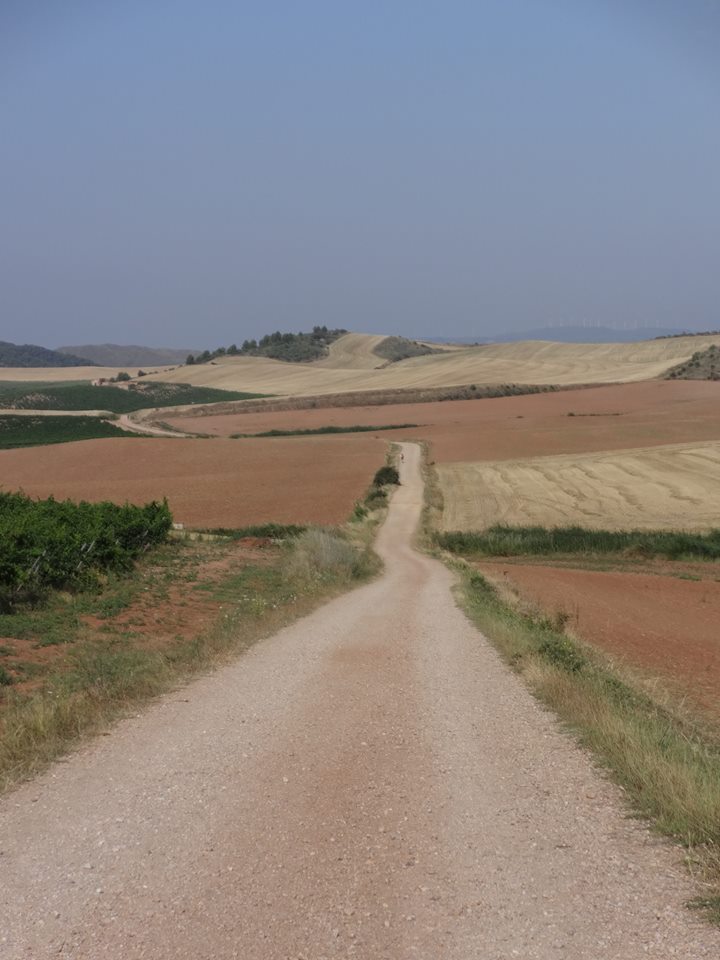
One evening a decade ago, Michael and I spent the night above a bar in the village of Samos and had pulpo–octopus–for dinner. Later that night a priest invited us to a private party and we stood next to four buffet tables of pintxos and wine, and we ate and stood on the balcony, drank wine and watched swans swim in the lake and hissing at the setting sun behind the cloister. Every single day outdid the previous one. I kept waiting for that golden moment, and they kept coming. Like that following morning when we walked to a nearby field and found a chapel from the 9th century alone in the mist, part of some eternal sacred silence. It was not a five-hundred mile journey; it was one step at a time, one moment at a time, over and over. That might be the most practical lesson of the Camino.

We slept on yoga mats in a hallway of an old church in Logrono, Spain, with seventy other tired souls after we shared dinner and walked through the basement of the five hundred year old building. For two nights we slept in comfort in the same hotel Hemingway stayed while working on The Sun Also Rises. In some small, old chicken village we stayed in a brand new albergue which had no business being open yet. The floors and ceilings weren’t done, it was freezing inside, and the yet-to-be-inspected bathroom was three floors down. The only bar in town was closed so the owner gave us a few beers which made up for the thick dust everywhere. We stayed near Torres del Rio above a bar with fine food and a wading pool out back to soak our blistered and swollen feet. We stayed in an old monastery a hundred yards from a church St Francis of Assisi himself asked to be built. In Portomarin, we stayed up as long as we could because the rooms were all filled. We hung out in a small café until 1am and then walked around the misty, cooling waterfront. Then we settled on the town square with covered walkways running next to a medieval church. Against some storefront we pulled together folding chairs and wrapped ourselves in whatever we could and tried to sleep in rapidly dropping temperatures. A kid on a bike did tricks on the steps of the church until 3 am which anyway kept me amused. At 4:30 we got out our flashlights and headed west. You can see a million stars in Spain at 4:30 in the morning, and the darkness makes the silence almost melodic.

In O’Cebreiro there was no room and we nearly walked out of town to camp when a man waved us toward a back door at an inn and we ended up with a beautiful private room for practically nothing at all and just outside the door were a few tables on a stone patio overlooking valleys that stretched across Galicia. In the morning the fog sat below us in those valleys, and the sun came up like we were looking at the ocean until the clouds dissolved and the sky turned blue and the green hills welcomed us.

A few weeks earlier when we first crossed the Pyrenees into Spain’s small village of Roncesvalles, we stayed next to a chapel Charlemagne used and at night we went to the basement and spent hours drinking gin and tonics and talking to the innkeeper. In the village of Zubiri in Navarra, just before Pamplona, we stayed in a new place on the fourth floor and shared a room with a couple from France. My son took pictures from the Roman Bridge outside our window. A few days later on the eve of the feast of Saint James, patron of this pilgrimage, we stayed in a small inn run by a single mom who made dinner for us, a woman from Madrid, and two men from Germany. We shared a delicious Italian meal and drank clay pitchers of red wine and talked about the distances. We laughed in three languages and despite someone snoring most of the night we slept well enough to leave an hour after everyone else making our journey quieter and more perfect. We didn’t worry about how far we walked or where we might stay. We walked and we would find a place. Like the fly-infested villa with tremendous views, or the albergue with dogs who insisted on sleeping on our laps, or the room above the garage with a killer bar at the street; or the stone building down some slope where we met some girl from Texas and a father and son from Amsterdam. After paying at the restaurant we drank the best hard cider in Spain.

In one neighborhood as close to suburbia as we ever saw, some couple opened an albergue in their house and we got the first two of five beds, the others occupied by a salesman from Madrid, a woman from Barcelona and another from Majorca. We all had dinner on the back porch where all the flies in Spain gathered to join us, as well as a dog named Bruno, and the sun was brilliant and we slept well. Once, we stumbled into some tiny town, another chicken village, looked like a movie set for an old western, and we slept in the bunk room with fifty other people. In the morning we picked up a few supplies at their shed they called a store, but man oh man the lemon chicken was awesome.

Everything we did was deliberate.

Everything we ate was delicious

Everyone we met enriched our lives. It should be this way all the time. At home. Anywhere. We live in a phenomenal world for a disturbingly short period of time. It should always be this way. In fifteen years I’ll be fifteen years older, no matter how I get there. In fifteen years I’ll be almost eighty. Life is too easy to love to give it the cold shoulder.

In Spain every single day for more than a month we remained present, aware, but when we came home after some time we slid quietly into the old routine, stumbled back upon a world where what was and what might be constantly drowns out what is, where few live in the present, where few talk to each other. Where people pass through life quietly.

“Those of us who live,” Vincent van Gogh wrote, “why don’t we live more?” It doesn’t have to be Spain, of course. It could be a week walking city streets, a day spent cleaning the garage, a moment watching the sunset across a salty plain.

And it doesn’t have to be fifteen years. It is, after all, jut one moment at a time, over and over, for fifteen years.

Buen Camino. I’ll be outside. Leave a message.

…the Fozzie pillow my sister made me,…

I have a lot of shit.

Books I’ll never read again, clothes I don’t wear, boxes of frames and a stack of artwork I’ll never hang leaning against the wall next to the bureau. I have enough pottery to supply a small restaurant, enough reusable grocery bags in my house and in the trunk of my car to carry away the frozen food isle of Kroger, and a shed full of tools I didn’t use when both me and them were newer.

I have scribbles of notes for articles and essays, folders of rough drafts for books and short non-fiction I never read or even attempted to get published, sixteen previous versions of a book which comes out in a year that doesn’t resemble any of the first fifteen variations.

Even when I get away from it and go for a walk down the hill to the river, I have too much stuff. I have obligations both financial and professional that weigh heavily, an overwhelming desire to call Letty or Dave or Dan and just talk like I did every few days for three, four, almost five decades, and sometimes a powerful flash of memory of my father so real I can hear his voice next to me. Those moments can be debilitating, and I just want to swim away. When that happens, I carry it all home and sometimes write about it, sometimes lay down and try and sleep. I lay down and not sleep at all a lot.

A few days ago my son and I took the ferry to Tangier Island, eighteen miles into the Chesapeake, and we walked the historic, tiny slab of sinking land. It was good to slap the world’s largest estuary between me and my stuff, walking around, talking, noticing the birds, the friendly residents, and watching the watermen do their thing the way their ancestors did since Cornish settlers arrived in the 1680’s, more than fifty years after John Smith rowed by and took note. A lady in a golf cart next to Lorraine’s restaurant where we had fresh soft shell crab sandwiches spoke to a friend of hers in a Cornish accent the islanders are famous for.

And we had ice cream.

But all of that was all I needed to clear my head and not carry around the volumes of concerns back on the mainland. I was in the moment, which is quite a rare thing for anyone these days. I have noticed that when I travel—Prague, Ireland, Spain, especially all those trips to Russia, even the pond of lily pads across the river where my son and I often stop to listen—I am completely present, uber aware of my surroundings, the people, and my memory sharpens so that I can write about it sometimes years later and still smell that moment, still hear a veteran’s voice telling me about “the time that…” Absolutely present.

And I come home after those moments and look around at the stacks of magazines I won’t read again if I ever did, the boxes of ornaments too many to hang them all, grade books from my early teaching years, relics of a time I wish hadn’t happened to begin with never mind reliving it, and I wonder why I still have it all.

When we walked the Camino de Santiago, it took about a week to shed the sense I was forgetting something, to ease up on the worry that something needed to be done. It took only a few more days to remind myself that at all times I am indeed here, breathing in and out, moving along, celebrating the passing of time, and everything else is needless no matter how sentimental we are about stuff. We rarely stop and appreciate the fact we are actually alive to begin with, standing here, able to negotiate the next moment however we desire. I forget this most of the time, and I wish I didn’t.

Many, many years ago I went to a wedding reception on the shore of Lake Erie in the small village of Angola on the Lake. I stood looking out across the water not unlike I do almost every morning when I head to the bay at Stingray Point and stare east, and Fr Dan, who had celebrated their marriage, walked to me and we talked. I remember he said I seemed quiet. I told him I wasn’t sure what to do with my life. He told me the normal Fr Dan stuff like God will show me the way, and I’m young and have so many options, and more of what I’ve heard him repeat to me and others in the nearly forty years since then, but I knew all that. So I said something to the effect of, “I suppose just knowing no matter what else all I need is ‘me,’ alive and functioning, to start over if things don’t work out in whatever direction I choose and to truly enjoy the ‘passing of time.’” He laughed and put his hand around my shoulder and said how right that is.

But we don’t really mean that. We work hard, we gather memories and even though we stack them next to the bureau or on closet shelves, we need them there to glance at once in a while to know there was some reason and rhyme to our pilgrimage until now. Of course I can land on my feet and start in a new direction at any time, knowing that in about a week that routine will realign my anxieties and I’ll be fine, and all I’ll need to carry with me are memories of those I have loved. Yes, that is all true.

But I like my shit. The funky photos Valentine took in Russia, and the photo Letty had framed for me of four ladies on a bench; the stacks of brochures and pamphlets from state parks and museums my son and I have hiked and visited for nearly thirty years, the signed books from authors I have had the pleasure to talk to and read with, the tins of pins from Soviet shops and Czech artists’ studios. The sloth birthday balloon and a crazy little light-generated cat from someone who can finish my sentences for me, the folders of drawings from my son’s youth, the small bottle of absinth I never opened.

The miter box my brother bought me and the rug of seascape my sister made when I was in college. My mom’s large Dopey Doll. Shells from a walk with a friend on the Gulf of Mexico and a nutcracker my son painted when he was young.

I have so much stuff, but it all reminds me of what an amazing pilgrimage it has been.

In two years I’m going back to St. Jean Pied de Port, France, to start walking again, south to Pamplona then west to Santiago. I’ll carry a pack with just enough to know I’ll be fine. And if I should stumble upon mementos to carry home, I am sure I can find someplace to put them.  

Pando

“Baby” John Walsh and me

I sat against the wall in Durty Nelly’s, an old Irish pub next to the Bunratty Castle near Shannon, Ireland. The bar was packed and next to me was the only available place to sit: a wide, stone windowsill looking out over the running creek below as the place had been a mill at one time. The window has bars on it, otherwise the drop is straight down about fifteen feet. A short, quite Irish-looking Irishman sat on the sill and drank his beer. It was loud from music and talking so that even my companion and I had to yell to hear each other.

The Irishman leaned toward me, his legs dangling above the floor. “Last time I was here I drank too much and fell out the window into the creek. That’s why they put bars up!” He toasted the air and drank, and it was easy to believe him even though the scenario was unlikely. He came straight from central casting, acting all the part of Barry Fitzgerald in The Quiet Man.

After I spoke, revealing my Yankeeness, he asked where I was from and what we were doing there. “Connemara!” he exclaimed. “The wild west!” We laughed as his response was common and I had previously noted that the Wild Atlantic Way which runs through the western portions of County Galway and all of Connemara were indeed rustic, scenes from Banshees of Innisfree shot there, as well as The Quiet Man and others. I told him my ancestry is Irish, Connacht, and in particular County Galway, noting Connemara specifically. He asked the relative surname.

“Walsh!” I screamed over the noise. “There’s some McCormick and others for sure, but Walsh is the Galway connection.

He stood up, set his beer on our table, pulled out his wallet, removed his license, and handed it to me. “Baby John Walsh is the name! Nice to meet you cousin!”

When I returned home, I thought about how connected everyone really is; how I could make trips to Bavaria or Sicily and have similar experiences, pushing out the concentric circles of my DNA. Actually, we do that socially all the time. In one family we usually break down the “lines” by aunts and uncles. Outside the family such as here in the village near Aerie, the families of many watermen have been here since the 1600’s and so when you talk to natives in town you slim down where you are “from” by creeks. “Oh he’s from over near Broad Creek.” “He’s from Mill Creek.” “Her family is down on Stove Point.” But if I head up-county, I simply say I’m from Deltaville. They wouldn’t know the Duck Pond near Parrot’s Island. When I’m down at the college, I note I live “up on the Middle Peninsula.”

You see where it goes.

When traveling as I just did to western Maryland, “I’m from Virginia” suffices. In Ireland, I usually don’t need to expose my already obvious “United States” origin, but for those who know our country, I’ll add the state.

I suppose if we ever end up on Triton, I’d pull out my license and signify to some other-worldly writer that I’m from Earth, just past Mars on the right.

What captivates me about this is the closer our ancestry is to others, the more likely we are to get along. John Walsh and I would have talked anyway since we drank beer next to each other, but once we realized we shared that name the conversation grew deeper, and I learned he wrote restaurant reviews, and he did, in fact, fall out the window into the creek on several occasions.

My brother spent time with Kunzingers in our ancestral village of Lohr a. Main, Germany. I’m Facebook friends with two Michael Kunzingers. One is my son, and the other a mathematician in Austria whose great great great great something or other is the same GGG as mine, back in the early 1800s. It’s just that his line of family never left the old world as mine did in the 1850s.

We all have the same roots no matter how far apart we grew up and eventually branched out, stretching our posterity across distant ideas.

I’m reminded of what now seems like a trite mentality from perhaps the sixties when those coming of age declared against the supporters of the Vietnam War and later the threat of Nuclear War, “We are all one family! The Human Family! We are one race!”

But it’s true. We are. And if nothing else we often drink the same beer, choose the same corner of some obscure pub and maybe bump into a distant cousin.

John Edgar Wideman wrote that everyone needs two parents, four grandparents, eight great-great grandparents, then sixteen, then thirty-two; and that’s just five generations back. He acutely notes that less than two hundred years ago, sixteen men and sixteen women made love. None of the couples most likely knew any of the other couples, living as far apart as Kings County, New York, and County Galway, Ireland, and never met any of the others in their lives, not knowing what would eventually be true—that it was all part of some grand conspiracy to set in motion the DNA which would eventually create you.

We are rooted in our past, which means we are truly rooted in each other to some degree. I understand that doesn’t mean we will get along. Tradition tells us the first two brothers certainly didn’t.

But we are here. Together on this world. At the very least we can have a beer and compare notes I should think.

Pando. The world’s largest tree.