Mint and White Hawthorn

Connetquot River

The tide is low this afternoon, and the vapors from the marsh saturate the air along the road all the way up the hill. I know this smell, low tide. I’ve inhaled it since I was nine years old when we moved to a small village on the Island where the Connetquot River meets the Great South Bay. My friend Eddie and I would walk the bay and meander through the marshes along the waters of Heckscher State Park next to the town, and it filled my senses so that when I walk now along the Rappahannock half a century later and the small creeks near Aerie during low waters, I still smell my youth. In so many ways those years seem like I see them just below the surface, sometimes exposed when the water recedes.

But here, now, when the tide rolls in, the refreshing smell of salt water and Atlantic mist overtakes everything, like it did back then too when the fog horns out on the Great South Bay called through the wet and cool mornings.

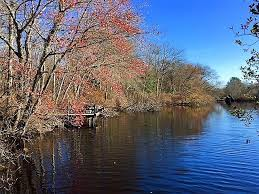
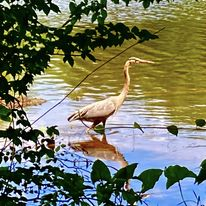
Today the muddy marsh is exposed with reeds and fiddler crabs, small bubbles from submerged frogs, and periwinkles everywhere, hundreds of them; thousands. Herons pull their fragile legs up out of the mud as they walk, and above me several osprey circle and dive for small fish and crabs in the Rapp. Soon they will make their pilgrimage to South America for the winter only to be replaced locally by eagles.

I come here to clarify my confused and often anxiety-ridden mind. Everyone needs a place like this, akin to that “safe home” kids designate during hide and seek—if you touch it before anyone touches you, you’re safe. This is that for me, when I’m here no one can touch me; I cannot be “it” when I’m surrounded by water and salty air, even at low tide. And if I close my eyes this could be the marsh running behind the greens at Timber Point, and boaters might be headed out to Fire Island or just across the river to Oakdale and West Sayville, and sometimes I feel like I’m twelve when my mind would drift during Social Studies at seventh period to the waters of Heckscher and the muddy flats off of Montauk Highway.

Those are familiar names to me, but probably not most others. And those places at that time still belong to me. Just like the aroma of the marsh near Aerie; that’s mine too, and the sound of gulls and osprey and herons, and diesel engines of fishing boats before dawn, and the water lapping on the riprap and sand. Those smells and sounds belong to me; always have. Of course many others know and have absorbed these visceral aspects of life as well, but that’s not what it feels like when you’re alone at a marsh, relishing the peopleless world, and the only sound is the call of gulls, and your sole desire is to roll out with the tide and see what happens; it has the same enticing pull as the comforting tug home up the hill, as strong as the moon’s grip on the tides. We are seventy-percent water, after all, and so is the earth. Being near the ocean or this river and bay helps me keep my balance, like some sort of metronome. It’s always been that way.

Nature has always been my safety net no matter where and when life happens. It is predictable in its controlling and haphazard way. It is non-judgmental; it isn’t distracted. It is as consistent now as it was for the native Americans who hunted on this land, and perhaps some nomads before that, as ancient and consistent as whatever life lived here, died here. Nature asks nothing of me except to be left alone. It’s all I ask of it.

I left the marshes of the Island fifty years ago next June. And even though I’m not there and Eddie is gone, I know the marshes still line the shore of the Connetquot, and out on the Bay the fishing boats cross before dawn. The salty air I’ve always inhaled is in my DNA, and it still hangs out on the reach just below our consciousness. I don’t know how long I might have survived without nature to steady the tides of my moods as they move in and out, pulling me further afar right before I’m trust back ashore. In so many ways my life is one of extremes.

I have been around the block since my days on the Island, and just when I thought I had grown tired and weary of fighting the tides; just when it seems life was more akin to the salt flats out on the Great Salt Lake with a shoreline that will never recover, I notice some sunset beyond the pulsating marsh and it settles me again, moves me right back into the moment where nothing had ever happened and nothing will ever change, for a little while anyway.

It’s like that here, at the river, just down the hill. High tides are exciting and fill me with a sense of awe and possibility, hope, but when the tide pulls back out, that ebb exposes nature for everything it is with its raw and beautifully honest frame filled with nature’s debris. I wish I could see myself with such blatant honesty.

I wish I could always feel so at home, safe and untouchable. How much of our identity can be traced to our youth and those places we chased each other through after school, explored and conquered on summer afternoons? If I lived in the city, miles from any semblance of the salty marshes of the South Shore, would I still feel the tug of the tides? I tell people I found this land here at Aerie by accident. I tell myself that. Sometimes I feel like I should turn around and find Eddie a few steps behind, whispering to himself the lyrics to some Harry Chapin song, asking if we should go swimming in the bay.

September is just days from now, and the August heat, the rise of gnats in the hazy air, the stillness of often stifling walks along the Rappahannock are once again slipping behind me. I believe that like Jay Gatsby I can be melancholic, some strong desire to “reach out and hold it back” overcomes me when the weather turns, and to be honest, Nick’s retort that “there’ll be other summers” is simply not good enough. Not when so many of them fade so fast. Not when the afternoon sun can so easily burn off the mist of our youth.
Conscious of Streams

Tim and I had lunch a few days ago and talked about Salt Cay and the donkeys. About the heat and the isolation, which is for some of us a chance to breathe. We talked seriously about some friends we’ve lost, and then we laughed about what it costs to die. There are few things the two of us do not laugh about. Sometimes irreverence keeps us sane.

Not for nothing but for many years I had a map in my office of a bike route from Williamsburg, Virginia, to Coos Bay, Oregon, Sixteen-year-old Bob was going to do that ride but never did. I kept the map though. It is good to have something slightly out of touch to think about. Some sliver of purpose to sift through.

Anyway, today I called Dee and we talked long about Fr. Dan, about what happened, and about one person’s ability—his—to influence so many through time and space and his presence never seems diluted, not at all. She isn’t feeling well, though, Covid, and her already devastated immune system laid her up for a while, but she’s feeling better than she had been, coughing less she told me. I told her that’s the Italian in her, and she laughed. She has a great laugh that her mom and dad cherished. She sent a picture of herself with Timmy—a 17-year-old cat—and neither looked healthy at all. The eyes. You can tell.

The bay was a lake this morning. The river ran fast. The sun bust its ass to get above the low clouds out over the Eastern Shore this morning, and tonight it settled behind a new bank of storms hovering over the Piedmont. It’s muggy; like rain is coming. Like it did that summer with Isabel. Tim said he was told that sometimes when a storm blows through down there, a stream forms right through the middle of the tiny Island, splitting it in two.

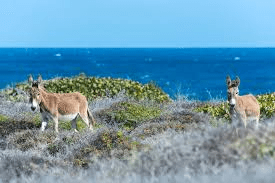
I told Tim I’d like to spend a month at Salt Cay. With the donkeys and the small bar the size of a Jeep Cherokee, and boat the forty-five minutes to Grand Turk for food. A full month. I feel phrases simmering already and I haven’t even had drinks with the locals yet. But someday. The donkeys wander in the yard to chew on the cactus-like leaves, sometimes two or three, sometimes eight or nine, wild donkeys just grazing the cay.

When I look out across the bay to the Eastern Shore in the morning, I often think of my friend Sheri who has a place in Cape Charles which is right there but for fifteen miles of water, but she’s mostly in South Carolina now. But I think of her and how we’d laugh in the halls at the college. I had her sign one of her books once I found at a used book shop for a quarter and in the book she signed, “I can’t believe you got this for a quarter!” I thought of that this morning and about talking in the hallway and how that might have been three books ago, but the current keeps moving, doesn’t it? The current keeps moving.

Tim said the two of them stood out; like there were just the forty-something residents of the Cay and them, and I told him the trick is to stay long enough that you disappear into the landscape, and they stop seeing you as new and maybe even start wondering how long you’re going to stay, which can lead to conversations, which lead to friendships, which is why I want to go but not for a week like them, but for a month. Long enough to name the donkeys.

There are geese on the river tonight, a small flock. They’ve been around for a few weeks but for some reason tonight they felt more present, as if I realized that now that’s happening, and I remembered a post by my cousin Jack just the other day who wrote, “The Geese are heading South; summer is over.” I suppose. He lives just a dozen or so miles from Dee but they don’t know each other. Doesn’t it sometimes feel now like everyone you know knows everyone else you know? Facebook probably caused that. I once wrote a post that my friend Sean responded to which Kay responded to, and then Eddie laughed at that and commented in kind to which Mike made some hysterical retort. None of these people have ever met. None live in the same state, and none are even from the same periods of my life, but right there in one post—one picture—people from all my decades were conversing like we all met at a bar and swapped a few jokes while drinking a few beers. It lasted only a few comments, but it neatly tied up my entire existence right there next to the HIMS ad.

Yesterday my Facebook memory suggested a post of a sunrise I had taken some years ago, and of the six people who made a comment on the picture, five of them are dead. Time is out of joint. All my Bobs are floating on the surface when I really think I’d be better off if the old Bobs would just sink again, disappear again out to sea, drift over to Cape Charles, and let just one of me land a small Cessna on Salt Cay, flaps down, flying south before it gets too cold, just the one of me.

We had Princess Anne sandwiches, which are vegetarian, both Tim and me, and we talked about current projects, which we rarely do, but we also talked about the growing sense of urgency to get things out, to not die with some unpublished works still buzzing our brains at three am. We’re not popular enough for posthumous work, we decided, so everything is going to have to be moribundus at best.

Go ahead, look it up. It means “near death.” Perhaps a book of essays someday about all the people I have loved who left too soon. “Moribundus” by Bob Kunzinger, with an introduction by TS, still chasing donkeys on Salt Cay.

Dee’s voice was weak but way stronger than a few week ago. I have great admiration for people who fight. They take the “it is what it is” concept and push back on it. I hope I’m like that. I know I haven’t been. Part of that is I’ve been lucky, but a bigger part of it is I’m kind of disturbed. I’ve accepted that. Anyone who wants to spend a month on Salt Cay with donkeys has issues that even the poets won’t touch.

Anyway.

This morning at the Bay I almost called a friend of mine I hadn’t spoken to in long time but didn’t. I had no idea what to say. “What’s new?” he’d ask. “Not a lot,” I’d say, which is desperately pathetic when you think about it. It’s not like I saw him this morning; it’s been years. “How about you?” Nothing he’d say, maybe mention a new grandkid. We’d be silent for a minute with a few “it’s so great to hear your voice” comments, until I broke some silence with “Oh, I’m thinking of living with goats.” I like that I know he’d understand.

Listen: I have had one bad fucking month. Two months really. But you know what I remember? You know what surfaces when I let my consciousness stream over the days and weeks? A couple of calls from some old friends, from some people excessively important to me to just talk and laugh, to talk about music, about cats, about the sound geese make at dusk, about farms in Indiana and bears in Utah and Iowa’s Mississippi; about the beaches of Alligator Point and the long reach into the Great Lake out off of the North Coast. I like that that’s what I remember, because at night when it’s quiet, at three am when the tigers come and start gnawing on my stomach and sit their ass on my chest, It helps to know I might talk to someone again tomorrow.

I can tell them about the donkeys of Salt Cay and my plans to know them. Or about Coos Bay and how I can’t believe I was ever sixteen years old. It’s just not possible.

Creatio ex Nihilo

Note: If you are easily offended by religious thought that contradicts your oh-so-verified and perfect understanding of God and the Afterlife, move on. You probably shouldn’t be reading my work anyway.

Let’s start with this religious/philosophical concept: God created the heavens; the universe; all of it; not only this corner of the Milky Way. It is rightfully assumed by believers that God wasn’t relegated a portion of the universe or put together just this one part of the universe and then accidentally spilled the rest on the floor.

No. God created the universe. Any God you want, since all the major religions claim the same accomplishment for their deity. In Christianity, Judaism, and Islam, this is absolute. In Hinduism, it is damn close in that the universe was asleep and then came to life, but it wasn’t not there and then was as is the case in the dominant trifecta.

The after-death part: In Christianity, Islam, and most schools of Judaism, everyone will end up in heaven. The do-gooders pretty quickly; the rest of us after some pretty compromising-sounding trials. But still, the post-purgatory promise is some sort of salvation awaits us all. Eventually.

Okay.  Of the major religions, while Mormonism would be the most chill with the concept of life in other galaxies, Jews and Muslims alike have come to terms with the reality of science. Christianity is the slowest to nod to the extraterrestrials, impaling people as recently as the 16th century for suggesting the earth is not the center of the universe, but they’ve come around. Extremist evangelicals not so much but they live in their own universe anyway.

Recap: God created the heavens—all of them—and when we die those of us who chewed our food with our mouths closed get to go there.

What this means to me is there just might be life from other galaxies in heaven, unless there are a whole bunch of heavens, as in each planet or galaxy has its own heaven isp domain and the universe is indeed segregated. Otherwise, heaven just might appear closer to life in Mos Eisley Cantina than a moose lodge. But how cool would that be? No matter their origin, anyone in this galactic heaven would have had to been good by their God’s standards, so fights are not likely to break out and they’ll probably never run short on stock.

A few glitches.

Cremated people, like those spread in Russian art galleries and artists graveyards, or those dispersed in the Mediterranean Sea near childhood beaches, would either not be present, or none of us is actually “present” to begin with as if we will run into a cousin at the mall, but instead we are there in some sort of thought presence, a force if you will, a spiritual embodiment we recognize because of something eternal, like the soul. Since the earthly ashes simply ended any actual post-mortem embrace or long, tight hug with a kiss on the neck, they must not be present. Right? Not so much.  

The major (and minor actually) religions have an answer for this dilemma: The body is a vessel, nothing more, and the afterlife is a gathering of souls. This allows the dismissal of ET showing up in our heaven because most of these same belief systems assume the rest of the universe is soulless. It’s that arrogance we have, I assume, that keeps them away from Earth to begin with. Shame.

I’ve made some mistakes in my life; wrong turns, bad decisions, like everyone else. At the same time, I’ve spent the past forty-five years either studying research and verification methods or teaching it at the collegiate level. Truth has a closer relationship with science to me than it does with faith. I haunt my students with one question which I tell them is the beginning and end of all they do in college: Where did you get your information?

The bible? The Koran? The Torah?

Mom and Dad? The plumber?

Maybe this is why I spend so much time in earthbound cantinas; I want to celebrate what is, here, the tangible love of the human touch, laughter, sorrow, now, here. This much I know is true, the rest is certainly faith, and I’ve spent my life surrounded by a few people as close to sainthood as ever one could be, and they have often swayed my faith. But I get tied up sometimes in what I “want” to be true. I “want” to meet Letty again, have a hard cider and tuna bites in whatever soul-like state we find ourselves. I want to drive to Florida with Eddie, guitars in tow. I want to sing on some heavenly park bench with Dave. Of course I do. I want to sit quietly again with my dad, talking about nothing, just being nearby and again feel that wonderous safety of my father, even if–especially–in heaven.

But for now, truth impels me to seek love while I’m still using this aging vessel. We are the only known species in the universe—for if there are others, we don’t yet know—leaving us the only species anywhere who can create from nothing; creatio ex nihilo. We can create a space between us reserved for compassion, for understanding. We can create hope for those who have had less fortune, and we can use language—another creation from nothing—to tell someone, again, “I love you,” like we did before, no matter how long ago it was. We can say again, “I will miss you,” before they move on and close that door behind them.

We can say, “We will meet again someday,” and know that despite the lack of evidence, despite the need to rely entirely upon faith to say that and believe it, eventually, it is all we have left.

She led a beautiful life.

He led a holy life.

They have moved on and whatever truth there is to know they now know. But for us, they’ve decidedly moved on.

So must we.