Drive

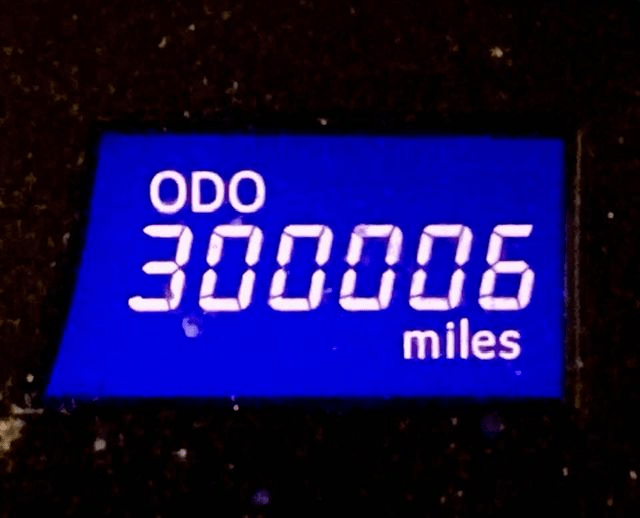
The odometer on my Toyota Camry just flipped to 300K. My mother gave me the car when her neuropathy prevented her from driving any longer. She bought it new in 2014 and when I took it over in late 2017, she had racked up 14K miles. Yes, it was literally driven by an elderly woman just to go to church. Since then, I have been to Florida a bunch of times, western New York several times, Ohio, Utah several times—no wait; I flew there. Prague once, but, again, by plane. Still, my math tells me I could have driven to Prague thirty-three times round trip, or Nogales, Mexico, one hundred and twenty-nine times.

I drive a lot. To steer Paul Simon into this, “If some of my homes had been more like my cars, I probably wouldn’t have traveled so far.”

Working backwards, my Toyota Highlander is still going at 430K miles; my son took it over and is careful now to only drive in on short trips; but, hey, Toyotas rock. I traded in the Hyundai Santa Fe when it reached 180K, and I had the Jeep Cherokee towed to Doc’s Auto Parts in Hartfield, Virginia, when it turned 225K miles old. When that car had just 8000 miles on it, someone rammed me from behind at 55 miles per hour and sent me 100 feet into a ditch. Ultimately, the car was repaired, but they could never fix the gas needle and for the rest of its life empty was full and full was empty.

Out in the driveway but not running right now is a 2000 Infiniti G20 with 325K on it, and while it needs a new battery and fluids replaced, and new tires, and maybe a good de-molding inside, my mechanic in the village says it’s still a great little, sporty car that runs well, and which a propane delivery driver once offered me $3K for without knowing anything about it.  

I bought a POS from a colleague for a few hundred dollars, and while the felt roof kept falling in, the trunk floor had a hole in it, and this Dodge Lancer Turbo had no reverse gear at all for the last two years of its life, I personally put 150K more miles on it than it had when I bought it. My son grew up in that car–not literally–and it was laid to rest at the Goodwill Donation Center in Virginia Beach, Virginia.

My red Chevy Spectrum spent some time in Pennsylvania and more time in Virginia, but that crappy little car kept me cruising for 180K before I swapped it out for a Toyota Corolla, which rolled over roads for 140K miles.  

My first car was a Chevy Monza, and like my current car, had been my mother’s for just 10K miles before it was mine back in the early 80’s. That car gave me geography lessons for many years, pulling this restless soul across country, out to LA, down through Mexico more times than I can count, its trunk packed tight with blankets and Kahlua, across Route 10 through the fifteen-thousand-mile wide state of Texas, to New Orleans, up through Nashville, up through Ontario and Quebec, through years in New England and endless trips to Boston and the Cape; it spun out of control down an icy hill in Worcester and slammed into a tree above a graveyard and the poor little guy fractured a few bones and ruptured a lung. After it had recovered, Richard Simmons rode in that car, and just a few weeks later Huey the Cat came home in the backseat to my reservoir house; it climbed Mt Washington, Mt Wachusett, and once broke down not far out of Manhattan after a museum trip to the city, but I was sick as a dog and my friend Liz had to drive us home after we changed the flat tire and discovered the smoke pouring out of the car was from lack of oil. I had no idea. That car of mine moved my shit from Massachusetts to Hershey, Pennsylvania, where it sat downwind from the chocolate factory on East Chocolate Avenue, then to a small village in the middle of nowhere.

The day that power-blue Monza died I had packed it full of an old girlfriend’s clothes and odds and ends to drive to her mother’s house forty-five minutes away when, symbolism not lost on me, the engine exploded and fell out just outside Annville, Pennsylvania. A friend picked me up, helped me finish my delivery that day, and then I sold it for two hundred dollars to a car guy I knew from the bar next to where I had lived in Hershey. On that day it had 255K on the dial and two Mexican blankets still in the trunk. I carried them home.

Not including rental cars, my Dad’s Nova which I drove from 1975 to 1983, and friends’ cars in college, I’ve driven roughly 2,171,000 miles, or 77 trips around the world, in forty-one years. That’s over thirty-six thousand hours behind the wheels.

I don’t know a damn thing about cars. I never had any interest, and when they broke down I had them fixed by people who do have an interest. I’m not mechanically inclined by design; I never cared. But I did the vast majority of this driving before GPS, before cell phones, before anything more than paper maps and bad road signs, when asking directions led to conversations, and sometimes to friendships. When getting lost was the most beautiful part of life and finding a phone to call for help could be a several-hour ordeal, especially if you’re west of Tucson at three am where wild boar wait for idiots like me. Man, the stories I could tell. Do people even have stories anymore? Everyone knows exactly where they are going, and that’s a shame.

We have lost the art of getting lost, of driving down strange roads in unfamiliar places, like the Sonoran Desert, or western Mexico, or Georgia. We have slipped away—too far away—from throwing a backpack in the trunk of the car, swinging by AAA for a few roadmaps, and heading out of town a few hours before the sun comes up, and then just after dawn you stop for coffee and breakfast at some roadside dive, and you ask where you are, and you ask where they think would be a good place to go.

We have left behind the immediacy of pulling over to figure out which way to drive and seeing some roadside attraction sign and stopping for an hour. I love rest stops, truck stops, scenic overviews where on some late afternoons you can see the highway below running off into the distant mountains, disappearing into the hazy dusk, sometimes music on the radio, sometimes the windows open and nothing but the sound of wind and somebody’s truck tires whining up ahead.

The car, that highway, that distant anywhereness of driving, is what keeps some people from giving up completely. It’s the hope of somewhere else; it’s the promise that can come from leaving a place and heading to another place you don’t yet know.

“Sometimes I get this crazy dream that I just take off in my car,” Harry Chapin wrote, followed by, “But you can travel ten thousand miles and still stay where you are.” Yeah, that’s true. But I’d rather have done the two million and ended up where I started then never to have left to begin with.
The Words of the Profits

Oklahoma State Superintendent Ryan Walters said during a board meeting that, “Every district and every classroom will have a Bible in the class and they will teach from that Bible.” Essential to his motivation is what Supt. Walters said next: “It is an historical document that needs to be taught.”

Mr. Walters is right. Everyone should read the Bible, be taught its significance in the history of humanity, the peace it provides to the multitudes, the carnage it caused on so many. Truly, it is impossible to teach about US or world history without understanding the Bible; its influence on why the early immigrants came here should be understood from the primary source, not some secondary hearsay such as biased preachers or well-meaning but uninformed, untrained Sunday School instructors. The Bible’s despicable use as a tool by slaveowners and overseers to perpetuate slavery is a solid example of how having a complete understanding of the Bible can only help students understand this country’s origins and shortcomings. If schools insist on an all-inclusive curriculum including the horrors of that history as well as the belief systems, all source materials should be read and understood, so long as those materials are not, shall we say, taught as gospel. Of course the Bible is a document of ministry and the peace that some can find in worship, but it was also a tool of dehumanization, and students should have the opportunity to know that. All of it. Yes, Mr. Walters, I agree; let’s educate these people.

But to defend your line of reasoning for its use in the curriculum, classes in World History, Sociology, Political Science, and the Humanities cannot be taught fairly unless students read the Koran and the Torah as well, and other often ignored texts detrimental to understanding who we are and how we got here. Just those three texts alone are not only part of the foundation in understanding what motivated civilizations to migrate, fight, create borders, attack enemies, defend sacred grounds, and more, they are at the root of current conflicts throughout the Middle East.

There is absolutely no disadvantage to having more information”

Oh, and to exclude the writings of dissidents such as Martin Luther and John Calvin, Karl Marx and Friedrich Engels, would be to pretend most of European history from the early 16th century on did not occur, so make sure the acquisitions department gets ahold of these texts as well; clearly our kids need to know all the information, not just what we find convenient for our beliefs, because I promise you, others have read all those texts and are therefore better equipped. The words of Calvin and Luther, Mohammed and Buddha, redefined thinking throughout the world, challenged borders, crushed political systems, and instigated revolutions–everyone needs to know this in order to move forward. And Marx with Engels created ideas which remain at the heart of every conflict and negotiation with the Soviet Union, and then Russia, China, Cuba, and North Korea. To not have students read the Communist Manifesto is to allow those we disagree with most and those with whom we will have the highest level of aggression to have the intellectual advantage, because I promise they’ve read our constitution and declaration. The Russians have studied American culture–I know, I taught it to them. So on top of the Bible, stack the Koran, the Torah, the Manifesto….oh, there’s more.  

There is absolutely no disadvantage to having more information. I want our grandchildren to have read all of these texts: the Bible, the Koran, the Torah, the writing on the subway walls, the graffiti in Basque country, the samizdat documents distributed among rebellious youth in a failing Banana Republic; the Karma Sutra, the banned books in Florida, the crappy texts that become soft-porn films, those ever-popular wizard stories, and the Swifties comments on TikTok. I want them to understand the religious ramifications, the political dissidence, the social movements, and today’s fleeting fads. All of it. However, we should certainly worry who is disseminating that information. You want to start with the Bible, that’s fine. But to stop there–and please pardon this trite truism–is to send them with a knife into a gun fight. They need all of it, Mr. Walters.

Here’s a simple question: If your children are going to grow up and likely work with, negotiate with, or fight against people of different faiths as well as varying political and social mores, do you want them to have more information than their counterparts, or less?

I’ve Got Your Number

I recently had to get a new phone. It didn’t work out, but that’s a different issue. You see, I have had an iPhone since my Blackberry died years ago. But I ordered an Android by accident. It came and I gave it one day and could not deal with it. Quick sidebar: I’m not remotely interested in pursuing a discussion of the differences, advantages, and quirks of phones in this space, or the comments, or casually—like, ever. I mention it only to illustrate that transitioning from the I to the A simply didn’t work out.

Ironically, the transition itself was ridiculously easy. I simply took the SIM card out of one and put it in the other. Done. Everything transferred. Very cool. But that wasn’t always the case. Some years ago I gave up my Blackberry for my first iPhone and in doing so I lost everyone’s phone numbers. Gone.

I wrote about it back then. What happened was I had to send an email to everyone I knew. It went something like this:

“Can you please text me, ‘Hi, this is _____’ so I can put your phone number back in my contact list?”

It was, I thought, a simple request.

First, my friends Robert and Molly in Ohio carried this out perfectly. From both I received a text with their names in the text. Understand, when you send a text to me, I can only see a phone number; it does not come through with your name on it unless you are already in my address book, which obviously no one was. So for the twelve people who wrote, “Here you go” or “It’s me” or “Sorry about your phone, here’s my number” or “Here ya go, let’s get beers,” some deciphering was necessary.

“Let’s get beers” was easy—Jose. It is his standard comment to me, so perhaps he wrote that on purpose knowing I’d know he’d know I knew. Someone else wrote, “So if I don’t say who I am, will you be able to figure it out?” which I figured out immediately because I could hear her “tone” in the response. For a few of the texts I had to look up the area code to figure out who it might be. One of them was on Long Island, so I knew it was a cousin, but that really doesn’t narrow it down much in my family. Then the message said, “Funny I just saw someone who looks just like you and I was smiling, thinking, ‘Hey there’s my cousin’ when he clearly thought I was smiling at him and it kind of got me in trouble,” so I knew it was Lisa. My cousins, all of them, have distinct personalities. Lisa has several.

My late friend Dave emailed his name, address, current location, plans for the weekend, apologies for my troubles, offers of assistance, and his next week’s schedule. But no phone number. No kidding. And since it was an email and not a text, I still couldn’t call him. Eventually I received a random song lyric from a Florida number and added “Dave” to my contacts. He’s one of a dozen or so contacts no longer with us. I am not sure how long I should wait until I delete them. I don’t think I ever will.

My brother, my friend Jack, and several others just replied to my email with their phone numbers, which was actually much easier and made more sense, but they also took that opportunity to welcome me to the 21st century and the world of Smart Phones (though my Blackberry was pretty smart). And that really is the point here.

There was a time back in the last millennium when I knew everyone’s number by heart. That was when I had no “contact list” in my phone; back when “my” phone was a fat machine on the counter used by the entire family, long before the invention of voice mail, call waiting, or answering machines. When we looked up someone’s number in a small address book enough times and then dialed it (rotary) enough times that the digits tended to stick in our minds. I can recall most of my own numbers well back into my childhood, most of my friends’ from then and through my twenties, as well as work numbers and relatives’ numbers, including my grandmother’s from her apartment in Queens in the eighties. It is not age that stole my retention; it is convenience. We now live in a world where, “If we don’t have to, we don’t.” In fact I know it isn’t age because I once went into one of my classes and asked fifteen twenty-year-olds if they could tell me the phone number of their best friend, and only one of them could. These are the same people who don’t take notes or rewrite notes from a peer after they’ve missed class, but instead simply take a picture of the pages and then can’t understand why they don’t understand.

I had a friend at Penn State who asked me for the date and time of something I was involved in. When I told her and asked if she wanted a pen to write it down, she said, “No, if I write it down I’ll forget it.” Exactly. Certainly, my memory is not what it used to be. Students’ names for me are nearly impossible, though to be fair that has less to do with memory than it does interest. One young lady said I don’t remember their names because I’m not trying hard enough to do so, and I said she was wrong, that I wasn’t trying at all. Ironically, I can tell you the name of every single person in my first class I taught thirty-five years ago. Much like the phone numbers, however, I had more reason to retain them years ago than I do now.

Numbers, though, have always come easy for me. I never had trouble committing to memory zip codes, addresses, bank account numbers, as well as phone numbers, and I still can. I even still remember one particular airman’s social security number, because in the ‘80s when you addressed letters to people in the Air Force, you followed their name on the envelope with their complete social security number. It was a different world. Today’s world has made it easy to forget what is essential—the phone numbers of my loved ones. Shouldn’t those numbers be second nature?

Apparently not, so I emailed everyone. Some people didn’t respond at all, which made me realize, yeah, maybe I don’t need them in my life. What a great opportunity to weed out the ones I wonder why I knew to begin with. Worse, there were numbers for people for whom I don’t have emails and can’t contact them at all. I know if there is a reason to contact me they will, but something more revealing crossed my apparently feeble mind: I don’t need nearly so many people in my life. My average contact-scroll used to take a while. This turned out to be a great way to clean house. I thought it would happen again moving from iPhone to Android, but no.

I most likely will not return to memorizing numbers, though I will attempt to retain a dozen or so of those people I can’t imagine not being able to call in an instant. What if I had to borrow someone’s phone? I’d like to remember those numbers or recall someone’s birthday without a Facebook prompt. One response via text was, “Hey, it’s me! Shouldn’t you know my number by heart?!”

My immediate thought was, “Yes, of course.” But then I thought, “No, I shouldn’t.” What I should be doing is seeing loved ones often enough that we have no reason to call. We should be laughing together at pubs, at picnic tables, across the fence in the yard, across the room, across time. Numbers should be pointless. Memory should be irrelevant for our consistent commitment to spending time together now. Too many numbers have no recipient anymore. People get deleted too quickly, and before you know it we’re wishing we could just meet them somewhere—no phones, no devices. Just the human touch.

One text came through as “Poetry is Bread Brother!!! Eat it up!!” so I entered, “Tim.” My favorite response to my email was the last text I received. It said simply, “Just put me in your contact list as ‘Tumbleweed’.” I knew exactly who it was even though that handle had been unknown to me before that text.  

I had no reason to contact everyone this time, which was a bit sad, actually. But in the end I gave up on the Android—it has no Facetime. So I simply moved the SIM card back to my iPhone and said, “Hey Siri. Text everyone,” to which she (mine’s a she from Ireland) replied, “What would you like to say?” I thought about it while the little squiggly thing moved back and forth, then replied, “Call me. Let’s talk.”

“Send it?”

“Yes.”

“Done.”  

Smuggler

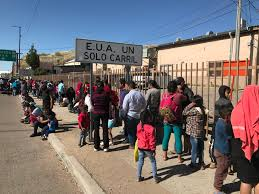
Border between Nogales, Mexico, and Arizona

I found the streets of Nogales, Mexico, on Google Earth, or whatever one lets you watch it live, now, immediately. The streets are crowded these days, and the crossing is packed with people trying to walk or drive through to Nogales, Arizona. I’ve crossed that border at exactly that spot dozens of times, albeit forty years ago. Yes, there were migrants wishing to make it to the United States back then; after all, we invited them. We put up a big lady who literally said to come here, and we pushed our excellence in the marketplace every chance we could. If you build a huge ice cream shop and flash it in front of everyone who has no ice cream at all, a line will form; mayhem will follow. Either feed the poor souls or take down the “Give us your poor” statue.

Anyway. Nogales.

I used to eat at a small café there called La Caverna. They served cold Tecate and a burrito with jalapeno sauce and salad. One afternoon after lunch while standing on the dusty Mexican village street, an old man approached me. “You want to buy some blankets?” he asked in Spanish. His face was sun-carved and his thin frame as prickly as the saguaro cactus at the edge of town.

“How much?” I asked, knowing I only had about twenty dollars left.

“Two dollars,” he said. Now my Spanish was pretty decent, but I still stopped to figure if he meant two, or twelve, or twenty-two.

“How much?”

“Dos. Solamente dos mi amigo.” I agreed and he walked me down a few streets and a few back alleys. I was nervous, anticipating being jumped by younger, athletic guys who would steal my wallet, my car keys. Instead, we approached a small shed and Diego unlocked a padlock and opened the door. Stacked from floor to ceiling and throughout the 12×14 or so room were blankets of every color, with just enough room to step in and then crawl up the mounds to look for different kinds.

I looked at my twenty. “I’ll take ten,” I said, and left for my apartment in Tucson with my arms full. At this now-famous border, the guard asked if I had purchased anything. I had just graduated from college, drove a small Chevy, and hadn’t cut my hair or shaved in some time. The odds were high I had bought at least a few ounces of something illegal, though I hadn’t.

“Just those blankets,” I said, motioning to the back seat.

“How many?”

“Ten.”

He stared at me then let me go. I brought them to my Tucson apartment noting the unusually cold weather. A neighbor called to me, “Good thinking; it might be cold at the game tomorrow.” We lived across from the University of Arizona. He helped me carry the blankets inside and asked how much I paid.

“Twenty dollars,” I said. He thought I meant each.

“I’ll give you twenty-five.”

“Sure.” He gave me the cash and chose a green blanket with tan stripes. Very Mexican. “Hey, my buddy Paul will want one,” he said. “Can you sell another?”

I decided I could sell all of them and before night I’d done just that, pocketing two hundred and fifty dollars. The following week I went back, had lunch and found Diego. We backed my car up to his shack and loaded one hundred blankets.

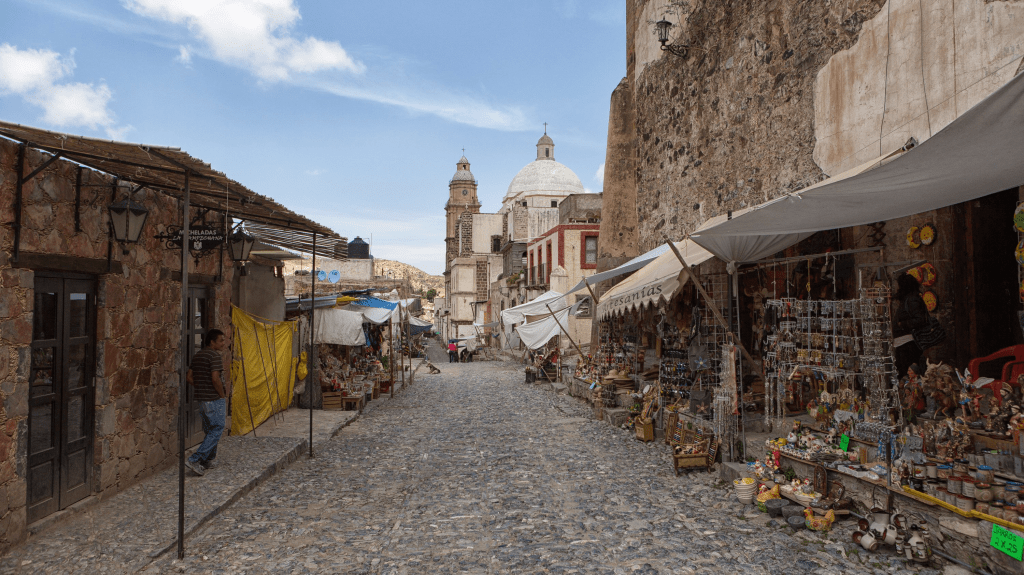
Mexico then had a simplicity to it that seems to have been hijacked by drug cartels and border crashers. Not that these things were absent in the early eighties, but they certainly weren’t covered as closely by media, and the impact on people like me just bouncing around Mexico was nearly non-existent. Back then people who lived in southern Mexico, Guatemala and Nicaragua certainly knew of the promise of a better life in America–in particular for those pressured by the rising drug cartels and street gangs, but the lure was not as present. There was no internet to push them, not social media or other methods of communicating for Coyotes to build a small human-smuggling empire upon. The vast majority of migrants traveled in small groups and weren’t scrutinized by media–which had only just reached the now-antiquated level of “Cable TV.” Surveillance cameras were non-existent. Commentary on American radio stations or by political operatives was minimal at best. It was simply easier. I could train to Mazatlán, hitch to villages, and even drive my car deep into the interior without worry. Even when someone did approach me, whether to sell me something, check out what I had, or simply seek a ride North, the only consequence was time, and a few times I made friendships which lasted a little while anyway.

At the border, a different patrolman approached my car. “About one hundred,” I said somewhat nervously, even though I cut my hair and shaved.

“Then you’ll have to pay taxes,” he said, not moving away from the car.

“But they’re for my family.” He smiled. “I have a big family,” I added. We both laughed.

He stared at me. “Open the trunk.”  Very colorful, really, all that wool shoved into every corner of the Chevy. “Sometimes college students will distract us by buying a lot of one thing and smuggling something else. Like drugs.” This was true: More than ninety-three million cars crossed the border between the US and Mexico that year and not all carried blankets.

I laughed. “Oh hell, I hadn’t thought of that.” He smiled but I don’t think he believed me.

“Why buy one hundred blankets?”

I thought about my answer the way I think when I’m pulled over for a ticket and the cop hasn’t reached my window yet. What angle should I take? I gave in completely. “Look, I’m broke,” I said. “These cost me two dollars each and I can sell them for twenty-five bucks each at the UA game this weekend.”

He looked at me awhile, then back at the car, pulling up a few floor mats. He didn’t seem to be concentrating, though, and then I found out why. “I need ten,” he said.

He wanted a bribe. El Duh. “That’s a two-hundred-fifty dollar loss,” I said.

“No, that’s a twenty-dollar loss.”

“Cost, yes. But not profit. I mean, the taxes can’t be that high.”

“No, they’re not,” he said. “But the paperwork can take forever to finish.”

I stared at another agent ripping the panels off of some guy’s car doors.

“Ten blankets,” he repeated.

“Done.” He chose ten blankets. I got back in the car and he carried the blankets to the office where he put the “confiscated” goods and returned. “Next time, buy one hundred and ten blankets, Si?”

“Si, gracias,” I said, and started to drive off, but stopped. I backed up and he came to my window.

“When do you work?” I asked. I wrote his schedule on a napkin in black marker and in no time at all we became friends. That winter I made a ton of money and made a few good friends just south of the border. Decades later, I still have a few blankets. For me they represent time and place. Going to Mexico meant more than crossing into another culture; when I hear the word “blanket,” I sense the dust of a quiet road and the taste of cold Tecate, I hear the rough tones of Diego’s voice. It turns out there is a thin line between what we buy and where we’ve been. Souvenirs are more akin to snapshots than presents. They are narratives and conversations; they are moments, not mementos. And I learned more about where I am from by crossing the border than had I stayed home, like what true “need” is, the value of simplicity, and the restlessness that comes with a desire to improve. I had never thought about what it “takes” to grow, to improve my life; at home we didn’t really need to do more than keep moving forward. But in Mexican villages I witnessed first hand the work ethic and determination which makes improvement possible to begin with.

And really, once I saw the line someone else drew in the sand, how could I not cross it? I made a dozen or more trips for the sole purpose of buying blankets. By the last one in January of ’84 I was picking out ten blankets myself for the guard and simply handing them to him before driving on. During one of my last trips to Mexico I wasn’t going for the blankets. The line through the automobile gates was long, so I parked and walked across the border, ate one more lunch at La Caverna, bought some Kahlua and talked to Diego for a while. I brought him a University of Arizona Wildcats sweatshirt and we talked a long time. It was only then I learned his family actually lived in Mexico City. He had come to the border to try and make it to Tucson and work, and would send for his family later. He got as far as the border, like so many do, especially today, who make it to the southern edge of the United States, and no further. I asked him what will he do since he had been selling blankets at that point for a few years. “I’ll head back to Mexico City this summer,” he told me. The following year was one of the worst Earthquakes in history, virtually destroying a large portion of Mexico City. I thought of Diego then, and his family. I think of him when I open my trunk where I keep one of the blankets–it is indigo blue with tan and red stripes and has been everywhere with me for four decades now.

I walked to the turnstile gates that last time, nodding to my agent friend, who waved not knowing I’d never be back. I stood in the short line and wondered if I would have what it takes to leave absolutely everything I know–all of it–at a time when contact was primitive and I would perhaps never talk to or ever see my friends and family again, so that my life, and that of my kids and descendants would be better. For all of our wealth and their poverty, I learned that for the most part, my friends in Mexico, and those I only passed crossing the border one way or the other, value life itself much more than we do. I did carry some of that north with me.

Aerie is surrounded by farms worked by mostly migrant workers who speak little English. On more than one occasion while waiting to buy coffee in the early summer morning at 711, I’ve translated the order of a frustrated worker from Mexico living for the season in Deltaville. Inevitably, the conversation moves outside, and they ask how I know Mexico, and I tell them about my time there, back when “Coyotes” were animals. I tell them that I can recall quite clearly sitting on the porch of a café there, sipping beer and watching people walk by, and the faces of those heading north for the first time were alive and filled with promise. And just beyond them, through the gates on the other side of a few guards, was the literal line in the sand, and what I always saw as the southern border of my own country, they all knew as the front edge of hope.

The Quick Brown Fox Jumps Over the Lazy Dog

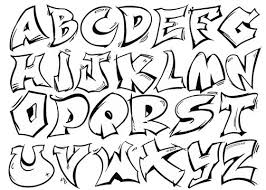
A

BCDEFGHIJK

LMNOP

QRSTUVWXY

Z

26 letters.

That’s it.

In the beginning. That which doesn’t kill us makes us stronger. To be or not to be—that one just six letters.  Jesus wept—seven.

It is what it is—six.

I can’t write, my students say; my mother said; my very own demons say when something needs to be said but I’m at a loss for words. The history of English has turned and spun back on itself, argued with endings and double negatives, trampled meaning, treasured nuances, made murderers of us all, and unearthed muses to slipknot a string of letters, tie together thoughts like popcorn for a Christmas tree, individual kernels only able to dangle dutifully due to one common thread.

I do. Rest in Peace. Go to Hell. I quit. I miss you; I love you—7 letters both.

The alphabet was not alphabetical at first, made that way in the 1300’s on Syria’s northern coast.  Today, we slaughter its beauty with a cacophony of sounds whose aesthetic value is lost in translation while simultaneously softening hardened hearts with poetry and prose for the ages. For nearly a millennium this alphabet. whose letters lay the way for understanding in multiple languages, has dictated decrees, is uttered by infants one syllable at a time until by age five they’ve mastered the twenty-six consonants and vowels.  What circles of wonder are children’s faces when someone’s tongue pushes out “toy” “treat” “your mommy’s here” “your daddy’s home.”

Plato said, “Wise men talk because they have something to say, fools because they have to say something”; Socrates said, “False words are not only evil in themselves, but they infect the soul with evil.” The sins of our fathers forever condemn us to hell but for confession, penance, and absolution.

Forgive me father for I have sinned—14 letters.

Of all the languages on the planet, English has the largest vocabulary at more than 800,000 words, all from those same 26 symbols.

There are roughly forty-five thousand spoken languages in the world, about 4500 written today but almost half of them are spoken by less than a thousand people. English, though, is the most common second language on Earth—translated or original, the Magna Carter, The Declaration, The Bible, the Koran, the Torah, the tablets tossed by Moses and a death certificate all reassembled versions of the twenty-six.

I have a dream—eight letters.

Ask not what your country can do for you; ask what you can do for your country—fourteen.

We the People–seven

Teeter-totter—four.

Mooo—two.

Billowy is one of only a few seven letter words whose six letters remain alphabetical. Spoon-feed is the longest, at nine letters, whose seven letters are reverse-alphabetical.

We can talk, us English. We can spin a yarn, chew the fat, beat the gums, flap the lips. We have the gift of gab, we run off with the mouth, we can spit it out, shoot the breeze, talk someone’s ears off, or just talk shop, talk turkey, talk until we’re blue in the face, be the talk of the town. We can, for certain, at just seven letters, bullshit.

My point (7 letters) is that (3 letters) sometimes, despite our skills (4 letters) with the English language (6 letters), we are often left, at just six letters, speechless.

What are the odds on a planet of nearly eight billion, the vast majority of us would comprehend each other because of twenty-six characters, small symbols.

The first time we meet we say hello (four). And then we love (four). And all too soon later, with the misery of six letters, “Goodbye.”  

And because eight characters is simply too much sometimes; sometimes too painful, we knock it down to three with RIP.

And the rest is silence (six).

Correspondence. Remember?

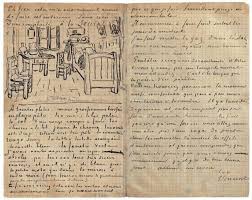
van gogh's letters

Dear You,

Some of this I’ve written before, But some is new. I’ve started to write letters again. Emails, yes, but real letters as well on actual paper. I sit at one of the tables here at Aerie and cover my iced tea from flies, find the spot where the shade hits the table and place my pad down, and write. I write about my garden, about the bay, about travel plans or family matters, depending upon who I’m writing. I don’t write about writing. I try not to write about anything negative, and I never have written and never will write about politics in a letter.

When I was young I wrote a lot of letters. On summer vacation from college I wrote friends in other parts of the country, and even after college kept a close written communication going with a few people. One is a woman I’ve known since we were freshmen, and another is a priest who I remained very close to through the years. I still have some of those replies, and some I recently sent back so my friend can see what was on her mind forty years ago. I wrote probably several hundred letters to someone I obviously cared very much about to write that many words who joined the air force back in the 80s. Listen: here’s how far we have come since then: At that time I would have to address the OUTSIDE of the envelope with her full name, followed by her full social security number—right there on the front of the envelope. I still remember it, actually. The former maintenance crew who emptied the trash at Lackland Airforce Base probably does as well.

Letters used to be the sole source of communication. Vincent van Gogh wrote more than two thousand pages of his thoughts to his brother Theo, a sister, as well as fellow artists. Thomas Jefferson and John Adams letters to each other famously expose the thoughts of our forefathers, and even as far back as the early Christian era we have Paul’s letters to the Corinthians. I just want to write some stuff about my garden and mail it in an envelope to my friends. Thought I’m tempted to write a large group like Paul did: Letters to the Czechs perhaps. Or the New York Mets.

I learn so much when I write letters. Simply by telling other people what I’m doing, I’m reminding myself how I spend my time. It also allows me to sit in nature, slow down, and take my world one word at a time. In an age that is spinning at Mach 6, writing is like sitting on a stage coach, but that’s okay. Remember those days when we would anticipate mail from a friend? It seems like a long time ago now, but I recall the satisfaction of dropping a thick envelope into a mailbox, or opening mine to see that marvelous white rectangle of someone thinking about me.

My sister found letters our dad wrote to his mother when he was eighteen. When I was in college my Great Uncle Charlie, who was in his early nineties at the time, wrote me letters and often included poems he wrote. This was a man who fought in France during World War One. And when I was in my late teens he was still writing letters and poems and dropping them in his local postal box. I don’t know what happened to those; I moved around so much. Also lost are letters from my childhood friends on the south shore of Long Island. During the first year or so after my exodus, we wrote religiously. I am back in touch with a few of those people from that time, but I wish I still had those epistles of what we were like then, our hopes, our plans, our fears, and our indescribable confidence which time has eroded along with our penmanship skills. My closest friend from then has since died, as have several other close friends through the years, and those letters would have brought their voices to life. When I read a letter I don’t simply look at it, I listen to it as well.

I know the problems in resurrecting such an ancient art form: besides the “slowness” of letter writing, there is the “I don’t really know what to write about” aspect my mother used all the time when I was away at school. Then there’s the “I don’t have time” factor which is just a crock. Sitting down to do anything for ten minutes is not an Olympic feat. And can we please just stop with the “it’s just easier to email” laments. Yes, it is. Write anyway. My favorite avoidance mantra is “I think faster than I write and I can’t slow down to do it.” Geez if you don’t think faster than you write than you’re probably legally brain dead. As Neil Diamond wrote, “Slow it down. Take your time and you’ll find that your time has new meaning.”

As for the upside, it helps me remember what is important in life that I want to write about it, and it reminds me that since I spend the vast amount of my time doing things I don’t deem worthy of including in a letter, I should appreciate the small stuff through the day as much as the grand letter-worthy events. It really does slow me down, helps with my blood pressure, my stress, and sometimes I might sit back while writing a letter to listen to the wrens or the cardinals, or leave it all on the table and wade in the river a bit before returning to finish. Mostly though, it is instigating a physical presence in another’s life in a completely non-threatening way; it is my DNA sealed and sent to another state.

I wish I had written back and forth with my father, or kept in written contact with some friends from Spain. I’d love to have heard from my grandparents, or to read a collection of letters from ancestors from another land. They are treasures; they are history, humanity, emotion and time, all in one stroke of a pen. 

Despite the losses of valuable letters from loved ones through the years, I still have some I cherish. I have a few from Leo Buscaglia, a few from Martin Sheen, and one from Michele Obama. I have some from friends in Germany, Russia, and various other distant places. When I was young I remember my brother had a pen-pal in Germany. I would love to start a correspondence with someone far away, someone I’ve never met. According to the data page of WordPress, this blog has roughly 2000 unique weekly readers in twenty one countries including India, Japan, and Australia. If anyone is reading this, drop me a line, hand-written, to PO Box 70, Deltaville, VA 23043. I will reply, Promise.

I’ll even stick a leaf in the envelope to send along a small piece of Aerie. It really is peaceful here; a place to write home about.

Always,

Bob

siberia-phone-316
writing a letter to my father while in the dining car of a train in eastern Siberia